

Kashmiri Traditional Colours & Embroidery-Inspired Fashion brings together the visual language of the Valley: saffron fields, chinar leaves, walnut wood, snow-bright neutrals and intricate needlework. The appeal isn't limited to copying a motif onto a garment. Thoughtful dressing considers where a colour comes from, how an embroidery pattern is balanced, which fabric can carry it comfortably and whether the final outfit suits a traditional occasion.
Kashmiri clothing and craft traditions offer useful styling lessons for anyone choosing a kurta set, saree or layered festive outfit. A restrained base can make a detailed border more visible, while one saturated shade can give a modest silhouette the presence of ceremonial wear. The same principles work whether a garment uses authentic Kashmiri techniques or takes visual inspiration from Kashmiri art.
Kashmiri Traditional Colours & Embroidery-Inspired Fashion: The Colour Vocabulary
Kashmiri-inspired dressing works best when its colours are treated as a connected palette rather than as unrelated bright shades. Saffron, rust, walnut brown, chinar red, almond beige, snow white, deep teal, indigo and muted green provide a practical foundation for traditional Indian outfits.
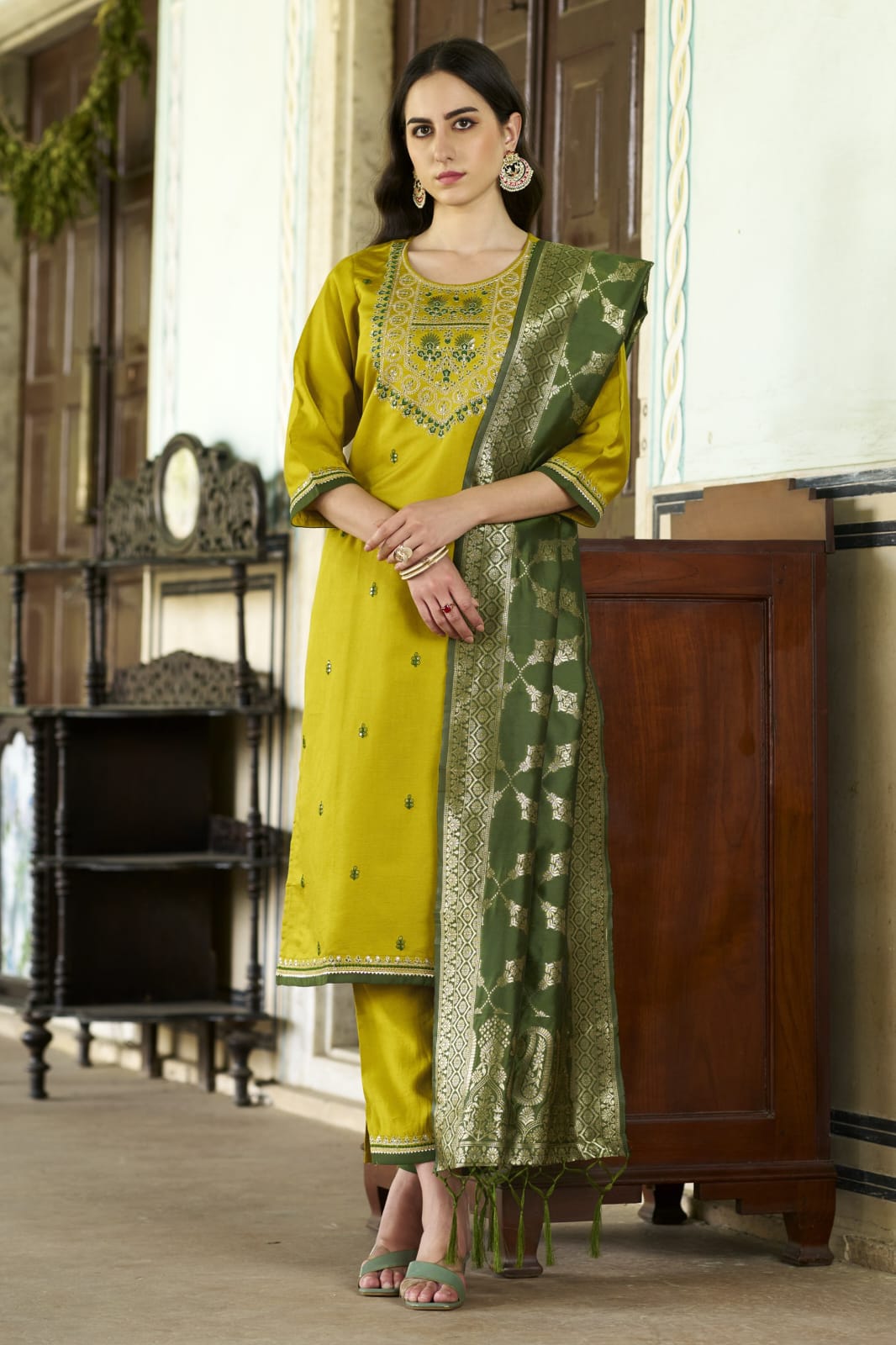
Saffron carries a strong visual association with Kashmir because of the saffron fields of Pampore. In clothing, saffron can appear as a full kurta, a dupatta edge, a woven border or a small embroidered accent. Mustard gives a softer, more wearable version of saffron and pairs especially well with ivory, beige, deep brown and muted teal.
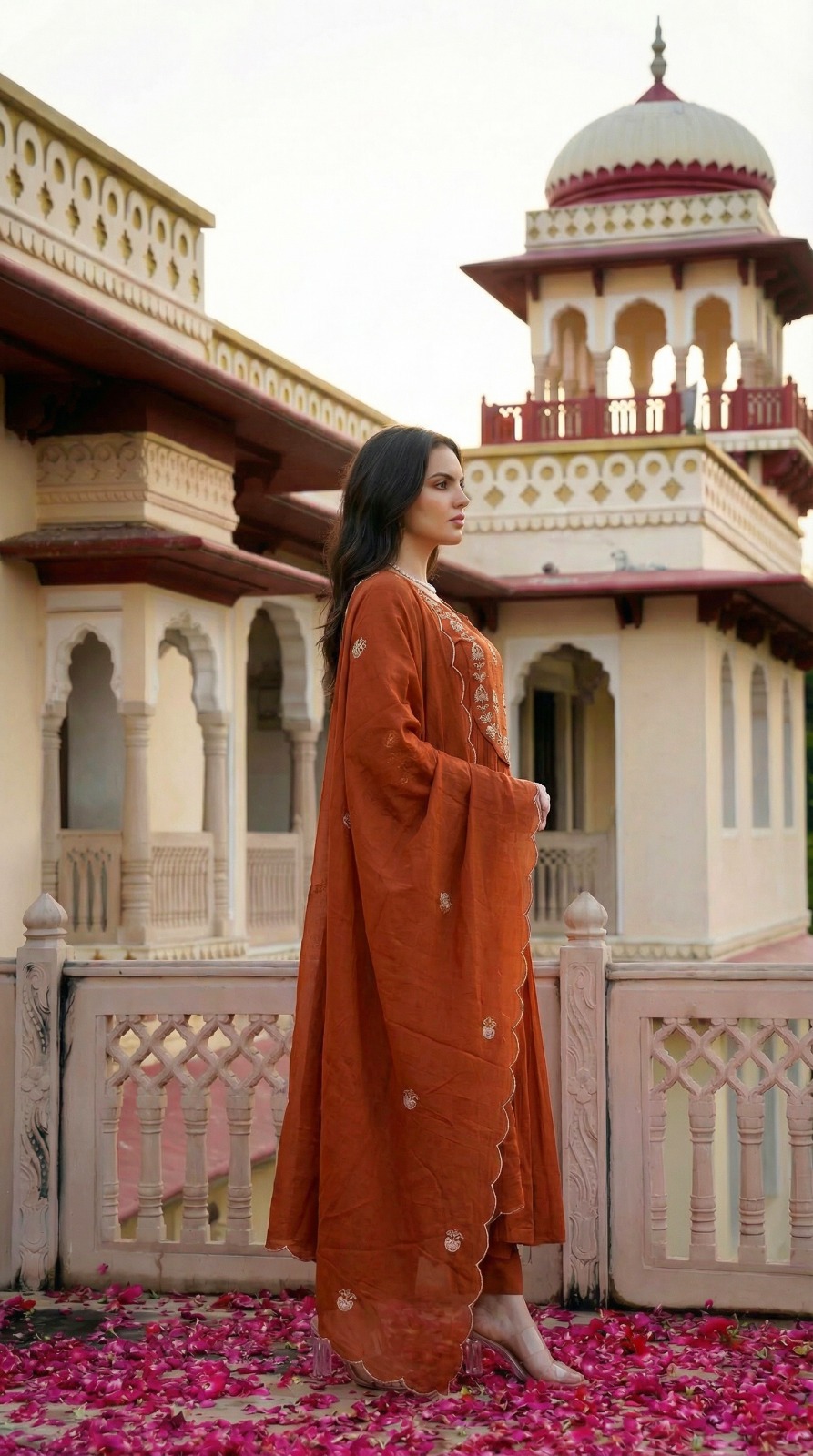
Chinar red and rust create warmth without requiring sequins or metallic shine. A rust dupatta over an ivory kurta can feel festive during a daytime ceremony, while a deeper wine-red accent is better suited to an evening gathering. Chinar-inspired leaf forms often look clearer when embroidered in tonal thread rather than in a sharply contrasting colour.
Walnut brown introduces depth and references Kashmir's wood-carving and walnut-growing traditions. Walnut works particularly well with raw silk, Chanderi, Vichitra silk and handloom textures because the brown grounds fabrics that might otherwise appear too delicate. Beige, taupe and almond tones provide the quiet background associated with snowy landscapes and natural woollen textiles.
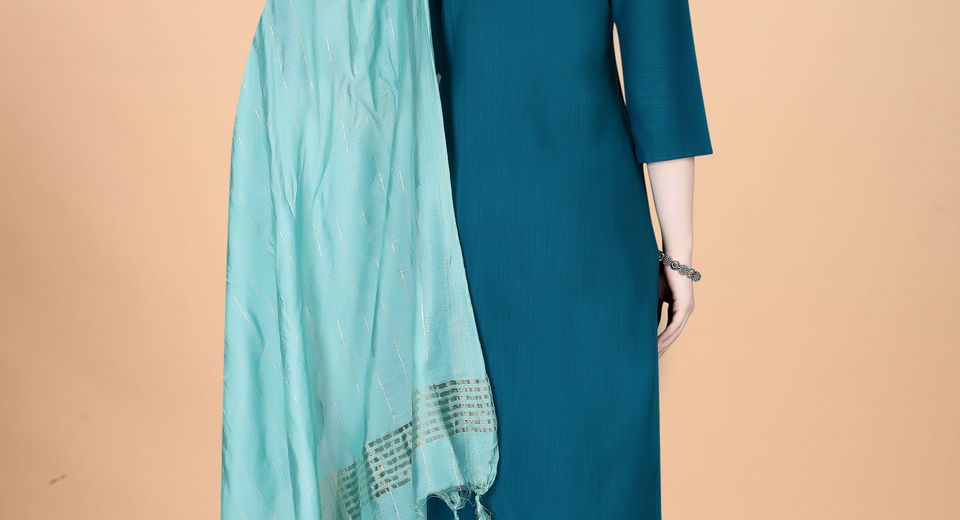
Teal, blue-green and indigo add the cool side of the palette. These colours can suggest mountain air, water and shaded foliage without making a garment look costume-like. Teal is especially useful for contemporary co-ord sets and kurta-dupatta combinations because it has the richness of jewel tones with less visual heaviness than emerald.
Kashmiri Traditional Colours & Embroidery-Inspired Fashion: Motifs That Matter
Badam, chinar leaves, paisleys, flowers, vines and small repeated foliage are the most recognisable motifs in Kashmiri-inspired embroidery. Motif placement matters as much as the motif itself: a narrow sleeve border creates a different impression from an all-over jaali pattern.
The badam, or almond-shaped paisley, is among the most familiar forms associated with Kashmiri shawl design. A badam motif can be large and ornamental or reduced to a small repeat along a neckline. On a kurta, a line of small paisleys at the hem often looks more refined than large motifs scattered across every panel.
Chinar leaves are another strong visual reference. A single stylised leaf can decorate a yoke, cuff or dupatta corner, while a repeated chinar vine can create a border. Chinar embroidery becomes easier to wear when the thread colour is one or two shades away from the ground fabric, such as cream on taupe or muted rust on mustard.
Sozni embroidery is known for fine, delicate needlework traditionally used on shawls and other textiles. Sozni-inspired patterns usually benefit from a light hand: fine florals, vines and paisleys should have enough negative space to remain legible. Dense metallic work may be attractive, but it communicates a different design language from the quiet precision of fine thread embroidery.
Aari embroidery uses a hooked needle to create chain stitches and can produce fluid floral or paisley outlines. Aari-inspired work often looks more graphic and defined than fine Sozni-style detailing. Both references can sit comfortably in contemporary ethnic wear, provided the embroidery is proportionate to the fabric and the occasion.
Papier-mâché art from Kashmir also offers motif inspiration, especially through stylised flowers, leaves and balanced repeats. Papier-mâché patterns are often highly decorative, so using one small colour group from the artwork can prevent a garment from becoming visually crowded.
Kashmiri Traditional Colours & Embroidery-Inspired Fashion: Selecting Fabrics
Chanderi, silk blends, cotton blends, Vichitra silk, jacquard and handloom silk each change the way Kashmiri-inspired colours and embroidery are perceived. The correct fabric depends on weather, movement, embroidery density and the formality of the traditional occasion.
Chanderi has a light, softly luminous surface that suits fine floral embroidery and pastel palettes. Pastel Blue Embroidered Chanderi Kurta Set with Dupatta demonstrates how a cool, pale base can let delicate motifs remain visible without overwhelming the wearer. Chanderi works well for daytime celebrations, intimate pujas and warm-weather gatherings, but the dupatta should be handled carefully because its light structure can snag on jewellery.
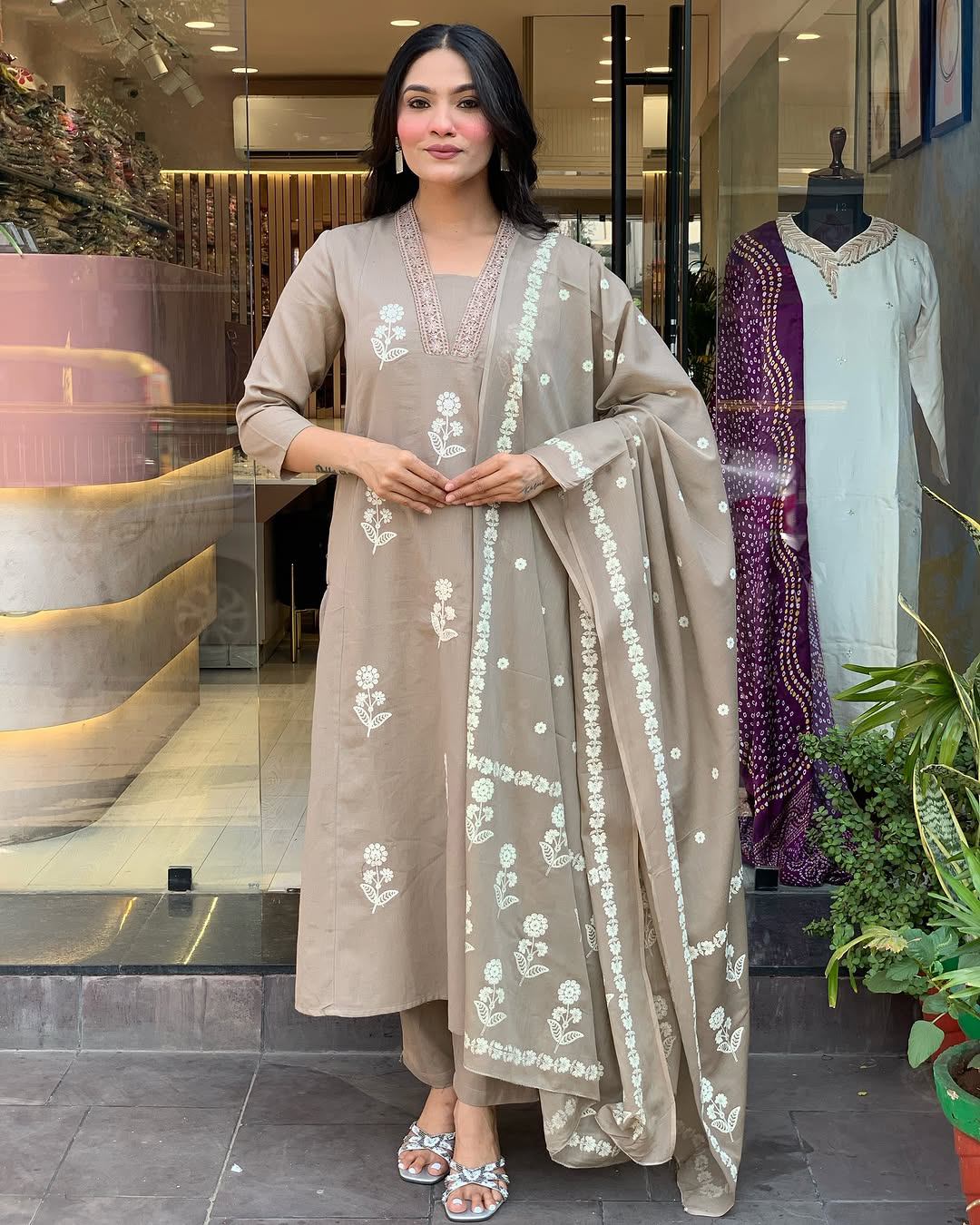
Vichitra silk has a more fluid, slightly textured appearance and can support a polished modern silhouette. Modern Taupe Vichitra Silk Embroidered Co-Ord Set for Women shows how taupe can act as a neutral canvas for embroidery-inspired detailing. A co-ord set is useful when the wearer wants the visual coordination of traditional dressing with the ease of separate, repeatable pieces.
Silk blends offer sheen and structure without the weight or expense of some pure silks. Teal Blue Embroidered Silk Blend Kurta Dupatta Set and Beige Embroidered Silk Kurti Pant Dupatta Set Women illustrate two opposite approaches: jewel-toned depth in teal blue and a quiet neutral base in beige. Silk blends are suitable for evening dinners, receptions and indoor festive events where the surface can catch warm lighting.
Cotton blends are practical for daytime traditional wear because they generally breathe better than heavy synthetic or densely woven fabrics. Teal Embroidered Cotton Blend Kurta Dupatta Set Women can work for a family ceremony, cultural programme or daytime festive lunch. Cotton-blend garments also pair easily with flat sandals, fabric potlis and lighter jewellery.
Jacquard already has a woven pattern or raised surface, so additional embroidery should be considered carefully. Orange Jacquard Embroidered Kurta Set with Organza Dupatta gains richness from the contrast between a textured kurta and a lighter organza layer. A garment with both jacquard and embroidery doesn't need a heavily embellished necklace; earrings and a clean hairstyle can provide better balance.
Handloom silk brings irregularities and tactile character that complement heritage-inspired dressing. Premium Handloom Silk Saree with Handkatha suits a saree-led interpretation of Kashmiri-inspired fashion, especially when paired with a blouse or accessories carrying small floral, paisley or leaf references rather than a full head-to-toe motif treatment.
Kashmiri Traditional Colours & Embroidery-Inspired Fashion for Traditional Occasions
A Kashmiri-inspired traditional outfit should begin with one dominant colour, one supporting neutral and one carefully repeated motif. This three-part method prevents embroidery, jewellery and accessories from competing for attention.
For a daytime Haldi ceremony, mustard, saffron and warm beige create a bright but grounded combination. Women's Mustard Silk Blend Kurta Set with Dupatta can be styled with antique-gold earrings, tan or brown footwear and a small rust accent in the dupatta border. Avoid pairing mustard with too many high-saturation colours because yellow-orange shades already draw attention to the face.
For a puja or daytime family gathering, pastel blue, ivory and soft silver create a cooler composition. Pastel Blue Embroidered Chanderi Kurta Set with Dupatta can be worn with pearl studs, silver-toned bangles and embroidered juttis in cream. Keep the makeup and accessories light so the Chanderi surface remains the main source of delicacy.
For an evening reception, teal, walnut, wine and antique gold create more contrast. Teal Blue Embroidered Silk Blend Kurta Dupatta Set can take a structured clutch, low bun and medium-sized gold earrings. If the dupatta contains visible embroidery, drape it over one shoulder with the design facing outward instead of adding a second heavily worked layer.
For a relaxed traditional gathering, teal cotton, beige and dark brown offer comfort with visual definition. Teal Embroidered Cotton Blend Kurta Dupatta Set Women can be paired with braided hair, leather or woven sandals and a simple metal bracelet. This combination remains festive without relying on high shine.
A saree creates a different route into the same design language. Premium Handloom Silk Saree with Handkatha can be worn with a blouse in walnut, ivory or muted teal, depending on the dominant saree colour. A small badam or chinar-inspired earring is usually enough; repeating a large motif on the blouse, jewellery and handbag can make the styling feel overly literal.
Kashmiri Traditional Colours & Embroidery-Inspired Fashion in Modern Silhouettes
Contemporary silhouettes look natural with Kashmiri references when the references are edited rather than copied across every garment component. A straight kurta, relaxed co-ord, cropped blouse or simple saree drape can carry one heritage-inspired detail successfully.
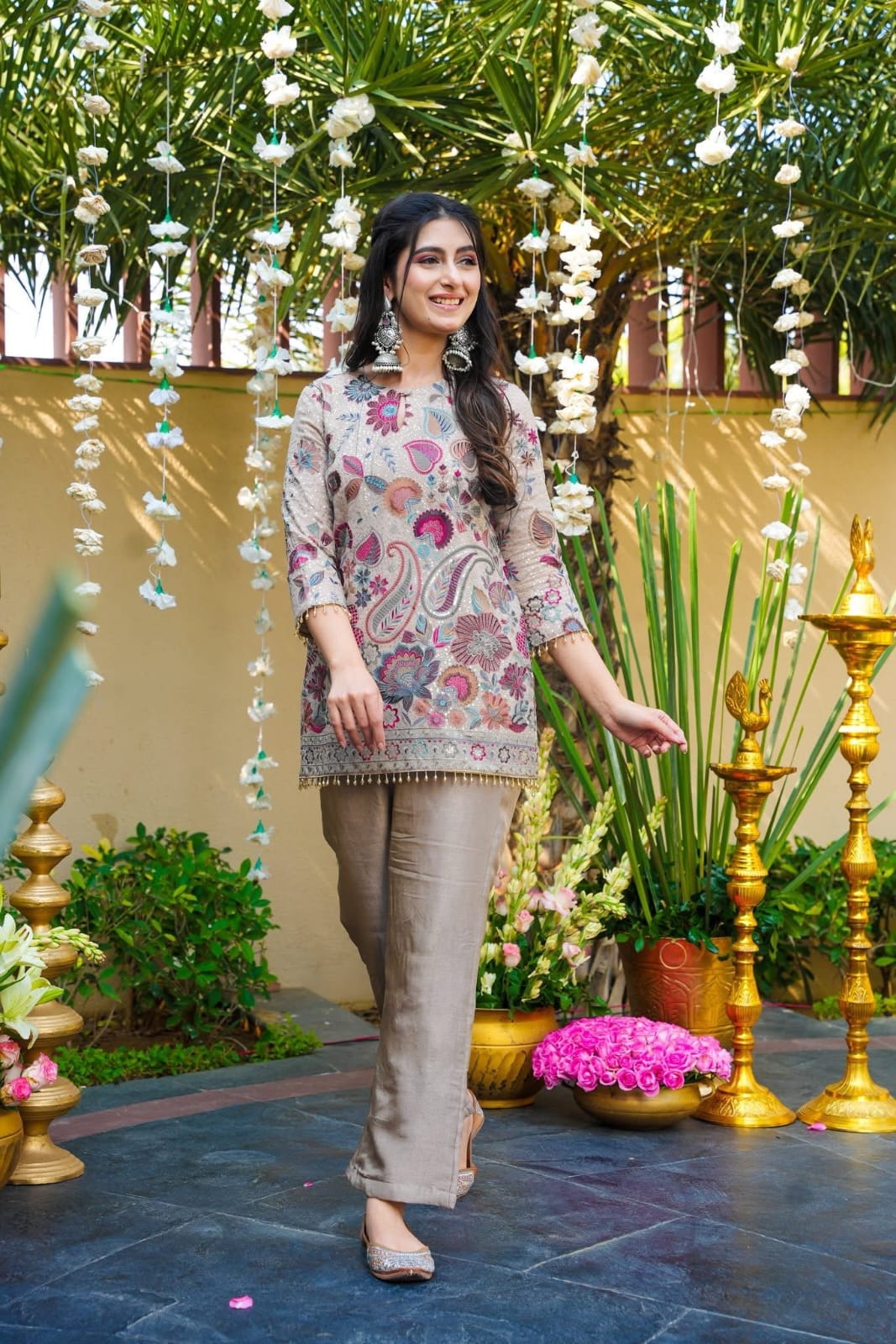
A modern taupe co-ord set can use a chinar border at the sleeve or trouser hem instead of an all-over floral design. Modern Taupe Vichitra Silk Embroidered Co-Ord Set for Women demonstrates how a neutral colour and coordinated separates can preserve an ethnic mood while remaining suitable for a work-adjacent festive event or an intimate dinner.
A kurta with an embroidered yoke suits people who want the focus near the face. A hem border works better for a longer silhouette because the movement of the fabric reveals the pattern while walking. A dupatta corner is the most flexible placement because it can be shown prominently for a ceremony or folded away for easier movement.
Colour blocking is another effective contemporary method. Pair a beige embroidered kurti with a teal dupatta, or use an orange jacquard kurta with a cream organza layer. The combination should repeat at least one colour in the jewellery, footwear or bag so that the outfit appears intentional rather than assembled from unrelated pieces.
Traditional references also benefit from modern restraint in accessories. One pair of jhumkas, a narrow bangle stack or a carved wooden pendant can echo Kashmiri craft without turning the outfit into a themed costume. Metallic zari, sequins and mirror work should be added only when the base fabric and embroidery leave enough visual space.
Kashmiri Traditional Colours & Embroidery-Inspired Fashion: Care and Buying Checks
Embroidery-inspired ethnic wear lasts longer when the buyer checks fabric structure, thread density, lining, colour contrast and care instructions before purchasing. Visual richness alone doesn't reveal whether a garment will remain comfortable or retain its shape.
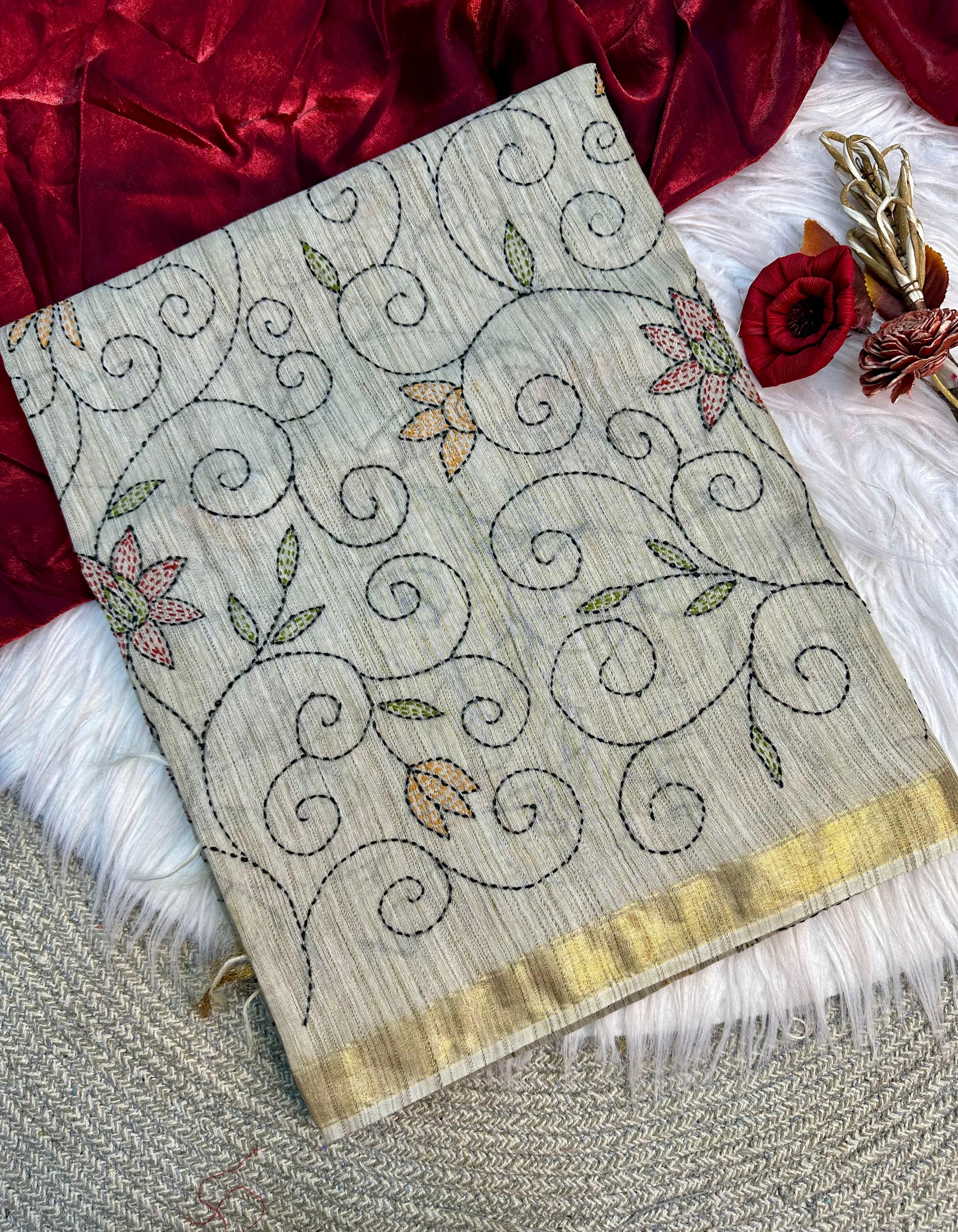
Check the reverse side of embroidery when possible. Secure thread ends, even stitch spacing and a smooth inner finish usually indicate better construction than loose knots or long floating threads. A heavily embroidered neckline can feel scratchy without a lining, so lining matters particularly for silk blends, jacquard and dense threadwork.
Assess colour under natural light before choosing a matching dupatta or blouse. Saffron, mustard, rust and orange can appear very similar under warm indoor bulbs but separate clearly in daylight. Teal can shift towards blue or green depending on the weave, so matching accessories by daylight reduces the risk of a visibly mismatched set.
Follow the care label for every fabric. Chanderi, organza and fine embroidery generally benefit from gentle dry cleaning or careful professional cleaning, while some cotton blends may permit mild hand washing. Do not wring embroidered garments, don't iron directly over raised threadwork and store delicate dupattas folded with acid-free tissue or a clean cotton layer.
Use a low-heat iron on the reverse side when the care label permits ironing. Place a pressing cloth between the iron and the garment to protect zari, sequins, organza and glossy silk surfaces. Air garments fully after wearing them before folding them into a wardrobe, especially after a crowded ceremony or humid outdoor event.
Budget should reflect fabric and construction rather than embroidery count alone. A handloom silk saree with fine handwork may cost more because of fibre quality, weaving time and skilled labour, while a machine-embroidered cotton blend can provide a more accessible option for frequent wear. Comparing fabric composition, lining and finishing gives a clearer value assessment than judging surface sparkle.
Kashmiri Traditional Colours & Embroidery-Inspired Fashion: A Practical Styling Formula
The simplest reliable formula is one heritage colour, one neutral fabric, one visible motif and one restrained accessory group. The formula keeps a traditional outfit expressive while leaving enough room for comfort and personal style.
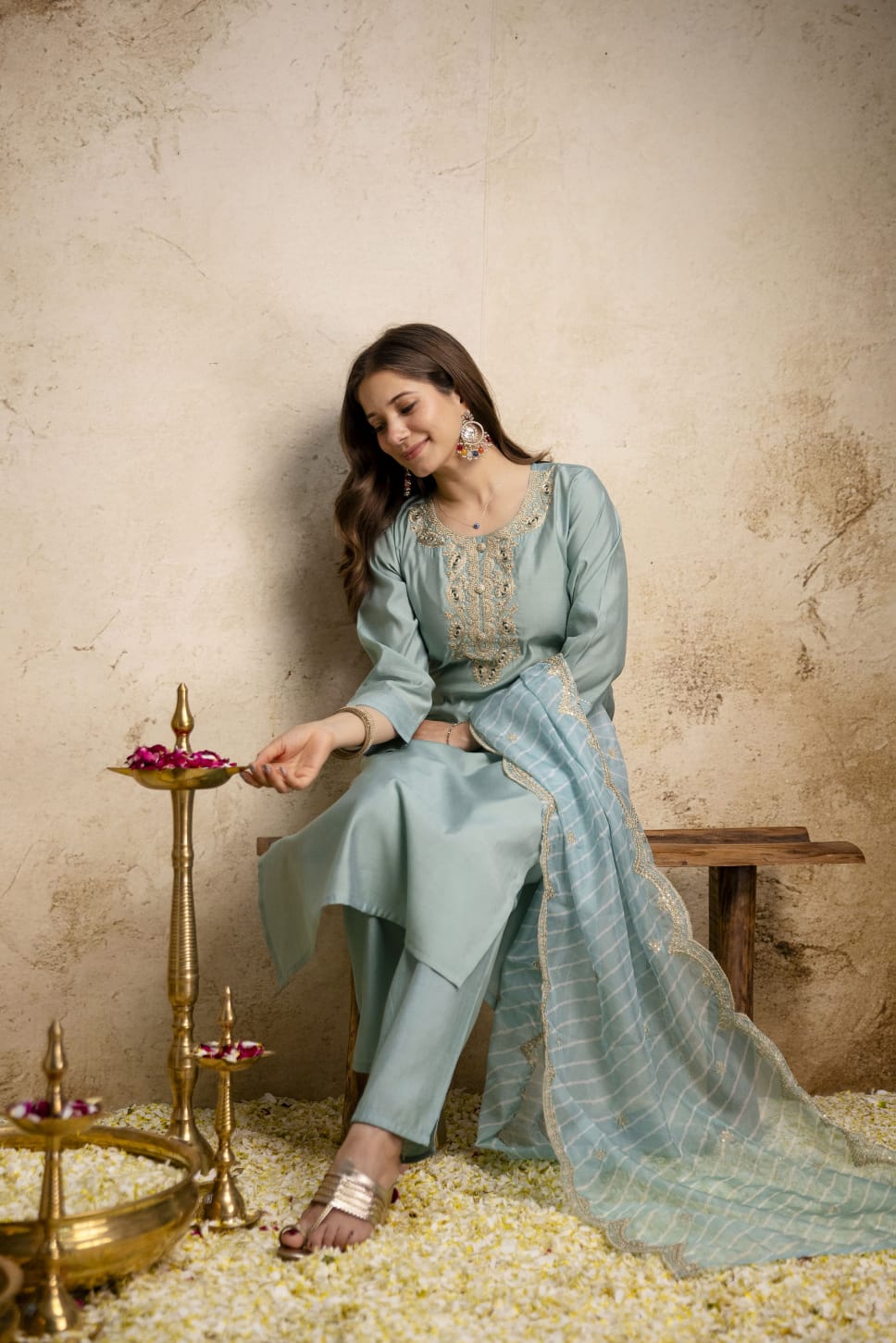
Choose saffron or mustard when the event is daytime and the outfit needs warmth. Choose teal, indigo or walnut when the event is in the evening and the outfit needs depth. Choose beige, taupe, ivory or pastel blue when embroidery should appear delicate and the overall effect should remain calm.
Repeat the principal colour twice, but not everywhere. A teal kurta can echo teal in a stone on the earrings or in a narrow dupatta border. A mustard outfit can repeat mustard in a woven potli while keeping the footwear and jewellery neutral.
Let the garment's most detailed area determine the rest of the styling. A heavily embroidered dupatta calls for a simpler kurta and modest jewellery. A plain dupatta allows a detailed yoke, statement earrings or a richer blouse. Proportion is the practical difference between a considered heritage-inspired outfit and visual overload.
Kashmiri Traditional Colours & Embroidery-Inspired Fashion becomes most convincing when it respects both craft references and contemporary needs. Saffron, chinar, walnut, badam and floral forms provide the vocabulary, while fabric selection, motif scale, occasion and care determine how successfully that vocabulary becomes a wearable traditional outfit.
Common Questions About Kashmiri Colours and Embroidery-Inspired Dressing
Which colours are traditionally associated with Kashmiri-inspired fashion?
Saffron, mustard, chinar red, rust, walnut brown, almond beige, snow white, teal and indigo are commonly associated with Kashmiri-inspired palettes. These colours can be used as full garments, borders, dupattas or small accessory accents.
What are the most recognisable Kashmiri embroidery motifs?
Badam or almond-shaped paisleys, chinar leaves, floral vines, foliage and repeated jaali patterns are the most recognisable motifs. Sozni-inspired fine needlework and Aari-inspired chain-stitch outlines offer two different levels of detail.
Can Kashmiri-inspired outfits be worn for a Haldi ceremony?
Yes, mustard, saffron, warm beige and rust work particularly well for a daytime Haldi ceremony. Choose breathable cotton blends or lighter silk blends and balance a bright kurta with antique-gold jewellery and neutral footwear.
Which fabric is best for Kashmiri-inspired embroidery in summer?
Cotton blends and lightweight Chanderi are generally more comfortable for summer traditional wear than heavy jacquard or dense silk. Chanderi suits delicate embroidery, while cotton blends are practical for longer daytime ceremonies and repeated use.
How can I style a teal Kashmiri-inspired kurta set?
Pair a teal kurta set with beige, walnut brown, antique gold or muted rust accents. Medium-sized earrings, a simple clutch and neutral footwear keep the teal colour prominent without creating excessive contrast.
How should embroidered Kashmiri-inspired clothing be stored?
Store embroidered garments clean and completely dry, folded with a clean cotton layer or acid-free tissue. Avoid hanging delicate Chanderi, organza or heavily worked pieces for long periods, and never iron directly over raised embroidery or zari.





