

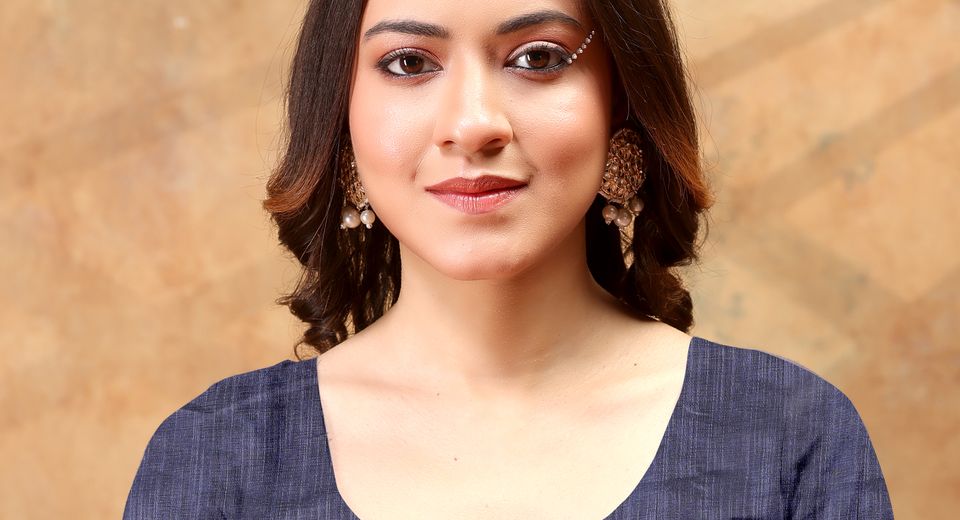
Kashmiri Pheran and Taranga Belong to Different Clothing Traditions, even though both are associated with the Himalayan region and are sometimes grouped together under the broad label of ethnic wear. A pheran is a loose Kashmiri garment worn over the body, while a taranga is a ceremonial headpiece associated with Himachali communities. Their shapes, uses, histories and cultural meanings are not interchangeable.
Understanding that distinction helps shoppers describe garments accurately, choose suitable styling, and appreciate regional dress without flattening several communities into one visual category. The difference also explains why a flowing pheran can be discussed alongside salwar suits and kurtas, whereas a taranga is usually styled as an accessory with a complete bridal or festive ensemble.
Why the Kashmiri pheran and Himachali taranga are often confused
The confusion usually comes from geography and visual association rather than from shared garment construction. Kashmir and Himachal Pradesh are neighbouring Himalayan cultural zones, and both have developed clothing suited to cold weather, ceremonial gatherings and layered dressing.
Photographs of mountain weddings, craft fairs and winter celebrations often place several regional garments in the same editorial setting. A richly embroidered pheran may appear beside a woman wearing a taranga, creating the impression that both names refer to versions of the same outfit. In reality, one name identifies a principal garment and the other generally identifies headwear.
Regional vocabulary also changes across districts and communities. A garment may have different names in Kashmiri, Dogri, Himachali or local dialect contexts, while the same English caption may use the broad terms traditional dress or Himalayan attire. Reading the name, function and construction together is more reliable than identifying clothing from colour or ornament alone.
What is a Kashmiri pheran?
A Kashmiri pheran is a loose, long tunic traditionally associated with Kashmir and designed to be worn over other layers. The garment commonly falls below the knee, has generous ease through the body, and may feature long sleeves, a round or modest neckline, and embroidery around the neck, cuffs or front opening.
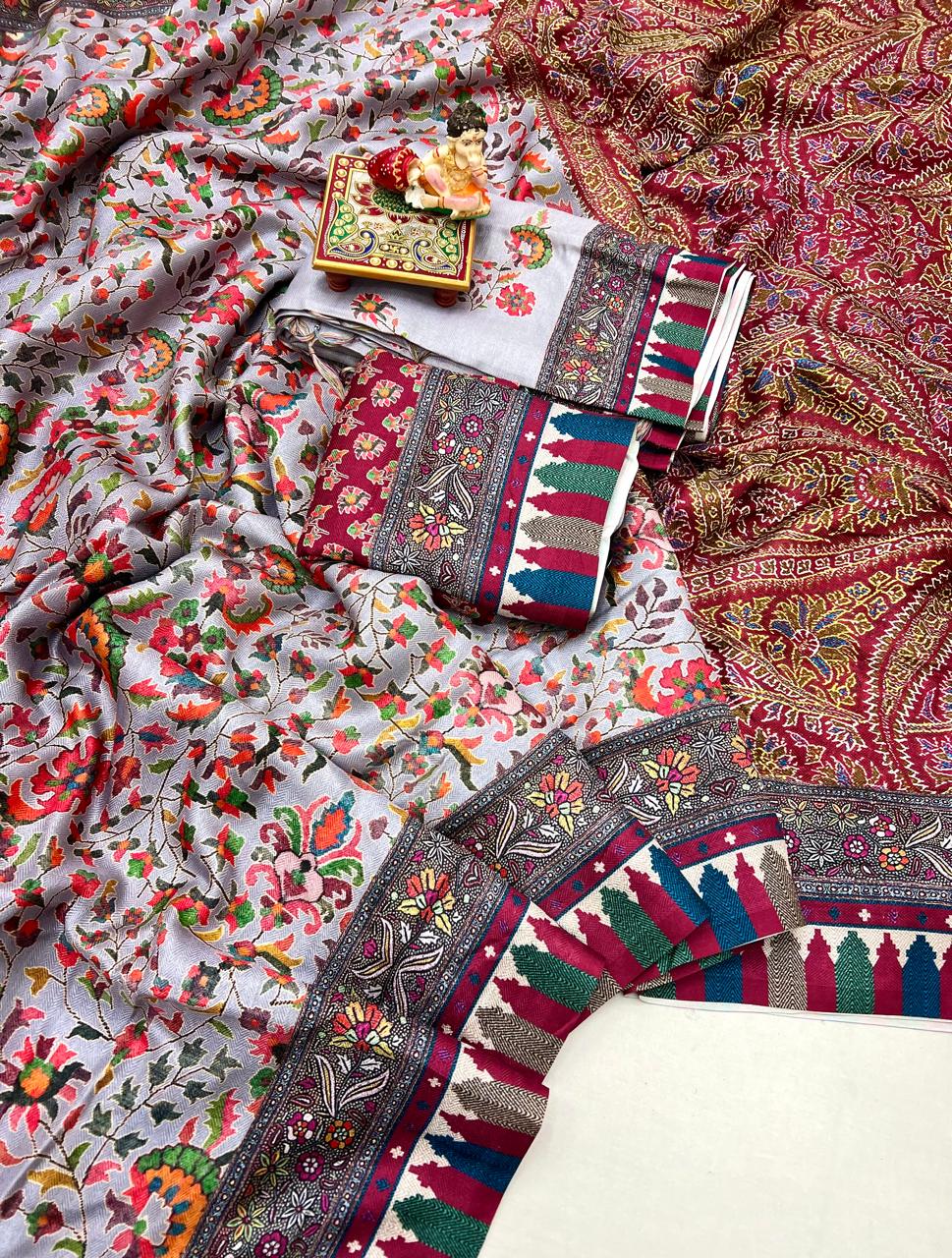
The roomy silhouette has a practical history. Kashmir has severe winters, and a loose outer layer can accommodate woollen garments underneath without restricting movement. A heritage kangri, a small earthen fire pot used for warmth, may also be carried beneath a pheran in some historical contexts. Contemporary wearers should treat this as cultural and historical context rather than a recommendation for handling fire beneath modern synthetic clothing.
How the pheran is constructed
A pheran usually prioritises volume, coverage and comfort over a close-fitting waist. Classic versions may be made from wool or other warm fabrics, while contemporary versions use cotton, rayon, velvet, silk blends, Chanderi and lightweight woven textiles for indoor or festive use.
Embroidery gives the garment much of its visual identity. Kashmiri needlework may include sozni, a fine hand embroidery technique often worked with delicate floral or paisley forms, and ari work, which uses a hooked needle to create a chain-stitch effect. The exact technique, density and motif depend on the artisan, region, fabric and intended price.
A pheran can be worn with a salwar, churidar, straight trousers or a long skirt. A simple version may function as an everyday winter layer, while a heavily embroidered version can serve as festive clothing. The defining feature remains the loose Kashmiri tunic shape, not a particular colour or level of embellishment.
What fabrics and details suit a current pheran?
Wool and wool blends provide warmth, while cotton, viscose and silk blends are more practical for milder weather or indoor celebrations. Banarasi silk, Chanderi and satin can create a dressier interpretation, although fabric weight should match the silhouette so that the garment drapes instead of collapsing around the body.
A Kashmiri-inspired outfit becomes more convincing when the neckline, sleeves and embroidery are allowed to remain visible. A narrow trouser, a plain salwar and understated jewellery often support the garment better than several competing statement pieces. A Pashmina shawl can add warmth, but a synthetic fashion stole should not be described as genuine Pashmina unless its fibre content and provenance are documented.
What is a taranga in Himachali dress?
A taranga is a time-honoured Himachali ceremonial headpiece, especially associated with bridal and festive dressing in parts of Himachal Pradesh. It is worn on the head rather than over the torso, and its precise shape, materials and decoration vary according to community, district and family custom.
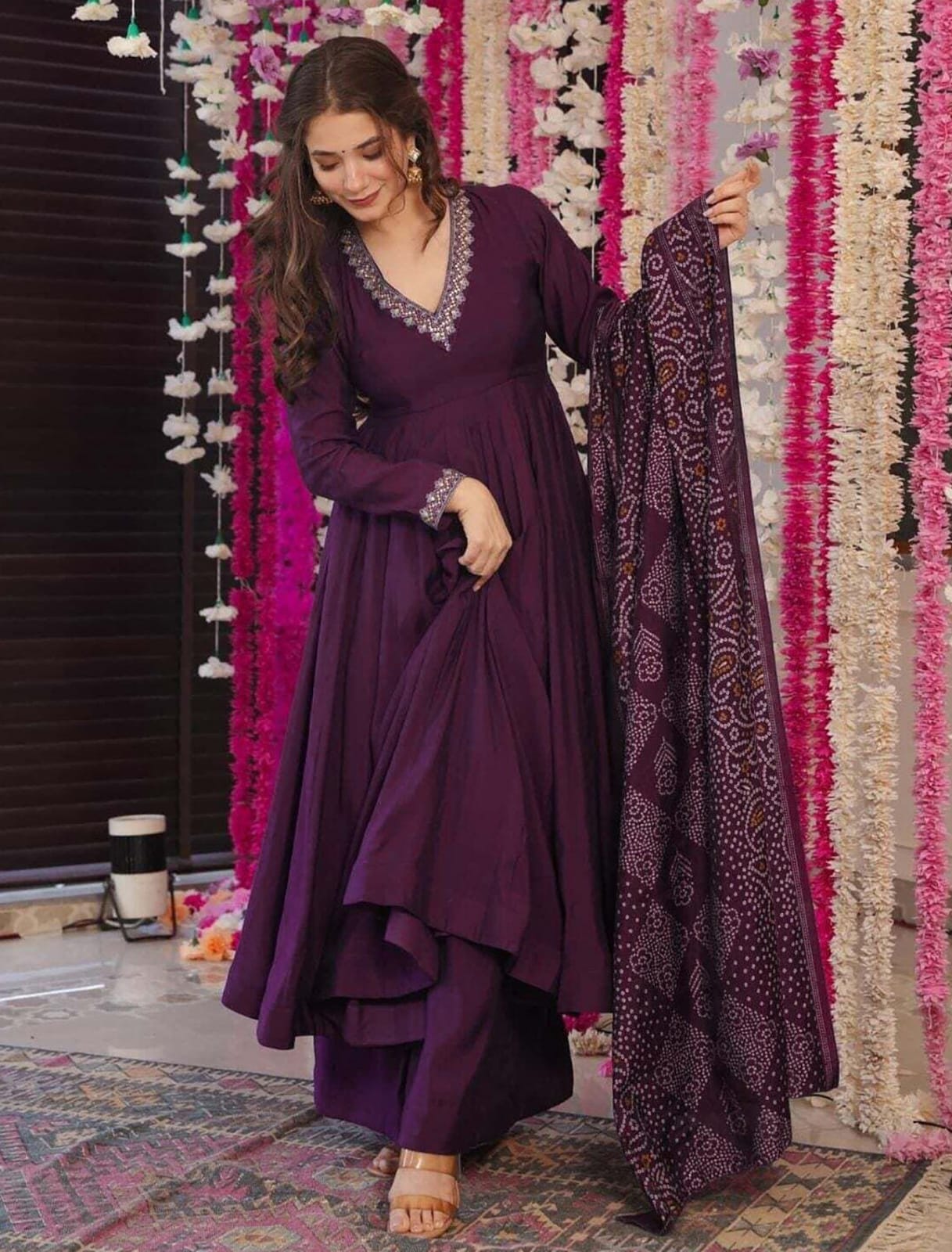
Taranga styles can include a structured or layered fabric form positioned over the hair, with decorative edging, metallic details, brocade, ribbons or ornaments. In some Himachali wedding traditions, the headpiece is worn with a long braid, a veil or additional jewellery. The arrangement may signal bridal status, regional identity or participation in a significant ceremony.
Why taranga designs vary by region
Himachal Pradesh contains distinct cultural and textile traditions across areas such as Kullu, Mandi, Chamba, Kangra and surrounding communities. A taranga seen in one district may not have the same proportions or ornamentation as a headpiece described by the same name elsewhere.
Family practice also matters. One bride may wear a heavily decorated ceremonial taranga with silver jewellery, while another may use a lighter fabric headpiece with a veil. Photographs, museum records and local artisans are better sources for identifying a specific regional form than a generic online image labelled simply Himachali taranga.
The word should therefore be used with care. Calling every conical cap, veil or embellished head ornament a taranga can erase distinctions between local headwear traditions. Asking where the piece was made, which community uses it and whether it's bridal or everyday attire produces a more true description.
Kashmiri Pheran and Taranga Belong to Different Clothing Traditions: the clearest comparison
The simplest distinction is functional: a Kashmiri pheran is a body garment, while a taranga is a headpiece. Both may be ornate, but ornament doesn't make their construction or cultural role the same.
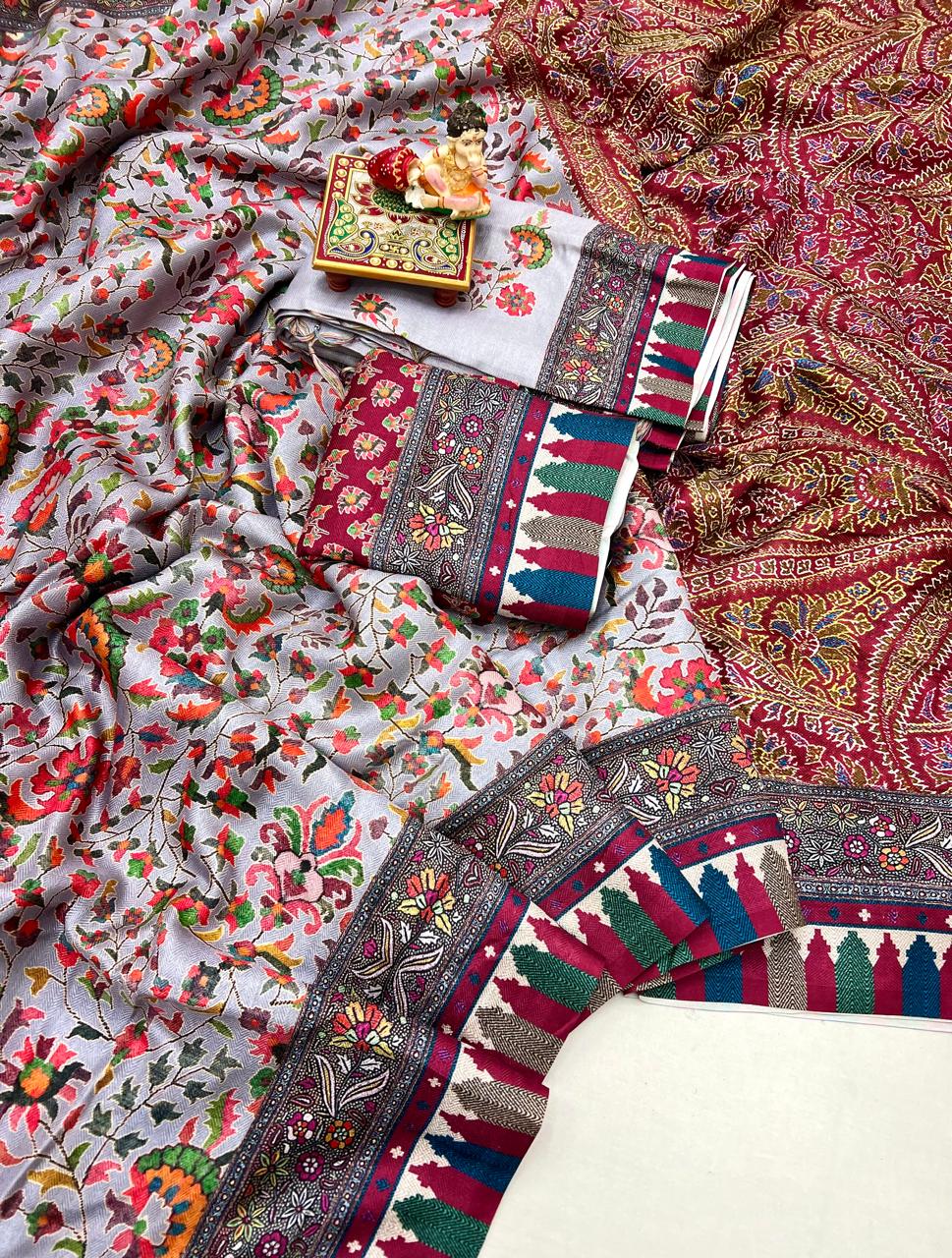
- Place of origin: The pheran is strongly associated with Kashmir, while the taranga is associated with Himachali communities and regional wedding traditions.
- Part of the outfit: A pheran covers the torso and extends down the legs; a taranga sits on or around the head.
- Primary purpose: A pheran offers coverage, layering and warmth, whereas a taranga primarily communicates ceremonial identity and completes a classic head arrangement.
- Silhouette: A pheran is loose and flowing; a taranga is structured, wrapped or layered to remain secure on the head.
- Styling relationship: A pheran can be paired with trousers, a salwar or a skirt. A taranga is normally worn with a full regional ensemble rather than treated as a standalone outfit.
- Variation: Pheran variations often centre on length, sleeve shape, fabric and embroidery. Taranga variations are more closely connected to local headwear customs, bridal practice and ornament arrangement.
These differences don't mean that the garments can't appear in a fashion editorial together. They mean that each item should retain its own name, context and cultural explanation when it's presented to an audience.
How to style related Himalayan-inspired clothing respectfully
Respectful styling begins by identifying whether an outfit is a direct regional garment, a contemporary interpretation or merely inspired by a craft vocabulary. A contemporary kurta with floral embroidery should not automatically be marketed as a Kashmiri pheran, and a decorative headband should not automatically be labelled a taranga.
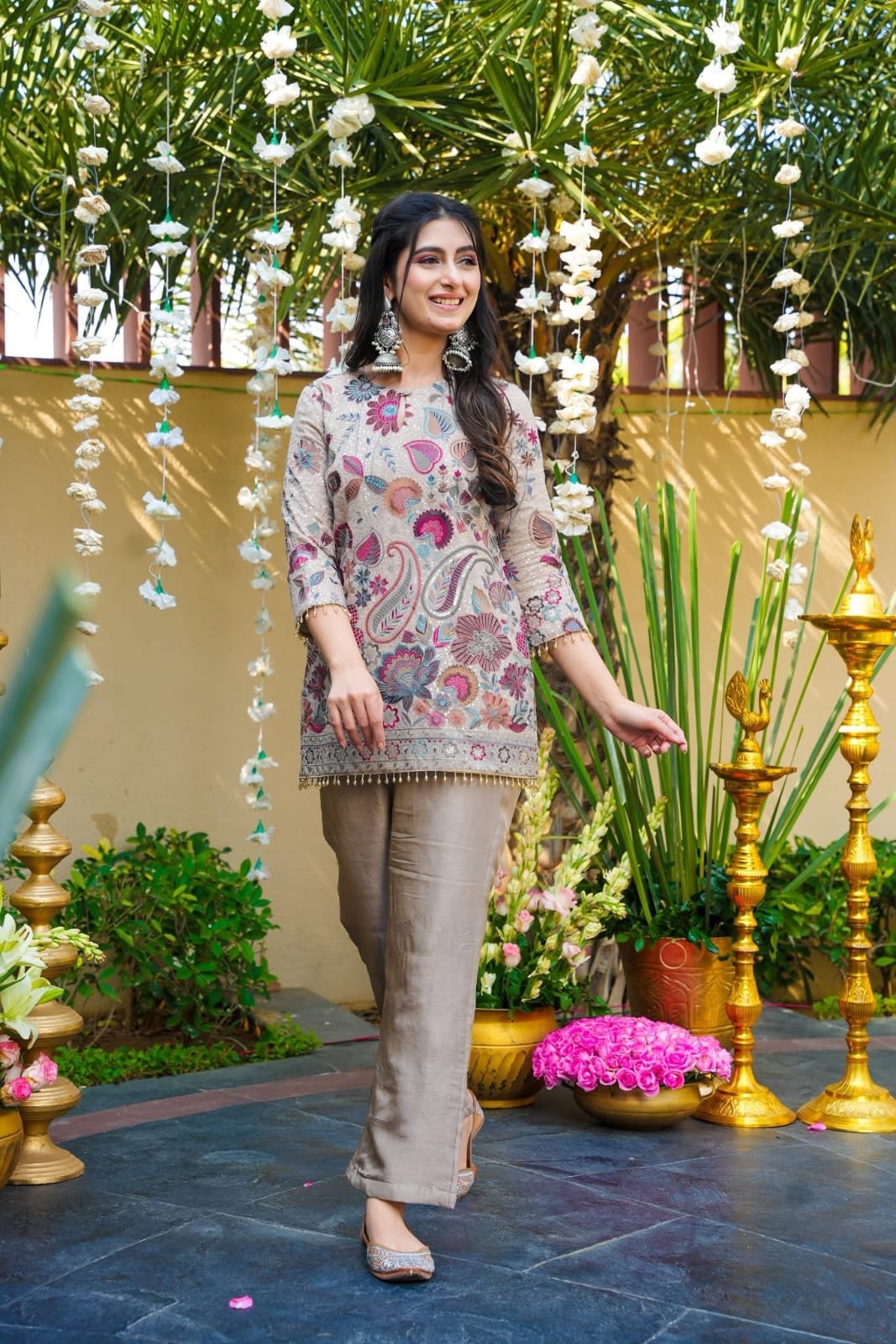
For a practical winter-inspired look, pair a loose tunic with straight trousers, a plain salwar and a shawl in a compatible texture. The Kashmiri Style Pashmina Saree With Shawl Set illustrates how Kashmiri visual references can be adapted to a saree-based ensemble, while the Grey Kashmiri Style Pashmina Saree With Shawl & Blouse brings a more formal palette for a daytime or evening gathering.
Not every related outfit needs to imitate a pheran. The Elegant Pista Festive Wear Kurta Pant Set can be styled with minimal jewellery and a soft dupatta for a clean festive silhouette. The Magenta Viscose Chanderi Kurta Set with Embroidered Dupatta demonstrates how Chanderi texture and embroidery can provide regional-inspired richness without pretending to be a historically exact Kashmiri garment.
For more colour and surface detail, the Maroon Embroidered Jalpari Kurta Pant Dupatta Set can work for a family celebration when the accessories remain balanced. The Parrot Kanchi Cotton Kurta Dupatta Set gives a lighter cotton option for daytime wear, where breathable fabric matters more than heavy winter layering.
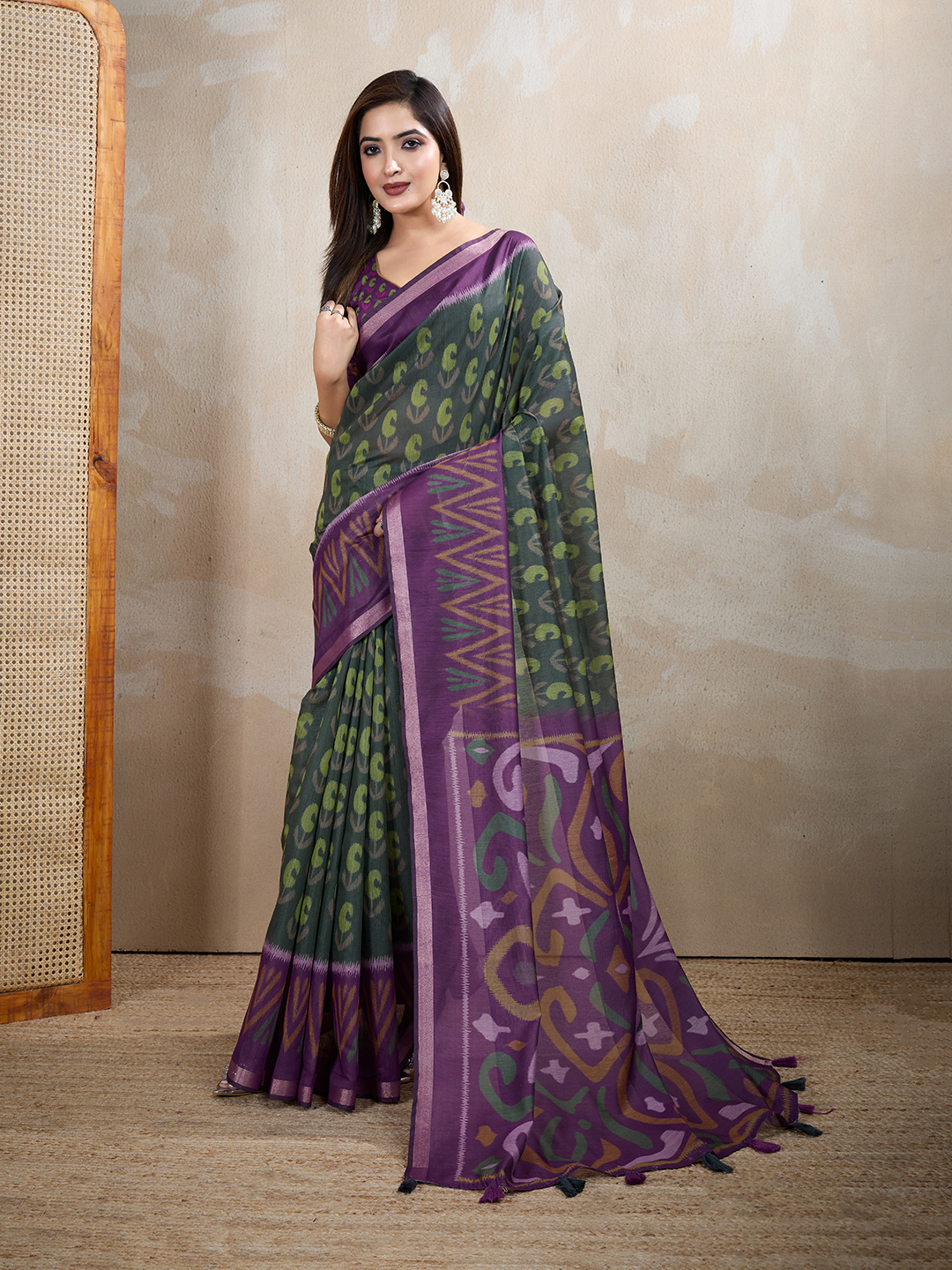
Sarees can also carry Himalayan-inspired colour stories without being confused with a pheran. Teal Rust Floral Satin Saree with Printed Pallu and Borders uses contrast and printed detail to create a festive look, while Indigo Peach Satin Saree with Striped Pallu and Border Work shows how border placement can provide structure to an otherwise fluid drape.
Can a taranga be added to a contemporary outfit?
A taranga can be added to a contemporary outfit only when its regional meaning and ceremonial form are acknowledged. A carefully sourced Himachali headpiece may be appropriate for a cultural event, wedding ceremony or documented editorial, but wearing it as a generic party accessory can detach it from the community that gives it meaning.
If the headpiece is used, keep the rest of the styling restrained so the taranga remains legible as a cultural object. Avoid combining a taranga with unrelated religious symbols, faux antique claims or invented regional descriptions. Credit the artisan or community source whenever that information is available.
How to identify an authentic-looking regional reference when shopping
Construction, terminology and source information offer better clues than colour alone when evaluating regional clothing. A maroon garment isn't automatically Kashmiri, and a red headpiece isn't automatically Himachali.

- Read the garment description: Look for the actual garment type, such as pheran, kurta, shawl or headpiece, instead of relying only on phrases like ethnic wear or mountain style.
- Check fibre content: Confirm whether the fabric is wool, cotton, viscose, silk, Chanderi or a blend. Fibre content affects warmth, drape, breathability and care.
- Inspect the construction: A loose body, long length and generous sleeves suggest a pheran-inspired silhouette. A shaped or layered item intended to sit on the head belongs to a different category.
- Ask about craft technique: Terms such as sozni, ari, zari and hand embroidery should be used accurately. Zari refers to metallic thread work, not to all forms of shiny decoration.
- Look for regional context: A responsible description should identify whether a design is classic, inspired by a region or a contemporary adaptation.
- Match care to material: Wool, Pashmina, Chanderi, satin and viscose require different washing and storage methods. Never assume that an embroidered garment is safe for machine washing.
Price can provide context but can't prove authenticity. Hand embroidery, natural fibres, artisan labour and documented provenance may raise the price, yet an expensive garment can still use a vague or inaccurate regional label.
Care instructions for pheran-inspired and embellished clothing
Care depends on fibre, lining and embroidery, so the care label should take priority over a generic ethnic-wear routine. Wool and Pashmina pieces commonly benefit from gentle dry cleaning or specialist washing, while cotton may tolerate a careful cold wash if embroidery and colourfastness permit.
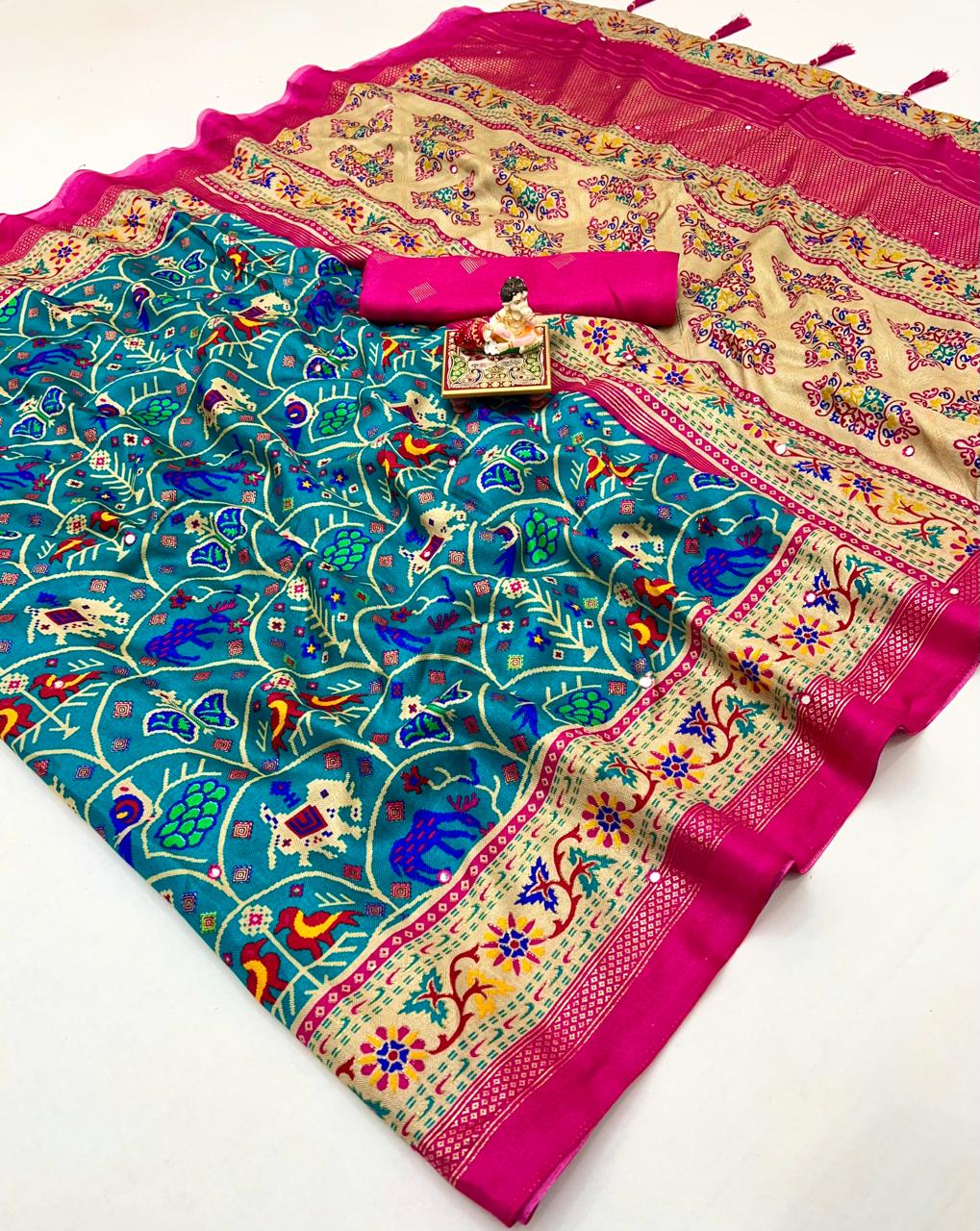
Store embroidered garments folded with acid-free tissue or a clean cotton covering rather than pressed tightly beneath heavy clothing. Keep zari away from damp storage, allow satin to dry completely before folding, and protect dark viscose or Chanderi from prolonged direct sunlight to reduce colour fading.
Taranga-style headpieces need additional support because crushing can permanently change their shape. Store a structured headpiece in a breathable box with soft tissue around raised decoration, and keep metal ornaments dry to reduce tarnishing. Avoid hanging a heavy ceremonial headpiece by a narrow loop because concentrated weight can distort the fabric.
Why the distinction matters beyond vocabulary
Kashmiri Pheran and Taranga Belong to Different Clothing Traditions because clothing carries information about place, labour, ceremony and community. Accurate naming gives readers a way to locate that information instead of treating all embroidered Himalayan clothing as one interchangeable category.
The distinction also protects practical knowledge. Knowing that a pheran is designed as a loose layered garment helps a wearer choose suitable proportions and winter fabrics. Knowing that a taranga is ceremonial headwear encourages careful sourcing, secure fitting and respect for the customs connected to its use.
Regional fashion can evolve without losing its identity. Designers and wearers may adapt silhouettes, colours and textiles for new climates and occasions, provided the adaptation is described honestly. A contemporary interpretation can be beautiful, useful and commercially successful without claiming to be an unchanged traditional object.
When a garment's construction, origin and cultural role are named clearly, styling becomes more thoughtful. The result isn't only a better outfit but also a more accurate account of India's diverse textile traditions.
Questions About the Kashmiri Pheran, Taranga and Their Regional Roots
Are a Kashmiri pheran and a taranga the same garment?
No. A Kashmiri pheran is a loose, long tunic worn over the body, while a taranga is a ceremonial headpiece associated with Himachali communities. They belong to different regional clothing traditions and serve different functions.
Is a pheran only worn in winter?
A traditional wool pheran is especially practical in winter because its loose shape accommodates warm layers. Contemporary pherans made from cotton, viscose or lighter silk blends can also be worn during indoor celebrations and milder weather.
Is a taranga worn as everyday clothing?
A taranga is more commonly associated with bridal, festive or ceremonial dressing than with everyday wear. Regional practice varies, so the appropriate form depends on the Himachali community, district and family tradition involved.
Can a saree be styled with Kashmiri-inspired details?
Yes, a saree can use Kashmiri-inspired colours, shawls, embroidery or floral motifs without becoming a pheran. A saree remains a separate garment, so the description should distinguish inspiration from a traditional Kashmiri tunic.
What is the difference between Pashmina and a regular shawl?
Pashmina traditionally refers to fine cashmere fibre, while a regular shawl may be made from wool, viscose, acrylic, silk or a blend. Fibre composition, weaving, finishing and provenance should be checked before calling a shawl genuine Pashmina.
How should embroidered Kashmiri clothing be washed?
Embroidered Kashmiri clothing should be cared for according to its fibre, lining and embroidery, with dry cleaning or specialist cleaning often safer for wool, Pashmina and dense embellishment. A cold gentle wash is suitable only when the care label confirms that the fabric and colour are washable.




