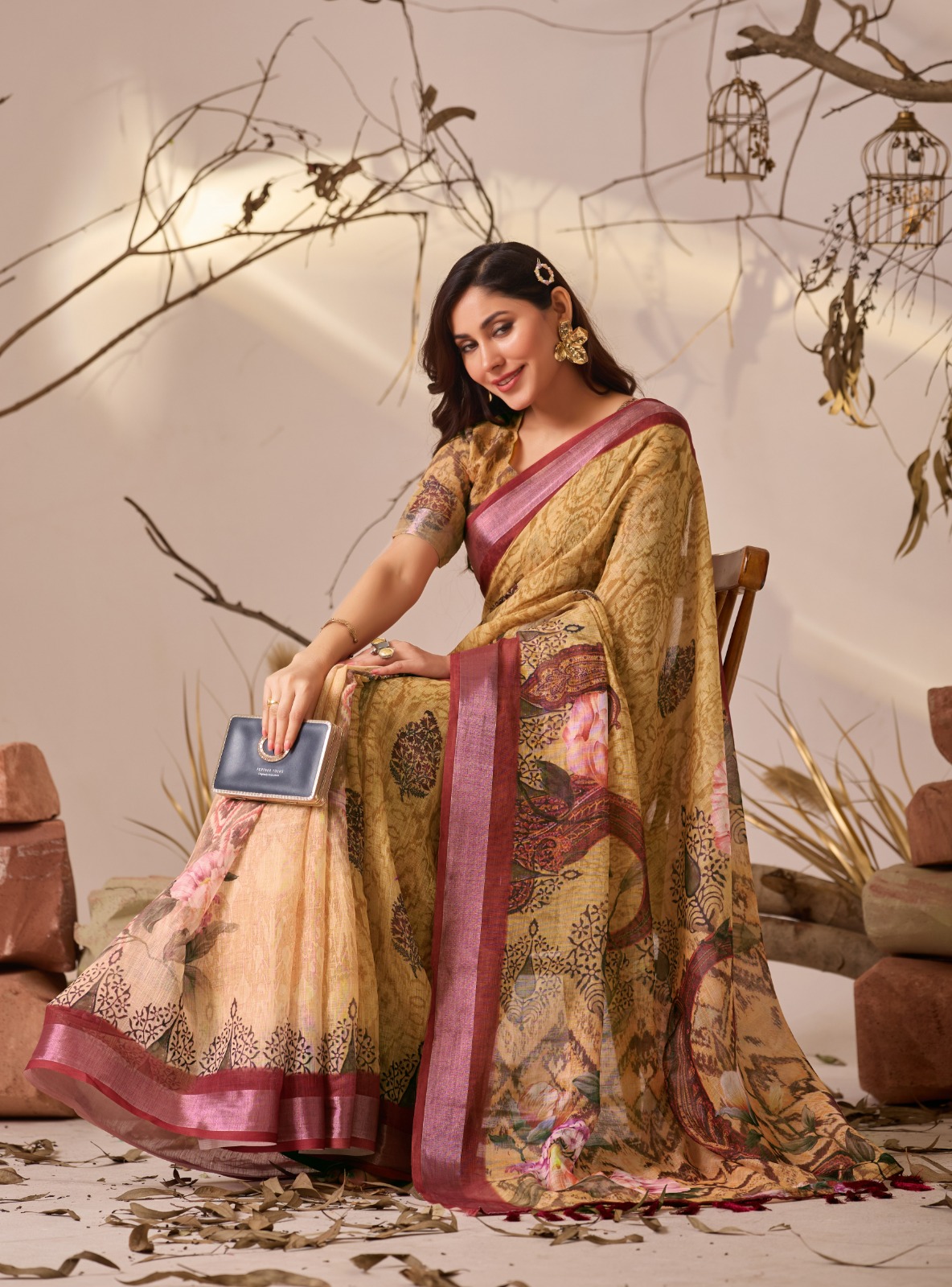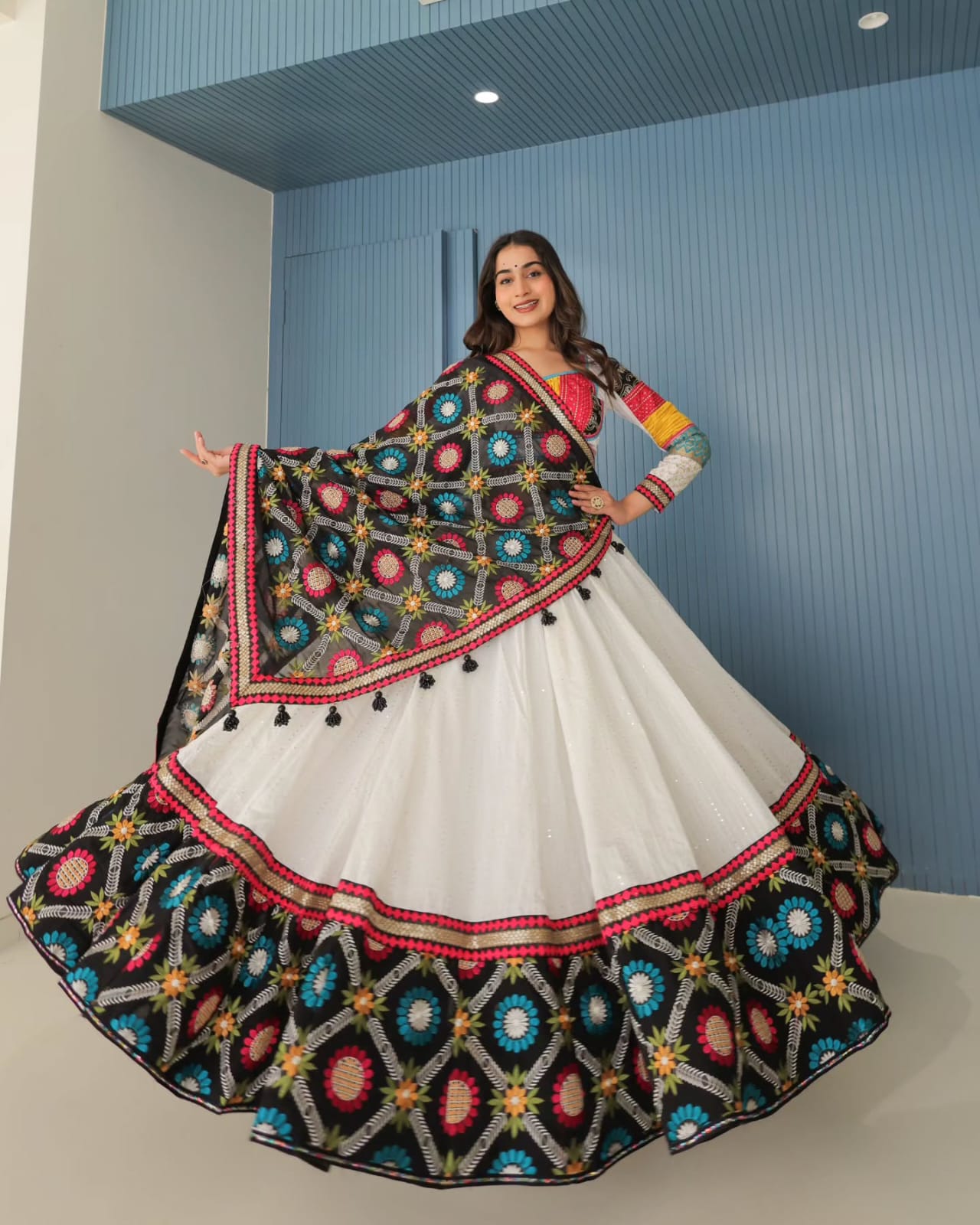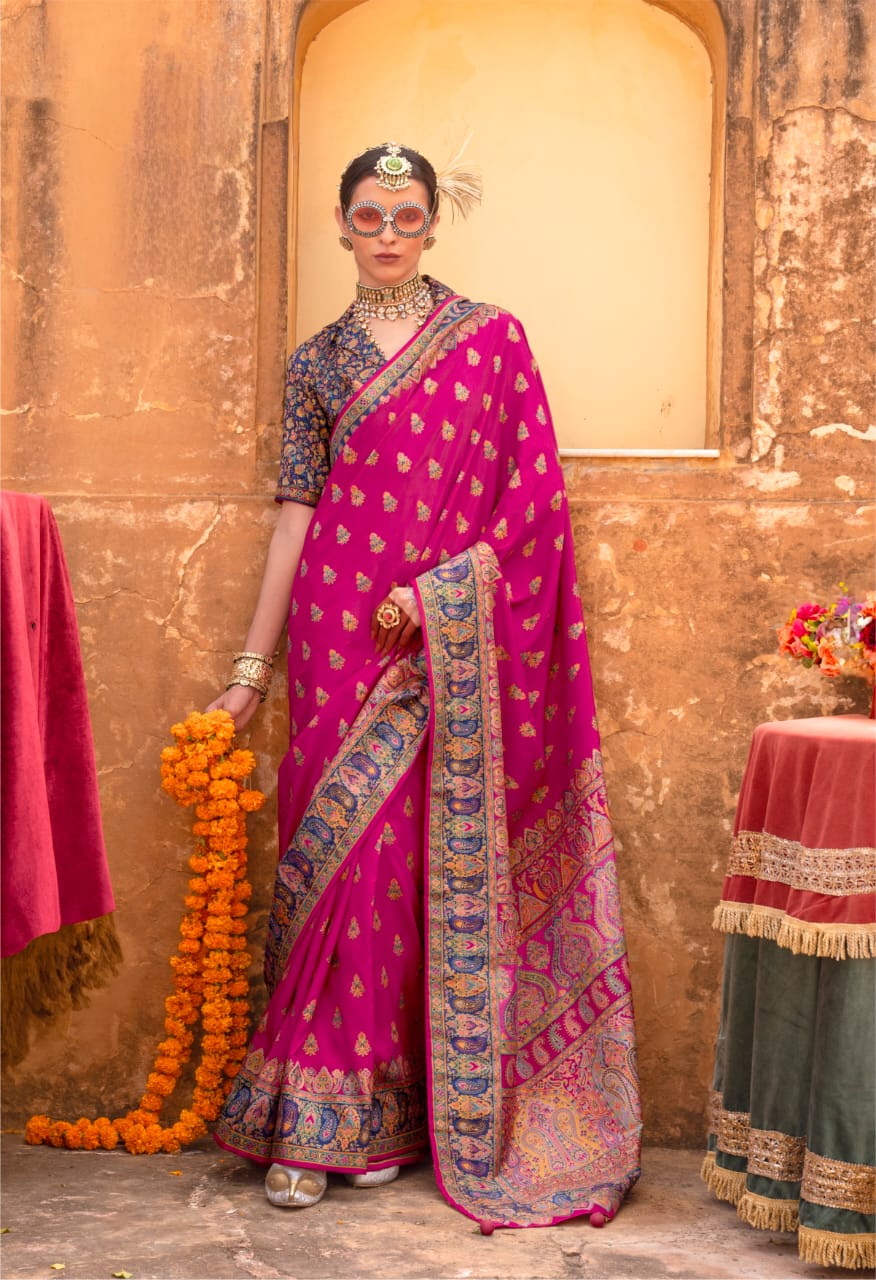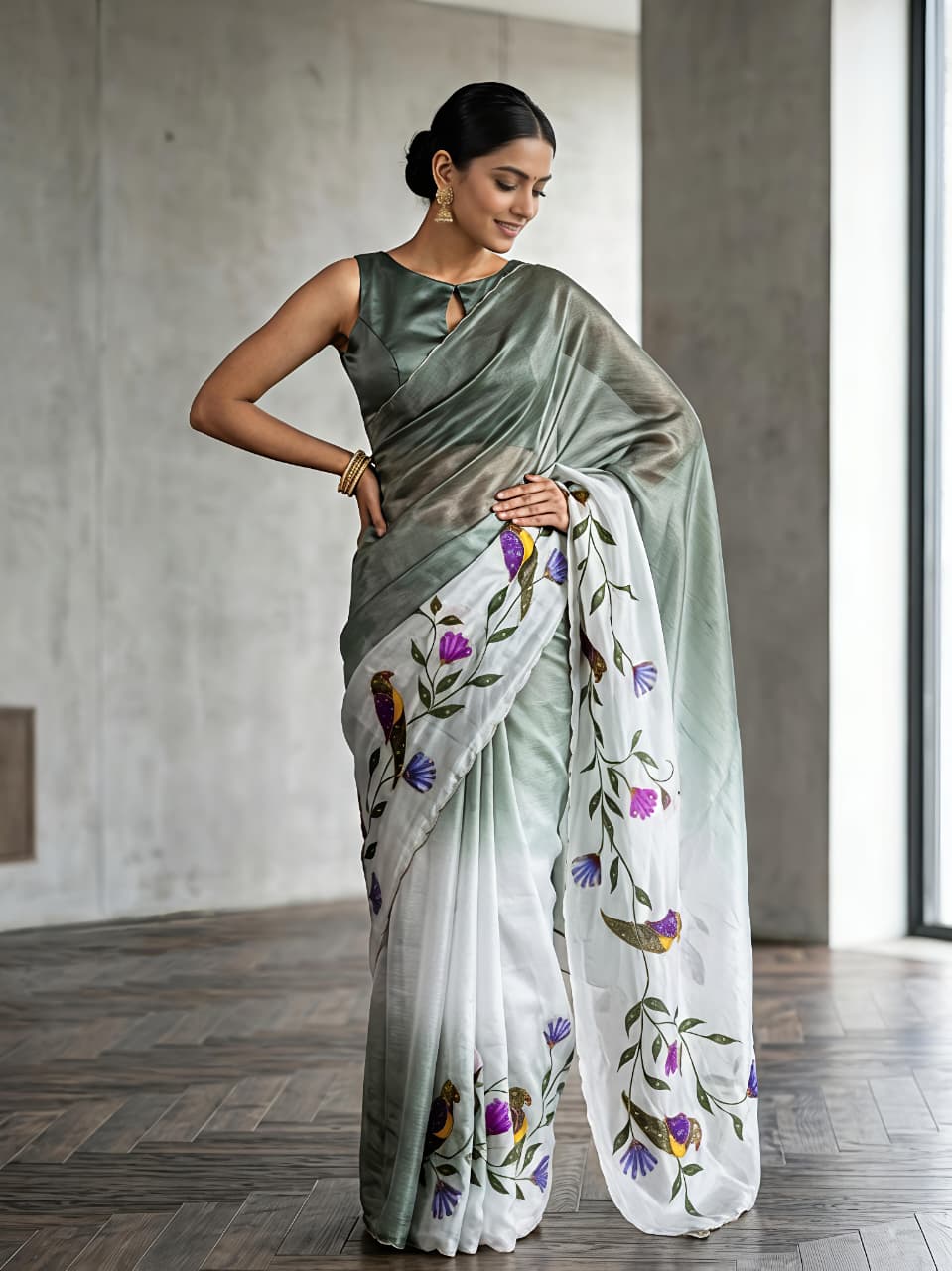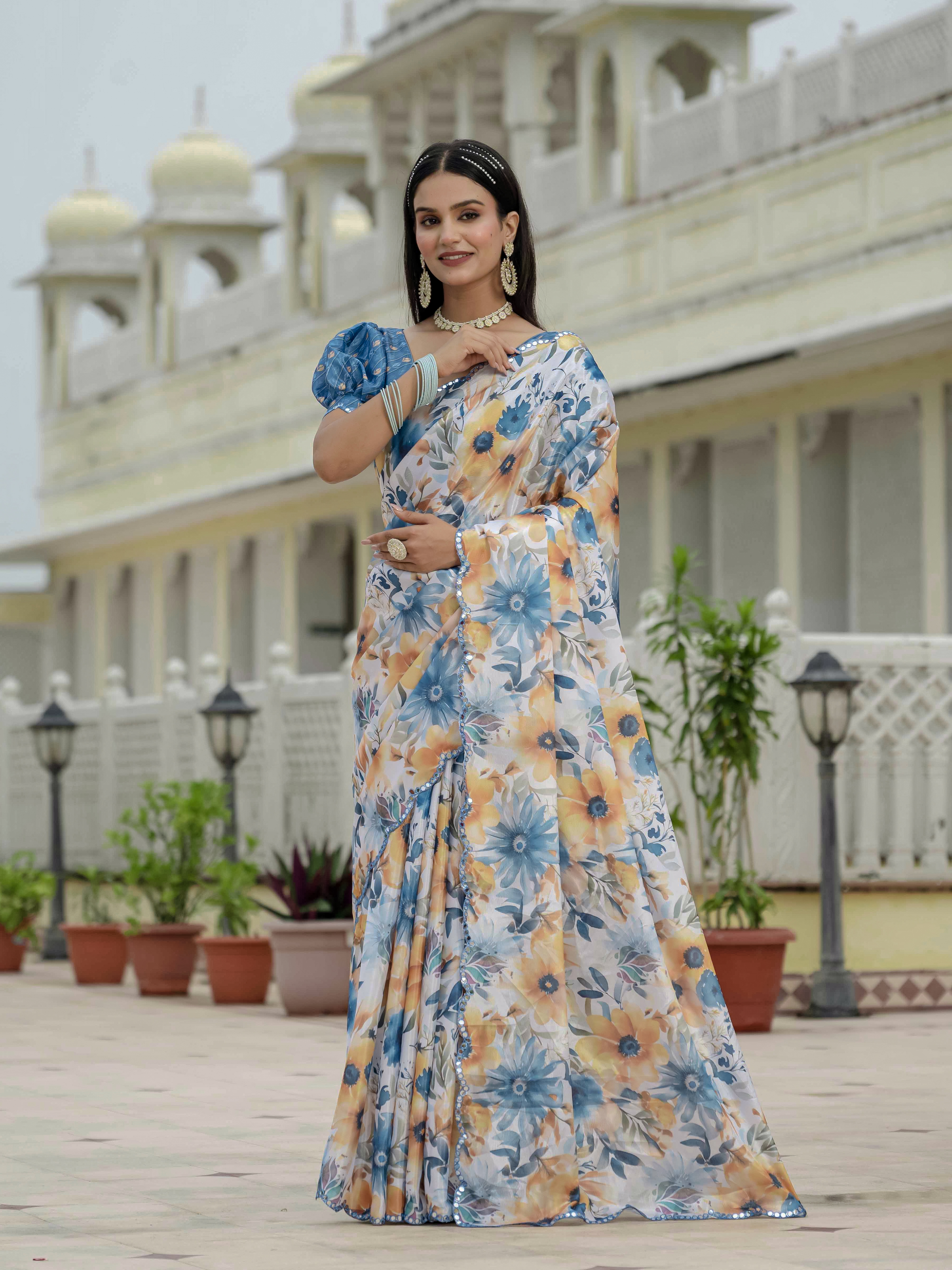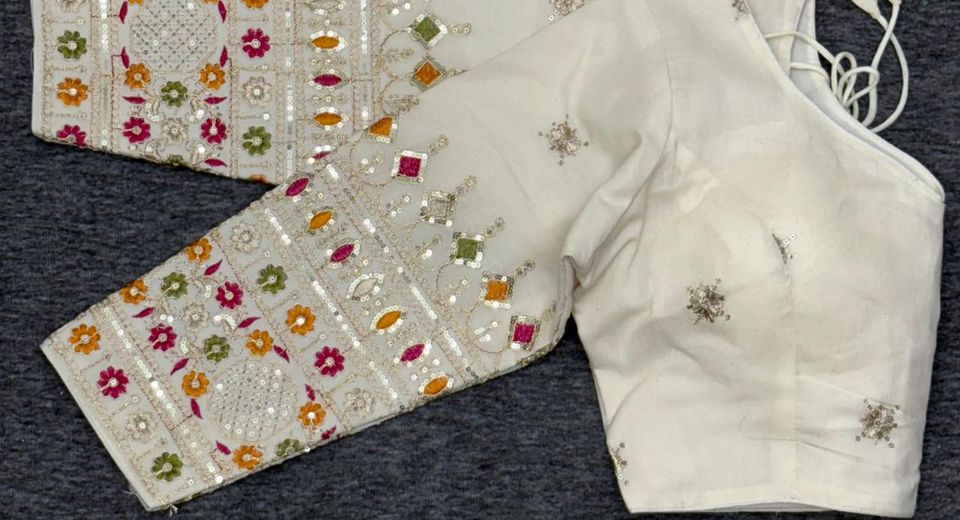
Kashmiri-Inspired Blouse Designs for Festive Sarees bring together the visual language of Kashmir and the structure of a contemporary Indian blouse. The strongest versions don't copy an entire Kashmiri outfit; they borrow recognisable details such as badam motifs, almond-shaped paisleys, chinar leaves, delicate vines, jewel-toned colour and aari-inspired threadwork. That distinction matters because a blouse must support the drape, weight and formality of a saree.
A beautiful festive blouse needs more than attractive embroidery. The fabric must hold its shape, the neckline must suit the saree border, and the decoration must remain visible after pleating and pallu draping. Understanding these choices helps you create a look that feels rooted, comfortable and appropriate for weddings, Diwali gatherings, receptions and family celebrations.
Kashmiri-Inspired Blouse Designs for Festive Sarees: What makes them authentic?
A genuinely Kashmiri-inspired blouse uses selected Kashmiri visual references while adapting them to Indian saree construction and modern festive dressing. The most useful references include badam motifs, chinar leaves, almond-shaped butis, flowering vines, paisleys, papier-mache colour combinations and the fine, flowing effect associated with Kashmiri embroidery.
Kashmiri craft traditions are varied, so a single motif should not be treated as a complete definition of Kashmiri design. Aari work uses a hooked needle to create chain-like stitches, while Kashmiri crewel embroidery is often associated with raised woollen threadwork on furnishing textiles. Sozni embroidery is known for delicate needlework, frequently seen on shawls and fine fabrics. A blouse can respectfully take inspiration from these visual languages without claiming to be a hand-crafted Kashmiri textile.
Motif scale changes the character of a blouse. A row of small badam butis suits a restrained silk saree, while one large chinar leaf on the back creates a more dramatic reception look. Dense vines across the sleeves can look lovely with a plain saree but may compete with a heavy zari border. The safest approach is to choose one dominant motif and one supporting detail.
A Kashmiri reference looks most refined when the motif, threadwork and colour echo the saree without attempting to overpower it.
Kashmiri-Inspired Blouse Designs for Festive Sarees: Which motifs and colours work?
Badam, chinar, paisley and flowering-vine motifs work well because each motif can be resized for a neckline, sleeve, back panel or border. Chinar leaves create a recognisable autumnal mood, while badam motifs give a softer and more jewellery-like impression. Small paisleys can be repeated along a sleeve hem or neckline without making the blouse appear busy.
Colour combinations for Kashmiri-Inspired Blouse Designs for Festive Sarees
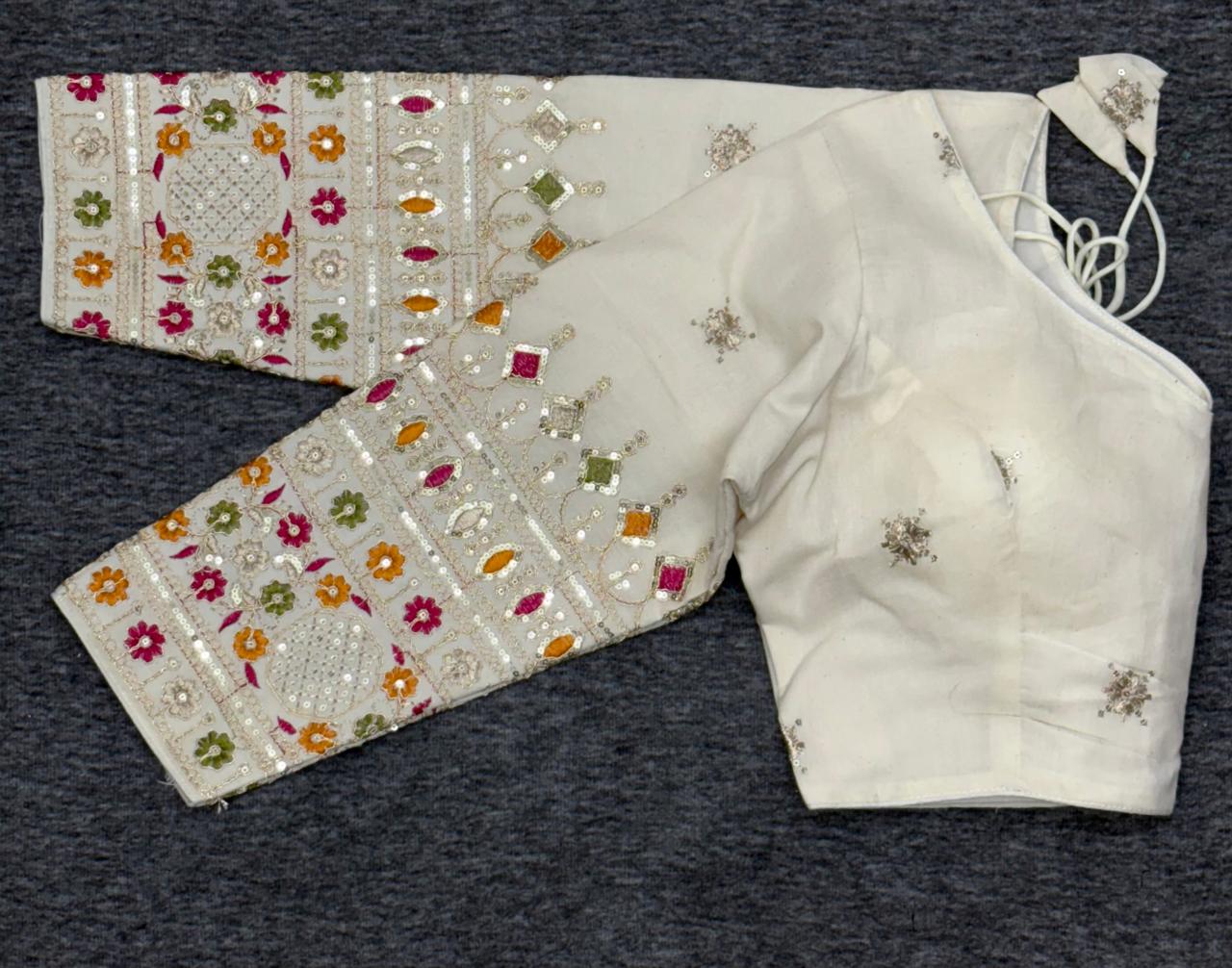
Jewel tones and earthy accents create a convincing Kashmiri-inspired palette for festive sarees. Pair deep pomegranate red with antique gold, walnut brown with rust, emerald with muted gold, or midnight blue with saffron and ivory. A maroon saree can take a blouse embroidered in dull gold and moss green, while a cream saree can carry walnut, wine or deep teal accents.
Kashmiri colour influence doesn't require using every rich shade at once. Three colours are usually enough: one base colour, one embroidery colour and one small accent. For example, a deep bottle-green blouse with antique-gold vines and tiny rust details has clarity. A blouse combining red, orange, blue, green, pink and gold may resemble a decorative textile but can lose elegance beside a patterned saree.
Matching motifs in Kashmiri-Inspired Blouse Designs for Festive Sarees
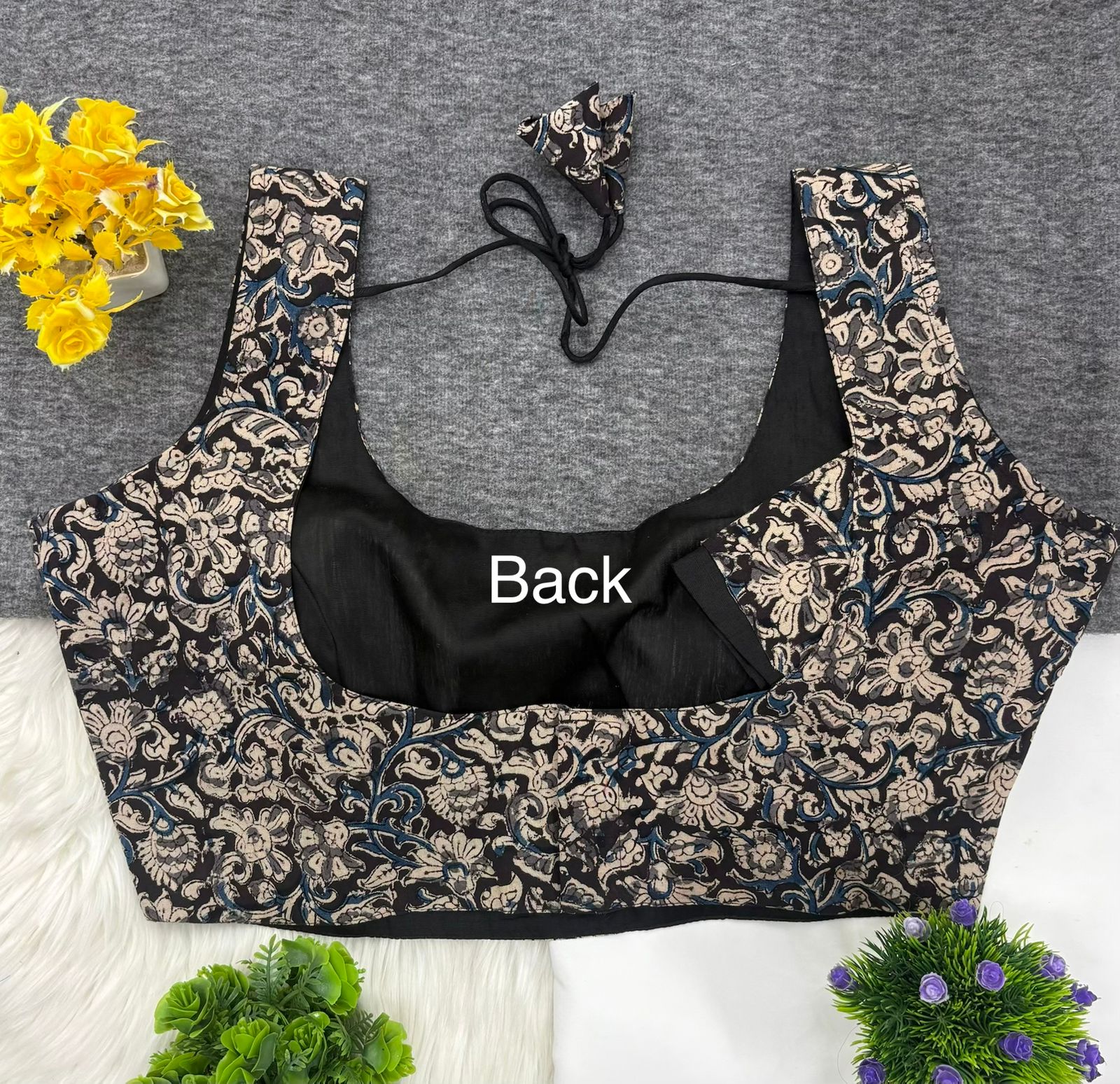
A plain saree can support a larger embroidered chinar or badam motif, whereas a printed saree needs a quieter blouse. Banarasi silk already contains zari structure, so a blouse with narrow vine embroidery and a clean neckline usually works better than an all-over motif. Kalamkari prints can be paired with a solid blouse that repeats one background colour rather than adding another competing print.
Pure Kalamkari Cotton Padded Blouse for Women illustrates an useful styling direction for a festive daytime saree: a printed or handloom saree can draw out one colour from the blouse instead of matching every shade. A blouse should coordinate with a saree's strongest visual feature, whether that feature is a zari border, a woven pallu or a floral print.
Kashmiri-Inspired Blouse Designs for Festive Sarees: How should fabric be chosen?
The blouse fabric should match the saree's weight, surface texture and level of formality while remaining stable enough to support embroidery and a good fit. Silk blends, raw silk, brocade, velvet accents, cotton silk and structured cotton can all work, but each produces a different result.
Raw silk gives a firm silhouette and suits a sculptural neckline or a fitted sleeve. Banarasi silk creates a celebratory finish but can become visually heavy beside an elaborate saree. Chanderi has a light, sheer appearance and works well when the blouse repeats a subtle border colour, although a lining is usually needed for structure and coverage. Cotton and cotton-silk are practical for daytime pujas and warm-weather celebrations because they breathe better than synthetic satin.
Printed cotton needs careful placement when used for a blouse. A large motif can land awkwardly across the bust or become hidden under the pallu. A small, evenly spaced print is easier to cut and gives a cleaner result. Brown Ikat Cotton Padded Blouse Sleeveless Stylish and Cream Ikat Cotton Padded Blouse Sleeveless Trendy show how a woven geometric surface can offer interest without embroidery; either direction can balance a heavily embellished saree when the blouse colour is chosen deliberately.
Padding is useful when a blouse needs a smooth front, but padding doesn't replace correct measurements. Padded cups should sit securely without pressing into the bust, and the armhole should allow comfortable movement. For a long celebration, breathable lining, a firm but flexible closure and a non-scratchy seam finish matter more than decorative thickness.
Kashmiri-Inspired Blouse Designs for Festive Sarees: Which necklines and sleeves suit them?
High round necks, modest V-necks, shallow square necks and carefully shaped sweetheart necklines suit Kashmiri-inspired embroidery because each creates a clear frame for motifs. A high round neck looks especially polished with a Banarasi silk or Kanjeevaram saree, while a shallow V-neck lengthens the upper body and leaves room for a pendant.
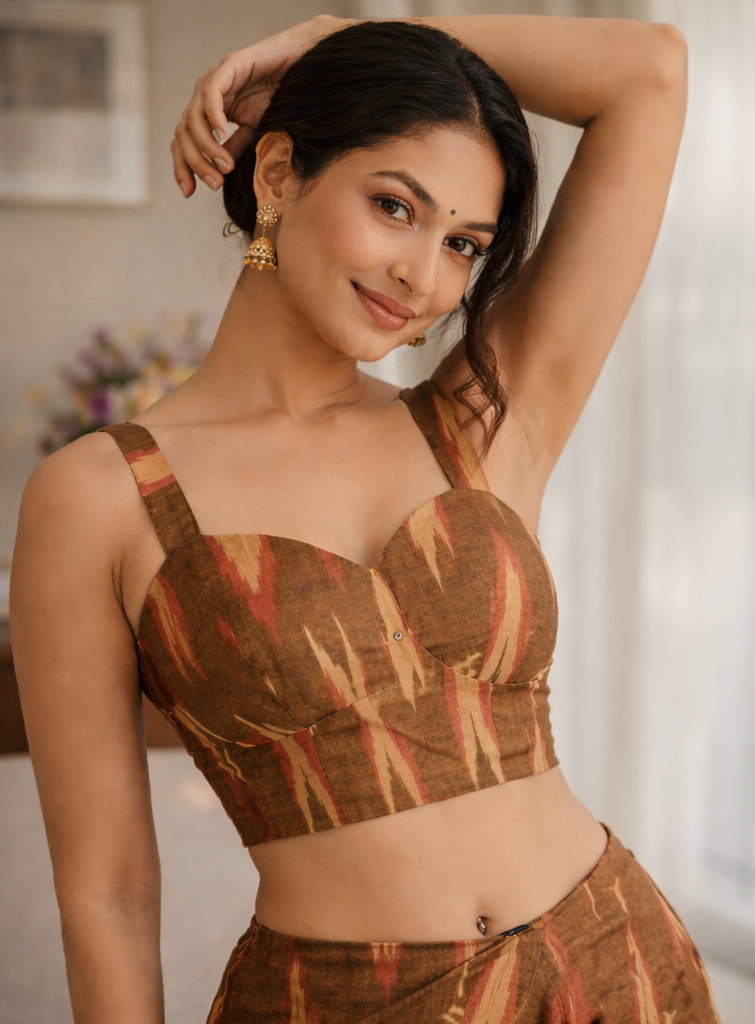
Neckline placement for Kashmiri-Inspired Blouse Designs for Festive Sarees
A narrow embroidered border along a round neckline gives a refined result for a family puja or formal lunch. A single badam motif placed below the collarbone creates a focal point without requiring heavy work. A square neckline can hold a symmetrical vine pattern, but the corners should be reinforced so the embroidery doesn't pull the fabric out of shape.
Sleeve length for Kashmiri-Inspired Blouse Designs for Festive Sarees
Three-quarter sleeves provide the most space for chinar leaves and climbing vines, while elbow-length sleeves offer a lighter festive look. Sleeveless blouses suit contemporary drapes and warm venues, but a strong shoulder line and finished armhole are essential. A narrow embroidered cuff can make a sleeveless blouse feel more intentional without adding unnecessary layers.
Classic Festive Wear Blouse for Stylish Saree Look can serve as a practical reference for a versatile festive base. A simpler cut can let the saree, jewellery or embroidered pallu lead. When choosing a Kashmiri-inspired design, decide whether the blouse should be the focal point or a controlled supporting element.
Kashmiri-Inspired Blouse Designs for Festive Sarees: How can they be styled gracefully?
You can keep the outfit balanced by limiting the number of strong elements: pair an embroidered blouse with a simpler saree, keep jewellery in one metal family and repeat only one blouse colour in the accessories. Balance is particularly important when the blouse includes large chinar leaves, velvet, metallic thread or a high neckline.
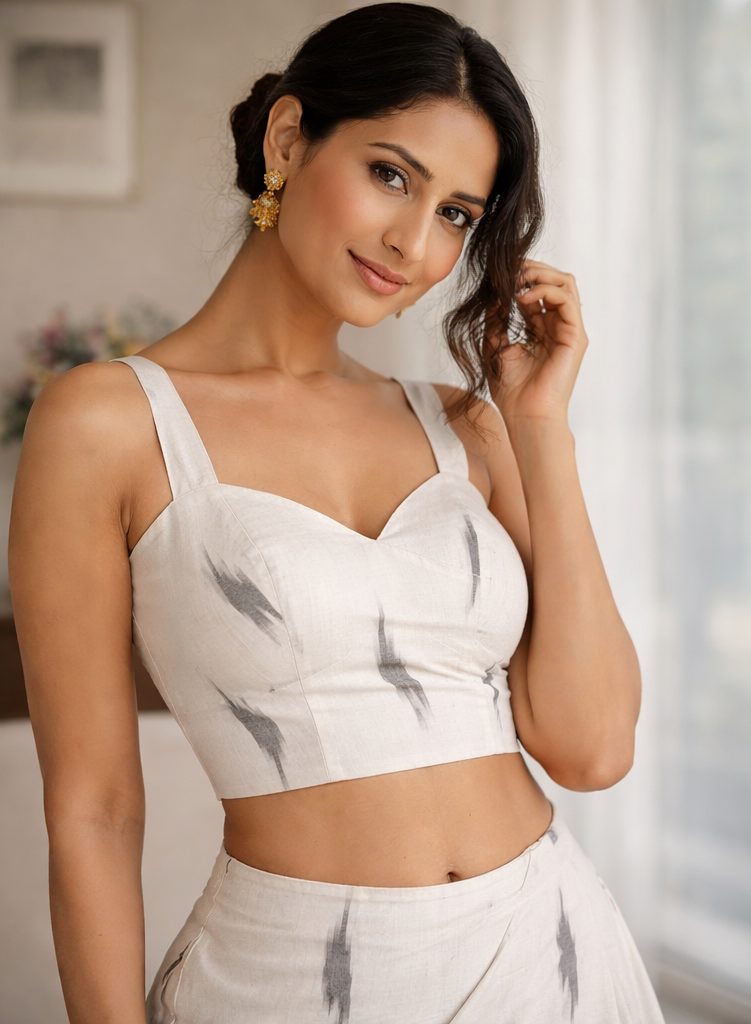
With a plain silk saree, a blouse embroidered in antique gold, rust and deep green can become the centre of the outfit. Choose a plain pallu drape, a low bun and medium-sized jhumkas so the embroidery remains visible. With a heavily woven saree, use a blouse with a solid base and embroidery restricted to the neckline, sleeve cuffs or back.
Jewellery can reinforce the regional mood without becoming a costume reference. Silver-toned earrings suit cool colours such as midnight blue, ivory and emerald. Gold or antique-gold jewellery works with maroon, saffron, rust and walnut. A traditional Kashmiri-inspired pendant can be worn as one focal piece rather than combined with multiple necklaces, oversized earrings and a dramatic maang tikka.
The drape also affects the blouse. A front pallu hides much of the bodice, so embroidery on the sleeves and neckline becomes more valuable than a large front-panel design. An open pallu reveals the shoulder and back, making a decorated back panel or tie detail worthwhile. Test the blouse with the final saree drape before deciding where the most expensive embroidery should go.
Kashmiri-Inspired Blouse Designs for Festive Sarees: What fit and construction details matter?
Correct bust, underbust, shoulder, armhole and sleeve measurements matter more than a fashionable neckline because fit determines whether the blouse remains comfortable for several hours. Take measurements while wearing the bra or shapewear intended for the final outfit. Allow enough ease to sit, raise the arms and breathe without creating horizontal strain lines.
The shoulder seam should end at the natural shoulder edge, not halfway down the arm. The armhole should lie flat without cutting into the underarm. A back closure with hooks and eyes is easy to adjust, while a concealed side zip gives a smooth back but needs strong stitching. Dori ties can add a festive detail, although they should not carry the entire strain of a tightly fitted blouse.
Embroidery placement also affects durability. Heavy zari, metallic thread or raised work should be backed with a stable interlining, especially around the neckline and sleeve edge. A lining protects the skin from rough thread ends and reduces stretching. Ask for a trial fitting before final embroidery when the blouse includes a deep neckline, shaped bust cups or a complex back.
A blouse worn for a six-hour wedding function should allow at least 2 to 3 centimetres of comfortable movement ease around the upper bust and waist, subject to the wearer's measurements and preferred fit. Excess ease can create folds under the saree, while insufficient ease can distort motifs and strain hooks. The correct balance keeps the garment neat when standing, sitting and dancing.
Kashmiri-Inspired Blouse Designs for Festive Sarees: How should the blouse be cared for?
Embroidered or structured festive blouses should be aired after wearing, stored flat or on a broad padded hanger, and washed according to the most delicate material used. Air the blouse for several hours before storage so perspiration doesn't remain trapped in the lining or embroidery.
Dry cleaning is generally safer for zari, velvet panels, silk, heavy padding and dense threadwork than machine washing. Cotton blouses with light embroidery may sometimes be gently hand-washed, but colour bleeding should be tested on an inside seam first. Do not wring a padded blouse because twisting can deform the cups and stretch the shoulder seams.
Store metallic or embroidered blouses in a clean cotton or muslin cover rather than sealed plastic. Keep them away from direct sunlight, damp cupboards and rough jewellery that can catch threads. Fold a heavily embellished blouse with acid-free tissue between the embroidered sections to prevent rubbing and permanent creases.
Small repairs are easier when completed early. Replace loose hooks, secure an opening seam and trim a pulled thread without cutting the surrounding embroidery. A professional tailor should handle alterations near padded cups, zari borders or intricate neckline work because a small cut in the wrong place can disturb the entire motif.
Kashmiri-Inspired Blouse Designs for Festive Sarees: What should you decide before ordering?
Decide the saree, drape, event, climate, embroidery density and intended reuse before ordering a festive blouse. A blouse designed for a winter evening reception can use velvet or dense silk, while a blouse for a warm Haldi ceremony should prioritise cotton, cotton-silk, lining comfort and easy arm movement.
- Start with the saree: note its base colour, border width, fabric weight and pattern density.
- Choose one motif: select a badam, chinar, paisley or vine as the main visual reference.
- Limit the palette: use one base colour, one embroidery shade and one accent for a controlled finish.
- Plan visibility: place important work on the neckline, sleeves or upper back when a front pallu will cover the bodice.
- Check comfort: confirm padding, lining, closure, armhole ease and the bra or shapewear that will be worn.
- Consider reuse: a solid blouse with restrained embroidery can work with several sarees and become more valuable than a highly specific design.
The result should feel personal rather than over-rehearsed. Kashmiri visual language offers enough richness through motif, colour and stitch direction; the saree doesn't need every possible embellishment at the same time.
Questions About Kashmiri-Inspired Blouse Designs for Festive Sarees
Which Kashmiri motifs work best on a festive saree blouse?
Badam, chinar, paisley and flowering-vine motifs work especially well on festive saree blouses. Small badam butis suit restrained silk sarees, while a larger chinar leaf can create a focal point on the back or sleeve.
What colours suit a Kashmiri-inspired blouse with a saree?
Pomegranate red, walnut brown, rust, emerald, midnight blue, saffron, ivory and antique gold create a Kashmiri-influenced palette. Use one base colour, one embroidery colour and one accent rather than combining every jewel tone.
Can a Kashmiri-inspired blouse be worn with a Banarasi silk saree?
Yes, a Kashmiri-inspired blouse pairs well with Banarasi silk when the embroidery remains controlled. Narrow vines, small badam motifs or antique-gold detailing usually work better than dense all-over embroidery because Banarasi silk already contains zari structure.
Which neckline is best for a Kashmiri-inspired festive blouse?
High round, shallow square and modest V-necklines are reliable choices because they frame embroidery clearly. Choose the neckline according to the saree border, jewellery and preferred coverage rather than selecting a shape only for its decorative appeal.
How should an embroidered festive blouse be washed?
Dry cleaning is generally safer for zari, velvet, silk, dense threadwork and padded blouses. Lightly embroidered cotton may be hand-washed only after checking for colour bleeding, and padded blouses should never be wrung or twisted.
How can I keep a Kashmiri-inspired blouse from looking costume-like?
Use one or two Kashmiri references instead of copying an entire regional outfit. Pair a motif-rich blouse with a simpler saree, limit jewellery to one focal piece and repeat only one blouse colour in the accessories.