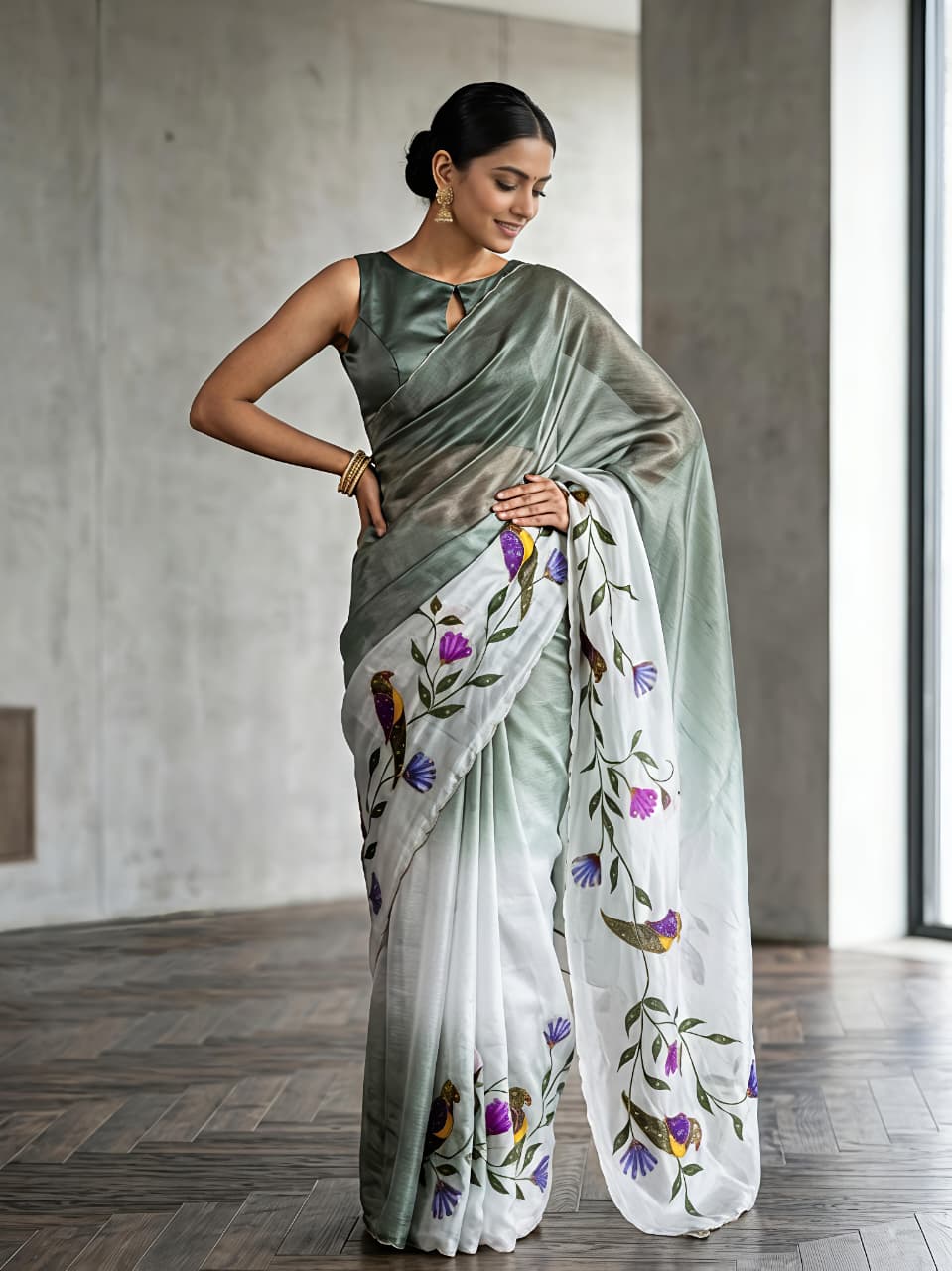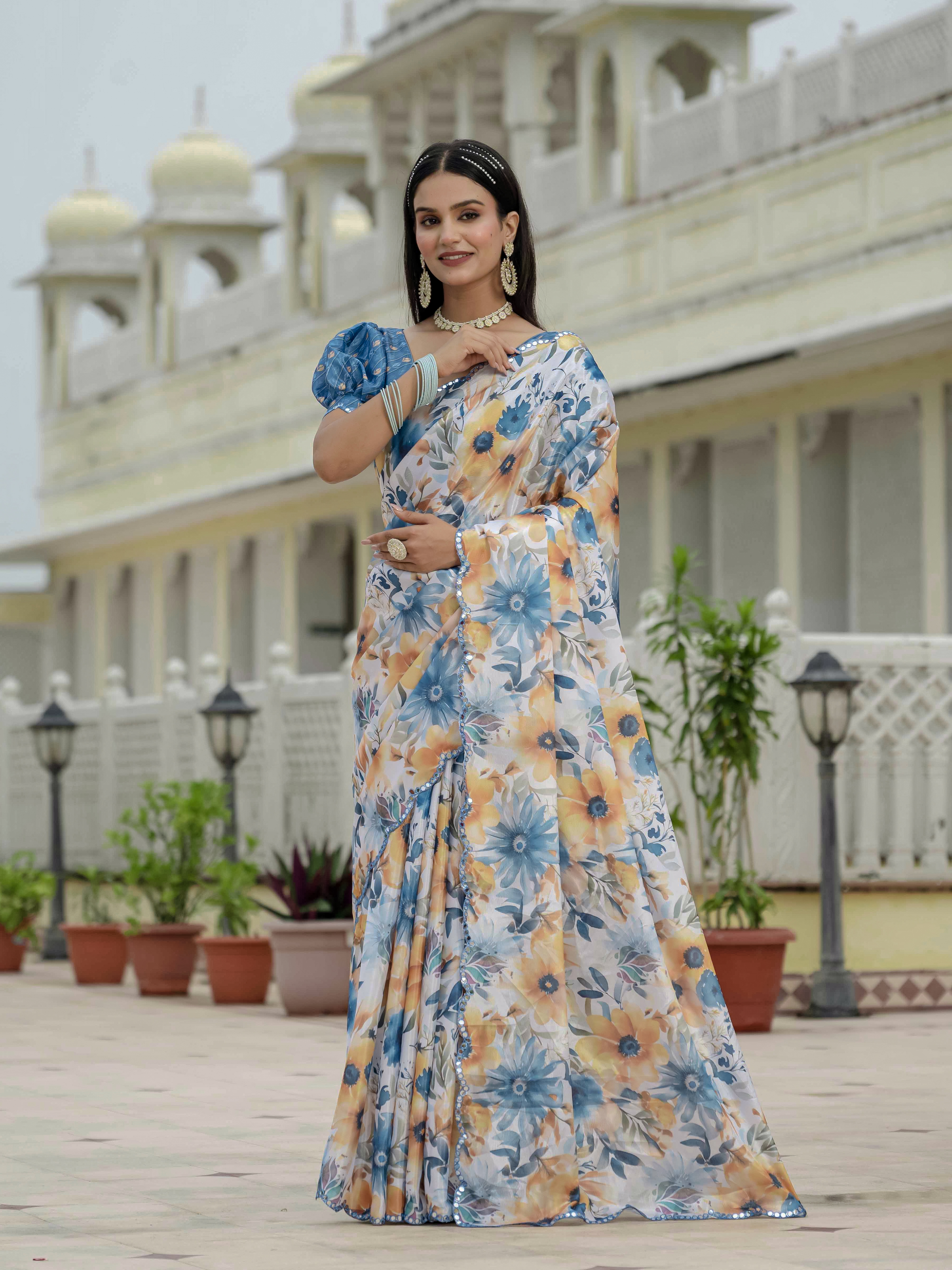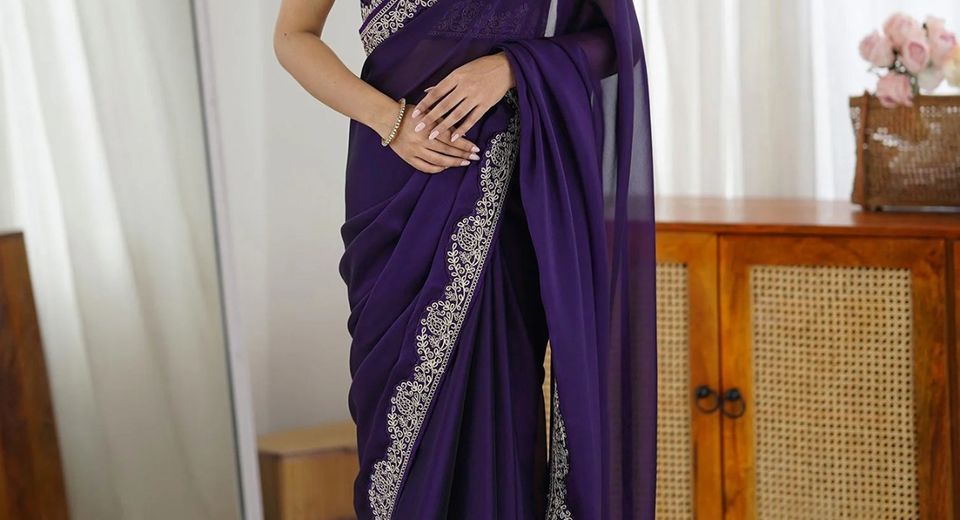
Kashmiri Festive Saree Styling: Embroidery, Colours & Accessories becomes distinctive when the saree's motifs, colour palette, drape and jewellery are planned as one composition. Chinar leaves, badam paisleys, almond blossoms, flowing vines and the fine lines associated with Kashmiri aari or sozni embroidery can give festive dressing a recognisable regional character. A successful look doesn't require every element to be heavily embellished. It needs one clear focal point and enough visual space for each craft detail to remain visible.
Kashmiri-inspired styling works with Banarasi silk, georgette, net, crushed textures and handloom silk, provided the fabric weight suits the drape and the embroidery. A family puja, Haldi ceremony, evening reception and winter wedding each call for a slightly different interpretation. The practical choices below help create an outfit that feels festive, comfortable and intentional rather than costume-like.
Kashmiri Festive Saree Styling: Embroidery, Colours & Accessories begin with motif language
Kashmiri Festive Saree Styling looks most convincing when the embroidery has a clear motif vocabulary instead of random decoration. Kashmiri aari work is made with a hooked needle and can create flowing floral lines, while sozni embroidery is known for fine, controlled stitches that outline paisleys, flowers and foliage. Tilla work adds metallic thread and gives festive clothing a more formal surface.
Chinar leaves are particularly useful as a visual reference because their lobed shape is strongly associated with Kashmir and works along a saree border or pallu. Badam, the almond-shaped paisley motif, is another versatile choice for blouse panels, sleeve cuffs and narrow borders. Embroidery inspired by these motifs can remain subtle on a daytime saree or become more prominent with zari for an evening celebration.
- For a refined look: select one dominant motif, such as chinar leaves, and repeat it on the pallu and blouse border.
- For a traditional festive look: combine floral vines with restrained zari or tilla-like metallic detailing.
- For a contemporary look: use small embroidered motifs on a plain body and let the blouse carry the stronger pattern.
- For a winter celebration: pair embroidered silk or substantial handloom fabric with a Kashmiri-inspired shawl in a related colour.
Premium Handloom Silk Saree with Handkatha illustrates how a textured silk base can provide contrast for embroidered or woven motifs. A heavily worked saree doesn't need a heavily worked blouse; a plain silk blouse with an embroidered sleeve edge often looks more considered than two competing all-over patterns.
Kashmiri Festive Saree Styling: Embroidery, Colours & Accessories depend on fabric choice
The best saree fabric depends on the movement, temperature and formality of the celebration. Silk holds structured pleats and gives zari a rich backdrop, georgette creates a fluid fall, net adds evening sparkle, and crushed fabrics reflect light through texture even when their embroidery is limited.
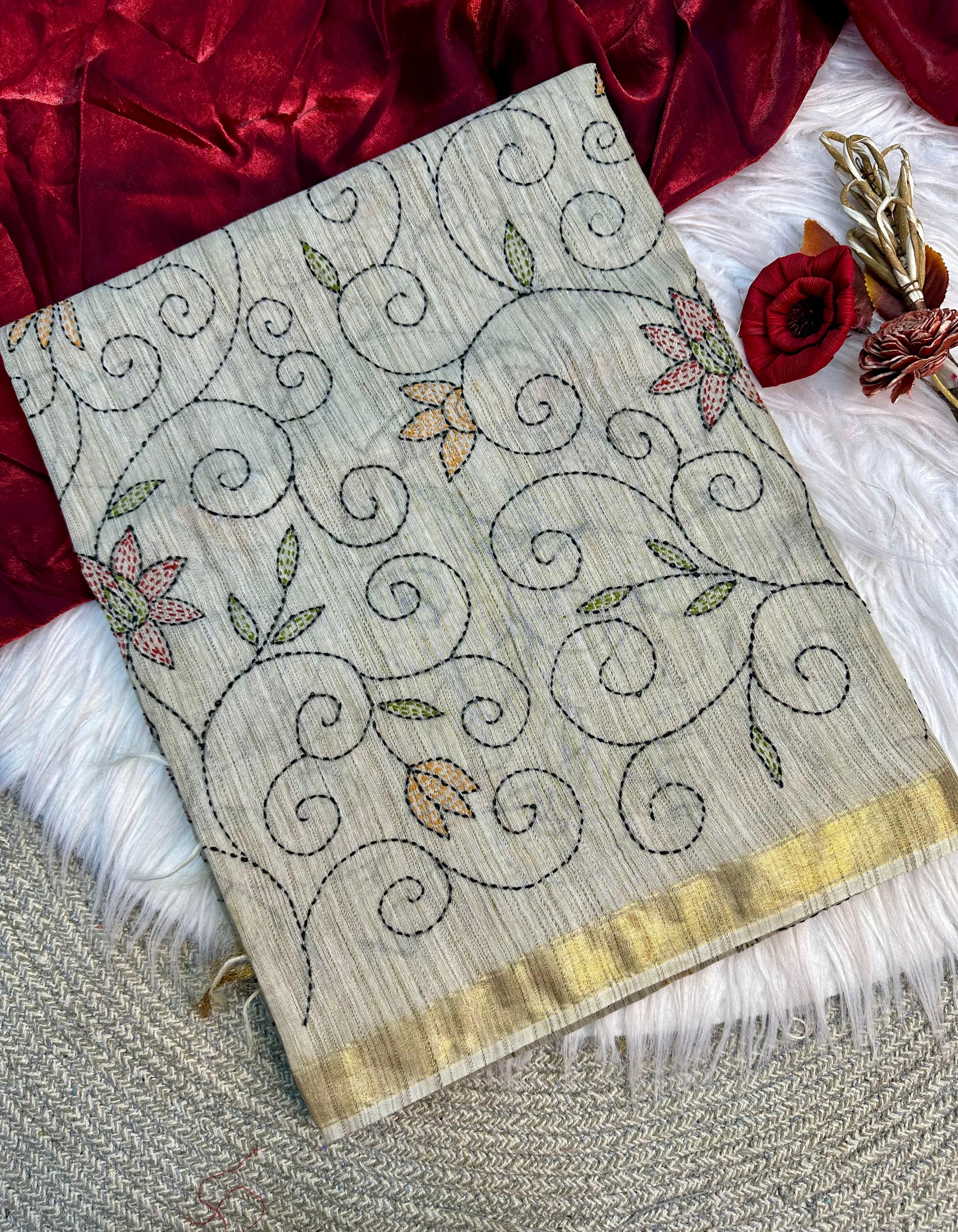
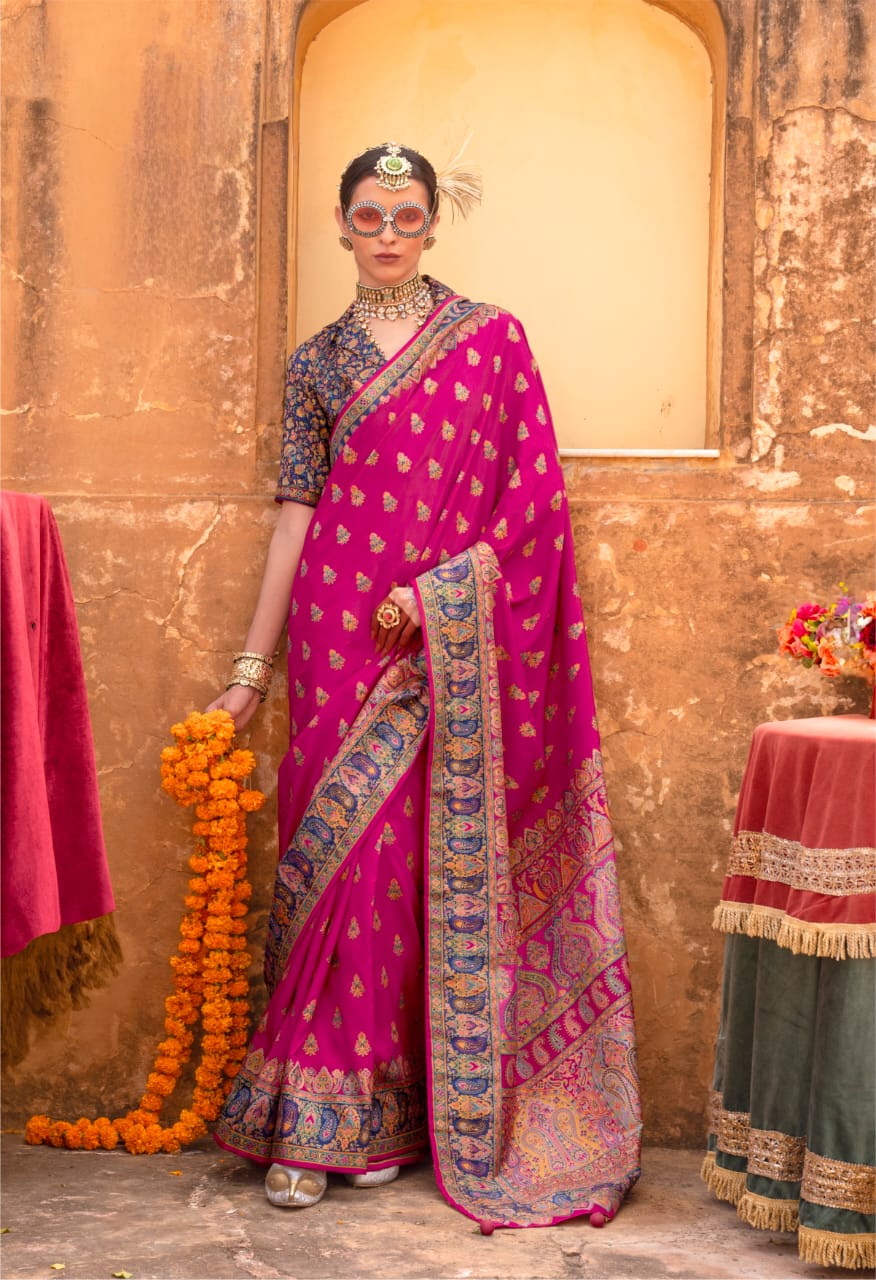
A silk saree is practical for a puja or daytime family function because its pleats remain defined and its natural body gives the pallu a neat shape. Premium Purple Saree for Festive Celebrations offers a strong jewel-toned base for gold jewellery and antique-finish accessories. Purple also works well with Kashmiri-inspired motifs because gold, muted green and warm ivory embroidery remain visible without making the colour appear flat.
Georgette and net are better suited to cocktail-style festive events or receptions where a softer silhouette is useful. Peach Embroidered Net Party Wear Saree with Blouse creates a lighter interpretation of the aesthetic, especially when paired with dull gold rather than bright yellow gold. Designer Emerald Georgette Saree with Sequin Lace can also work for an evening look. But the jewellery should remain relatively linear if the sequin lace already catches light along the border.
Crush textures need careful balancing because their surface already creates movement. Rust Brown Gold Crush Saree with Floral Threadwork and Teal Blue Gold Crush Saree with Floral Threadwork both show why a textured saree usually benefits from a simpler blouse. A clean neckline, moderate sleeve length and one strong accessory prevent the final look from becoming visually crowded.
Party Wear Sarees is useful when comparing fabrics and levels of embellishment for an evening event. Silk Sarees Under 3000 With Discount may suit a more structured festive wardrobe, while Pink Georgette Sarees provide softer colour options for daytime ceremonies. Fabric choice should also account for the season: silk and heavier blends feel more comfortable in winter, while georgette and lighter net are easier to wear in warm indoor venues.
Kashmiri Festive Saree Styling: Embroidery, Colours & Accessories need a controlled colour palette
Kashmiri festive colour palettes work best when one saturated shade is balanced by a warm neutral, botanical green or controlled metallic accent. The purpose isn't to reproduce every colour associated with a landscape; the purpose is to give floral and paisley embroidery enough contrast to remain legible.
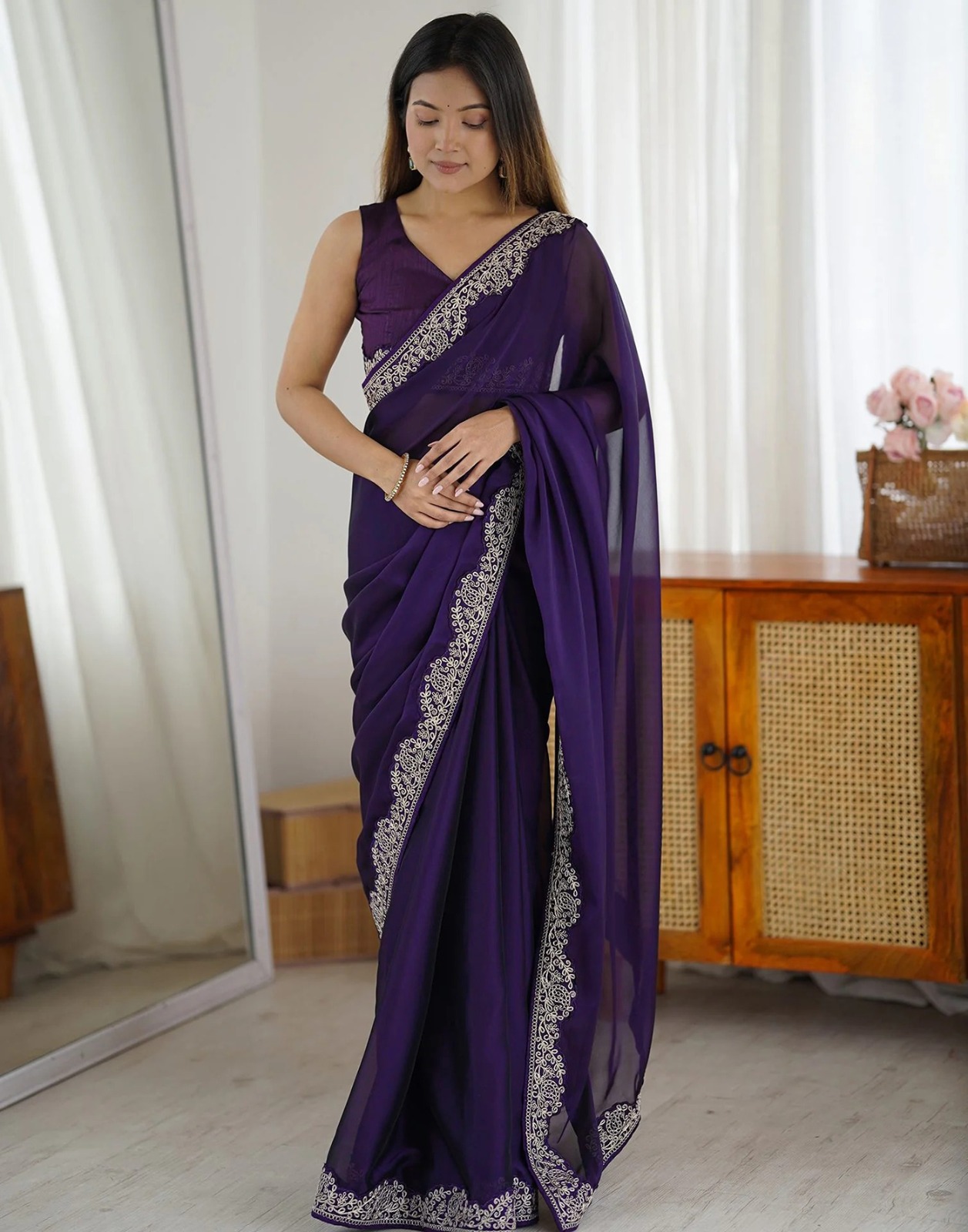
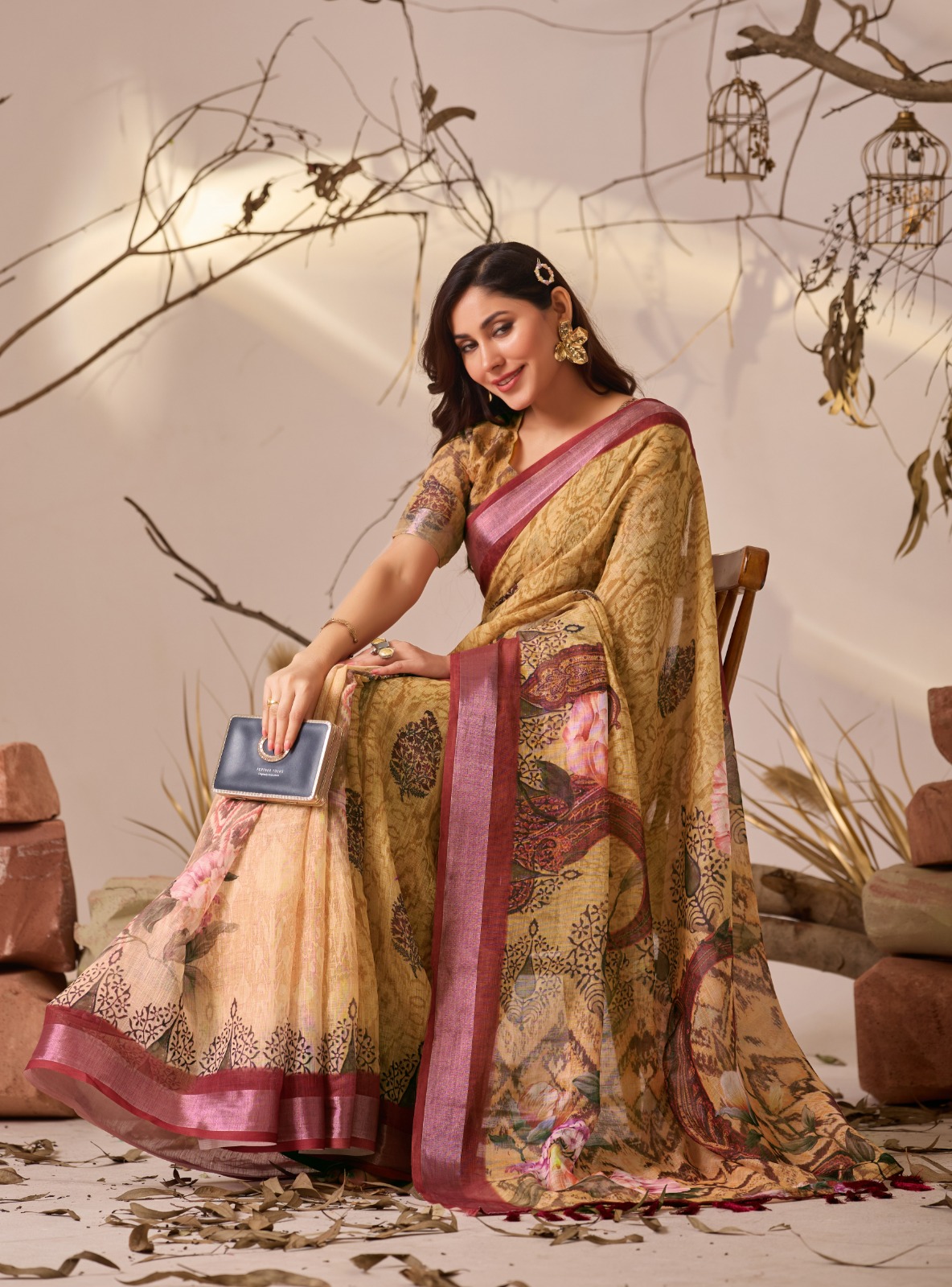
Deep purple with antique gold creates a regal evening combination. Emerald or teal with old gold suggests foliage and works particularly well with chinar or vine-inspired motifs. Rust brown with muted gold feels autumnal and suits winter celebrations under warm lighting. Mustard with maroon, ivory or dark green gives a festive result without depending on excessive shimmer.
- Purple and antique gold: choose this combination for evening receptions, formal Diwali gatherings and indoor wedding functions.
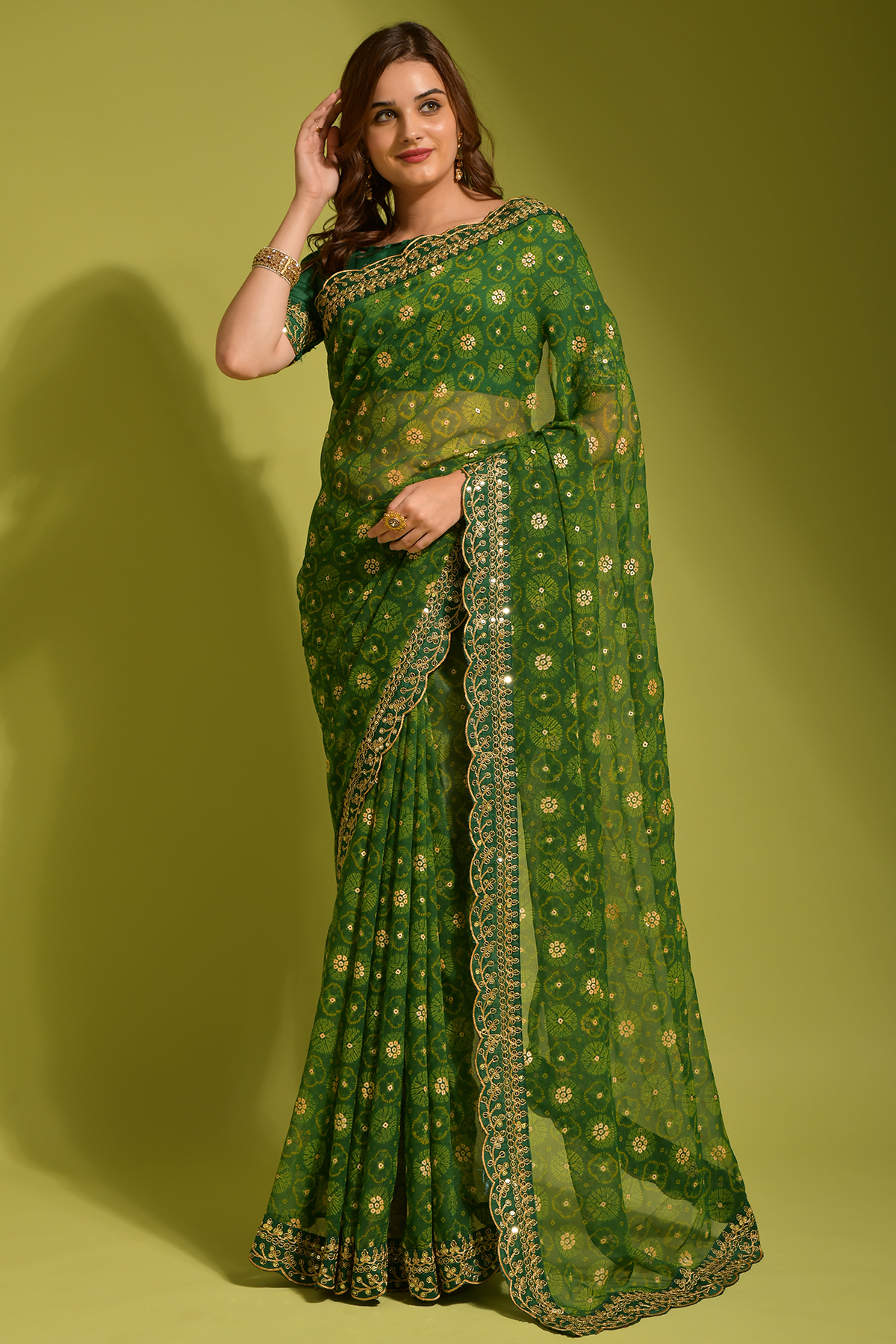
- Teal and muted gold: use this palette when you want a jewel tone that feels cooler and more contemporary.
- Rust and old gold: suit winter festivities and pair naturally with oxidised or antique-finish jewellery.
- Peach and ivory: work for daytime ceremonies with pearl, kundan or champagne-toned accents.
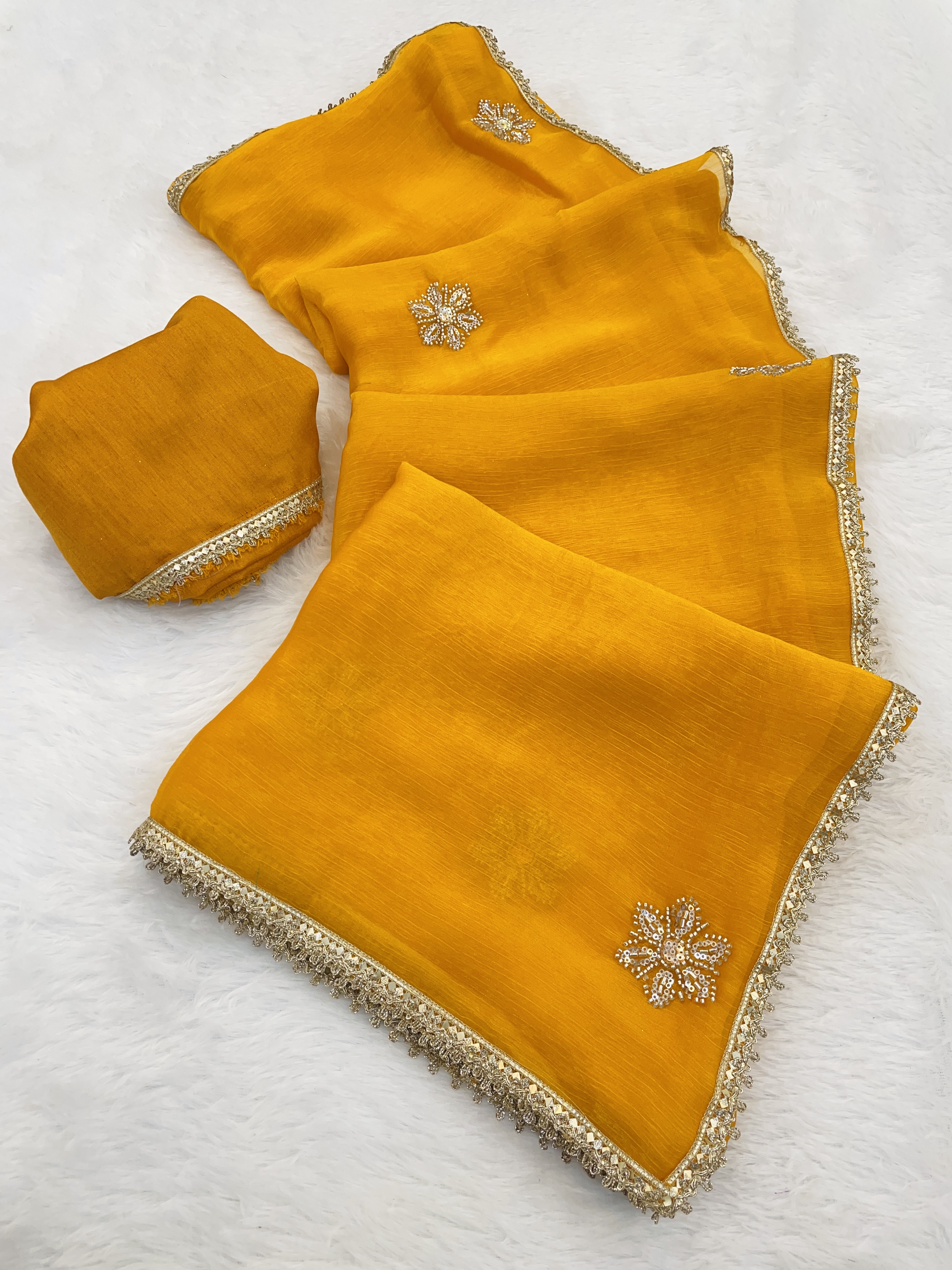
- Mustard and green: create a warm, botanical palette for Haldi ceremony lunches and family celebrations.
Premium Mustard Fancy Saree with Blouse can be styled with a dark green blouse border or maroon accessories to make the mustard appear richer. For a cooler palette, Teal Blue Gold Crush Saree with Floral Threadwork needs only small touches of emerald or antique gold; adding bright pink, red and silver at the same time would weaken the visual hierarchy.
Colour contrast should also be tested in the lighting where the saree will be worn. Bright yellow lights make gold, mustard and rust appear closer in value, while daylight separates peach, ivory and pale gold more clearly. Photographing the complete outfit near a window before an event can reveal whether the blouse, jewellery and saree remain distinguishable.
Kashmiri Festive Saree Styling: Embroidery, Colours & Accessories require a balanced blouse and drape
A blouse should repeat one detail from the saree without copying every detail. If the saree has floral threadwork, the blouse can echo one flower along the sleeve or neckline; if the pallu has metallic embroidery, a plain blouse with a narrow zari cuff can create continuity.
A classic Nivi drape keeps the pallu visible and allows a decorated border to frame the shoulder. Five to seven even front pleats usually create a neat fall, although thicker silk may need fewer pleats and fluid georgette may need more careful pinning. Secure the pleats at the waist before arranging the pallu so the front remains stable while walking or sitting.
A narrower pallu fold shows embroidery more clearly, while a broader pallu gives lighter georgette or net a graceful fall. A pallu should generally be long enough to reach around the hip or lower thigh without pulling at the shoulder. Pin the upper edge near the shoulder and add a concealed pin near the waist when the border is heavy.
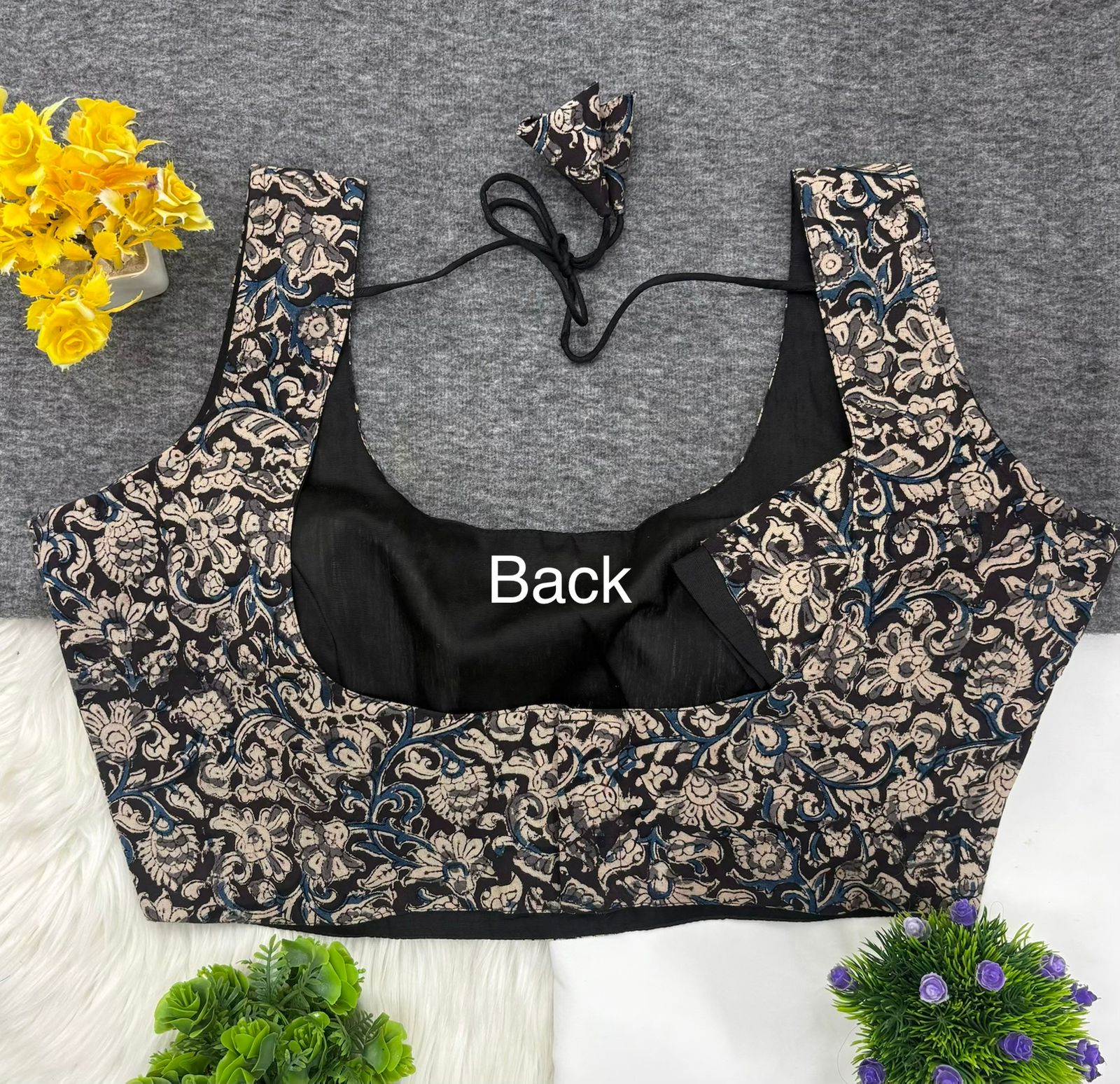
Elbow-length sleeves, a high round neck and a modest boat neck suit heritage-inspired styling because they provide a stable frame for earrings and necklaces. A deep neckline can work for a party saree, but it may compete with a large choker or an embroidered pallu. A sleeveless blouse is effective when the saree already has a substantial border and the desired silhouette is more contemporary.
Golden Glow Gold Crush Embroidered Party Wear Saree for Women already carries a strong metallic presence, so a matte blouse in deep green, wine or warm brown will usually create more depth than a matching glitter blouse. Premium Purple Saree for Festive Celebrations can take a blouse with gold piping, but the piping should remain narrow if the saree includes a broad embroidered border.
Use concealed safety pins rather than placing visible pins across zari or delicate embroidery. Fashion tape should be applied only to clean, dry fabric after a small patch test, because adhesive can mark net, silk finishes and metallic thread. Comfortable pleats matter because constant readjustment can disturb the pallu and make careful styling appear untidy.
Kashmiri Festive Saree Styling: Embroidery, Colours & Accessories call for measured jewellery
The most effective accessories repeat the saree's material or motif without introducing a second competing theme. Gold, antique gold, pearls, kundan, enamel and oxidised silver can all work, but each creates a different mood and should be selected according to the saree's undertone.
Kashmiri Festive Saree Styling: Embroidery, Colours & Accessories for jewellery and hair
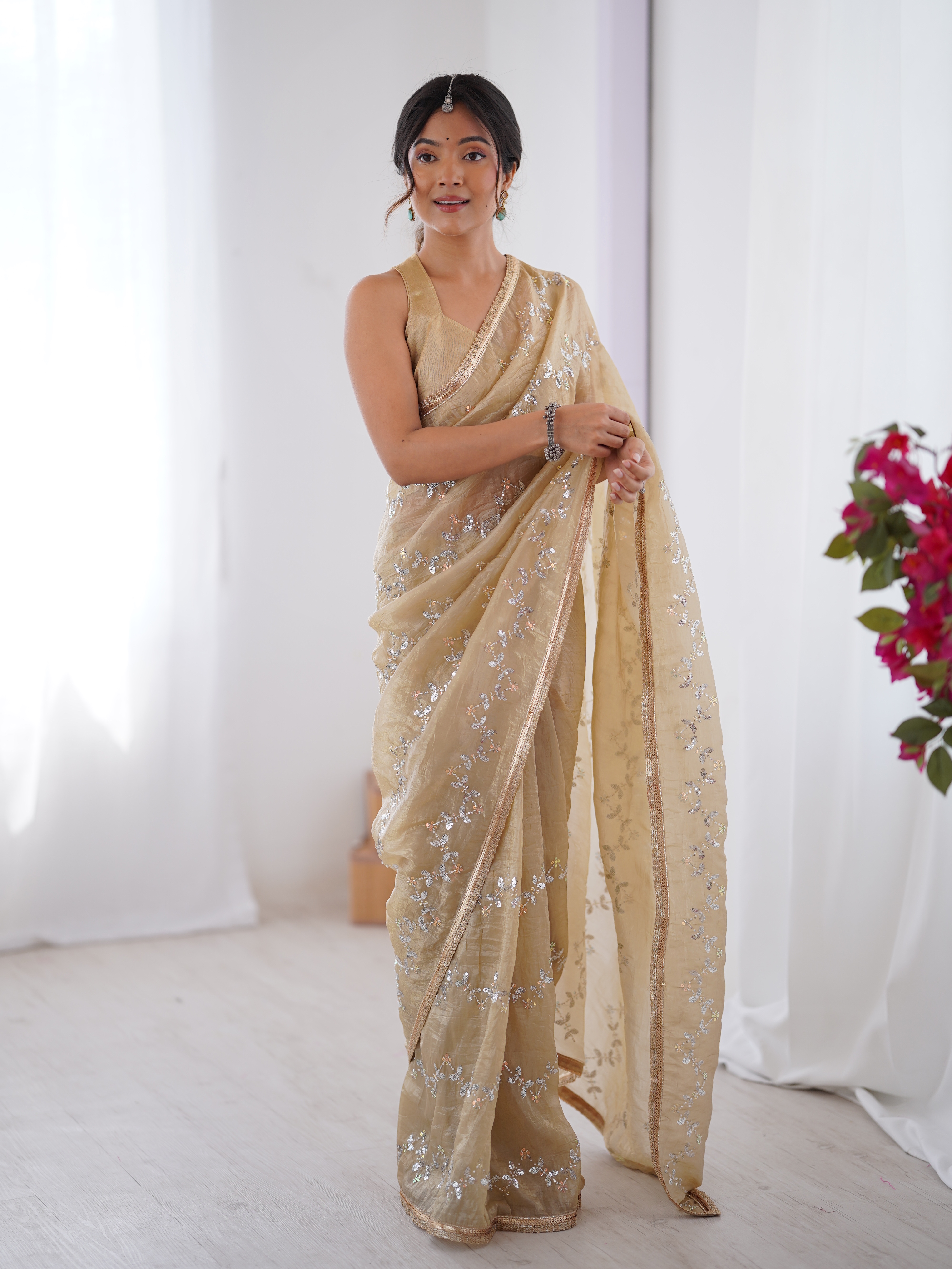
Choose jhumkas or medium-sized chandbalis when the saree has visible embroidery around the pallu. Choose a choker with a longer pendant only when the blouse neckline leaves enough open space for both pieces. One statement necklace is generally more elegant than a choker, long haar, oversized earrings and heavy maang tikka worn together.
Antique gold jewellery works naturally with rust, mustard, purple and muted teal because its slightly aged surface doesn't compete with zari. Pearls soften peach, ivory and pale pink georgette. Kundan suits formal evening wear, while oxidised silver can bring useful contrast to handloom silk or a rust-brown saree.
A low bun with a centre parting gives the pallu and earrings a clear frame. Fresh jasmine adds a classic fragrance and texture. But a small cluster is usually enough when the saree already has prominent floral embroidery. A braided hairstyle can work for daytime celebrations, especially with a narrow maang tikka or a small hair ornament.
Golden Glow Gold Crush Embroidered Party Wear Saree for Women is better paired with antique gold jhumkas and a restrained bracelet than with multiple bright gold layers. With Designer Emerald Georgette Saree with Sequin Lace, emerald or champagne earrings can repeat the colour without adding another heavy embroidered element.
Kashmiri Festive Saree Styling: Embroidery, Colours & Accessories for different celebrations
The event determines how much embroidery, shimmer and jewellery a Kashmiri-inspired saree look should carry. A daytime puja usually benefits from controlled shine, while an evening reception can support stronger metallic thread and a more dramatic pallu.
For a family puja, choose handloom silk, soft Banarasi silk or a lightly embellished saree in mustard, peach, ivory or muted purple. Keep the blouse comfortable, use medium-sized earrings and select a low bun or braid. The result should allow easy movement, sitting and participation in rituals.
For a Haldi ceremony, choose washable-looking colour combinations only when the event is informal, because turmeric and floral water can stain delicate zari and pale net. Mustard, rust, green and peach are visually appropriate, but protect the lower pleats with careful pinning and avoid wearing jewellery that can snag the fabric during movement.
For a wedding reception, a deeper colour such as purple, teal, emerald or rust can support heavier zari, tilla-inspired embroidery and kundan jewellery. Red Banarasi Silk Sarees for Weddings Under 1100 brings an useful reference point for heritage wedding colour planning, although the blouse and accessories should still be adjusted to the saree's actual border and sheen.
For a smaller evening gathering, choose one dramatic feature: a metallic pallu, a sculptural blouse sleeve, a bold choker or a richly embroidered border. Gray Color Sarees Under 1000 can also inspire a quieter palette when paired with antique gold, maroon or emerald accessories. Neutral grey allows the jewellery to become the main festive accent without making the outfit appear plain.
For cold-weather celebrations, a Kashmiri-inspired shawl can add warmth and context. Select a shawl whose border echoes one saree colour rather than matching every shade. Drape the shawl over one shoulder after arranging the saree, and keep the pallu visible so the embroidery remains part of the outfit rather than hidden under the extra layer.
Kashmiri Festive Saree Styling: Embroidery, Colours & Accessories need practical care
Embroidered festive sarees should be stored clean, dry, loosely folded and separated from rough jewellery. Remove makeup, food particles and perfume residue before long-term storage because oils and acids can weaken metallic thread and discolour pale fabrics.
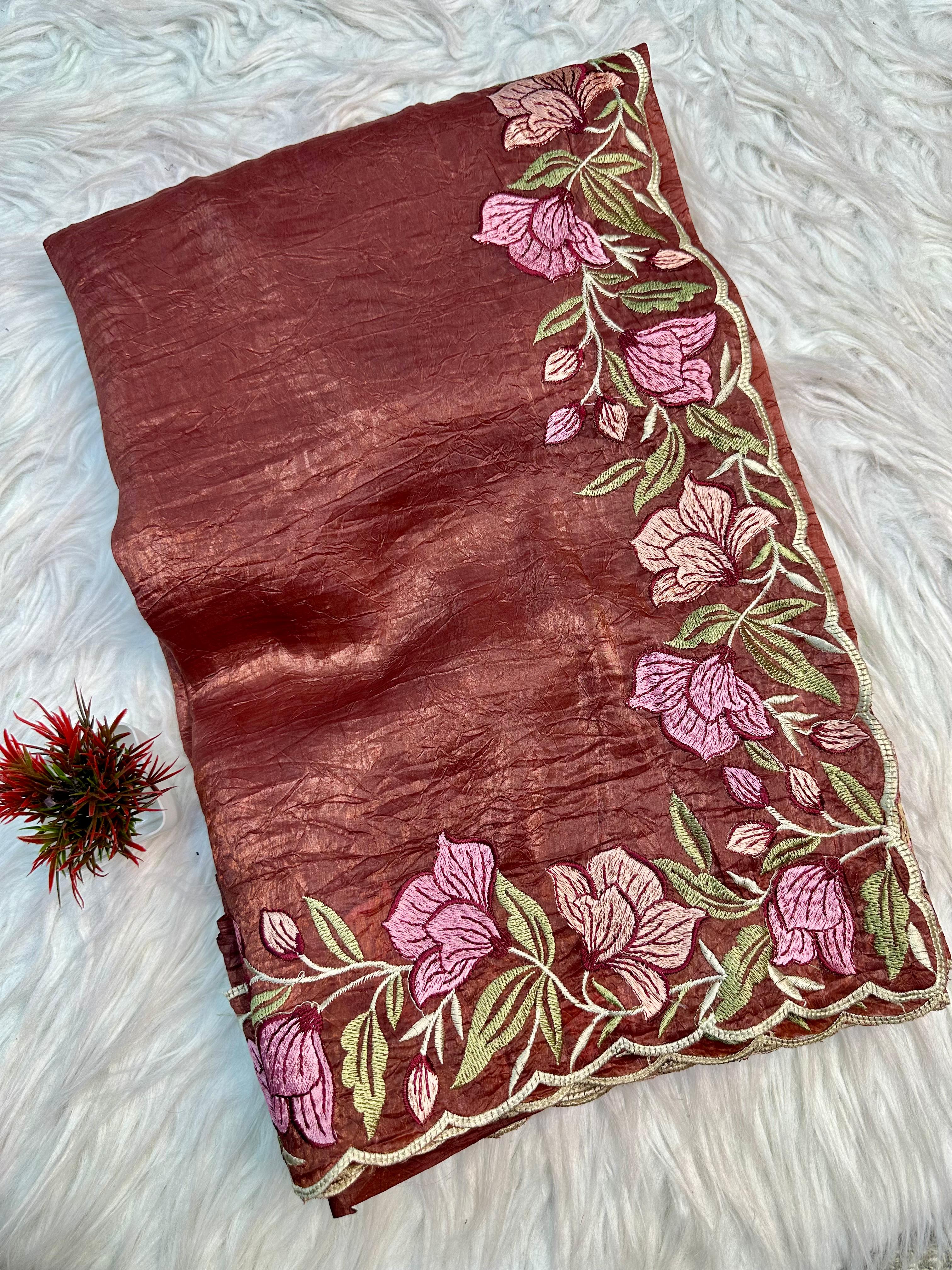
Fold the saree along different lines every few months to reduce permanent creasing on zari, sequins and raised embroidery. Wrap delicate sarees in unbleached cotton or muslin instead of airtight plastic. Store heavy jewellery separately so its edges can't pull threads from georgette, net or crushed fabric.
Dry-clean silk, zari-heavy sarees and embellished net according to the care label rather than soaking them at home. If a small spill occurs, blot it with a clean, dry cloth and avoid rubbing, bleach or direct heat. Air the saree in shade after wearing it, because strong sunlight can fade purple, peach, teal and other saturated dyes.
Before an event, check the pallu edge, blouse hooks, fall stitching and safety-pin points. A five-minute inspection can prevent a loose hook from changing the neckline or a rough pin from damaging floral threadwork. Careful maintenance preserves both the fabric and the visual precision that makes Kashmiri-inspired festive styling distinctive.
Common Questions About Kashmiri Festive Saree Styling
What colours work best for Kashmiri-inspired festive saree styling?
Purple, teal, emerald, rust, mustard, peach and antique gold work particularly well because they create contrast for floral, paisley and chinar-inspired embroidery. Pair one saturated shade with a warm neutral or muted metallic instead of combining several bright colours.
Which embroidery motifs suit a Kashmiri festive saree?
Chinar leaves, badam paisleys, almond blossoms and flowing floral vines suit a Kashmiri festive saree. Kashmiri aari, sozni-inspired outlines and restrained tilla-like metallic details can express the craft influence without overcrowding the saree.
Which jewellery should be worn with a Kashmiri-inspired saree?
Antique gold jhumkas, kundan earrings, pearls and oxidised silver can all work, depending on the saree's colour and finish. Choose one dominant jewellery feature, such as a choker or statement earrings, when the pallu already contains heavy embroidery.
Can a georgette or net saree create a Kashmiri-inspired festive look?
A georgette or net saree can create the look when the styling uses Kashmiri-inspired motifs, a suitable colour palette and measured accessories. Pair fluid fabric with a stable blouse and secure the pallu carefully because lighter fabrics shift more easily than silk.
How should a Kashmiri-inspired saree be styled for a Haldi ceremony?
Choose mustard, peach, rust, green or another warm festive colour with moderate embroidery for a Haldi ceremony. Avoid fragile heavy zari and dangling jewellery if the event involves turmeric, water or active movement, and secure the pleats and pallu firmly.
How can embroidered sarees be stored without damaging the zari?
Store an embroidered saree clean and dry, wrapped in breathable cotton or muslin and folded along changing lines. Keep heavy jewellery away from the fabric, avoid direct sunlight and follow the care label for dry-cleaning rather than washing zari-heavy sarees at home.