

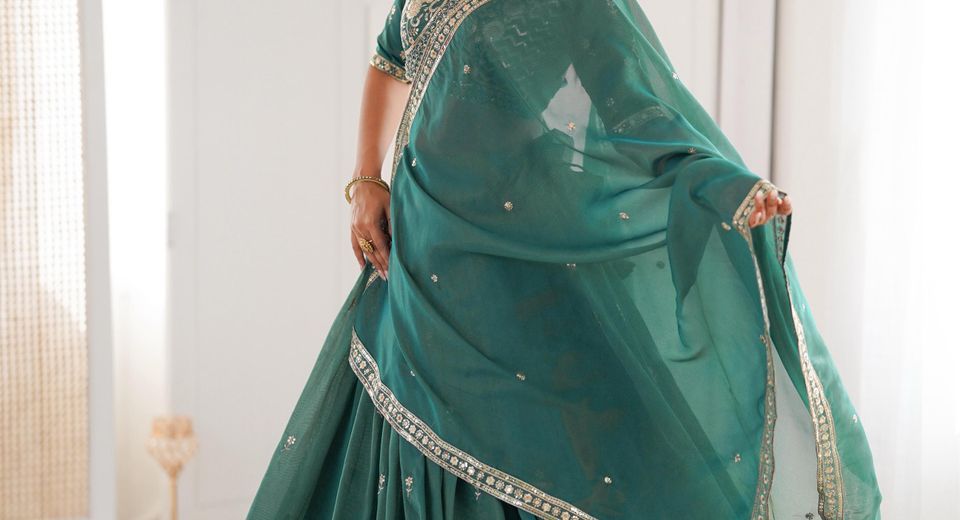
A Kashmiri Ethnic Wear Guide should get with the region's textile vocabulary, not with a list of changing colour trends. Kashmiri dress brings together the relaxed pheran, delicate tilla embroidery, warm pashmina, intricate kani weaving and motifs inspired by almonds, paisleys, flowers and chinar leaves. Modern sarees, salwar suits and lehengas can borrow these details without pretending that every modern silhouette is a historic Kashmiri garment. The result is festive clothing that feels rooted, comfortable and appropriate for weddings, Mehendi ceremonies and family celebrations.
Kashmiri Ethnic Wear Guide: What makes the tradition distinctive?
Kashmiri ethnic wear is distinctive because it combines practical layering with detailed surface decoration and recognisable natural motifs. Traditional Kashmiri clothing developed for a cool climate, while embroidery and woven patterns added richness without relying only on heavy three-dimensional embellishment.
The pheran is the best-known Kashmiri silhouette. The loose, long tunic allows movement and layering, and the garment may be finished with embroidery around the neckline, cuffs or front opening. A classic kangri, worn for warmth beneath a pheran, belongs to the region's cultural history, although it's not a styling accessory for contemporary festive outfits.
Tilla work uses metallic thread to create decorative embroidery, often in gold or silver tones. Sozni embroidery is finer and more delicate, with carefully filled floral or paisley forms. Aari work uses a hooked needle and can create flowing outlines and dense patterned surfaces. These techniques should not be treated as interchangeable because the stitch, scale and finish affect both appearance and care requirements.
Kashmiri motifs often include the badam, or almond-shaped boteh, chinar leaves, lotus forms, roses and curling vines. These motifs can appear on shawls, dupattas, pherans, blouse panels and lehenga borders. A small repeated motif generally gives a quieter, more versatile effect than a broad metallic panel placed across an entire outfit.
Kashmiri Ethnic Wear Guide: How can heritage details work on an up-to-date lehenga?
Kashmiri details work on a current lehenga when classic motifs are used selectively on the border, blouse, dupatta or waist instead of being applied without regard to the garment's silhouette. A lehenga is a contemporary festive choice for many Kashmiri-inspired wardrobes, but it should be described as an adaptation rather than confused with the pheran.
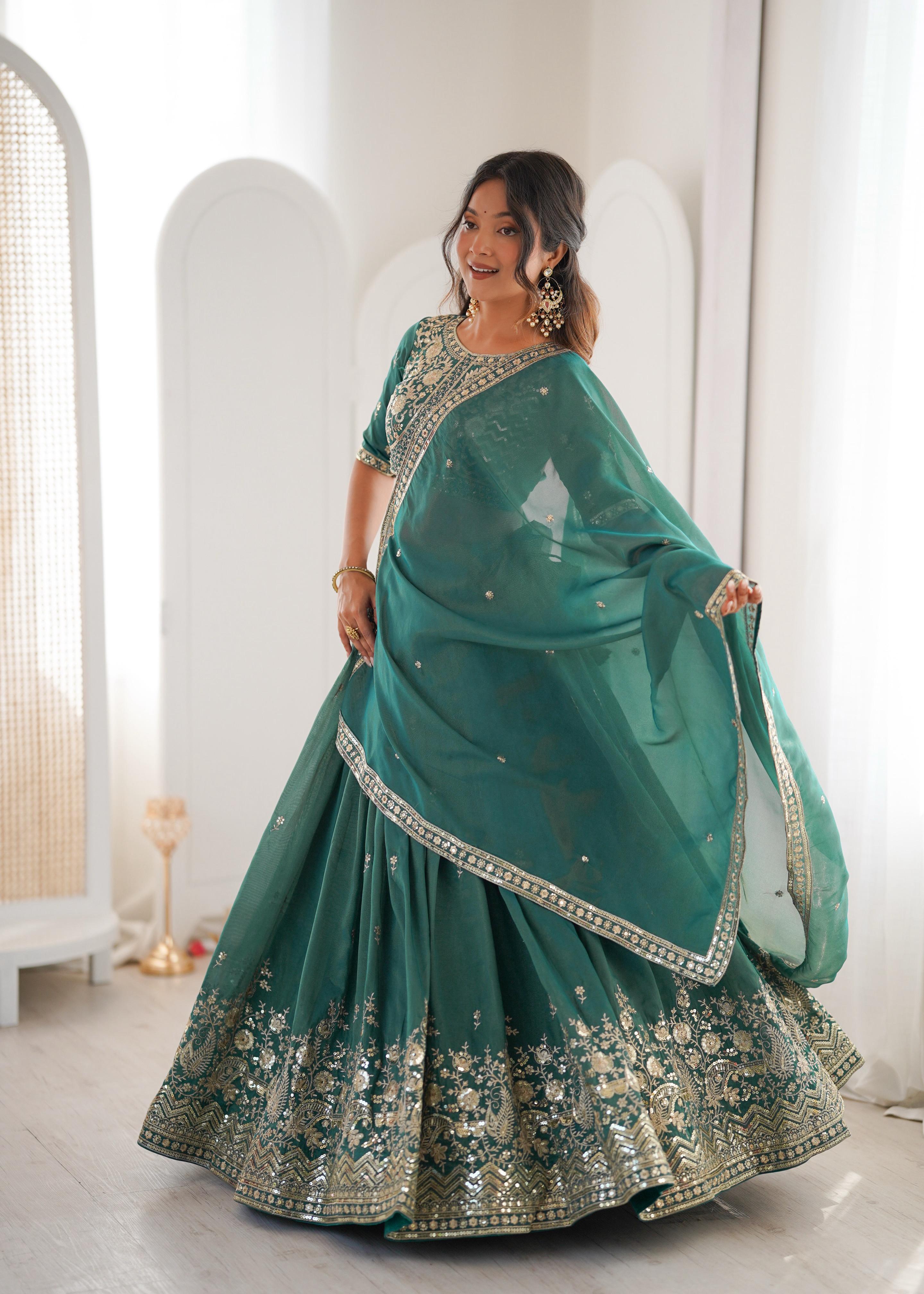
For a balanced outfit, choose one dominant detail and let the remaining pieces support it. A tilla-inspired metallic border can be paired with a relatively clean blouse. A floral embroidered choli can be balanced by a solid skirt and a lightly worked dupatta. Mirror work creates a different visual language from Kashmiri embroidery, so a mirror-work lehenga can still be styled with Kashmiri colour combinations, a woven shawl or a chinar-inspired accessory without being described as historic tilla work.
The Designer Threadwork Silk Lehenga Choli Set with Dupatta illustrates why fabric and surface work need to be considered together. Silk has a polished fall and photographs well under indoor lighting, while threadwork usually reads softer than dense metallic embroidery. A set with this combination can suit a wedding guest, engagement or evening reception when the wearer wants a formal silhouette without the visual weight of a heavily bridal outfit.
The Cream Ethnic Lehenga Choli with Mirror Work Design offers an useful example of a neutral base. Cream can carry deep walnut, saffron, wine, forest green or antique-gold accents associated with Kashmiri-inspired palettes. Because mirror work catches light strongly, keep jewellery controlled: a pair of earrings and a single bracelet may look more considered than several competing reflective pieces.
Bridal dressing requires a separate decision about weight and movement. A large skirt with multiple layers can become tiring during a long ceremony, especially when the wearer must sit on the floor, climb stairs or move between indoor and outdoor venues. Check the lining, waistband, hem and dupatta attachment before choosing a bridal lehenga, and reserve extensive embellishment for the panels most visible in photographs.
Kashmiri Ethnic Wear Guide: Which fabrics and colours suit the look?
Wool blends, pashmina, silk, velvet, georgette, crepe and cotton-silk blends each create a different result in Kashmiri-inspired clothing. The right fabric depends on the season, venue, amount of movement and level of embroidery rather than on colour alone.
Kashmiri Ethnic Wear Guide: Which fabrics work for winter and evening events?
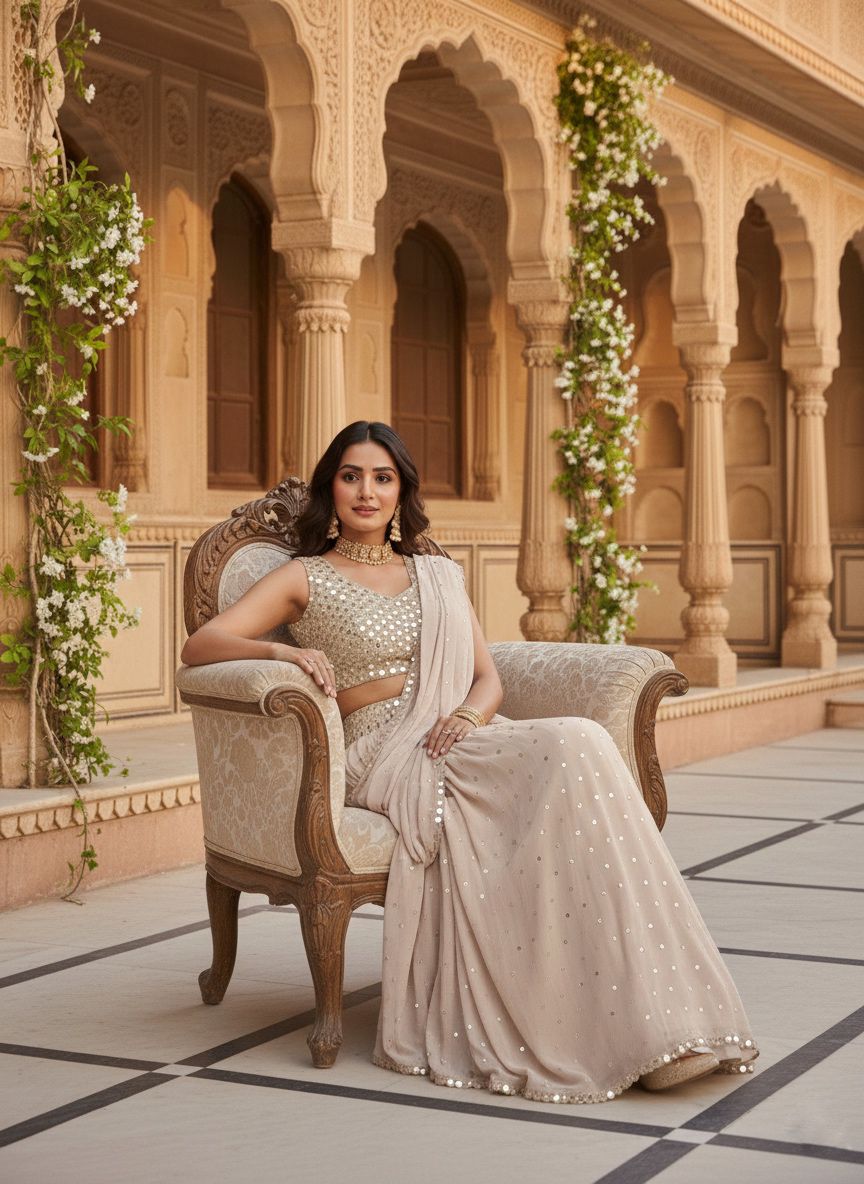
Pashmina and wool are appropriate for winter shawls and layered styling, but genuine fibre content should be checked because pashmina is often used loosely in retail descriptions. Velvet gives a rich winter appearance and supports zari, tilla-inspired work and deep jewel colours, although velvet can feel warm under strong indoor lighting or in crowded venues.
Silk provides structure and a luminous surface for lehenga skirts, blouses and sarees. Banarasi silk is a distinct textile tradition with its own brocade vocabulary, so a Banarasi silk garment should not automatically be labelled Kashmiri. A Kashmiri-inspired look can combine Banarasi silk with a chinar-motif shawl or Kashmiri-style embroidery when the textile identities are described accurately.
Kashmiri Ethnic Wear Guide: Which fabrics work for daytime functions?
Chanderi, cotton-silk, lightweight georgette and soft crepe are more comfortable for daytime celebrations and warm-weather functions. Chanderi has a light, airy character that works well for a suit or saree with restrained embroidery. A breathable lining and a manageable dupatta matter more than a high embellishment count during an outdoor Haldi ceremony.
Colour can communicate mood without turning an outfit into a costume. Saffron, rust, walnut, ivory, crimson, teal, moss green and deep blue create a Kashmiri-inspired palette. Yellow works naturally for Haldi ceremony dressing, while green suits Mehendi celebrations and can be deepened with antique-gold jewellery. Softer cream, dusty rose and muted blue are useful for daytime wedding guests who want detail without bridal intensity.
Kashmiri Ethnic Wear Guide: Should you choose a saree, suit or lehenga?
Choose a lehenga for maximum festive volume, a suit for comfort and repeat wear, and a saree for an elongated, adaptable drape. Each silhouette can carry Kashmiri references, but each demands different attention during shopping and styling.
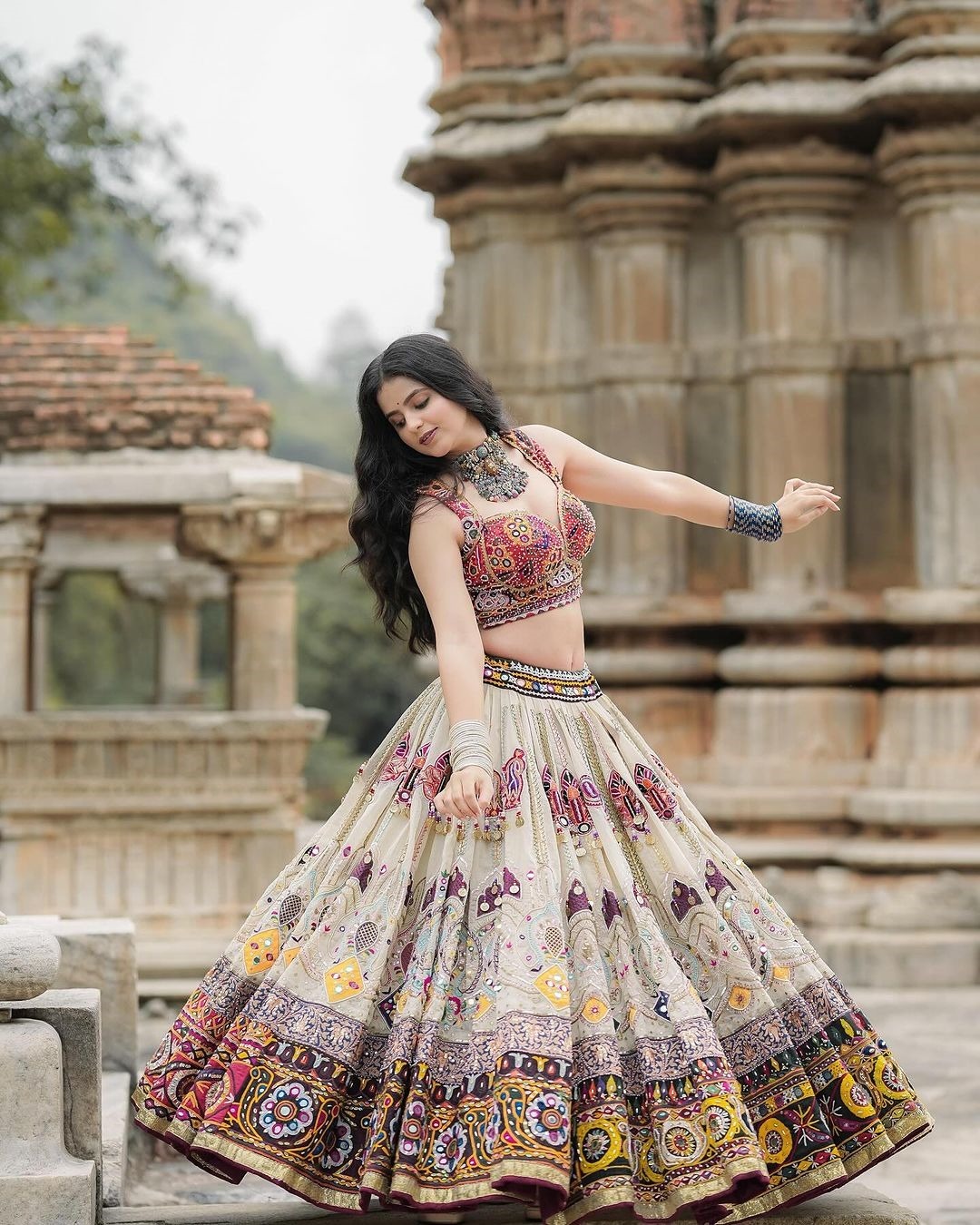
A saree works well when you want to show a detailed blouse, border or shawl. The Beige Mirror Work Ready to Wear Saree with Blouse is practical for someone who wants a pre-structured drape rather than several rounds of pinning. Beige creates a calm base for a deep green shawl, oxidised silver jewellery or a blouse with floral embroidery. Ready-to-wear construction is especially useful for receptions, work-linked celebrations and first-time saree wearers, but check the fastening system and finished length before the event.
A salwar suit or long kurta brings easier walking and sitting than a full lehenga. A straight-cut kameez with a Kashmiri-inspired neckline, narrow trouser and embroidered dupatta creates a polished look for a family puja or daytime wedding. A palazzo suit gives more movement, while a sharara introduces volume at the lower leg and can look festive without the weight of a large circular skirt.
A lehenga is appropriate when the invitation calls for formal festive dressing or when the wearer wants a clearly celebratory silhouette. A ready-made lehenga usually reduces alteration time, while a semi-stitched lehenga allows more control over waist and length. The Ready Made Lehenga option is useful when an event is close, but measurements should still be taken for waist, skirt length and blouse fit rather than relying only on a general size label.
Kashmiri Ethnic Wear Guide: How should you shop online for the right fit?
Online shopping becomes safer when you compare garment measurements, construction details and delivery time instead of judging only from photographs. A product description should make clear whether a choli is fully stitched, semi-stitched or unstitched.
Fully stitched choli shopping is the quickest route to a wearable outfit, but a ready-made blouse still needs accurate bust, waist, shoulder and armhole measurements. Semi-stitched garments offer adjustment space, yet they may require a tailor for finishing, lining, sleeves or cup support. Ask whether seam allowance is available before assuming that a smaller or larger size can be altered easily.
Check the skirt's waistband construction, closure type and lining. A concealed zip can create a smooth finish but may need careful alteration. A drawstring waist gives flexibility but can change how the waistband sits under a dupatta. Measure from the intended waist position to the floor while wearing the footwear planned for the event; a three-centimetre difference can affect whether the hem brushes the floor or catches under the heel.
Inspect embroidery placement as well as the listed fabric. Heavy work around the hem adds swing and weight, while embellishment on the blouse is more visible in seated photographs. For a Kashmiri-inspired outfit, look for specific wording such as thread embroidery, zari, tilla-style work, sozni-inspired detail or floral motifs. Avoid assuming that every paisley represents Kashmiri craftsmanship.
Plan a minimum of two to three weeks for made-to-measure alterations when possible. A ready-made garment may need only minor adjustments, but blouse fitting, sleeve changes and fall or edging work can take longer during wedding season. Keep original packaging and avoid removing tags until the fit and components have been checked.
Kashmiri Ethnic Wear Guide: How can you dress for each ceremony?
Match the outfit's colour, weight and ease of movement to the ceremony instead of choosing a heavily embellished garment for every function. A thoughtful wardrobe can use the same Kashmiri-inspired details across several events without repeating the entire look.
Yellow Lehengas are naturally suited to a Haldi ceremony, especially when the skirt is light enough for outdoor movement and turmeric-related staining is considered. Pair yellow with ivory, muted green or antique gold rather than adding several bright shades. Choose washable or less delicate accessories if the ceremony includes colour, water or outdoor seating.
Green Lehengas work particularly well for Mehendi celebrations because green connects visually with foliage and henna. The Mehendi Lehengas category can also guide choices toward lighter skirts, shorter dupattas or practical blouse construction. A green lehenga with restrained mirror work can look festive without competing with the bride's more elaborate outfit.
For a wedding ceremony, deeper colours such as wine, navy, rust or emerald can support zari and metallic jewellery. A bridal look may require a more structured skirt, a longer dupatta or a coordinated veil, but comfort should remain part of the decision. For a reception, the Designer Threadwork Silk Lehenga Choli Set with Dupatta can be styled with sleek hair and fewer accessories so the threadwork remains visible.
The Semi Stitched Lehengas Collection is useful when the wearer wants tailoring flexibility and has enough time before the event. Semi-stitched construction suits changing measurements or a preferred blouse neckline, but it should not be bought at the last minute without confirming a tailor's availability. Girls' festive wear also benefits from lighter fabrics, shorter hems and secure fastenings because children need to move, sit and play comfortably.
Kashmiri Ethnic Wear Guide: How should you care for embroidered garments?
Care for embroidered Kashmiri-inspired clothing by following the fibre and embellishment requirements, storing garments dry and avoiding unnecessary washing. Metallic thread, mirror work, silk and velvet can each respond differently to water, heat and friction.
Air a worn garment in shade before storing it, and remove surface dust with a soft, dry brush or gentle shake. Do not iron directly over zari, mirror work, sequins or raised embroidery. Place a cotton cloth between the iron and the garment, use low heat only when the care label permits it, and steam from a safe distance rather than pressing embellished areas.
Dry cleaning is generally safer for heavily worked silk, velvet and structured lehengas, but the cleaner should be told about metallic thread, mirrors and glued embellishments. Cotton and some lightweight blends may tolerate gentler washing, yet the care label remains more reliable than a general fabric assumption. Fold embellished skirts with acid-free tissue or soft muslin between heavy panels to reduce snagging.
Store a dupatta separately when its embroidery can catch on the lehenga. Avoid hanging heavy garments for many months because the waistband and shoulder seams may bear excessive weight. Refold stored pieces every few weeks, keep them away from direct sunlight and use breathable cotton covers instead of sealed plastic for long-term storage.
Kashmiri Ethnic Wear Guide: What should you remember before buying?
The most reliable purchase combines an honest textile description, a suitable silhouette, verified measurements and a realistic alteration timeline. Time-honoured references become more meaningful when they're named accurately and used with restraint.
Before buying, identify the event, expected weather, time spent standing or sitting, and whether the outfit will be worn again. Compare a saree, suit and lehenga according to movement and maintenance rather than choosing the most embellished option. Confirm whether the garment is ready-made, fully stitched or semi-stitched, and check the included pieces before ordering.
Use Kashmiri motifs such as chinar leaves, badam forms, floral vines and paisleys as visual references, but distinguish tilla, sozni, aari, zari, mirror work and threadwork when describing the finish. Such precision helps preserve cultural context and also helps shoppers predict texture, weight and care.
A Kashmiri-inspired wardrobe can therefore include a pheran-influenced long kurta, a Chanderi suit, a saree with a detailed blouse, or a silk lehenga with restrained floral work. The strongest outfit isn't necessarily the hefty one; it's the garment whose fabric, construction, colour and traditional details work together for the person wearing it.
Common Questions About Kashmiri-Inspired Sarees, Suits and Lehengas
What is traditional Kashmiri ethnic wear?
Traditional Kashmiri ethnic wear includes the pheran, embroidered shawls and garments decorated with techniques such as tilla, sozni and aari work. Modern lehengas, sarees and suits may borrow Kashmiri motifs and colour palettes, but they are contemporary adaptations rather than historic pheran silhouettes.
Which lehenga colours suit a Kashmiri-inspired wedding look?
Saffron, rust, walnut, ivory, crimson, teal, moss green and deep blue suit a Kashmiri-inspired wedding palette. Choose the intensity according to the function: yellow works for Haldi ceremonies, green suits Mehendi events, and wine, emerald or navy can work for evening weddings and receptions.
Is a ready-made or semi-stitched lehenga better?
A ready-made lehenga is better when the event is soon and the standard measurements are close to your own. A semi-stitched lehenga is better when you need changes to the waist, blouse neckline, sleeves or skirt length and have enough time to arrange tailoring.
How can I style Kashmiri details without looking overdressed?
Use one prominent reference, such as a floral embroidered blouse, tilla-inspired border, chinar-motif shawl or Kashmiri colour combination, and keep the remaining pieces simpler. Controlled jewellery and a lightly worked dupatta prevent mirror work, metallic thread and embellishment from competing for attention.
What fabric is comfortable for a daytime Kashmiri-inspired outfit?
Chanderi, cotton-silk, lightweight georgette and soft crepe are comfortable choices for warm daytime functions. Select a breathable lining, manageable dupatta and modest embellishment for outdoor events such as a Haldi ceremony.
How should embroidered Kashmiri-inspired clothing be stored?
Store embroidered garments clean and completely dry in breathable cotton covers, with soft tissue or muslin between heavy embellished panels. Keep zari, mirrors and raised embroidery away from direct ironing, friction and prolonged sunlight, and follow the care label or use a cleaner experienced with embellished textiles.





