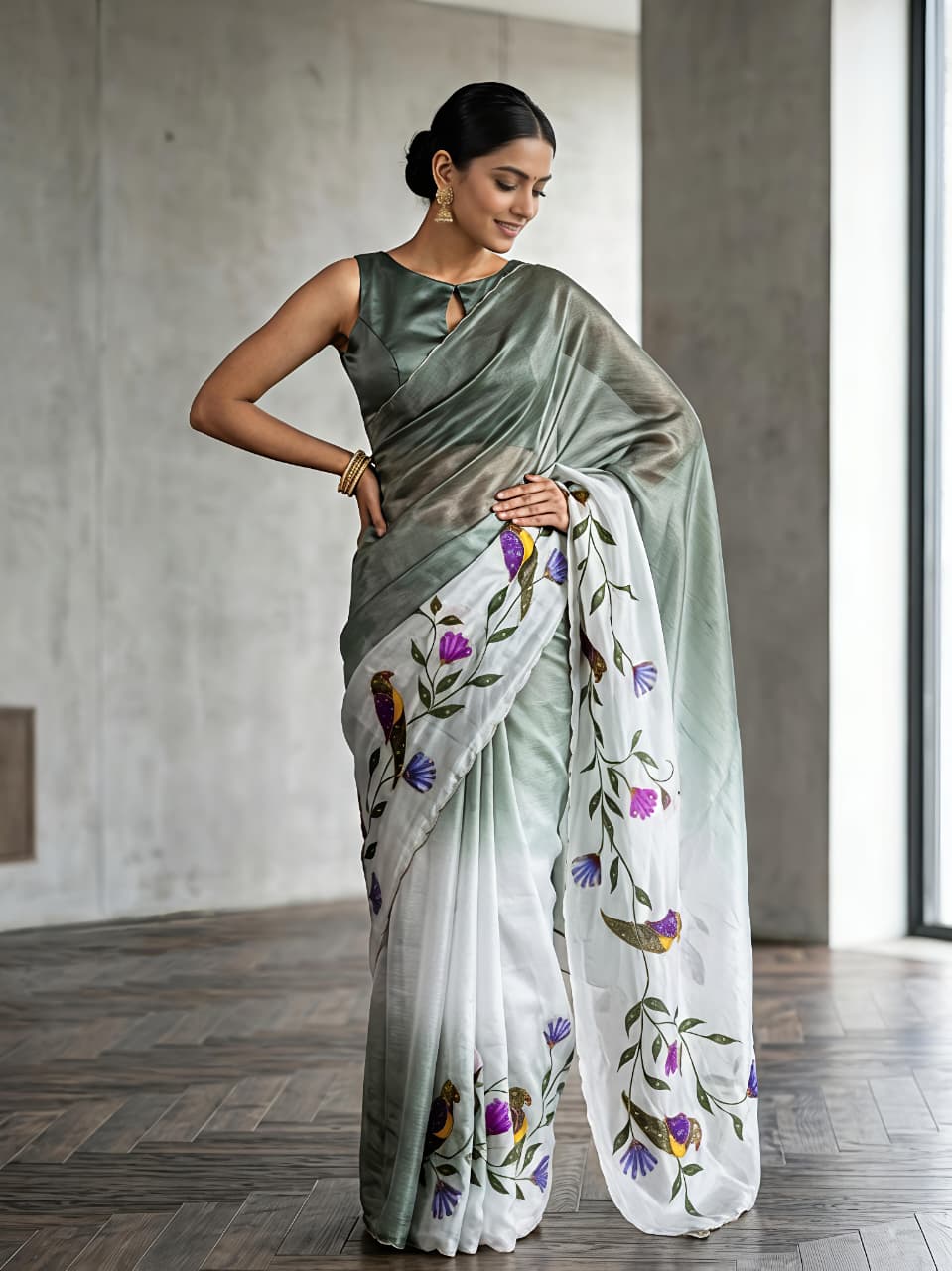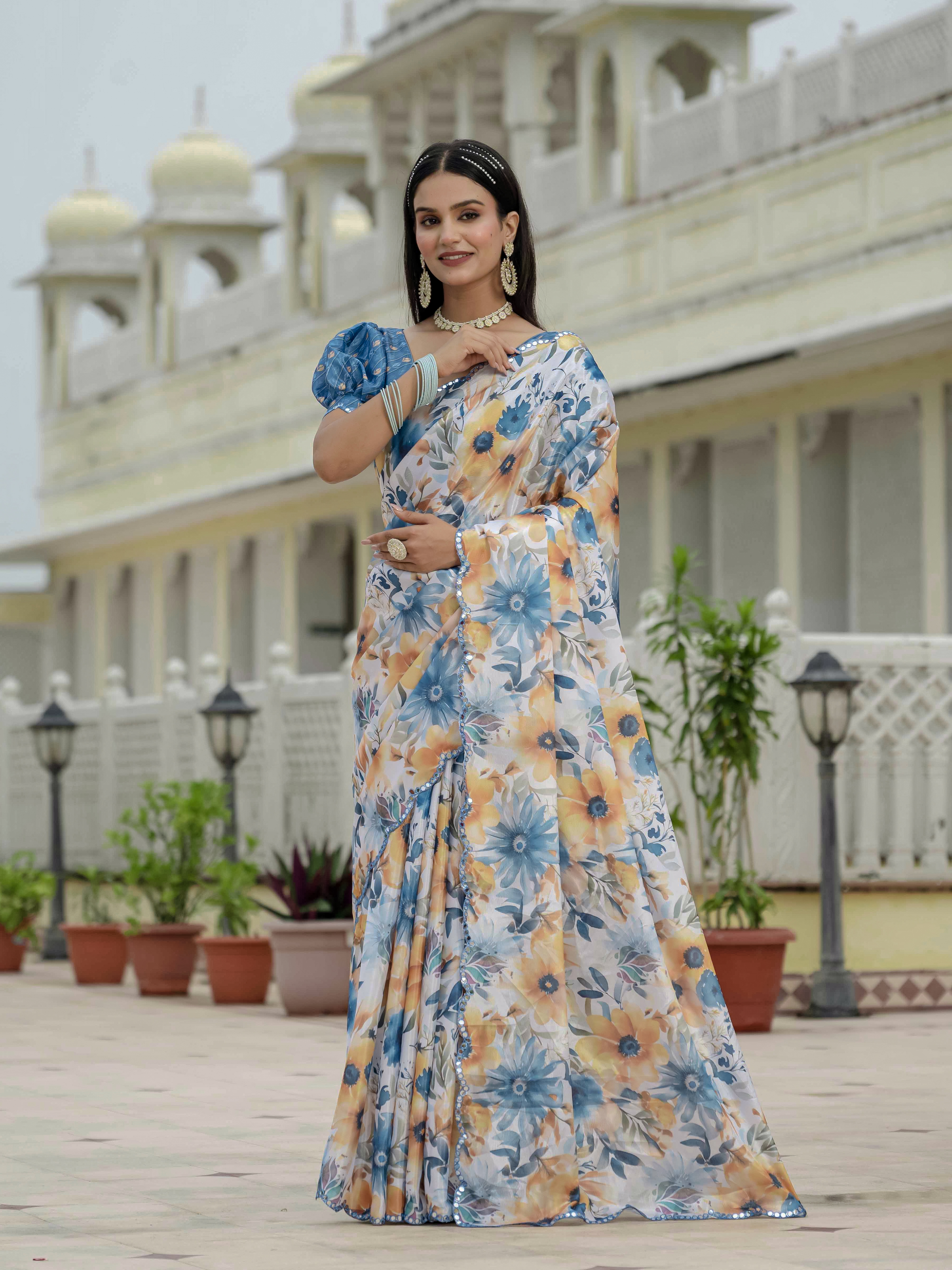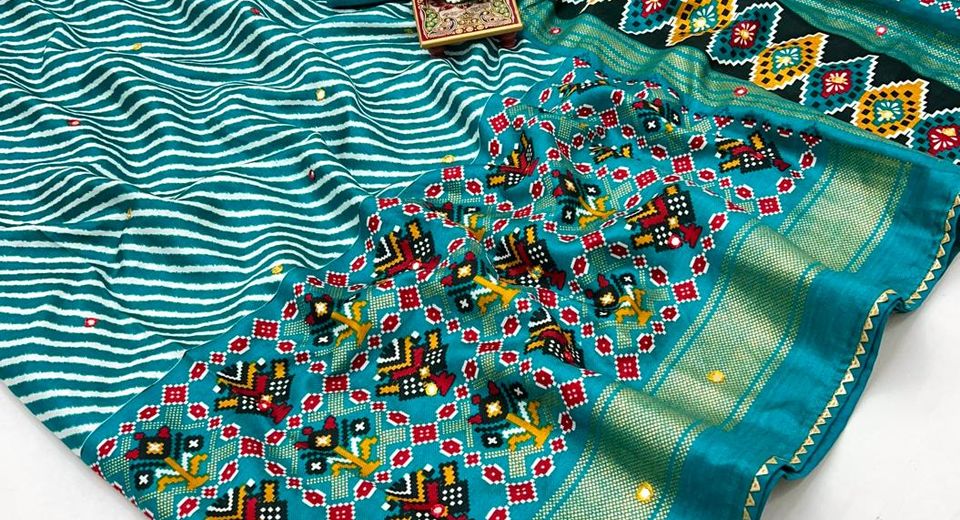
Kashmiri Embroidery Sarees bring the visual language of Kashmir to a six-yard drape through paisley vines, chinar leaves, flowers and finely worked borders. The appeal isn't limited to winter dressing: a lightweight Kashmiri-inspired saree can work for a daytime puja, a wedding guest look or a contemporary festive wardrobe. Understanding the motifs, base fabrics and scale of embroidery helps you choose a saree that feels authentic, comfortable and easy to style.
Kashmiri Embroidery Sarees and the details that make them distinctive
Kashmiri embroidery is distinctive because it combines nature-based motifs with intricate surface work and a graceful arrangement of colour and negative space. Traditional Kashmiri needlework includes recognisable forms such as paisley, chinar leaves, almond-shaped buta, roses, iris-like flowers and curling vines.
The best-known Kashmiri embroidery tradition is sozni, a fine needlework technique often worked with a single strand of silk or wool thread. Sozni designs may extend across a shawl or patterned as restrained borders and pallu details on a saree. Aari work, made with a hooked needle, creates a slightly bolder chain-like outline and can create dense floral patterns. Machine embroidery may imitate both effects, but handwork usually has subtle variations in stitch direction, weave tension and motif spacing.
Kashmiri embroidery differs from zari-heavy bridal decoration. Zari uses metallic thread to create shine, whereas Kashmiri work depends mainly on line, colour and botanical composition. A saree with muted threadwork can therefore look richly detailed without becoming heavily glittered.
An useful identification clue is the relationship between motif and negative space: Kashmiri-inspired designs usually allow the ground fabric to remain visible rather than filling every inch with ornament.
Kashmiri Embroidery Sarees: time-honoured motifs worth recognising
The main motifs in Kashmiri Embroidery Sarees are paisley, chinar, floral buta, vine, almond and garden-inspired compositions. Each motif creates a different visual mood, so recognising the pattern can guide both your purchase and your styling choices.
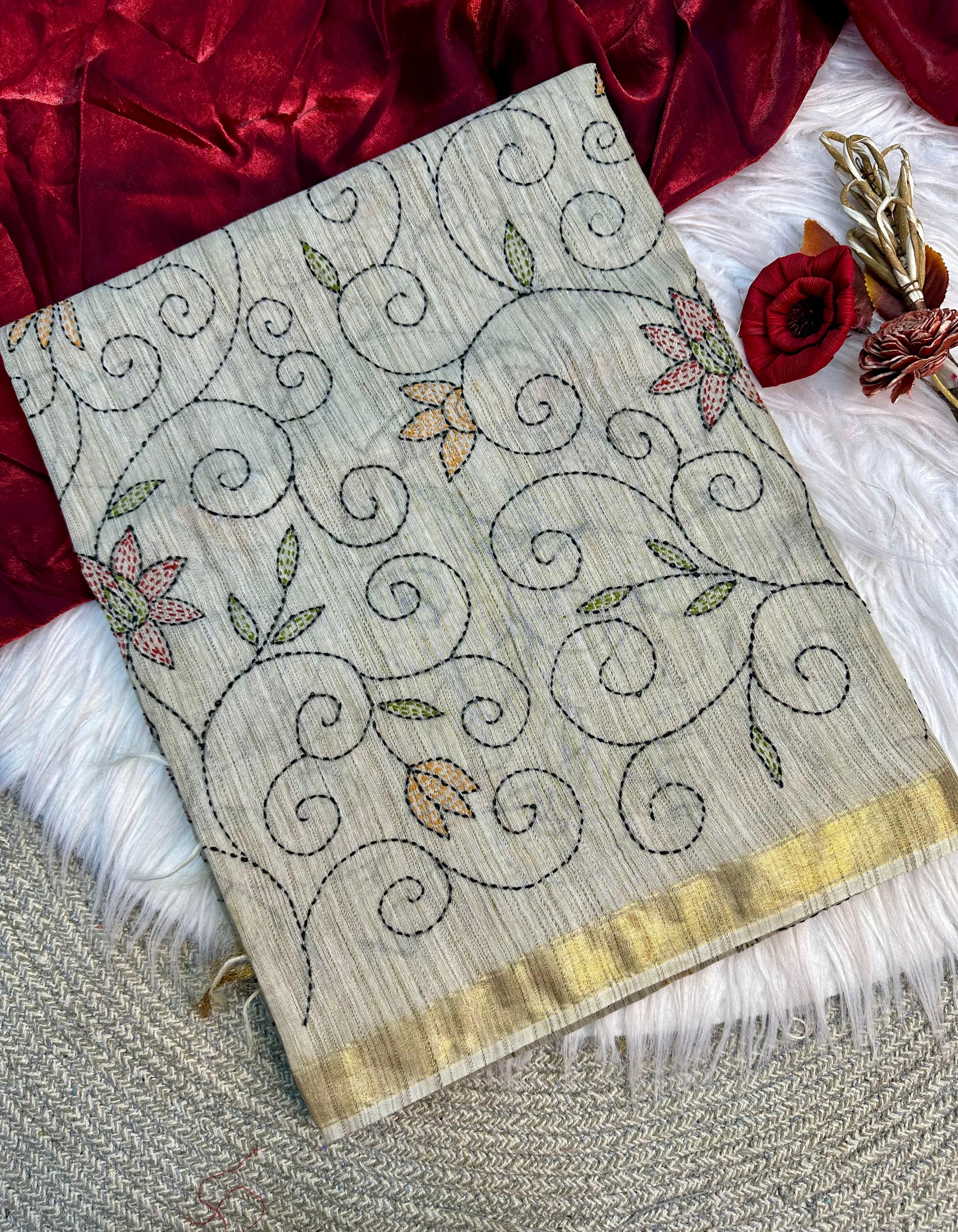
Paisley and almond motifs
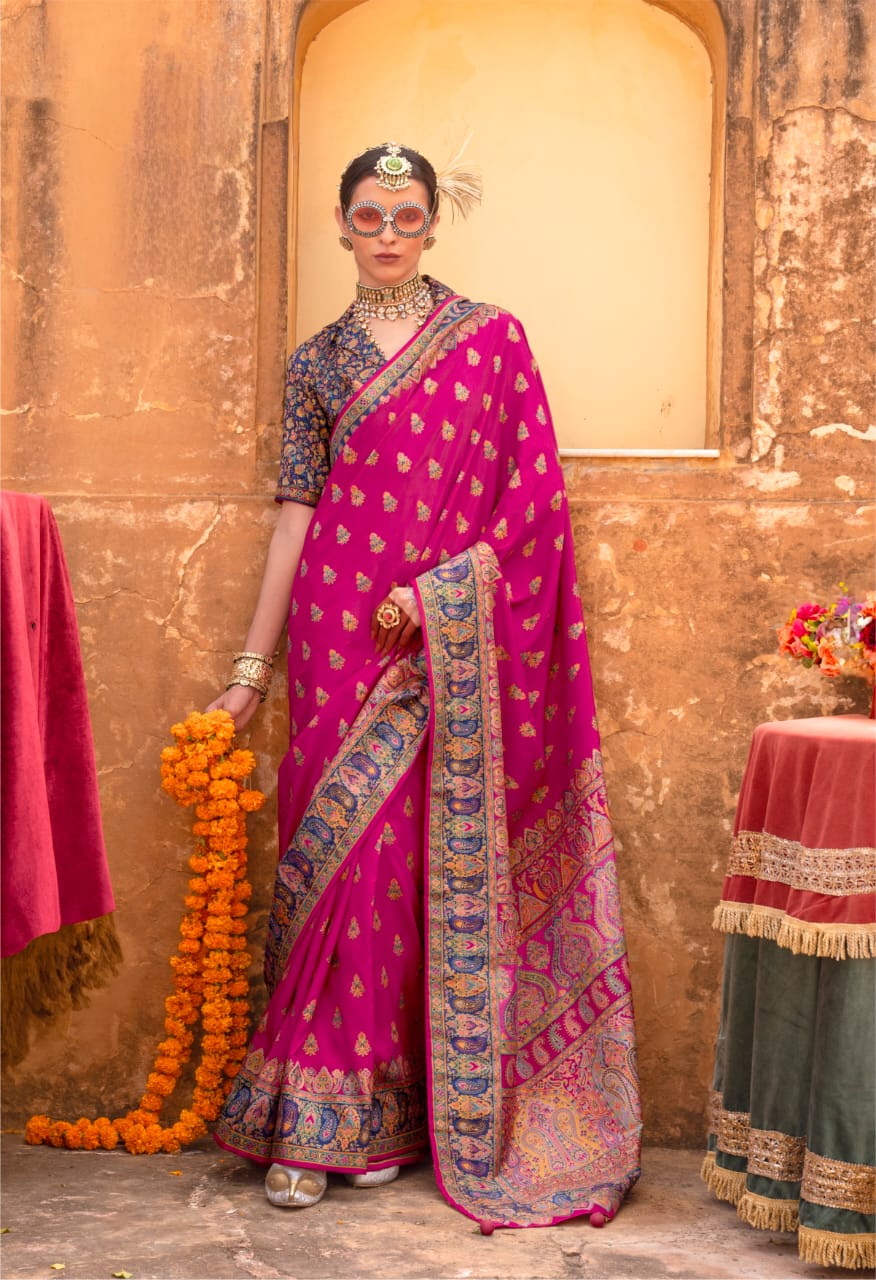
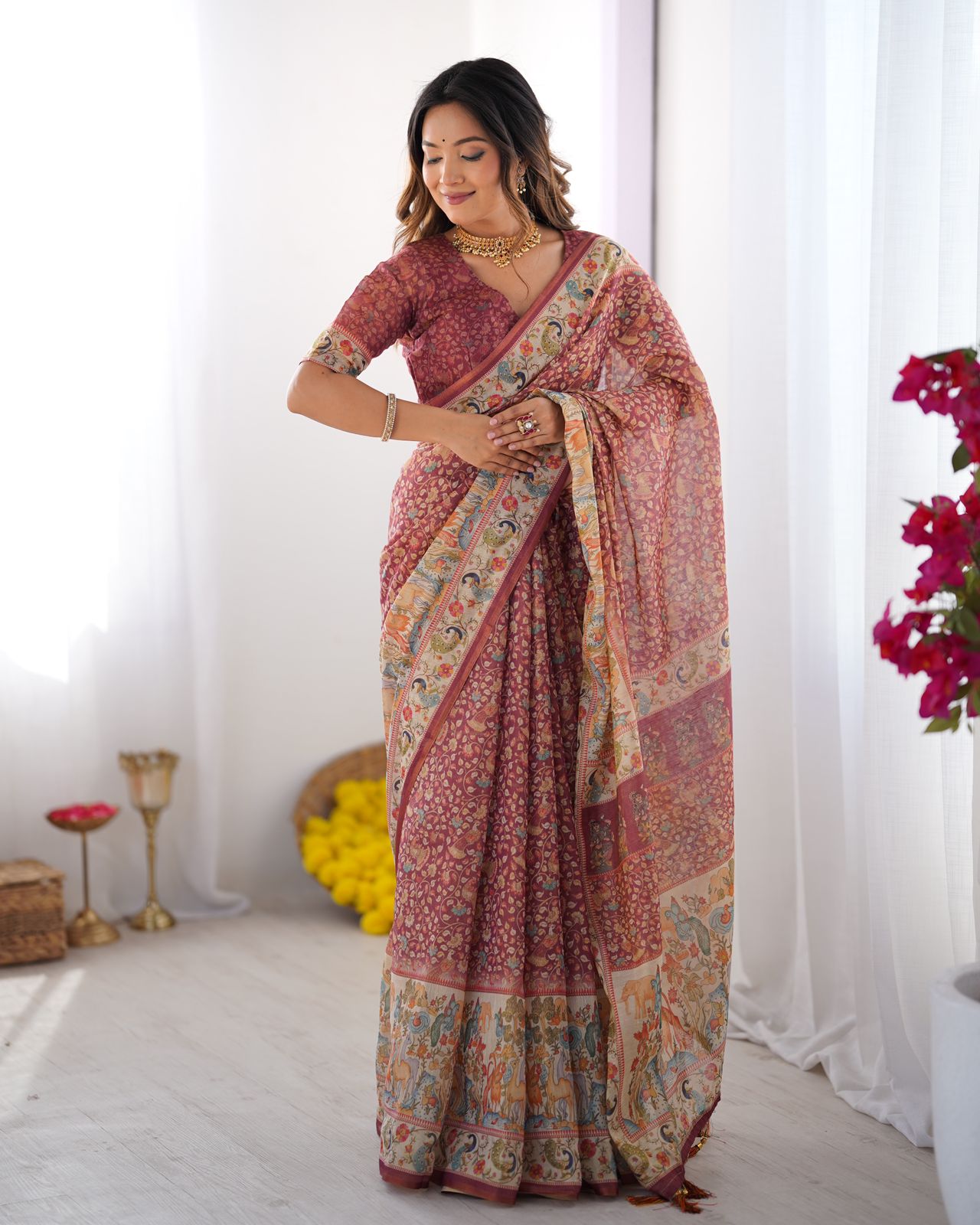
Paisley motifs create movement and are among the easiest Kashmiri elements to identify. The curved teardrop shape may appear singly on the body, repeat along the border or grow into a large pallu arrangement. Paisley designs pair especially well with plain blouses because the motif already provides a strong focal point.
Chinar leaves
Chinar leaves add a distinctly Kashmiri botanical reference through their broad, pointed, fan-like form. Rust, burnt orange, maroon, olive and gold chinar details create an autumnal palette, while ivory, blush and powder blue versions feel lighter and more contemporary.
Floral vines and buta
Floral vines connect small flowers through curling stems and are useful when you want an elongated, graceful appearance. A buta is a repeated individual motif, usually placed across the saree body or along the pallu. Small buta patterns suit office-friendly or daytime dressing, while larger flowers and denser borders suit evening celebrations.
Garden compositions
Garden-inspired layouts combine flowers, leaves and vines into a broader scene rather than repeating one isolated symbol. Luxury Pashmina Saree with Paisley Design & Shaw illustrates how a large paisley-led composition can become the centre of a winter occasion outfit without requiring excessive jewellery.
Which fabrics suit Kashmiri Embroidery Sarees?
Pashmina, silk, wool blends, cotton and tissue fabrics can all carry Kashmiri-inspired embroidery, but each fabric changes the drape, season and formality of the saree.
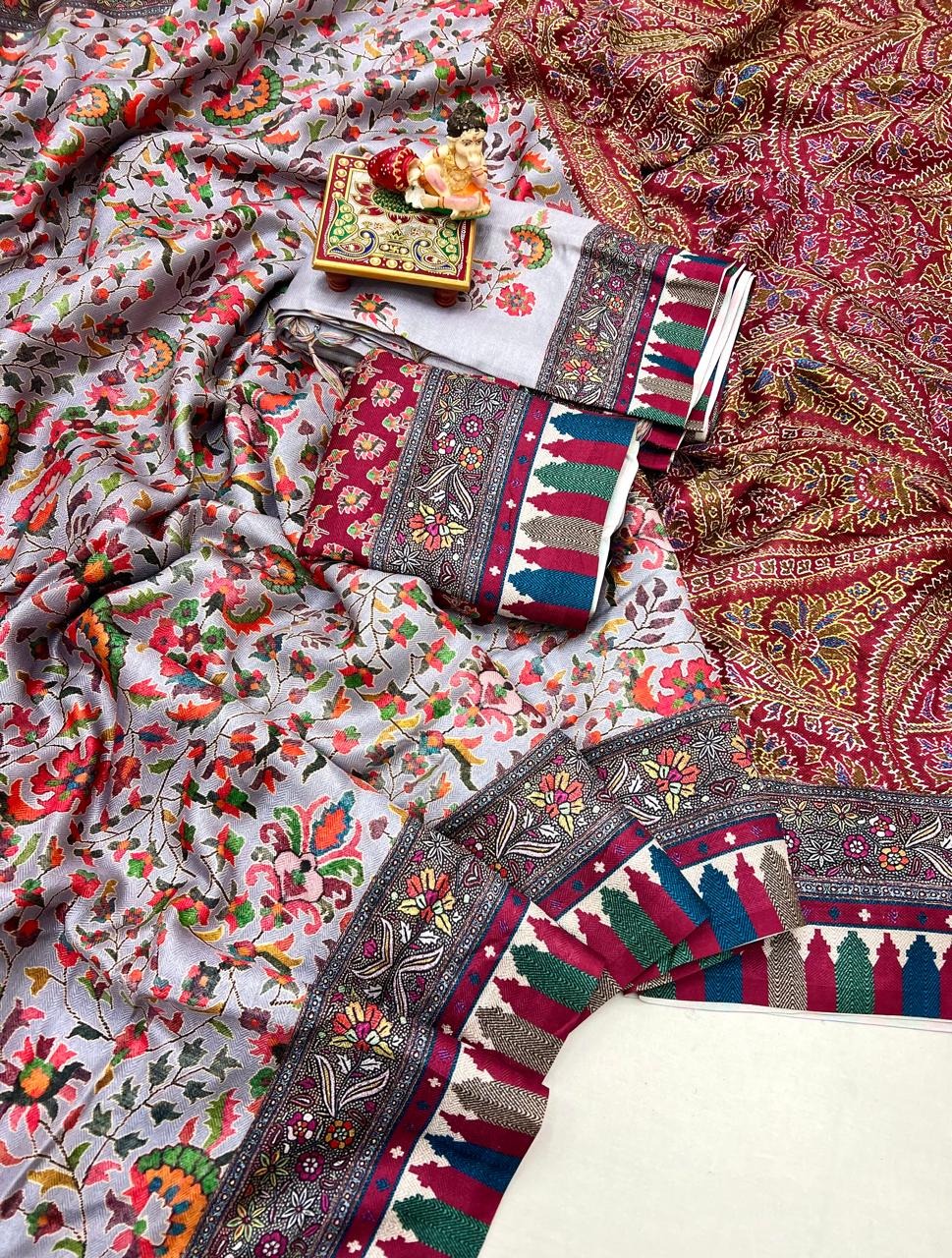
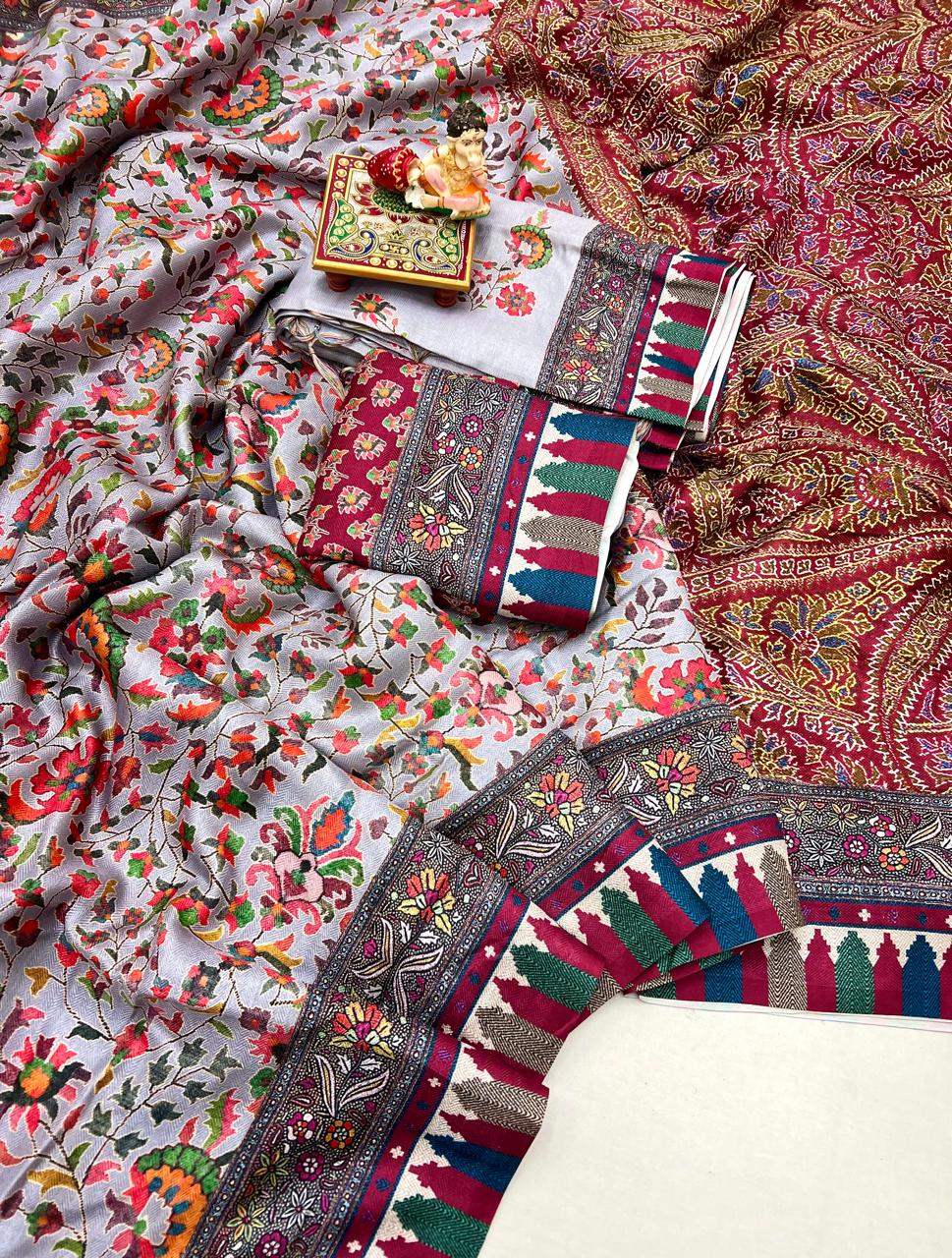
Pashmina has a soft, warm hand-feel and a fluid fall that suits cooler months. Kashmiri Style Pashmina Saree With Shawl Set offers a coordinated approach when you want the shawl to repeat the saree's colour story. Grey Kashmiri Style Pashmina Saree With Shawl & Blouse is convenient for a complete outfit because the matching blouse reduces the risk of competing colours.
Silk gives embroidery a smooth foundation and sharper colour contrast. Banarasi silk is traditionally associated with metallic brocade and wedding dressing, while a Kashmiri-inspired silk saree usually places more emphasis on floral or paisley needlework. A handloom silk base can feel formal without the weight of dense brocade.
Cotton is practical for warm weather, daytime ceremonies and long hours of wear. Pastel Floral Tissue Handloom Cotton Saree with Zari Weaves shows how floral surface interest and restrained zari can create festive polish without the warmth of pashmina. Tissue cotton may have a slightly crisp fall, so neat pleating and a well-fitted petticoat are particularly important.
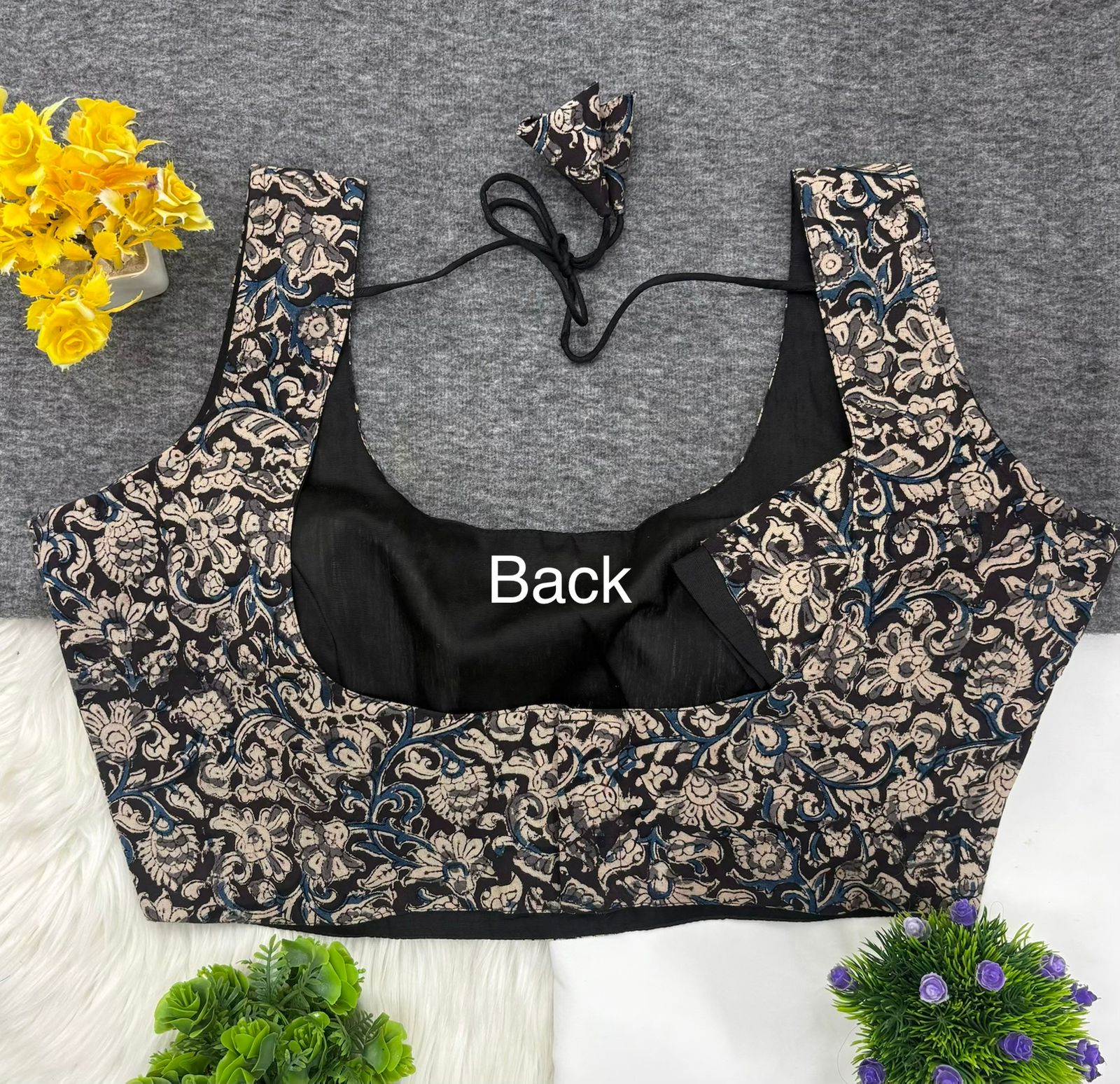
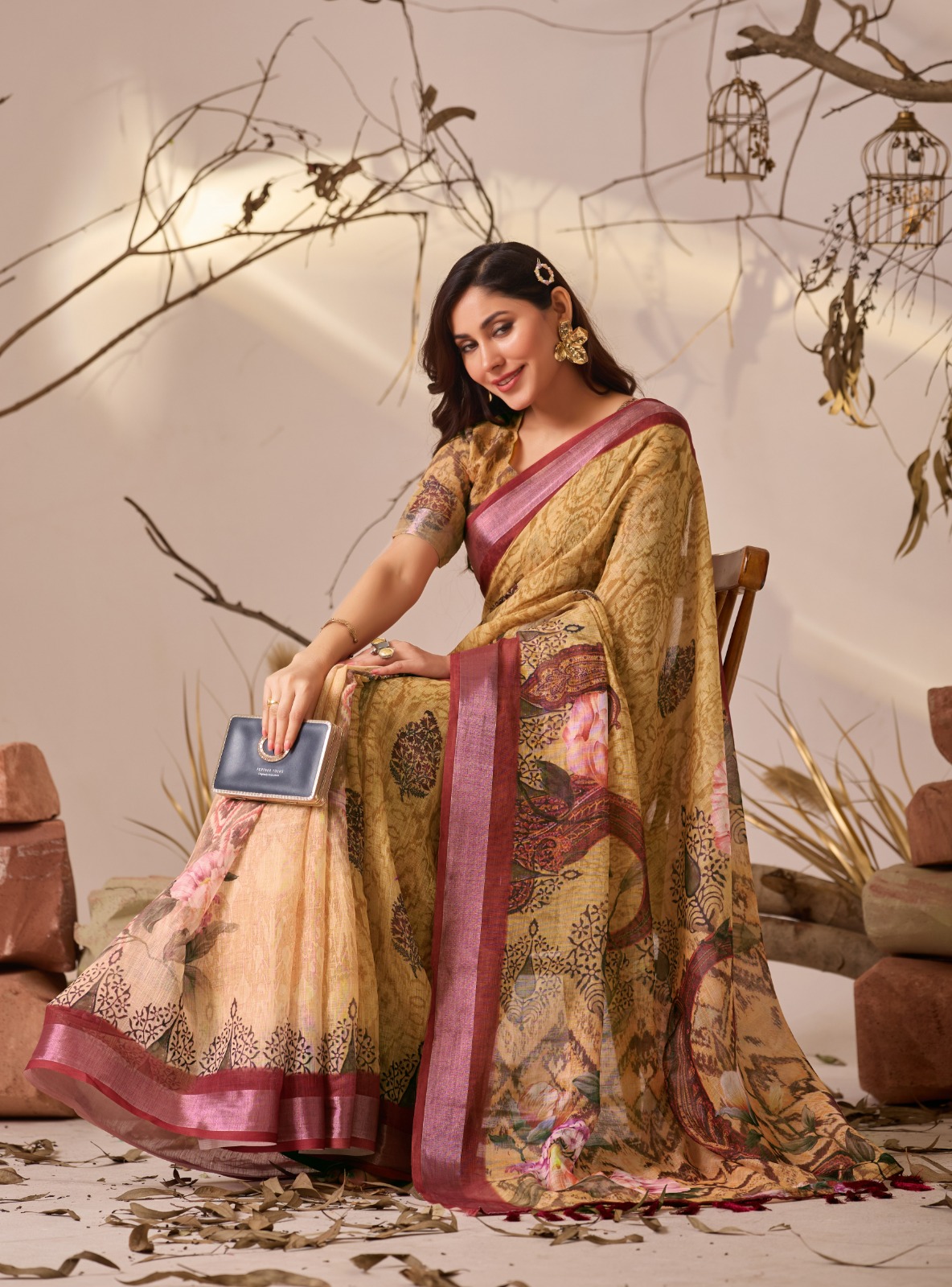
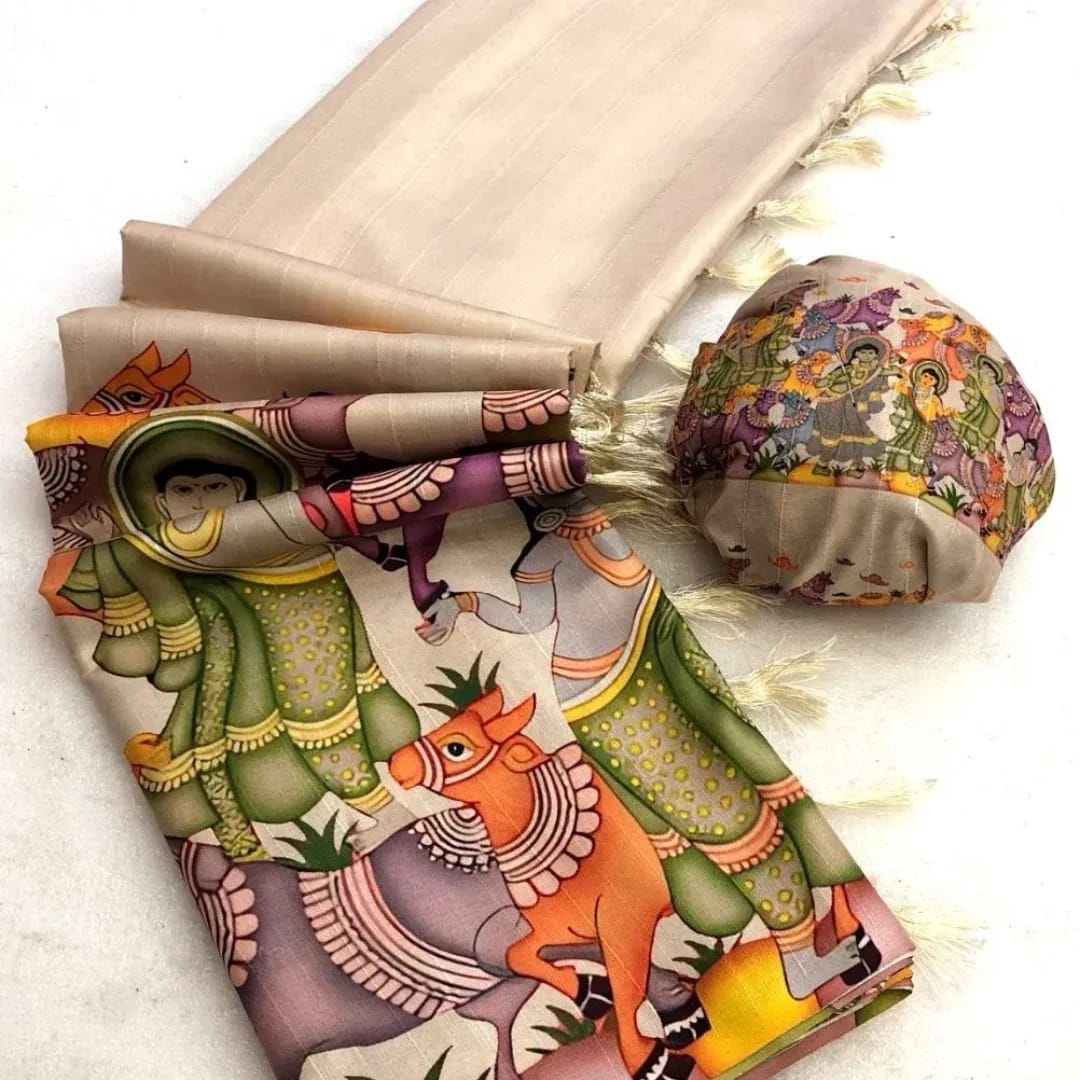
Tussar silk has a textured, natural surface that works well with earthy Kashmiri colours. Tussar Silk Kalamkari Printed Saree with Blouse isn't a Kashmiri embroidery piece, but its organic pattern language demonstrates how a textured base can support botanical styling without looking overly formal. Elegant Black Kalamkari Silk Saree with Blouse gives a second useful comparison: a dark ground can make botanical patterning appear sharper and more evening-appropriate.
How can Kashmiri Embroidery Sarees be styled today?
Kashmiri Embroidery Sarees look contemporary when one heritage element is balanced with clean tailoring, controlled accessories and an uncluttered drape. The most effective styling choice is usually to let the embroidery remain the main visual detail.
Choose a modern blouse shape
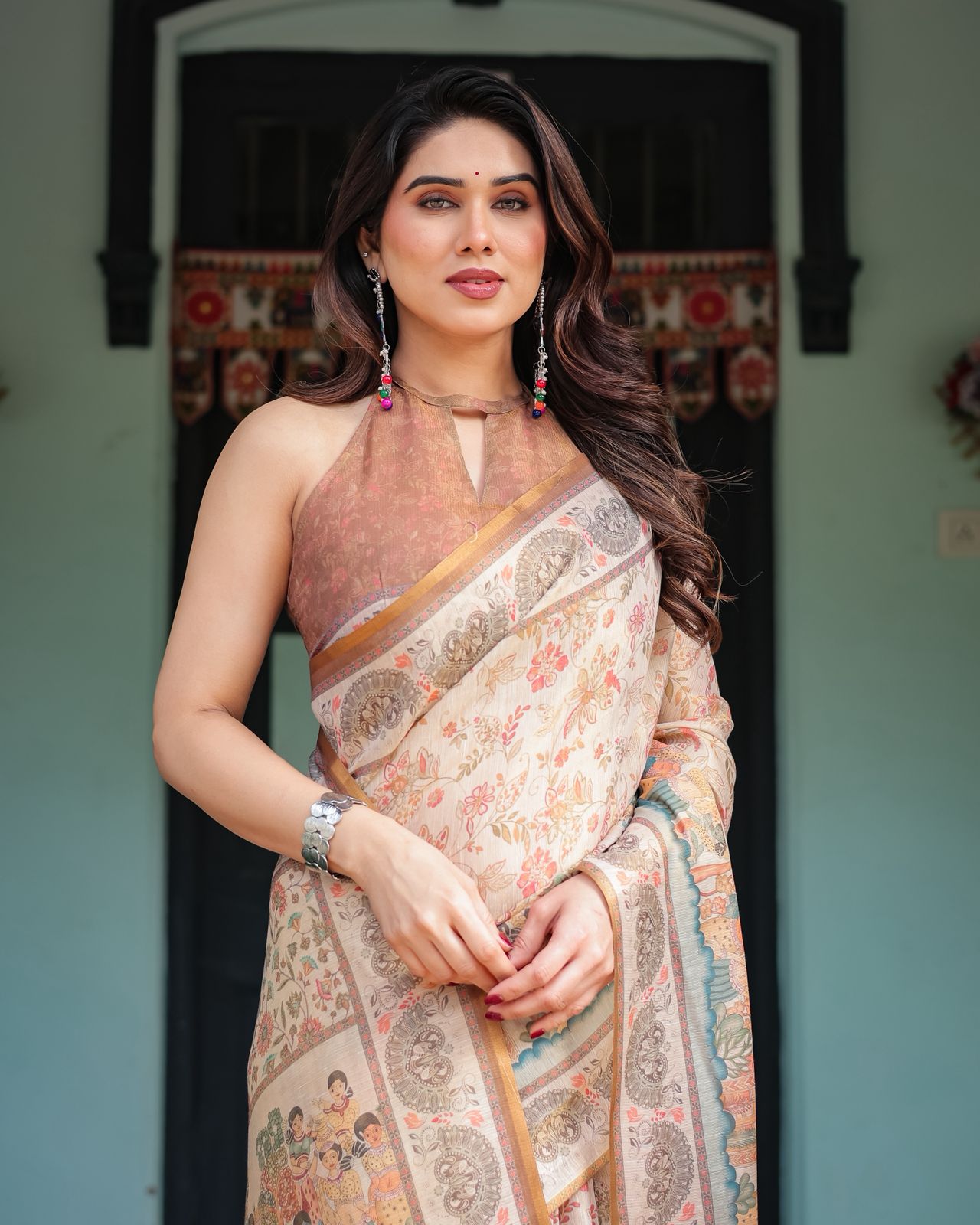
A high-neck blouse creates a polished winter look with a pashmina saree, while a three-quarter sleeve blouse adds coverage without appearing dated. A sleeveless square-neck blouse works with lightweight silk or cotton for an evening event. Keep the blouse fabric plain when the saree has dense pallu embroidery; use a small embroidered sleeve edge only when the saree itself is relatively restrained.
A black blouse can anchor a grey, ivory or jewel-toned saree and make the outfit suitable for cocktail-style festive events. Graceful Black Kalamkari Silk Saree with Blouse demonstrates the impact of a dark base with botanical patterning, although Kashmiri embroidery can be styled more softly with charcoal, wine or deep forest green.
Adjust the drape to the fabric
A lightweight silk or cotton Kashmiri saree benefits from narrow, even pleats and a pallu worn over the left shoulder. A pashmina saree can be pleated more generously because its fall is softer and its warmth makes an open, flowing pallu practical. Pin the pallu at the shoulder and, if needed, secure one discreet point near the waist to prevent delicate embroidery from dragging.
For a more contemporary silhouette, wear the pallu in a clean front-facing fall with fewer pleats, allowing the border to remain visible. Avoid excessive bunching because compressed folds can hide a paisley border and place unnecessary stress on embroidered threads.
Use jewellery with restraint
Polki, kundan, silver, pearl and oxidised metal jewellery can all complement Kashmiri motifs, but the choice should follow the saree's surface finish. Silver earrings suit grey, blue and cool-toned pashmina, while antique gold works with maroon, rust, mustard and olive embroidery.
Choose one dominant jewellery area: statement earrings, a necklace or stacked bangles. A large necklace combined with a heavily worked pallu can make the upper body look crowded. A small pendant, jhumkas and one cuff often provide enough definition for an embroidered saree.
Build a considered colour palette
Muted neutrals such as dove grey, ivory, taupe and charcoal make the embroidery appear refined. Jewel tones such as emerald, sapphire, ruby and amethyst create a stronger evening effect. Pastel pink, sage, powder blue and lavender modernise floral motifs for daytime celebrations.
Pink Georgette Sarees can provide an useful styling reference for soft colour coordination: pair blush or rose embroidery with a slightly deeper pink blouse rather than attempting an exact colour match. Red Banarasi Silk Sarees for Weddings Under 1100 show the opposite approach, where saturated red can act as the principal festive colour and accessories can remain simple.
Where can Kashmiri Embroidery Sarees be worn?
Kashmiri Embroidery Sarees suit winter weddings, intimate receptions, festive lunches, cultural programmes and elevated family gatherings. The right fabric weight and embroidery density determine whether the outfit feels comfortable and appropriate.
For a Haldi ceremony, choose a breathable cotton or lightweight silk saree in yellow, ivory, peach or green, and avoid dragging a heavily embellished pallu through turmeric and water. For a wedding reception, pashmina or silk with a defined border brings greater formality. For a work-adjacent cultural event, small buta motifs, a plain blouse and moderate jewellery create a composed result.
Party Wear Sarees can be useful when you want a more relaxed event vocabulary, but Kashmiri styling doesn't require sequins or mirror work. A clean blouse, one metallic accent and a well-finished drape can look more distinctive than several competing embellishments.
Grey Color Sarees Under 1000 also illustrate why neutral shades are practical for repeat wear. Grey can be restyled with a wine blouse for evening, a white blouse for daytime or a forest-green shawl for winter festivities. Price should not be treated as proof of handwork, so check the product description for information about embroidery technique, lining, blouse fabric and shawl inclusion.
How should Kashmiri Embroidery Sarees be assessed before buying?
Assessing embroidery quality requires checking the reverse side, motif clarity, fabric weight and finishing details rather than judging only the front photograph.
Look for clear motif edges and consistent spacing. Small variations are expected in hand embroidery, but loose threads, abrupt gaps and uneven border alignment can indicate weak finishing. If the listing gives close-up images, inspect whether the thread sits firmly inside the weave and whether the pallu design remains readable when the fabric is folded.
Check whether the saree includes a blouse piece, shawl or both. Classic Digital Print Pashmina Saree with Shawl brings an useful reminder that a printed Kashmiri-style design and hand embroidery are not the same category. Digital printing can reproduce detailed paisley and floral imagery at a lower price, while embroidery adds texture that can be felt and seen from an angle.
Examine the fabric weight in relation to your climate and expected wear time. A pashmina saree may be comfortable in a cool indoor venue but too warm for a humid afternoon. A cotton or lightweight silk saree is more versatile for temperatures above 25°C. Collections such as Silk Sarees Under 3000 With Discount may help with budget comparison, but fabric composition and finishing remain more important than the discount label.
Check the saree length, usually around 5.3 to 5.6 metres, and confirm whether a blouse piece is separate or attached. A taller wearer or someone planning a more elaborate pleated drape may need additional length. A petticoat with a firm waistband and a smooth lining helps the saree retain its shape without pulling at the embroidery.
How should Kashmiri Embroidery Sarees be cared for?
Kashmiri Embroidery Sarees should be stored clean, dry, folded with soft tissue and washed according to the fabric rather than treated like ordinary daily cotton.
Air the saree after wearing it for several hours, especially when the garment contains pashmina, silk or wool threads. Do not spray perfume directly onto embroidery because alcohol and fragrance oils can stain silk thread and weaken metallic accents. Allow perspiration to dry before folding the saree.
Dry cleaning is generally safer for pashmina, silk and densely embroidered sarees than home washing. Cotton sarees with colourfast, uncomplicated embroidery may tolerate gentle hand washing, but test a hidden area first and use cold water. Never wring, scrub or soak embroidered fabric for a long period.
Fold the saree with acid-free tissue or clean muslin between major folds, and refold it every few months to prevent permanent creases. Store pashmina away from direct sunlight, damp walls and strong fragrances. Cedar or neem sachets can help discourage insects, but the sachet should not touch the saree directly.
Press the saree from the reverse side on a low or medium setting suited to the fabric. Place a thin cotton cloth between the iron and zari or raised embroidery. A professional textile cleaner should handle extensive stains, colour bleeding or damaged sozni work.
Common Questions About Kashmiri Embroidery Sarees
What motifs are commonly found on Kashmiri Embroidery Sarees?
Common motifs include paisley, chinar leaves, almond-shaped buta, roses, floral vines and garden-inspired compositions. Paisley creates movement, while chinar leaves provide one of the clearest visual references to Kashmir.
Are Kashmiri pashmina sarees suitable for summer?
Pashmina sarees are usually more comfortable in cool weather because pashmina is warm and insulating. For summer, choose cotton, lightweight silk or a thin wool blend, particularly for daytime events and climates above 25°C.
How can a Kashmiri embroidered saree look modern?
Pair the saree with a clean high-neck, square-neck or three-quarter sleeve blouse and limit jewellery to one dominant area. A controlled drape, plain blouse and contemporary colours such as sage, charcoal or powder blue keep traditional motifs looking current.
What is the difference between Kashmiri embroidery and a digital print?
Kashmiri embroidery adds raised thread texture that can be felt and seen from different angles. A digital print reproduces paisley or floral imagery on the surface without stitched texture, usually making it lighter and easier to maintain.
How should an embroidered Kashmiri saree be washed?
Pashmina, silk and densely embroidered sarees should generally be dry-cleaned. Cotton versions may tolerate gentle cold-water hand washing after a colourfastness test, but embroidered fabric should never be scrubbed, wrung or soaked for a long time.
Which blouse colour works with a grey Kashmiri saree?
Wine, forest green, ivory, charcoal and black all work well with a grey Kashmiri saree. Choose a deeper shade for an evening look and ivory or a soft pastel for daytime dressing.