

A Kashmir Wedding Guest Style decision becomes easier when you consider temperature, venue, movement and the wedding function before choosing an outfit. A Kashmir wedding can move from a bright garden ceremony to a warmly heated hall within the same day, so an elegant outfit must also handle changing temperatures, uneven ground and several hours of sitting, greeting and dancing.
A saree creates a fluid, graceful silhouette and works especially well for a formal indoor reception. A lehenga offers easier movement, warmer layering and a more forgiving option for outdoor photographs or events with active dancing. The right choice depends on the season, venue, dress expectations and the amount of time you'll spend moving between locations.
Kashmir Wedding Guest Style: Should You Wear a Saree or Lehenga?
A lehenga is usually the more practical choice for a cold or outdoor Kashmir wedding, while a saree suits a formal indoor event when you can manage the drape comfortably. Neither garment is automatically more festive; styling, fabric and fit determine the final effect.
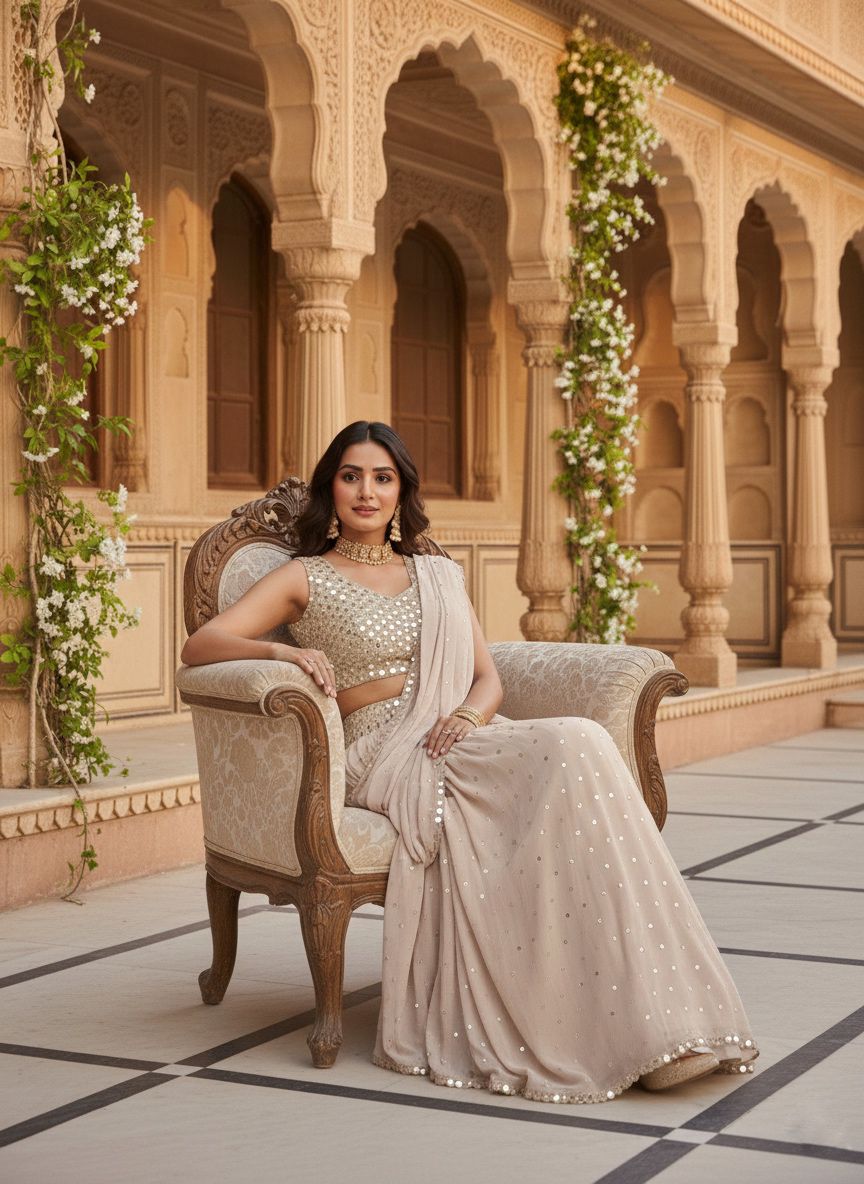
Choose a saree when you want a refined, elongated look, already feel confident managing pleats and pallu, and expect most of the celebration to take place indoors. Banarasi silk, velvet-blend sarees, silk organza with a lining and heavier georgette provide more structure than a very thin chiffon saree. A long-sleeved blouse, thermal camisole and pallu secured with discreet pins make a saree considerably more comfortable in cool weather.
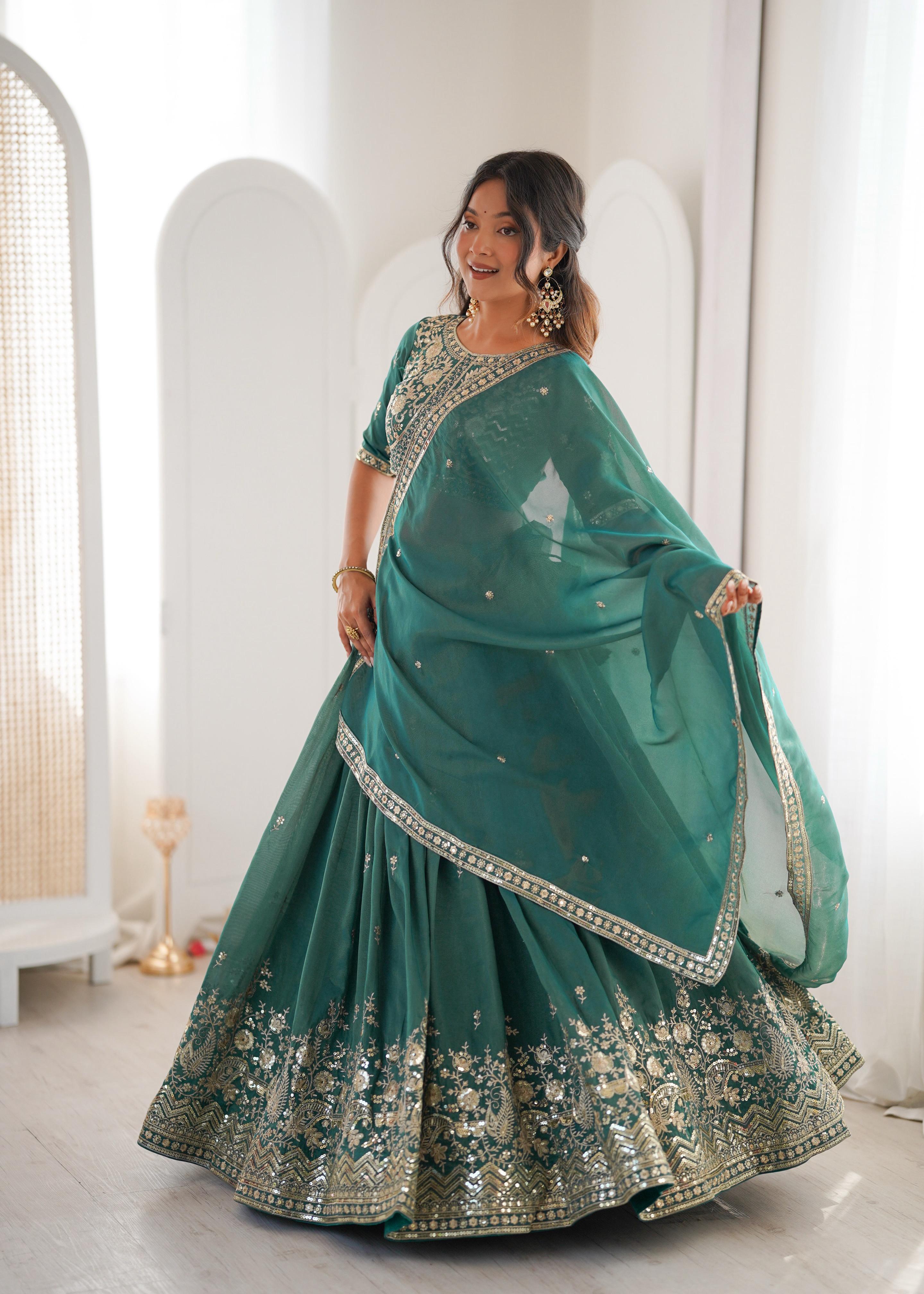
Choose a lehenga when you need freedom to walk across lawns, climb stairs, sit on low seating or join dancing. A lehenga also makes it easier to wear a warm base layer under the blouse and skirt. Designer Threadwork Silk Lehenga Choli Set with Dupatta demonstrates how silk texture can give a guest outfit ceremonial presence without requiring heavy jewellery or a complicated drape.
Consider the function before choosing the garment. A lighter lehenga or printed saree works for a daytime mehendi, a mirror-work or bright silk lehenga suits a sangeet, and a more controlled silk, velvet or zari look suits a reception. For a nikah or another ceremony with a more covered dress expectation, add sleeves, a higher neckline and a dupatta that stays securely over the shoulders.
Kashmir Wedding Guest Style: How Does Weather Change Outfit Choices?
Cold evenings, strong indoor heating and uneven outdoor surfaces make layering and footwear as important as the main garment.
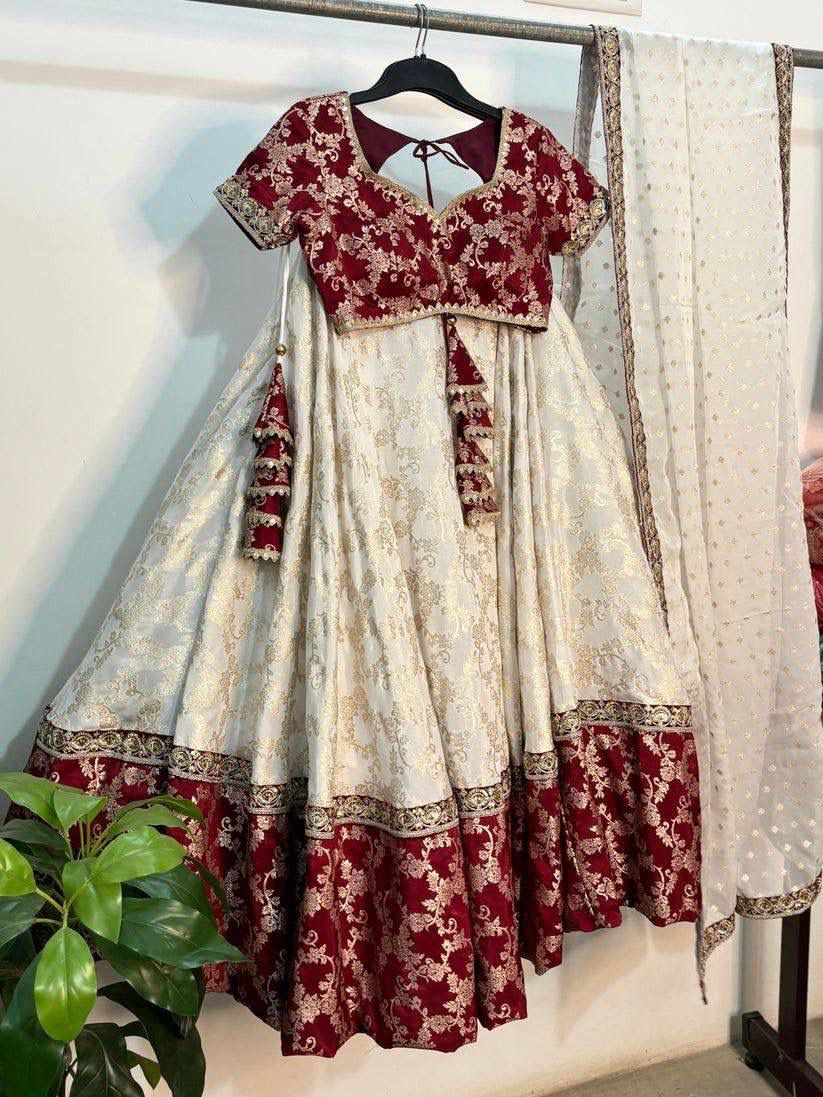
In late autumn and winter, select fabrics with body: Banarasi silk, jacquard, velvet, heavier georgette, raw silk and lined brocade. These fabrics retain a more substantial feel and photograph well under warm indoor lighting. Cream & Maroon Jacquard Lehenga Choli with Dupatta Set is an useful example of a palette and textile combination that can look festive without relying on a very short blouse or exposed midriff.
Spring and summer allow lighter choices such as Chanderi, silk-blend organza, butter silk and georgette. Stylish Multicolor Butter Silk Lehenga Choli Set can work for a daytime wedding because colour creates visual interest while the fabric remains less visually heavy than dense brocade. If the venue is outdoors, carry a shawl in a compatible neutral rather than depending on a very thin dupatta for warmth.
Layering should preserve the outfit's proportions. Wear a close-fitting thermal camisole beneath a blouse, choose a full-sleeved inner layer in a matching colour, or add a cropped velvet jacket that ends at the waist. A long coat can conceal the lehenga during travel, but remove it before photographs so the embroidery and waistline remain visible. Avoid bulky cardigans over a dupatta because they disturb the shoulder line and create unnecessary fabric around the arms.
Ground conditions also matter. Snow, wet pathways and polished marble can make delicate footwear impractical. Choose block heels, embroidered juttis with rubberised soles or dressy flats with a secure back. A three- to four-centimetre block heel is generally easier to manage than a narrow stiletto when a wedding involves lawns, courtyards or long walks between rooms.
Kashmir Wedding Guest Style: Which Saree Fabrics and Drapes Work?
Structured silk, lined georgette and moderately weighted organza are dependable saree choices because they hold pleats, accommodate layers and remain presentable during long celebrations.
Kashmir Wedding Guest Style for a formal evening saree
A Banarasi silk saree with zari border needs little additional decoration. Pair it with a high-neck or elbow-sleeve blouse, a compact clutch and one strong jewellery element such as jhumkas or a choker. Keep the pallu pleated and pin it at the shoulder if you expect dancing or frequent movement.
Kashmir Wedding Guest Style for a light daytime saree
A Chanderi saree or silk-blend georgette works well for a daytime mehendi or garden gathering. Choose floral, pastel or jewel-toned colours according to the season, then add a lined blouse rather than multiple heavy layers. A narrow belt over the saree can stabilise the drape, but use one only when the wedding dress code is contemporary and the belt doesn't compete with zari or embroidery.
Kashmir Wedding Guest Style for cold-weather saree layering
A velvet blouse, embroidered jacket or coordinated shawl supplies more warmth than adding a bulky petticoat. A warm underskirt prevents the saree from clinging and can improve walking comfort. Use small safety pins at the waist and shoulder, then test the complete drape by sitting, walking and lifting one step before leaving home.
A saree becomes less practical when the blouse is sleeveless, the pallu is extremely slippery or the wedding venue includes substantial outdoor travel. A very fragile net saree can also catch on seating and jewellery. In those cases, a lehenga gives similar occasion impact with less maintenance during the event.
Kashmir Wedding Guest Style: Why Are Lehengas Practical?
Lehengas combine a separate blouse, skirt and dupatta, so each layer can be adjusted for warmth, movement and coverage without rebuilding the entire outfit.
A full-length skirt protects the legs more effectively than a saree with a lightweight underskirt, especially when paired with opaque lining. A dupatta can cover the shoulders during a ceremony and move to one side during dancing. A blouse with sleeves to the elbow or wrist creates a polished look and leaves room for a thin thermal layer underneath.
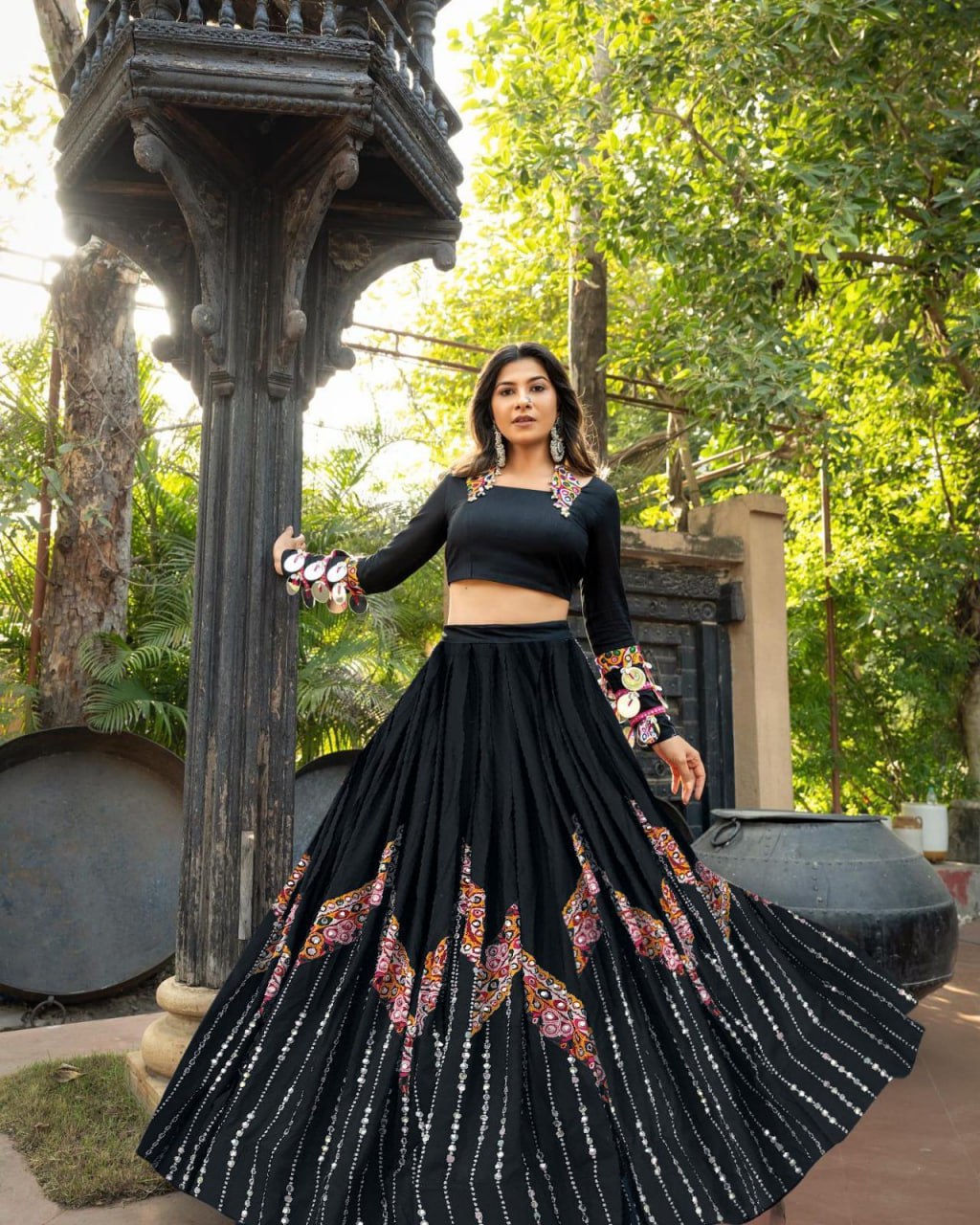
For a formal reception, Black Wedding & Festive Wear Designer Lehenga creates a strong base for metallic accessories, while Festive White Lehenga Choli with Mirror Work Design creates a brighter look for a night of photographs. White should be checked against the family's preferences before a ceremony, because some hosts reserve particular colours for the bride or bridal party.
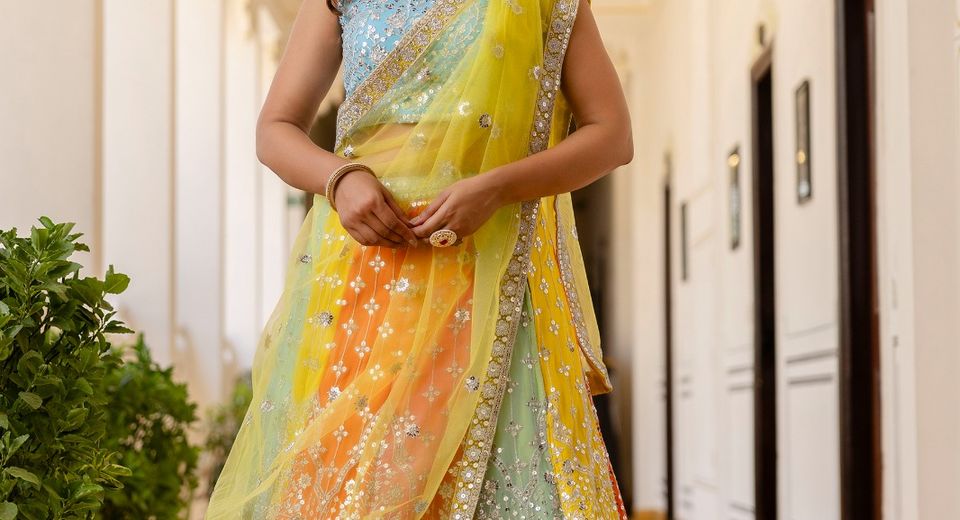
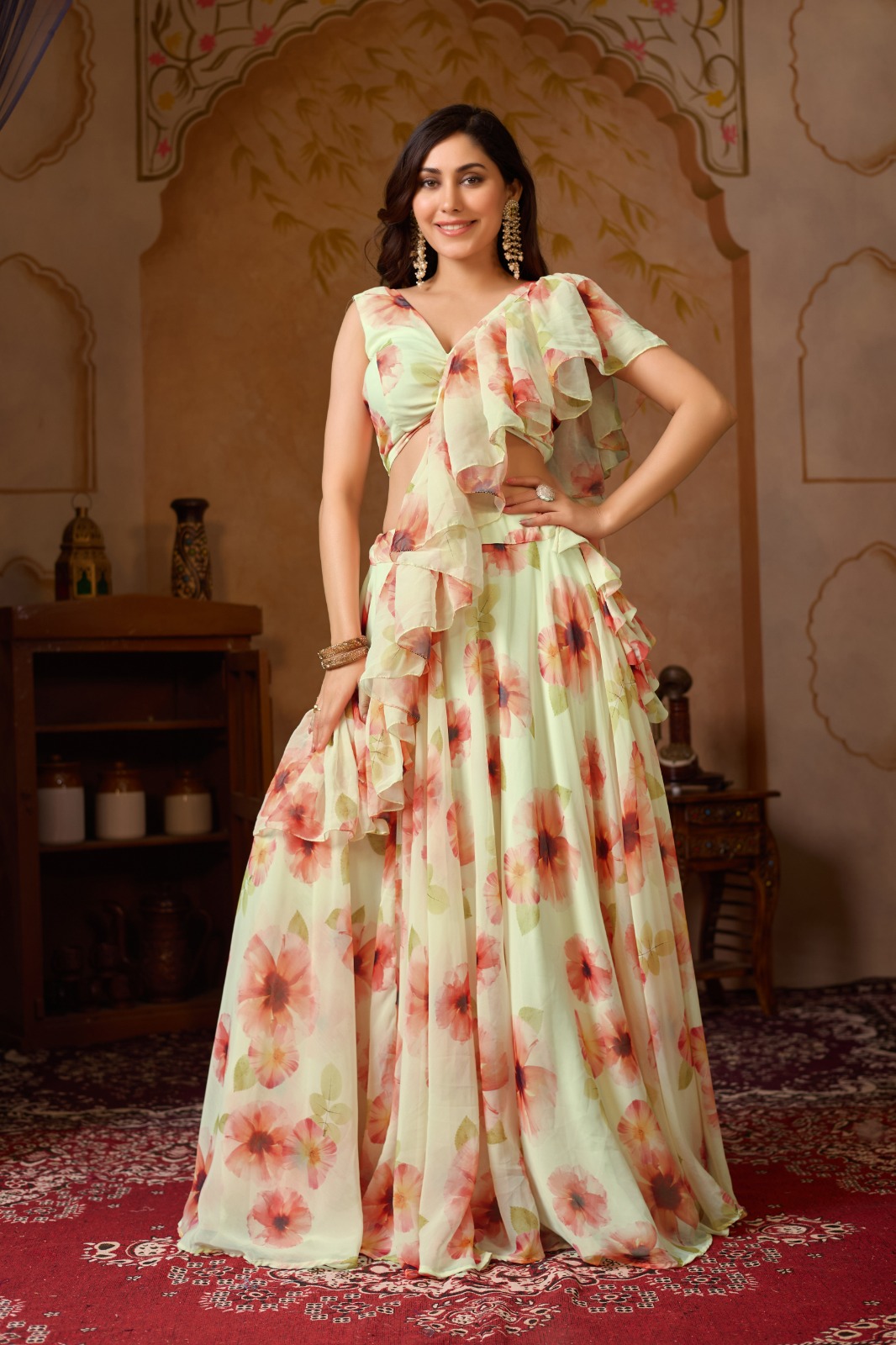
Pastel clothing is especially effective for daylight. Pastel Floral Georgette Lehenga Set with Ruffle Blouse brings print and movement into a daytime look, while Mint Embroidered Lehenga Set with Net Dupatta for Women provides a cooler palette that can be balanced with gold, pearl or kundan jewellery. A net dupatta may need extra pins in cold or windy outdoor settings, so keep four small safety pins in the clutch.
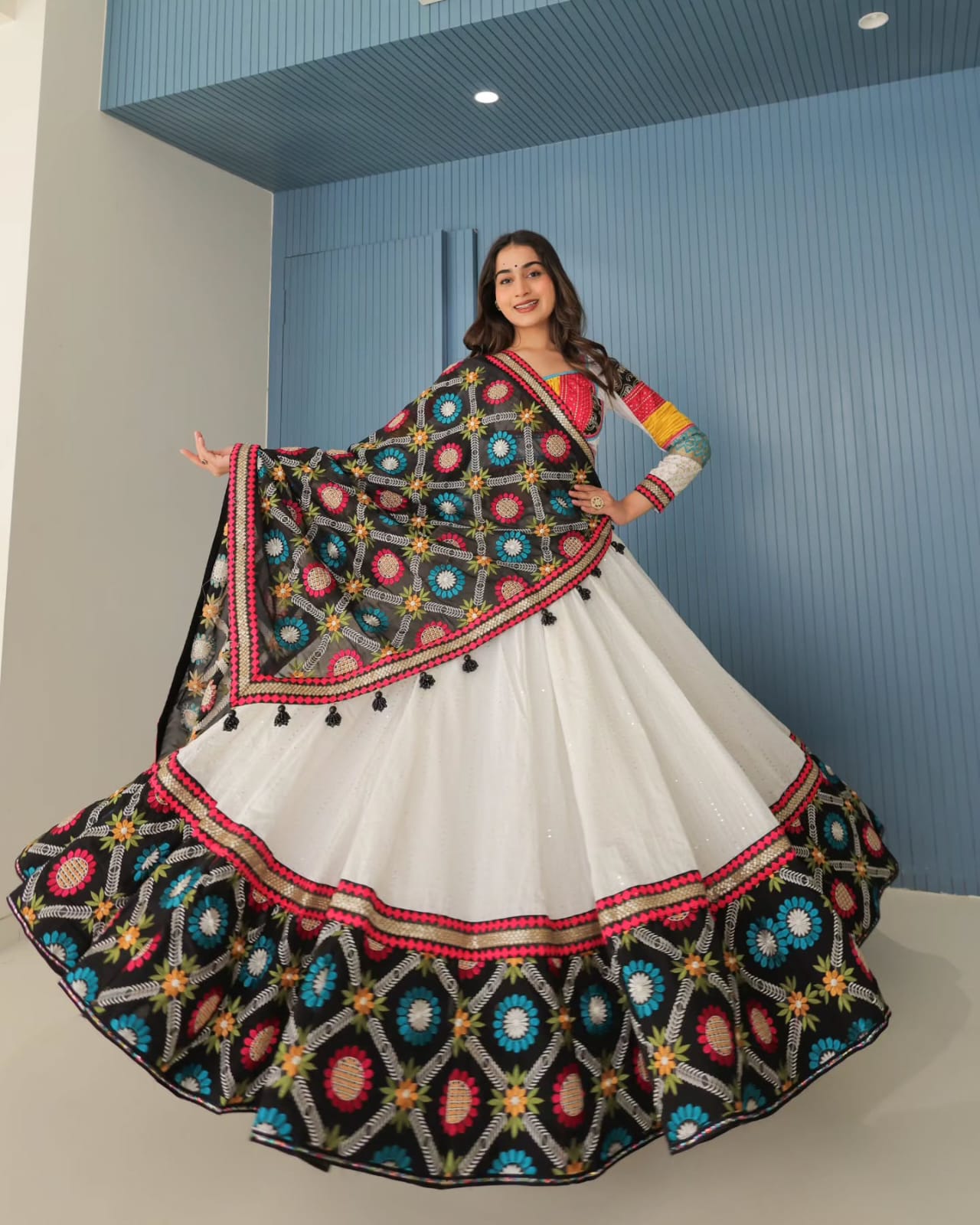
Mirror work is festive but can become uncomfortable under a thick shawl or while seated against a hard chair. If choosing Stylish White Mirror Work Lehenga for Festive Wear, place the heavier embroidery away from points that press against the waist or underarm. The detail should enhance photographs without making it difficult to sit through a long ceremony.
Kashmir Wedding Guest Style: How Should You Dress for Each Function?
The best outfit changes with the function: lighter and more playful for mehendi, colourful and movement-friendly for sangeet, modest and comfortable for the main ceremony, and polished for the reception.
- Mehendi: Choose butter silk, printed georgette, Chanderi or a light saree in pink, mint, yellow, coral or turquoise. Keep sleeves practical because henna application may require uncovered forearms, and use flat footwear if you'll sit for a long period.
- Haldi ceremony: Wear a washable or lower-risk outfit in yellow, marigold, green or ivory. Haldi Lehengas Under 5500 reflects the occasion's bright colour direction, but embroidery that can't tolerate moisture should be avoided. Carry a spare dupatta if the ceremony involves turmeric paste or water.
- Sangeet: Select a lehenga with a manageable hem and a dupatta pinned at one shoulder. Bridesmaid Lehengas Under 5500 is an useful reference point for coordinated colour without requiring every guest to dress identically. Test arm movement before committing to a very fitted blouse.
- Main wedding ceremony: Favour sleeves, secure draping and respectful coverage. Silk lehengas, zari sarees and jewel tones work well, but avoid copying the bride's exact colour, silhouette or embellishment level when the family has communicated a preference.
- Reception: A darker saree, sleek lehenga or understated metallic look is appropriate. Silk Lehengas Under 3000 can guide budget-conscious choices when the outfit's impact comes from cut, blouse fit and accessories rather than dense surface work.
Kashmir Wedding Guest Style: What Colours and Accessories Suit the Setting?
Jewel tones, muted pastels and controlled metallic accents photograph reliably in Kashmir's changing light, while accessories should support the garment rather than duplicate every embellishment.
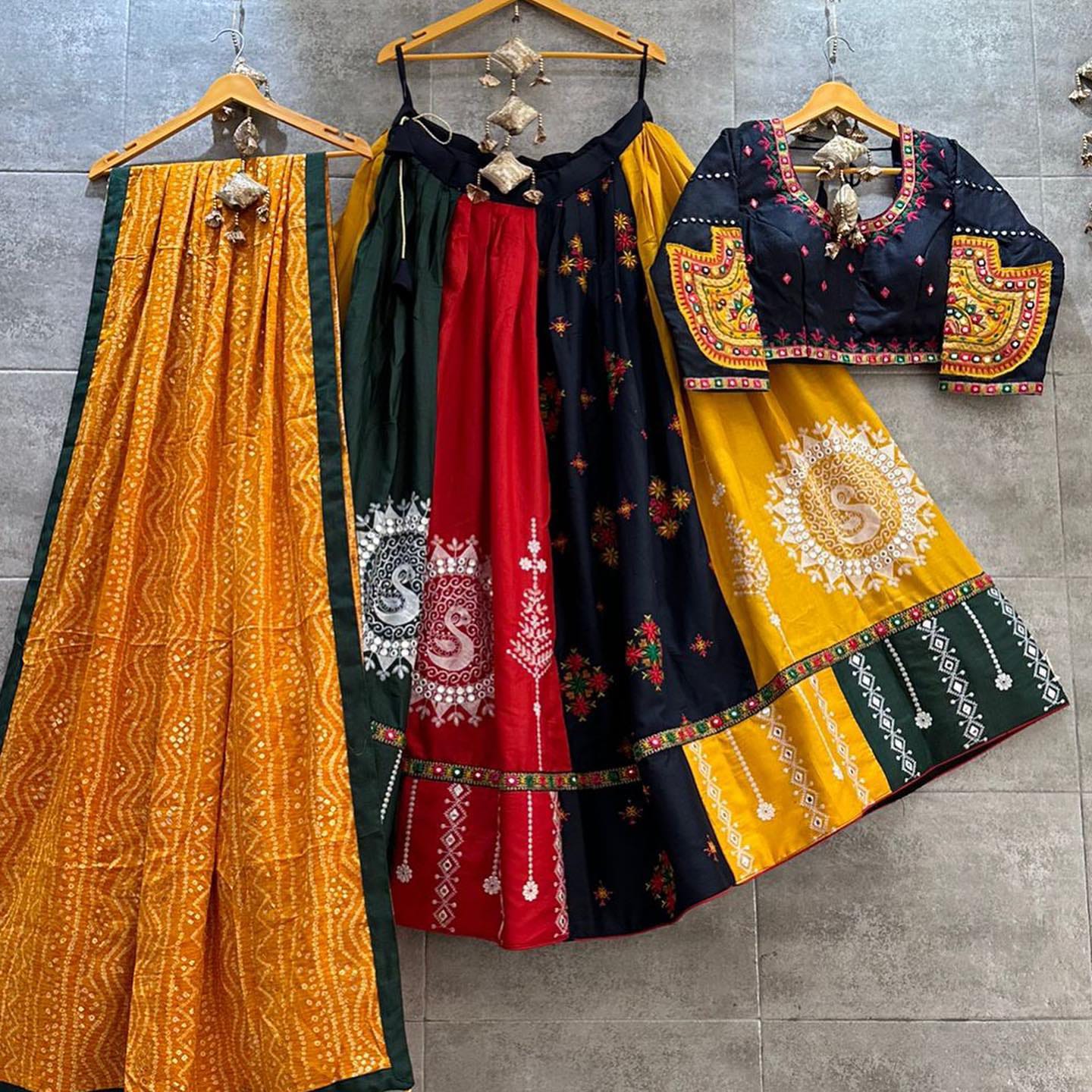
Emerald, wine, navy, saffron, plum and deep teal work well for evening celebrations because warm indoor lighting gives these shades depth. Peach, powder blue, blush, pistachio and soft yellow suit daytime functions. A multicoloured outfit needs simpler jewellery, while a single-colour silk lehenga can support a more noticeable necklace or layered bangles.
Match jewellery to the textile rather than following a fixed rule. Gold and kundan complement Banarasi silk, zari and warm jewel tones. Silver, pearls and uncut diamond-style pieces suit pastel georgette, mirror work and cooler shades. Avoid wearing a necklace, large earrings, maang tikka, stacked bangles and a heavy waist belt together unless the outfit is deliberately minimal.
Hair and makeup should also respond to the weather. A low bun or pinned braid keeps hair controlled in wind, while a setting spray can reduce makeup movement during a long celebration. Choose a moisturising base in cold weather and carry lip balm, blotting paper, two hairpins and a small safety-pin kit in the clutch.
Accessories have a practical role beyond decoration. A structured clutch protects a phone and essentials better than a soft potli when walking outdoors. A shawl in camel, ivory, charcoal or deep wine can coordinate with several colours. A pair of foldable flats is useful when a reception involves standing after several hours in heels.
Kashmir Wedding Guest Style: How Can You Choose Within a Budget?
A polished wedding guest outfit can be planned within a budget by prioritising fabric, fit and repeat wear rather than the highest amount of surface embellishment.
For a budget below ₹3,000, look for a cleanly finished silk-blend lehenga, light georgette set or simple saree with a defined border. Silk Lehengas Under 3000 can be a useful starting point for comparing silhouettes, but inspect lining, seam finishing, zip quality and blouse measurements before deciding.
For budgets between ₹3,000 and ₹5,500, jacquard, threadwork, mirror work and coordinated dupattas offer more visual impact. Pink Lehengas Under 4000 with 50% Discount and Net Lehengas Under 4500 with 51% Discount can help narrow a search by colour and material, although a discounted outfit still needs checking for accurate sizing and care requirements.
don't spend the entire budget on the garment if the outfit requires tailoring. Reserve approximately ₹500 to ₹1,500 for blouse adjustments, depending on the construction and local tailoring rates. A well-fitted neckline, shoulder and waist often improves the appearance more than additional jewellery.
Choose a garment that can be restyled. A plain silk lehenga can be worn with a contrasting blouse for another celebration, while a saree can gain a new look through a jacket, belt or different drape. Bridesmaid Lehengas Under 5500 is useful when you need a coordinated colour family that remains wearable after the wedding.
Kashmir Wedding Guest Style: What Should You Check Before Leaving Home?
A complete outfit test is the most reliable way to identify problems with comfort, length, fastening and layering before the wedding day.
- Walk for ten minutes: Check whether the skirt hem catches under your shoes and whether the saree pleats stay aligned.
- Sit on a chair and the floor: Confirm that embroidery, hooks and waistbands don't press uncomfortably against the body.
- Raise both arms: Make sure the blouse doesn't pull and that the dupatta remains secure.
- Test the footwear: Wear the chosen shoes indoors for at least 20 minutes, then pack a comfortable backup pair.
- Check the layers: Try the thermal camisole, shawl, jacket or coat with the full outfit so the sleeves and neckline remain neat.
- Pack repairs: Carry safety pins, fashion tape, a needle and thread, stain-removal wipes, hairpins and blister patches.
Care instructions should be checked before travel. Banarasi silk, zari, mirror work and delicate net often require dry cleaning or careful spot treatment rather than machine washing. Store a lehenga folded with soft muslin between embellished layers, and avoid compressing zari or mirrors under heavy luggage.
The most successful guest outfit lets you participate fully without constant adjustments. Whether you select a structured saree or a layered lehenga, a secure fit, season-appropriate fabric and practical shoes will make the clothing look more graceful throughout the celebration.
Questions Guests Ask About Kashmir Wedding Saree and Lehenga Styling
Is a saree or lehenga better for a winter wedding in Kashmir?
A lehenga is generally better for a winter wedding in Kashmir because the skirt and blouse make it easier to add thermal layers, sleeves and a warm dupatta. A lined silk saree can also work for an indoor event when paired with a velvet blouse, warm underskirt and shawl.
What should a guest wear to a Kashmir Haldi ceremony?
A guest should wear a bright, washable outfit in yellow, marigold, green or ivory for a Kashmir Haldi ceremony. Choose simpler embroidery, secure footwear and a spare dupatta because turmeric paste and water may stain delicate fabrics.
Which saree fabric is suitable for a cold Kashmir wedding?
Banarasi silk, lined georgette, velvet-blend sarees and moderately weighted organza are suitable for a cold Kashmir wedding. These fabrics hold their shape and accommodate warmer blouses or underskirts better than very thin chiffon.
How can I stay warm while wearing a lehenga to a wedding?
Wear a close-fitting thermal camisole under the blouse, choose a lined skirt and add a full-sleeved blouse, cropped velvet jacket or coordinated shawl. A long coat can cover the outfit during travel and be removed for photographs.
What colours should wedding guests avoid in Kashmir?
Wedding guests should avoid the bride's exact colour and signature embellishment when the family has communicated a preference. White, red or highly bridal gold may be restricted in some celebrations, so checking the dress code is safer than assuming one rule applies to every Kashmiri wedding.
How do I keep a lehenga dupatta secure during dancing?
Pin the dupatta at the shoulder and waist, use a lightweight lining when possible, and test the arrangement by raising both arms before leaving home. Carry two or four small safety pins in the clutch for quick repairs.




