

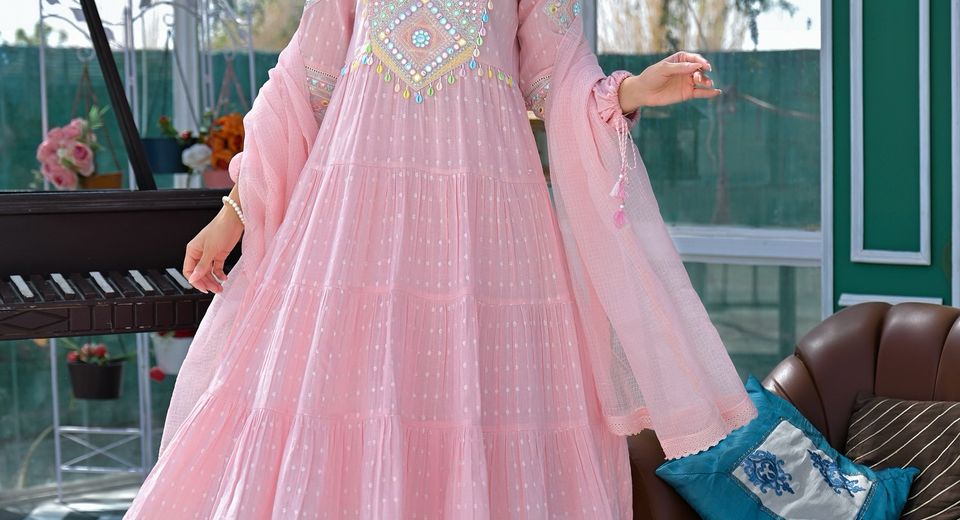
Karwa Chauth Punjabi Fashion brings together the ceremony's red-and-gold symbolism, the movement-friendly comfort of salwar suits and the unmistakable character of Phulkari embroidery. A thoughtful outfit needs to do more than photograph well: it should remain comfortable through the sargi, puja, evening gathering and moon-sighting rituals. Sarees, kurta sets and Phulkari dupattas each offer a different way to create a festive Punjabi look without losing practicality.
Karwa Chauth Punjabi Fashion and the details that define it
Karwa Chauth Punjabi Fashion is defined by saturated festive colour, visible embroidery, a graceful dupatta and jewellery that gives the outfit ceremonial presence. Traditional Punjabi dressing often combines a straight or flared kameez with salwar, churidar or palazzo trousers, while contemporary wardrobes also bring in Banarasi silk, Chanderi and lightweight organza.
Red remains a familiar choice because red represents celebration, love and auspiciousness, but red isn't the only appropriate colour. Rani pink, coral, magenta, maroon, emerald, mustard and ivory with red embroidery can all look festive. The most useful rule is to choose one dominant colour and support it with one metallic or contrasting accent rather than combining several competing shades.
Phulkari adds the strongest Punjabi identity to an outfit. Heritage Phulkari uses colorful silk-thread embroidery on fabric, often with geometric or floral forms. Bagh-style embroidery covers more of the ground fabric, while lighter Phulkari work leaves more of the base visible. A heavily embroidered Phulkari dupatta can therefore transform a simple kurta set without requiring a fully embroidered outfit.
Karwa Chauth Punjabi Fashion: should you choose a saree or suit?
A Punjabi suit is usually the more practical choice for Karwa Chauth because it allows easier movement, comfortable sitting and simpler management during household rituals. A saree creates a more elongated, formal silhouette and works particularly well for an evening puja or family celebration when the wearer prefers a heritage drape.
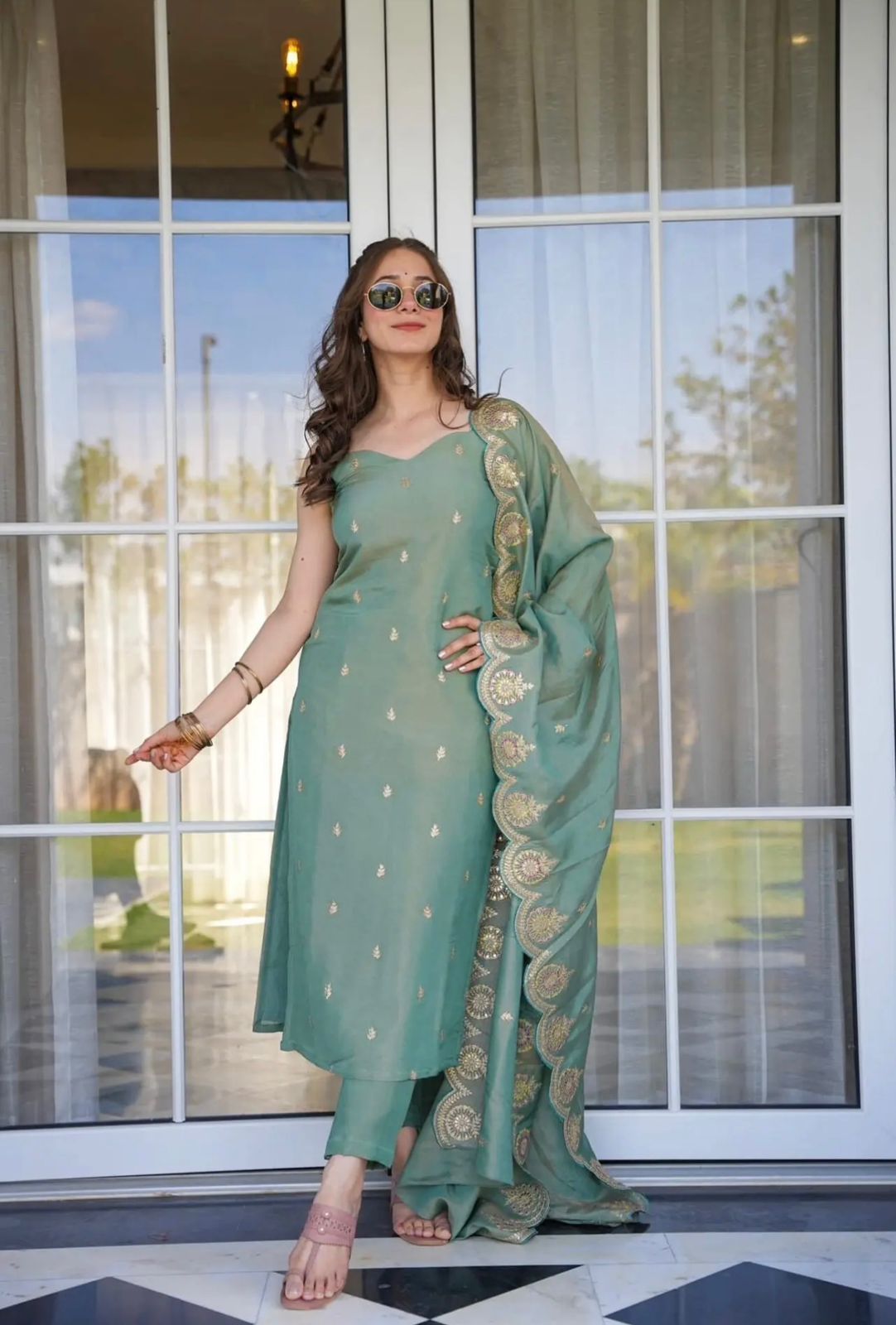
Karwa Chauth Punjabi Fashion through a salwar suit
A salwar suit suits a long day of fasting and festivities because a well-fitted kurta and breathable trousers place less pressure on the waist than a tightly secured saree. A straight kurta with palazzo pants gives room around the legs, while a classic salwar creates a fuller Punjabi proportion. A kurta ending below the knee also provides a balanced base for a richly worked dupatta.
Chanderi is especially useful for festive suits because Chanderi is lightweight, slightly crisp and capable of carrying delicate embroidery without becoming heavy. Ivory Floral Embroidered Chanderi Silk Kurta Set Women demonstrates how floral detail can make ivory feel celebratory rather than plain. Pairing ivory with a red, rani pink or sindoor-toned dupatta introduces the classic colour story through one controlled accent.
Rani Pink Chanderi Embroidered Kurta Set Dupatta offers a stronger colour-led approach. Rani pink works with kundan, gold-toned jhumkas and red glass bangles, while a neutral sandal or embroidered jutti prevents the outfit from becoming visually crowded. White Chanderi Embroidered Kurta Set with Organza Dupatta has a lighter, more refined effect for anyone who prefers white as the base and colour through jewellery, bangles or a Phulkari stole.
Karwa Chauth Punjabi Fashion through a saree
A saree is a strong choice when the event centres on an evening puja, a family portrait or a more formal gathering. Banarasi silk supplies weight, sheen and structured pleats, while a lighter Chanderi saree is easier to wear for several hours. Kanjeevaram can provide a grander silk silhouette, although Kanjeevaram's heavier body may feel less comfortable during a full day of fasting.
Punjabi influence can be added to a saree through a Phulkari blouse, a contrasting embroidered pallu, a paranda-inspired hair accessory or a pair of Punjabi juttis. A red saree with gold zari is time-honoured, but a deep pink saree with a mustard Phulkari blouse can look equally rooted and distinctive. Keep the blouse neckline comfortable if the outfit will be worn for extended periods, and test the sleeve fit before the event.
Karwa Chauth Punjabi Fashion with a balanced Phulkari dupatta
Phulkari looks most balanced when one major surface carries the embroidery and the remaining pieces provide visual rest. A Phulkari dupatta over a plain kurta is the easiest combination, while a small Phulkari potli or embroidered jutti gives a subtler reference to Punjabi craft.
Punjab Phulkari Embroidered Salwar Suits brings a natural starting point for a look where the embroidery remains central. Select jewellery in one metal family when the dupatta contains many colours. Gold works with crimson, orange and mustard threads; silver or oxidised metal supports cooler pink, purple and blue combinations.
A richly worked dupatta should be folded so that the most detailed section falls over one shoulder rather than being hidden in multiple layers. For a lighter look, place the dupatta over both shoulders and secure it near the collarbone with a small brooch. An one-sided drape gives more length and movement. But a pinned two-shoulder drape is safer when carrying a thali or moving between rooms.
Phulkari can also be paired with non-Punjabi textiles when the colour relationship is clear. Kalamkari Print Salwar Suits (Copy) can work with a small Phulkari accent if both prints share a colour such as maroon or mustard. Avoid placing a dense Kalamkari floral panel directly beside a dense Phulkari floral panel, because the two patterns may compete instead of showing their individual craftsmanship.
Karwa Chauth Punjabi Fashion colour combinations that photograph well
A successful Karwa Chauth palette usually contains one festive anchor, one supporting neutral and one metallic detail. Red and ivory with gold is classic, rani pink and cream with gold feels celebratory, and purple with silver creates a cooler evening alternative.
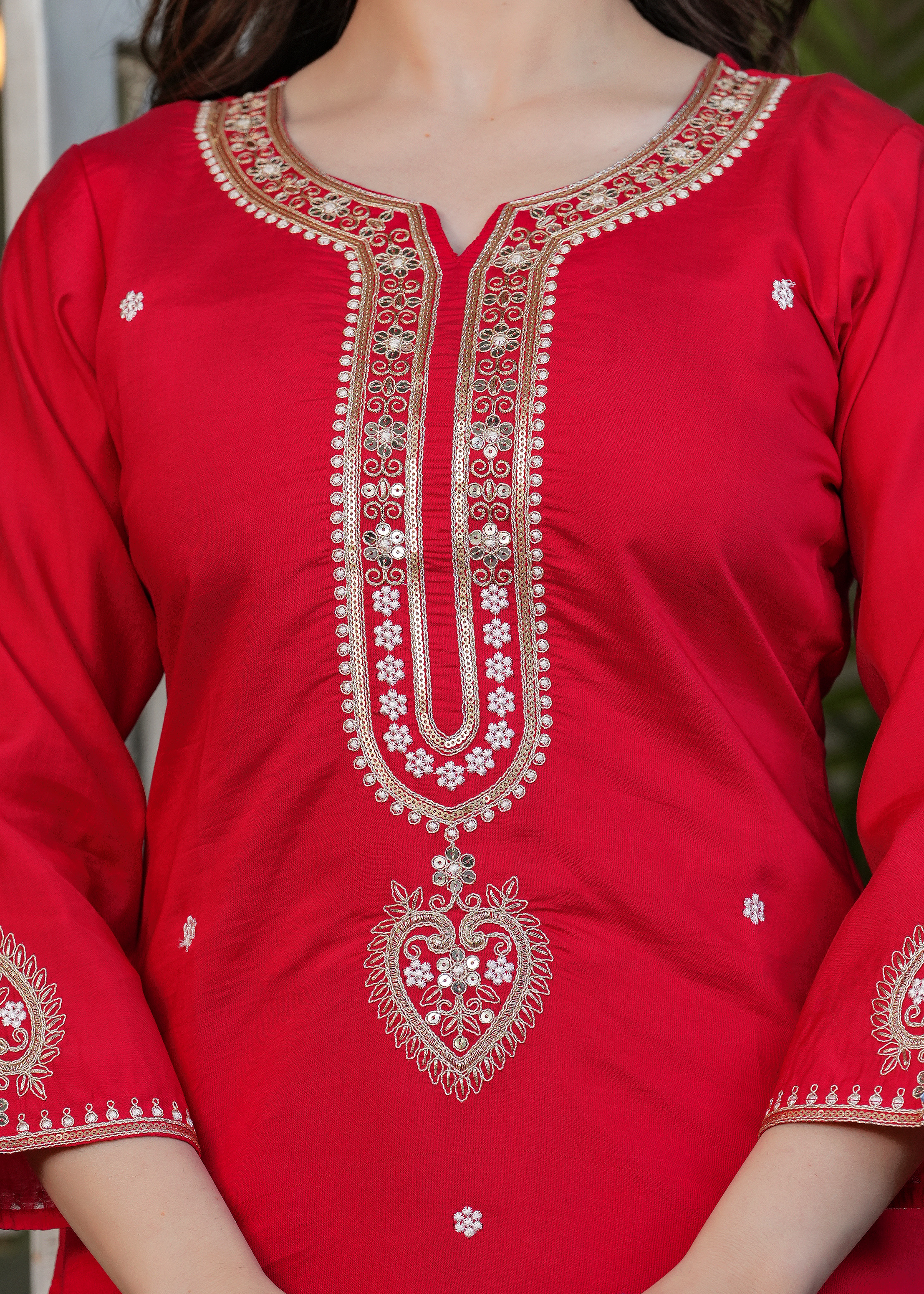
Karwa Chauth Punjabi Fashion in red, pink and jewel tones
Red remains the safest classic anchor for a Karwa Chauth outfit, especially when paired with gold zari or antique-gold embroidery. Festive Red Chanderi Kurta Pant Dupatta Set Women uses the colour in a lighter fabric category, making it useful for someone who wants a vivid festive impression without the weight of silk.
Rani pink is flattering with warm gold jewellery and photographs well under indoor lighting. Purple adds depth and works with pearl, silver or uncut-stone jewellery. Purple Chanderi Silk Embroidered Kurta Set with Dupatta can be styled with a soft pink lip, silver-toned earrings and a neutral sandal for a more contemporary interpretation of festive dressing.
Karwa Chauth Punjabi Fashion in ivory, cream and black
Ivory and cream allow embroidery and jewellery to become the visual focus. Cream Chanderi Embroidered Kurta Set with Dupatta suits a gold-and-red styling direction, while an ivory kurta can take a bright Phulkari dupatta without appearing overdone.
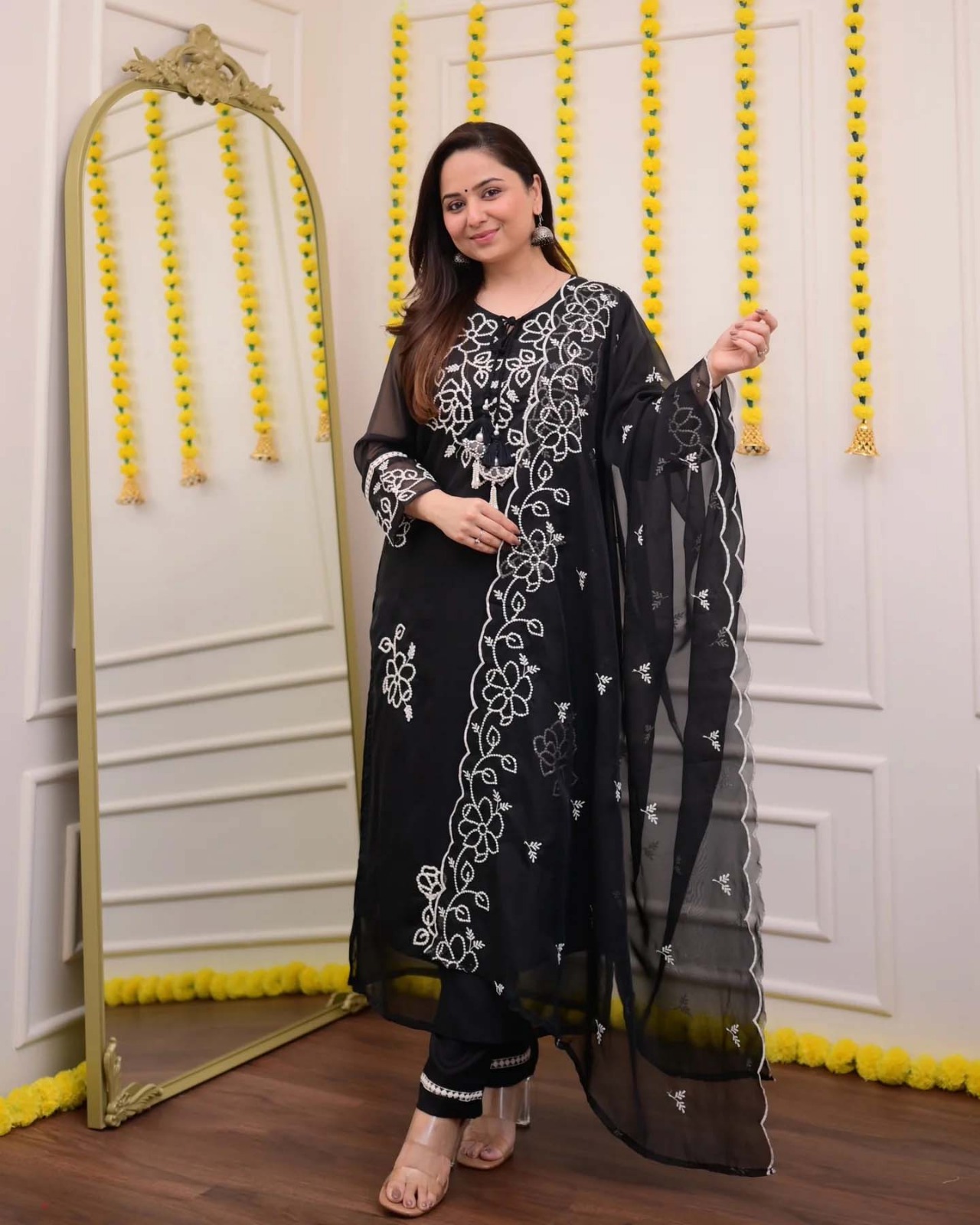
Black isn't a conventional first choice for every Karwa Chauth gathering. But black can look elegant when balanced with white embroidery, red bangles or a bright pink dupatta. Stylish Black Kurta Pant Dupatta Set with White Embroidery shows how contrast can replace heavy colour. Check family preferences and the setting before choosing black, since some households reserve particular colours for specific rituals or avoid black during auspicious celebrations.
Karwa Chauth Punjabi Fashion fabric and fit choices for comfort
Chanderi, cotton silk, lightweight georgette and soft crepe are useful festive fabrics when comfort matters. Banarasi silk and Kanjeevaram provide greater structure and formality, but their weight and warmth should be considered if the outfit will be worn from morning to night.
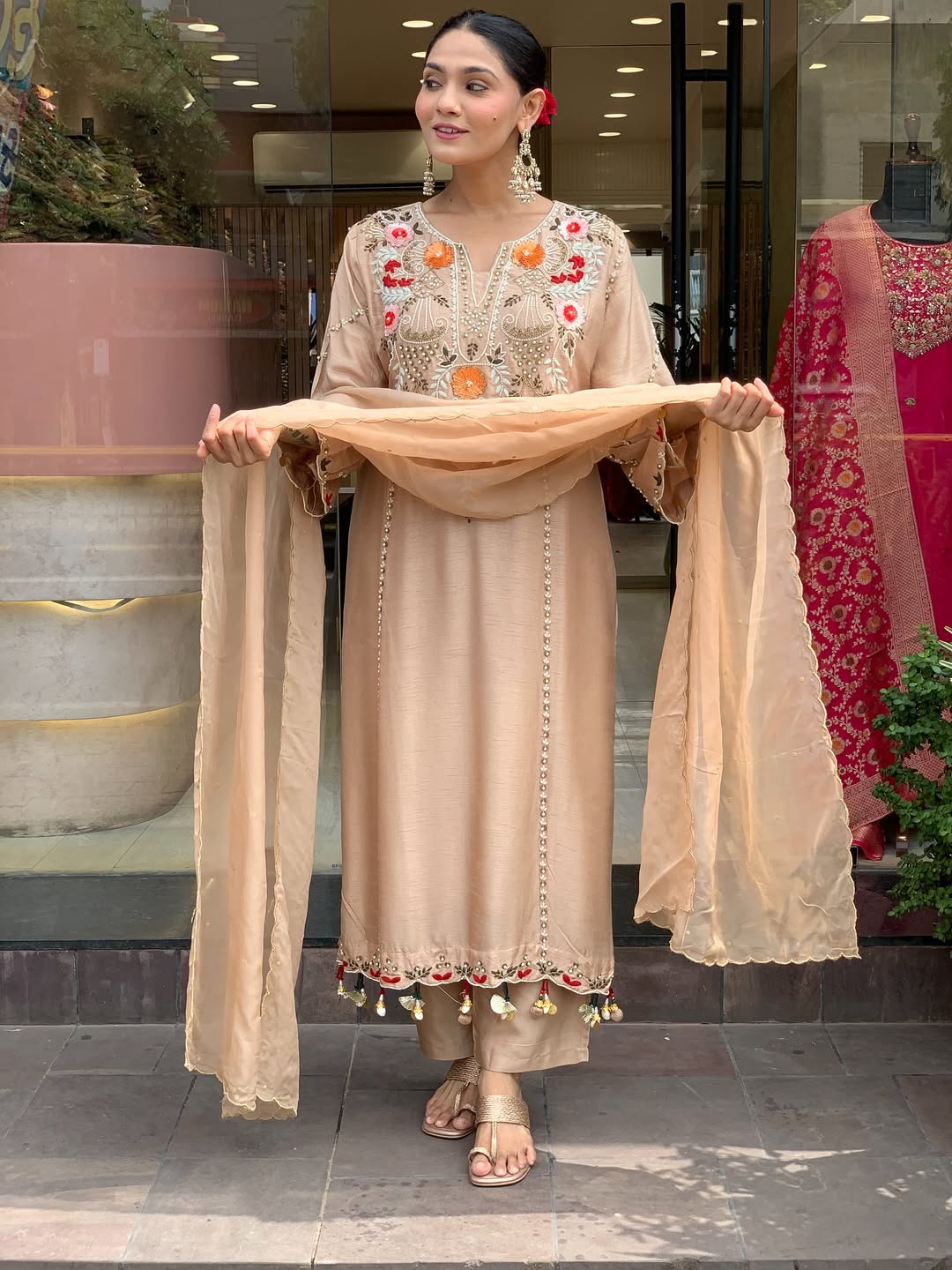
A breathable lining can make embroidered Chanderi more comfortable against the skin. A kurta should allow at least a few centimetres of ease at the bust and upper arm so that sitting, reaching and lifting the thali remain easy. Trouser waistbands should lie flat without digging into the abdomen, particularly during a day when hydration and food intake are restricted.
Organza creates a crisp, dressy dupatta but can feel less forgiving than soft chiffon or modal when repeatedly adjusted. A stiff dupatta benefits from a few discreet pins, while a slippery satin or silk blend needs secure shoulder placement. Test the complete outfit, including footwear and jewellery, at least one week before Karwa Chauth and wear it for 30 minutes while sitting and walking.
Festive Embroidered Salwar Suits brings an useful direction for shoppers who want embroidery without building an outfit from separate pieces. Maharashtra Paithani Inspired Salwar Suits can introduce jewel-toned borders and a woven-look finish, while Karnataka Silk Salwar Suits those who prefer a more structured silk-inspired appearance. These regional references should be styled thoughtfully rather than mixed indiscriminately: choose one main craft language and let the others remain subtle.
Karwa Chauth Punjabi Fashion jewellery, hair and final styling
Gold-toned jhumkas, a maang tikka, red or green glass bangles and a slim bangle stack create the most recognisable Punjabi festive effect. A nath, layered necklace or oversized earrings can be added for a formal evening, but wearing every statement piece together may hide the neckline and embroidery.
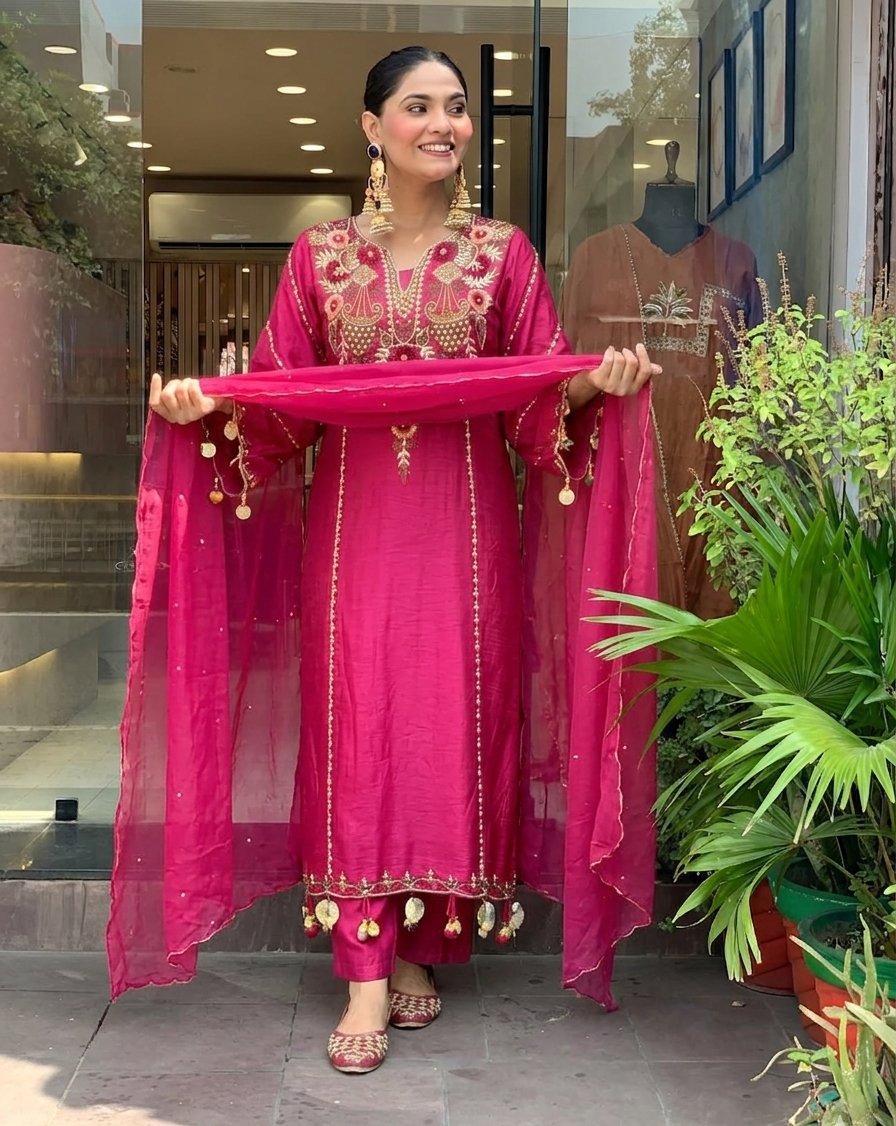
Choose jewellery according to the neckline and embroidery placement. Jhumkas and a maang tikka are sufficient with a high-neck embroidered kurta, while a low or open neckline can support a short necklace. If the dupatta has metallic thread, repeat that metal in the earrings or bangles so the outfit looks coordinated rather than assembled from unrelated pieces.
A low bun decorated with gajra keeps hair controlled during puja and frames a maang tikka neatly. A side braid with a paranda gives a stronger Punjabi reference, while soft waves suit a saree with a modern blouse. Hair pins should be tested with the dupatta because a heavy ear chain or loose braid can catch on embroidered fabric.
Makeup should account for several hours of wear. A transfer-resistant lipstick, lightly set base and waterproof kajal are practical choices, especially when the evening includes emotional family moments or outdoor moon-sighting. Apply sunscreen before makeup if the outfit is worn during daytime, and carry lipstick, safety pins, blotting paper and a small compact in the potli.
The most reliable final test is a complete rehearsal. Wear the kurta or saree, jewellery, footwear and dupatta together for at least 30 minutes; sit cross-legged, walk, lift a tray and raise both arms. Any pin, waistband, hem or earring that feels uncomfortable during rehearsal will become more distracting after several hours. Comfort isn't a compromise in festive dressing: comfort allows the embroidery, colour and craft to remain visible.
Common Questions About Karwa Chauth Punjabi Fashion
What colour suit is best for Karwa Chauth?
Red is the most traditional choice for Karwa Chauth, especially with gold zari or antique-gold embroidery. Rani pink, maroon, coral, purple and ivory with red accents are also festive alternatives when they suit your personal style and family customs.
Is a Punjabi suit more comfortable than a saree for Karwa Chauth?
A Punjabi suit is generally more comfortable for a full day because salwar, churidar or palazzo trousers allow easier movement and sitting. A lightweight Chanderi or cotton-silk suit with a manageable dupatta is especially practical for puja and household rituals.
How can I style a Phulkari dupatta with a plain suit?
Pair a richly embroidered Phulkari dupatta with a plain or lightly embroidered kurta in one colour taken from the dupatta. Keep jewellery in one metal family and pin the dupatta at the shoulder or collarbone so the embroidery remains visible and secure.
Can I wear a saree for a Punjabi Karwa Chauth celebration?
Yes, a saree works well for an evening puja, family gathering or formal portrait. Add Punjabi character with a Phulkari blouse, Punjabi juttis, a paranda-inspired hair accessory or a contrasting embroidered pallu.
Which fabric is best for a comfortable festive salwar suit?
Chanderi, cotton silk, lightweight georgette and soft crepe are practical choices for extended wear. Banarasi silk and Kanjeevaram create a more formal look, but their greater weight may feel less comfortable during a full day of fasting.
How do I keep my Karwa Chauth dupatta in place?
Use two or three discreet safety pins at the shoulder, collarbone and side seam, depending on the drape. Rehearse the complete outfit before the event and choose a two-shoulder pinned drape if you need to carry a thali or move frequently.





