Karnataka Silk Sarees: How to Choose the Right Saree for Festivals requires more thought than selecting a bright colour or a wide gold border. Silk quality, zari composition, fabric weight, drape, blouse construction and the type of celebration all influence whether a saree feels comfortable and looks appropriate. A well-chosen saree can work for morning puja, a Haldi ceremony, a family lunch or an evening wedding reception without appearing either too casual or excessively heavy.
Karnataka has a strong silk identity, particularly through Mysore silk, which is known for a smooth finish, controlled lustre and relatively light drape. Not every silk saree described as Karnataka-inspired is a pure Mysore silk saree, however. Checking the fibre description, weave, zari and finishing details helps you distinguish a practical festive saree from one chosen only for its surface shine.
Karnataka Silk Sarees: How to Choose the Right Saree for Festivals and Understand Their Appeal
Karnataka silk is especially suitable for festivals because it combines a polished appearance with a structured but wearable drape. Mysore silk traditionally uses fine silk yarn and often follows a restrained design language, allowing the fabric's sheen and border to create much of the visual impact.
A Karnataka silk saree can feel less visually dense than a heavily ornamented Banarasi silk saree while still looking ceremonial. That balance is useful when a celebration includes several hours of standing, sitting on the floor, travelling between homes or participating in rituals. Smooth silk also photographs well under indoor lighting, where overly reflective synthetic fabric can look flat or harsh.
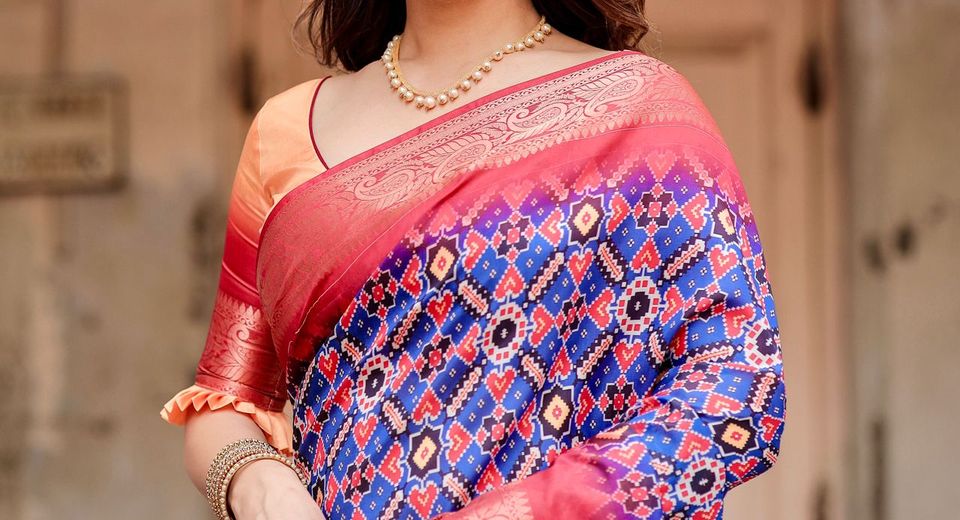
Traditional Karnataka silk often features contrast borders, solid jewel tones and small motifs rather than a crowded surface. Contemporary versions may add printed panels, Kalamkari artwork or larger zari patterns. Royal Blue Silk Saree with Exquisite Zari Work shows how a deep base colour and metallic detailing can create a formal festive effect without requiring elaborate jewellery.
Fabric origin and construction still matter when comparing silk sarees. Kanjeevaram is associated with Tamil Nadu's temple-inspired silk weaving, while Chanderi is known for a lighter, more translucent handloom fabric from Madhya Pradesh. Banarasi silk is recognised for richly patterned brocade work. Karnataka silk has its own appeal, so comparison should focus on the occasion, weight and finish rather than treating every silk saree as interchangeable.
Karnataka Silk Sarees: How to Choose the Right Saree for Festivals by Occasion
Match a saree to the festival's timing, rituals, setting and expected level of formality before choosing a colour or embellishment.
Which Karnataka silk saree suits morning puja?
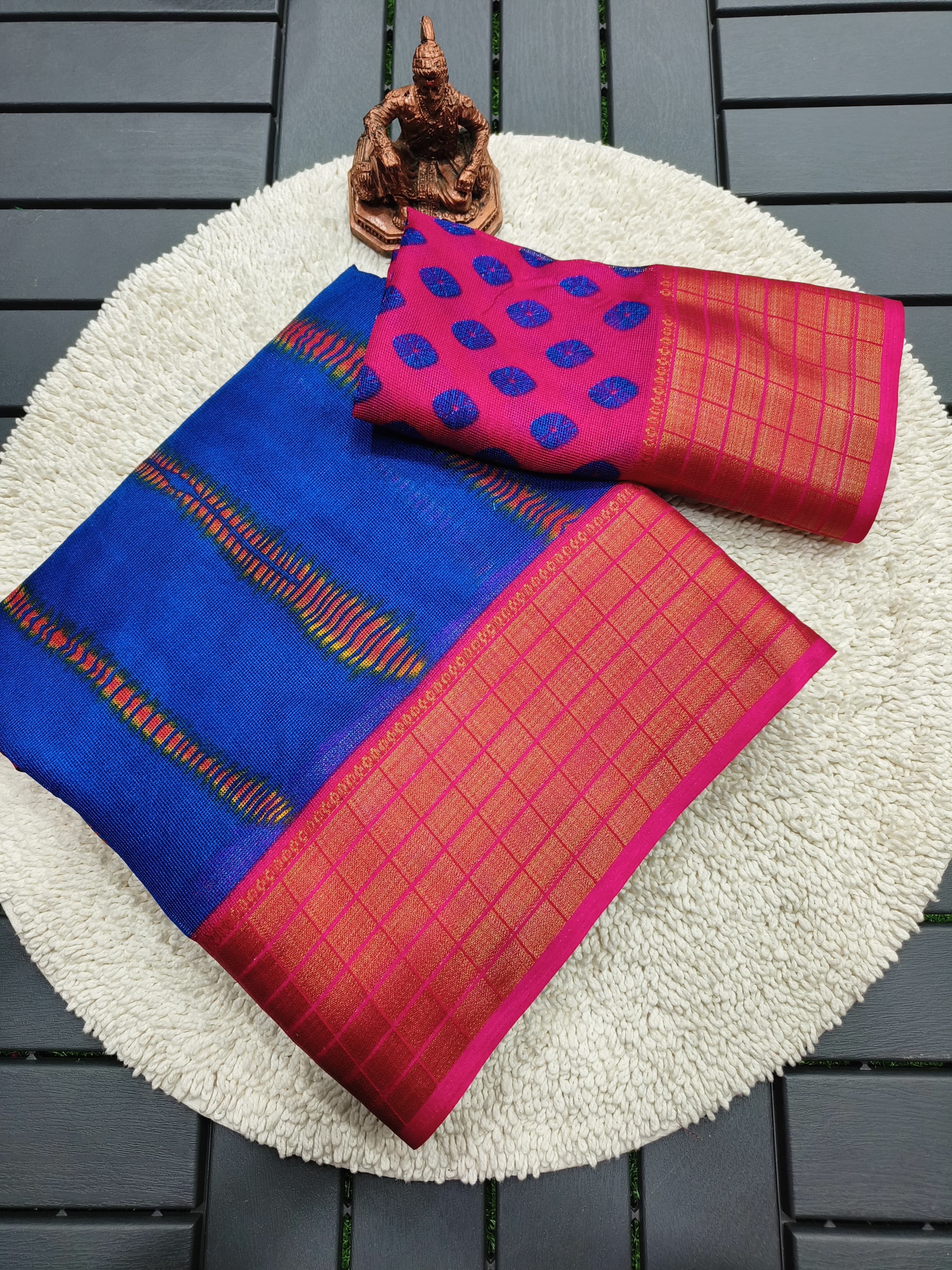
A medium-weight saree in red, green, yellow, orange, ivory, royal blue or pink usually suits morning puja and traditional family gatherings. These colours appear lively in natural light and remain ceremonial without demanding extensive styling. A compact pallu is useful when you need to move between prayer, serving food and greeting guests.
A handloom-style saree with modest zari is often more practical than a very heavy brocade for a home gathering. Premium Handloom Silk Saree with Handkatha illustrates this approach: texture, handloom character and a clear border provide visual interest without making the saree difficult to manage.
Which Karnataka silk saree works for a Haldi ceremony?
A lighter-coloured, manageable saree with a secure drape works best for a Haldi ceremony because turmeric paste, flowers and outdoor movement can expose clothing to stains. Yellow, mustard, coral, pink, green and powder blue are visually appropriate, but delicate silk should still be protected from turmeric and water.
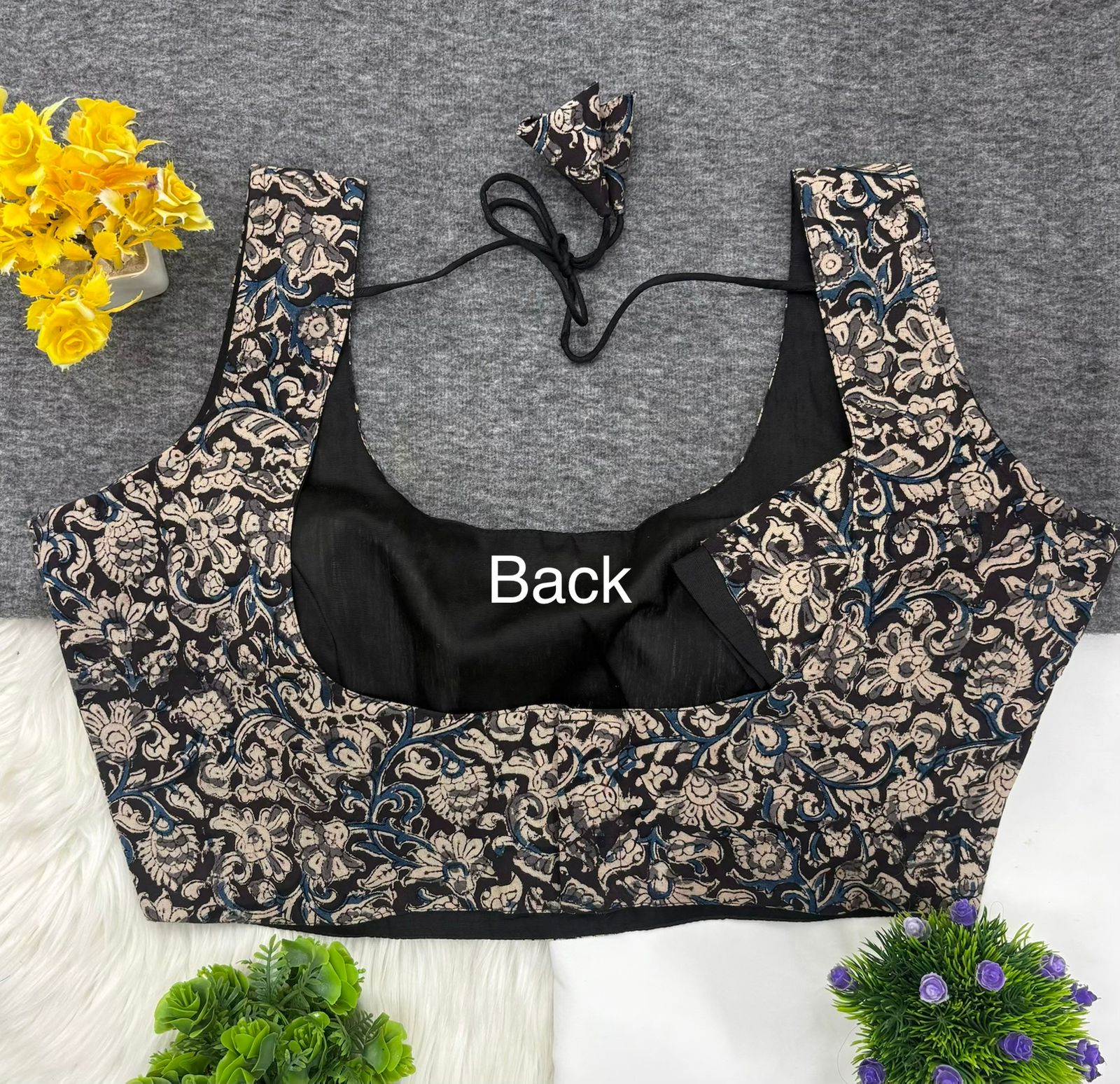
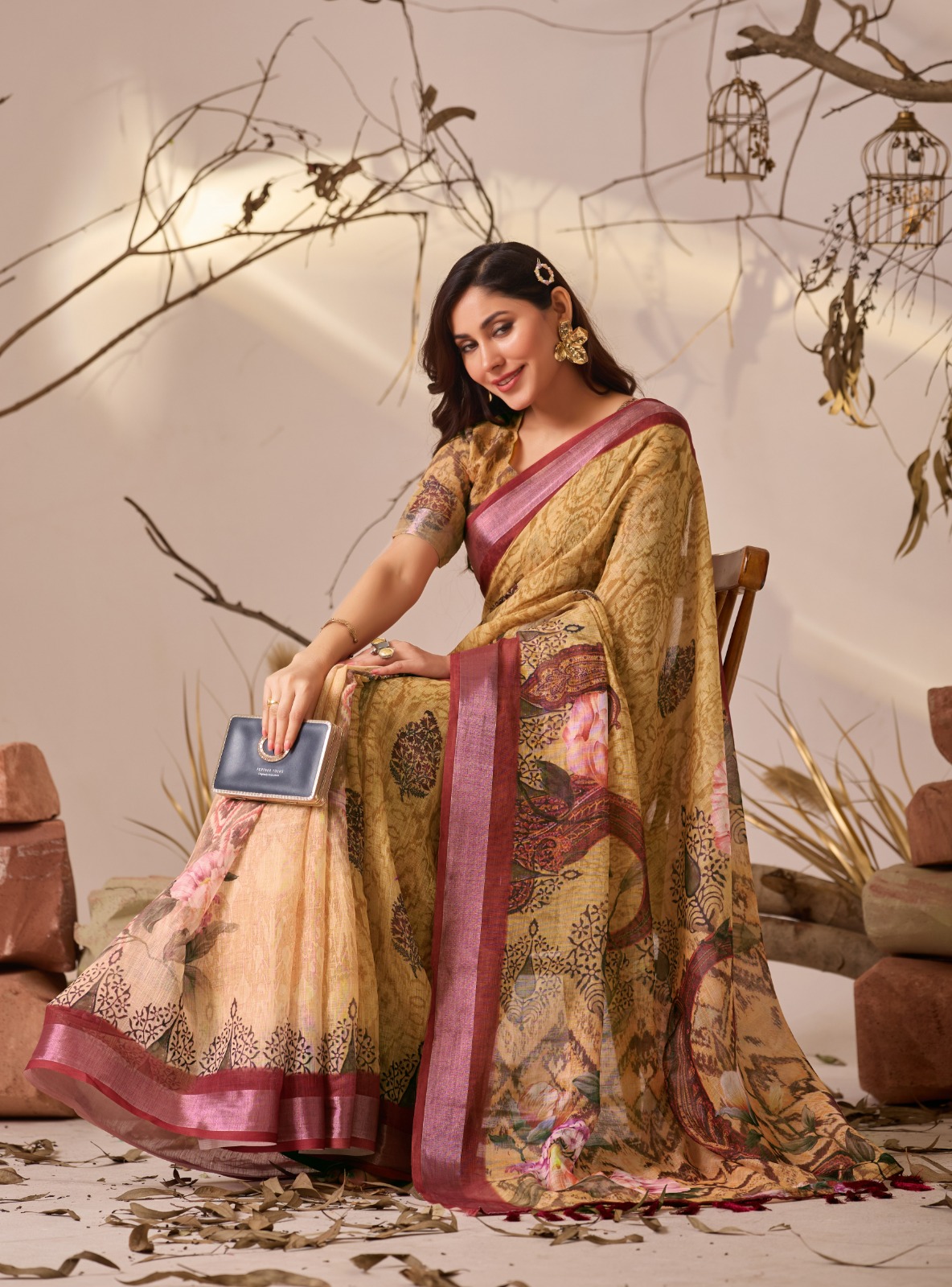
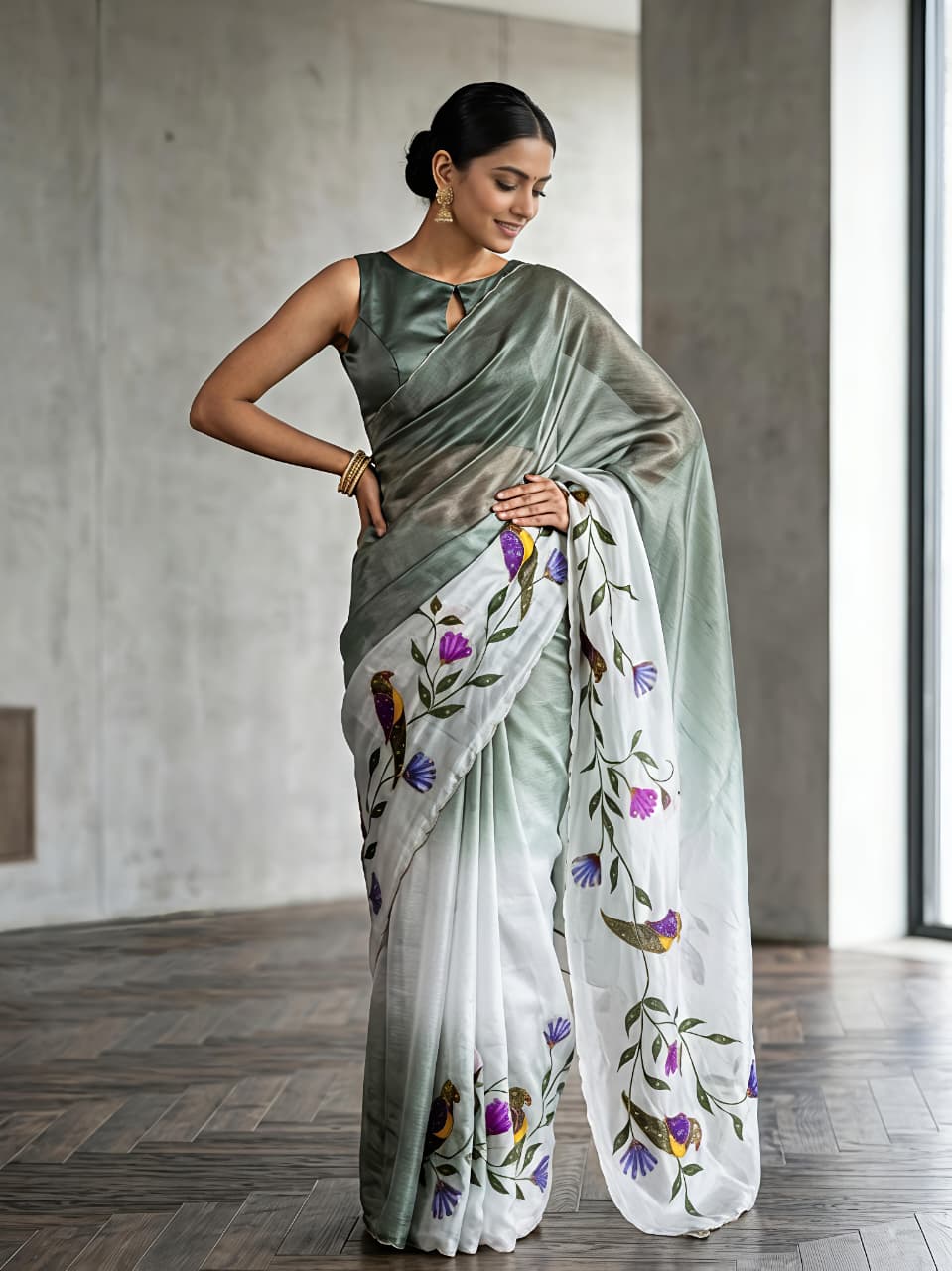
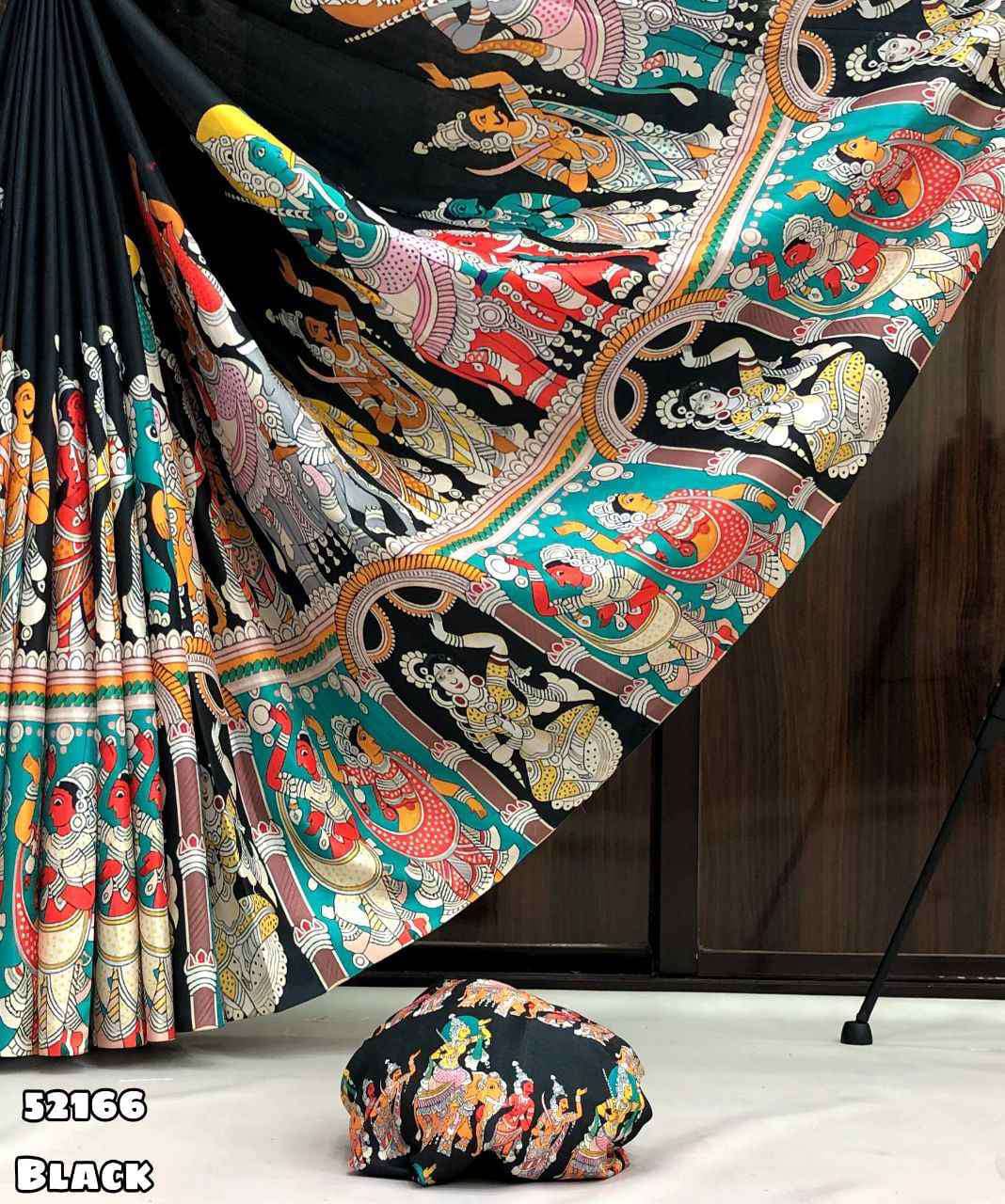
Choose a saree with a controllable pallu and avoid wearing an irreplaceable heirloom if guests will apply Haldi directly. Black Traditional Kalamkari Print Silk Saree and Tussar Silk Kalamkari Printed Saree with Blouse show how printed artwork can create a festive appearance without relying entirely on metallic decoration. A printed silk saree can also be easier to restyle for a later family event.
Which Karnataka silk saree suits an evening wedding?
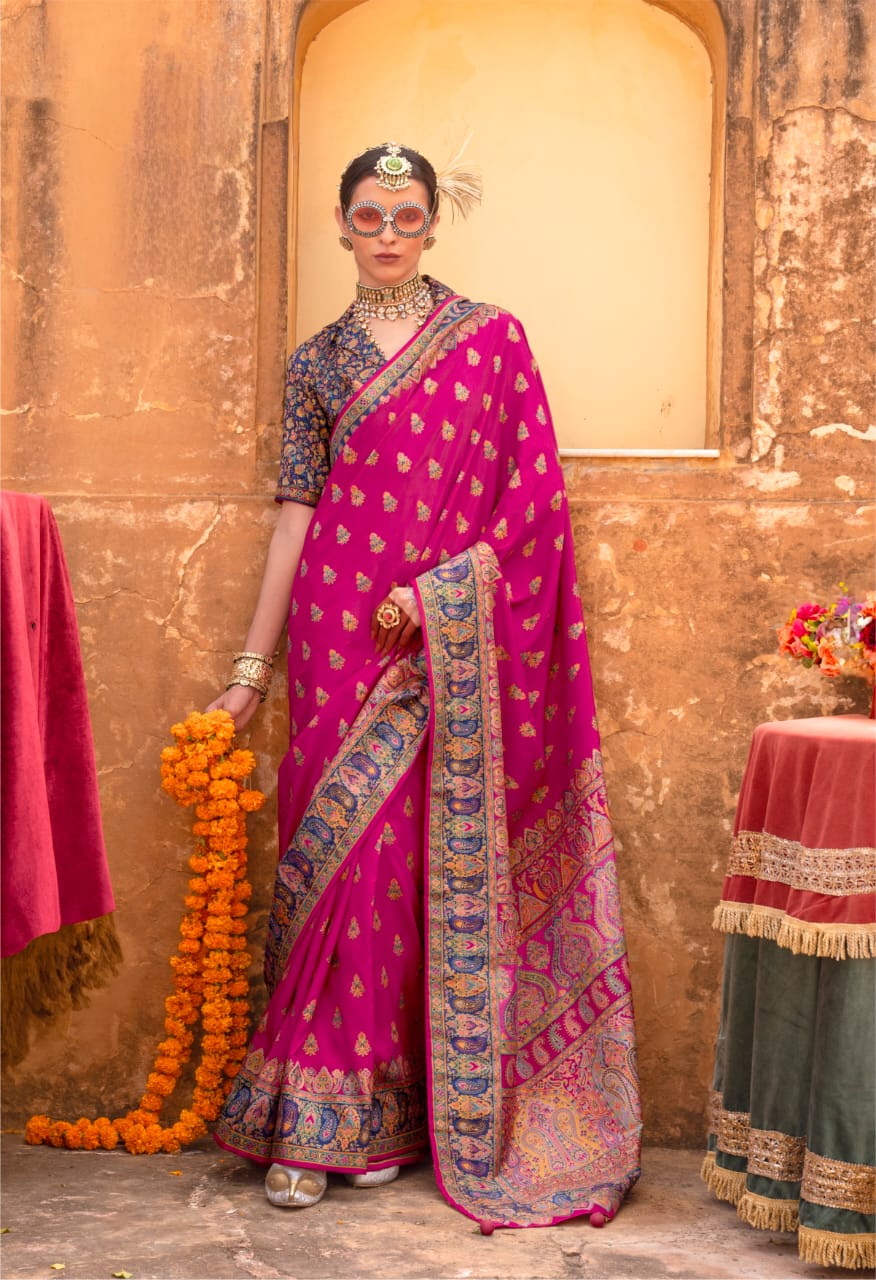
Evening wedding festivities can accommodate deeper shades, stronger zari and a more sculpted blouse. Royal blue, wine, emerald, magenta, black and deep purple appear rich under warm venue lighting. A heavier border photographs clearly against decorated stages and banquet interiors.
Elegant Royal Blue Silk Saree for Festive & Wedding Wear suits this setting because royal blue supports both traditional gold jewellery and contemporary diamond-look accessories. Elegant Black Kalamkari Silk Saree with Blouse offers another direction when you want a dark base with an artistic, less conventional festive mood.
Karnataka Silk Sarees: How to Choose the Right Saree for Festivals by Checking Silk Quality
Assess silk quality through the product specification, surface behaviour, weave consistency, weight and finishing instead of relying on the word silk alone.
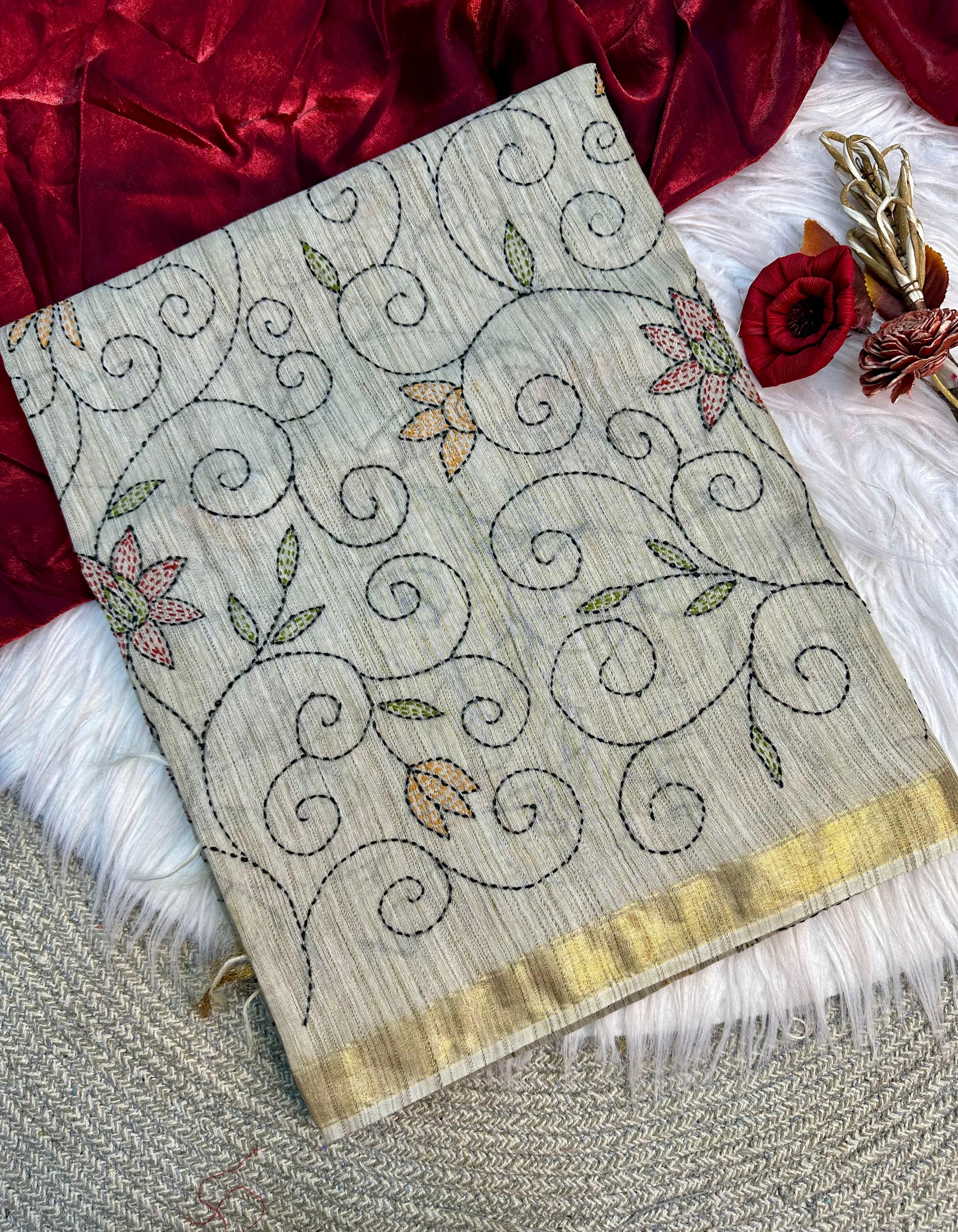
First, check whether the listing identifies pure silk, a silk blend, art silk, synthetic silk or a named variety such as Mysore silk or Tussar silk. A silk-blend saree may be attractive and affordable, but it can differ from pure silk in handle, breathability, fall and long-term ageing. Tussar silk generally has a more textured and slightly irregular surface than the smooth finish associated with classic Mysore silk.
Second, look for an even selvedge and consistent weave. Small irregularities can be normal in handloom fabric, but unexplained snags, loose threads or abrupt changes in density deserve closer examination. A quality saree should open smoothly, with the border lying flat rather than twisting away from the body.
Third, assess the shine. Natural silk has a layered lustre that changes subtly as the fabric moves, while an excessively glossy surface may indicate a synthetic finish. The fabric should feel smooth or characterfully textured according to the stated weave, not plasticky or stiff. Online shoppers should use close-up photographs, fibre details and a clear return policy because screen brightness can exaggerate colour and shine.
Fourth, consider weight in relation to use. A saree weighing approximately 500 to 700 grams, including the blouse piece, may feel comfortable for several hours, while a densely woven or embellished saree can weigh considerably more. Weight varies by silk type and border, so the number is a guide rather than a quality score. The best festival saree is one you can sit, walk and climb stairs in securely.
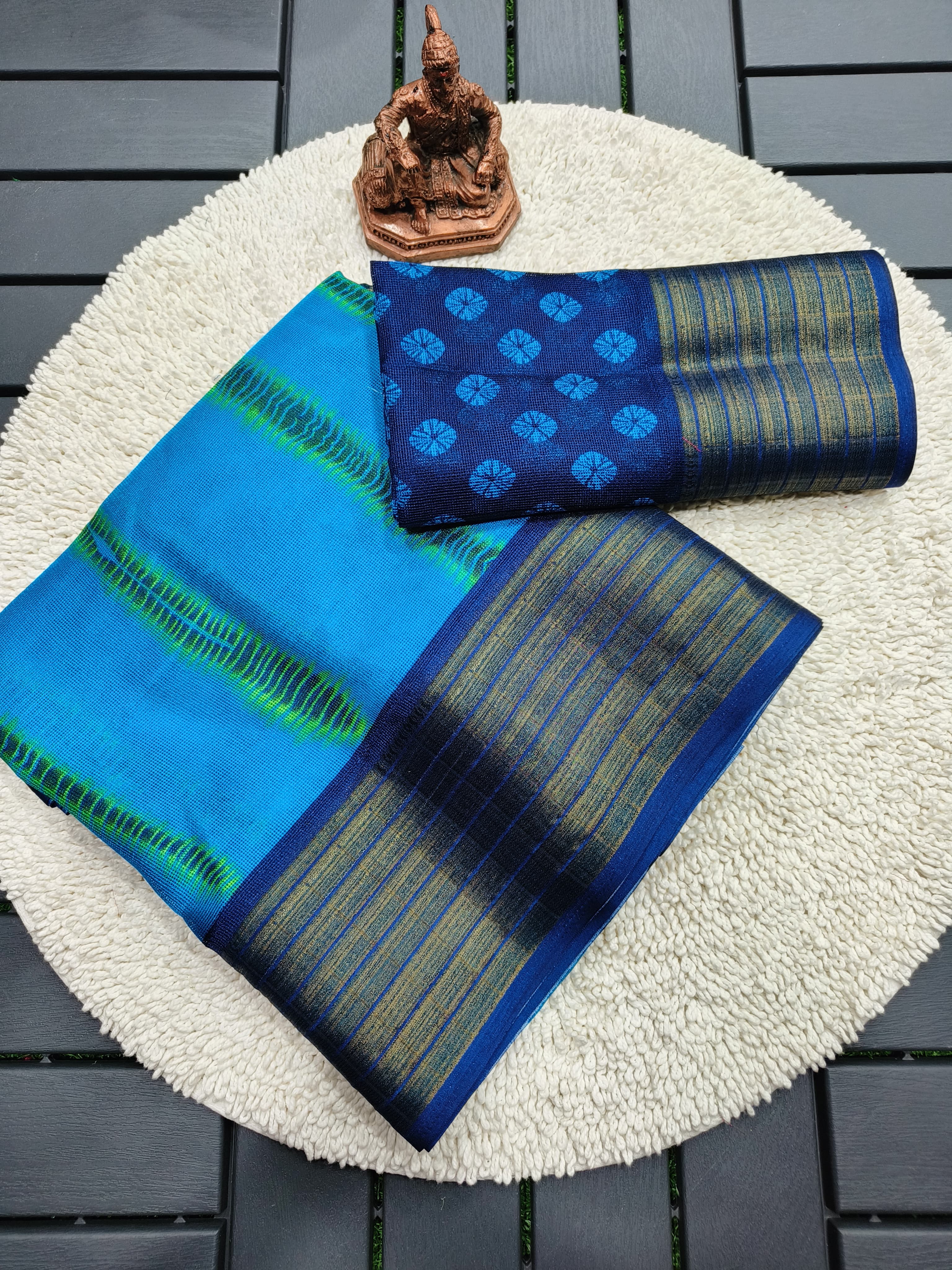
Royal Blue Printed Silk Saree and Festive Wear Blue Silk Saree for Women demonstrate why the visual category of a saree isn't enough to judge its construction. Ask whether the design is woven, printed, embroidered or finished with applique work. Woven motifs are integrated into the fabric, while printed motifs sit on the surface and may require different care.
Karnataka Silk Sarees: How to Choose the Right Saree for Festivals with Good Zari
Zari quality matters because metallic thread determines much of a saree's visual richness, durability and maintenance needs.
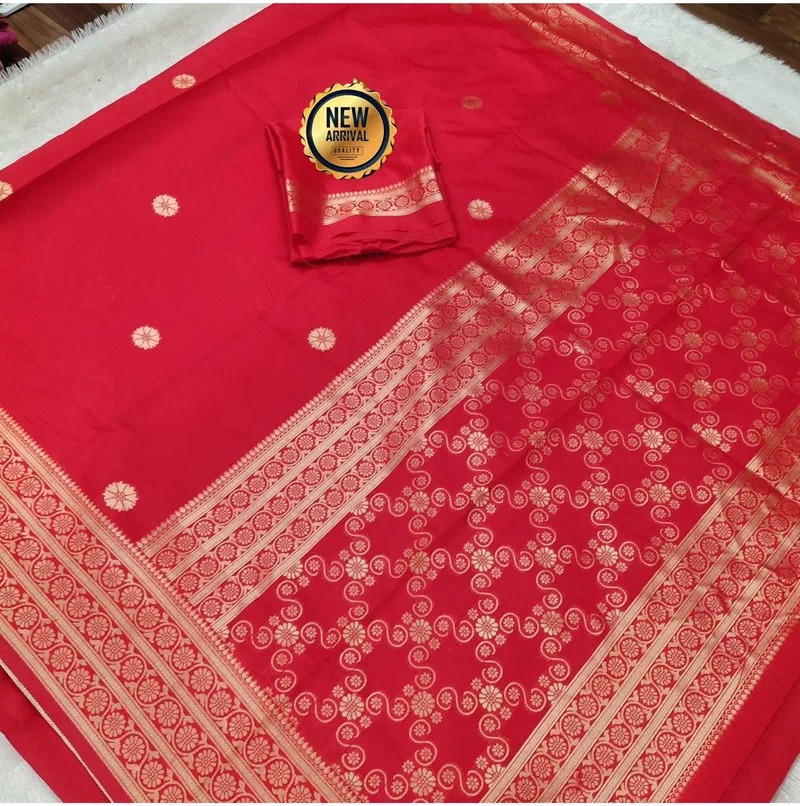
Traditional zari may contain metal wrapping over a textile core, while modern zari can be made from metallic polyester or other synthetic materials. Real zari isn't automatically the right choice for every buyer; synthetic zari can be more affordable and easier to maintain. The important point is to understand what the product description promises instead of assuming that every gold-coloured border contains pure zari.
Inspect whether the border has clean edges, even motifs and secure threadwork. Uneven metallic lines, sparse patches and loose ends indicate that the finishing deserves closer examination. A dense zari border adds formality but also adds weight, so it may be less suitable for a daytime festival involving extensive movement.
Pair a gold-zari saree with warm gold jewellery, antique-finish pieces or temple-inspired accessories. Silver-toned zari can work with pearls, diamonds or oxidised jewellery. A royal blue saree with gold zari creates a high-contrast traditional look, while a pink or green saree with a subtler border can appear softer for daytime events.
Zari also affects storage. Fold a saree with the zari facing inward when possible, place soft muslin or uncoloured cotton between layers, and refold the saree every few months to prevent permanent crease lines. Avoid spraying perfume directly onto metallic borders because alcohol and moisture can affect textile fibres and surface finishes.
Karnataka Silk Sarees: How to Choose the Right Saree for Festivals by Colour and Border
Choose colour according to the time of day, complexion preference, jewellery wardrobe and whether the saree must work across more than one festival.
Red, maroon and magenta communicate ceremony and pair easily with gold. Green complements traditional temple jewellery and suits many harvest or religious celebrations. Yellow and saffron feel natural for daytime rituals, while royal blue provides a formal contrast that works in daylight and evening settings. Black can look sophisticated with Kalamkari or antique zari, although some families may prefer brighter colours for specific religious observances.
Border width changes the apparent proportion of the body. A broad border creates a strong horizontal line and gives a traditional, grand appearance. A narrow border usually feels lighter and can make the saree easier to wear for long periods. If you're petite, a very wide contrasting border may visually shorten the silhouette; a medium border or a border close to the saree colour can create a more continuous line.
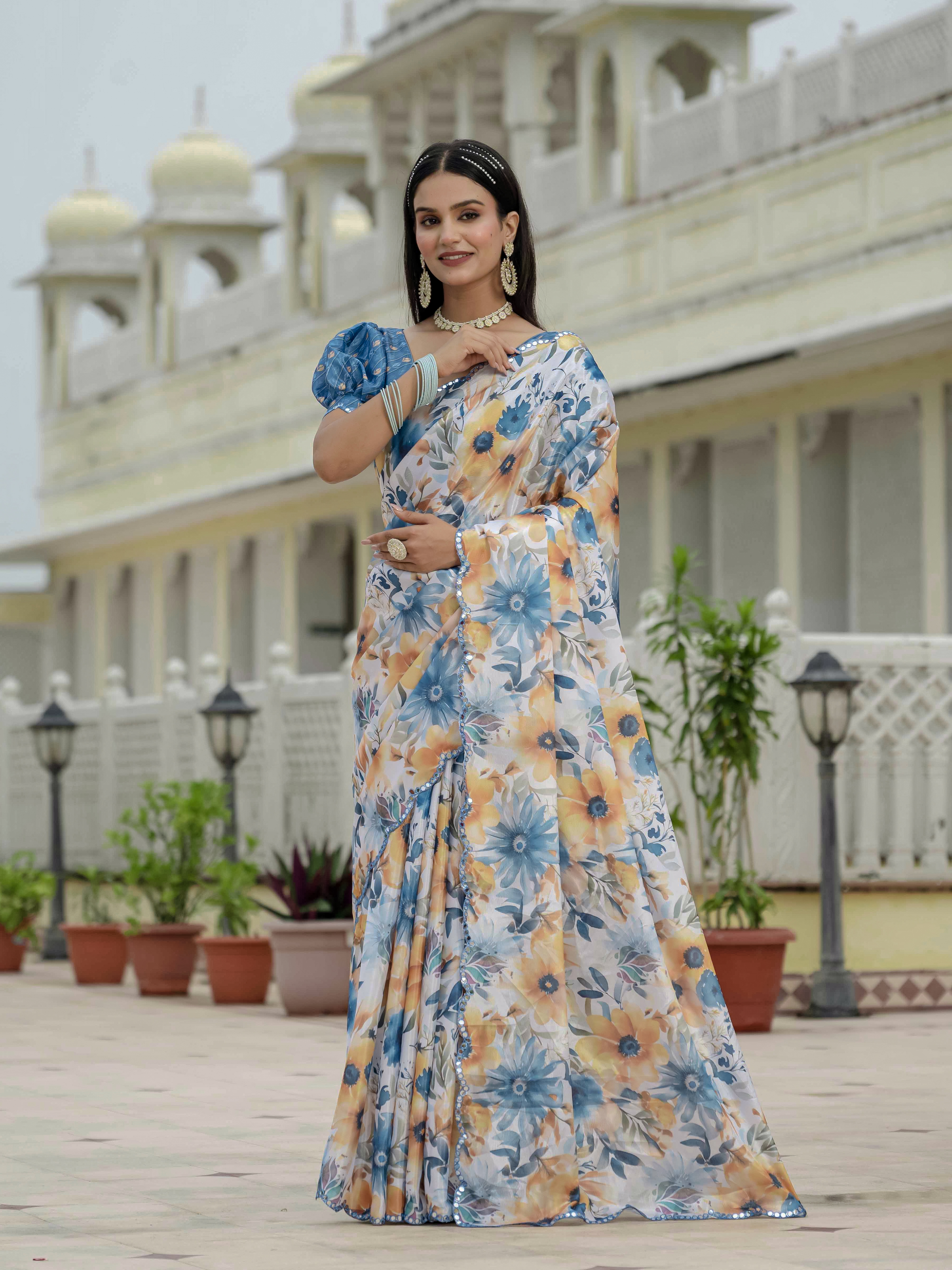
Print scale matters as well. Large Kalamkari motifs make a clear statement and can reduce the need for elaborate jewellery. Small woven motifs create a quieter look that allows a statement necklace or layered bangles to stand out. Royal Blue Printed Silk Saree works for a graphic, contemporary festive look, while Festive Wear Blue Silk Saree for Women can be styled more traditionally with a gold belt, jhumkas and a structured blouse.
Budget comparison is easier when the price is separated from the fibre and design. Silk Sarees Under 3000 With Discount can help establish an affordable starting range, but a lower price may reflect a blend, lighter zari or printed rather than woven motifs. Pink Georgette Sarees provide an useful comparison in drape and transparency, while Red Banarasi Silk Sarees for Weddings Under 1100 show how price, weave and occasion positioning can differ across silk categories.
Karnataka Silk Sarees: How to Choose the Right Saree for Festivals, Fit and Care
The right fit depends on a properly measured blouse, a manageable saree length and a petticoat that supports the fabric without showing through.
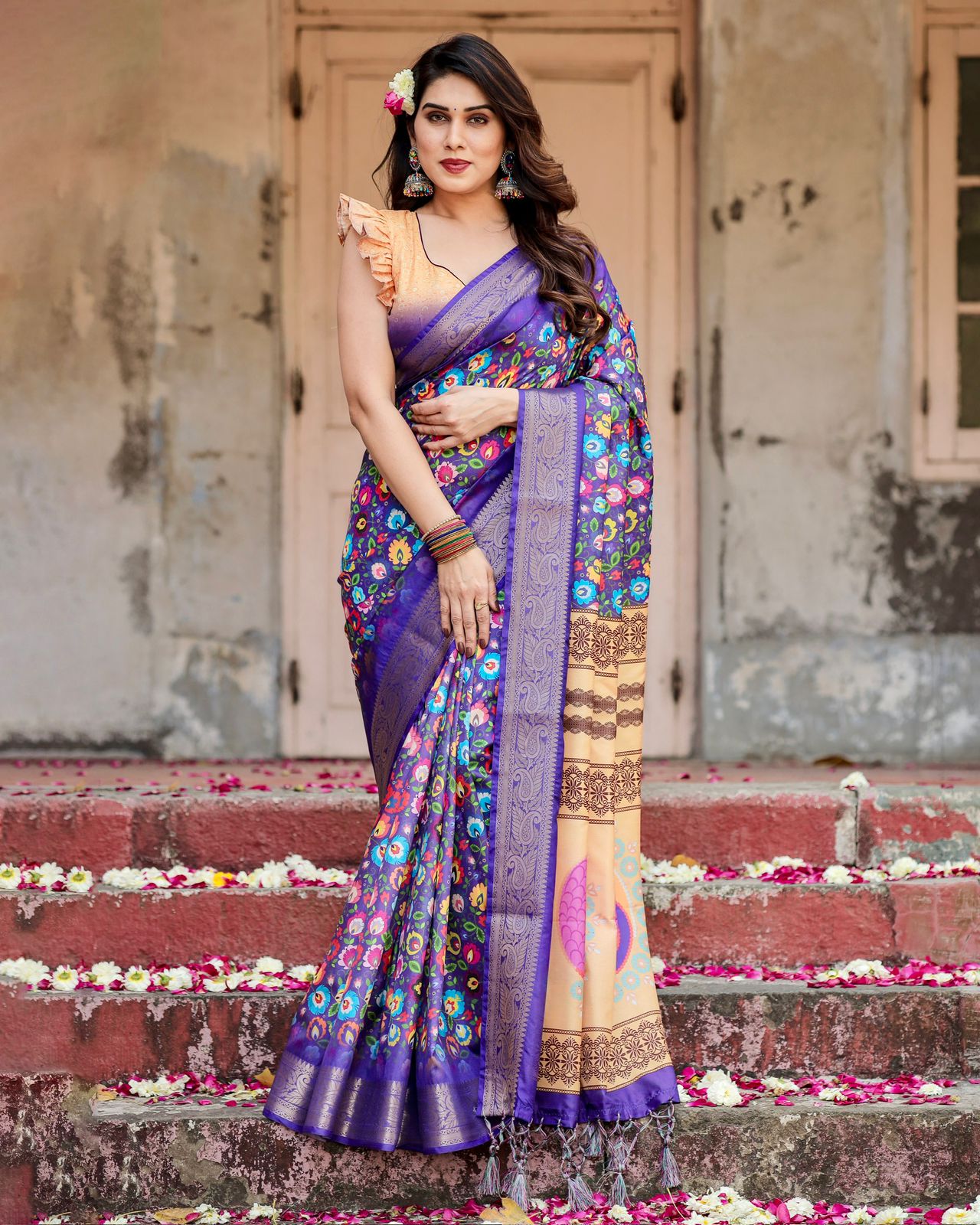
Measure the blouse using the fullest bust measurement, shoulder width, armhole and preferred sleeve length. A silk blouse with an overly tight armhole can restrict movement, while a loose neckline may shift during rituals. Allow enough ease for sitting and lifting the arms, particularly if the blouse has a high collar, heavy embroidery or close-fitted sleeves.
Most sarees are approximately 5.3 to 5.5 metres long, including the blouse piece, but the finished drape depends on height, pleat width and the amount tucked into the petticoat. A longer length can help with a broad pallu or elaborate pleats, while a shorter wearer may prefer fewer pleats and a narrower pallu. A cotton or satin petticoat should match the saree's movement and should not create visible bulk around the waist.
Pre-pleat the saree before a long event if you're not accustomed to draping silk. Secure the inner pleats with two or three small safety pins placed from the reverse side, and use a discreet shoulder pin for the pallu. Pins should pass through the fabric's stronger seams or folded sections rather than being repeatedly inserted through delicate zari motifs.
Silk sarees should generally be dry-cleaned when visibly soiled, especially when they contain zari, lining, embroidery or colour contrast. Blot a fresh spill with a clean, dry cloth instead of rubbing it. Do not use bleach, harsh detergent, direct sunlight or a hot iron. Store the saree in a breathable cotton cover, away from damp walls and strong artificial fragrance, and refold it periodically to protect the folds.
Elegant Royal Blue Silk Saree for Festive & Wedding Wear may need more careful storage because darker dyes and metallic details can show abrasion if folded carelessly. Keep Kalamkari silk away from prolonged moisture and friction, since printed surfaces can lose clarity when repeatedly rubbed. Good storage often extends the useful life of a festival saree more effectively than occasional cosmetic pressing.
Karnataka Silk Sarees: How to Choose the Right Saree for Festivals on a Budget
A sensible festive saree budget should cover the saree, blouse alteration, accessories, maintenance and possible delivery or tailoring costs.
Start by deciding how often the saree will be worn. A pure silk saree with substantial zari may justify a higher price if you attend several weddings and family festivals each year. If you need a saree for one event, a silk blend or printed silk option can offer a polished appearance at lower cost while reducing care anxiety.
Compare like with like. A saree with a handloom weave, pure silk specification and dense zari should not be judged against a lightweight printed blend solely by comparing the displayed price. Check the length, blouse-piece inclusion, fabric composition, border construction and whether the colour shown is likely to vary between screen and daylight.
Gray Color Sarees Under 1000 can be useful for understanding how budget collections differ from formal silk ranges, even though grey may not be your final festival colour. Party Wear Sarees can also broaden the comparison when you want embellishment or a lighter synthetic drape rather than traditional silk. These comparisons help identify which carries matter most to you: fibre, border, print, weight or rewear value.
A practical choice should offer at least three styling possibilities. For example, a royal blue saree can be worn with gold jewellery at a wedding, with pearls at a daytime puja and with a contrasting embroidered blouse at a reception. A black Kalamkari saree can be paired with antique jewellery for a cultural event or with minimal accessories for a more contemporary gathering.
Practical Questions About Choosing Karnataka Silk Sarees for Festivals
How can I tell whether a Karnataka silk saree is pure silk?
Check whether the product description clearly states pure silk, Mysore silk, Tussar silk, silk blend or synthetic silk. Surface lustre, fabric handle and weave consistency provide useful clues, but a fibre specification or recognised certification is more reliable than a visual inspection alone.
Are Karnataka silk sarees suitable for a Haldi ceremony?
Karnataka silk sarees can suit a Haldi ceremony when the design is manageable and the wearer accepts the risk of turmeric stains. Choose a lighter or printed saree rather than an irreplaceable heirloom, secure the pallu and avoid rubbing any fresh stain into the silk.
Which colours work best for a festive silk saree?
Red, green, yellow, pink, maroon, royal blue and emerald are reliable festive colours. Select the final shade based on the time of day, family customs, jewellery and whether the saree will be worn at a puja, daytime gathering or evening wedding.
What is the difference between Mysore silk and Banarasi silk?
Mysore silk is generally associated with a smooth finish, controlled lustre and relatively restrained design, while Banarasi silk is known for brocade patterns and richly woven zari work. Both can be festive, but they differ in texture, visual density, weight and regional weaving tradition.
How should I store a silk saree after a festival?
Air the saree away from direct sunlight, ensure it is completely dry and fold it in a breathable cotton cover. Keep zari away from moisture, refold the saree every few months and use professional dry cleaning for significant stains instead of bleach or household detergent.
How much saree weight is comfortable for a long festival?
A saree weighing approximately 500 to 700 grams including the blouse piece is often manageable for several hours, although comfort depends on height, drape and personal preference. Dense zari, heavy embroidery and multiple layers increase weight, so try to balance visual formality with the movement required by the event.