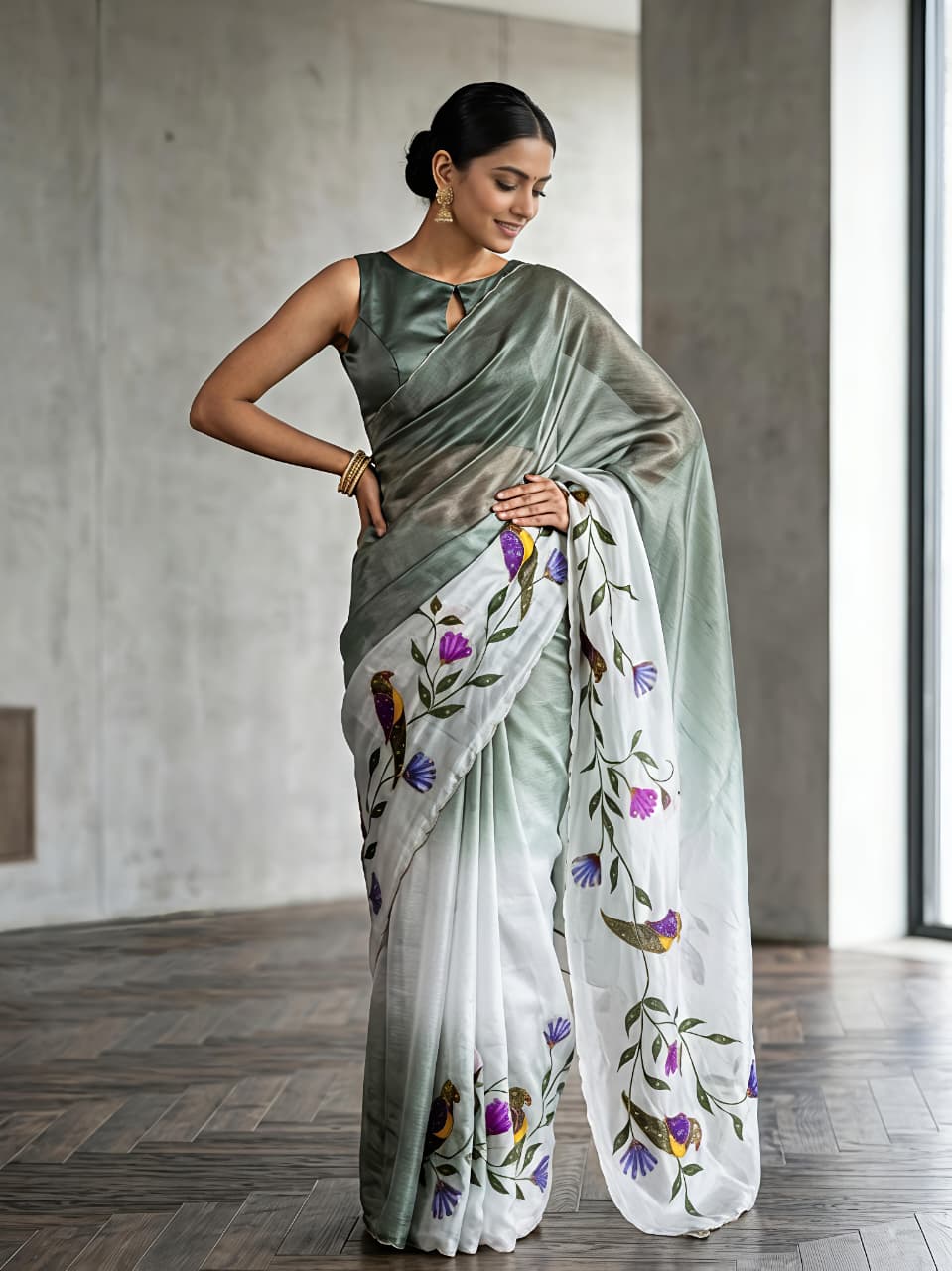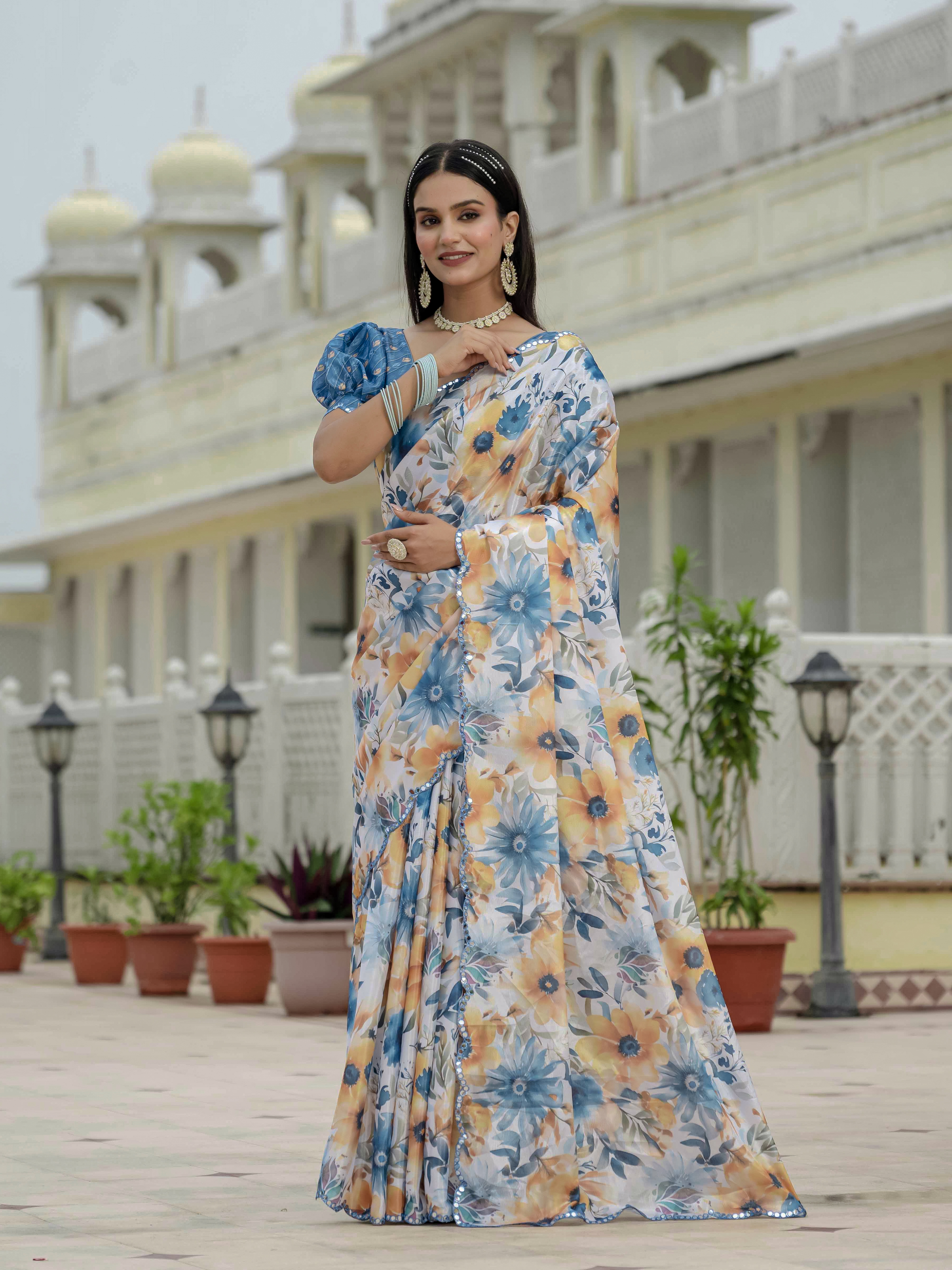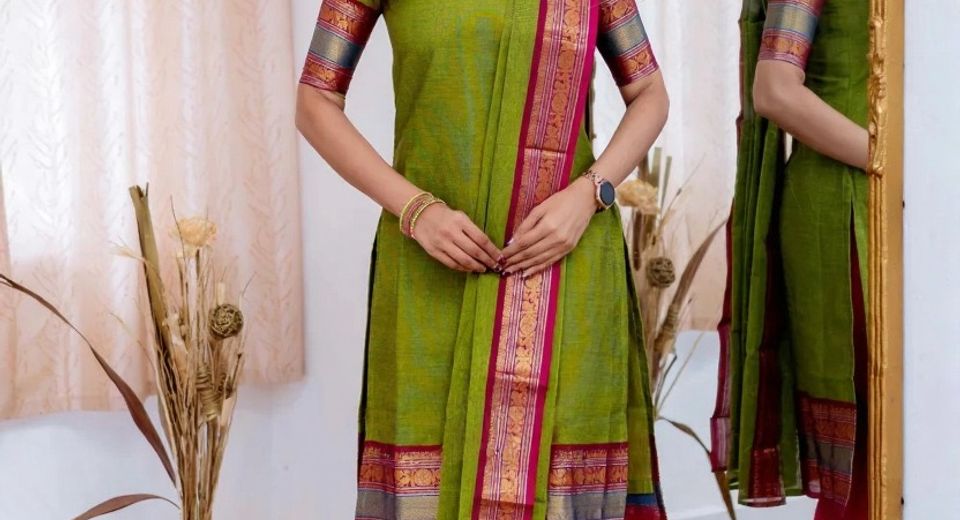
Karma Puja Outfit Ideas can be colourful, comfortable and connected to the cultural setting of Jharkhand. Karma, also called Karam in many communities, honours the Karam tree and is associated with songs, group dancing, nature and prayers for prosperity and well-being. Women may choose a saree, salwar suit or kurta set depending on family custom, regional identity and how actively they will participate in the celebration.
A suitable outfit should allow easy movement, remain modest during worship and work through several hours of sitting, standing and dancing. Traditional Jharkhand fashion doesn't require a costume-like interpretation; handloom textures, earthy colours, woven borders, modest silhouettes and familiar jewellery can communicate the mood more naturally.
Karma Puja Outfit Ideas for choosing the right silhouette
A good Karma Puja outfit combines cultural respect, movement-friendly construction and fabric suited to the weather. The garment should let the wearer sit on the floor, join community dancing and keep the pallu or dupatta secure during prayer.
Karma Puja celebrations may continue into the evening after a warm or humid day. Cotton, silk-cotton, lightweight silk and breathable woven fabrics are therefore more practical than heavy velvet or densely layered garments. A saree with a manageable border or a three-piece salwar suit with a comfortable waistband can look festive without becoming difficult to handle.
Family and community customs should guide the final decision. Some women may wear regional sarees with a simple blouse, while others may prefer salwar suits because a kurta, pant and dupatta provide greater security during movement. Both choices can be appropriate when the colours, coverage and styling suit the prayer setting.
Should you wear a saree or a salwar suit for Karma Puja?
A saree suits a wearer who enjoys heritage draping, while a salwar suit is usually easier for walking, sitting and dancing. The best choice depends on community custom, personal confidence and the amount of movement planned.
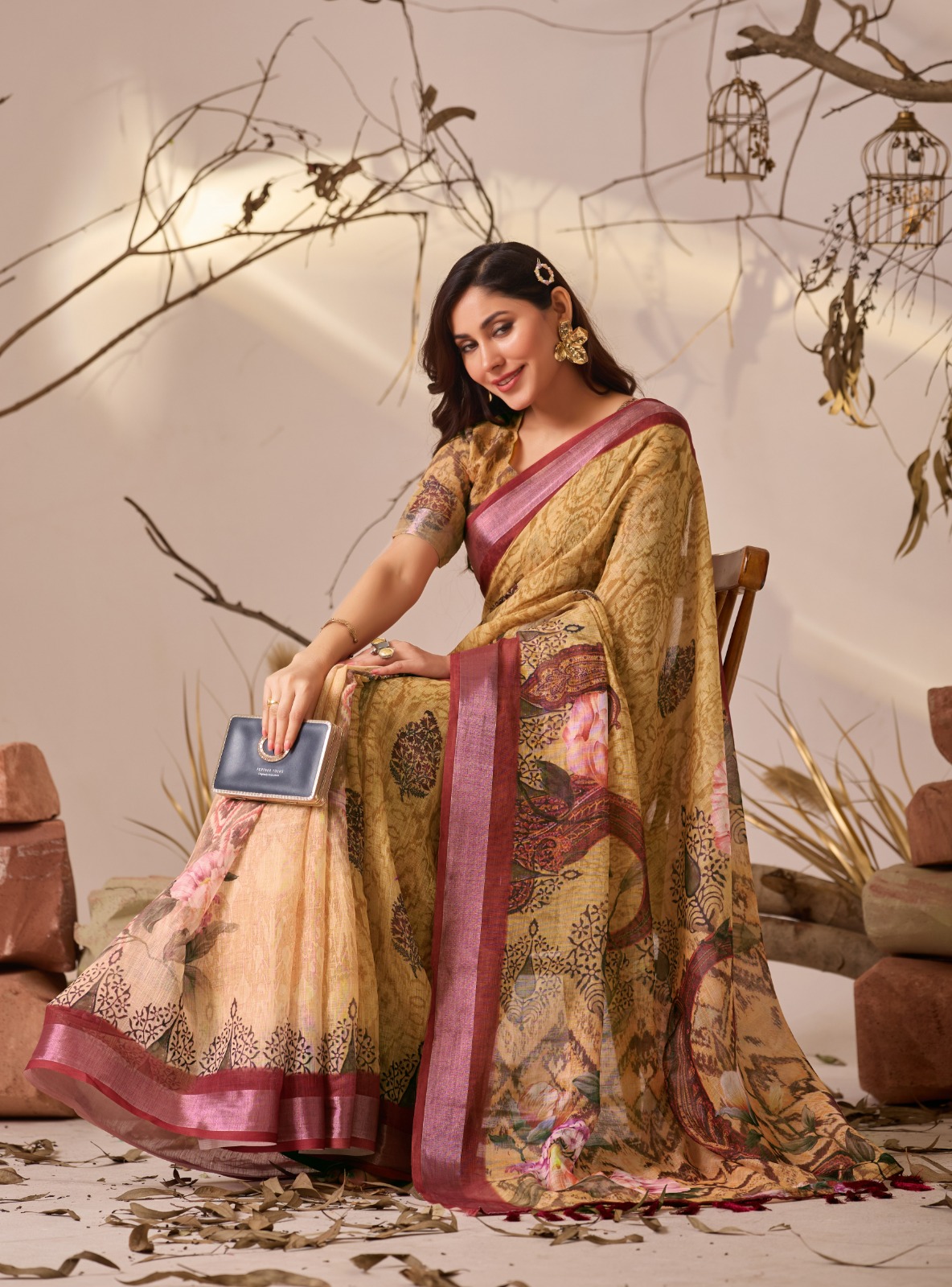
A lightweight cotton, silk-cotton or soft silk saree is a reliable choice for Karma Puja. A narrow zari border, a small woven motif or a contrasting blouse adds ceremony without the weight of a heavily embellished wedding saree. A firm selvedge makes pleating easier and helps the saree retain its shape during a long gathering.
A salwar suit should not be so narrow at the knee that sitting becomes uncomfortable. Leave enough room at the hip and thigh, and check whether the waistband remains comfortable after several hours. A dupatta measuring approximately 2.25 to 2.5 metres usually gives enough length for a secure shoulder drape without trailing on the ground.
Karma Puja Outfit Ideas using sarees and festive suits
The strongest Karma Puja outfit ideas usually begin with a breathable saree or a polished salwar suit in a woven, embroidered or nature-inspired design. The garment should look festive at close range while remaining practical for a community gathering.
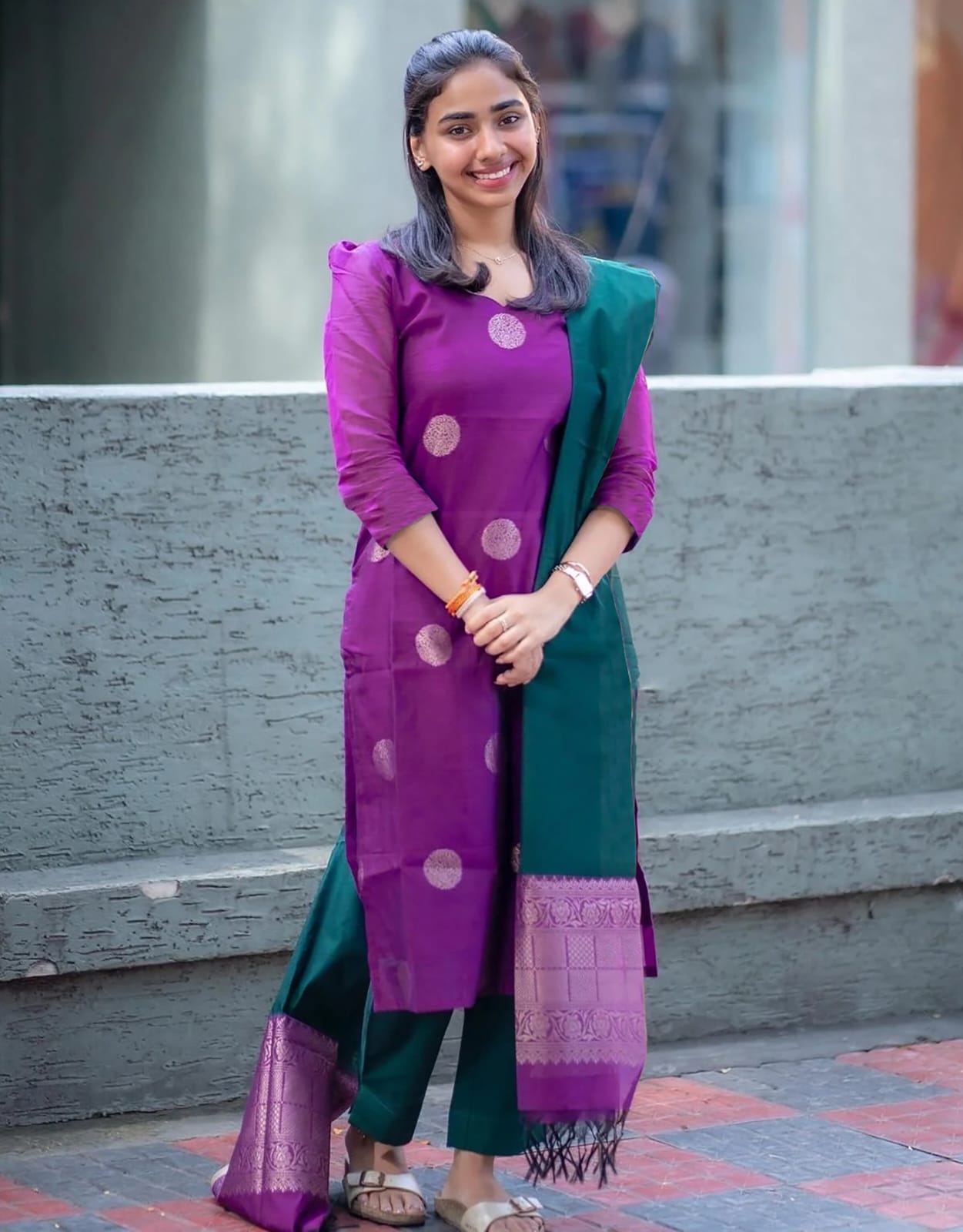
Red, rust, mustard, leaf green, maroon, cream and deep brown work well for a nature-centred festive wardrobe. A red-and-green combination can feel celebratory, while mustard and cream create a quieter handloom-inspired appearance. Colour choices differ between families and communities, so a prescribed colour code should not replace local custom.
Choose a blouse with sleeves if the celebration involves outdoor activity or a conservative family setting. A high boat neck, round neck or modest V-neck can look elegant with a woven saree. A cotton blouse with a zari-edged sleeve or matching fabric blouse is often more comfortable than a heavily padded or sequinned design.
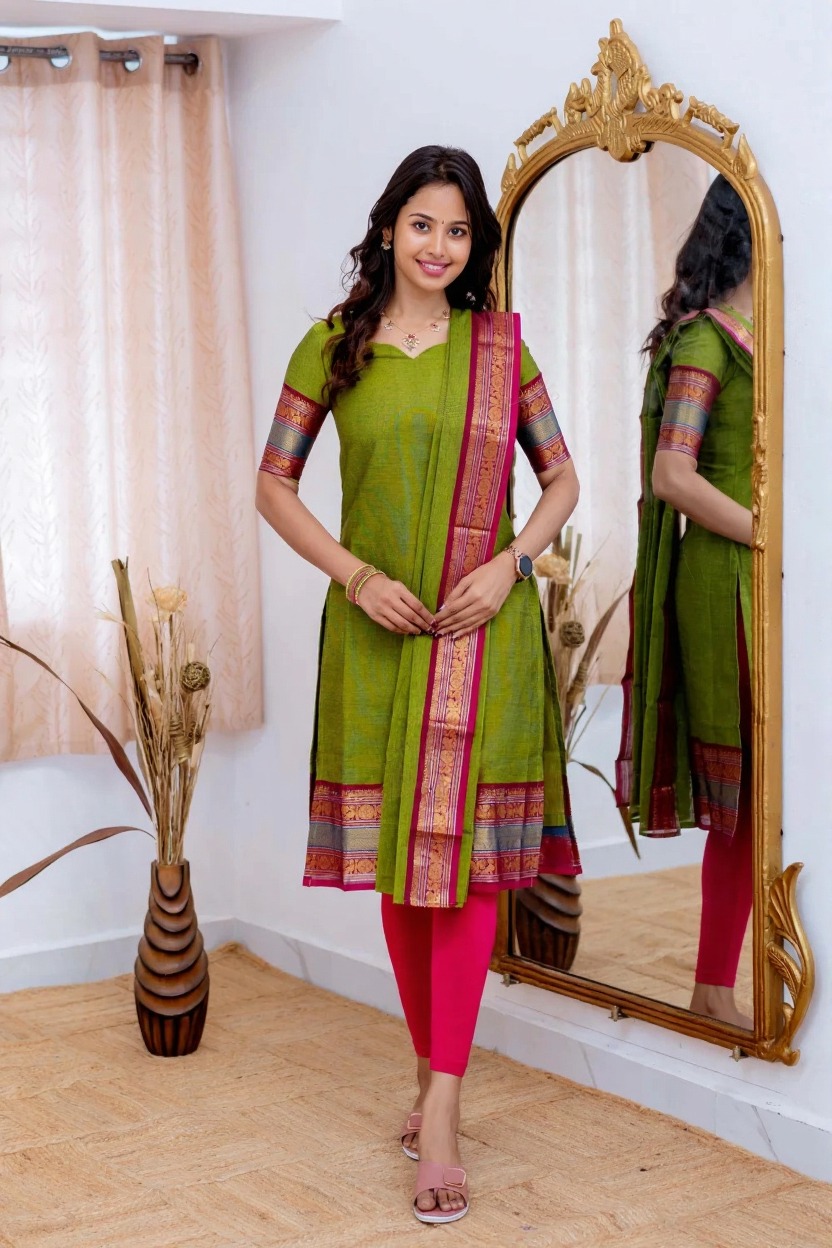
The Elegant Silk Embroidered Kurta Pant Set with Jacquard Dupatta offers a dressier interpretation for an evening prayer, while the Kanchi Cotton Jacquard Kurti Dupatta Set Online suits a lighter daytime gathering. The Kanchi Cotton Zari Woven Kurti Set with Time-honoured Dupatta works when a woven border and classic dupatta are more important than extensive embroidery.
For another festive direction, the Silk Festive Kurta Pant Set with Zari Jacquard Dupatta combines a luminous fabric surface with a defined dupatta. The Kanchi Cotton Woven Kurta Pant Dupatta Set is better suited to someone who prefers structure and breathability. The Parrot Kanchi Cotton Kurta Dupatta Set can introduce a brighter green note without requiring elaborate accessories.
Karma Puja Outfit Ideas inspired by Jharkhand colours and textiles
Jharkhand-inspired dressing works best with grounded colours, natural references and woven texture rather than random decoration. Red, yellow, green and white can be used in different proportions to create a festive outfit while keeping the appearance connected to rural and nature-based visual traditions.
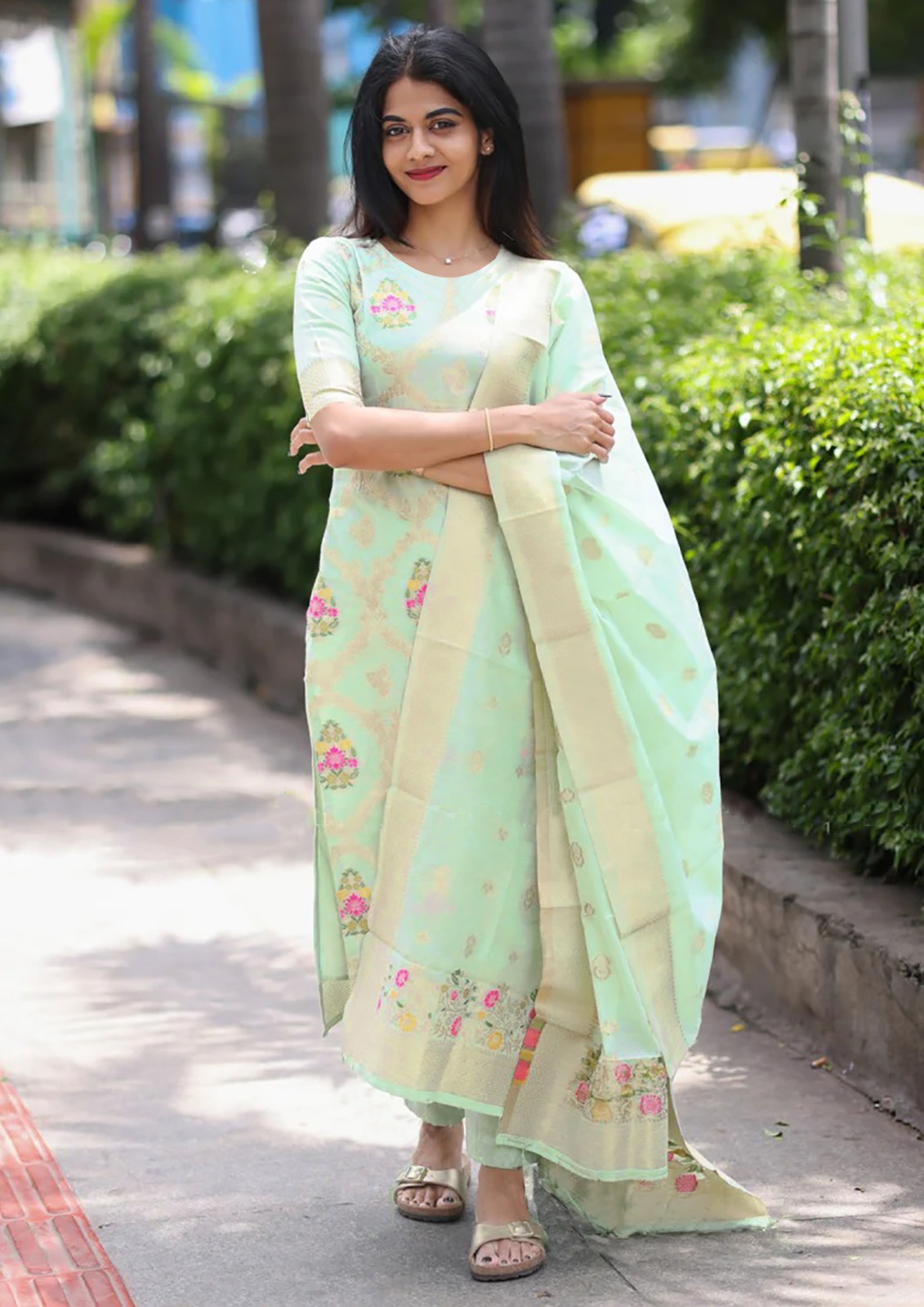
Mustard suggests warm earth tones, green recalls leaves and forest landscapes, and red adds energy to a puja ensemble. These associations are styling interpretations rather than fixed rules, because clothing customs differ between communities and districts. A wearer should prioritise family tradition over a generic colour chart.
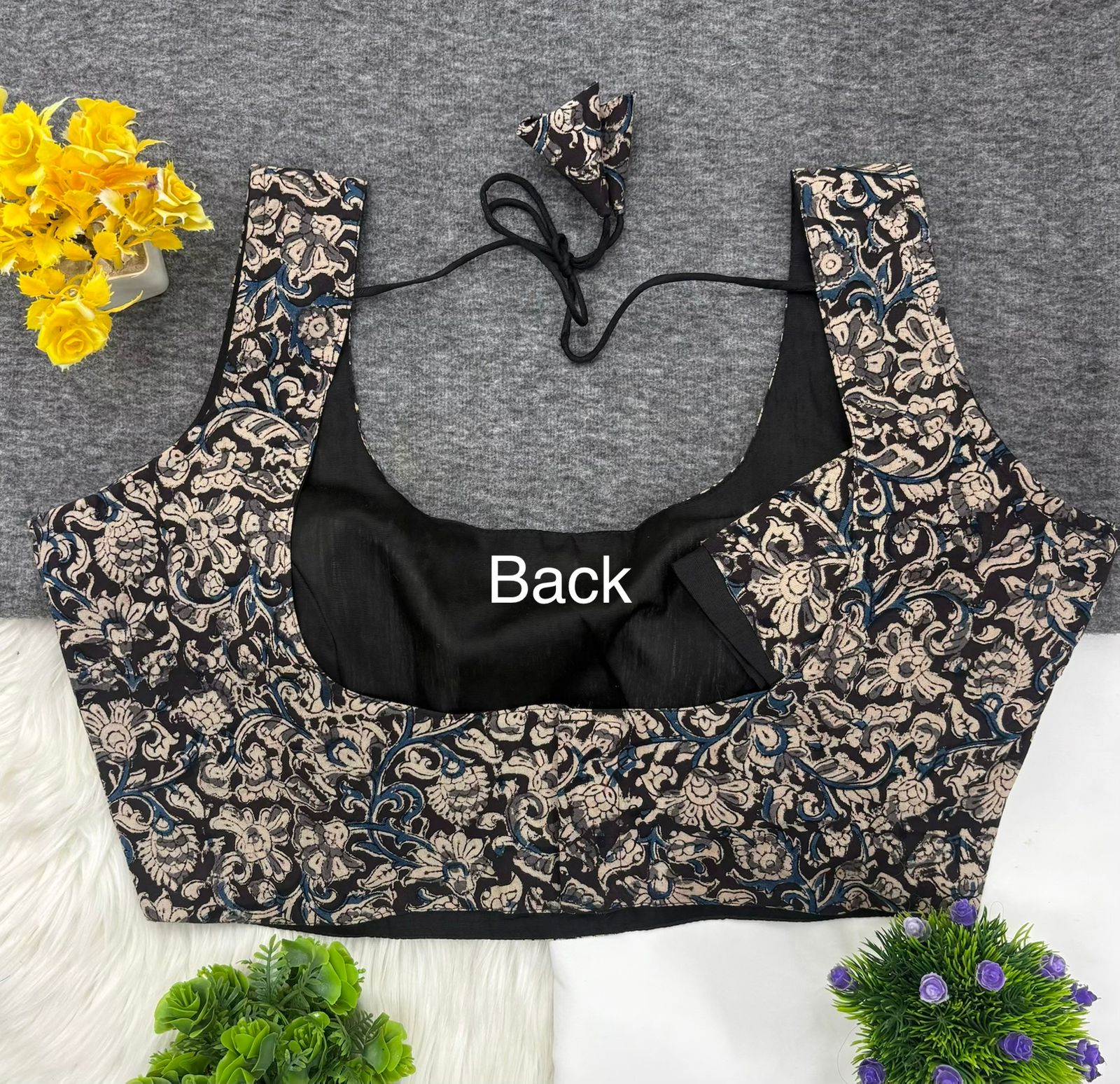
Motifs such as leaves, vines, flowers, birds and geometric borders can provide a subtle link to the natural themes of Karma Puja. Kalamkari Print Salwar Suits may help build a nature-led look through printed foliage and earthy colour, although Kalamkari belongs to a broader Indian textile tradition and isn't exclusive to Jharkhand.
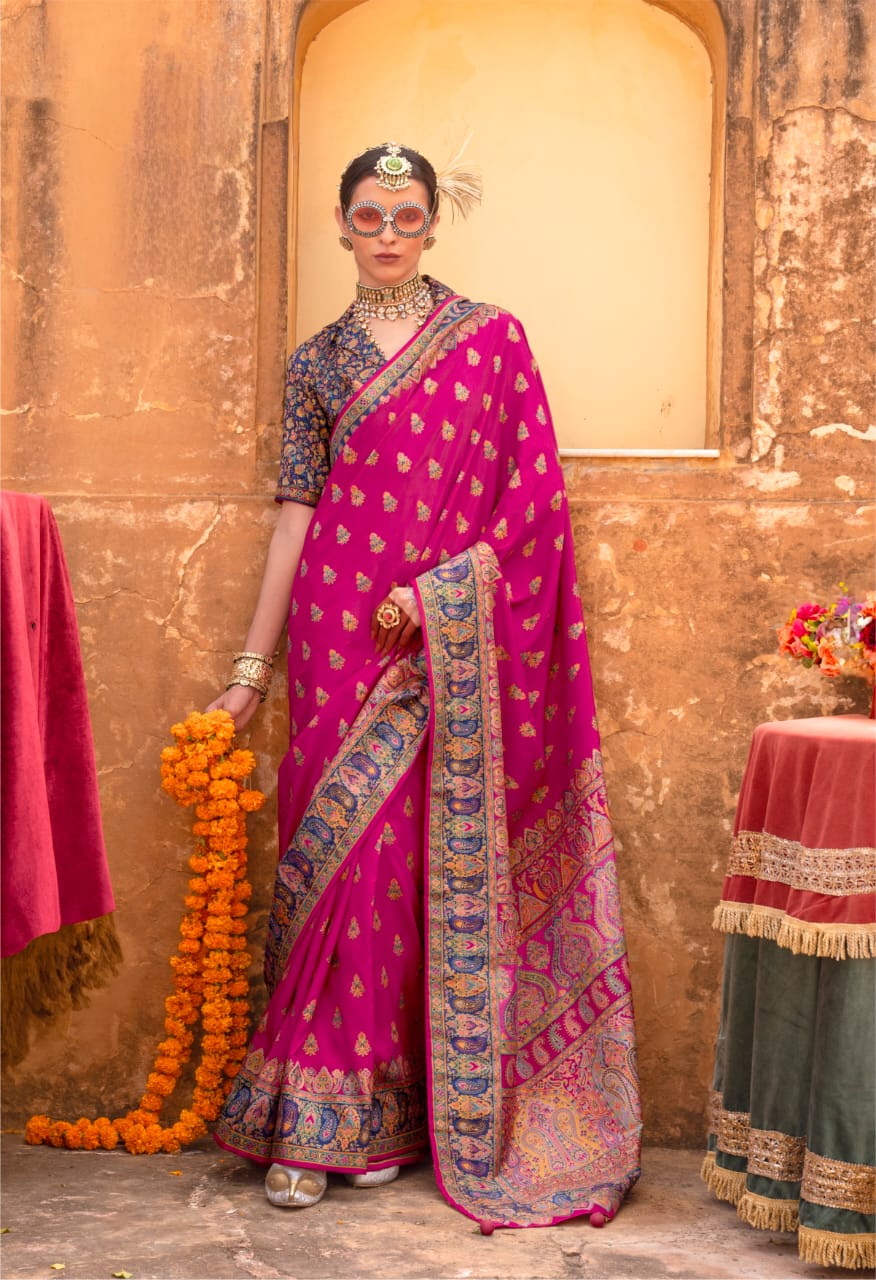
Textile selection changes the character of an outfit. Kanchi cotton brings a crisp, breathable structure; Banarasi silk gives a richer festive surface; Chanderi creates a light, translucent drape; and zari adds metallic definition to borders or dupattas. Banarasi silk, Chanderi and Kanjeevaram are important Indian textiles, but they should not be described as interchangeable with every Jharkhand handloom tradition.
The Maharashtra Paithani Inspired Salwar Suits collection demonstrates how a bright border and woven-look colour placement can elevate a simple kurta silhouette. The Karnataka Silk Salwar Suits collection brings another example of a more lustrous festive direction. These references can inspire styling, but they should not be presented as substitutes for authentic regional dress when cultural specificity matters.
Karma Puja Outfit Ideas for comfortable dupatta and jewellery styling
The most comfortable Karma Puja styling uses a secure dupatta, low-profile jewellery and footwear that can be removed easily before prayer. A small amount of detail in the neckline, border or earrings is usually enough for a community celebration.
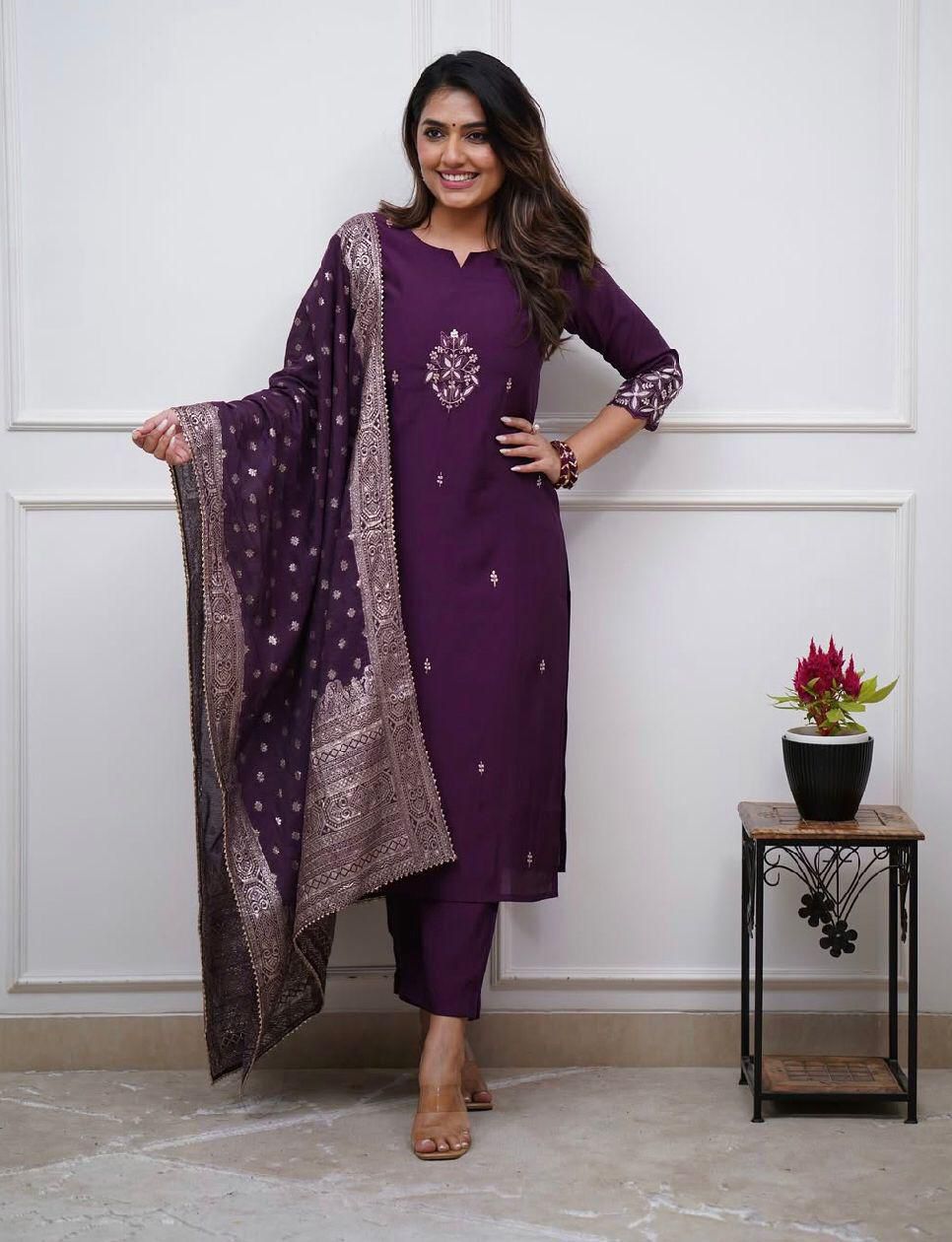
Place the dupatta over both shoulders and pin it near the upper chest if the outfit includes group dancing. A single-shoulder drape looks more fluid but needs a discreet safety pin near the shoulder seam. Keep the lower edge above ankle level so the dupatta can't catch underfoot.
The Silk Festive Kurta Pant Set with Zari Jacquard Dupatta can be styled with antique-gold jhumkas, a low bun and flat sandals for an evening gathering. The Kanchi Cotton Woven Kurta Pant Dupatta Set needs less jewellery because its woven surface already supplies visual texture. The Parrot Kanchi Cotton Kurta Dupatta Set can be balanced with cream or muted gold accessories rather than adding another bright colour near the face.
A small bindi, glass bangles, a fabric potli and oxidised silver earrings can complete a time-honoured look without making the outfit fragile. Jhumkas, chandbalis and simple bead necklaces are practical choices, but very long earrings may catch on a dupatta during dancing. Avoid bracelets that make excessive noise during a quiet prayer if the ceremony includes periods of stillness.
Flat juttis, kolhapuris or cushioned sandals are safer than high heels on uneven outdoor ground. Check the footwear before the event, especially if the celebration includes walking from the prayer space to a community gathering. Cotton leggings or opaque lining under a lightweight kurta can also improve comfort and coverage.
Karma Puja Outfit Ideas for different celebration settings
A daytime home puja calls for a cotton saree or light kurta set in cream, green, mustard or muted red. The Gajri Embroidered Kurti Pant Dupatta Set Women can work for a compact family gathering when paired with small earrings, a neat braid and flat footwear.
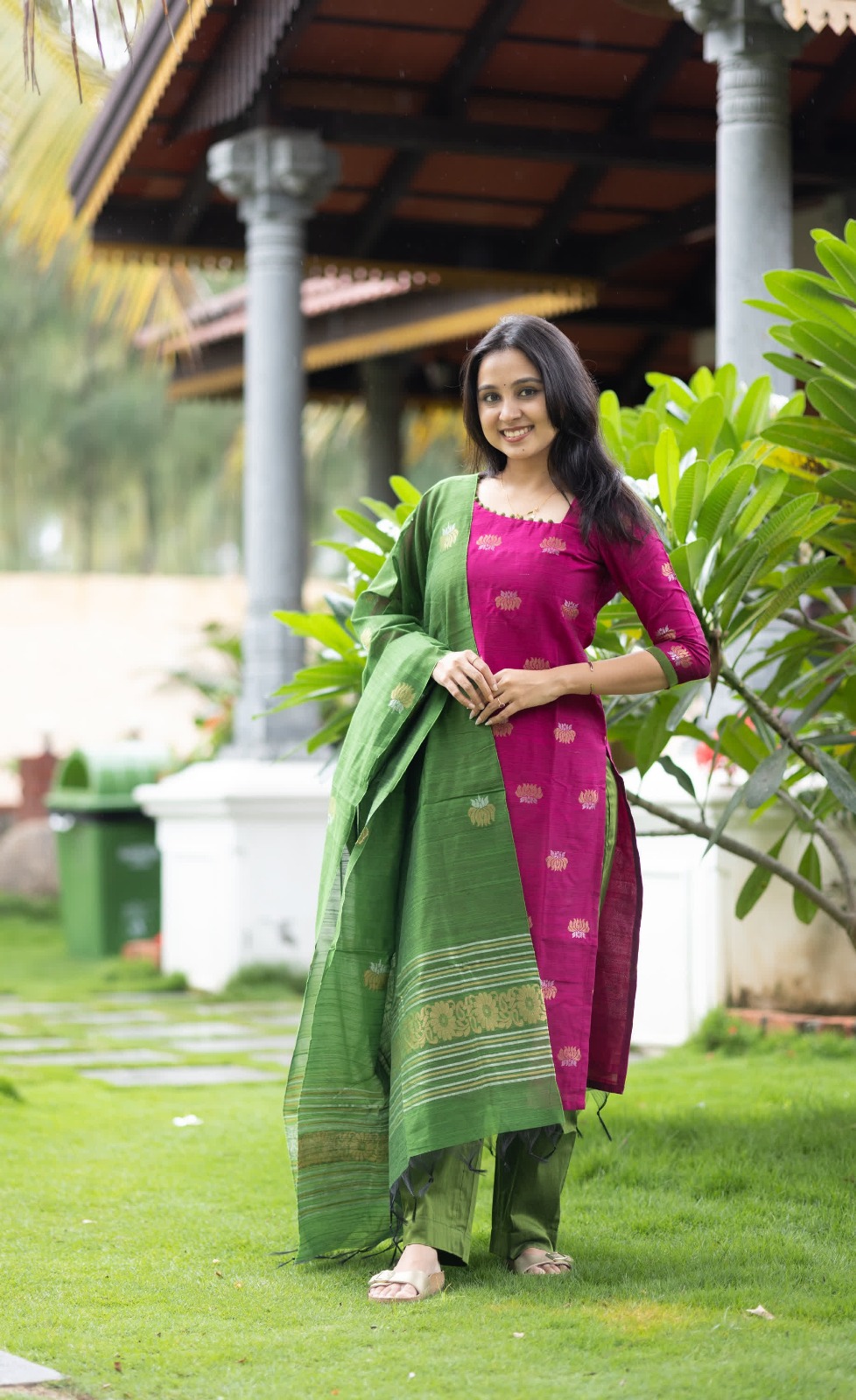
An evening community celebration allows a slightly richer fabric and stronger contrast. The Mustard Silk Embroidered Anarkali Kurti Pant Set Sale can create a warm festive appearance with a maroon or green accessory, provided the Anarkali hem remains easy to walk in and the fabric doesn't feel too heavy.
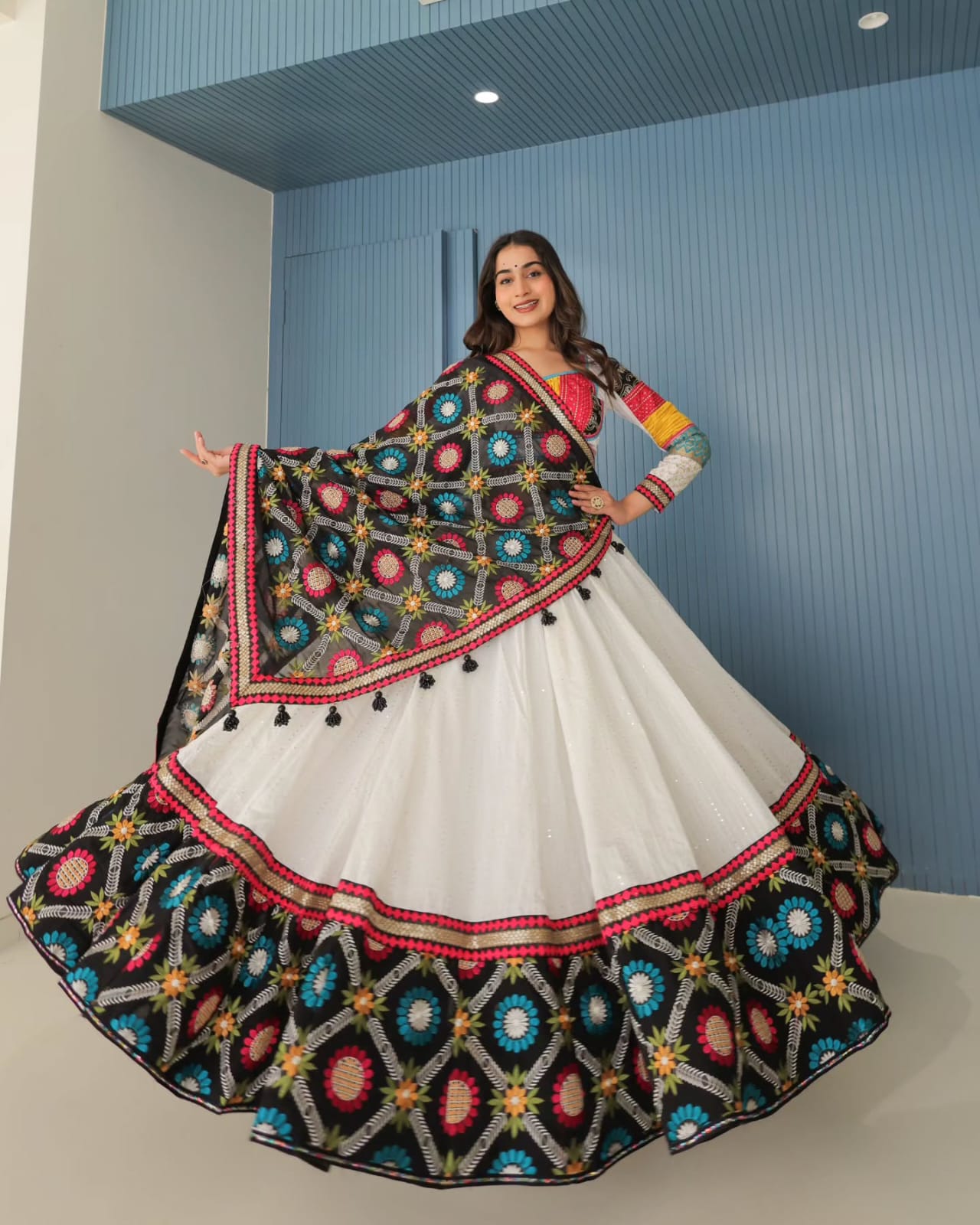
A more regionally mixed wardrobe can include Punjab Phulkari Embroidered Salwar Suits for colourful surface embroidery or Kashmir Embroidered Salwar Suits for a more detailed textile effect. Phulkari and Kashmiri embroidery belong to distinct regional traditions, so the respectful approach is to enjoy those techniques as Indian festive-wear influences rather than label them specifically Jharkhandi.
A younger wearer attending a long outdoor celebration may prefer a cotton kurta with pants, a short dupatta and minimal embellishment. An older family member may choose a classic saree with a tucked pallu for stability. Age doesn't determine the correct outfit; mobility, personal comfort and household custom matter more than styling rules.
The Elegant Silk Embroidered Kurta Pant Set with Jacquard Dupatta can suit a more formal family gathering when paired with restrained jewellery. The Mustard Silk Embroidered Anarkali Kurti Pant Set Sale may be more suitable for photographs and evening visits than for vigorous dancing because a fuller hem requires additional care while moving.
Karma Puja Outfit Ideas for buying and preparing before the event
Buy or finalise the outfit at least seven to ten days before Karma Puja so alterations, washing and trial draping can be completed without pressure. Early preparation is especially useful for saree blouses, trouser hems and dupatta lengths.
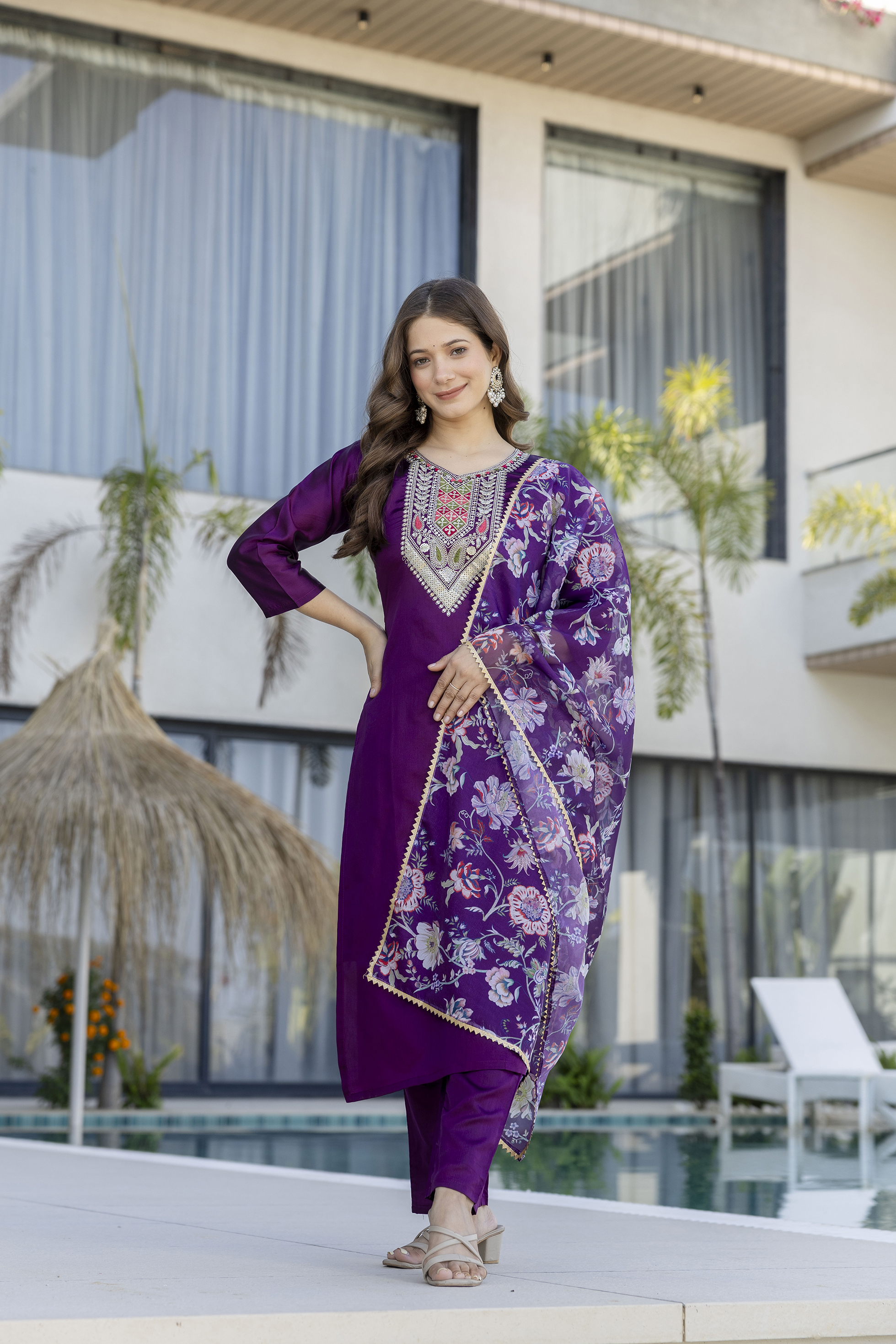
Check the garment measurements rather than relying only on a general size label. Measure the bust, waist and hip for a kurta set, and check the inseam and rise of pants if sitting on the floor is expected. A kurta hem ending between mid-calf and ankle is generally easier to manage than a floor-length hem for an active celebration.
Inspect zari and embroidery for loose threads before wearing the garment. Secure a loose thread with a fine needle instead of cutting it immediately, because cutting can enlarge an embroidered gap. Test safety pins on an inner seam or matching fabric to ensure they don't leave visible marks.
Wash cotton garments according to the care label before the event if shrinkage or colour bleeding is possible. Dry coloured cotton away from harsh, direct sunlight, and store silk garments folded in a clean cotton or muslin cover. Do not spray perfume directly on zari, silk or embroidery; apply fragrance to the skin and let it dry before dressing.
Keep a small emergency kit with two safety pins, a spare hair tie, blister patches, a stain-removal tissue and a few bobby pins. A portable shawl can help if the evening becomes cool, while a cloth bag is more practical than a delicate clutch when carrying ritual items or footwear.
Karma Puja Outfit Ideas and respectful regional styling
Respectful regional styling acknowledges that Jharkhand contains many communities, languages and textile practices rather than treating one outfit as universally traditional. Ask family members about customary dress when attending a community celebration for the first time.
don't assume that a red-and-green outfit, tribal-inspired jewellery or a leaf motif automatically represents every Jharkhand tradition. Use natural references thoughtfully, avoid caricatured accessories and describe Banarasi silk, Kanjeevaram, Chanderi, Phulkari and Kalamkari accurately when combining influences from different parts of India.
A polished outfit can remain simple: one breathable base garment, one clearly chosen border or embroidered element, secure footwear and jewellery that doesn't interfere with prayer. Good styling respects the ritual, supports movement and allows the wearer to participate rather than spend the celebration adjusting clothing.
Common Questions About Karma Puja Outfit Ideas
What should women wear for Karma Puja?
Women can wear a comfortable saree, salwar suit or kurta set that suits family and community customs. Cotton, silk-cotton and lightweight silk are practical choices, while red, green, mustard, cream and earthy shades create a festive appearance without requiring heavy embellishment.
Which saree is suitable for Karma Puja?
A lightweight cotton, silk-cotton or soft silk saree with a manageable border is suitable for Karma Puja. A firm selvedge, secure pleats and a blouse with comfortable coverage make long periods of sitting, walking and dancing easier.
Can I wear a salwar suit to Karma Puja?
Yes, a salwar suit is an appropriate choice when it aligns with family custom and personal comfort. A straight kurta with pants, a relaxed palazzo suit or a moderately flared Anarkali offers easier movement than a heavily layered outfit.
Which colours are good for a Karma Puja outfit?
Red, green, mustard, yellow, cream, rust and earthy brown are useful choices for a Karma Puja outfit. Colour traditions vary between communities, so local family practice should take priority over a fixed colour rule.
How should I secure my dupatta for Karma Puja?
Place the dupatta over both shoulders and use a discreet safety pin near the upper chest for dancing or outdoor movement. Keep the lower edge above ankle level and avoid a trailing drape that could catch underfoot.
What jewellery goes with a Jharkhand-inspired Karma Puja outfit?
Small jhumkas, oxidised silver earrings, glass bangles, a simple bead necklace and a bindi work well with a Jharkhand-inspired festive outfit. Choose lightweight pieces that do not catch on the dupatta or create unnecessary noise during prayer.