Karma Festival Outfit Ideas: Jharkhand Sarees, Suits & Traditional Wear should respect the celebration's connection with the Karam tree while allowing comfortable movement for singing, dancing and community rituals. A cotton saree, a lightweight silk-blend suit or a breathable kurta set can all work well when the outfit uses thoughtful colour, modest coverage and practical accessories. The right choice depends on whether you're attending Karma Puja, joining a village dance circle, visiting family or taking part in a city celebration.
The Karma festival, also called Karam or Karma Puja in different communities, is associated with the Karam tree, community wellbeing, fertility and the agricultural cycle. Jharkhand communities including Oraon, Munda, Ho and Baiga groups observe related traditions, although customs, songs, dates and dress details vary by community and region. The festival commonly falls around late monsoon, and the exact date follows the local calendar. That timing makes breathable fabrics, secure drapes and footwear that can handle damp ground especially useful.
Karma Festival Outfit Ideas: Jharkhand Sarees, Suits & Traditional Wear for the Occasion
A good Karma festival outfit combines cultural sensitivity, ease of movement, weather-appropriate fabric and one or two clearly festive details. The garment should stay secure during walking, group dancing and sitting on the ground, rather than relying only on elaborate surface decoration.
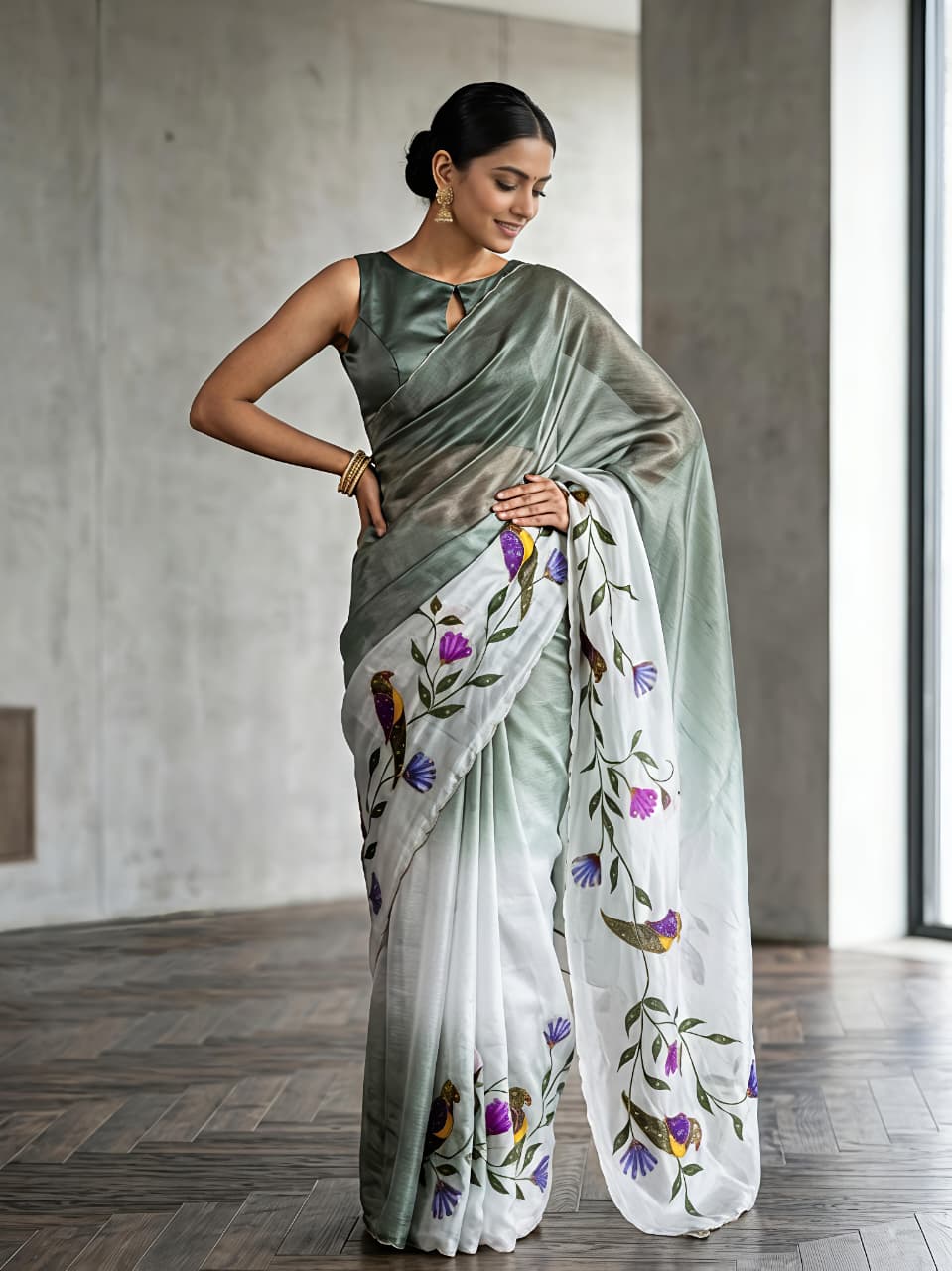
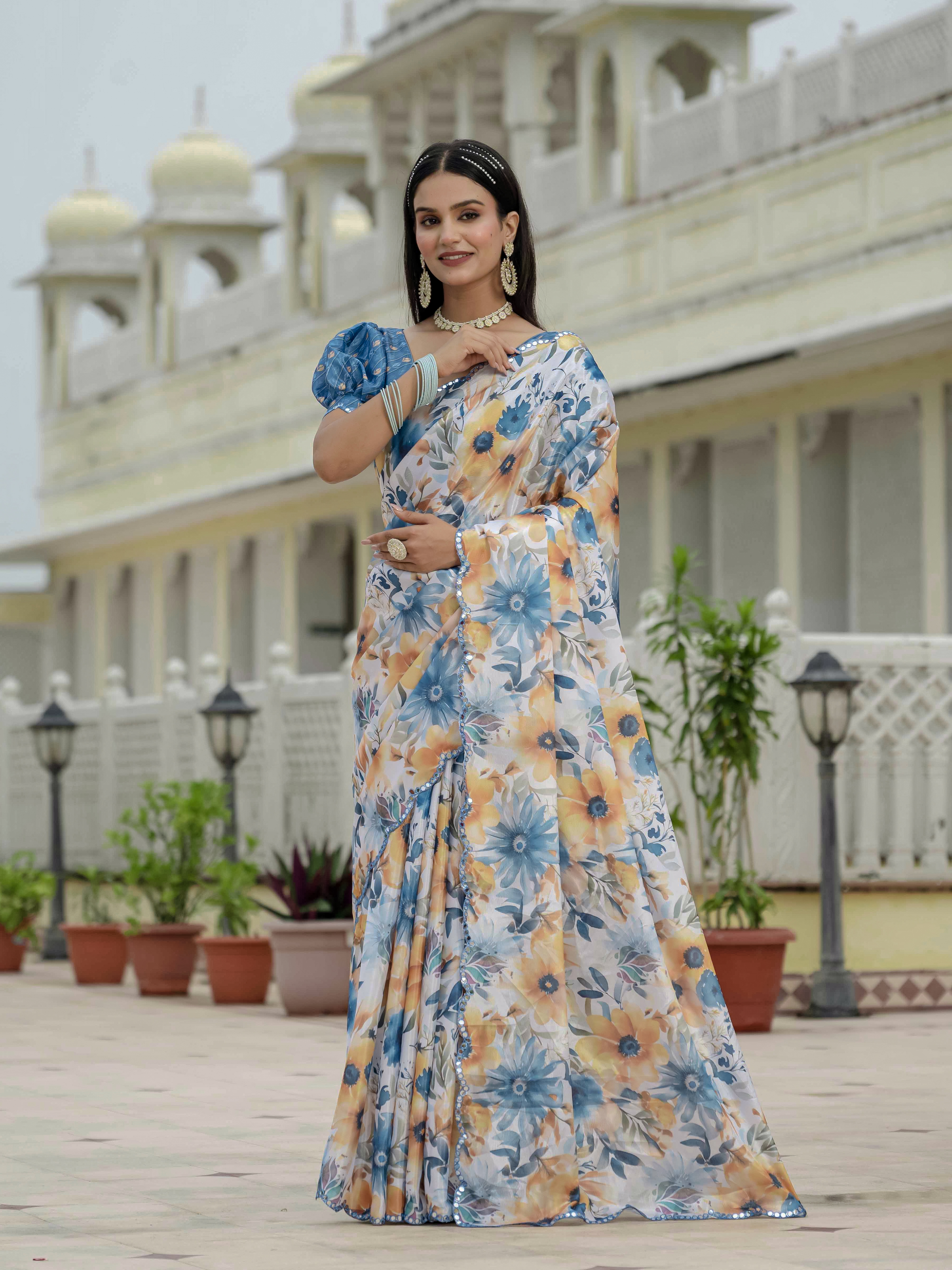
For many women, a saree offers the strongest traditional connection. A neatly pinned cotton saree in red, white, yellow, green or earthy tones can feel festive without becoming difficult to manage. A salwar suit is a practical alternative for anyone who will travel, help with preparations or dance for long periods. Anarkali suits create a celebratory silhouette, while straight kurta-pant sets are easier to move in and less likely to collect mud at the hem.
Keep the decoration intentional. A narrow zari border, small woven motifs, a jacquard dupatta or restrained embroidery can provide enough occasion detail. Heavy sequins, long tassels and very wide flares may catch on jewellery, branches or other dancers. A three-quarter or full sleeve can also be more useful than a delicate sleeveless cut for an outdoor evening celebration.
Karma Festival Outfit Ideas: Jharkhand Sarees, Suits & Traditional Wear Compared
Choose a saree when the event includes formal puja, family photographs or a traditional dress expectation, and choose a salwar suit when movement, travel and easy draping matter most. Both choices can look appropriate when the fabric, colours and styling suit the setting.
When a saree works best for Karma Festival Outfit Ideas
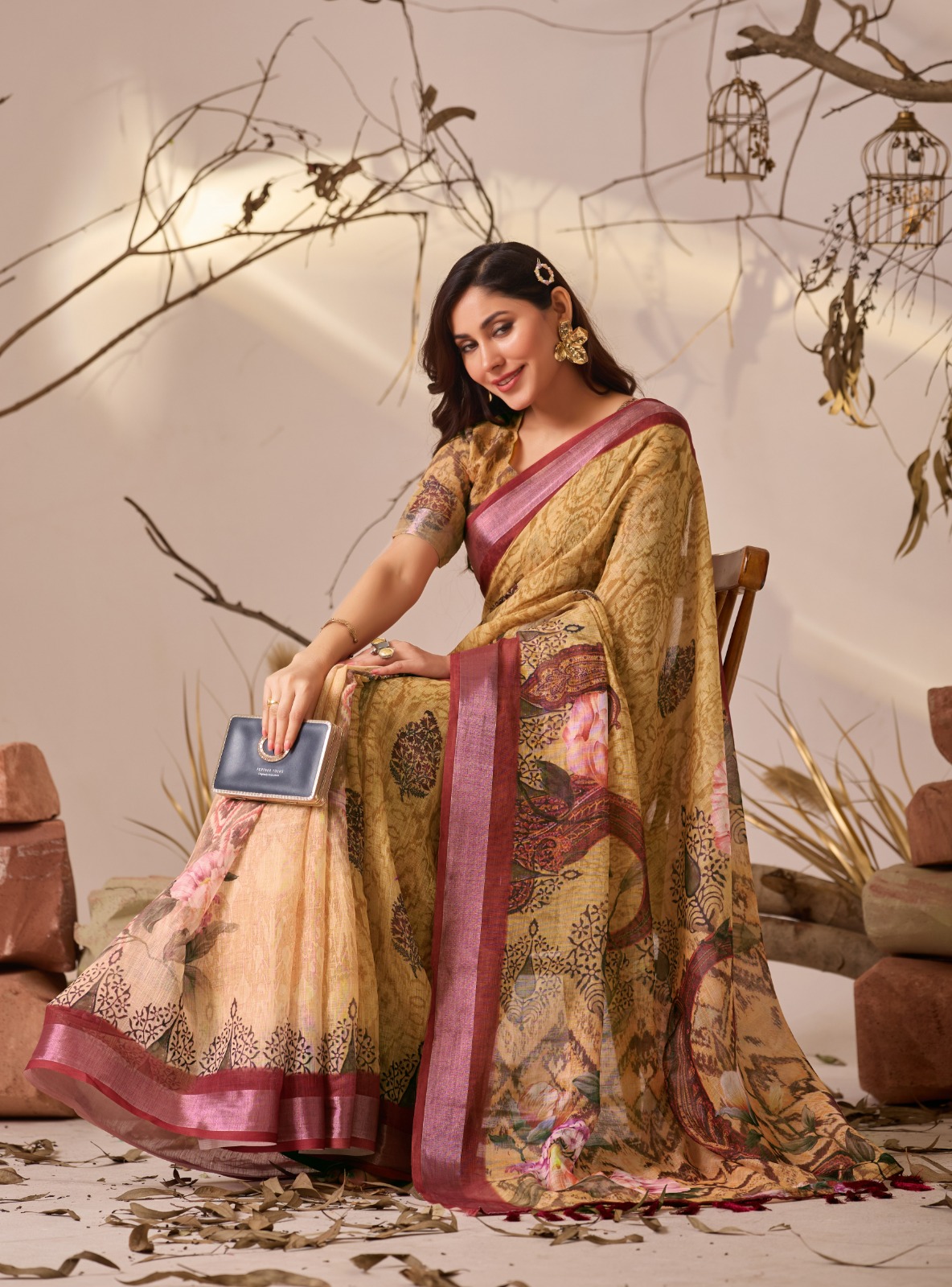
A handloom cotton saree is especially suitable for a daytime Karma gathering because cotton absorbs perspiration and remains comfortable in humid weather. A saree with a firm selvedge and medium weight is easier to pleat than a very soft, slippery fabric. Pin the pleats at the waist and secure the pallu at the shoulder with a discreet safety pin; two small pins are usually more reliable than one large pin that may pull the fabric.
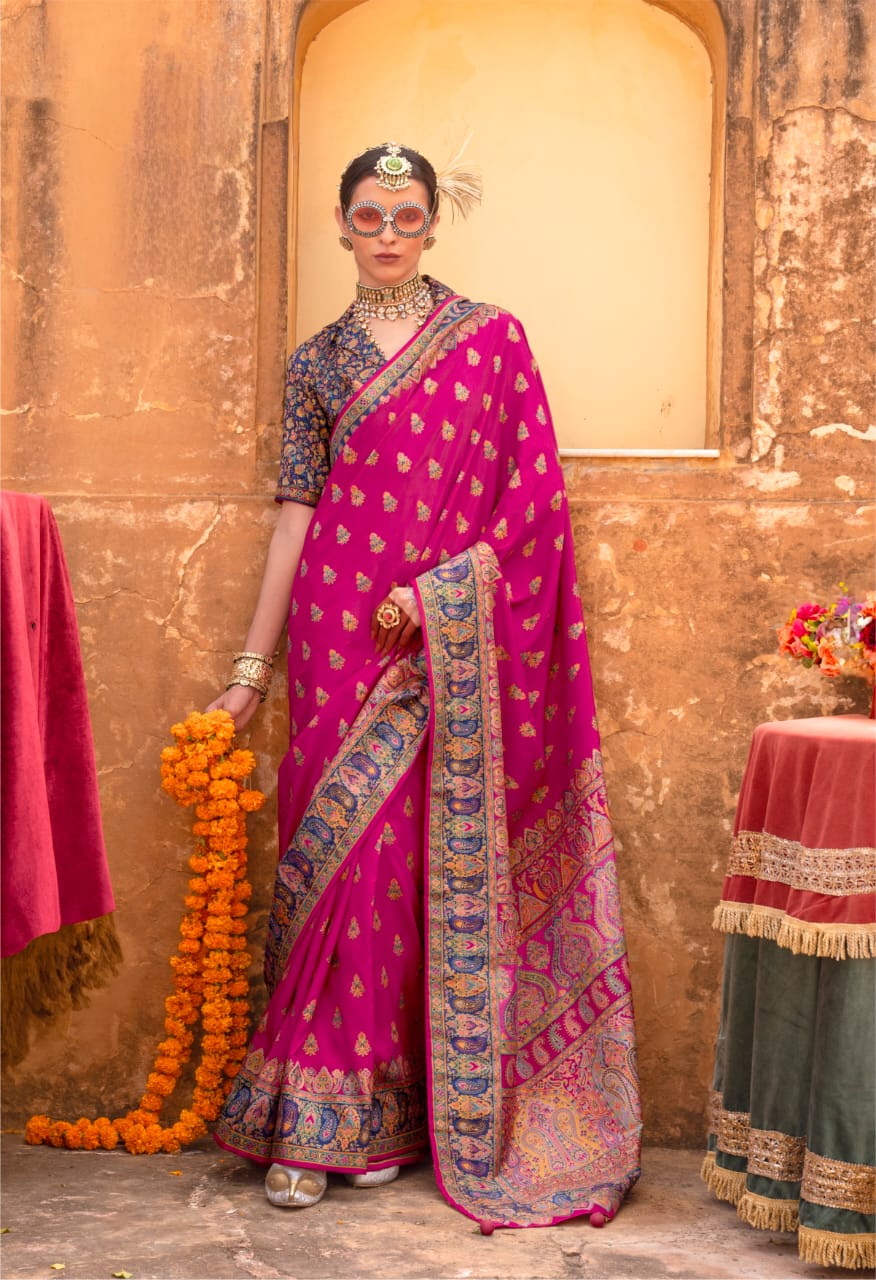
Silk sarees can be reserved for a more formal evening programme or an indoor family celebration. Banarasi silk and Kanjeevaram carry strong festive associations, but they may feel warmer and heavier than cotton during an outdoor monsoon event. A lighter silk-cotton or tussar-inspired weave gives a similar ceremonial impression with less weight. The local textile tradition should be acknowledged accurately: a generic printed saree should not be presented as a specific Jharkhand tribal weave unless its provenance is known.
When a salwar suit is the smarter choice
A salwar suit is the smarter choice for long journeys, active participation, uncertain weather and first-time saree wearers. A straight kurta with cigarette pants or a relaxed palazzo gives the legs room to move, while a churidar creates a more fitted traditional line. Anarkali suits are festive, but a mid-calf or ankle-length hem is safer than a sweeping floor-length flare for outdoor ground conditions.
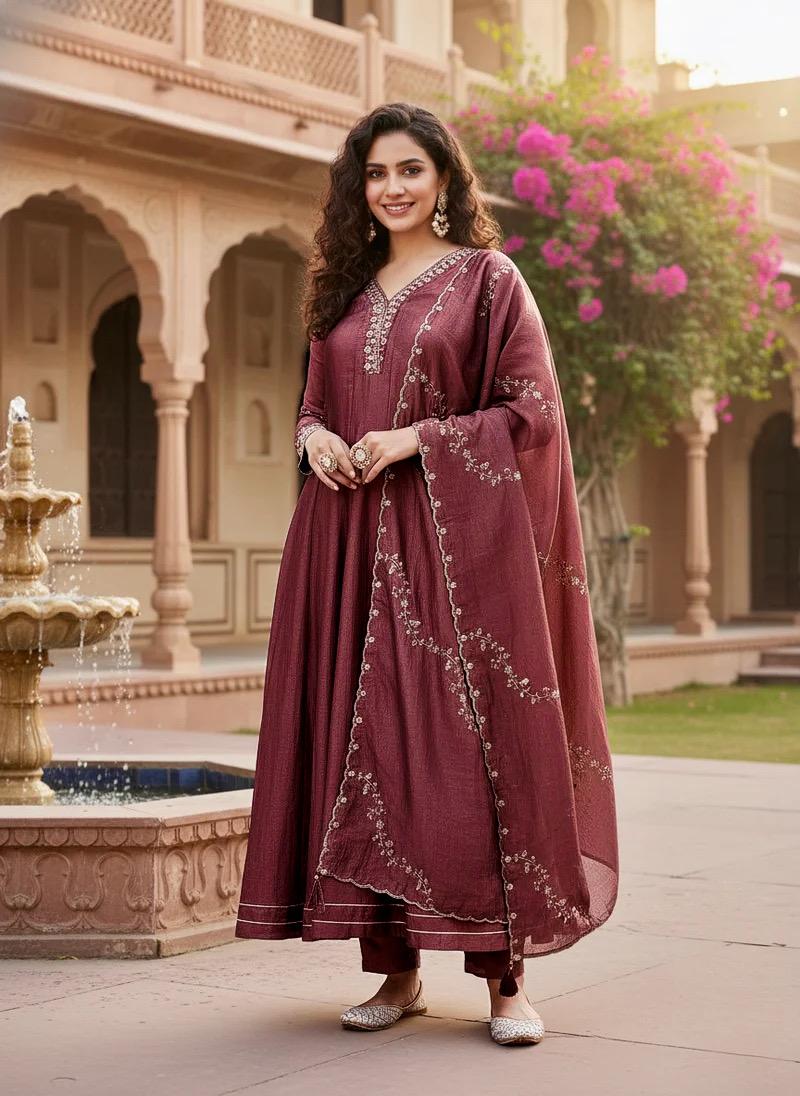
The Festive Wear Maroon Silk Anarkali Suit Set for Women demonstrates how a deep, agricultural-season colour can create occasion presence without requiring excessive jewellery. The Silk Festive Kurta Pant Set with Zari Jacquard Dupatta brings a useful balance between a structured bottom and a decorative dupatta. A coordinated set also reduces the common problem of pairing a richly embellished kurta with a dupatta in a conflicting weave.
Karma Festival Outfit Ideas: Jharkhand Sarees, Suits & Traditional Wear Colours
Red, maroon, mustard, green, white and turmeric yellow suit Karma Festival Outfit Ideas because these colours connect naturally with celebration, vegetation, harvest hopes and ritual brightness. Colour meanings are not identical across every Jharkhand community, so personal and family customs should take priority over fixed style rules.
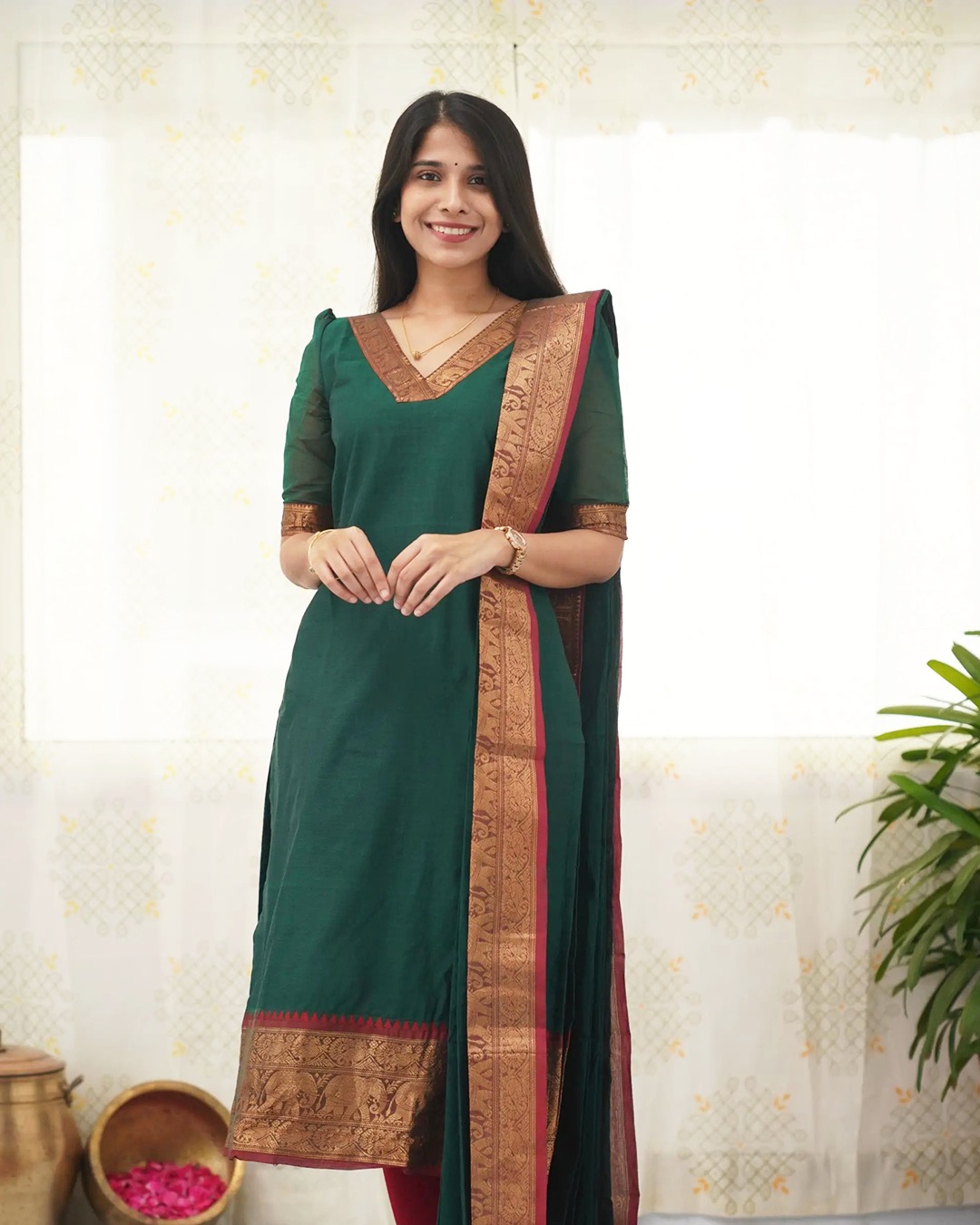
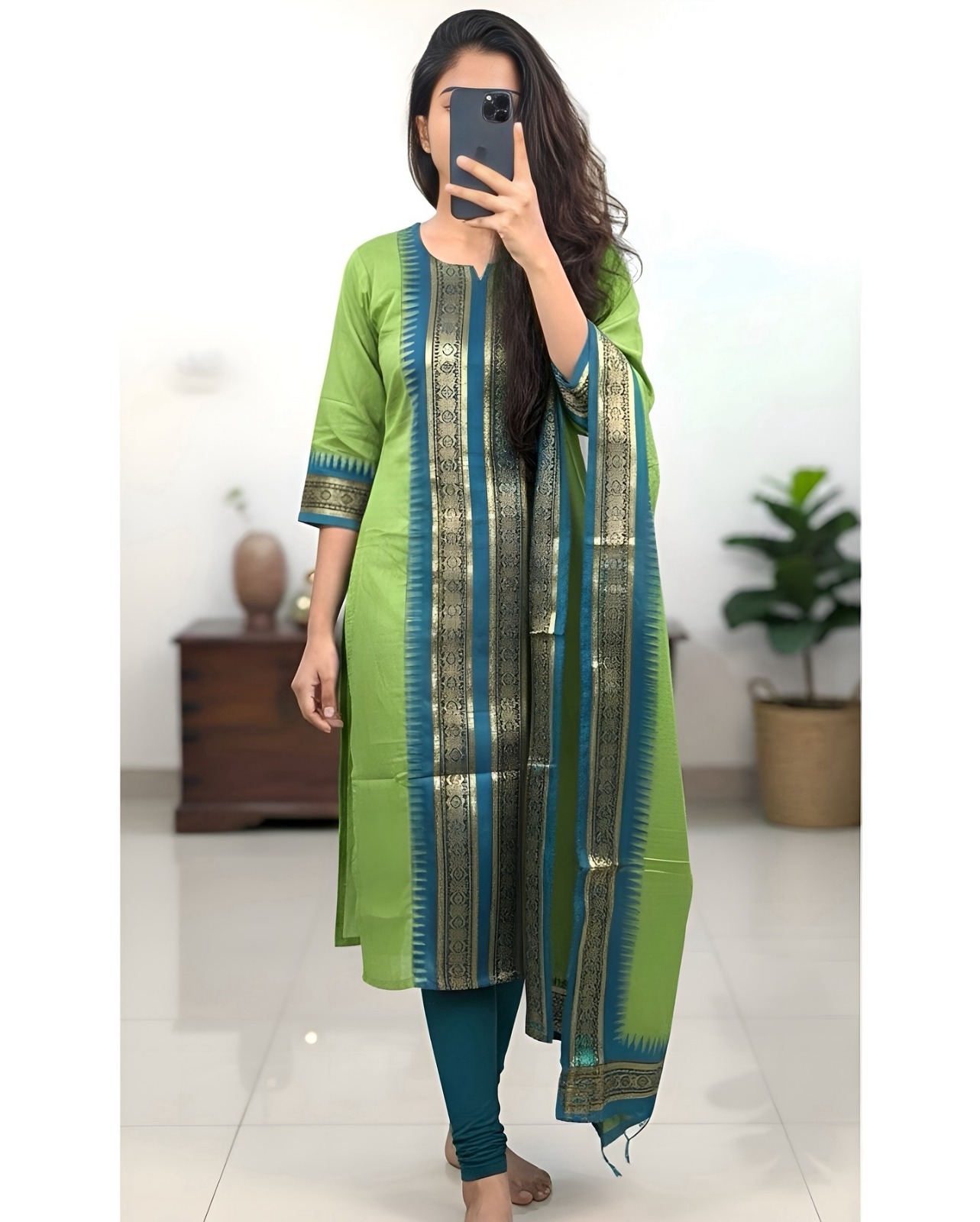
Green works particularly well for an outdoor festival because it echoes the living Karam branch and the monsoon landscape. The Trendy Green Ethnic Kurti Dupatta Set for Festive Wear and the Parrot Green Festive Wear Kurti Set show two ways to use green: one can feel fresh and youthful, while the other creates a stronger saturated festive statement. Pair either shade with antique gold, wood, terracotta or oxidised silver accessories rather than adding several competing bright colours.
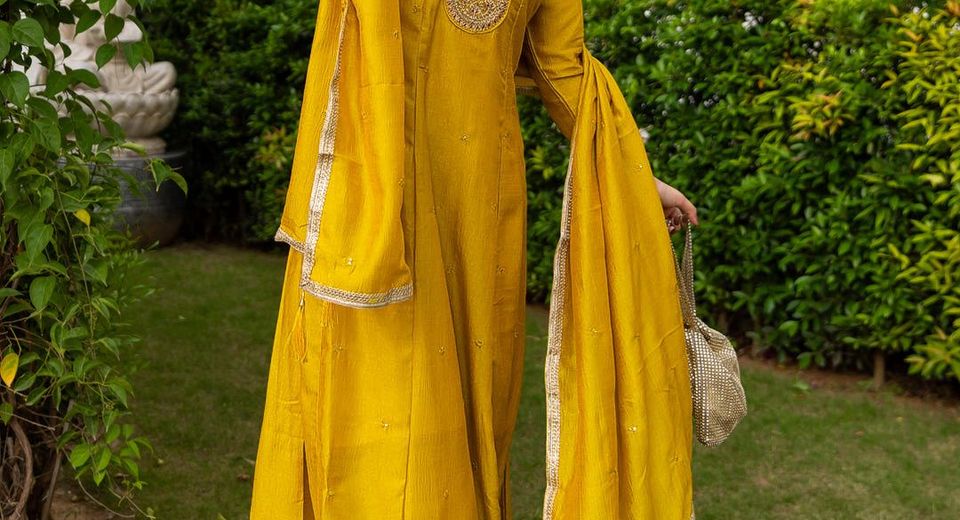
Mustard and maroon are effective for evening gatherings because both shades retain visual depth under warm indoor lighting. The Mustard Silk Embroidered Anarkali Kurti Pant Set Sale uses a turmeric-adjacent tone that can be balanced with a muted cream, rust or green dupatta. Maroon works well with dull gold, copper and black, but a completely dark outfit may appear less celebratory in photographs taken after sunset.
White and off-white can form a calm base for a colourful dupatta or woven border. Black is appropriate for contemporary festive dressing when the local gathering has no colour restriction, although some families may reserve particular colours for specific rituals. Ask a family host or community organiser before choosing an outfit for a formal puja rather than assuming that every colour carries the same meaning.
Karma Festival Outfit Ideas: Jharkhand Sarees, Suits & Traditional Wear Fabrics
Cotton, cotton-silk, Chanderi and lightweight silk blends are practical for a monsoon Karma celebration because they offer breathability without losing a festive finish. Fabric weight, lining and drying time matter as much as the fibre name.
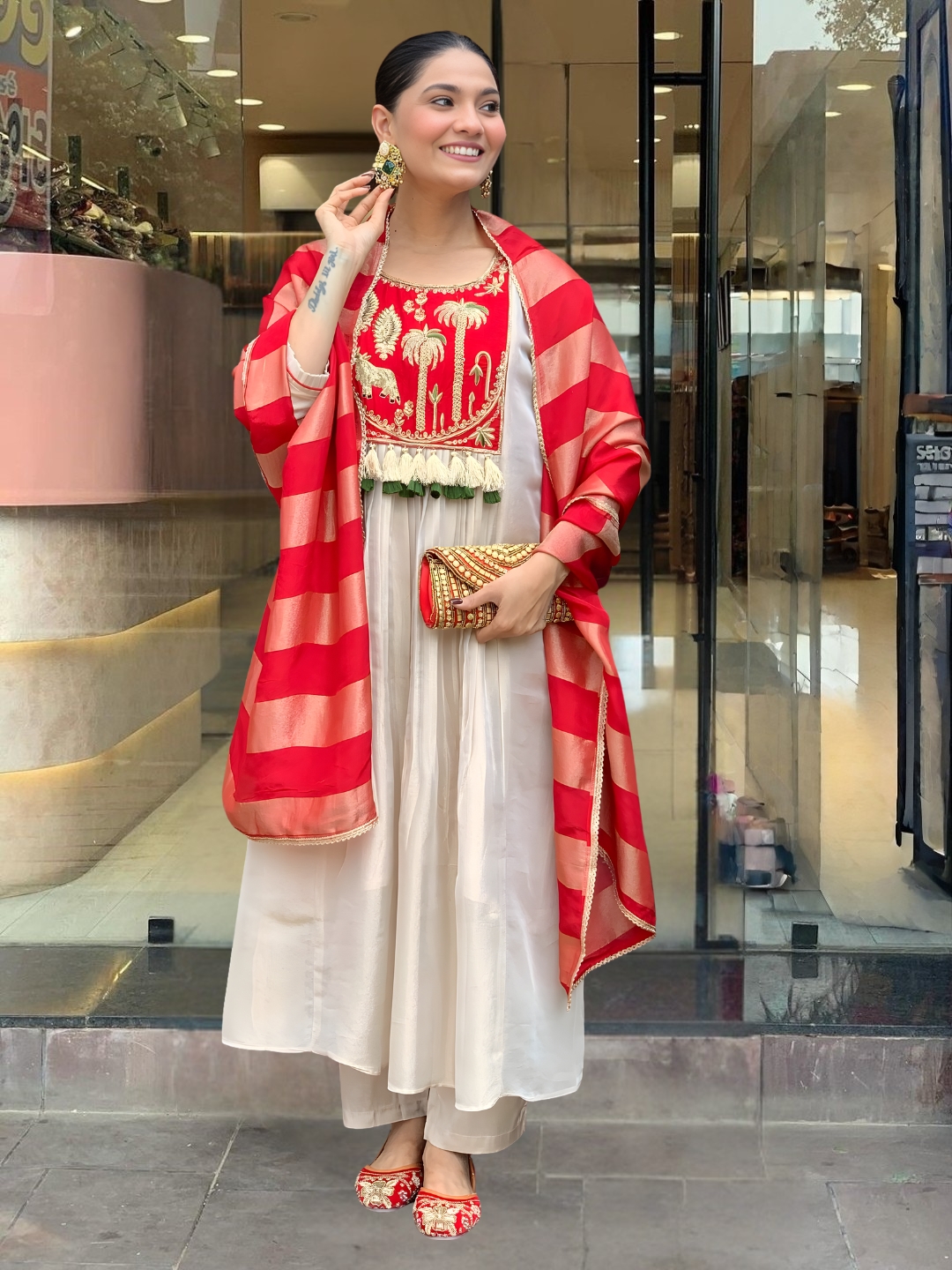
Cotton is the safest choice for a humid afternoon, especially in a saree or unlined kurta. Chanderi provides a lighter, dressier surface, but its transparency should be checked in daylight and a full-length lining or slip may be necessary. Silk blends and jacquard fabrics photograph beautifully and hold their shape, though they can feel warmer when densely woven. Zari adds ceremonial shine, but dense zari panels increase weight and may snag against rough surfaces.
For a city celebration in an air-conditioned hall, the Kanchi Cotton Jacquard Kurti Dupatta Set Online gives the visual structure of a woven festive outfit without the bulk of a heavy silk ensemble. The phrase cotton jacquard should still be checked on the garment label, because cotton content, lining and wash instructions vary between garments sold under similar descriptions.
Test the outfit before the event. Wear the complete set for 20 minutes, sit cross-legged, lift both arms, walk up stairs and practise a few dance steps. A dupatta that slips during this test will slip more quickly in a crowded celebration. A hem that touches the floor indoors may drag through wet grass outdoors. These simple checks prevent most last-minute wardrobe problems.
Karma Festival Outfit Ideas: Jharkhand Sarees, Suits & Traditional Wear Styling
Style a Karma festival suit with a secure dupatta, low-profile jewellery, comfortable footwear and a hairstyle that remains stable through movement. One focal detail usually looks more considered than heavy embellishment across every part of the outfit.
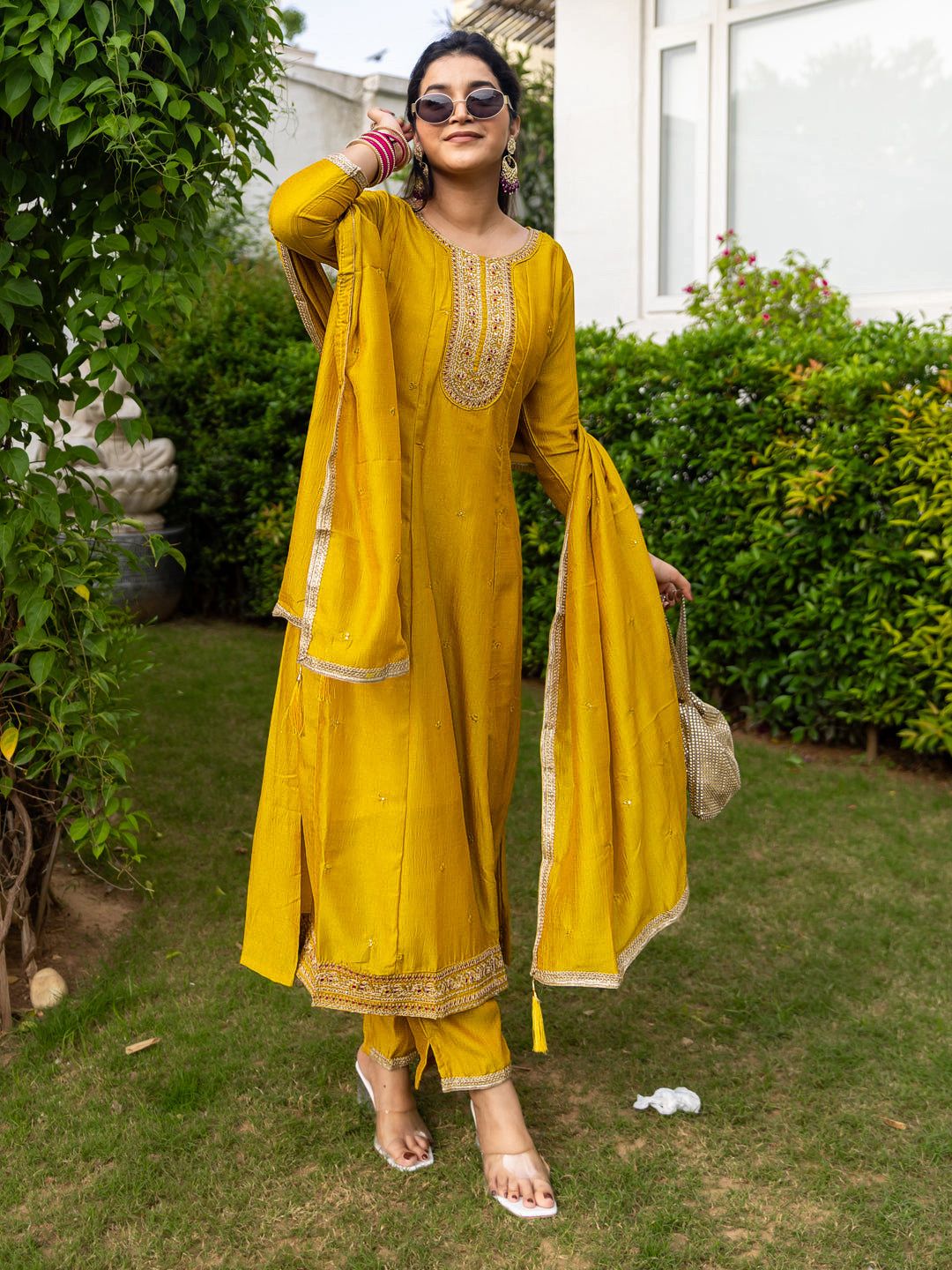
Drape the dupatta over one shoulder and secure it near the collarbone and waist, leaving enough length to move the arms freely. A narrow belt can hold a very slippery dupatta, but a belt should not compress the waist during dancing. For an Anarkali, a side-swept dupatta often keeps the front flare visible while reducing the risk of stepping on the fabric. For a straight kurta and pant set, a pleated dupatta gives shape without adding a bulky knot.
Choose jhumkas, small chandbalis, glass bangles or oxidised silver according to the neckline and sleeve length. Long earrings should be avoided if children, branches or other dancers may catch them. A small bindi, braid decorated with flowers and a woven potli can provide traditional character without imitating ceremonial objects or community-specific adornment inaccurately.
Footwear should have a flat, textured sole and a secure strap. Embellished juttis work for dry indoor venues, while washable sandals are more practical for damp outdoor ground. Carry a pair of lightweight flats in a cloth bag if the main footwear is new. New shoes should be worn at home beforehand because blisters become particularly inconvenient during a festival involving walking and dancing.
Karma Festival Outfit Ideas: Jharkhand Sarees, Suits & Traditional Wear Inspirations
Regional textile references enrich a Karma outfit when they're identified honestly and used as complementary inspiration rather than presented as interchangeable Jharkhand traditions. A garment can borrow a colour story or surface technique without being labelled as a local tribal textile.
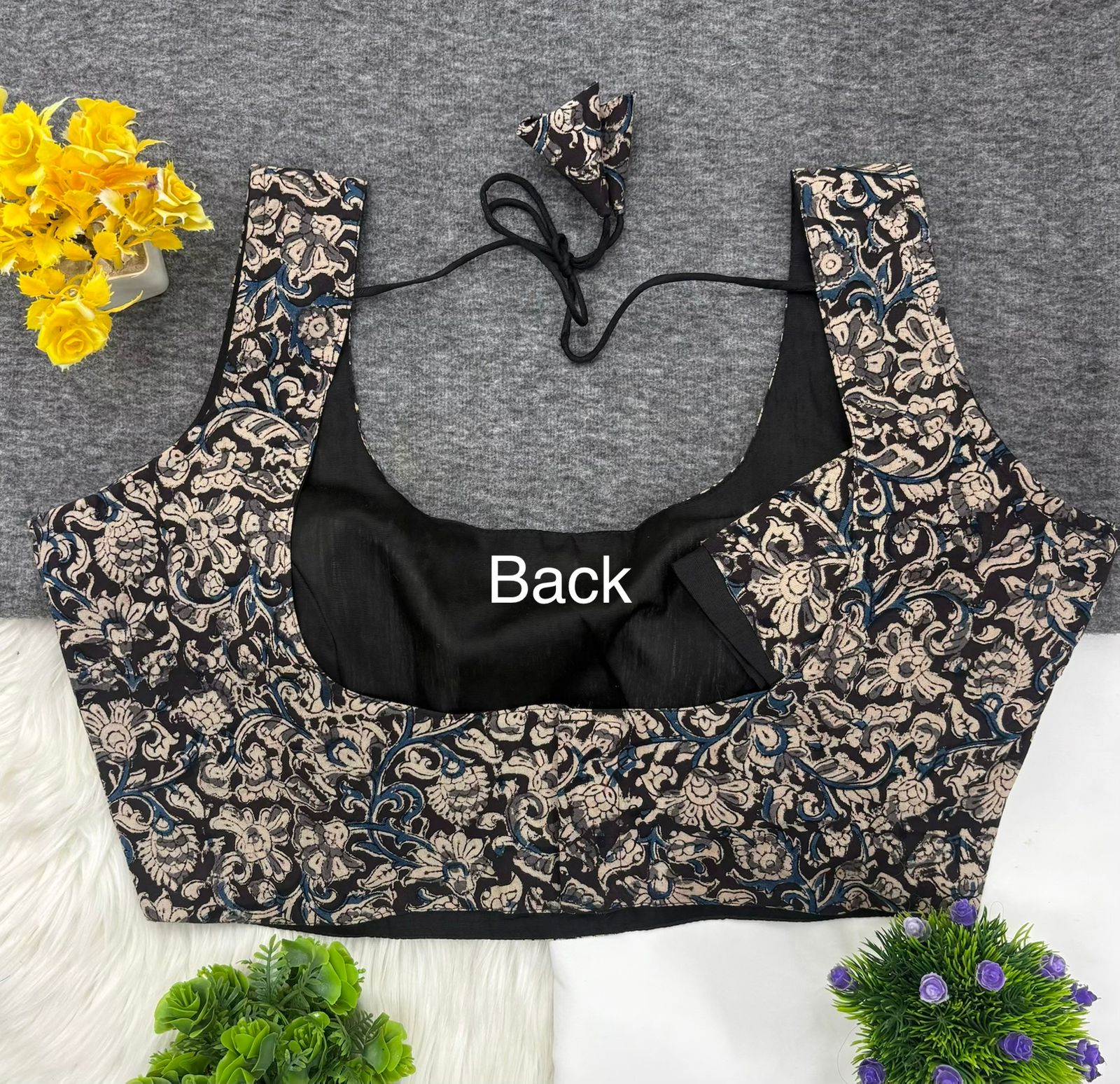
Kalamkari Print Salwar Suits bring botanical and nature-inspired imagery, which can sit comfortably within a festival wardrobe when the print scale is moderate. Maharashtra Paithani Inspired Salwar Suits offer jewel tones and border-led styling that can inspire a dupatta or accessory choice, although Paithani is a Maharashtra textile tradition rather than a Jharkhand one.
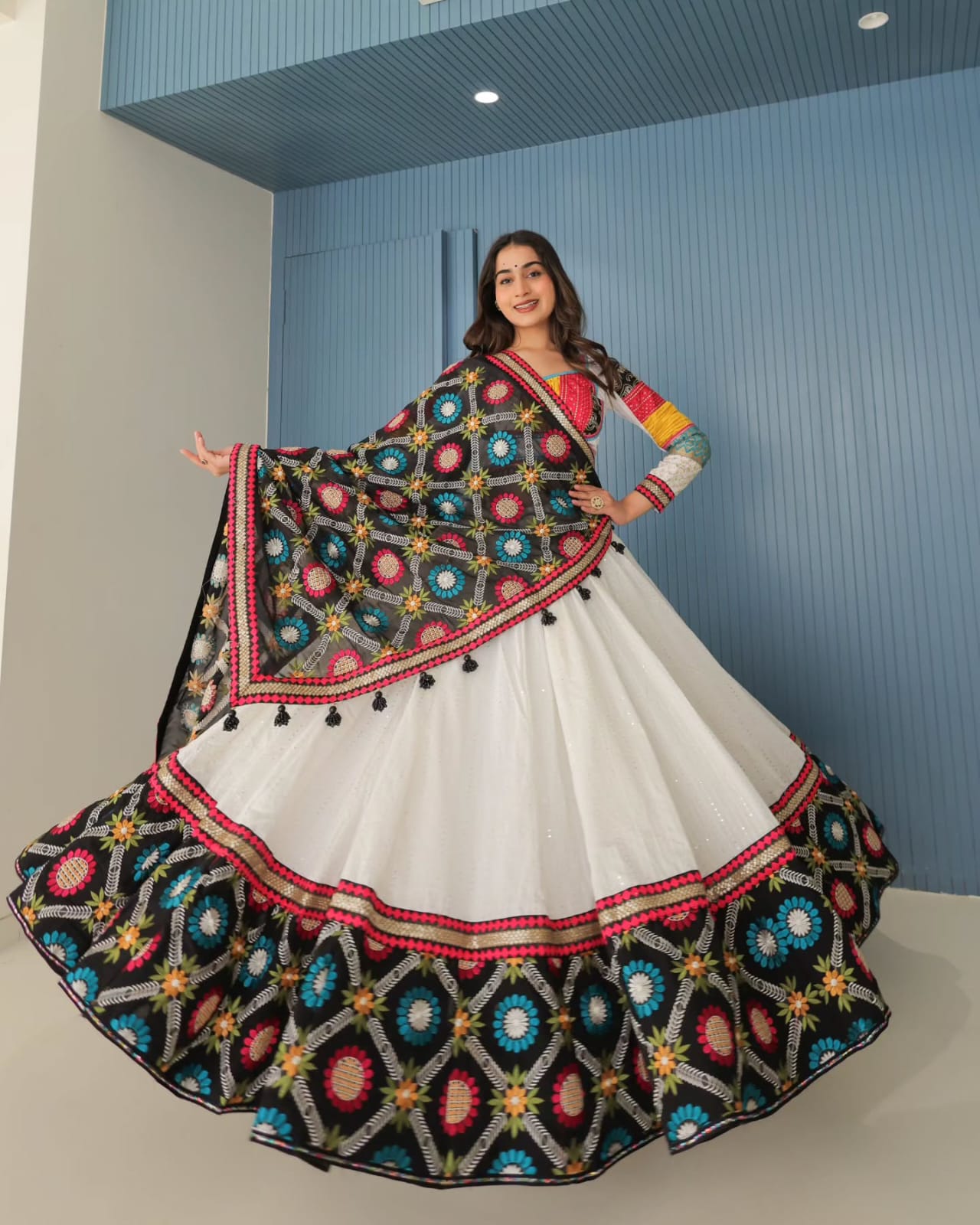
Punjab Phulkari Embroidered Salwar Suits add colourful threadwork and can work well for a lively family gathering. Karnataka Silk Salwar Suits provide ideas for silk sheen and structured festive dressing, while Kashmir Embroidered Salwar Suits demonstrate how restrained floral embroidery can add detail to a simpler silhouette. These references should be described by their actual regional associations instead of being grouped under one vague label such as tribal wear.
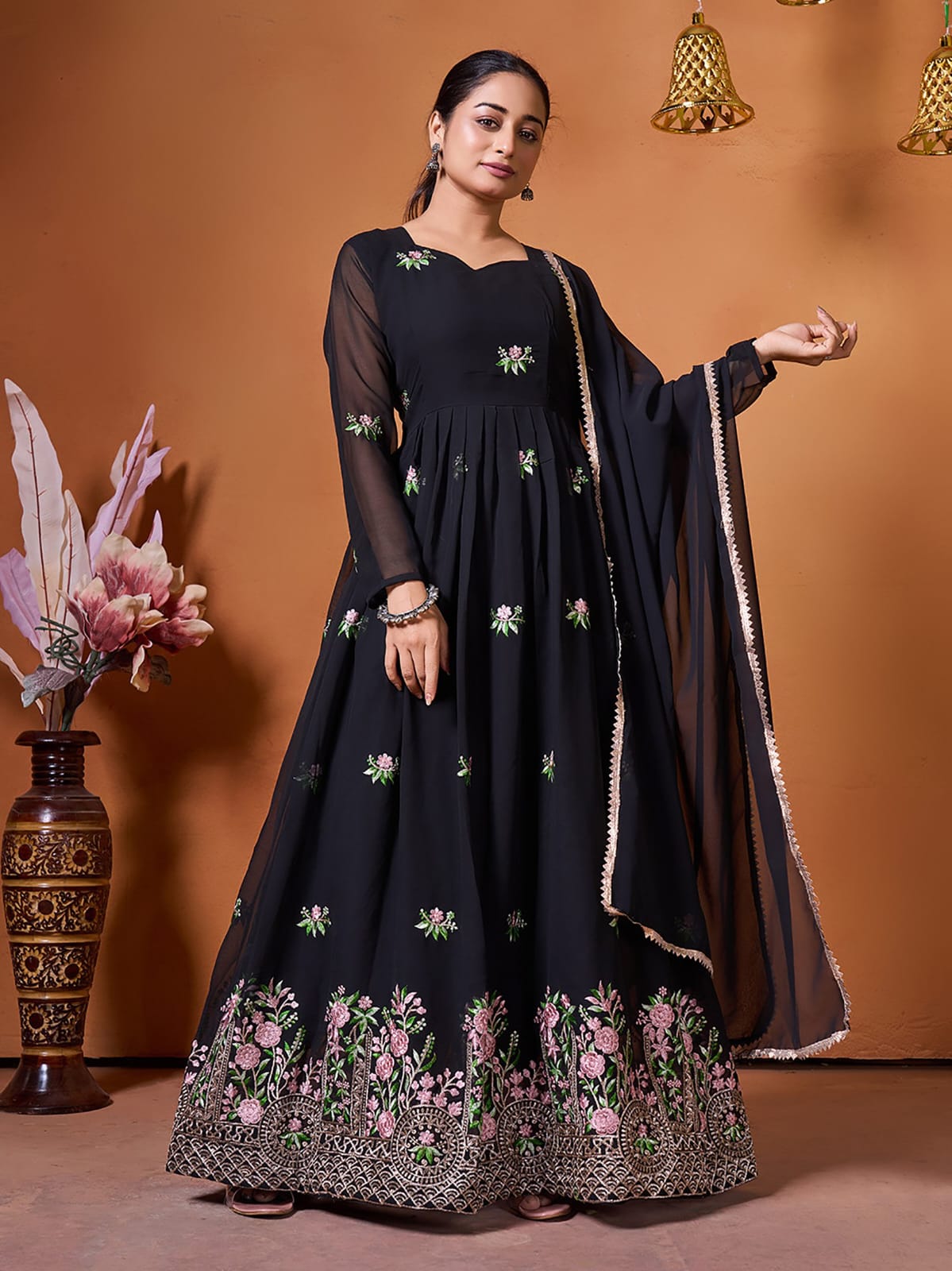
The Black Anarkali Suit Set with Sequin Zari and Moti Lace Work suits an indoor evening programme where controlled sparkle will catch artificial light. The Elegant Black Ethnic Gown with Floral Embroidery can provide a contemporary option for a reception-style celebration, but a gown is less practical than a salwar suit for sitting on the ground or joining a traditional dance circle. Occasion, venue and participation should determine the final choice.
Karma Festival Outfit Ideas: Jharkhand Sarees, Suits & Traditional Wear Care
Care for a Karma festival outfit by checking the garment label, protecting embellishment from moisture and storing the clothing only after it's fully dry. Monsoon humidity can leave odour or mildew in silk, lining and zari if a garment is packed immediately after use.
Air the saree or suit in shade after returning home, especially if perspiration or light rain reached the fabric. Do not leave silk, zari or dark dyed cotton in direct afternoon sunlight because prolonged exposure can fade colour and weaken fibres. Remove detachable brooches, belts and jewellery before storage so metal edges don't snag the weave.
Dry-clean heavily embellished silk or garments with sequins, moti lace and thick zari according to the care label. Hand-wash only when the label permits it, using cold water and a mild detergent without soaking contrasting colours together. Fold silk with soft cotton or muslin between layers, refold it every few months and store it away from damp walls. These precautions maintain the outfit for future festival seasons without treating every fabric as if it required the same cleaning method.
Questions About Karma Festival Outfit Ideas and Jharkhand Festive Dress
What should women wear for the Karma festival in Jharkhand?
Women can wear a comfortable cotton saree, a lightweight silk-cotton saree or a salwar suit with festive colour and secure styling. The best choice depends on family custom, whether the celebration is indoors or outdoors, and how much walking or dancing is planned.
Which colours are suitable for a Karma festival outfit?
Green, red, maroon, mustard, yellow, white and earthy shades are commonly suitable for a festive Karma wardrobe. Colour preferences vary between communities and families, so a formal puja may require checking local customs before dressing.
Is a salwar suit appropriate for Karma Puja?
A salwar suit is appropriate for Karma Puja when the gathering permits contemporary traditional wear and the outfit provides modest coverage. A straight kurta set or moderate-length Anarkali is easier to move in than a very long, heavily embellished garment.
Which fabric is best for a monsoon Karma festival?
Cotton is usually the most comfortable fabric for a humid daytime Karma festival, while cotton-silk, Chanderi and lightweight silk blends offer dressier alternatives. Dense zari, heavy lining and floor-length flares may feel uncomfortable outdoors or become difficult to manage on damp ground.
How can I keep my dupatta secure during Karma festival dancing?
Pin the dupatta near the collarbone and waist, leaving enough room for arm movement. Test the complete outfit by walking, sitting and moving your arms before the event, and avoid very slippery fabrics unless the drape has reliable support.
Can I wear black or a modern ethnic gown to a Karma celebration?
Black or a modern ethnic gown can work for an informal or indoor celebration when local customs do not restrict the colour or silhouette. A saree or salwar suit is generally more practical for formal puja, sitting on the ground and participating in traditional dancing.