Key takeaways
- Kanjivaram silk is traditionally associated with Kanchipuram in Tamil Nadu and is recognised for a firm silk body, contrasting borders and zari motifs.
- A reception saree generally works best with medium-to-heavy silk that photographs well without making movement unnecessarily difficult.
- Pure zari, tested zari and imitation zari differ in fibre content, sheen, durability and price, so the zari description should be checked before purchase.
- The saree colour should be chosen with the reception lighting, jewellery metal, blouse contrast and photography background in mind.
- A Kanjivaram saree should be aired after wearing and stored folded in breathable cotton rather than in plastic for long periods.
A Kanjivaram saree can weigh several hundred grams before the blouse, lining and jewellery are added, which is why the right purchase depends on more than colour. This kanjivaram saree buying guide for reception connects the silk to Kanchipuram in Tamil Nadu, explains what the borders and zari signify, and shows how to choose a reception-ready drape that remains comfortable after several hours of greetings, photographs and dancing.
Why Kanchipuram silk carries such a strong regional identity
Kanchipuram silk comes from the weaving tradition of Kanchipuram, a temple town in Tamil Nadu known for silk looms, devotional textiles and wedding saris. The name Kanjivaram is a widely used anglicised form of Kanchipuram. Traditional Kanjivaram weaving is associated with mulberry silk, a substantial body, contrasting korvai borders and metallic zari made historically with silver and gold content.
The cultural importance of a Kanchipuram saree is connected to both place and technique. Kanchipuram's proximity to major South Indian temple centres helped sustain motifs such as rudraksha beads, mangoes, checks, stripes, yali figures, peacocks and temple-inspired geometric borders. A saree featuring these motifs isn't merely decorated fabric; the motif vocabulary places the garment within a recognisable South Indian textile language.
Time-honoured korvai construction joins the body and border through a specialised interlocking technique, allowing the border to maintain a distinct colour and weight. Contemporary powerloom and blended versions may reproduce the visible effect at a lower price, but the construction, hand feel and durability can differ. A buyer should therefore ask whether a saree is handwoven, powerloom, pure silk, silk blend or soft silk before treating the word "Kanjivaram" as a perfect description.
Reception dressing also benefits from understanding regional context. A Tamil wedding reception may favour a bold contrast border, a long pallu and temple jewellery, while a North Indian or urban evening reception may pair the same silk with a sculpted blouse, diamond jewellery and a lighter drape. Neither approach is more authentic; each reflects a different way of carrying Kanchipuram tradition into a contemporary setting.
Kanjivaram saree buying guide for reception: what should you inspect first?
The first things to inspect are silk composition, zari description, border construction, weight, measurements and return or alteration terms. These details reveal more about the saree's suitability than a product photograph alone.
Silk body and weight
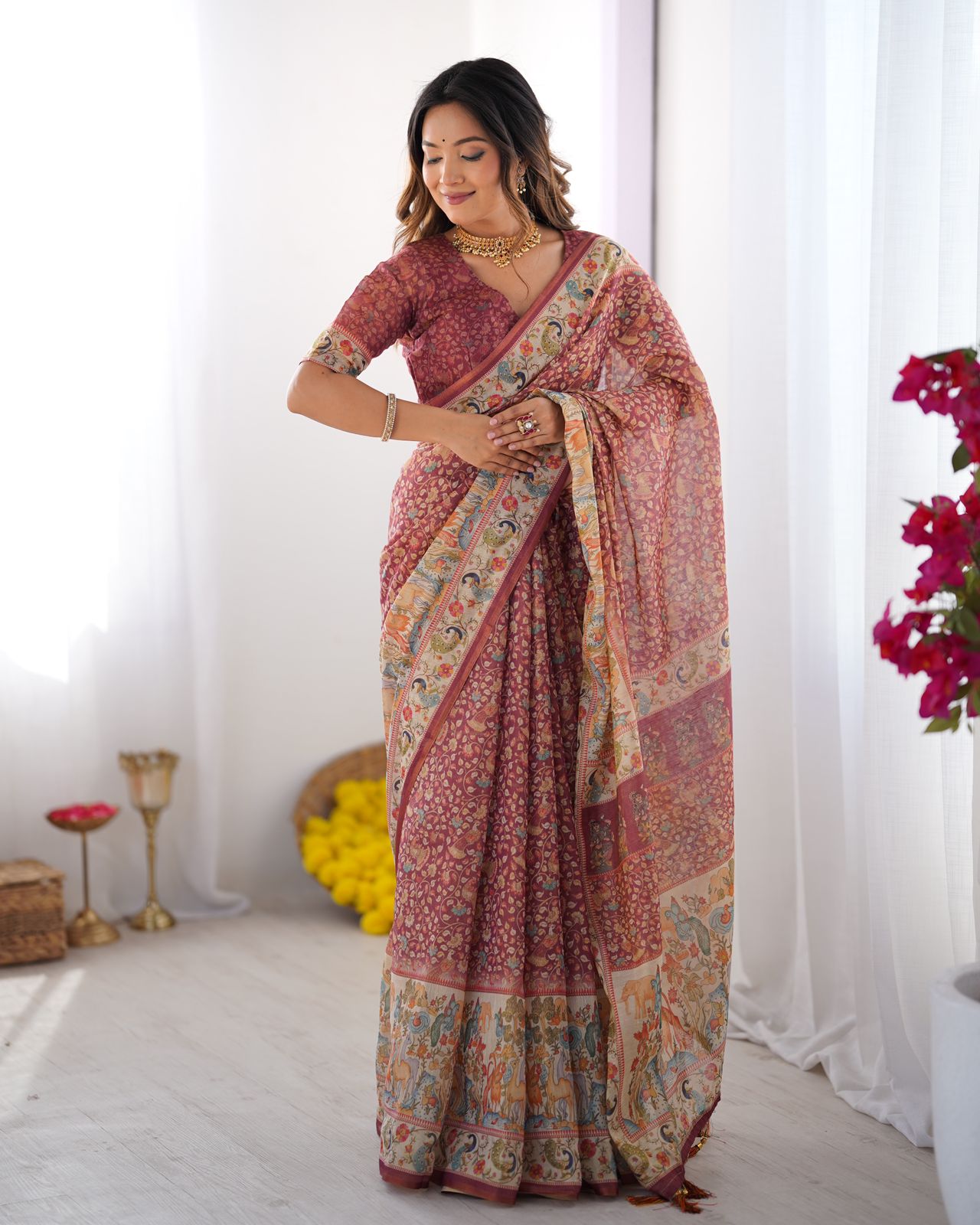
A reception saree usually works well in medium-to-heavy silk because the fabric holds pleats, creates a defined fall and catches stage lighting. Heavy silk gives a ceremonial appearance but can feel tiring during a six-hour event. Soft silk is easier to drape and move in, although a very fluid weave may not create the crisp pleats associated with a classic Kanchipuram silhouette.
Use the stated fabric composition as a starting point, then consider the blouse and petticoat. A heavily embroidered blouse, multiple underskirts or a dense waist belt can make an already weighty saree uncomfortable. Request the approximate saree weight when the listing doesn't provide it, especially if you expect to stand for long periods.
Zari and border
Zari is the metallic thread used for borders, pallus and motifs, and its fibre content affects price, shine and longevity. Pure zari traditionally contains precious-metal content over a textile core, while tested zari and imitation zari use different metal or synthetic compositions. Product descriptions should be read carefully because "golden zari" describes colour and appearance, not necessarily gold content.
For reception photography, a medium-width zari border often gives a balanced result. A very narrow border can disappear in full-length photographs, while a very wide border can visually shorten the wearer when paired with a high-contrast blouse. A broad pallu remains useful for seated portraits because the motifs stay visible over the shoulder.
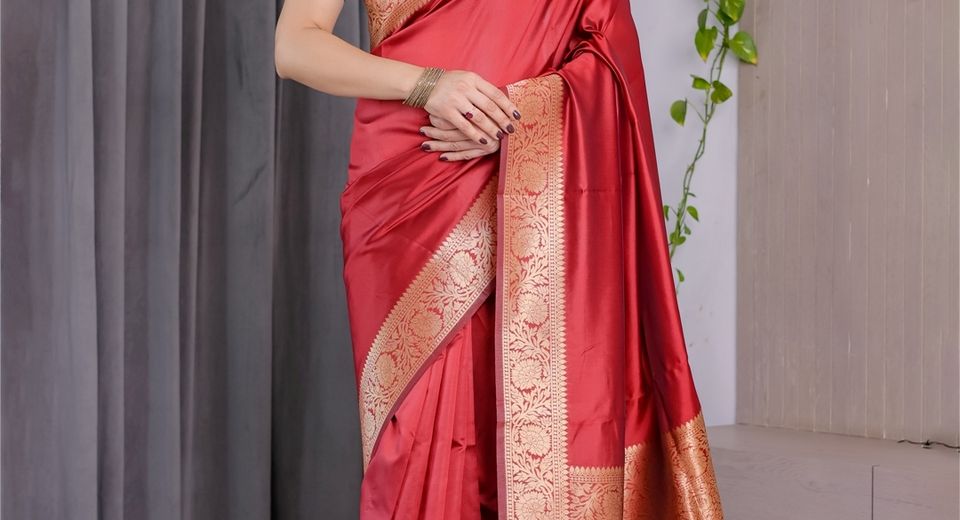
The Red Banarasi Silk Saree With Rich Golden Zari Floral Border demonstrates an useful comparison point even though Banarasi and Kanjivaram belong to different regional weaving traditions. Banarasi silk from Varanasi often uses floral jaal and brocade vocabulary, whereas Kanchipuram silk is especially associated with contrast borders and South Indian temple motifs. Comparing the two helps a buyer identify whether the desired look is North Indian brocade richness or South Indian border-led structure.
How should colour be chosen for an evening reception?
Choose a reception saree colour according to the venue lighting, jewellery metal, backdrop and the contrast between the saree body and border. Evening venues with warm amber lights usually support jewel tones, while daylight receptions show pale colours and fine zari more accurately.
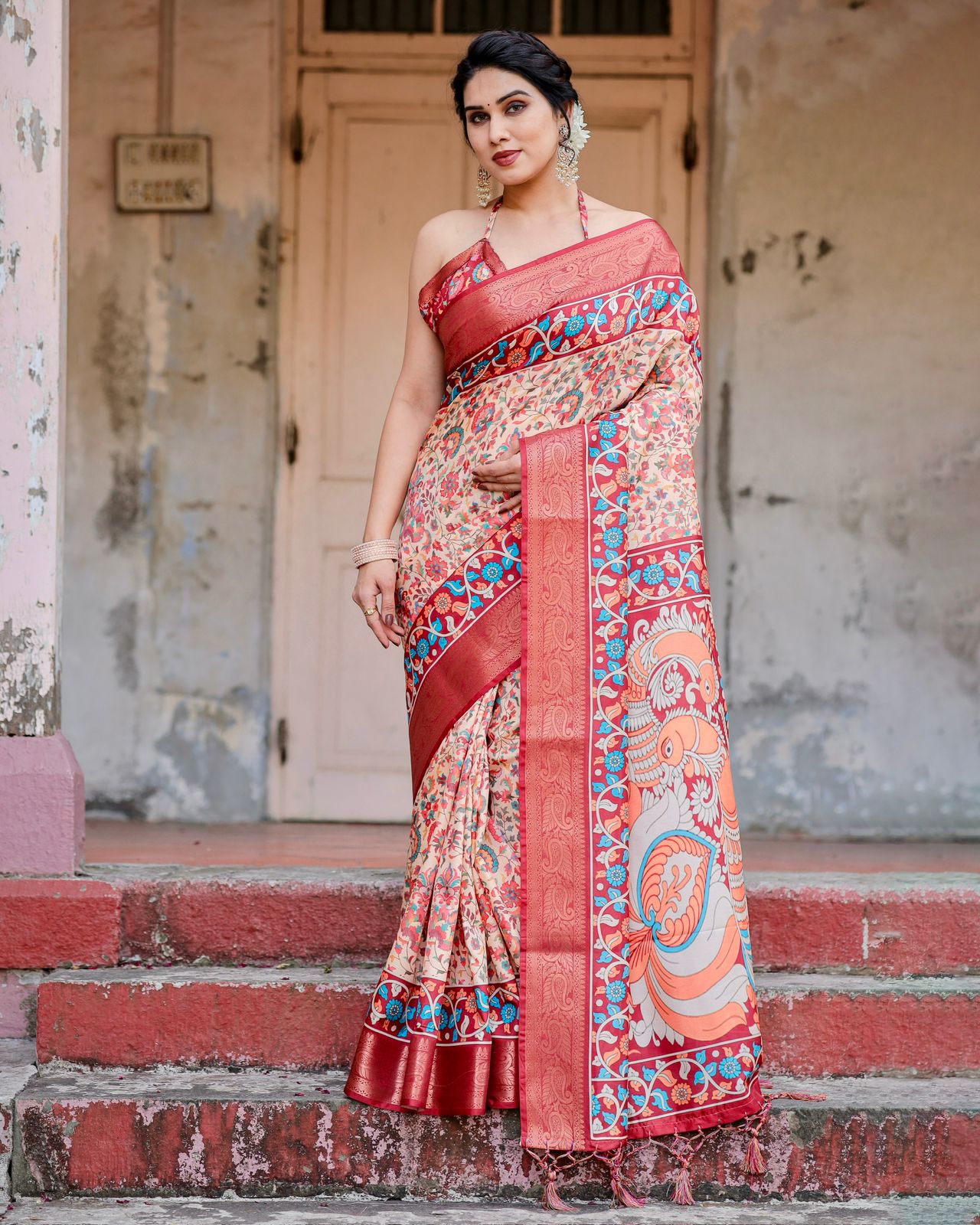
Ruby red, maroon, emerald green, deep purple and rani pink make strong visual presence under stage lights. Red can look especially bright against gold, but a highly reflective red silk may photograph brighter than expected. Maroon provides a quieter, mature effect and works well with antique gold, kundan or temple jewellery. Green pairs naturally with gold and can complement floral stage décor without go into a red or orange backdrop.
Rani pink is an useful choice for a reception when the bride wants colour without the visual weight of deep red. Rani Pink Banarasi Soft Silk Saree With Golden Zari Borders shows how a pink body can be balanced by a warm metallic border. Purple offers a more evening-specific mood, especially with silver, rose-gold or antique-finish accessories, although gold zari prevents the look from becoming too cool.
The Red and Yellow Sarees from Rs 799 with Up to 75 Percent Off collection illustrates how adjacent colour families can produce very different levels of formality. A saturated red with a dense border reads as ceremonial, while a clear yellow can appear lighter and more festive. Price labels and discounts should never replace checking composition, measurements and zari details.
White, cream and ivory can look striking at receptions when paired with a dramatic blouse, metallic belt or coloured jewellery. The White Silk Sarees in Cream Ivory and Off White collection is relevant for readers considering a quieter palette. A pale saree requires careful attention to lining opacity, venue lighting and makeup balance because bright white light can flatten delicate cream tones.
Which regional details make a reception saree look intentional?
Regional details make a reception saree look intentional when the border, blouse, jewellery and drape follow a coherent visual language. The goal isn't to copy every heritage element but to understand what each element contributes.

Temple borders and pallus
Temple borders use repeated triangular or stepped forms that recall the silhouette of South Indian temple architecture. Temple jewellery, a long braid, jasmine flowers and a neatly pleated pallu reinforce a classic Tamil Nadu-inspired appearance. A contemporary reception version can retain the border and pallu while using a sleeveless blouse, a lower bun or a structured handbag.
Motifs and inherited symbolism
Peacocks suggest beauty and grace, mango motifs are associated with fertility and auspiciousness in many Indian textile traditions, and rudraksha-inspired forms reference sacred bead shapes. Motif meanings vary by family and region, so they should be treated as cultural associations rather than fixed universal rules.
The Green Banarasi Soft Silk Saree with Golden Jacquard Border gives another useful study in motif-led styling. Jacquard borders can give a saree a structured ornamental edge without requiring a heavily embroidered body. A plain blouse in the border colour allows the weave to remain the central feature, while a small motif from the border can be repeated in earrings or hair accessories.
How should the blouse and drape be planned?
The blouse should be planned after checking the saree border width, pallu design and intended jewellery, because each element occupies the same visual space around the shoulders and waist.

A high-neck blouse creates a polished reception silhouette with a long necklace or statement earrings. A square or sweetheart neckline exposes more of the upper body and can balance a wide border. Elbow-length sleeves suit traditional Kanchipuram styling, while capped or sleeveless sleeves can make a heavy silk feel more contemporary. The blouse fabric should be tested against the saree: a close colour match looks refined, while a deliberate contrast makes the border more visible.
Ask the tailor to account for the saree's actual border width before finalising sleeve and hem proportions. A blouse hem that cuts through a wide border line can appear visually crowded. A properly fitted blouse should allow the wearer to raise both arms, sit comfortably and breathe without pulling across the bust or back.
For a reception, the Nivi drape remains practical because its front pleats and shoulder pallu are secure and familiar in photographs. A longer pallu can create movement during an entrance, but the pallu should be pinned at the shoulder and waist if dancing or repeated movement is expected. A waist belt can stabilise the drape, although a heavy metal belt may add pressure over an already substantial silk.
What should you budget for besides the saree?
A realistic saree budget includes blouse stitching, lining, fall and edging, petticoat, steaming, jewellery, footwear and possible alterations. Blouse construction can require several fittings over two to four weeks, particularly when the design includes cups, padding, embroidery or a deep back.
Price varies with silk content, weaving method, zari composition, motif density, border width and finishing. A low price may indicate a lighter soft-silk construction, imitation zari, blended fibre or machine production; none of these automatically makes a saree unsuitable, but the description should be honest and understood.
The Maroon Silk Sarees with Up to 74% Off collection and the Green Color Silk Sarees collection show why colour-based browsing can be useful at the research stage. A collection can help compare shades and price bands, but the final choice should be made from the individual saree's fabric and construction details rather than the collection label.
Keep a small reserve for professional pressing or pleat setting before the reception. Silk should be steamed or pressed at an appropriate temperature with a protective cloth, never scorched directly under a hot iron. A test pressing on an inner fold is sensible when the zari is dense or the fabric contains a blend.
How can Kanjivaram silk be cared for after the reception?
Kanjivaram silk should be aired in shade, folded along different lines periodically and stored in breathable cotton away from moisture, perfume and direct sunlight. Immediate dry-cleaning isn't always necessary after one evening unless the saree has visible stains, perspiration or food contact.
Remove pins slowly so that sharp edges don't catch the zari. Do not spray perfume directly onto silk or metallic thread because alcohol and moisture can affect colour and surface finish. If the saree becomes wet, allow it to dry flat or on a broad hanger in shade rather than using a hair dryer.
Refold the saree every few months to prevent a permanent crease along one fold. A clean muslin or cotton cover is safer for long-term storage than sealed plastic, which can trap humidity. Keep the saree separate from oxidising jewellery, whose residues may mark pale silk.
A reception saree earns its place in the wardrobe when its beauty survives the event: the right silk weight makes movement easier, the right border photographs clearly, and careful storage protects the weave for future celebrations.
Frequently asked buying questions
Is Kanjivaram silk suitable for a wedding reception?
Yes, Kanjivaram silk is highly suitable for a wedding reception because its firm body, zari borders and structured pallu create a formal silhouette. Choose a medium-weight version if the reception includes prolonged standing, travel or dancing.
What is the difference between Kanjivaram and Banarasi silk?
Kanjivaram silk is associated with Kanchipuram in Tamil Nadu and is known for contrast borders, temple-inspired motifs and substantial silk. Banarasi silk is associated with Varanasi and is widely recognised for brocade, floral jaal and intricate zari work.
Which colour Kanjivaram saree is best for an evening reception?
Deep red, maroon, emerald green, purple and rani pink generally photograph strongly in evening light. The best colour depends on the venue backdrop, jewellery metal and whether the lighting is warm amber or cool white.
How do I know whether the zari is real?
Read the exact product description for terms such as pure zari, tested zari or imitation zari, and ask the seller for composition details when the wording is unclear. Colour words such as golden zari don't by themselves confirm precious-metal content.
How far in advance should I buy a reception saree?
Buy the saree at least four to six weeks before the reception when blouse stitching and alterations are required. A two-week buffer allows time for fitting corrections, fall and edging, steaming and a complete drape trial.
Can a heavy Kanjivaram saree be made more comfortable?
Comfort improves when the petticoat fits securely, the pleats are set correctly and the pallu is pinned at the shoulder and waist. Lightweight jewellery, supportive footwear and a blouse with sufficient arm movement also reduce fatigue.
Frequently Asked Questions
Is Kanjivaram silk suitable for a wedding reception?
Yes, Kanjivaram silk is highly suitable for a wedding reception because its firm body, zari borders and structured pallu create a formal silhouette. Choose a medium-weight version if the reception includes prolonged standing, travel or dancing.
What is the difference between Kanjivaram and Banarasi silk?
Kanjivaram silk is associated with Kanchipuram in Tamil Nadu and is known for contrast borders, temple-inspired motifs and substantial silk. Banarasi silk is associated with Varanasi and is widely recognised for brocade, floral jaal and intricate zari work.
Which colour Kanjivaram saree is best for an evening reception?
Deep red, maroon, emerald green, purple and rani pink generally photograph strongly in evening light. The best colour depends on the venue backdrop, jewellery metal and whether the lighting is warm amber or cool white.
How do I know whether the zari is real?
Read the exact product description for terms such as pure zari, tested zari or imitation zari, and ask the seller for composition details when the wording is unclear. Colour words such as golden zari do not by themselves confirm precious-metal content.
How far in advance should I buy a reception saree?
Buy the saree at least four to six weeks before the reception when blouse stitching and alterations are required. A two-week buffer allows time for fitting corrections, fall and edging, steaming and a complete drape trial.
Can a heavy Kanjivaram saree be made more comfortable?
Comfort improves when the petticoat fits securely, the pleats are set correctly and the pallu is pinned at the shoulder and waist. Lightweight jewellery, supportive footwear and a blouse with sufficient arm movement also reduce fatigue.