Jitiya Festival Outfit Ideas: Traditional Bihari Sarees & Suits should begin with the realities of the day: puja, family rituals, extended sitting and, for many observant women, a demanding fast. A beautiful outfit needs to respect those practical details without losing the colour, craft and dignity associated with Jivitputrika Vrat. Sarees can create a deeply traditional silhouette, while a fully stitched salwar suit offers easier movement and quicker dressing.
Jitiya, also called Jivitputrika or Jiutiya in different regions, is observed by many mothers for the wellbeing and long life of their children. Customs vary between families and communities in Bihar, Jharkhand, eastern Uttar Pradesh and neighbouring areas, so clothing choices should follow household guidance rather than a rigid fashion rule. The most useful approach is to select breathable fabric, secure styling and festive details that remain comfortable from morning worship through evening visits.
Jitiya Festival Outfit Ideas for Choosing the Right Silhouette
A suitable Jitiya outfit is comfortable for several hours, modest for prayer, easy to manage during rituals and festive enough for family photographs. Fabric weight, sleeve construction, neckline security and the amount of embellishment matter more than a trend-led silhouette.
Many women choose a saree because the drape carries strong traditional value and works naturally with a puja setting. A salwar suit is equally practical when the day involves walking, preparing offerings, sitting on the floor or caring for children. A straight kurta with trousers or a classic salwar provides coverage without requiring repeated adjustment.
Colour can be chosen according to family custom, local preference and personal comfort. Red, maroon, rust, yellow, teal, green and deep blue all create a festive impression, while beige, ivory and pastel shades can look graceful when paired with zari, embroidery or a contrasting dupatta. If a household follows a specific colour convention for Jitiya, that tradition should take priority over general styling advice.
A saree for a formal family gathering
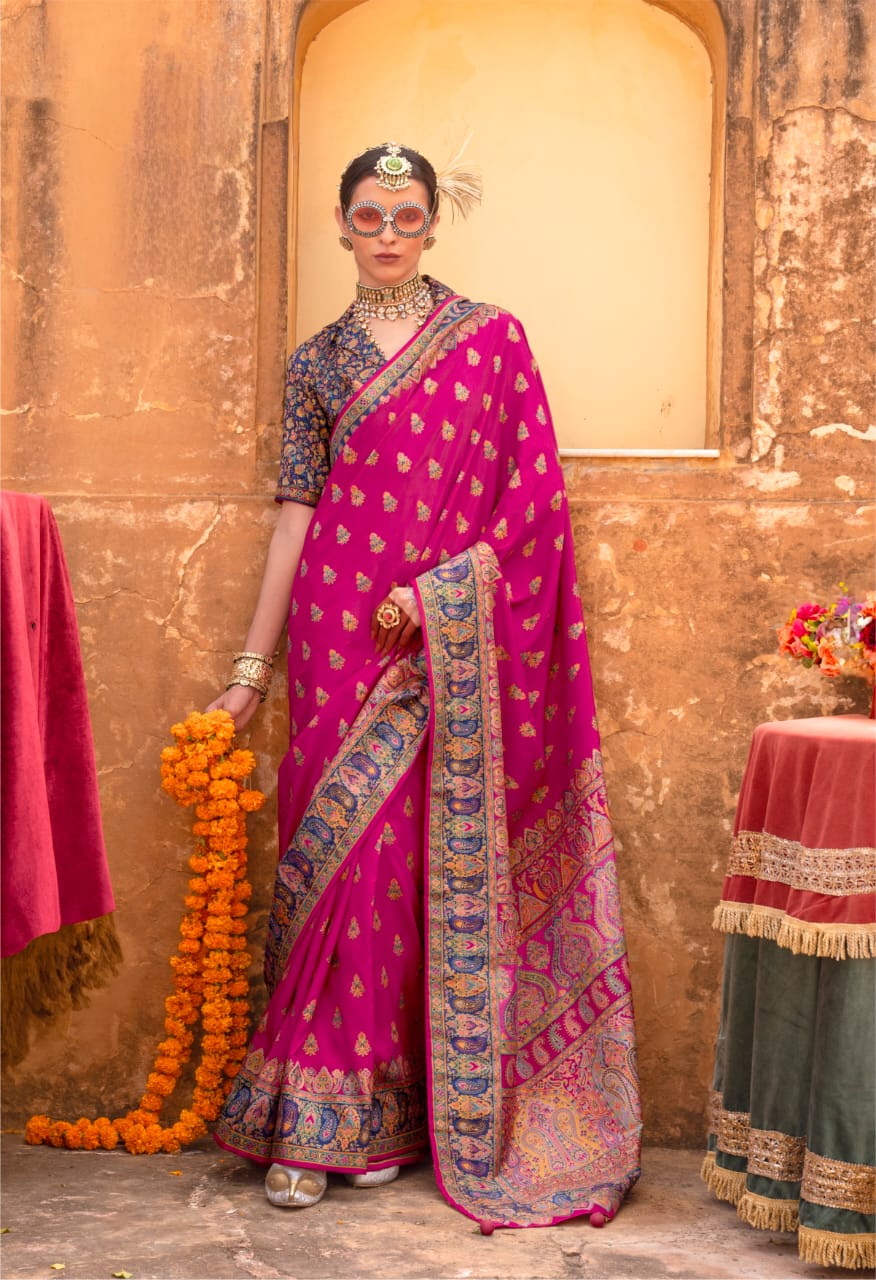
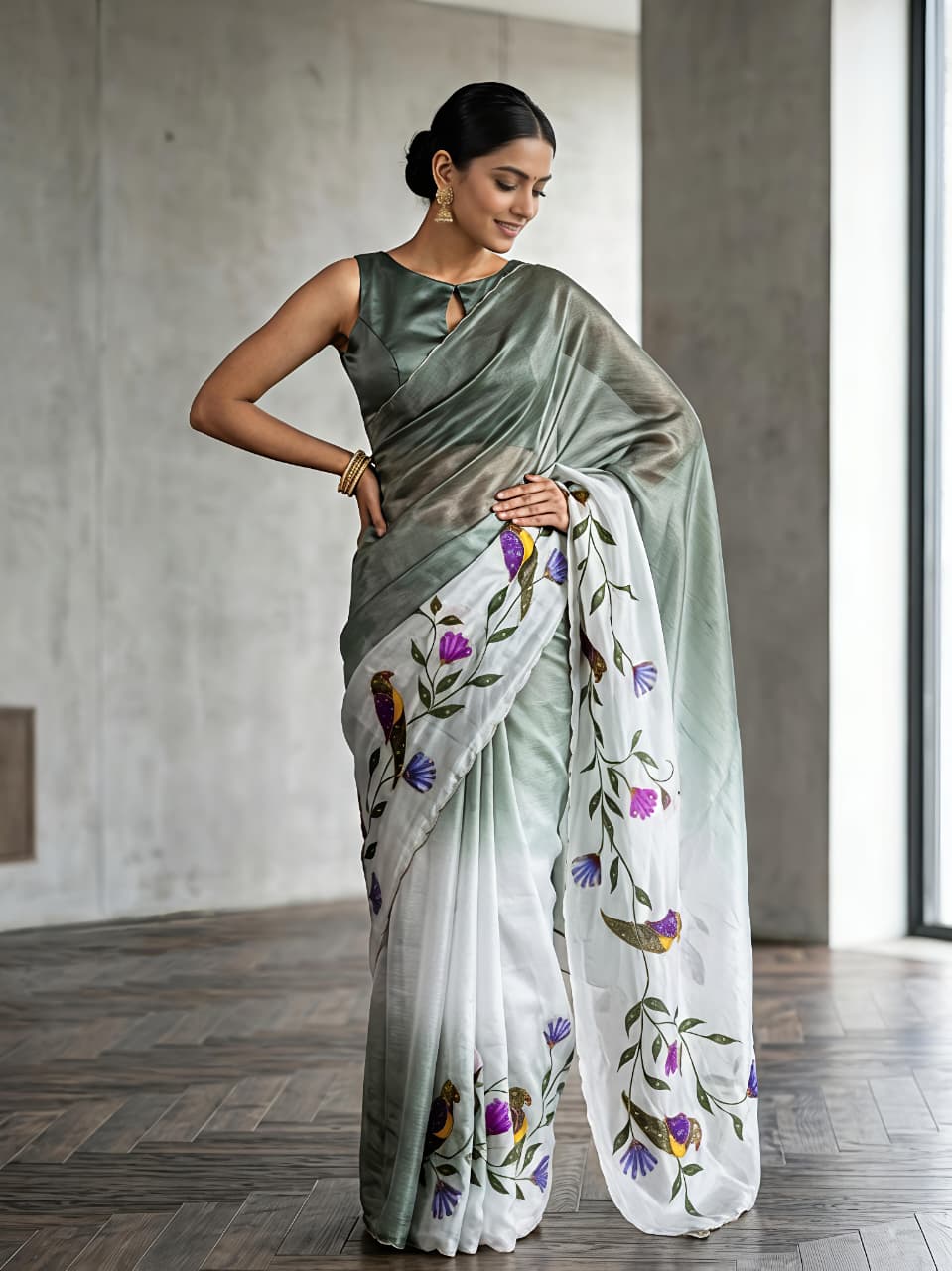
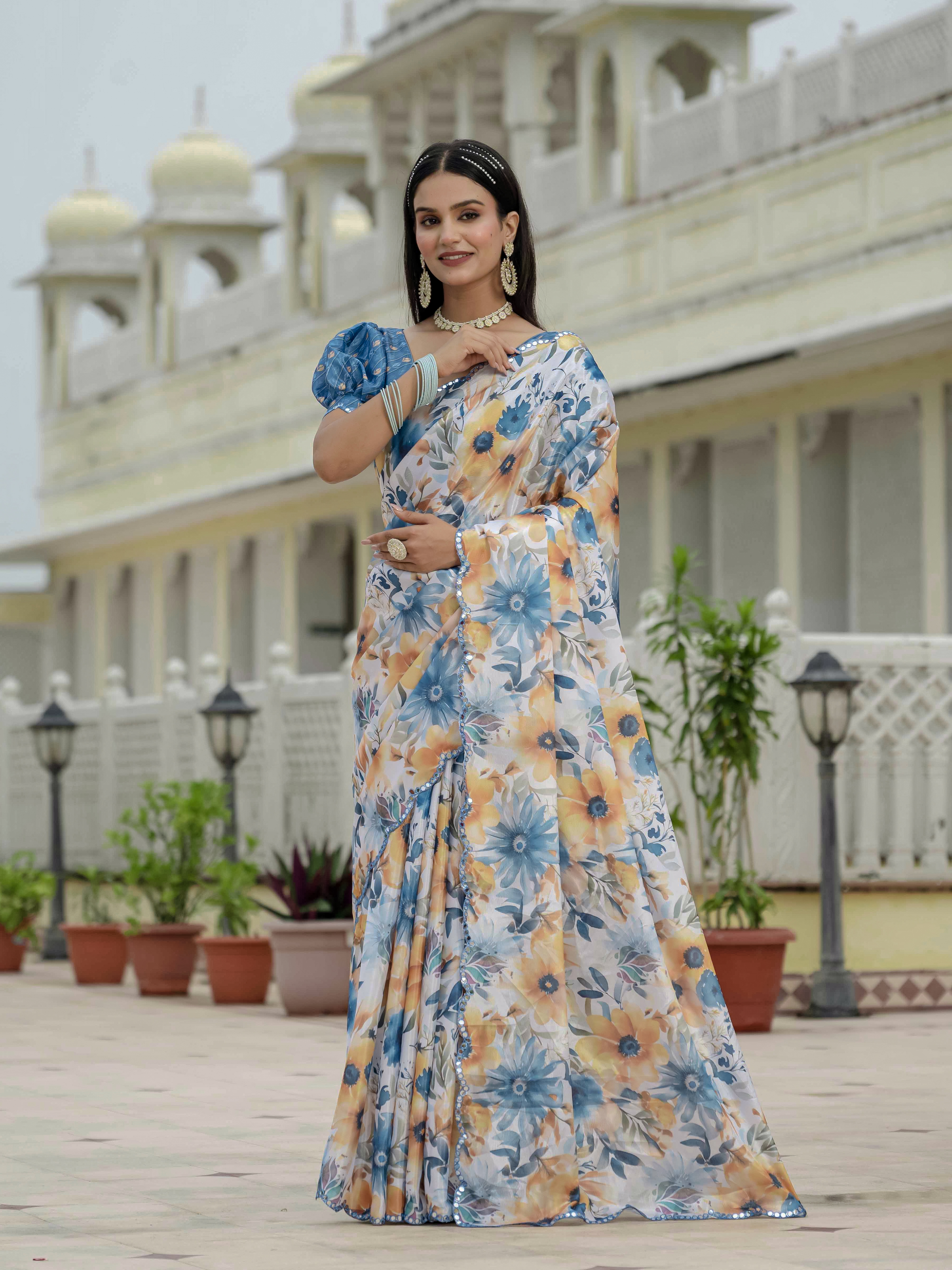
A saree creates a ceremonial silhouette and can be especially appropriate when the main puja includes several generations. The Festive Teal Banarasi Saree with Traditional Motifs brings a rich colour direction to the wardrobe without relying on the more predictable red and magenta palette. Traditional motifs provide visual interest, while the Banarasi weave and zari-style sheen make the outfit feel festive.
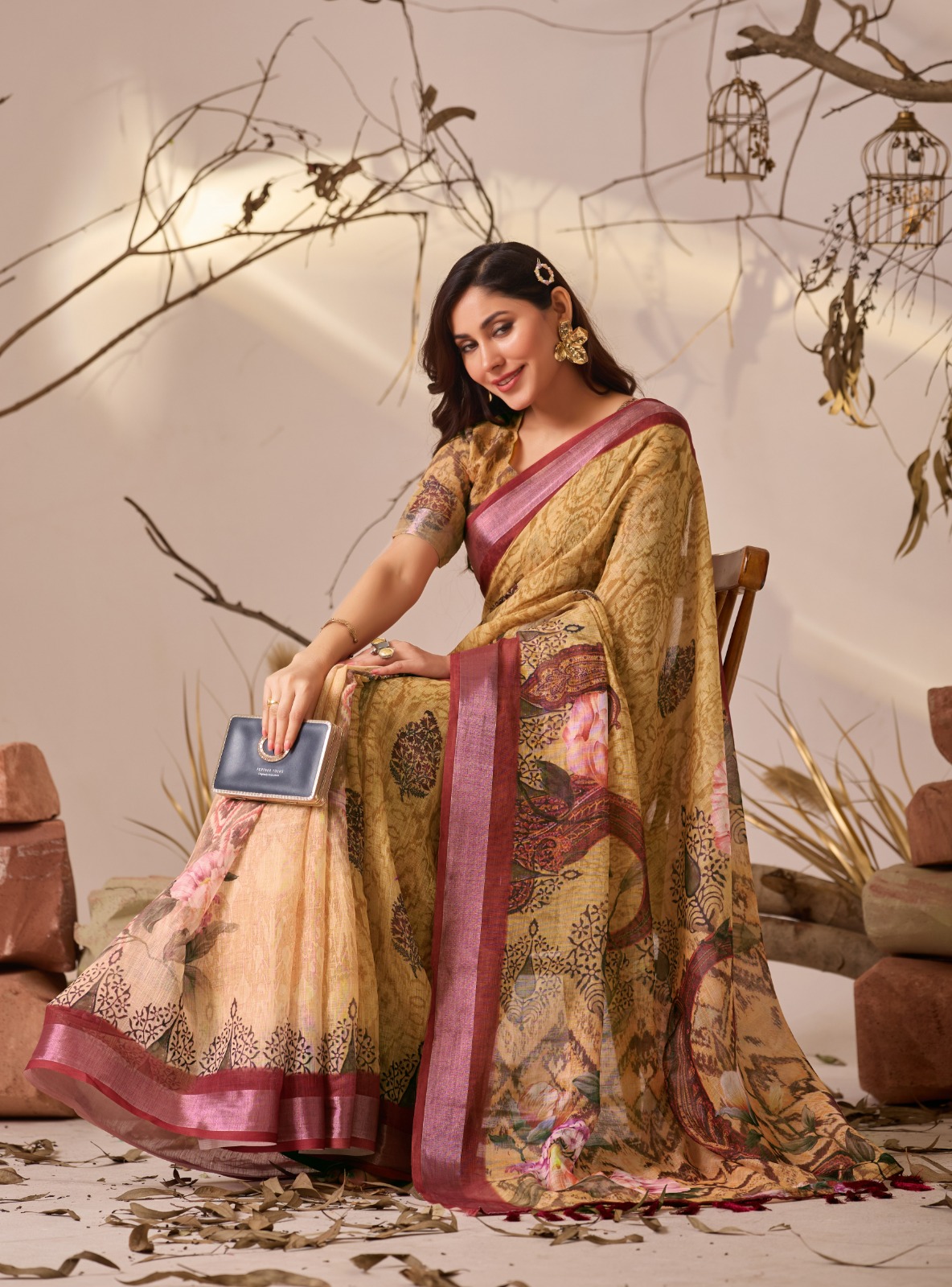
A saree with a medium-width border is easier to manage than a very wide, heavily embellished border when sitting on the floor. Make five to seven front pleats of even width, tuck them firmly and place the pallu so that it covers the blouse comfortably without dragging. A concealed safety pin at the waist and a second pin near the shoulder can prevent shifting, but pins should be inserted into the inner allowance rather than through visible zari.
A salwar suit for practical movement
A salwar suit is the most practical silhouette when Jitiya involves walking, cooking, caring for children or frequent floor seating. A straight kurta with trousers gives a neat line, a Patiala salwar gives a fuller traditional shape and palazzo trousers allow generous movement. Fully stitched salwar suits also reduce dressing time and remove the uncertainty of matching separate pieces.
Readymade salwar suits traditional in construction are useful when alterations are limited, but fit should still be checked at the armhole, bust, waist and trouser length. A kurta that pulls across the chest or a trouser hem that touches the floor can become uncomfortable during a long ritual. Choose a dupatta length that reaches at least to the hip when worn over one shoulder, and pin it near the shoulder seam rather than directly through delicate embroidery.
Jitiya Festival Outfit Ideas with Traditional Bihari Salwar Suits
Traditional Bihari Salwar Suits offer a practical route to a festive Jitiya wardrobe because a kurta, bottom and dupatta can provide coverage, colour and ease in one coordinated outfit. The Traditional Bihari Salwar Suits collection is an useful starting point for women who want regional character without managing a full saree drape.
The Pastel Blue Embroidered Chanderi Kurta Set with Dupatta suits a softer daytime direction. Chanderi usually feels lighter than dense silk, and pastel blue reflects daylight gently while embroidery supplies festive definition. Pair the set with small gold-toned earrings, a low bun and flat juttis so the dupatta remains the visual focus without becoming difficult to pin.
The Elegant Beige Vichitra Silk Embroidered Kurta Set for Women creates a neutral foundation that can be lifted with a maroon dupatta, gold earrings or embroidered footwear. Beige is particularly useful when jewellery or a contrasting bindi should provide the main colour accent. A comfortable inner layer matters because a fitted silk kurta can feel restrictive after several hours of sitting.
The Black Red Fendy Silk 3 Piece Readymade Salwar Suit Set creates stronger contrast for an evening family gathering. Black and red photograph clearly under indoor lighting, while the three-piece format makes coordination straightforward. Keep the jewellery focused on one area, such as statement earrings or a necklace, so the outfit doesn't look visually crowded.
The Traditional Salwar Suits in Festive Colours collection can help women compare deeper maroon, rust, teal and blue options with lighter festive shades. Colour should remain compatible with household customs, the time of day and the wearer's comfort. A strong colour doesn't require equally strong makeup; kohl, a small bindi and a warm lip shade can be enough.
Jitiya Festival Outfit Ideas Based on Fabric and Weather
Chanderi, cotton, light silk blends and comfortable crepe are practical fabric directions for a long Jitiya day, while heavier silk and dense zari work are better reserved for shorter ceremonies or cooler weather. The right selection depends on climate, fasting practice, venue and the amount of movement expected.
Cotton for heat and repeated movement
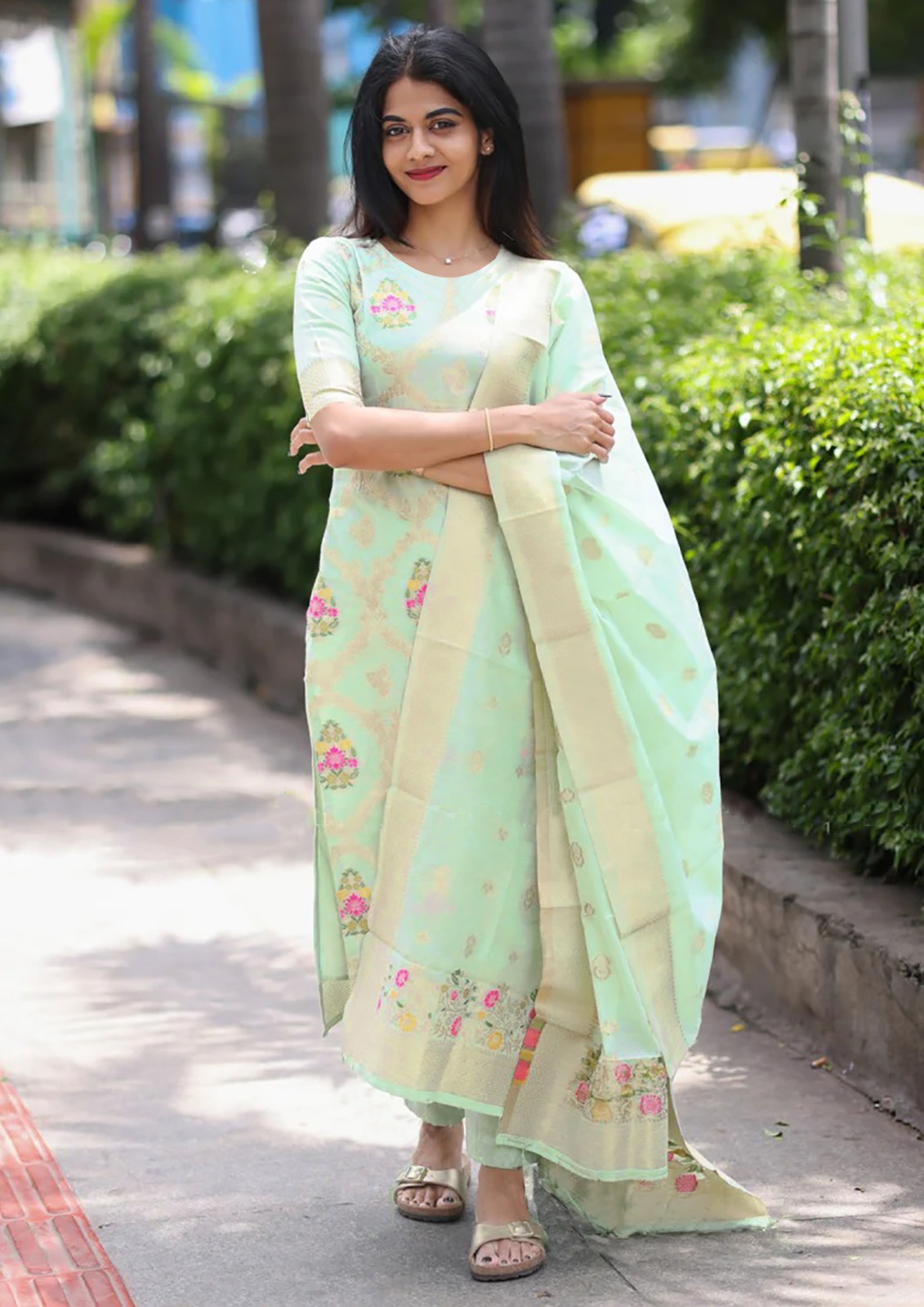
Cotton salwar suits traditional in silhouette are dependable for hot weather because cotton absorbs moisture and generally feels less clingy than synthetic fabric. A cotton suit is a sensible choice for women who will sit on the floor, prepare offerings or travel between homes. Cotton may crease more readily than silk, so ironing the kurta and dupatta on the evening before the festival saves time on the morning of the vrat.
Choose medium-weight cotton rather than extremely thin fabric when the outfit will be worn for public rituals. A lined kurta can improve opacity, especially in pale shades. Breathable cotton doesn't eliminate heat, but it can reduce the discomfort caused by trapped warmth around the torso and sleeves.
Silk and zari for formal rituals
Silk gives Jitiya clothing a formal finish through its natural or woven sheen, but silk and zari can feel warm when used in multiple layers. The Silk Festive Kurta Pant Set with Zari Jacquard Dupatta shows how a kurta-and-pant silhouette can retain occasion-level richness without requiring saree draping. Wear it with low heels or embellished flats, depending on whether the venue has smooth flooring or uneven outdoor ground.
Vichitra silk has a dressier appearance and works well for women who want a polished suit with embroidery. The Shop Maroon Pure Vichitra Silk Embroidered Kurta Set Online brings a deep festive colour that can be styled with antique-gold jewellery and a restrained makeup palette. Allow enough ease around the waist and sleeves because a fitted silk kurta can feel restrictive after several hours of sitting.
Crepe for a fluid, low-maintenance look
Crepe is useful when a woman wants a fluid outfit with less stiffness than Banarasi silk or heavily woven textiles. The Midnight Blue Natural Crepe Patiala Kurta Set with Embroidery combines a traditional Patiala direction with a darker contemporary colour. The fuller lower silhouette allows movement, but the salwar should be secured at the waist so excess fabric doesn't interfere with walking or floor seating.
Fabric choice should also account for washing instructions. Silk, zari and embroidered garments generally need gentler care than everyday cotton. Read the care label before the festival rather than assuming that every festive suit can go into a regular washing machine.
Jitiya Festival Outfit Ideas for Secure Puja Styling
Women should style a Jitiya outfit with a secure drape, comfortable footwear, minimal snag-prone jewellery and a dupatta or pallu that stays in place without constant adjustment. Practical styling is particularly important when the day includes fasting, prayer and time with children.
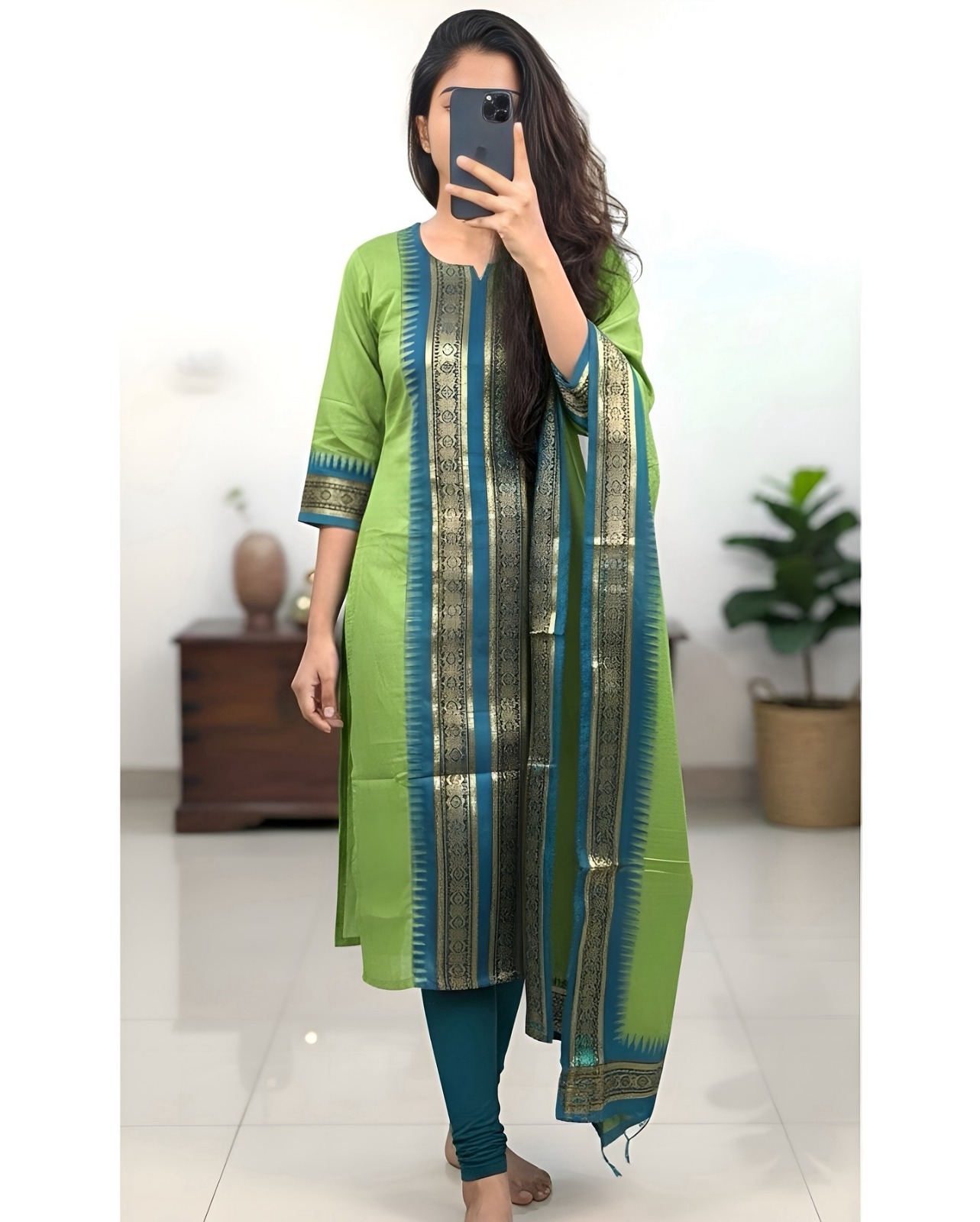
Choose a blouse with sleeves that allow arm movement and a back closure that can be checked before leaving home. A high or medium neckline often looks appropriate for a family puja, particularly when the pallu may move during bending or prayer. Flat sandals, juttis or low block heels are safer than narrow high heels for courtyards and uneven floors.
A salwar suit should have a secure waistband, an easy armhole and a dupatta that can be pinned without damaging the fabric. Keep the outfit balanced by limiting competing accessories. A richly embroidered kurta can be paired with plain footwear and small earrings, while a simpler suit can support a heavier bindi, bangles or jhumkas.
Hair should be secured in a low bun, braid or controlled half-up style if the day involves incense, cooking or outdoor travel. A low hairstyle also prevents the dupatta from catching on loose hair. Carry a small pouch with spare pins, a safety pin, a compact comb and a few tissues; those small items are more useful than an oversized handbag during rituals.
Jitiya Festival Outfit Ideas for Colour, Jewellery and Dupattas
Colour and accessories should support the outfit's traditional character without creating unnecessary weight or maintenance. Red, maroon and rust provide a classic festive mood, teal and midnight blue look rich in photographs, and beige or pastel blue create a lighter daytime appearance.
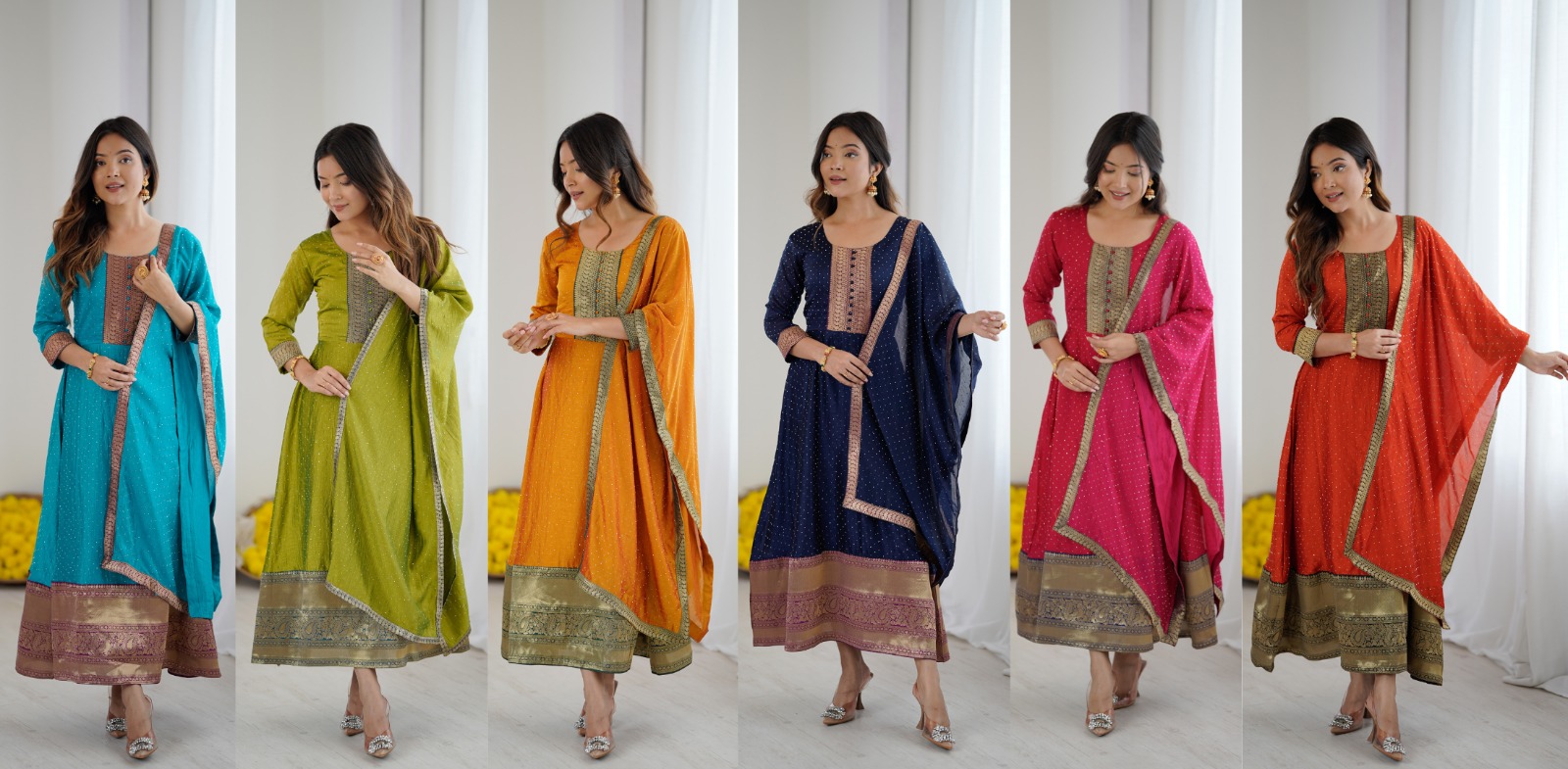
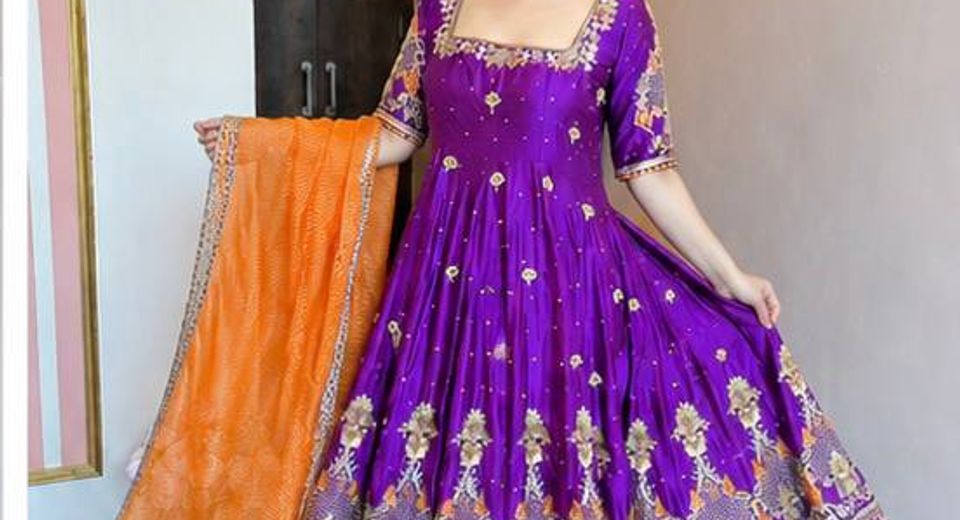
The Rust Orange Embroidered Readymade Suit Set for Women is a strong choice for someone who wants warmth without choosing bright red. Rust orange pairs naturally with antique gold, brown, beige and muted green accessories. Because embroidery already supplies detail, wear one pair of earrings and a small stack of bangles rather than several competing jewellery pieces.
Dupatta placement can change the formality of a suit. A front drape over both shoulders gives balanced coverage for puja, while a single-shoulder drape looks more relaxed for visiting relatives. Pin the dupatta below the shoulder instead of at the neck if the fabric has embroidery or zari that could snag.
Jewellery should be chosen according to comfort and ritual requirements. Lightweight jhumkas, a small nose pin, glass bangles or a simple mangalsutra can provide a traditional finish without making the wearer feel encumbered. Avoid long chains and very loose bangles when preparing offerings or holding a child.
Jitiya Festival Outfit Ideas for Shopping and Care
The safest way to shop for a Jitiya outfit is to confirm fabric, measurements, lining, closure details, care instructions and delivery timing before ordering. Buying early allows time for a minor alteration, a trial drape and a wash or steam treatment where the care label permits it.
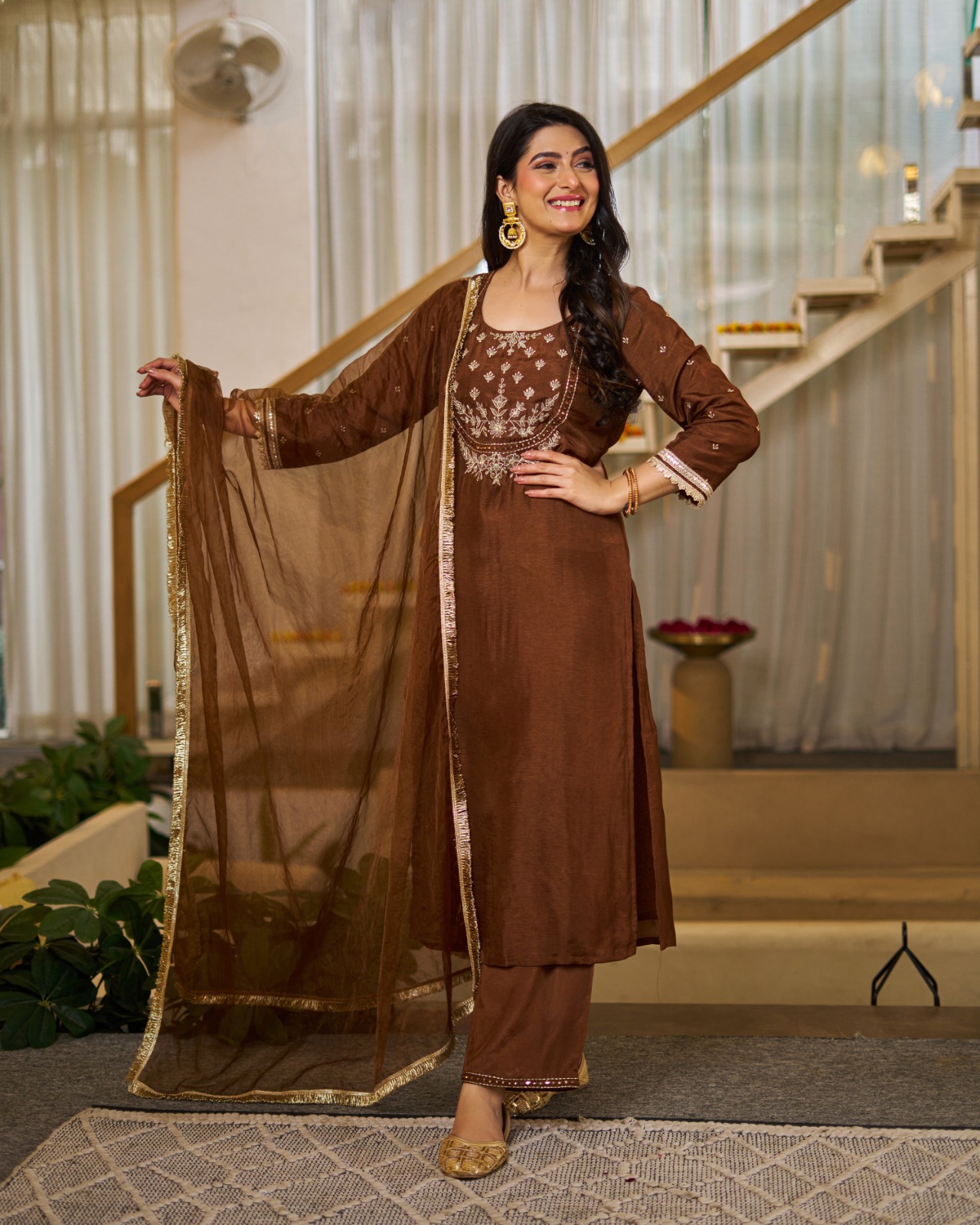
Women comparing regional styling can also look at Garhwali Traditional Salwar Suits, Traditional Madhya Pradesh Salwar Suits and Traditional Haryana Salwar Suits for differences in colour balance, silhouette and decorative language. Regional collections can inspire styling, but the final outfit should still suit the wearer's family customs and the practical demands of Jitiya.
Check the bust, waist, hip, sleeve and inseam measurements rather than relying only on a general small, medium or large label. A fully stitched outfit may need sleeve or trouser-length alteration, while an unstitched or semi-stitched option gives more flexibility. Try sitting cross-legged, raising both arms and walking several steps before removing the garment tags.
Store embroidered and silk outfits on broad hangers, place lightweight cotton covers over them and avoid direct sunlight for long periods. Fold zari dupattas with soft tissue between dense embroidered sections to reduce friction. Air a festive outfit after wearing it, and send delicate silk or heavily embellished pieces for professional cleaning rather than soaking them at home.
Jitiya dressing becomes easier when beauty, comfort and tradition are planned together. A Banarasi silk saree can honour the ceremonial mood, while Chanderi, cotton, crepe or a fully stitched salwar suit can make a long day more manageable. The best choice is the outfit that lets the wearer participate in prayer and family life with confidence rather than spend the day adjusting clothing.
Common Questions About Jitiya Sarees and Traditional Salwar Suits
Which salwar suit is suitable for Jitiya Festival?
A breathable, comfortable salwar suit with a secure dupatta is suitable for Jitiya Festival. Chanderi, cotton, light crepe and moderately weighted silk can work well, depending on weather, family customs and how much movement the day requires.
Can I wear a saree for Jivitputrika Vrat?
Yes, a saree is a traditional and appropriate choice for Jivitputrika Vrat when it suits the wearer's family customs. A Banarasi silk saree, cotton saree or lighter festive weave should be pinned securely so the drape remains comfortable during puja and floor seating.
Are readymade salwar suits traditional enough for Jitiya?
Readymade salwar suits can look fully traditional when the silhouette, colours, embroidery and dupatta are appropriate for the celebration. A kurta with a salwar, Patiala or straight trouser and a coordinated dupatta can provide the same cultural visual language with easier fitting and dressing.
Which fabric is best for a Jitiya outfit in warm weather?
Cotton is usually the most comfortable option for warm weather because it allows air movement and absorbs moisture. Chanderi and light crepe can also work, while heavy silk, dense zari and multiple synthetic layers may feel warm during a long day.
What colours can women wear for Jitiya Festival?
Women can choose red, maroon, rust, yellow, teal, green, blue, beige or pastel shades according to family customs and personal preference. Household traditions should take priority if a particular colour is associated with Jitiya rituals.
Where can I buy women’s traditional suit sets in India?
Women can compare traditional suit collections online by checking exact measurements, fabric composition, lining, care instructions, delivery time and alteration options. Collections such as Traditional Bihari Salwar Suits and Traditional Salwar Suits in Festive Colours can help narrow the search by silhouette and occasion.