

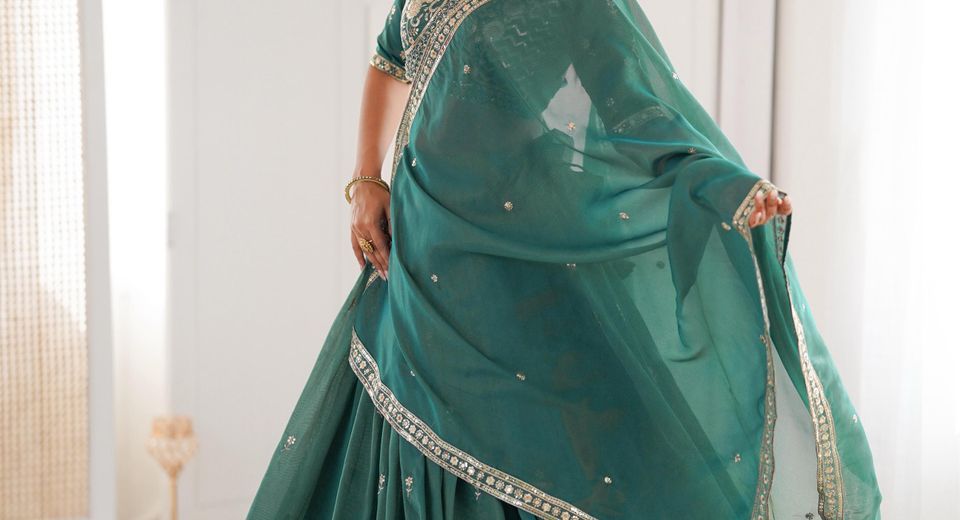
A wedding in Ranchi, a festival gathering in Jamshedpur or a family celebration in Dhanbad can call for very different kinds of ethnic wear. This Jharkhand Ethnic Fashion Guide brings sarees, blouses, suits and lehengas into one practical framework, so you can select an outfit by ceremony, weather, movement, fit and future use instead of choosing only by colour. The most useful decision is often not whether an outfit looks festive, but whether its construction suits the hours you'll spend wearing it.
Jharkhand Ethnic Fashion Guide: How should you choose an outfit for a celebration?
Choose ethnic wear by matching the outfit's weight, coverage, embellishment and ease of movement to the event. A light georgette lehenga can suit a daytime engagement, while a structured silk-look or jacquard set may be more appropriate for an evening wedding reception.
Jharkhand celebrations may involve travel between homes, outdoor photographs, extended meals and several hours of standing or dancing. Those practical details should influence the purchase. A heavily embroidered bridal lehenga may look suitable for the wedding ceremony but feel excessive for a Haldi ceremony, where turmeric, floor seating and active rituals can affect the garment.
For a daytime puja or intimate family event, choose breathable fabrics, moderate surface work and a dupatta that stays secure at the shoulder. For a sangeet or Garba evening, prioritise a choli with reliable fastening, a skirt that allows a full step and embellishment that catches light without becoming uncomfortable. For a wedding reception, richer zari, jacquard, silk-look textiles and deeper colours can create a more formal finish.
Jharkhand Ethnic Fashion Guide: Should you wear a saree, suit or lehenga?
A saree offers the most adaptable drape, a salwar suit gives dependable comfort, and a lehenga creates the strongest festive silhouette. The right choice depends on how much movement, structure and styling time you want.
When does a saree make more sense?
A saree works well when you want one garment to serve several events through changes in blouse, jewellery and draping style. A ready-to-wear option can reduce preparation time, especially for guests who don't regularly practise pleating and pinning. Beige Mirror Work Ready to Wear Saree with Blouse combines a pre-arranged silhouette with the visual impact of mirror work, making it useful for a reception, festive dinner or cultural programme.
Traditional sarees also allow controlled styling changes. A narrow, neat drape looks polished for a formal ceremony, while a looser pallu can feel more relaxed at a family gathering. Choose a petticoat that matches the saree's shape, and check whether the blouse allows comfortable arm movement before wearing the outfit for a long event.
When is a salwar suit the practical choice?
A salwar suit is usually the most practical choice for daytime functions, travel-heavy celebrations and events requiring modest coverage. A straight-cut kurta with trousers or a palazzo suit gives the wearer more freedom to sit, climb stairs and move through crowded venues than a voluminous skirt.
Salwar suits are especially useful when you want strong rewear value. The kurta can be paired with plain trousers, while the dupatta can be styled with another outfit. Look for lined fabric, non-irritating seams and a neckline that sits flat instead of pulling when you move.
Why choose a lehenga choli?
A lehenga choli is the strongest option when the event calls for a distinctly celebratory outfit with a defined waist, flared skirt and coordinated dupatta. Lehenga choli sets are common choices for bridal functions, sangeet evenings, Navratri gatherings and wedding receptions because the separate pieces create a complete look without requiring multiple garments to be matched.
A lehenga isn't automatically difficult to wear. A ready-made skirt and fully stitched choli can save time, while a semi-stitched design can provide more room for tailoring. Check the waistband, inner lining, closure type and skirt flare before ordering rather than judging fit from the blouse size alone.
Jharkhand Ethnic Fashion Guide: What should you check before buying a lehenga online?
Before buying a lehenga online, check the size chart, choli construction, skirt length, lining, closure, embellishment and alteration allowance. Product photography can show colour and detail, but measurements determine whether the outfit will be comfortable.
What do fully stitched, ready-made and semi-stitched mean?
A fully stitched choli is the fastest choice because the neckline, sleeves and body shape have already been constructed. Fully stitched choli shopping is suitable when your measurements closely match the seller's chart and you need an outfit with little preparation.
A ready-made lehenga provides similar convenience, but the skirt and choli may have limited alteration scope. The Ready Made Lehenga collection is useful for shoppers who want a quicker purchase for a wedding, festival or last-minute invitation. Confirm whether the blouse has hooks, a side zip, a back tie or a combination of closures.
A semi-stitched lehenga is more flexible because a tailor can adjust the blouse and skirt to your measurements. The Semi Stitched Lehengas Collection can work well when the wearer has a specific bust, waist or sleeve requirement, but tailoring time must be included. Allow at least 7 to 14 days for alterations during busy wedding seasons, and request a trial before final finishing.
Which measurements matter most?
For a choli, bust, underbust, waist, shoulder, armhole and sleeve length matter most. For a lehenga skirt, natural waist, low waist, hip, desired length and footwear height matter most. A skirt intended for 2-inch heels may sit too long with flats, so measure while wearing the shoes planned for the event.
Ask whether the skirt waistband has elastic, hooks, a drawstring or a fixed closure. A small adjustment range is useful after a full meal, but excessive gathers can change the fall of a heavily embellished skirt. Check the dupatta dimensions too, because a narrow or short dupatta may not provide the coverage you expect.
Jharkhand Ethnic Fashion Guide: Which fabrics and embellishments suit each occasion?
Georgette suits lighter movement, jacquard adds structure, silk-look fabric creates richness, net produces volume and mirror work adds reflective detail. Fabric and embellishment should be selected according to temperature, venue and the length of wear.
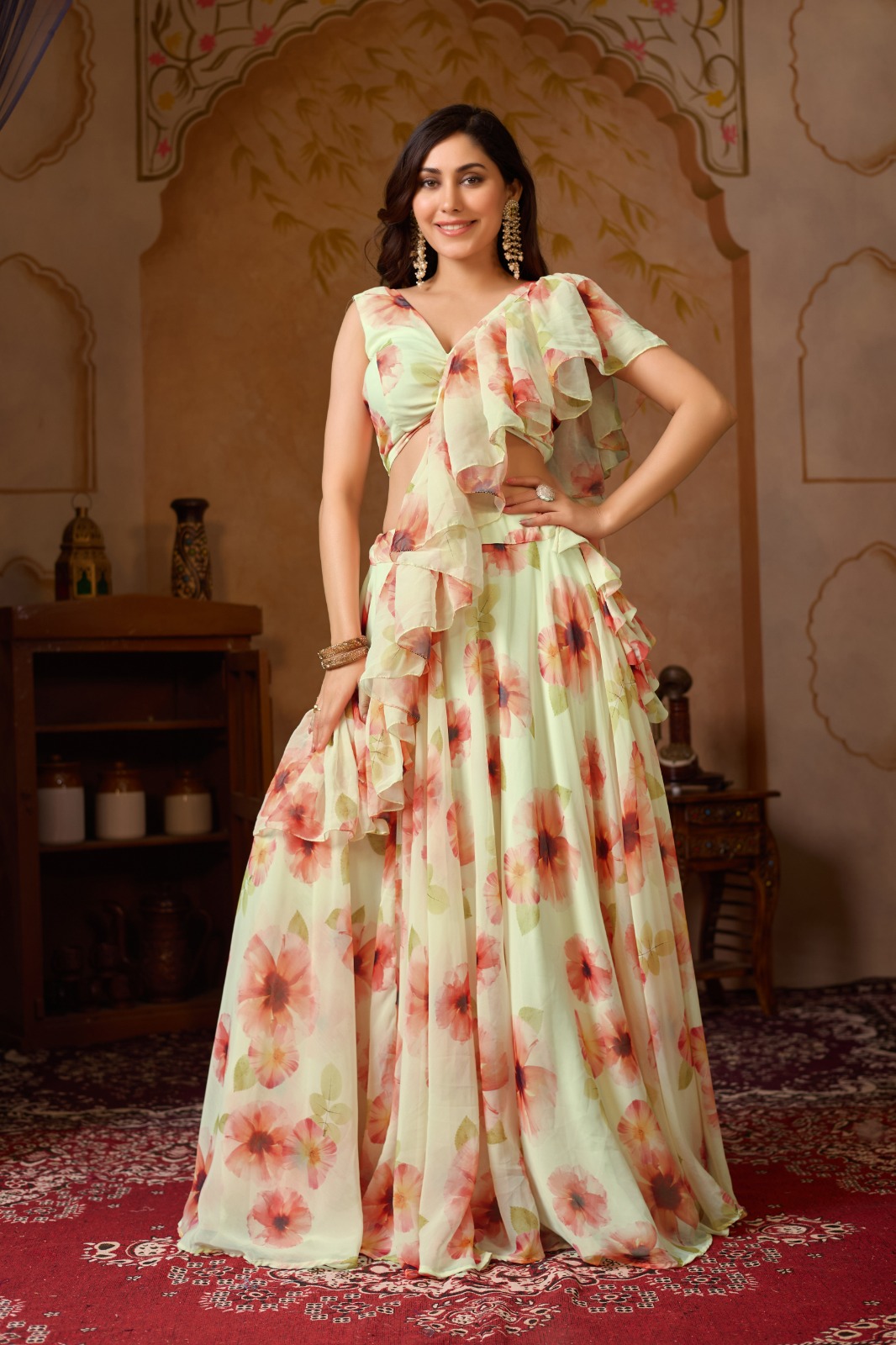
A pastel georgette style, such as Pastel Floral Georgette Lehenga Set with Ruffle Blouse, is suitable for a daytime engagement, brunch or softer festive palette. Georgette drapes fluidly and usually feels less rigid than a heavily structured skirt, although the lining and waistband still determine comfort.
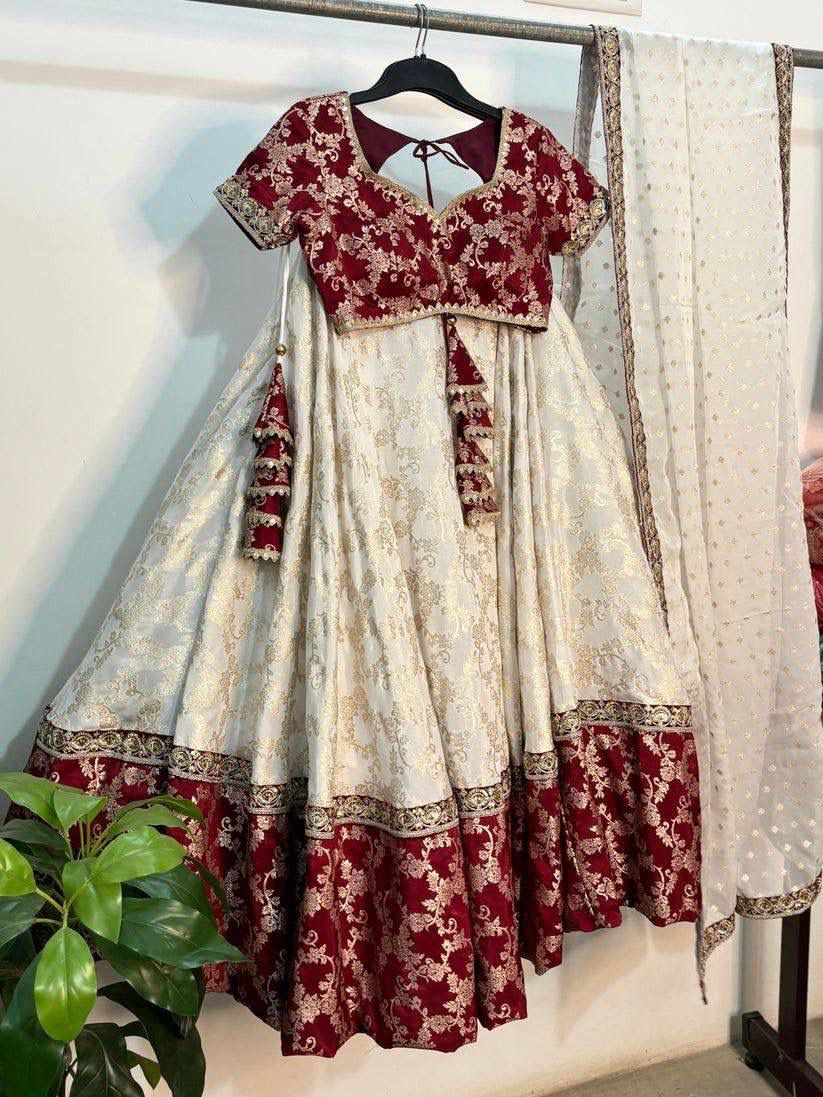
Jacquard has a visibly woven pattern and a firmer fall. Cream & Maroon Jacquard Lehenga Choli with Dupatta Set can support a more formal evening appearance because the fabric itself contributes texture even when jewellery is restrained. Pair a patterned jacquard set with simpler earrings to prevent competing motifs.
Mirror work reflects light and photographs effectively in evening settings, but the embellishment can add weight and may catch on delicate seating or bags. Cream Ethnic Lehenga Choli with Mirror Work Design is best styled with a secure blouse fit and a dupatta placement that keeps the decorated edge away from frequent friction.
Net can create a fuller silhouette, while embroidery can concentrate visual weight around the hem, bodice or dupatta. Cream Peacock Embroidered Net Lehenga Set for Women demonstrates why motif placement matters: a detailed skirt can balance a simpler blouse and prevent the upper body from appearing overly crowded.
Jharkhand Ethnic Fashion Guide: How can colour choices improve repeat wear?
Choose colour according to ceremony mood, lighting and your existing accessories, then select one reusable neutral or jewel tone rather than buying a shade that works for only one ritual.
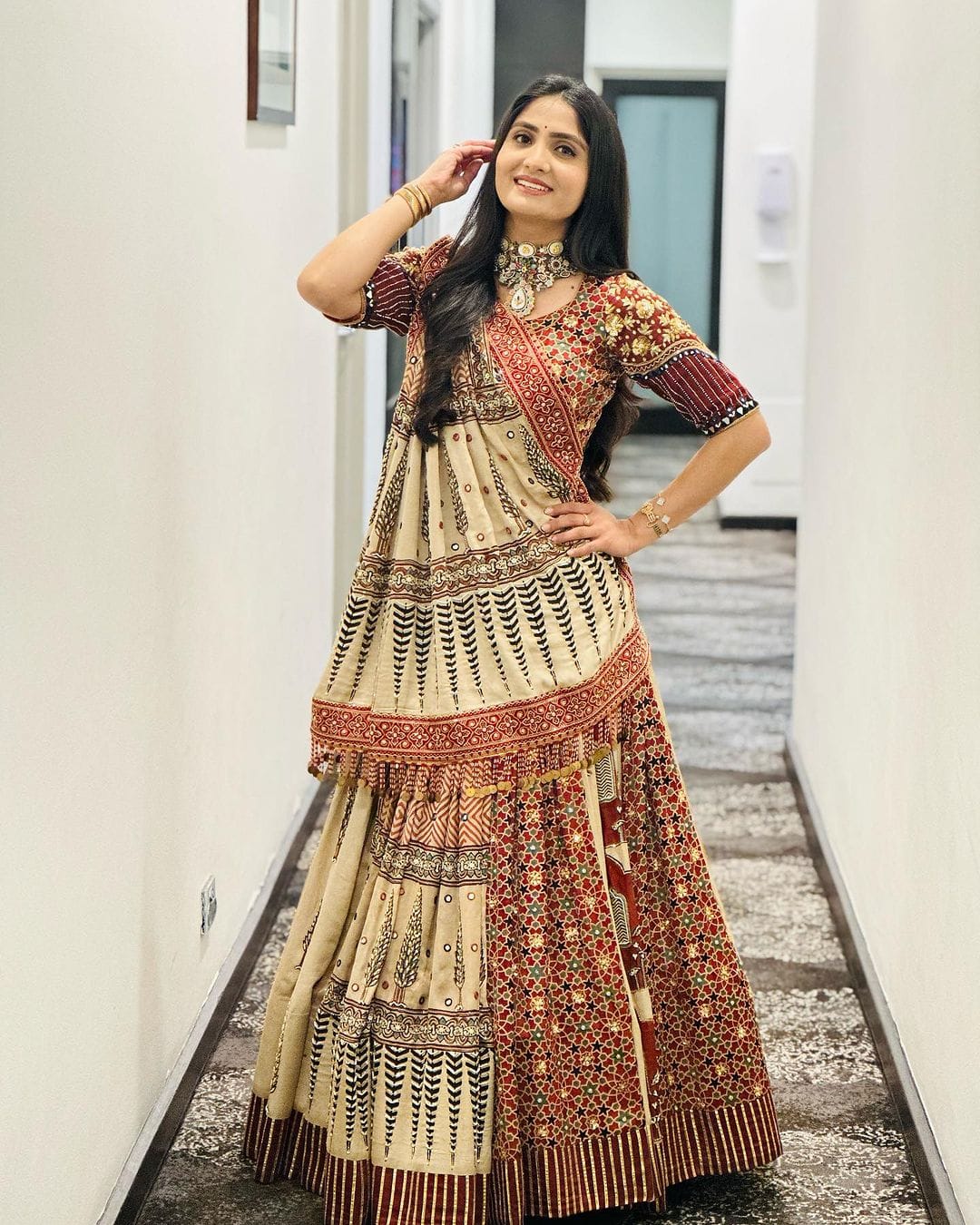
Yellow is a natural choice for a Haldi ceremony because it photographs brightly and connects with the turmeric ritual, but a yellow lehenga can also be worn for Basant celebrations, daytime pujas and summer family events. The Yellow Lehengas collection can be styled with green, ivory, pink or antique-gold accessories.
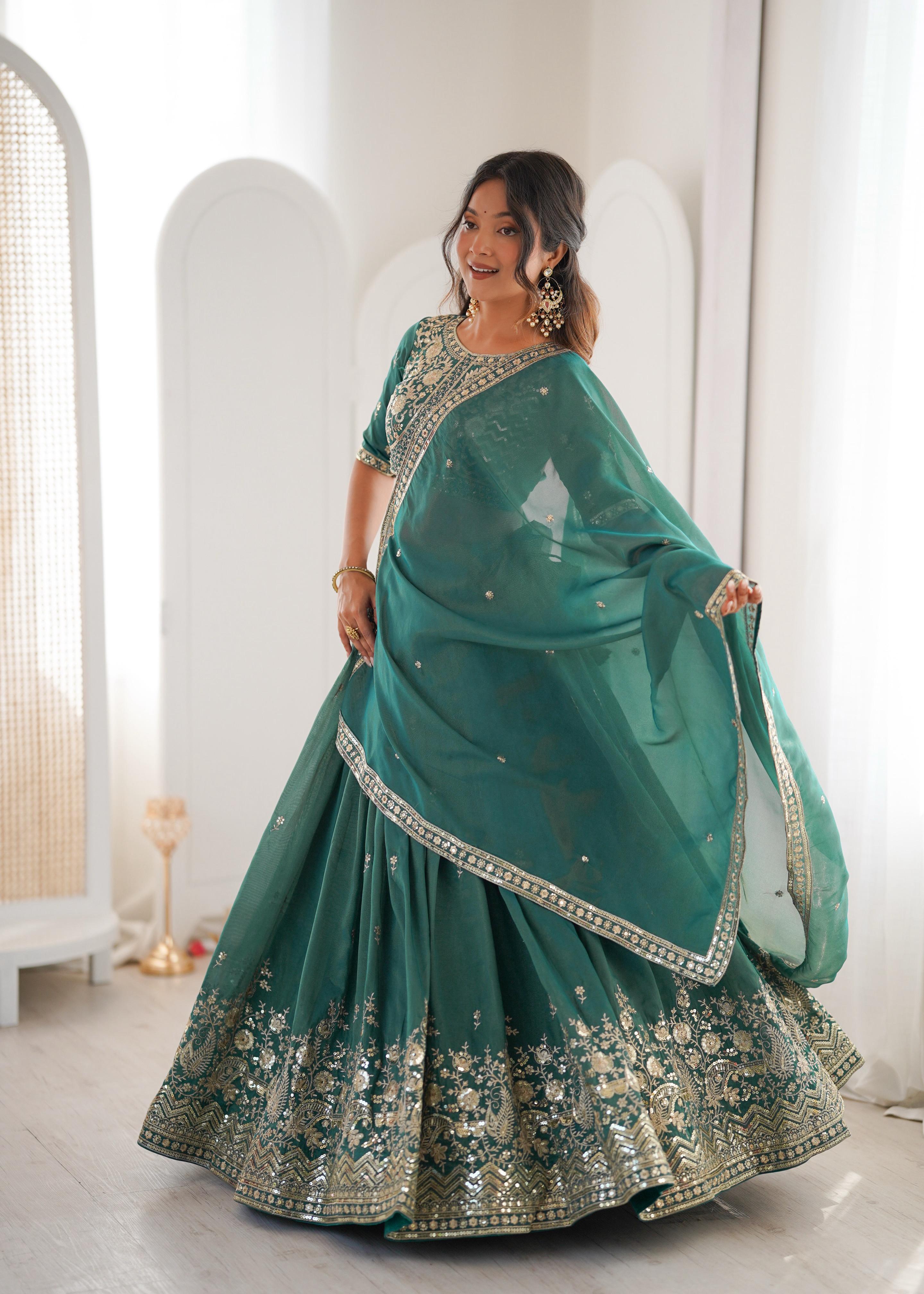
Green works well for Mehendi functions, festive dinners and outdoor celebrations because it complements foliage and natural settings. The Green Lehengas collection brings an useful starting point for styling with gold, pearl, kundan-inspired or contrasting pink accessories. Keep the blouse fit secure if the event includes dancing or repeated movement.
Red remains a strong wedding colour, but the depth of red changes the impression. A bright red reads as dramatic and festive, while maroon can feel more formal and evening-appropriate. Red Ethnic Lehenga Choli with Digital Print Design can be balanced with plain metallic jewellery when the digital print already supplies visual interest.
Beige, cream and ivory create a versatile base for colourful jewellery and can be worn at receptions, engagement parties and cultural gatherings. Beige Ethnic Printed Lehenga Set for Navratri and Garba works particularly well when paired with a contrasting dupatta, colourful bangles and comfortable footwear suitable for dancing.
Jharkhand Ethnic Fashion Guide: How should you style a lehenga for weddings and festivals?
Style a lehenga by balancing one dominant feature with quieter accessories, secure draping and footwear that matches the skirt length. A detailed blouse, ornate skirt and heavily worked dupatta don't all need equally bold jewellery.
For Mehendi and sangeet functions
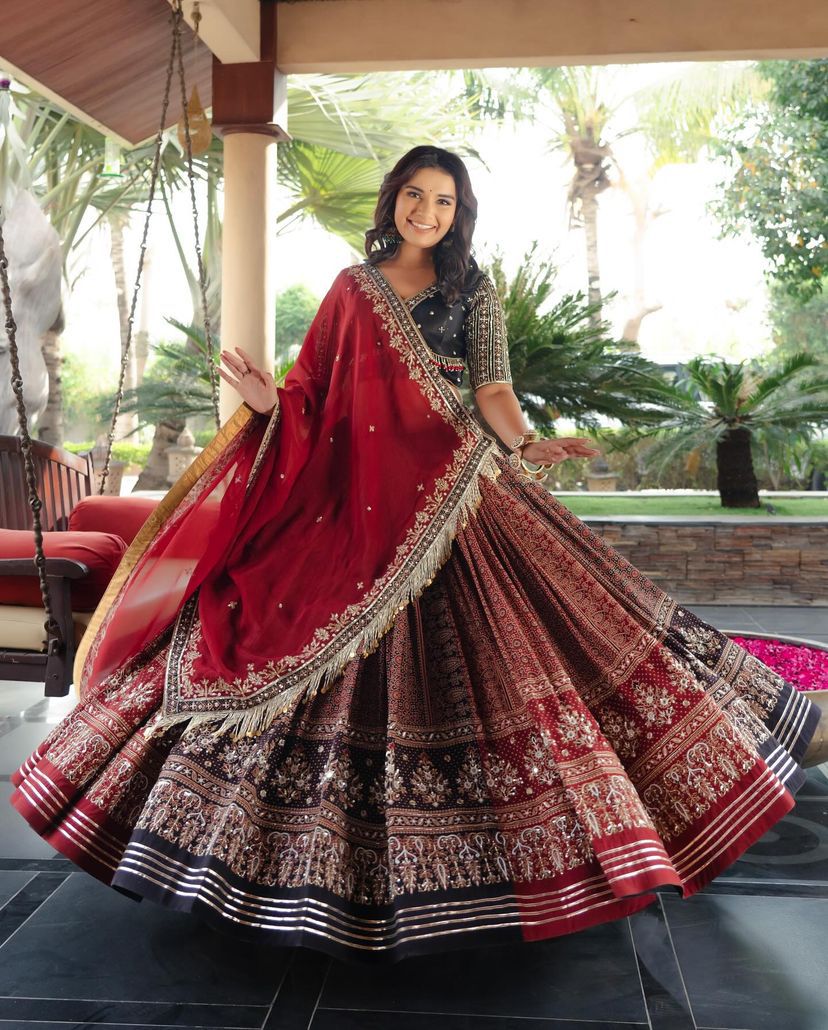
Choose a lighter lehenga with a secure dupatta and comfortable footwear for Mehendi and sangeet functions. Mehendi Lehengas can be styled with floral jewellery, small hoops or colourful bangles, while a cross-body potli or compact clutch keeps both hands available for movement and photographs.
Ruffle details, digital prints and mirror work can look lively without requiring bridal-level embroidery. Designer styling doesn't always mean maximum embellishment; it can also mean a clear colour story, well-placed motifs and a blouse that sits correctly through dancing.
For wedding ceremonies and receptions
Choose richer fabric, deeper colour and more structured detailing for a formal wedding ceremony or reception. Designer Threadwork Silk Lehenga Choli Set with Dupatta gives the outfit a ceremonial direction, while restrained jewellery can keep the look balanced if the threadwork is already prominent.
For a bridal lehenga, inspect the weight before committing to the outfit. A skirt with dense embroidery can become tiring after several hours, particularly when the wearer must stand for rituals. A lighter reception lehenga may be more practical for guests who want formal impact without bridal-level construction.
For Navratri and Garba
Choose a lehenga with a secure waistband, breathable lining and enough flare for turning during Garba. Avoid very long hems that can catch underfoot, and select a dupatta arrangement that remains close to the body while dancing.
Beige Ethnic Printed Lehenga Set for Navratri and Garba can be made more festive through contrasting bangles, oxidised earrings and a colourful waist accent. Comfortable block heels, wedges or embellished flats are generally more useful than narrow high heels for an active evening.
Jharkhand Ethnic Fashion Guide: How do you care for and reuse festive outfits?
Care for festive ethnic wear by following the garment label, limiting unnecessary washing and storing embellished pieces flat or in breathable covers. Proper storage protects zari, mirror work, embroidery, lining and colour between occasions.
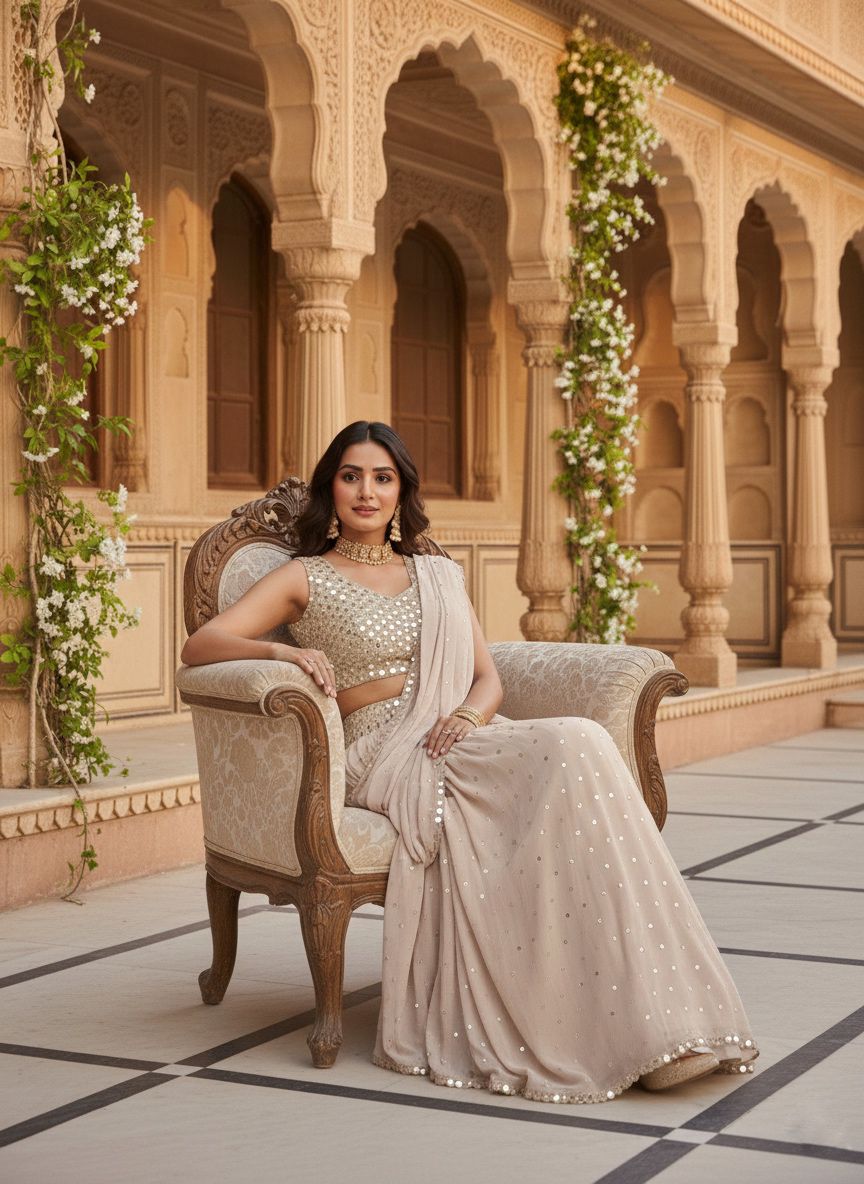
Dry-clean heavily embellished lehengas and sarees when the care label recommends professional cleaning. Do not iron mirror work, zari or raised embroidery directly; place a cotton cloth over the reverse side and use low heat only when the fabric instructions permit it. Spot-test stain treatment on an inside seam before applying anything to visible fabric.
Air an outfit after wearing it before placing it in storage. Store a heavy lehenga horizontally when possible, because a hanger can place prolonged stress on the waistband and shoulder seams. Fold the dupatta with acid-free tissue or clean muslin between embellished sections to reduce snagging.
Rewear value improves when the main garment can be styled in more than one way. Wear a detailed choli with a plain skirt, pair a festive skirt with a simple blouse, use a dupatta with a salwar suit, or style a saree blouse with another drape. A cream, beige, green or maroon base often gives more future combinations than a highly specific novelty colour.
Before purchasing, estimate the cost per use rather than the price alone. An outfit worn at a wedding, reception, festival and family dinner may offer more practical value than a cheaper design that works for only one photograph. That approach makes ethnic shopping more considered and helps build a wardrobe suited to real celebrations in Jharkhand.
Common Questions About Choosing Jharkhand Ethnic Wear
What should I wear to a wedding in Jharkhand?
A lehenga choli, saree or richly detailed salwar suit can suit a wedding in Jharkhand, depending on the ceremony and your comfort needs. Choose a more structured or embellished outfit for an evening reception and a lighter design for daytime rituals.
Is a ready-made lehenga better than a semi-stitched lehenga?
A ready-made lehenga is better when you need speed and your measurements closely match the size chart. A semi-stitched lehenga is better when you need tailoring around the bust, waist, sleeves or skirt length and have at least 7 to 14 days for alterations.
What is suitable for a Haldi ceremony?
A yellow, cream or light green outfit with moderate embellishment is suitable for a Haldi ceremony. Choose washable or easy-care styling, secure footwear and a dupatta that can be moved away from turmeric during the rituals.
Which lehenga colour is best for Mehendi?
Green is a particularly suitable lehenga colour for a Mehendi function because it complements the ceremony's natural and botanical setting. Pink, yellow, beige and contrasting metallic accessories can also create a festive look without requiring bridal-level embroidery.
How can I make a lehenga comfortable for Garba?
Choose a lehenga with a secure waistband, breathable lining, a safe hem length and enough flare for turning. Pair the outfit with flats, wedges or block heels and pin the dupatta so it does not interfere with arm movement.
How should an embellished lehenga be stored after a wedding?
Air the lehenga before storage, follow the care label and use professional cleaning when required. Store the skirt horizontally when possible, keep embellished layers separated with clean muslin or tissue, and avoid compressing mirror work or raised embroidery.





