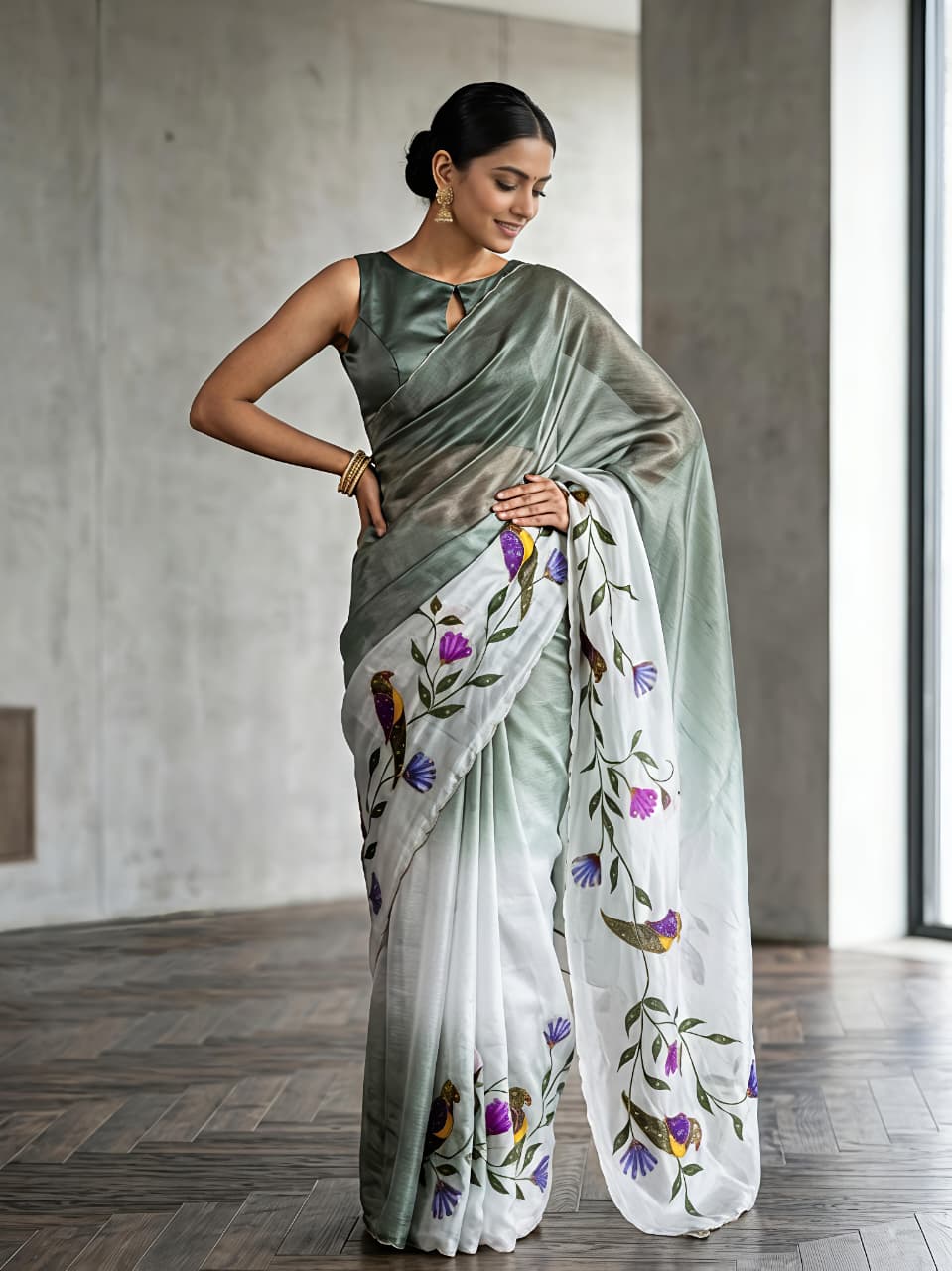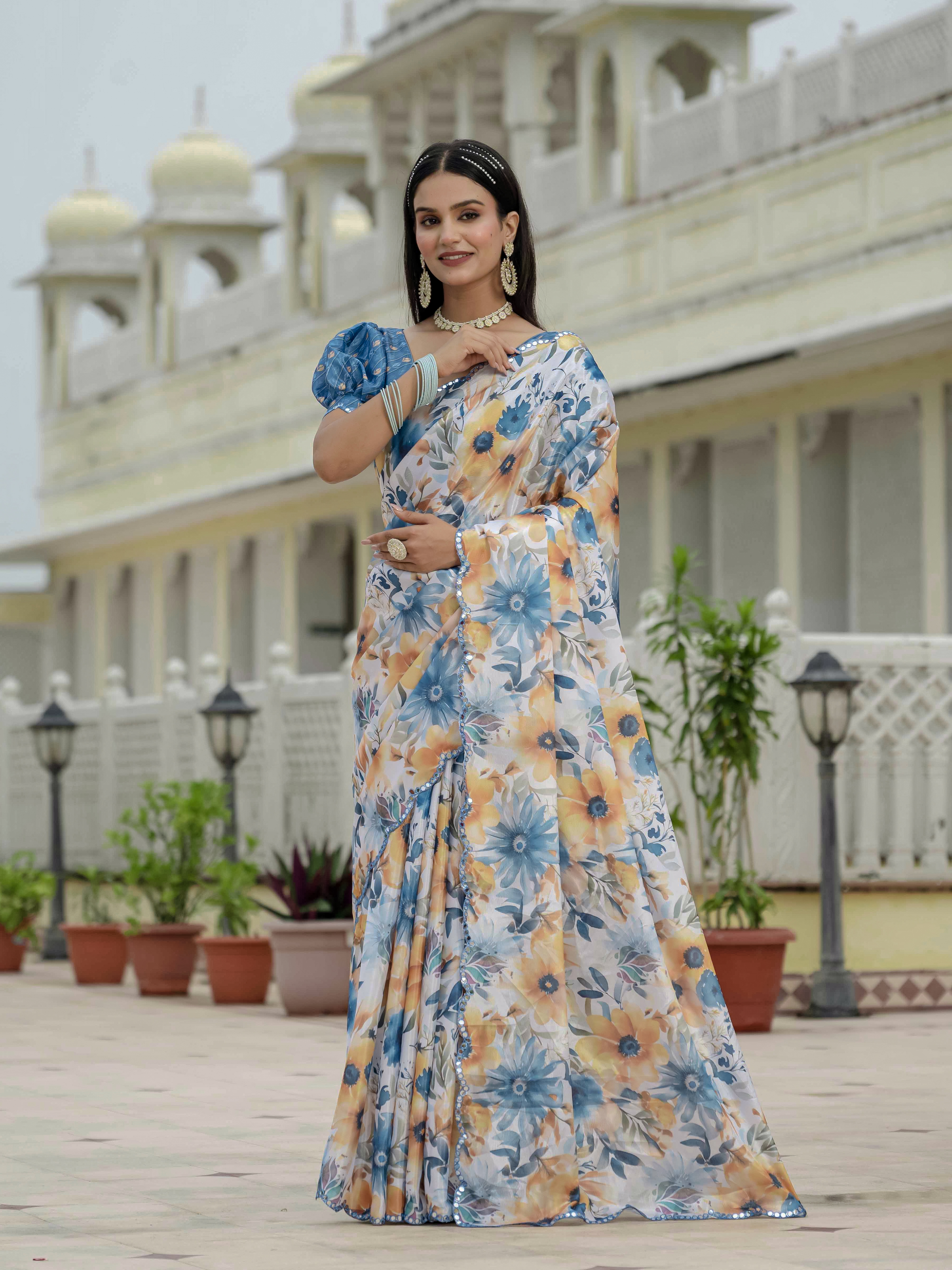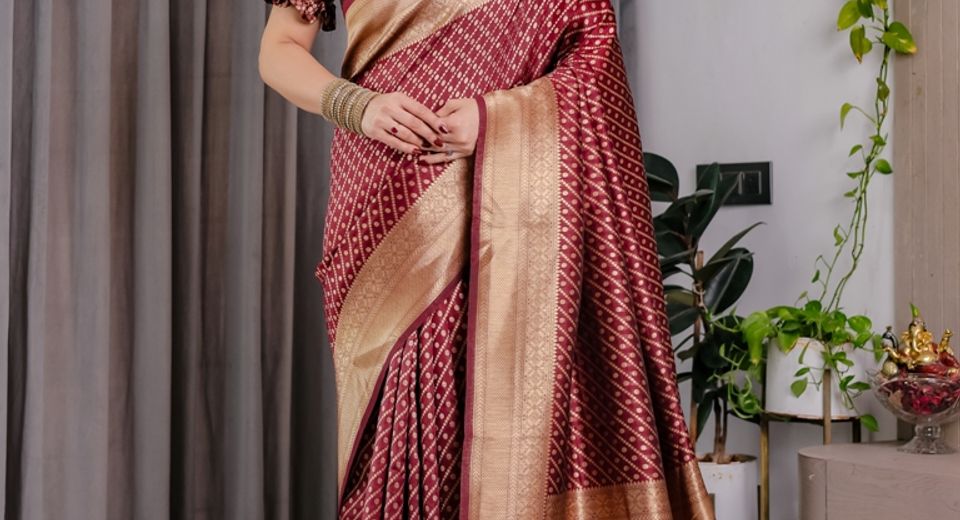
Janmashtami Saree Styling: Banarasi & Traditional UP Looks becomes especially beautiful when the outfit balances festive richness with the ease needed for temple visits, puja and family gatherings. Banarasi silk supplies the shine through zari, while a carefully chosen drape, blouse and jewellery can bring a distinctly North Indian character without making the ensemble feel costume-like.
Krishna Janmashtami celebrations often affect several hours of standing, sitting on the floor, singing and moving between indoor and outdoor spaces. The most successful saree therefore needs more than a striking colour. It needs a manageable pallu, secure pleats, breathable blouse construction and accessories that remain comfortable during midnight prayers.
Why Banarasi Silk Works for Janmashtami
Banarasi silk works for Janmashtami because its woven zari, structured fall and ceremonial appearance suit temple rituals and festive family photographs. The fabric can look rich without requiring heavy embroidery or a large number of accessories.
Banarasi silk is traditionally associated with Varanasi, a city closely connected with the religious and cultural landscape of Uttar Pradesh. Banarasi weaving may use silk, zari and patterned techniques such as brocade or jacquard. Soft silk Banarasi sarees usually offer a gentler drape than very stiff bridal brocades, making them practical for a day-to-evening celebration.
Zari borders frame the saree when the pallu is pleated or worn over the shoulder. A narrow golden zari border creates a refined appearance for daytime puja, while a broad floral or heavily patterned border gives greater visual impact for an evening dahi handi event. Border width also affects weight, so check the border measurements and fabric composition instead of judging only from photographs.
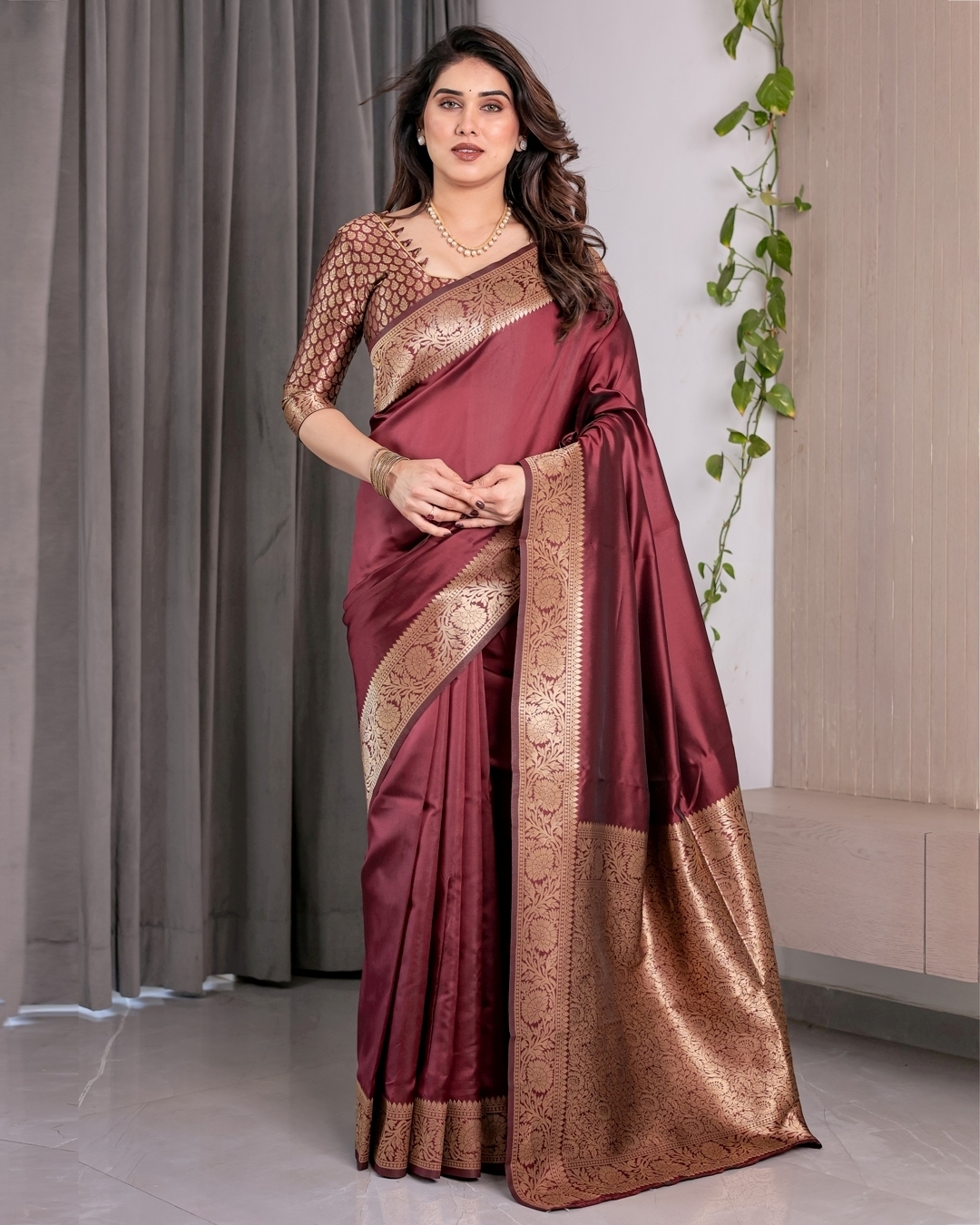
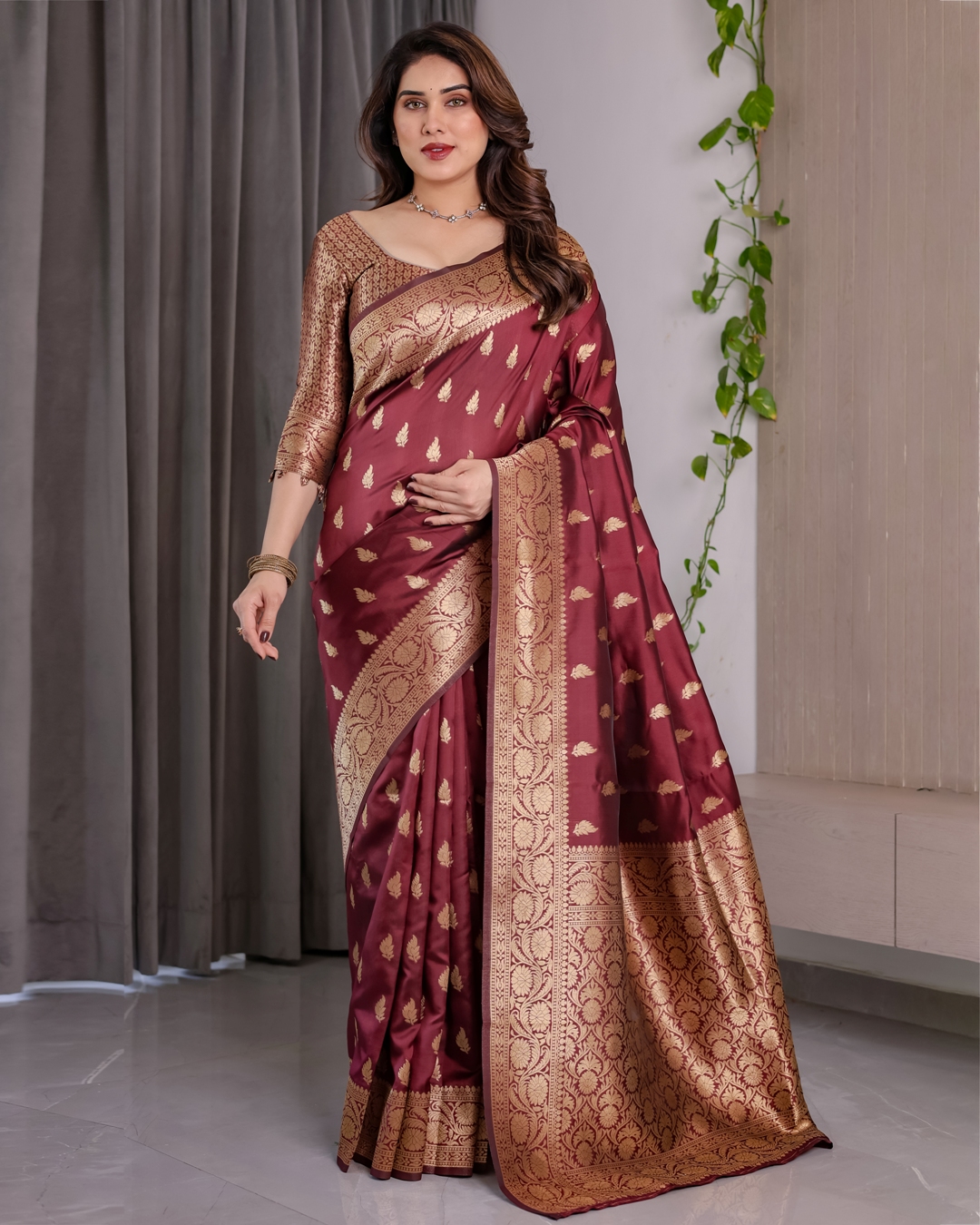
The Maroon Banarasi Soft Silk Saree with Golden Zari Border demonstrates why a simple border can be effective. Maroon photographs well under warm indoor lighting, and gold zari adds a festive highlight without overwhelming the face. The Wine Banarasi Soft Silk Saree With Golden Zari Border gives a slightly cooler, deeper alternative for evening celebrations.
Choosing a Traditional UP-Inspired Colour Palette
Maroon, red, rani pink, mustard, peacock blue and deep purple all work for a traditional UP-inspired Janmashtami saree, but the best choice depends on the time of day, lighting and jewellery.
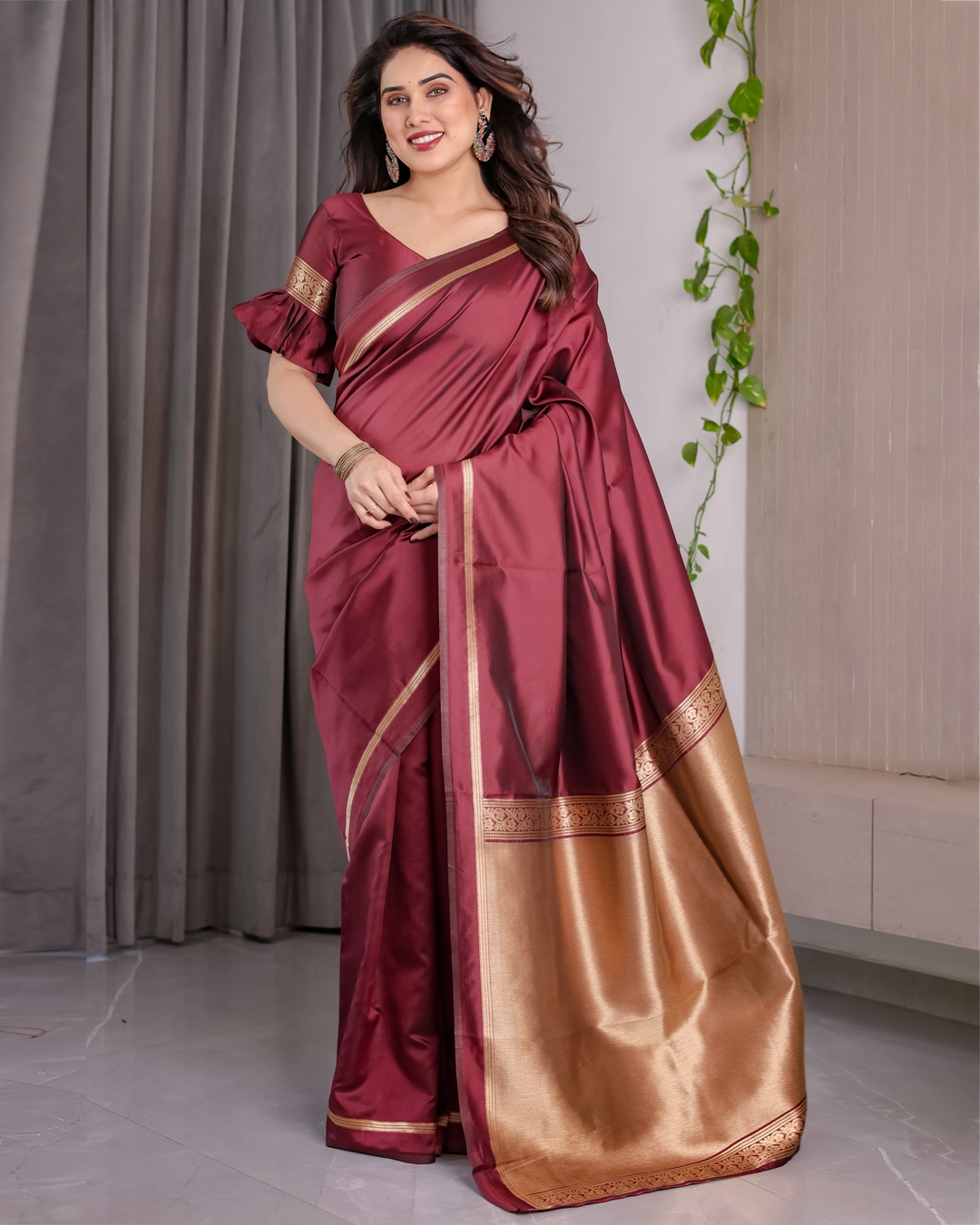
Red has a strong festive presence and pairs naturally with antique gold jewellery. Maroon and wine feel more understated while retaining the depth associated with Banarasi silk. Purple creates a regal contrast with gold zari and can be especially striking under evening lights. Pink gives a softer, celebratory result and suits daytime family functions.
Colour symbolism can guide the styling without becoming restrictive. Yellow and saffron are often associated with Krishna's pitambar, while peacock blue recalls familiar Krishna imagery. Green can represent freshness and works well for a daytime celebration. A saree doesn't need to reproduce a deity's clothing to feel appropriate; one carefully chosen colour reference is usually enough.
The Purple Banarasi Soft Silk Saree With Golden Zari Border can be styled with a mustard or antique-gold blouse for a Krishna-inspired palette. The Red Banarasi Soft Silk Saree With Golden Zari Floral Border already contains a strong ornamental element, so it benefits from a quieter blouse and restrained jewellery.
Shoppers who prefer lighter or softer colours can also compare the Pink Georgette Sarees collection for colour direction, although georgette has a different fall and level of shine from Banarasi silk. Colour inspiration and fabric selection don't have to come from the same saree.
Janmashtami Saree Styling: Banarasi & Traditional UP Looks for the Drape
A secure Nivi drape with medium-width pleats is the most practical choice for Janmashtami because it remains recognisably traditional while allowing easy movement during puja.
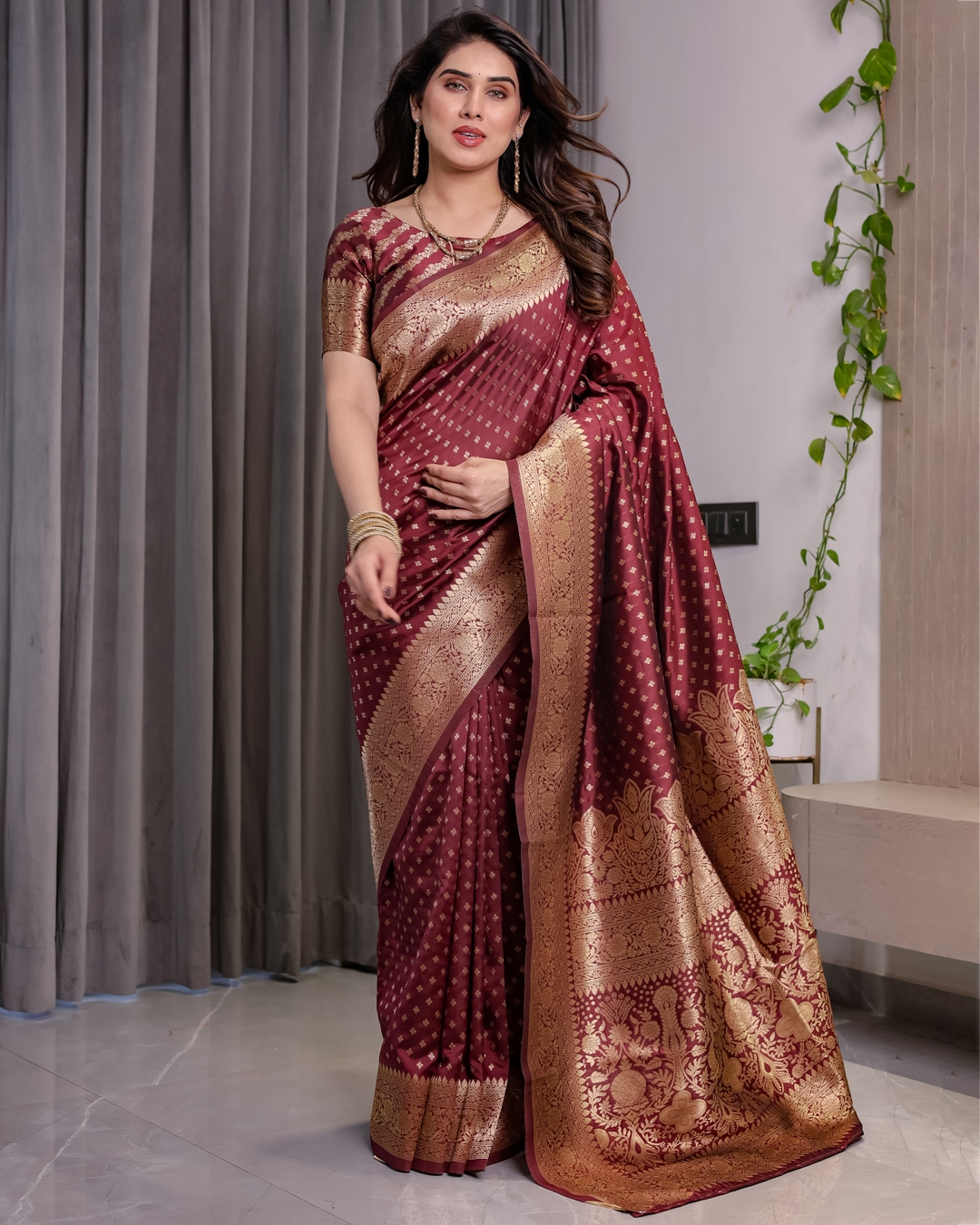
Start with a well-fitted petticoat or saree shapewear that doesn't loosen when you sit. Tuck the saree firmly at the waist, make five to seven pleats of approximately 4 to 5 inches each, and place the pleats slightly to the left of the navel. The exact number depends on the saree width, but evenly sized pleats prevent the lower half from becoming bulky.
Keep the pallu between 2.25 and 2.5 metres if you want visible shoulder pleats without excessive fabric trailing behind you. Pin the pallu at the shoulder and once near the blouse side seam. Two discreet pins are generally safer than many visible pins, which can pull zari and leave marks in delicate Banarasi silk.
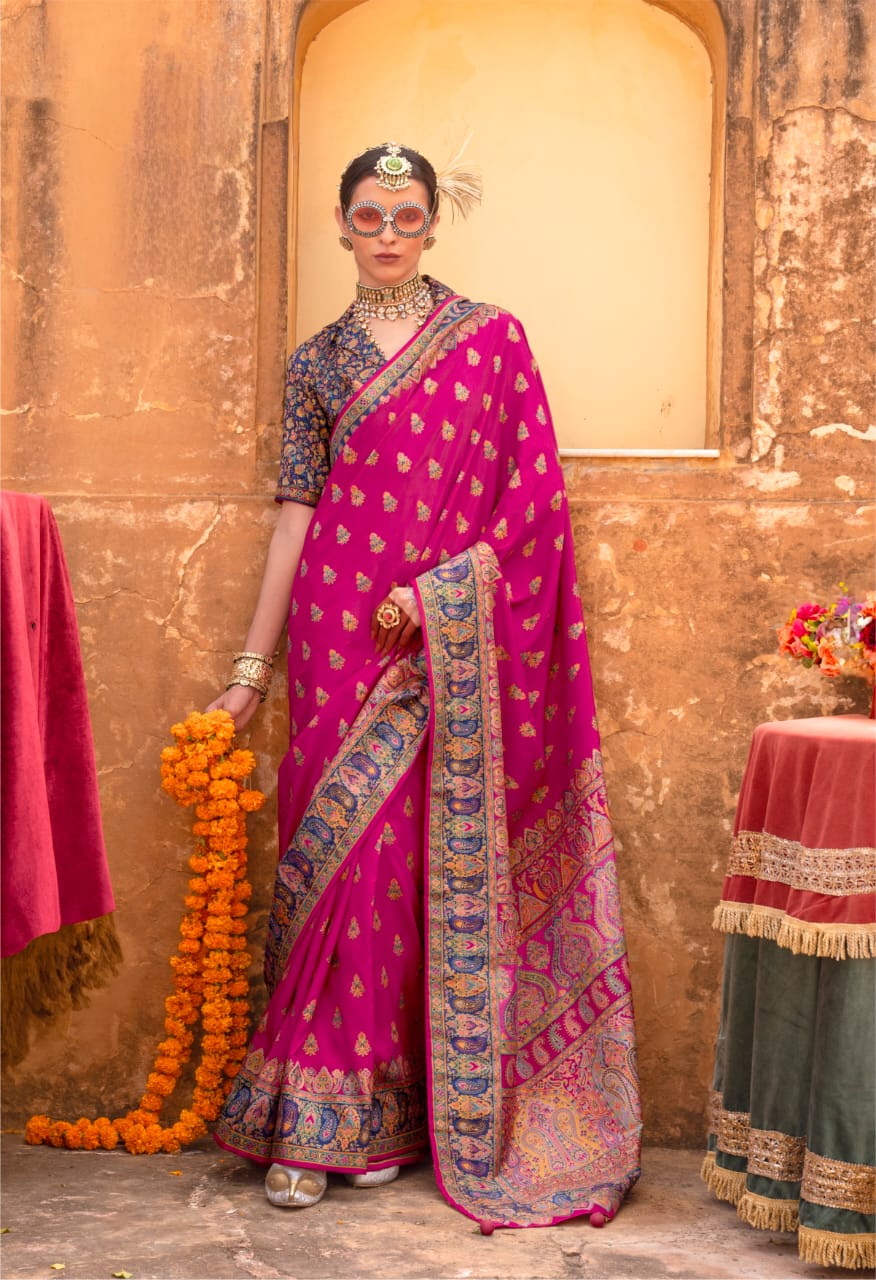
A seedha pallu can create a more recognisably North Indian appearance. In this style, the pallu comes from the back over the right shoulder and spreads across the front, allowing the zari end to remain visible. The seedha pallu is visually graceful, but the front spread can catch on lamps, chairs and jewellery. Use a shorter, firmly pinned pallu for crowded temple spaces.
Traditional UP styling also benefits from a slightly higher waist tuck and a clean, vertical fall. The result keeps the border visible near the ankles and prevents the saree from dragging. Avoid extremely long, loose pleats when the celebration includes floor seating or walking on uneven surfaces.
For a more regional visual cue, add a neatly folded pallu, a centre-parted hairstyle and a modest blouse neckline rather than combining several dramatic elements. The Maroon Banarasi Soft Silk Saree with Zari Border Online can work with this restrained approach when the outfit needs to move from a home puja to a family dinner.
Blouse Details That Make the Saree Look Intentional
A blouse with a clear colour or texture relationship to the saree creates a finished Janmashtami outfit more effectively than heavy embellishment alone.
Necklines and sleeves
A round neck, modest square neck or shallow V-neck works well with Banarasi silk because each neckline leaves room for a necklace. Elbow-length sleeves create a classic silhouette, while 12- to 14-inch sleeves offer better coverage for temple settings and cooler evening weather.
For a maroon or wine saree, try an antique-gold, rust, beige or matching maroon blouse. A purple saree can take a mustard, cream or deep green blouse. Red Banarasi silk pairs comfortably with a red, gold or muted pink blouse, especially when the saree already has a floral zari border.
Fabric and fit
Cotton silk, raw silk, brocade or plain silk can all work for the blouse, but the blouse should not be substantially heavier than the saree. A lined blouse with a 1 to 1.5 inch seam allowance is useful because festive meals, movement and repeated wear can make a very tight garment uncomfortable.
Test the blouse by lifting both arms, sitting cross-legged and fastening the back or hooks before the event. A blouse that feels fine while standing may pull across the shoulders during aarti. A wide, supportive bra strap and properly placed hooks are small construction details that can prevent constant adjustment.
A plain blouse often makes the most sense with a dense jacquard border. A blouse with small motifs can work with a simple zari border, provided the motifs don't compete with the saree's main colour. Repeating one detail, such as a gold sleeve edge or a small floral motif, makes the outfit appear coordinated.
Jewellery, Hair and Makeup for a Temple-Appropriate Finish
Temple-style gold jewellery, a small bindi and a neatly secured hairstyle provide the clearest traditional finish for a Banarasi Janmashtami saree.
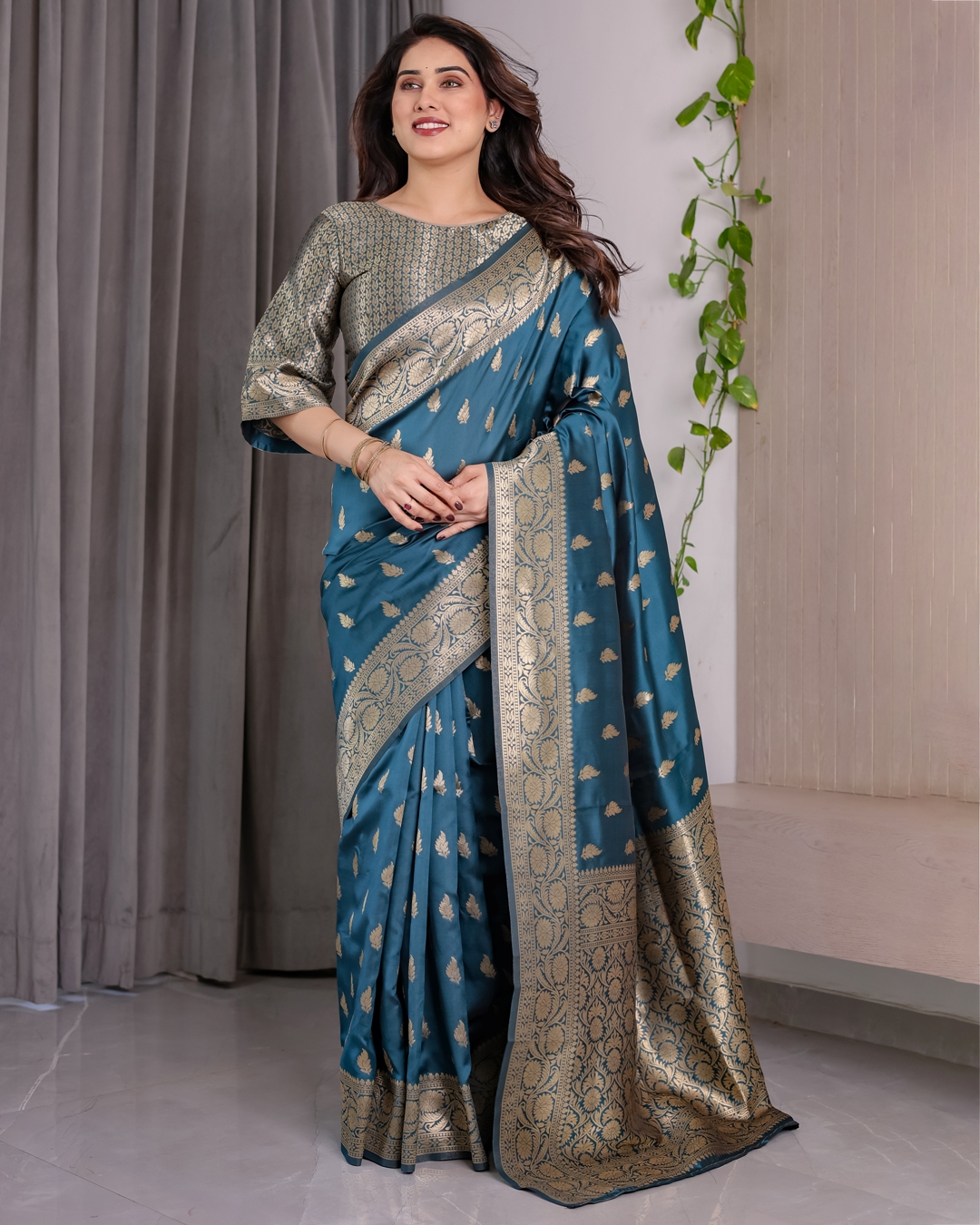
Choose one main jewellery focus. A short gold necklace with jhumkas works for a high or round neckline. A longer rani haar can suit a plain blouse, but it should not compete with a dense zari border. Kundan, meenakari, pearl and antique-gold pieces can all complement Banarasi silk; match the metal tone to the zari rather than mixing several unrelated finishes.
Jhumkas or small chandbalis are safer than very long earrings when the event involves children, crowds or repeated movement. A thin bangle stack is easier to manage than numerous rigid bangles. A small potli or wristlet keeps essentials close without adding a large modern bag that interrupts the silhouette.
A low bun decorated with gajra gives a traditional UP-inspired effect and keeps hair away from the face during a long puja. A centre part with a small bindi or understated maang tikka can reinforce the festive mood. Secure the bun with U-pins and a hair net if you expect to move frequently.
Makeup should remain stable in warm rooms. A long-wear base, kohl, waterproof mascara and a rose, brick or red lip can withstand several hours better than a heavily layered look. Apply fragrance to the skin before wearing the saree and avoid spraying alcohol-heavy perfume directly on Banarasi silk.
Building the Look Around Different Banarasi Borders
The border width and motif should determine how much additional ornament the Janmashtami outfit needs.
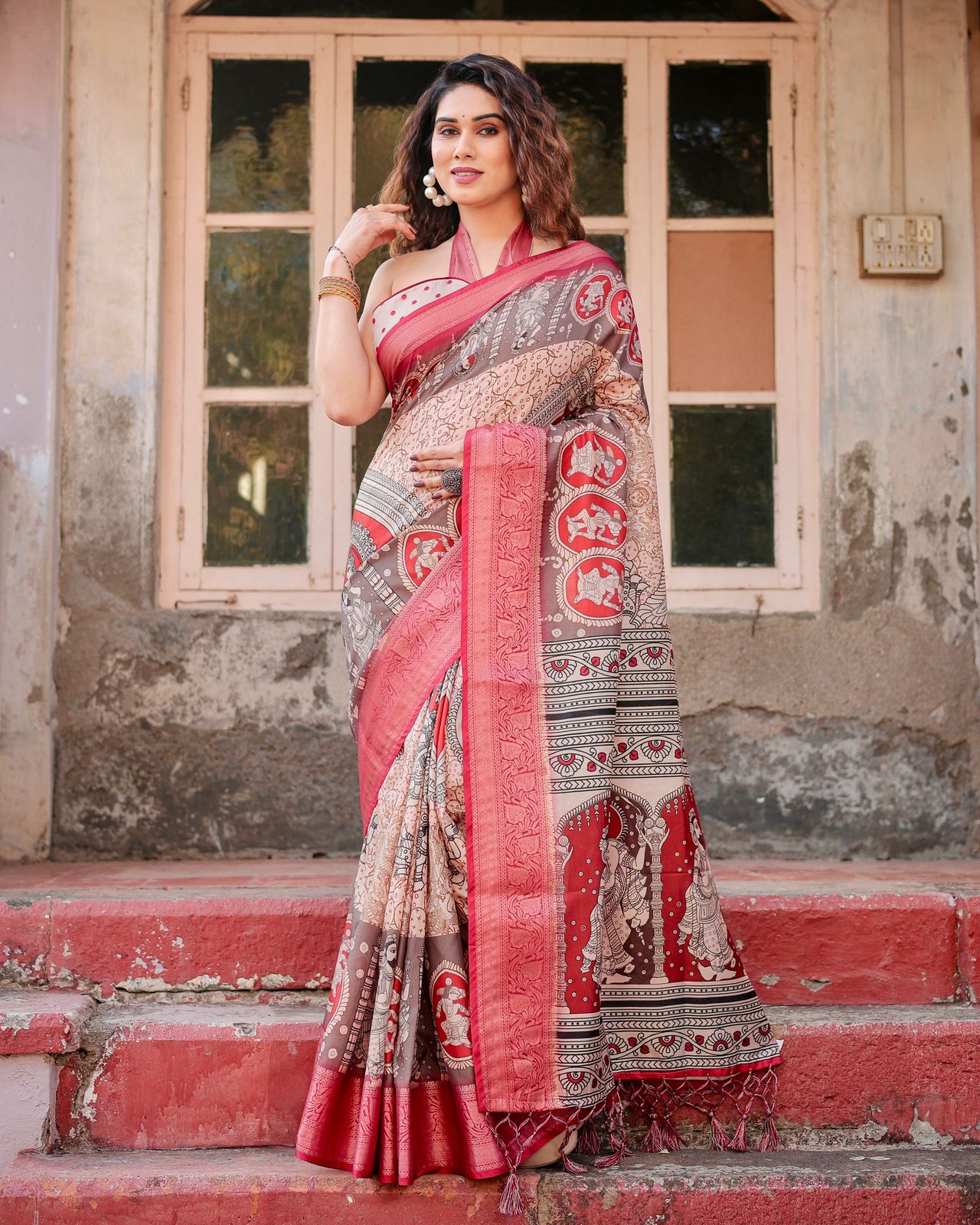
A narrow golden zari border looks elegant with a contrasting blouse, a medium necklace and a clearly pleated pallu. The Maroon Banarasi Soft Silk Saree With Golden Zari Border is suited to this balanced approach, particularly for daytime puja or a family gathering where understated richness is preferable.
A floral border creates more visual movement and can become the main design feature. The Maroon Banarasi Silk Saree With Floral Jacquard Zari Border needs little additional surface decoration. Pair it with a plain blouse, small gold earrings and a simple bindi so the floral jacquard remains visible.
A richer but still versatile maroon option is the Maroon Banarasi Soft Silk Saree with Golden Zari Border. A matching blouse creates a column of colour, while a beige or gold blouse breaks up the depth for daytime wear. If two catalogue listings have similar names, compare measurements, blouse-piece length and care instructions before ordering.
The Maroon Banarasi Soft Silk Saree With Golden Zari Border can also be made more contemporary with a sleeveless high-neck blouse, but that choice is less traditional than elbow-length sleeves. The Purple Banarasi Soft Silk Saree With Golden Zari Border needs fewer accessories because its colour already supplies strong visual contrast.
For shoppers comparing price points, the Red Banarasi Silk Sarees for Weddings Under 1100 collection may offer festive colour inspiration, but a lower price can reflect a synthetic blend, lighter zari or shorter blouse piece. Read the fibre composition and measurements before assuming that every red Banarasi saree has the same weight or weave.
Comfort, Care and Planning Before the Celebration
A comfortable Janmashtami saree depends on preparation at least one day before the event, not on last-minute pinning.
Steam or air the saree according to its care label and inspect the border for loose zari before wearing it. Do not iron Banarasi silk directly at a high temperature. Place a thin cotton cloth between the iron and the saree, use a low setting, and avoid pressing repeatedly over metallic zari.
Keep safety pins, two small hairpins, tissues and a compact sewing kit in the handbag. Test every safety pin on the reverse side of a spare fabric before using it on the saree. Pins should hold the fabric without piercing prominent zari motifs.
Choose footwear with a stable sole and a heel no higher than 1.5 to 2 inches if the celebration includes prolonged standing. A saree border that sits 0.5 to 1 inch above the floor is less likely to collect dust or catch under the heel. Take a short walk at home after draping to check the length.
Banarasi silk should be stored clean and completely dry. After wearing the saree, air it in shade for a few hours, fold it with soft cotton or muslin, and refold it every few months to reduce permanent crease lines. Avoid storing zari directly against plastic for long periods because trapped moisture can affect metallic threads.
The Silk Sarees Under 3000 With Discount collection can be useful for comparing budget expectations, while the Party Wear Sarees collection may help with broader festive styling ideas. Gray Color Sarees Under 1000 can also provide contrast-colour inspiration for blouses and accessories, even though grey is a cooler and less traditional choice for Janmashtami.
A Simple Outfit Formula for Three Janmashtami Settings
A daytime home puja suits a medium-weight Banarasi saree, a plain blouse, small jhumkas, a low bun and a short pinned pallu. Maroon, pink, mustard and soft purple remain visible in natural light without requiring dramatic makeup.
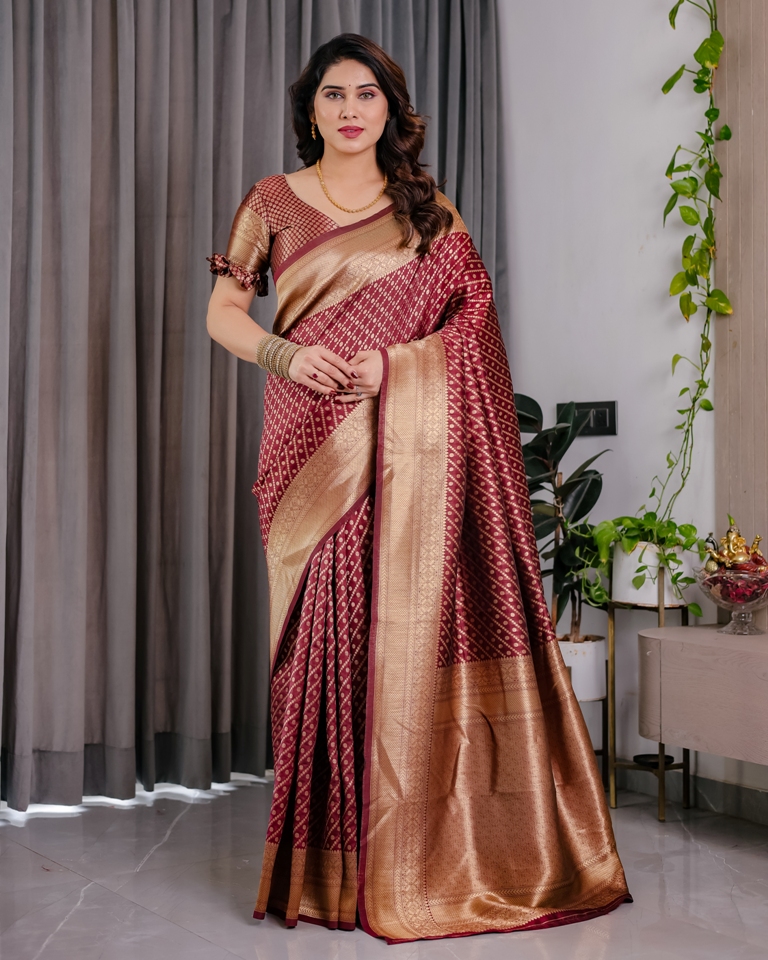
An evening family celebration can support a deeper wine, red or purple saree, a slightly brighter blouse and a broader zari border. Add one statement necklace or a maang tikka, not both if the blouse and pallu already contain substantial ornament.
A crowded temple visit requires the most practical version of the look. Choose soft silk, secure the pallu at two points, keep the border above the floor, wear low footwear and avoid very long earrings. Comfort improves the appearance because the wearer can participate in the rituals without repeatedly adjusting the saree.
The most reliable Janmashtami saree outfit combines one strong traditional reference with up-to-date fit and sensible construction. Banarasi silk, an UP-inspired seedha pallu, gold zari, a centre-parted hairstyle or a gajra can each provide that reference; using all of them heavily at once can make the outfit look visually crowded.
Common Questions About Banarasi Sarees for Janmashtami
Which Banarasi saree colour is best for Janmashtami?
Maroon, red, purple, mustard and peacock blue are strong choices for Janmashtami because they complement gold zari and festive jewellery. Choose lighter pink or green for daytime events and deeper wine or maroon for evening celebrations.
How should I drape a Banarasi saree for a Janmashtami puja?
A secure Nivi drape with five to seven medium-width pleats and a pinned pallu is the most practical option for puja. A seedha pallu gives a more traditional UP appearance, but it should be pinned carefully so the front spread does not catch on lamps or furniture.
What blouse colour goes with a maroon Banarasi saree?
Antique gold, beige, rust, matching maroon and muted mustard all work with a maroon Banarasi saree. Choose a plain blouse when the saree has a floral jacquard or broad zari border.
Can I wear Banarasi silk to a crowded temple on Janmashtami?
Yes, Banarasi silk can work well for a crowded temple when the saree is lightweight and securely pinned. Keep the border slightly above the floor, choose stable footwear, avoid a very long pallu and wear jewellery that cannot snag easily.
How do I care for a Banarasi silk saree after Janmashtami?
Air the saree in shade after wearing it and store it only when it is completely dry. Fold Banarasi silk in soft cotton or muslin, refold it every few months and avoid direct high-heat ironing over zari.
Is a floral zari border too heavy for a Janmashtami saree?
A floral zari border is suitable for Janmashtami when the rest of the outfit remains restrained. Pair a floral-border Banarasi saree with a plain blouse, small earrings and a simple bindi to keep the look balanced.