

Janmashtami Outfit Ideas: Banarasi Sarees, Lehengas & Salwar Suits should account for real movement, not only photographs. A suitable Janmashtami ensemble allows you to sit during puja, walk through a temple queue, handle a dupatta near lamps and remain comfortable during late-night celebrations. Banarasi silk supplies ceremonial richness, while a breathable salwar suit or lighter lehenga can make movement easier. The right garment depends on the venue, weather, ritual schedule and time spent standing or sitting.
Janmashtami celebrates the birth of Krishna, so many festive wardrobes draw from peacock blue, morpankh green, yellow, saffron, ivory, pink and jewel tones. These colours are not a compulsory dress code. They are useful starting points for creating an outfit that feels connected to the festival without appearing theatrical.
Janmashtami Outfit Ideas: Banarasi Sarees, Lehengas & Salwar Suits for different settings
The best garment depends on how much walking, sitting and ritual participation your schedule involves. A saree suits a formal home puja, a lehenga works well for an evening celebration or dance, and a salwar suit is usually the most practical choice for temple visits and extended wear.
For a home puja
A home puja calls for a polished outfit that permits sitting cross-legged and moving between rooms. A soft Banarasi saree, a kurta with palazzos or a lightly embellished lehenga provides the right balance of ritual formality and comfort.
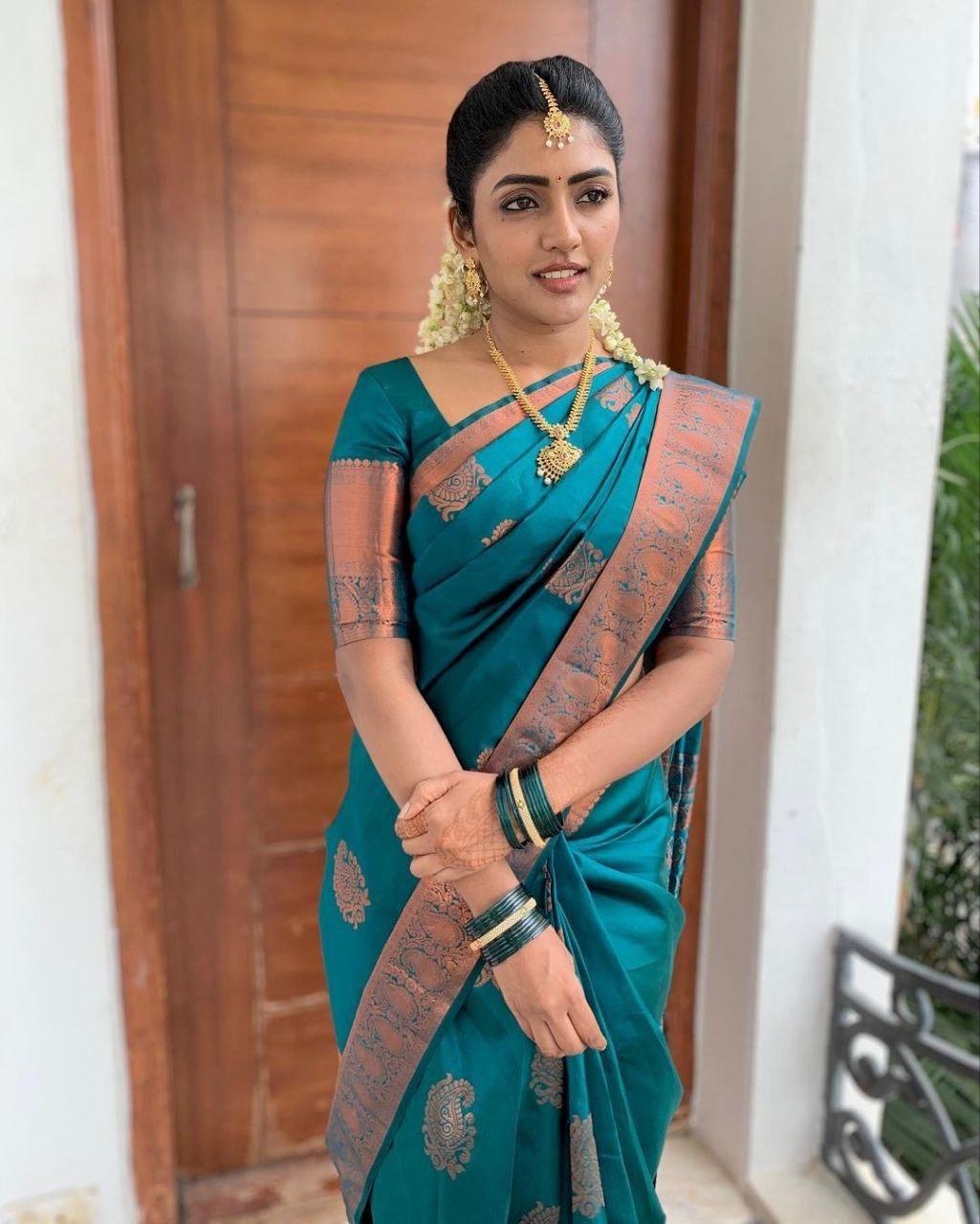
Festive Teal Banarasi Saree with Traditional Motifs offers an useful colour reference because teal carries jewel-tone depth without looking as predictable as red. Pair teal with antique-gold earrings, a low bun and a blouse in deep green, muted gold or matching teal. Pin the pallu near the shoulder if you'll be lighting diyas or serving prasad.
For a temple visit
A temple visit requires breathable layers, secure hems and modest coverage rather than elaborate volume. A salwar suit, cotton-silk saree or simple lehenga with a firmly pinned dupatta is easier to manage than a long train or fragile surface embellishment.
Choose footwear that can be removed and worn again without assistance. Flat juttis, padded sandals and slip-on mojaris are more practical than narrow heels. Avoid trailing tassels and loose dupattas near lamps, railings and crowded entrances.
For an evening family celebration
An evening gathering permits richer colour, more zari and a stronger jewellery choice because you may spend less time in direct heat. Royal Purple Banarasi Soft Silk Saree With Floral Zari Work can anchor a formal look with pearl drops, a compact potli and a blouse in purple, champagne or antique gold.
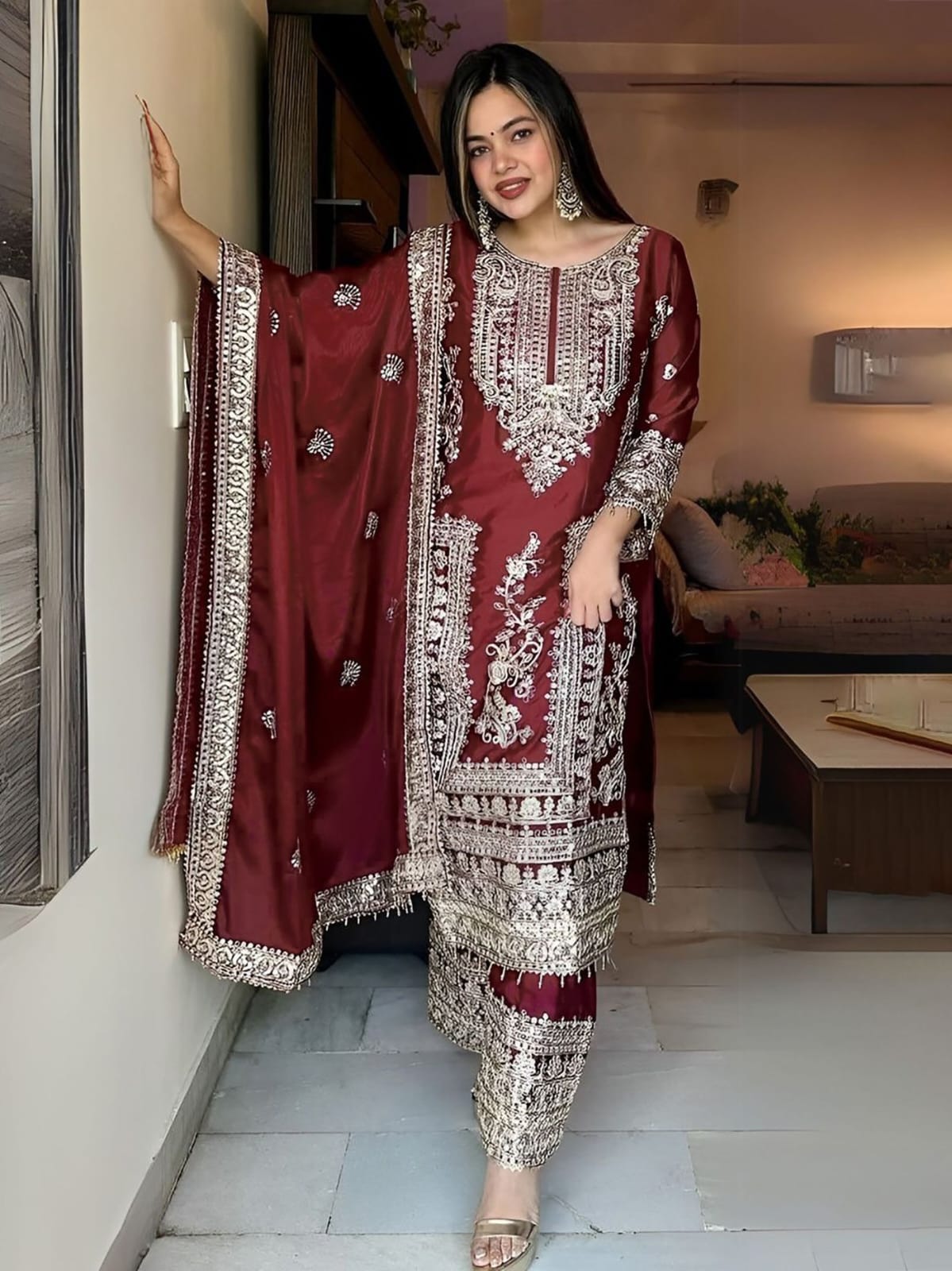
Maroon Wedding Wear Embroidered Palazzo Suit Set gives a suit-based alternative with the movement of wide trousers. Keep the jewellery focused: choose either a statement choker with small earrings or long earrings with a delicate bracelet so embroidery and accessories don't compete.
Janmashtami Outfit Ideas: Banarasi Sarees, Lehengas & Salwar Suits and the case for Banarasi silk
Banarasi silk works for Janmashtami because its dense weave, luminous surface and zari motifs create occasion-level richness without requiring heavy three-dimensional embellishment. Banarasi silk is associated with Varanasi weaving and often features zari work, but soft silk versions and silk blends can differ considerably in weight, shine and drape.
Check the proportion of zari before selecting a Banarasi saree for a long celebration. A broad metallic border and dense pallu create a formal effect but add weight. Smaller motifs and a restrained border usually make walking, folding and repeated sitting easier. A Banarasi soft silk saree can be an useful middle ground because it often drapes more easily than a heavily structured pure silk weave.
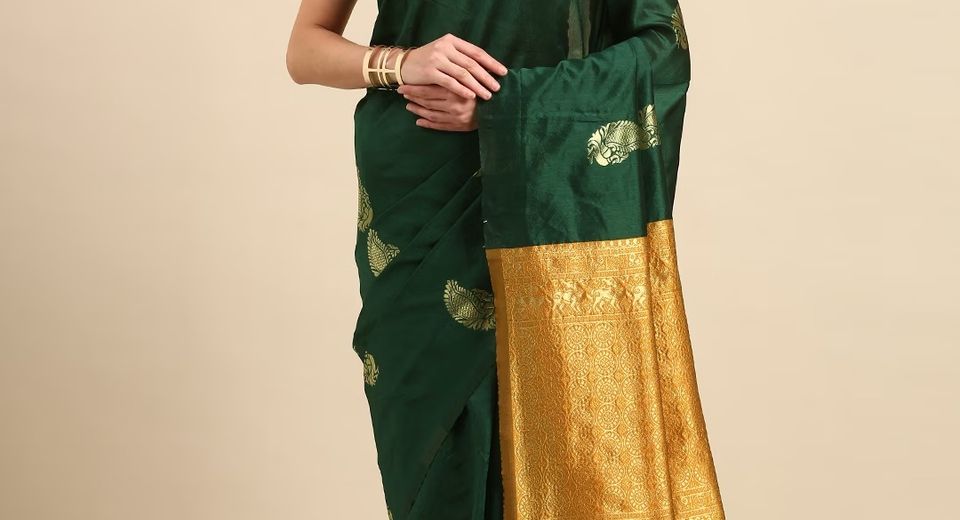
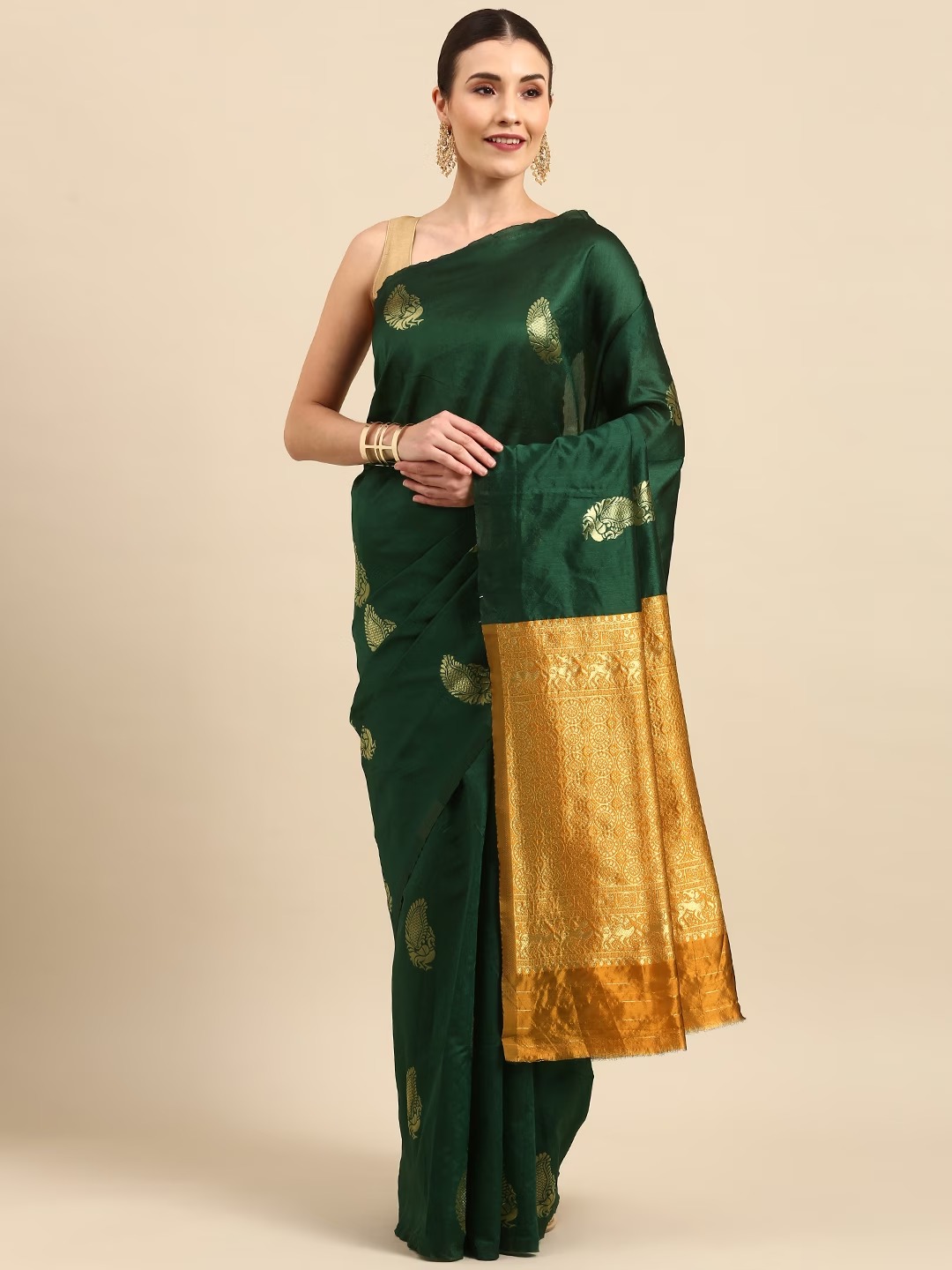
Bottle Green Banarasi Soft Silk Saree for Wedding Wear demonstrates how deep green can create a Krishna-inspired palette without relying on bright yellow. Style bottle green with a mustard, cream or antique-gold blouse for contrast. Green also photographs well under warm indoor lighting, where very dark navy or black can lose visible detail.
Banarasi silk becomes less suitable when weather is extremely hot, the venue lacks seating or the celebration involves substantial outdoor activity. Chanderi, cotton-silk and linen-cotton can reduce discomfort in those conditions. Fabric selection should respond to the actual climate rather than only to the perceived formality of Janmashtami.
Janmashtami Outfit Ideas: Banarasi Sarees, Lehengas & Salwar Suits in Krishna-inspired colours
One dominant colour with one supporting accent usually looks more intentional than several unrelated bright shades. Peacock blue with gold, bottle green with mustard, ivory with pink and purple with antique gold are dependable combinations for Janmashtami dressing.
Peacock blue and teal echo the visual language of peacock feathers and work particularly well with zari. Yellow and saffron bring warmth and can appear through a blouse, dupatta, bangles or flowers instead of covering the entire outfit. Ivory softens strong jewel tones and works well for daytime celebrations, provided the garment can be cleaned carefully after use.
Floral zari, traditional butis, paisley forms and temple-inspired borders suit Janmashtami because they add cultural detail without requiring novelty prints. A Banarasi saree with a restrained motif can look more refined than a garment covered in sequins, particularly in a temple or family setting.
Karnataka Silk Salwar Suits and Maharashtra Paithani Inspired Salwar Suits show how regional textile references can guide colour and border choices. Punjab Phulkari Embroidered Salwar Suits offer a brighter threadwork direction, while Kashmir Embroidered Salwar Suits can introduce delicate floral detail. These regional traditions are distinct from Banarasi weaving, so they should inspire styling choices rather than be treated as interchangeable techniques.
Janmashtami Outfit Ideas: Banarasi Sarees, Lehengas & Salwar Suits for comfortable styling
Comfort improves when an outfit is fitted at the right points, secured before leaving home and tested through the movements you'll actually make. Sit on the floor, raise your arms, walk up stairs and bend slightly before finalising the look.
Saree styling
Pin the first two or three saree pleats together from the inside, anchor the pallu at the shoulder and use a smooth underskirt that doesn't twist. A medium-height heel can improve the drape, but the hem should remain just above the floor with the chosen footwear. A blouse with a firm shoulder seam prevents the pallu from pulling the neckline out of place.
Lehenga styling
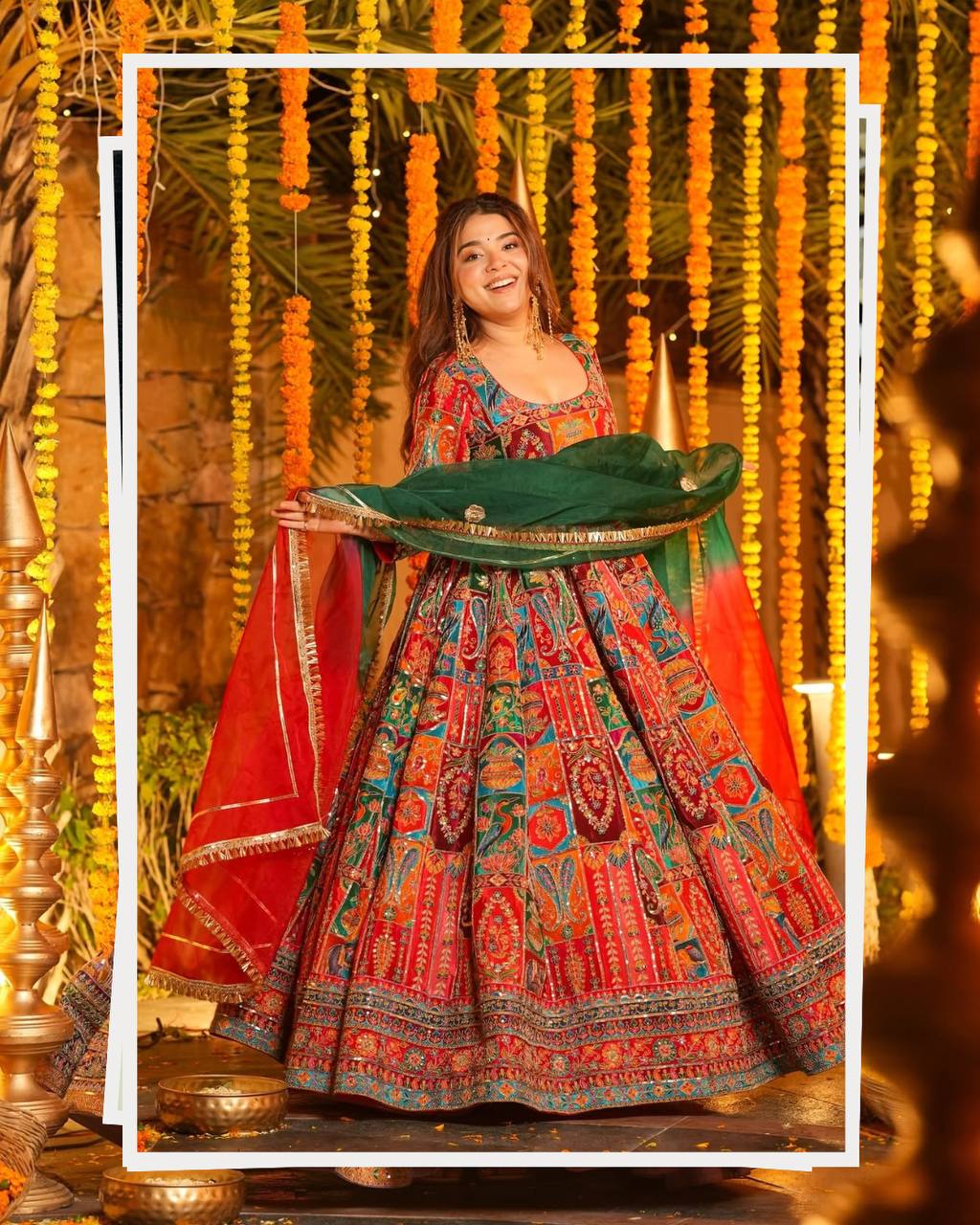
Secure a lehenga dupatta at the shoulder and waist when active movement is likely. A belt can hold the dupatta in place, but the belt should sit comfortably over the blouse or waistband rather than compressing the abdomen. Select a skirt length that clears the floor by approximately one centimetre while wearing the intended footwear.
Salwar suit styling
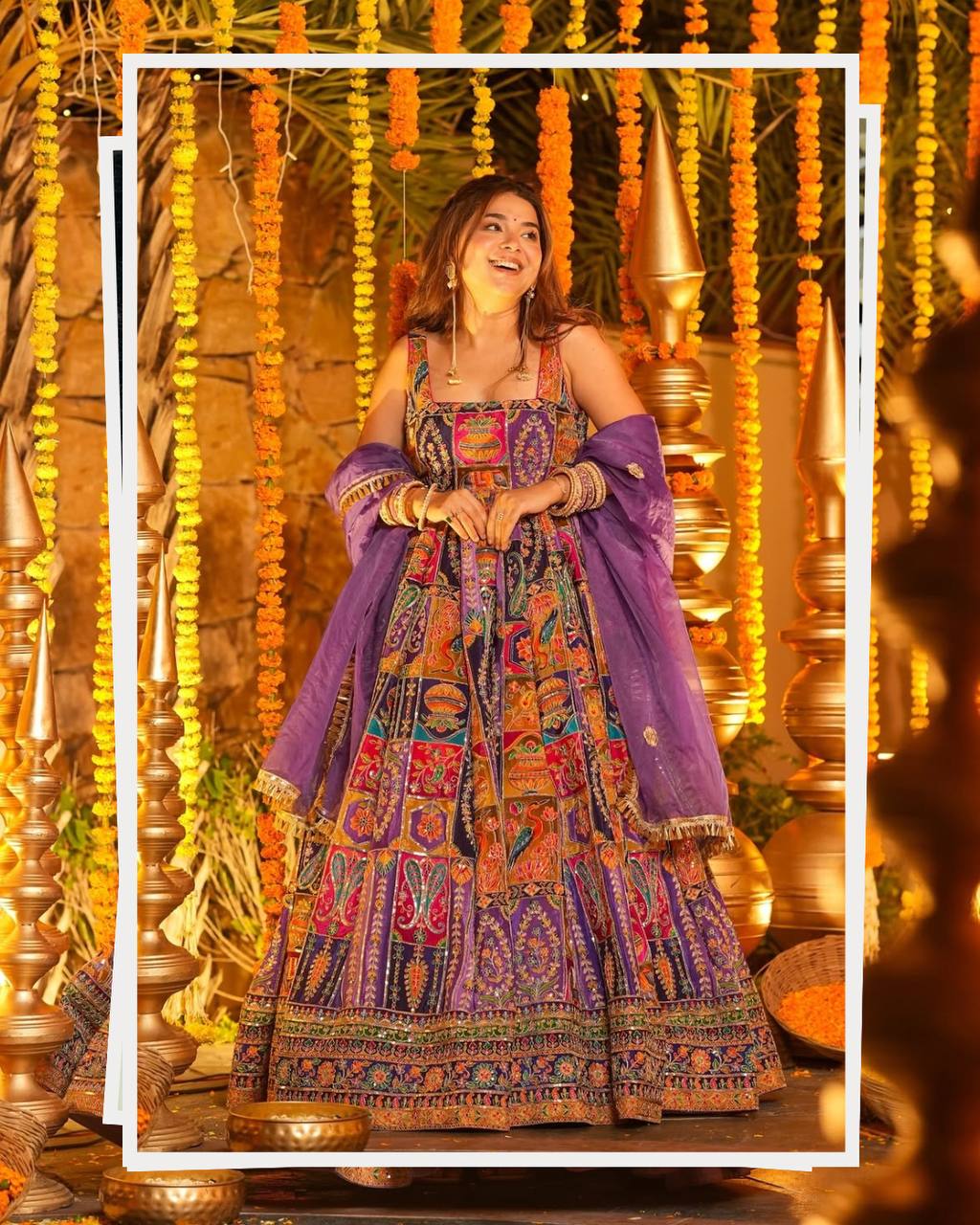
Use a dupatta fold that leaves both hands free when carrying a phone, accepting prasad or lighting a lamp. Multicolor Embroidered Crepe Maxi Suit Set for Festive Wear suits an evening setting where an elongated silhouette is welcome; pair it with low block heels or embellished flats rather than footwear that catches on the hem.
Ivory Floral Linen Cotton Co-Ord Set for Women from Varnavi illustrates how linen-cotton can provide a cooler alternative to dense silk during a warm afternoon puja. Add gold-toned jhumkas, a bright bindi and a saffron or pink dupatta when the ivory base needs more festival colour.
Janmashtami Outfit Ideas: Banarasi Sarees, Lehengas & Salwar Suits with suitable jewellery and makeup
Jewellery should repeat one detail from the outfit instead of competing with every embellished surface. Gold or antique-gold pieces complement zari, pearls soften purple and teal, and colourful glass bangles can introduce yellow or saffron.
For a heavily woven saree, choose one prominent jewellery feature. A broad choker works with an open neckline, while long earrings are better when the blouse has a higher neck or the pallu already contains dense zari. A maang tikka can suit a home puja or family celebration, but it may become inconvenient during a long temple visit.
Makeup should account for heat and the length of the celebration. A lightweight base, waterproof kajal, cream blush and setting powder can remain comfortable for several hours. A bindi in red, maroon, gold or a colour picked from the dupatta connects the face to the outfit without adding another competing shade.
Hair should remain secure around lamps and crowded spaces. A low bun decorated with jasmine suits a saree, a braided hairstyle supports a lehenga and a half-up style can work with a salwar suit. Avoid excessive hair accessories when the outfit already contains zari, sequins or prominent floral embroidery.
Janmashtami Outfit Ideas: Banarasi Sarees, Lehengas & Salwar Suits and practical care after the celebration
Care begins by separating zari-rich garments from everyday laundry and storing each garment clean, dry and loosely folded. Do not place a damp saree, lehenga or embroidered suit directly into a sealed plastic bag because trapped moisture can encourage odour and damage metallic surfaces.
Air a Banarasi silk saree in shade after wearing it, then fold it with the zari facing inward to reduce surface abrasion. Refold the saree every few months so permanent creases don't form in the same places. A breathable cotton or muslin cover is preferable to direct contact with rough cardboard or unlined wood.
Dry-cleaning is generally safer for heavily embellished Banarasi silk, zari and embroidered garments than repeated home washing. Follow the care label and tell the cleaner about metallic zari, colour contrasts and glued embellishments. Do not iron directly over zari; place a thin pressing cloth between the iron and the reverse side, and use low heat only when the care instructions permit it.
Handle food, oil and sandalwood paste carefully because stains can become difficult to remove from silk and crepe. Blot a fresh spill with a clean absorbent cloth instead of rubbing it. Linen-cotton may tolerate gentler treatment than Banarasi silk, but the care label remains the final authority.
A thoughtfully chosen Janmashtami outfit combines cultural character with practical movement. Banarasi sarees bring heirloom-like texture, lehengas support celebratory movement and salwar suits make long temple or family schedules easier. When colour, fabric weight, footwear, dupatta security and post-event care are considered together, festive dressing becomes more comfortable and more useful beyond a single celebration.
Common Questions About Choosing a Janmashtami Festive Outfit
What colour outfit is best for Janmashtami?
Peacock blue, teal, morpankh green, yellow, saffron, ivory, pink and purple are suitable Janmashtami colours. Choose one dominant colour and one accent so the outfit looks festive without becoming visually crowded.
Is a Banarasi saree suitable for a Janmashtami temple visit?
A Banarasi saree is suitable for a temple visit when the weave is manageable and the drape is securely pinned. Choose a lighter Banarasi silk or soft silk saree, wear practical footwear and avoid a trailing pallu or very heavy border.
Should I wear a saree, lehenga or salwar suit for Janmashtami?
Choose a saree for a formal puja, a lehenga for an evening celebration or dance, and a salwar suit for walking, temple queues and long periods of sitting. Venue, weather and required movement matter more than the garment category alone.
What should I wear to a Janmashtami puja at home?
A soft Banarasi saree, a modest lehenga or a kurta with palazzos works well for a home puja. Select a garment that permits sitting cross-legged and secure the dupatta or pallu before lighting lamps.
How can I keep my Janmashtami dupatta in place?
Pin the dupatta at the shoulder and waist when movement is expected. A concealed safety pin, a comfortable belt or a two-shoulder drape can prevent repeated adjustments while leaving both hands free.
How should I store a Banarasi saree after Janmashtami?
Air the saree in shade, fold it with the zari facing inward and store it in a breathable cotton or muslin cover. Refold the saree every few months, keep it dry and follow the care label before arranging professional cleaning.





