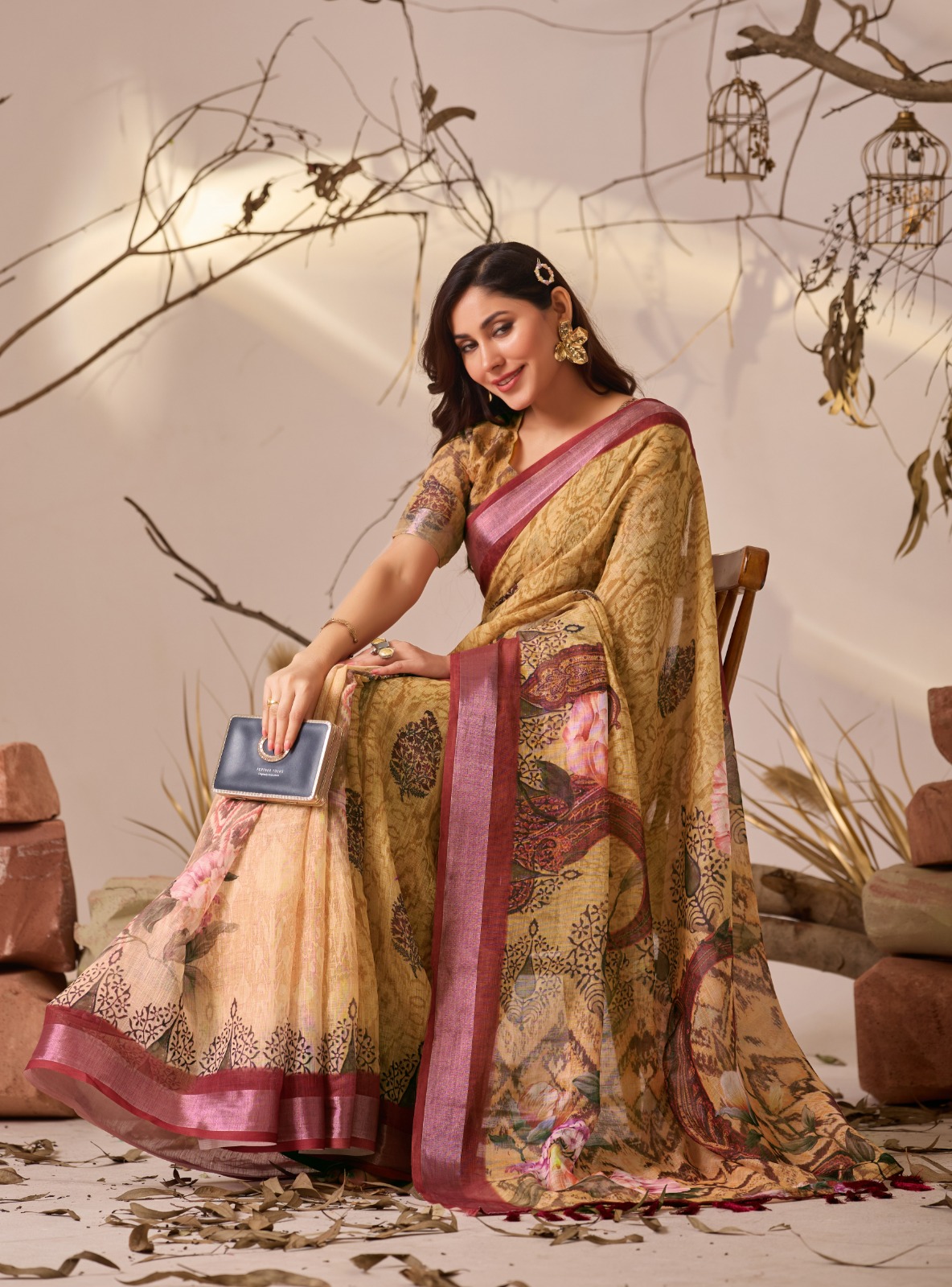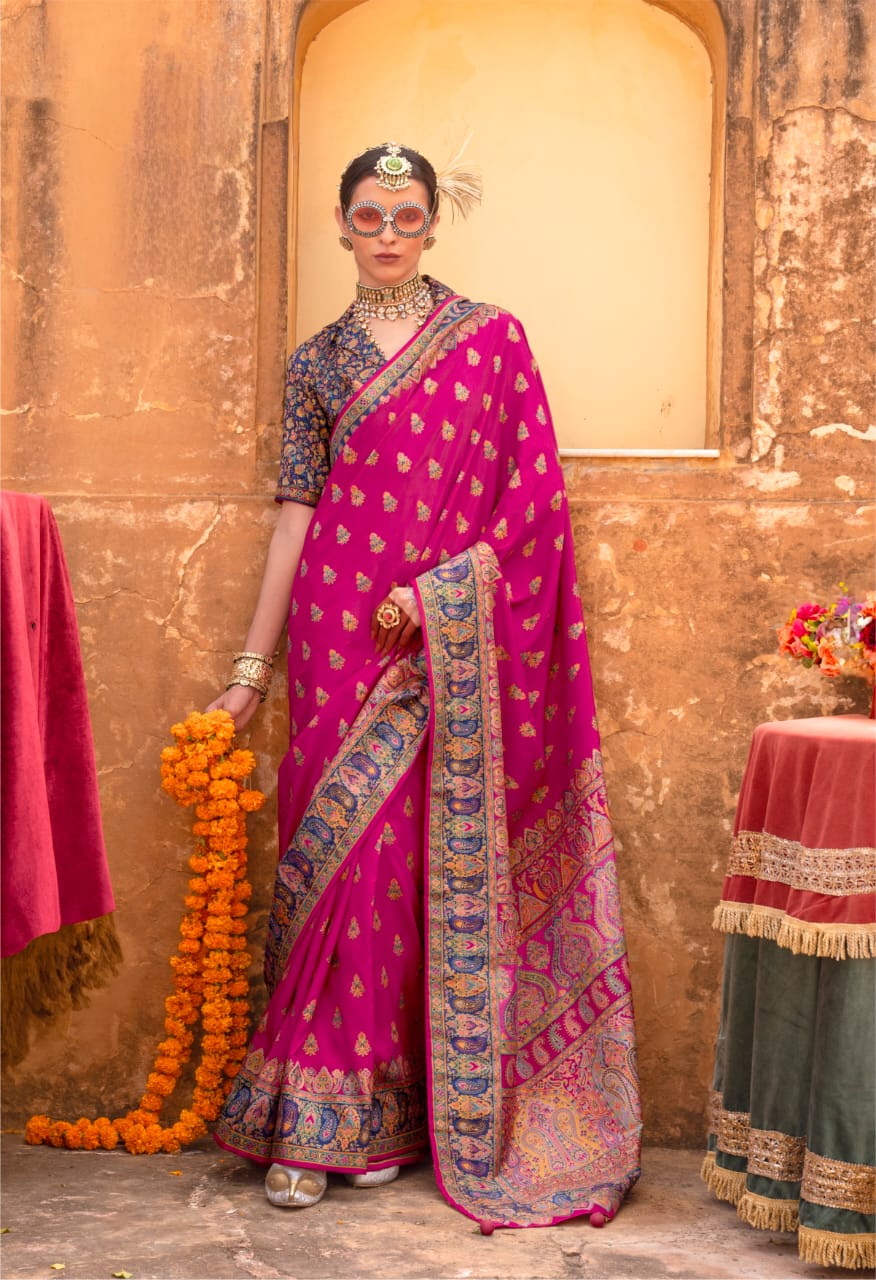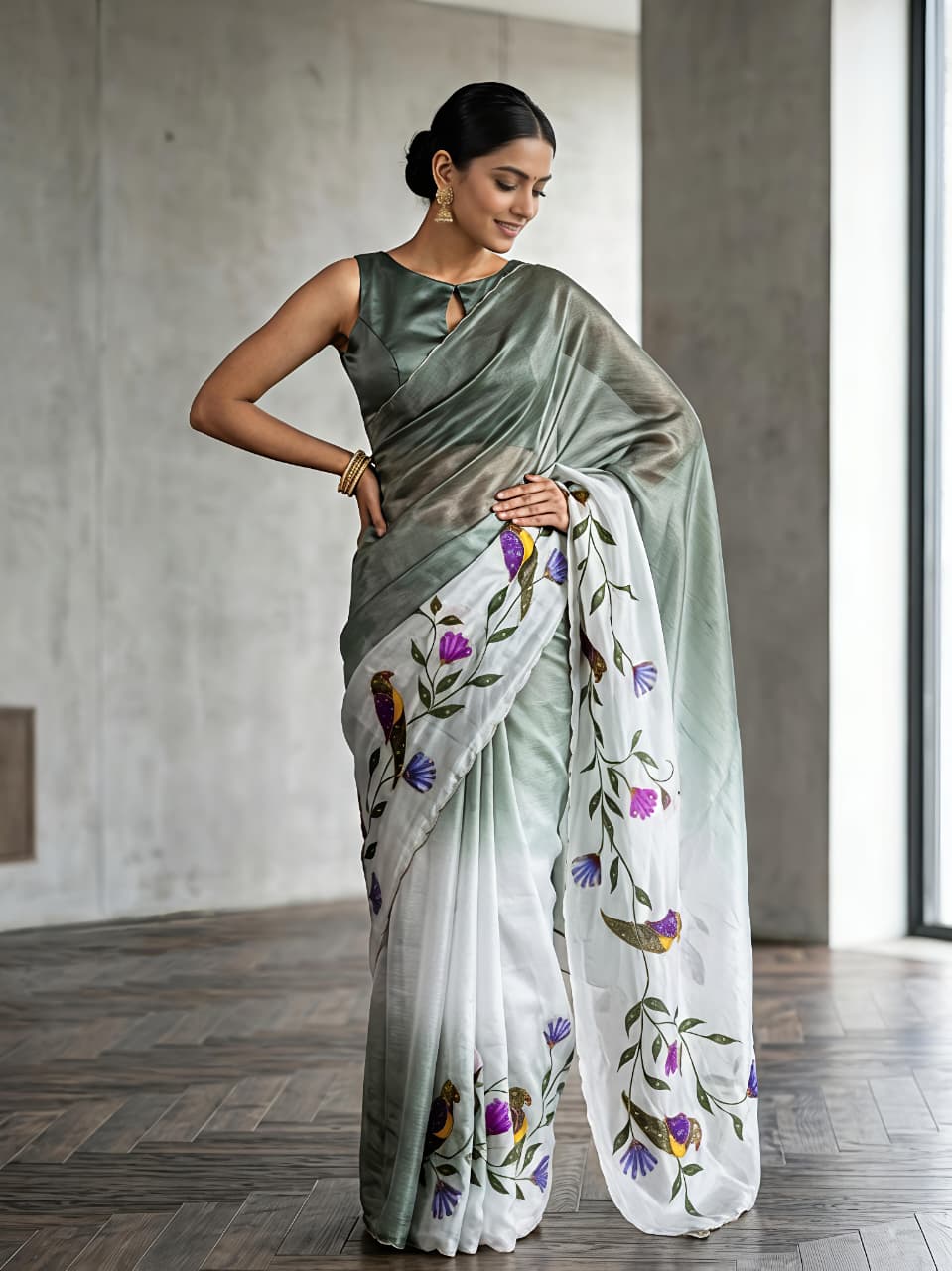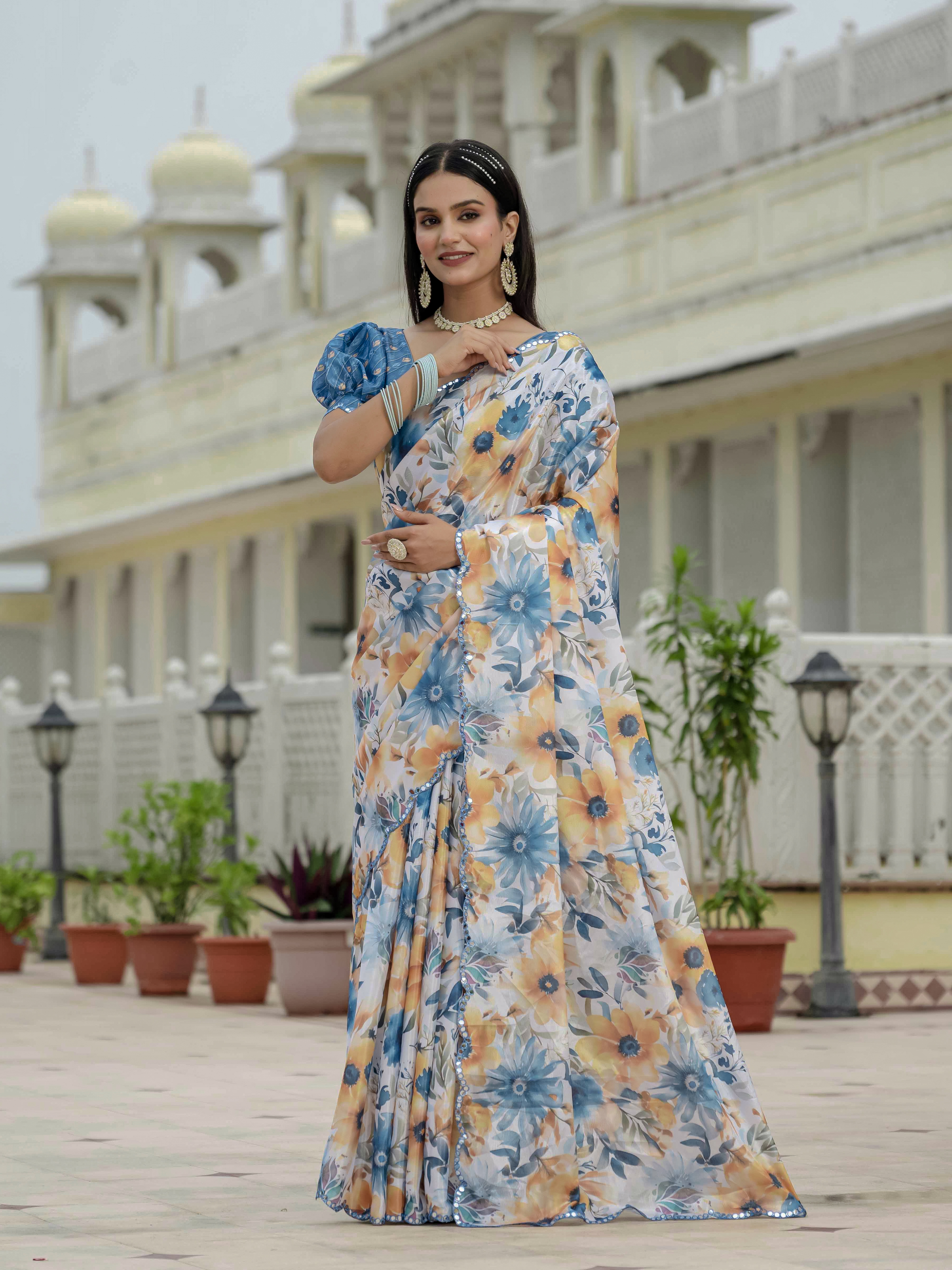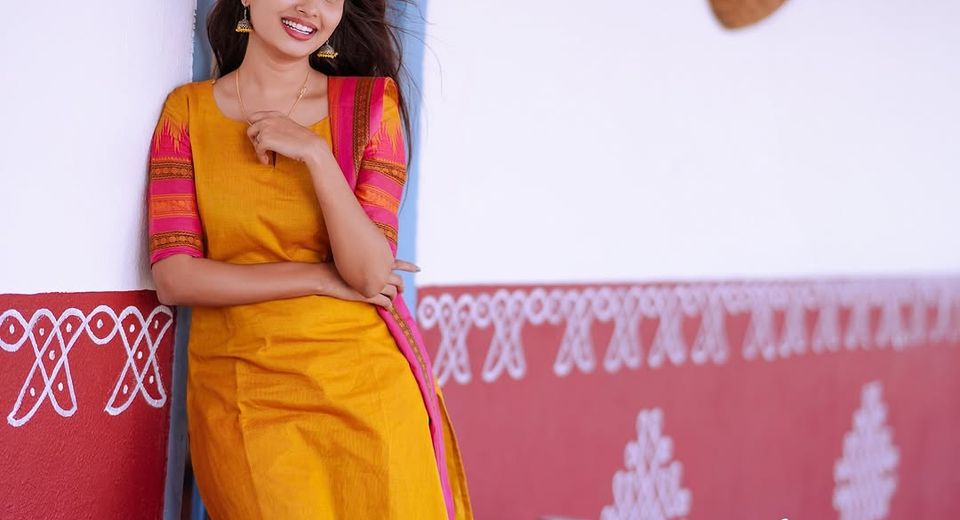
Jammu & Kashmir Festival Fashion brings together Kashmiri sarees, suits and ethnic wear with nature-inspired motifs, jewel-toned colour and layered comfort. Chinar leaves, paisley forms, floral sprays and fine-looking woven surfaces can make a salwar suit feel festive without making movement difficult. The most useful outfit choice depends on the time of day, weather, venue and amount of decoration already present in the fabric.
A Kashmiri-inspired outfit should also be described honestly. Authentic regional crafts may involve sozni embroidery, aari work, tilla work or distinctive shawl traditions, while a contemporary ready-made suit may simply borrow a chinar motif, a deep walnut tone or an ornate jacquard texture. Both approaches can have a place in a festive wardrobe when regional references are not treated as interchangeable.
Jammu & Kashmir Festival Fashion: What gives Kashmiri ethnic wear its identity?
Jammu & Kashmir Festival Fashion draws its strongest visual identity from natural motifs, detailed surface work, saturated colours and clothing suited to layering. Chinar leaves, almonds, paisley, lotus forms and curling floral vines are commonly associated with Kashmiri design vocabulary.
Sozni is a fine needle embroidery recognised for delicate floral and paisley patterns. Aari work uses a hooked needle to create flowing lines and filled motifs. Tilla work traditionally uses metallic thread for a more luminous effect. Papier-mâché decoration is known for carefully painted floral and natural designs. These crafts are different from a printed motif or machine-woven jacquard, even when the overall visual mood is similar.
A festive suit doesn't need to reproduce every regional technique to communicate a Kashmiri influence. A botanical jacquard dupatta, a plum silk kurta, a saffron base or a restrained paisley border can provide the reference. The most balanced outfits usually combine one prominent decorative idea with quieter supporting pieces.
Jammu & Kashmir Festival Fashion: Which salwar suit suits each festive setting?
The right festive salwar suit matches its fabric weight, colour intensity and silhouette to the setting. Breathable cotton and lighter colours suit daytime pujas, while silk, jacquard and deeper jewel tones work well for evening gatherings.
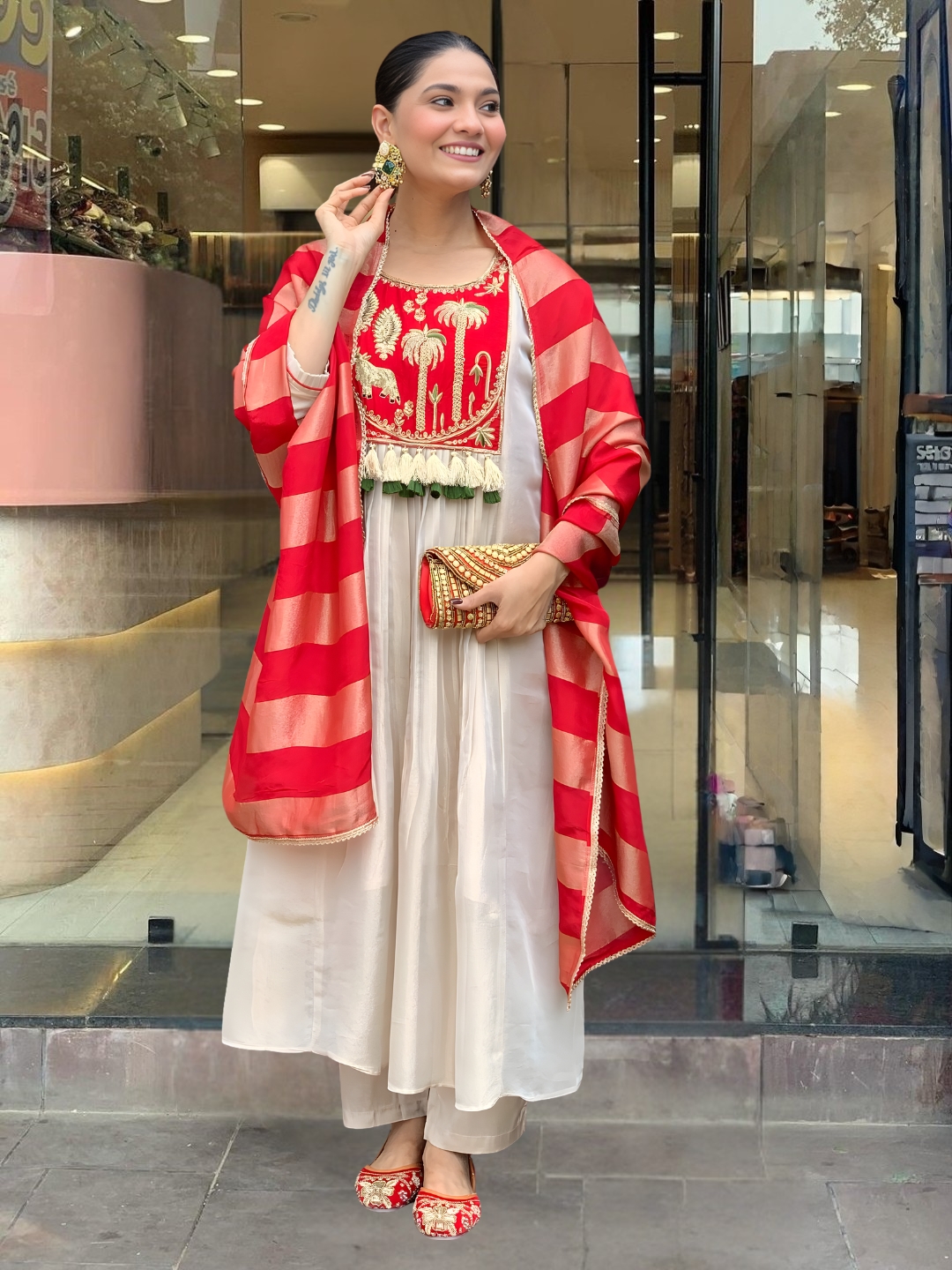
For daytime pujas and family lunches
Soft pista, ivory, saffron, dusty rose and leaf green work especially well in daylight. The Elegant Pista Festive Wear Kurta Pant Set suggests a light, composed palette for women who prefer quiet elegance over high contrast. Cotton salwar suits festive gatherings because cotton absorbs moisture and generally feels less clingy in warm weather.
A straight kurta with a tapered pant or a simple salwar allows comfortable sitting, walking and greeting guests. Small jhumkas, a few slim bangles and embroidered juttis provide enough detail when the kurta already includes a print or woven texture. A lightweight dupatta is easier to manage during an aarti or a long family lunch.
For evening celebrations
Evening events can support emerald, violet, wine, midnight blue, antique gold and other darker shades that appear richer under indoor lighting. Silk reflects light, while jacquard creates visible pattern without requiring dense embroidery across the entire garment.
Silk Festive Kurta Pant Set with Zari Jacquard Dupatta shows how an ornate dupatta can provide most of an outfit's occasion character while the kurta remains easy to wear. Elegant Silk Embroidered Kurta Pant Set with Jacquard Dupatta offers another direction for a dressier family function. One focal accessory, such as a choker or large earrings, is usually enough when zari and jacquard are already prominent.
Jammu & Kashmir Festival Fashion: Which fabrics are practical for festive wear?
Silk, jacquard, cotton and printed fabrics solve different festive dressing needs, so fabric selection should follow the season, venue and number of hours the outfit will be worn. A breathable fabric supports comfort, while a structured weave often photographs more clearly at evening events.
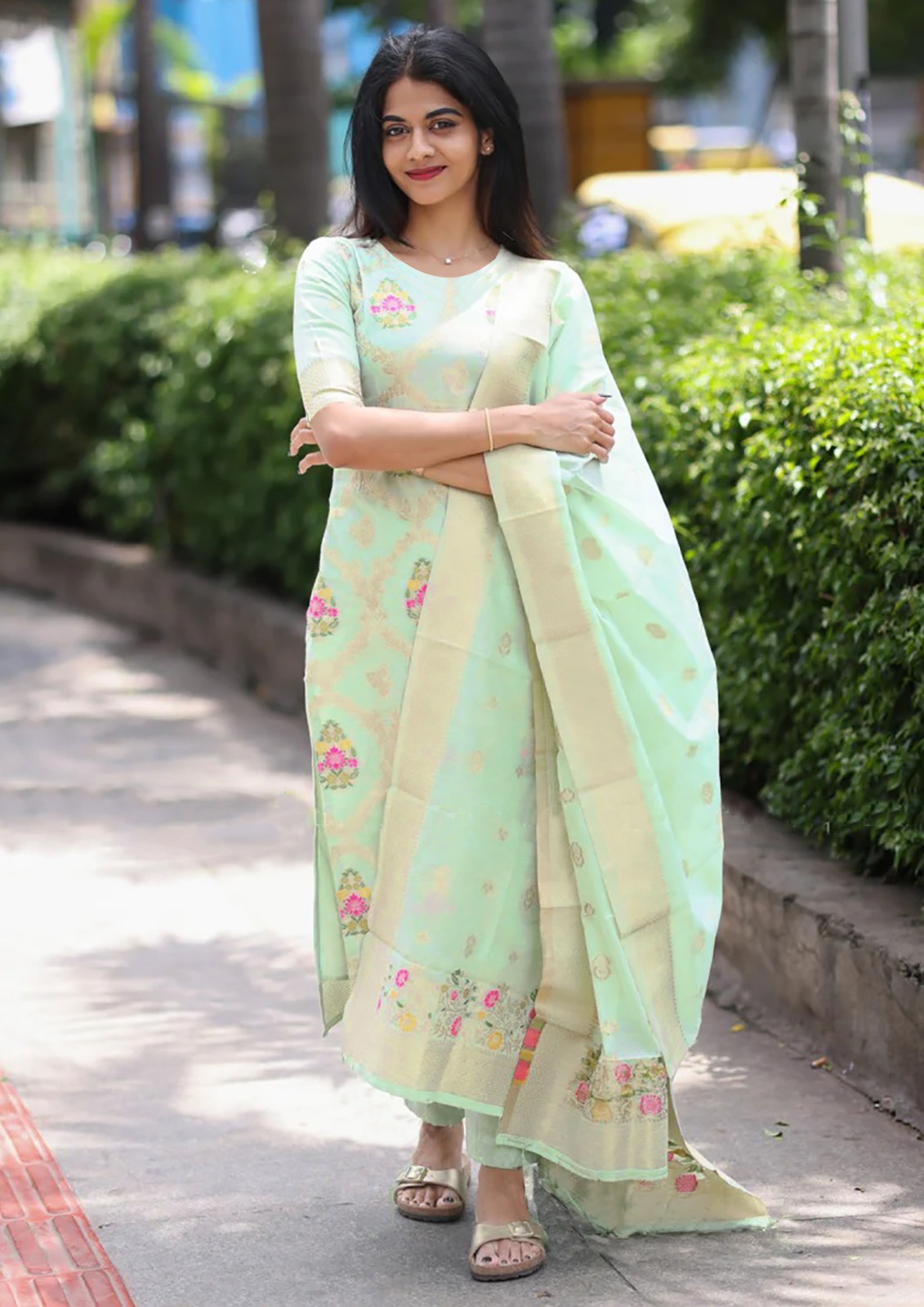
- Silk: Silk gives a kurta luminous colour and a smooth fall, making it suitable for Diwali dinners, wedding functions and evening pujas. Silk can crease or snag more easily than cotton, so silk garments should be protected from rough bags and stored folded in breathable muslin.
- Jacquard: Jacquard creates a woven pattern through raised or contrasting threads. A jacquard dupatta can elevate a plain kurta, but its additional weight should be balanced with a lighter bottom or a less embellished kurta.
- Cotton: Cotton suits daytime celebrations, warm-weather ceremonies and wearers who prefer a crisp, breathable hand feel. Excessive starch can make repeated folding create visible crease lines, so light starch is preferable for a frequently worn cotton outfit.
- Printed fabric: Printed motifs are often lighter and more relaxed than dense embroidery. A printed anarkali or kurta works for a smaller gathering where movement, ease and simpler care matter more than metallic shine.
Mustard Kanchi Cotton Kurta Dupatta Set illustrates how cotton can look celebratory through colour and weave character. Kanchi refers to a South Indian textile association rather than an authentic Kashmiri textile, so the outfit should be presented as part of a wider Indian festive wardrobe rather than labelled Kashmiri.
Jammu & Kashmir Festival Fashion: How should a ready-made suit be styled?
A ready-made salwar suit looks considered when the fit, dupatta placement and accessories are adjusted to the wearer. Shoulder seams should sit correctly, armholes should allow a full range of movement, trousers should permit comfortable sitting and the kurta length should suit the footwear.
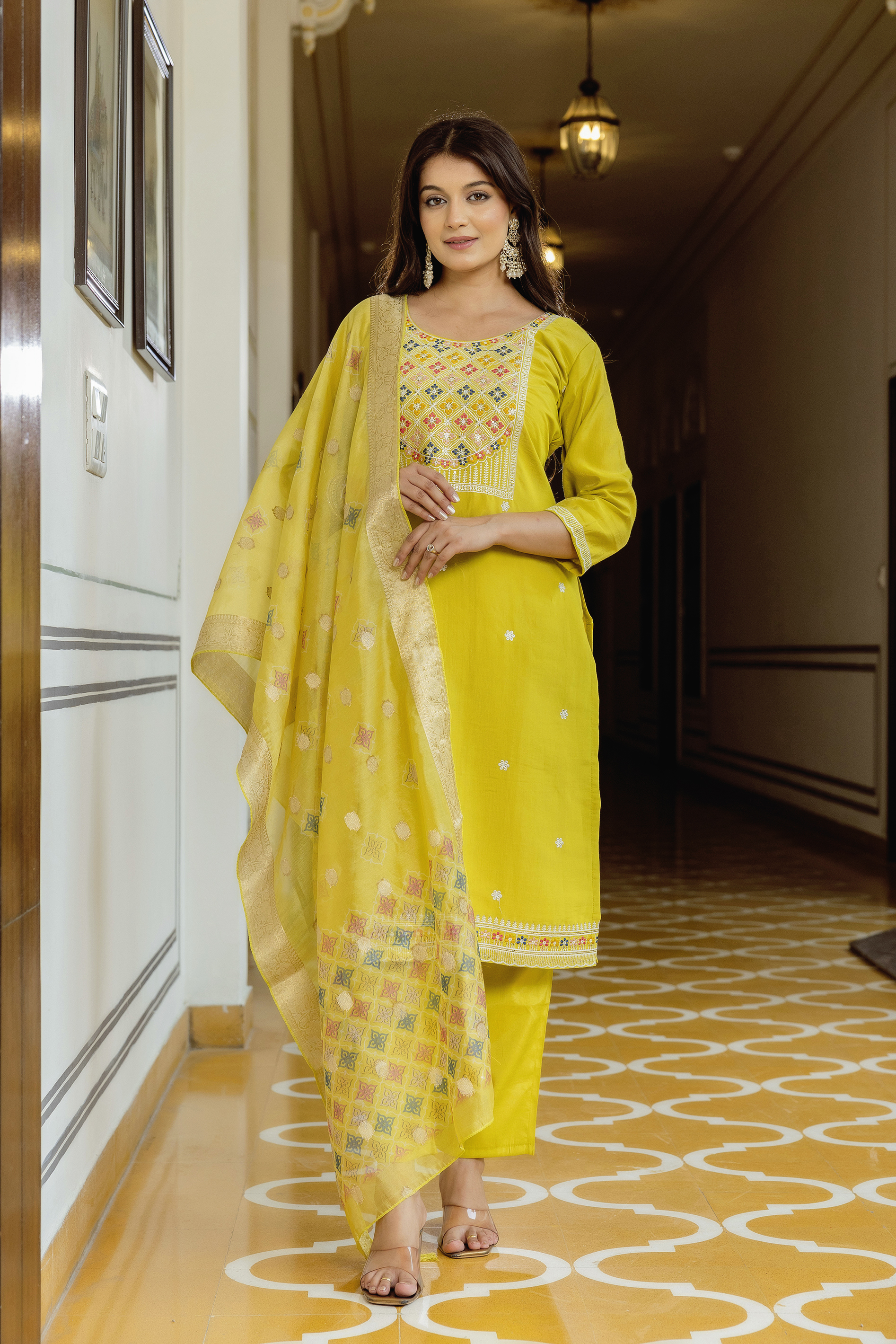
A formal salwar suit for ladies doesn't need maximum embellishment. A straight or gently flared kurta, a neatly folded dupatta and low metallic heels or embroidered flats can look polished at a work-hosted celebration. Keeping the palette to two or three related colours often makes a ready-made outfit appear more deliberate.
Stylish Violet Ethnic Kurta Dupatta Set for Festive Wear can be paired with silver-toned earrings and a cool-toned potli for a refined evening look. Purple Jacquard Weave Kurta Set with Green Dupatta invites a stronger complementary-colour approach. With purple and green together, repeat only one accent in the jewellery or footwear so the combination retains visual balance.
A ready-made salwar suit dupatta can be worn over both shoulders for symmetry, over one shoulder for a longer vertical line or around the forearms when the hands need to remain free. Two small safety pins, placed at the shoulder and near the waist, prevent repeated adjustment during prayer, dancing or serving food.
Jammu & Kashmir Festival Fashion: Which colours and motifs work together?
One dominant motif and two supporting colours create the clearest festive combination. A chinar print can sit against a solid wine kurta, while a paisley dupatta can be paired with a plain pista, cream or walnut-brown base.
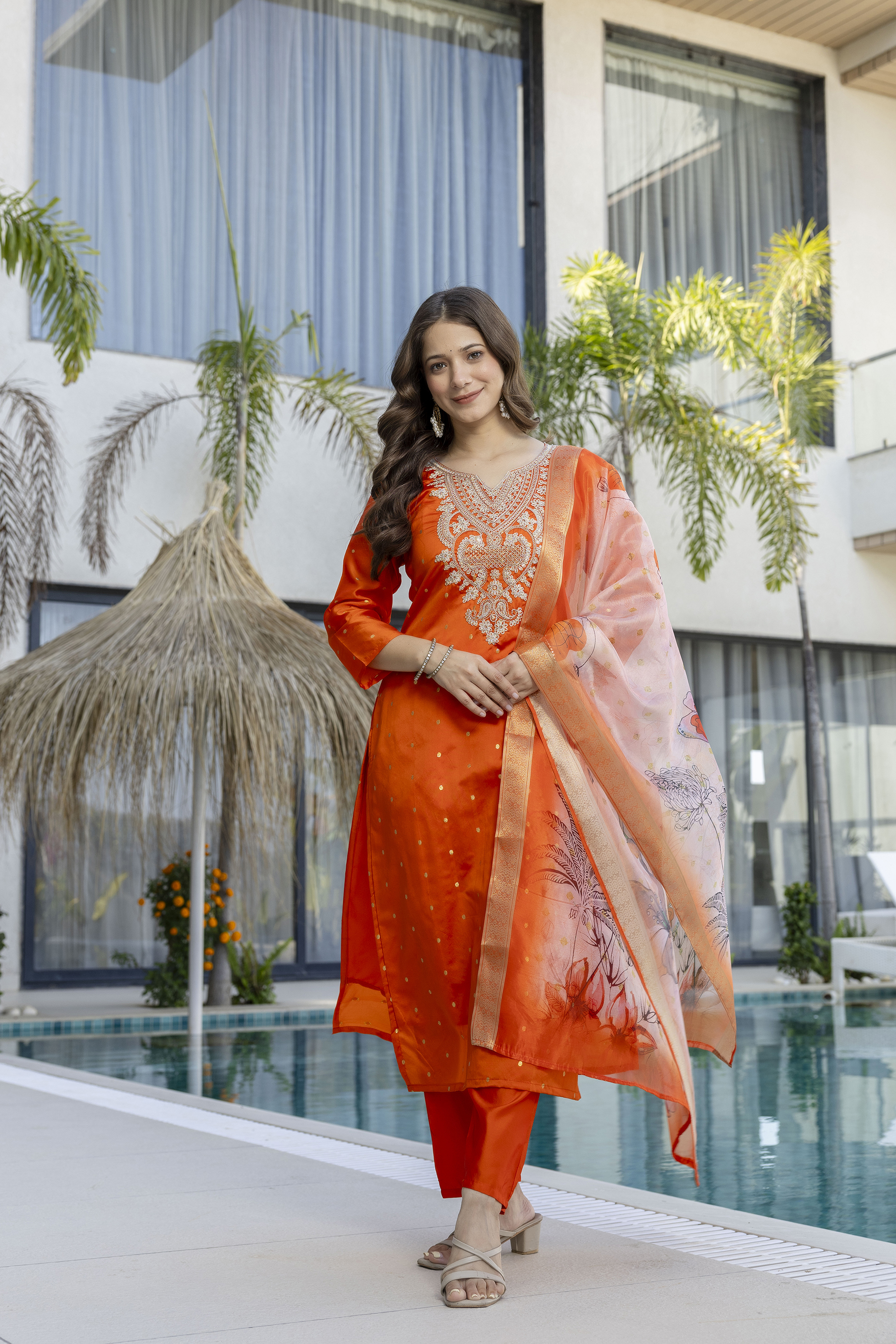
Chinar red, saffron, walnut brown, forest green, plum and cream create an autumnal palette associated with Kashmiri landscapes. Pista and soft pink offer a gentler daytime interpretation. Zari works best as a narrow border, woven highlight or small motif when the outfit already contains a strong print.
Trendy Green Ethnic Kurti Dupatta Set for Festive Wear can be styled with antique-gold jewellery for a warmer appearance or silver jewellery for a cooler, more contemporary finish. Cream Printed Anarkali Gown with Ethnic Motif Design demonstrates how a pale base allows an ethnic motif to carry the visual interest while the overall silhouette stays soft.
Large chinar motifs, dense zari, a heavily patterned dupatta and oversized jewellery can compete for attention when used together. Indian festive dressing often looks stronger when one surface is decorated and another is restrained. Contrast also makes individual details easier to see in photographs.
Jammu & Kashmir Festival Fashion: How do other regional collections complement it?
Other regional collections complement a Kashmiri-inspired wardrobe when their distinct craft references remain visible. Jammu and Kashmir has its own embroidery, textile and motif vocabulary, while Gujarat, Rajasthan, Maharashtra and Punjab contribute different techniques, colour logic and cultural histories.
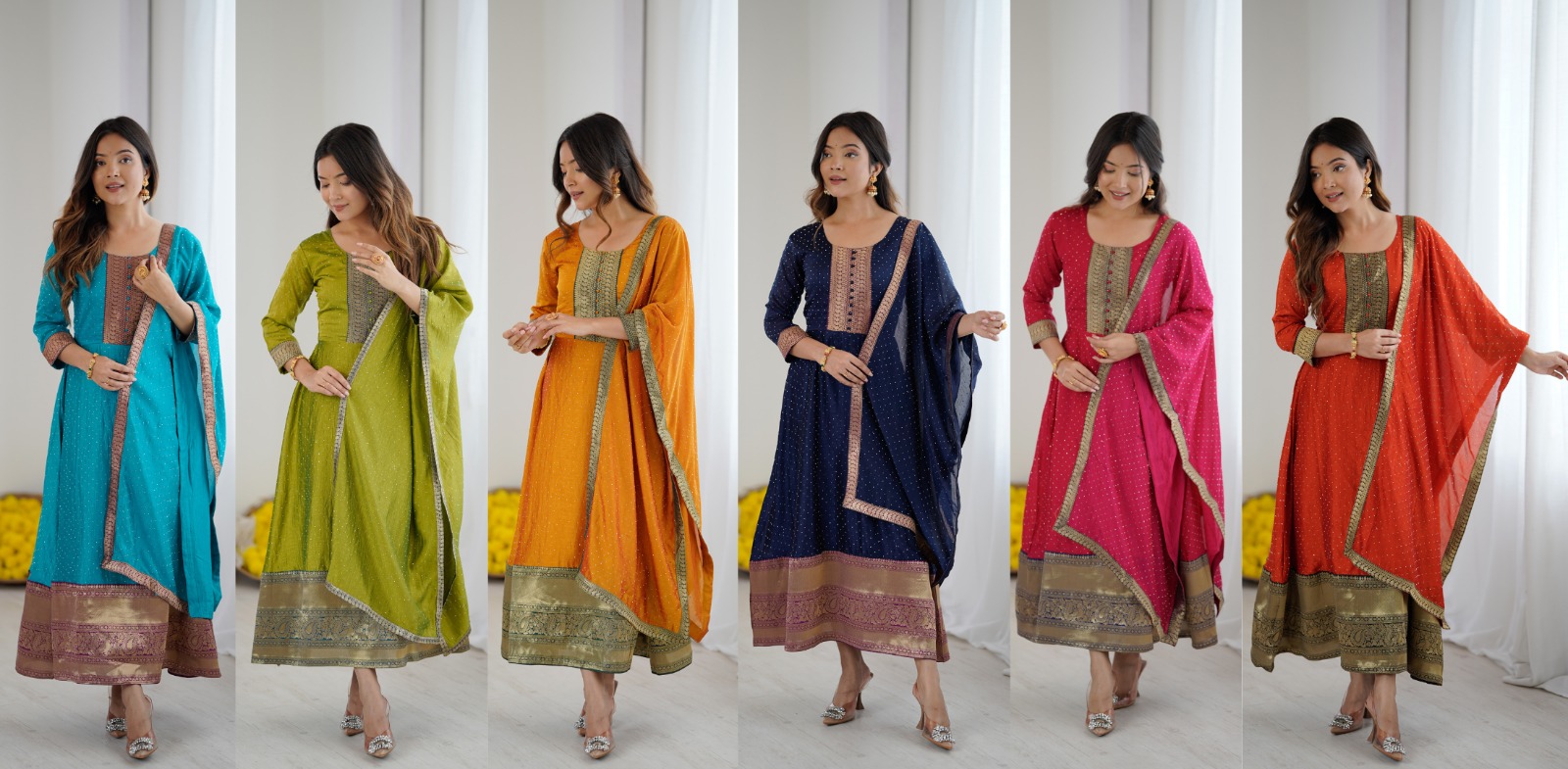
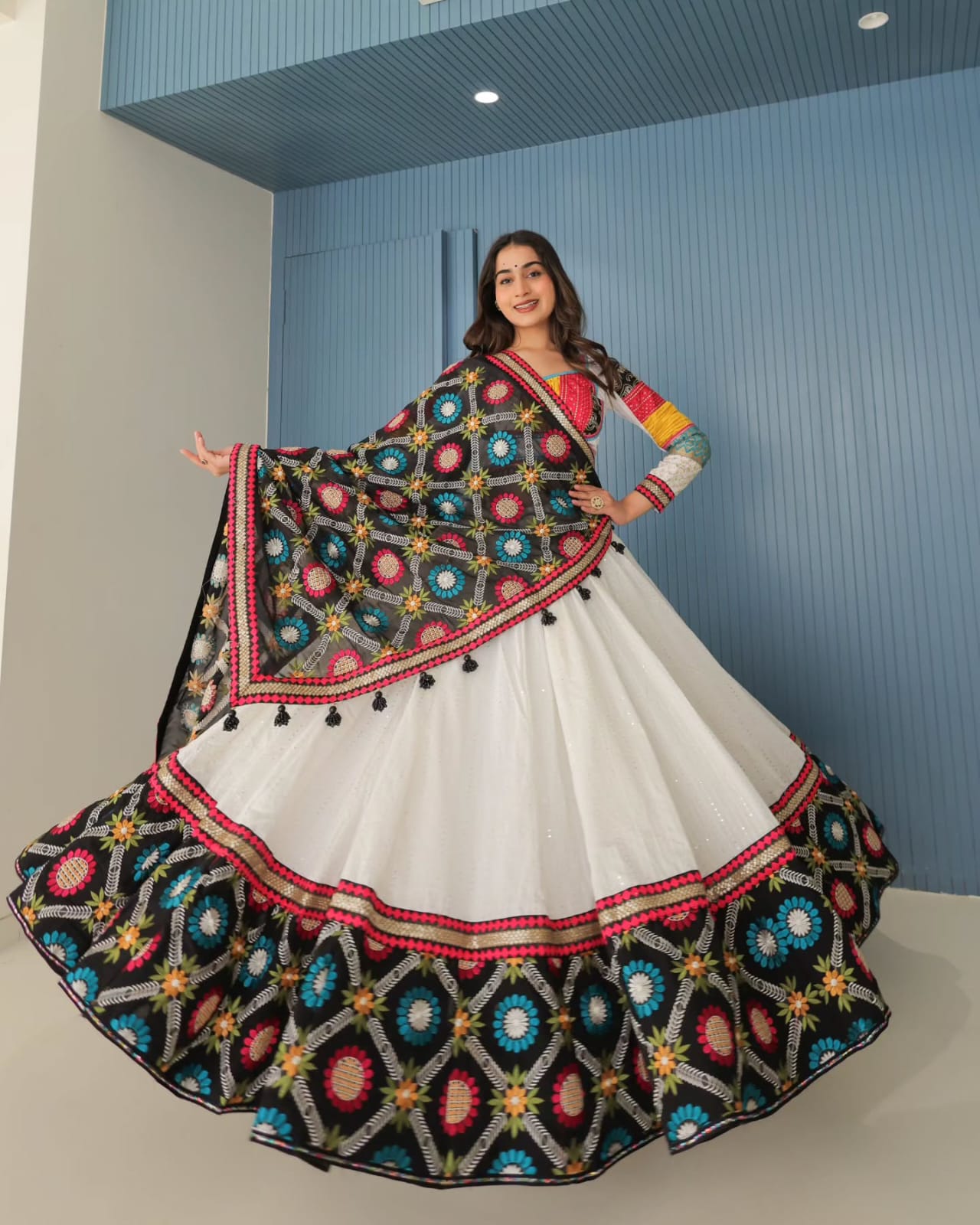
Gujarati Festive Salwar Suits can add lively colour, mirror-work energy and celebratory contrast. Marwari Style Festive Salwar Suits can contribute rich desert-inspired tones and ornate styling. These references belong in the same broader festive wardrobe, but a similar kurta silhouette doesn't make every regional design Kashmiri.
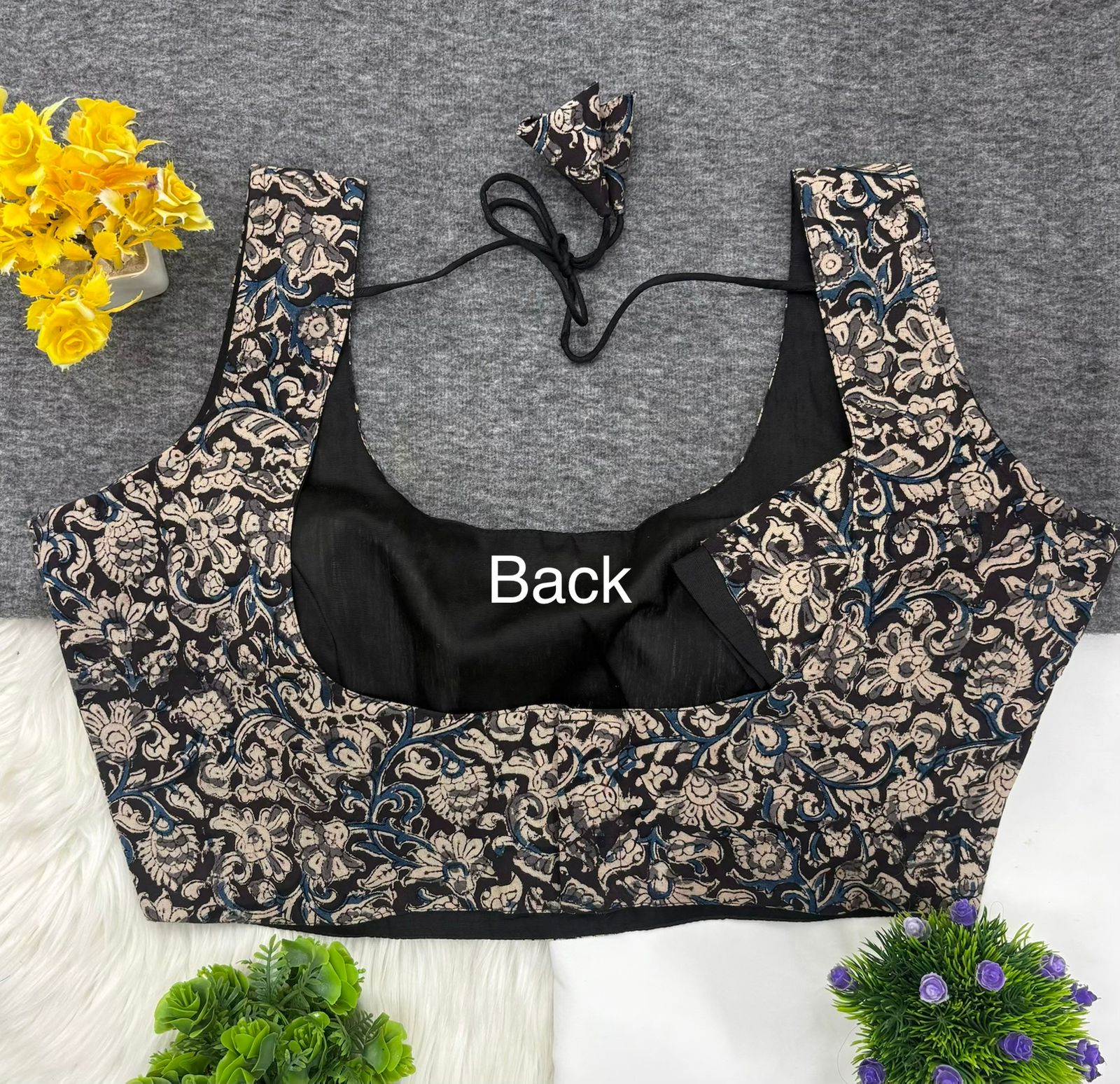
Maharashtra Paithani Inspired Salwar Suits bring jewel colours and Paithani-associated peacock or floral references into a salwar-suit format. Punjab Phulkari Embroidered Salwar Suits contribute the bright floral embroidery traditionally associated with Phulkari. Kalamkari Print Salwar Suits (Copy) add narrative botanical and figurative print energy from a different textile tradition.
Pairing one regional statement piece with neutral accessories is a useful way to build a varied wardrobe without mixing every craft reference in one look. A Kashmiri-inspired dupatta may work with a plain suit, while a Phulkari, Kalamkari or Paithani-inspired piece can remain the clear centre of attention in another outfit.
Jammu & Kashmir Festival Fashion: How should festive suits be cared for?
Festive suits last longer when they're aired after use, cleaned according to their fibre and stored away from direct sunlight. Care matters particularly for silk, zari, jacquard and dark dyes, which can lose surface quality through rough washing or damp storage.
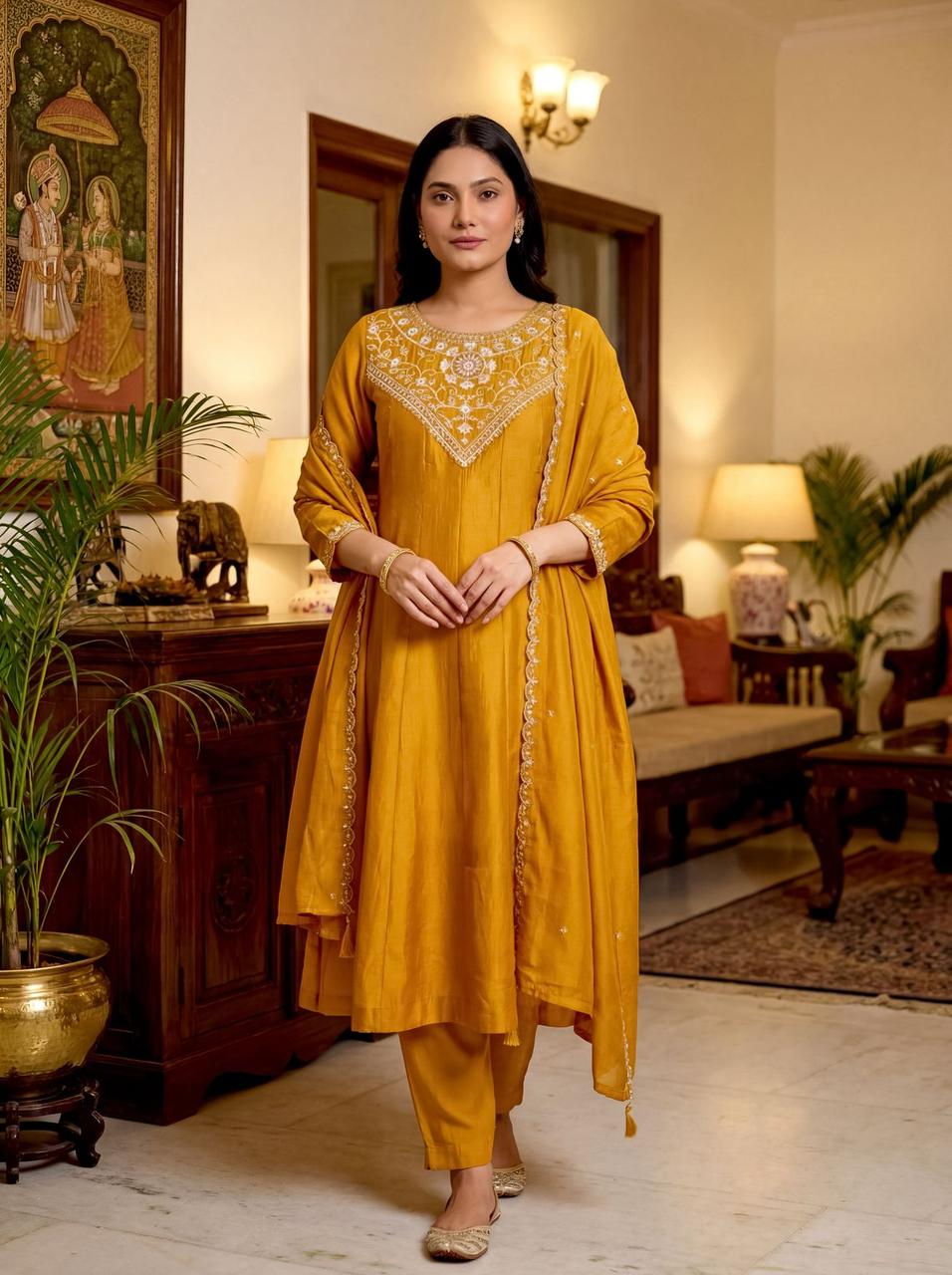
- Air the outfit in shade for several hours after wearing it, especially if it has absorbed perfume, perspiration or cooking smoke.
- Read the garment care label before washing. Silk, zari and structured jacquard should generally be dry-cleaned or handled by a specialist rather than placed in a hot machine wash.
- Wash suitable cotton or colourfast garments separately in cool water and avoid strong bleach, which can weaken fibres and alter festive colours.
- Dry garments away from harsh direct sunlight. Direct heat can fade dyes and make some fabrics brittle over time.
- Store clean garments in breathable cotton or muslin covers. Fold heavy dupattas along different lines occasionally to reduce permanent crease marks.
Perfume should be sprayed on skin before the outfit is worn rather than directly on silk, zari or metallic trims. Jewellery should also be removed before folding because sharp hooks can catch jacquard threads and embroidery.
Jammu & Kashmir Festival Fashion: What should you remember before choosing an outfit?
The best festive choice balances regional visual references with genuine comfort, accurate textile language and the practical demands of the celebration. A Kashmiri-inspired salwar suit can be highly festive through colour, motif and dupatta styling without claiming to be a traditional Kashmiri craft garment.
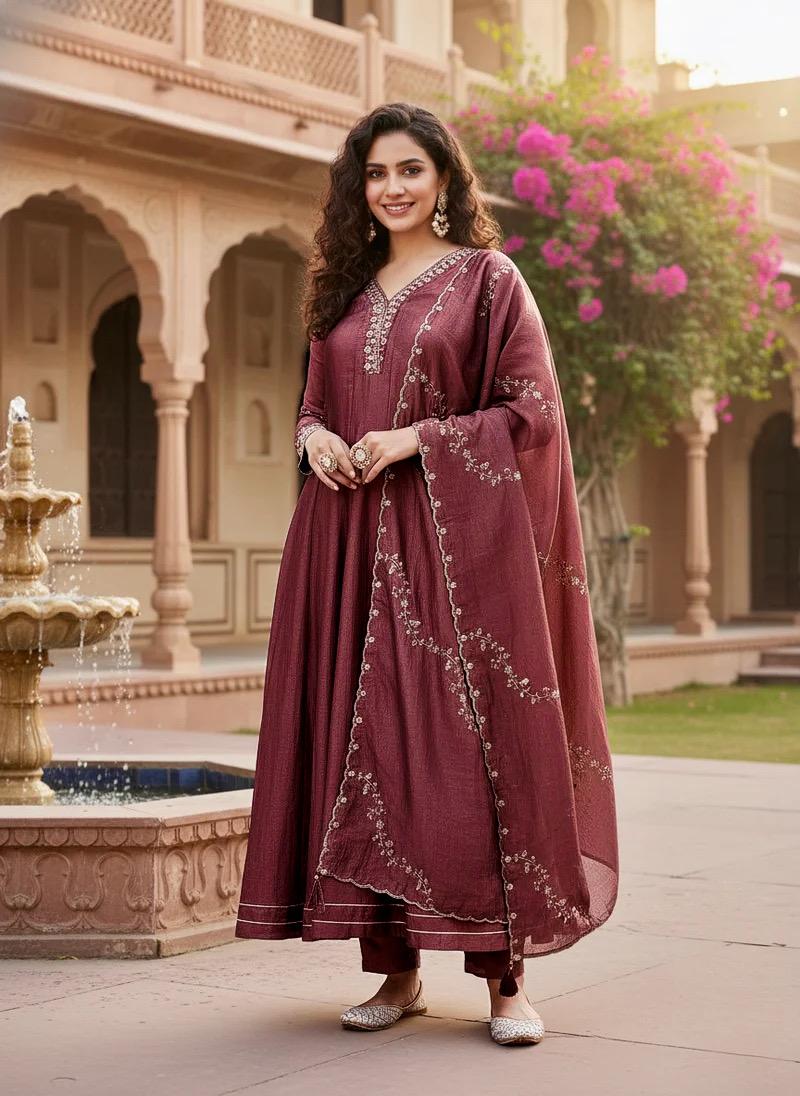
Choose cotton for long daytime wear, silk or jacquard for evening richness, one leading motif for visual clarity and a dupatta that can be secured comfortably. Check fit before styling, distinguish regional craft traditions respectfully and care for the finished outfit according to its fibre. Those decisions make festive ethnic wear more useful long after one celebration has ended.
Common Questions About Jammu & Kashmir Festival Fashion
What should women wear for a Kashmiri-inspired festive celebration?
Women can wear a salwar suit, anarkali or saree in colours such as saffron, plum, forest green, cream or walnut brown, with chinar, paisley or floral references. Silk and jacquard suit evening events, while cotton is more comfortable for daytime celebrations.
Which fabric is best for festive salwar suits in warm weather?
Cotton is usually the most comfortable choice for warm-weather festive events because it is breathable and less clingy. A cotton kurta with a lighter dupatta can still look occasion-ready through colour, woven texture or a carefully placed print.
How can I style a ready-made salwar suit dupatta?
A ready-made salwar suit dupatta can be placed over both shoulders, draped over one shoulder or wrapped once around the forearms. Small pins at the shoulder and waist help keep the dupatta secure during prayer, movement and socialising.
What colours are associated with Kashmiri-inspired festive clothing?
Saffron, chinar red, forest green, plum, walnut brown, cream and pista are useful Kashmiri-inspired festive colours. A balanced outfit usually combines one strong shade with one neutral and a small amount of zari or metallic detail.
Can a Kashmiri-inspired salwar suit be worn to a formal party?
Yes, a silk or jacquard salwar suit with a structured kurta, polished dupatta and controlled jewellery can work for a formal party. Deep colours and woven texture create evening presence without requiring heavy embellishment everywhere.
How should silk and zari festive suits be stored?
Silk and zari festive suits should be aired after use, kept away from direct sunlight and stored clean in breathable muslin. Specialist dry cleaning is safer than vigorous washing when the outfit includes metallic trims, dense embroidery or delicate jacquard.