A jacket Anarkali that can be reworn without its jacket gives you two outfits from one coordinated purchase: a layered look for a wedding or reception and a lighter Anarkali look for a puja, dinner or family gathering. The idea works only when the inner Anarkali has a complete neckline, a wearable sleeve shape and enough visual interest to stand alone. Before buying, inspect the construction of both pieces rather than treating the jacket as the entire design.
Why a detachable jacket makes an Anarkali more useful
A detachable jacket makes an Anarkali more useful because the same base garment can suit different levels of formality. A heavily embellished jacket can provide the occasion-focused finish, while the Anarkali underneath can be paired with a simpler dupatta, different footwear or contemporary jewellery.
The most successful pairings have deliberate contrast. A plain or lightly patterned Anarkali gives the jacket room to stand out, while a richly detailed inner layer can carry the outfit after the jacket is removed. A black base, for example, can move from evening wear with a sequin jacket to a more restrained dinner look with pearl studs and a printed dupatta.
Layering also solves a practical comfort problem. A jacket can provide coverage in air-conditioned banquet halls, but removing the jacket makes movement easier during meals, dancing or travel. The extra layer can be folded separately instead of forcing the wearer to remain in a warm, heavily decorated outfit throughout a long event.
Look for a jacket that closes with hooks, concealed buttons, a tie or a well-finished open front. A jacket that depends on the Anarkali's neckline or waist for its shape may not work with other garments later. The detachable layer should have enough structure to sit correctly when worn over the intended Anarkali and enough visual independence to combine with a plain kurta or dress.
What to check before buying a jacket Anarkali that can be reworn without its jacket
A jacket Anarkali that can be reworn without its jacket should look finished as a complete Anarkali, not like an incomplete inner layer. The neckline, sleeve hem, waist area and front panel deserve the same attention as the outer jacket.
Check the neckline and sleeves
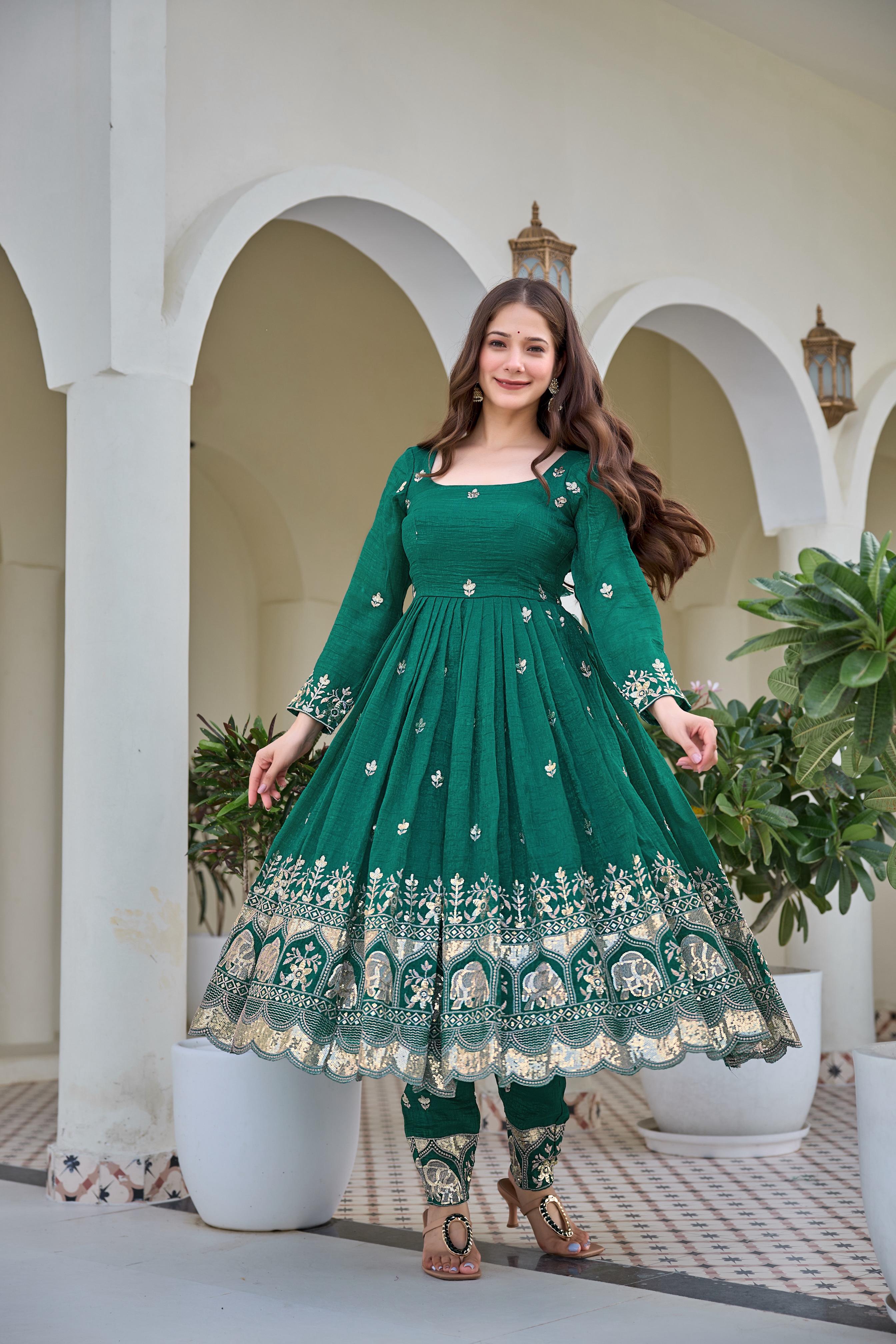
The neckline should have clean finishing because removing the jacket exposes it completely. A round neck, modest V-neck or gently shaped square neck is usually easier to restyle than a neckline designed only to disappear beneath a high jacket collar. Check whether the sleeve length looks intentional on its own; three-quarter sleeves, full sleeves and neat short sleeves can all work, but unfinished armholes or overly plain lining can make the base look like a trial layer.
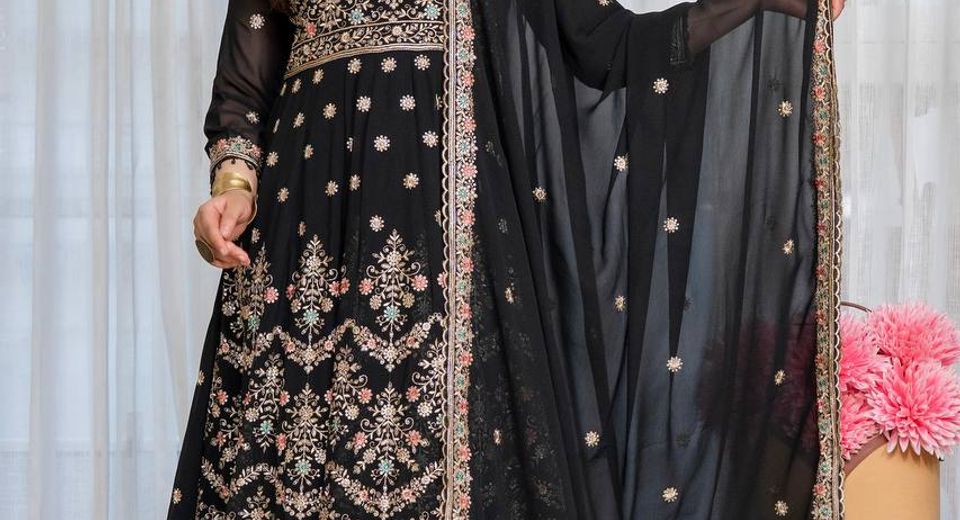
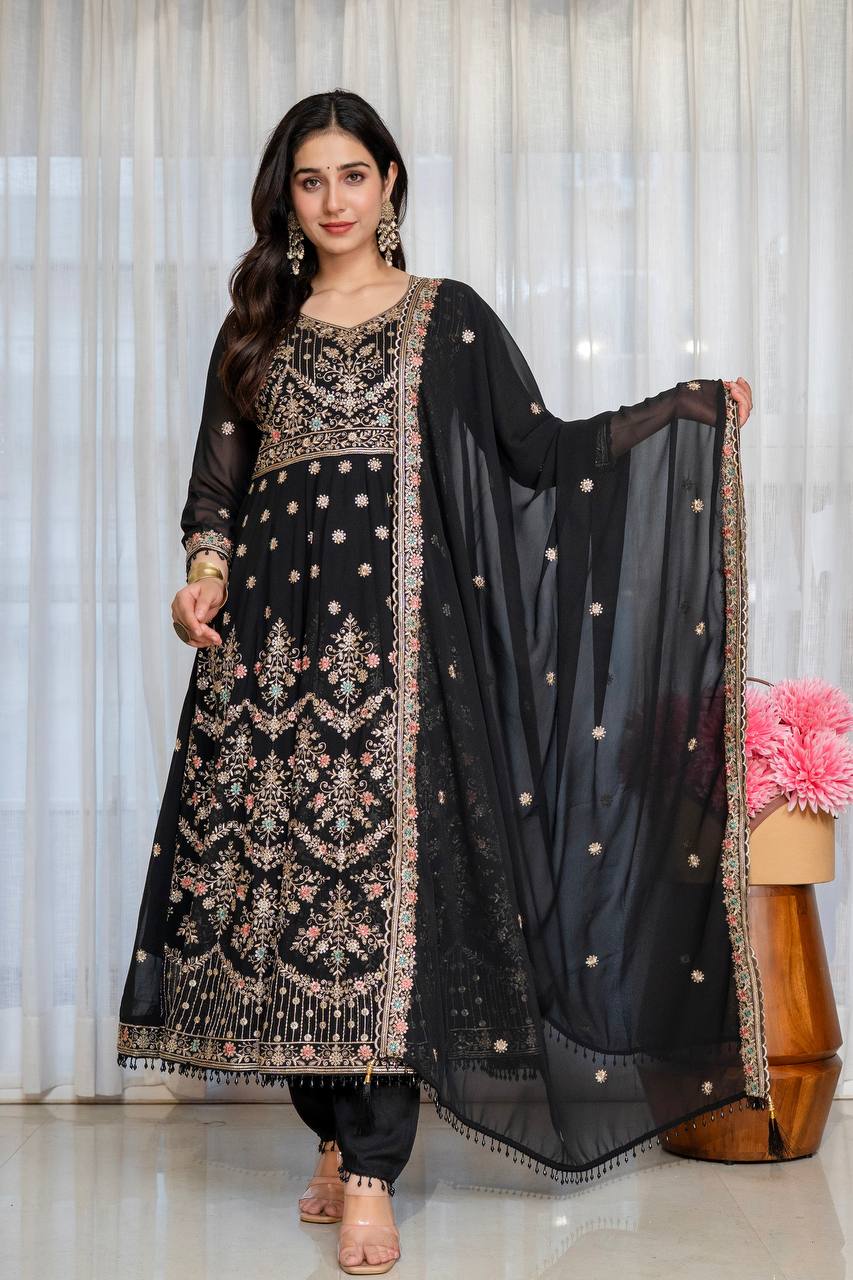
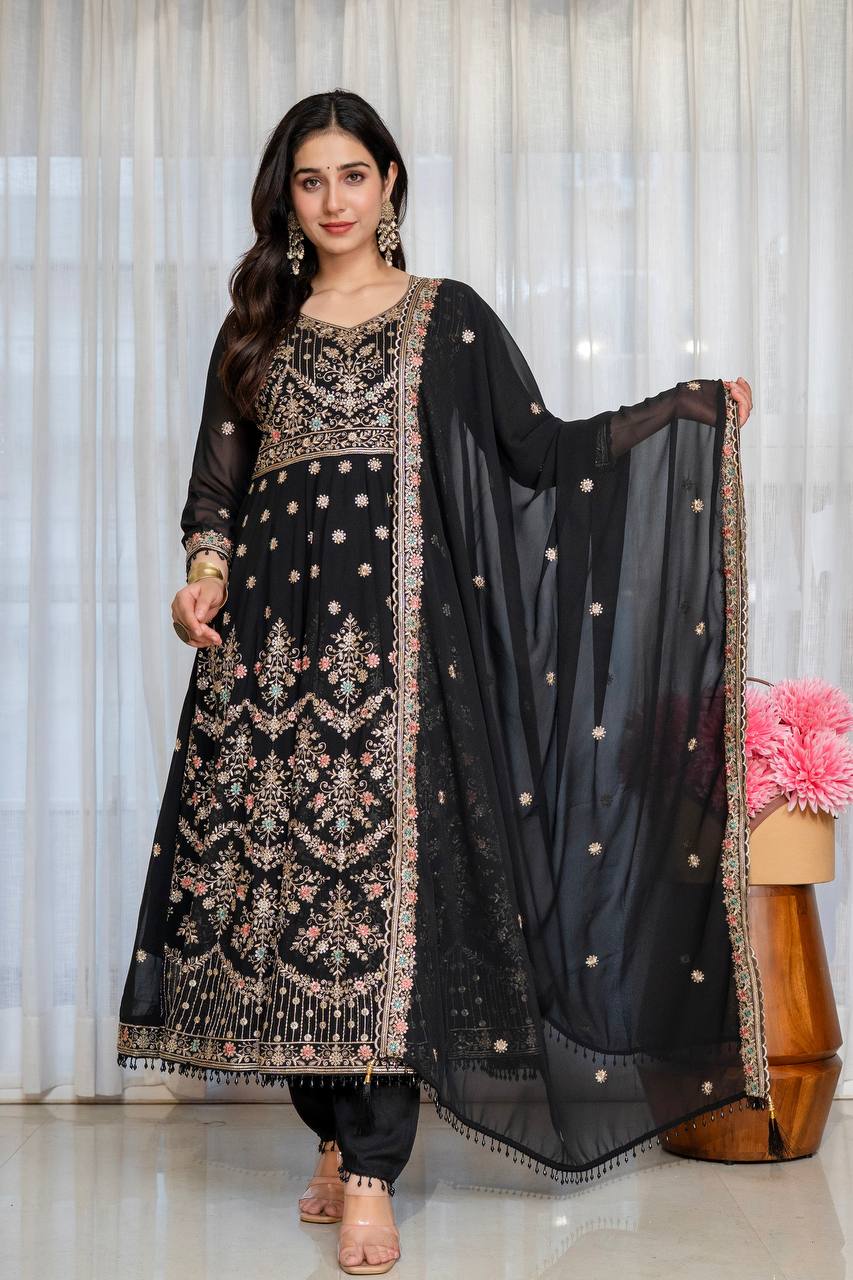
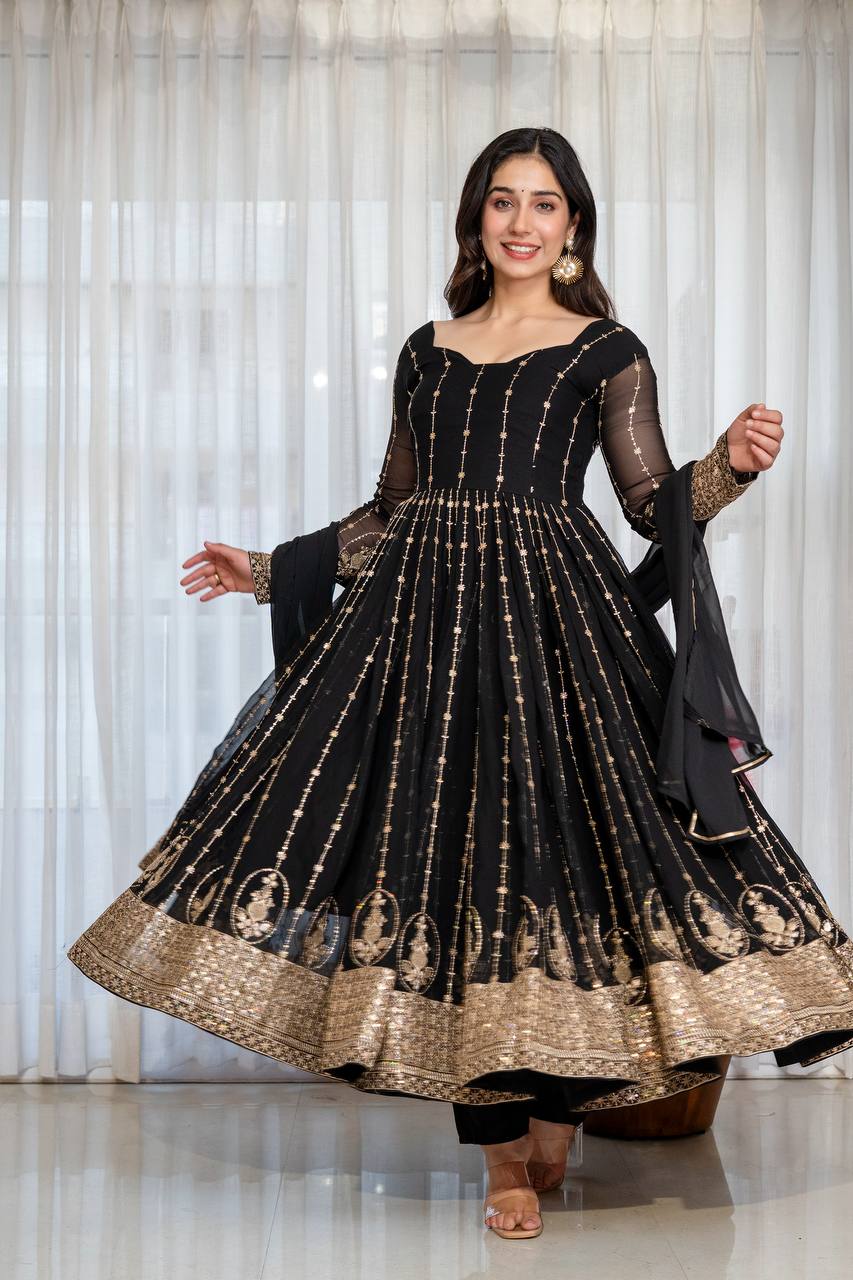
The Black Anarkali Suit Set with Sequin Zari and Moti Lace Work illustrates why surface detail matters on the base garment. Sequin zari and moti lace work create enough texture for the Anarkali to remain occasion-ready even when a separate layer isn't being used.
Inspect the hem, flare and side seams
The Anarkali should fall evenly without the jacket. A practical check is to stand, walk five steps, sit on a chair and raise both arms slightly; the hem should not twist and the flare should not pull sharply at the hips. A very broad flare can look dramatic with a jacket but become cumbersome without one, especially when paired with a narrow dupatta.
Ask whether the side seams contain enough ease for comfortable sitting. A garment that fits only while standing may be difficult to wear repeatedly. Rayon cotton, such as the fabric named in Maroon Embroidered Rayon Cotton Anarkali Suit Set, can offer an useful middle ground for occasions where a wearer wants a softer, less rigid fall than heavily structured festive fabric.
Examine the attachment and finish
Closures should be secure, aligned and easy to operate without assistance. Small hooks must be firmly stitched, ties should have reinforced ends, and concealed buttons should not gape across the bust. Inspect the jacket hem for a clean lining or binding because loose threads and rough embellishment can catch on zari, lace or delicate dupattas.
A jacket that can be worn separately should also sit at a flattering point on the body. A cropped jacket highlights the waist and works well with high-rise trousers or a plain long skirt, while a longer jacket creates a column of colour over the Anarkali. Neither length is automatically better; the correct choice depends on the base garment's flare and the wearer's proportions.
How fabric and embellishment affect repeat wear
Fabric determines whether an Anarkali remains comfortable and presentable after several wears, while embellishment determines how many settings it can enter without looking overdone. Choosing the two together is more important than selecting a colour alone.
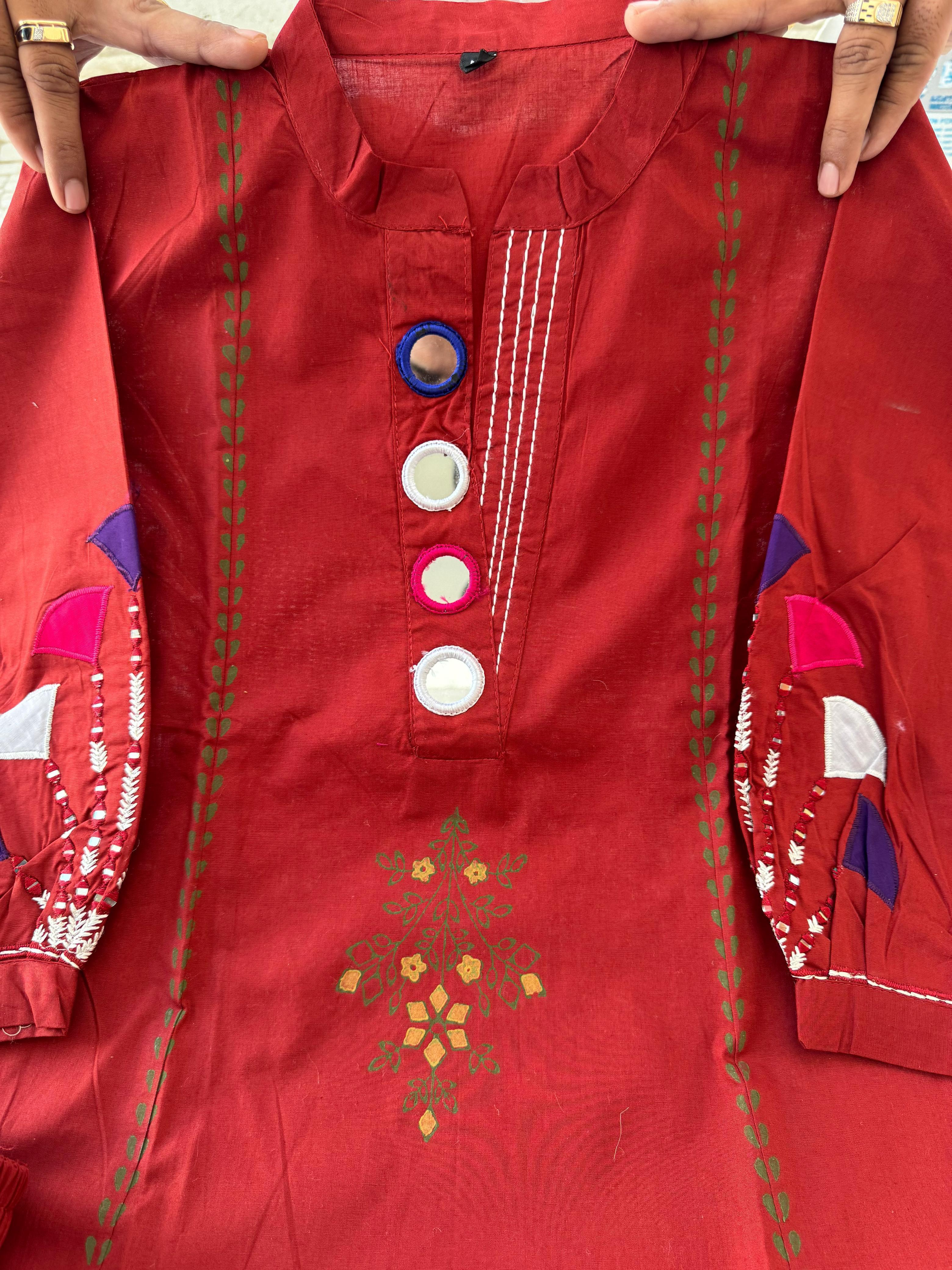
Rayon cotton is generally useful for a softer day-to-evening Anarkali because it has a more relaxed hand than stiff brocade. Banarasi silk and Kanjeevaram are associated with richer silk dressing, but a layered salwar suit doesn't automatically contain either textile; check the product's stated fabric rather than inferring fibre content from a zari-like appearance.
Zari, sequins and moti lace can create a festive surface, but dense decoration increases care requirements. The Black Anarkali Suit with Zari, Sequins & Moti Lace Work is the kind of design that benefits from thoughtful occasion rotation: reserve the most embellished combination for celebrations, then wear the base with quieter accessories for smaller gatherings.
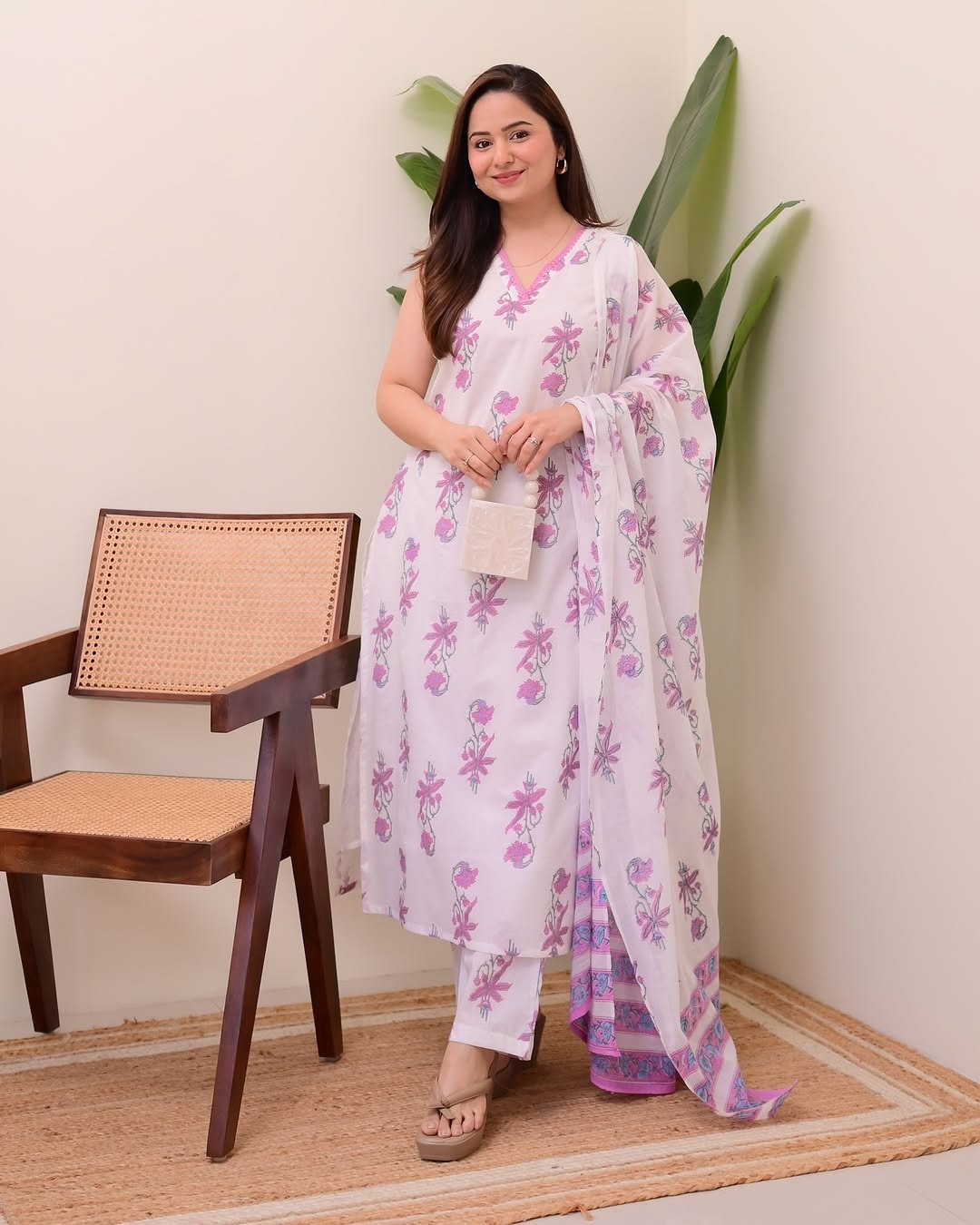
Prints can make the jacket-free version feel less formal and easier to repeat. A collection such as Kalamkari Print Salwar Suits (Copy) offers an useful styling reference because a printed salwar suit can shift direction through accessories rather than relying on a second layer for impact. Printed cottons and blended fabrics still need colour-care checks, particularly when a dark ground is paired with a light dupatta.
Embellishment placement also affects versatility. Border work at the hem and cuffs usually remains easy to style, while large motifs across the entire bodice may limit the number of dupattas and jewellery combinations. A jacket with concentrated work on the front panels can be removed without making the Anarkali look visually empty.
Ways to style the same Anarkali with and without the jacket
The jacketed look suits a formal event, while the jacket-free look works best when the base Anarkali is balanced with a different dupatta, footwear or jewellery scale. Small changes are enough to make the two versions appear intentionally separate.
For a wedding or reception
Wear the jacket over the Anarkali with embroidered juttis, a compact potli and one prominent pair of earrings. Keep the dupatta either tonal or lightly contrasted so the jacket remains the visual focus. The Black Zari Sequins Embroidered Anarkali Suit Set | Varnavi! Demonstrates the impact of a dark, reflective palette, but the same styling principle applies to other black zari and sequin designs.
For a formal evening, place the dupatta over one shoulder rather than wrapping it tightly around the neck. This keeps the jacket visible and avoids compressing zari or sequins against the skin. A low bun or a clean braid can prevent hair from catching in textured shoulder details.
For a puja or family lunch
Remove the jacket and choose a lighter dupatta in cotton, organza or a restrained print, subject to the garment's care requirements. Flat juttis, small hoops and a fabric tote reduce the formality without making the Anarkali look unfinished. The White Embroidered Anarkali Suit Set with Gota Patti Dupatta can be used as a styling reference for balancing embroidery with a lighter, daytime-friendly accessory direction.
White, ivory and pale neutrals benefit from colour contrast in the dupatta or footwear. An ivory base with muted green, rose, rust or indigo accessories can look more deliberate than matching every piece to the same pale shade.
For a contemporary occasion
Wear the jacket separately over a plain camisole, a straight kurta or high-waisted wide-leg trousers only when the jacket's length and neckline support that combination. A short, open-front jacket can also work over a solid black or ivory dress. The base Anarkali can be styled with a slim belt if the garment has enough ease and the belt doesn't press against zari or delicate lace.
Mustard, maroon and black offer particularly different styling routes. Women's Mustard Printed Anarkali Suit with Dupatta can move toward daytime dressing with tan sandals, while a maroon embroidered base such as Maroon Embroidered Rayon Cotton Anarkali Suit Set can take antique-gold earrings and a deeper-toned dupatta for an evening family event.
How regional textile ideas can guide your styling choices
Regional textile traditions provide styling cues, but a printed or embellished Anarkali should not be described as an authentic regional weave unless its construction and origin support that claim. Colour, motif scale and border treatment can still be used respectfully as inspiration.
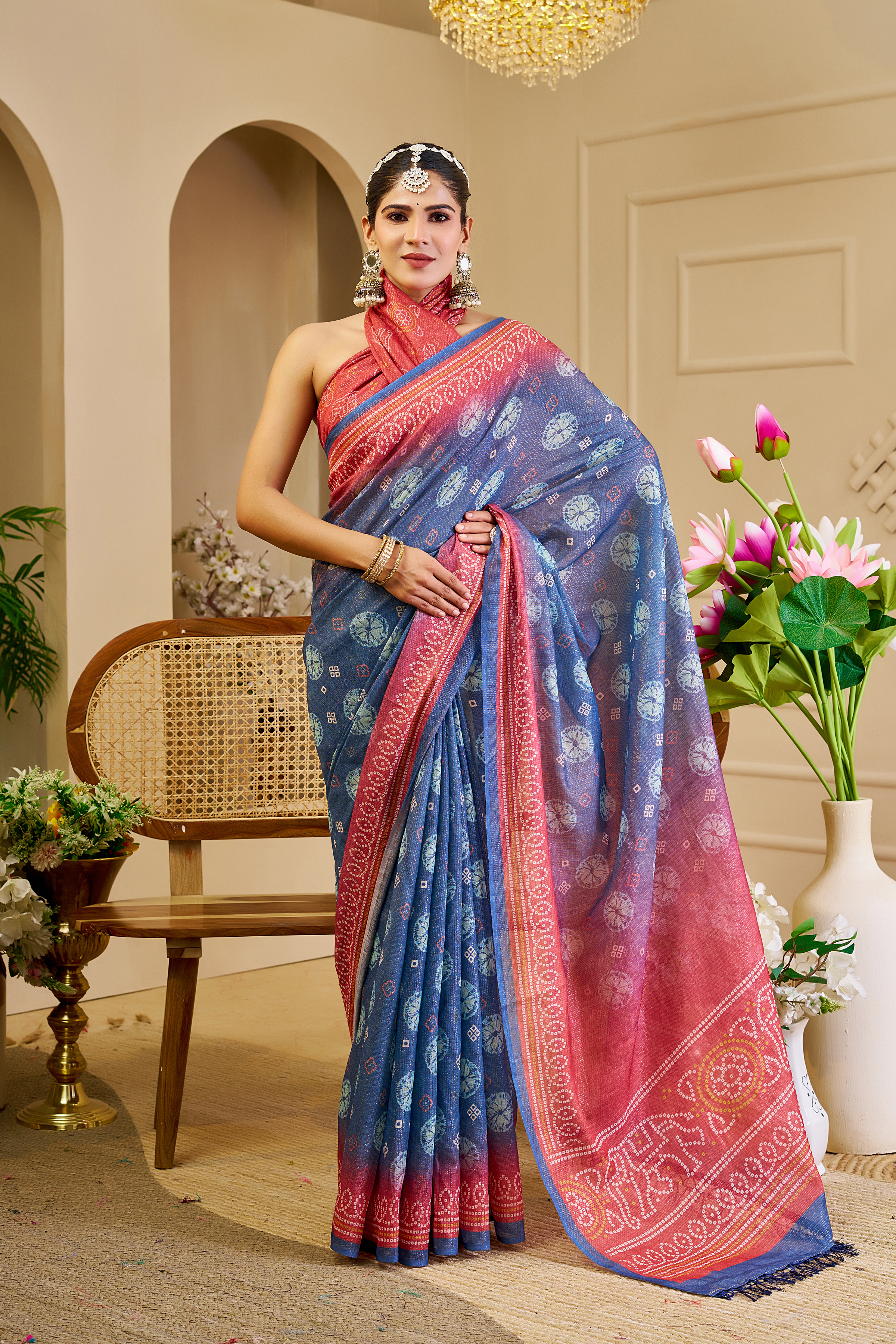
Maharashtra Paithani Inspired Salwar Suits suggest an useful approach to borders and jewel-toned colour: keep the jacket simple enough that a rich border or peacock-inspired accent remains visible. Gujarat Bandhej Salwar Suits can inspire a bandhani-style contrast in the dupatta, especially when the base Anarkali is solid and the jacket has restrained ornamentation.
Odisha Sambalpuri Salwar Suits offer another direction through strong geometric or traditional pattern references. A patterned dupatta can make a jacket-free Anarkali feel new, but avoid combining a large print, heavy zari and dense sequin work unless the event calls for maximal styling.
Punjab Patiala Salwar Suits remind the wearer that movement and proportion matter. A flared Anarkali can be paired with a more relaxed, pleated or draped dupatta style, provided the additional volume doesn't obscure the garment's neckline and waist.
Care, storage and cost-per-wear considerations
Separate garments should be stored and cleaned according to their most delicate component. Turn sequin or zari surfaces inside out when possible, keep embellishment away from rough jewellery, and use a breathable garment bag instead of compressing the jacket under heavy clothes.
Dry cleaning is often the safer choice for dense zari, sequins and moti lace, but the care label takes priority. Do not soak embellished Anarkalis without confirming colourfastness and trim stability. Rayon cotton may crease or change shape under unsuitable heat, so use a low-temperature iron on the reverse side with a pressing cloth rather than placing a hot iron directly over embroidery.
Allow a worn garment to air completely before storage. Folding the jacket along its natural seams and placing acid-free tissue between decorated panels can reduce friction and crushed embellishment. Hanging a heavy Anarkali for months may stretch the shoulders, so fold the base garment if its fabric and construction make that safer.
Cost per wear brings a practical way to judge whether the second look is real value. If a suit costs ₹4,000 and is worn eight times in two configurations, the clothing cost averages ₹500 per wear before cleaning and accessories. The calculation becomes meaningful only when the jacket-free version has a different enough appearance for the wearer to choose it independently.
A five-minute decision checklist before checkout
The right purchase passes a simple jacket-off test: the inner Anarkali should look complete, comfortable and easy to combine with existing accessories. A product photograph showing only the full layered set can't answer every fit question, so use the measurements, fabric details and construction description where available.
- Neckline: Does the Anarkali look finished without the jacket covering its collar?
- Sleeves: Are the sleeve length, armhole and cuff attractive when exposed?
- Fit: Can you sit, walk and raise your arms without pulling at the bust or hips?
- Closure: Are hooks, ties or buttons firmly attached and easy to manage?
- Dupatta: Can a different dupatta change the mood without clashing with the base embroidery?
- Care: Can the fabric and embellishment be maintained within your available time and budget?
- Wardrobe: Can the jacket pair with at least one plain kurta, dress or trouser already owned?
Black Embroidered Anarkali Suit Set with Zari Work is an useful example of a base that can retain visual presence through zari work. A set with lighter embroidery may offer even more repeat flexibility if the buyer expects to wear the Anarkali at daytime events.
The most practical jacket Anarkali that can be reworn without its jacket isn't necessarily the most heavily decorated option. It is the set whose inner garment has a convincing neckline, wearable fit, suitable fabric and enough independent detail to become a second outfit rather than a leftover layer.
Questions to Ask Before Buying a Rewearable Jacket Anarkali
Can an Anarkali be worn without its jacket?
Yes, an Anarkali can be worn without its jacket when the inner garment has a finished neckline, sleeves and hem. A coordinated dupatta and simpler accessories can make the jacket-free version look intentional rather than incomplete.
What should I check in a jacket Anarkali that can be reworn without its jacket?
Check the neckline, sleeve finish, flare, side-seam ease, fabric and jacket closure. The base Anarkali should allow comfortable sitting and walking and should have enough embroidery, print or texture to stand alone.
How can I style an Anarkali without its jacket for daytime?
Use a lighter dupatta, flat juttis or sandals, small earrings and a less embellished handbag. Printed or rayon cotton Anarkalis can move toward daytime dressing more easily than heavily sequined versions.
Can the jacket from an Anarkali be worn with other clothes?
A jacket can be worn with another outfit when its length, neckline and fastening are visually independent. Try it over a plain kurta, camisole, simple dress or high-waisted trousers, but check that the jacket does not rely on the Anarkali's neckline for balance.
How should I care for an Anarkali with zari, sequins and moti lace?
Follow the care label and consider professional dry cleaning for dense embellishment. Store the jacket and Anarkali separately in breathable covers, avoid direct high heat, and protect zari, sequins and moti lace from friction.
Is a detachable jacket Anarkali better value than a regular Anarkali suit?
A detachable jacket Anarkali can offer better value when the base garment works with different dupattas and the jacket combines with existing wardrobe pieces. Value depends on genuine repeat wear, not simply on having an extra layer.