A wedding lehenga may look effortless in photographs, yet a long ceremony can involve standing, sitting cross-legged, walking between venues, greeting relatives and adjusting a dupatta repeatedly. Is a belted lehenga practical for long wedding rituals? Yes, a belted lehenga can be practical for extended wedding rituals when the belt is comfortable, the waistband sits correctly and the outfit is light enough for repeated movement.
A belt can hold a dupatta in place, define the waist and reduce the need to pull up a slipping skirt. The same belt can become uncomfortable when it digs into the stomach, presses against heavy embroidery or prevents relaxed sitting. Practicality depends less on the word "belted" and more on construction, proportion, fabric and the demands of the wedding schedule.
Is a Belted Lehenga Practical for Long Wedding Rituals? Start With the Waistband
A belted lehenga is practical for long wedding rituals when the waistband allows easy breathing, the belt remains stable while sitting and the skirt gives enough room for walking and kneeling.
The belt offers one important functional advantage: it keeps the upper layers of the outfit organised. A dupatta tucked beneath or secured by a waist belt is less likely to slide from the shoulder during a pheras ceremony, jaimala or family photograph. A belt can also stop a full skirt from shifting unevenly when you walk up steps or sit on a low platform.
A belt doesn't automatically make a lehenga more comfortable. A narrow metallic belt may press into the waist after two hours. A heavily embellished belt can catch on net fabric. A rigid belt may limit the natural expansion of the abdomen after a meal. The most wearable version usually has a flexible backing, a smooth inner surface and an adjustable closure.
When does a belt improve comfort?
A belt improves comfort when it secures fabric without carrying the entire weight of the dupatta or tightening the waist excessively.
A well-positioned belt can distribute a small amount of dupatta weight across the waist instead of allowing all of it to pull on one shoulder. The belt should support the drape, not replace a properly fitted blouse, shoulder pin or hidden safety pin. A soft fabric belt, elasticated waistband or lightly structured kamarbandh is generally easier to wear for several hours than a rigid ornamental chain.
Consider the schedule before deciding. A belt is especially useful for a daytime Haldi ceremony, where walking, sitting on the floor and moving around guests can make an unsecured dupatta frustrating. A belt may be less necessary for a short evening reception where you'll spend most of the time standing or posing.
Check These Construction Details
Waistband comfort, skirt volume, fabric weight, blouse support and dupatta control matter more than decorative belt detailing during a long ceremony.
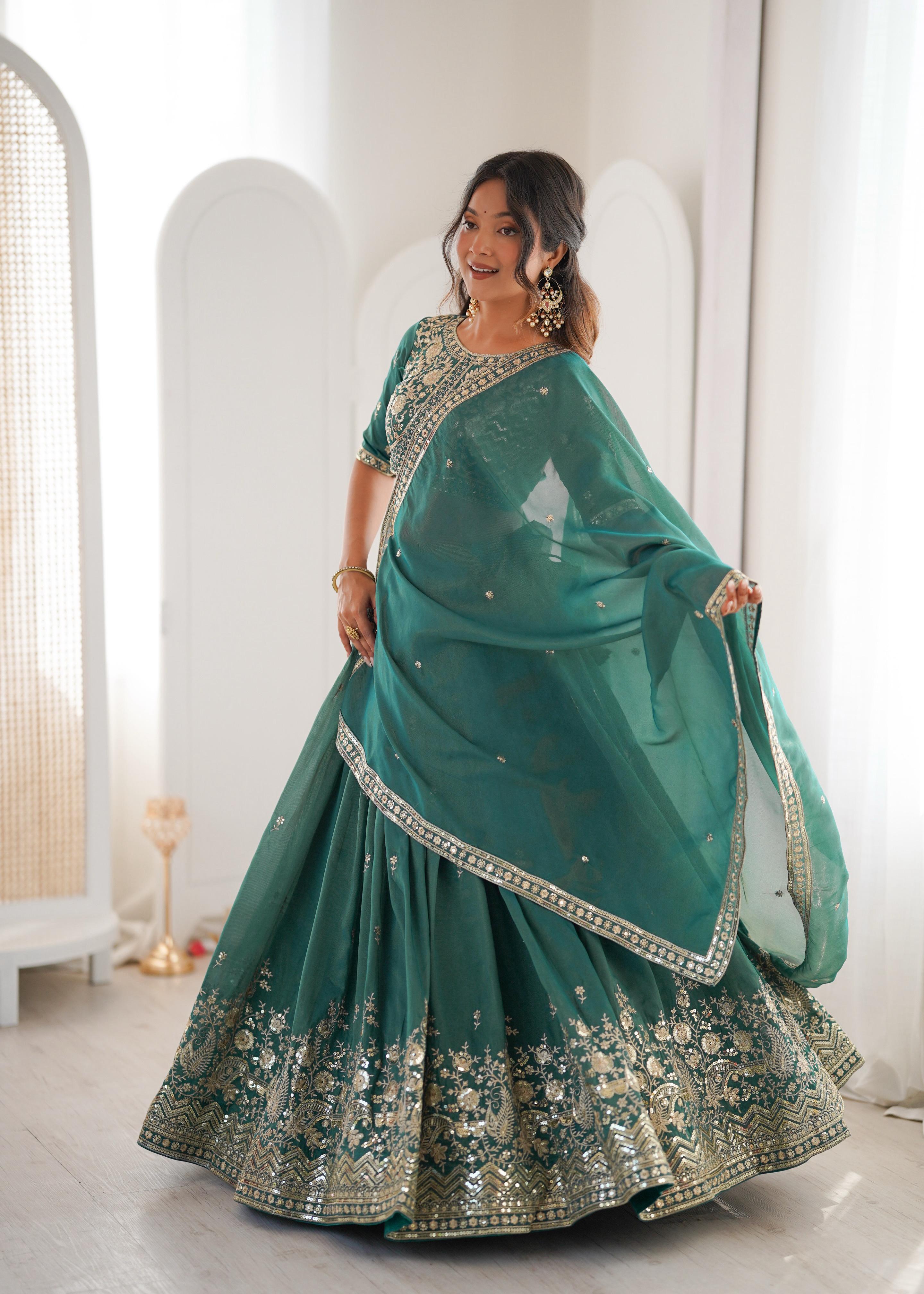
How should the waistband fit?
The waistband should sit flat against the body without folding, rolling or creating a sharp pressure point.
A three- to four-centimetre waistband often feels more stable than a very narrow strip because the pressure is spread over a larger area. Adjustable hooks or a concealed tie allow small changes after eating, while a fixed zip with no ease can become restrictive. The belt should sit at the natural waist or the intended high-waist point rather than cutting across the widest part of the abdomen.
Test the belt in three positions before the wedding: standing, sitting on a chair and sitting on the floor. The belt should remain level in all three positions. If the front edge digs into the stomach while seated, the design may photograph well but will be tiring during rituals.
How much skirt volume is useful?
A skirt needs controlled flare and a safe hem length for walking, staircases and floor seating.
Excessive can-can or multiple stiff layers can make a lehenga difficult to gather when you sit, while a very narrow skirt can restrict kneeling and crossing your legs. A moderate flare generally provides an useful balance between movement and visual volume. The skirt should open enough for a natural stride without forcing you to lift the hem at every step.
Measure the skirt with the footwear you intend to wear. The hem should clear the floor by approximately one to two centimetres when you're standing naturally, depending on the shoe height and the thickness of the underskirt. A dragging hem collects dust and creates a tripping risk, particularly at outdoor pheras or crowded mandap areas.
Why does blouse support matter?
A supportive blouse reduces strain on the waist because the blouse and dupatta don't pull downward throughout the ceremony.
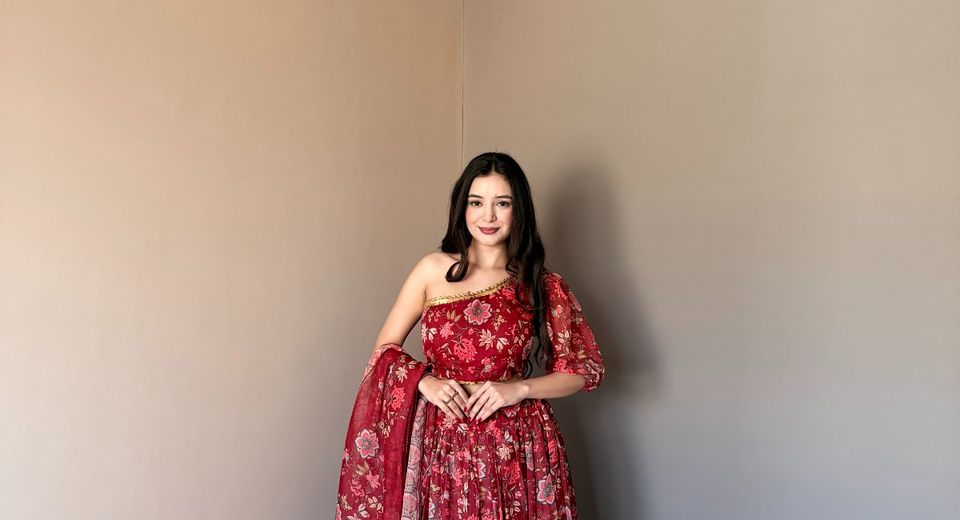
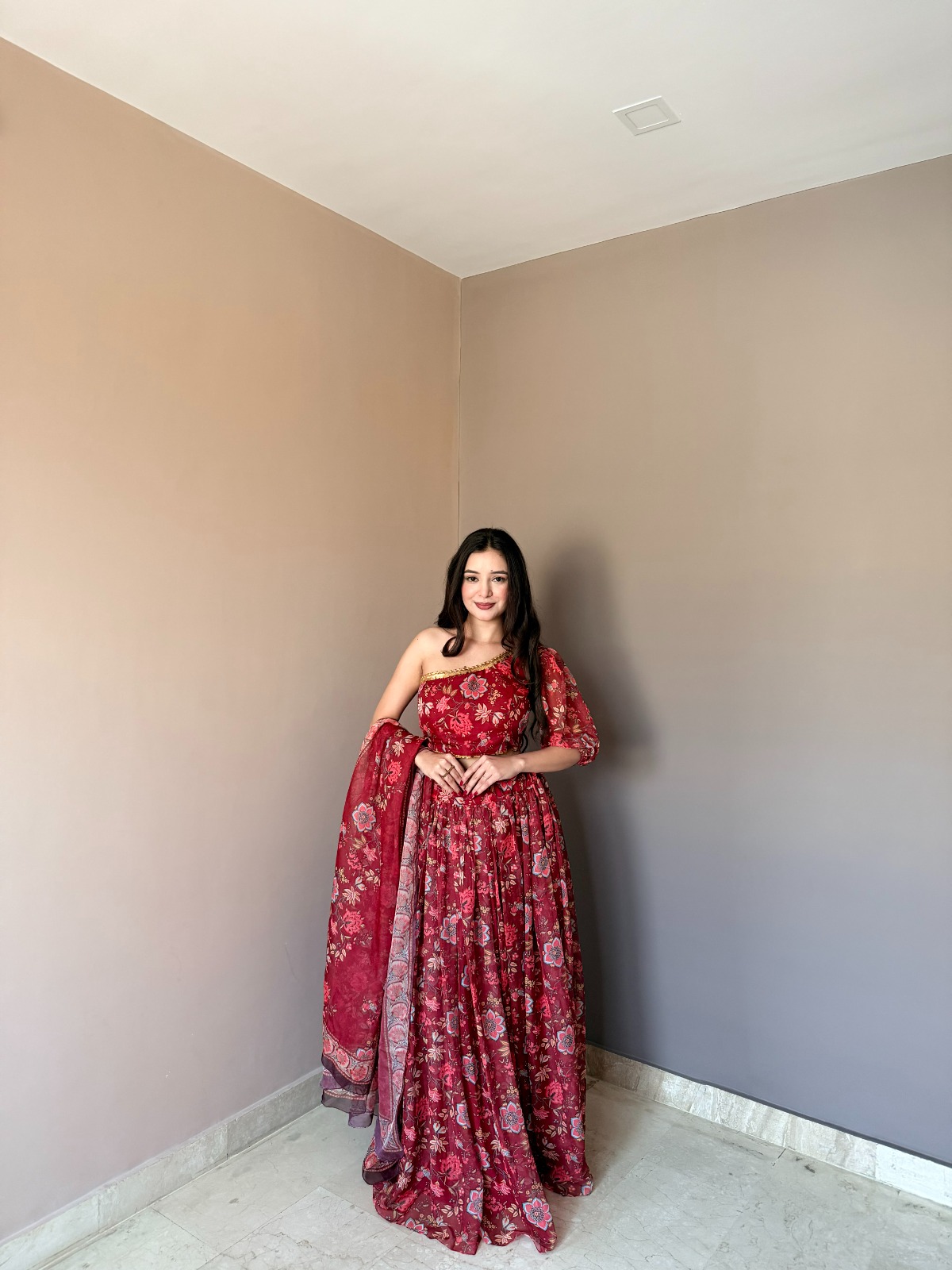
Shoulder straps, a secure neckline and well-placed cups or lining help maintain comfort without repeated adjustment. An one-shoulder blouse, such as the styling seen with the Red Floral Organza Lehenga Set with One Shoulder Blouse, requires a careful fit test. Check whether the neckline shifts when you raise both arms, sit down or reach forward. A belt may secure the waist, but it can't correct a blouse that continually slips from the shoulder.
Choose the Right Fabric
Lightweight organza, soft net, chiffon-like layers and breathable silk blends are generally more comfortable for long rituals than heavily layered or densely embellished fabrics.
Fabric affects fatigue in three ways: total garment weight, heat retention and ease of movement. Banarasi silk and heavier brocade can offer beautiful structure, but a full skirt with dense zari, lining and multiple underskirts may feel warm after several hours. Silk lehengas can still be practical when the weave is moderately light and the embroidery is concentrated rather than spread across every panel.
Organza gives a crisp, airy silhouette but can feel less forgiving at the waist if the belt is tight. Net brings volume at a lower weight, although rough sequins or exposed embroidery can scratch the skin. Chinon and similar fluid fabrics drape softly and are often easier to gather while sitting. The Mustard Floral Threadwork Chinon Lehenga Choli for Women illustrates why a softer skirt can be useful for a ceremony involving frequent movement.
Embellishment placement matters as much as fabric choice. Heavy motifs positioned directly under the belt can create pressure and friction. Dense sequins at the back waist may become uncomfortable when you lean against a chair. Smooth lining, covered seams and embroidery that stops short of the waistband are small construction details with a significant effect on wearability.
How much weight is too much?
A practical long-ritual lehenga should feel manageable after ten minutes of walking, not only during a brief fitting-room trial.
there's no universal maximum weight because body strength, weather and ceremony length vary. An useful test is to wear the complete outfit, including blouse, belt, dupatta and footwear, for 20 to 30 minutes at home. Walk, sit, climb a few steps and lift the skirt slightly. If the waistband causes discomfort before the trial ends, a six-hour wedding schedule will magnify the problem.
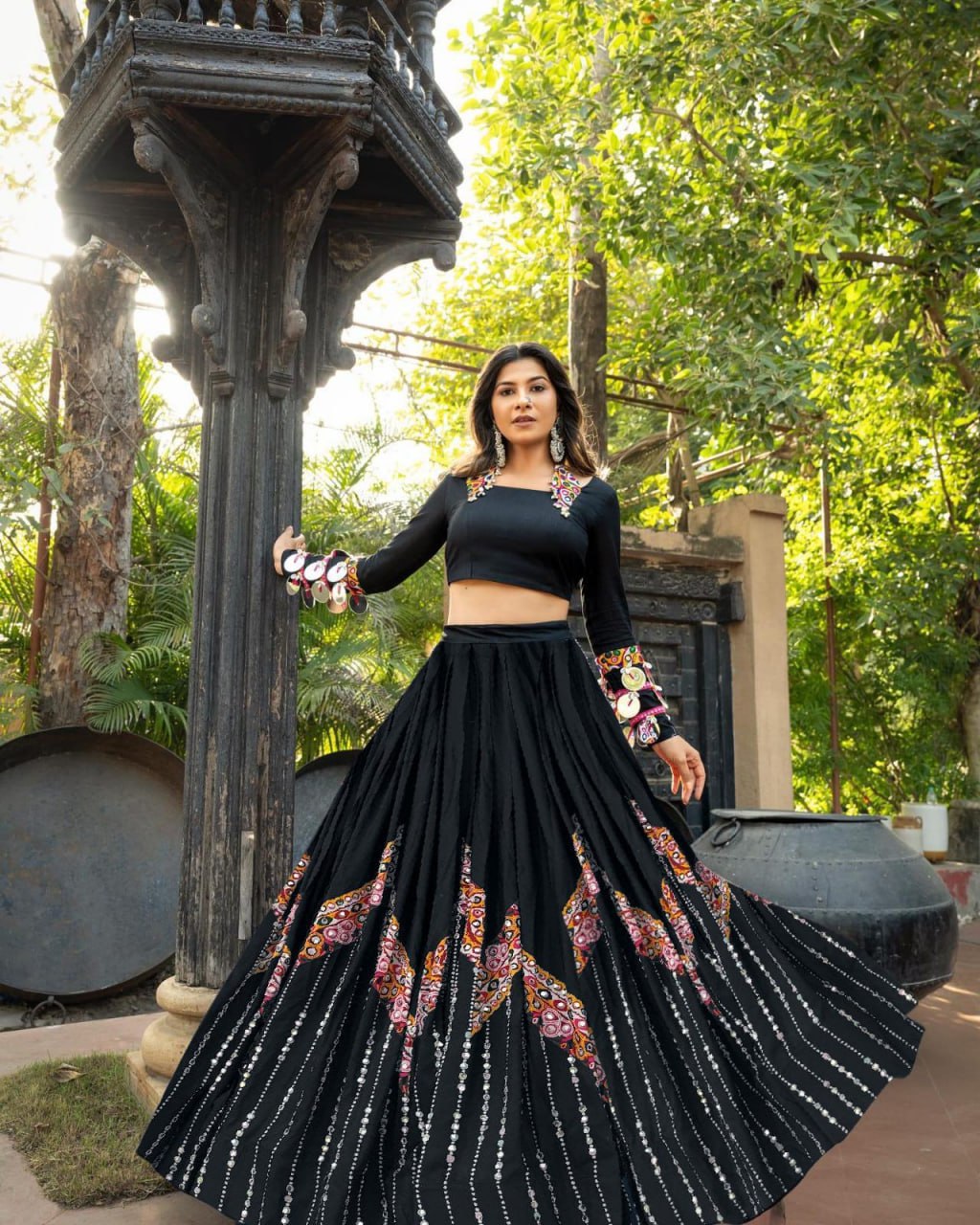
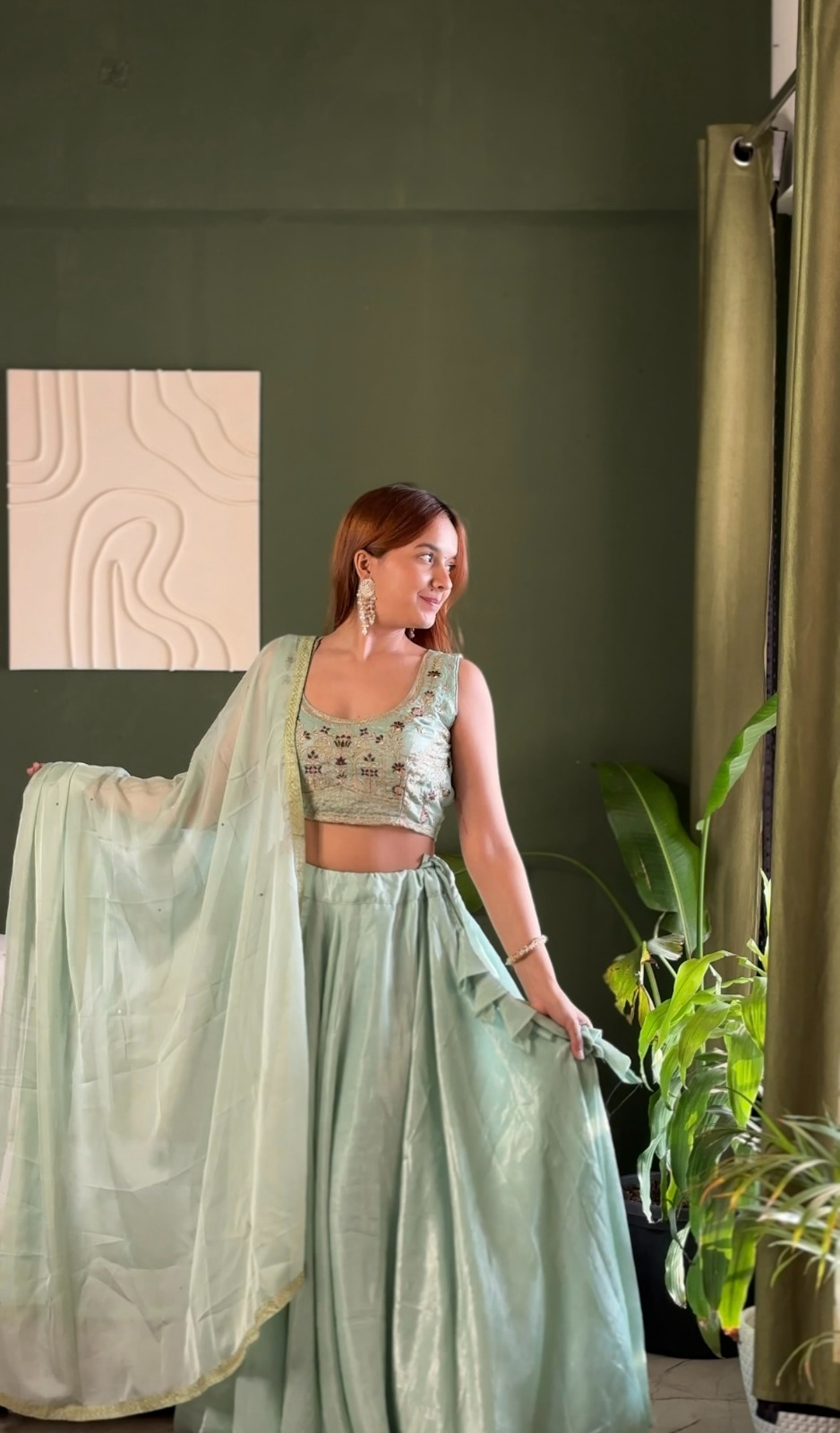
The Black Wedding & Festive Wear Designer Lehenga may suit an evening function where dramatic colour and structured styling are priorities, while the Mint Embroidered Lehenga Set with Net Dupatta for Women can offer a lighter visual direction for a daytime ceremony. The correct choice depends on actual lining, embroidery density and skirt construction, so colour alone should never be used as a weight guide.
Manage the Dupatta
A belted lehenga is easier to wear for long rituals when the dupatta has one secure shoulder anchor and limited movement at the waist.
Secure the dupatta at the shoulder with a concealed safety pin and place the lower edge under the belt only if the belt doesn't create bulk. For a long ritual, a shoulder drape with a lightly tucked waist is usually easier to manage than a loose front drape that repeatedly falls into the lap.
Choose one main anchor point rather than pinning every section tightly. Too many pins can restrict movement and make it difficult to remove the dupatta if the venue becomes hot. A soft net dupatta may be easier to control than a heavily bordered one because a wide zari border adds weight at the shoulder and waist.
The Red Butterfly Net Sequins Lehenga Set Wedding Wear demonstrates why surface decoration needs inspection before a long event. Sequins should not scrape the underarm, catch on the belt or rub against the neck. Wear the blouse and dupatta together at home, then move both arms forward and sideways to check for snagging.
Plan for Sitting
For floor seating, gather the skirt to one side before lowering yourself and release the fabric gradually after sitting.
don't pull the skirt sharply from the front because the belt may shift or the waistband may twist. A friend or family member can help arrange the hem before you sit near a mandap. A lehenga with a moderate flare and a flexible belt usually permits more graceful floor seating than a stiff, heavily hooped design.
Practise the full sitting movement before the event. Stand with both feet stable, lift the skirt slightly from the sides, bend your knees and lower yourself without putting sudden pressure on the belt. Practising also reveals whether the blouse rides up, whether the dupatta blocks your hands or whether the hem catches under your footwear.
Footwear changes practicality as well. Block heels, embellished juttis or low wedges are generally safer for outdoor rituals than narrow stilettos. The Exclusive Blue Traditional Navratri Lehenga Choli can inspire a festive styling approach, but wedding guests should adapt footwear and accessories to the actual venue rather than copying a dance-oriented look without modification.
Match It to the Function
A belted lehenga can work across wedding functions, but the belt, fabric and degree of embellishment should change according to movement, heat and ceremony duration.
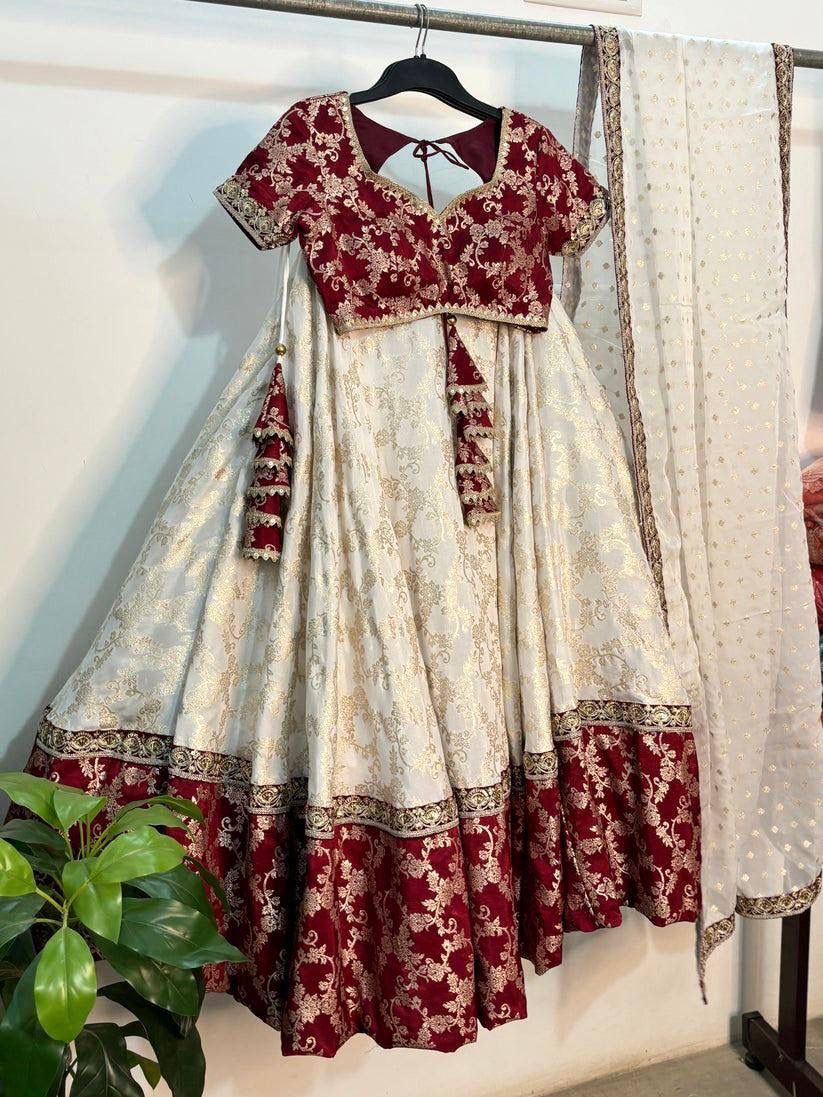
- Haldi: Choose a light skirt, washable or easily protected accessories and a belt with a smooth surface. Yellow turmeric, water and food can stain delicate finishes, so avoid a belt with absorbent velvet if the event involves active rituals. Haldi Lehengas Under 5500 can be an useful starting point when comparing lighter, function-specific designs.
- Mehendi: Select a comfortable waistband because mehendi sessions often involve prolonged sitting. A moderate flare, soft blouse and manageable dupatta are more useful than a very structured silhouette. The Bridesmaid Lehengas Under 5500 collection can help frame a practical search for lighter guest and bridesmaid outfits.
- Pheras or wedding ceremony: Prioritise sitting comfort, a secure shoulder drape and footwear suitable for walking over uneven ground. Heavy zari and dense embroidery may be lovely, but a lighter skirt reduces fatigue during repeated standing and sitting. Silk Lehengas Under 3000 may suit shoppers comparing traditional-looking fabrics with a lower overall outfit commitment.
- Reception: A more structured belt, sequins or metallic finish can work when the event involves less floor seating. Net Lehengas Under 4500 with 51% Discount can be considered when a fuller silhouette is wanted without automatically choosing the heaviest skirt.
Budget should be evaluated alongside wear time rather than in isolation. Pink Lehengas Under 4000 with 50% Discount may offer options for a guest outfit, while an outfit for repeated family ceremonies may justify spending more on lining, adjustable construction and a belt with a smooth inner finish. A low price is useful only when the garment remains comfortable for the number of hours you expect to wear it.
Use This Fitting Test
A complete 30-minute fitting test gives the most reliable answer before wearing a belted lehenga to a long wedding ritual.
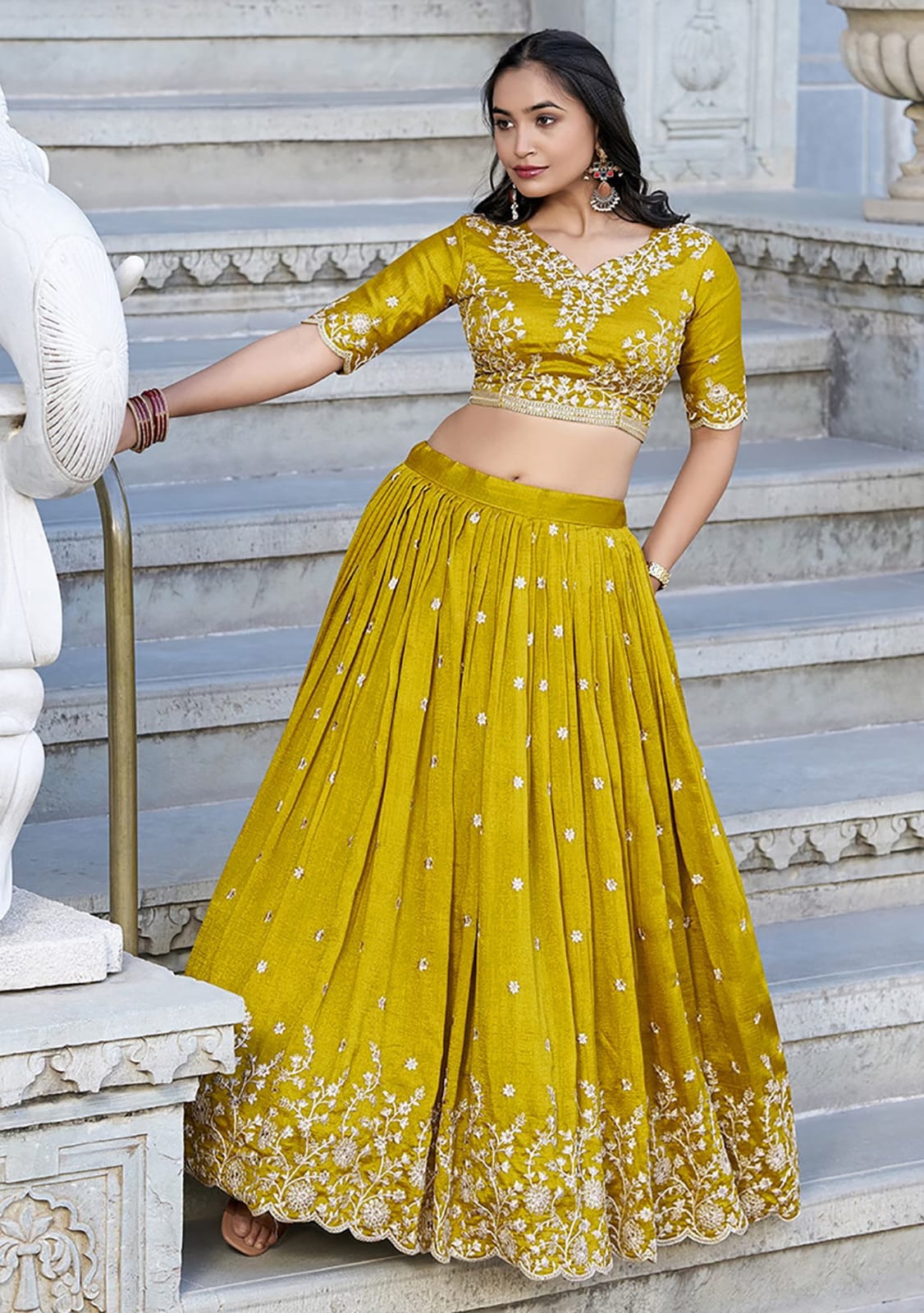
- Wear every layer: Put on the blouse, skirt, belt, dupatta, jewellery and intended footwear together. A belt that feels comfortable over a thin home outfit may feel tight over a lined blouse and tucked drape.
- Walk for ten minutes: Use stairs if the venue has them. Notice whether the hem catches, the belt rotates or the dupatta pulls towards one shoulder.
- Sit in two ways: Sit on a chair for five minutes and then practise floor seating. Check the waistband, back embroidery and skirt volume in both positions.
- Raise and extend your arms: Reach forward as though greeting someone, lift both arms for photographs and turn your torso. These movements expose blouse restriction and shoulder slippage.
- Eat and reassess: After a normal meal, wear the outfit for another ten minutes. A fixed waistband that becomes painful after eating isn't suitable for an extended ceremony.
- Inspect the skin: Remove the outfit and look for red marks, scratches or pressure lines around the waist, shoulders and underarms. Persistent marks indicate that the belt, lining or embroidery needs adjustment.
A belt can be loosened, padded or replaced, and a tailor can often add a small comfort panel or extra hook position. Alterations should be completed at least one week before the wedding so the outfit can be tested again after fitting.
The final decision should reflect the entire schedule. A belted lehenga is a strong choice when it secures the dupatta, supports the silhouette and survives walking, sitting and eating without pressure. A simpler waistband or unbelted lehenga may be wiser when the ceremony involves many hours of floor seating, intense heat or extensive travel between venues.
Practical Questions About Belted Lehengas for Long Wedding Rituals
Is a belted lehenga comfortable for sitting on the floor?
A belted lehenga can be comfortable for floor seating when the belt is flexible, the waistband is not tight and the skirt has moderate flare. Test the full outfit while sitting cross-legged before the wedding, because stiff can-can and rigid belts can create pressure when the knees are raised.
Does a belt stop a lehenga dupatta from slipping?
A belt can reduce dupatta movement at the waist, but a shoulder pin and correctly fitted blouse are still necessary. The belt should lightly secure the drape rather than carry the full weight of a heavy zari or embellished dupatta.
Which fabric is best for a lehenga worn during long wedding ceremonies?
Lightweight net, organza, Chinon and breathable silk blends are generally easier to wear for several hours than heavily layered or densely embroidered fabrics. Banarasi silk and brocade can work when the skirt has limited lining and concentrated embellishment instead of heavy decoration across every panel.
How can I tell whether a lehenga belt is too tight?
A belt is too tight when it digs into the stomach, causes sharp pressure while sitting or leaves persistent red marks after removal. Wear the complete outfit for 20 to 30 minutes, including after a normal meal, to check whether the waistband remains comfortable.
Can I wear a belted lehenga for a Haldi ceremony?
A belted lehenga can suit a Haldi ceremony when the fabric and accessories can tolerate movement, water and turmeric stains. Choose a light skirt and a smooth belt, and avoid absorbent velvet or delicate finishes if guests will actively apply haldi.
What footwear works best with a belted lehenga for wedding rituals?
Block heels, low wedges, juttis and embellished flats usually provide better stability than narrow stilettos during long rituals. Match the hem to the chosen footwear before the event so the skirt does not drag or create a tripping hazard.