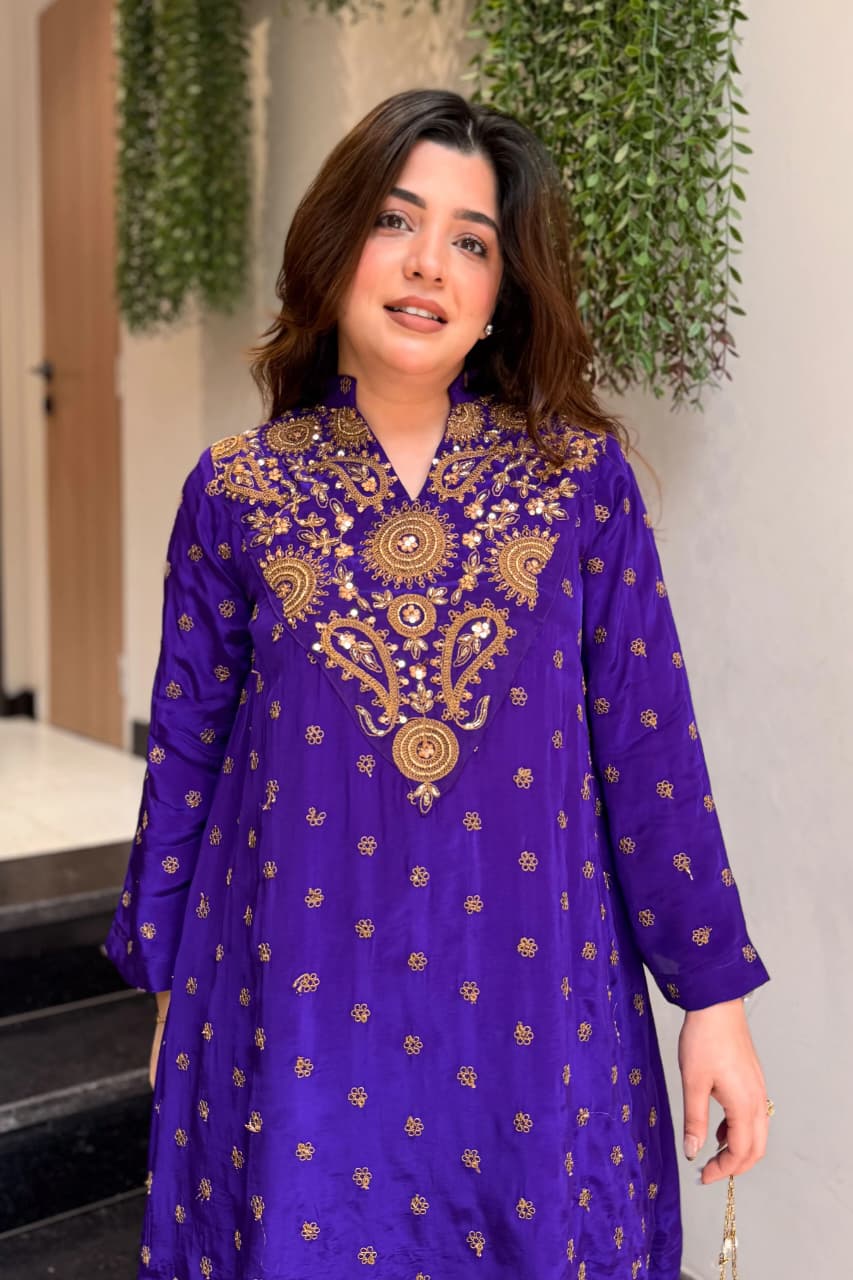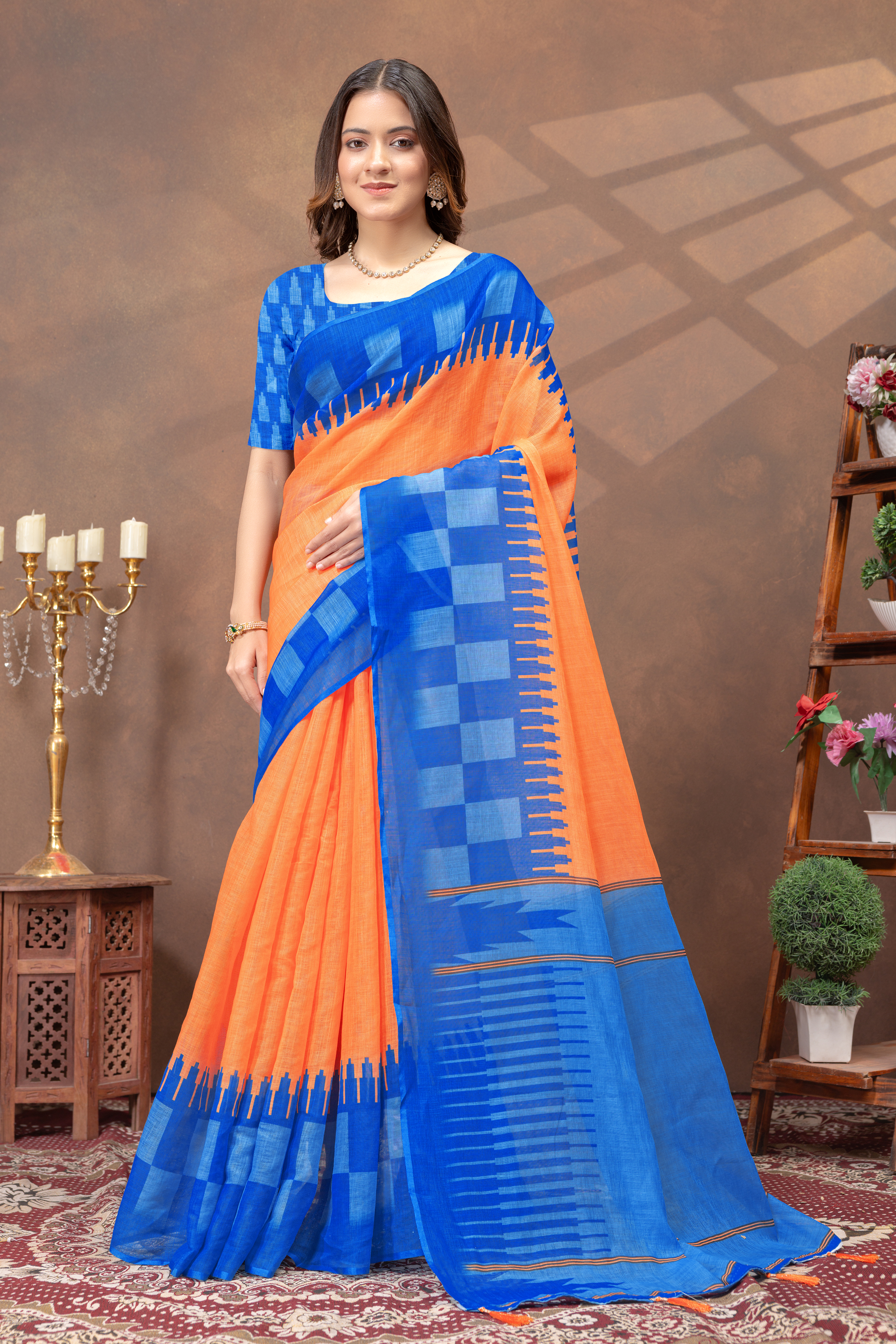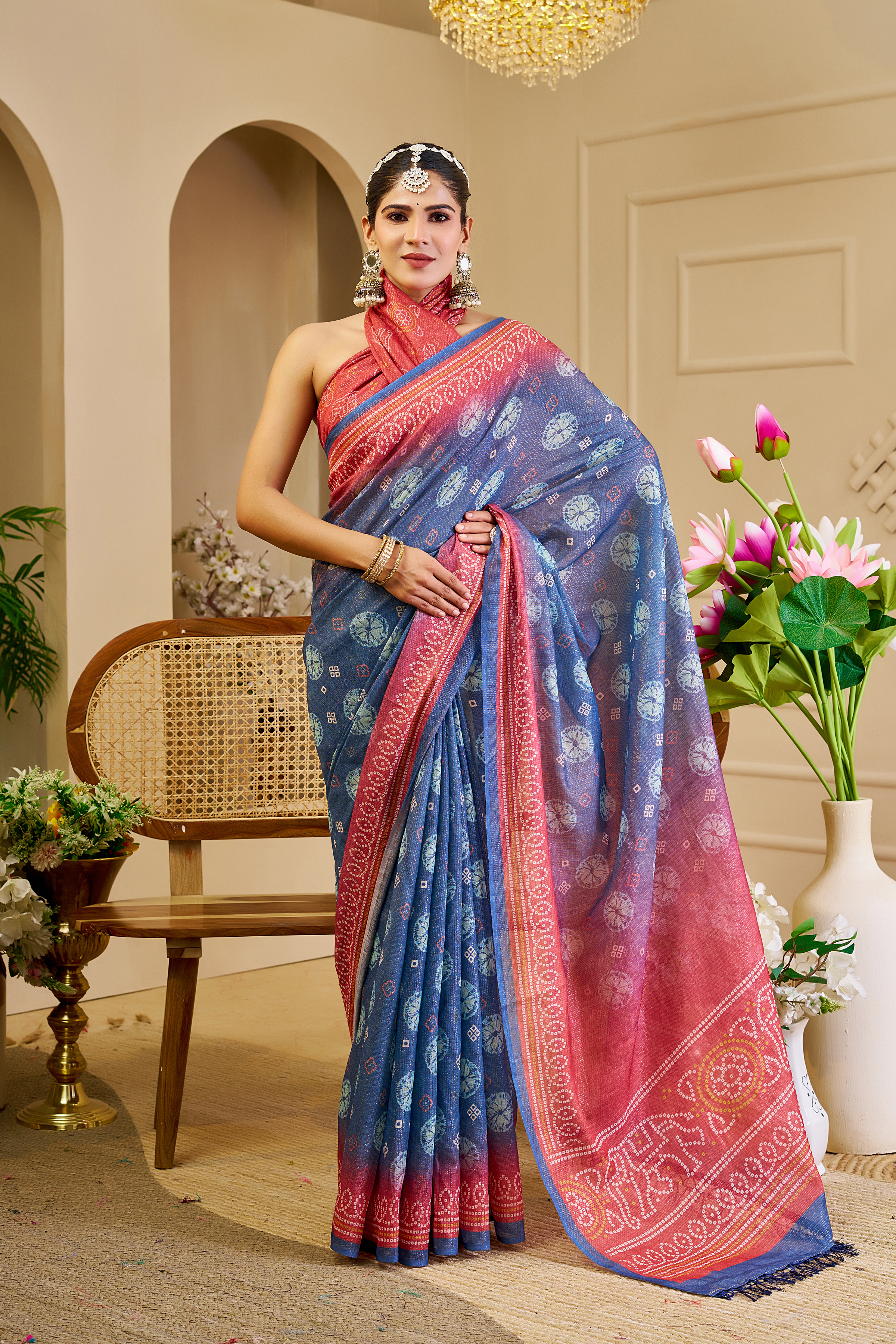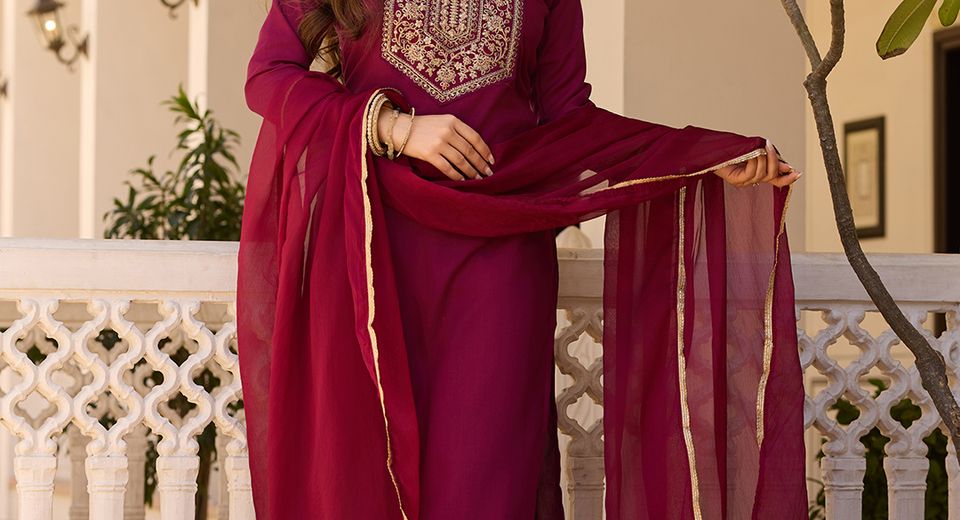
A formal salwar suit can look composed without a necklace stack, oversized earrings or a heavily embellished dupatta. How to Wear a Formal Suit Set With Minimal Accessories comes down to proportion, fabric, colour control and one intentional finishing detail. A well-cut kurta, neat trousers or churidar, clean footwear and restrained jewellery often create a stronger professional impression than several competing accents.
Formal dressing doesn't mean making a traditional outfit plain. Formal dressing means giving every visible element a job. Embroidery can provide texture, a structured bag can add authority, and a watch can bring practical polish. The goal is to make the outfit look considered from the collar to the hem while keeping movement, comfort and workplace appropriateness in mind.
What makes a salwar suit look formal?
A salwar suit looks formal when its silhouette is neat, its fabric holds its shape, and its colours and embellishments remain visually controlled. A straight kurta with clean side seams, ankle-length trousers and a pressed dupatta usually reads more professionally than a very flared anarkali or a heavily layered festive set.
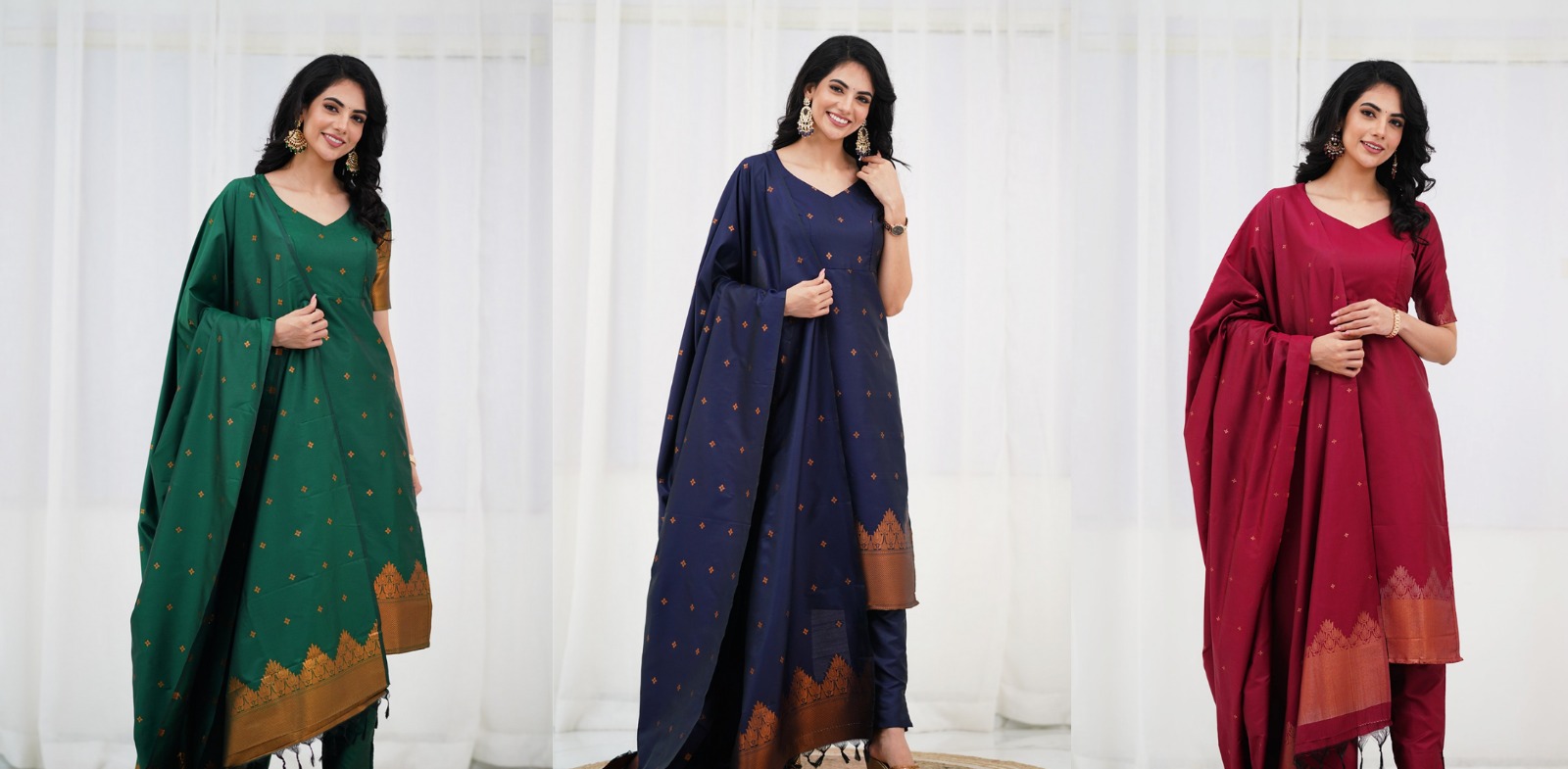
Start with the line of the garment. A straight suit set creates a vertical shape that works well for offices, conferences and client-facing meetings. A lightly tailored A-line kurta can also look formal when the flare is moderate and the hem falls evenly. Palazzo trousers are suitable when the fabric is opaque and fluid rather than overly shiny or voluminous. Sharara silhouettes generally feel more festive because their wide flare draws attention to the lower half.
Fabric changes the message of a formal suit set. Chanderi cotton offers a lightly crisp surface and subtle sheen, while crepe drapes smoothly and resists a bulky appearance. Chinon silk has a softer, dressier fall and may need simpler accessories to remain office appropriate. Banarasi silk and dense zari are visually rich, so they're usually better reserved for formal celebrations unless the workplace permits ceremonial dressing.
Small construction details matter. A clean neckline, covered placket, secure lining and sleeves that allow comfortable arm movement make a suit more credible for a long working day. A kurta that constantly needs adjusting will undermine even the most elegant styling.
How to Wear a Formal Suit Set With Minimal Accessories
How to Wear a Formal Suit Set With Minimal Accessories starts with choosing one focal point and allowing the rest of the outfit to support it. The focal point may be delicate embroidery at the neckline, a single pair of earrings, a refined watch or a distinctive but compact handbag.
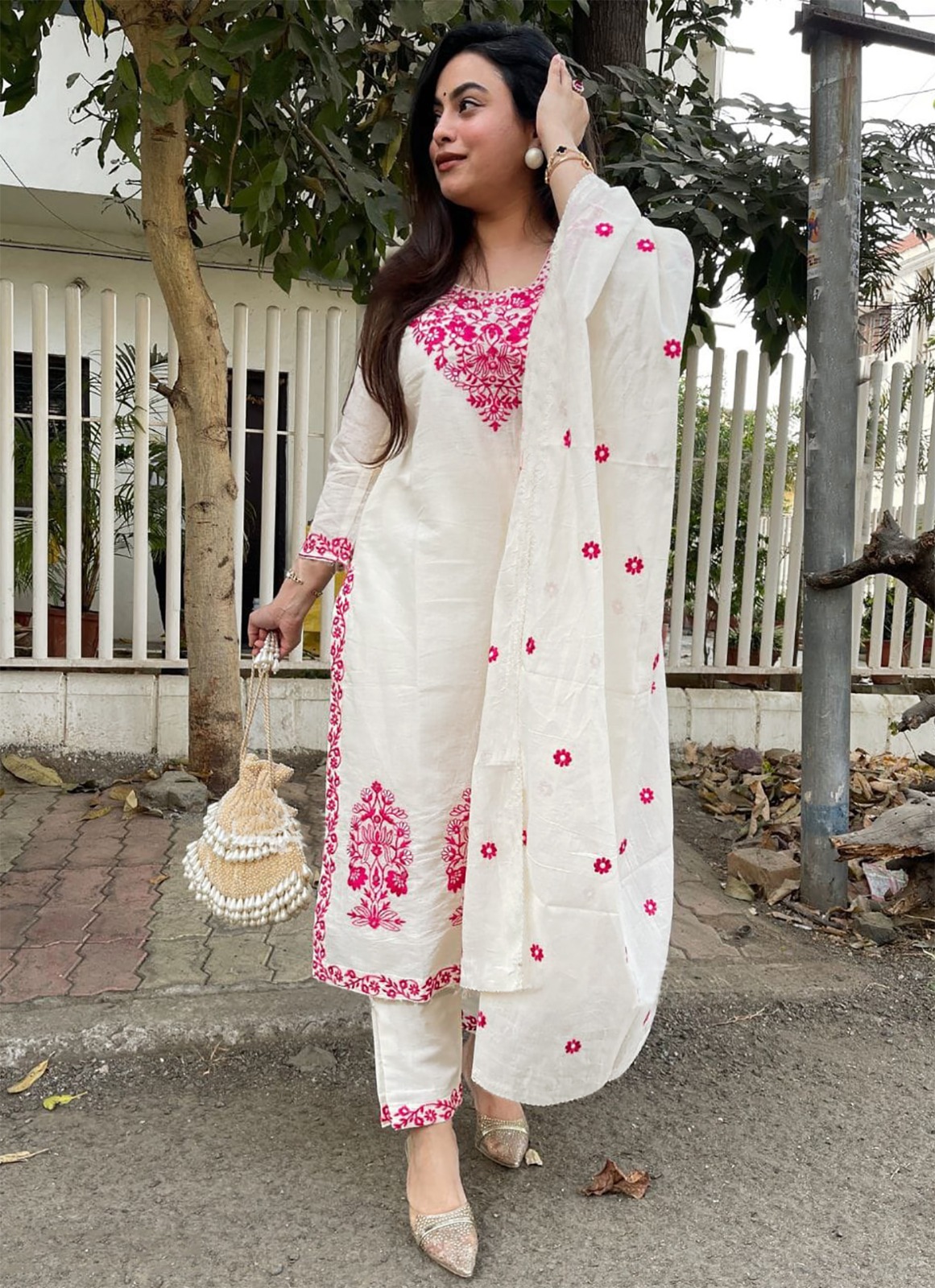
Use a three-part decision before adding anything: identify the strongest detail on the garment, select one accessory near the face or hands, and remove anything that repeats the same visual effect. For example, a suit with floral embroidery at the neckline may need only small metal studs and a watch. Adding a necklace, bangles and an embellished hair clip would create several competing centres of attention.
Keep metal choices consistent when possible. Gold-toned earrings work naturally with warm ivory, rust, mustard and peach embroidery. Silver-toned jewellery suits cool grey, black, white and blue palettes. Mixed metals can look deliberate, but the combination should be repeated at least once, such as silver earrings with a watch that has a two-tone strap.
Choose scale according to the kurta's visual density. Tiny studs can disappear beside prominent embroidery, while large hoops can overpower a narrow neckline. Medium-sized geometric earrings are often the most adaptable option for a plain or lightly worked suit. A slim watch adds structure without reading as decorative excess.
An useful rule for formal ethnic wear is one statement detail, one practical accessory and no unnecessary repetition.
How should you choose colour for a formal suit set?
Neutral or muted colour combinations usually create the most dependable formal impression, especially when the suit has visible embroidery. Black, off white, navy, charcoal, muted brown, rust, cream and subdued mustard can all work when the silhouette remains tailored.
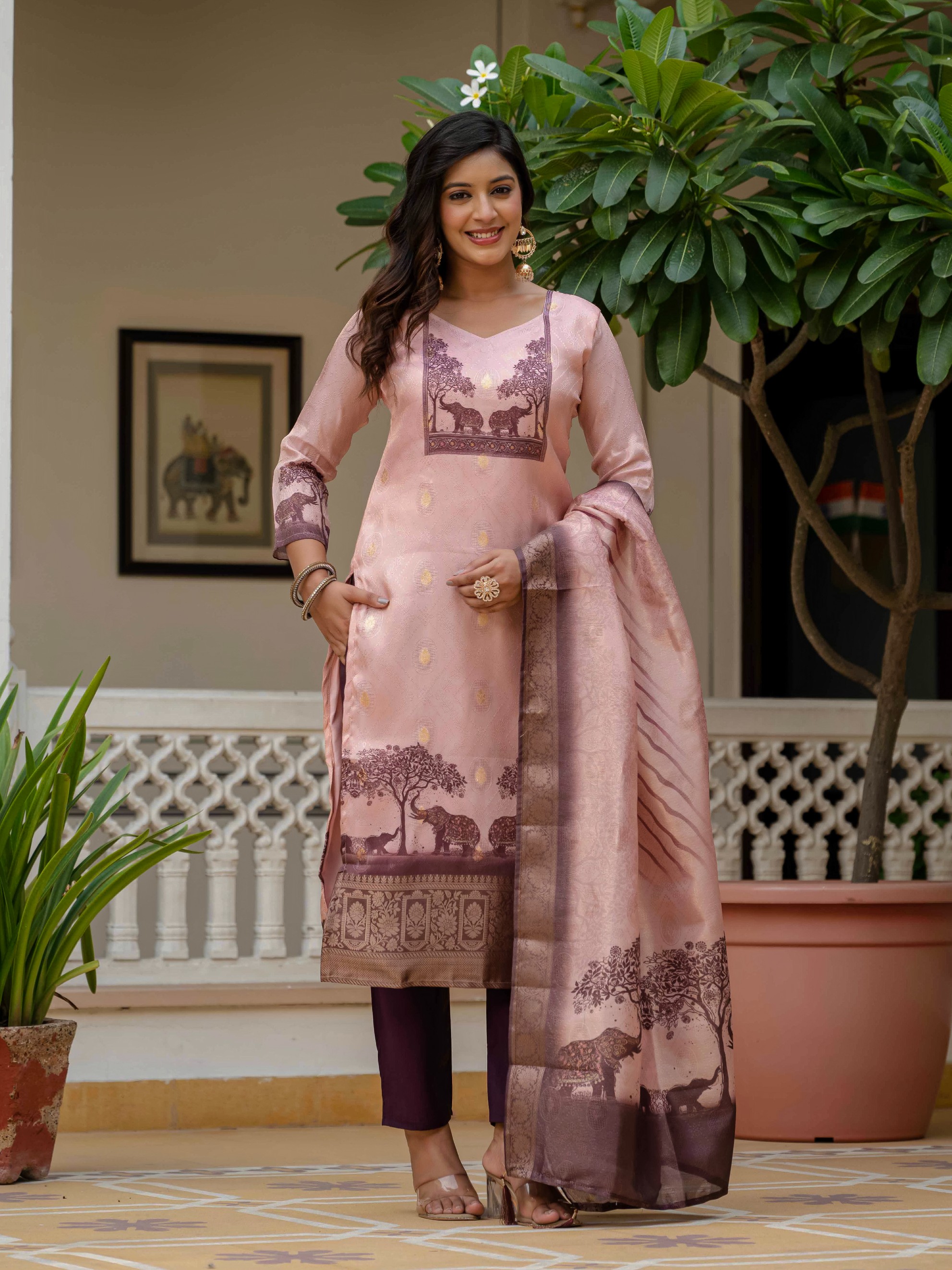
Contrast should be controlled rather than eliminated. An off white kurta with black floral embroidery has clear definition without requiring colourful jewellery. A rust orange suit can be balanced with tan footwear and a brown bag. A mustard Chanderi cotton kurta can be paired with muted gold accessories, but bright red lipstick and a heavily patterned dupatta may push the look towards festive dressing.
The Black White Floral Embroidered Readymade Salwar Suit demonstrates why a limited palette can be effective. Black and white allow the embroidery and garment shape to lead, so a black structured tote, simple studs and closed-toe flats are enough for a formal setting.
The Off White Floral Embroidered Straight Suit Set brings a softer alternative. Off white works well with tan, beige, muted gold or deep brown accessories. Avoid adding several pastel colours at once, because the outfit can lose the clarity that makes a straight suit look professional.
Colour also affects perceived maintenance. Cream and off white show dust, makeup transfer and food marks more quickly than rust, black or brown. If commuting by public transport or attending a full-day event, select a colour that remains practical for the journey and keep a small stain-removal wipe in the bag.
Which accessories create polish without looking overdressed?
The most effective minimal accessories for a formal suit are small earrings, a watch, a structured handbag, practical footwear and a neatly arranged dupatta. These pieces improve finish and function without competing with the suit.
Jewellery
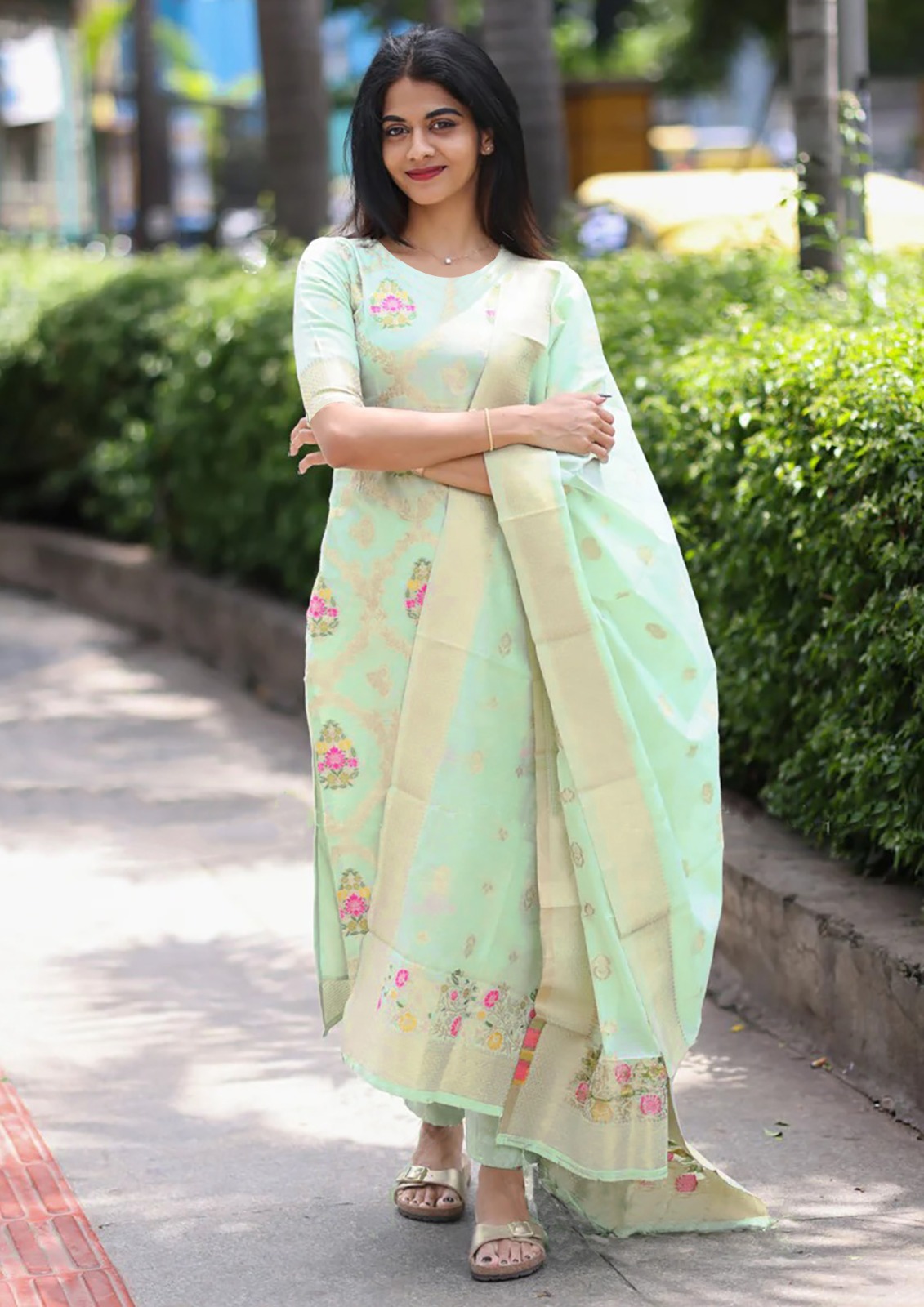
Small studs, slim drop earrings or medium geometric earrings are reliable choices for formal salwar suits. A single delicate chain works with an open or simple neckline, but skip the chain when the kurta already has dense embroidery around the collar. Bangles should be limited to one or two quiet pieces if they don't make noise during typing, meetings or presentations.
The Elegant Mustard Chanderi Cotton Kurta Set with Embroidery already supplies surface interest through texture and needlework. Small gold-toned studs and a slim watch preserve that interest. A wide classic necklace would shift the styling towards a festive or wedding environment.
Handbags
A medium structured tote, satchel or compact top-handle bag is more useful for formal workwear than a soft embellished potli. Black, tan, chocolate brown, navy and deep burgundy coordinate with many Indian suit colours. Choose a bag large enough for essentials but not so large that it overwhelms a slim kurta.
Footwear
Closed-toe flats, low block heels and clean leather or faux-leather loafers provide the most dependable formal finish. A heel between 2 and 5 centimetres gives some height without making long commutes uncomfortable. Metallic juttis can work with a dressier office, but sequins, mirror work and very ornate straps are better suited to festive wear.
Footwear colour should connect with either the bag or a small detail in the embroidery. Matching the exact shade is unnecessary. A tan sandal with a brown handbag creates enough coordination, while black shoes with a black tote provide a sharper visual frame for a black-and-white suit.
How should you style the dupatta for a formal setting?
A formal dupatta should be secured neatly, kept clear of the hands and arranged so that the kurta's neckline remains visible. A narrow shoulder drape, a clean one-shoulder fall or a balanced front drape works better than multiple loose folds.
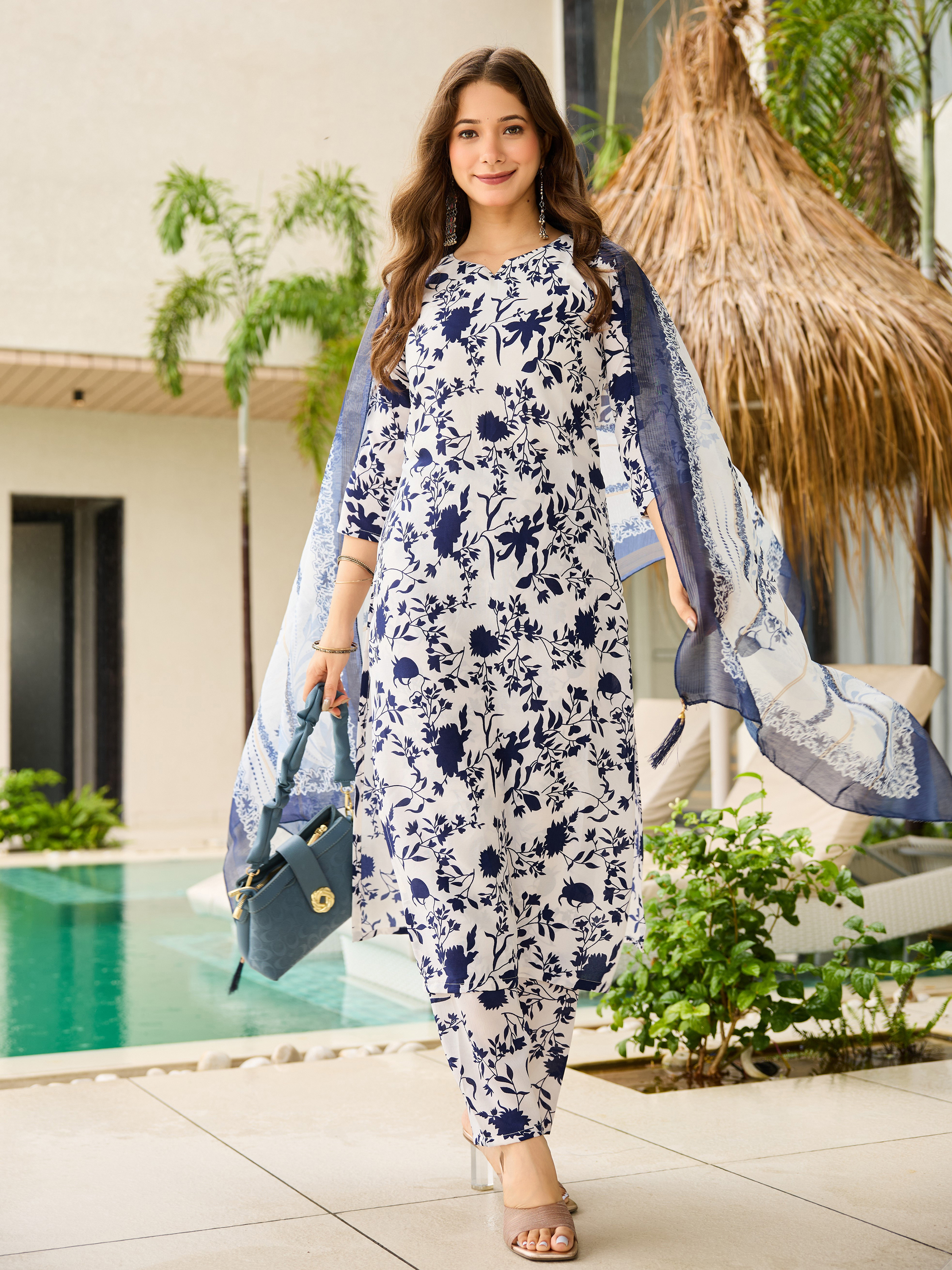
For a lightweight dupatta, place one end over the left shoulder and secure it discreetly near the shoulder seam with a small safety pin. Let the other end fall beside the body rather than across the chest if the kurta has embroidery at the front. This arrangement preserves a vertical line and reduces the need for repeated adjustment.
For a heavier dupatta, use fewer folds. Excessive pleating adds width and can make a formal outfit appear crowded. A dupatta with zari, dense print or strong contrast should be treated as the main accent, which means jewellery should become simpler.
Time-honoured references can remain subtle. A pattern from Maharashtra Paithani Inspired Salwar Suits may provide a rich border, while Kalamkari Print Salwar Suits (Copy) bring a distinctive narrative print. For a formal workplace, pair such visual interest with a solid kurta line, restrained earrings and plain footwear rather than adding another patterned accessory.
How can you adapt formal suit styling to different workplaces?
The correct level of minimalism depends on the workplace, the meeting schedule and the amount of movement required during the day. A client meeting, a creative studio and a festive office gathering may all call for different interpretations of formal dressing.
Corporate and client-facing offices
Corporate offices generally favour solid or lightly patterned straight suits, covered necklines and low-contrast accessories. The Rust Orange Embroidered Readymade Suit Set for Women can be made more formal with neutral footwear, a brown structured bag and small earrings. Keep the dupatta pinned if presentations or frequent movement are part of the day.
Creative workplaces
Creative workplaces allow more print, colour and shape, provided the outfit remains tidy and functional. The Black Red Fendy Silk 3 Piece Readymade Salwar Suit Set can work for a design studio or cultural workplace when paired with one black accessory and minimal makeup. Avoid adding red bangles, a red bag and red footwear together, because repeating one accent too many times can make the styling look staged.
Festive office events
Festive office events allow richer fabric and embroidery, but formal balance still comes from limiting the number of statement elements. The Festive Wear Cream Embroidered Kurta Set can be styled with pearl or small gold earrings, a neutral clutch and understated sandals. A full jewellery set is unnecessary when the kurta already carries embroidery.
Regional textile references can also guide colour decisions. Gujarat Bandhej Salwar Suits and Odisha Sambalpuri Salwar Suits often feature recognisable pattern languages, so one textile-led element should remain dominant. Punjab Patiala Salwar Suits have a naturally relaxed volume and are better balanced with a relatively simple kurta and restrained jewellery when a polished finish is required.
What grooming and fit details complete the look?
Neat grooming and accurate fit contribute more to formal polish than expensive accessories. Press the kurta and trousers, check that the sleeve openings sit flat, and ensure the trouser hem doesn't bunch heavily over the footwear.
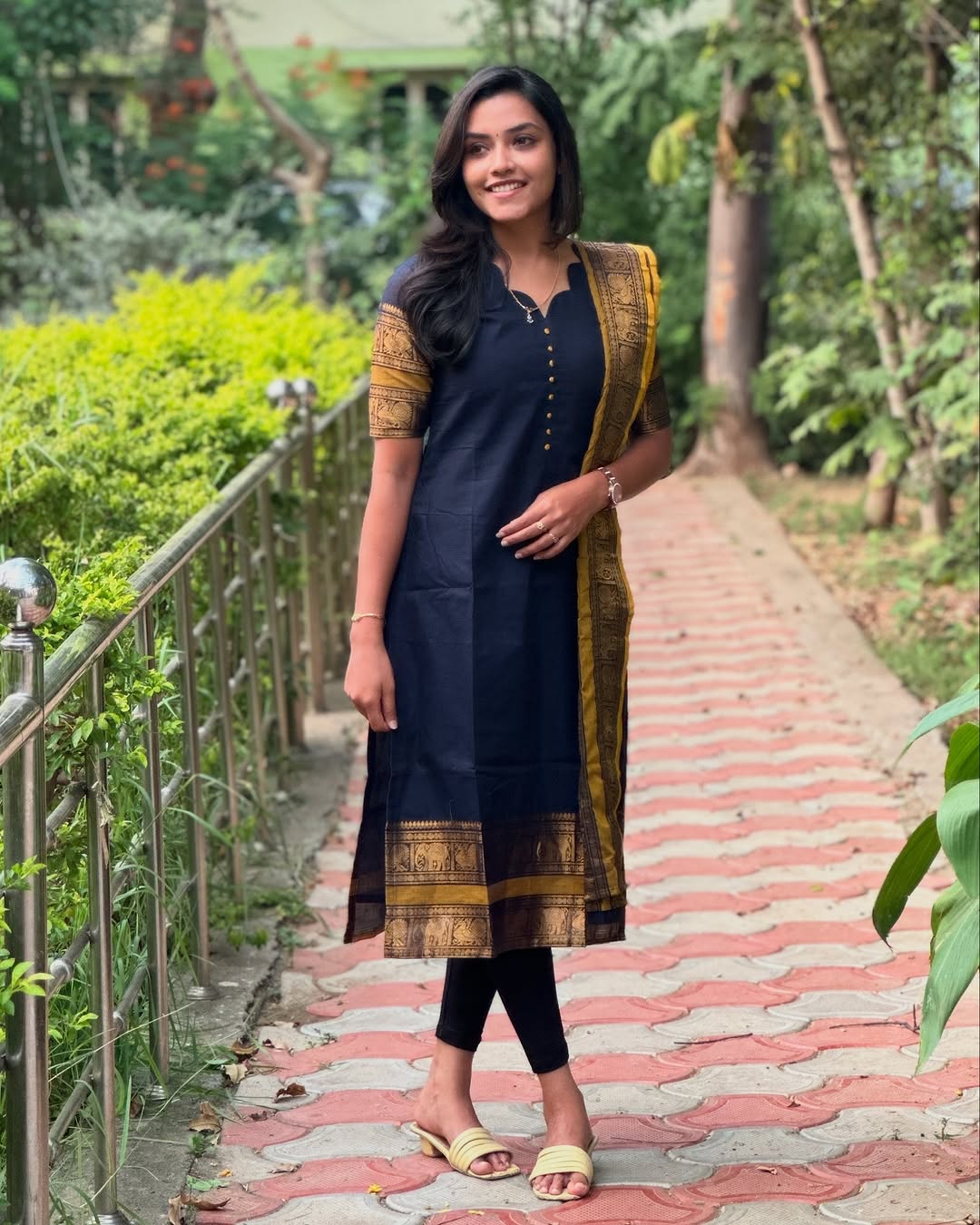
Hair can be worn in a low ponytail, a smooth bun, a controlled braid or loose hair that stays away from the face. The best choice is the style that survives the day without frequent touching. A clean side part can add structure, while a single understated hair accessory is enough if the earrings are already visible.
Makeup should support clarity rather than introduce another statement. Even skin, defined brows, a soft lip colour and lightly groomed nails suit most formal suit sets. If the suit is black, rust or mustard, a controlled lip colour can add warmth, but a strong eye and strong lip together may compete with embroidered details.
Fit should be checked while standing, sitting and raising both arms. The shoulder seam should sit close to the shoulder edge, the bust area should not pull across the buttons or side seams, and the kurta should allow a comfortable seated posture. Readymade suits may still need minor alterations at the sleeve, trouser length or side seam for a sharper result.
Common mistakes that make a formal suit look less polished
Several small choices can make a carefully selected suit appear more casual or more festive than intended. The most common mistake is adding accessories before assessing the garment's existing embroidery, print and sheen.
- Combining a statement necklace, large earrings and stacked bangles creates visual competition around the face and hands.
- Pairing a richly embroidered kurta with a sequinned dupatta and embellished footwear removes the distinction between formal and festive styling.
- Choosing a handbag that's too soft, tiny or decorative can make a professional outfit feel impractical.
- Wearing a wrinkled dupatta or allowing the hem to drag weakens the appearance of even a well-made suit.
- Using several unrelated accent colours makes a restrained outfit appear accidental rather than intentional.
- Selecting a silhouette that needs constant adjustment is a comfort problem as well as a styling problem.
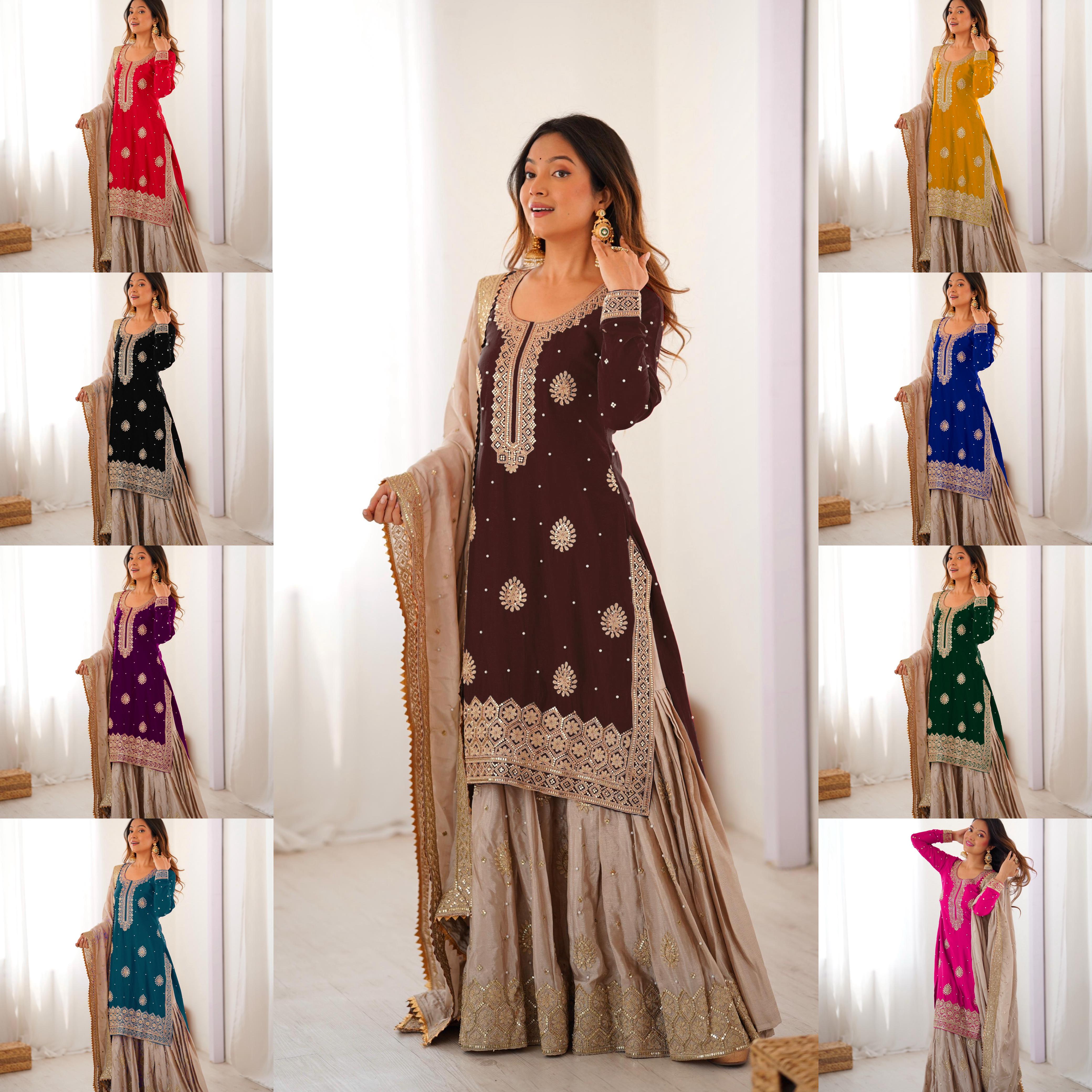
The Multicolor Embroidered Crepe Maxi Suit Set for Festive Wear illustrates the importance of context. A multicoloured, dressier silhouette can be excellent for a celebration, but minimal accessories alone may not turn every festive garment into corporate wear. When the cut, colour or surface is inherently dramatic, choose the setting carefully instead of forcing the outfit into a formal office category.
A balanced formal suit usually needs one visual highlight, one functional accessory and a clean finish. That formula leaves room for personal style while keeping the outfit appropriate for professional Indian dressing.
Questions About Styling Formal Salwar Suits With Fewer Accessories
How can I make a salwar suit look formal for the office?
Choose a neat straight or lightly tailored kurta, opaque trousers, restrained colours and polished footwear. Add small earrings or a watch, carry a structured bag and pin the dupatta so the outfit stays tidy during the workday.
What jewellery should I wear with a formal suit set?
Small studs, slim drop earrings or medium geometric earrings are reliable choices. If the kurta has dense embroidery around the neckline, skip a necklace and let one accessory near the face or wrist provide the finishing detail.
Can an embroidered salwar suit be worn to a business meeting?
Yes, an embroidered salwar suit can suit a business meeting when the embroidery is controlled and the silhouette is tailored. Balance visible needlework with plain footwear, a structured bag and minimal jewellery rather than adding more embellished pieces.
Which footwear works best with a formal Indian suit?
Closed-toe flats, low block heels and clean loafers work best for most formal Indian suits. A heel of about 2 to 5 centimetres can add structure while remaining practical for commuting and standing.
How should I wear a dupatta with a formal kurta set?
Wear the dupatta in a narrow shoulder drape or a clean one-shoulder fall and secure it discreetly. Keep the neckline visible, avoid excessive pleating and simplify jewellery when the dupatta has a strong print, zari border or heavy embellishment.
Can a colourful suit set look professional with minimal accessories?
A colourful suit set can look professional when the silhouette is clean and the accessories repeat only one quiet neutral. Avoid matching bright jewellery, footwear and handbags to every colour in the suit, because controlled contrast creates a more polished result.