

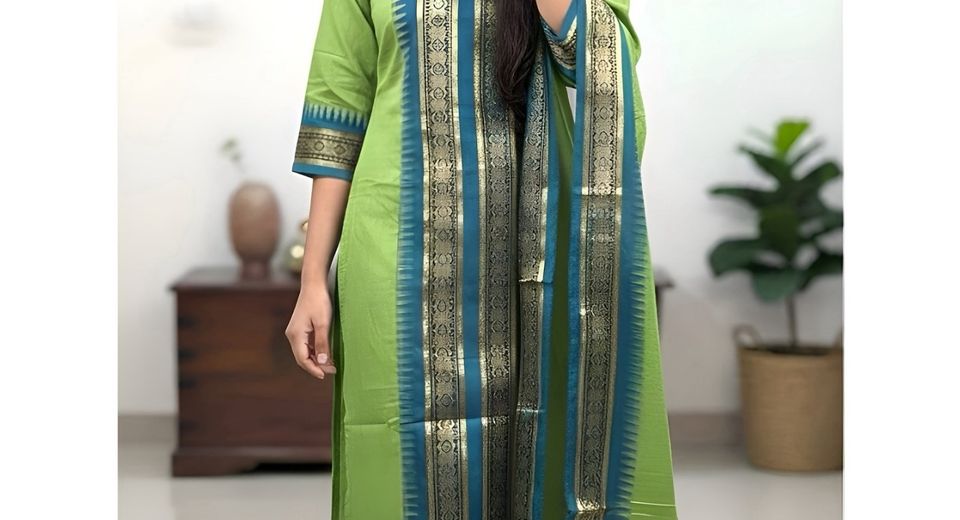
How to Style Your Favourite Kurti for Bhai Dooj becomes much easier when you treat the kurti as the starting point, not the complete outfit. A familiar kurti can look celebration-ready through the right bottom, dupatta, jewellery, hairstyle and footwear. Bhai Dooj usually involves a puja, family photographs, food and several hours of sitting or moving around, so the best outfit balances festive detail with practical comfort.
A successful Bhai Dooj look doesn't require heavy embroidery or a completely new wardrobe. Colour placement, fabric weight and proportion make a greater difference than adding every available accessory. The following guide explains how to build a polished salwar suit outfit around a kurti you already enjoy wearing.
Begin with the Kurti's Colour, Fabric and Silhouette
The kurti's dominant colour and shape should determine the rest of the Bhai Dooj outfit. A straight kurti usually benefits from slim trousers or cigarette pants, while an A-line or flared kurti pairs naturally with churidars, palazzos or a coordinated salwar.
Start by checking three details: the base colour, the surface work and the fall of the fabric. A solid or lightly patterned kurti can accept a more decorative dupatta. A kurti with zari, embroidery or a busy print usually looks more refined with quieter bottoms and jewellery.
Match the fabric to the length of the celebration
Cotton, Kanchi cotton and Chanderi-style lightweight weaves are useful for a daytime Bhai Dooj gathering because they allow air circulation and remain comfortable during extended family visits. Silk blends and Vichitra silk create a richer appearance for an evening meal, but they may need more careful sitting and steaming before wear.
Kanchi cotton has a structured hand feel that helps a kurti retain its shape in photographs. Zari borders provide festive shine without requiring a heavily embellished neckline. Banarasi silk and Kanjeevaram are also associated with celebration dressing, but a cotton kurti with a carefully chosen zari dupatta can deliver a lighter, more practical interpretation of that mood.
For a clearly traditional direction, Purple Kanchi Cotton Kurti Set with Zari Dupatta provides an useful colour and texture reference. For a softer, more versatile starting point, Blue Ethnic Cotton Kurti Set with Zari Work shows how a restrained base colour can carry festive detailing without appearing overworked.
How to Style Your Favourite Kurti for Bhai Dooj with the Right Bottom
The right bottom should repeat one colour from the kurti or create a deliberate contrast that keeps the outfit balanced. Matching trousers produce a streamlined effect, while contrasting bottoms make the kurti look more contemporary.
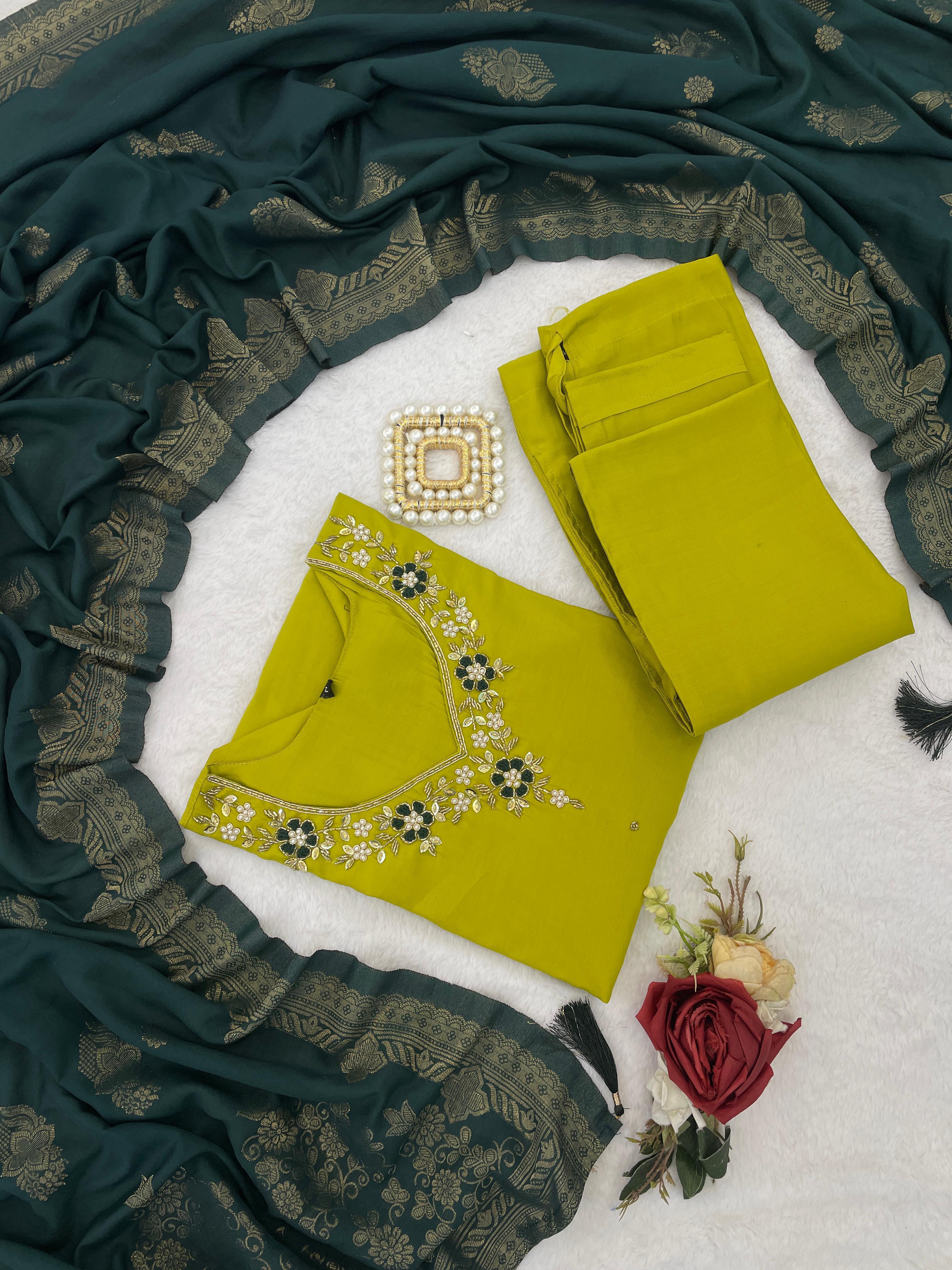 Designer Roman Silk Kurti Set with Jacquard Dupatta
Choose straight pants when the kurti is flared, layered or printed. Straight pants reduce visual volume and keep the outfit neat around the ankles. Choose a narrow churidar with a short or medium-length kurti when you want a classic salwar kameez profile. Choose palazzos when the kurti is relatively fitted and the dupatta is lightweight.
Three reliable bottom combinations
- Tonal trousers: A wine kurti with wine, beige or muted gold trousers creates a composed festive look. Tonal dressing also gives a shorter kurti a longer visual line.
- Neutral cigarette pants: Ivory, cream, taupe or charcoal can calm a bright green, purple or blue kurti. Neutral pants are especially useful when the dupatta already contains zari or a contrasting border.
- Wide palazzos: Wide-leg palazzos work best with a straight kurti that ends around the knee or slightly above it. Keep the palazzo fabric fluid rather than stiff so the outfit doesn't look bulky.
Palazzo suits and Patiala salwar silhouettes require different proportions. Patiala salwars add fullness below the waist and suit shorter kurtis, while palazzos create a longer, more fluid line. The Punjab Patiala Salwar Suits collection illustrates the volume and pleating associated with Patiala styling, whereas a straight kurti with narrow trousers will look more understated for a home puja.
don't ignore the trouser hem. A hem that pools around the ankle can distract from juttis and create discomfort during prayer. A cigarette pant should generally finish just above the ankle bone, while a palazzo should fall close to the top of the foot without dragging on the floor.
Use the Dupatta to Add the Festive Element
A dupatta is the quickest way to make an everyday kurti feel appropriate for Bhai Dooj. Select a dupatta that either repeats the kurti colour, picks up a small accent shade or introduces controlled metallic detail.
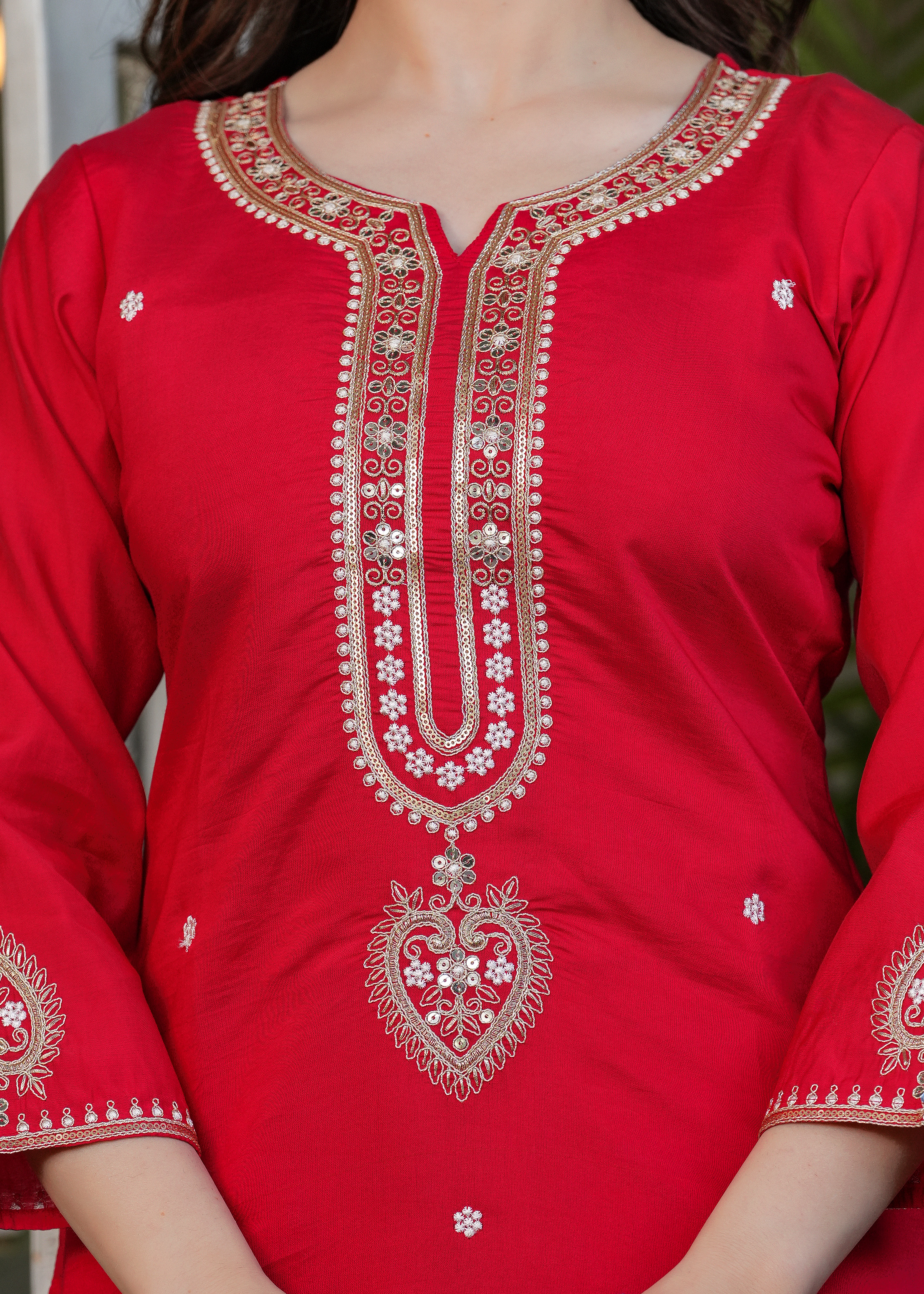 Festive Red Chanderi Kurta Pant Dupatta Set Women
A zari dupatta works especially well when the kurti has a plain neckline and simple sleeves. Drape the dupatta over both shoulders for a time-honoured, symmetrical appearance during puja. Carry it over one shoulder and secure the opposite side at the wrist or waist when you need freedom to serve food, greet relatives or move between rooms.
Choose the drape according to the kurti's neckline
A high round neckline looks balanced with a long, open-ended dupatta drape because the fabric frames the torso without crowding the neck. A V-neck or embroidered neckline usually looks better with the dupatta placed over one shoulder, leaving the central detail visible.
A narrow front pleat gives cotton dupattas a crisp finish, while a soft silk or Vichitra silk dupatta looks more graceful when allowed to fall in relaxed folds. Use two or three discreet safety pins rather than many visible pins, and test the drape while seated because Bhai Dooj includes time on the floor or low seating in many homes.
Grey Zari Border Kanchi Cotton Kurti Dupatta Set demonstrates how a restrained metallic border can define an outfit without covering the entire fabric in shine. Navy Kanchi Cotton Kurti Set with Woven Dupatta offers another useful direction: a woven texture can create interest even when the colours remain deep and calm.
Build a Colour Story Instead of Matching Everything
A Bhai Dooj outfit usually looks most considered when it contains one dominant shade, one supporting neutral and one small accent. Matching every piece exactly can flatten the look, while too many unrelated colours can make the styling appear accidental.
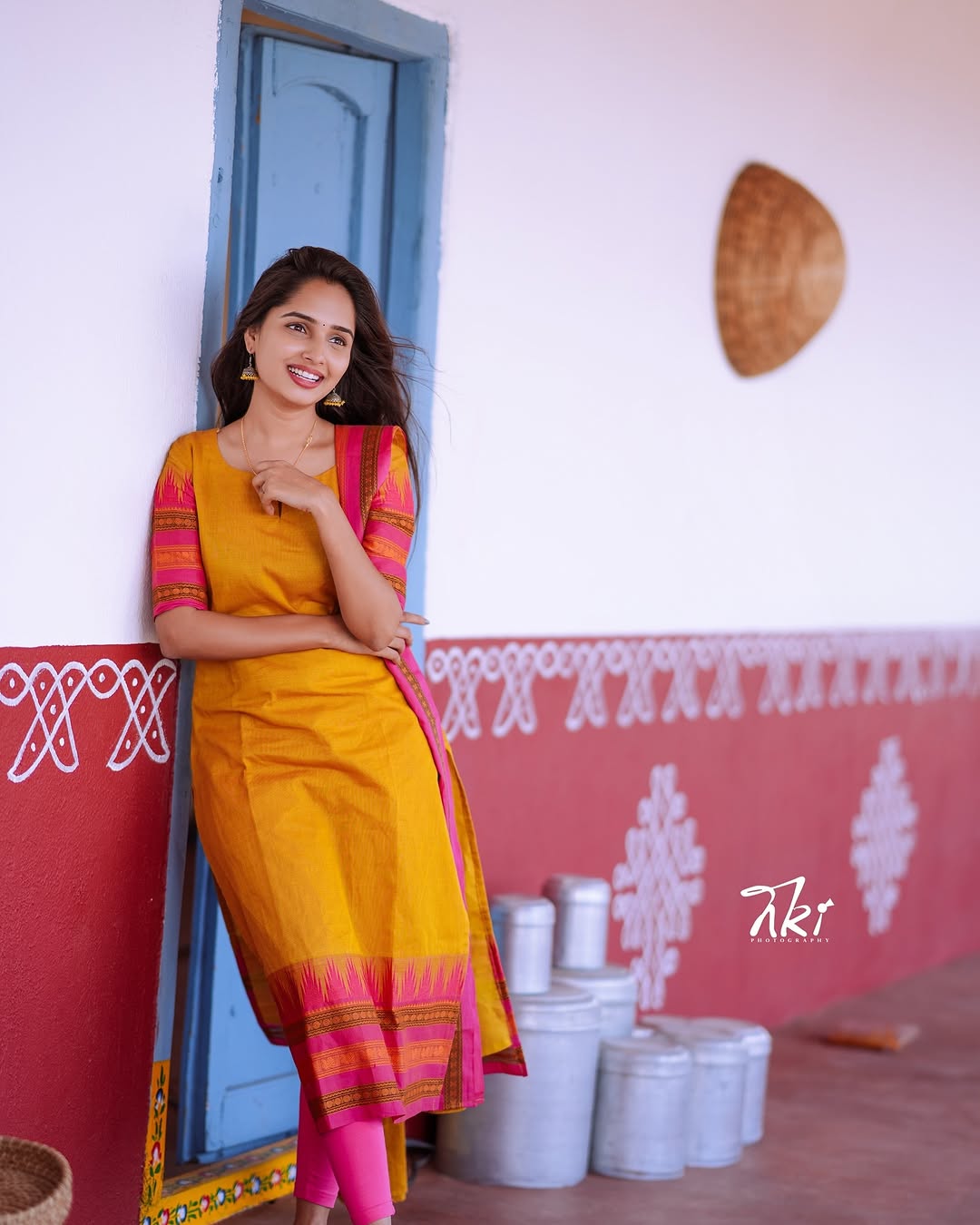 Classic Yellow Cotton Kurti Set with Woven Dupatta
Green, wine, purple, navy, blue and brown all suit a family celebration, but each creates a different impression. Green works beautifully with antique gold, ivory and tan. Wine pairs with muted gold, beige and deep brown. Purple benefits from silver, champagne or soft gold. Navy looks elegant with woven gold, ivory or rust accents. Brown becomes richer with coral, mustard, cream or antique gold.
Trendy Green Ethnic Kurti Dupatta Set for Festive Wear shows how green can carry a festive mood without relying on excessive ornamentation. Graceful Wine Ethnic Kurti Set with Dupatta creates a deeper, evening-friendly direction that can be softened with a cream bottom or small gold accessories.
Borrow regional colour ideas thoughtfully
Regional textile traditions can guide colour combinations without requiring a full heritage costume. Maharashtra Paithani Inspired Salwar Suits often suggest jewel tones with gold accents. Gujarat Bandhej Salwar Suits can inspire the use of lively contrast and a patterned dupatta. Odisha Sambalpuri Salwar Suits demonstrate how a distinctive woven or patterned element can become the outfit's focal point.
Use one regional reference at a time. A bandhej-inspired dupatta, Paithani-style colour pairing or Sambalpuri-influenced pattern can add cultural character, but combining several strong motifs may compete with the kurti and jewellery.
Choose Jewellery That Supports the Neckline
Jewellery should fill the visual space around the kurti without hiding its neckline, embroidery or zari work. For most Bhai Dooj outfits, one prominent jewellery category and two quieter accents are enough.
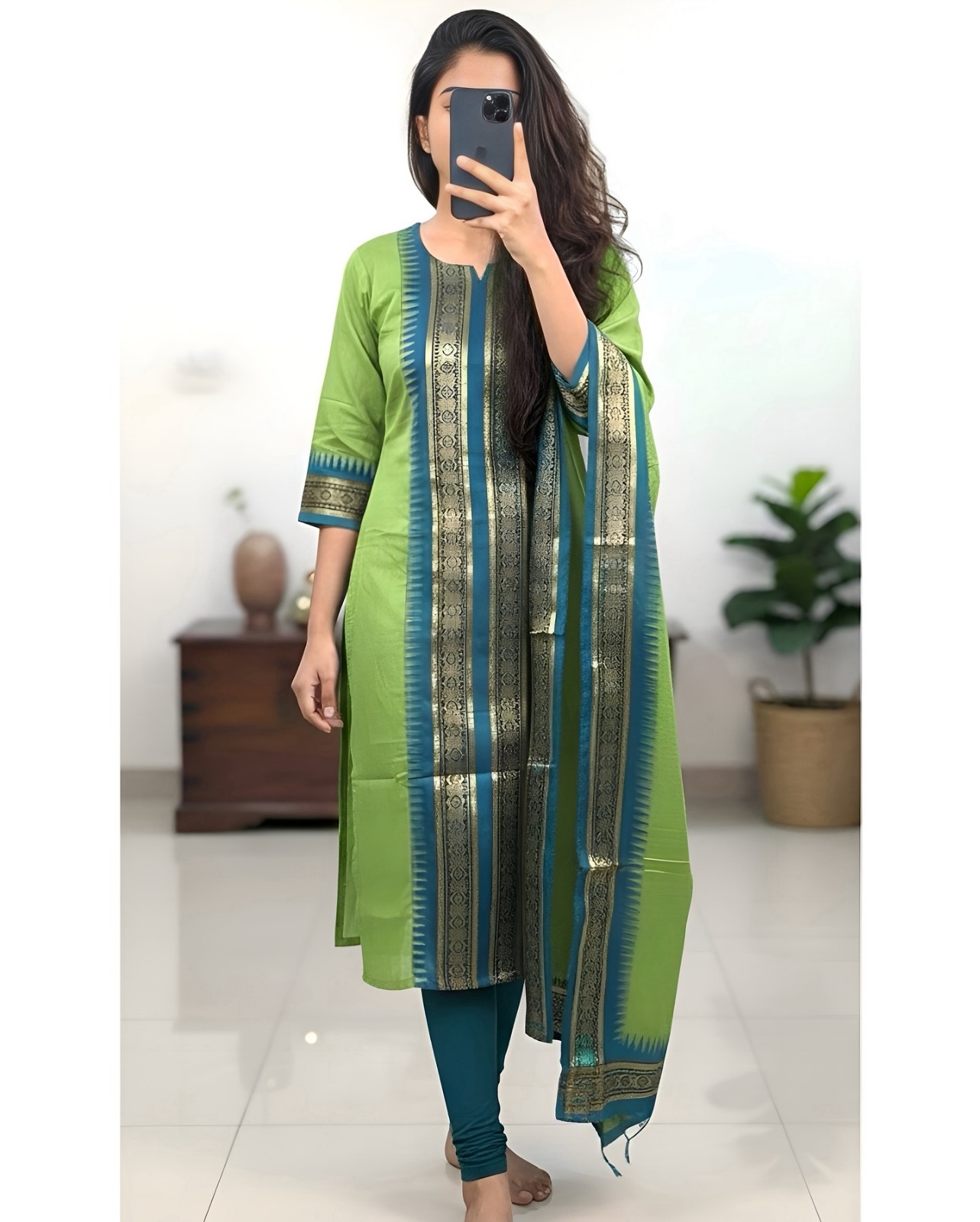 Trendy Green Ethnic Kurti Dupatta Set for Festive Wear
Wear a short necklace or delicate choker with a deep neckline, and choose earrings alone when the kurti has a high neck or decorated collar. Small jhumkas, pearl drops, chandbalis and gold-toned hoops can all work, but their scale should match the kurti's surface detail. Heavy earrings with heavy neckline embroidery can make the upper half of the outfit look crowded.
- For cotton kurtis: Try oxidised silver, small jhumkas, wooden bangles or glass bangles in one accent colour.
- For zari borders: Choose antique gold earrings, a slim bangle stack or a small ring instead of bright artificial stones in several colours.
- For silk or Vichitra silk: Use polished gold-toned jewellery, pearls or a single stone accent for a more formal finish.
- For printed kurtis: Select jewellery in a colour already present in the print, then leave the neck relatively uncluttered.
A bindi can complete the outfit with almost no effort. A small maroon, black, rust or gold bindi usually coordinates more naturally than a very large decorative style, especially when the kurti has a busy print or ornate dupatta.
Make Footwear and Hair Work for Family Rituals
Comfortable footwear with a stable sole is the most practical choice for Bhai Dooj because the day may involve standing, walking, floor seating and repeated visits between rooms. Juttis, flat kolhapuris, embroidered slip-ons and low block heels are more dependable than narrow stilettos.
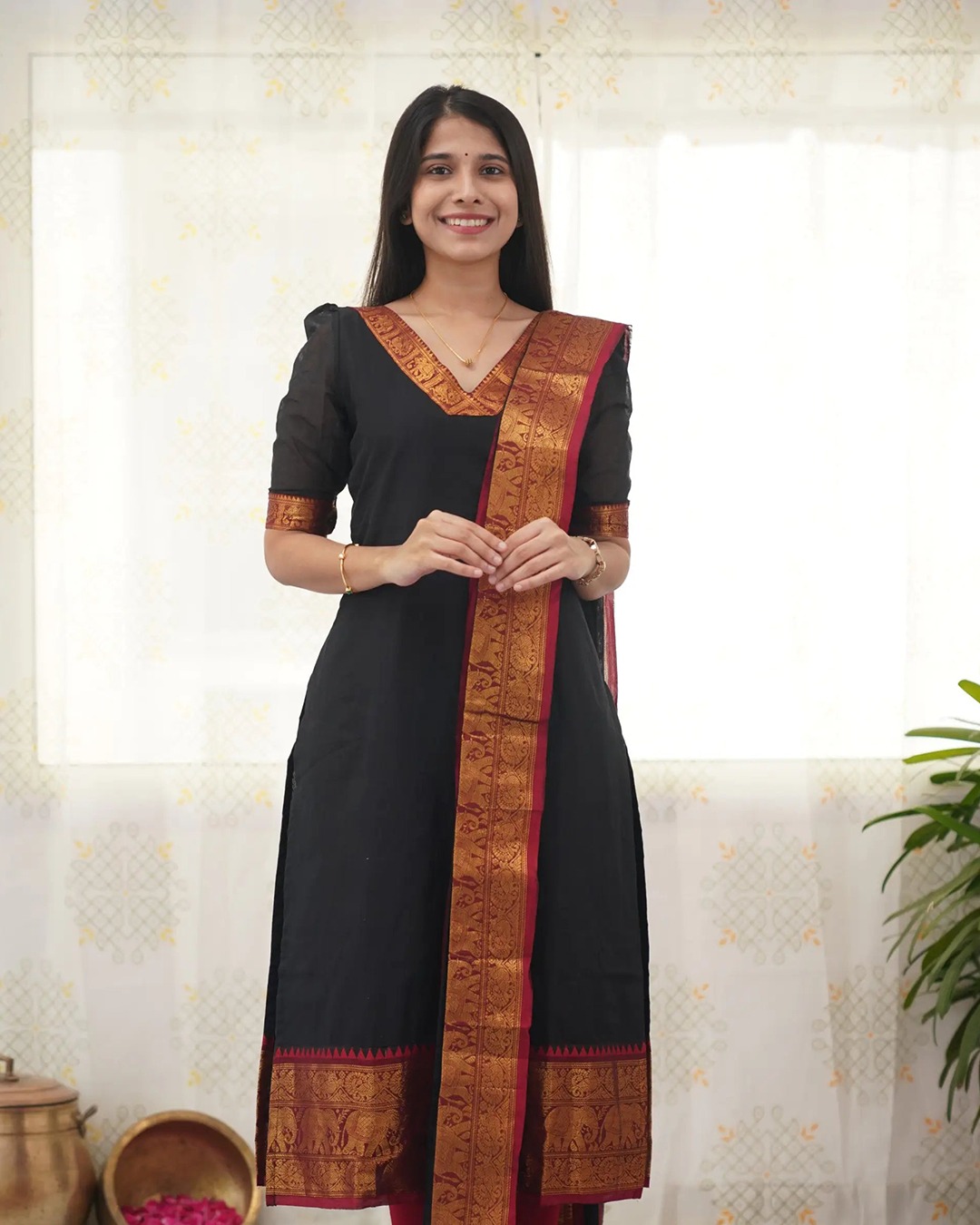 Black Heritage Weave Kurti Dupatta Set
Coordinate footwear with the outfit's warm or cool accents. Tan or antique-gold juttis suit green, brown, wine and cream combinations. Navy, purple and blue kurtis can work with silver, ivory or deep-coloured footwear. A small heel can add height, but the heel should remain stable enough for walking on polished floors.
Hair should keep the face clear during the tilak ceremony and photographs. A low bun, side braid, half-up style or soft ponytail brings structure without demanding constant adjustment. Add a small gajra or a simple metallic hair accessory only when the kurti and dupatta are relatively quiet.
Style Different Kurti Moods for Bhai Dooj
Different kurti designs need different styling decisions, even when they're worn for the same family festival. Identifying the outfit's mood prevents unnecessary accessories and makes dressing faster.
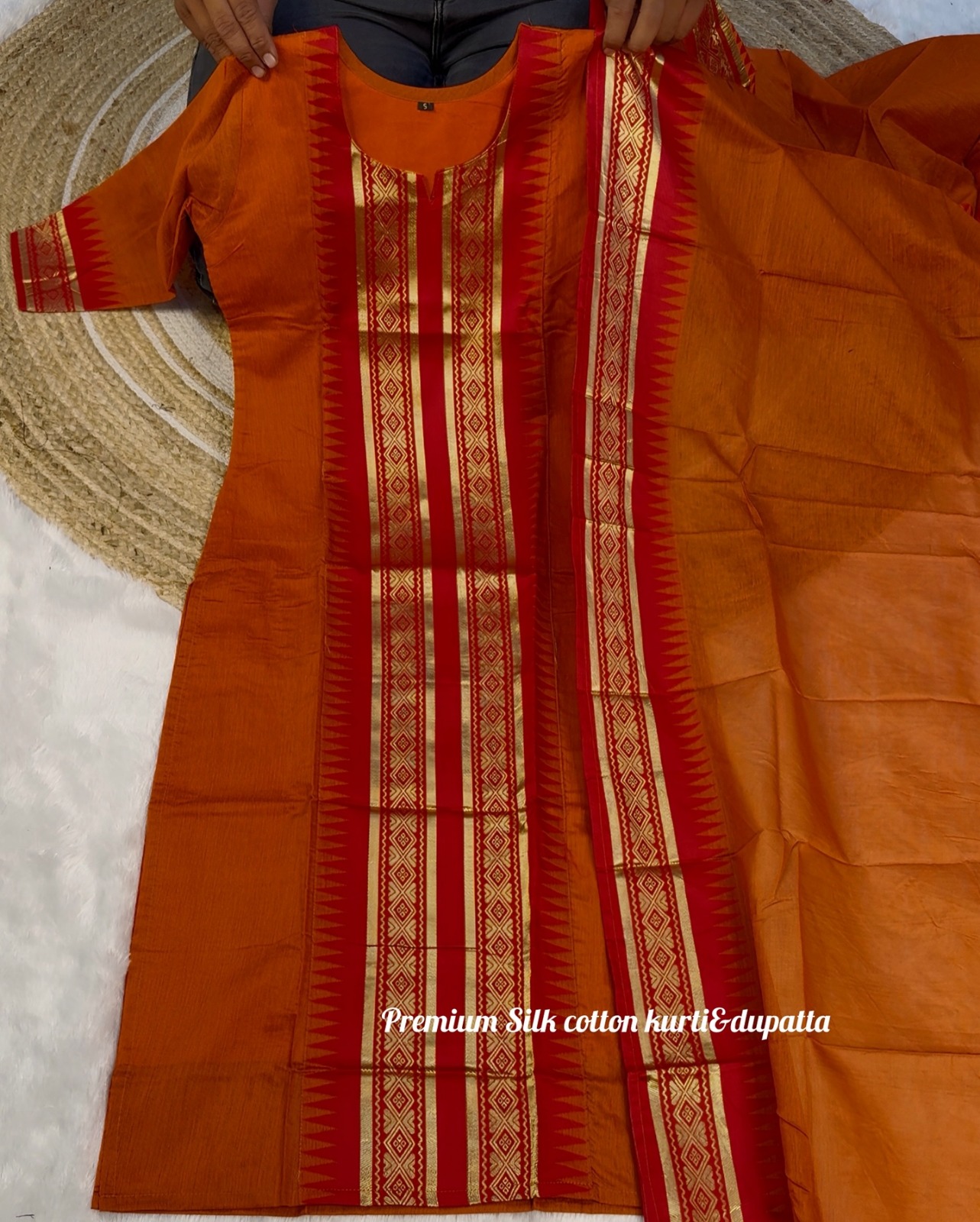 Orange Ethnic Kurti Dupatta Set with Jacquard Work
For a minimal cotton kurti
A minimal cotton kurti becomes festive through a contrasting dupatta, coordinated earrings and one polished footwear choice. Pair Blue Ethnic Cotton Kurti Set with Zari Work with ivory or navy accessories, and keep the hairstyle clean so the zari remains visible rather than competing with extra embellishment.
For a richly coloured set
A richly coloured kurti set needs visual breathing room around the face and hands. Understated Wine Ethnic Kurti Set with Dupatta can be styled with muted gold earrings, a neutral sandal and a soft beige or gold-toned potli rather than several bright accessories.
For a textured or embroidered set
Textured fabric and embroidery already supply depth, so simple trousers and restrained jewellery usually create the strongest result. Brown Embroidered Vichitra Silk Kurti Set with Dupatta can be supported by antique-gold earrings, a neat low bun and a plain sandal in tan, bronze or deep brown.
For a coordinated ready-made set
A coordinated set doesn't need to appear identical from head to toe. Kanchi Cotton Jacquard Kurti Dupatta Set can be refreshed by changing the bottom, adding a contrasting bindi or wearing a different pair of earrings from the ones originally imagined with the set.
A Practical Bhai Dooj Outfit Checklist
The final check should happen at least one day before Bhai Dooj, not immediately before the puja. Early preparation gives you time to correct fit, remove wrinkles and test whether the dupatta stays in place.
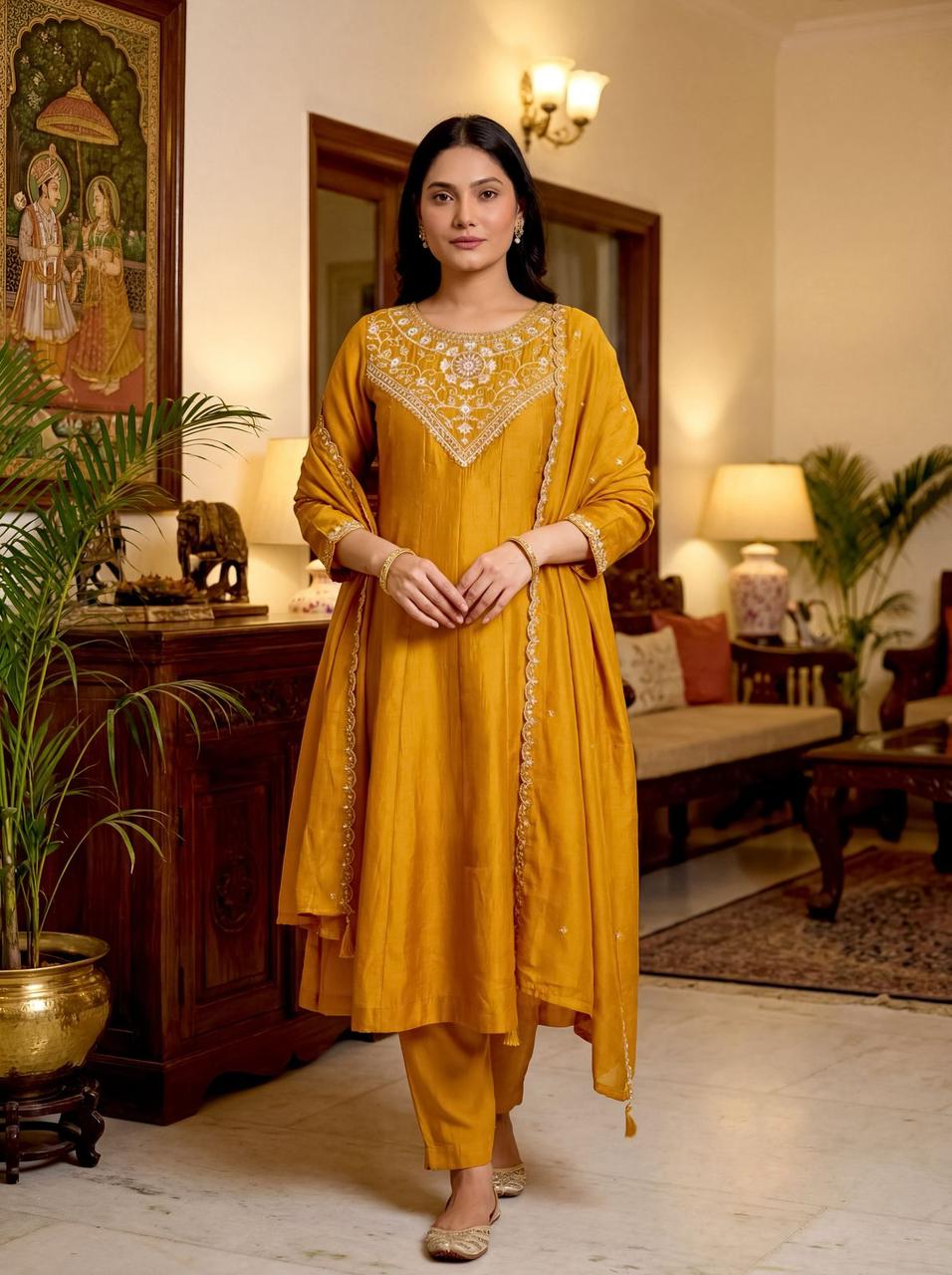 Mustard Silk Embroidered Kurti Palazzo Dupatta Set
- Check the fit: Sit cross-legged, raise both arms and walk for five minutes. The kurti should not pull across the chest or restrict the elbows.
- Test the drape: Pin the dupatta, sit and stand several times, then inspect whether the border twists or slips from the shoulder.
- Inspect the hem: Confirm that trousers and palazzos don't drag and that the footwear doesn't catch in the fabric.
- Steam carefully: Use the care label as the authority. Cotton can generally tolerate more heat than silk, zari or embellished surfaces.
- Pack small essentials: Carry one spare safety pin, a compact comb, a handkerchief and a tiny stain-removal wipe in your bag.
- Keep jewellery manageable: Wear pieces that can remain comfortable during meals and family photographs instead of accessories that require repeated adjustment.
Care also affects how festive a kurti looks. Fold zari pieces with soft muslin or plain cotton between layers, avoid spraying perfume directly onto silk or metallic work, and air the outfit before storing it. Cotton sets should be washed according to their care label, while silk and heavily embellished garments are safer with professional cleaning.
The most memorable Bhai Dooj outfits are rarely the most complicated ones. A well-fitting kurti, a purposeful dupatta, comfortable footwear and one or two meaningful accessories can look more polished than a crowded combination of trends. Use the colours and textiles you already enjoy, then add festive detail where the outfit needs it most.
Common Questions About Styling a Kurti for Bhai Dooj
How can I make a simple kurti look festive for Bhai Dooj?
Add a contrasting or zari-bordered dupatta, polished earrings and festive footwear to a simple kurti. Keep the bottom and jewellery restrained so the new accent remains noticeable.
Which bottom wear works best with a kurti for Bhai Dooj?
Straight pants suit flared kurtis, cigarette pants suit most straight kurtis, and palazzos work well with fitted or knee-length kurtis. Choose a hem that does not drag when you sit or walk.
Can I wear a cotton kurti for Bhai Dooj?
Cotton is an excellent choice for a daytime Bhai Dooj celebration because it is breathable and comfortable for long family gatherings. Kanchi cotton with zari or woven detailing can add a festive finish without the weight of heavy embroidery.
What jewellery should I wear with a kurti and dupatta?
Choose jewellery according to the neckline and surface detail of the kurti. Jhumkas or chandbalis suit many festive sets, while a high or embroidered neckline usually needs earrings rather than a large necklace.
How should I drape a dupatta for a Bhai Dooj puja?
Drape the dupatta over both shoulders for a traditional, secure appearance during puja. A one-shoulder drape is practical when you need more arm movement, provided you secure it with discreet pins.
Which colours look good for a Bhai Dooj kurti outfit?
Green, wine, purple, navy, blue, brown, ivory and muted gold all work well for Bhai Dooj. Use one dominant colour, one neutral and one small accent instead of matching every item exactly.




