Key takeaways
- Chanderi cotton commonly combines a cotton weft with a finer silk or cotton warp, creating a lightweight fabric with a subtle sheen.
- A straight Chanderi kurti looks most office-appropriate with tailored trousers, cigarette pants or a clean A-line bottom rather than heavy volume.
- Muted jewel tones, ivory, beige, navy and dusty pastels are easier to coordinate for office wear than highly contrasting festive colours.
- A structured bag, low-profile jewellery and closed-toe footwear balance Chanderi's delicate texture without making the outfit look ceremonial.
- Chanderi garments should be washed gently, dried in shade and stored folded with breathable paper to protect the weave and finish.
A Chanderi cotton kurti can contain two different yarn personalities in one fabric: cotton for breathable comfort and a finer yarn that gives the surface its characteristic light-catching sheen. That unusual combination is why Chanderi feels cooler and lighter than many dressy Indian textiles while still looking more refined than ordinary cotton. Learning how to style a chanderi cotton kurti for office therefore begins with understanding the weave, not with adding more accessories.
Chanderi textiles come from Chanderi in Madhya Pradesh, a weaving centre known for sheer, lightweight cloth, fine motifs and a softly crisp drape. Contemporary Chanderi cotton kurtis may be handwoven or powerloom-produced, and the exact fibre blend can vary. The most useful office styling principle remains consistent: let the fabric's airy texture and restrained sheen provide the interest, while the silhouette, colours and accessories stay controlled.
Why Chanderi Cotton Works for Office Wear
Chanderi cotton works for office wear because it combines breathability, a neat fall and understated polish. The cotton content helps in warm weather, while the fine surface and occasional zari or woven motif prevent the outfit from looking like basic everyday cotton.
Traditional Chanderi fabric is often recognised by a delicate, almost translucent quality, although many cotton kurtis use a denser construction for practical coverage. A cotton weft can create a comfortable, matte base, while a silk warp or fine cotton warp adds smoothness and gentle lustre. The result is a fabric that catches daylight without looking metallic or heavily embellished.
The weave also explains why Chanderi responds well to office tailoring. Chanderi cotton usually has enough body to hold a straight side seam or a carefully pressed neckline, but it remains light enough for movement between commuting, meetings and desk work. A long, gathered flare can be attractive for festive dressing, yet a narrower silhouette generally looks more professional under a blazer or with structured trousers.
Small irregularities can be signs of a handloom rather than defects. Slight variations in slubs, spacing or motif alignment may occur when individual yarns are handled manually. A good office kurti should still have balanced seams, secure finishing and a comfortable armhole, but perfect industrial uniformity isn't the only measure of quality in Chanderi.
How Chanderi Cotton Is Made: The Craft Behind the Surface
Chanderi cotton is made by preparing yarns, setting them on a loom, interlacing warp and weft threads, and finishing the woven cloth for softness, stability and use. The visible sheen comes from yarn fineness, fibre selection, weave structure and finishing rather than from a single decorative treatment.
Yarn preparation and loom setting
Warp yarns run lengthwise through the fabric, while weft yarns pass from side to side. The warp must be measured, stretched and arranged with consistent tension before weaving begins. Uneven tension can cause ridges, puckering or a distorted selvedge, so loom preparation is a crucial part of the final garment's appearance.
Cotton yarns are generally spun for strength and absorbency. Finer silk or cotton yarns may be selected for the warp when a smoother, more luminous surface is desired. A Chanderi cotton kurti with a silk component should not be confused with a pure cotton garment; checking the fibre description matters for both comfort and care.
Motifs, borders and zari
Chanderi motifs may be created through extra-weft techniques, woven patterning, embroidery or printed decoration. Traditional visual language includes floral butis, geometric forms and nature-inspired elements. Zari can be used sparingly in borders or motifs, although heavy zari changes the garment from understated workwear to more visibly festive clothing.
Handwoven motifs are built into the cloth during weaving, whereas embroidery is added after the fabric has been woven and cut. Woven motifs usually feel integrated and light; embroidery can add raised texture and concentrated weight. For a formal workplace, small embroidered panels or a narrow neckline detail are easier to wear repeatedly than dense ornament across the entire kurta.
Finishing and garment construction
After weaving, cloth may be washed, checked, pressed and cut. Garment makers then stabilise vulnerable areas such as the neckline, shoulder seams and side slits. A well-constructed kurti should have even topstitching, a clean inner finish and enough ease across the bust and upper arm for sitting comfortably.
Chanderi's lightness makes finishing especially important. A badly supported neckline can stretch, and an overly tight seam can show stress quickly. Lining may be useful when the fabric is sheer, but a full heavy lining can remove the very breathability that makes Chanderi attractive in Indian offices.
How to Style a Chanderi Cotton Kurti for Office
The most reliable way to style a chanderi cotton kurti for office is to pair a clean-cut kurti with tailored bottoms, restrained accessories and one structured layer. The finished outfit should look intentional from a meeting-room distance without relying on bridal-scale embellishment.
Choose the right silhouette
A straight kurti ending around the knee or mid-calf creates the easiest office proportion. Pair a straight kurti with cigarette pants, tapered trousers or ankle-length cotton pants. A modest A-line shape also works when the flare begins below the hip and doesn't gather into excessive volume.
High side slits can make walking easier, but very deep slits may feel less formal with narrow trousers. A band collar, shallow V-neck or neatly finished round neck often looks more professional than a plunging neckline. Three-quarter sleeves are practical for desk work and allow a watch or slim bracelet to remain visible.
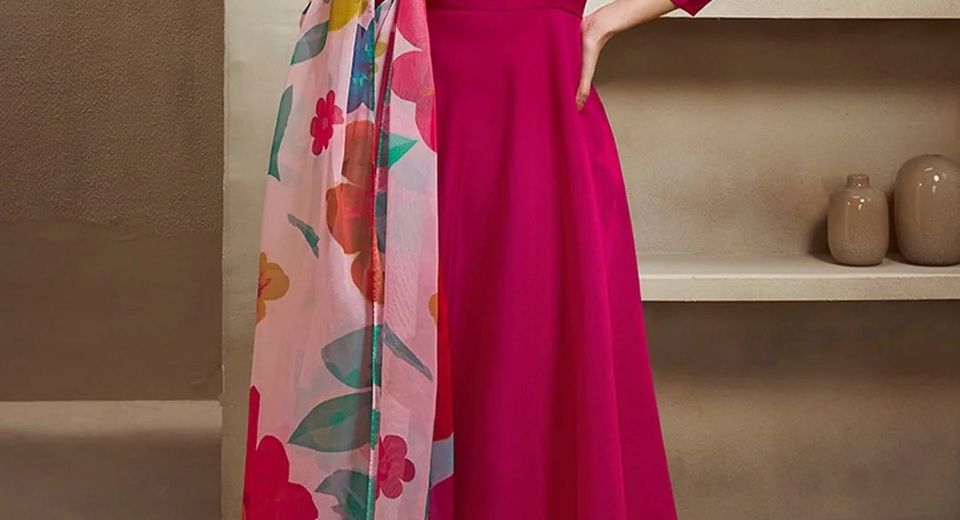
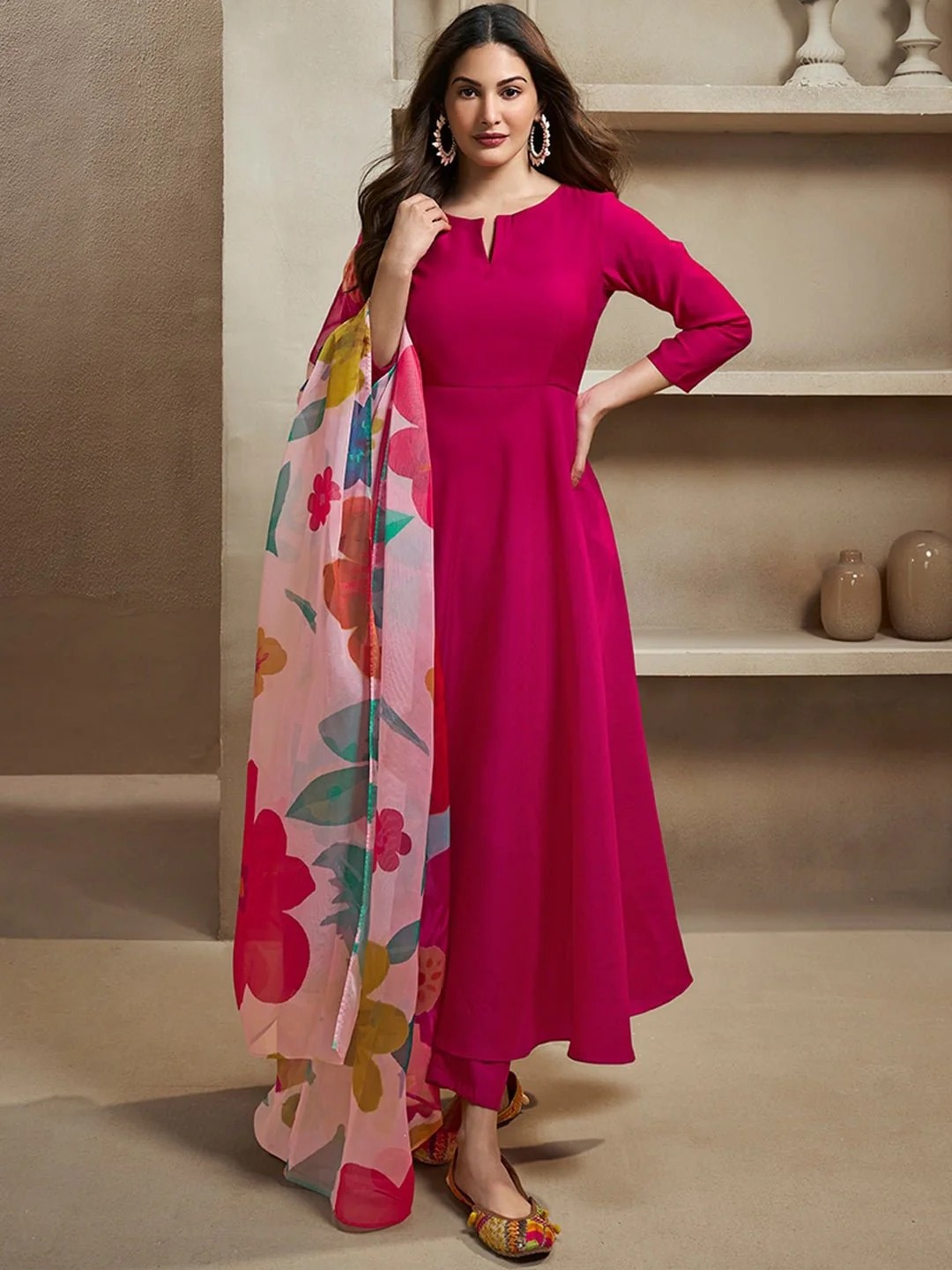
A set such as Pink Chanderi Cotton Kurti Pant Dupatta Set demonstrates how coordinated separates simplify dressing. Keep the dupatta folded lengthwise over one shoulder or carry it neatly rather than arranging multiple dramatic pleats. Soft pink becomes more workplace-ready when balanced with tan, ivory or charcoal accessories.
Match bottoms to the fabric
Tailored cigarette pants are the safest bottom for a Chanderi kurti because their narrow line balances the fabric's delicate surface. Wide-leg trousers can work with a short, structured kurti, but a long, flared kurti and very wide pants together may create too much volume for a conventional office.
Ivory, beige, navy, charcoal and black are dependable neutral choices. A tonal pairing, such as a lavender kurti with pale grey trousers, looks calmer than a high-contrast combination. When the kurti includes embroidery, select a bottom that repeats a minor thread colour instead of introducing another bright shade.
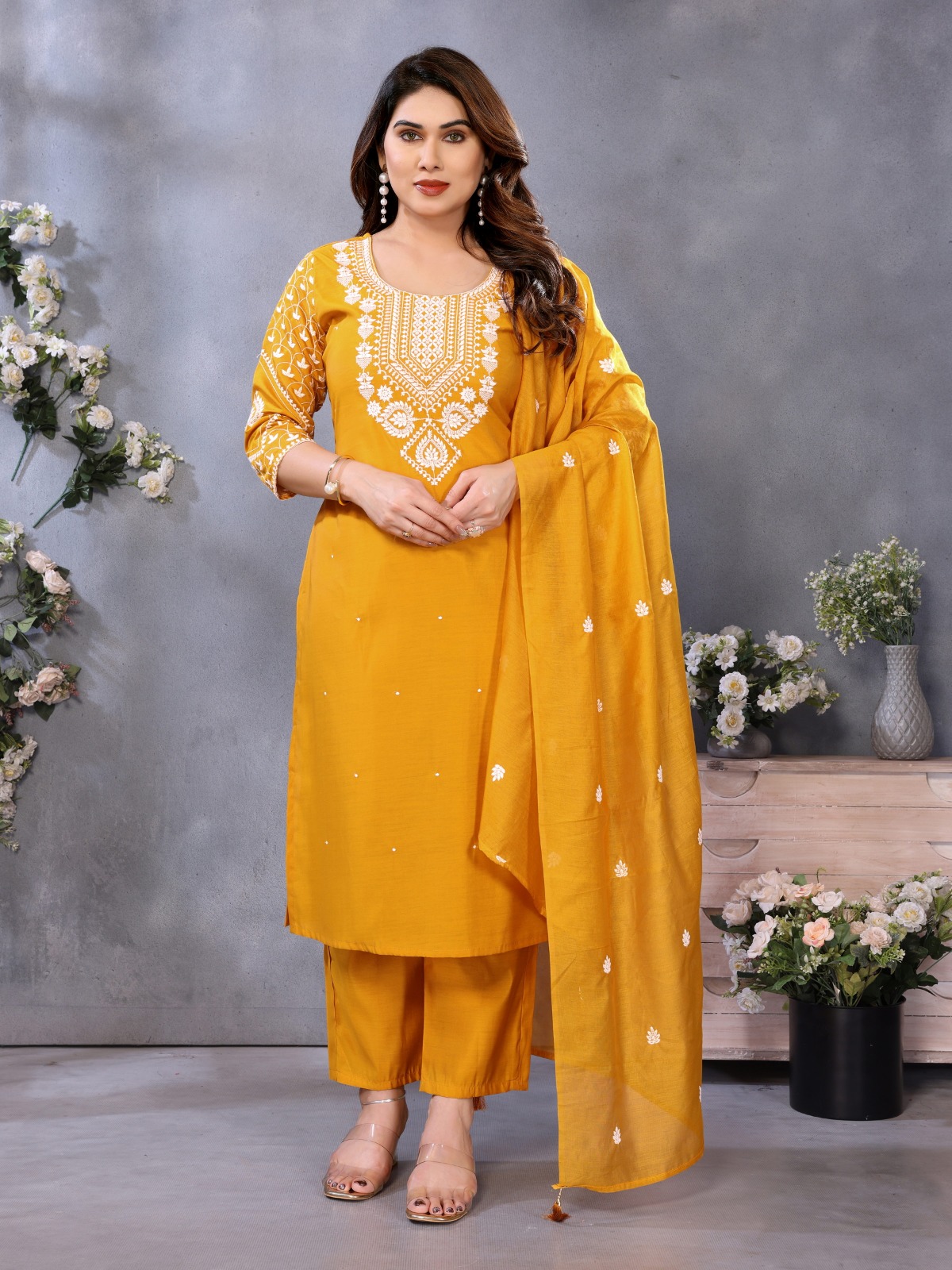
The Elegant Mustard Chanderi Cotton Kurta Set with Embroidery can be grounded with beige trousers and brown leather footwear. Mustard is visually strong, so keeping the dupatta, bag and jewellery quiet prevents the outfit from moving into festive territory.
Use the dupatta as a controlled layer
A dupatta should add structure or colour without interrupting movement at a desk. Fold a lightweight Chanderi dupatta into a narrow band and place it over one shoulder, or drape it evenly around the neck when a meeting requires a more composed appearance.
Contrasting fabric can make a simple kurti more versatile. The Emerald Green Cotton Kurta Set with Chanderi Dupatta uses the relationship between a comfortable cotton base and a more luminous Chanderi layer to create visual depth. For office use, keep the dupatta arrangement flat and secure with a discreet pin.
Colour, Accessories and Footwear for a Professional Finish
Professional Chanderi styling depends on controlled contrast, practical accessories and footwear that supports movement. One dominant colour, one supporting neutral and one small accent are usually enough for a polished work outfit.
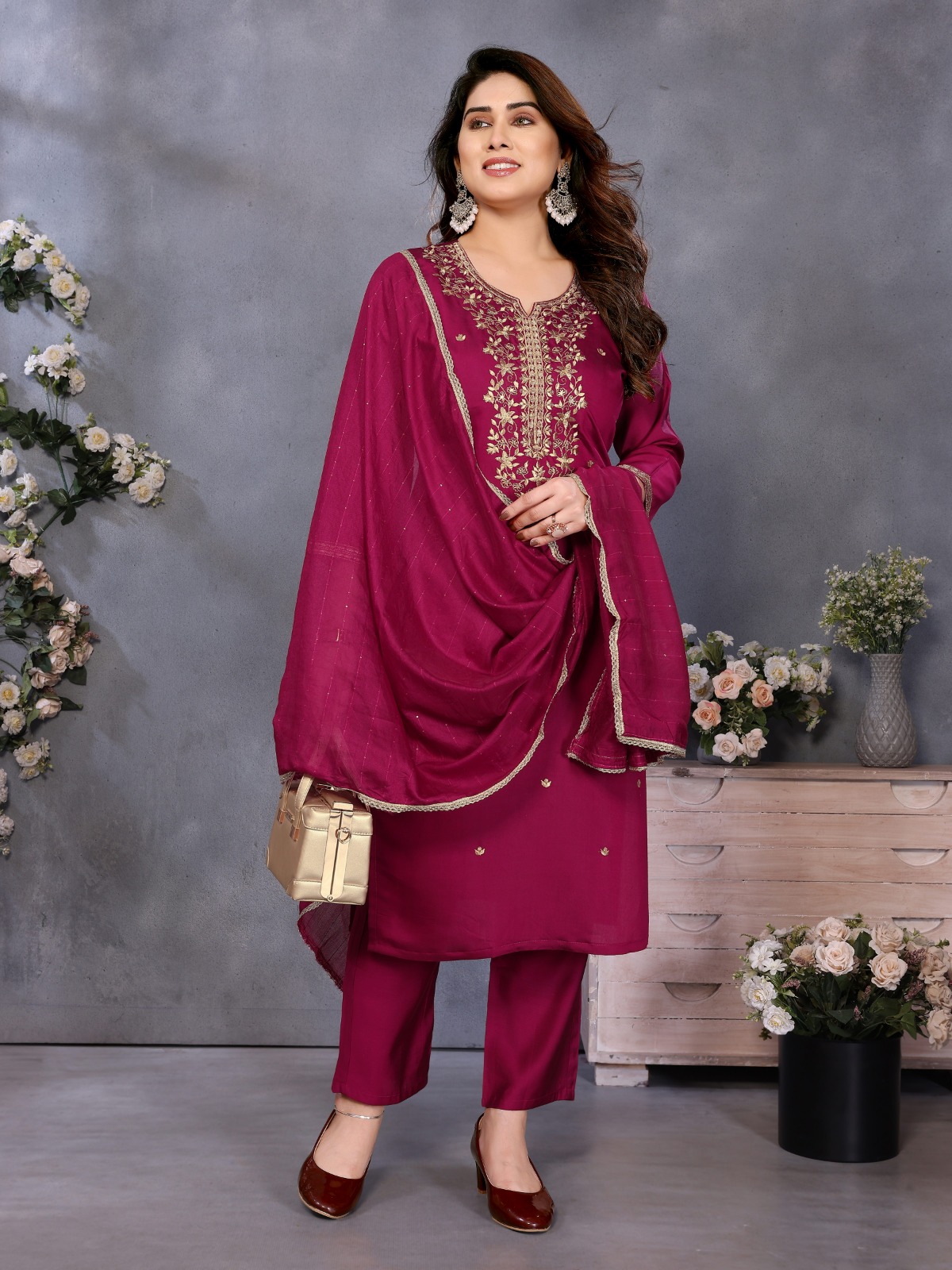
Wine, emerald, mustard and teal can all work in office wardrobes when their surrounding pieces are quiet. The Elegant Wine Ethnic Kurti Set with Dupatta can be paired with nude or black footwear and a simple metal watch. The Teal Embroidered Cotton Kurta Pant Set Online already provides a coordinated trouser line, so additional colour is unnecessary.
Pastels are useful when the kurti has visible texture. Lavender, blush, powder blue and soft mint reflect light gently and make embroidery easier to read. The Lavender Cotton Kurta Set with Embroidery Dupatta Set can be styled with pearl studs, a grey tote and low block heels for a presentation or client-facing day.
Choose accessories by scale. Small hoops, pearl studs, a slim chain, a watch and one ring provide definition without competing with woven motifs. Avoid stacking several oxidised necklaces, large jhumkas and a heavily embellished dupatta together; each item may be attractive alone, but the combined effect can look more ceremonial than professional.
Closed-toe loafers, low block heels, pointed flats and clean leather sandals are practical options. Match the shoe colour to the bag or belt when possible. A structured tote supports the office context better than a slouchy embellished potli, especially when the kurti already contains embroidery or zari.
Building Office Outfits from Chanderi Cotton Sets
A coordinated salwar suit is office-ready when the set has a clear silhouette, moderate ornamentation and a manageable dupatta. Sets are useful because the colour relationship between kurti, bottom and dupatta has already been resolved, leaving you to adjust accessories and layering.
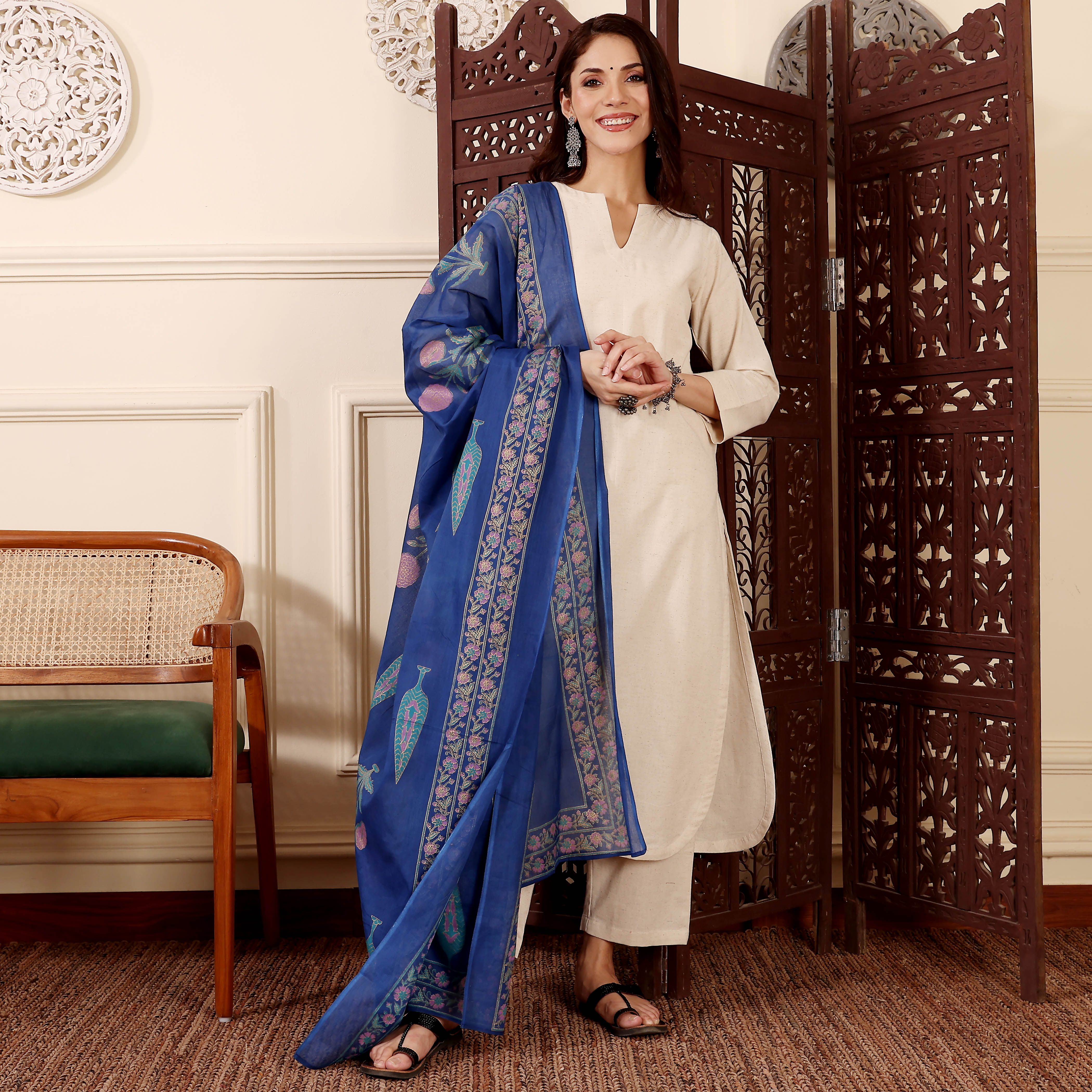
The Beige Kurta Set with Blue Chanderi Dupatta for Women offers a practical example of contrast that remains controlled. Beige acts as a quiet base, while the blue Chanderi dupatta supplies colour and texture. Pair the set with tan flats, a navy or cognac bag and minimal silver jewellery.
The Cream Printed Cotton Kurta Pant Dupatta Set for Women is suitable for a lighter office palette. Keep the print as the visual focus by choosing plain footwear and a single-colour tote. A cream base also allows a charcoal blazer or fine navy cardigan to be added in air-conditioned workplaces.
For departments with a relaxed dress code, the Teal Embroidered Cotton Kurta Pant Set Online can be worn without a dupatta for a cleaner desk-friendly profile. For formal meetings, add a lightweight solid dupatta or a tailored jacket only if the additional layer doesn't conceal the embroidery awkwardly.
Collections such as Ladies Dress Anarkali Salwar Suits can provide useful inspiration for proportion, even when a full Anarkali flare is too festive for daily office wear. Dress Materials are another option when you need a custom length, a higher neckline or sleeves adjusted for a particular workplace.
Fit, Transparency and Quality Checks Before Buying
The best Chanderi office kurti has comfortable ease, secure seams and enough coverage for sitting, bending and reaching. Measure the bust, shoulder, sleeve opening and finished length rather than choosing only by general size.
Allow approximately 2 to 4 inches of ease over the body measurement, depending on the cut and personal preference. A kurti worn under a blazer may need slightly less fabric at the sleeve and shoulder, while a standalone straight kurti benefits from enough room to avoid pulling across the bust.
Check the fabric against daylight before buying. A Chanderi cotton kurti may be naturally sheer, especially in pale shades, but office wear generally requires a lining, slip or sufficiently dense construction. Cream, white, blush and pale yellow need more careful checking than navy, wine or emerald.
Inspect the neckline, armhole and side seams. Neat internal binding, reinforced stress points and a straight hem are practical quality indicators. Embroidery should not cause the fabric to pucker, and zari should be attached securely without scratchy loose ends.
Sale collections such as Salwar Suits with 30% Off and Salwar Suits Flat 40% Off can be useful for building a workwear rotation, but discount percentage should not replace fabric and construction checks. Read the fibre composition, compare measurements and examine care instructions before judging value.
Chanderi Cotton Care for a Longer Workwear Life
Chanderi cotton lasts longer when washed gently, dried away from direct sun and stored without compression. Care requirements vary with silk content, zari, dye and embroidery, so the garment label should take priority over a general routine.
For an unlined cotton-heavy garment, hand wash in cool water with a mild detergent and avoid soaking for long periods. Do not twist the kurti, because twisting can distort a lightweight weave and stress the neckline. Press out excess water between clean towels or support the garment while it drains.
Dry Chanderi garments in shade on a flat surface or on a broad hanger, depending on the garment's construction. Strong sunlight can fade dyes, particularly wine, emerald, mustard and teal. Iron on the reverse side using low to medium heat while the fabric is slightly damp; place a thin cotton cloth between the iron and any zari or embroidery.
Fold clean Chanderi kurtis instead of leaving them on narrow hangers for months. Store embroidered or zari garments with breathable cotton or acid-free tissue rather than sealed plastic. Refold stored garments every few months to reduce permanent creases along the same fold lines.
With careful construction, restrained styling and appropriate maintenance, Chanderi cotton becomes more than a summer fabric. Chanderi cotton becomes a practical bridge between handloom knowledge and contemporary office dressing: light enough for daily wear, distinctive enough for a professional wardrobe and adaptable enough to work across seasons.
Frequently Asked Questions
Can I wear a Chanderi cotton kurti to a formal office?
Yes, a Chanderi cotton kurti can suit a formal office when the silhouette is straight or lightly A-line, the neckline is modest and the embroidery is restrained. Pair the kurti with tailored trousers, closed-toe footwear and a structured bag rather than festive jewellery or a heavily flared bottom.
What pants look best with a Chanderi cotton kurti?
Cigarette pants, tapered trousers and ankle-length straight pants usually look best with a Chanderi cotton kurti. Choose wide-leg trousers only when the kurti is shorter and more structured, because a long, flared kurti with wide trousers can appear overly voluminous.
Is Chanderi cotton transparent?
Chanderi cotton can be slightly sheer because the fabric is lightweight and finely woven, especially in pale colours. Check the garment in daylight and choose a lined kurti or a separate cotton slip when the fabric does not provide sufficient office coverage.
How should I wash a Chanderi cotton kurti?
Wash a cotton-heavy Chanderi kurti gently in cool water with mild detergent and avoid twisting or prolonged soaking. Dry the garment in shade, iron it on the reverse at low to medium heat and follow the label's instructions when silk, zari or heavy embroidery is present.
Which colours of Chanderi kurti are best for office wear?
Ivory, beige, navy, charcoal, dusty pink, lavender, wine, emerald and muted mustard can all work for office wear. Balance a strong colour such as emerald or mustard with neutral trousers, simple jewellery and a restrained dupatta.
How can I make a Chanderi salwar suit look less festive?
Use tailored bottoms, a flat or single-shoulder dupatta drape and minimal jewellery to make a Chanderi salwar suit look less festive. A structured tote, low block heels and a solid blazer or cardigan also shift the outfit toward professional workwear.