Key takeaways
- A Banarasi silk saree looks balanced when the blouse repeats one saree colour instead of competing with every zari detail.
- A high-neck or full-sleeve blouse can make a Banarasi saree more formal, while a sleeveless or short-sleeve blouse creates a lighter festive look.
- Gold jewellery suits traditional Banarasi zari, but a single statement piece is usually more effective than several competing ornaments.
- A neat pleat width of approximately 12 to 15 centimetres helps a structured Banarasi saree fall cleanly without hiding the border.
- Banarasi silk should be folded with soft muslin or cotton fabric and stored away from direct sunlight to protect the weave and colour.
The biggest styling mistake with a Banarasi silk saree is trying to match every visible colour, motif and zari detail at once. The result is often a crowded outfit: a heavily embroidered blouse, layered jewellery, ornate footwear and a busy hairstyle competing with the saree. Learning how to style a banarasi silk saree is really about choosing one visual lead and allowing the rest of the outfit to support it.
Banarasi silk already brings structure, sheen and pattern through its woven design. A successful look therefore depends on proportion: the blouse should clarify the saree's colour story, jewellery should frame the face or border, and the drape should show enough of the pallu to make the fabric's design legible. The seven looks below use that principle for weddings, festivals, family gatherings, office celebrations and evening dinners.
How to style a banarasi silk saree for a time-honoured wedding look
A heritage wedding look works best with a contrast blouse, gold-toned jewellery and a clearly displayed zari border.
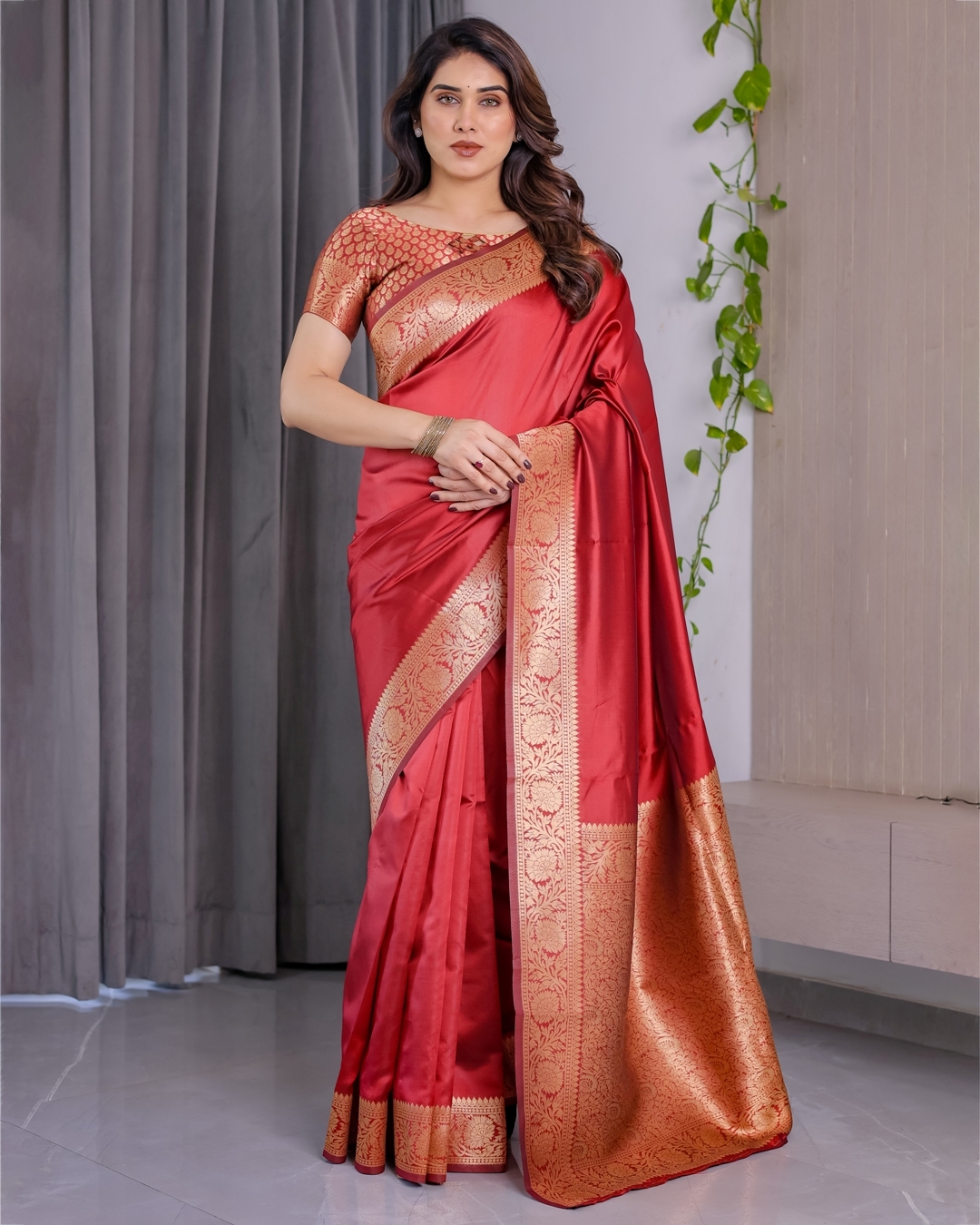
Choose a blouse in deep red, maroon, antique gold or the dominant colour appearing in the saree's pallu. A high round neck, elbow-length sleeve and modest back create a formal silhouette that suits pheras, receptions and family ceremonies. A blouse with a simple woven texture is often more effective than dense embroidery because Banarasi silk already provides surface interest.
The Green Banarasi Silk Saree With Rich Zari Border Work suits this approach especially well. Pairing the green body with a maroon or antique-gold blouse gives the outfit depth without requiring an identical green match. A red bindi, gold jhumkas, a medium-width necklace and two or four slim bangles complete the look. Keep the necklace and earrings in the same metal family so the zari remains the connecting detail.
Drape the pallu over the left shoulder with five to seven visible pleats, depending on the saree width and the design placement. Pin the shoulder discreetly from the underside and secure the front pleats at the waist. A low bun decorated with gajra keeps the neckline and earrings visible while providing a time-honoured finish.
A modern contrast look for receptions and evening events
A current Banarasi saree look needs one deliberate contrast, such as a sleeveless blouse, a clean neckline or contemporary jewellery.
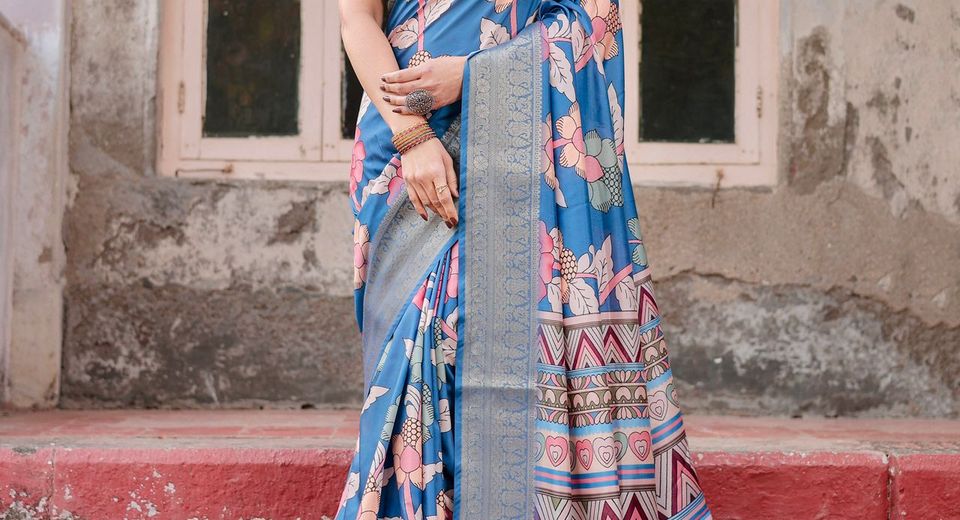
The Blue Banarasi Silk Saree with Floral Design can be styled with a plain jewel-toned blouse in wine, charcoal, ivory or deep teal. The blouse doesn't need to reproduce the floral motif; a solid colour makes the woven pattern easier to notice. A square neck or gently curved sweetheart neckline introduces an up-to-date line, while a sleeveless cut makes the saree feel lighter for an evening reception.
Use one strong accessory rather than several small ones. A sculptural cuff, long drop earrings or a single choker can anchor the outfit. If the saree includes gold zari, choose gold or warm metal accessories; if the border reads muted or antique, polished gold can be softened with matte finishes. Metallic heels or pointed pumps should remain simple, because ornate footwear can interrupt the saree's fall.
For a contemporary drape, make narrow, even front pleats and keep the pallu open across the shoulder. A belt can work for a cocktail-style reception when it's narrow and sits at the natural waist, but a wide embellished belt may conceal the border and create unnecessary bulk. A sleek low ponytail or a centre-parted bun supports the clean geometry of this look.
How to style a banarasi silk saree for a daytime festive outfit
A daytime festive outfit looks freshest with a lighter blouse, restrained jewellery and a breathable drape.
Daylight reveals shine more strongly than indoor lighting, so the outfit benefits from visual breathing room. Select a short-sleeve blouse in a soft solid colour, such as ivory, pale yellow, blush, sky blue or muted green. Avoid adding sequins to every surface when the saree already contains zari. Small gold studs, pearl drops or a delicate chain can provide enough polish for a puja, festive lunch or family gathering.
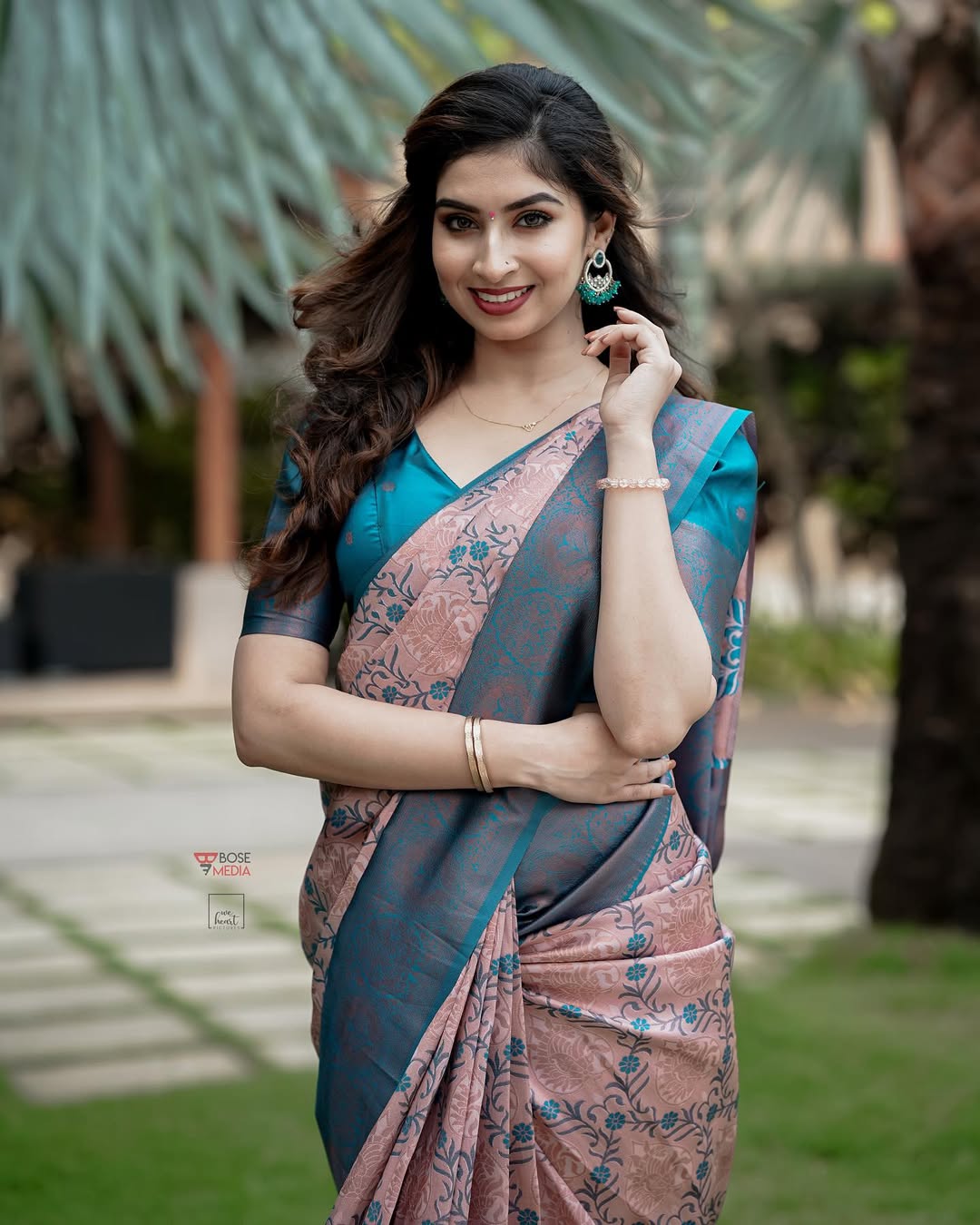
The Teal Blue Banarasi Soft Silk Saree With Golden Zari Border is an useful example of colour-led styling. A pale gold, cream or muted mustard blouse picks up the border while keeping the teal body prominent. Tan sandals, a compact potli and a warm-toned bindi make the outfit festive without making it feel like evening wear.
Choose a front drape with five or six medium-width pleats and let the pallu fall naturally rather than arranging a very stiff fan. Lightweight earrings are more comfortable for several daytime hours, especially when the saree is paired with a fitted blouse. For hair, a braided bun or half-up style keeps the face clear while looking less formal than a tightly sculpted updo.
A colour-blocked look for Haldi ceremony and spring celebrations
A Haldi ceremony look works best when the Banarasi saree is paired with a cheerful contrasting blouse and practical, low-risk accessories.
Yellow, pink, green and coral create lively colour blocks that photograph well in daylight. A mustard saree can be paired with magenta, rani pink or leaf green; a red saree can be paired with yellow or fuchsia; and a purple saree can be balanced with soft yellow or rose pink. The blouse should remain mostly plain if the saree has an elaborate border.
The Royal Mustard Bloom Banarasi Silk Saree can take a magenta blouse with a simple round neck and short sleeves. Add floral earrings, glass bangles and flat embellished sandals rather than delicate high heels, which are less practical around outdoor rituals. A small crossbody potli or wristlet keeps both hands free for greetings, photographs and ceremony activities.
For a Haldi ceremony, avoid long dangling jewellery and very pale shoes that can show turmeric stains easily. A side braid, low ponytail or pinned-back waves are easier to maintain than loose hair. Use safety pins at the waist and shoulder, and keep a spare pin packet in the potli for quick repairs.
An understated office or daytime family-gathering look
An understated Banarasi saree outfit needs a matte blouse, modest jewellery and a controlled pallu.
Banarasi silk can look formal even when the styling is quiet, which makes it suitable for festive office days, cultural programmes and daytime family gatherings. Choose a blouse with a boat neck, three-quarter sleeves or a neat V-neck in a colour drawn from the saree. Keep the fabric plain or lightly textured. A structured handbag and closed-toe flats make the ensemble practical without making it look casual.
The Sky Blue Banarasi Silk Saree with Elegant Zari Weave can be worn with an ivory, dove-grey or soft navy blouse. Small pearl studs, a slim watch and one bangle provide enough detail for a professional setting. Keep the pallu pinned close to the shoulder so it doesn't obstruct movement, and avoid stacking bangles that may catch on a desk, laptop bag or office chair.
A low bun or neatly tied ponytail adds polish and reduces adjustment throughout the day. A compact safety-pin arrangement is useful: one pin at the shoulder, one at the waist and a third hidden near the inner pleats if the fabric is particularly slippery. Remove the pins carefully after wearing, so the weave isn't repeatedly stressed in the same place.
A rich jewel-tone look for winter celebrations and dinner
A jewel-tone evening look is strongest when a deep-coloured Banarasi saree is paired with low-light-friendly makeup and concentrated jewellery near the face.
Purple, maroon, deep green, navy and red work especially well for evening celebrations because their colour remains visible under warm indoor lighting. The Purple Banarasi Silk Saree with Ethnic Print can be paired with a deep plum, antique-gold or dark green blouse. A full-sleeve blouse adds a winter-appropriate line, while a sleeveless blouse keeps the outfit more contemporary.
Choose ruby-toned, emerald-toned or gold earrings according to the saree's visible accents. A maang tikka is appropriate for a wedding or formal family function, but it may be unnecessary for a dinner. Instead of wearing a necklace, let statement earrings and a clean neckline frame the face. A compact metallic clutch and block heels finish the outfit without adding another competing pattern.
For a dinner, pleat the saree neatly and let the pallu remain open enough to reveal its design. A deep side part with a low bun, or polished waves with the front sections pinned back, complements the richness of jewel tones. Makeup can echo one saree colour through a berry lip or softly defined eyes, but repeating both the saree colour on the eyes and lips can make the face appear overly coordinated.
How to style the blouse, jewellery and drape without overloading the saree
Which blouse works with a detailed Banarasi saree?
A plain or lightly textured blouse works best with a detailed Banarasi saree.
Use the 60-30-10 rule as a practical starting point: approximately 60 percent of the outfit's visual attention should remain on the saree, 30 percent can come from the blouse or jewellery, and 10 percent can come from smaller accessories. A heavily embroidered blouse is possible, but then the jewellery and hairstyle should be notably simpler. Conversely, a plain blouse allows a more substantial necklace or a stronger earring.
Match the blouse to the saree's undertone rather than chasing an exact colour match. Warm red, mustard and antique gold pair naturally with warm zari. Teal, blue and purple can be balanced with ivory, navy, plum, rose or muted gold. A blouse cut with a back tie, high neck or elbow sleeve changes the formality of the same saree more dramatically than adding extra embellishment.
How much jewellery should accompany Banarasi silk?
One statement jewellery area is usually enough for a Banarasi silk saree.
Choose statement earrings with a simple necklace, a statement necklace with smaller earrings, or a bold bangle stack with minimal neck jewellery. Gold is the most classic partner for zari, while pearls can soften bright colours and antique-finish metal can make the outfit feel less bridal. The jewellery scale should also match the blouse neckline: a high neck generally needs earrings or a bangle rather than a crowded necklace.
Pay attention to the border when selecting bangles. A very wide bangle stack can hide the border at the wrist and may catch on the pallu. Two to four bangles per wrist create movement without overwhelming a finely patterned saree.
Buying and care details that affect the final styling result
A good Banarasi saree styling result begins with checking the fall, border width, fabric weight and colour contrast before buying.
A broad zari border creates a formal, visually grounded look, while a narrow border can feel easier for daytime use. A heavier silk drape holds pleats well but may need a firm waistband and secure pins. Soft silk generally falls more gently and can be easy to wear for longer wear. Product descriptions should be checked for the listed fabric composition, weave description and care guidance rather than assuming that every Banarasi-labelled saree has identical weight or construction.
For budget-conscious browsing, Banarasi Silk Sarees Under 1100 with Up to 70% Off can be an useful starting point for comparing colours, borders and printed versus woven-looking designs. A red or yellow styling plan can also be explored through Red and Yellow Sarees from Rs 799 with Up to 75 Percent Off. White Silk Sarees in Cream Ivory and Off White offers neutral blouse and layering references, particularly when a colourful Banarasi saree needs a calmer accessory palette.
Store Banarasi silk folded with the zari facing inward or separated by soft muslin, depending on the weave and care instructions supplied with the garment. Refold the saree every few months, so permanent creases don't form along one line. Keep the saree in a cool, dry cupboard away from direct sunlight, perfume spray and damp walls. Dry cleaning is generally safer than repeated home washing for silk and zari, but the care label should take priority.
Before an important event, drape the saree once at home and photograph the full outfit in daylight and indoor light. The test reveals whether the blouse disappears against the saree, whether the border is hidden by the pleats and whether the jewellery looks too dense. That ten-minute check often improves the final outfit more than purchasing another accessory.
Frequently used styling formulas at a glance
The most reliable formula for a wedding is a contrast blouse, gold jewellery, a defined pleat structure and a bun. The most reliable formula for daytime is a solid short-sleeve blouse, light jewellery, soft footwear and a pinned pallu. The most reliable formula for a contemporary reception is a clean blouse neckline, one statement accessory, open pallu pleats and restrained hair.
Colour should guide the styling decision, not dictate an exact matching exercise. A red Banarasi silk saree can use yellow, pink, maroon or antique gold as supporting colours. A blue Banarasi silk saree can use ivory, teal, navy, wine or muted gold. A green Banarasi silk saree can use maroon, mustard, cream or antique gold. These combinations create contrast while preserving the saree as the outfit's central element.
How to style a banarasi silk saree depends on the setting, the saree's visual weight, and comfort. One element leading while the others are edited carefully keeps the zari, colour, and drape visible instead of getting lost in coordination.
Frequently Asked Questions
What blouse colour goes best with a Banarasi silk saree?
A blouse in a colour already present in the saree's border or pallu is the safest choice. Ivory, antique gold, maroon, mustard, deep green, navy and plum can also create balanced contrast without requiring an exact colour match.
Which jewellery is best for a Banarasi silk saree?
Gold jewellery is the most heritage choice for a Banarasi silk saree with zari. Use one statement area, such as jhumkas, a necklace or bangles, and keep the remaining jewellery simpler, so the woven pattern remains visible.
How can a Banarasi saree look up-to-date?
A plain sleeveless, square-neck or high-neck blouse can make a Banarasi saree look contemporary. Pair the saree with one sculptural accessory, sleek hair and simple footwear instead of layering several ornate elements.
Can I wear a Banarasi silk saree to a daytime function?
Yes, Banarasi silk works for daytime functions when the styling is lighter. Choose a solid short-sleeve blouse, small earrings or pearls, relaxed flats and a neatly pinned pallu rather than a heavily embellished blouse and dense jewellery.
How should I store a Banarasi silk saree after wearing it?
Air the saree briefly away from direct sunlight, then fold it with soft muslin or cotton protection according to the care label. Store it in a cool, dry cupboard, refold it every few months and avoid spraying perfume directly onto the silk or zari.
How do I keep Banarasi saree pleats neat?
Make evenly sized pleats, secure the inner pleats at the waist and use a discreet shoulder pin from the underside. A trial drape before the event helps identify slipping, hidden borders or excess fabric before the final styling.