

How to shop for a lehenga when you cannot try it on starts with treating the product page like a fitting-room conversation. A reliable choice depends on measurements, garment construction, fabric behaviour, closure details, lining and alteration room, not only on the model photograph. Whether you are comparing a ready-made lehenga for a wedding, a designer set for a reception or a bridal outfit ordered from another city, the right questions can prevent an expensive mismatch.
Online lehenga shopping becomes easier when you separate three decisions: how the garment is built, how much adjustment it allows and whether the fabric suits the movement and weather of your event. The following method gives you a practical way to make that decision before placing an order.
How to Shop for a Lehenga When You Cannot Try It On: Start with Construction
The construction type determines how much control you have over the final fit. A fully stitched choli has a fixed finished shape, a semi-stitched lehenga allows more alteration, and a customised garment depends on measurements submitted to the seller.
What does fully stitched choli shopping require?
Fully stitched choli shopping requires accurate bust, under-bust, waist, shoulder and armhole measurements because the blouse usually has limited scope for resizing. A ready-made choli may include hooks, a side zip, dori ties or an adjustable back, but those features do not replace checking the finished garment measurements.
Look for a measurement chart that distinguishes body measurements from garment measurements. If your bust measures 36 inches, a blouse with a 36-inch finished bust may feel restrictive, especially when it has heavy embroidery or a non-stretch lining. An ease allowance of around 1 to 2 inches, depending on the cut and fabric, usually makes sitting and lifting the arms more comfortable.
A semi-stitched garment gives an experienced tailor more flexibility at the side seams, waist and blouse panels. The Semi Stitched Lehengas Collection can therefore suit shoppers whose measurements fall between standard sizes or who want a particular blouse length. Confirm how much fabric is supplied before assuming that every part can be substantially enlarged.
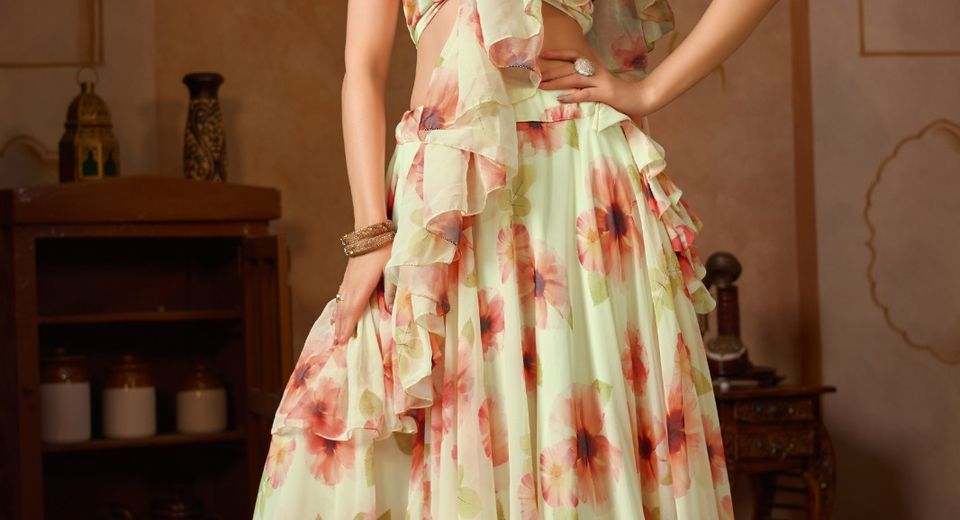
Pastel Floral Georgette Lehenga Set with Ruffle Blouse shows why construction details matter. A ruffle blouse, layered skirt and soft georgette may need different ease allowances from a compact, straight-cut choli. The photograph shows the design; the size chart tells you whether the design can work on your body.
How to Shop for a Lehenga When You Cannot Try It On: Take Accurate Measurements
The most dependable home measurement method uses a soft tape, close-fitting clothing and a second person. Measure twice and record the larger accurate result rather than pulling the tape tightly to create a smaller number.
- Bust: Measure around the fullest part of the bust while keeping the tape level across the back.
- Under-bust: Measure directly beneath the bust, particularly when the blouse has a fitted waist or structured cups.
- Natural waist: Measure the narrowest point of the torso without holding your stomach in.
- High hip and full hip: Record both when the skirt is fitted near the waistband or has a narrow flare at the upper hip.
- Shoulder: Measure from one shoulder point to the other across the back.
- Blouse length: Measure from the shoulder or neckline point to the place where you want the hem to finish.
- Skirt length: Measure from the waistline where the lehenga will sit to the floor, wearing the footwear planned for the event.
- Armhole and sleeve: Check these measurements when the choli has sleeves, dense embroidery or a high neckline.
Do not measure skirt length from the navel unless the waistband will actually sit there. A high-waisted bridal lehenga, a mid-waisted ready-made lehenga and a low-slung contemporary skirt can all have different starting points. Write down the intended footwear heel height as well; a 3-inch difference can change whether the hem brushes the floor or catches under the shoe.
Compare your numbers with the seller's chart, not with a familiar label such as small, medium or large. Indian sizing is not fully standardised across designers. A medium in one ready-made range can have a different bust, waist and skirt length from a medium in another range.
How to Shop for a Lehenga When You Cannot Try It On: Read the Fabric
Fabric affects comfort, fall, weight and the amount of fitting tolerance available in a lehenga. A skirt that looks voluminous in a photograph may feel very different when made from lightweight net, satin, silk or layered georgette.
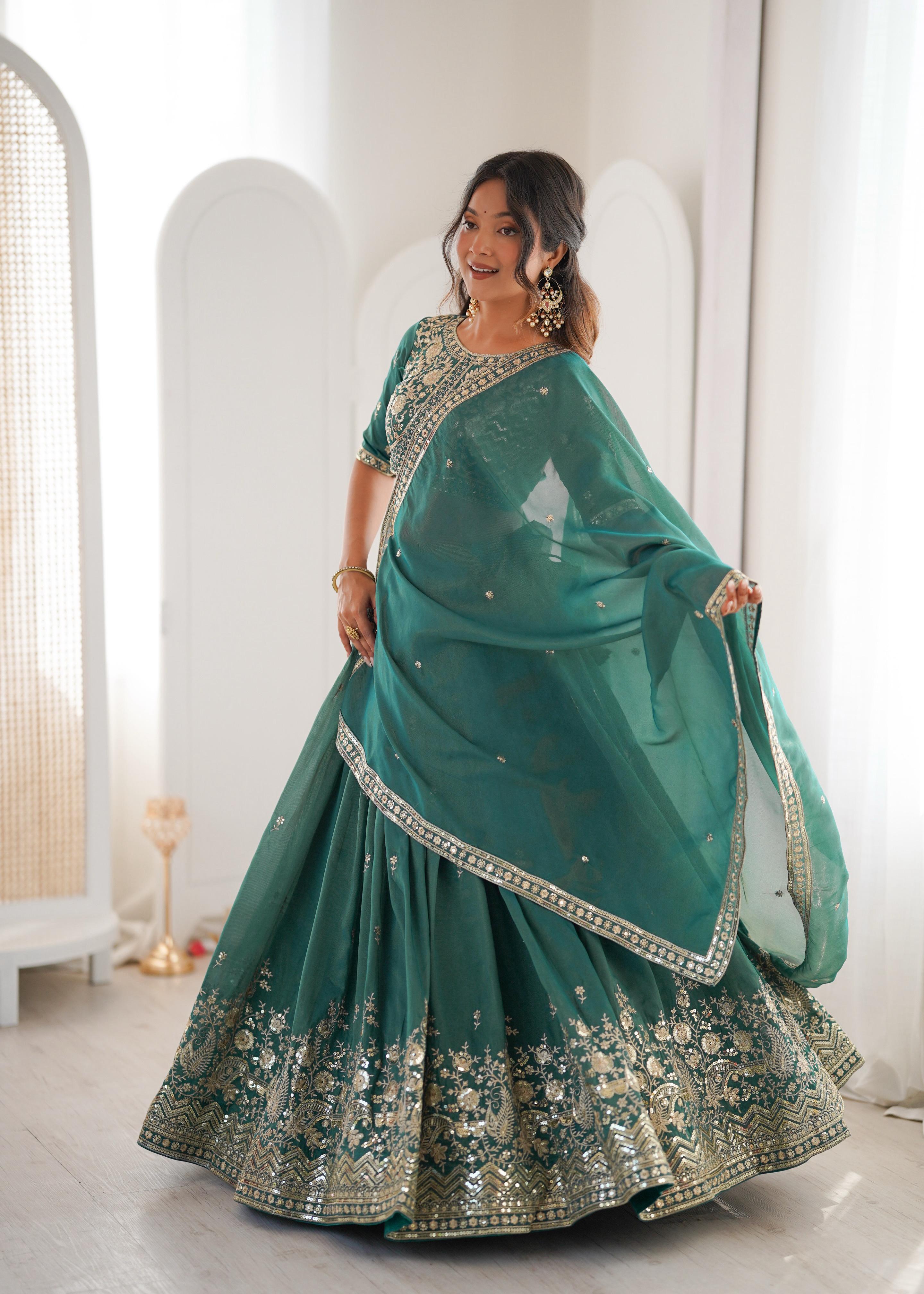
Georgette usually creates a fluid fall, but the lining and number of layers determine opacity and volume. Butterfly net can produce a crisp, airy flare, while satin has a smoother surface and may show pulling around the waist if the fit is too tight. Chinon silk often has a soft drape, but dense sequins can add noticeable weight to the finished outfit.
Green Chinon Silk Sequins Embroidered Lehenga Set demonstrates why embellishment should be considered alongside fabric. Sequins, beads and threadwork can make a garment heavier than its base cloth suggests. Ask whether the choli and skirt are lined, whether the embroidery feels scratchy on the reverse, and whether the dupatta has a finished border or raw edge.
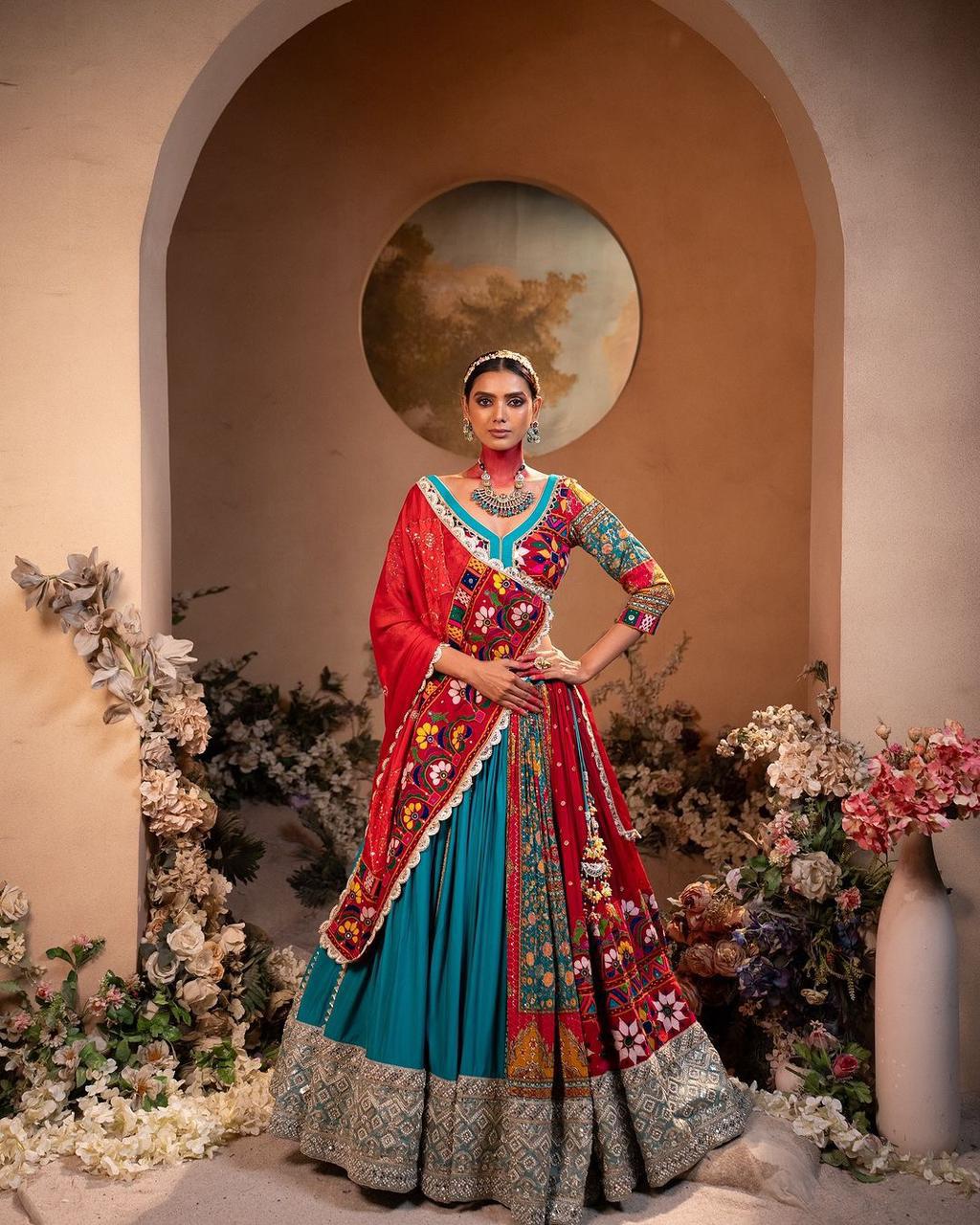
Dense decoration also reduces alteration flexibility. A tailor can usually adjust a plain side seam more easily than a seam crossing zari, sequins or an embroidered motif. Designer Threadwork Silk Lehenga Choli Set with Dupatta may require a specialist who can preserve the placement of threadwork during alterations. Budget for a trial fitting with the tailor rather than scheduling alterations the day before the event.
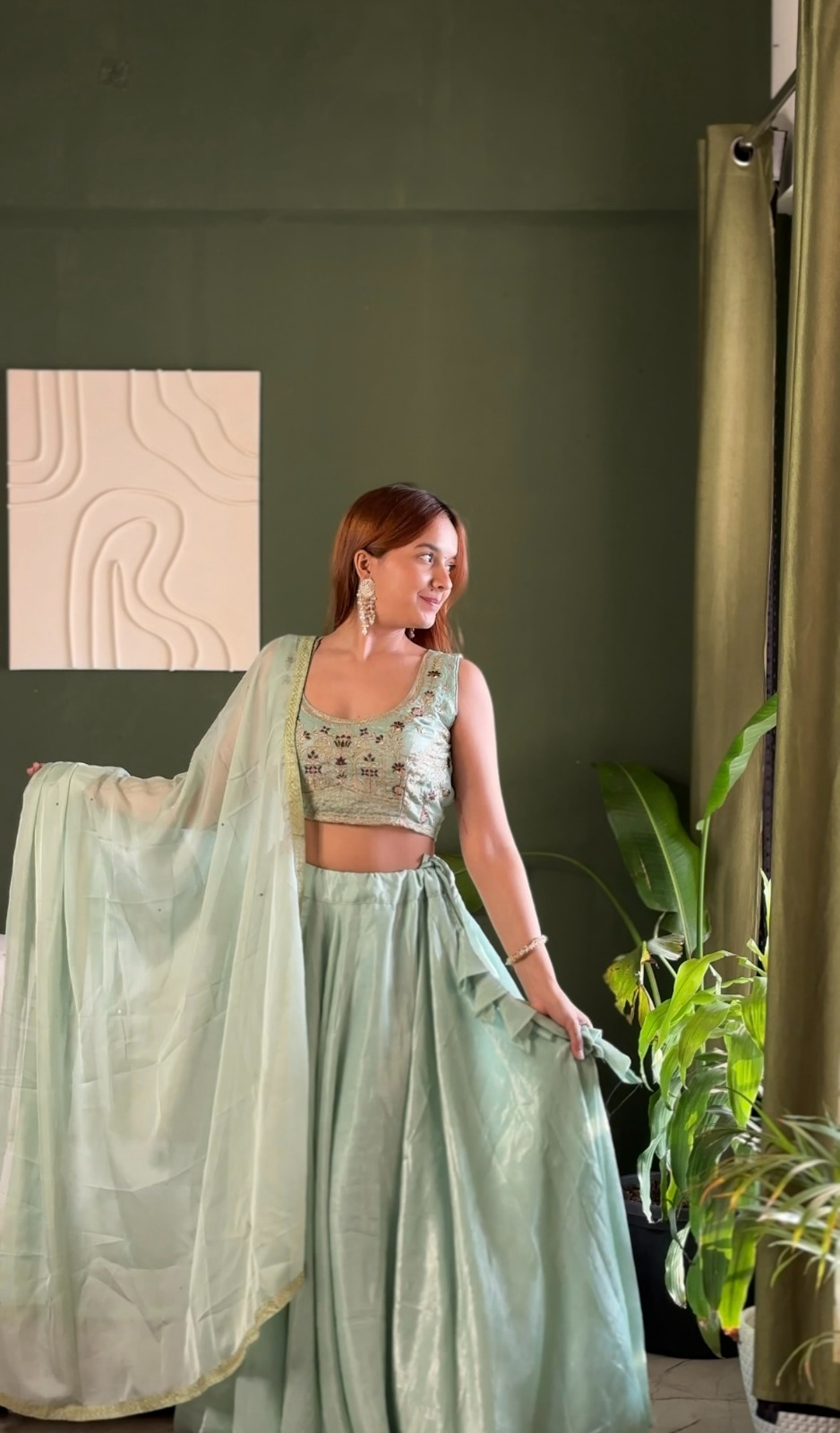
Colour names can also be misleading on different screens. Pastel Grey Embroidered Butterfly Net Lehenga Set, Dusty Pink Satin Embroidered Lehenga Set Online and Magenta Satin Embroidered Lehenga Set Online sit in distinct colour families, but screen brightness, indoor lighting and the surrounding background can change how each shade appears. Check product photographs in natural light and request a swatch when colour matching is important.
How to Shop for a Lehenga When You Cannot Try It On: Match the Event
The right lehenga balances formality with the amount of walking, sitting, dancing and travel required at the event. A dramatic bridal design may suit a ceremony but feel unnecessarily heavy for a daytime Haldi ceremony.
For a Haldi ceremony, choose fabrics and colours that can tolerate active movement and possible staining, and check whether the outfit includes a removable or washable lining. Yellow Lehengas can create a traditional Haldi palette, while Green Lehengas and Mehendi Lehengas offer alternatives for a Mehendi function. Pale satin, delicate net and extensive trailing embellishment need more careful handling in crowded, outdoor settings.
For a wedding guest outfit, prioritise a secure waistband, comfortable armholes and a dupatta that can be pinned without damaging the fabric. Pink Embroidered Roman Silk Lehenga Set Online may suit a polished evening look, while a lighter layered set can be easier for several hours of movement. For a reception, a structured blouse and smooth skirt can photograph well, but the neckline and back closure should still allow comfortable sitting.
Bridal shopping needs an additional checklist because the outfit must accommodate jewellery, footwear, a long ceremony and possible temperature changes. Leave enough time for at least one alteration appointment and one full trial with the dupatta, blouse padding, shoes and jewellery. A bridal lehenga ordered close to the wedding date leaves too little time to correct a short hem, tight armhole or misplaced waistline.
How to Shop for a Lehenga When You Cannot Try It On: Check Closures
The waistband and closure reveal more about practical fit than the product photograph does. Check whether the skirt has an elastic section, hook-and-eye fastening, side zip, drawstring or a combination of closures.
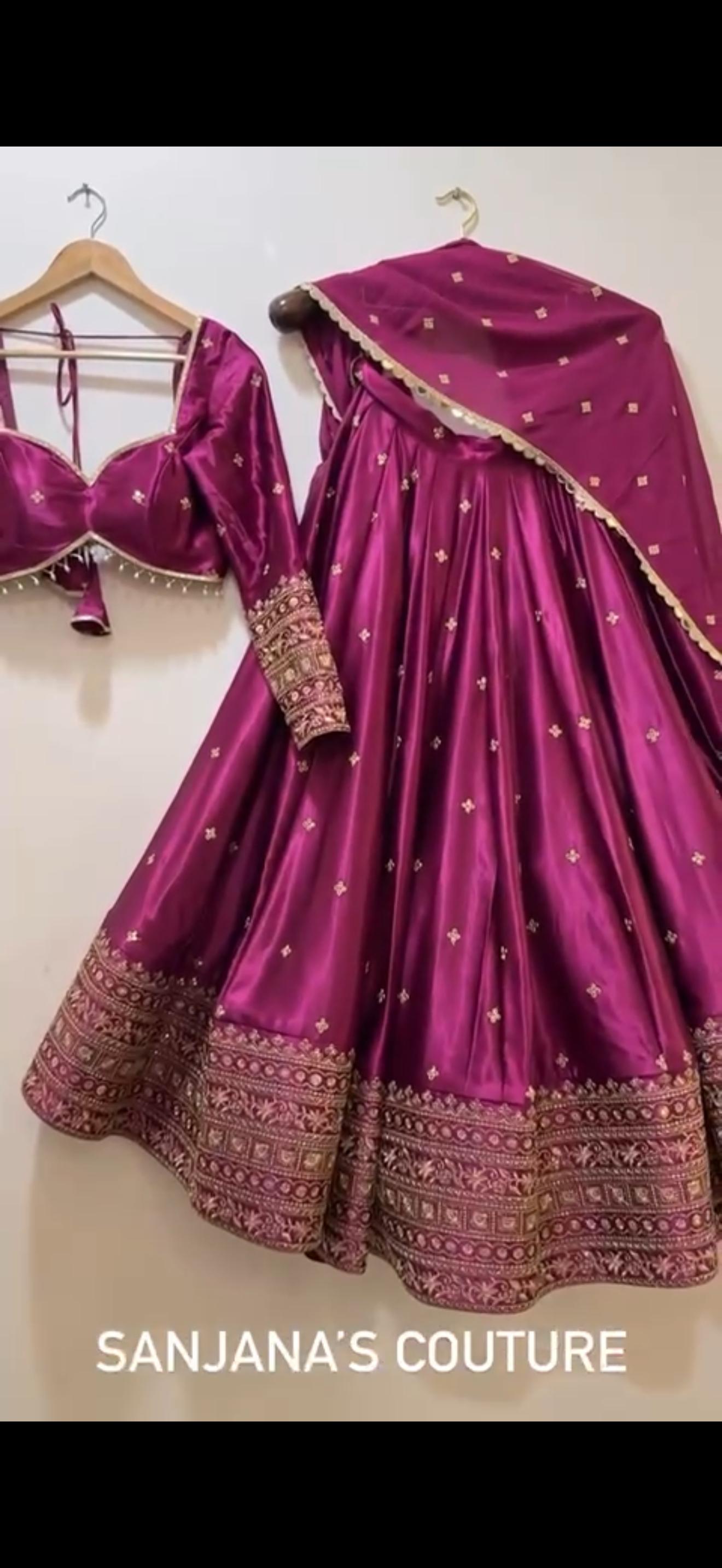
A drawstring can provide useful adjustment, but a drawstring alone may not support a heavy skirt securely. Hooks and a zip can create a cleaner waistline, although they need to be positioned correctly for comfort. An elasticated waistband may accommodate small fluctuations but can gather satin or create bulk beneath a fitted blouse.
Ask how many inches can be taken in or let out at the waist and side seams. A tailor needs seam allowance to make an alteration; a garment with a narrow seam or embroidery crossing the seam may offer less flexibility than expected. Never assume that a larger size can always be reduced neatly, because reducing a blouse can change the position of the neckline, darts and shoulder seams.
Ready Made Lehenga options are convenient when the size chart matches your measurements closely and the event is near. Semi-stitched options are safer when you need meaningful adjustments. The useful distinction is not that one category is superior; the useful distinction is how much responsibility the garment places on sizing, tailoring and timing.
How to Shop for a Lehenga When You Cannot Try It On: Compare the Full Outfit
A useful comparison records measurable details instead of relying on the product photograph. Create a short table for each shortlisted lehenga and note the garment type, fabric, blouse measurements, skirt length, lining, closure, dupatta dimensions, embroidery weight and alteration scope.
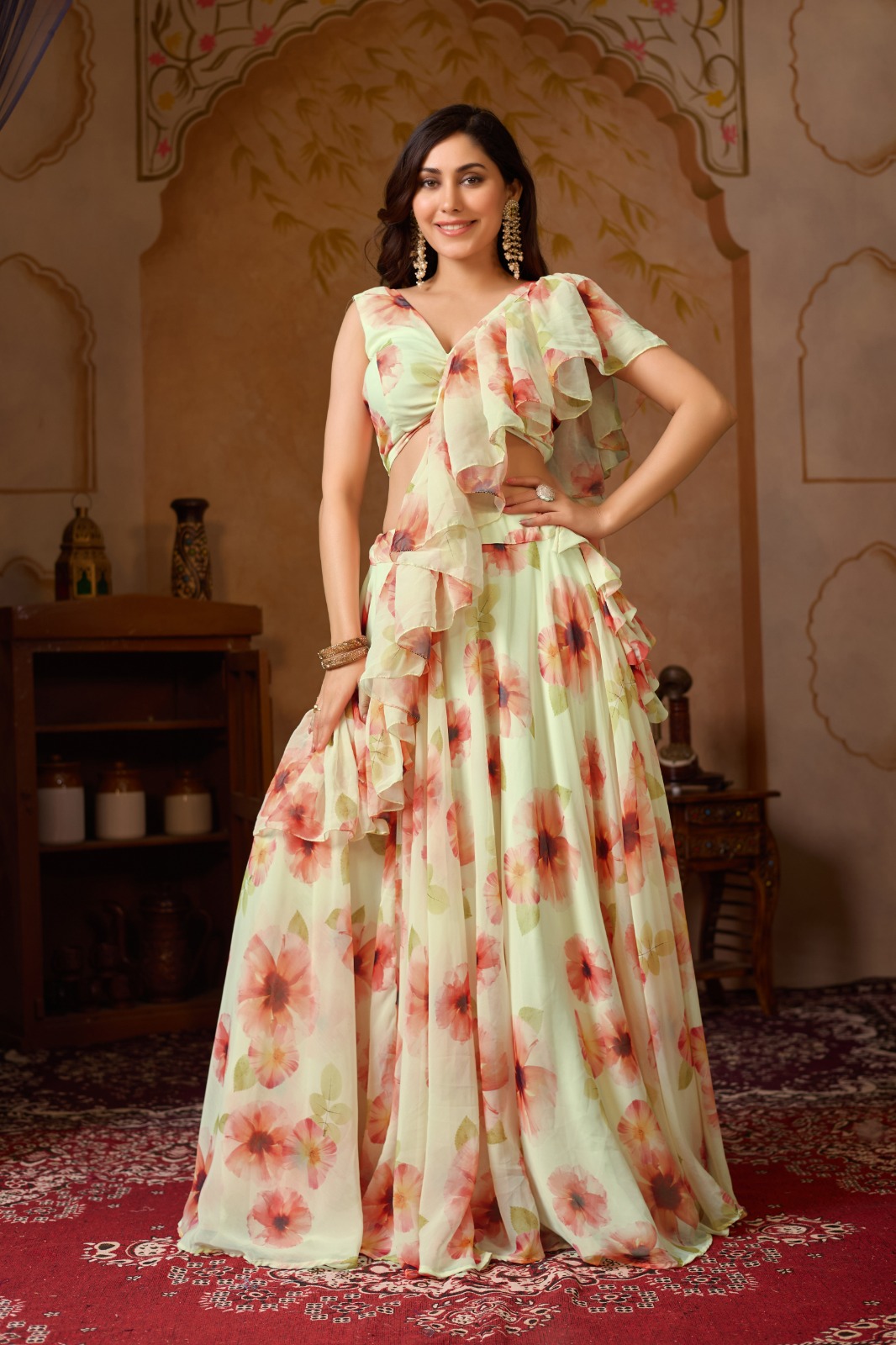
Check whether the listed length includes the waistband and whether the photographed model is wearing heels. Ask whether the blouse comes padded, whether cups can be removed, and whether the dupatta is included in the stated price. These details affect both fit and the final styling budget.
For example, Lime Floral Embroidered Butterfly Net Lehenga Set may create a lighter, more expansive silhouette than a satin skirt with similar measurements because net and satin respond differently to movement and light. The comparison should therefore include fabric behaviour, not only waist and length numbers.
Also assess the complete outfit from a practical viewpoint. A large dupatta border may add visual drama but require stronger pins. A heavily embellished skirt may need a sturdier petticoat or underskirt. A cropped choli may look balanced on a tall model but require a different skirt rise or blouse length for a shorter wearer.
How to Shop for a Lehenga When You Cannot Try It On: Plan Delivery and Alterations
Order a non-trial lehenga early enough to inspect it, test its fit and complete alterations before the event. A practical minimum is three to four weeks for a ready-made outfit and six to eight weeks for a bridal or semi-stitched outfit, although seller timelines vary.
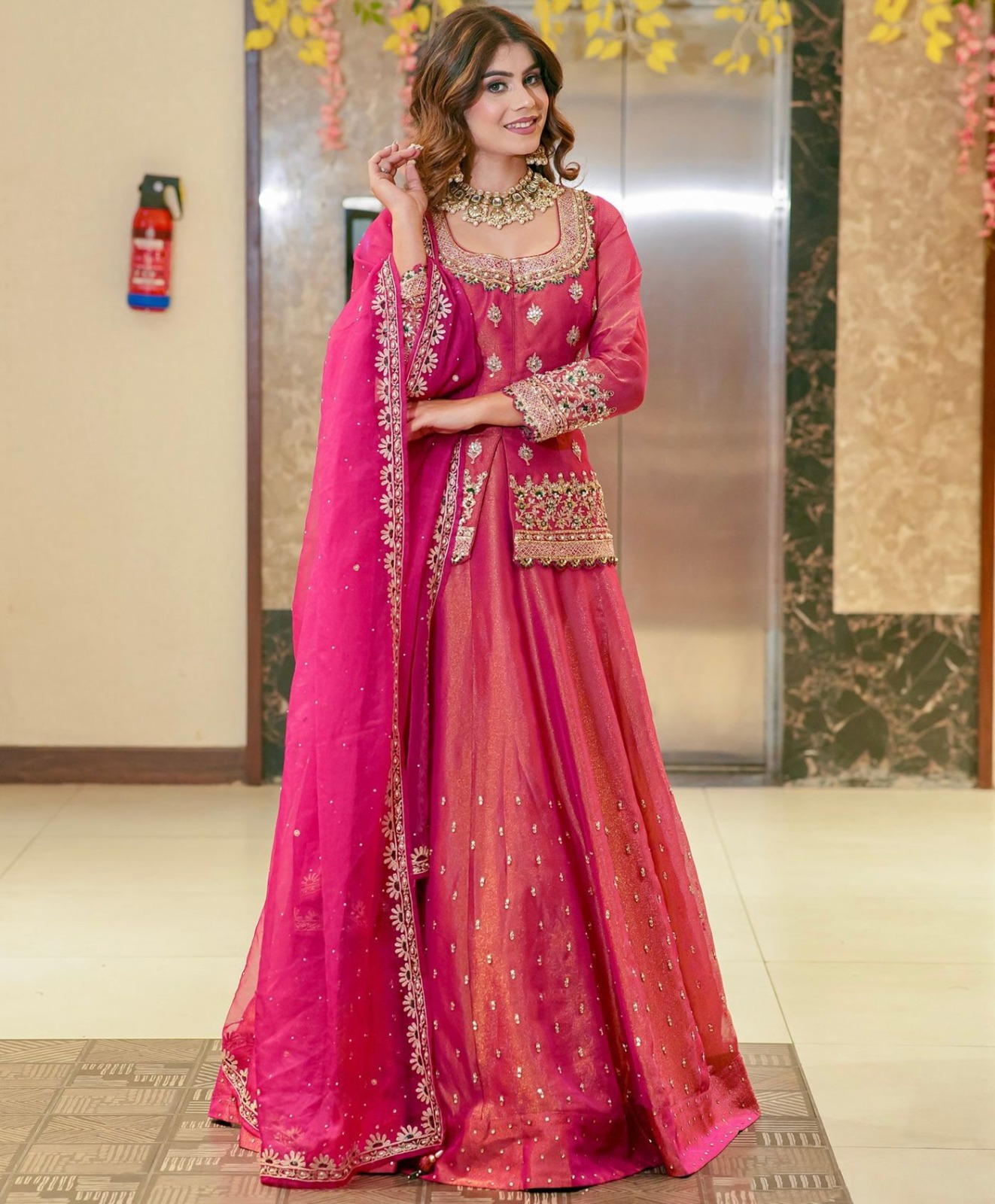
When the parcel arrives, inspect the garment before removing tags or discarding packaging. Check seams, hooks, zips, lining, embroidery, hem length, colour and the presence of the dupatta. Try the outfit with the intended innerwear and footwear while standing, sitting and raising both arms.
Keep the original packaging and record any issue with clear photographs. Read the exchange and alteration terms before ordering, particularly for sale items, customised measurements, stitched blouses and products marked non-returnable. A return window may begin on delivery rather than on the date of your first fitting.
A tailor should alter the garment while you wear the same footwear and undergarments planned for the event. Mark the waist position, blouse hem and sleeve comfort during the fitting. Complete a second trial after alteration because shortening a hem or tightening a side seam can affect the balance of the entire outfit.
How to Shop for a Lehenga When You Cannot Try It On: Use a Final Checklist
The safest final decision comes when your measurements, event needs, garment construction and delivery schedule all agree. A beautiful photograph cannot compensate for a blouse that restricts breathing or a skirt that is too short for the planned shoes.
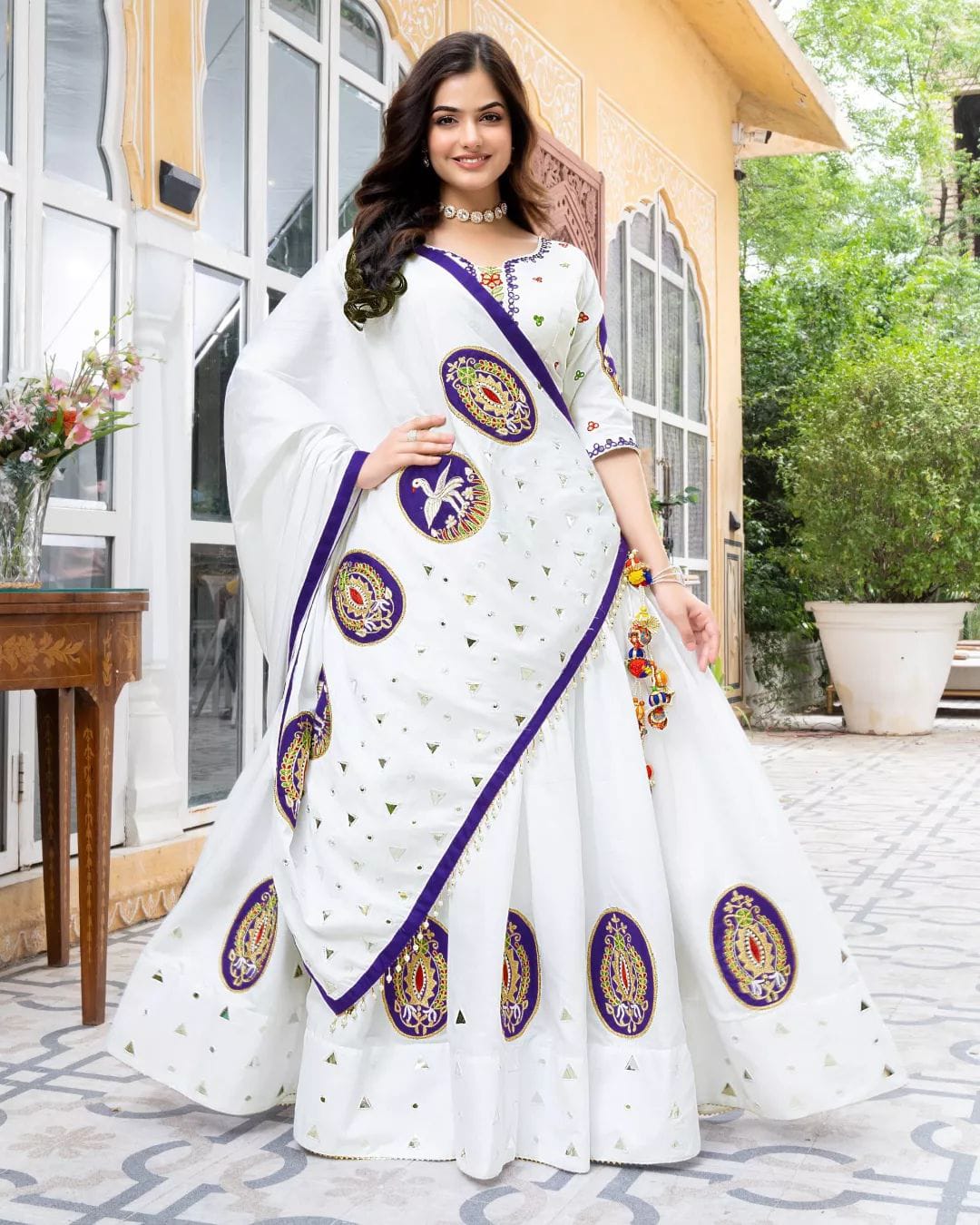
- Confirm body measurements and compare every relevant number with the size chart.
- Identify whether the outfit is fully stitched, semi-stitched or customised.
- Check fabric, lining, embellishment weight and reverse-side comfort.
- Confirm skirt length, waistband position, closure and alteration allowance.
- Check whether the dupatta, padding and underskirt are included.
- Match the fabric and weight to the function, weather and amount of movement.
- Allow time for delivery, inspection, tailoring and a complete trial.
- Save the return, exchange and custom-order terms before payment.
The best online choice is the lehenga that fits your measurements and your actual schedule, not simply the one that looks most dramatic in a styled photograph. A careful process makes fully stitched choli shopping, designer buying and bridal ordering considerably less risky, even when a physical fitting room is unavailable.
Questions to Ask Before Ordering a Lehenga Without Trying It On
How do I choose the right lehenga size online without trying it on?
Measure your bust, under-bust, waist, hips, shoulder, blouse length and skirt length with a soft tape, then compare each measurement with the seller's chart. Use garment measurements and construction details rather than relying only on a small, medium or large label.
Is a ready-made or semi-stitched lehenga safer when I cannot try it on?
A semi-stitched lehenga is usually safer when your measurements fall between standard sizes because it allows more tailoring adjustment. A ready-made lehenga can work well when your measurements closely match the chart and the waistband, blouse and closure details are clearly provided.
How much extra room should a fully stitched choli have?
A fully stitched choli commonly needs about 1 to 2 inches of ease beyond the body measurement, depending on the cut, fabric and lining. Dense embroidery, a non-stretch lining or a fitted design may require more comfort room than a soft, lightly structured blouse.
How early should I order an online bridal lehenga?
Order a bridal lehenga at least six to eight weeks before the wedding when possible, allowing time for delivery, inspection, tailoring and a full trial. A ready-made outfit may need less time, but a close event date leaves little room to correct a short hem or tight armhole.
What should I check when my lehenga arrives?
Inspect the colour, seams, hooks, zip, lining, embroidery, hem, skirt length and dupatta before removing tags or packaging. Try the complete outfit with the planned footwear and innerwear, and photograph any defect immediately in case the seller has a limited exchange window.
Which lehenga fabric is easiest to wear for several hours?
A lightweight lined georgette or a moderately embellished fabric is often easier to move in than a heavily sequinned silk or multiple stiff net layers. Comfort also depends on the blouse armhole, waistband security, lining and total garment weight, so fabric alone should not determine the choice.




