Key takeaways
- Fresh stains on a silk saree should be blotted immediately with a white, absorbent cloth rather than rubbed.
- A hidden colourfastness test is essential before applying any water or cleaning solution to a silk saree.
- Oil, turmeric, makeup and sugary stains require different first responses and should not be treated with one universal remedy.
- Zari borders and metallic embroidery should be kept away from acidic, bleaching and abrasive cleaning products.
- Professional dry cleaning is the safest choice for old, spreading, strongly coloured or heavily embellished silk saree stains.
Some people tackle a silk saree stain with soap and hard scrubbing. Others fold the saree away and hope the mark disappears. Neither is a dependable option. This guide explains how to remove stains from silk saree fabric with a slow, low-moisture approach that helps protect the silk fibre, colour, zari and finish.
Silk is a protein fibre with a smooth surface, but it isn't indestructible. Water rings, dye bleeding, friction, heat and household chemicals can cause a larger or more permanent mark than the original spill. Start by identifying the stain, lifting away any excess, testing a hidden area and choosing the mildest treatment that may work.
Why silk saree stains need a different method
Silk sarees require gentle stain treatment because the fibres can weaken, lose their lustre or develop visible water marks when soaked, rubbed or exposed to heat. Woven zari, printed borders and vegetable or natural dyes may also react differently from the silk body.
A Banarasi silk saree with rich zari may respond well to careful professional cleaning but develop detergent residue after a household wash. A Kanjeevaram saree may have contrasting body and border colours that bleed into each other when wet. Chanderi silk blends, organza silk and jacquard silk can develop pressure marks or changes in texture if a damp cloth is pressed too firmly.
"Silk" can refer to several different constructions. Pure silk, silk-cotton, organza cotton silk, pashmina silk and silk jacquard don't all absorb moisture in the same way. A product such as Elegant Charcoal Garden Organza Cotton Silk Saree shouldn't automatically be treated like a heavy wedding silk. Check the care label and consider the weave before deciding what to do.
Important rule: Never rub a silk saree stain in circles. Circular rubbing spreads the mark, flattens the surface and may leave a shiny patch even after the stain has been removed.
How to remove stains from silk saree: the first five minutes
Use the first five minutes to blot the spill, support the fabric and prevent the stain from spreading.
- Move the saree away from the source. Place the stained section on a clean, flat surface. Don't fold the wet mark against another layer of silk.
- Remove solid particles. Lift food, wax, powder or dried mud with the edge of a spoon. Avoid a blade or fingernail.
- Blot, don't rub. Press a white cotton cloth or plain white tissue onto the mark. Change the cloth section as soon as it absorbs colour or liquid.
- Work from the outside towards the centre. Gentle outward-to-inward dabbing helps limit a spreading ring.
- Identify the stain. Milk, tea, turmeric, lipstick, oil, ink and water-based drinks need different treatment. The wrong approach can set the substance into the weave.
White materials are safer than printed towels, which may transfer their dye. A clean muslin cloth works well for blotting. Kitchen tissue is fine for a very fresh spill if it doesn't shed fibres. Keep the saree horizontal until the liquid has been absorbed; hanging wet silk can pull the weave and lengthen the affected area.
How to test colourfastness before treating silk
Test colourfastness on an inside seam, the reverse side of the pallu or a section hidden beneath the pleats.
- Place a folded white cloth beneath the hidden test area.
- Dampen a cotton bud with a very small amount of plain, cool water.
- Touch the test area once and wait for about 60 seconds.
- Press a dry white cloth against the test spot.
- Stop if colour transfers, the sheen changes, the fabric puckers or a ring appears.
A successful water test doesn't prove that detergent, vinegar, alcohol or stain remover is safe. Test each new substance separately because silk dyes and metallic finishes can react differently to different liquids. A saree with strong contrast, such as Blue Red Ikat Silk Saree Online with Zari | Varnavi, needs particular care: red or blue dye transfer can spread into a lighter field.
Don't test on the visible centre of the pallu. The test mark may remain even after the original stain is gone. For an expensive, heirloom, hand-painted or heavily embroidered saree labelled "dry clean only," stop after blotting and consult a professional cleaner.
Numbered method for treating a small, fresh stain
A small, fresh stain can sometimes be reduced at home with cool water, a white cloth and a very mild silk-safe cleaning solution.
- Read the care label. Follow the manufacturer's instructions before adding moisture. "Dry clean only" means home washing isn't an appropriate experiment.
- Place an absorbent layer underneath. Put a white towel beneath a single layer of saree fabric so loosened residue moves into the towel instead of deeper into the silk.
- Prepare a mild solution. Mix a few drops of pH-neutral liquid detergent made for silk or wool into a cup of cool water. Never apply concentrated detergent directly to the saree.
- Apply with a cotton bud. Touch the edge of the stained area first, then dab towards the centre. Use only enough solution to help lift the residue.
- Remove residue. Dab with a second white cloth lightly moistened with cool, plain water. Don't flood the fabric while trying to rinse it.
- Dry flat in shade. Press between dry white towels, reshape the edge and leave the saree away from sunlight, fans and direct heat.
- Inspect only after drying. A damp patch may look darker or larger than the final result. Don't repeat the treatment while the fabric is still wet.
One gentle pass is safer than repeated attempts. If the stain remains after one carefully tested treatment, stop. More moisture can create a tide mark, while repeated pressure may damage the silk's surface.
What to do for oil, turmeric, makeup and drink stains
Oil, turmeric, makeup and drink stains need different first steps because their residues behave differently within a silk weave.
Oil, ghee and greasy food
Cover fresh oil with an absorbent powder for about 15 to 30 minutes, then lift it away without rubbing. Plain cornflour or talc can absorb some surface oil, but test the powder on an inconspicuous area first and brush it away gently with a very soft brush.
Don't use hot water on an oil mark. Heat can spread grease through the silk and make a pale halo more noticeable. If oil has soaked through the pallu, border or zari area, professional cleaning is safer than applying powder repeatedly.
Turmeric, curry and coloured food
Blot turmeric and curry stains immediately. Keep them away from sunlight, soap experiments and acidic kitchen remedies. Turmeric contains strong yellow pigments that can become harder to remove after heat or prolonged drying.
After blotting, use only a tested, very small amount of silk-safe solution on a washable silk body. Don't apply lemon juice, vinegar or baking soda to zari, dyed borders or coloured silk. A pale saree such as Designer Ivory Silk Saree with Peacock Motif Gold Zari Border should go to a professional cleaner if turmeric reaches the gold border.
Tea, coffee, juice and milk
Blot tea, coffee and juice with cool water as soon as possible. Treat milk promptly because its protein residue can develop an odour. Use a white cloth and gentle dabbing rather than pouring water through the saree.
Sugary drinks can leave a sticky residue even after the colour fades. Once colourfastness has been tested, a lightly damp, clean cloth may remove surface sugar. A large drink spill, however, needs professional cleaning to help prevent rings.
Foundation, lipstick and kajal
Lift makeup from the surface without spreading the oily pigment. Remove loose powder with a clean, dry soft brush and blot cream makeup with tissue. Avoid rubbing lipstick across the weave.
Don't use nail-polish remover, acetone, perfume, sanitiser or strong alcohol on silk. These substances can strip colour, dissolve finishes or leave a sharply defined pale patch. The Maroon Lichi Silk Jacquard Saree with Rich Pallu, for example, may show a lightened area more clearly if a solvent is used on its dark surface.
Ink, hair dye and unknown stains
Leave ink and hair dye to a professional cleaner rather than trying home solvents. Unknown stains should also be left alone after careful blotting, since the wrong chemical can make professional removal more difficult.
How to protect zari, prints and contrasting borders
Keep zari and metallic borders dry and cool, and protect them from acids, bleach, abrasives and prolonged friction.
Zari is a metallic thread or metallic-coated thread that can lose brightness after exposure to sweat, chemicals or aggressive polishing. Never scrub a zari border with toothpaste, salt, a toothbrush or metal-cleaning liquid. Don't fold a damp gold border against a dark silk body.
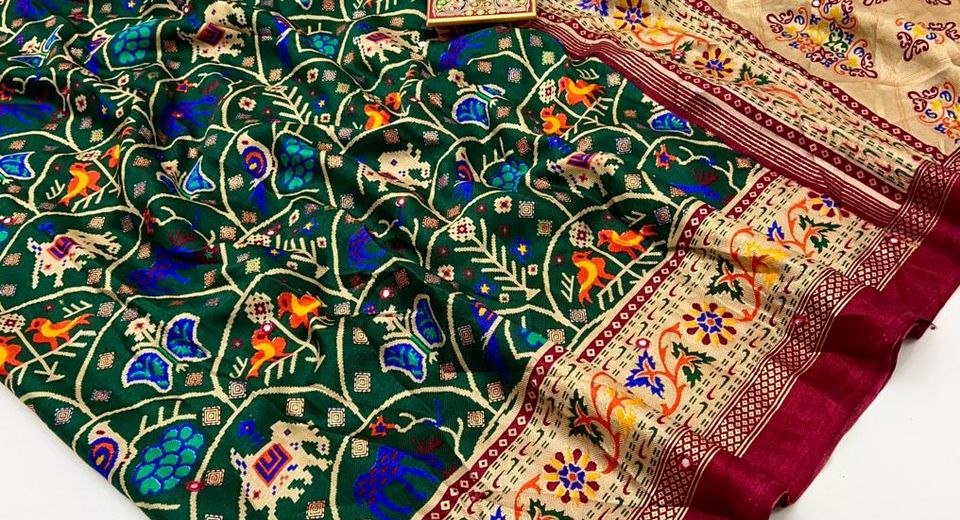
Patola-inspired patterns, ikat, jacquard textures and printed motifs also need controlled moisture. Traditional Bottle Green Patola Border Silk Saree and Designer Rani Pink Patola Print Pashmina Silk Festive Saree show why stain treatment should remain local rather than becoming an attempt to wash the entire saree.
Keep stain remover away from tassels, embroidery, sequins and glued embellishments. Moisture can soften adhesives, and loose decorative threads may catch on cotton swabs. If a stain touches both the silk body and a metallic border, tell the cleaner before treatment begins.
Drying, storing and deciding when to call a cleaner
Dry a treated silk saree flat in the shade, and store it only once it's completely dry.
Place the saree between clean white towels and press gently to remove surface moisture. Don't wring, twist, iron a damp patch or use a hair dryer. Sunlight can fade silk dyes, while high heat may set some stains and alter the fabric's finish.
Once dry, fold the saree along different lines every few months to reduce permanent crease stress. Wrap silk in clean, unbleached cotton or a breathable muslin cover instead of plastic. Keep it away from perfumes, damp walls, direct sunlight and rough wooden surfaces. Refold heirloom silk every two to three months and check for moisture, insects or colour transfer.
Professional dry cleaning is the right choice for an old stain, a large spill, ink, hair dye, oil that has soaked through, colour bleeding, heavy embroidery, hand-painted work or a saree marked "dry clean only." Ask whether the cleaner handles silk and zari, point out every stain and show the original care label. The cleaner needs to know whether the residue is turmeric, oil or synthetic dye because pre-treatment depends on the substance.
Silk Sarees At Flat 30% Off may include different silk constructions, so a sale price doesn't change the care requirement. The same applies when comparing a lightweight festive weave with a richer Banarasi silk design or a saree from Red and Yellow Sarees from Rs 799 with Up to 75 Percent Off: check the fibre and care label before choosing a cleaning method.
Common mistakes that make a silk stain worse
The most damaging silk-saree cleaning mistakes are rubbing, soaking, heating and using untested household chemicals.
- Using washing powder: Strong alkalinity can affect silk protein fibres and leave a dull residue.
- Applying bleach: Chlorine and oxygen bleach can weaken silk and strip colour.
- Pouring water directly: Excess moisture can create a ring larger than the original mark.
- Ironing the stain: Heat can set oil, pigment and protein residues.
- Using perfume or sanitiser: Alcohol and fragrance compounds can discolour some dyes and finishes.
- Leaving a spill overnight: Sugary, oily and protein-based residues become harder to remove once dry.
- Scrubbing zari: Friction can flatten metallic threads and remove their surface brightness.
The safest answer to how to remove stains from silk saree isn't a stronger product. It's quick blotting, accurate stain identification, a hidden test, minimal moisture and professional help when the risk is high.
Frequently Asked Questions
Can I wash a silk saree at home to remove a stain?
You should not wash a silk saree at home unless the care label specifically permits gentle washing and the saree has no fragile zari, unstable dye or heavy embellishment. For most pure silk, wedding silk and dry-clean-only sarees, blot the stain and use a professional silk cleaner.
How do I remove an oil stain from a silk saree?
Blot fresh oil, cover the spot with a tested absorbent powder for 15 to 30 minutes and lift the powder gently. Avoid hot water and repeated rubbing; send a soaked or old oil stain to a professional cleaner.
Can I use lemon and baking soda on a silk saree stain?
No, lemon and baking soda are not dependable silk-safe stain removers. Acidity, alkalinity and abrasion can change the colour, weaken silk or damage zari, especially on dark or contrasting sarees.
How can I remove turmeric from a silk saree?
Blot turmeric immediately and keep the saree away from heat and sunlight while avoiding kitchen remedies. A small mark on a tested, washable silk body may respond to a diluted silk-safe detergent, but turmeric on zari, a border or an expensive saree should be professionally treated.
How do I remove a water mark from a silk saree?
Do not keep adding water to a water mark because more moisture can enlarge the ring. Let the saree dry flat in shade, and consult a silk cleaner if the mark remains or the saree has a dry-clean-only label.
Can a dry cleaner remove every silk saree stain?
A professional cleaner can often reduce or remove many stains, but complete removal is not guaranteed when dye has bled, a stain has been heat-set or chemicals have damaged the fibre. Provide the stain's identity, timing and any home treatment so the cleaner can choose a safer process.