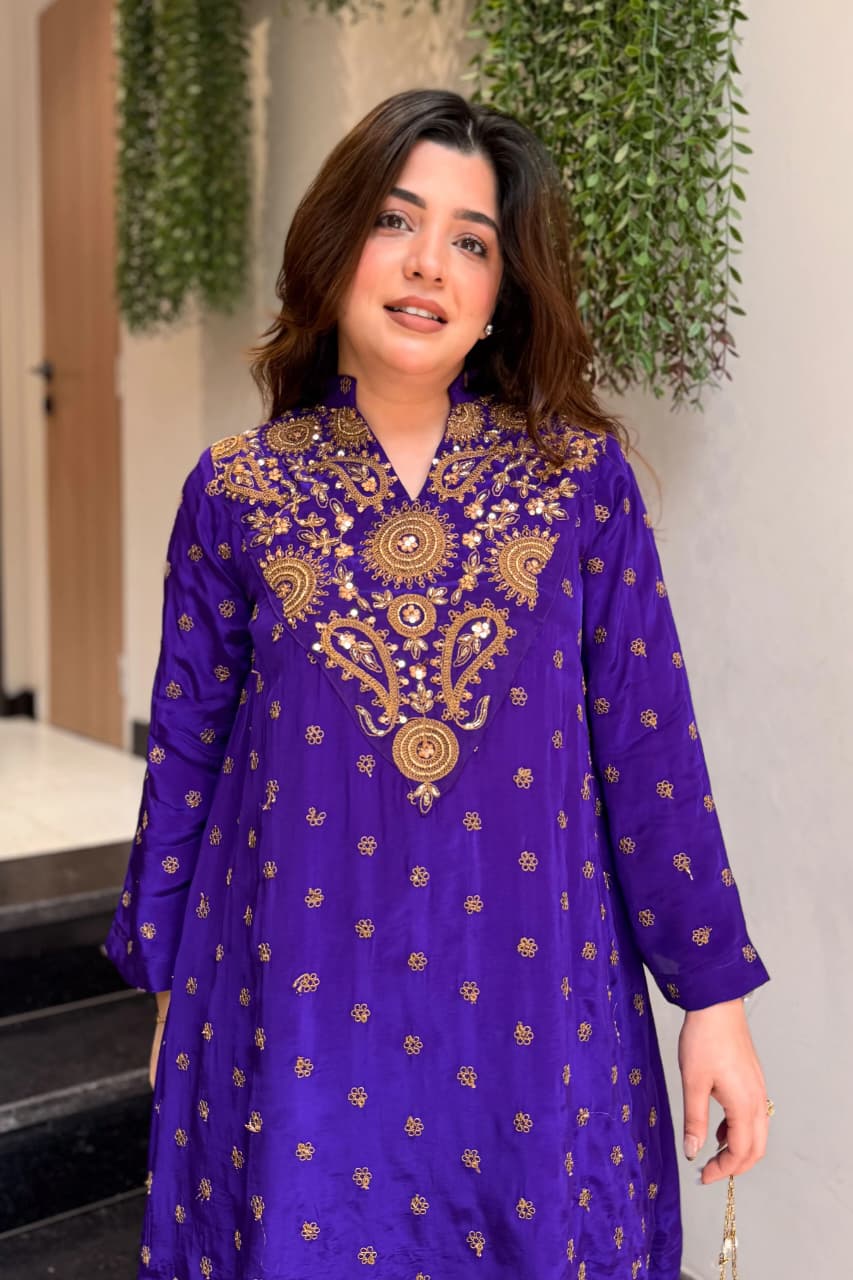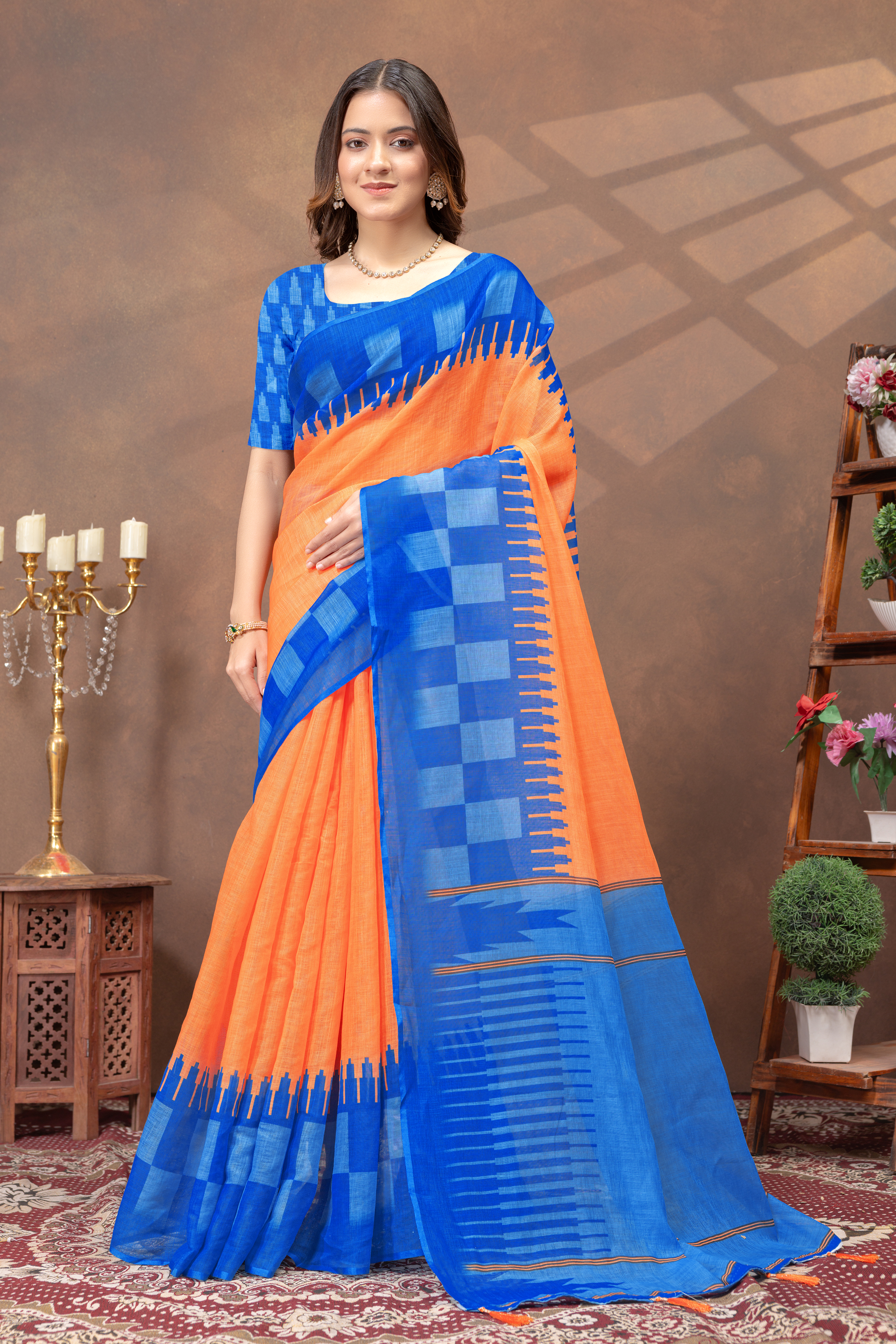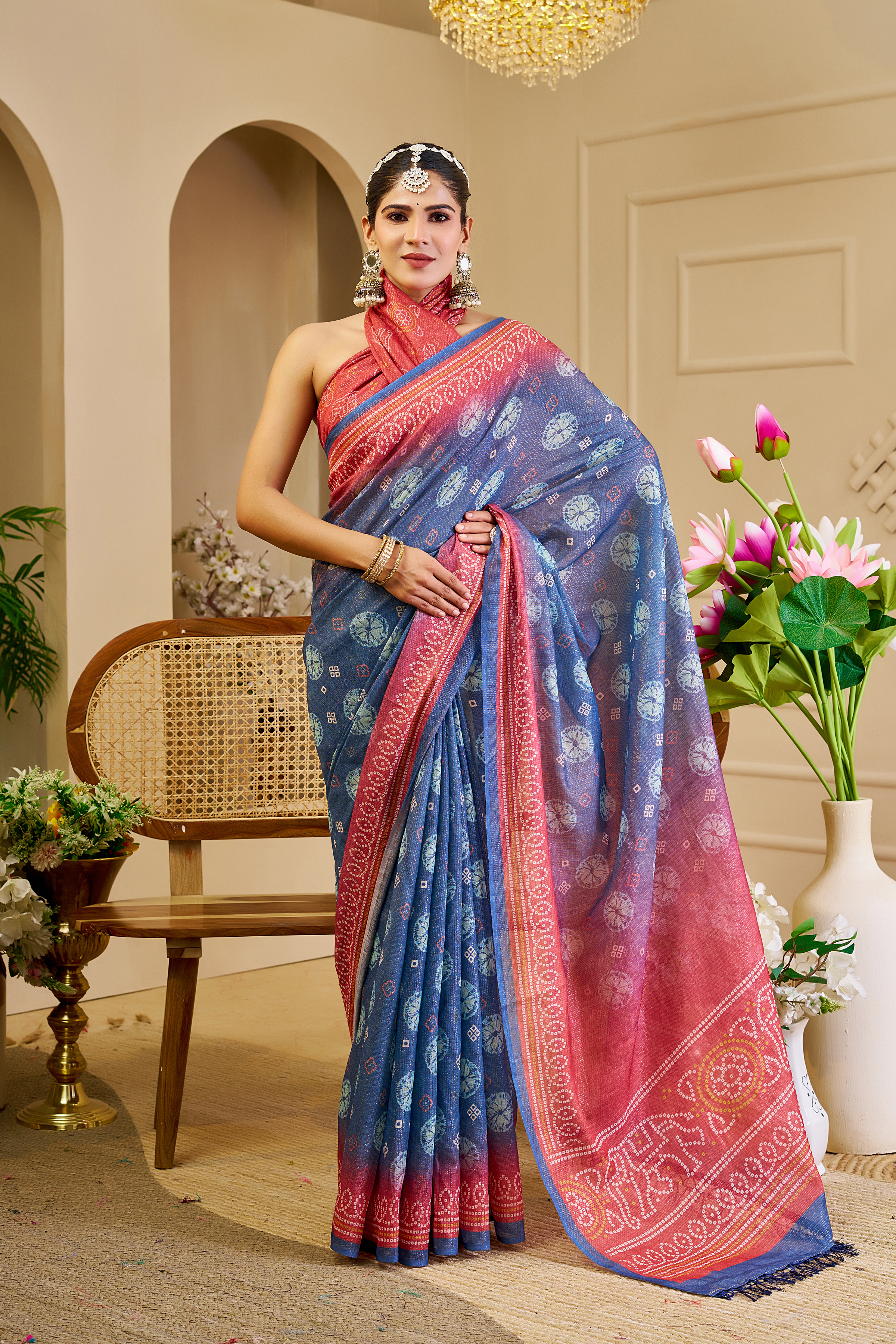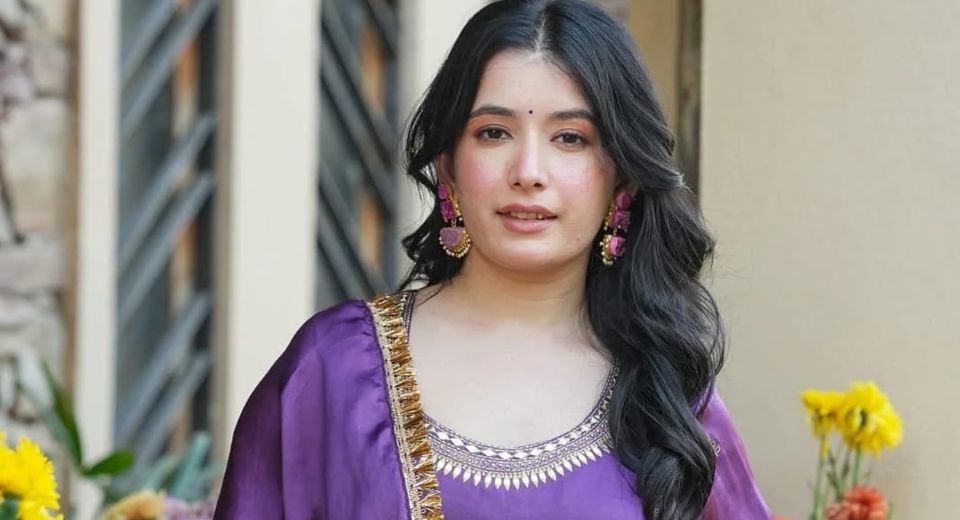
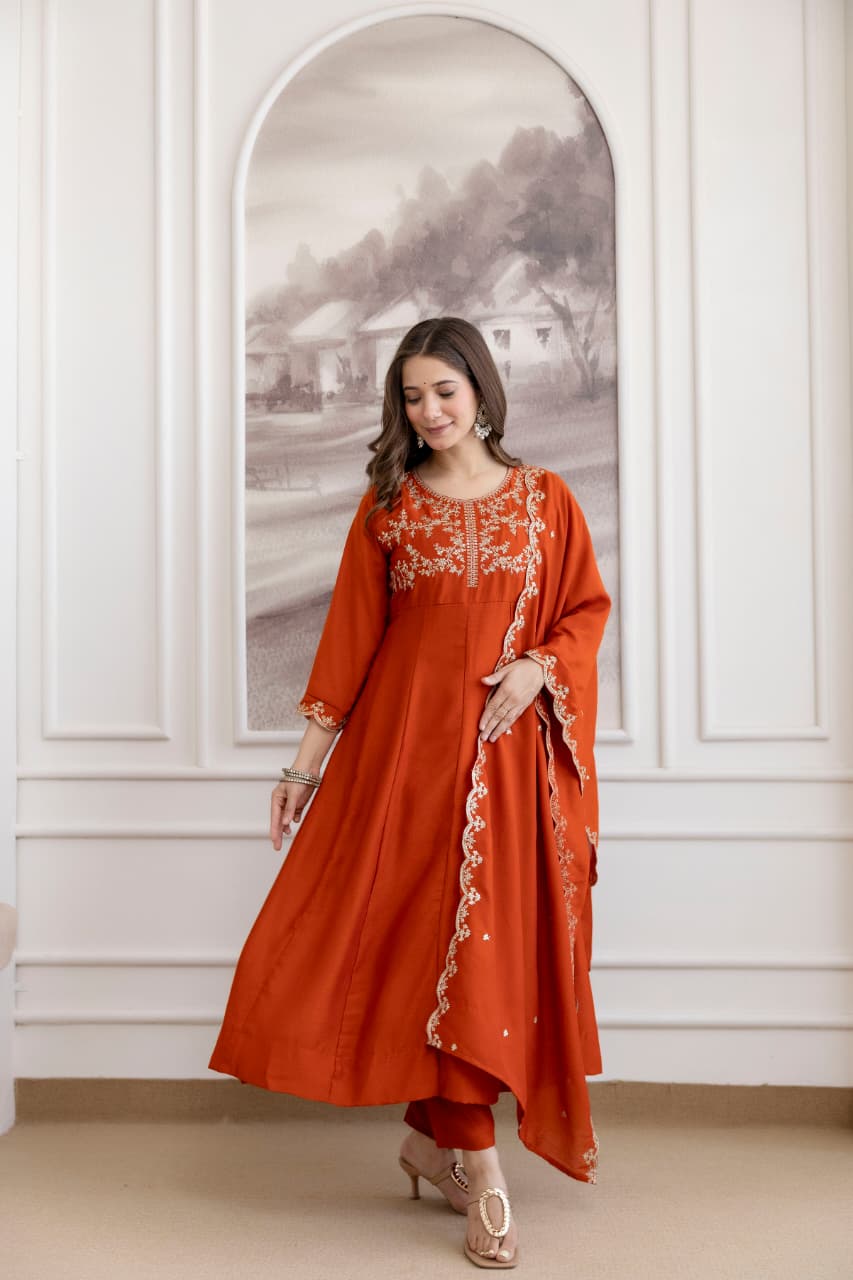
How to Plan Jewellery Around a Farshi Salwar Outfit begins with the outfit's proportions, not with a search for the big necklace. A Farshi salwar usually creates volume through a long, flowing kameez, a wide or heavily gathered lower half, and a dupatta that may cover the shoulder or frame the face. Jewellery should therefore add definition near the face and hands without competing with the outfit's movement. The most reliable formula is to choose one dominant jewellery area, repeat one metal or colour detail, and leave enough visible space around the neckline.
A successful combination can be as simple as long earrings with slim bangles, or as traditional as a choker with a modest jhumka. The right choice depends on the neckline, embroidery scale, fabric sheen, dupatta placement, hairstyle and event. Treating those elements as a connected composition makes a Farshi Salwar outfit look considered rather than accessorised at random.
What Makes Jewellery Work With a Farshi Salwar Outfit?
Jewellery works with a Farshi Salwar outfit when its scale balances the outfit's volume and its placement keeps the face, neckline and hands visually clear. A broad silhouette can carry statement accessories, but several large pieces at once can make the upper body look crowded.
Begin by identifying the outfit's strongest feature. A richly embroidered neckline calls for earrings that frame the face without covering the embroidery. A plain or low neckline can accommodate a necklace. A dramatic dupatta border may already create a line across the chest, so a long pendant could introduce an unnecessary second line.
- Large embroidery: Choose clean-shaped earrings or a short necklace with controlled detail.
- Minimal embroidery: Use a statement necklace, layered chains or a more elaborate maang tikka.
- High neckline: Prioritise earrings, hair jewellery and bangles over a necklace.
- Open neckline: Match necklace length to the visible skin rather than allowing the pendant to disappear into the fabric.
- Heavy dupatta border: Keep chest jewellery shorter or omit it altogether.
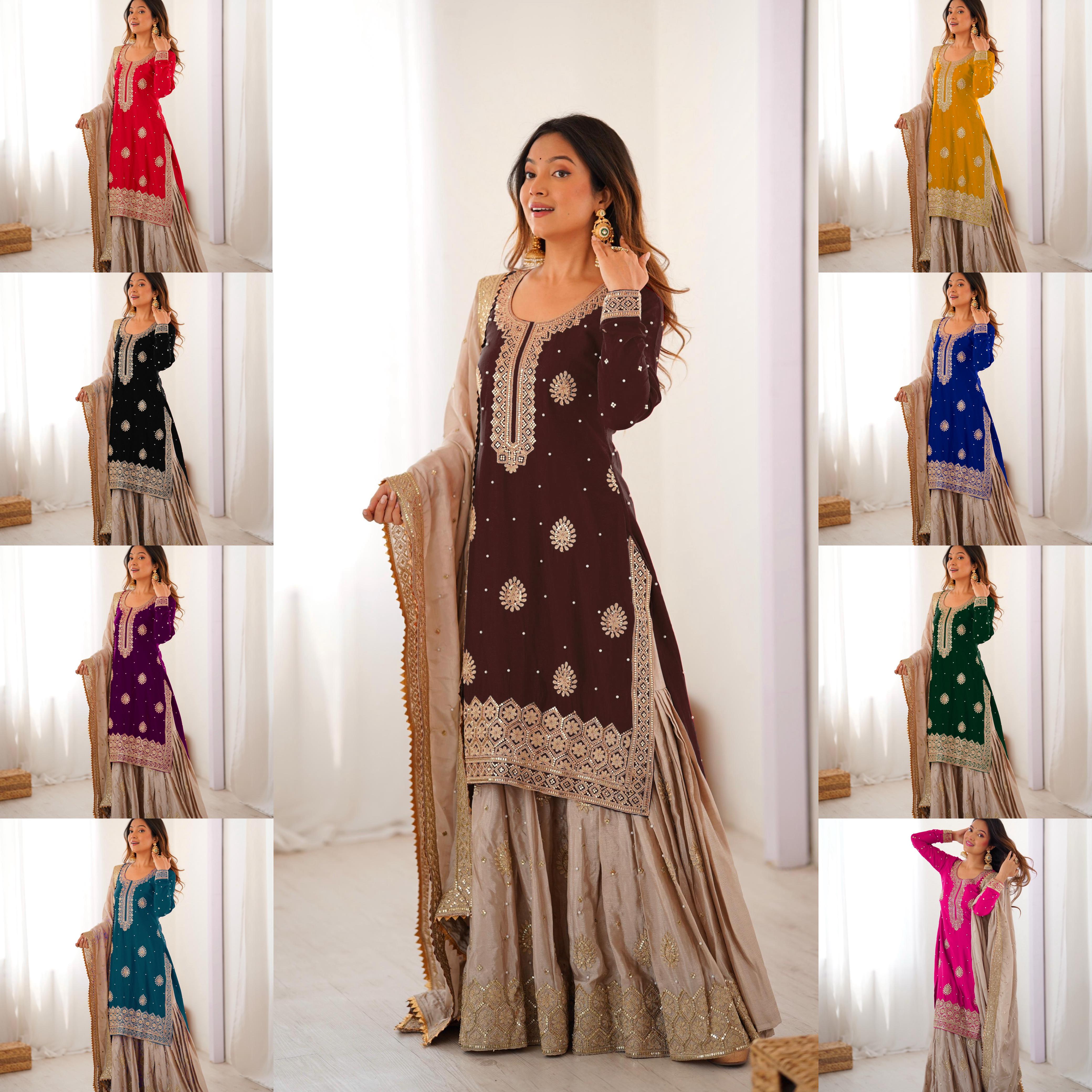
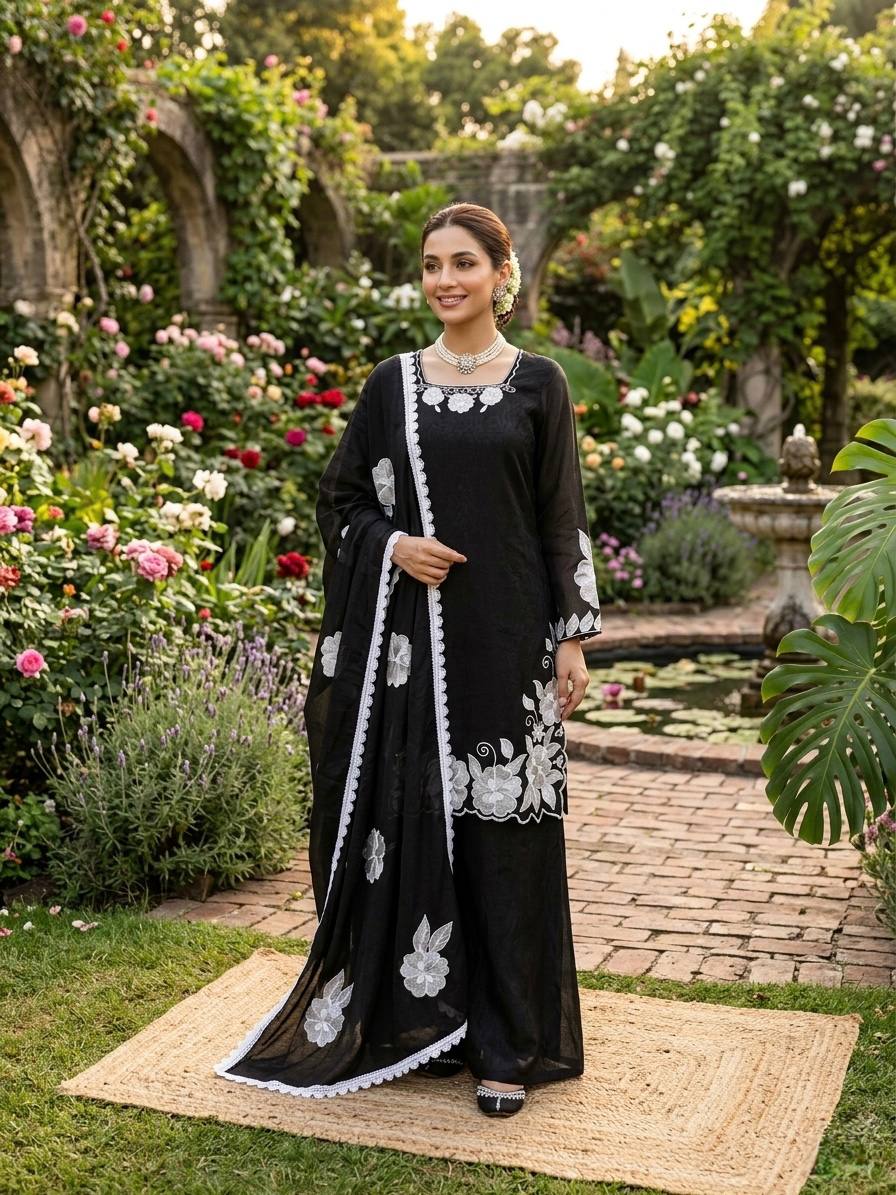
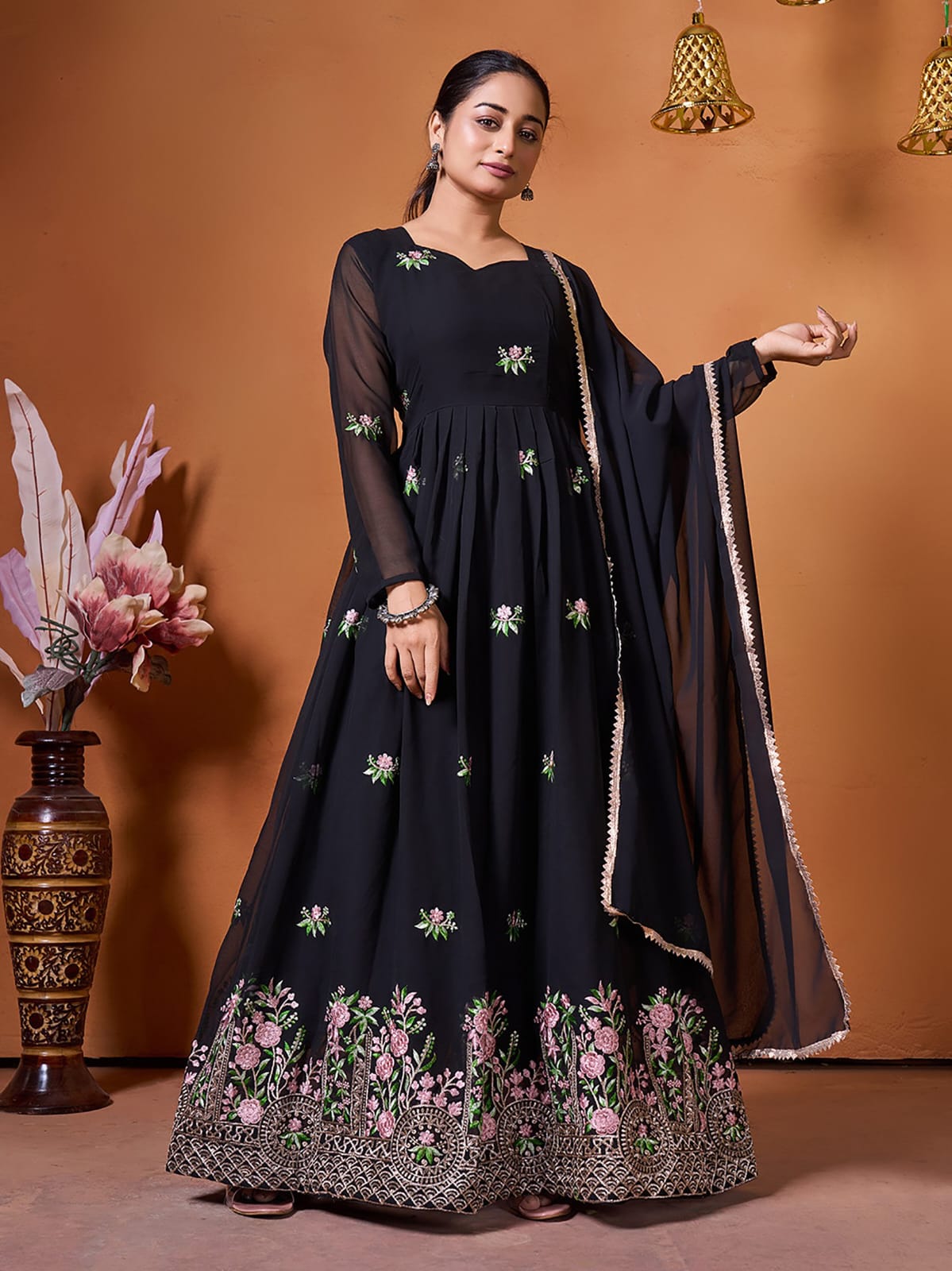
The same principle applies when comparing different styles. A Black White Floral Embroidered Readymade Salwar Suit already has a strong graphic contrast, so pearl, silver-tone or oxidised pieces can support it without adding another loud colour. A Maroon Viscose Chanderi Silk Embroidered Kurta Set for Women has a warmer, more festive presence and can take antique gold, kundan-inspired stones or garnet-toned accents.
How to Plan Jewellery Around a Farshi Salwar Outfit by Neckline
Neckline shape should determine whether the main jewellery sits on the ears, around the neck or above the forehead. Matching jewellery to the available space prevents necklaces from colliding with collars, embroidery and dupatta folds.
High, round and closed necklines
High and closed necklines are best paired with prominent earrings and little or no necklace. Jhumkas, chandbalis and shoulder-grazing drops create length beside the face while allowing the kameez neckline to remain visible.
For a round neckline with moderate embroidery, select earrings that extend vertically rather than spreading too widely. A 4 to 6 centimetre earring usually gives enough presence for an evening event without touching the shoulder line. Add two or three slim bangles on each wrist instead of a broad necklace.
V-necks and U-necks
V-necks and U-necks can carry a pendant or a short necklace if the jewellery follows the neckline's natural shape. A delicate pendant suits a narrow V, while a collar necklace or short kundan-style piece suits a wider U-neck.
Leave approximately 2 to 4 centimetres between the lower edge of a choker and the first visible embroidery when possible. That small gap helps both the jewellery and the garment read clearly in photographs. A longer rani haar can work with a relatively plain bodice, but it should not disappear under dense threadwork.
Square and boat necklines
Square and boat necklines benefit from earrings or a rounded necklace that softens their horizontal structure. Pearl drops, circular kundan pendants and rounded meenakari details provide contrast without repeating the straight edge of the neckline.
A boat neckline leaves more shoulder width visible, so medium-length earrings often look more proportionate than very tiny studs. If the dupatta is pinned on one shoulder, place the heavier earring or hair accessory on the side that remains visible in photographs rather than hiding both sides beneath fabric.
Should You Choose a Necklace or Statement Earrings?
Choose a necklace when the neckline is open and relatively quiet; choose statement earrings when the neckline, dupatta or embroidery already occupies the centre of the outfit. Using one primary focal point creates a cleaner result than wearing a large necklace, oversized earrings and a heavy headpiece together.
Statement earrings are especially useful with flowing Farshi silhouettes because they bring attention upward. Chandelier earrings suit evening receptions, while medium jhumkas are more practical for family ceremonies. If earrings are large, keep the necklace to a fine chain or remove it completely. This approach also avoids tangling with the dupatta.
A necklace becomes more effective when the kameez has a plain upper panel. A choker can anchor a wide neckline, and a pendant can echo a central motif. Long necklaces should be reserved for outfits with enough uninterrupted fabric to show their length. A necklace ending inside a dense embroidered panel rarely looks intentional.
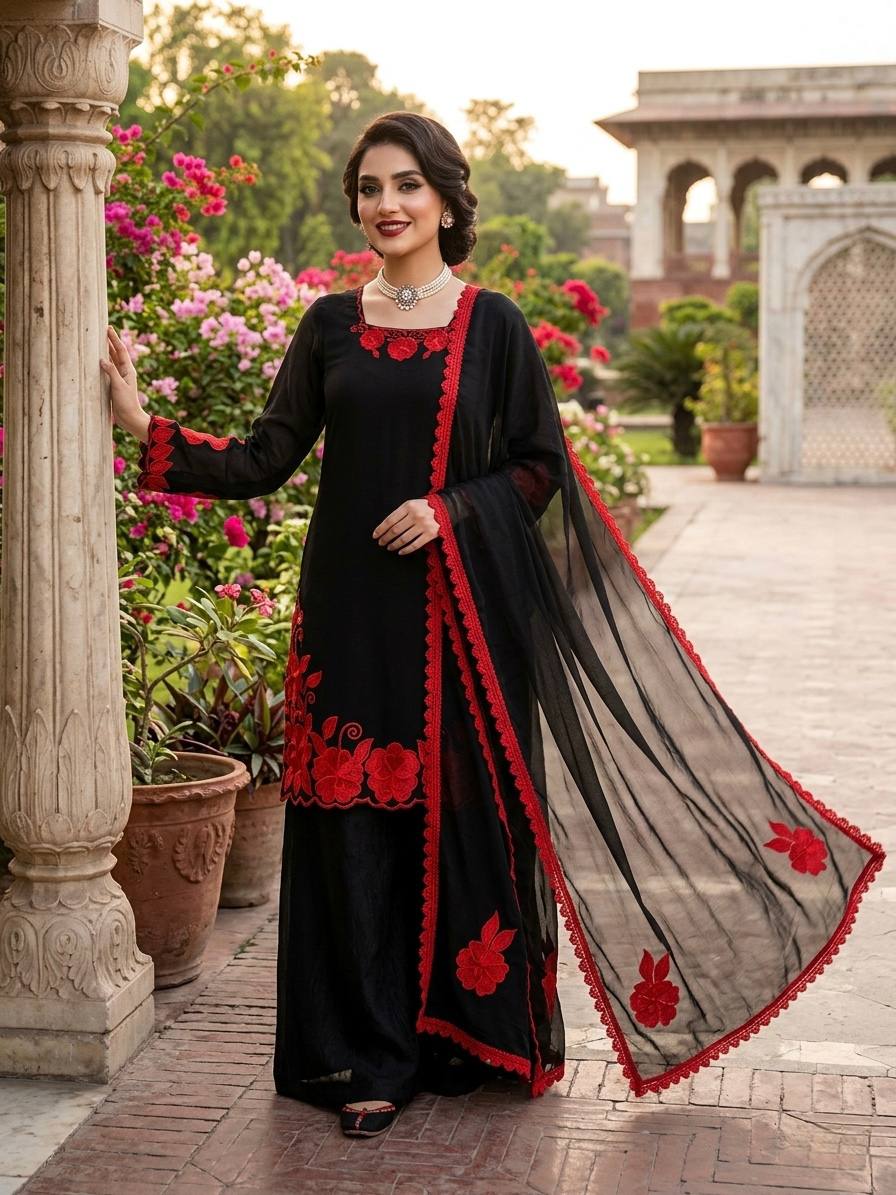
For example, the Black Red Fendy Silk 3 Piece Readymade Salwar Suit Set has a naturally dramatic colour pairing and a silk-like festive finish. Gold-toned earrings with red stones can become the focal point, while a small pendant or no necklace keeps the black and red contrast sharp. The Navy Blue Vichitra Silk Embroidered Kurta Set with Dupatta can take silver-tone chandbalis, pearls or blue-stone jewellery when the styling goal is cooler and more luminous.
Use one large jewellery decision per zone: a statement piece at the ears, neck, forehead or wrists, not four competing statements at once.
How Do Metal and Stone Colours Change the Look?
Metal and stone colours should repeat a visible outfit detail or deliberately contrast with it. Gold warms maroon, red, brown, mustard and cream, while silver and white metal sharpen black, navy, grey, white and cool pink.
Antique gold works particularly well when the outfit contains zari-like warmth, classic motifs or muted jewel tones. Polished yellow gold looks more formal and luminous on silk blends. Silver, rhodium and oxidised finishes create a more graphic effect with black-and-white prints, indigo shades and contemporary embroidery.
- Black and white: Try pearls, silver, oxidised metal or a single red stone accent.
- Red, maroon and rust: Choose yellow gold, antique gold, ruby-toned or garnet-toned details.
- Navy and emerald: Use silver, champagne gold, pearls or stones in the same jewel family.
- Dusty pink: Select rose gold, pearls, pale kundan or soft yellow gold rather than very harsh black metal.
- Brown and caramel: Pair antique gold, amber, citrine-like or cream accents with restraint.
Colour repetition doesn't require an exact match. A green stone can echo an emerald outfit without matching its shade precisely. The goal is visual continuity, not a jewellery set that looks manufactured as a single block.
The Emerald Green Vichitra Silk Embroidered Kurta Set with Dupatta illustrates why metal temperature matters. Antique gold creates a ceremonial, heritage-led appearance, whereas silver and clear stones make the same green feel more contemporary. The Dusty Pink Frendy Silk Embroidered Sarara Suit with Dupatta can be styled with pearls and rose gold for a soft daytime function, or with antique gold for a warmer evening finish.
Which Jewellery Suits Different Farshi Salwar Fabrics?
Fabric surface and sheen should guide jewellery weight, texture and finish. Shiny silk-like fabrics can support polished stones, while matte or printed fabrics often look better with textured metal, enamel or restrained pearls.
Chinon silk and similar fluid fabrics benefit from jewellery with a defined outline because soft fabric can otherwise make the whole look appear visually loose. The Brown Chinon Silk Sharara Suit Set for Women can take structured chandbalis or a medium choker, especially when the dupatta is draped neatly rather than heavily pleated.
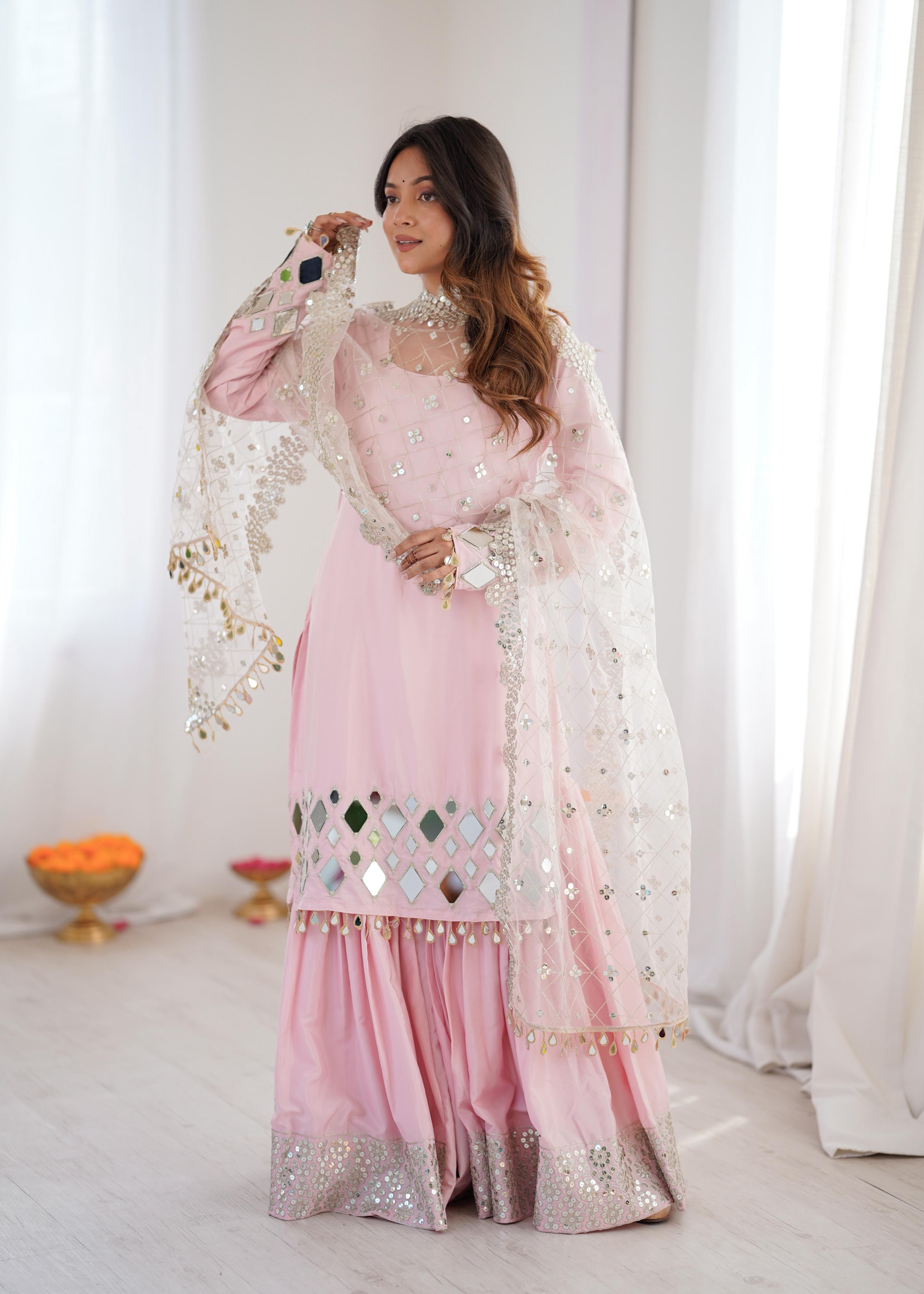
Mirror work needs careful editing because reflective details already catch light. The Pink Sharara Suit Set with Mirror Work Dupatta is better served by one mirror-compatible accent, such as small kundan earrings or a slim bangle stack, than by a fully mirrored necklace and oversized earrings. Repeating every surface detail in the jewellery can make the outfit look noisy in flash photography.
Printed cottons and craft-inspired textiles welcome earthy, tactile accessories. Kalamkari Print Salwar Suits (Copy) can be paired with terracotta-toned beads, antique silver, carved earrings or simple gold hoops. Maharashtra Paithani Inspired Salwar Suits can take time-honoured gold-tone motifs, while Gujarat Bandhej Salwar Suits often pair naturally with colourful enamel, silver or bead accents.
Handcrafted jewellery should still be scaled to the outfit. A large necklace with a large printed motif may obscure the print, while small textured earrings can preserve the garment's visual story. Odisha Sambalpuri Salwar Suits and Punjab Patiala Salwar Suits can each support folk-inspired accessories, but the final selection should follow the actual neckline and dupatta rather than relying on regional style stereotypes.
How Should Bangles, Rings and Maang Tikka Be Balanced?
Bangles, rings and forehead jewellery should repeat the main jewellery language without becoming a second focal point. If the earrings are elaborate, use a restrained bangle stack and one ring; if the earrings are simple, the wrists can carry more texture.
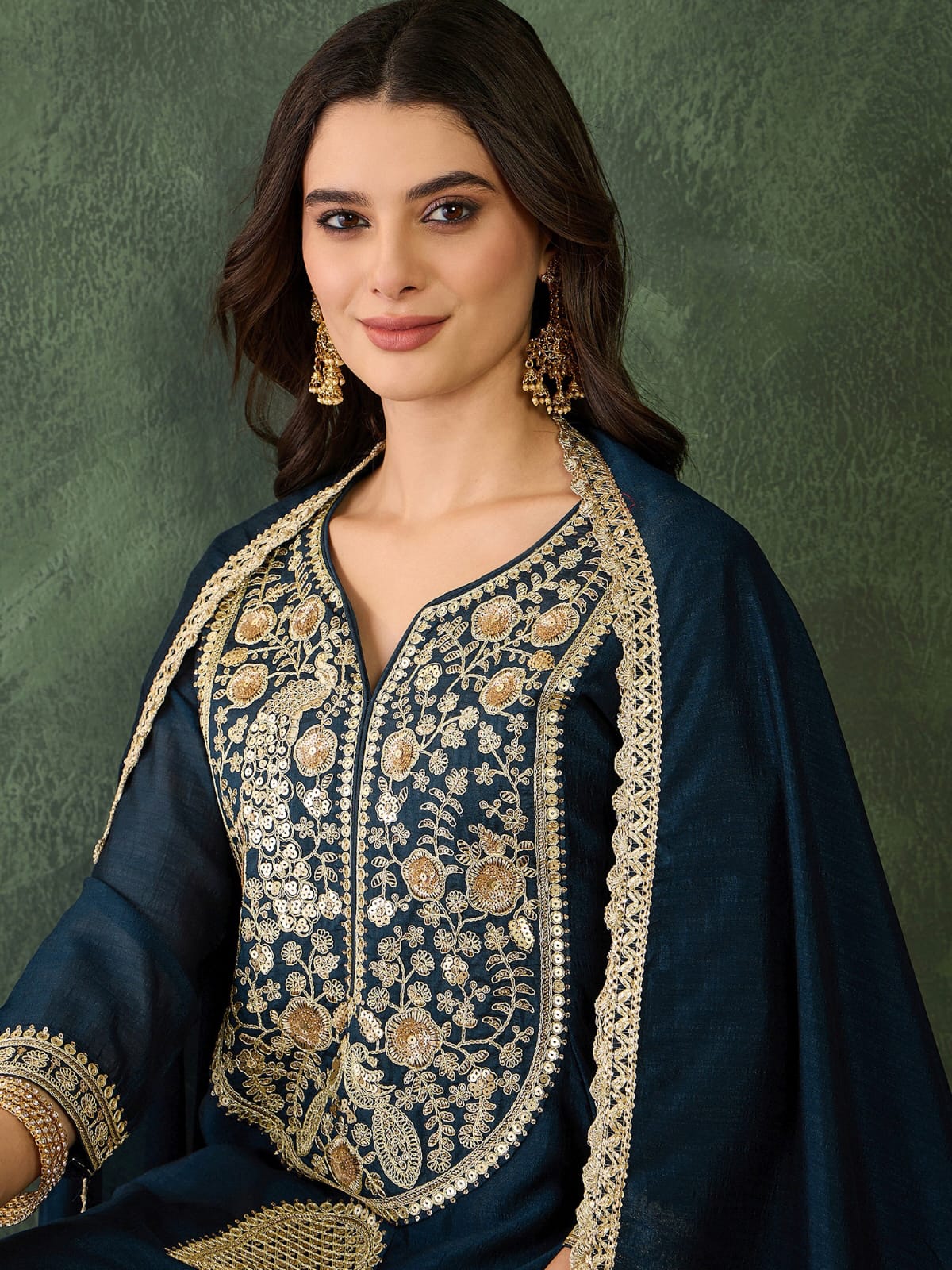
For a formal function, four to eight slim bangles across both wrists usually provide movement without overwhelming a long sleeve. A single broad cuff can look more modern, but it should not catch on the dupatta. If the sleeves already contain dense embroidery or wide cuffs, reduce wrist jewellery to one bracelet or a watch-like kada.
A maang tikka suits a centre-parted hairstyle and a clearly visible forehead, but it needs space from the dupatta edge. A medium tikka is generally more versatile than a very large one with a heavily embellished kameez. Passa-style side jewellery can work with a side part, although it should not be added when the dupatta is already pinned tightly across that side.
Rings are easiest to style when one stone colour repeats the earrings or border. Avoid wearing several large rings if the outfit includes long, loose sleeves, because oversized rings can catch on fabric during movement. Jewellery comfort matters particularly for a Farshi salwar because the flowing silhouette invites walking, sitting and repeated dupatta adjustment.
How to Plan Jewellery Around a Farshi Salwar Outfit for Each Occasion
Occasion determines jewellery intensity more reliably than a general label such as "festive." A daytime puja, haldi ceremony, wedding reception and evening dinner each allow a different balance of shine, size and tradition.
Daytime family functions
Daytime family functions suit medium earrings, pearls, enamel, lightweight gold-tone pieces and a small bangle stack. Keep the jewellery breathable and avoid very dark, highly reflective stones that can dominate in strong sunlight.
A pastel, printed or lightly embroidered suit can carry colourful studs, small jhumkas or a delicate pendant. The aim is polished ease rather than bridal density. Comfortable earrings are particularly important when the event may last four to six hours.
Haldi ceremony and intimate celebrations
A Haldi ceremony calls for lightweight jewellery that tolerates movement and keeps the face visible. Enamel earrings, floral-inspired pieces, beads and slim bangles are practical choices, while long necklaces and fragile chains are more likely to tangle with turmeric, dupatta folds or active photography.
Yellow, green, pink and orange accents can be repeated in the jewellery, but avoid adding every colour in the outfit. One dominant colour plus one supporting metal usually photographs more clearly than a multicoloured stack.
Wedding receptions and evening events
Wedding receptions allow a stronger focal piece, such as chandelier earrings, a choker, a maang tikka or a coordinated bangle set. Select one or two of those categories and leave the rest quieter.
The Maroon Viscose Chanderi Silk Embroidered Kurta Set for Women can support antique gold earrings and a slim choker for an evening reception. A navy or emerald outfit can look striking with clear stones and silver-tone metal under artificial light, provided the dupatta border isn't equally dominant.
A Practical Jewellery Planning Method Before You Dress
A five-minute planning check can prevent most styling mistakes. Lay out the kameez, salwar or sharara, dupatta, footwear and jewellery together in natural light before putting anything on.
- Mark the focal point: Decide whether the eye should go first to the face, neckline, dupatta border or hands.
- Check the neckline: Remove any necklace that overlaps dense embroidery or disappears under the collar.
- Choose the metal: Select gold, silver, rose gold or oxidised metal based on the outfit's dominant temperature.
- Limit large pieces: Keep no more than two categories visibly bold, such as earrings and bangles.
- Test the dupatta: Drape it in the intended position and check whether it covers, catches or twists the jewellery.
- Photograph the full look: Take one front-facing and one seated photograph because Farshi silhouettes change considerably when the fabric pools.
Check weight and fastening before leaving home. Heavy earrings can become uncomfortable after two hours, and a loose maang tikka can shift when the dupatta is adjusted. Carry a small pouch with earring backs, safety pins, a soft cloth and one spare bangle if the event is long.
Jewellery should make the Farshi salwar silhouette easier to read, not harder to inspect. When the neckline remains visible, the metal palette has a clear logic and one focal point leads the styling, even an elaborate outfit can feel graceful and personal.
Common Jewellery Questions for Farshi Salwar Styling
What jewellery looks best with a Farshi salwar suit?
Medium to statement earrings, short necklaces for open necklines, and controlled bangle stacks usually work best with a Farshi salwar suit. Choose the strongest piece according to the neckline and embroidery, then keep the other jewellery quieter.
Can I wear a necklace with a heavily embroidered Farshi salwar?
You can wear a necklace if the neckline leaves enough uninterrupted space. With dense embroidery or a heavy dupatta border, statement earrings are usually more effective because they frame the face without creating crowding across the chest.
Is gold or silver jewellery better for a Farshi salwar outfit?
Gold jewellery suits red, maroon, brown, emerald and warm zari-inspired details, while silver suits black, white, navy and cool-toned outfits. Either metal can work when it repeats a visible detail or creates a deliberate contrast.
How can I style jewellery with a Farshi salwar for a Haldi ceremony?
Use lightweight enamel earrings, beads, floral-inspired jewellery or slim bangles for a Haldi ceremony. Avoid fragile long necklaces and oversized pieces that can tangle with the dupatta or interfere with movement.
Should jewellery match the colour of my Farshi salwar exactly?
Jewellery does not need to match the outfit exactly. Repeating one colour family or choosing a compatible contrast usually looks more refined than trying to duplicate every shade in the embroidery and dupatta.
How do I prevent jewellery from looking too heavy with a wide Farshi silhouette?
Keep one main focal point near the face or neckline and limit the number of oversized pieces. Vertical earrings, a visible neckline gap and a restrained wrist stack help balance the volume of a wide lower silhouette.