

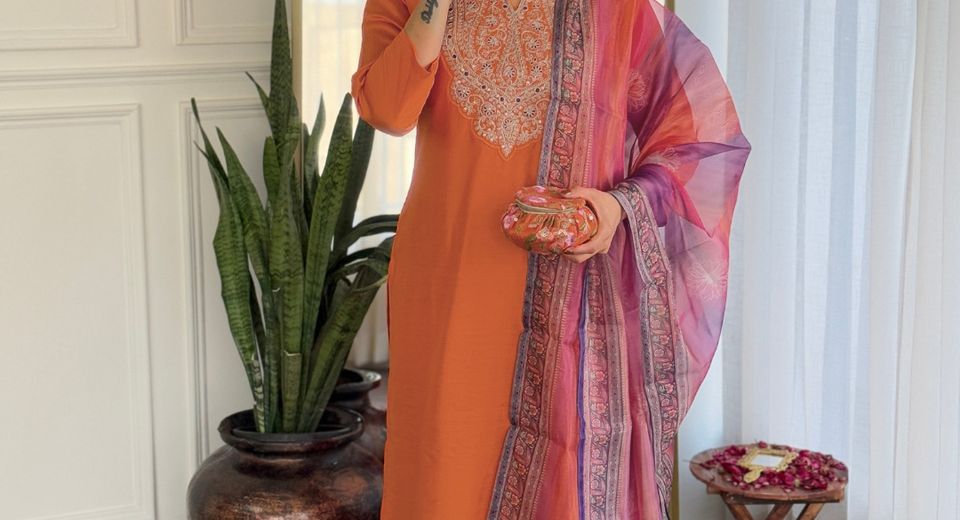
How to Dress Up a Plain Kurta Without Buying a Matching Set becomes much easier when the kurta is treated as the foundation of an outfit rather than the complete outfit. A solid cotton, silk-blend or Chanderi kurta can look significantly more occasion-ready with the right dupatta, bottom, jewellery and footwear. The key is to add contrast deliberately by changing texture, introducing one strong colour or creating a focal point near the face.
A matching three-piece set offers coordination, but a separate kurta gives you more combinations and better cost-per-wear. One cream kurta can work with indigo pants for daytime, a printed dupatta for a family lunch and a zari-edged stole for a festive evening. The styling choices below explain how to make separate pieces look intentional rather than randomly assembled.
Why a plain kurta is an useful wardrobe starting point
A plain kurta is useful because its uncluttered surface allows colour, texture and accessories to provide the visual interest. A solid mustard, cream, black, brown or maroon kurta can support several styling directions without competing with a printed dupatta or bold jewellery.
The cut matters as much as the colour. A straight kurta works well with cigarette pants, palazzos and Patiala salwars, while an A-line or flared kurta usually needs a narrower bottom to retain proportion. A knee-length kurta creates a different balance from a calf-length kurta, so check the hem before choosing wide-leg trousers or a voluminous sharara.
Fabric also determines how much decoration the outfit can carry. Cotton and Khadi cotton welcome block prints, oxidised silver and colourful textiles. Silk blends, Vichitra silk and jacquard can handle polished metal jewellery, embellished footwear and richer dupattas. A light Chanderi kurta generally looks best with an airy organza, Kota or cotton-silk layer rather than a very heavy velvet accessory.
An useful wardrobe test is to identify three possible styling directions before buying or wearing a plain kurta: one everyday combination, one festive combination and one dressier evening combination. If the same kurta works with at least two different bottom silhouettes and three accessory colours, it has strong mixing potential.
How to Dress Up a Plain Kurta Without Buying a Matching Set
Pair a plain kurta with one contrasting layer, one deliberate accessory and a well-fitted bottom to create a complete outfit without a matching set. The strongest combinations usually change at least one of the outfit's three visual properties: colour, texture or scale.
Use a contrasting dupatta as the main statement
A contrasting dupatta is the fastest way to make a plain kurta look styled. Choose a deep colour against a light kurta, a light colour against a dark kurta, or a saturated print against a neutral kurta.
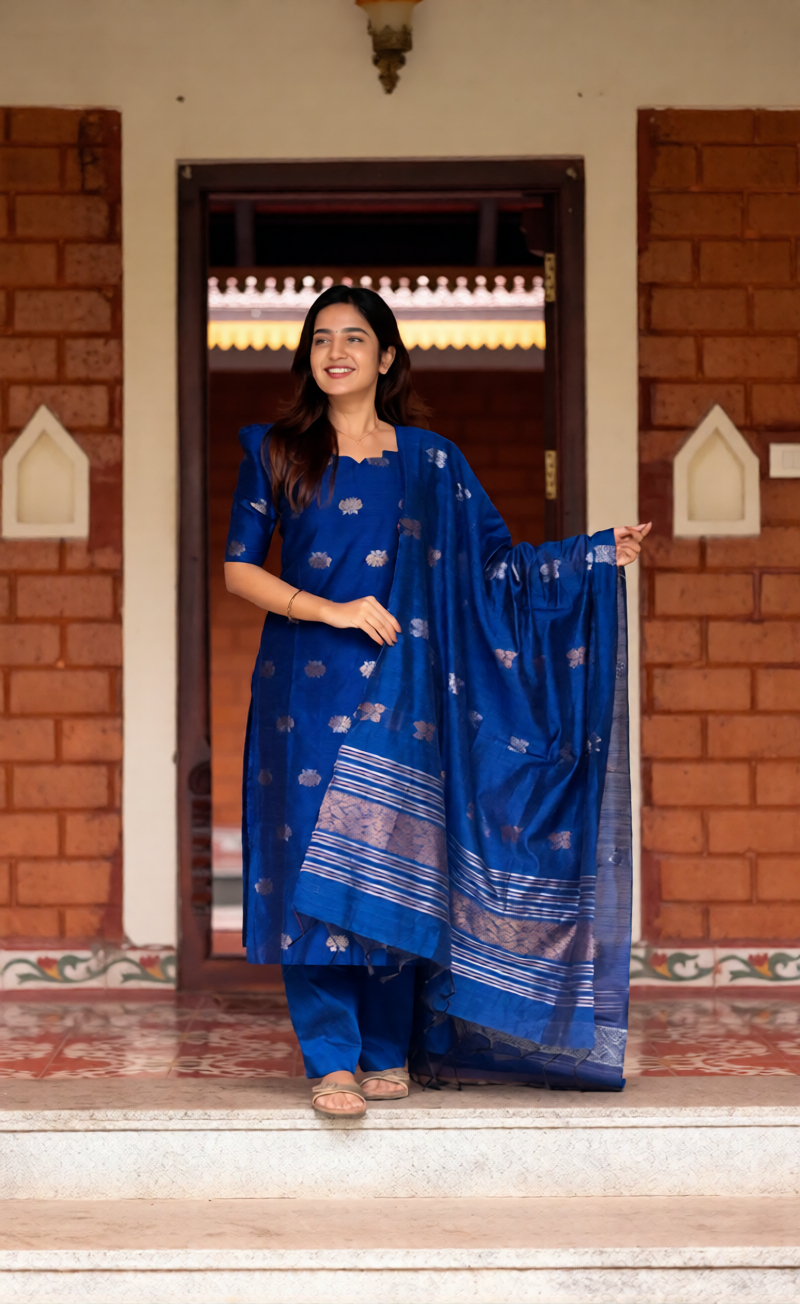
A cream kurta can take a rust Kalamkari dupatta, a cobalt cotton dupatta or a maroon silk stole. A black kurta can be softened with ivory, rose pink or muted gold, while a mustard kurta pairs naturally with cream, bottle green, navy and wine. Keep the border visible by wearing the dupatta over one shoulder or in a loose front drape instead of hiding it around the neck.
Change texture when the colours are already similar
Texture creates separation when the kurta and accessories belong to a similar colour family. A cotton kurta with a woven silk dupatta, a silk-blend kurta with a crisp organza layer, or a matte Khadi kurta with a lightly reflective tissue stole can look considered even when the colours are close.
Avoid combining several stiff or bulky layers at once. A structured kurta, heavy dupatta and large necklace can make the upper body look crowded. If the dupatta has weight or shine, choose a simpler neckline accessory and let the fabric provide the emphasis.
Colour formulas that make separate pieces look coordinated
Three reliable colour formulas are tonal dressing, complementary contrast and print-led coordination. Each formula gives separate garments a visible relationship without requiring identical fabric or embroidery.
Tonal dressing
Tonal dressing combines different shades of one colour family, such as cream with beige, rust with terracotta or navy with powder blue. Tonal dressing looks especially refined when the fabrics differ, because a woven dupatta or embroidered shoe prevents the outfit from appearing flat.
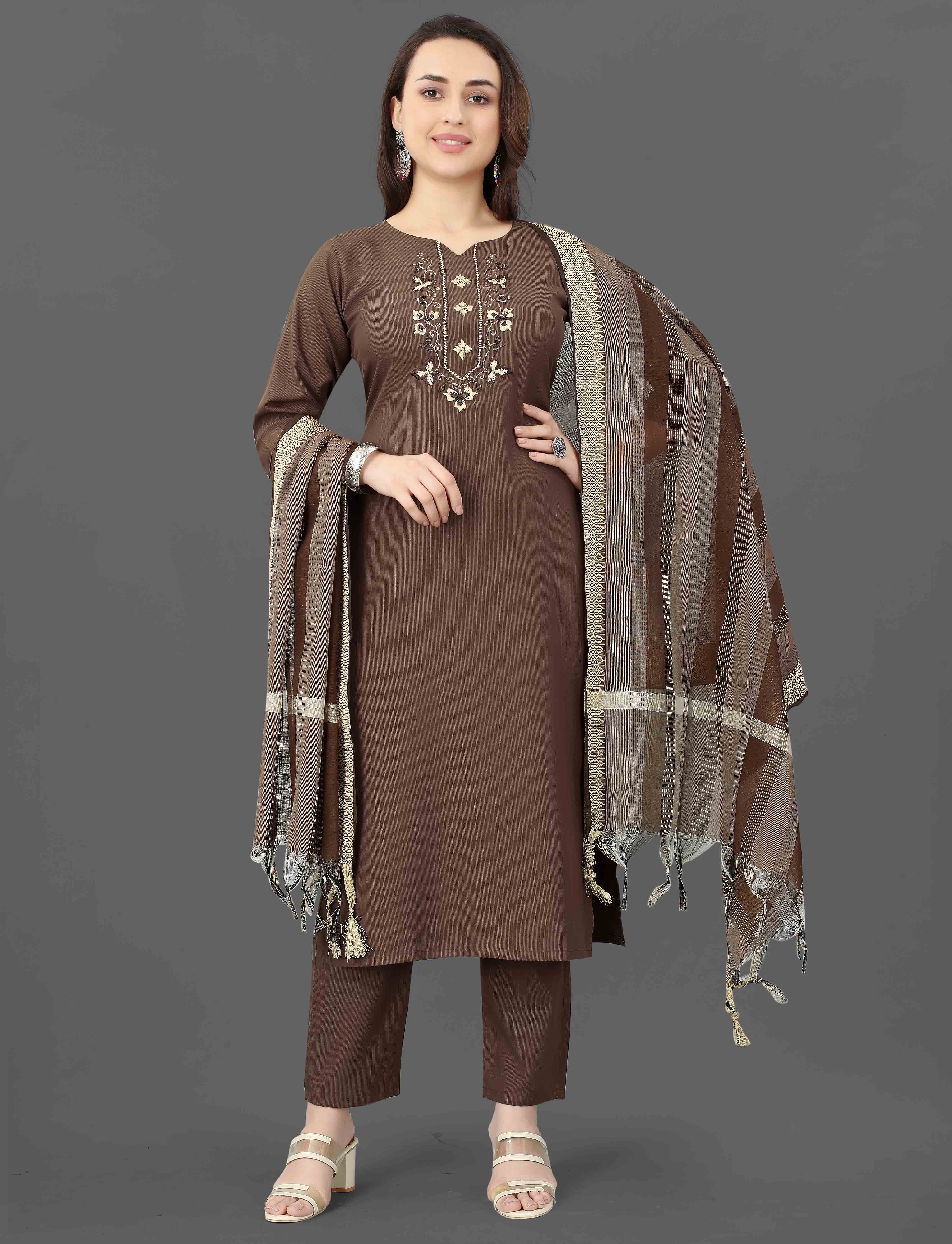
A brown kurta with tan pants and a muted gold dupatta creates a warm, understated combination. A cream kurta with ivory bottoms and a soft peach accessory feels lighter and more suitable for daytime celebrations. Keep the shades close but not perfectly identical; small differences make the styling look layered.
Complementary contrast
Complementary contrast places colours with noticeably different visual temperatures or depths together. Mustard with plum, orange with teal, pink with green and blue with rust are useful Indian-wear combinations.
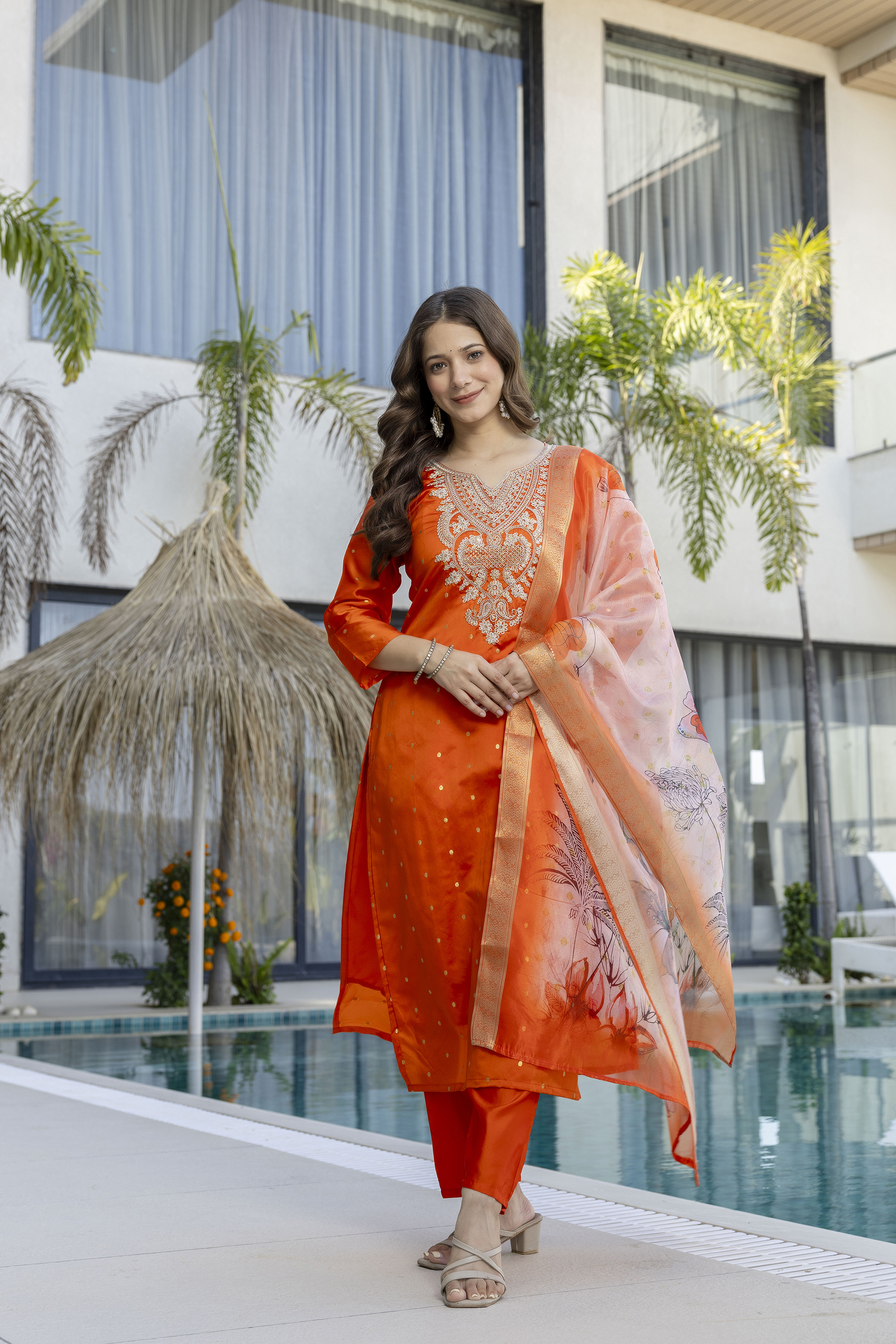
One colour should lead and the second should support it. A bright orange dupatta over a neutral kurta can be the lead accent, while orange jewellery, lipstick or a narrow shoe detail repeats the colour in a controlled way. Repeating the accent once is enough; matching every accessory to the dupatta can make the outfit feel overly coordinated.
Print-led coordination
Print-led coordination takes one colour from a printed dupatta and repeats it in the trousers, earrings or footwear. The repeat doesn't need to be exact, but it should be recognisable from a normal viewing distance.
Kalamkari Print Salwar Suits (Copy) demonstrate why an earthy printed layer can anchor a simple solid kurta. Maharashtra Paithani Inspired Salwar Suits offer another direction when jewel tones and a more ceremonial woven appearance are suitable. Gujarat Bandhej Salwar Suits work well for adding a lively tie-dye accent to a plain kurta while retaining a distinctly Indian visual language.
Which bottoms make a plain kurta look more dressed up?
Straight pants, cigarette trousers, palazzos, shararas and Patiala salwars can all dress up a plain kurta, but the best choice depends on the kurta's cut and hemline. A slim bottom sharpens a long or flared kurta, while a wider bottom balances a short, straight kurta.
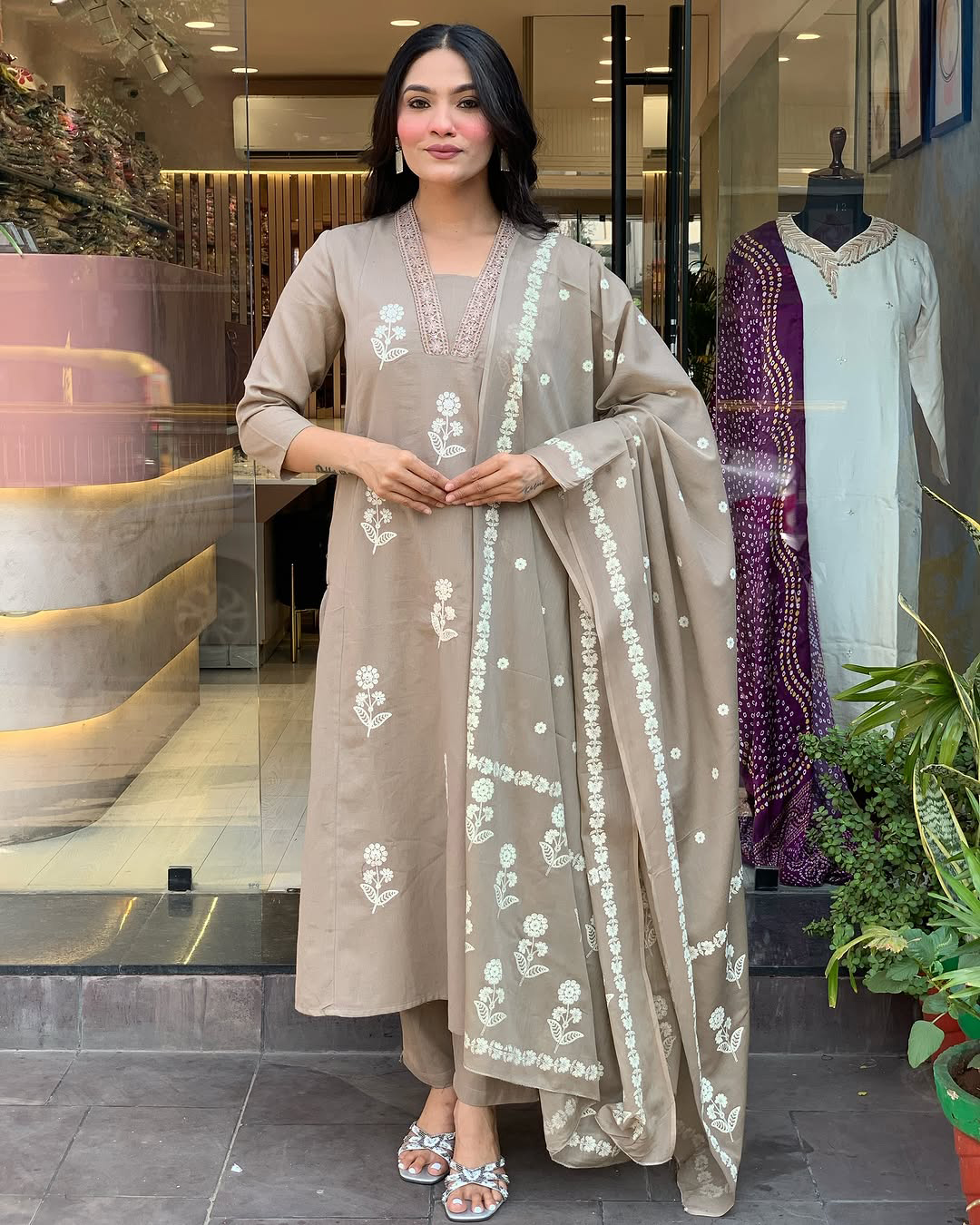
- Cigarette pants: Cigarette pants create a neat, tailored line with straight kurtas and suit a work lunch, formal puja or evening dinner.
- Wide-leg palazzos: Palazzos add movement to a short or fitted kurta, especially when the dupatta is lightweight and the waistline remains visible.
- Sharara pants: Sharara pants create a festive silhouette with a relatively simple kurta, but the kurta should not be extremely flared if the bottom already has volume.
- Patiala salwars: Patiala salwars bring a relaxed Punjabi proportion to a short kurta. Punjab Patiala Salwar Suits provide useful colour and drape inspiration for this pairing.
- Contrast skirts: A plain kurta worn over a long, fluid skirt becomes a contemporary fusion outfit. Keep the skirt's print controlled if the kurta has embroidery or a textured weave.
Fit is the finishing factor that makes a separate bottom appear intentional. The waistband should sit securely without pulling, trouser hems should not bunch heavily at the ankle, and a palazzo should skim rather than swallow the footwear. A quick alteration to the side seams or trouser length often improves the outfit more than another accessory.
Jewellery and accessories that add polish without excess
Jewellery adds polish most effectively when it responds to the kurta's neckline, fabric and occasion. Choose one focal area-ears, neck, wrists or waist-and keep the remaining accessories quieter.
Match jewellery scale to the kurta neckline
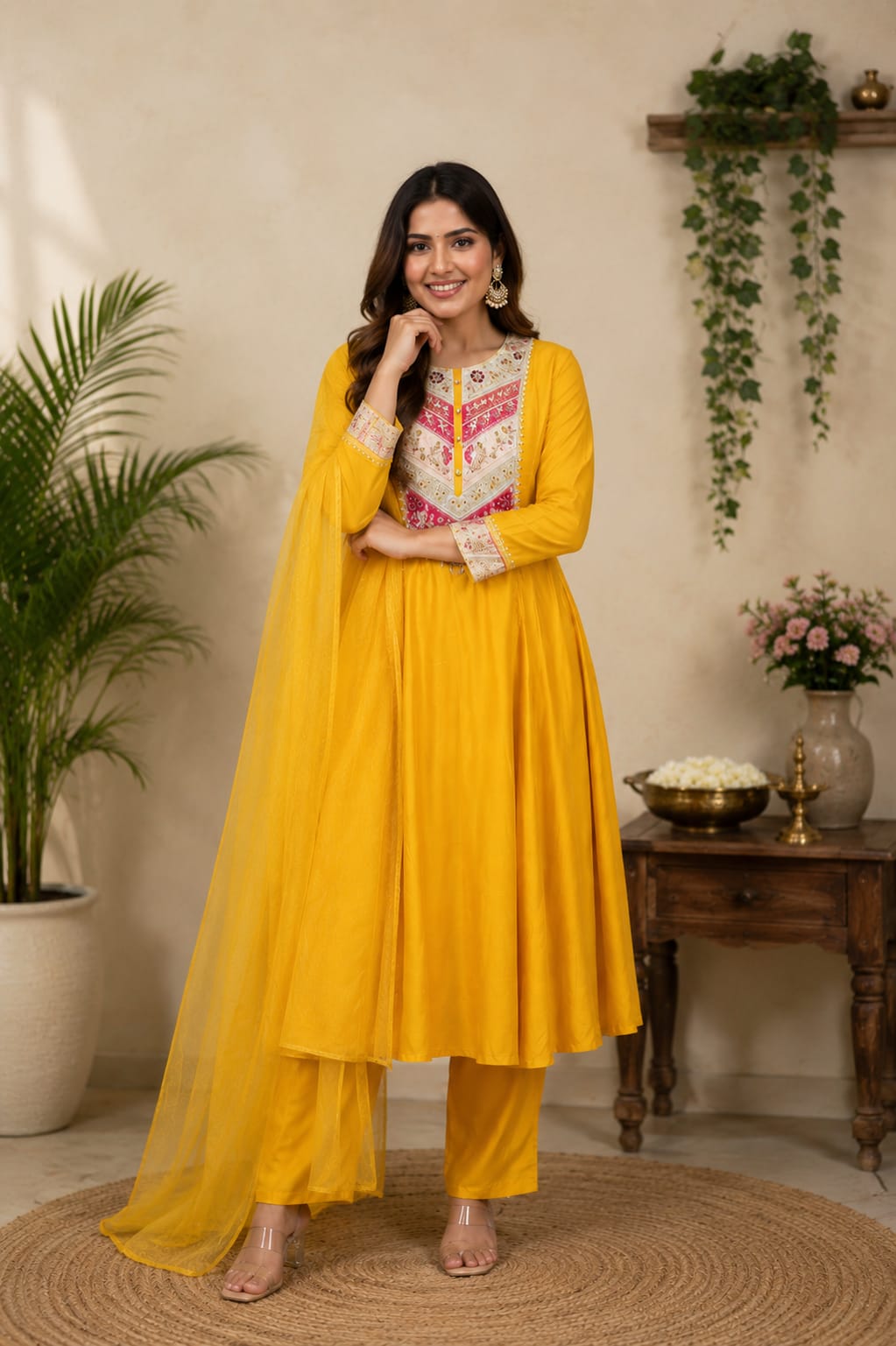
Large jhumkas or chandbalis work particularly well with a high round neckline because they frame the face without filling the neckline. A long pendant suits a V-neck or an open collar. A short necklace or choker can complement a square neckline, provided the kurta fabric isn't already heavily embroidered.
Oxidised silver gives cotton, Kalamkari and Sambalpuri-inspired outfits a grounded daytime finish. Gold-toned metal suits silk blends, jacquard, zari details and wedding dressing. Odisha Sambalpuri Salwar Suits offer an useful reference for pairing woven or patterned textiles with silver jewellery and a restrained number of accessories.
Use a belt, potli or hair accessory selectively
A slim belt can define the waist over a straight kurta when the fabric isn't too sheer or bulky. A belt works best with a clean, uncomplicated kurta and a narrow dupatta draped behind the shoulders. A potli bag, embroidered clutch or structured shoulder bag can introduce occasion texture without adding more decoration to the garment.
Hair accessories are valuable when the neckline already has detail. A low bun with a small gajra, a sleek braid with a decorative pin or a simple maang tikka can complete a festive outfit while keeping the chest area uncluttered. Avoid wearing a large necklace, dramatic earrings and a prominent hair ornament together unless the rest of the clothing is exceptionally restrained.
How to style a plain kurta for different occasions
A plain kurta can move from everyday wear to a wedding-related event by changing the fabric weight, finishing details and level of shine. The same base garment should not receive identical styling for every setting.
For work and daytime appointments
Choose cotton, Chanderi, Khadi cotton or a matte silk blend with straight pants and a compact dupatta. Small studs, a watch, low block heels and a structured tote keep the outfit professional. Cream Floral Cotton Kurta Set with Pant and Dupatta shows how a soft floral direction can remain polished when the accessories are simple and the proportions are clean.
For a Haldi ceremony or family lunch
Choose breathable fabric, cheerful colour and accessories that can tolerate movement. A plain kurta with a Bandhej, Kalamkari or floral dupatta, colourful earrings and flat embroidered sandals works well for a Haldi ceremony. Mustard Viscose Chanderi Kurta Set with Sequence Embroidery illustrates how a warm base colour and a lightly dressed-up surface can be adapted with a contrasting stole rather than a matching layer.
For festive dinners and wedding guests
Choose silk blend, jacquard, organza or Vichitra silk details when the setting calls for more formality. Women's Mustard Silk Blend Kurta Set with Dupatta brings an useful reference for combining a warm silk-blend base with polished jewellery, while Orange Jacquard Embroidered Kurta Set with Organza Dupatta demonstrates how woven texture and a translucent layer can supply occasion presence.
A maroon, brown or black kurta can also look formal when the accessories are controlled. Shop Maroon Pure Vichitra Silk Embroidered Kurta Set Online and Brown Embroidered Kurta Pant Dupatta Set for Women suggest richer evening palettes; a separate ivory, antique gold or muted rose dupatta can change the visual direction without creating a fully matched outfit. Stylish Black Kurta Pant Dupatta Set with White Embroidery is another reminder that a high-contrast black-and-white base can take metallic jewellery, coloured footwear or a printed stole.
How to make separate pieces look intentionally chosen
The final outfit looks intentional when at least two details are repeated and the proportions are balanced. Repeat a colour from the dupatta in the earrings or footwear, repeat a metal finish in the bag hardware and jewellery, or repeat a textile mood through woven fabric and embroidery.
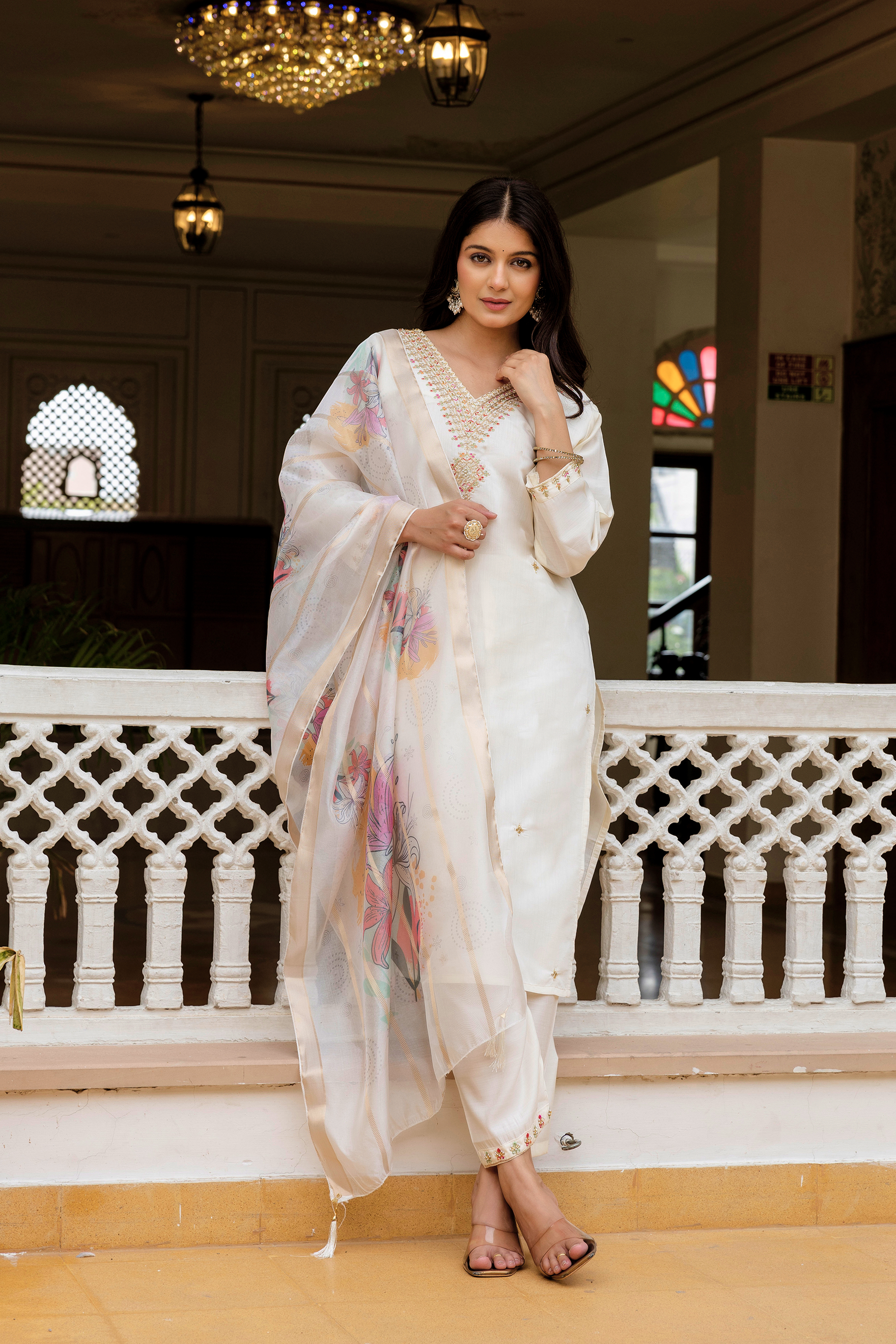
don't force an exact match between every piece. A navy dupatta doesn't require navy shoes, a gold border doesn't require a gold handbag, and a printed bottom doesn't need a printed kurta. One primary colour, one supporting neutral and one texture accent are usually enough for a balanced salwar-suit look.
How to Dress Up a Plain Kurta Without Buying a Matching Set ultimately comes down to building a visible hierarchy. Let one element lead, let two elements support it and keep the rest functional. A plain kurta paired with a contrasting dupatta, fitted bottom and carefully scaled jewellery can therefore serve as a work outfit, family-lunch look or festive ensemble without repeating the same appearance.
Common Questions About Styling a Plain Kurta Without a Matching Set
How can I make a plain kurta look festive without embroidery?
Add one occasion-focused element, such as an organza, silk or zari-bordered dupatta, and pair it with polished earrings or embellished footwear. A well-fitted bottom and a controlled metallic accent usually create more impact than adding several decorative accessories.
Which dupatta looks best with a plain kurta?
The best dupatta depends on the kurta's fabric and colour. Kalamkari, Bandhej, cotton-silk, organza and woven silk dupattas create useful contrast, while a tonal dupatta works when its texture differs clearly from the kurta.
Can I wear a plain kurta with palazzo pants?
Yes, a plain kurta works well with palazzo pants when the kurta is short, straight or lightly fitted. Keep the dupatta relatively light and make sure the palazzo falls cleanly without pooling heavily over the footwear.
What jewellery should I wear with a simple kurta?
Choose jewellery according to the neckline and fabric. Jhumkas suit high round necklines, pendants complement V-necks, and oxidised silver works well with cotton and printed textiles, while gold-toned jewellery suits silk blends, jacquard and zari.
How do I style a plain kurta for a Haldi ceremony?
Use breathable fabric, a cheerful dupatta and comfortable footwear that allows movement. Mustard, orange, pink, green and yellow accents work well with colourful earrings, a small potli and flat embellished sandals.
How many colours should a mix-and-match kurta outfit contain?
Three visible colour roles are usually enough: one dominant colour, one supporting neutral and one accent. Repeating the accent once in jewellery, footwear or a bag helps separate pieces look coordinated without making every item identical.




