Key takeaways
- A beginner should wear footwear and adjust the petticoat before making saree pleats.
- A standard saree usually needs about 5 to 7 front pleats measuring 12 to 15 centimetres each.
- The saree should be tucked firmly enough to stay secure but loosely enough to allow comfortable walking and sitting.
- Cotton and linen sarees are easier to practise with than slippery silk or heavily embellished sarees.
- The pallu should fall around knee to mid-calf level for a balanced beginner-friendly drape.
- Safety pins should secure the waist pleats and shoulder pallu without piercing delicate zari or embroidery.
Some people learn to drape a saree by copying a relative in front of a mirror. Others prefer a clear sequence they can follow step by step. This guide takes the second approach: how to drape a saree for beginners, without assuming you already know about pleats, pallu placement or pinning. Your first attempt doesn't need to look ceremonial or perfect. It needs to feel secure and comfortable enough to repeat and improve.
How to drape a saree for beginners: what to prepare first
Before you start, keep a saree, a well-fitted petticoat or underskirt, a blouse, safety pins, a full-length mirror and the footwear you plan to wear. Having everything ready prevents uneven length, loose pleats and rushed adjustments later.
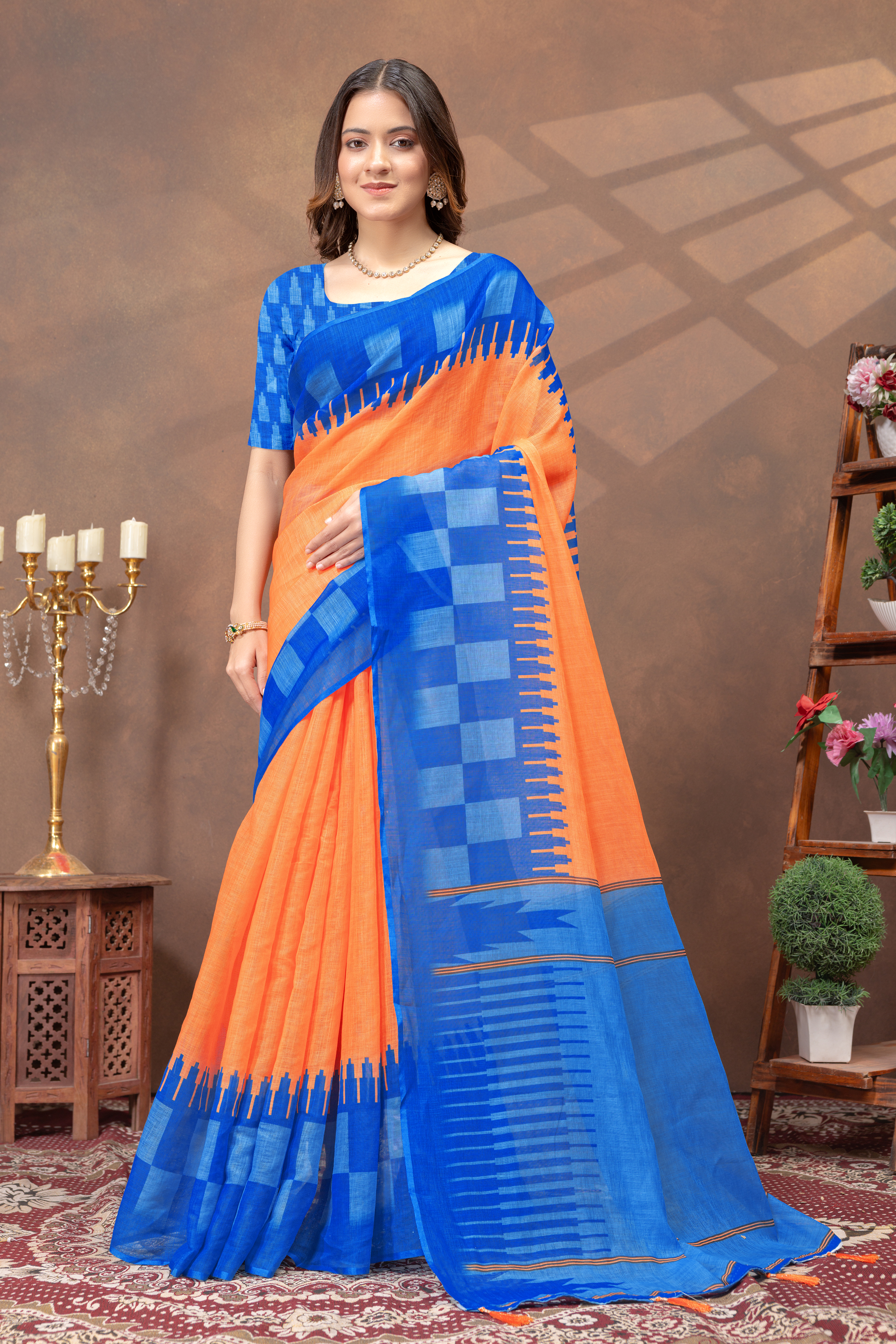
For a standard Nivi-style drape, choose a saree measuring approximately 5.5 to 6 metres. A clear border makes the direction of the fabric easier to follow and shows you whether the saree is twisting. Medium-weight cotton or linen-cotton is usually more forgiving than very light chiffon or slippery silk.
The petticoat should sit securely at your natural waist, not low on the hips. Its drawstring or waistband needs to hold the tucked fabric without restricting your breathing or creating a visible bulge. A modern fitted underskirt can work too, provided it grips the saree and lets you walk normally.
Put on your blouse and footwear before you begin. Heels change the finished length. Wearing them first helps you avoid a saree that becomes too short once your shoes are on. Keep four or five medium safety pins close by, along with two smaller pins for the pallu and blouse shoulder if needed.
Which saree fabric is easiest for a first attempt?
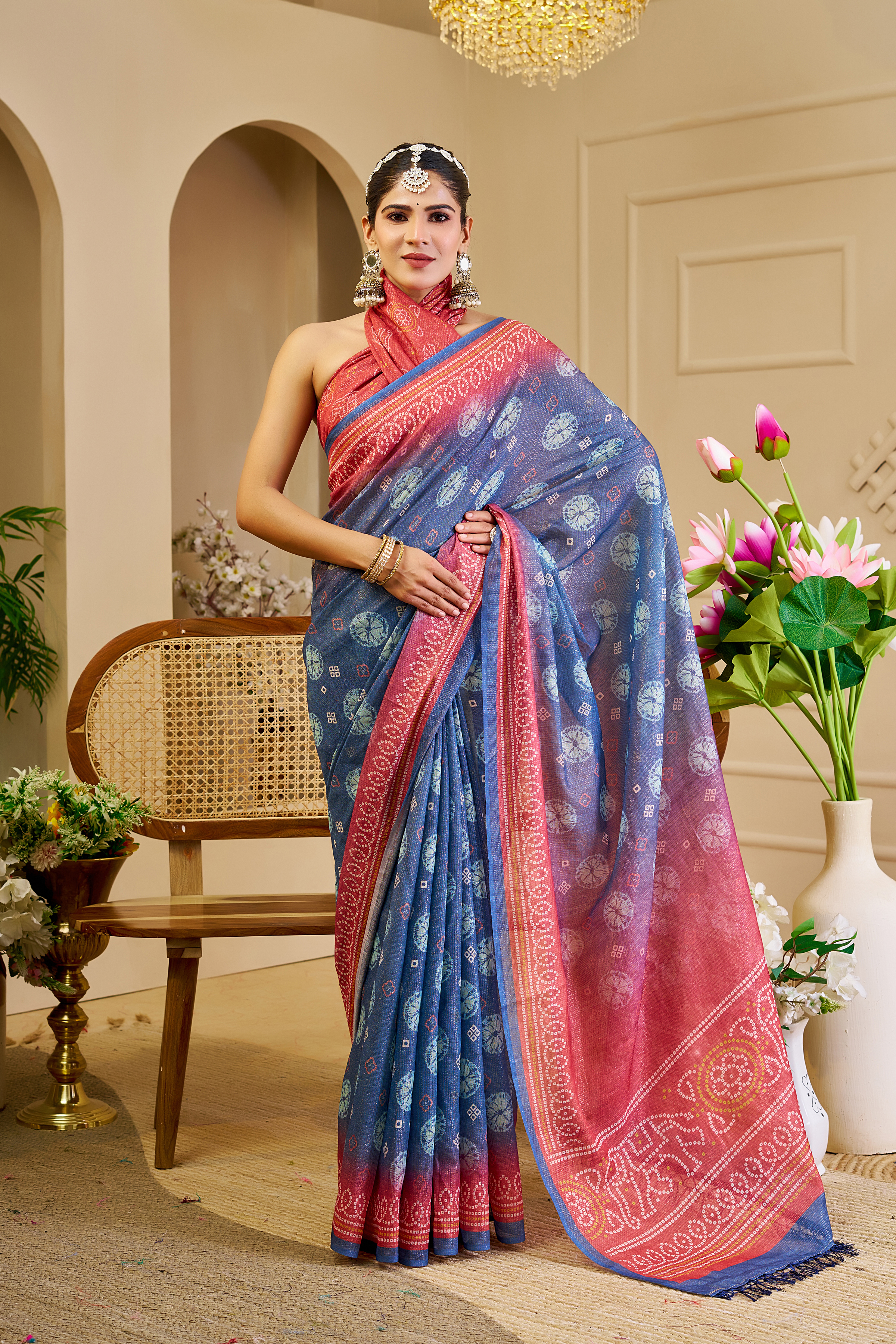
Cotton, handloom cotton and linen-cotton are generally the easiest fabrics for a first drape. They hold pleats well and don't slide around as much. Mushroom Brown Handloom Saree with Ethnic Striped Border, for example, has a visible border and enough body for practising controlled folds. Sea Green Floral Linen Cotton Saree with Border and Coral Floral Linen Cotton Saree with Designer Border are also practical choices when you don't want to keep re-adjusting the fabric.
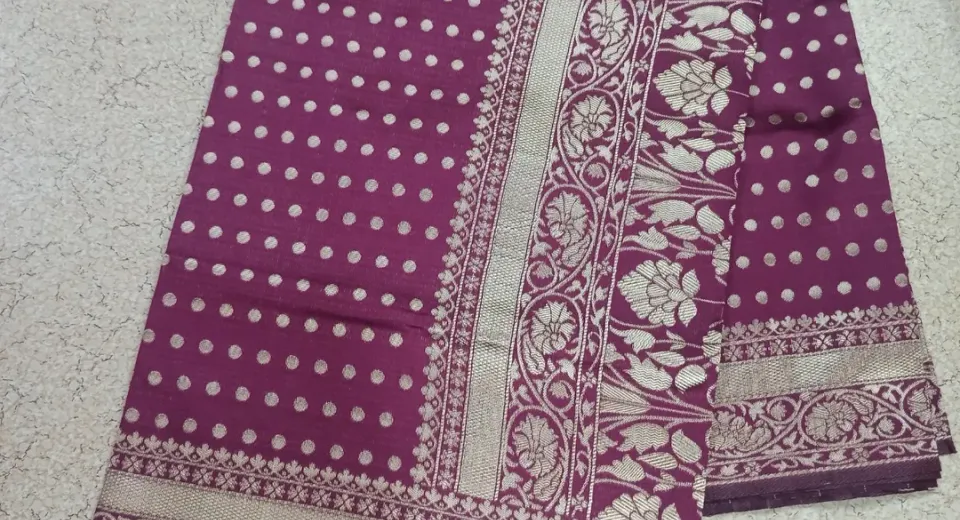
Banarasi silk and soft silk give you a more formal finish, but they may feel heavier or more slippery while you're learning. Maroon Banarasi Soft Silk Saree with Classic Zari Motifs is best saved until you're comfortable with the basic tuck and pleat sequence. With heavy zari, place pins carefully: pushing one through metallic work can catch threads or leave a visible mark.
How should the first tuck and saree length be set?
Begin the first tuck on your right side and complete one full circle around your waist, keeping the lower edge just above the floor. Hold the non-pallu end, also called the plain end or inner end, and tuck it into the petticoat at your right waist before wrapping it around your body.
Tuck roughly 15 to 20 centimetres of fabric at the right waist to start. Then wrap the saree from right to left across the front, around the back and back to the front. Keep the top edge level with the petticoat waistband, using gentle, even tension rather than pulling the fabric tight.
Once you've completed the round, check the bottom edge. With your chosen footwear on, the saree should skim the floor or sit about 1 to 2 centimetres above it. A dragging hem can catch under your feet, while a hem that sits too high exposes too much ankle and makes the pallu harder to balance.
The border should stay approximately parallel to the floor during this first round. If it slopes sharply, loosen the tuck and reset the fabric instead of trying to fix the problem through the pleats. An uneven foundation almost always leads to uneven pleats.
How tight should the waist tuck be?
The tuck should hold the saree securely while still allowing you to take a comfortable step and sit normally. Test it by walking five steps, sitting on a chair and raising one arm. If the fabric pulls sharply at your waist, loosen it and redistribute the material.
How do you make neat front pleats?
Neat front pleats come from folding equal widths of fabric between your thumb and fingers, with every fold facing the same way. Most standard sarees need about 5 to 7 front pleats. Each pleat will usually measure approximately 12 to 15 centimetres in width, depending on the saree and your proportions.
After the first waist wrap, bring the remaining fabric to the centre front. Set aside enough material for the pleats and leave the pallu outside this section. Make the first fold by bringing one edge inward, then repeat at the same width until the bundle looks even.
If standing feels awkward, make the pleats on a smooth surface or bed. Line up the lower edges first, then smooth the upper edges with your palms. You can press cotton pleats lightly by hand. But don't use a hot iron while the saree is being worn or pinned.
Hold the completed pleats firmly at the top and tuck them into the waistband slightly left of the navel. Depending on the drape method, the pleat edges may face your left or right side. For beginners, the key point is consistency: every pleat should face the same direction. Insert one safety pin horizontally through the top of the pleats and the petticoat, keeping it hidden beneath the blouse line.
Spread the pleats across the front so they don't form a thick lump. Five broader pleats can look cleaner on heavier silk, while seven narrower pleats may suit lighter cotton or linen. The right number is the number that reaches the floor evenly without making the waistband bulky.
What causes pleats to open?
Pleats usually open when the fabric wasn't held firmly at the top, the waistband is too loose or the safety pin has gone through only the outer layer. Pin through the upper part of the pleated bundle and the petticoat fabric. Avoid pushing the pin through a visible zari motif or delicate embroidered border.
How should the pallu be brought over the shoulder?
The pallu travels from the front of your body over the left shoulder and falls behind you. Its finished end should reach somewhere between the knee and mid-calf. After securing the front pleats, take the remaining fabric from the right side, bring it across the front and place it over the left shoulder.
Stand straight in front of the mirror before pinning the pallu, then adjust its length. A pallu ending near the knee gives a structured, formal look. One reaching mid-calf offers more coverage. Avoid letting it fall below the ankles while you're learning. The extra length can catch on furniture or footwear.
Make five to seven narrow pallu pleats, depending on the border width and the amount of fabric available. Align the decorative edge, so the border stays visible. Insert one pin from the underside of the pallu into the blouse shoulder, placing it close to the shoulder seam rather than near the neck.
If the fabric slips while you walk, use a second small pin near the waist. There's no need to pin across the entire visible front. Too many pins can create hard points, damage delicate fabric and make the saree uncomfortable when you sit.
A strong visual border can make pallu alignment much easier. Premium Wine Maroon Floral Handloom Saree with Designer Pallu shows why the pallu is more than extra fabric; its design often becomes the visual focus of the complete drape. Sage Green Designer Printed Saree for Women gives a lighter styling direction when you want the pallu to feel relaxed rather than heavily formal.
How do you check comfort, symmetry and security?
A beginner drape should pass four practical tests: walking, sitting, moving your arms and checking the waist security. These matter more than perfectly identical pleats.
- Walking test: Walk across the room, turn around and climb one step if possible. The lower edge shouldn't catch under either foot.
- Sitting test: Sit on a chair without pulling the saree upwards. The waist tuck should stay firm, and the pleats should remain in front.
- Arm test: Raise both arms and reach forward. The pallu pin should hold without pulling at the blouse neckline or shoulder.
- Symmetry test: Check that the front pleats fall vertically and that the waist border doesn't rise sharply on one side.
- Security test: Place one hand inside the waistband and take a normal breath. If your waist feels painfully tight, redistribute the fabric before adding more pins.
Use both the front and side views in the mirror. The front shows the pleat spacing, while the side view reveals whether the pallu is too long and whether the saree sits level at the waist. A quick photograph can also show a tilted border that's easy to miss when you're looking down.
Which sarees and styling choices help beginners?
Medium-weight fabrics, moderate borders and easy-to-follow designs are helpful when you're learning. A plain or lightly patterned saree also makes it easier to see whether the folds are even.
Soft Lavender Linen Saree with Elegant Stripe Pattern is a gentle, structured option for daytime practice. Stripes can help you spot a twisted wrap, though horizontal stripes need careful alignment at the waist. Maroon Cotton Saree with Zari Work for Wedding brings a more festive cotton option once the basic technique feels familiar.
If you're preparing for a formal event, practise the complete drape at least twice on the same day: once several hours before getting dressed and again just before leaving. The second attempt often reveals practical issues such as a loose pin, a dragging hem or a blouse that limits shoulder movement.
Budget can shape your practice choices without determining the quality of the experience. Collections such as Sarees from Rs 1000 to Rs 1500 may help you find a practice saree, while Sarees Under 20% Off can be useful when you're choosing a more occasion-focused piece. Look at the fabric weight, border construction and care requirements rather than choosing on discount alone.
What are the most common beginner mistakes?
Common mistakes include starting without footwear, tying the petticoat too low, making pleats of different widths and pinning before checking the final length. Each one can be fixed by returning to the foundation instead of adding more pins.
- Starting barefoot: Put on the actual footwear first so you can measure the hem accurately.
- Using a loose petticoat: Tighten or replace it before wrapping the saree. Extra pins can't compensate for an unstable base.
- Pulling the first wrap too tightly: Keep the tension even so you can walk and sit comfortably.
- Making random pleat widths: Use your fingers as a repeated measuring guide and line up the lower edges.
- Over-pinning: Secure the waist pleats and shoulder pallu with a few well-placed pins instead of pinning every fold.
- Ignoring fabric behaviour: Practise with cotton or linen before attempting slippery Banarasi silk, soft silk or heavily decorated sarees.
If the pallu keeps slipping, the shoulder fabric may be too smooth or the pin may not include enough blouse fabric. If the saree loosens at the waist, the petticoat could be too loose or the first tuck may have been too shallow. If the pleats lean sideways, untuck only the pleated section and reset it instead of removing the whole drape.
How to build confidence after the first drape
Confidence comes from repeating the same sequence and changing only one variable at a time. Practise the basic drape three times with the same saree. Then change either the fabric, footwear or blouse, rather than changing everything at once.
Time yourself only when the movements feel familiar. A first attempt may take 20 to 30 minutes, while a practised drape can take approximately 8 to 12 minutes. Speed should never come before a secure waist tuck, an even hem and a comfortable pallu.
Once the standard Nivi-style drape feels reliable, experiment with broader pleats, a front-open pallu or a different border arrangement. The basic principles stay the same: create a stable base, distribute the fabric evenly, secure only the necessary points and test the outfit while moving.
Learning how to drape a saree for beginners is less about memorising one right fold and more about understanding fabric direction, waist support and proportion. With a manageable saree, the right footwear and a patient first attempt, it becomes a repeatable dressing skill rather than a last-minute challenge.
Frequently Asked Questions
How long should a saree be for a beginner?
A standard 5.5 to 6 metre saree is suitable for most beginner Nivi-style drapes. The correct length also depends on height, petticoat position, footwear and whether the saree has a wide border.
Which saree fabric is easiest to drape for the first time?
Cotton and linen-cotton are usually easiest because they hold pleats and don't slide easily. Slippery chiffon, satin and very smooth silk are better saved until the basic waist tuck and pallu placement feel familiar.
How many pleats should a beginner make in a saree?
Most beginners can make 5 to 7 front pleats measuring about 12 to 15 centimetres each. The number should be adjusted so the pleats cover the front neatly and the lower edges reach the floor evenly.
Where should the saree pallu end?
A beginner-friendly pallu usually ends around the knee to mid-calf area. A pallu below the ankles can drag and catch underfoot, while a very short pallu may pull at the shoulder when you move.
How many safety pins are needed for saree draping?
Four or five safety pins are usually enough for a basic drape: one for the waist pleats, one for the shoulder pallu and optional pins for the waist or blouse shoulder. Use fewer pins on zari, embroidery and delicate woven fabrics to reduce snagging.
How can I stop a saree from slipping while walking?
Secure the saree to a correctly fitted petticoat, pin the top of the front pleats and test the drape by walking before leaving home. A small hidden pin at the waist and a shoulder pin that catches the blouse fabric can improve stability without making the saree stiff.