

How to Coordinate a Lehenga With a Partner Without Matching Colours becomes much easier when you stop treating couple dressing as a colour-matching exercise. A coordinated pair can share an undertone, a level of brightness, an embroidery detail or even a small accessory while wearing visibly different colours. The result feels connected in photographs without making both outfits look like a uniform.
That distinction matters at Indian weddings, where the bride or guest may wear a richly worked lehenga while the partner chooses a kurta, sherwani, bandhgala or Indo-western outfit. Matching red with red isn't the only route to harmony. A magenta lehenga can work with ivory, charcoal or deep green; a lime lehenga can sit beside ivory, navy or muted pink when the styling details are chosen carefully.
How to Coordinate a Lehenga With a Partner Without Matching Colours
The most reliable method is to match one visual quality rather than the entire colour. Choose a shared undertone, contrast level, fabric mood, metallic finish or accent colour, and let the main garments remain different.
For example, a bride wearing a magenta satin lehenga and a partner wearing a charcoal sherwani can look coordinated if both outfits use antique-gold embroidery. A bride in a lime lehenga and a partner in an ivory kurta can connect their looks through a lime pocket square, green safa detail or floral boutonniere. The main colours differ, but the eye notices a deliberate relationship.
A practical couple-outfit formula is one dominant colour per person, one shared supporting detail and one neutral that prevents visual competition. If a lehenga already contains several colours, the partner should borrow only one quieter shade from the print or embroidery rather than reproducing the whole palette.
Start With Undertones, Not Colour Names
Undertones create cohesion even when the named colours are different. Warm colours pair most naturally with other warm colours, cool colours with cool colours, and carefully chosen neutrals can bridge either group.
Warm undertones include coral, marigold, tomato red, rust, lime with yellow influence and warm magenta. Cool undertones include blue-based pink, emerald, teal, lavender and blue-green. Ivory, beige, champagne, black and certain greys can act as balancing neutrals, although the exact fabric finish changes how each neutral looks.
How can you test whether two colours belong together?
Place fabric swatches or clear photographs beside one another in natural daylight and compare the warmth of the colours. If one fabric looks yellowish and the other looks distinctly blue or grey, the combination may feel accidental unless a neutral or metallic detail bridges the difference.
A red lehenga with orange or gold undertones can sit comfortably beside a beige or cream sherwani. A blue-based red may look sharper with charcoal, silver or cool ivory. A green lehenga doesn't automatically pair with every shade of pink; a yellow-green may suit coral or peach, while an emerald green may benefit from blush, ivory or burgundy accents.
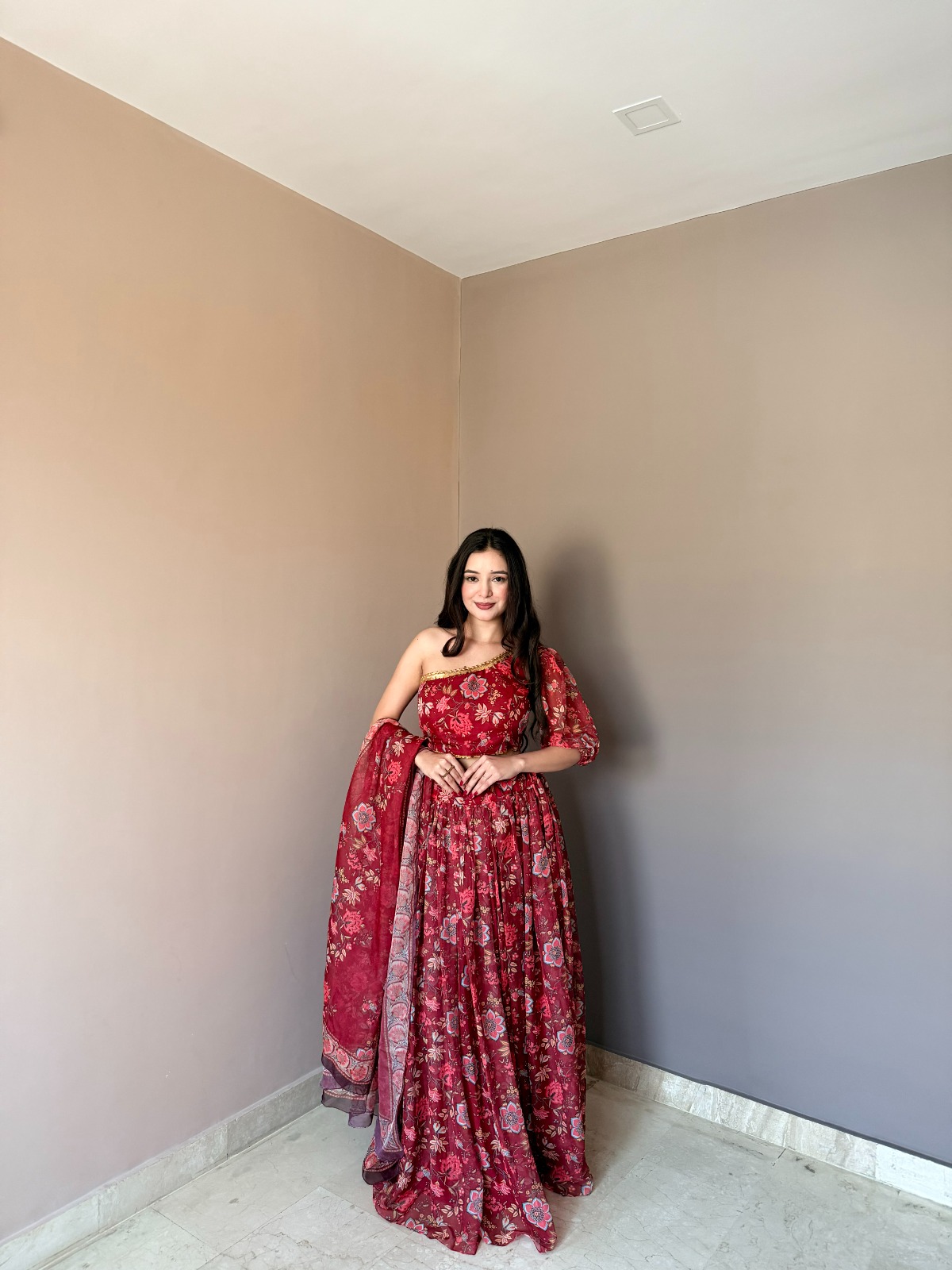
Colour names also vary between screens and sellers, so request or compare product images in daylight before planning the complete outfit. The Red Floral Organza Lehenga Set with One Shoulder Blouse, for instance, may be styled with an ivory or champagne partner outfit when the red floral details are allowed to remain the focal point.
Use Contrast Levels to Make Different Colours Look Intentional
Contrast level determines how strongly two outfits stand apart in photographs. High contrast creates drama, medium contrast looks festive and balanced, while low contrast produces a softer, understated result.
High-contrast combinations include magenta with ivory, emerald with champagne, red with black and lime with deep navy. These pairings work well for evening receptions or stage-lit wedding venues, but both outfits should not also have equally heavy embroidery. Strong colour contrast plus dense embellishment can make the image look crowded.
Medium-contrast combinations include coral with beige, mustard with sage, teal with blush and plum with dusty rose. These combinations suit sangeet celebrations, daytime weddings and family portraits because they provide separation without overpowering the people wearing them.
Low-contrast combinations include blush with ivory, sage with beige and powder blue with soft grey. Low contrast can be elegant for an intimate ceremony, but the couple should add definition through zari, jewellery, footwear or a darker accessory so the outfits don't disappear against a pale venue.
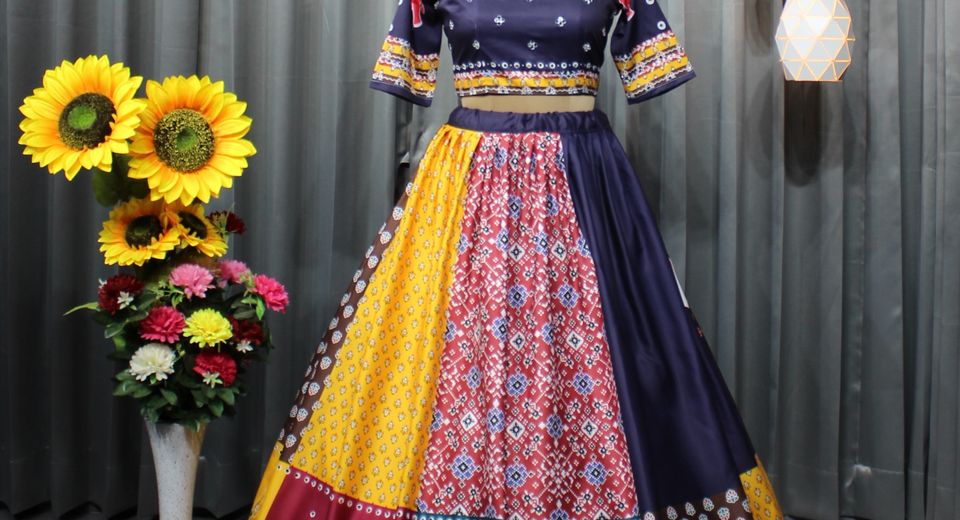
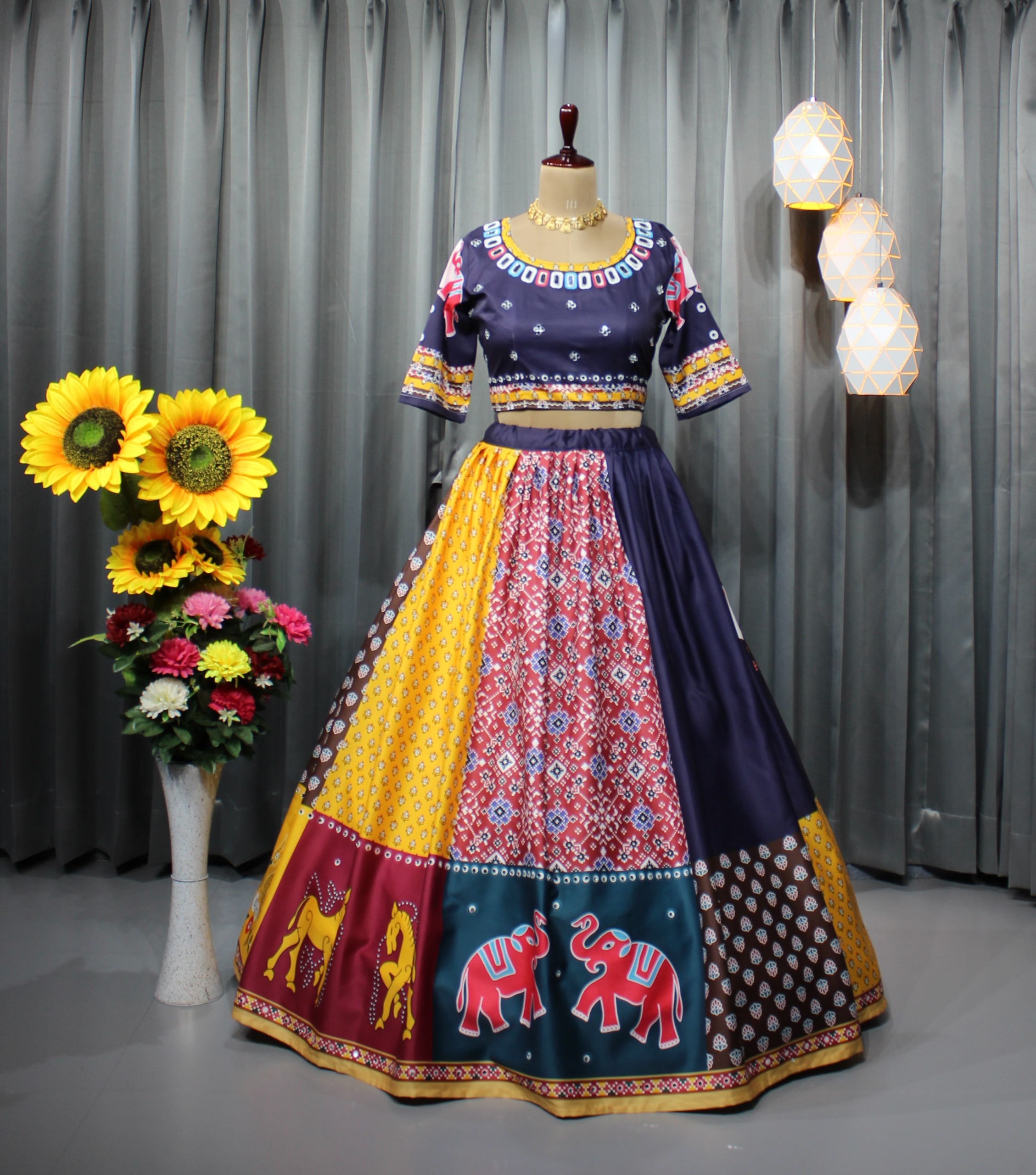
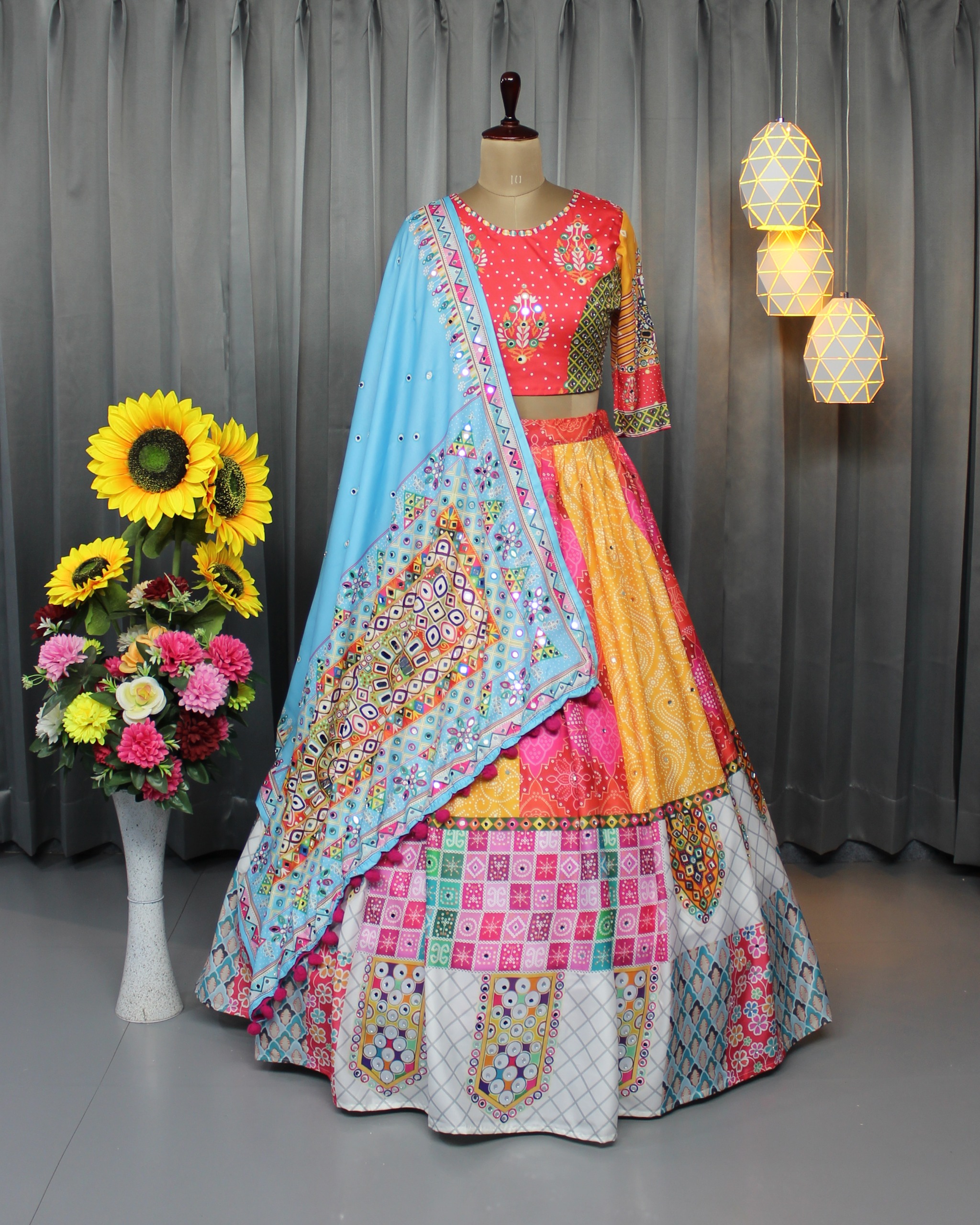
The Multicolor Printed Butter Silk Lehenga Choli Set and Stylish Multicolor Butter Silk Lehenga Choli Set demonstrate why contrast should be selected from a print rather than guessed from the garment's base colour. A partner can choose a solid ivory, navy or muted green outfit by identifying one colour in the print and using it sparingly.
Let Fabric and Embellishment Do Some of the Coordinating
Shared texture and finish can connect outfits without shared colour. Satin, organza, silk, velvet, mirror work, threadwork, zari and matte cotton each create a different visual language.
Which details can couples repeat safely?
Couples can repeat one detail safely: a metallic finish, a weave, a motif, a border shape or a small embellishment. Repeating every detail can make the outfits look manufactured, while repeating one detail gives the eye a subtle point of connection.
Gold zari on a lehenga can be echoed by antique-gold buttons, a watch strap, a brooch or a narrow stole border. Silver mirror work can be reflected in silver jewellery or a cool-toned brooch. Floral embroidery can be repeated through a boutonniere or pocket square without copying the full floral pattern.
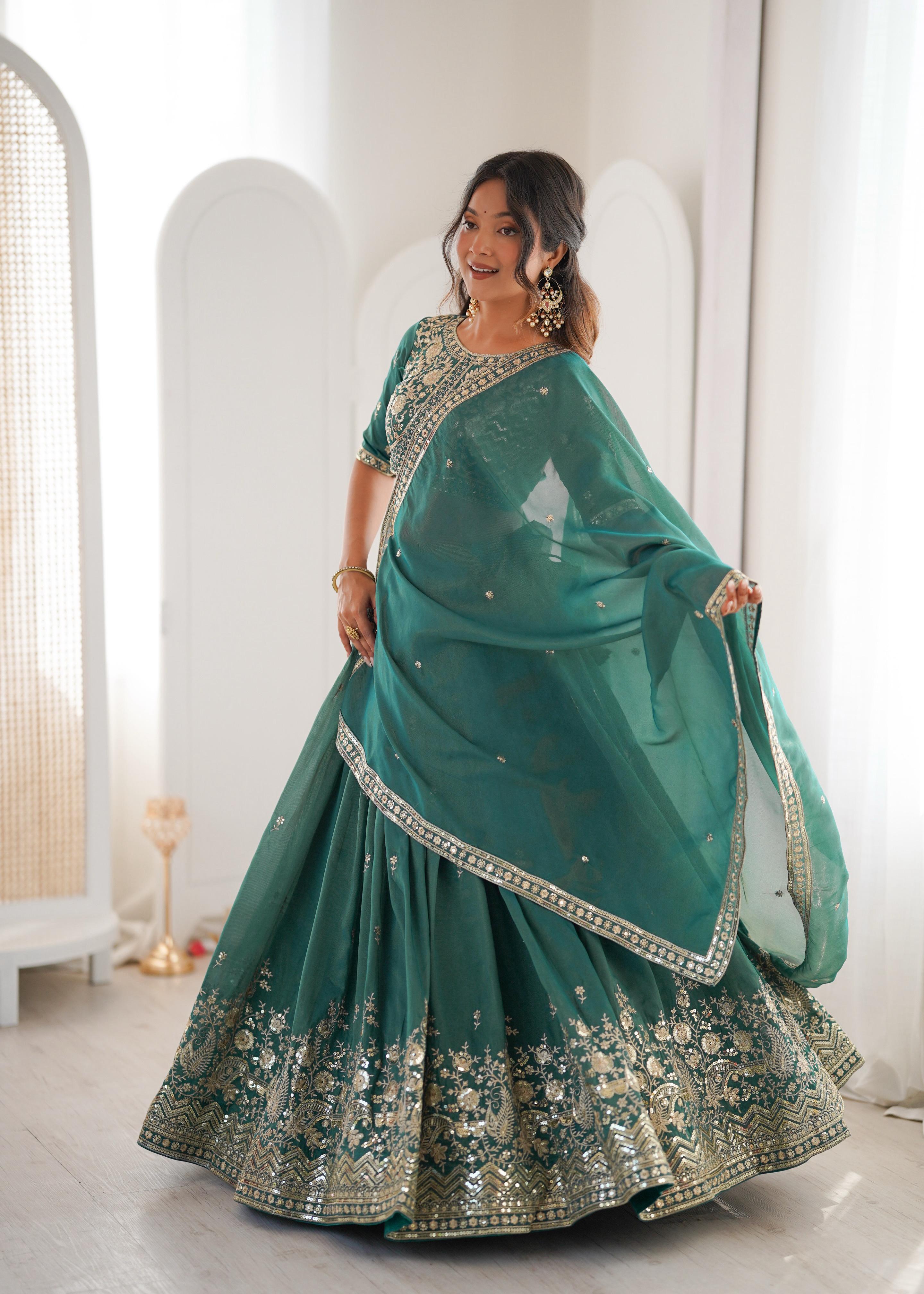
The Designer Threadwork Silk Lehenga Choli Set with Dupatta can be balanced with a partner's matte silk or textured bandhgala rather than another heavily embroidered silk garment. The difference in colour keeps the outfits separate, while the silk and threadwork create a shared festive richness.
The Festive White Lehenga Choli with Mirror Work Design offers another useful lesson: a white or ivory lehenga doesn't require a white partner outfit. A partner can wear navy, wine, forest green or charcoal and connect through mirror-like silver details. The pale lehenga remains bright, while the darker outfit provides definition in photographs.
Coordinate by Wedding Function and Time of Day
The right non-matching palette depends on the ceremony, lighting and level of formality. A colour combination that works at an evening reception may look too dark or too stark at a daytime Haldi ceremony.
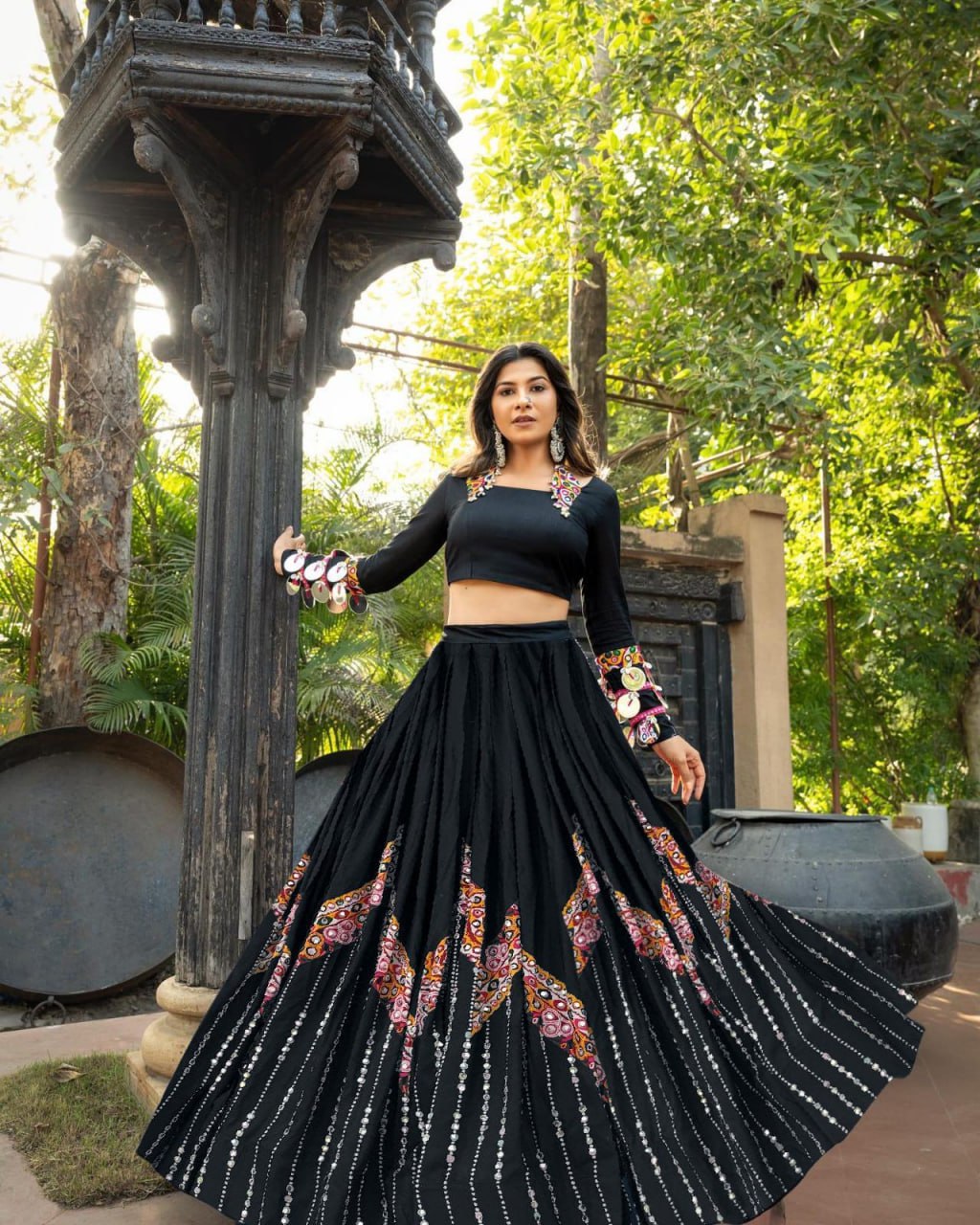
Haldi and daytime functions
Daytime celebrations suit breathable fabrics, medium contrast and cheerful shades that remain visible in sunlight. Yellow, lime, coral, peach, mint and ivory work well when balanced with a solid neutral or a slightly deeper green.
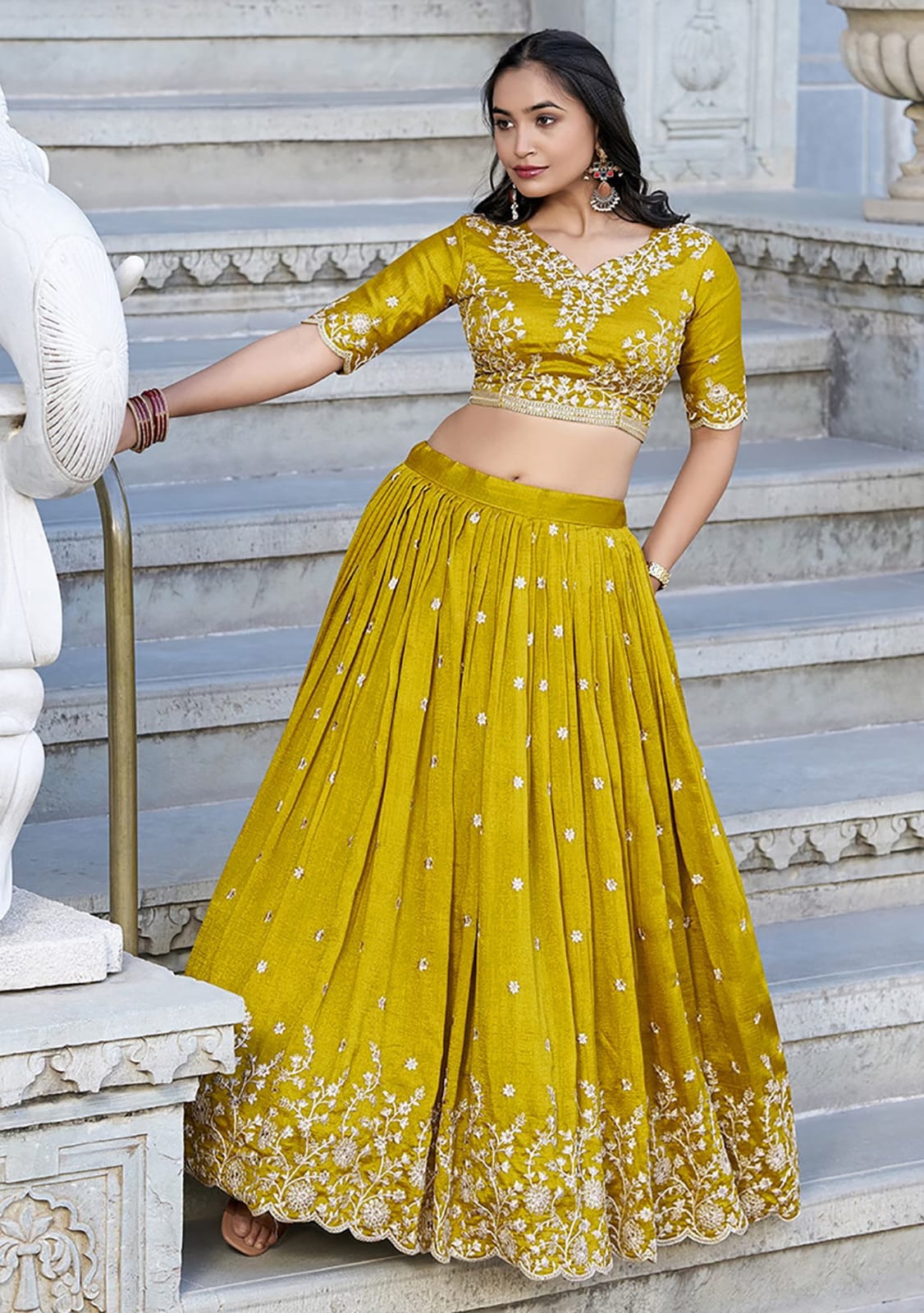
The Yellow Lehengas collection can be paired with an ivory kurta, sage green jacket or soft beige outfit instead of another yellow garment. The Lime Floral Embroidered Butterfly Net Lehenga Set can work with ivory or muted peach, especially when the partner repeats one small floral or green detail.
For a Haldi ceremony, avoid making both outfits extremely pale if the venue has yellow décor. A deeper accessory such as bottle-green footwear, a tan waistcoat or a bronze watch strap helps the couple remain visually distinct from the background.
Sangeet and evening celebrations
Evening functions support richer contrast, reflective surfaces and deeper jewel tones. Magenta, emerald, navy, wine, plum and black can be paired with champagne, silver, ivory or muted rose.
The Magenta Satin Embroidered Lehenga Set Online can be styled beside a charcoal, ivory or deep green partner outfit. The satin sheen already attracts light, so the partner's outfit may look more polished with a controlled finish and limited embellishment rather than competing sequins.
Wedding ceremony and reception
A wedding ceremony usually benefits from a clear hierarchy: the most important outfit carries the richest colour or detail, while the partner's outfit supports it through restraint. A bridal lehenga with elaborate zari, embroidery or a dramatic dupatta needs space around it in the couple's palette.
For a reception, a stronger contrast can be introduced through velvet, metallic accents or a darker jacket. The Colorful Patch Print Butter Silk Lehenga Choli Set can be grounded with a solid partner outfit in one of its quieter print colours, while the Red Floral Organza Lehenga Set with One Shoulder Blouse can be balanced by a clean ivory or black silhouette.
Build a Palette From the Lehenga's Smallest Accent
The smallest repeated accent is often more useful than the lehenga's dominant colour. Look at the border, blouse piping, floral centre, tassel, sequin, lining or dupatta edge and select one shade for the partner's accessories.
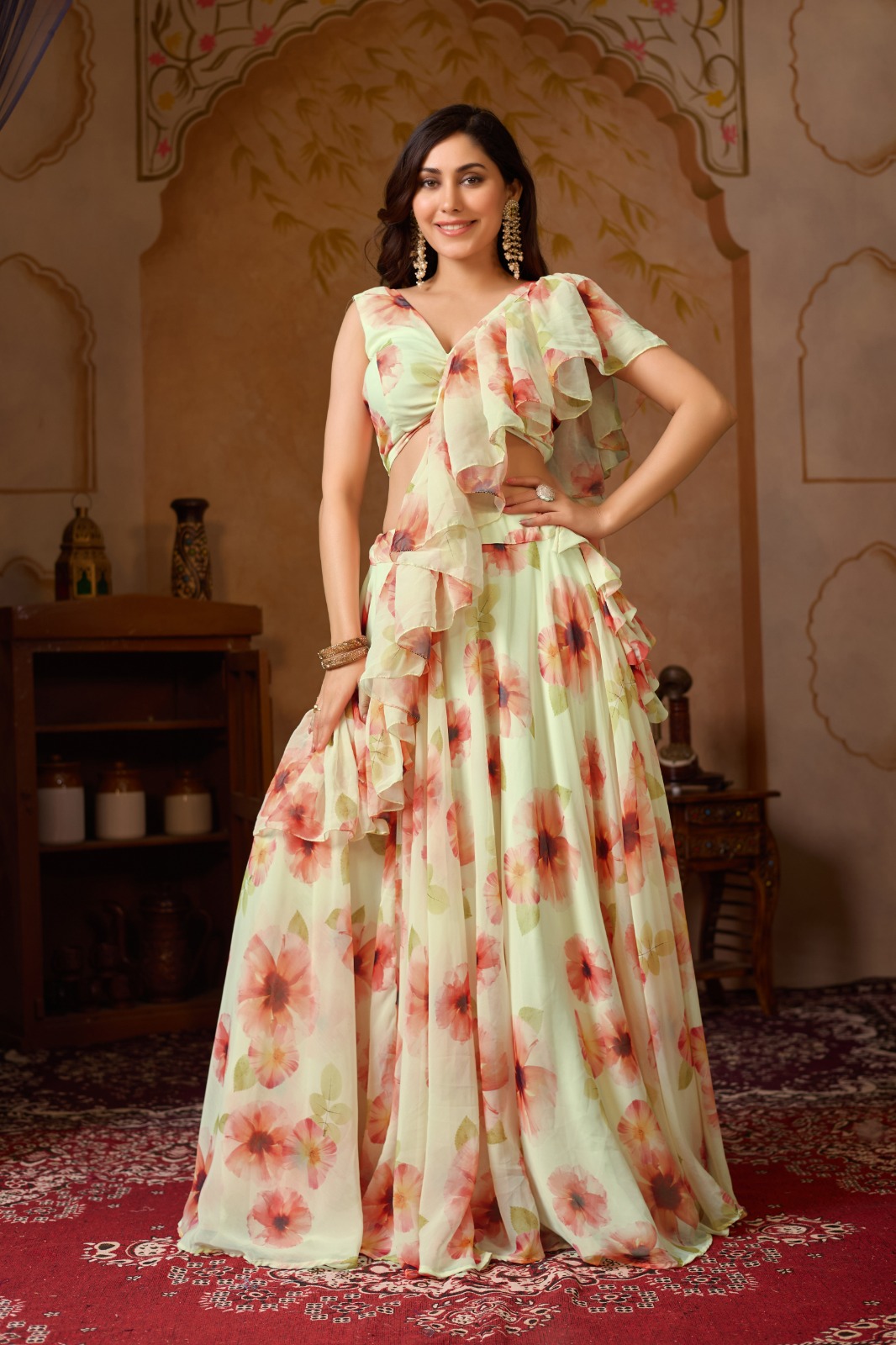
A multicolour lehenga may contain five or six visible shades, but choosing all of them for the partner produces visual noise. Select the least dominant colour that still appears clearly. If a lehenga is mostly pink with tiny green leaves, a green pocket square or boutonniere will create a more refined connection than a second pink outfit.
The Colorful Patch Print Butter Silk Lehenga Choli Set brings a strong example of accent-led planning. A partner can wear a neutral base and borrow a single patch colour through a stole, safa, pocket square or footwear. The couple looks coordinated because the accent is repeated, not because the garments share a base colour.
Accessories should stay small when the lehenga is already busy. One accent in the partner's outfit is usually enough; repeating the accent in a jacket, shoes, turban, watch and boutonniere can make the coordination too obvious.
Choose the Right Lehenga Construction Before Styling the Couple
Lehenga construction affects proportion, comfort and how much styling freedom remains for coordinating with a partner. Fully stitched choli shopping gives predictable fit and faster preparation, while semi-stitched designs allow more adjustment to neckline, sleeve and waist measurements.
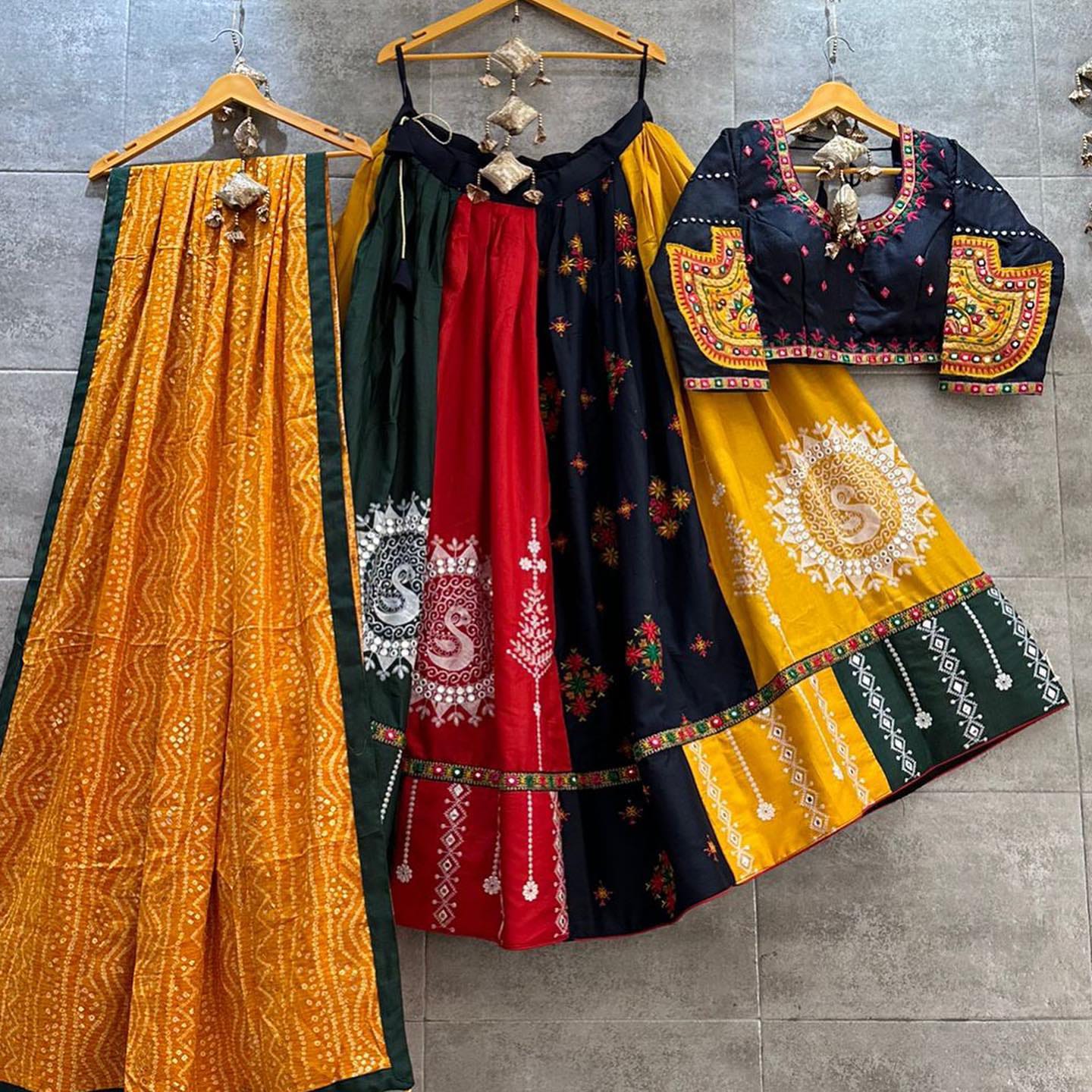
A Ready Made Lehenga is practical when the event is close or when a wearer wants a complete outfit with less tailoring risk. A Semi Stitched Lehengas Collection can be useful when the blouse needs a specific sleeve length, bust adjustment or neckline for modesty and comfort.
Readymade options are especially convenient for girls, younger guests and anyone attending several functions with limited alteration time. Check the garment's actual measurement chart rather than relying only on a general small, medium or large label. A lehenga that fits the waist but pulls at the blouse can alter posture and affect how the coordinated couple looks in photographs.
Designer and bridal lehengas often include heavier borders, longer dupattas and more structured blouses. Such garments need a partner outfit with enough visual weight to look intentional, but not so much decoration that both people compete for attention. Lighter festive lehengas can be paired with a more detailed partner jacket because the overall balance remains manageable.
Common Coordination Mistakes and Better Fixes
The most common mistake is matching the exact colour while ignoring brightness, fabric and proportion. Two red garments can clash if one is orange-red and glossy while the other is blue-red and matte.
- Repeating the dominant colour: Use a small accent from the lehenga instead of putting the partner in the same head-to-toe shade.
- Ignoring the venue: Test pale outfits against yellow décor, dark stages and outdoor sunlight before finalising the palette.
- Overloading metallics: Choose gold, silver or antique finishes as a shared detail, not all three across both outfits.
- Matching prints too literally: Repeat one floral or geometric motif through a pocket square or boutonniere rather than copying the entire print.
- Forgetting movement: A long dupatta, flared skirt and structured jacket need enough room for walking, sitting and dancing.
- Buying without checking construction: Confirm whether a lehenga is fully stitched, ready made or semi stitched and allow time for alterations.
Photographs also reveal proportion problems that are easy to miss in a mirror. Take a full-length photo from several metres away, inspect the couple in both daylight and warm indoor light, and check whether one outfit disappears into the background.
A Simple Final Checklist for a Coordinated Couple Look
A finished couple palette should answer five questions clearly: what is each person's dominant colour, which small detail connects the outfits, whether the undertones agree, whether the contrast suits the function and whether the garments have balanced visual weight.
- Select the lehenga first if it has a complex print, bridal embroidery or a strong colour.
- Identify one quiet accent from the lehenga's border, motif or embellishment.
- Choose the partner's dominant colour from a different colour family or a well-placed neutral.
- Repeat the accent once or twice through a pocket square, stole border, brooch, safa detail or boutonniere.
- Match the finish thoughtfully by pairing satin with a controlled sheen, mirror work with silver detail or zari with a related metallic finish.
- Photograph the complete outfits before the event and make adjustments while tailoring time remains.
A successful wedding wardrobe doesn't require identical colours. A magenta lehenga with an ivory sherwani, a lime lehenga with a navy kurta or a multicolour lehenga with a charcoal bandhgala can look more sophisticated than exact matching when undertones, texture and proportion are considered together.
Practical Questions About Coordinating Non-Matching Lehenga Outfits
How do couples coordinate wedding outfits without wearing the same colour?
Couples can coordinate by sharing one undertone, metallic finish, embroidery detail or accent colour while choosing different dominant colours. For example, a magenta lehenga and an ivory sherwani can connect through antique-gold embroidery or a small magenta accessory.
Which colours go with a red lehenga for a partner’s outfit?
Ivory, champagne, beige, charcoal, black and deep green can work with a red lehenga, depending on whether the red is warm or blue-based. Use the partner's accessories to repeat a small red or gold detail rather than choosing another head-to-toe red outfit.
Can a multicolour lehenga be coordinated with a solid-colour partner outfit?
Yes, a solid partner outfit is often the best choice for a multicolour lehenga. Select one quieter shade from the print for a pocket square, stole edge, boutonniere or safa detail, and keep the partner's main garment neutral or deep-toned.
What should a partner wear with a lime or yellow lehenga?
Ivory, beige, sage green, muted peach, tan and selected navy shades can complement lime or yellow lehengas. The best choice depends on the lehenga's undertone and the event lighting, so compare fabrics in daylight before finalising the outfit.
Is a ready-made lehenga better than a semi-stitched lehenga for a wedding?
A ready-made lehenga is better when time is limited and the standard measurements fit well. A semi-stitched lehenga is better when the blouse needs adjustments to the bust, sleeves, neckline or waist, but tailoring time must be included in the shopping plan.
How can couples coordinate outfits for a Haldi ceremony without looking overmatched?
Use different dominant colours such as yellow with ivory, lime with beige or coral with sage, and repeat only one small accent. Avoid dressing both people in pale yellow when the venue also has yellow flowers or décor, because the outfits may blend into the background.




