

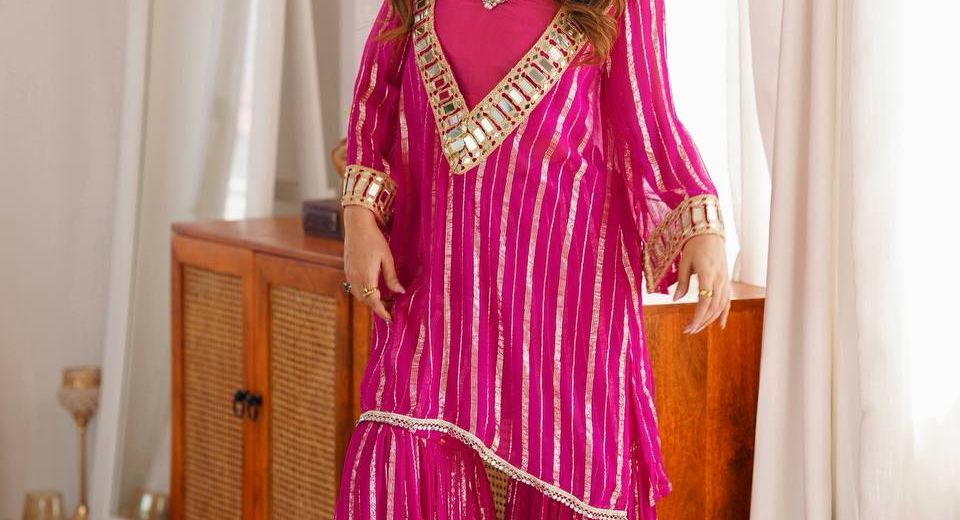
How to Choose Between a Short Kurta Sharara and a Gharara becomes much easier when you look closely at the lower garment, not only at the embroidery or colour. Both outfits can include a short kurta, a dupatta and a dramatic flared bottom, yet the flare is built differently. A sharara usually widens continuously from the waist or upper hip, while a gharara has a fitted upper section and a distinct flare created below the knee. That construction changes the movement, proportions, comfort and overall mood of the outfit.
The right choice depends on four practical questions: how much volume you want, where you need comfort, what the fabric can support and how formal the event will be. A soft georgette sharara may feel light for a sangeet, while a structured silk gharara can create a more traditional wedding silhouette. Understanding those differences will help you shop with greater accuracy and avoid choosing a set that looks attractive on a hanger but feels awkward after several hours of wear.
How to Choose Between a Short Kurta Sharara and a Gharara
A short kurta sharara is the better choice for fluid movement and a continuous, wide-leg silhouette, while a gharara is better for a more defined knee-level break and a classic, structured shape.
The distinction comes from construction. A sharara generally falls outward in a smooth line from the waistband, although some designs begin with a narrower upper leg before widening. A gharara is usually made from a fitted panel that follows the thigh and knee, followed by a gathered, pleated or heavily flared section below the knee. The join may be emphasised with piping, lace, embroidery or a change in fabric.
That visible break is the quickest way to identify a gharara. If the garment has a strong horizontal seam or gathered transition around the knee, it's likely a gharara. If the leg expands without a clear break, it's more likely a sharara. Some contemporary designs borrow details from both styles, so product descriptions and photographs should be checked carefully rather than relying only on the word "sarara" or "sharara."
The construction difference that changes the silhouette
The most important construction difference is the location of the flare: a sharara flares through the leg, whereas a gharara concentrates its volume below a fitted knee section.
How a sharara falls
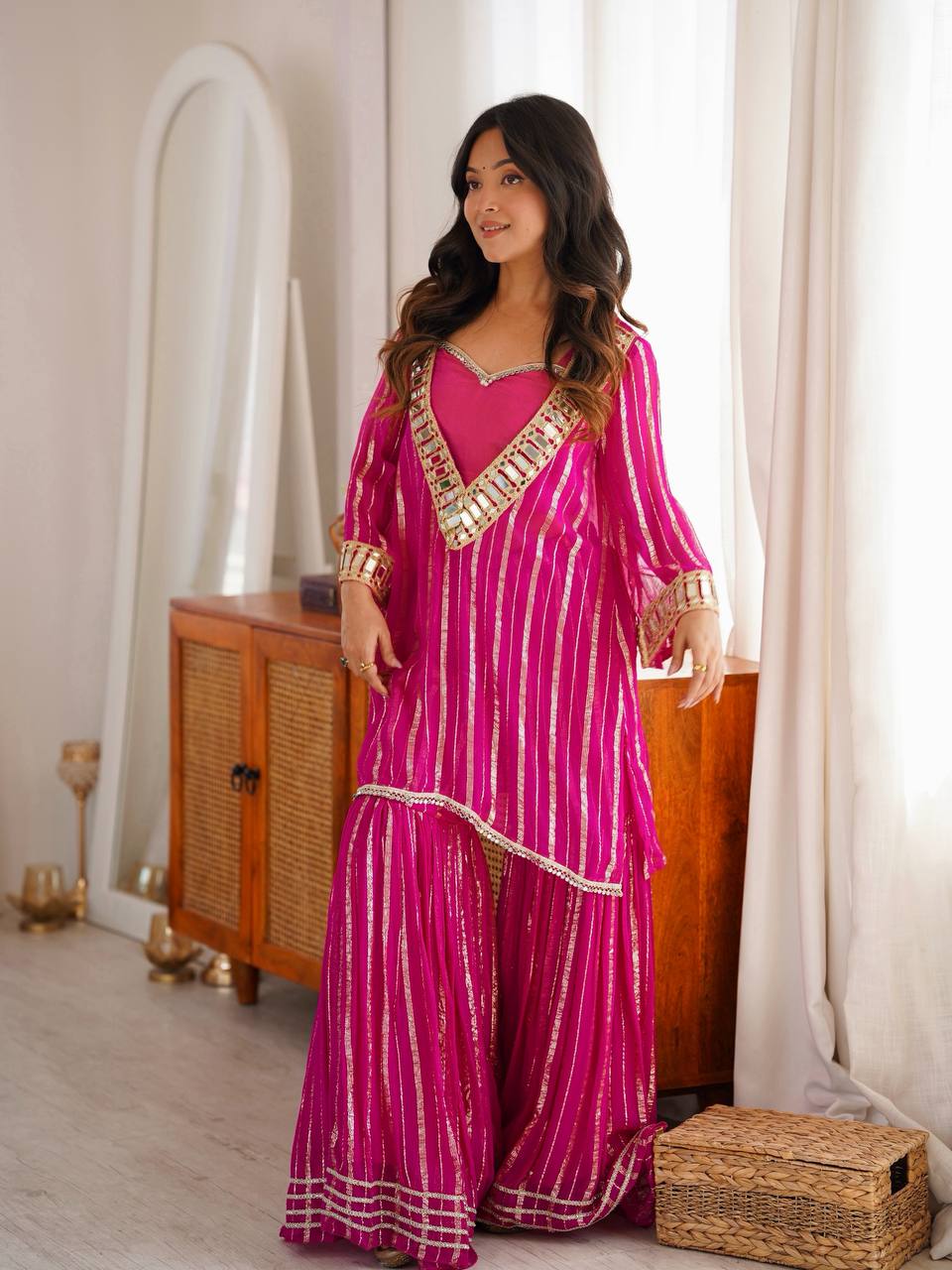
A sharara creates a long, uninterrupted sweep from the waist towards the hem. The leg may be cut from several panels to produce volume, or it may use a broad flare attached to a narrower upper portion. Because the flare begins relatively high, a sharara can look elongated when paired with a short kurta that ends near the hip or upper thigh.
Panel count affects both appearance and movement. Four to six panels produce moderate volume, while eight or more panels can create a fuller festive flare. Heavier panels increase the garment's weight, particularly when zari, sequins or dense embroidery are added near the hem. A wide sharara therefore needs a secure waistband and enough room at the hip to prevent pulling when you sit.
How a gharara is built
A gharara uses a fitted or semi-fitted section above the knee and a separate flared section below it. The lower section can be pleated, gathered, circular or made from multiple gores, and the seam is often treated as a decorative feature rather than hidden.
The result is a more sculpted silhouette. The fitted upper section defines the leg, while the lower flare creates movement when you walk. Time-honoured ghararas may use gota, lace or contrasting borders at the knee join. Modern ghararas may use tonal embroidery, velvet piping or a plain seam for a cleaner appearance.
A gharara can require more precise fitting than a sharara because the upper section must sit comfortably around the thigh and knee. A tight knee panel restricts walking and sitting, while a very loose panel can remove the characteristic shape. Ask for garment measurements at the waist, hip, thigh, knee and full length instead of relying on a single size label.
Which style suits your body proportions?
A short kurta sharara generally suits shoppers who want a continuous vertical line, while a gharara suits shoppers who enjoy a defined lower-leg break and more visible layering.
Body shape doesn't determine what you can wear, but proportion helps you predict how a silhouette will read. A short kurta ending near the hip exposes more of the flare, making the lower half the main visual focus. A kurta ending around mid-thigh creates more coverage and can balance a very voluminous sharara or gharara.
- For a petite frame: choose a short kurta with a clean neckline and a controlled flare. A very deep knee border on a gharara can visually divide the body, so a narrow tonal border or a continuous print may feel more proportionate.
- For a taller frame: both silhouettes work well, including broad shararas and dramatic gharara panels. A longer short kurta, a contrast dupatta or a prominent hem border can usefully distribute visual detail.
- For a fuller hip: a sharara with a smooth fall from the waist can skim without creating a strong horizontal break. If choosing a gharara, select a comfortable upper panel with minimal bulk at the thigh and place heavy embroidery below the knee.
- For a straighter frame: a gathered gharara or a multi-panel sharara adds dimension. Layered borders, textured silk and controlled pleats can create shape without requiring a very fitted kurta.
Kurta length is as important as bottom shape. A kurta that ends exactly at the widest part of the hip may make the silhouette look visually crowded. Moving the hem a few centimetres above or below that point can create a cleaner line. Side slits also help a short kurta sit naturally over a high-volume sharara.
How fabric, weight and flare affect comfort
Lightweight fabrics provide easier movement, while medium-weight silk and dense embellishment create more structure but require stronger construction and careful fitting.
Chanderi silk has a crisp, airy hand and works well when you want a sharara or gharara to hold a neat shape without feeling as heavy as brocade. The Pastel Blue Chanderi Silk Embroidered Sarara Set for Women illustrates how a lighter silk can support embroidery while retaining a graceful, relatively easy movement.
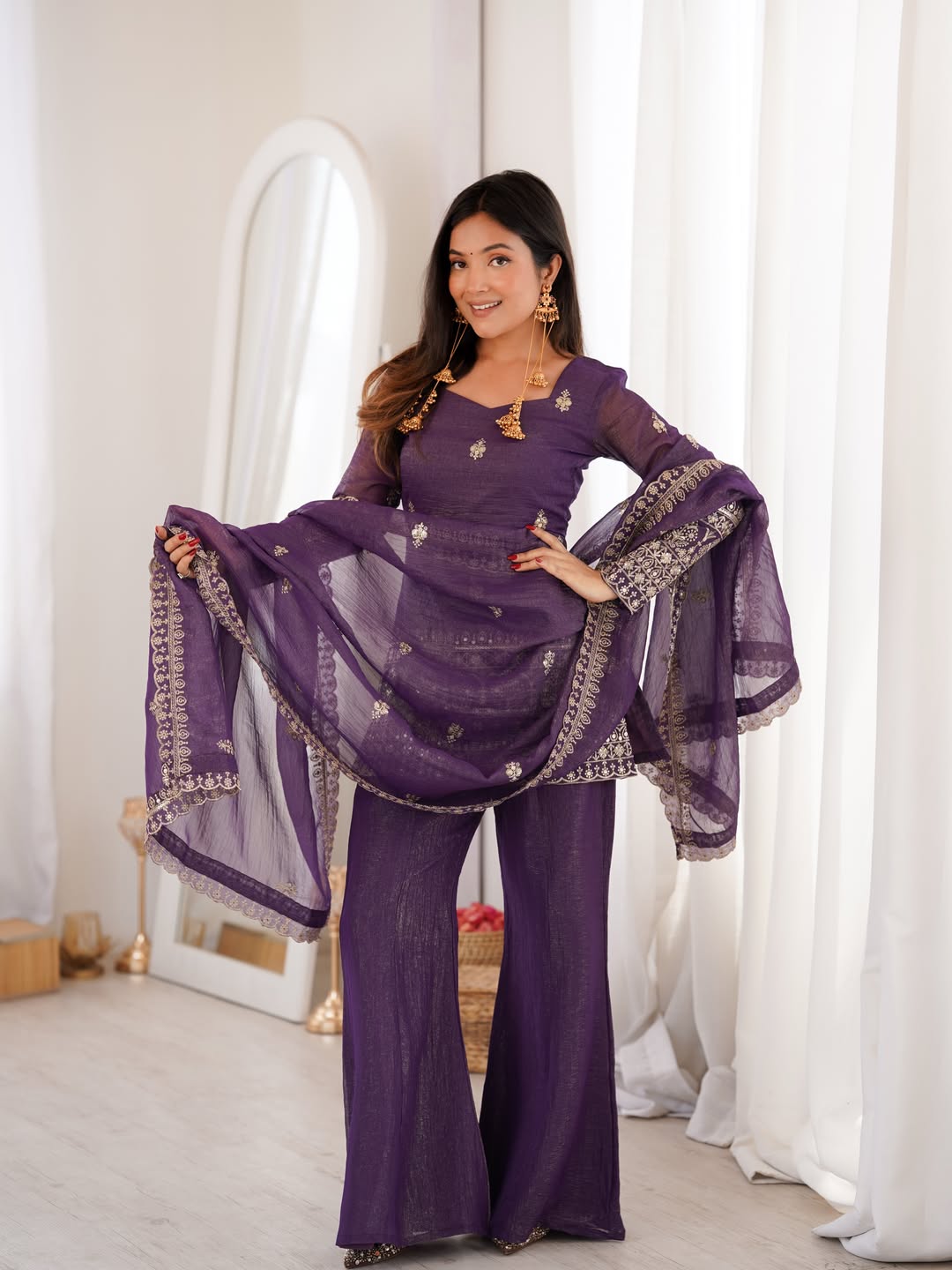
Silk blends and textured silks give a richer drape and are useful for evening celebrations. The Purple Crunchy Silk Sarara Set with Cording Embroidery Work has a more tactile surface, so its cording detail becomes part of the visual texture rather than relying only on shine. A crunchy or textured silk may hold volume beautifully, but it should have a smooth lining to reduce friction while walking.
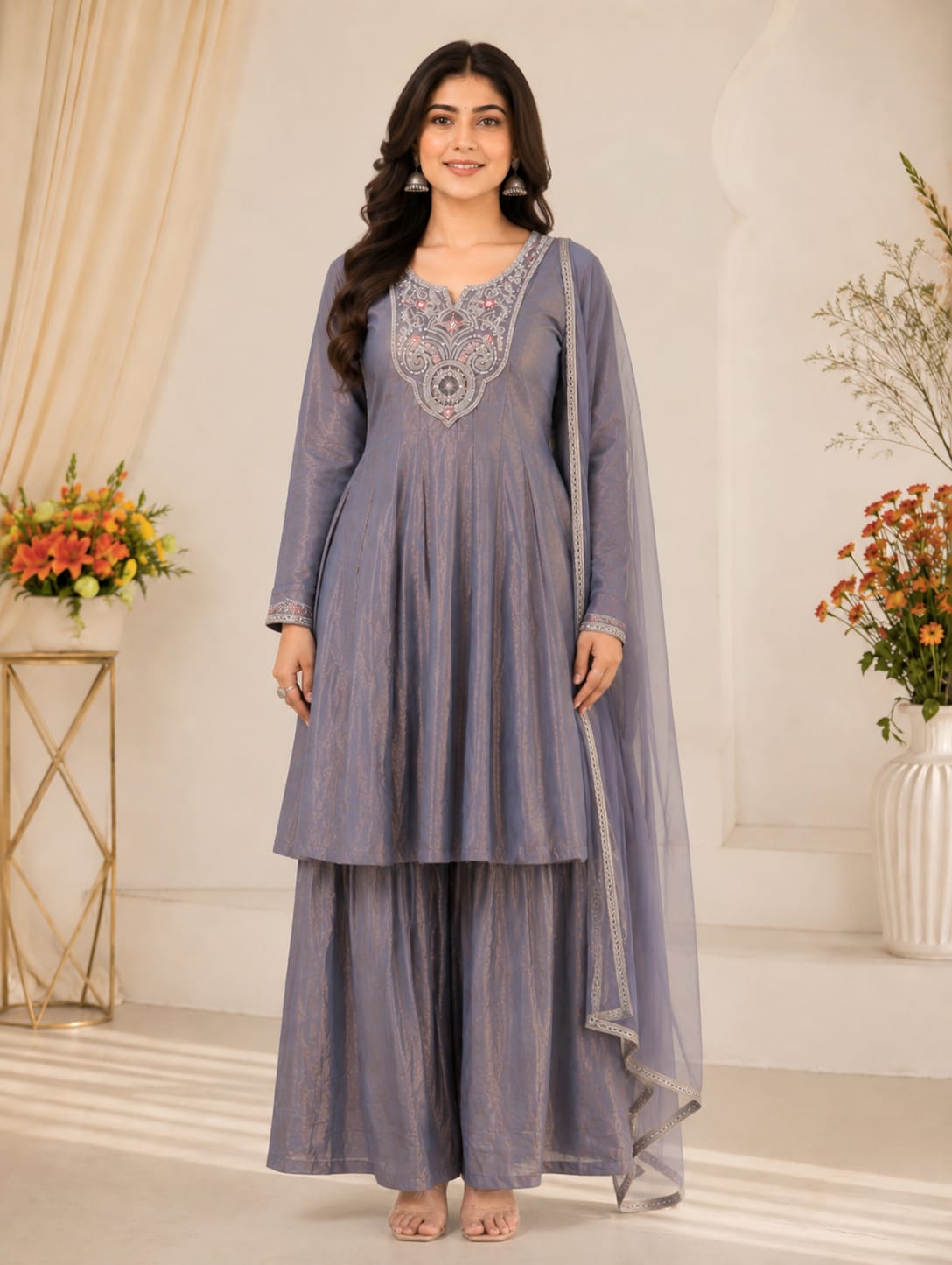
Fandy silk and similar synthetic silk fabrics can offer colour saturation, sheen and a structured fall. The Grey Fandy Silk Sarara Set with Embroidery and Dupatta demonstrates why a comparatively structured fabric can make a sarara silhouette look polished. Check whether the inner layer is breathable if the event is held outdoors or during warmer months.
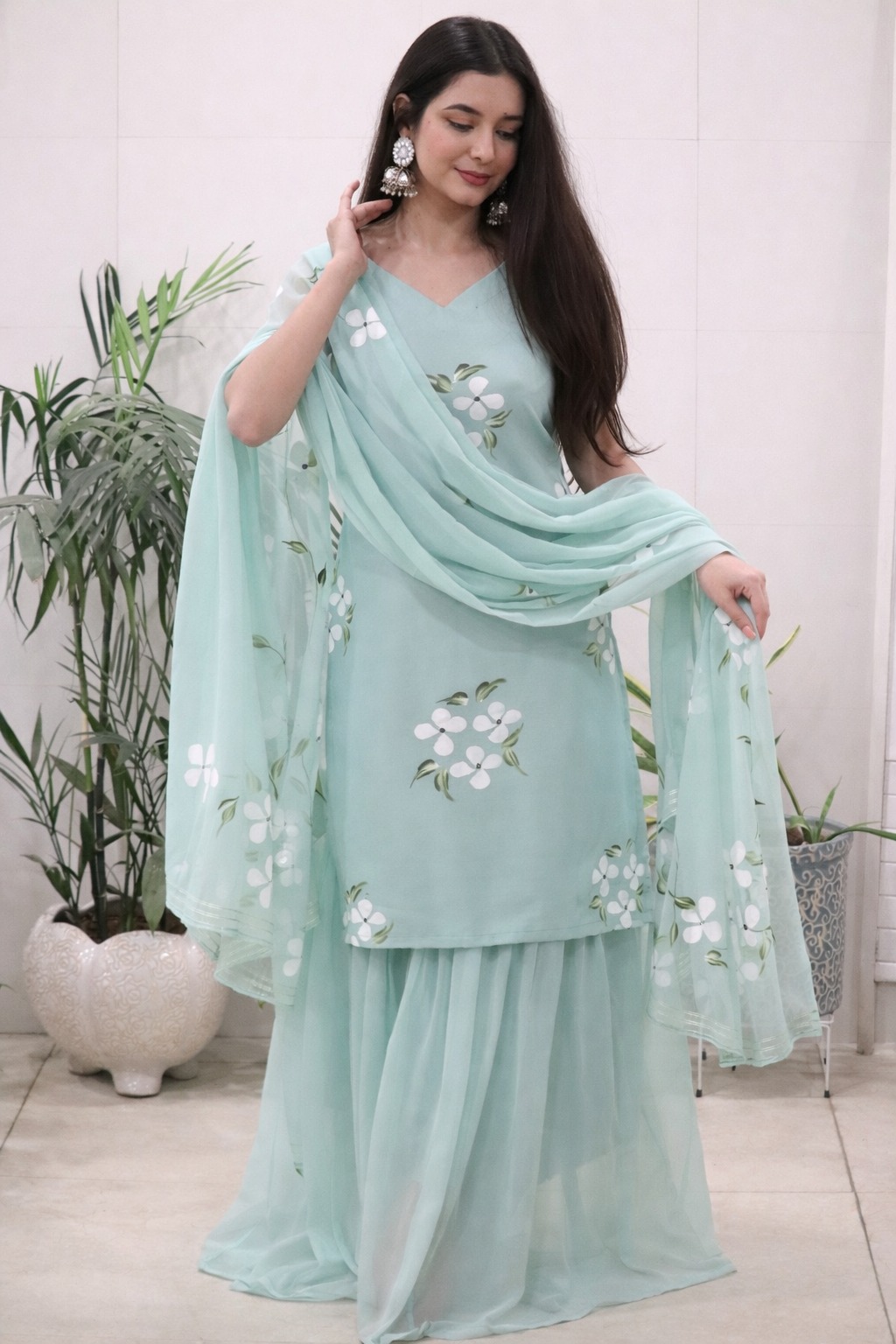
Embroidery and embellishment add weight unevenly. Zari near the hem pulls downward, sequins can catch on chairs or jewellery, and dense mirror work needs secure backing. The Elegant Mint Green Handpainted Sharara Set with Dupatta uses surface decoration as a focal point, so the rest of the styling can remain restrained. A heavy dupatta combined with a heavily worked hem may also require a broader waistband and stronger seam finishing.
Before buying, perform three simple tests. Walk ten steps, sit on a chair and lift one foot slightly as if climbing a stair. The waistband should not roll, the knee area should not pull, and the hem should not catch under the heel. These checks are especially useful for ghararas because the fitted upper section can feel comfortable while standing but restrictive when seated.
When should you wear a sharara or a gharara?
A sharara is usually the more versatile choice for sangeets, festive dinners and semi-formal celebrations, while a gharara is especially effective for weddings, heritage ceremonies and events where a stronger heritage silhouette is appropriate.
For a Haldi ceremony, breathable fabric, a manageable hem and washable or well-protected embellishment matter more than maximum volume. A bright sharara with a short kurta allows comfortable movement during games, photographs and floor seating. Avoid a very long dupatta if turmeric, flower petals or outdoor dust are likely to come into contact with the outfit.
For a mehendi event, a sharara offers useful mobility because the continuous flare doesn't create a pronounced knee seam. A printed kurta, colourful dupatta and lightweight embroidery can look festive without making it difficult to sit for henna application. Secure the dupatta with discreet pins so that the hands remain free.
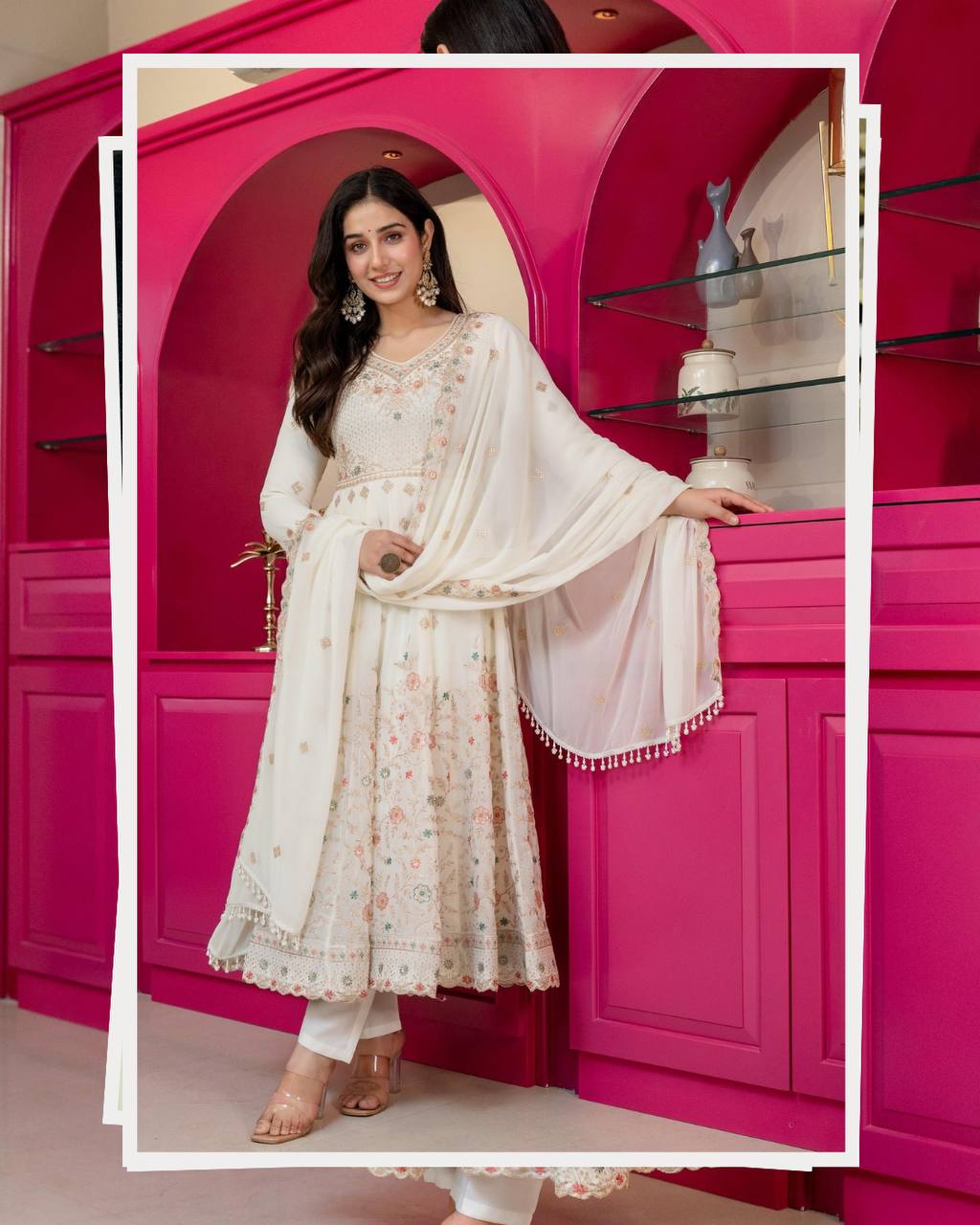
For a wedding reception, a gharara can provide a more formal, architectural outline. Dense zari, sequins, velvet borders and a contrasting knee join suit evening lighting, although the combination should be balanced with a relatively simple blouse or short kurta. The Ivory Anarkali Suit With Sequin Zari Embroidery And Dupatta shows how sequin zari can create occasion-ready sparkle; a gharara with similar shine should use controlled accessories to avoid visual overload.
For a family puja or daytime celebration, softer Chanderi silk, cotton silk or light georgette can feel more appropriate than heavily embellished synthetic silk. Cream, mint, ivory, lavender and pastel blue work well in natural light, while deeper purple, grey and jewel tones can look especially effective under evening lighting.
How should you style the short kurta and dupatta?
The short kurta should provide a clean visual anchor, while the dupatta should either balance the flare or deliberately reinforce the outfit's most decorative area.
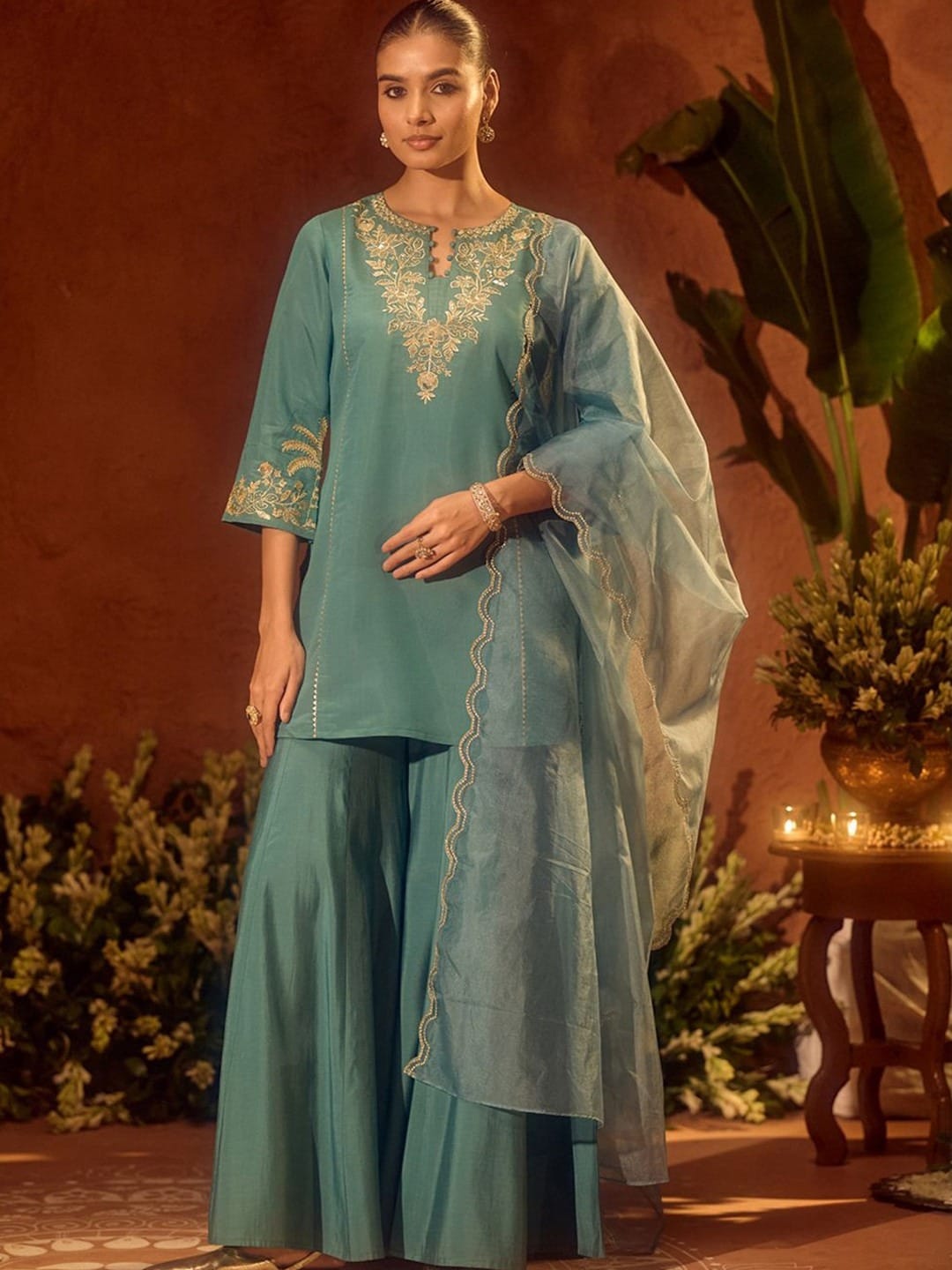
A short kurta with a sharara can be straight-cut, panelled, peplum-inspired or lightly flared. A straight kurta highlights the breadth of the bottom, while a gently shaped kurta prevents a very wide sharara from looking disconnected from the upper body. Neckline depth should also match the dupatta placement: a higher neckline works well with a shoulder drape, while a more open neckline leaves room for a necklace.
A gharara already contains a strong horizontal detail at the knee, so a heavily bordered dupatta can add another competing line. A plain or lightly embellished dupatta worn over one shoulder often keeps the silhouette clear. If the gharara has a simple knee join, a richly worked dupatta can supply the needed ceremony and colour.
Footwear should be chosen before finalising the hem. Measure the garment while wearing the heel height or flat footwear intended for the event. A sharara hem that sits too low can be stepped on during turns, while a gharara hem that ends too high can expose the ankle above the shoe. A 1 to 2 centimetre clearance from the floor is a practical target for most formal indoor wear.
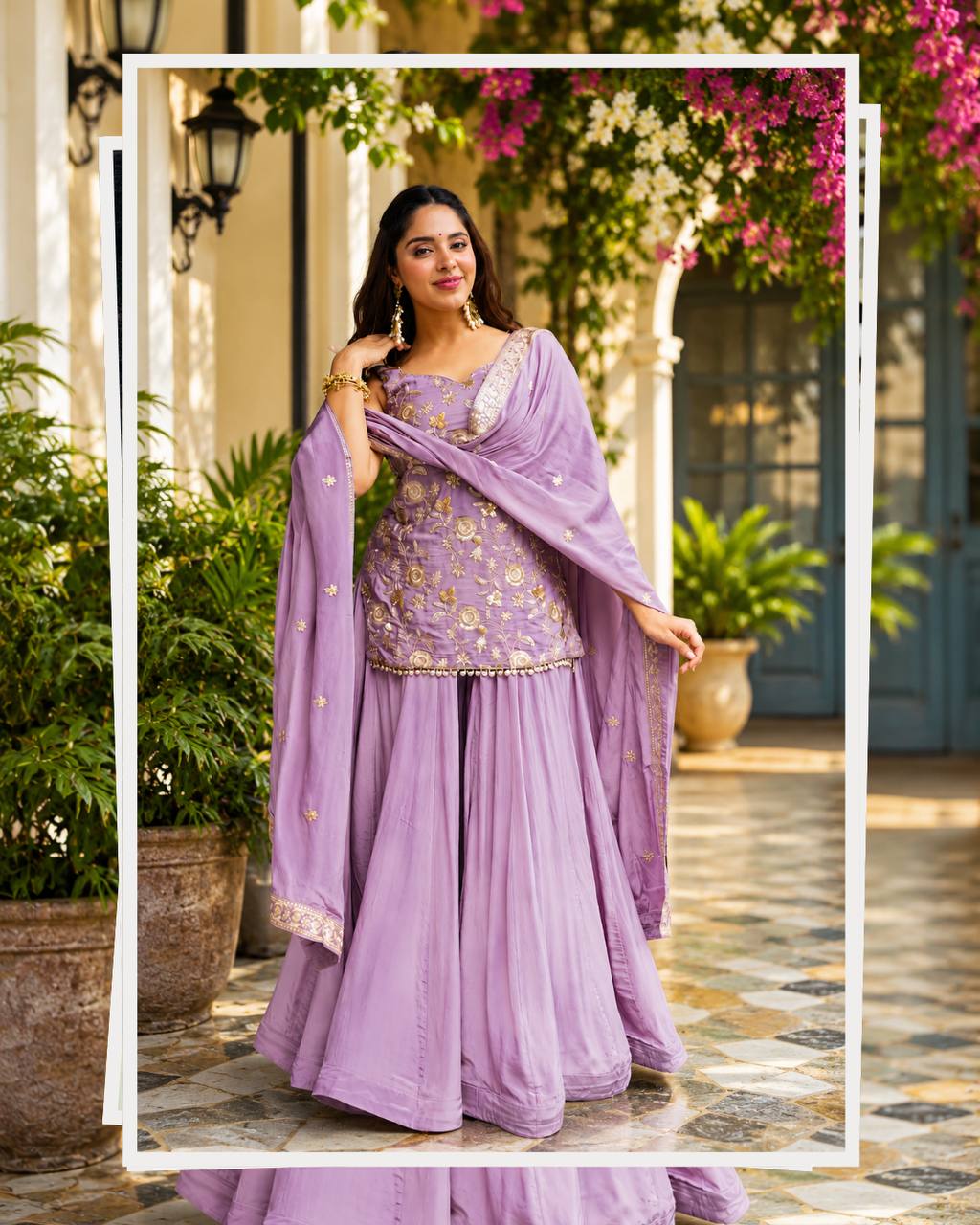
Jewellery can follow the textile rather than compete with it. Mirror work pairs well with silver-toned or oxidised accents, zari works naturally with gold-toned jewellery, and handpainted details benefit from picking one colour from the artwork for earrings or bangles. The Lavender Zari Sequins Sarara 3 Piece Suit Set | Varnavi would call for restrained sparkle elsewhere because zari and sequins already provide reflected light.
What should you check before ordering online?
Online shoppers should compare garment measurements, fabric composition, lining, closure type, alteration allowance and estimated delivery time before placing an order.
- Read the measurement chart: compare your body measurements with the garment's waist, hip, thigh and length measurements. A gharara needs particular attention to thigh and knee ease.
- Check the rise: the rise determines where the waistband sits and how much of the kurta overlaps the bottom. A high-rise sharara can make a short kurta appear shorter than expected.
- Confirm the lining: lined silk, georgette and embellished garments are usually more comfortable and less transparent. Ask whether the lining extends through the flared portion.
- Inspect the closure: elastic gives flexibility, while a side zip or hook-and-eye closure can create a cleaner waist. A drawstring can help with minor adjustment but should not replace correct sizing.
- Review the dupatta dimensions: a narrow dupatta may be easier for dancing, while a broad dupatta gives a more formal appearance. Check length as well as width.
- Allow alteration time: plan at least 7 to 10 days for standard tailoring before a major event. Hem shortening is usually simpler than changing a tight knee panel or reconstructing a heavily embellished waistband.
Product photographs can also reveal construction details. Look for a visible knee seam, the direction of pleats, the point where the flare begins and the way the hem behaves when the model walks. The Purple Crunchy Silk Sarara Set with Cording Embroidery Work and the Grey Fandy Silk Sarara Set with Embroidery and Dupatta are useful examples of why fabric texture and embroidery placement should be assessed together rather than separately.
How do you make the final decision?
Choose a sharara when movement, easy styling and a continuous flare matter most, and choose a gharara when you want a defined knee break, stronger traditional character and a more sculpted lower silhouette.
Choose a sharara if you'll be walking frequently, sitting on the floor, attending several events in the same outfit or styling the set with different dupattas. Choose a gharara if the event is highly festive, the fabric has enough structure to hold the lower flare and you're comfortable checking a more exact thigh and knee fit.
Colour and ornamentation should come after silhouette and comfort. A pastel Chanderi silk sharara can be more memorable than an uncomfortable heavily embellished gharara, while a well-fitted silk gharara can make a simple kurta look exceptionally ceremonial. The best purchase is the one whose construction matches the event, your movement needs and the amount of tailoring time available.
A practical final test is to imagine the complete four-hour experience: standing for photographs, eating while seated, walking across uneven ground, using the washroom and carrying a phone or small purse. The answer to How to Choose Between a Short Kurta Sharara and a Gharara becomes clear when the outfit works through those real situations, not only when it looks striking in a product image.
Questions to Ask Before Choosing a Short Kurta Sharara or Gharara
What is the main difference between a sharara and a gharara?
A sharara generally flares continuously from the waist or upper hip, while a gharara has a fitted upper leg and a separate flare below the knee. The visible knee-level join is the clearest identifying feature of a gharara.
Is a short kurta better with a sharara or a gharara?
A short kurta works with both, but it creates a smooth, elongated effect with a sharara and a more defined, layered effect with a gharara. Choose the sharara for fluid movement and the gharara for a stronger traditional silhouette.
Which is more comfortable for a wedding or sangeet?
A sharara is often more comfortable for a sangeet because the continuous flare allows easier walking and dancing. A gharara can also be comfortable when the thigh and knee panels have enough ease and the lower flare is not excessively heavy.
What fabric is best for a sharara set?
Chanderi silk, georgette and lightweight silk blends are practical choices because they offer movement without excessive weight. Heavier silk, dense zari and sequins create a more formal look but require good lining, secure seams and a supportive waistband.
How should a gharara fit around the knee?
A gharara should follow the thigh and knee without pulling, pinching or restricting a seated position. Measure the thigh and knee area as well as the waist and hip, and leave enough ease for walking and climbing stairs.
Can a sharara or gharara be worn for a Haldi ceremony?
A lightweight sharara is usually the easier choice for a Haldi ceremony because it supports movement and can be styled with a manageable dupatta. Select breathable fabric and avoid delicate, difficult-to-clean embellishment if the outfit will be exposed to turmeric or outdoor dust.




