How to Choose an Anarkali When You Have a Shorter Torso becomes much easier once you stop judging the garment only by its total length. The most important details are where the waist seam sits, how quickly the skirt begins to flare, where the hem ends and how the dupatta is placed. A well-proportioned Anarkali can lengthen the visual line of the body without requiring very high heels or uncomfortable tailoring.
A shorter torso means the distance from the shoulder to the natural waist is relatively small compared with the distance from the waist to the hip. The same person may still have long legs, a fuller bust, broad shoulders or a petite overall frame. An Anarkali should therefore be selected by proportion rather than height alone. Measure your upper body, locate your natural waist and assess the garment's seam and flare before choosing a design.
How to Choose an Anarkali When You Have a Shorter Torso: begin with the waistline
A waist seam positioned at the natural waist or slightly above it usually creates the most balanced line for a shorter torso. A raised seam gives the skirt more vertical space while preventing the bodice from visually compressing the upper body.
Many Anarkali suits use panels that join below the bust, at the natural waist or several inches below the waist. A seam directly under the bust can work when the bodice is fitted carefully, but an extremely high empire seam may make the bust look crowded. A natural-waist seam is generally the safer choice because it adds length without making the garment appear overly loose around the midsection.
Before ordering a ready-made salwar suit, compare your shoulder-to-waist measurement with the garment's bodice length. If your shoulder-to-waist measurement is 14 inches, a bodice designed around 17 or 18 inches may create a fold or cause the waist seam to drop. A tailor can often shorten the bodice from the shoulder or adjust the panel joining point, but shortening the hem will not correct a misplaced waist.
How should the Anarkali flare begin?
The flare should begin close to the natural waist or just below it rather than spreading widely from the bust. A gradual flare creates a long uninterrupted line from the upper body to the floor, while a sudden flare at the chest adds visual width and makes the torso look shorter.
Panelled Anarkalis are useful because vertical seams guide the eye downward. Look for four to eight reasonably narrow panels, especially when the panels are defined by piping, restrained embroidery or changes in fabric direction. Wide horizontal yokes, thick waist borders and heavy bands where the bodice meets the skirt can interrupt the line you want to create.
How to Choose an Anarkali When You Have a Shorter Torso: select the right length
An Anarkali should usually finish between the top of the foot and about one inch above the floor when worn with the intended footwear. That length preserves a continuous vertical line and prevents the hem from pooling around the ankles.
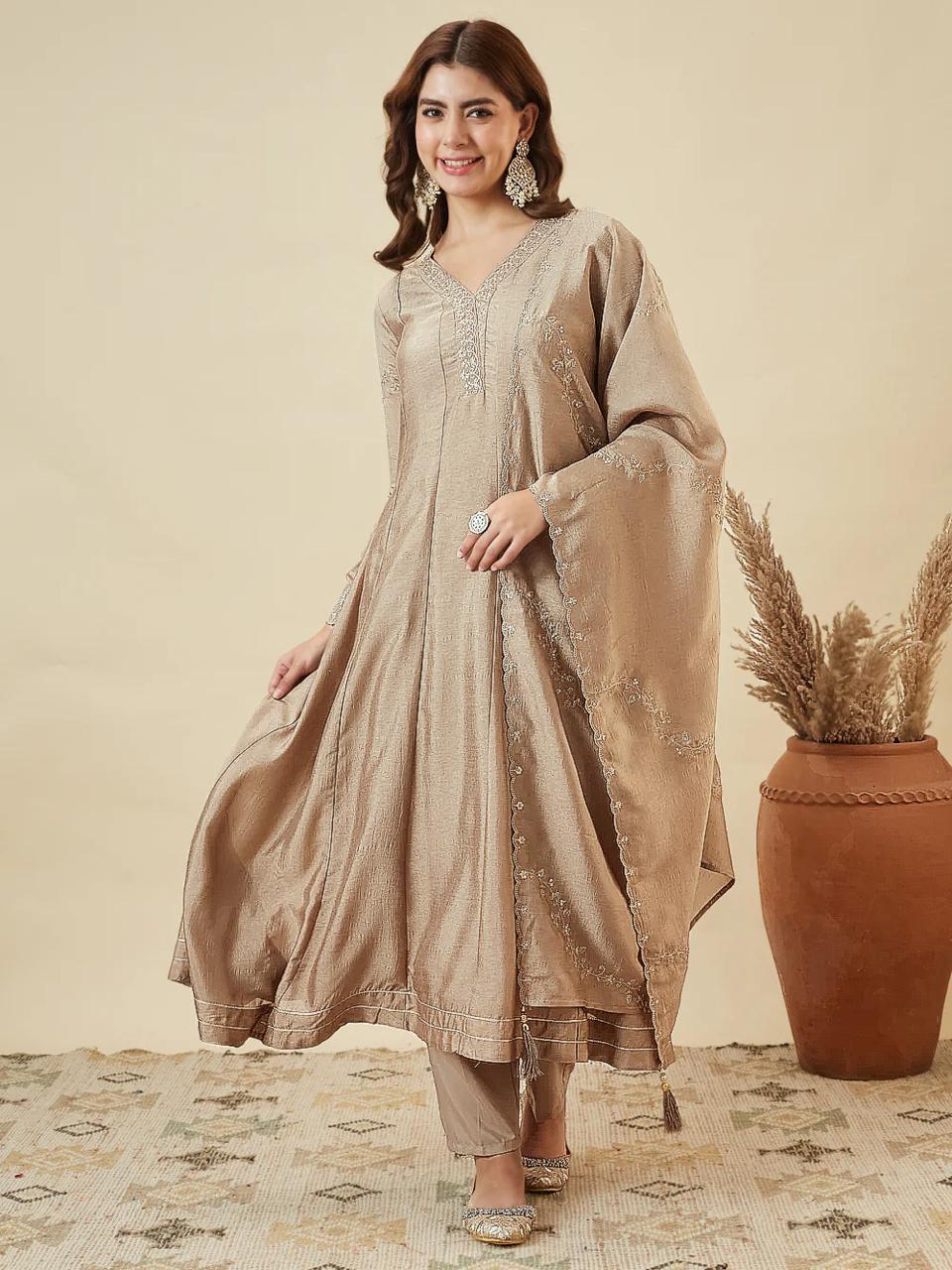
A floor-length Anarkali is not automatically elongating. Excess fabric at the bottom can make a shorter wearer look overwhelmed, particularly when the hem has a wide zari border or several layers of stiff net. A hem that lightly brushes the floor is more flattering than a hem that drags or forms multiple folds over the toes.
An ankle-length Anarkali can work well for daytime wear if the hem is clean and the trousers remain mostly hidden. The strongest version usually ends at the narrowest visible part above the ankle rather than across the broadest part of the calf. A calf-length cut can be harder to balance because it creates a strong horizontal stop in the lower half of the body.
Take your length measurement while wearing the footwear you plan to use. Measure from the highest shoulder point, over the bust, down to the floor, then subtract the height of the sole or heel. A two-inch difference in hem placement can change the entire proportion of an Anarkali, so do not rely on a generic height chart alone.
For a formal event, a low platform or two-inch heel can provide practical clearance without forcing the garment into an impractical floor sweep. For daily wear, a hem that sits just above the foot is easier to manage with juttis, flat sandals or low block heels.
How to Choose an Anarkali When You Have a Shorter Torso: use the neckline strategically
A moderate V-neck, narrow U-neck or elongated square neckline usually adds vertical direction to a shorter torso. These shapes expose a controlled amount of the upper chest and make the space between the face and waist appear longer.
A deep neckline is not required. A V-neck that ends two to four inches below the collarbone can provide enough vertical emphasis for everyday or festive dressing. A narrow keyhole can create a similar effect when modest coverage is preferred. Broad boat necks, high round necks and wide collars add horizontal width and may make the upper body appear more compact.
The neckline should also suit the bust. A very deep V on a fuller bust may pull open or require constant adjustment, which defeats the purpose of a clean vertical line. A shaped V-neck with an attached modesty panel is often more practical for weddings, family ceremonies and long periods of sitting.
Three-quarter sleeves are a reliable option because they expose the wrist and keep the sleeve line neat. Sleeves ending at the fullest part of the forearm can create an unwanted horizontal break. If you prefer full sleeves, choose a close-fitting sleeve in a similar colour to the bodice rather than a heavily contrasting cuff.
How to Choose an Anarkali When You Have a Shorter Torso: control fabric and embellishment
Light to medium-weight fabrics with controlled drape usually suit a shorter torso better than very stiff, bulky layers. Rayon cotton, georgette, crepe, soft silk blends and fluid Chanderi can fall close to the body while allowing the skirt to move.
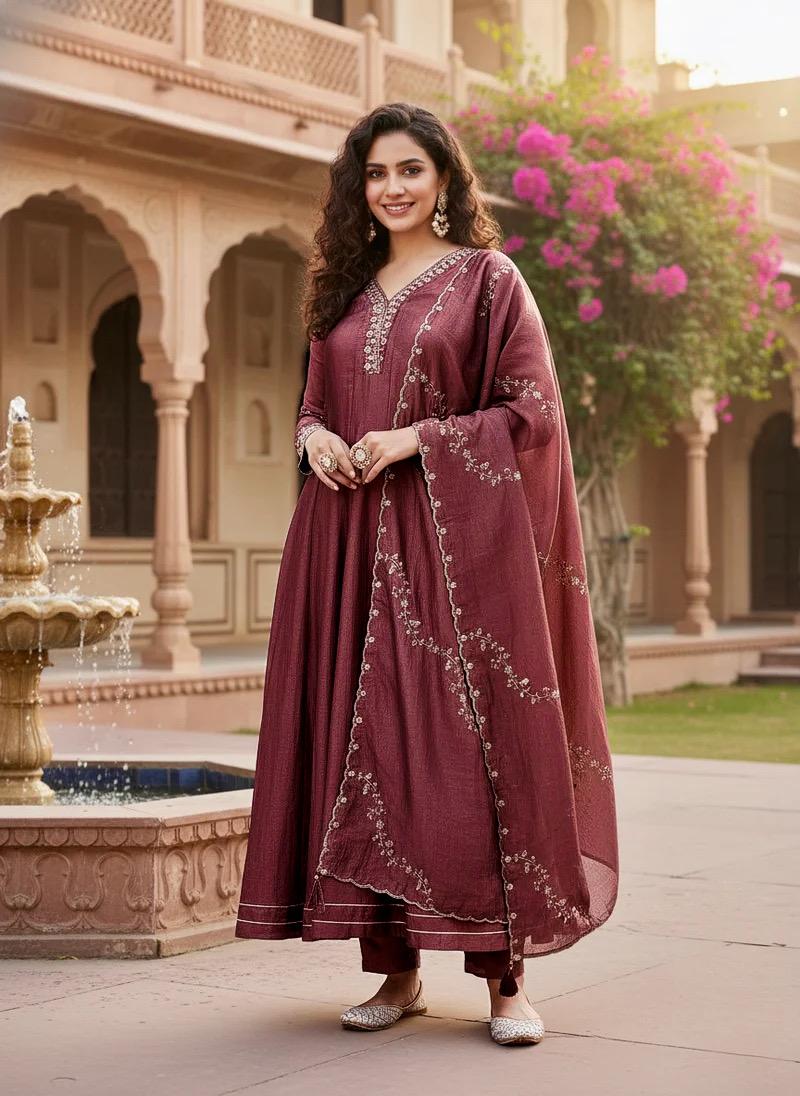
Rayon cotton can be especially comfortable for a long event because it does not require the rigid structure of multiple net layers. Maroon Embroidered Rayon Cotton Anarkali Suit Set | Varnavi is an example of why a fluid body can be useful: the material can follow the vertical fall of the garment instead of creating a broad shelf at the waist. When choosing a similar style, check whether the fabric is lined and whether the flare remains smooth after sitting.
Banarasi silk, brocade and heavily layered fabrics can still work, but their placement matters. A broad Banarasi border at the waist visually shortens the torso, while a narrow border concentrated at the hem keeps attention lower. Zari, sequins and moti work are most lengthening when they appear in vertical motifs, scattered details or narrow panel lines rather than as a dense horizontal yoke.
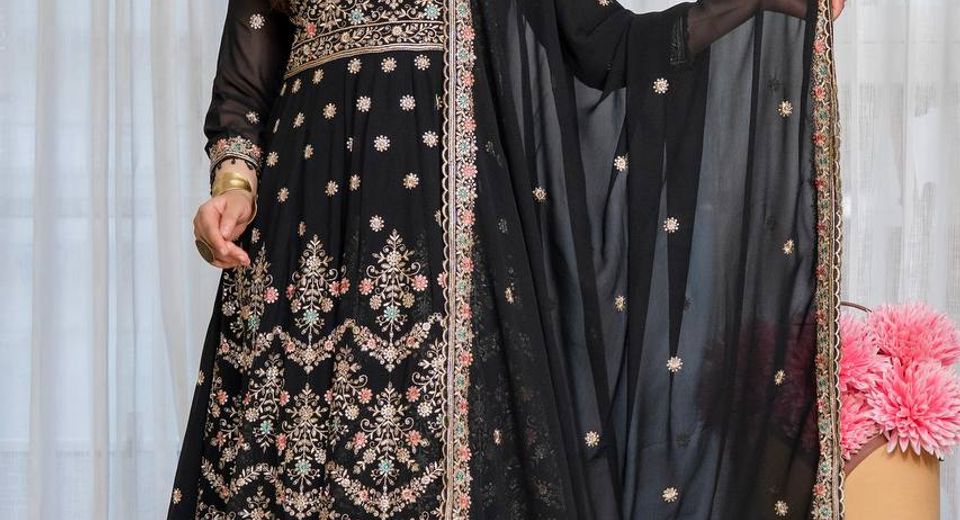
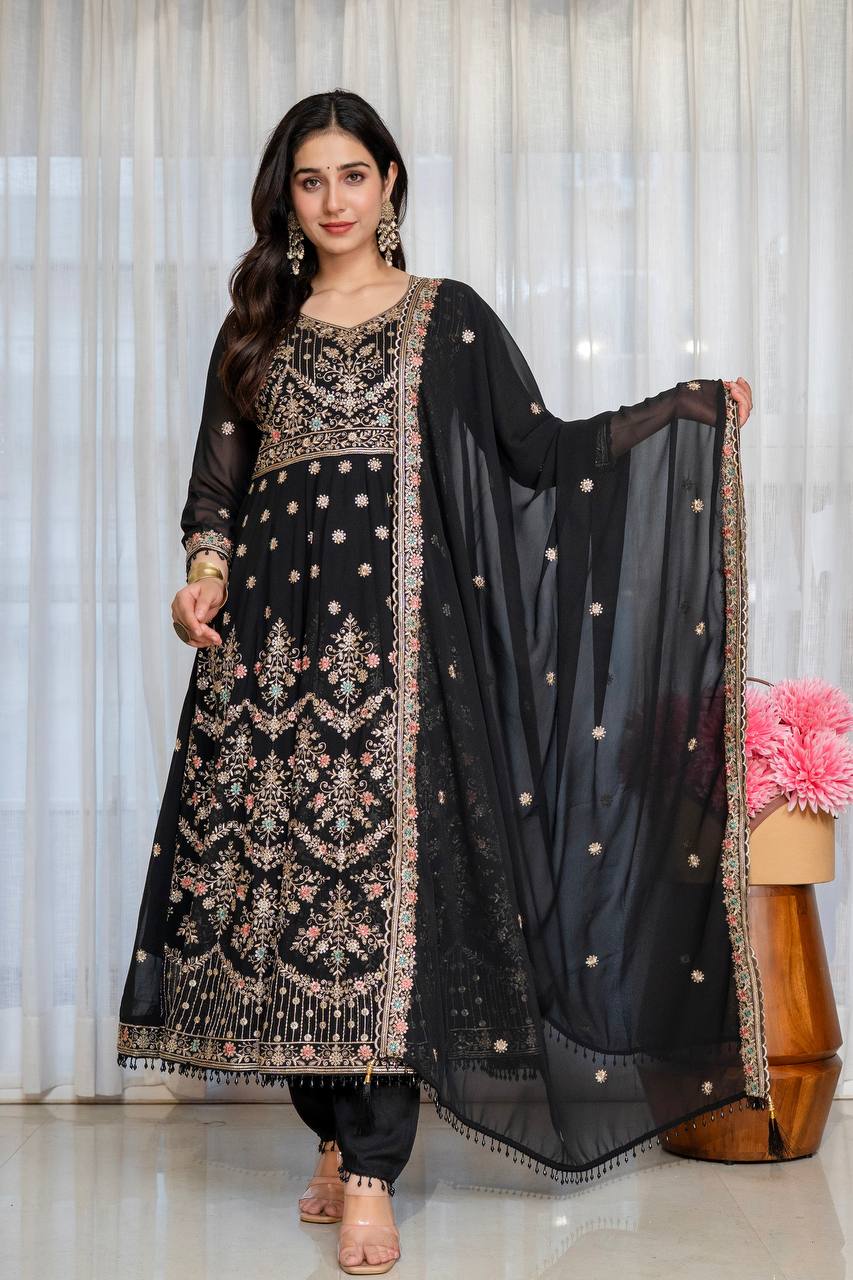
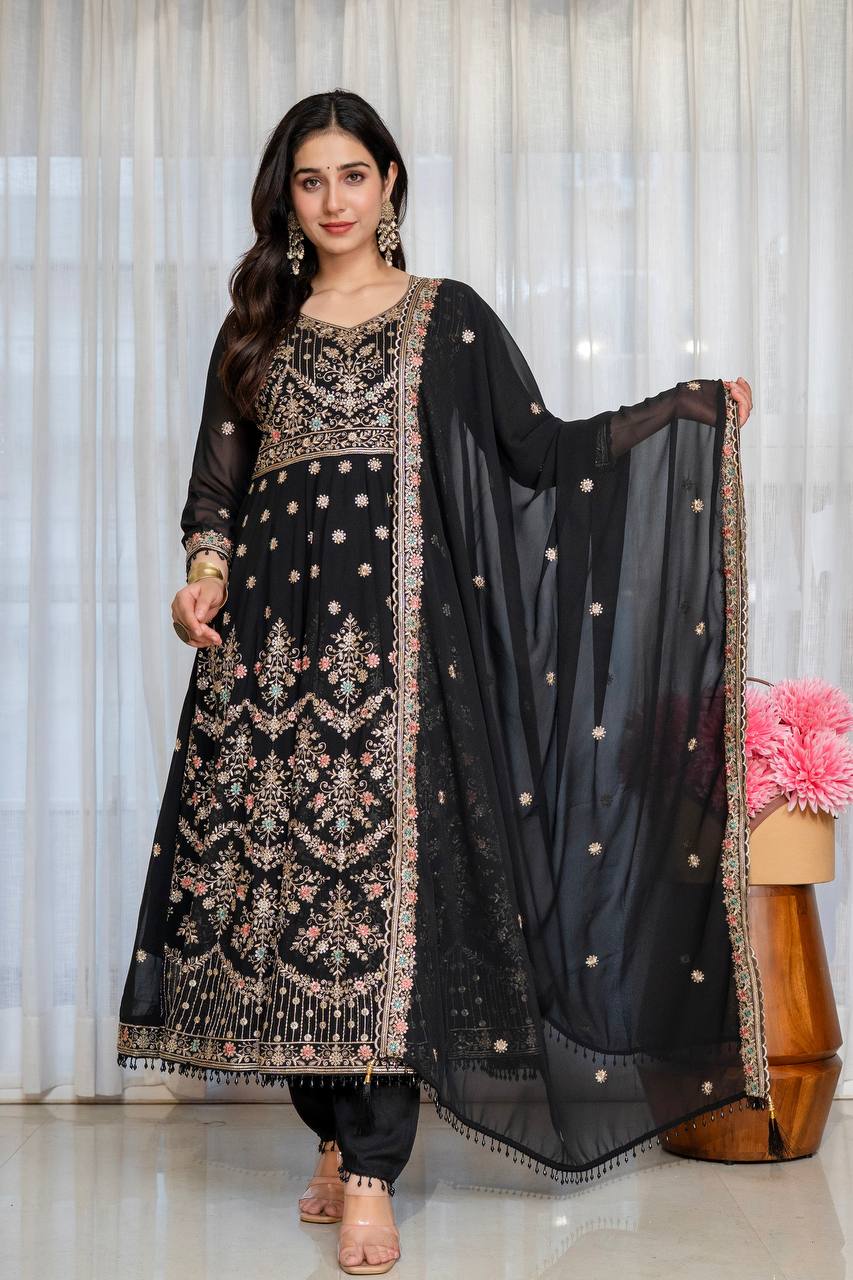
Black Anarkali Suit with Zari, Sequins & Moti Lace Work demonstrates how reflective surface detail can be balanced against a dark base. For a shorter torso, choose a design with the least concentrated embellishment at the bust and waist. Black Anarkali Suit Set with Sequin Zari and Moti Lace Work can be approached in the same way: let the skirt's fall and the vertical movement of the panels do more work than a wide waist ornament.
What should you do with borders and motifs?
Keep the strongest horizontal border at the hem and use narrow borders at the neckline or sleeve. A hem border grounds the outfit, whereas a thick band placed immediately below the bust divides the body at its shortest point.
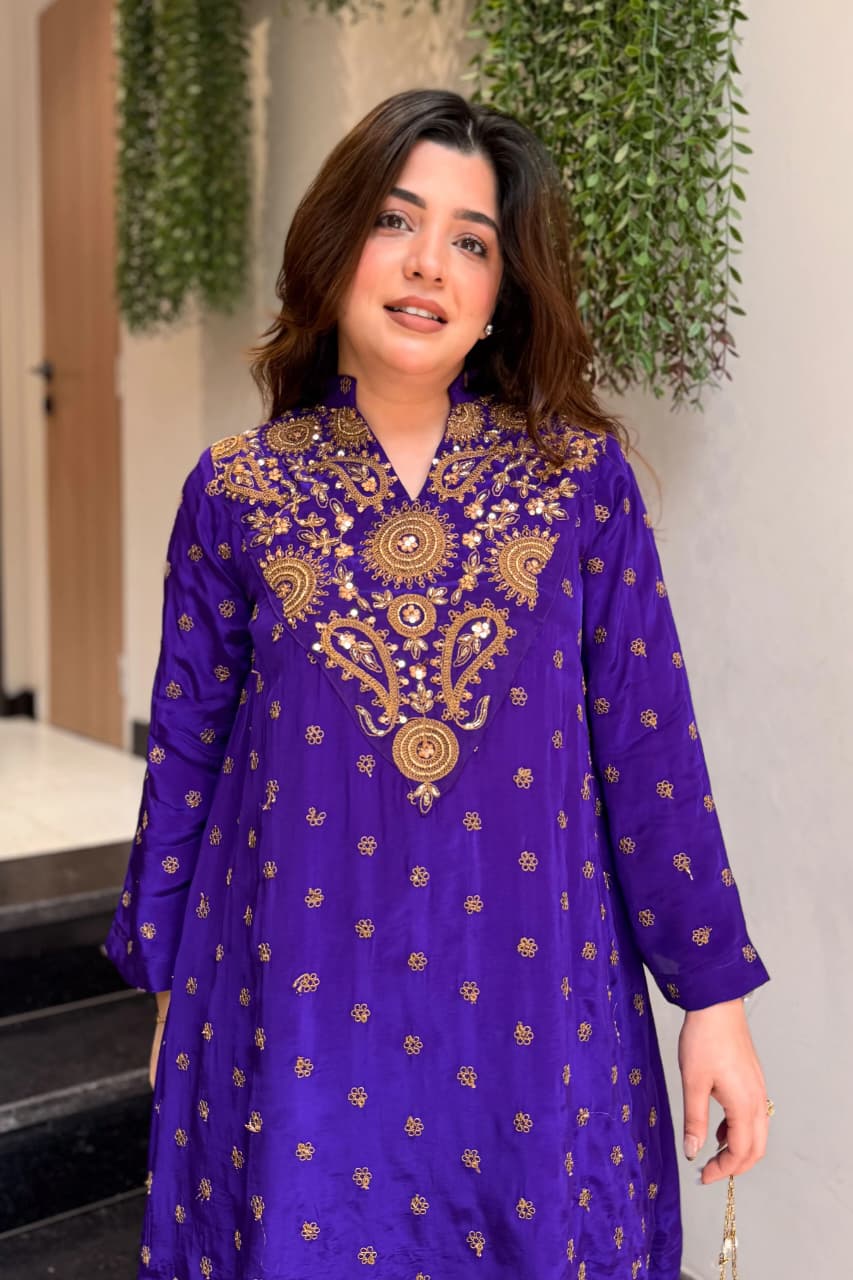
Small to medium motifs distributed across the skirt are generally easier to balance than one oversized motif centred on the torso. Vertical butis, elongated florals and narrow paisley arrangements draw the eye down. Large medallions placed over the abdomen or broad contrasting yokes draw attention to the torso's limited length.
Black Embroidered Anarkali Suit Set with Zari Work is a useful example of how embellishment can be evaluated by location rather than by the amount of shine. A black base creates continuity, but a dense gold yoke would still create a horizontal interruption. Choose the panel, border and neckline arrangement that keeps the upper body visually open.
How to Choose an Anarkali When You Have a Shorter Torso: use colour and print well
A low-contrast colour relationship between the bodice and skirt generally makes an Anarkali look taller. Tonal dressing does not have to mean wearing one colour from head to toe; related shades such as ivory and champagne, maroon and wine or emerald and deep green can create continuity.
A single dark colour can be effective, but dark clothing is not the only solution. Green Embroidered Anarkali Suit Set for Women can look lengthening when the dupatta, trousers and embroidery remain within a close green or neutral family. Strong contrast between a light bodice and a dark skirt creates a horizontal division that can shorten the torso.
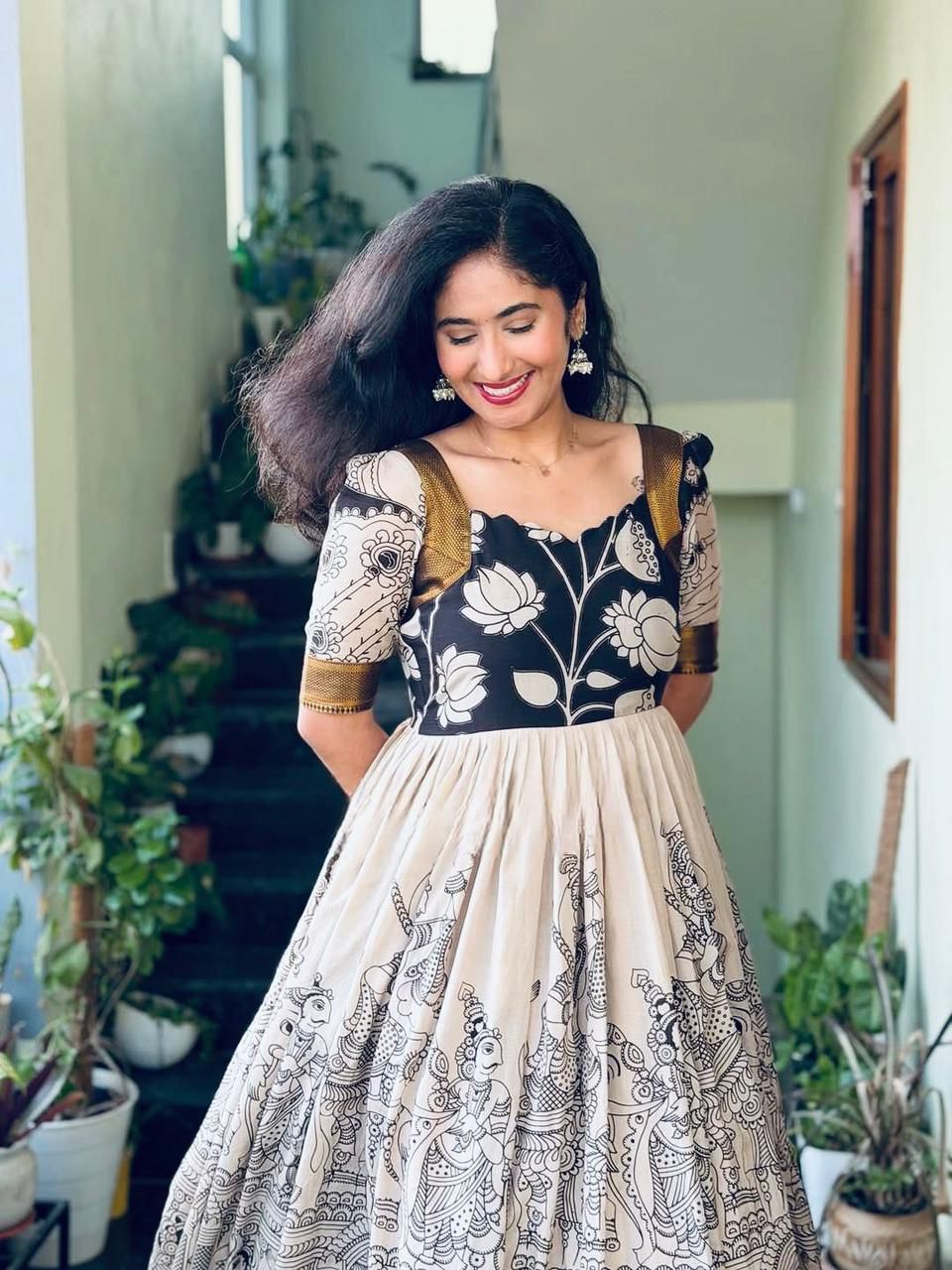
Printed Anarkalis need careful scale. A small or medium repeat tends to preserve the garment's flow, while a large border print placed across the waist can widen and shorten the upper body. Kalamkari Print Salwar Suits can be styled successfully by selecting a print with vertical vines, elongated florals or a darker lower half rather than a wide band at the bodice.
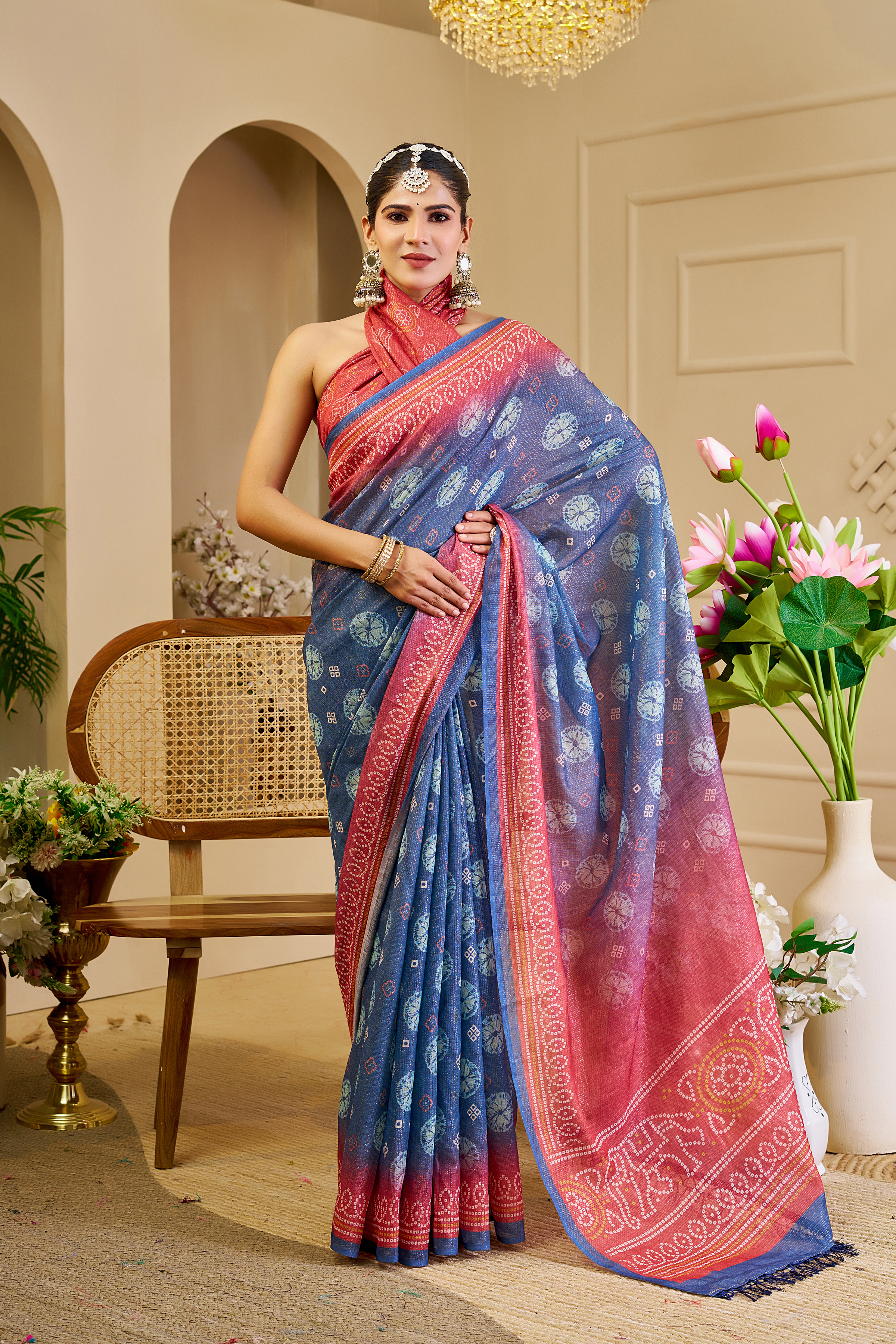
Regional-inspired colour and pattern do not have to be excluded. Maharashtra Paithani Inspired Salwar Suits often bring strong borders into the design, so look for versions where the main border stays near the hem and the upper body remains relatively clean. Gujarat Bandhej Salwar Suits can also work when the bandhani dots are evenly distributed and the dupatta does not add a bulky knot at the waist.
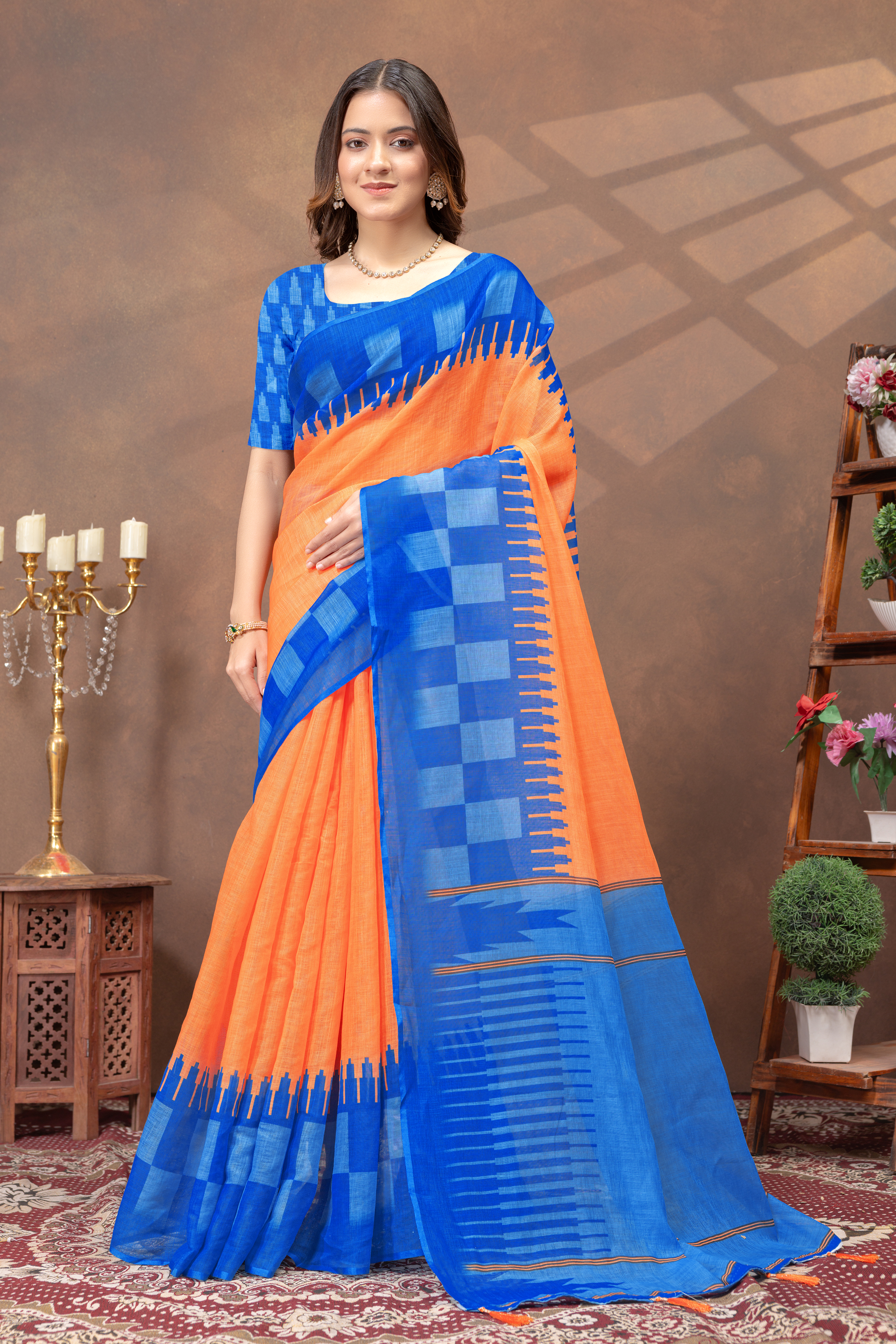
Odisha Sambalpuri Salwar Suits may include striking geometric borders and traditional motifs. When choosing an Anarkali-inspired silhouette from this visual language, place the strongest pattern below the hip or near the hem. A clean upper panel with a narrow neckline border will preserve more vertical flow than a wide patterned yoke.
How to Choose an Anarkali When You Have a Shorter Torso: place the dupatta carefully
A dupatta draped in a long, narrow line over one shoulder is usually the most elongating arrangement for a shorter torso. Let one end fall toward the knee or below while keeping the opposite side close to the shoulder.
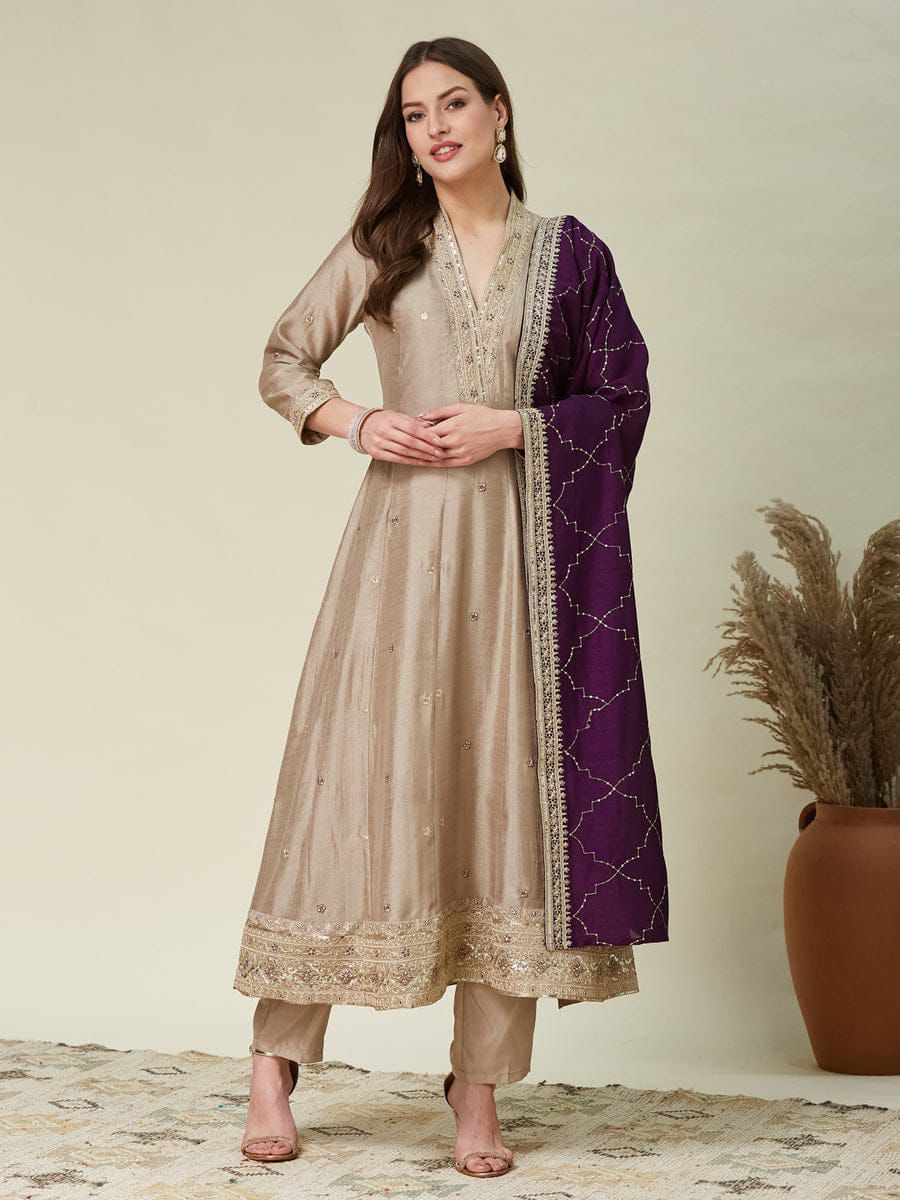
A wide horizontal dupatta spread across the chest and tied at the waist creates a visible cross-line. That arrangement may be comfortable for modest coverage, but it can visually reduce the distance between the shoulders and natural waist. If you need fuller coverage, pleat the dupatta narrowly and secure it at the shoulder, allowing the fabric to fall vertically along one side.
A front drape can work when the fabric is light and the pleats are slim. Avoid a bulky fold across the bust, a large brooch at the waist or a heavily padded shoulder arrangement. Pinning the dupatta two or three inches behind the shoulder point can help it fall beside the body rather than directly across the torso.
For a Haldi ceremony, a lighter dupatta in organza, chiffon or soft cotton can provide colour without adding weight across the upper body. For a wedding reception, a zari-edged dupatta is effective when the border is allowed to fall vertically instead of being wrapped tightly around the waist.
How to Choose an Anarkali When You Have a Shorter Torso: check the fit before buying
The best Anarkali fit leaves enough room at the bust and upper arm while keeping the shoulder, neckline and waist seam in place. A garment that is too tight at the bust may ride upward, while a garment that is too loose at the shoulder can make the entire silhouette look shorter.
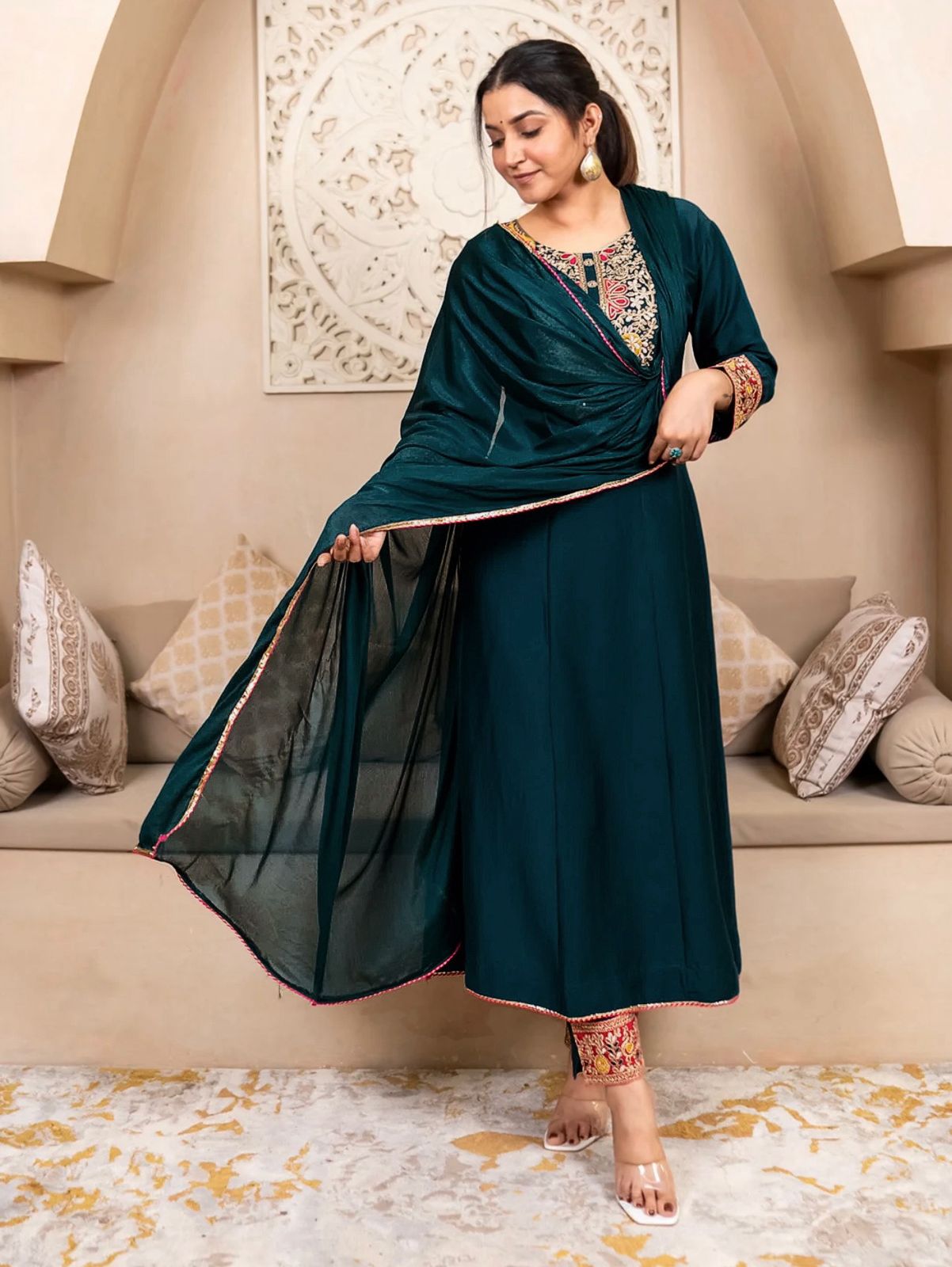
Check four measurements before purchasing: shoulder width, bust circumference, shoulder-to-waist length and shoulder-to-hem length. Also check the sleeve opening and the finished flare if those measurements are provided. A ready-made size chart cannot tell you whether a particular seam will match your body, so compare garment measurements with a well-fitting kurta you already own.
Try sitting down if the garment is available in person. The waist seam should not climb sharply toward the bust, the flare should spread without pulling and the lining should not twist. For online purchases, read the fabric description, inspect the close-up photographs and confirm whether alterations are possible before ordering.
Small alterations often produce a greater improvement than changing the entire design. A tailor can raise the shoulder seam, shorten a bodice, reduce excess fabric at the side seams or adjust sleeve length. Altering the waist seam is more complicated when embroidery crosses the joining point, so selecting the correct seam placement at the buying stage is preferable.
Punjab Patiala Salwar Suits are built around a different lower-body volume from a classic Anarkali, but the same proportion principle applies when comparing silhouettes. Generous pleats or a low crotch line can add visual weight below the waist, while a cleaner, longer Anarkali line may feel more balanced for a short torso. Choose the silhouette that supports your natural proportions instead of following a trend designed for a different cut.
How to Choose an Anarkali When You Have a Shorter Torso: use a final fitting checklist
A five-minute fitting check can reveal whether an Anarkali will lengthen or compress your proportions. Put on the intended footwear, stand naturally and assess the seam, neckline, flare, hem and dupatta together rather than evaluating each feature separately.
- Check the shoulder: The shoulder seam should sit at the edge of the shoulder without collapsing inward or extending down the arm.
- Check the waist: The waist seam should sit at your natural waist or slightly above it, not several inches below the bust or across the upper hip.
- Check the flare: The skirt should begin gradually and fall without a stiff shelf at the chest.
- Check the hem: The hem should skim the foot or sit slightly above the floor with the chosen footwear.
- Check the decoration: The densest zari, sequin or border detail should not form a wide band across the shortest part of the torso.
- Check the dupatta: The drape should create a vertical fall rather than a thick horizontal wrap at the waist.
The most flattering choice may be a simple Anarkali with a clean bodice, a measured flare and a narrow hem border rather than the most heavily embellished option. Proportion, fabric behaviour and correct measurements have more effect on the final silhouette than a label such as petite, tall or regular.
Common Questions About Choosing an Anarkali for a Shorter Torso
Which Anarkali length is best for a shorter torso?
A near-floor-length Anarkali that lightly skims the top of the foot is usually the most elongating option. Measure the garment with your intended footwear so the hem does not drag or create bulky folds.
Should a short-torso wearer choose an empire-waist Anarkali?
An empire waist can work when the seam sits slightly below the bust and the bodice is fitted smoothly. A seam placed directly under the bust may make the upper body look crowded, so a natural-waist seam is often easier to balance.
Which neckline makes an Anarkali look longer?
A moderate V-neck, narrow U-neck or elongated square neckline adds vertical direction to the upper body. A very wide boat neck or high round neck can add a horizontal effect and make the torso appear more compact.
Does a heavily embroidered Anarkali suit a shorter torso?
Heavy embroidery can suit a shorter torso when the densest work is placed on the skirt or hem rather than across the bust and waist. Vertical motifs, narrow panel details and a low-contrast colour scheme preserve more visual length.
How should I drape a dupatta with an Anarkali if my torso is short?
Drape the dupatta narrowly over one shoulder and allow one end to fall vertically toward the knee or below. Avoid a bulky horizontal wrap, thick waist knot or wide fold across the chest.
Can a printed Anarkali flatter a shorter torso?
A printed Anarkali can flatter a shorter torso when the print has a small or medium repeat and the strongest border stays near the hem. Large motifs or contrasting horizontal bands across the waist can make the upper body look shorter.