Key takeaways
- A wedding Banarasi silk saree should be chosen according to the wearer's role, ceremony timing, climate and expected hours of wear.
- A heavier zari design creates a formal bridal effect, while lighter Banarasi soft silk is usually more comfortable for guests and long ceremonies.
- Colour should be compared with the wedding function, jewellery, blouse plan and lighting rather than selected from a screen alone.
- A genuine purchase check should include fibre description, zari details, measurements, blouse-piece details, delivery timing and a clear care method.
- A blouse should be planned before buying because Banarasi borders and pallu motifs determine sleeve length, neckline placement and fabric requirements.
The wedding invitation is open on your phone, the blouse tailor wants measurements tomorrow, and three saree colours look completely different under indoor lighting. That is exactly when learning how to choose a banarasi silk saree for wedding celebrations becomes useful: the right decision depends on more than colour or a festive-looking zari border. Weave, weight, drape, ceremony, jewellery and care all affect whether the saree feels beautiful after six hours of wearing it.
A Banarasi silk saree can suit a bride, the bride's mother, a close family member or a wedding guest, but each wearer needs a different balance of grandeur and ease. The following numbered method helps you compare sarees rationally, especially when shopping online and unable to touch the fabric.
1. How to choose a banarasi silk saree for wedding functions
Choose the saree's visual weight according to your role and the specific wedding function before comparing colours. A bridal pheras ceremony, reception, Haldi ceremony and daytime family lunch don't demand the same level of zari or density.
For the main wedding or reception, a rich Banarasi silk saree with a broad zari border and an ornate pallu creates the formal presence expected from the bride or immediate family. A close relative can choose a strong border with a less dense body pattern. A guest usually benefits from a lighter saree that remains comfortable through greetings, photographs and travel between venues.
The Haldi ceremony needs extra practical thought. Turmeric, flower petals and outdoor seating can expose a saree to stains and dust, so a heavily embellished piece may be better reserved for a cleaner, more controlled function. A lighter colour can look fresh for daytime wear, but deep maroon, wine, purple and green often photograph reliably under mixed wedding lighting.
Write down the function, venue, start time and expected wearing duration. A saree for a two-hour evening reception can be more elaborate than one for an eight-hour ceremony that includes standing, sitting on the floor and repeated movement.
2. How to choose a banarasi silk saree for wedding quality and weight
Check the listed fibre, construction and approximate weight because the word Banarasi alone doesn't establish whether a saree is pure silk, soft silk, a blend or a Banarasi-inspired design.
Read the material description carefully. "Banarasi silk," "Banarasi soft silk" and "silk blend" should not be treated as interchangeable terms. If a listing doesn't clearly state the fibre composition or describes the pattern only as inspired, ask the seller for clarification before placing an order. A Banarasi Silk original purchase should include enough information for you to understand what you're paying for.
Zari changes the appearance, weight and maintenance needs of a saree. Gold-toned zari creates a traditional bridal finish, while silver-toned or mixed metallic effects can look cooler and more contemporary. A dense zari jaal or broad woven border generally feels more substantial than a narrow border with occasional motifs.
Weight matters because a saree that looks grand on a product page may become tiring after several hours. Ask for the approximate saree weight when that information is available. A soft silk construction can be a sensible compromise for family members who want a festive Banarasi appearance without choosing a very heavy design.
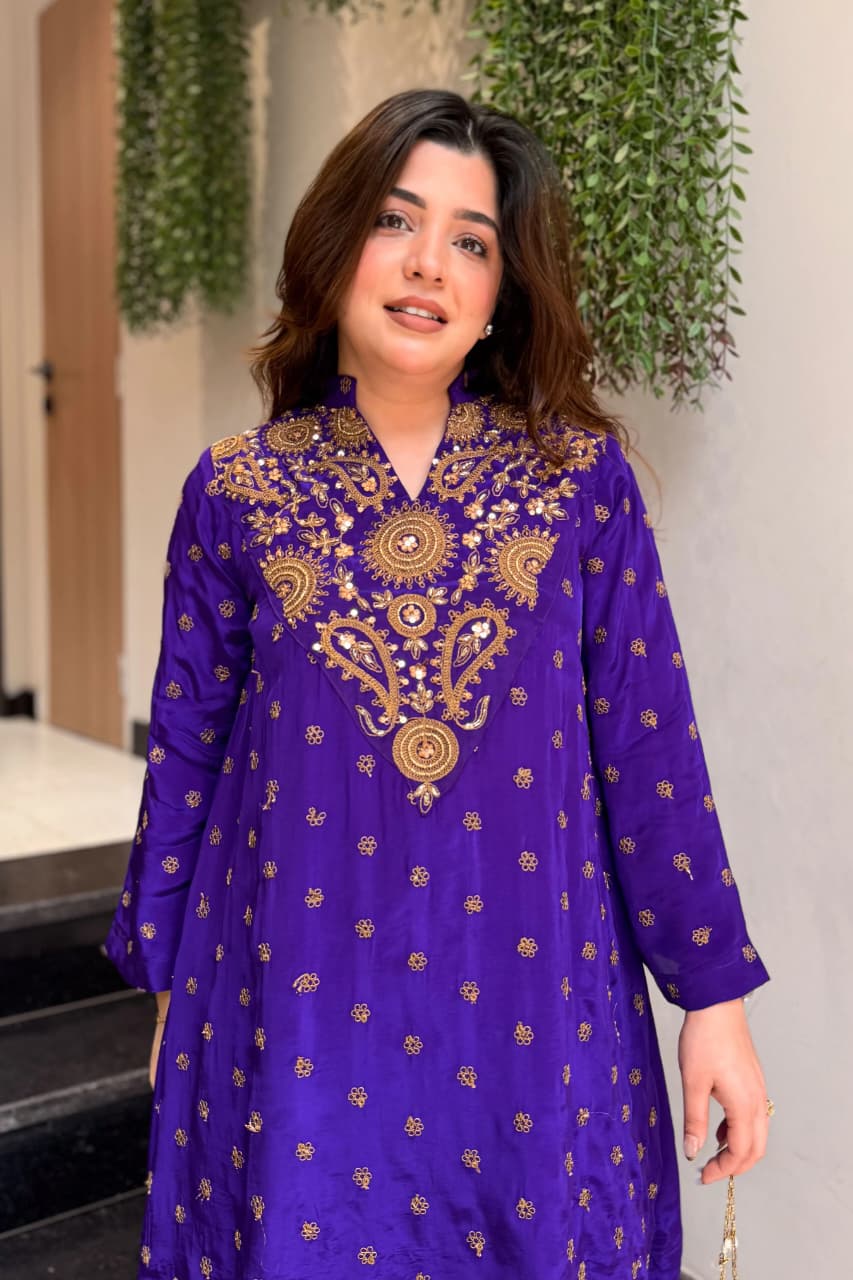
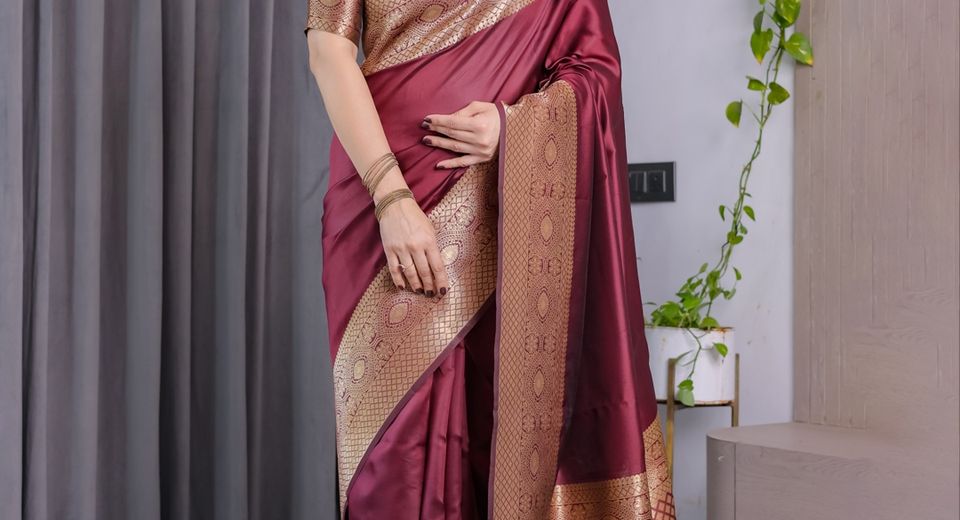
Maroon Banarasi Soft Silk Saree with Zari Border Online illustrates a useful middle ground for someone seeking a strong wedding colour and visible border without automatically choosing the most ornate option. Purple Banarasi Soft Silk Saree with Elegant Zari & Jacquard offers a different effect because jacquard texture can add depth even when the palette remains controlled.
3. How to choose a banarasi silk saree for wedding colour and jewellery
Choose a wedding saree colour by comparing ceremony lighting, jewellery metal and blouse shade alongside your complexion. No single colour is universally best for every bride or guest.
Red and maroon remain dependable choices for a classic wedding wardrobe because gold zari sits naturally against both shades. The Maroon Silk Sarees with Up to 74% Off collection can help you compare how maroon changes across different silk surfaces and border treatments. A deep wine shade can appear sophisticated at an evening reception, while bright red may show more strongly in daylight.
Purple works well when you want a jewel tone that's less expected than red. Purple can pair with antique gold, yellow gold or carefully selected diamond-look jewellery. Wedding Special Purple Banarasi Silk Saree for Women suits a shopper looking for a distinctly celebratory colour, while Royal Purple Banarasi Soft Silk Saree With Floral Zari Work demonstrates how floral zari can soften a deep jewel tone.
Blue and teal are effective alternatives for a reception, engagement or family wedding event. Teal Blue Banarasi Soft Silk Saree With Golden Zari Border creates a warm-cool contrast because golden zari lifts the blue-green base. A blue saree with a jacquard zari border can look more textured than a plain border, so compare close-up images before deciding.
Green is versatile for guests and close family members. The Green Color Silk Sarees collection is useful when you want to compare different green directions, while Green Banarasi Soft Silk Saree with Golden Jacquard Border shows how golden texture can make green feel wedding-ready.
Always compare the saree with the jewellery you'll actually wear. Yellow-gold jewellery usually harmonises with gold zari, whereas silver jewellery may work better with cooler zari or a blue-purple palette. A colour that looks accurate on a phone can shift under warm banquet lights, so inspect fabric photographs in more than one lighting condition whenever possible.
4. How to choose a banarasi silk saree for wedding borders and blouses
Measure the saree border and pallu against your blouse plan before buying because ornate placement determines how much fabric remains usable for sleeves, neckline and back details.
A broad border can be used on sleeve cuffs, the lower blouse edge or a structured neckline, but a tailor may need to cut through the design. A narrow border gives more flexibility for a contemporary blouse. A heavily patterned pallu may look best when pleated carefully, while an all-over body motif can remain visible in a loose pallu drape.
Confirm whether the saree includes a blouse piece, and check its length and width rather than assuming that every blouse can be cut from the attached fabric. Full sleeves, a deep back, piping, covered buttons and a high-neck finish all require additional material. If the blouse piece is insufficient, ask your tailor to plan a matching fabric before finalising the design.
Take measurements at least two to three weeks before the wedding when possible. A first fitting should happen after the blouse fabric is processed according to the tailor's method, and a final fitting should allow time for minor adjustments. A graceful saree can look poorly proportioned when the blouse neckline cuts through a key motif or the sleeve ends halfway across a zari border.
Wine Banarasi Soft Silk Saree With Golden Zari Border is the kind of design where a tailor should see the border before drafting the blouse. The same principle applies to floral, jacquard and geometric borders: the blouse should frame the saree rather than compete with its most recognisable woven detail.
5. How to choose a banarasi silk saree for wedding shopping online
Check product specifications, measurements, delivery timing and exchange conditions before paying for an online wedding saree. Online photographs can't replace a written description of construction and care.
- Material: Confirm whether the listing states Banarasi silk, Banarasi soft silk, a blend or an inspired design.
- Dimensions: Check saree length, width and blouse-piece measurements, especially if you're tall or want a long pallu.
- Weave and finish: Look for clear images of the reverse side, border, pallu, zari and close-up texture where available.
- Colour: Read the colour name and compare several photographs because indoor, outdoor and model images may show different tones.
- Delivery: Allow time for dispatch, transit, inspection, blouse tailoring and a possible exchange.
- Packaging: Confirm that the saree will be folded and packed in a way that limits crushing or moisture exposure during transit.
don't wait until the wedding week to order a saree. A practical schedule is four weeks for delivery and inspection, two to three weeks for blouse measurements and at least one week for final draping practice. The schedule should be longer during major wedding seasons or when the purchase involves a return or exchange.
Compare the Red and Yellow Sarees from Rs 799 with Up to 75 Percent Off collection only after checking the product-level description, because a collection price range doesn't tell you the fibre, zari density or weight of every individual saree. Price is a useful filter, not proof of authenticity or quality.
6. How to choose a banarasi silk saree for wedding comfort and styling
Choose a drape and accessory plan that allows comfortable movement, secure pleats and balanced proportions for the full duration of the wedding.
Before the event, test the saree with the intended blouse, petticoat, footwear and jewellery. Walk for ten minutes, sit on a chair and climb a few steps. This simple rehearsal reveals whether the pallu slips, the pleats spread, the border catches on footwear or the blouse restricts arm movement.
A heavier Banarasi wedding saree benefits from a firm petticoat and well-set pleats. A lighter Banarasi soft silk saree may need fewer pins, but the pallu still requires secure placement for dancing, greeting guests or carrying a phone. Use pins discreetly at the shoulder and waist without forcing them through prominent zari motifs.
Keep accessories proportional to the saree. A dense zari pallu can support a simpler necklace and earrings, while a restrained border leaves room for a more elaborate choker or waist belt. Matching every element exactly can make the outfit look flat; repeating one colour from the border in the blouse, bangles or footwear is usually enough.
For a cream or ivory wedding styling direction, the White Silk Sarees in Cream Ivory and Off White collection can provide colour references for a lighter family or reception look. White, cream and ivory should be compared with the wearer's jewellery and venue lighting because warm lights can make ivory appear more golden.
7. How to choose a banarasi silk saree for wedding care after the event
Store a Banarasi silk saree clean, dry, folded in breathable fabric and refolded periodically to protect silk and zari after the wedding.
don't leave the saree in a plastic garment cover for long-term storage. Air the saree in shade after wearing it, especially if perspiration or perfume has reached the fabric. Send it to a reputable specialist for cleaning when necessary, and tell the cleaner that the saree contains silk and zari.
Fold the saree with soft, clean cotton or muslin rather than newspaper or rough tissue. Refold it every few months so the same crease doesn't remain permanently pressed into the fabric. Store the saree away from direct sunlight, damp walls, cosmetics and metal accessories that could snag the weave.
Avoid ironing directly over zari. If pressing is necessary, use low heat through a protective cotton cloth and test an inconspicuous area first. Never scrub a stain aggressively at home, because rubbing can disturb the zari and spread moisture through the silk.
The best wedding purchase isn't necessarily the heaviest, brightest or most expensive saree. The best choice is the saree whose fibre description, weight, colour, blouse plan, comfort and care requirements match the function you'll actually attend.
Frequently Asked Questions
Which Banarasi saree is best for a wedding?
The best Banarasi saree is one that matches the wearer's role, ceremony, comfort needs and jewellery. A dense zari design suits a bride or close family member at the main wedding, while a lighter Banarasi soft silk saree is often more practical for a guest or a long daytime function.
How can I identify an original Banarasi wedding saree online?
Check the stated fibre, construction, zari details, measurements and close-up photographs before buying. A listing that uses only the word "Banarasi" without explaining whether the saree is pure silk, soft silk, blended or inspired does not provide enough information for a confident authenticity decision.
Is a heavy Banarasi saree comfortable for a full wedding day?
A heavy Banarasi saree can be comfortable when the drape, petticoat and pleats are secured correctly, but it may feel tiring during an eight-hour event. Estimate wearing time, movement and venue temperature before choosing dense zari or a very broad border.
What colour Banarasi silk saree works for a wedding reception?
Maroon, red, wine, purple, teal, blue and green can all work for a wedding reception when matched with the lighting and jewellery. Gold zari supports warm traditional styling, while cooler blue or purple palettes can be balanced with silver-toned or mixed-metal accessories.
How much time should I allow when buying a wedding saree online?
Allow about four weeks for delivery, inspection and any exchange, followed by two to three weeks for blouse tailoring whenever possible. Ordering earlier is especially sensible during peak wedding seasons or when the blouse design needs border fabric and multiple fittings.
How should I store a Banarasi silk saree after wearing it at a wedding?
Air the saree in shade, keep it away from moisture and fold it in clean breathable fabric rather than plastic. Refold the saree every few months, avoid direct heat on zari and use a specialist cleaner for significant stains.