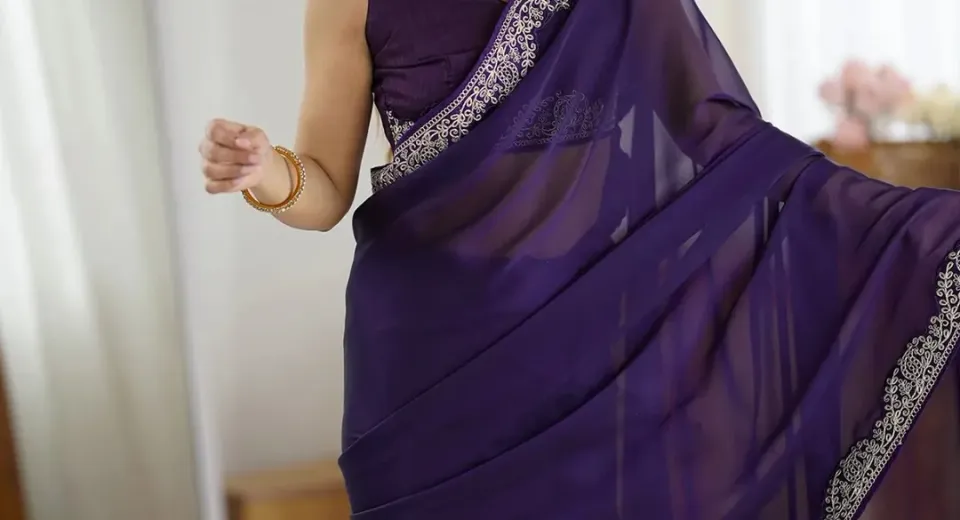
Key takeaways
- Silk sarees should generally be professionally dry-cleaned rather than machine-washed or soaked at home.
- Silk sarees should be refolded every two to three months to prevent permanent crease lines.
- Zari sarees should be stored folded in unbleached cotton or muslin, away from plastic and direct sunlight.
- Fresh stains should be blotted gently without rubbing, heat, bleach or household stain removers.
- Silk sarees should be aired in shade after wearing and stored only when completely dry.
- Perfume, deodorant and jewellery can damage silk or snag delicate zari, so each item should be used carefully.
Silk starts as a fine filament, yet a finished saree holds much more than softness: the quiet sheen of Banarasi silk, the structured brilliance of Kanjeevaram, the light transparency of Chanderi and the glint of zari along the border. Each fold carries a little of that workmanship. Learning how to care for silk sarees is less about making them look "new" after every wear and more about avoiding damage in the first place.
Silk is a protein fibre, so prolonged moisture, harsh chemicals, friction and high heat can all affect it. A gentle routine helps protect the colour, hand-feel, drape and embellishment of a wedding Kanjeevaram, a soft silk saree worn for a family celebration or a lighter silk blend chosen for dinner. The basic rule is straightforward: clean silk only when needed, handle it carefully and store it where air can circulate.
How to care for silk sarees after wearing them
Once you've worn a silk saree, air it in the shade, remove surface dust gently and put it away only after all perspiration and moisture have evaporated. This small step keeps body oils, perfume and dampness from settling into the fibres.
Take off brooches, safety pins and jewellery with care. Pulling a pin sideways can snag the weave, while a rough bangle or ring may catch the fabric as you unpin it. Lift the saree by its sturdier body, rather than dragging the pallu across a rough floor or chair.
Place the saree over a wide, smooth hanger or a clean drying rod for 30 to 60 minutes in a shaded, well-ventilated room. Direct afternoon sunlight can gradually fade dark dyes and weaken exposed fibres. Don't leave silk hanging overnight in a humid room, particularly during the monsoon.
When the saree is dry, check the hem, pleats and underarm area for moisture or marks. A saree worn for a Haldi ceremony needs extra attention: turmeric, oil and coloured powders become harder to remove once they dry. Don't brush powder forcefully. Shake the saree gently outdoors or use a soft, clean makeup brush on the reverse side.
Can silk sarees be washed at home?
Most silk sarees shouldn't be machine-washed or soaked at home. For valuable silk, zari, deep colours and embellished pieces, professional dry cleaning is the safer option.
Water may cause colour bleeding, shrinkage, uneven patches or changes to the fabric's finish. Home washing is especially risky when the saree has multiple colours, since a dark border can release dye into a pale body. Zari may also lose its brightness after exposure to unsuitable detergents, prolonged moisture or vigorous rubbing.
Check the care label before deciding how to clean the saree. A plain, colourfast silk saree without zari or surface embellishment may sometimes be hand-cleaned according to the manufacturer's instructions, but the word "silk" by itself doesn't provide enough information. Silk satin, raw silk, organza silk, silk cotton, soft silk and heavily woven Banarasi silk can all react differently to water.
When you send a saree to a cleaner, mention the fabric, zari, embroidery, recent stains and any concern about colour bleeding. Ask for a gentle silk treatment instead of a routine process meant for sturdy synthetic garments. Keep the receipt and note the date. A silk saree worn only twice a year generally doesn't need cleaning after every outing if it remains clean and dry.
Skip detergent powder, fabric softener, bleach, enzyme stain removers and home steam irons. They can strip colour, flatten the surface or leave rings that stand out more than the original mark. Never test a cleaning liquid on the pallu corner unless a professional has recommended it.
How to remove stains from a silk saree safely
Blot a fresh stain with a clean, dry, absorbent cloth and send the saree for professional treatment. Don't rub, scrub or use a household stain remover.
Rubbing drives liquid further into the weave and may leave a fuzzy patch. Blot from the outer edge towards the centre with light pressure, moving to a dry section of cloth as the mark transfers. Don't use a hair dryer, iron or direct sunlight on the stained area. Heat can set some stains and leave a hard outline.
Oil, lipstick, gravy, turmeric and makeup each need different treatment, so experimenting at home can make matters worse. Tell the cleaner what caused the stain and how long it has been there. A fresh mark is usually easier to assess than an old one that has already been treated with soap, water or talcum powder.
If rain makes the saree wet, spread it over a clean, dry surface or place it on a wide hanger in the shade. Never wring it. Folding it while damp traps moisture, which can encourage mildew and transfer colour between layers.
How to protect zari, embroidery and delicate silk texture
Zari and surface embellishment last longer when they're protected from friction, chemicals, pressure and repeated folding along the same line.
Fold a zari pallu with the decorated face turned inward, cushioned by the saree's softer layers. This limits contact between the metallic thread and other fabrics. For designs with sequins, stones or raised embroidery, place a sheet of clean, unbleached muslin or cotton between heavily embellished sections.
Apply perfume and deodorant to your skin before draping the saree, and give the products enough time to dry. Alcohol, oils and fragrance compounds can mark silk or alter the finish of silk and metallic thread. Hair spray should also be used before draping, not over the finished outfit.
Keep sharp brooches, rough hooks and Velcro away from delicate weaves. A damaged blouse hook can catch the saree repeatedly as you move, and bags with chain straps can do the same. A design such as Royal Blue Silk Saree with Exquisite Zari Work deserves careful handling because one snag can affect both the silk ground and the decorative border.
Never press zari directly with a hot iron. If ironing is needed after professional cleaning, place a thin cotton cloth over the reverse side, use the lowest suitable heat and lift the iron instead of dragging it. A garment steamer can relax minor creases, but keep the steam at a safe distance and test it on an inconspicuous section first.
How should silk sarees be folded and stored?
Fold silk sarees in broad, soft folds, wrap them in breathable fabric and store them flat or loosely stacked in a dry, dark cupboard.
Refold the saree every two to three months so one sharp crease doesn't stay in the same place for years. Permanent fold lines are more likely when the saree is tightly compressed, kept under heavy clothing or folded while warm from ironing. Change the fold direction gently; don't force a new crease through stiff zari.
Choose unbleached cotton or muslin covers instead of airtight plastic. Plastic traps humidity and can lead to a musty smell, mildew or colour transfer. Newspaper isn't suitable either, since its ink can transfer and its paper acids may affect delicate textiles over time.
Keep sarees away from exterior walls, bathroom cupboards, kitchen steam and direct sunlight. A clean shelf lined with cotton is better than a damp wooden drawer. Leave some space around each stack for air to circulate, and don't place heavy handbags or boxes on folded silk.
Neem leaves are sometimes used for traditional textile storage, but loose botanical material can shed particles and attract insects if it becomes damp. A clean cupboard, regular airing and pest monitoring are more dependable. If mothballs are used anywhere in the wardrobe, keep them away from direct fabric contact because their strong chemicals can affect the smell and finish of silk.
Premium Handloom Silk Saree with Handkatha shows why folding matters: handwoven textures and hand-applied details can catch when compressed against rough packaging. Ivory Peacock Print Soft Silk Saree with Zari Border should also be stored with its decorated border protected from abrasion and strong light.
How often should silk sarees be aired and inspected?
Air silk sarees in the shade every two to three months and inspect them before storage, even if they haven't been worn recently.
Unfold each saree on a clean bed or table and look for dampness, insect activity, loose threads, colour transfer and forgotten pins. Air it for 30 to 60 minutes in a dry room, then refold it in a different direction. Don't leave silk in direct sunlight for hours just to remove an odour.
Seasonal checks are especially helpful in humid climates. Monsoon moisture can build up inside cupboards, while closed rooms in winter can hide an old spill. If a saree smells musty, don't cover the smell with perfume. Air the saree, inspect the cupboard and speak to a textile professional if mildew spots appear.
For heirloom or high-value sarees, keep a simple record of the purchase date, last professional cleaning, visible repairs and storage location. This helps prevent unnecessary cleaning and makes it easier to notice a new stain or change in colour.
What mistakes shorten the life of a silk saree?
The habits that damage silk sarees most are machine washing, prolonged soaking, direct sunlight, plastic storage, repeated sharp folding and applying chemicals to stains.
- Washing after every wear: Cleaning removes dirt, but unnecessary cleaning also exposes silk and zari to avoidable processing.
- Using a wire hanger: Narrow or rough hangers can leave pressure marks and distort the shoulder area.
- Storing while damp: Moisture trapped in folded layers can cause mildew, odour and colour migration.
- Ironing the front: Direct heat can flatten texture and dull metallic work.
- Keeping one permanent fold: A repeated crease can weaken the same section over time.
- Applying perfume after draping: Fragrance and alcohol can mark silk and zari.
- Using a plastic cover for long-term storage: An airtight environment traps humidity instead of protecting the fabric.
Silk constructions also need realistic expectations. Elegant Charcoal Garden Organza Cotton Silk Saree may need extra care around its lighter, structured surface compared with a dense wedding silk. Navy Blue Floral Silk Saree with Peach Zari Border should be checked for colour transfer between its deep body and lighter border before any wet treatment is considered.
Building a practical silk saree care routine
A workable routine has four stages: prepare before wearing, handle the saree gently while draping, air it after wearing and store it correctly once dry.
- Before wearing: Check blouse hooks, jewellery edges, brooches and the draping surface. Apply fragrance and hair products before dressing.
- During wearing: Keep the saree away from rough seating, food spills, rain and sharp bag hardware. Adjust pleats by lifting the fabric rather than dragging it.
- After wearing: Remove pins carefully, air the saree in the shade for 30 to 60 minutes and inspect the hem and underarm areas.
- Before storage: Make sure the saree is completely dry, fold the zari inward, wrap it in breathable cotton and place it in a clean, dry cupboard.
- Every two to three months: Air, inspect and refold the saree. Arrange professional cleaning for visible soiling, a persistent odour or a stain that needs treatment.
A collection such as Silk Sarees At Flat 30% Off can include several silk constructions, so the care label should guide the final decision-not the sale category or colour alone. The same applies when comparing a silk saree with other fabrics in a collection such as Red and Yellow Sarees from Rs 799 with Up to 75 Percent Off: fibre content, zari and finish indicate care needs more accurately than the collection name.
Good maintenance won't make silk indestructible, but it can slow the problems that cause most premature ageing. With shade, airflow, breathable storage and professional cleaning at the right time, a silk saree can retain its colour, drape and woven character through many celebrations.
Frequently Asked Questions
Can I wash a silk saree in a washing machine?
No, a silk saree should generally not be machine-washed because agitation, detergent and water can cause bleeding, shrinkage and surface damage. Professional dry cleaning is safer, especially for zari, dark colours, embroidery and valuable handwoven sarees.
How should I store a silk saree for a long time?
Store a completely dry silk saree in broad folds, with zari turned inward, inside a breathable cotton or muslin cover. Keep it flat or loosely stacked in a cool, dry, dark cupboard and refold it every two to three months.
What should I do if turmeric or oil spills on my silk saree?
Blot the fresh stain gently with a clean, dry cloth and avoid rubbing, water, bleach, heat and household stain removers. Give the professional cleaner the stain details because turmeric, oil and makeup need different treatments.
Can silk sarees be ironed?
Silk sarees can be pressed carefully at low heat through a thin cotton cloth, preferably from the reverse side. Do not place a hot iron directly on silk, zari, embroidery or metallic borders.
How often should silk sarees be dry-cleaned?
Silk sarees should be dry-cleaned when visibly soiled, stained or persistently odorous rather than automatically after every wear. A clean saree should still be aired after use and inspected before storage.
Why should silk sarees not be stored in plastic?
Plastic traps humidity and reduces airflow, which can encourage mildew, odour and colour transfer. Breathable cotton or muslin protects silk more safely during long-term storage.