

How to Buy a Suit Set With Different Top and Bottom Sizes starts with treating the kurta and lower garment as two separate fitting problems. A readymade salwar suit may fit your shoulders but feel tight at the hips, or fit the waist while leaving the kurta too loose across the bust. The right method is to compare your body measurements with the garment chart, identify which areas can be altered, and choose a set based on the least forgiving part of the outfit.
Salwar suit sets usually combine a kurta, a bottom such as palazzo pants, trousers or salwar, and sometimes a dupatta. A single size label can't describe every body proportion. Understanding how each component is cut helps you decide whether a standard set will work, whether a tailor can correct the fit, or whether a separates option is the better purchase.
Why one suit-set size may not fit your whole body
A single suit-set size may fail because kurtas and bottoms depend on different body measurements. Kurta fit is controlled mainly by the bust, shoulder, upper arm and desired length, while palazzo pants and trousers depend more heavily on the waist, hip, rise and inseam.
For example, a person with a smaller bust and fuller hips may need a smaller kurta and a larger palazzo. Someone with a longer torso may need a kurta with extra length even when the bust and shoulder measurements match the chart. These are normal proportion differences, not evidence that a body is difficult to fit.
Silhouette also changes the importance of each measurement. A straight kurta needs a comfortable hip allowance because the side seams fall close to the body. An Anarkali or flared kurta may offer more room below the bust but still require accurate shoulder and armhole measurements. Palazzo pants need width through the hip and thigh, whereas a narrow cigarette trouser needs more precise hip and calf measurements.
Fabric construction matters as well. Cotton, crepe, Roman silk and woven fabrics can behave differently at the same measurement. A woven fabric with little give should not be selected at an exact body measurement because movement requires wearing ease. An elasticated waist can accommodate a small waist variation, but elastic doesn't solve a tight hip or an insufficient rise.
How to Buy a Suit Set With Different Top and Bottom Sizes
How to Buy a Suit Set With Different Top and Bottom Sizes requires four steps: measure your body, read the garment chart, prioritise the least alterable areas, and confirm the exchange or tailoring options before placing the order.
- Measure your body over light clothing. Record bust, shoulder, natural waist, fullest hip, upper arm and preferred garment lengths. Keep the tape level and snug without pulling it tight.
- Separate top and bottom requirements. Write down the kurta size suggested by your bust and shoulder measurements, then calculate the bottom size from your waist, hip and rise requirements.
- Compare garment measurements, not just body-size labels. A garment measurement tells you the finished circumference or length, while a body chart tells you the body range intended for a size.
- Choose according to the hardest measurement to alter. Shoulder width, armhole depth, crotch rise and heavily embroidered areas are generally more difficult to change cleanly than side seams or a simple hem.
- Check the size policy before paying. Confirm whether the seller allows exchanges for a different size, whether a three-piece set must be returned together, and whether altered garments remain eligible.
When a listing offers only one size for the complete set, select the size that protects comfort in the most restrictive component. A loose kurta can often be taken in at the side seams. A bottom that's too tight at the hips, or a kurta that's too narrow at the shoulders, may not have enough seam allowance for a successful correction.
Measurements that matter for the kurta
The bust, shoulder, armhole and kurta length are the most important measurements for choosing the top portion of a salwar suit. These measurements determine whether the kurta allows movement, sits correctly at the neckline and finishes at the intended point on the body.
Measure the bust and shoulder accurately
Measure the fullest part of the bust while wearing the kind of bra you'll use with the kurta. Measure shoulder width from one shoulder point to the other across the back, following the natural line rather than measuring around the neck.
A bust measurement alone can't guarantee a good fit. A kurta with the correct bust circumference can still pull across the back if the shoulders are narrow, or create excess fabric near the armhole if the shoulders are too wide. Shoulder fit is especially important in a structured straight kurta and in heavily embroidered designs, where moving a seam may disturb the motif.
Check armhole, sleeve and length preferences
Armhole comfort should be checked by raising both arms forward and overhead. A tight armhole can make a generously sized kurta uncomfortable, while an oversized armhole can cause the side seam to lift when the arm moves.
Compare the listed kurta length with your height and styling plan. A straight kurta worn with narrow trousers may need a different length from a short kurta worn with palazzo pants. The Sky Blue Cotton Straight Kurta Set with Dupatta illustrates why fabric and silhouette should be considered together: a cotton straight shape generally benefits from enough ease for sitting, walking and sleeve movement.
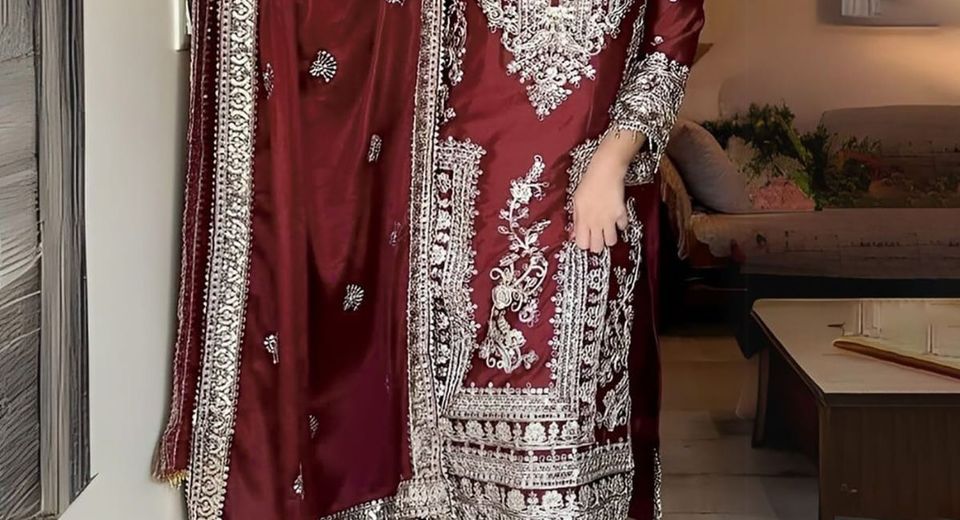
For festive pieces, account for embellishment and lining. The Maroon Wedding Wear Embroidered Palazzo Suit Set may need more careful sizing around the bust and armhole because embroidery, lining and seam placement can reduce the practical flexibility of the garment even when the stated circumference appears generous.
Measurements that matter for palazzos, pants and salwars
The hip, waist, rise and inseam determine whether the bottom of a salwar suit will sit comfortably and move properly. The hip is usually the safest starting point for a non-stretch bottom, while the waist becomes more important when the waistband is fixed rather than elasticated.
Measure the fullest part of the hips with your feet together and the tape parallel to the floor. Measure the natural waist separately instead of assuming that the waistband will sit at the same point. Measure the rise from the front waist, through the legs, to the back waist while wearing a similar undergarment.
Rise affects comfort when sitting. A low rise can pull at the crotch, and an excessively high rise can bunch under a kurta. Palazzo pants often provide more room through the leg, but a wide leg doesn't compensate for an insufficient hip or rise measurement.
Measure inseam from the crotch to the point where you want the hem to finish. Consider footwear, especially for occasion wear. A palazzo intended for flat sandals may look too short with a heeled shoe, while a floor-skimming hem can catch underfoot during a Haldi ceremony or crowded family gathering.
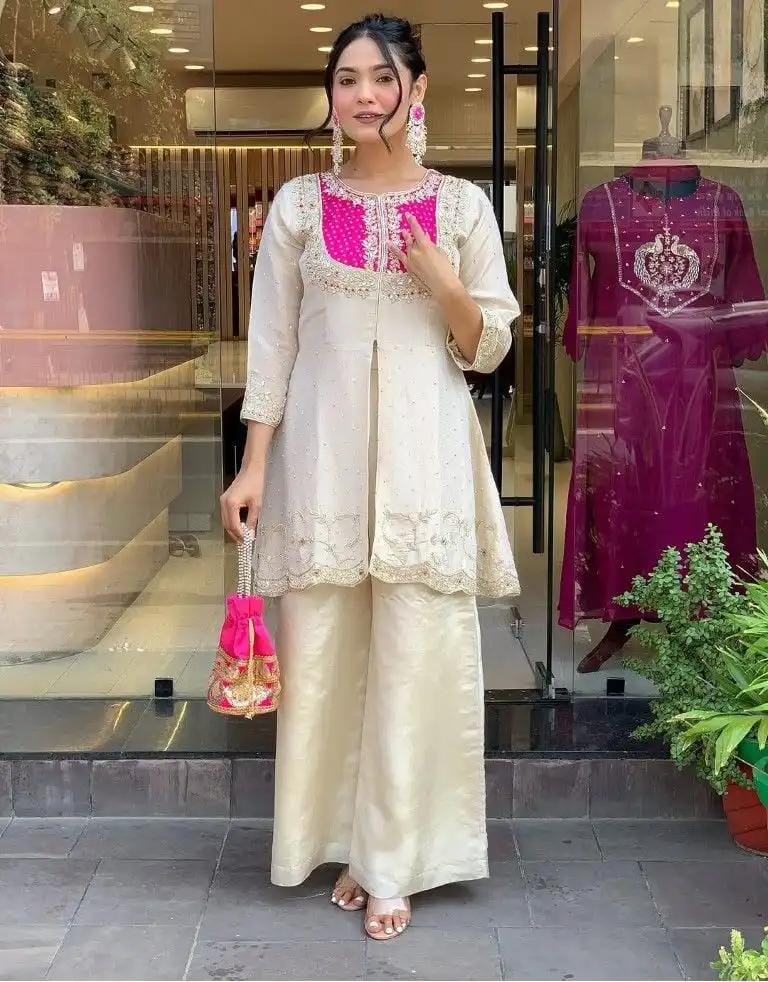
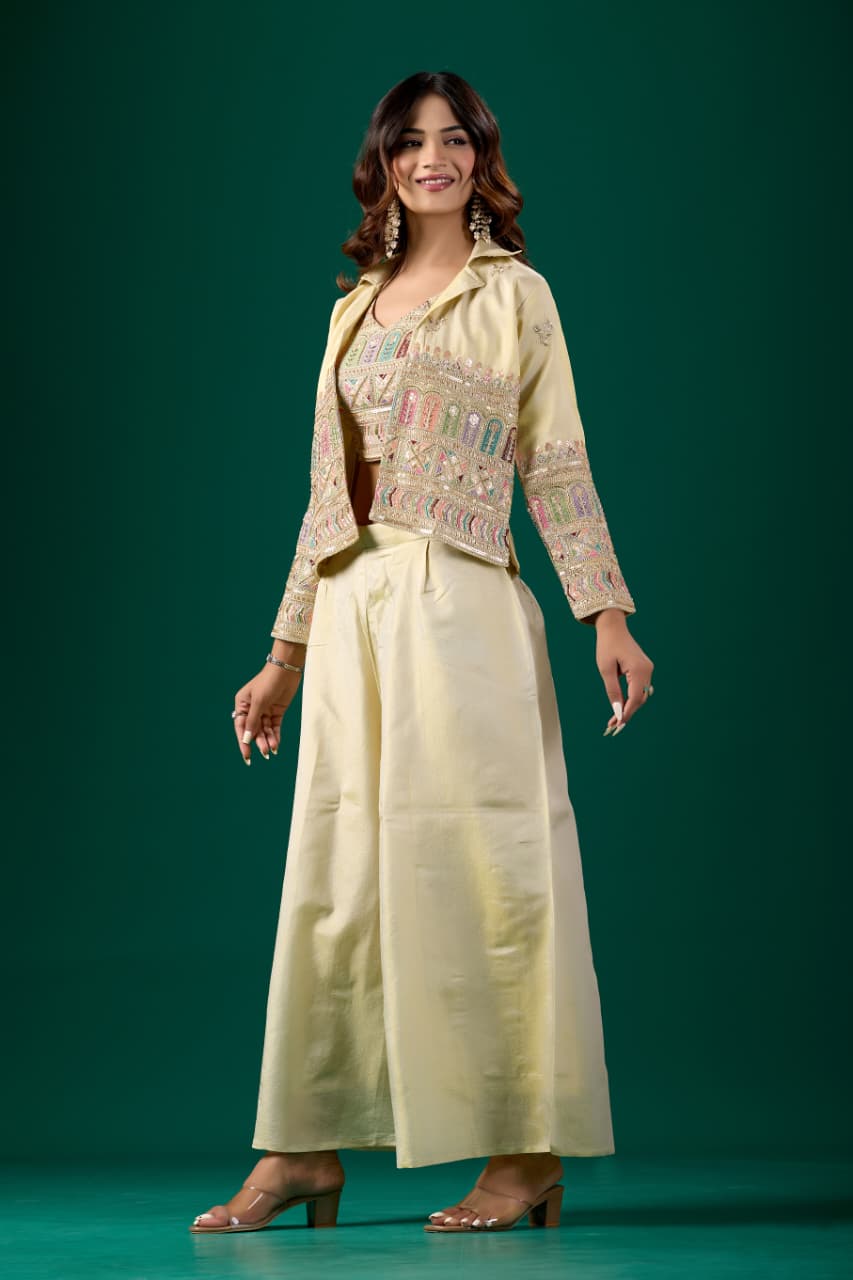
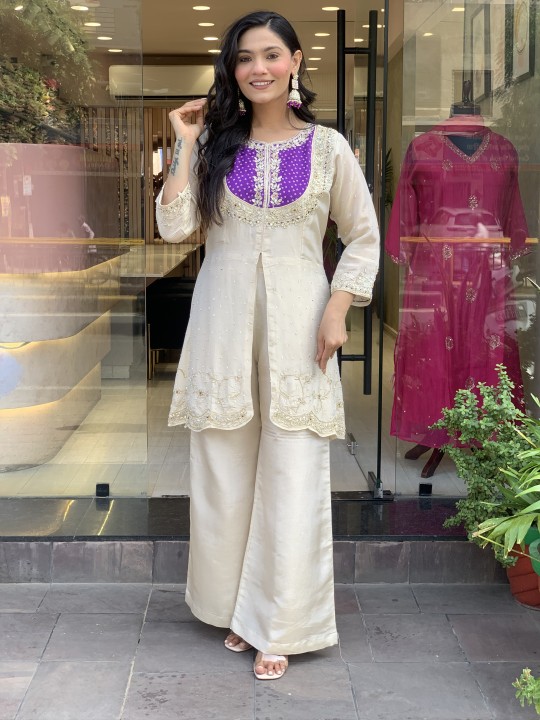
The Elegant Cream Roman Silk Embroidered Top Palazzo Set and Cream Roman Silk Embroidered Top Palazzo Set Purple show why the lower garment should be reviewed independently from the top. Roman silk may create a polished drape, but the waist construction, lining and palazzo width still determine whether the bottom suits your measurements.
Reading a size chart when top and bottom sizes differ
A size chart should be read as a measurement document, not as a universal promise that one label will fit every garment. First identify whether the numbers refer to body measurements or finished garment measurements, then check the measurement unit and the exact garment named in the chart.
If the chart gives a half-chest or half-waist measurement, double it before comparing it with your full circumference. If the chart lists only a flat measurement, ask whether the garment has elastic, side zip, drawstring or back opening. A flat waist measurement doesn't reveal the full usable range unless the construction is explained.
- Top selection: compare bust, shoulder, armhole and sleeve measurements first, followed by kurta length.
- Bottom selection: compare waist, hip, rise, thigh and inseam, giving priority to hip and rise for non-stretch fabrics.
- Dupatta selection: check length and width when coverage or a particular drape matters; the dupatta usually doesn't determine the core garment size.
- Ease: allow additional room for movement rather than matching body measurements exactly, especially in woven cotton, brocade, Chanderi-style weaves or lined embroidered garments.
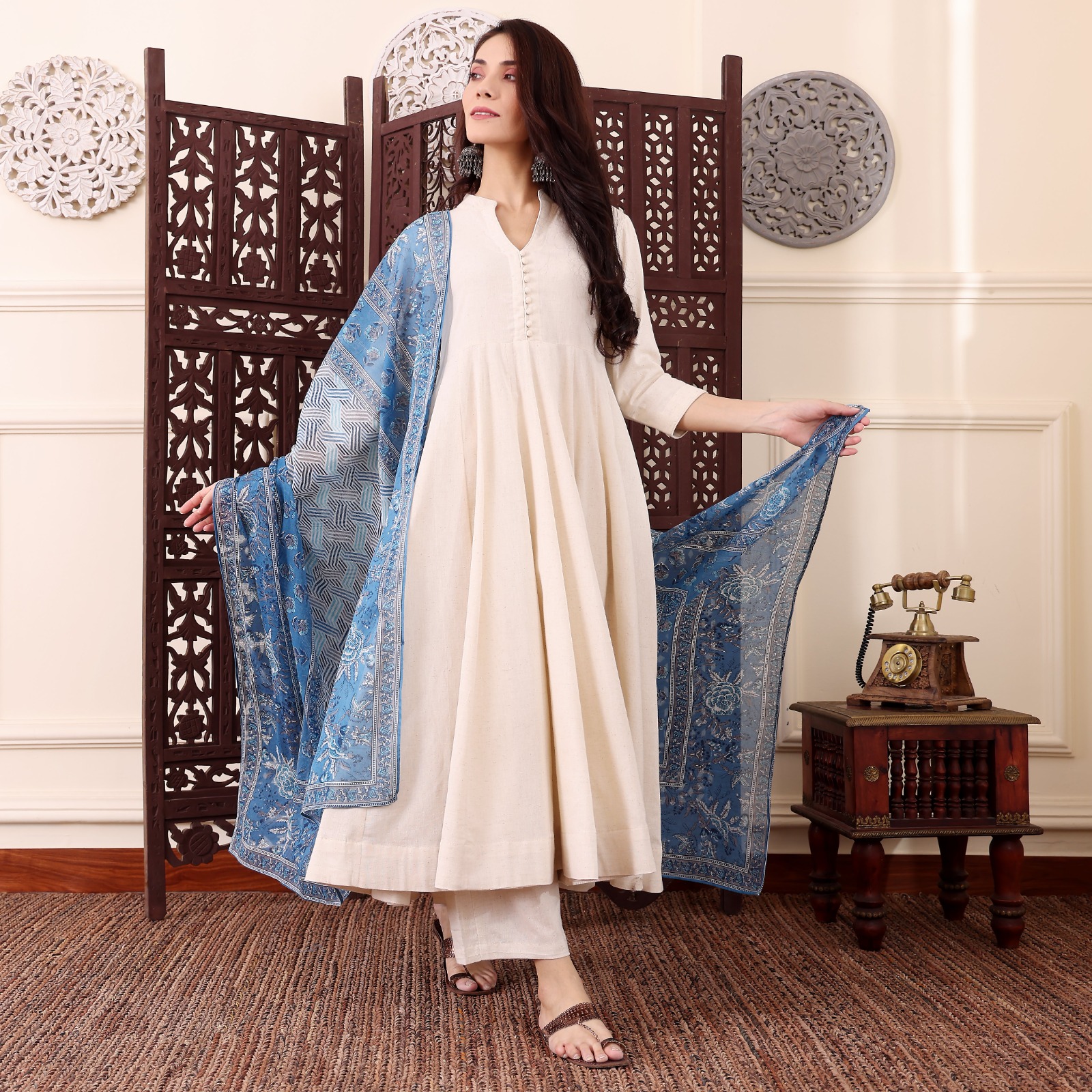
Take a well-fitting kurta and a well-fitting pair of pants from your wardrobe and measure the garments flat. This comparison is often more useful than guessing from a familiar small, medium or large label. The Elegant Sky Blue Woven Ethnic Suit Set, for example, should be judged by its listed woven-garment measurements and construction rather than by assuming that every sky-blue suit in the same nominal size will fit identically.
When alteration can solve the mismatch
Alteration can usually correct a slightly loose side seam, a simple hem or a manageable sleeve length, but alteration can't reliably add missing fabric at the shoulders, bust, hip or rise. A tailor should inspect seam allowance, lining, embroidery placement and the direction of the print before promising a change.
Alterations that are usually practical
Taking in the kurta at both side seams is generally straightforward when the garment is plain or lightly decorated. A tailor can often shorten a kurta or sleeve, adjust a simple waistband, or alter an elastic casing if enough fabric is present.
Minor waist adjustments may work when the bottom has a separate waistband and sufficient seam allowance. A hem can also be shortened, provided the border or placement print won't be cut through an important design element.
Alterations that need caution
Shoulder reduction, armhole reshaping and major bust expansion can change the balance of a kurta. Altering an embroidered neckline or a heavily embellished side seam can leave visible gaps, broken motifs or uneven borders.
don't buy a bottom that's substantially smaller at the hip on the assumption that a tailor will add panels later. Added panels may change the drape, interrupt a woven border and remain uncomfortable if the rise is also short. A larger bottom can often be reduced more neatly than a smaller bottom can be expanded.
Keep the original tags attached until the fit has been assessed. Do not wash, alter or wear the suit outdoors before checking the seller's exchange conditions. This small step protects your options when the size mismatch is greater than expected.
Choosing fabric and silhouette for easier mixed sizing
Stretch, structure and silhouette determine how forgiving a suit set will be when the top and bottom need different sizes. A relaxed palazzo, elasticated waist and straight kurta with side seams can offer more adjustment potential than a fitted kurta and fixed-waist trouser.
Cotton is useful for everyday wear because it's breathable, but woven cotton has limited give and should not be treated like knitwear. Crepe may skim the body, though lining and embellishment can alter its comfort. A fluid fabric can disguise a small amount of extra ease, while a crisp woven fabric makes incorrect shoulder or hip measurements more visible.
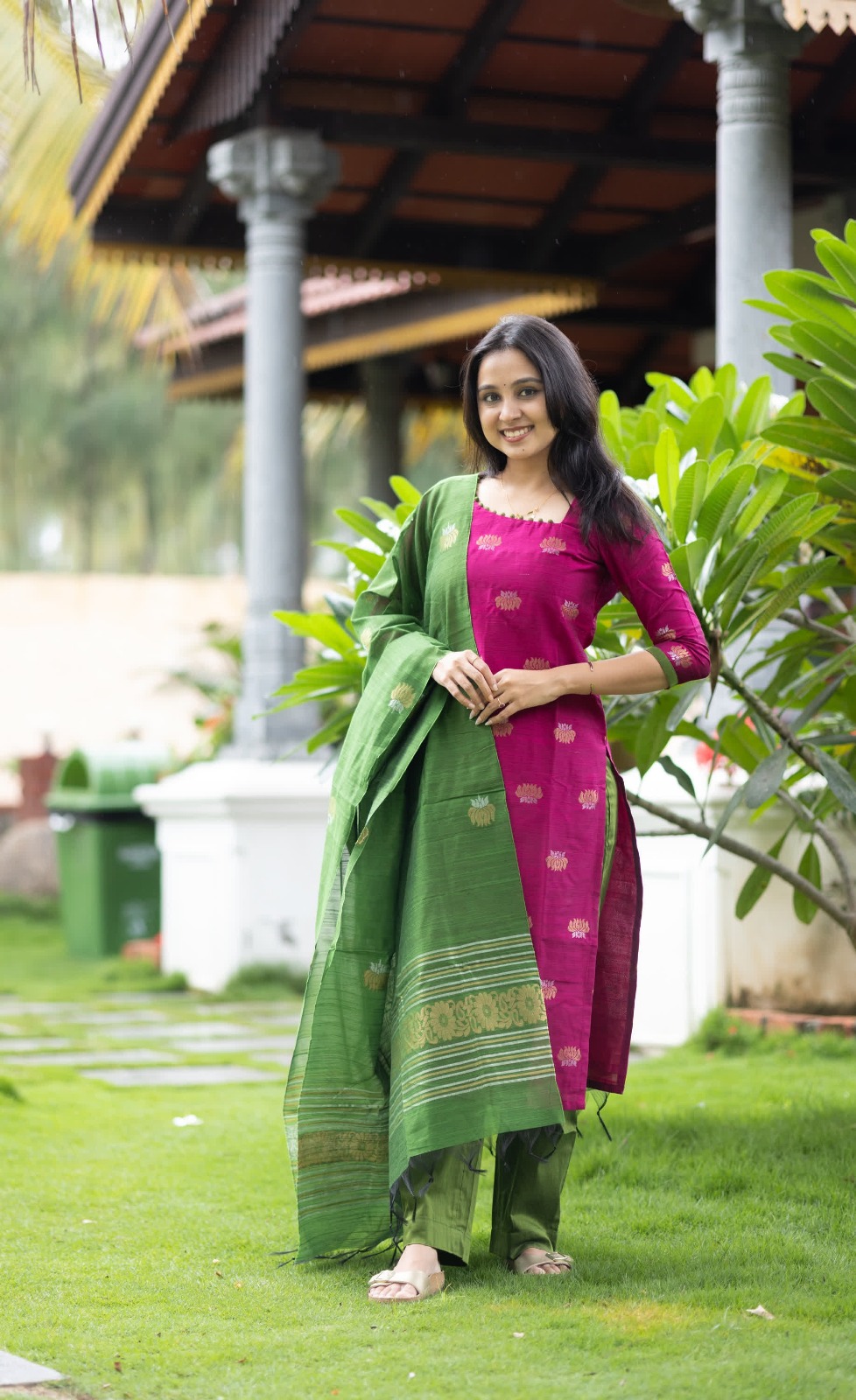
The Multicolor Embroidered Crepe Maxi Suit Set for Festive Wear is an example of why the top silhouette should be evaluated separately from the bottom. A maxi-style upper portion may provide visual volume below the bust, but the shoulder, bust and sleeve still need to fit. The Purple Pink Chinon Silk Embroidered Suit Set similarly calls for attention to the finished garment measurements because a delicate, dressed-up fabric doesn't automatically provide stretch.
Print and regional design language can guide a choice, but they don't replace sizing. Kalamkari Print Salwar Suits, Maharashtra Paithani Inspired Salwar Suits, Gujarat Bandhej Salwar Suits and Odisha Sambalpuri Salwar Suits may offer very different visual treatments, yet every purchase still depends on checking the individual garment's construction, measurements and ease.
How to order confidently when no split-size option exists
When a retailer doesn't offer separate top and bottom sizes, order the set that fits the least alterable measurement and plan only modest tailoring. Save a screenshot or note of the product page, size chart, fabric description and return conditions before checkout.
Contact customer support with specific questions instead of asking only whether the set runs true to size. Useful questions include whether the waist is elasticated, whether the listed bust is a body or garment measurement, whether the bottom has pockets or lining, and whether the kurta and bottom share the same size label.
Consider the wearing situation when deciding how much ease you need. A Navy Blue Traditional Kurta Pant Dupatta Ensemble for travel or a long family event needs sitting and walking comfort. A more fitted festive suit may be acceptable for a short function, but it should never restrict breathing, arm movement or comfortable sitting.
If the size difference is substantial, look for a retailer or tailor who can supply separates, or choose a kurta and bottom from compatible colour families. A separate kurta, palazzo or pant may cost more than a fixed set, but the improved fit can reduce alteration expense and make the pieces useful with other dupattas and separates.
Use the same checklist after delivery: inspect the shoulders, close the neckline, sit down, raise both arms, walk several steps, and check whether the bottom waistband rolls or digs in. Try the complete outfit with the intended inner layer and footwear. A suit that passes these tests is more likely to remain comfortable through a full day rather than only looking correct in a standing mirror pose.
Questions About Buying Salwar Suit Sets in Different Sizes
Can I buy a salwar suit if I need different sizes for the kurta and bottom?
Yes, but only when the seller offers split sizing or when the larger component can be altered without compromising fit. If the set has one shared size, choose the size that fits the shoulders, armholes, hips and rise, because those areas are harder to correct neatly.
Should I choose the larger size when my top and bottom measurements do not match?
Choose the larger size when the smaller option would be tight at the shoulders, bust, hips or rise. A tailor can often reduce a loose side seam or shorten a hem, but adding fabric to a tight shoulder or hip is more difficult.
How much extra room should a salwar suit have?
A salwar suit needs wearing ease beyond your body measurement so you can sit, walk and move your arms comfortably. The exact amount depends on the silhouette and fabric, but a non-stretch woven garment should never be ordered at an exact body circumference.
Can a tailor make a kurta smaller and palazzo pants larger?
A tailor can often take in a kurta at the side seams and make modest waist adjustments to palazzo pants. Enlarging the hips, rise or heavily embroidered areas may not be possible if the garment lacks seam allowance or matching fabric.
How do I measure myself for an online salwar suit?
Measure your bust, shoulder, armhole, natural waist, fullest hip, rise, sleeve length and preferred kurta and inseam lengths over light clothing. Compare the measurements with the seller's garment chart and confirm whether each number describes the body or the finished garment.
Which salwar suit silhouette is easiest when my top and bottom sizes differ?
A straight kurta with side seams and a palazzo or elasticated-waist bottom is often easier to adjust than a fitted kurta with a fixed-waist narrow trouser. The best choice still depends on the listed bust, shoulder, hip and rise measurements rather than the silhouette name alone.




