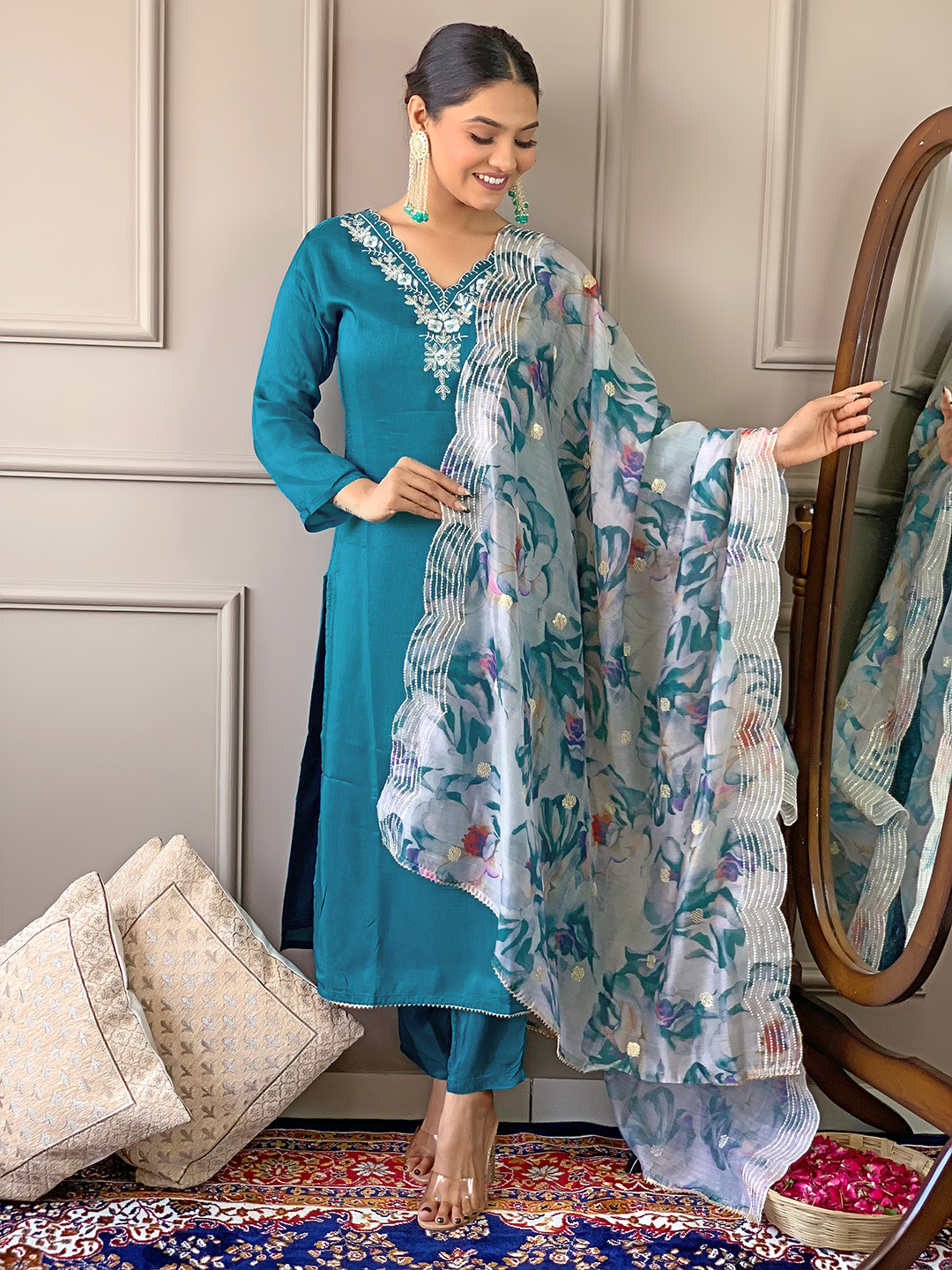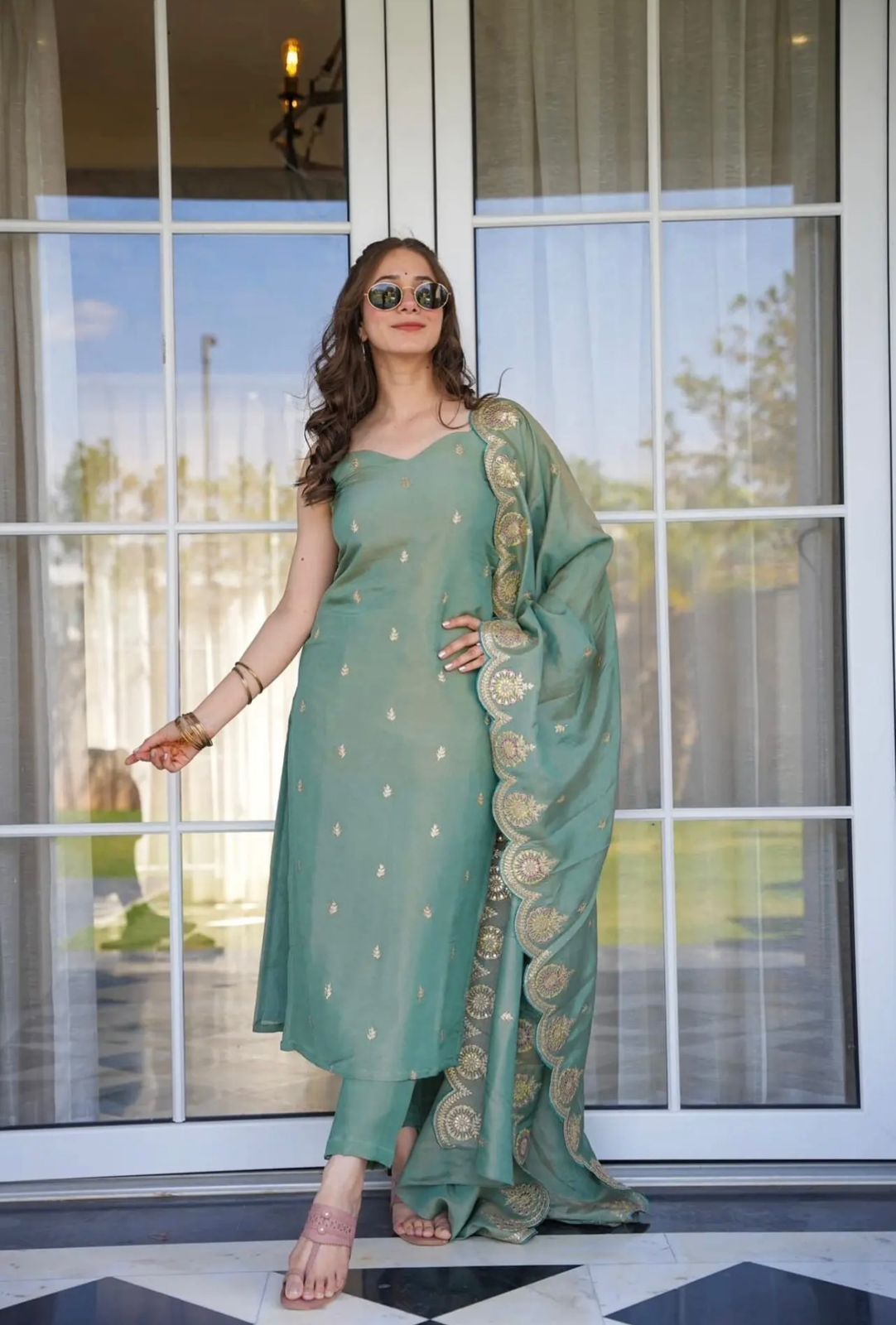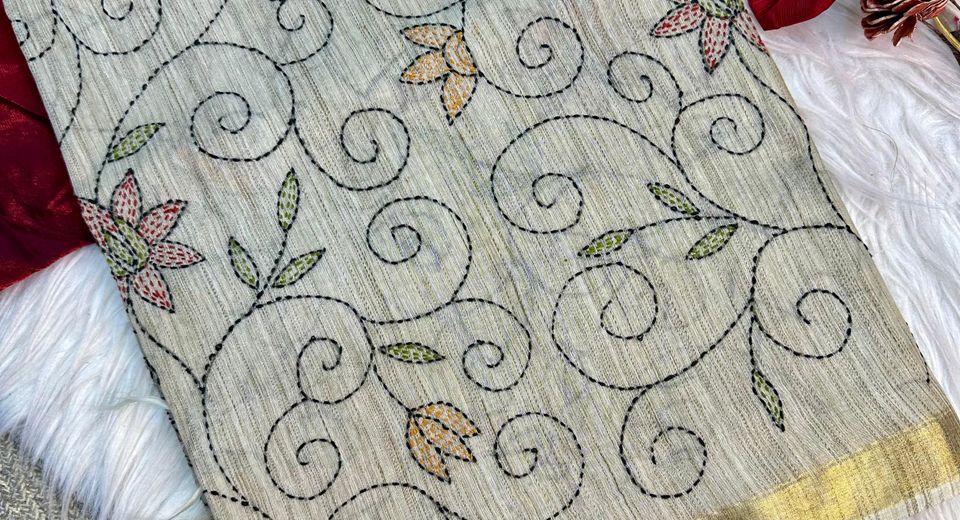
How saree is stitched depends on the type of saree being made. A traditional saree is usually woven as one long length and isn't stitched across the body, while a ready-to-wear saree may have sewn pleats, a shaped waist panel, a petticoat attachment or a pre-finished drape. Understanding the difference helps you judge comfort, fit, fall and care before buying or altering a saree.
A saree can involve several kinds of work: weaving the main fabric, finishing the selvedges, adding fall, narrowing the edges with pico, attaching embellishments and constructing a separate blouse. "Stitched saree" therefore doesn't always mean that the entire garment was cut and sewn like a dress. The word may describe only the final draping components.
How saree is stitched: woven fabric versus sewn construction
A conventional saree is primarily woven, whereas a ready-to-wear saree is partly sewn to hold a predetermined drape. The distinction matters because woven length, stitched seams and alteration points behave differently during use.
Most time-honoured sarees are produced as a long rectangular textile, commonly around 5.5 to 6.5 metres, although exact lengths vary by design and whether a blouse piece is included. Banarasi silk, Kanjeevaram silk, Chanderi, cotton and tissue fabrics are woven with their characteristic colours, motifs and borders. The loom creates the body, pallu and border placement; a tailor doesn't normally cut the saree into a conventional skirt and top.
The fabric is then inspected, pressed or finished, and the ends are secured. The two long sides already have selvedges created during weaving. Those selvedges reduce fraying and are different from a tailor-made hem. A blouse piece, when supplied, is generally a separate section intended for cutting and stitching according to the wearer's measurements.
For example, the border placement on Premium Handloom Silk Saree with Handkatha is part of the textile's visual structure rather than a separate strip casually sewn onto the body. Navy Blue Floral Silk Saree with Peach Zari Border similarly depends on the relationship between the floral field and the zari border when it's draped.
What does a tailor actually stitch on a classic saree?
A tailor commonly stitches the fall, finishes the edges, prepares the blouse and sometimes adjusts the saree for a particular drape. The main rectangular body usually remains uncut.
Fall is a strip of lining fabric attached to the lower inside edge of the saree. Fall stitching gives the hem extra weight, supports repeated pleating and helps protect the lower edge from rubbing against the floor. Cotton or polyester fall can be used, but the ideal choice depends on the saree's weight, transparency and drape.
Pico is a narrow edge finish made with a rolled or zigzag stitch, often using matching thread. Pico is especially useful on fabrics that fray easily, including lightweight organza, chiffon and some loosely woven cottons. A pico finish doesn't replace careful handling; a needle catching the edge can still damage delicate fabric.
Which parts of a saree are stitched after weaving?
Fall, pico, tassels, decorative attachments and blouse components are the parts most commonly stitched after the saree is woven. Each operation has a different purpose and should not be confused with the saree's original weave.
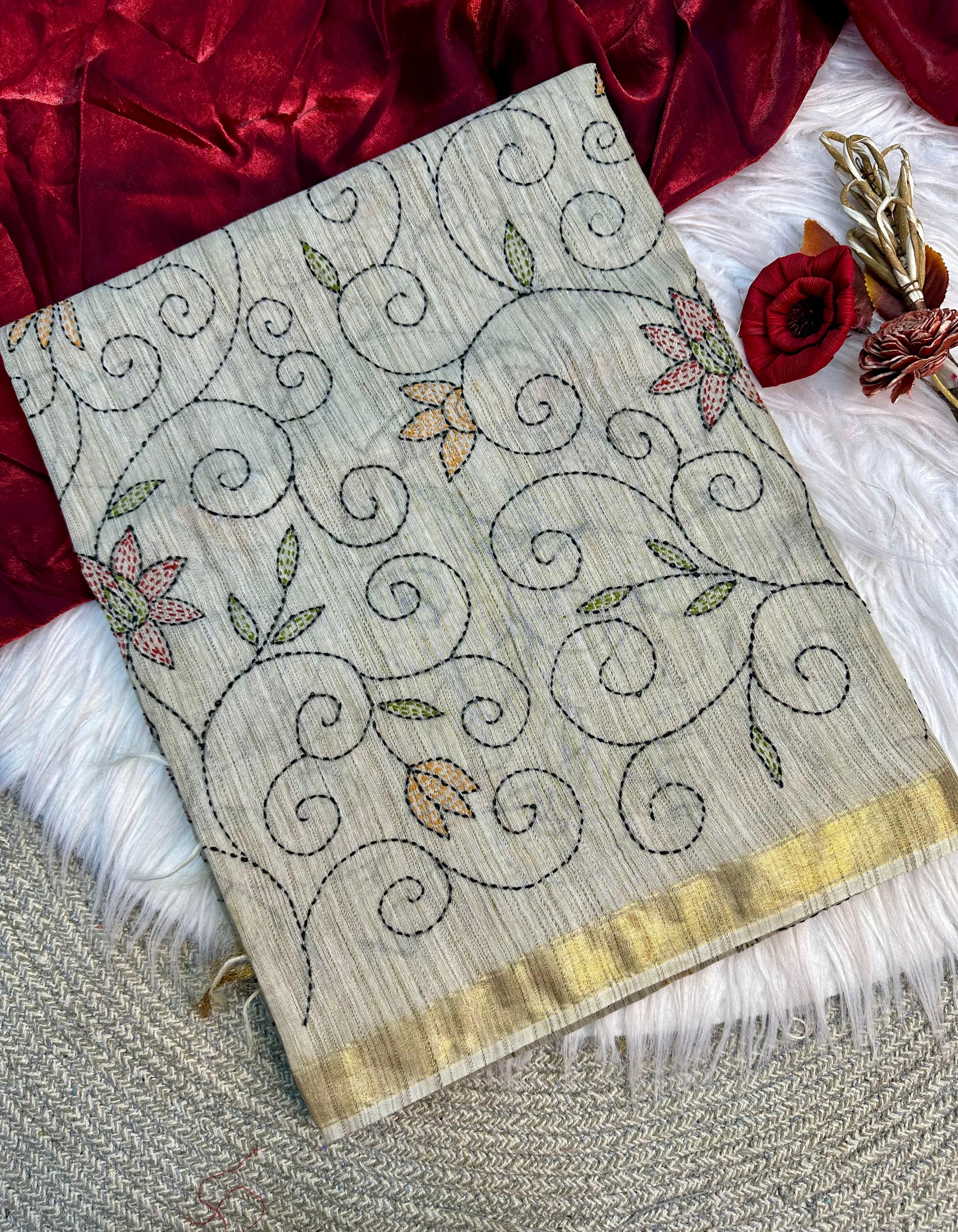
- Fall: A lining strip is sewn to the inside of the lower hem for strength and weight.
- Pico: The raw or vulnerable edge is enclosed with a narrow machine finish.
- Pallu finishing: Tassels, fringes or a turned hem may be secured at the pallu end.
- Embroidery and sequin work: Motifs may be embroidered or attached by hand or machine after the base fabric is made.
- Blouse stitching: A blouse piece is cut into panels and joined with shoulder, side and sleeve seams.
- Ready-to-wear conversion: Pleats, waist fastening, elastic, hooks or a shaped panel may be added to control the drape.
Pastel Floral Tissue Handloom Cotton Saree with Zari Weaves illustrates why finishing must respect the fabric. Tissue surfaces and zari details can snag under rough stitching, while handloom cotton may respond better to a stable, breathable fall than to a heavy synthetic lining.
Off White Organza Silk Embroidered Saree with Sequin Butti Work - Party Wear requires especially careful inspection around embroidered areas. Sequin butti work can catch on a presser foot, jewellery or a rough fall edge, so a professional tailor should keep seams smooth and avoid unnecessary recutting.
How is fall and pico stitching done on a saree?
Fall stitching is done along the inside of the lower hem, while pico stitching finishes the exposed edge around the saree and pallu. Both treatments should follow the original border line without covering zari, embroidery or printed motifs.
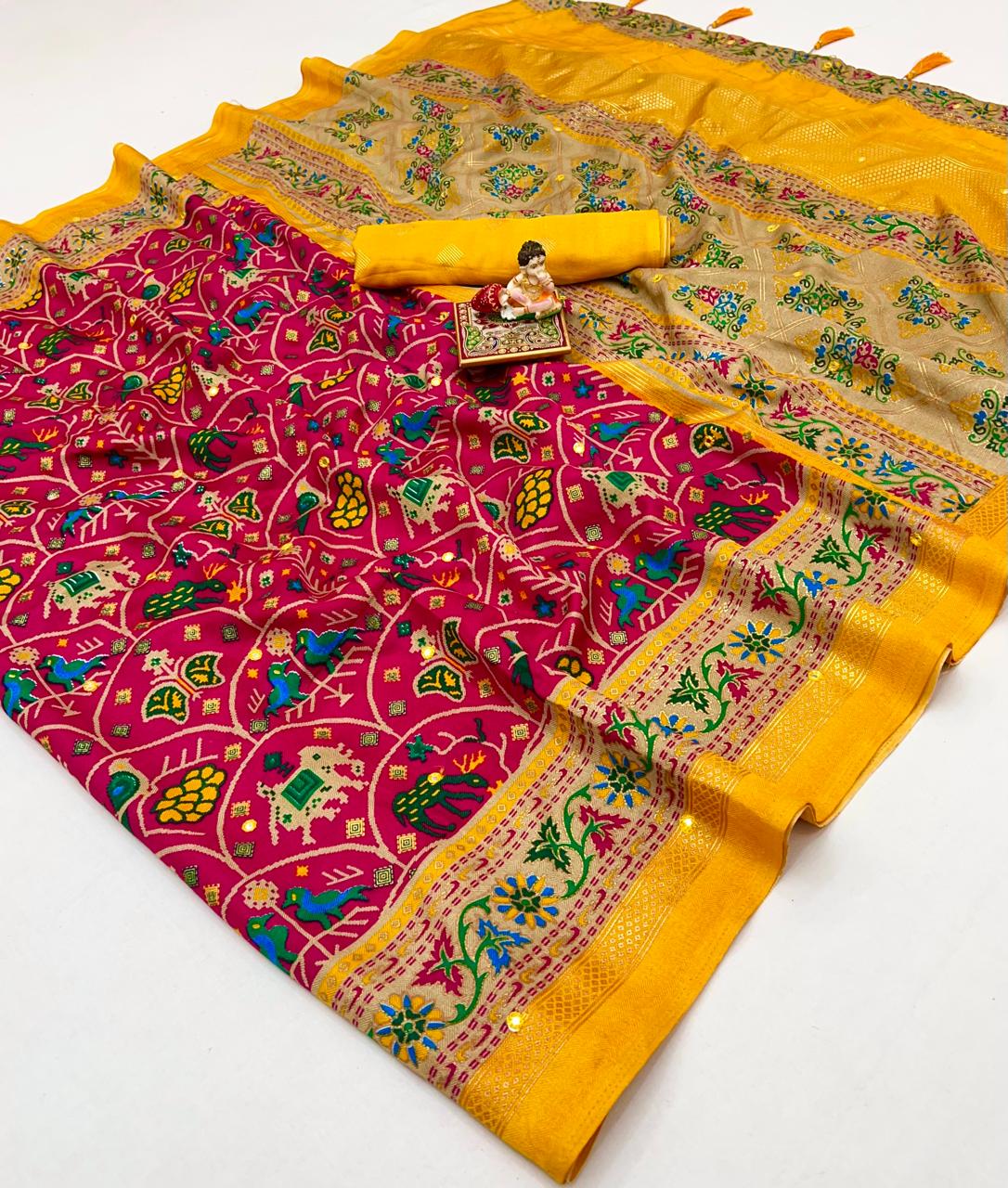
Before stitching fall, the tailor identifies the lower edge that will touch the ground during normal draping. The lining is cut slightly narrower than the saree's full width so that it remains inside the fabric. The tailor aligns the fall evenly, pins or hand-bastes it and then machine-stitches it in a straight line. The hem is checked from the front to ensure that the stitching doesn't distort the border.
Fall should not be excessively stiff. A heavy fall can make a soft georgette or organza saree stand away from the body, while a very thin lining may provide little protection on a substantial silk saree. The right weight preserves the fabric's natural movement and makes front pleats sit more neatly.
Pico is usually applied to the two long sides and sometimes the pallu edge, depending on the material and existing finish. A narrow, even roll is preferable to a wide contrast edge unless the design intentionally calls for one. Matching thread is the safest choice for printed, pastel or metallic fabrics because a contrasting thread can become visible when the saree shifts.
Rust Red Handloom Printed Saree with Ethnic Border benefits from preserving the printed border's straight line during finishing. A tailor should avoid trimming into the ethnic border merely to make the edge look narrower. Small inconsistencies in handloom fabric are not automatically defects; aggressive cutting can remove part of the design.
How are ready-to-wear sarees stitched?
A ready-to-wear saree is stitched by organising the fabric into a fixed or semi-fixed drape with sewn pleats, a waist attachment or another fastening system. The garment still resembles a saree, but the wearer doesn't create every pleat from a loose rectangular length.
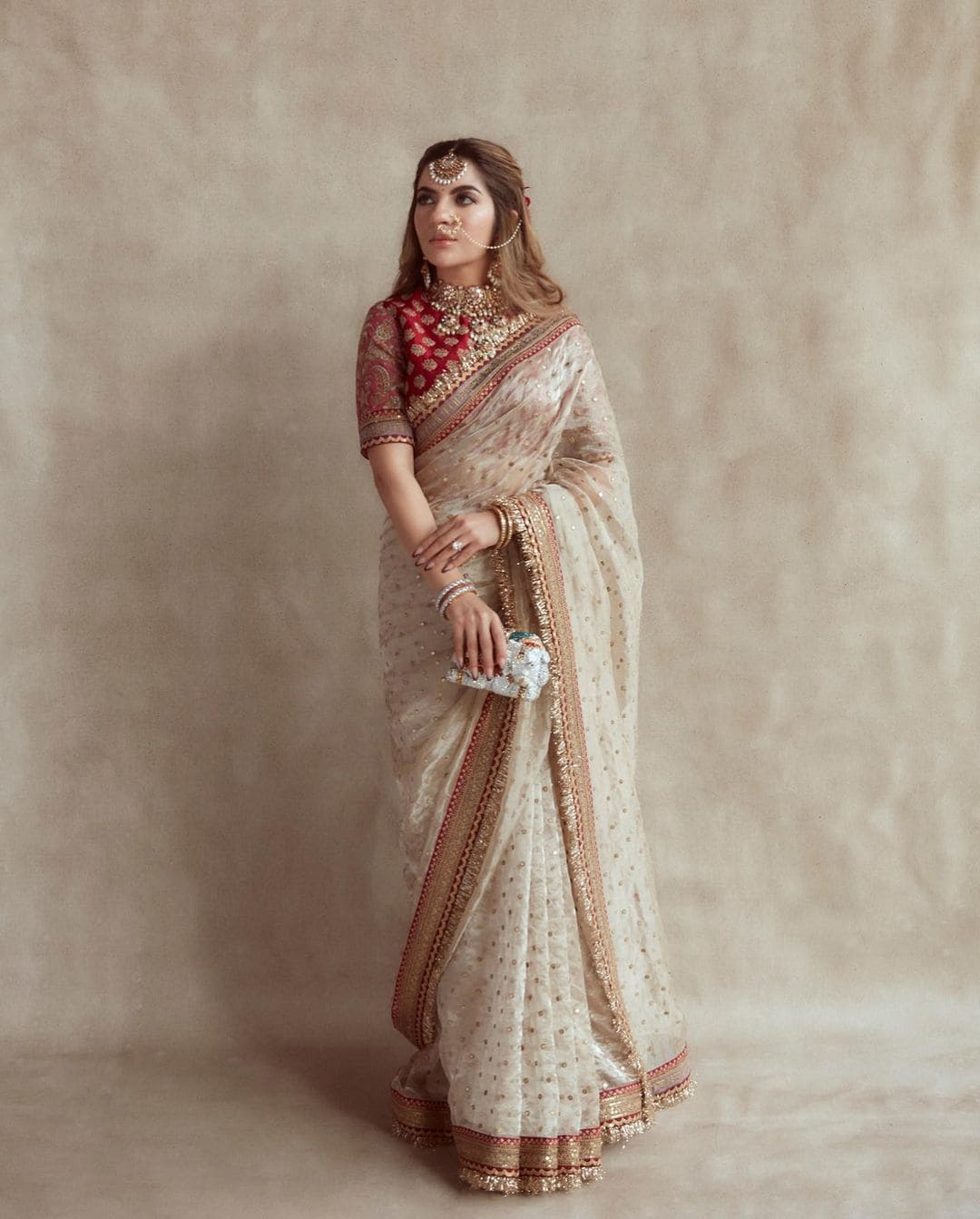
The construction varies. Some designs use pre-stitched front pleats with a waistband and hooks. Some attach the saree to a skirt-like base. Others use a side zip, drawstring, elasticated waist or a separate pallu that crosses the body. A few styles include a petticoat structure, while others require a wearer's own underskirt for support.
Blue Floral Chinnon Ready To Wear Saree with Mirror Lace is an example of a style where the fabric, lace placement and fixed drape work together. Chinnon is lightweight and fluid, so the stitching must control the pleats without making the waist bulky. Mirror lace also needs secure attachment because the decorative elements add weight at selected points.
Ready-to-wear construction improves speed and consistency but reduces alteration freedom. A heritage saree can be re-pleated in several ways, whereas sewn pleats may have a set width and direction. Before buying, check the waist range, fastening position, pallu length and whether the design can be worn comfortably with your preferred footwear.
Can a ready-to-wear saree be altered?
A ready-to-wear saree can usually be altered at the waistband, side seam or fastening, but extensive changes may disturb the pleat alignment. A tailor should inspect the construction before removing stitches.
Small waist adjustments are often possible by moving hooks, shortening an elastic section or taking in a side seam. Length adjustments require more care because the hem, fall and border may already be finished. Shortening from the top can change the position of the pallu, while shortening from the bottom can remove border detail.
Sky Blue Organza Cotton Silk Saree With Sequin Work should be altered with a fine needle and protective cloth because organza and sequins can show needle holes or snagging. A tailor should mark the fitting while the wearer is standing in the intended shoes, since even a 2-centimetre change can affect the floor clearance.
How is a saree blouse stitched?
A saree blouse is stitched by cutting a blouse piece into front, back, sleeve and facing components, then joining and finishing those panels according to body measurements. Blouse construction is separate from the saree body, even when the blouse fabric matches the saree.
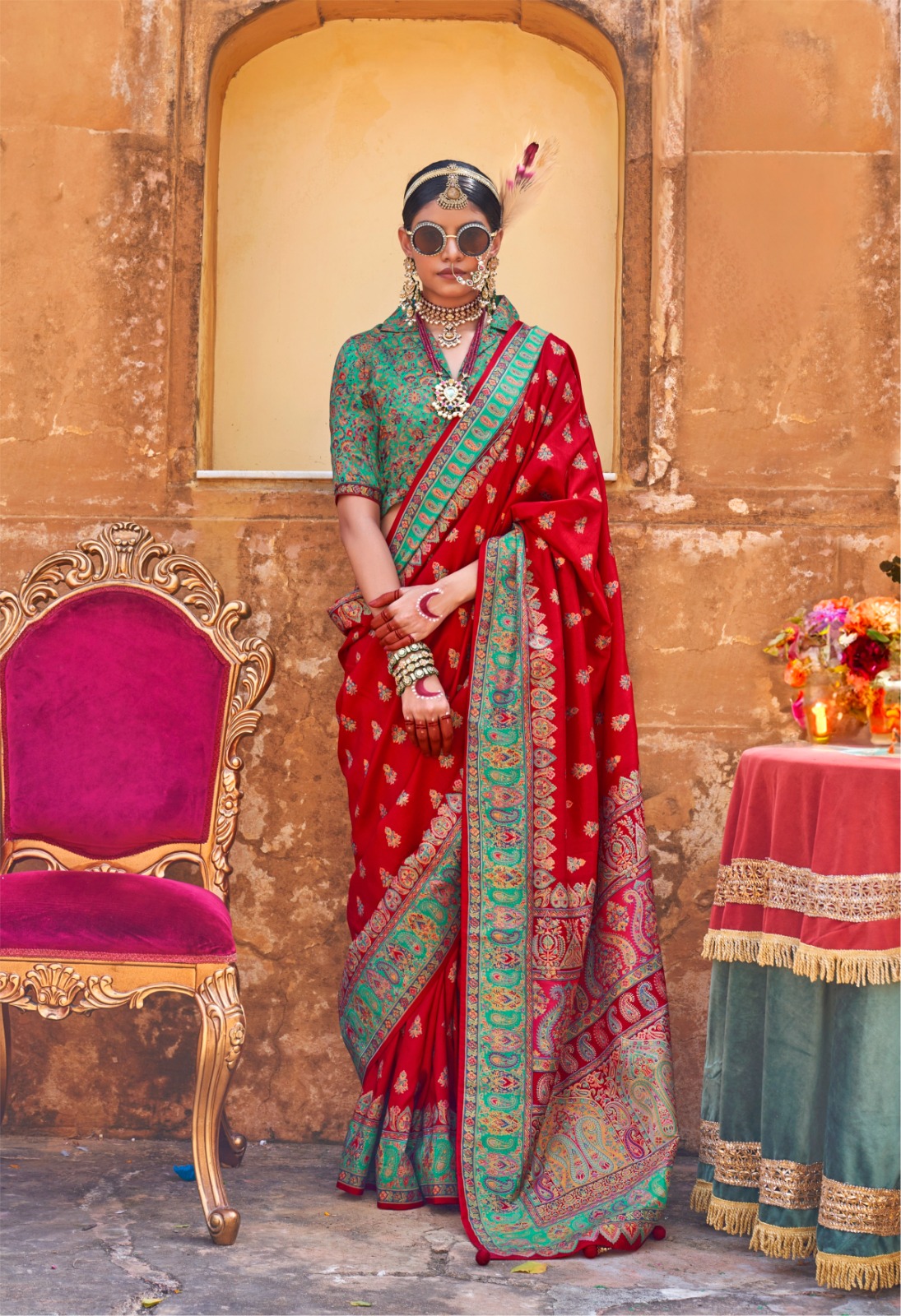
Accurate measurements should include bust, underbust, shoulder width, armhole, sleeve length, blouse length and the desired neckline depth. A well-fitting blouse isn't simply tight at the bust; it must allow breathing, arm movement and a smooth connection between the shoulder and sleeve. A seam allowance of roughly 1 to 2 centimetres is commonly retained, but the amount depends on the tailor and the possibility of future alteration.
Blouse lining can stabilise lightweight silk, organza and embellished fabrics. Interfacing may be added at the neckline, placket or hook area to prevent stretching. Padding, cups, hooks and opening placement are personal choices rather than universal requirements. A tailor should discuss these choices before cutting, especially when the fabric has zari or an one-directional motif.
Maroon Cotton Saree with Zari Work for Wedding demonstrates why blouse planning matters for coordinated dressing. Cotton can support a structured blouse, but zari work should be positioned so that cutting doesn't split a motif or place a metallic thread directly on a high-friction seam.
How should you check saree stitching before buying?
Check the edge finish, fall alignment, seam security, embellishment attachment and available alteration points before buying a stitched or finished saree. A five-minute inspection can reveal whether the garment will be comfortable and repairable.
- Inspect the lower edge: Look for an even fall without puckering, loose threads or a lining that extends beyond the saree.
- Check the pico: The edge should be narrow and continuous, with no skipped stitches or visibly different thread unless contrast is intentional.
- Examine the pallu: Confirm that tassels, lace, mirror work or embroidery are firmly attached and that the pallu hangs straight.
- Test the waist: On a ready-to-wear style, check whether hooks, elastic or a zip sit comfortably without digging into the body.
- Review the length: Wear the footwear planned for the event and ensure the hem doesn't drag or expose too much ankle.
- Find the alteration seams: Identify whether a tailor can adjust the waist, blouse or length without cutting through zari and embroidery.
Price isn't a substitute for construction quality. Collections such as Sarees from Rs 1000 to Rs 1500, Sarees Under 20% Off and Sarees Under 10% Off can contain different fabric types and finishing requirements, so compare the actual edge work and drape rather than relying only on a discount label.
How should stitched and finished sarees be cared for?
Care should match both the base fabric and the stitched additions. Store a saree clean, dry and lightly folded, and avoid allowing heavy embellishment to press against the same fold for months.
Silk sarees should generally be dry-cleaned when the care label recommends it, while cotton sarees may tolerate gentler washing if the dye and finish are suitable. Organza, tissue, sequin work, mirror lace and zari need special caution because heat, friction and moisture can affect their surface. Do not iron directly over sequins, mirrors or metallic zari; use a protective cloth and the lowest suitable heat only when the care instructions permit ironing.
Hang a ready-to-wear saree briefly after use so body moisture can evaporate, then fold it with soft muslin or a breathable cover. Avoid plastic storage for long periods. Refold silk and embellished sarees every few months to prevent permanent crease lines, and keep perfumes, deodorants and damp jewellery away from the fabric.
Discount collections such as Sarees Flat 60% Off and Sarees Flat 50% Off should still be assessed for fabric care and stitching quality. A lower price may make a saree accessible, but repair costs can rise if a delicate edge has been trimmed too closely or decorative work has been stitched without adequate reinforcement.
What does "stitched saree" really mean for the wearer?
"Stitched saree" usually means that some part of the drape has been fixed for convenience, not that every saree has been tailored from scratch. Classic sarees remain flexible woven lengths with optional fall, pico and blouse stitching, while ready-to-wear sarees use seams and fastenings to simplify dressing.
Choose a traditional saree when you want maximum control over pleats, drape and future styling. Choose a ready-to-wear saree when speed, consistent pleats or easier dressing matters more than unlimited adjustment. In either case, understand where the fabric is woven, where it's stitched and where alterations are possible.
That knowledge makes shopping more practical. You can ask whether fall is included, identify a vulnerable edge, request the correct blouse measurements and decide whether a fixed waist will suit your movement. Saree stitching isn't merely a finishing detail; it determines how comfortably the garment performs after the loom, the tailor and the first drape.
Common Questions About Saree Stitching and Ready-to-Wear Drapes
Is a traditional saree stitched or woven?
A traditional saree is mainly woven as one long rectangular textile and is not stitched into a skirt-like garment. Fall, pico, tassels and the blouse are commonly added or finished later by a tailor.
What is fall stitching on a saree?
Fall stitching attaches a lining strip to the inside of the lower saree edge. The lining adds support, protects the hem from rubbing and helps front pleats hold their shape.
Is pico stitching necessary for every saree?
Pico stitching is useful when an edge may fray, especially on lightweight or loosely woven fabrics. Some sarees already have a suitable woven or turned finish, so a tailor should inspect the edge before adding another treatment.
Can a ready-to-wear saree be resized?
A ready-to-wear saree can often be adjusted at the waist, hooks, elastic or side seam. Major changes to length or pre-stitched pleats may alter the pallu position and should be done only after the construction is inspected.
How is a saree blouse stitched for a better fit?
A blouse is cut into front, back, sleeve and facing pieces using bust, shoulder, armhole, sleeve and length measurements. The tailor should leave practical seam allowance and test movement before finalising hooks, neckline depth or padding.
Can zari and sequin sarees be altered safely?
Zari and sequin sarees can be altered safely when the tailor avoids cutting through motifs and uses an appropriate needle and protective handling. Embellished areas should be inspected before stitching because needle holes and loose decorative elements may be difficult to repair.