How saree is made is a story of fibre, yarn, tension, colour and skilled finishing. A saree may begin as cotton lint, silk filament or a manufactured fibre, but the final garment depends on dozens of decisions made before the fabric reaches a wardrobe. Yarn thickness affects weight, the loom controls structure, dyeing determines colour depth, and the finishing process influences fall and comfort.
Understanding how saree is made helps you read product descriptions more intelligently. Terms such as Banarasi silk, handloom cotton, Chanderi, zari and printed georgette describe different materials or techniques, not interchangeable labels. A lightweight saree may be suitable for a Haldi ceremony, while a densely woven silk saree may be designed for a wedding or formal celebration.
How Saree Is Made: The Journey from Fibre to Yarn
A saree is made by converting a unbleached or manufactured fibre into yarn, preparing the yarn for a loom, constructing the fabric, and then completing colour, border and finishing work. The first stage is therefore fibre selection, because fibre properties determine how the saree feels, drapes and react to care.
Natural fibres and their different behaviours
Cotton comes from the fluffy seed fibres of the cotton plant. Longer cotton fibres can be spun into smoother, stronger yarn, while shorter fibres usually create a softer or slightly more textured surface. Cotton sarees generally absorb moisture well and feel comfortable in warm weather, but cotton can crease more readily than silk or synthetic fibres.
Silk is produced from filaments made by silkworms. Silk filaments are unwound, combined and twisted into yarn before weaving. Banarasi silk often uses a rich silk ground with supplementary zari designs, while Kanjeevaram weaving is known for a substantial silk body and strong contrasting borders. The terms describe distinct weaving traditions and should not be treated as simple synonyms for "silk saree."
Chanderi is associated with a light, fine fabric traditionally woven using silk and cotton yarns, although specific compositions can vary by saree. Georgette is a light, grainy fabric made with highly twisted yarns, and modern georgette may be made from silk or synthetic fibres. Chinnon is a soft, fluid fabric commonly used for dressy drapes and ready-to-wear sarees.
Spinning, twisting and sizing
Spinning turns loose fibres or filaments into continuous yarn. Twisting gives yarn strength and controls its surface texture, while yarn count indicates fineness: a higher count generally refers to a finer yarn within the same counting system. The relationship isn't always directly comparable across cotton, silk and synthetic yarns, so a count should be read alongside the fibre and weave.
Sizing is the application of a temporary protective coating, often made from starches or similar compounds, to warp yarns. The sizing helps warp threads withstand repeated rubbing and tension while they pass through the loom. Some of the sizing is removed during washing or finishing, which is why a newly woven fabric may feel stiffer than the finished saree.
How the Loom Builds the Saree Fabric
The loom forms a saree by interlacing lengthwise warp threads with crosswise weft threads. Warp threads run from one end of the saree to the other, while weft threads travel across the width. The interlacing pattern creates the fabric's strength, openness, texture and visual rhythm.
Warp preparation and loom setup
Warp preparation is one of the most exacting stages of saree weaving. Hundreds or thousands of threads are measured to the required length, arranged in order, coated if necessary, and mounted on the loom. Uneven tension can cause streaks, puckering or changes in width, so the weaver checks the warp before regular weaving begins.
Handlooms use the weaver's physical control to operate the shedding, picking and beating actions. Powerlooms automate much of the movement and can produce consistent fabric at higher speed. Handloom doesn't automatically mean that every motif is individually hand-created, and powerloom doesn't automatically mean poor quality; the loom type should be considered with yarn, weave density and finishing.
Plain weave, motifs and supplementary threads
A plain weave interlaces each warp and weft in a regular over-and-under pattern. Many cotton sarees use plain or lightly textured weaves because the structure is stable, breathable and practical. More complex patterns can be produced by changing the interlacing sequence or adding supplementary weft or warp threads.
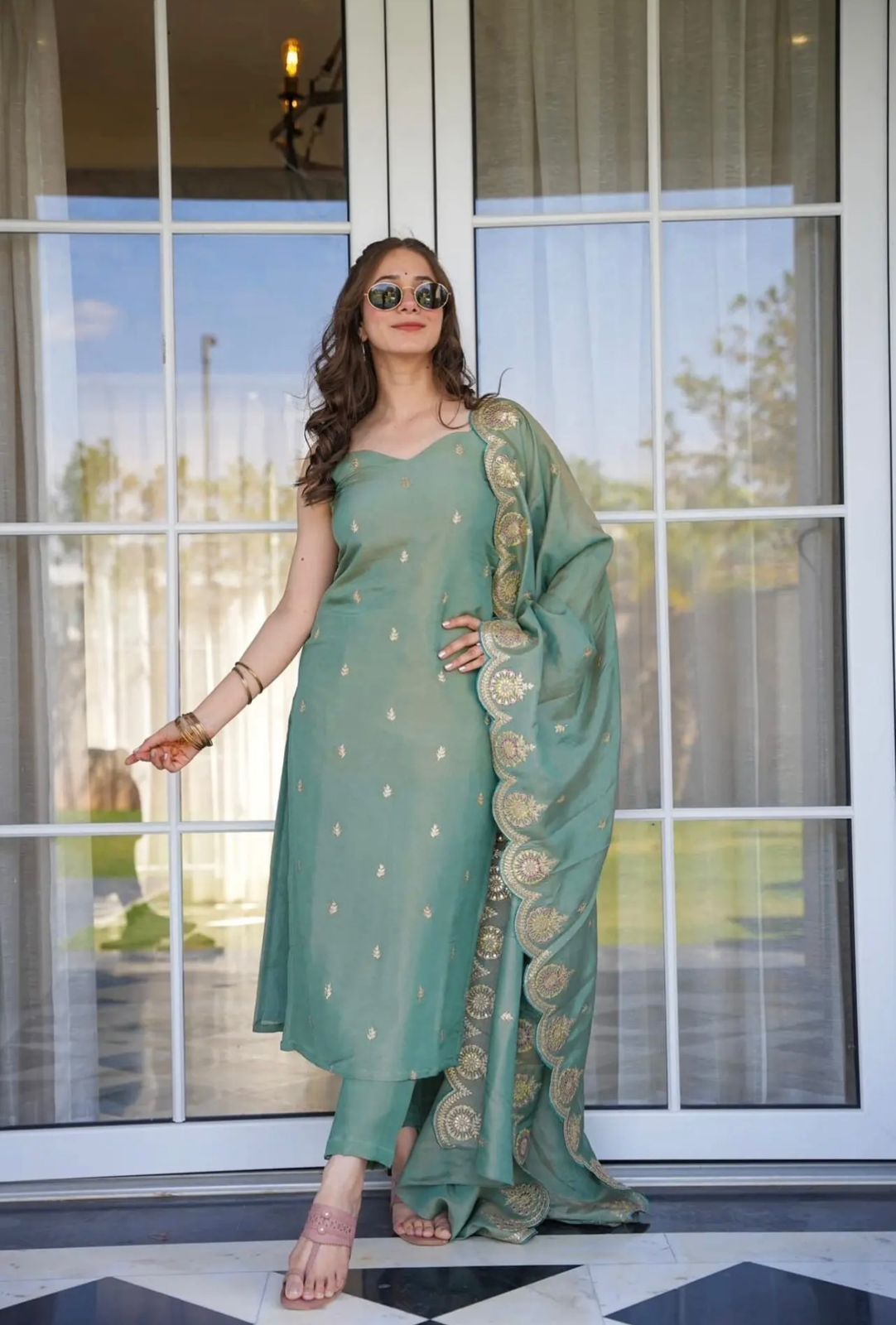
Motifs may be created by jacquard mechanisms, dobby attachments, extra-weft techniques, printed surfaces or embroidery after weaving. A woven motif is part of the fabric structure, whereas a printed motif sits on the surface. The distinction matters because woven designs usually remain integrated with the cloth, while surface prints require gentler handling to preserve clarity.
A fabric such as Pastel Floral Tissue Handloom Cotton Saree with Zari Weaves illustrates how fibre, handloom texture and metallic accent can work together. A tissue effect can add light-catching openness, while zari creates a contrasting decorative line or motif. The final weight depends on yarn thickness, weave density and the amount of metallic thread used.
How Borders, Pallu and Zari Are Constructed
Borders and pallus are created through planned changes in yarn, colour, weave structure or supplementary decoration. The border runs along the lengthwise edges, while the pallu is the decorated end that becomes visible after draping. Both areas may be woven as part of the fabric or added through later processes.
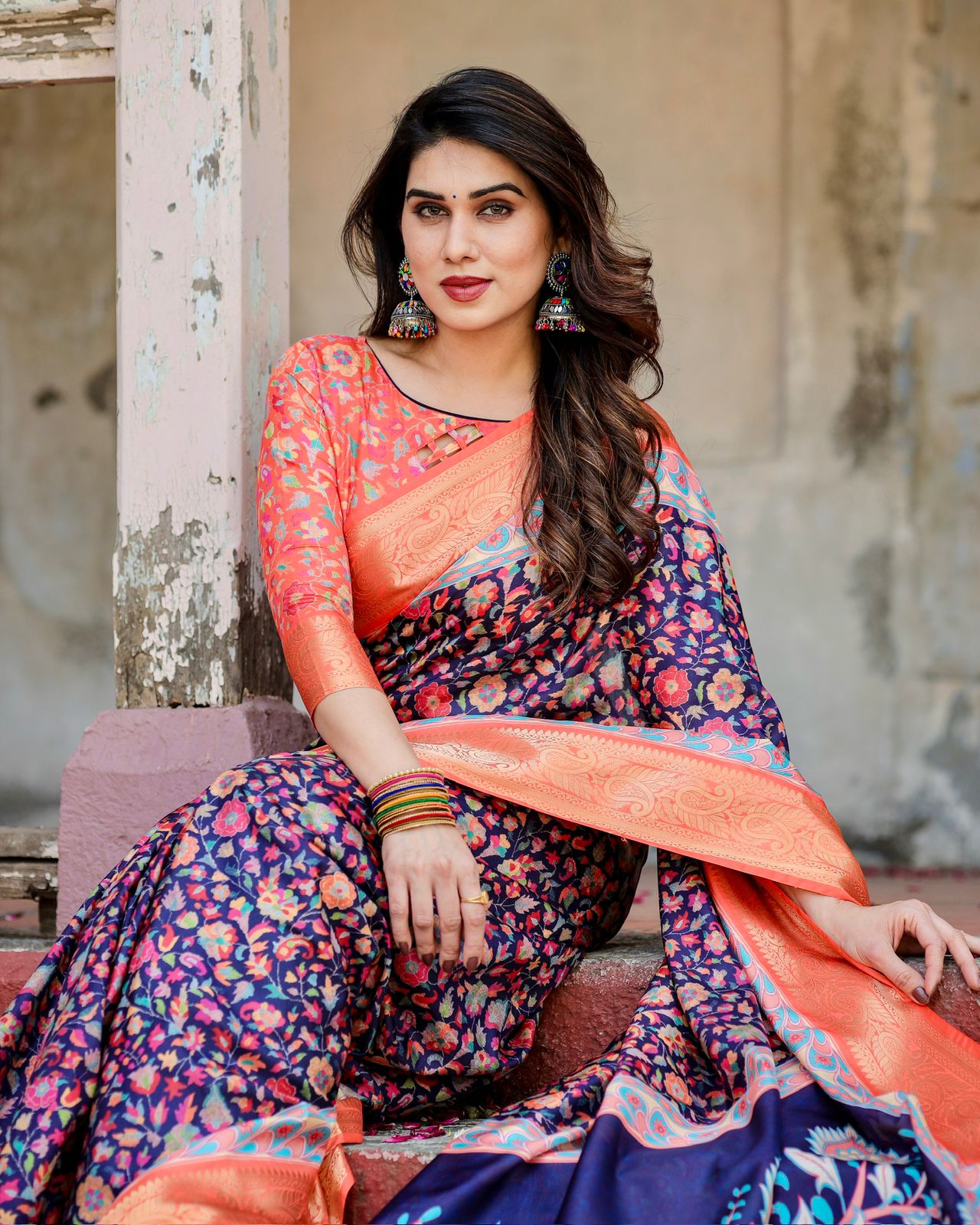
Zari is a metallic thread traditionally made with a metal coating over a core, although contemporary zari can use metallic-coated synthetic materials. Zari may be woven into the border, pallu or body using supplementary threads. The quality of zari depends on its metal or metallic coating, core, thickness, consistency and resistance to tarnishing or abrasion.
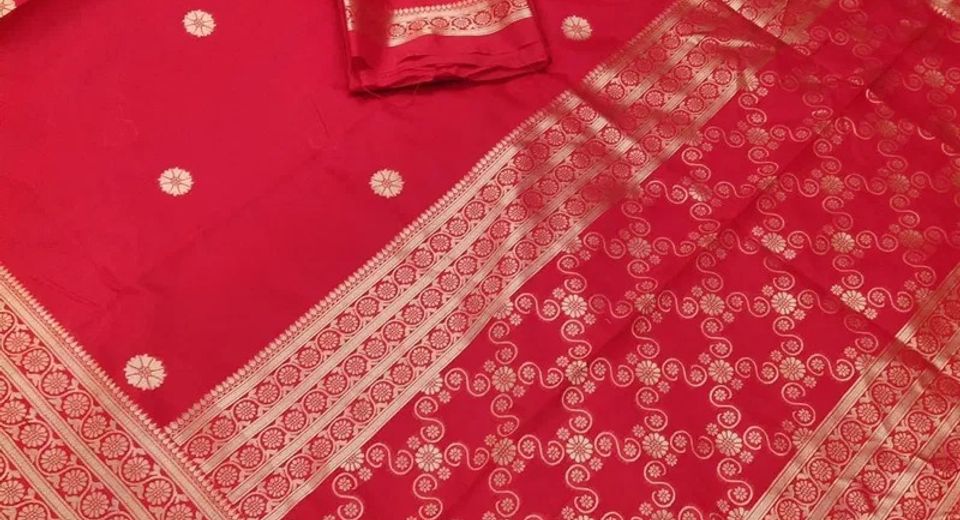
A Red Banarasi Silk Saree With Elegant Zari Borde shows why border construction changes the character of a saree. A heavier Banarasi silk ground paired with a structured zari border creates a formal drape and stronger visual weight. A Navy Blue Floral Silk Saree with Peach Zari Border uses colour contrast differently, placing the emphasis on the relationship between the dark body, floral design and lighter metallic border.
In traditional woven work, the weaver may use separate shuttles or controlled supplementary threads to build motifs. Small errors in motif alignment, floating threads or tension can appear during weaving and may require correction. Such details are part of the production process, but large snags, broken selvedges or repeated weaving gaps are quality concerns rather than desirable signs of handcraft.
Dyeing, Printing and Surface Decoration
Dyeing gives yarn or fabric its colour, while printing applies a design to the surface after the base cloth has been made. Dyeing can take place before weaving, after weaving, or at multiple stages, depending on the desired effect and the fibre's ability to absorb colour.

Yarn-dyed sarees receive colour before weaving, allowing different coloured threads to create checks, stripes, contrast borders or patterned structures. Piece-dyed sarees are coloured after the fabric is woven, which can produce an even field across the cloth. Printed sarees are woven first and then decorated using screens, blocks, rollers or digital methods.
Rust Maroon Handloom Cotton Saree with Floral Print and Traditional combines a handloom base with a floral surface design. The handloom structure can provide subtle irregularity and body, while the printed pattern supplies visual detail without requiring every flower to be woven individually. Print clarity, colour evenness and alignment are useful checks when examining such a saree.
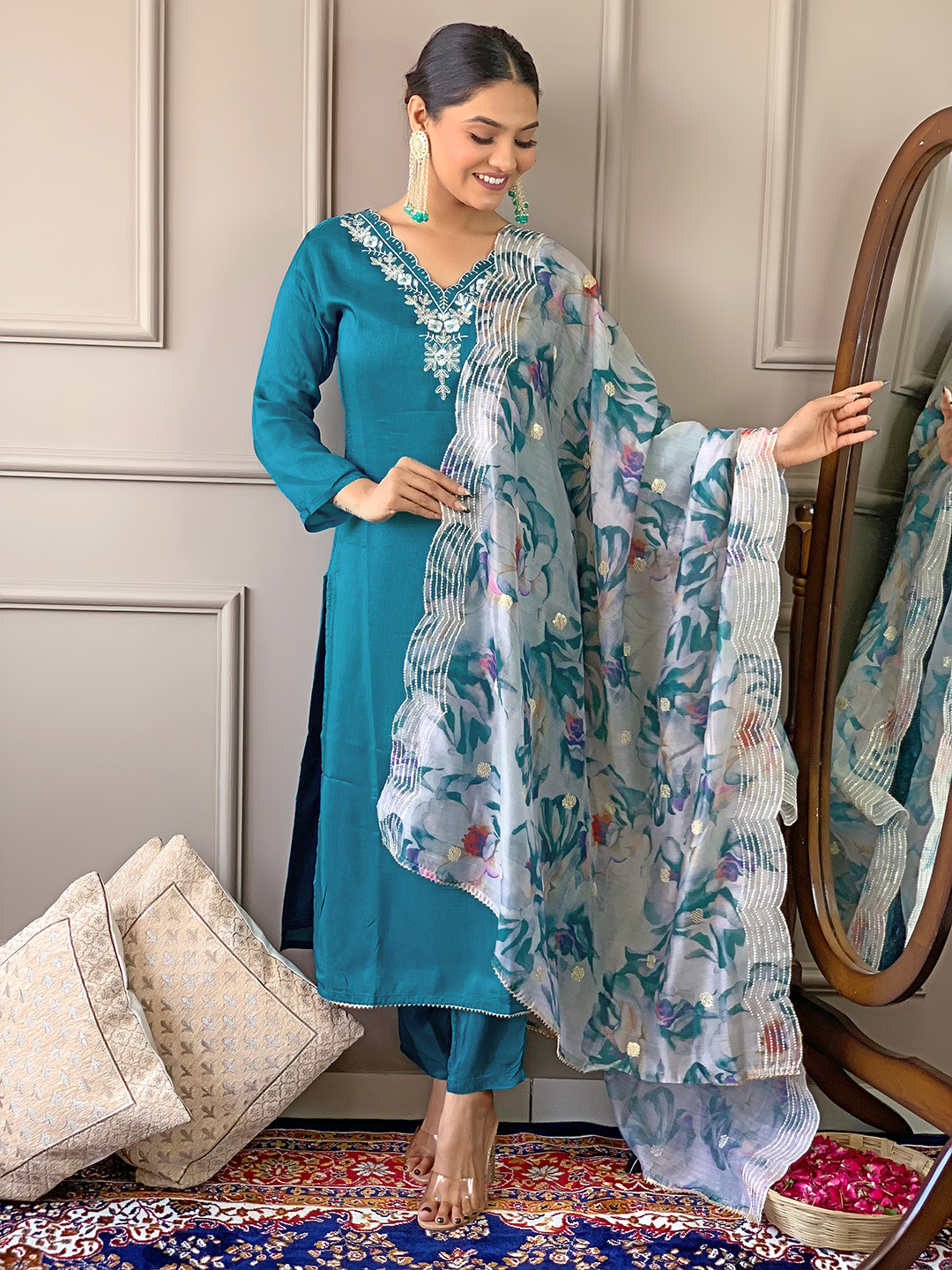
Embellishment can include mirror work, embroidery, sequins, appliqué or decorative lace. Ivory Floral Chinnon Ready To Wear Saree With Mirror Lace, for example, combines a fluid Chinnon base with a pre-stitched format and mirror lace. Ready-to-wear construction usually involves additional stitching, pleat formation and waist fastening after the fabric has been decorated.
Finishing Gives a Saree Its Final Drape
Finishing improves the saree's handle, appearance, width stability and readiness for use. Common finishing steps include washing or scouring, drying, calendaring, softening, pressing, edge treatment, fall stitching and final inspection.
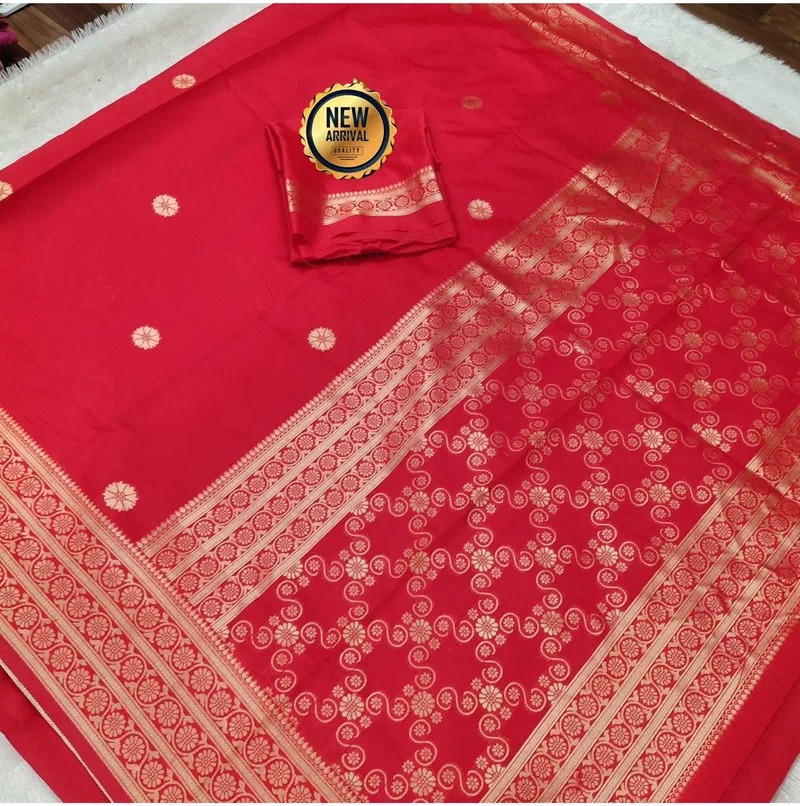
Scouring removes oils, dirt, loose dye and processing residues. Finishing may then soften the fabric or give it a controlled sheen. Calendaring presses fabric between rollers to smooth the surface, while other mechanical treatments can create a crisp, soft or slightly crinkled handle. Excessive finishing may make a fabric appear unusually glossy at first but can affect how the surface changes with use.
The selvedges are inspected because steady, even edges help the saree drape without excessive curling. The pallu and border are checked for alignment, and loose threads are reduce. A fall may be stitched to the low inner edge to protect the saree from floor friction. Blouse-piece dimensions, when listing, are also measured before packing.
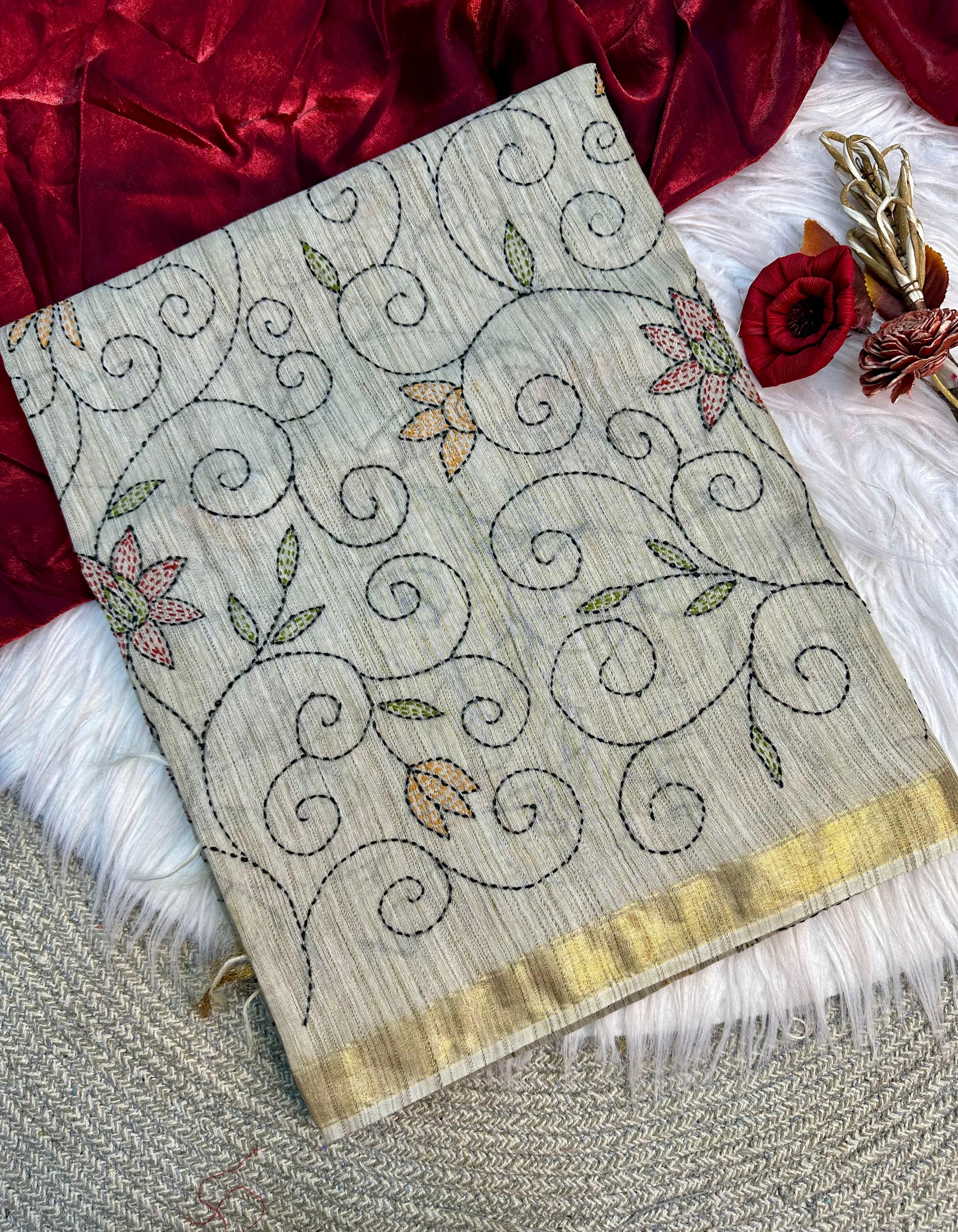
Premium Handloom Silk Saree with Handkatha demonstrates how the finishing and embellishment vocabulary can signal a different use case from a light daily saree. Handkatha details may add a handcrafted surface character, but the saree should still be assessed for even stitching, secure threads and a comfortable fall rather than decoration alone.
How to Judge a Saree by Its Making
The best way to judge a saree is to match fibre, construction and finish with the intended use instead of relying only on shine or price. An useful inspection takes less than five minutes and can reveal whether a saree suits daily wear, a formal event or a specific climate.
- Check the fibre description: Look for a clear statement such as cotton, silk, silk-cotton, georgette or Chinnon. "Silk feel" isn't the same as silk composition.
- Inspect the reverse side: Woven motifs should show a logical thread structure. Loose floats, long unsecured threads and thick knots deserve closer attention.
- Examine the selvedge: A reasonably straight, firm edge indicates controlled weaving and finishing. Slight handloom variation can be normal, but severe waviness may affect drape.
- Assess weight and fall: Hold the saree by one corner and observe whether it falls fluidly, stands crisply or feels unusually stiff. The right result depends on the intended style.
- Look at zari and embellishment: Check whether metallic threads are secure and whether mirror work, lace or embroidery has been attached without puckering the base fabric.
- Ask about care: Silk and zari often need dry cleaning or careful specialist cleaning, while cotton may tolerate gentler washing if the dye is stable. Follow the specific care label.
A Maroon Cotton Saree with Zari Work for Wedding can offer more breathability than a heavy silk saree while still looking occasion-appropriate. A Rajwadi Style White Georgette Saree with Peacock Border will usually require more careful handling because lightweight georgette and decorative borders can snag. Construction, not just colour, should guide the buying decision.
Choosing a Saree by Occasion, Climate and Budget
Choose cotton or cotton blends for regular warm-weather wear, silk or silk-rich weaves for substantial festive drapes, and georgette or Chinnon when fluid movement is the priority. A Haldi ceremony often benefits from a lighter saree that allows easy movement, while a wedding reception may justify a denser weave, richer zari or more elaborate pallu.
Budget is influenced by fibre cost, yarn quality, loom time, motif complexity, zari content, handwork and finishing. A handloom saree can require more labour even when the design appears simple, because preparing and maintaining the warp takes time. Discount percentage alone can't explain value; compare the composition, construction and included finishing.
Price-led browsing can begin with Sarees from Rs 1000 to Rs 1500, but a lower price doesn't identify a particular fibre or loom. Discount collections such as Sarees Under 20% Off and Sarees Under 10% Off can be useful for comparing finished styles, provided the fabric details are read carefully. Larger markdowns in Sarees Flat 60% Off and Sarees Flat 50% Off should prompt a check of measurements, care requirements and return conditions before purchase.
Learning how saree is made changes the way you shop: you begin by asking what the fibre is, how the motif was created, where the zari sits, and how the fabric was finished. Those questions are more reliable than judging quality from shine alone. They also make it easier to select a saree that remains comfortable, attractive and maintainable after repeated wear.
Practical Questions About Saree Weaving and Construction
How saree is made from cotton fibre?
Cotton fibres are cleaned, spun into yarn, sized for strength, arranged as warp threads and interlaced with weft threads on a loom. After weaving, the cotton saree may be dyed, printed, washed, pressed and finished with edge treatment or fall stitching.
How is a silk saree different from a cotton saree during making?
A silk saree begins with silk filaments that are reeled, twisted and prepared as yarn, while a cotton saree begins with shorter plant fibres that are spun. Silk usually produces a smoother, lustrous handle, whereas cotton generally offers more absorbency and a matte or softly textured surface.
Is a handloom saree always completely handmade?
A handloom saree is woven on a loom operated by hand rather than a powerloom, but preparation, dyeing, printing and finishing may involve different tools or machines. The accurate question is which stages were hand-executed and what fibre and weave the saree contains.
What is zari made of in a saree?
Zari is a metallic thread made traditionally with a metal coating around a core, while contemporary zari may use metallic-coated synthetic materials. Zari quality depends on the coating, core, thickness, attachment and resistance to tarnishing or rubbing.
Why do some sarees feel stiff when they are new?
New sarees can feel stiff because of sizing, starch, dense weaving or pressing during finishing. Washing or specialist cleaning may remove temporary stiffness, but the correct care method depends on the fibre, dye, zari and embellishment.
How can I tell whether a saree is woven or printed?
Inspect the reverse side and the edges of a motif: a woven design is integrated into the thread structure, while a printed design lies on the surface of the base cloth. A product description should also identify whether the design is woven, printed, embroidered or embellished.