

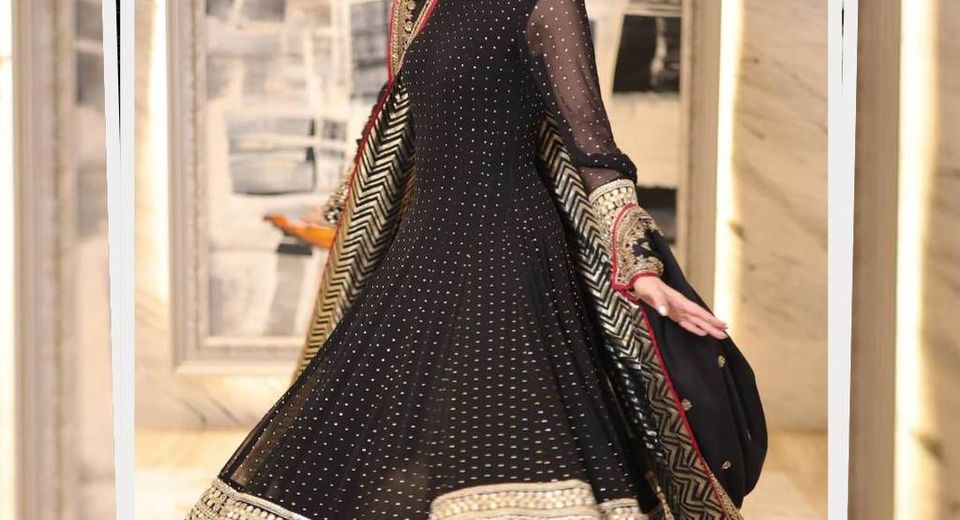
How Much Flare Is Practical for a Train Commute in an Anarkali depends on more than a dramatic silhouette. A commuter needs enough volume for comfortable walking and sitting, but not so much fabric that the hem catches on stairs, doors, footwear or another passenger's bag. For most daily train journeys, a finished hem circumference of about 2.5 to 3.5 metres is a sensible starting point, with a shorter length and a controlled dupatta making an equally important difference.
Anarkali suits can work beautifully for office and college travel when the cut is treated as a movement problem rather than only a festive style choice. The right flare lets you climb station steps, stand in a crowded compartment, sit on a narrow bench and board safely without repeatedly gathering the skirt in both hands.
What does "flare" mean in an Anarkali?
Flare means the entire circumference of the Anarkali hem, measured around the lower edge of the garment, rather than the distance from the centre to the hem. A dress with a 3-metre hem therefore has a 1.5-metre approximate incomplete-circumference when laid flat, although panel construction and fabric fall affect how wide it looks while worn.
Anarkali volume usually comes from the number and width of panels, added godets, gathers or circular cutting. A six-panel Anarkali may feel more controlled than a heavily gathered design with the same hem measurement because the fabric spreads differently during walking. A stiff Banarasi silk can project outward, while a fluid rayon or soft silk may fall closer to the legs.
Flare also changes with the waist-to-hem length. A 3-metre hem on a knee-length kurta doesn't behave like a 3-metre hem on an ankle-length Anarkali. A longer skirt distributes fabric down the body, while a shorter, fuller cut can expand sharply around the knees and make stairs more awkward.
How Much Flare Is Practical for a Train Commute in an Anarkali?
For a regular train commute, 2.5 to 3.5 metres of finished hem circumference is generally practical, while 4 metres or more is better reserved for spacious venues and short-duration wear. A 2.5-metre hem gives a graceful line with comparatively low snag risk, and a 3 to 3.5-metre hem provides visible Anarkali movement without becoming difficult to gather.
Useful flare ranges by commute situation
- Frequent local-train travel: Choose approximately 2.5 to 3 metres of hem circumference, especially if the journey includes a crowded platform, multiple staircases or standing travel.
- Peak-hour travel with standing: Stay close to 2.5 metres and select a fabric that doesn't balloon when people move past you.
- Moderately crowded metro or suburban train: A 3 to 3.5-metre hem can work if the garment has a smooth lining, a secure waistband and a length that stays above the floor.
- Short off-peak commute with guaranteed seating: Up to about 3.5 metres may be comfortable, provided the side seams don't pull when you sit.
- Very full festive Anarkali: A 4-metre-plus flare is usually inconvenient for daily trains because the fabric needs frequent gathering while boarding, turning and sitting.
These measurements are practical guidelines rather than fixed industry standards. Body height, hip measurement, lining, fabric weight and the location of the flare all change the result. A petite wearer may experience a full 3-metre hem as more cumbersome than a taller wearer in the same size, particularly when the garment reaches the ankle.
Which Anarkali length and hem finish work best on platforms?
An Anarkali hem that ends 1 to 2 centimetres above the floor when worn with the intended footwear is the safest everyday length. The hem should clear the top of the foot without exposing a large gap, because a floor-brushing edge collects dust and can catch against escalators, train steps and wet platform surfaces.
Measure the length while wearing the shoes that will accompany the suit most often. Measuring barefoot can produce an Anarkali that's too long for flats, while measuring in high heels can leave an unsafe gap when the garment is worn with work sandals. A tailor should also account for the height of the waistband and the placement of the lining, not only the outer fabric.
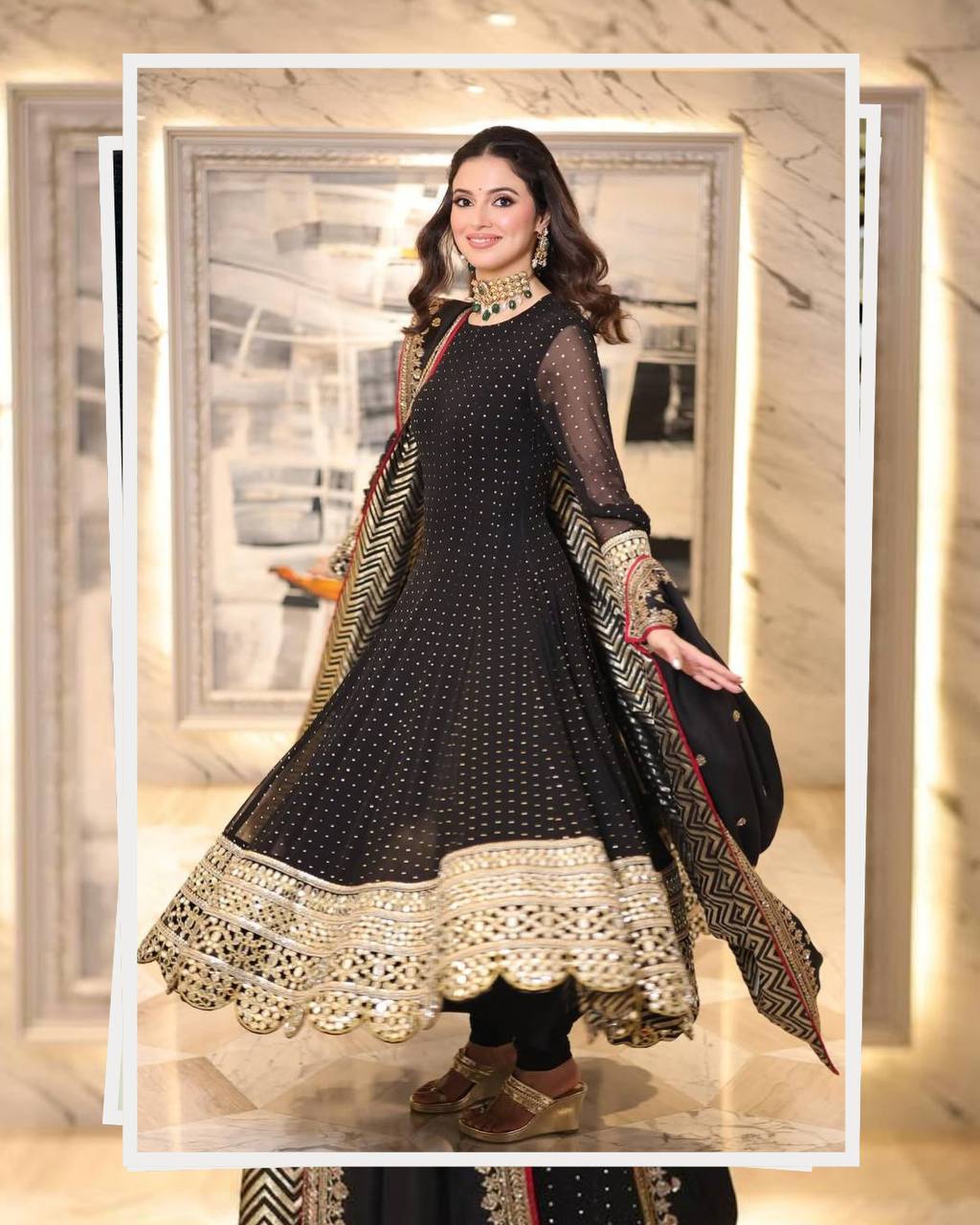
A narrow facing or weighted finishing tape can help an Anarkali hem fall neatly, but a heavy border may make the skirt swing with extra momentum. Zari, sequin and moti lace borders look attractive yet can snag on textured flooring or seat hardware. A modest border of 2 to 5 centimetres is easier to manage than a broad, heavily embellished edge for daily travel.
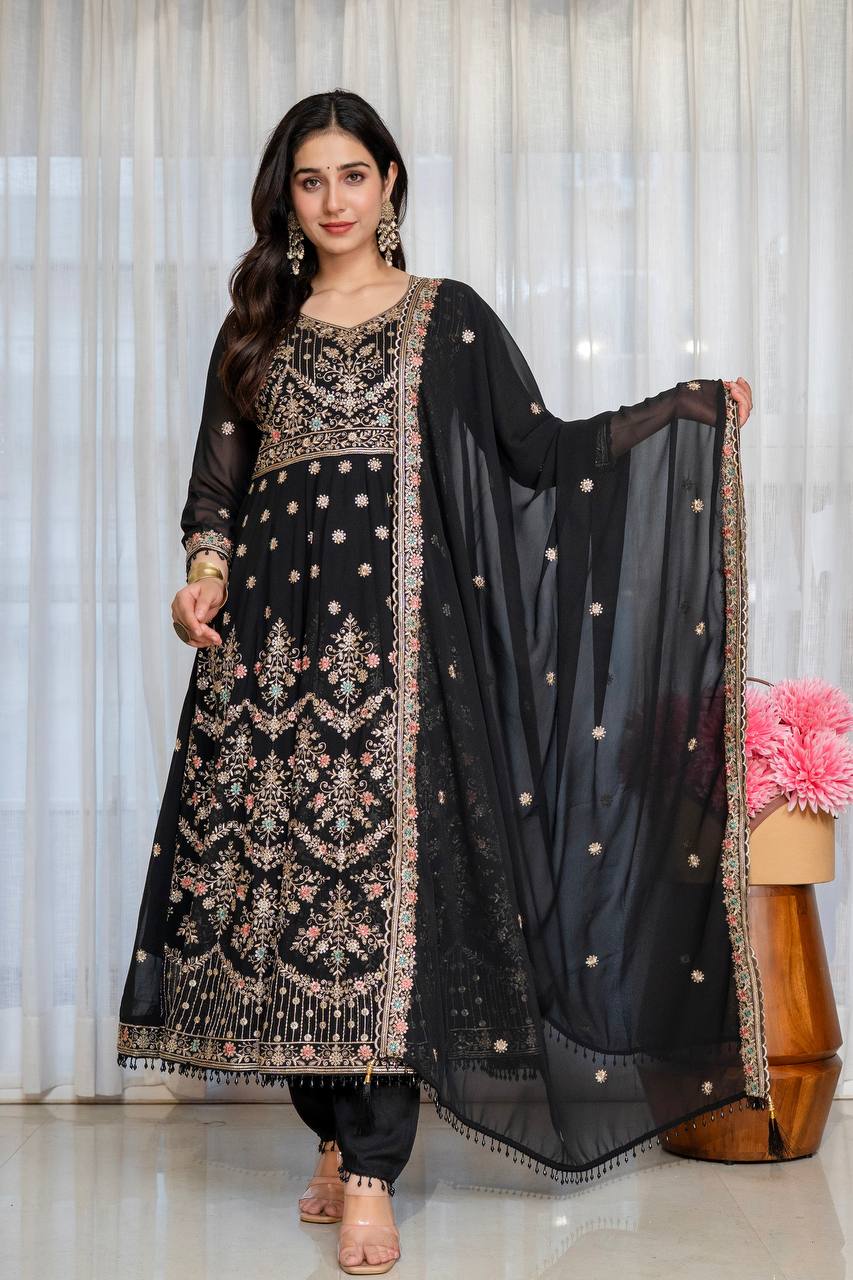
The Black Embroidered Anarkali Suit Set with Zari Work demonstrates why decoration needs to be considered alongside flare. Zari work near the lower edge can add visual weight, so a moderate silhouette may look fuller than a plain Anarkali with the same circumference. A similar concern applies to the Black Anarkali Suit Set with Sequin Zari and Moti Lace Work, which is better suited to days when the route and seating are less demanding.
Which fabrics make a commuter Anarkali easier to handle?
Medium-weight fabrics with controlled drape are usually the easiest choices for train travel because they move without clinging or spreading excessively. Cotton blends, soft rayon, lightweight silk blends and some crepe constructions can provide shape while remaining manageable on stairs and seats.
Fabric behaviour matters more than the fabric name
Rayon generally falls fluidly, but a very thin rayon may cling to tights or leggings and twist around the legs. A cotton-rich fabric breathes well for warm platforms, although a heavily starched cotton can stand away from the body and occupy more space in a crowded compartment.
Banarasi silk and heavier silk blends create a more structured appearance and can hold panel definition, but they add weight over a long day. The Festive Wear Maroon Silk Anarkali Suit Set for Women can be a useful reference for a dressier silhouette, though a commuter should check the garment weight and lining before choosing it for a five-day travel routine.
Chanderi is light and elegant, but the transparent or crisp character of some Chanderi weaves may require a separate lining. A lining that's too stiff can make the flare stand outward and generate heat. Soft lining with low-friction finishing is more practical than a rigid inner layer.
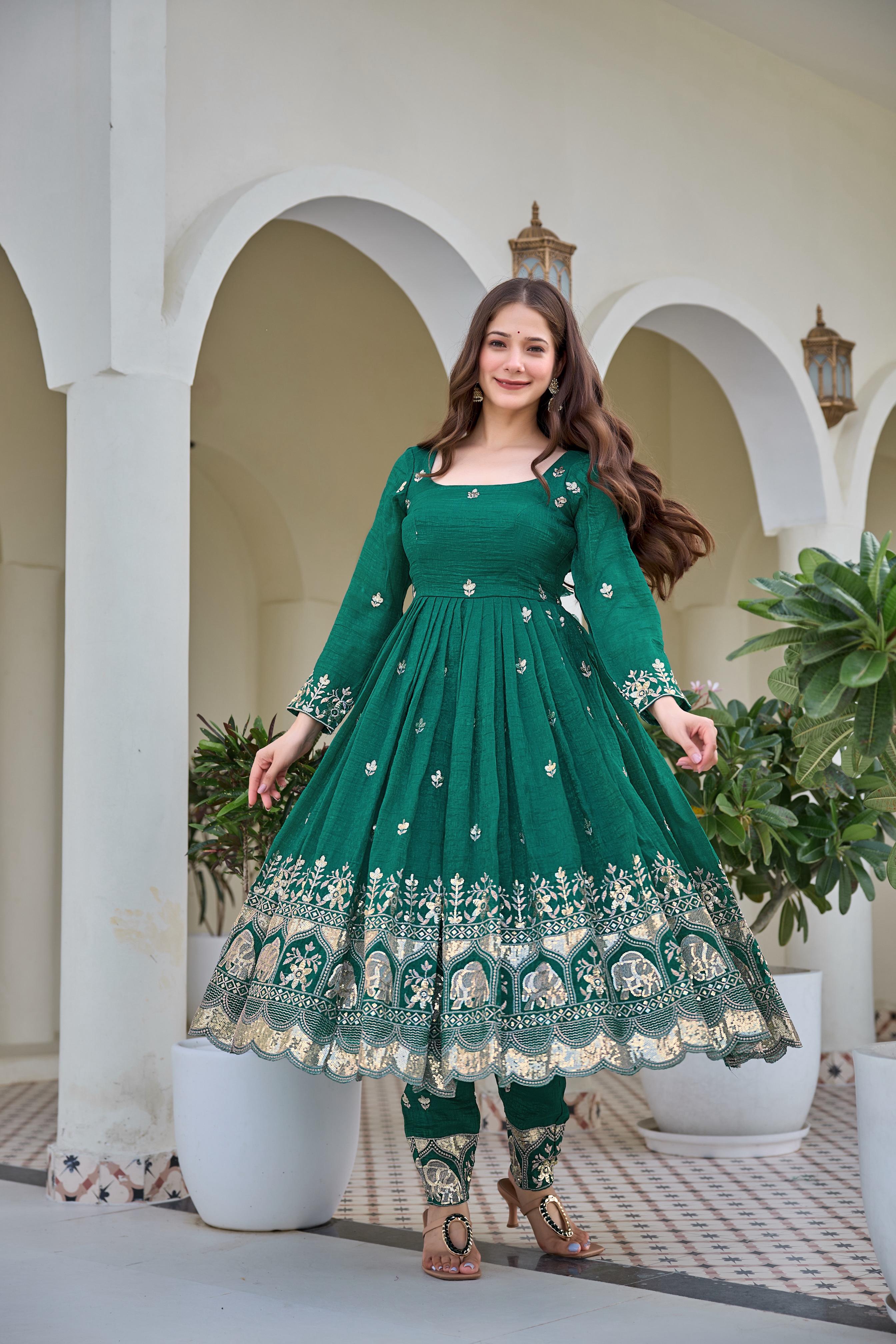
Embroidery and zari concentrate weight in particular areas. The Teal Green Embroidered Silk Anarkali Kurta Set may feel comfortable through the bodice while becoming heavier near an embellished hem. Checking the balance of the complete garment is more useful than judging fabric softness from the upper half alone.
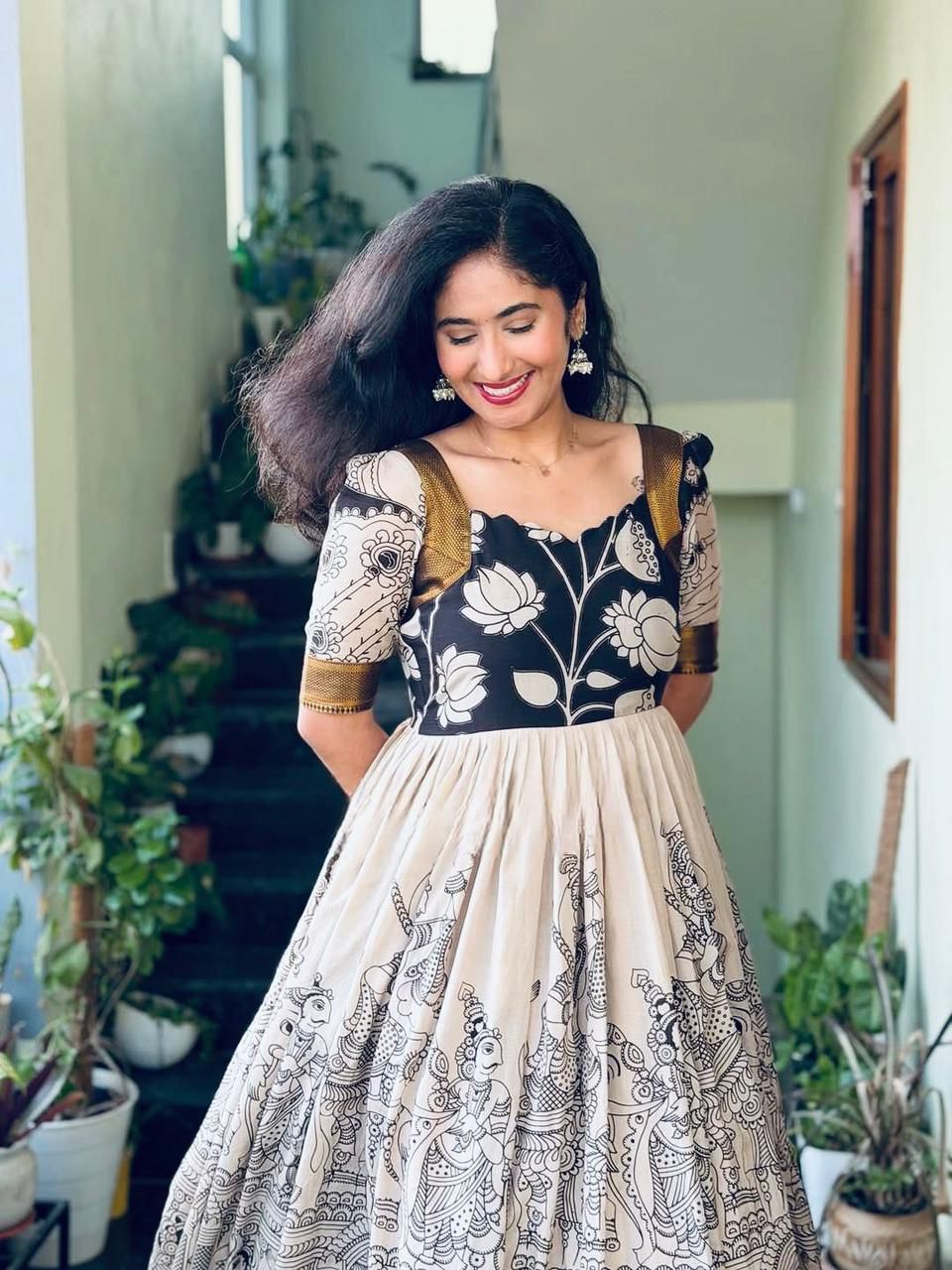
Print-led designs often reduce the need for dense surface decoration. The Women's Mustard Printed Anarkali Suit with Dupatta offers a visual example of how a printed Anarkali can look occasion-ready without the extra pull of a heavily embellished lower panel. Kalamkari Print Salwar Suits and Odisha Sambalpuri Salwar Suits also show how pattern can provide character without relying entirely on weighty ornament.
How should you test an Anarkali before taking it on a train?
A five-minute movement test reveals whether an Anarkali is commute-ready more reliably than a mirror check. Put on the intended footwear and perform the same movements required during the journey: walk quickly, climb two or three steps, sit on a narrow chair, stand up and turn through a restricted space.
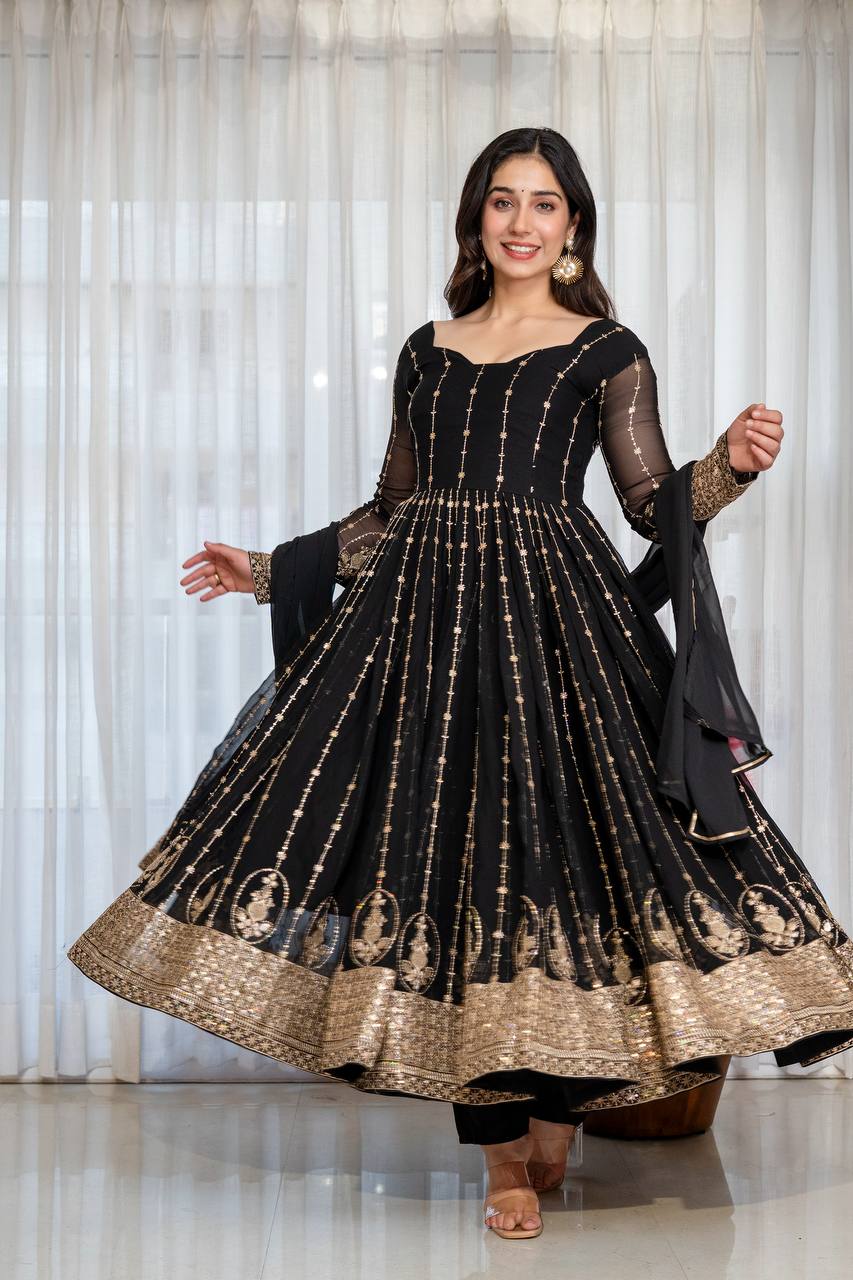
- Check the standing radius: Walk in a small circle and notice whether the hem repeatedly touches your shoes. A hem that wraps around the ankles can become hazardous on stairs.
- Test a controlled gather: Lift the front and one side of the Anarkali with one hand. The fabric should gather without pulling the neckline, waist seam or side zip.
- Simulate a train seat: Sit with the skirt arranged beside and between the knees. The waist should not ride upward more than a few centimetres, and the back panels should not press uncomfortably against the spine.
- Check the side seam: Stand after sitting and inspect whether the side zip, hooks or waist seam has shifted. Repeated strain can damage closures even when the garment looks attractive while standing.
- Try the dupatta at speed: Walk briskly while wearing the dupatta in the intended drape. A loose end that reaches below the hip can catch on a door handle or another passenger's shoulder.
- Inspect the hem from underneath: Look for loose threads, exposed lining or rough embellishment. A clean inner finish reduces snagging and prevents the lining from twisting around the feet.
The Cream Printed Anarkali Gown with Ethnic Motif Design is the sort of silhouette that should be checked for volume at the lower half rather than judged only by its print. A gown-like cut can look streamlined from the front and still require substantial space when the wearer sits or turns.
How can a dupatta and accessories reduce commuting problems?
A securely managed dupatta reduces train-travel risk more effectively than reducing the Anarkali flare by a few centimetres. Fold the dupatta lengthwise, place one end over the shoulder and secure the upper layer with a small concealed pin or a flat brooch that doesn't damage delicate fabric.
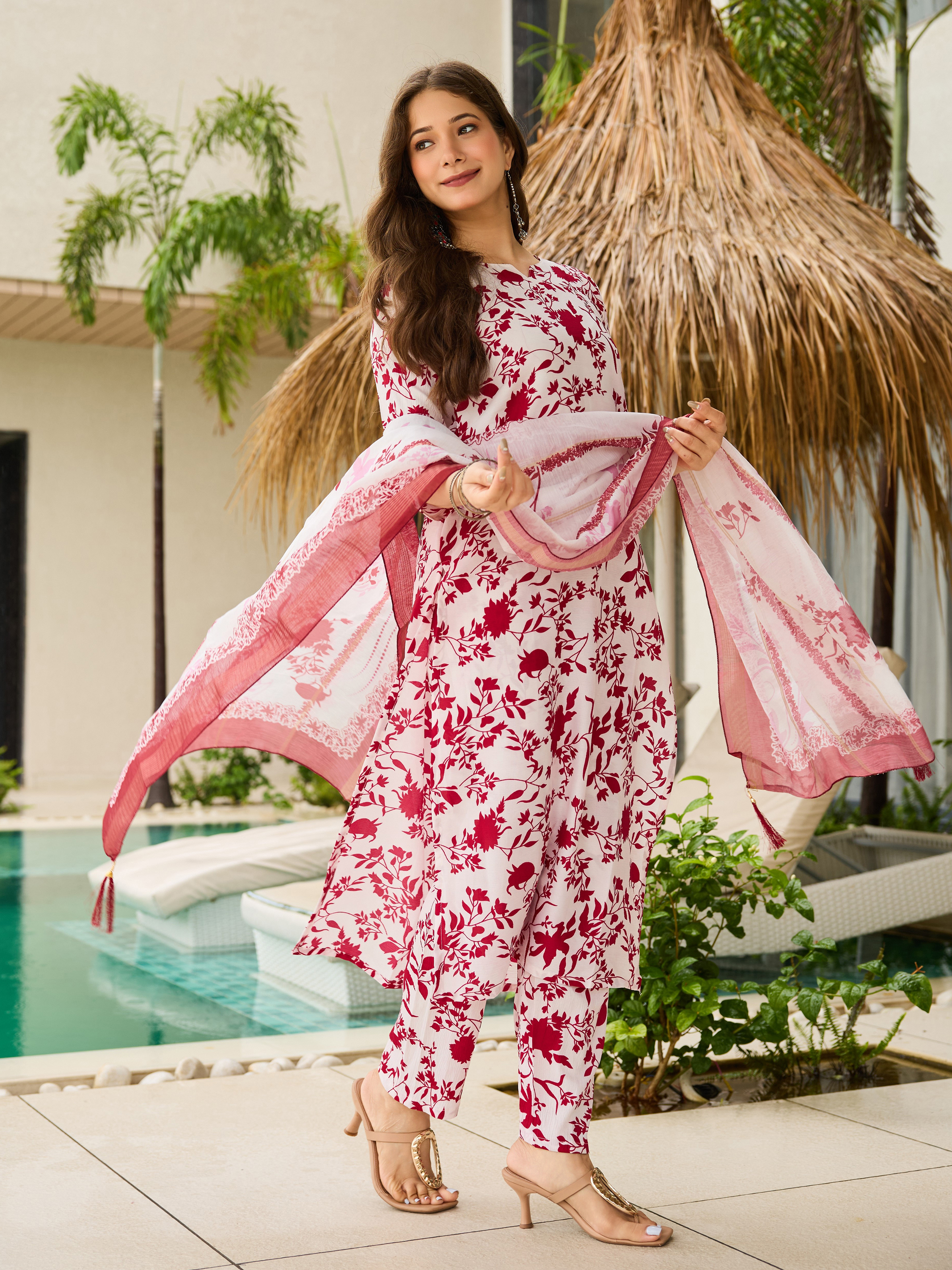
Avoid allowing the dupatta to trail near the ankle. A shoulder-to-opposite-arm drape keeps both ends above the hand and makes it easier to hold a rail. A lightweight cotton, modal or soft printed dupatta is often easier to control than a wide net dupatta with a stiff embellished border.
Heavy jewellery can become a practical problem when the commute includes standing and handrails. Short earrings, a smooth bangle stack and a crossbody bag worn close to the torso create fewer points of contact than long tassels, multiple rigid bangles or a shoulder bag that slides across the flare.
A slim pair of straight trousers or churidar-style bottoms can make a fuller Anarkali feel easier to manage because the lower layers don't compete for space. Palazzo trousers may be comfortable in a wide-cut Anarkali, but extra fabric at both the kurta hem and trouser hem can increase heat and tangling during a crowded journey.
When is a fuller Anarkali still a sensible choice?
A fuller Anarkali remains sensible for short, off-peak journeys, seated cab-to-station transfers and workdays that end at a celebration. The key is to separate the travel conditions from the event conditions rather than assuming that a festive garment must be worn unchanged from platform to venue.
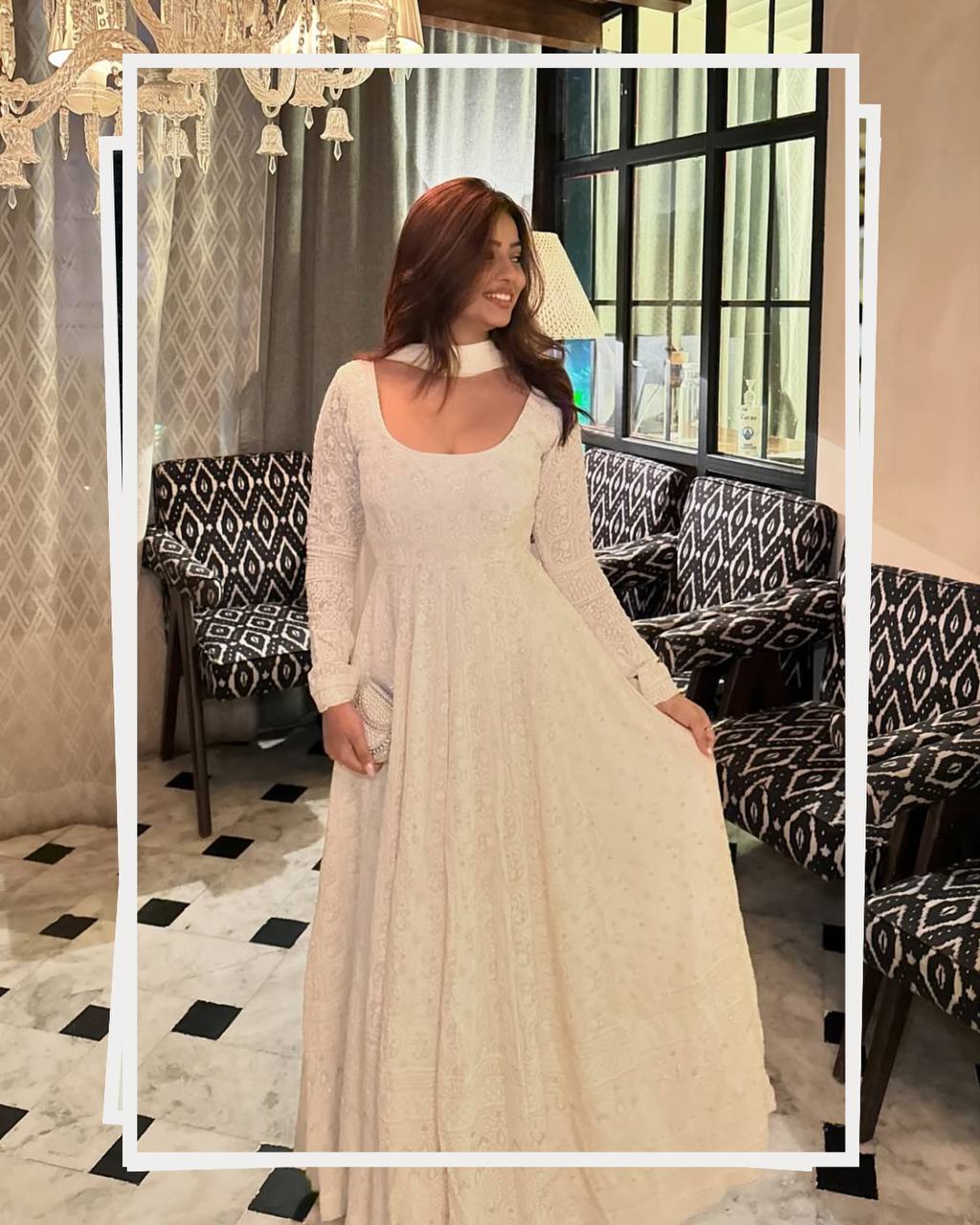
A black gown with controlled flare can transition well from commute to dinner because the colour keeps the look polished without requiring a very broad hem. The Elegant Black Ethnic Gown with Floral Embroidery is an example of a statement direction that benefits from checking the embroidery placement and lower-body weight before a long journey.
For a festive day involving a train ride, carry a compact fabric bag or a clean scarf large enough to gather the skirt while boarding. Do not bunch embellished fabric tightly for an extended period, because sharp zari edges and sequins can rub against one another and cause pulls. Release the gathered fabric after finding a seat or reaching the destination.
Regional design references can also guide practical styling. Maharashtra Paithani Inspired Salwar Suits may bring a structured border effect, Gujarat Bandhej Salwar Suits can deliver pattern without a heavy surface, and Punjab Patiala Salwar Suits offer a different volume distribution through the trousers rather than the Anarkali skirt. Kalamkari Print Salwar Suits are another useful direction when a commuter wants visual interest with less reliance on dense embellishment.
What should you check before buying a commuter Anarkali online?
Online shoppers should verify garment length, hem circumference, lining, closure type and care instructions before buying an Anarkali for train travel. Product photographs alone rarely show how much space the skirt occupies when seated or how the hem behaves during movement.
- Ask for the actual hem measurement: "Full flare" isn't a consistent measurement across sellers. Request the finished circumference in centimetres or metres.
- Compare the size chart with your body measurements: A tight waist prevents the panels from falling correctly and makes sitting uncomfortable. Leave enough ease for normal breathing and seated movement.
- Check the lining length: A lining that ends much higher than the outer skirt can ride up when you sit. A lining that reaches close to the hem usually behaves more neatly.
- Look for closure details: A side zip, back zip or front opening affects how easily the garment can be adjusted and repaired. Decorative buttons should not be the only functional closure.
- Read the care label: Frequent machine washing can alter rayon, shrink cotton and loosen zari. A commute garment needs a care routine that fits repeated wear.
- Consider repeat wear: A garment that needs specialist dry cleaning after every use may be better reserved for special occasions. A washable printed Anarkali can offer more practical value for a daily route.
The Black Zari Sequins Embroidered Anarkali Suit Set | Varnavi! Should be evaluated through these same practical checks rather than its occasion appeal alone. A dressier Anarkali can work for a commute when its hem is controlled, its embellishment is secure and its length is appropriate for the wearer's footwear.
The most useful answer to How Much Flare Is Practical for a Train Commute in an Anarkali is therefore a range, not a single magic number. Begin at 2.5 to 3 metres for crowded daily travel, move toward 3.5 metres when you've more space and seating, and reserve 4 metres or more for journeys where movement is easy. Fit, fabric, hem height and dupatta control determine whether that measurement feels genuinely comfortable.
Practical Questions About Wearing an Anarkali on a Train Commute
How Much Flare Is Practical for a Train Commute in an Anarkali?
A finished hem circumference of about 2.5 to 3.5 metres is practical for most train commutes. Choose closer to 2.5 metres for peak-hour standing travel and consider up to 3.5 metres only when the route is less crowded and the hem is easy to gather.
Is a floor-length Anarkali safe for daily train travel?
A floor-length Anarkali can be safe when the hem ends 1 to 2 centimetres above the floor with the intended shoes. A floor-brushing hem is more likely to catch on steps, collect dirt and become wet on platforms.
Which fabric is easiest to wear in a crowded train?
A medium-weight fabric with controlled drape, such as a soft rayon, cotton blend or lightweight silk blend, is usually easiest. Very stiff cotton, heavy Banarasi silk and dense embellishment can make the garment occupy more space or feel tiring.
How do I sit comfortably in a full Anarkali?
Gather the front and side panels gently before sitting, then arrange the fabric beside the knees rather than trapping it under the body. The waist should remain stable and the side seams should not pull when you stand again.
Can I wear a heavily embroidered Anarkali for my office commute?
You can wear one for a short or off-peak commute if the hem, lining and embellishments are secure. For daily peak-hour travel, a moderate flare with printed or lightly embroidered detail is usually easier to protect and maintain.
How should I carry the dupatta while boarding a train?
Fold the dupatta lengthwise and secure one end over the shoulder, keeping the loose section above the ankle and close to the body. A concealed pin or flat brooch can prevent the dupatta from slipping while leaving both hands available for a rail or bag.




