

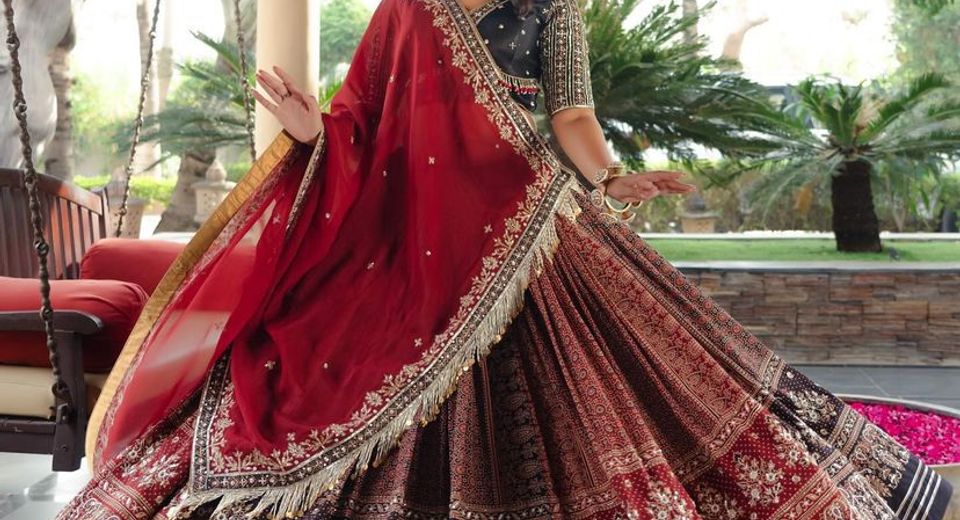
Hornbill Festival Lehenga Ideas Inspired by Naga Textiles can help you create a colourful celebration outfit without treating a living cultural tradition as a costume. The most successful looks borrow considered elements-deep black, ivory, scarlet, indigo, woven stripes, tactile borders and restrained geometric detail-while leaving sacred or community-specific symbols to Naga artisans and cultural practitioners. A lehenga for the Hornbill Festival should also work in real conditions: December in Kohima can be cool, the festival grounds involve walking, and a practical blouse, secure dupatta and comfortable footwear matter as much as visual impact.
The Hornbill Festival takes place at Kisama Heritage Village near Kohima, Nagaland, generally from 1 to 10 December. The festival brings together performances, food, crafts, music and representatives of Naga tribes, each with distinct histories and textile traditions. That diversity matters when choosing inspiration. Naga textiles don't describe one single uniform pattern, so a thoughtful outfit uses broad visual cues and acknowledges the difference between personal styling and ceremonial dress.
Hornbill Festival Lehenga Ideas Inspired by Naga Textiles: What Makes the Reference Meaningful?
Naga textiles offer strong colour contrast, meaningful pattern language and visible handwoven texture that translate naturally into festive clothing. Traditional shawls, wrap textiles and woven accessories may use narrow horizontal bands, checks, red-and-black contrasts, cream highlights and carefully arranged motifs.
Many Naga communities have textile traditions linked to identity, status, age, achievement and belonging. A shawl can carry significance beyond decoration, and a pattern that looks like a simple geometric border may have a specific community context. For that reason, a lehenga inspired by Naga textiles should avoid copying a complete shawl, reproducing an unfamiliar emblem without research or combining motifs from several tribes as though they were interchangeable.
A respectful design translation focuses on construction and mood. A designer might use a black base with red and ivory bands, introduce woven-looking jacquard at the hem, or place small geometric accents on a blouse rather than print an entire ceremonial textile across a skirt. Handloom cotton, cotton-silk, raw silk and textured muslin can suggest the character of weaving more honestly than a glossy synthetic print that merely imitates a pattern.
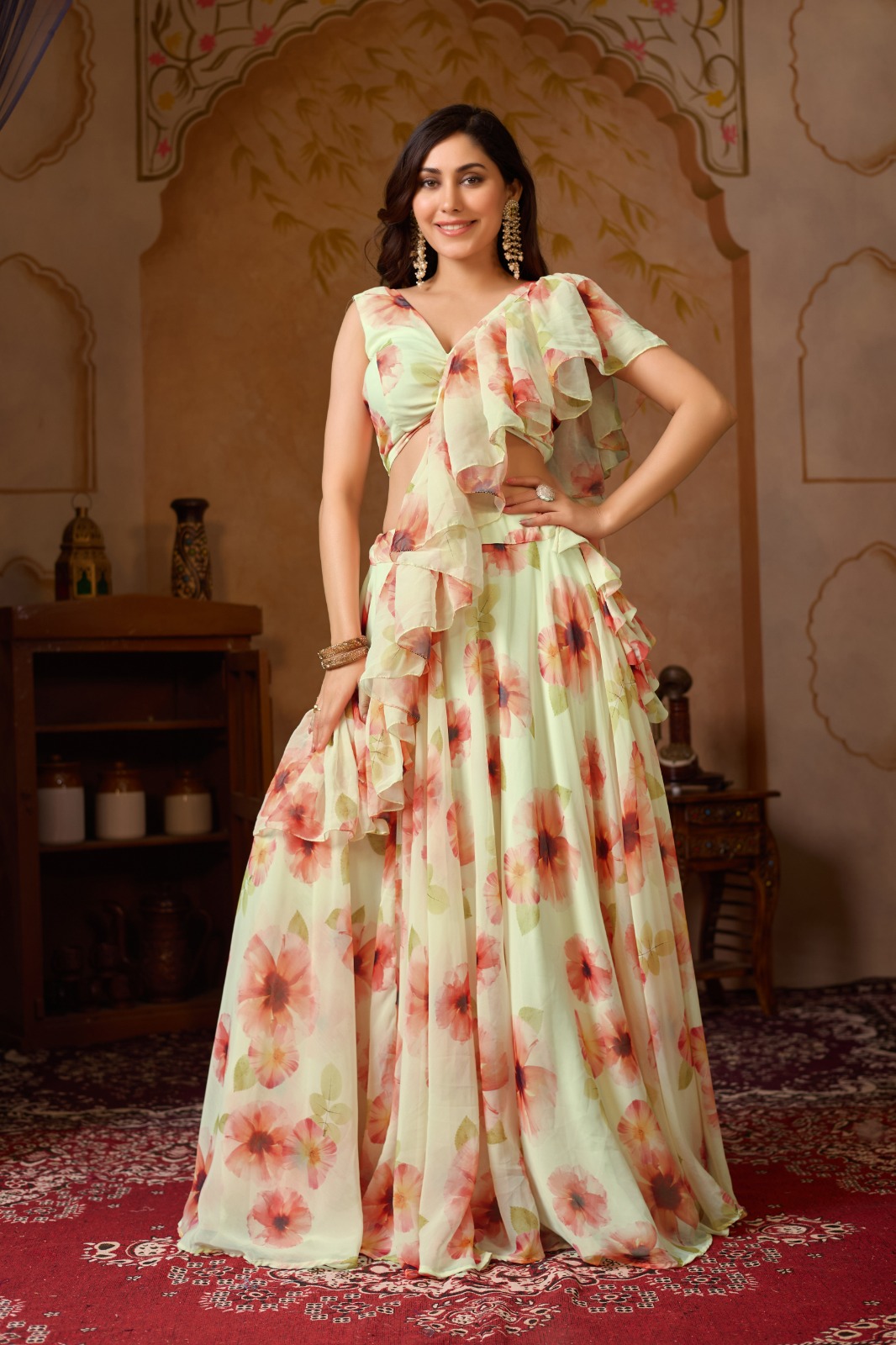
Beige Ethnic Printed Lehenga Set for Navratri and Garba shows how a light ground can carry a lively print without making the whole outfit visually heavy. The useful lesson is colour balance: a neutral base can give stronger borders, jewellery and dupatta details room to stand out.
Hornbill Festival Lehenga Ideas Inspired by Naga Textiles for Choosing Colours
Choose a grounded palette of black, red, ivory, rust, indigo or forest green, then use one brighter accent instead of combining every festival colour at once. The palette can reference the visual energy of Naga textiles while remaining balanced for a contemporary lehenga.
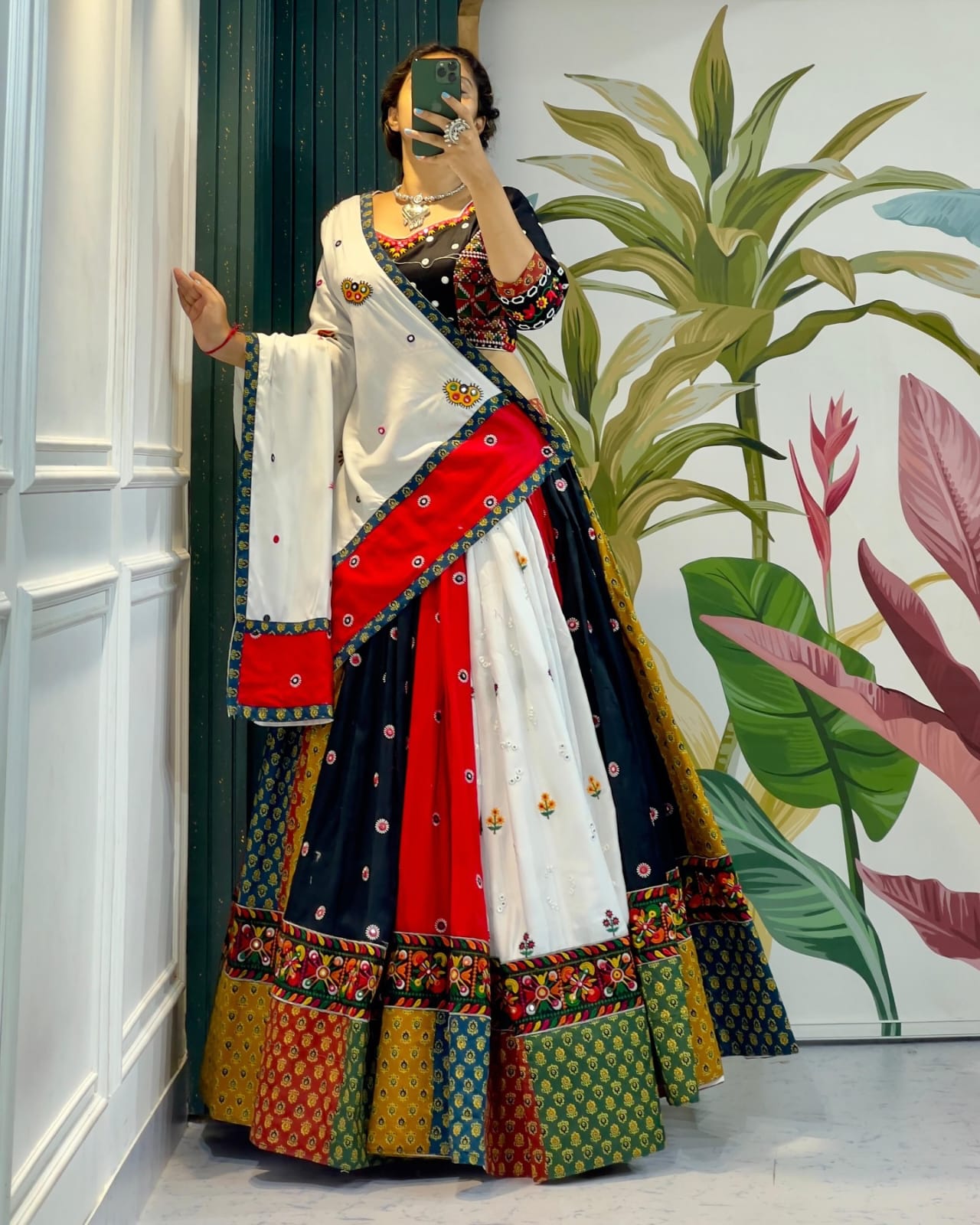
Black and scarlet create the clearest graphic contrast and work well for an evening cultural programme. Ivory or beige softens the combination and makes woven borders easier to see. Indigo and deep blue provide a quieter alternative to black, especially when paired with antique gold or muted silver. Rust, turmeric yellow and forest green can appear as small details in tassels, bangles, embroidery or a dupatta border.
Colour placement changes the apparent proportion of a lehenga. A dark skirt with a lighter blouse draws attention upwards, while a broad red hem border makes the lower half look more prominent. A narrow contrast border of 2 to 4 inches usually gives a woven effect without overwhelming a small frame. A monochrome base with two accent colours also photographs more clearly than a crowded multicolour print in a busy festival setting.
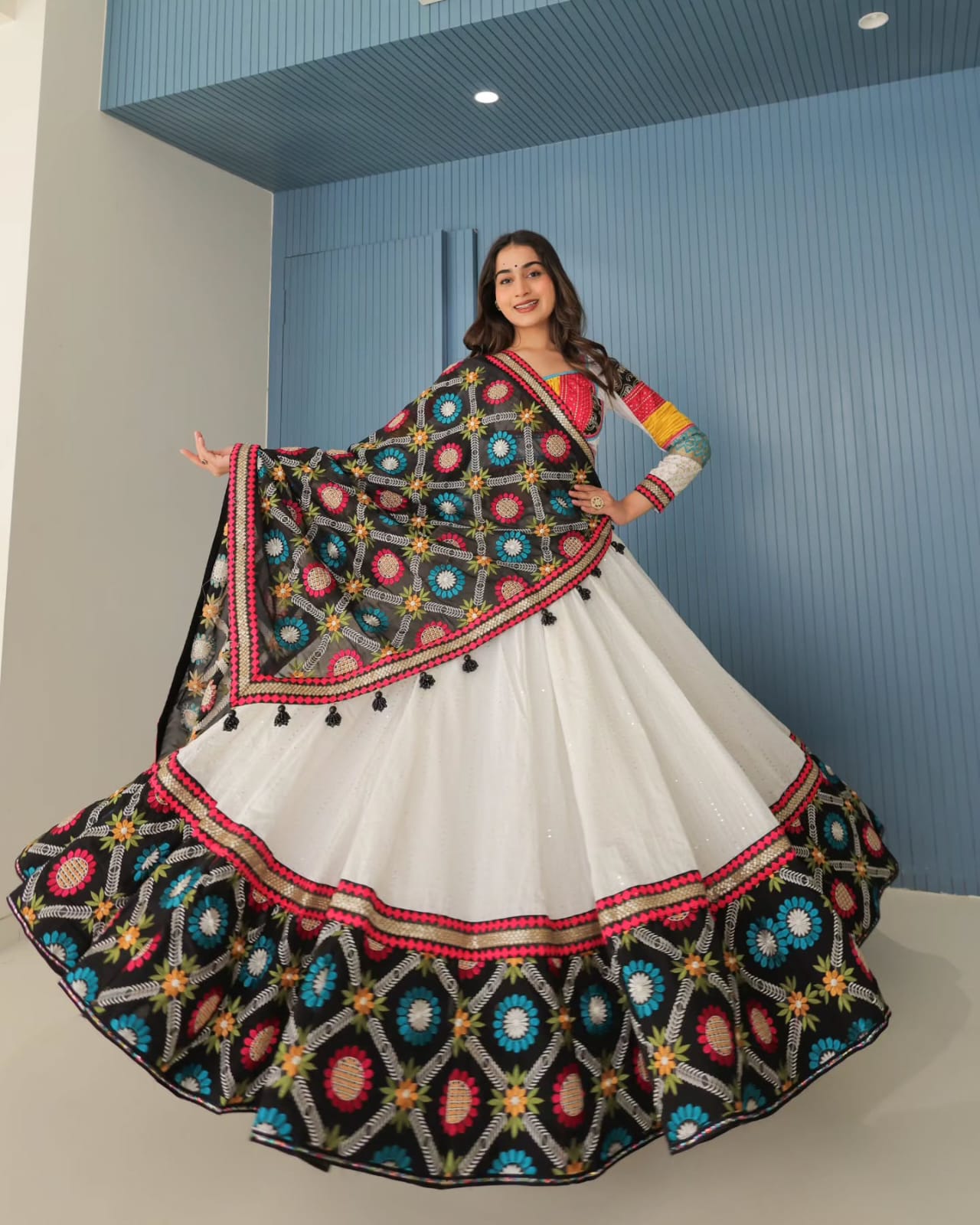
Festive Multicolor Muslin Cotton Lehenga Choli Set demonstrates how breathable fabric can support several shades without excessive shine. Vibrant Multicolor Navratri Lehenga Choli Set is another useful reference for balancing multiple colours through a controlled blouse-and-skirt relationship rather than scattering unrelated accents across every panel.
Hornbill Festival Lehenga Ideas Inspired by Naga Textiles for December Fabrics
Breathable cotton, muslin, cotton-silk and medium-weight silk blends are practical choices for a December festival because they combine movement, comfort and enough structure for outdoor wear. Heavy velvet, dense net layers and stiff metallic fabrics can become uncomfortable when walking between venues or sitting through performances.
Hornbill Festival Lehenga Ideas Inspired by Naga Textiles for daytime
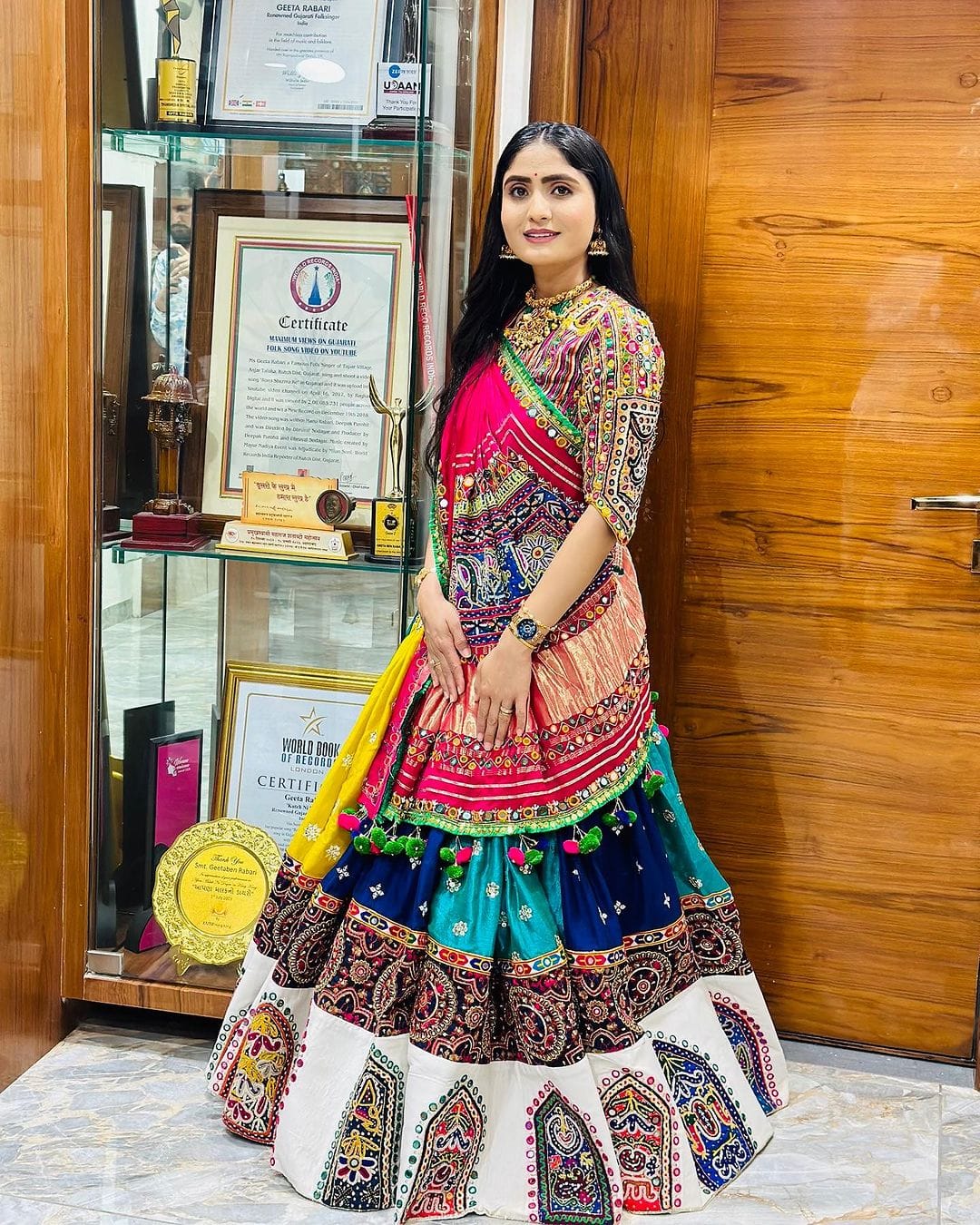
Muslin and cotton keep a lehenga light during daytime movement and make a convincing base for printed or woven-looking borders. A cotton-silk skirt adds a little sheen while remaining easier to pack and wear than a heavily embellished bridal lehenga. If the weather feels cold, wear a fitted thermal camisole under the blouse or add a cropped jacket in black, rust or indigo.
Hornbill Festival Lehenga Ideas Inspired by Naga Textiles for evening
Raw silk, silk blends and medium-weight brocade suit evening events because their structured fall holds a clean flare and reflects low light gently. Zari can be used as a narrow outline or restrained border rather than a full glitter surface. A layered skirt should have a secure waistband and enough room for walking; six to eight panels often provide graceful movement without excessive bulk.
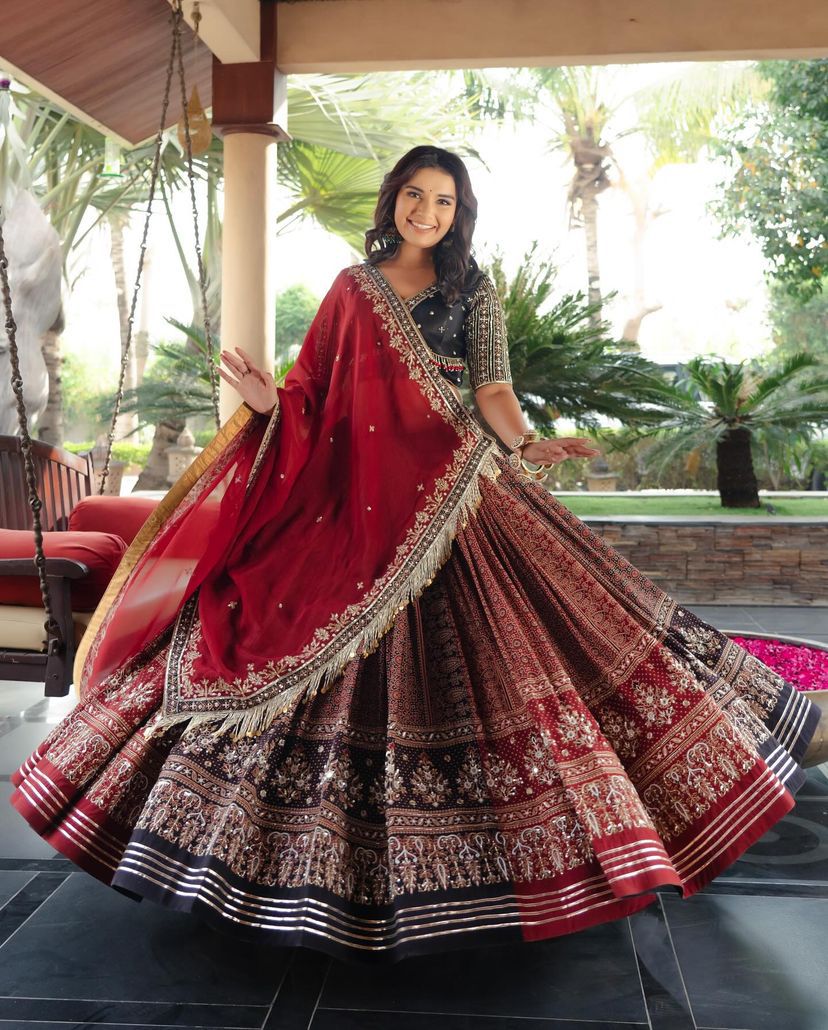
Exclusive Blue Traditional Navratri Lehenga Choli illustrates how deep colour can create drama without requiring a heavily decorated surface. Silk Lehengas Under 3000 can be an useful price-led collection for comparing finishes, but check fibre composition because the word "silk" may refer to a blend rather than pure silk. Festive Multicolor Muslin Cotton Lehenga Choli Set remains a stronger direction when breathability and light packing are priorities.
Hornbill Festival Lehenga Ideas Inspired by Naga Textiles and Motif Placement
Small geometric borders, horizontal bands, checks and restrained triangular or diamond details are the safest visual translation of Naga textile inspiration for a festive lehenga. These elements communicate texture and structure without claiming that a generic print represents one specific Naga tribe.
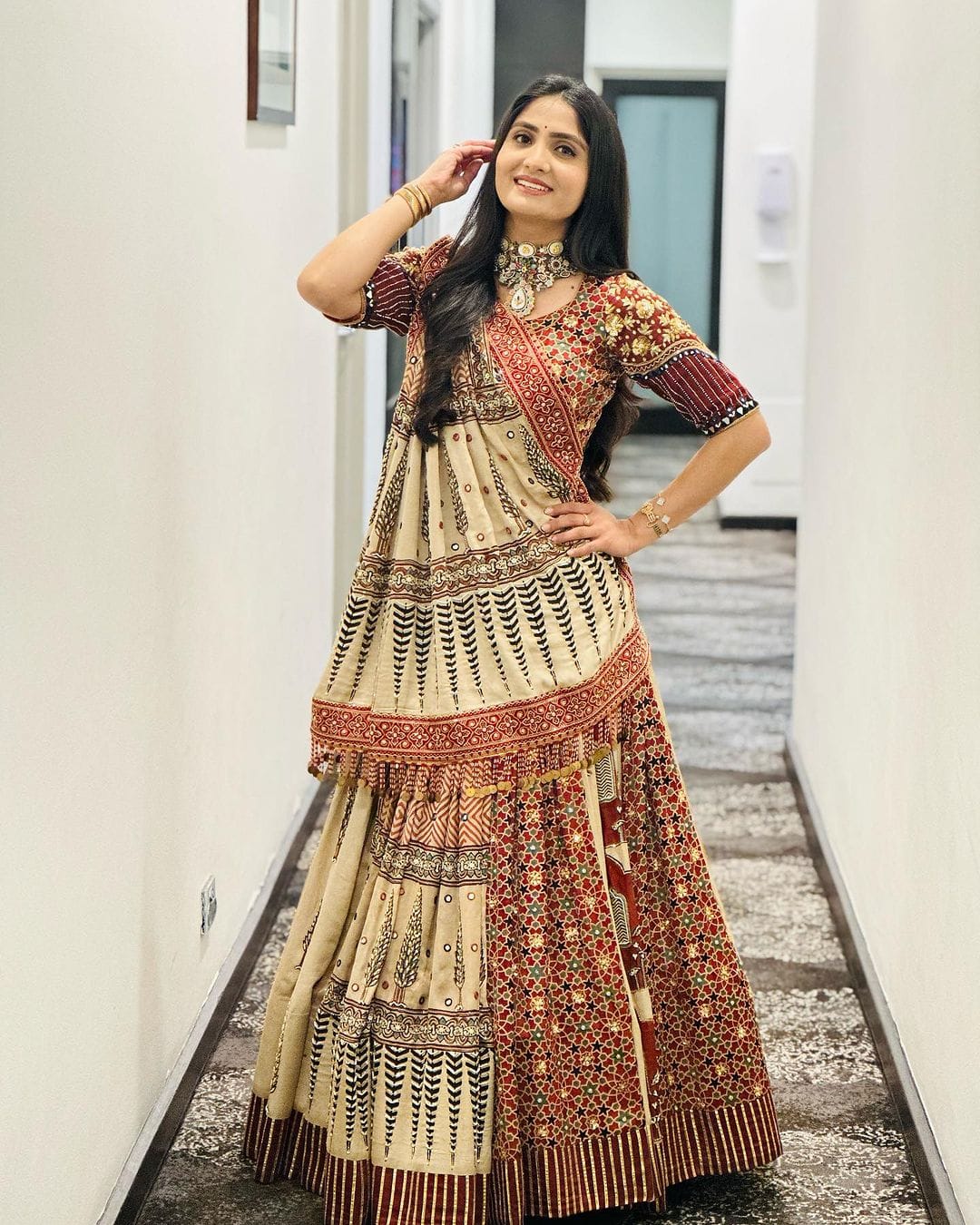
Keep the motif scale consistent with the garment. A 1.5 to 3 inch border along the hem can look intentional on a full skirt, while a repeated 6 inch motif may dominate the blouse and make the outfit appear costume-like. Use one principal pattern and repeat it in only two or three locations, such as the skirt hem, dupatta edge and sleeve cuff.
Woven stripes can be created through jacquard, appliqué, embroidery or printed bands. Jacquard gives the most textile-like surface, but jacquard can add weight. Appliqué produces a graphic finish and works well on cotton. Embroidery is useful for a small blouse detail, especially when the stitch colours echo the skirt border. Printed designs offer affordability and washability, but a high-quality print should have clear edges and a base fabric with enough body to prevent the pattern from looking flat.
Avoid placing a complete Naga shawl pattern across a lehenga and calling it authentic unless the textile has been sourced with permission and the maker's context is clearly known. Buying a handwoven accessory from a Naga craftsperson, naming the technique or community when that information is available, and wearing the accessory separately can be more respectful than reproducing an unidentified design at scale.
Red Ethnic Lehenga Choli with Digital Print Design demonstrates how one strong colour can carry a festive outfit. A digital print can inspire colour placement, but a design intended to reference Naga textiles should prioritise researched motifs and transparent sourcing rather than simply labelling any geometric print as Naga.
Hornbill Festival Lehenga Ideas Inspired by Naga Textiles for Blouses and Dupattas
Style the blouse with a clean neckline, the dupatta with a secure practical drape and jewellery with one or two bold textile-compatible accents. A coordinated outfit looks more considered when accessories repeat the palette rather than compete with the woven references.
A square, boat or shallow V neckline works well with horizontal borders because the neckline doesn't interrupt the graphic quality of the outfit. Three-quarter sleeves are useful in cool weather and create space for a narrow cuff detail. A high-neck blouse can look polished with a sleeveless jacket, but leave enough ease at the armhole for comfortable movement.
For the dupatta, choose lightweight cotton, a Chanderi weave or soft silk with a striped border. Drape one end over the left shoulder and secure the other end at the waist with a discreet pin if you expect to walk or dance. A double-sided dupatta with a black or indigo face and red edging can add depth without adding multiple layers.
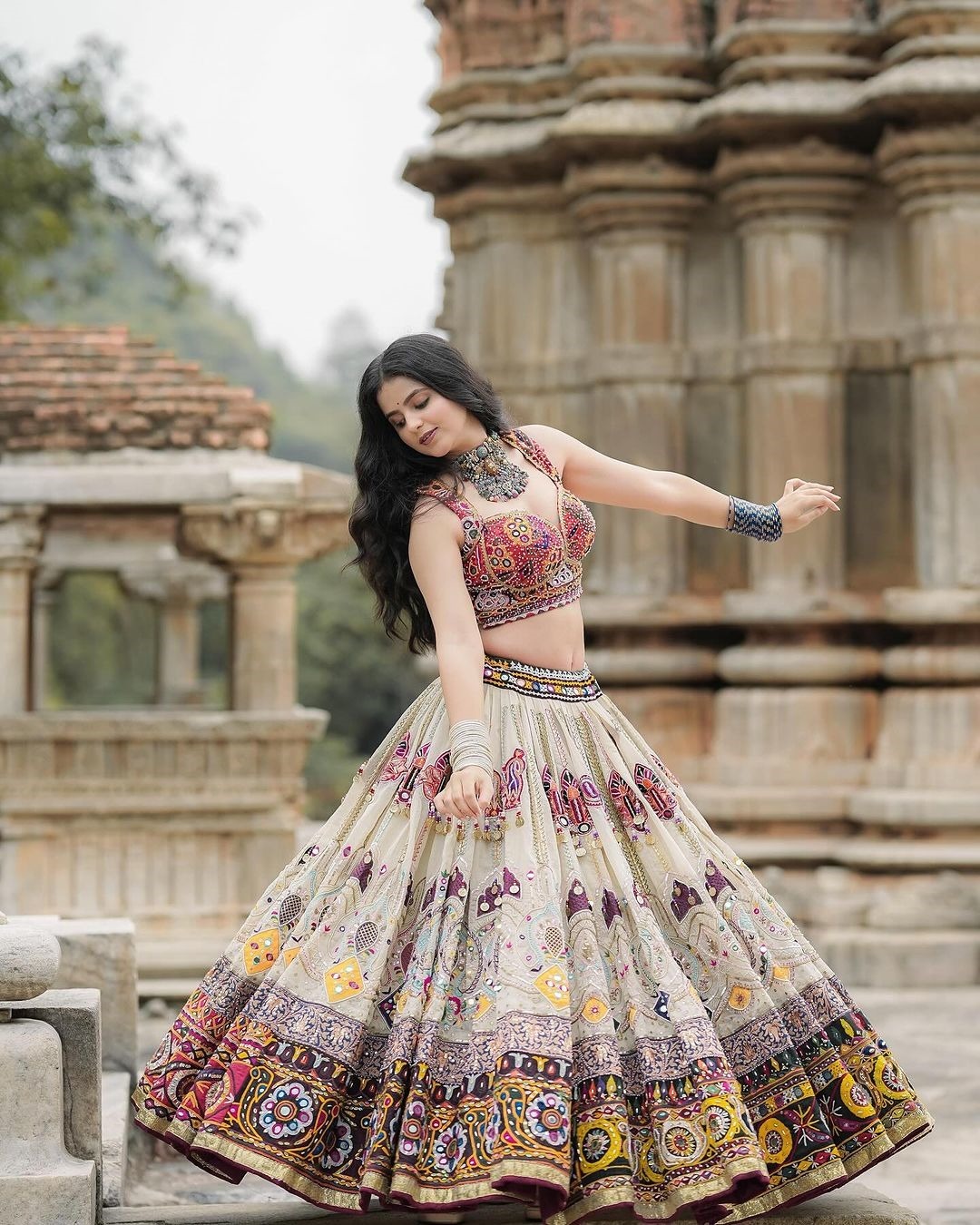
Stylish White Mirror Work Lehenga for Festive Wear offers an useful lesson in controlling surface detail: mirror work can be confined to selected areas instead of covering every panel. Cream Ethnic Lehenga Choli with Mirror Work Design shows a softer neutral route. Mirror work isn't a Naga textile substitute, but limited reflective detail can work beside a woven border when the overall palette remains disciplined.
Oxidised silver earrings, brass cuffs, wooden beads, a small waist belt or handwoven tassels can echo a craft-led mood. Avoid wearing a large collection of tribal-style ornaments from unrelated regions, because that can blur distinct traditions. A single statement necklace paired with simple studs often looks more intentional than several competing pieces.
Hornbill Festival Lehenga Ideas Inspired by Naga Textiles for Practical Festival Dressing
A practical festival lehenga has a secure waistband, manageable hem length, breathable lining, pockets or a small crossbody bag, and footwear that can handle several hours of standing. These details prevent a beautiful outfit from becoming difficult to wear at Kisama Heritage Village.
Choose a hem that sits 1 to 2 centimetres above the floor when worn with your chosen footwear. That clearance reduces the chance of dragging the skirt through grass, dust or crowded walkways. A cotton or satin lining can prevent scratchiness, but avoid a slippery lining if the skirt tends to twist while walking.
Test the outfit at home for at least 20 minutes before the event. Sit on a low chair, climb stairs, walk quickly, lift your arms and check whether the waistband rolls or the blouse pulls at the shoulders. A 1 to 2 inch margin at the waist may be useful for minor alterations, while a skirt with an overly tight hip area will restrict movement regardless of flare.
Black Wedding & Festive Wear Designer Lehenga can suggest a more dramatic evening direction, but a festival outfit doesn't need bridal-level weight. Beige Ethnic Printed Lehenga Set for Navratri and Garba gives a lighter styling reference, while Cream Ethnic Lehenga Choli with Mirror Work Design can work as a neutral base for a contrasting woven dupatta.
Price should be judged alongside fabric, lining, finishing and alteration needs. Pink Lehengas Under 4000 with 50% Discount may suit a budget-conscious colour search, while Net Lehengas Under 4500 with 51% Discount can be considered when a lighter layered silhouette is preferred. A net skirt may require careful handling around rough surfaces and can be less suitable for prolonged outdoor walking than cotton or muslin.
Hornbill Festival Lehenga Ideas Inspired by Naga Textiles for Respectful Buying and Care
Buy a Naga textile or accessory from a source that identifies the maker, community or technique whenever possible, and treat the garment label as more reliable than a vague "tribal-inspired" description. Responsible purchasing separates visual appreciation from the unverified use of cultural terminology.
Ask whether a pattern is a contemporary design, a direct reproduction, or a handwoven textile with a documented community connection. If a seller can't explain the origin of a claimed traditional motif, choose a design described more generally as geometric, striped or handwoven rather than presenting it as authentic Naga craft.
Wash cotton and muslin according to the care label, usually with cold water and mild detergent, and dry bright colours away from strong direct sunlight. Dry-clean silk, zari and heavily embellished pieces when the label recommends it. Store a finished lehenga in a breathable cotton garment bag, fold embellishments inward, and avoid compressing damp fabric.
Haldi Lehengas Under 5500 may offer useful options for yellow, mustard and warm festive palettes, but a Haldi ceremony outfit and a Hornbill Festival outfit serve different cultural settings. Styling should respond to the event rather than treating every bright ethnic garment as interchangeable. A thoughtfully chosen lehenga can celebrate colour, craft and movement while leaving room for Naga voices, makers and textile histories to remain visible.
Hornbill Festival Lehenga Ideas Inspired by Naga Textiles: A Final Outfit Formula
A reliable outfit formula is a solid black, ivory or indigo lehenga, one narrow red or rust border, a blouse with a clean neckline, a lightweight striped dupatta, comfortable closed-toe footwear and one handwoven or metal accessory. The formula is visually distinctive, practical for a December festival and less likely to copy a culturally specific textile without context.
For a daytime look, pair a muslin or cotton skirt with a fitted blouse, flat shoes and a compact crossbody bag. For an evening programme, choose cotton-silk or raw silk, add a structured jacket or warm shawl, and use restrained zari or antique-metal jewellery. The strongest final detail is accurate language: describe the outfit as inspired by colour, texture or geometric weaving unless the textile's Naga origin has been verified.
Questions About Hornbill Festival Lehengas Inspired by Naga Textiles
What colours work best for a Hornbill Festival lehenga inspired by Naga textiles?
Black, scarlet, ivory, indigo, rust and forest green work well because they create the strong contrasts often associated with woven Naga textiles. Use two or three main colours and reserve brighter shades for borders, tassels or jewellery.
Can I copy a Naga shawl pattern onto a lehenga?
Copying a complete Naga shawl pattern is not advisable unless the textile's community context and permission are clearly established. A more respectful choice is to use broad cues such as stripes, checks, texture and a researched colour palette without reproducing a specific ceremonial design.
Which fabric is most comfortable for the Hornbill Festival?
Cotton, muslin, cotton-silk and medium-weight silk blends are generally comfortable for walking and outdoor festival activities. Choose a lined skirt with a secure waistband, and consider a jacket or warm layer because December evenings in Kohima can be cool.
How should I style a Naga-inspired lehenga without making it look like a costume?
Use one controlled textile reference, such as a woven-looking hem border or striped dupatta, instead of combining many unrelated motifs and ornaments. Keep the blouse clean, repeat only two or three colours, and choose jewellery from a clearly identified craft tradition.
What length should a Hornbill Festival lehenga be?
The hem should sit about 1 to 2 centimetres above the floor when worn with the footwear selected for the festival. That small clearance reduces dragging on grass and uneven walkways while preserving the graceful fall of the skirt.
How can I check whether a Naga-inspired textile is responsibly sourced?
Look for information about the maker, community, technique and whether the design is contemporary or a documented traditional reproduction. Be cautious of vague "tribal-inspired" claims that provide no cultural or production context.




