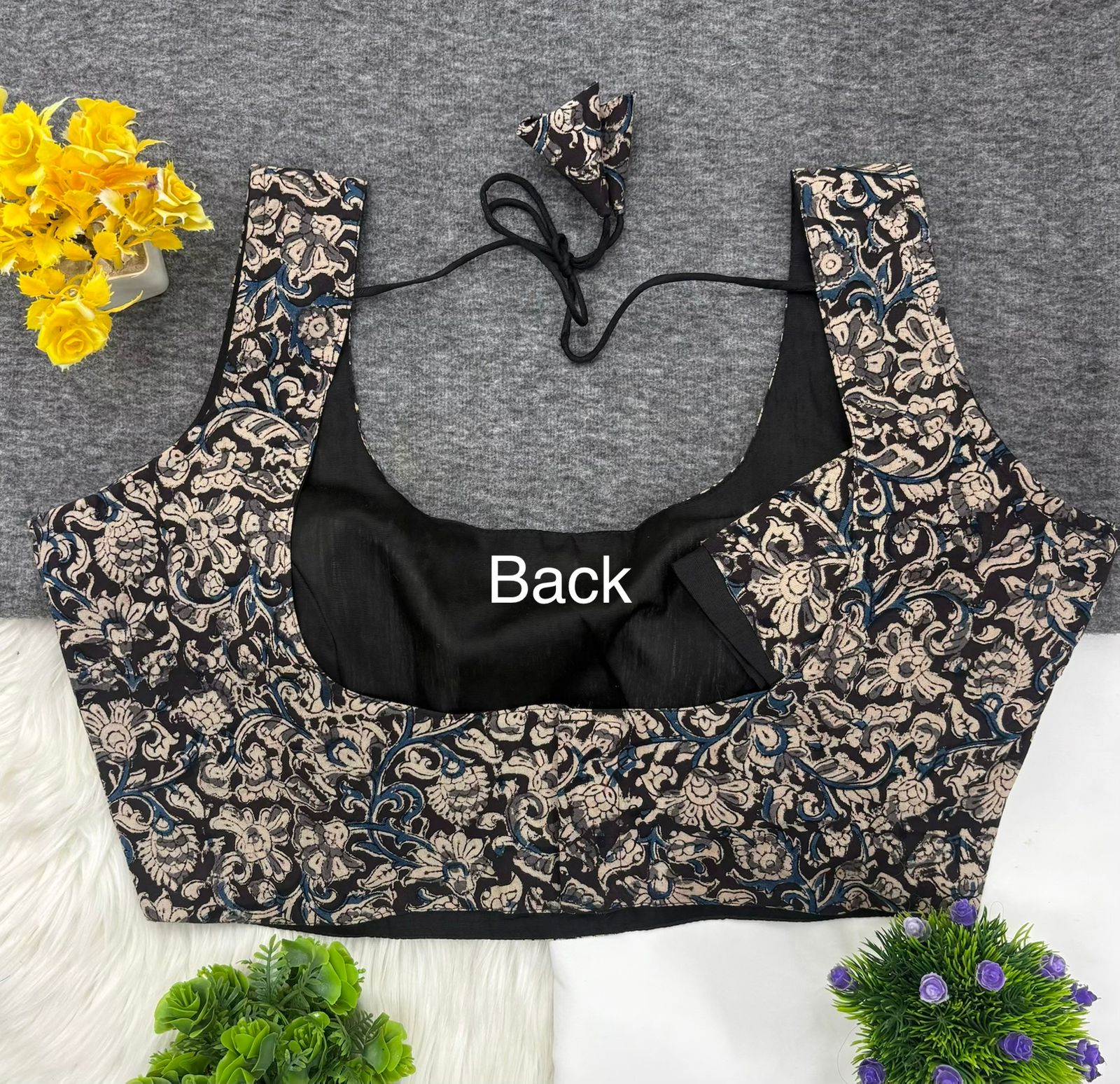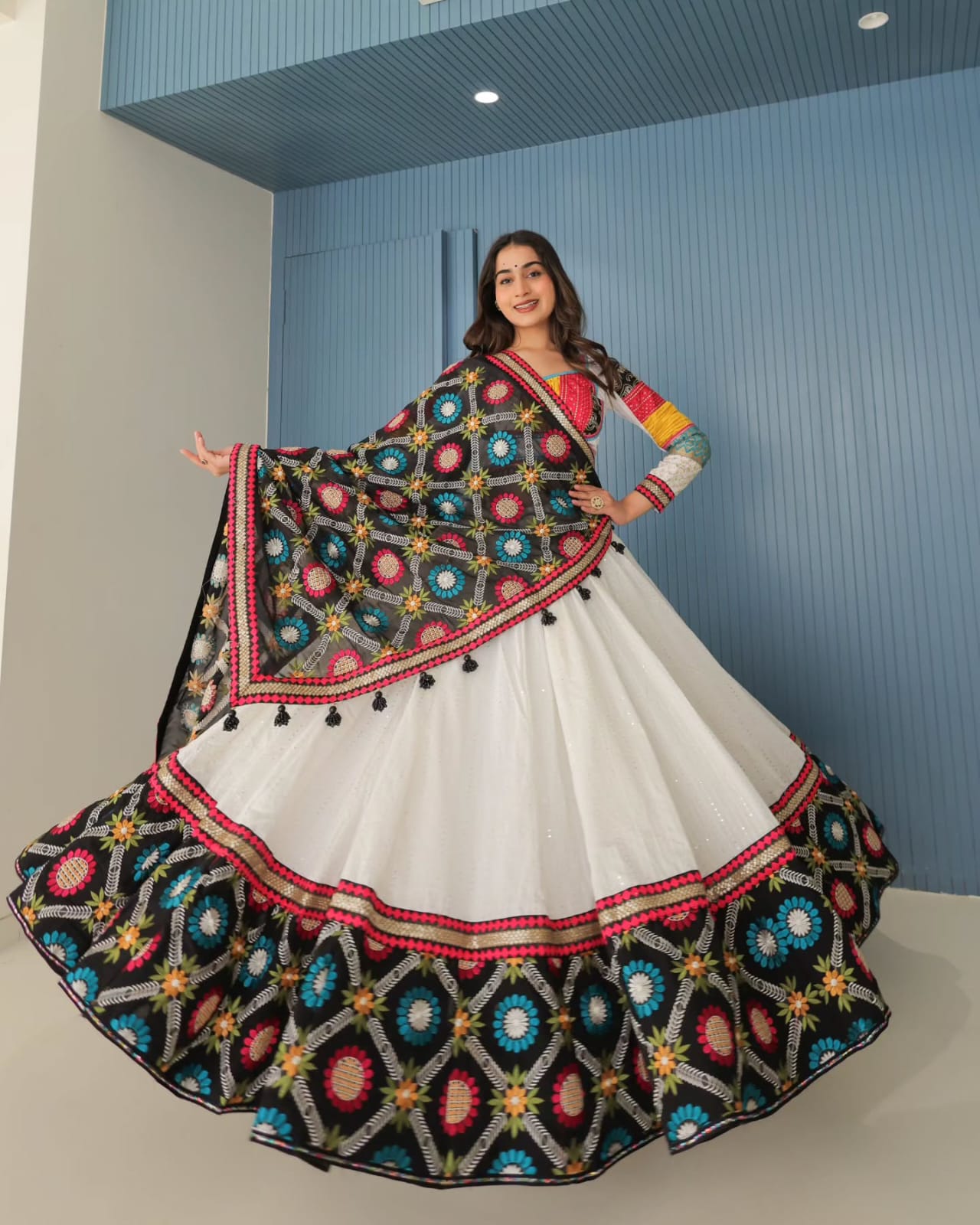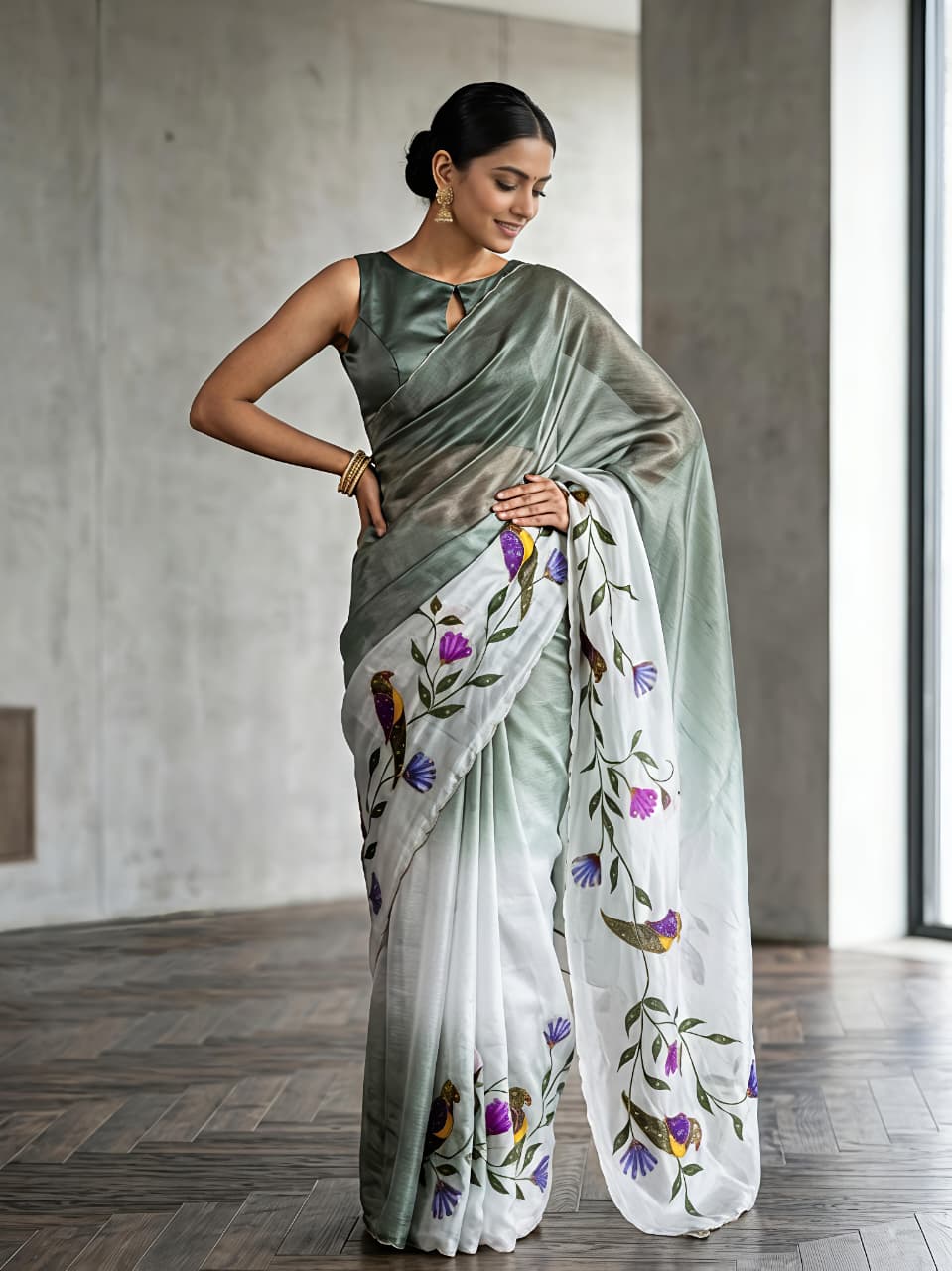
Hornbill Festival Fashion: Traditional Naga Outfits for Women begins with respect for the communities whose clothing, symbols and weaving traditions make the celebration distinctive. Held every December at Kisama Heritage Village near Kohima, the Hornbill Festival brings together performances and cultural showcases from Nagaland's many communities. Visitors can dress comfortably for a winter outdoor event while drawing inspiration from Naga shawls, wrap skirts, bead necklaces and woven motifs.
A thoughtful outfit doesn't copy ceremonial regalia without context. A better approach combines one recognisable Naga-inspired element with familiar Indian clothing, such as a handloom saree, cotton blouse or practical separates. The result can feel festive, photograph well and remain suitable for walking, sitting in open venues and experiencing a full day of cultural programmes.
Hornbill Festival Fashion: Traditional Naga Outfits for Women and their cultural context
Hornbill Festival Fashion: Traditional Naga Outfits for Women is distinctive because it brings together tribal textiles, geometric weaving, layered jewellery and strong colour contrasts while retaining a close connection to community identity. Naga clothing isn't one uniform style: Nagaland includes several major tribes and numerous communities, each with its own patterns, shawls, ornaments and dress traditions.
Naga textiles often use deep black, red, white, yellow, green and blue, although the exact palette and arrangement vary by community. Handwoven shawls may contain stripes, bands, animal forms or geometric motifs. Some designs carry social or ceremonial associations, so a visitor should avoid presenting a borrowed textile as an authentic tribal garment unless its origin and meaning are known.
The Hornbill Festival setting also changes the practical requirements of dressing. Kisama can be mild in December, and the venue includes uneven paths, outdoor seating and long periods of standing. A good outfit therefore needs warm layering, comfortable footwear and tight accessories as much as it needs visual impact.
Hornbill Festival Fashion: Traditional Naga Outfits for Women inspired by traditional garments
Traditional Naga women's clothing commonly includes wrap skirts, shawls, woven waist cloths, blouses and layered ornaments, but styles differ across Naga communities. A visitor can study these elements as sources of styling inspiration rather than treating them as interchangeable costumes.
Shawls and woven wraps
Naga shawls are among the most recognisable elements of traditional Naga dress. A shawl can be worn over one shoulder, wrapped around the upper body or folded neatly over a contemporary outfit. The most respectful choice is a commercially made textile clearly labelled as Naga-inspired or a shawl purchased from a verified artisan who can explain its community and design background.
A woven shawl works especially well over a plain saree because the saree creates a calm base for a patterned layer. A black, ivory, rust, maroon or indigo saree can allow red-and-white or multicoloured stripes to remain visible without competing with every detail of the textile.
Wrap skirts and woven waist pieces
Wrap skirts and waist cloths create a strong foundation for a contemporary festival look. A woman can pair a knee-length or ankle-length wrap skirt with a fitted cotton blouse, a cropped jacket or a simple long-sleeved top. A belt or narrow textile sash can define the waist, but the sash should not be described as a ceremonial Naga item unless its provenance is established.
For a more familiar Indian silhouette, a woven waist piece can be placed over a long skirt, palazzo trousers or a simple salwar suit. This approach keeps the outfit easy to move in while making the textile detail visible in photographs.
Blouses and layered tops
A plain blouse with a modest neckline helps a patterned shawl or necklace remain the visual focus. Cotton, linen-cotton and lightweight silk are useful choices because they breathe during daytime events and layer easily under a jacket. Three-quarter sleeves can offer warmth without making the outfit feel heavy.
Hornbill Festival Fashion: Traditional Naga Outfits for Women with a saree
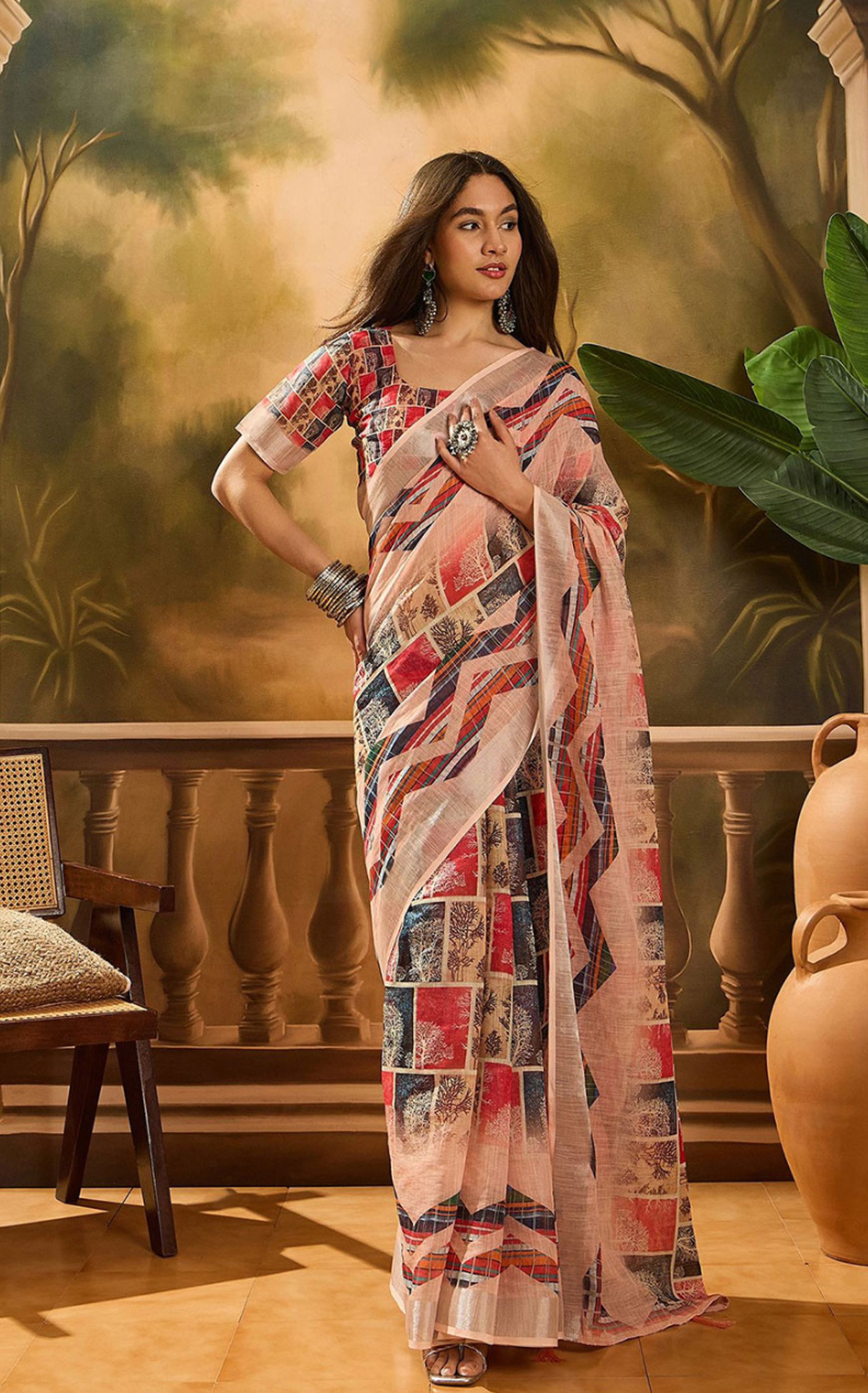
An up-to-date Hornbill Festival outfit with a saree works best when the saree provides a restrained base and Naga-inspired elements supply texture, colour and cultural reference. A lightweight saree is easier to manage at an outdoor festival than a heavily embellished drape.
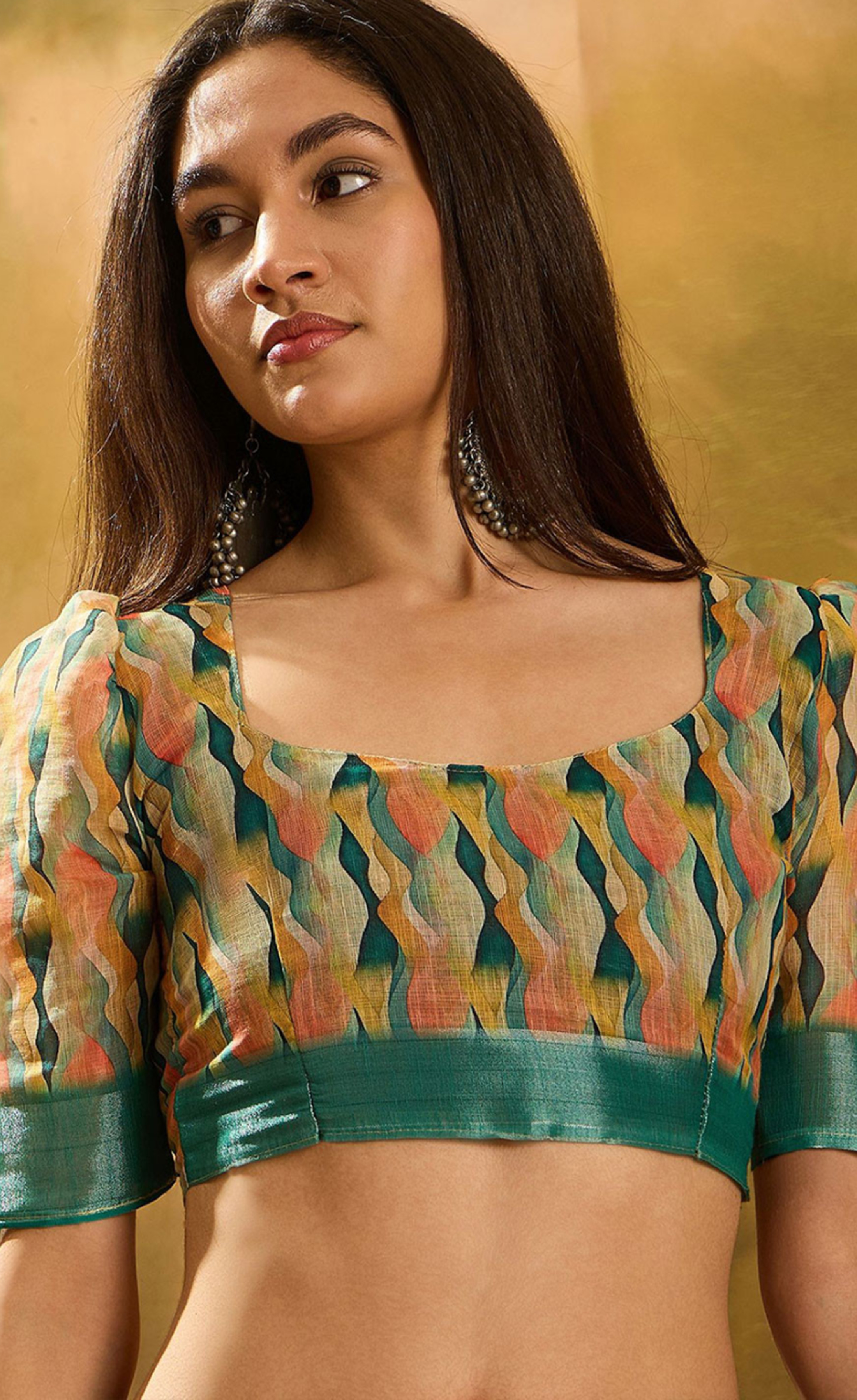
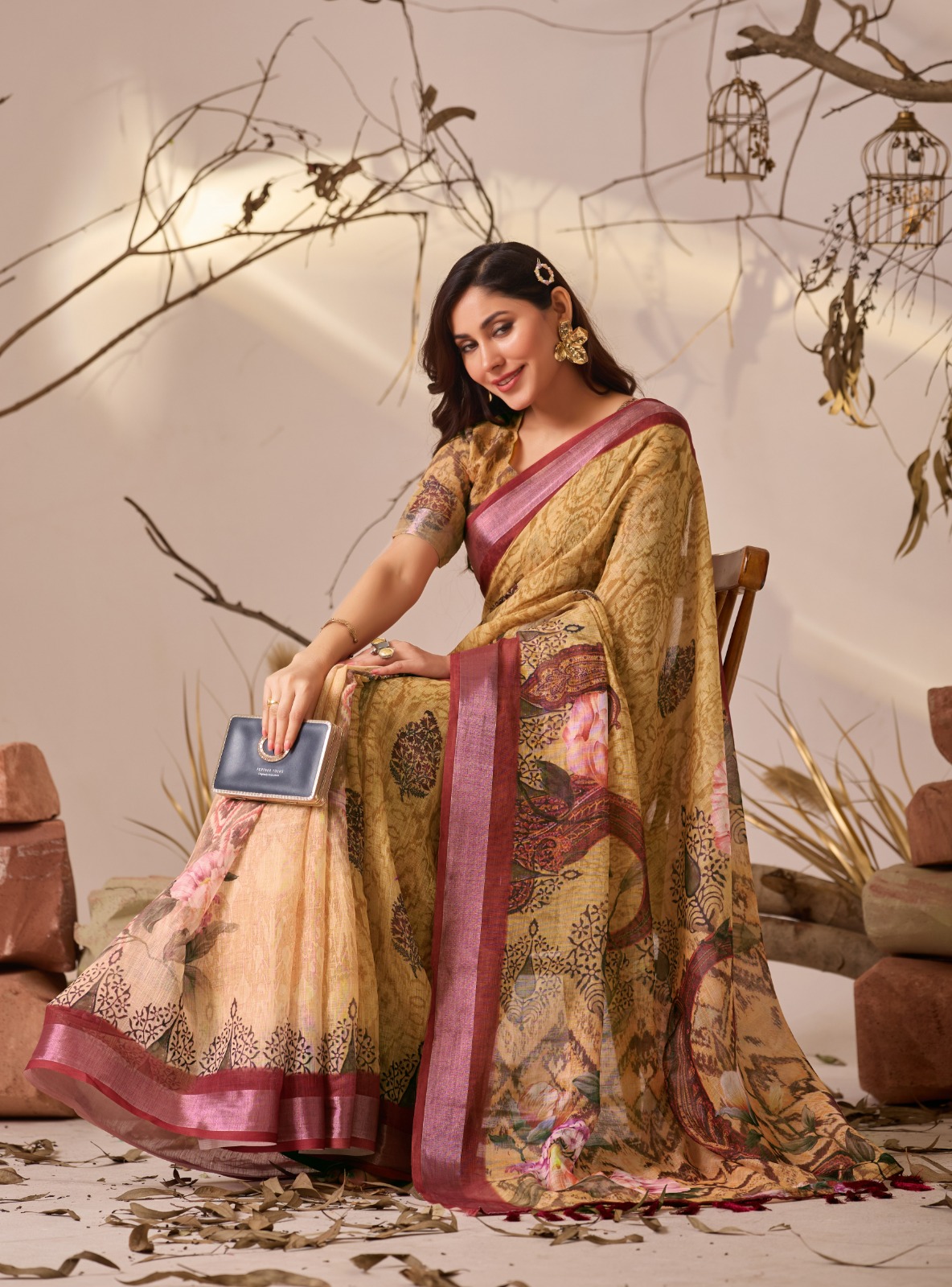
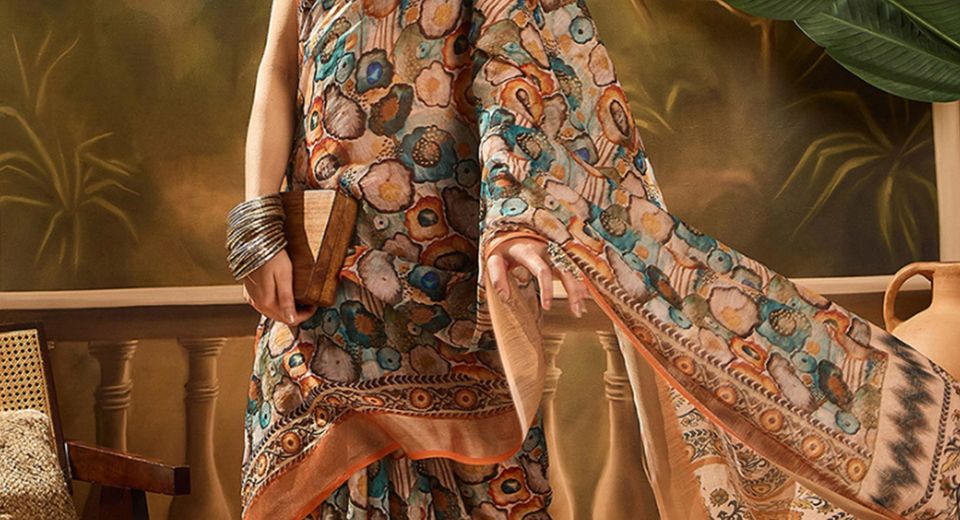
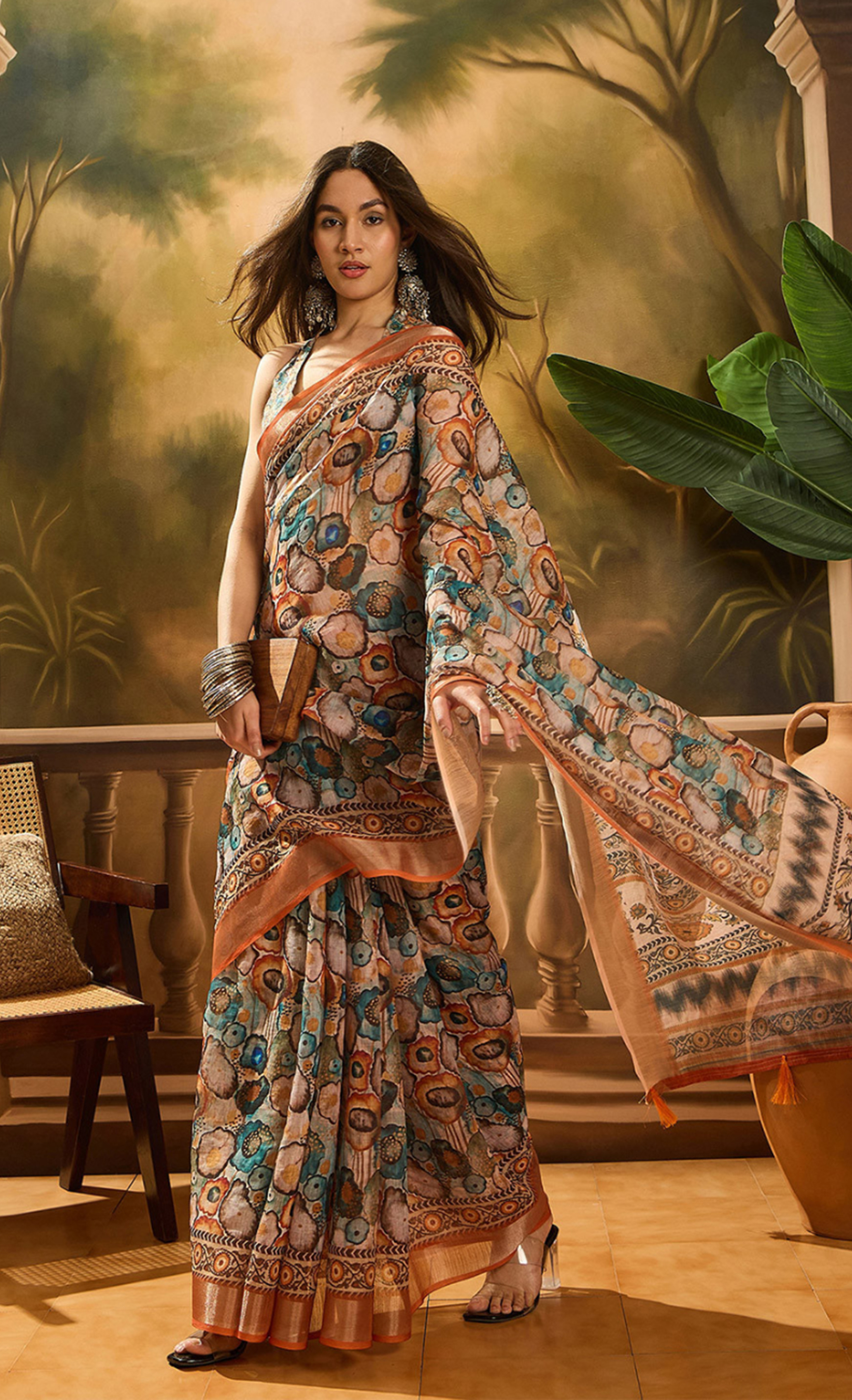
The Peach Floral Linen Cotton Saree with Statement Blue Border! Demonstrates how a soft peach ground and strong border detail can provide a gentle base for a darker woven shawl. Add a black or maroon blouse, oxidised silver earrings and a compact crossbody bag. Keep the shawl folded across one shoulder so the saree border remains visible rather than hiding the entire drape.
The Peach Floral Linen Cotton Saree with Blue Border for Ladies offers another practical option for a daytime programme. A short woollen jacket, flat ankle boots and a long bead necklace can make the outfit suitable for December weather. Pin the pallu at the shoulder and secure the pleats with discreet safety pins before leaving for the venue.
The Peach Floral Linen Cotton Saree with Beautiful Blue Border suits women who prefer a lighter, more delicate palette. Pair the saree with a deep red blouse and a black shawl, then repeat one border colour in the bindi, bangles or small handbag. Repeating one colour creates cohesion without turning the outfit into a matching set.
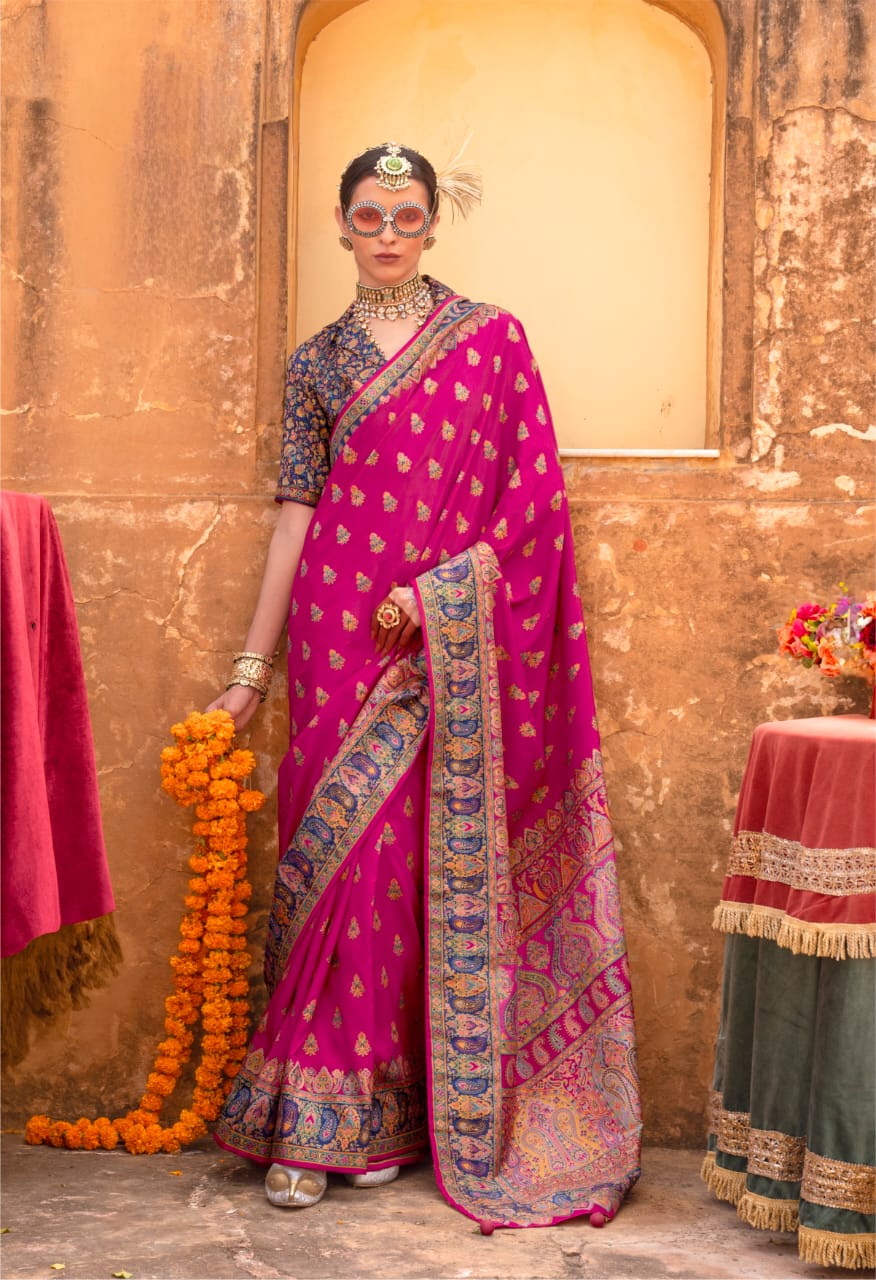
The Red Floral Linen Cotton Saree with Beautiful Printed Border creates a more dramatic base for neutral accessories. An ivory or black blouse, a handwoven shawl and antique-finish metal jewellery will balance the red ground. Avoid wearing a full headpiece or symbolic ornament simply because it appears visually striking; some traditional accessories carry meanings that belong to specific communities or occasions.
The Maroon Mal Cotton Ethnic Saree With Blouse from VARNAVI can work for an evening cultural programme because maroon naturally complements black, cream and muted gold. Add a cream shawl, low-heeled footwear and a warm stole rather than heavy jewellery. Mal cotton also gives a comfortable texture for long periods of sitting and walking.
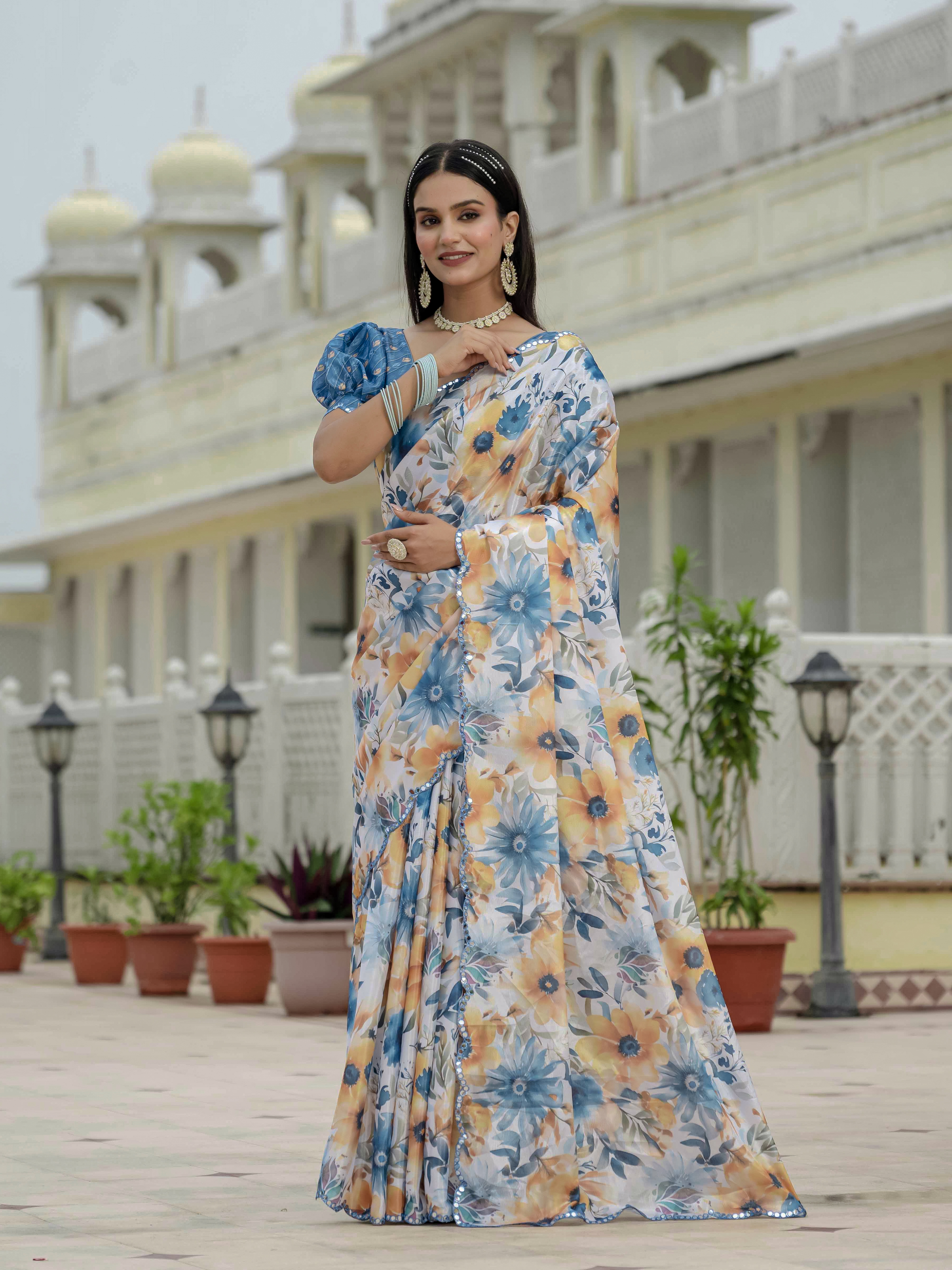
The Multicolour Floral Linen Cotton Saree with Blue Border Look can suit women who enjoy brighter colour but still want a breathable fabric. Use a plain black blouse and a single red, yellow or blue beaded accessory to prevent visual overload. Colourful clothing is welcome, but every accessory doesn't need to be equally colourful.
Hornbill Festival Fashion: Traditional Naga Outfits for Women through colour and textile choices
Black, red, white, yellow, green, blue and earthy neutrals work well for a Hornbill Festival wardrobe because they connect visually with many Naga weaving palettes without claiming to reproduce one specific community's dress. The most useful combination usually includes one dark anchor colour, one warm accent and one light balancing shade.
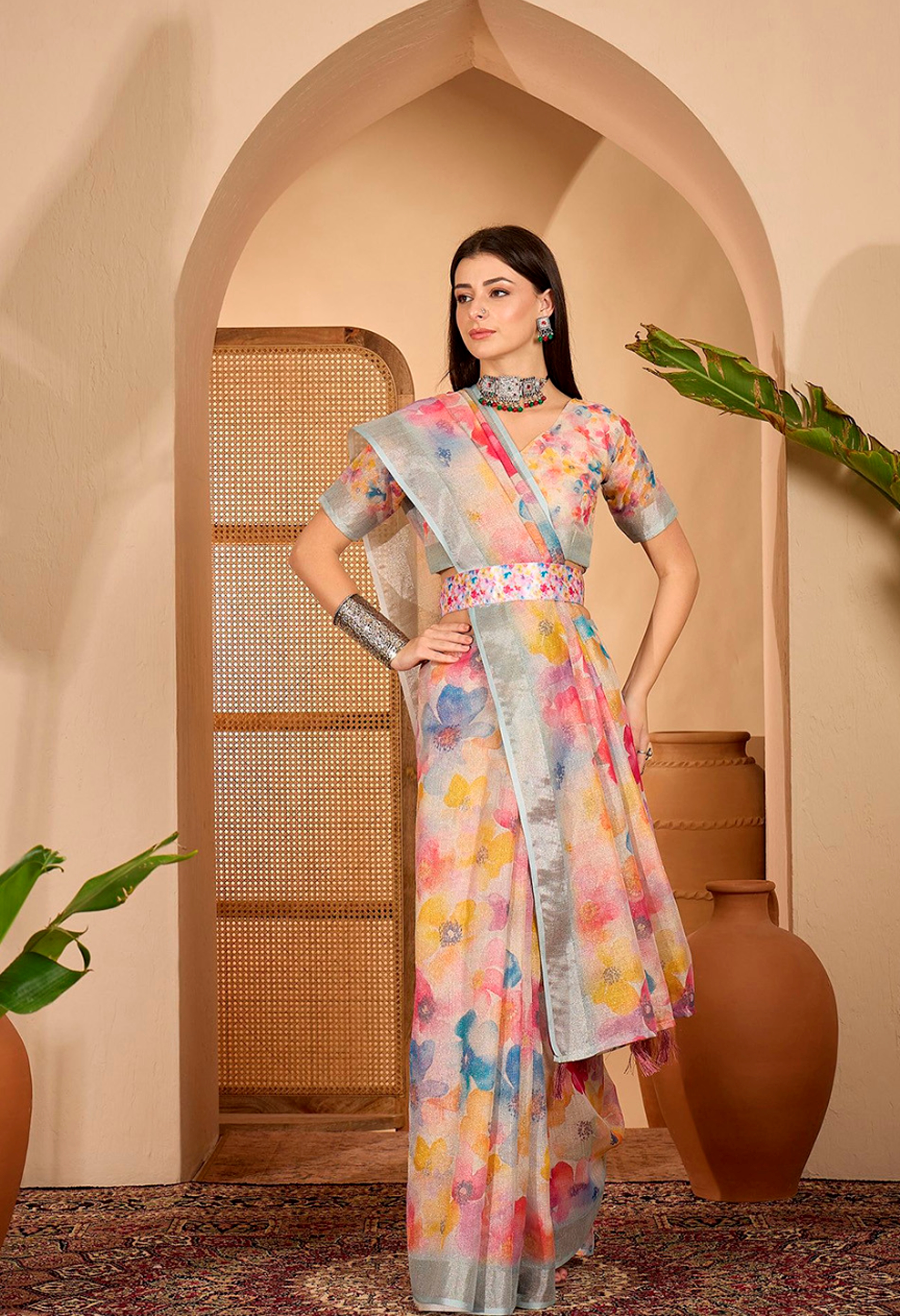
Geometric bands, stripes, checks and repeated motifs are more appropriate references than random "tribal" prints. A textile with clean horizontal bands can be worn as a shawl, belt or bag accent. Floral prints can also work, especially when a floral saree is paired with a geometric woven layer that clearly separates the two patterns.
Linen cotton, handloom cotton, Mal cotton and light wool are sensible materials for the festival. Linen cotton drapes with less weight than brocade and dries relatively quickly if exposed to light moisture. Cotton brings breathability, while a woollen or quilted layer adds warmth after sunset. Banarasi silk and heavy zari can look festive, but they may feel cumbersome for a day spent outdoors and can distract from the textile story.
Colour balance matters more than the number of decorative elements. A red saree with a black shawl and ivory beads has a clear visual hierarchy, while a multicoloured saree, patterned shawl, bright necklace and embellished bag may appear visually crowded. Choose one primary textile, one supporting textile and no more than two prominent accessory colours.
Hornbill Festival Fashion: Traditional Naga Outfits for Women with jewellery and accessories
Naga-inspired jewellery should be styled as a considered accent, with attention to provenance and cultural meaning. Beaded necklaces, long strands, metal earrings, bangles and woven bags can complement an outfit, but visitors should not imitate rank-specific or ceremonial ornaments without understanding their significance.
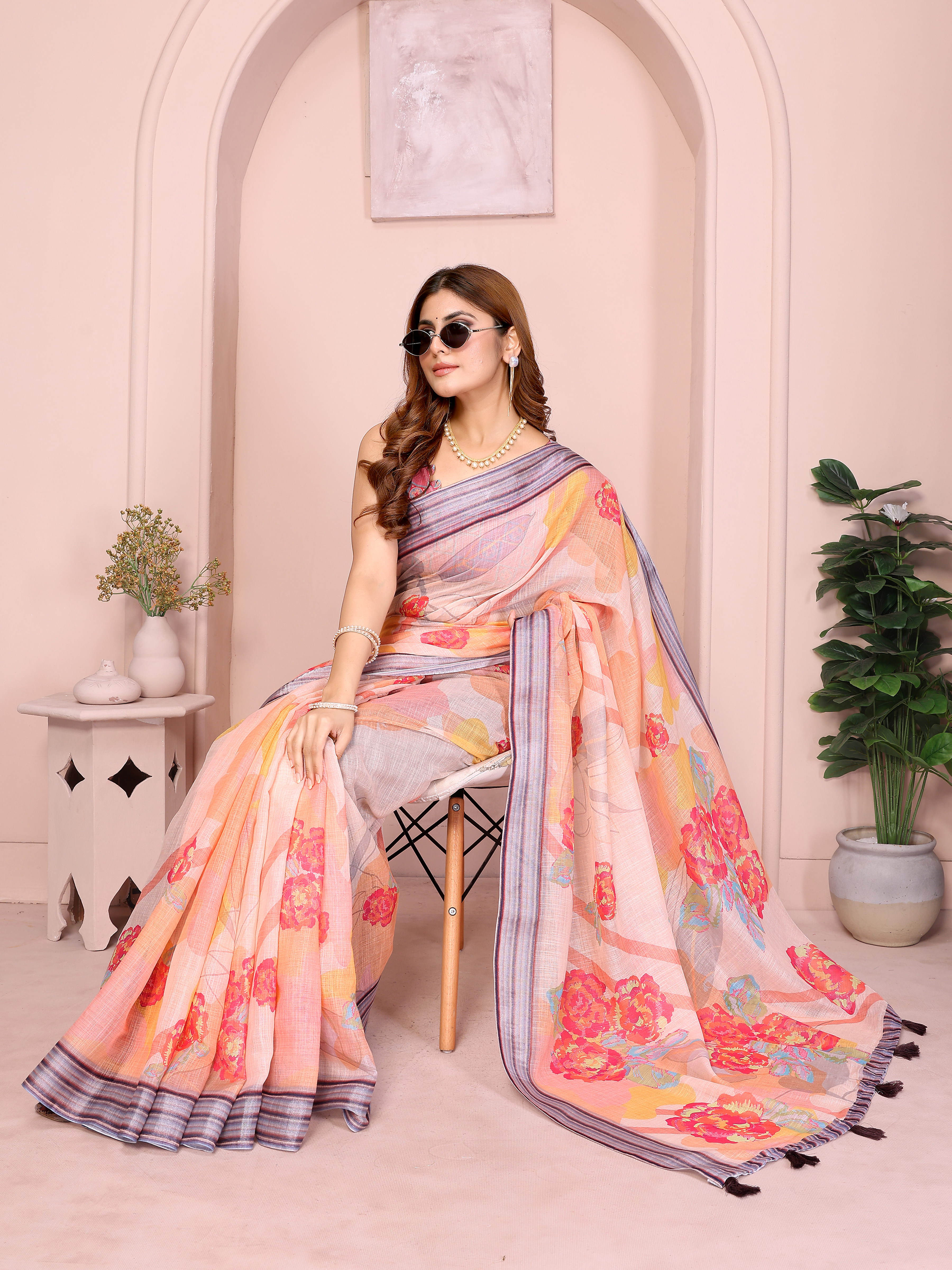
Layer two or three bead strands in related colours rather than wearing a very large stack. A red-and-white necklace can add definition to an ivory blouse, while a black-and-yellow combination can bring warmth to a blue-bordered saree. Oxidised silver earrings and a simple cuff are often enough when the shawl already contains strong pattern.
Choose footwear for terrain rather than only for appearance. Cushioned juttis, leather kolhapuris with secure straps, flat boots or low block heels are more practical than delicate stilettos. A crossbody bag keeps both hands free for photography and purchases, while a lightweight scarf can provide warmth and protect the neck from wind.
Headgear requires particular care. Traditional Naga headdresses and warrior-associated ornaments may have specific social or ceremonial meanings, and novelty versions can reduce those meanings to costume. Unless a cultural guide or community artisan has explicitly explained that an item is appropriate for visitors, leave ceremonial headgear out of a festival outfit.
Hornbill Festival Fashion: Traditional Naga Outfits for Women for comfort and weather
Women should plan for cool mornings, sunny afternoons and colder conditions after sunset at Kisama Heritage Village. A breathable base layer, a warm outer layer and comfortable shoes provide more value than a heavy outfit that looks impressive but restricts movement.
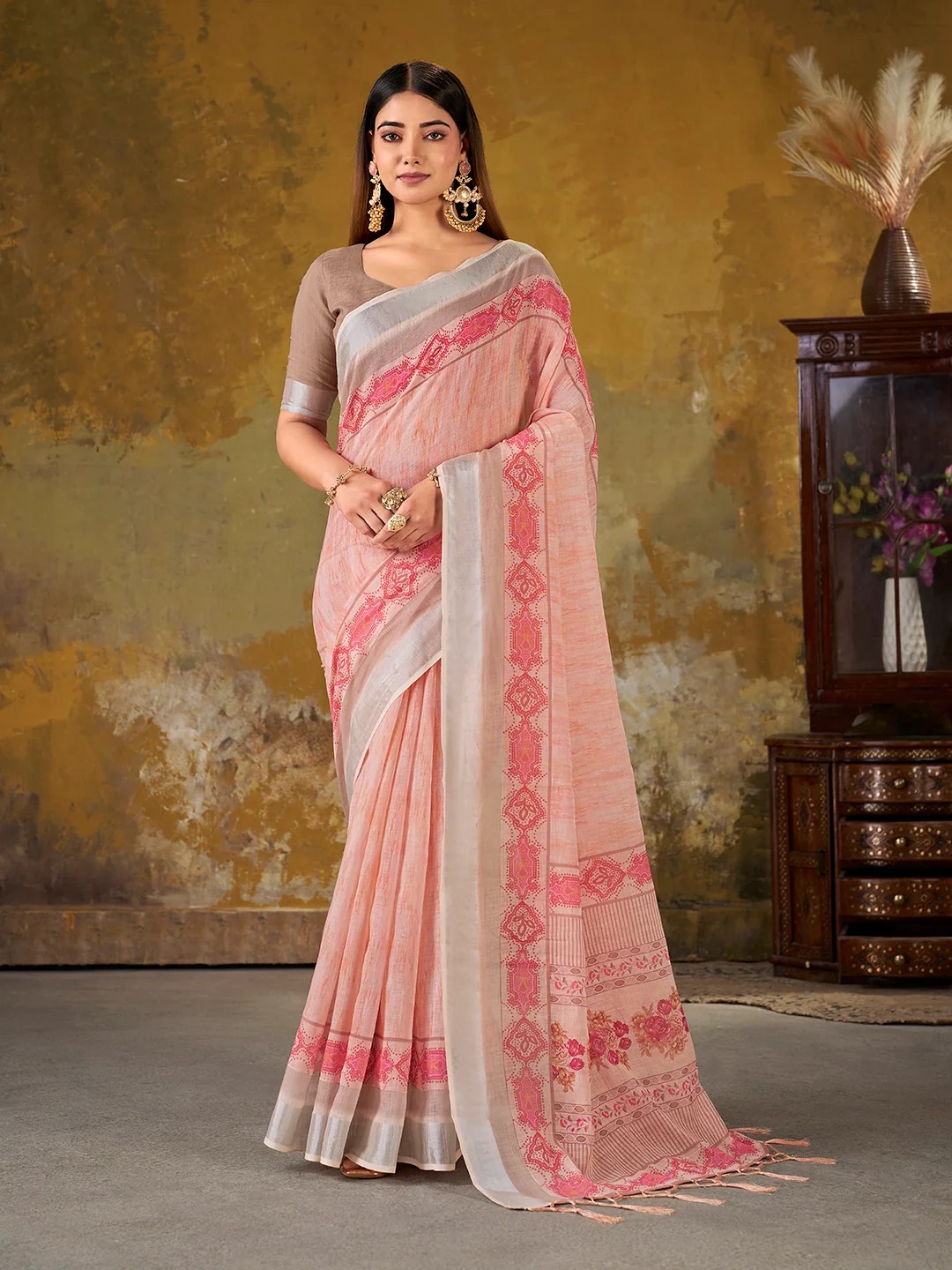
Wear a cotton or linen-cotton blouse beneath a cardigan, cropped jacket or light woollen coat. A saree pallu should be secured at the shoulder with two concealed pins, and the lower pleats should be fastened at the waist if the wearer expects to walk frequently. A wrap skirt can be paired with thermal leggings in colder weather, provided the added layer doesn't interfere with movement.
Pack a compact umbrella or rain-resistant layer, especially if the forecast is unsettled. A small pouch containing safety pins, fashion tape, blister plasters, tissues and a hair tie can prevent minor wardrobe problems from interrupting the day. Avoid very long trailing hems when walking over grass, stone paths or crowded festival areas.
Fabric care also deserves attention. Air linen-cotton and handloom cotton garments after wearing them, brush away dry dust gently and follow the care label before washing. Do not rub zari or metallic thread aggressively, and store woven shawls folded in breathable cotton rather than sealed in plastic for long periods.
Hornbill Festival Fashion: Traditional Naga Outfits for Women and respectful shopping
Respectful shopping means asking where a textile was made, which community or artisan group produced it and whether the design has a known ceremonial association. A seller who can explain fibre content, weaving method and provenance gives more useful information than a label using only the word "tribal."
Visitors should not bargain aggressively with individual weavers over labour-intensive handmade goods. Asking permission before photographing artisans, performers or traditional clothing is equally important. Festival visitors can appreciate the visual beauty of Naga dress without treating people, regalia or cultural performances as props.
When a garment is inspired by Naga textiles rather than made within a Naga community, describe it accurately as Naga-inspired. That wording distinguishes contemporary fashion interpretation from an authentic community garment and helps prevent a borrowed motif from being presented as universal Naga culture.
A strong final outfit might therefore include a breathable saree or wrap skirt, one verified woven shawl, small beadwork, secure flat footwear and a warm layer. That combination supports movement, acknowledges the setting and leaves room for the traditional clothing worn by Naga communities to remain the cultural centre of the festival.
Questions Women Ask About Hornbill Festival Fashion and Naga Dress
What should women wear to the Hornbill Festival?
Women can wear a breathable saree, wrap skirt, salwar suit or trousers with a cotton blouse, comfortable flat footwear and a warm outer layer. A Naga-inspired shawl or bead necklace can add cultural reference without copying ceremonial dress.
Can I wear a traditional Naga shawl as a visitor?
Yes, a visitor can wear a Naga shawl when its provenance and intended use are clear. Buy from a verified artisan or seller, ask about the design and avoid describing a commercially inspired textile as an authentic ceremonial garment.
What colours are suitable for a Hornbill Festival outfit?
Black, red, white, yellow, green, blue and earthy neutrals work well for a festival wardrobe inspired by Naga textiles. Colour choice alone does not make an outfit traditionally Naga, because patterns and community-specific meanings also matter.
Are traditional Naga headdresses appropriate for tourists?
Traditional Naga headdresses are not automatically appropriate for tourists because some ornaments have social, ceremonial or warrior-associated meanings. Unless a community guide confirms that an item is suitable for visitors, choose a shawl, woven bag or bead necklace instead.
Is a saree practical for the Hornbill Festival?
A saree is practical when it is lightweight, securely pinned and paired with comfortable footwear and a warm layer. Linen cotton, Mal cotton and lightweight handloom cotton are generally easier for outdoor walking than heavy brocade or densely embellished silk.
How can I style Naga-inspired clothing without cultural appropriation?
Use one clearly sourced textile or accessory, learn its background and describe contemporary interpretations accurately. Avoid copying ceremonial regalia, rank-specific ornaments or sacred symbols merely because they appear attractive in photographs.