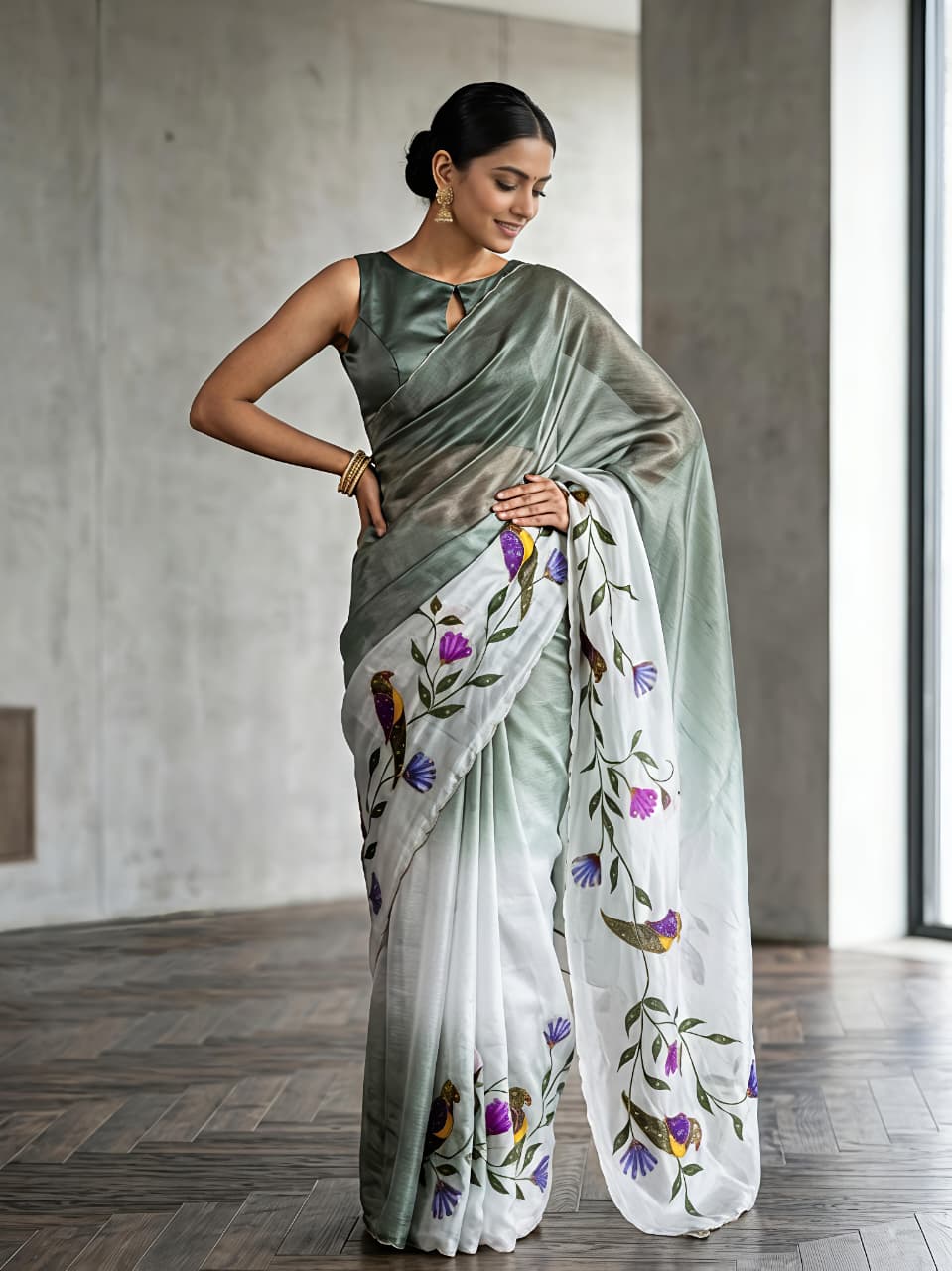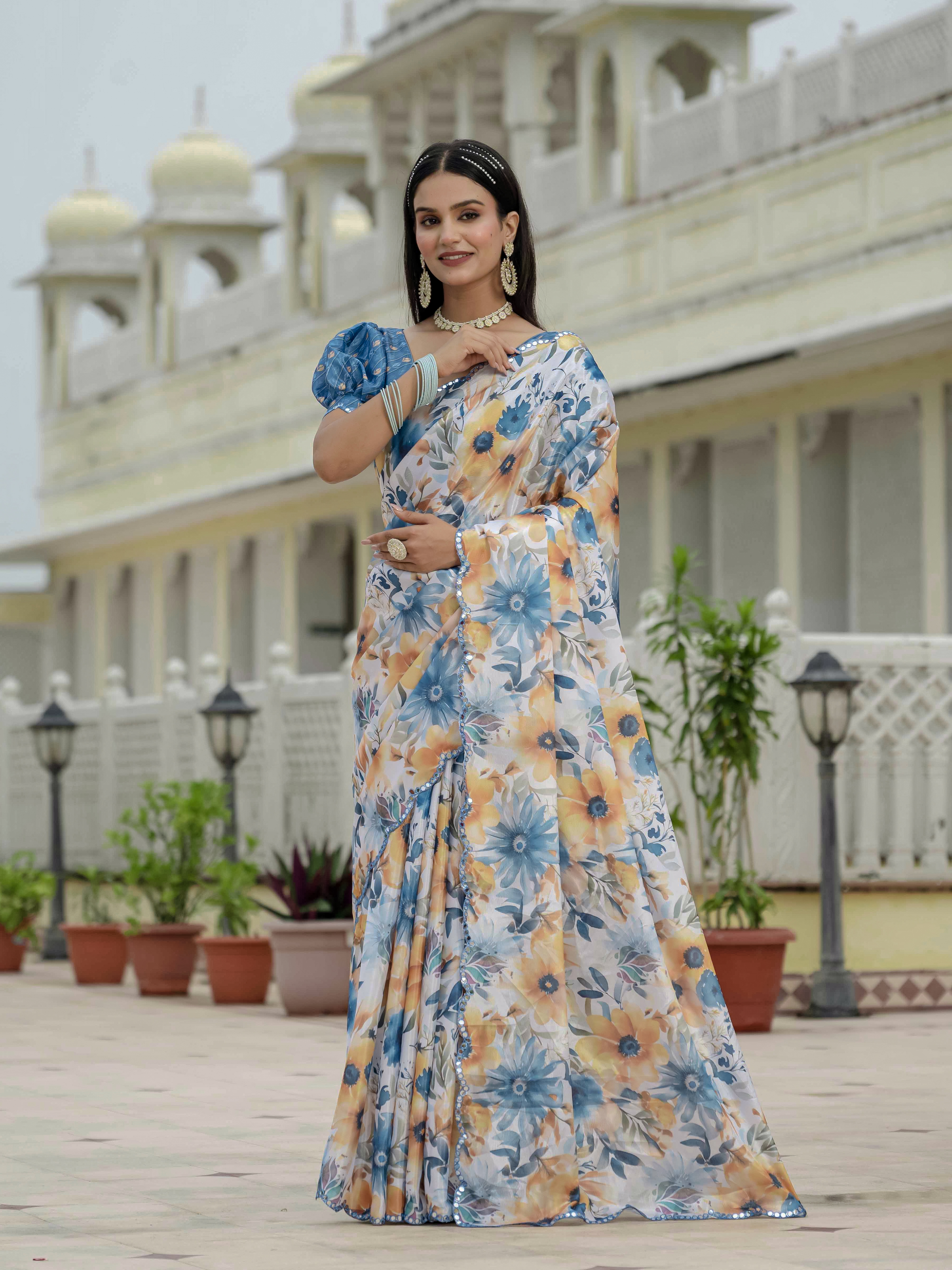
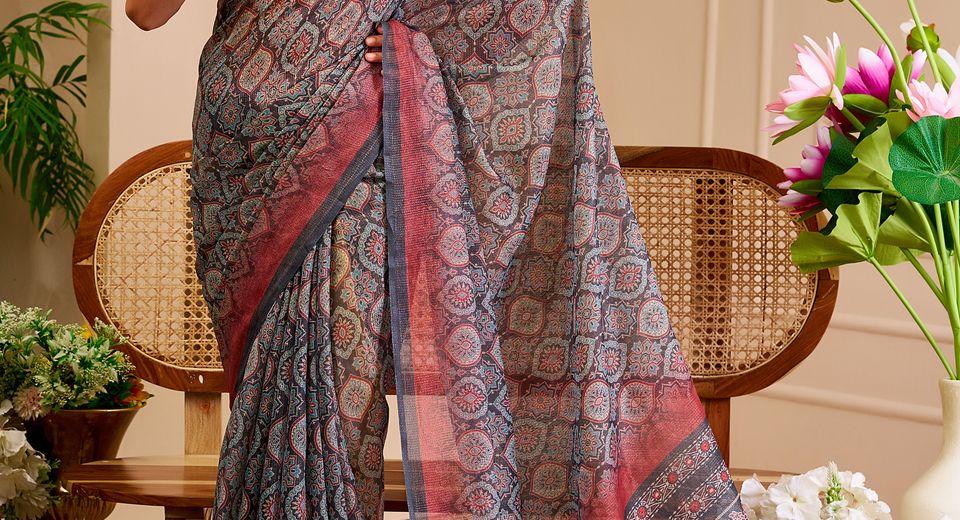
Cold mountain evenings change the way a festive saree needs to be styled. Himachali Shawl & Saree Styling: Pahari Winter Festival Looks works best when warmth, movement and regional character are planned together, rather than added as an afterthought. A breathable saree, a properly secured pallu and a shawl that frames the shoulders can keep you comfortable at a winter festival without hiding the outfit.
The most successful version of this look balances three elements: a saree with enough visual interest to stand up to a textured shawl, a blouse that accommodates an extra layer, and accessories that remain practical in cool weather. The result can suit a temple gathering, a family festival celebration, an outdoor bonfire or an evening cultural programme.
Himachali Shawl & Saree Styling begins with the shawl's role
A Himachali shawl adds insulation around the shoulders and upper arms while giving a saree outfit a distinctly Pahari finish. Mountain shawls commonly bring patterned borders, geometric motifs or earthy colour combinations that contrast beautifully with floral prints, zari borders and solid silk surfaces.
The shawl also solves a practical problem: a saree leaves the upper body exposed to cold air, especially when the pallu is worn loosely. Draping a shawl over both shoulders creates a stable layer for walking outdoors. Wrapping the shawl diagonally across the torso offers more protection than simply resting it on the elbows.
Proportion matters. A heavily patterned shawl pairs more easily with a saree that has a controlled print or a defined border. A plain or lightly woven shawl allows a Banarasi silk saree, zari weave or floral tissue design to remain the focal point. Avoid matching every colour exactly; repeating one accent shade is usually enough to make the combination look deliberate.
A thick shawl can also change the visual line of the saree. Keep the pleats narrow and vertical, and avoid adding a wide belt unless the shawl is being worn open. A shawl with a strong border looks most polished when one edge remains visible rather than being folded several times around the neck.
Himachali Shawl & Saree Styling requires the right fabric
The right saree fabric depends on the temperature, the amount of time spent outdoors and the weight of the shawl. Mal cotton, linen cotton, handloom cotton and soft silk offer different combinations of breathability, structure and warmth.
For daytime festivals and indoor gatherings
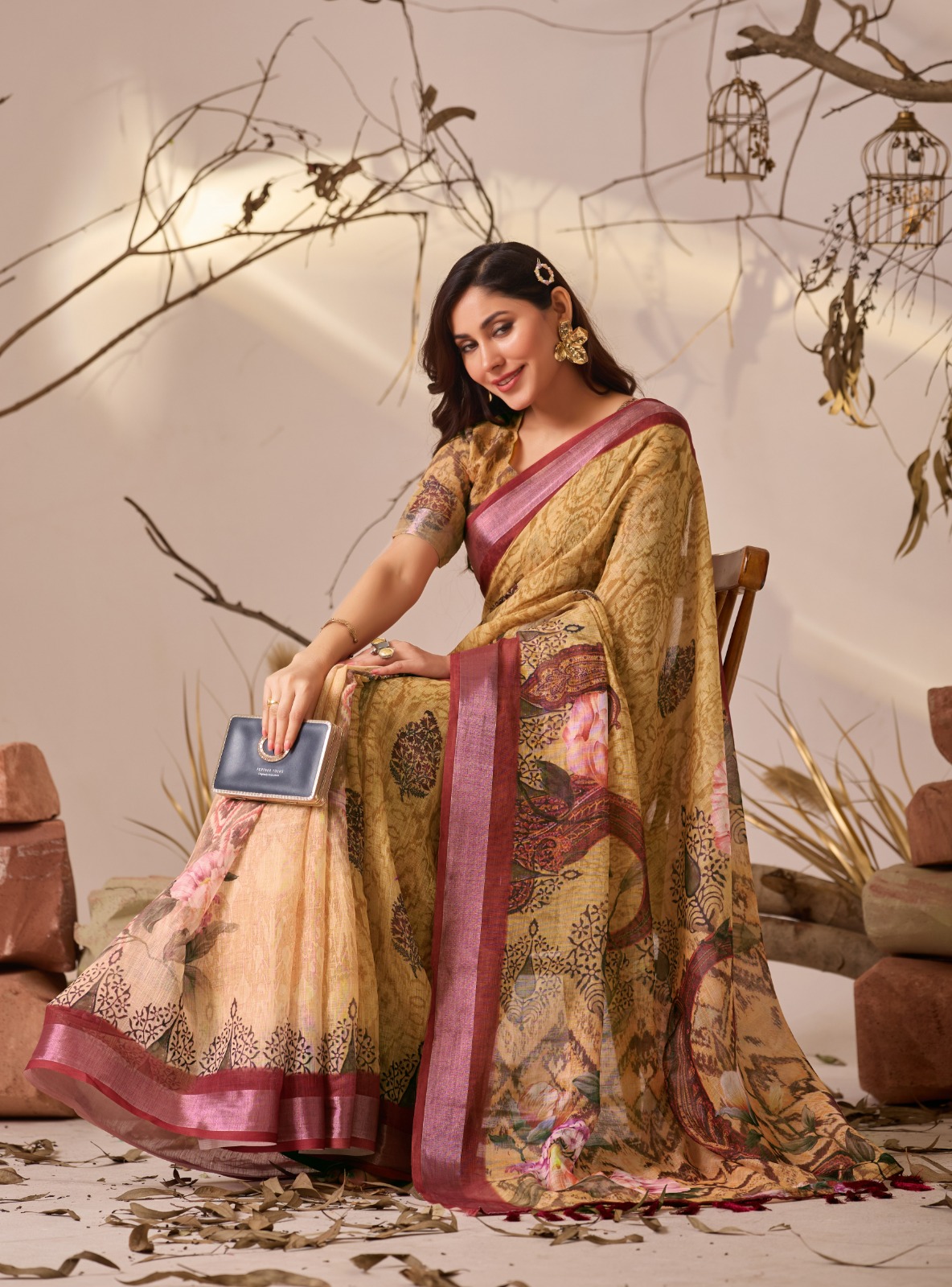
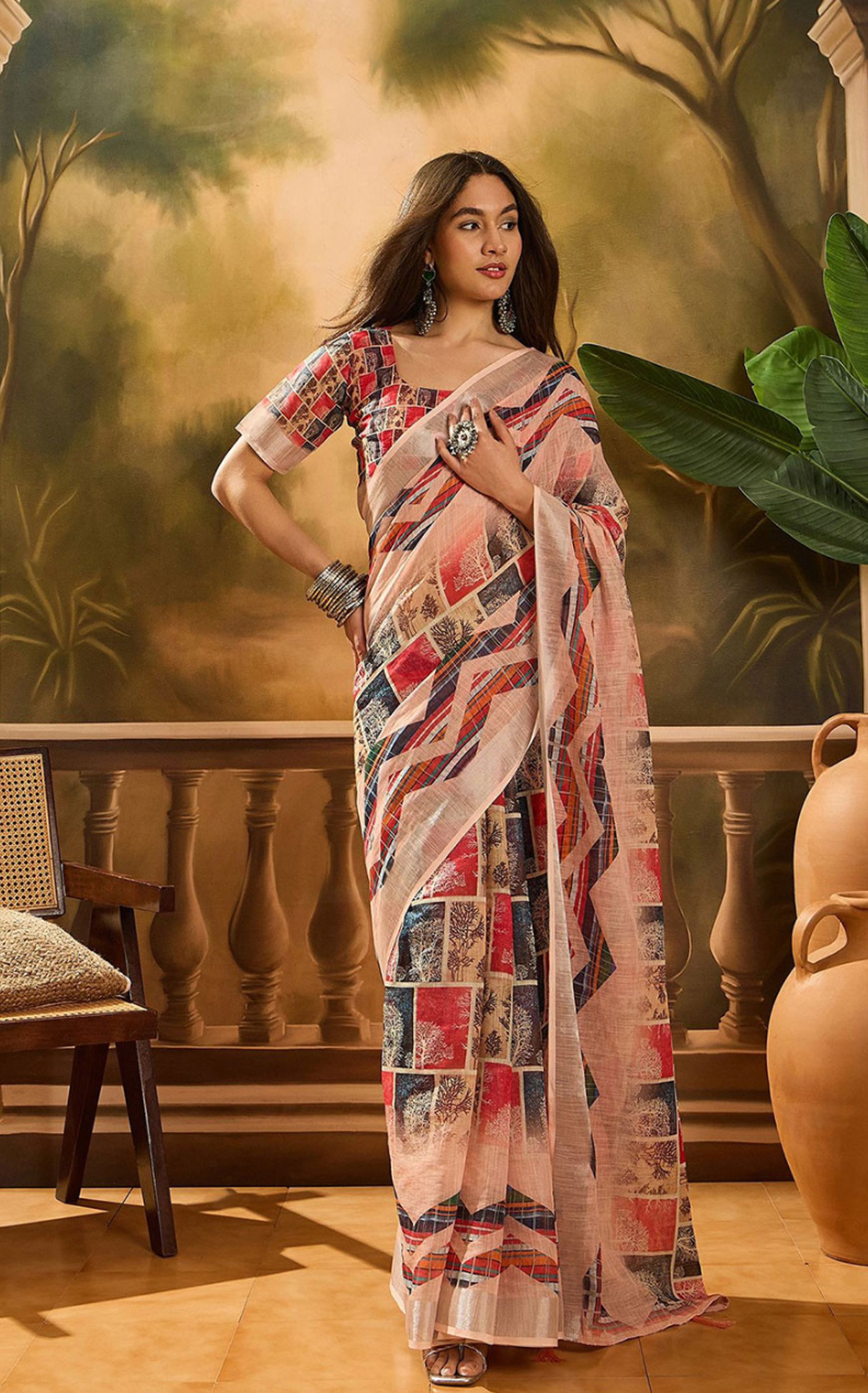
Linen cotton and mal cotton are useful for daytime events because they're breathable and generally easier to manage than a very slippery silk. Red Floral Linen Cotton Saree with Beautiful Printed Border brings print and border definition without competing aggressively with a patterned shawl.
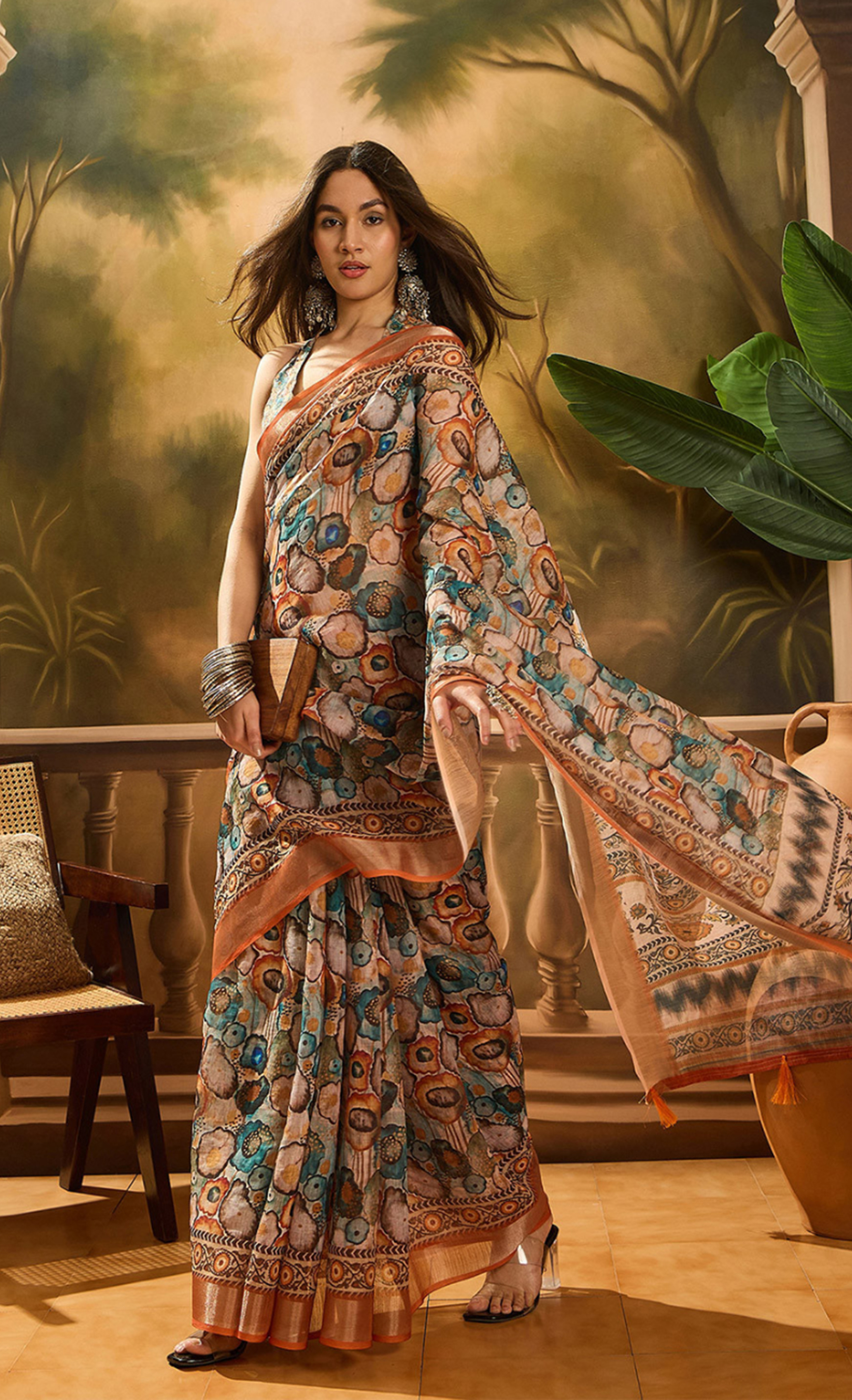
Teal Floral Printed Linen Cotton Saree with Blouse gives a cooler jewel-toned base for a cream, rust or mustard shawl. Blue Linen Cotton Floral Printed Saree With Contrast Border creates a similar effect with a stronger border contrast, making the pallu easier to identify when the shawl is worn over one shoulder.
Pastel Floral Tissue Handloom Cotton Saree with Zari Weaves suits a daytime celebration when the styling needs a small festive shimmer rather than a fully traditional silk effect. The zari weave can catch indoor light while the cotton base keeps the outfit from feeling too formal for a local festival gathering.
For cold evenings and dressier celebrations
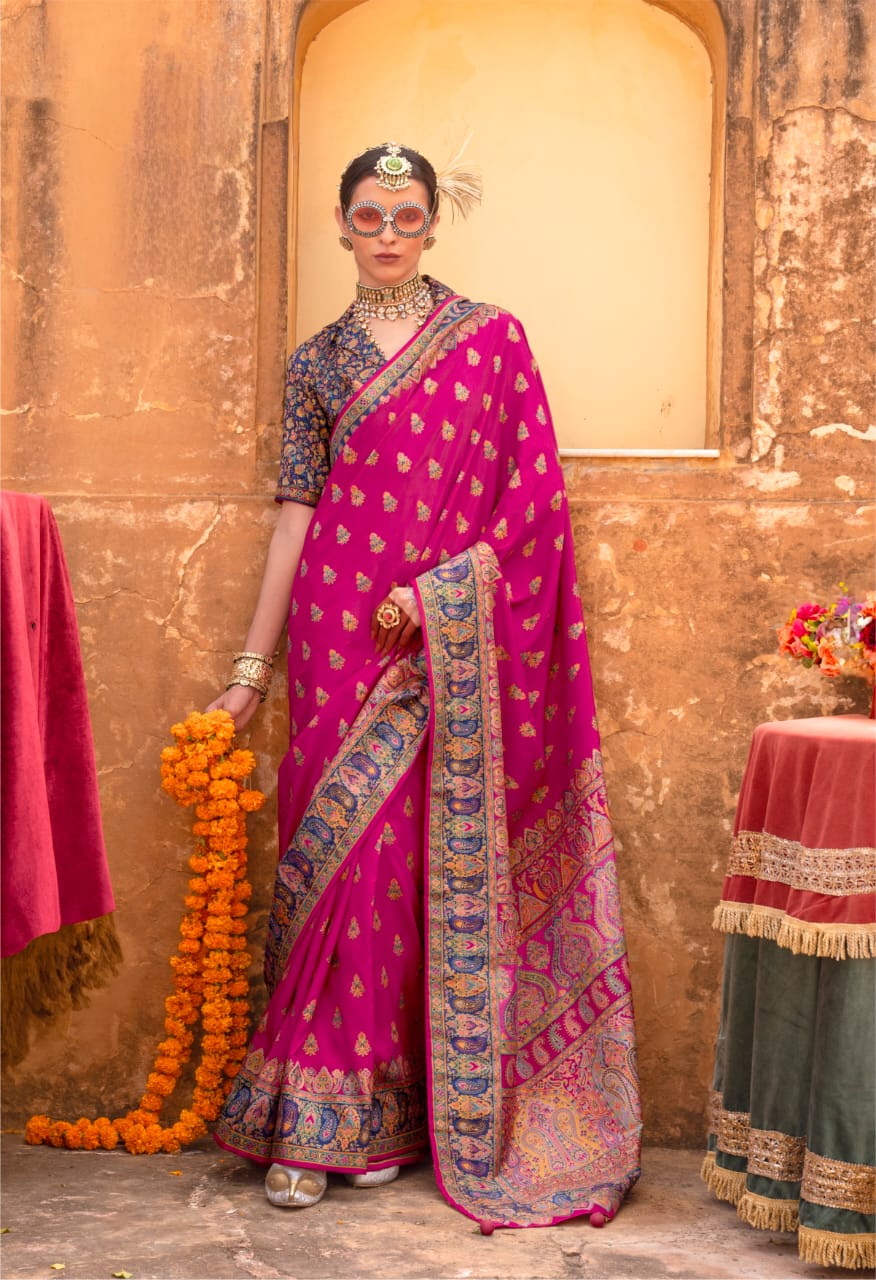
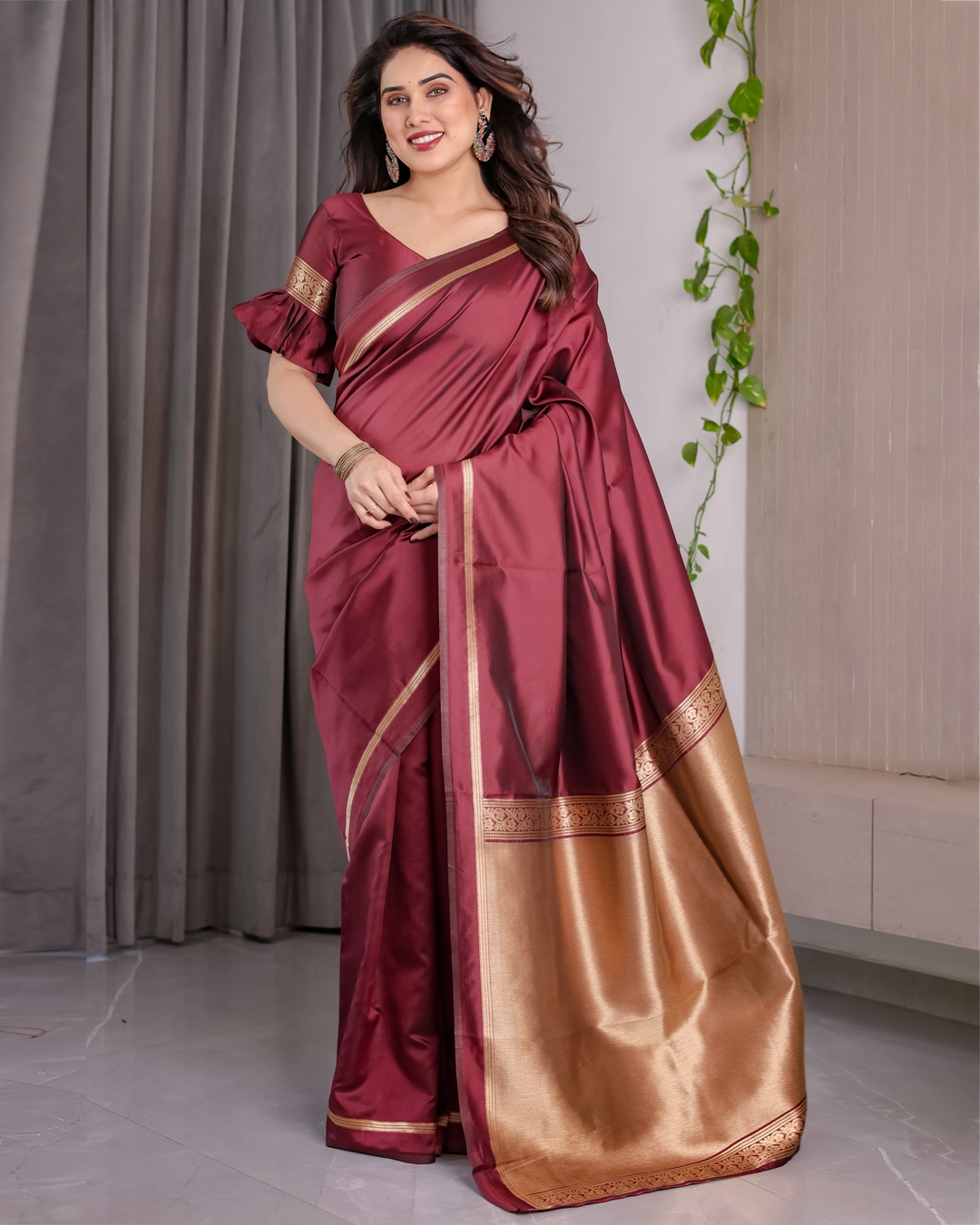
Soft silk and Banarasi silk create a more structured winter outfit because their denser surfaces hold their shape beneath a shawl. Maroon Banarasi Soft Silk Saree with Golden Zari Border is especially effective with a charcoal, cream or muted gold shawl because the golden zari provides a clear festive accent without requiring heavy jewellery.
Maroon Mal Cotton Ethnic Saree With Blouse from VARNAVI brings a deeper colour story with a more relaxed textile character. Pairing the saree with a geometric shawl and a blouse with full or three-quarter sleeves gives the outfit a grounded Pahari mood.
Grey Tissue Handloom Saree With Floral Design - Varnavi can work as a neutral base for a vivid shawl. Rust, berry, pine green and saffron accessories will bring warmth to grey, while silver jewellery will preserve a cooler mountain-inspired palette.
Himachali Shawl & Saree Styling colour combinations that work
A successful Himachali Shawl & Saree Styling combination uses one dominant visual idea and keeps the remaining elements controlled. The following pairings are useful starting points rather than fixed rules.

- Maroon and cream: Wear a maroon saree with a cream shawl, antique gold earrings and a blouse in maroon or warm beige. The palette feels festive while remaining appropriate for an evening outdoor event.
- Teal and rust: Combine a teal floral saree with a rust, terracotta or cinnamon shawl. Choose a simple blouse and let the shawl supply the strongest texture.
- Grey and berry: Use a grey handloom saree with a berry, wine or plum shawl. Silver jhumkas and a small bindi will keep the look elegant without making the colour scheme too heavy.
- Peach and blue: Peach Floral Linen Cotton Saree with Statement Blue Border! Already contains a strong colour relationship. Select a shawl in muted blue, oatmeal or soft grey rather than introducing a third bright colour.
- Red and charcoal: A red floral saree with a charcoal shawl creates contrast suited to a winter festival celebration. Keep the blouse relatively quiet so the border, shawl and earrings don't compete.
Colour temperature is particularly useful in winter styling. Warm shades such as maroon, rust, mustard and brick red appear richer under evening lights. Teal, blue, grey and berry shades feel cooler and more contemporary. A neutral shawl can bridge either group when the saree already contains several colours.
People planning a Silk festival celebration can use the same principle with a richer base. A Banarasi silk saree already has shine, so a matte woollen shawl and restrained jewellery usually create a more balanced Silk look for a Festival gathering than another glossy layer.
Himachali Shawl & Saree Styling depends on a secure drape
The most secure winter drape keeps the pleats anchored and gives the shawl a defined route across the upper body. Start with a firm waist tuck, make narrow even pleats and pin the pallu near the shoulder before adding the shawl.
Shoulder-wrap drape
The shoulder-wrap drape is the easiest option for a seated indoor festival. Place the saree pallu over the left shoulder, then fold the shawl lengthwise and rest it across both shoulders. Keep the saree border visible below the shawl and secure the shawl with a discreet brooch or two small safety pins from the inside.
Diagonal mountain-weather drape
The diagonal drape gives better protection when a celebration involves walking outdoors. Place the shawl over the left shoulder, bring one end across the chest and tuck or pin it near the opposite waist. The saree pallu can remain visible beneath the shawl or be folded over the shawl edge for a layered border effect.
One-shoulder festive drape
The one-shoulder drape is suitable for milder weather or short photo moments because it gives less coverage. Fold the shawl into a narrower rectangle and place it over the opposite shoulder from the saree pallu. A brooch at shoulder level prevents the shawl from slipping while leaving the blouse and saree border visible.
Use pins sparingly on delicate tissue, zari and silk. Place pins into seam allowances, the blouse shoulder or the folded inner edge rather than through a prominent zari line. Test the finished arrangement by sitting, climbing a few steps and lifting one arm before leaving home.
Himachali Shawl & Saree Styling needs practical winter layers
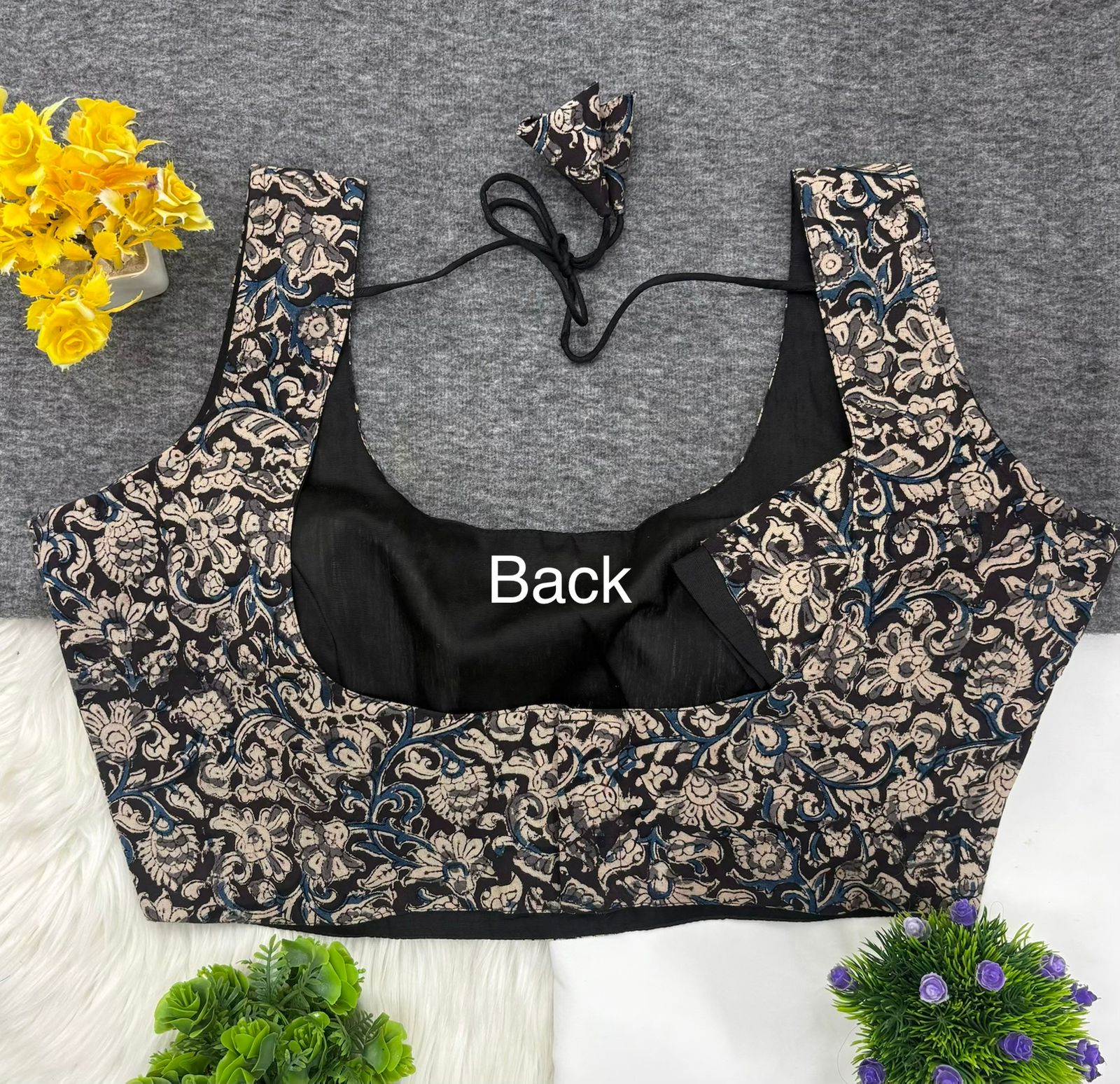
A winter saree outfit needs a blouse that supports layering without creating bulky folds beneath the shawl. Full sleeves, three-quarter sleeves and higher necklines are practical choices, especially for evening events in hill towns.
Thermal camisoles can be worn beneath a blouse if the neckline and armholes remain invisible. A fine knit cardigan or fitted woollen inner layer can sit beneath a shawl, but thick sweaters usually distort the saree pleats and make the waist look crowded. If a coat is necessary for the journey, wear it over the complete outfit and remove it at the venue rather than trying to drape a shawl over a bulky jacket.
Footwear should match the ground conditions. Low block heels, closed-back juttis with grip, ankle boots or flat leather footwear are safer than narrow stilettos on stone paths and uneven outdoor surfaces. If the saree hem is worn with boots, keep the front pleats slightly shorter and check that the pallu doesn't catch on the heel.
A small crossbody potli or compact sling can be more practical than a large open clutch. Carry spare pins, a folded handkerchief, lip balm and a small stain-removal wipe. These modest preparations matter when a festival includes travel, food stalls or long periods of standing.
For shoppers comparing festive options, Party Wear Sarees may offer useful ideas for evening colour and surface detail, while Silk Sarees Under 3000 With Discount can help when a soft silk base is preferred without moving into a high-budget wardrobe purchase. Shopping should still begin with the weather and drape requirements rather than the decoration alone.
Himachali Shawl & Saree Styling is completed by accessories
Jewellery should echo the shawl or saree border without competing with both at once. Oxidised silver works particularly well with grey, teal, blue and charcoal combinations, while antique gold suits maroon, red, peach and golden zari.

Choose one primary statement: large earrings, a layered necklace or a decorative brooch. Wearing all three can make a patterned shawl and saree look visually crowded. A brooch is especially useful because it has a functional purpose as well as decorative value.
Low buns, side braids and half-up hairstyles are more reliable than loose hair in cold or windy conditions. A low bun leaves the shawl border visible around the neck. A braid can be finished with a small ribbon or metal hair accessory that repeats one colour from the saree border.
Make-up for an outdoor festival should account for wind and lower temperatures. A moisturising base, defined brows, tinted lip colour and a soft berry or brick lip will remain comfortable longer than a heavily powdered finish. Keep a small moisturiser available because cold air can make the skin around the lips and hands feel dry.
Colour-led collections can also help narrow the accessory decision. Pink Georgette Sarees suggest softer blush and pearl directions, Red Banarasi Silk Sarees for Weddings Under 1100 point towards antique gold and deep red accents, and Gray Color Sarees Under 1000 provide a neutral starting point for brighter shawls. These references are most useful as palette cues, not as instructions to match every component exactly.
Himachali Shawl & Saree Styling checklist before a festival
A ten-minute trial at home can prevent most winter saree problems. Put on the blouse, saree, shawl and footwear together, then test the outfit through the movements required at the venue.

- Check the waist: Walk for five minutes and confirm that the pleats remain vertical and the lower edge doesn't drag.
- Check the shoulders: Raise both arms and sit down to make sure the shawl stays secure without pulling the saree pallu.
- Check the temperature: Decide whether the outfit needs a thermal camisole, a fitted inner layer or a coat for travel.
- Check the ground: Practise walking on stairs or uneven flooring in the chosen footwear.
- Check the accessories: Carry spare pins and choose jewellery that won't catch on the shawl weave.
- Check the fabric care: Keep food, oil and perfume away from zari, tissue and delicate printed surfaces, and follow the garment's recommended cleaning method.
A cotton festival celebration in the daytime may need no more than a linen cotton saree, blouse and shawl. A colder evening celebration may require full sleeves, a heavier shawl, closed footwear and a soft silk or Banarasi base. Matching the outfit to the actual setting is what makes Pahari winter dressing look natural rather than costume-like.
The strongest Himachali Shawl & Saree Styling looks leave room for the saree, shawl and wearer to be noticed separately. Choose one standout surface, repeat one colour, secure every moving layer and plan for the terrain. Those decisions create warmth and visual balance while allowing the outfit to remain festive, comfortable and distinctly rooted in mountain-inspired style.
Common Questions About Himachali Shawl & Saree Styling
How do you wear a Himachali shawl with a saree?
Drape the saree pallu first and secure the pleats, then fold the shawl lengthwise across the shoulders or bring it diagonally across the chest. Use an inside pin or brooch at the shoulder so the shawl stays in place without damaging zari or tissue.
Which saree fabric is suitable for a winter festival?
Soft silk and Banarasi silk suit colder evenings because their denser surfaces hold their shape under a shawl. Linen cotton, mal cotton and handloom cotton are better for daytime events or indoor gatherings where breathability and easy movement matter.
What blouse should be worn with a saree and Himachali shawl?
A full-sleeve or three-quarter-sleeve blouse with a higher neckline gives useful coverage in winter. The blouse should fit smoothly under the shawl and any thermal camisole, because bulky layers can disturb the saree pleats.
Which colours work with a Pahari shawl and saree?
Maroon with cream, teal with rust, grey with berry, and peach with muted blue are reliable combinations. Repeat one colour from the shawl or saree border, but avoid matching every shade exactly when both pieces already have strong patterns.
How can a saree stay secure during an outdoor festival?
Use a firm waist tuck, narrow pleats and discreet pins at the shoulder or inner fold of the pallu. Test the outfit by walking, sitting and climbing stairs, and choose footwear with a stable sole for stone paths or uneven ground.
Can a cotton saree be worn for a winter festival celebration?
A cotton saree works well for a daytime or indoor winter festival when paired with a warm shawl and a suitable blouse. Handloom cotton, linen cotton and mal cotton are breathable choices, while a thermal camisole and closed footwear can add comfort in cooler weather.