

Himachali Saree Styling for Temple Visits: Elegant Pahari Looks begins with one practical idea: a temple saree should remain graceful, secure and comfortable while you walk, sit and participate in pooja rituals. A breathable linen-cotton saree, a restrained silk border and a neatly pinned pallu can create a Pahari-inspired appearance without turning traditional dressing into costume. The right blouse, footwear, jewellery and drape matter as much as the saree itself.
Himachali communities have varied customs, textiles and forms of time-honoured dress, so a saree styled for a temple visit should be described as Pahari-inspired rather than presented as one universal regional costume. Respectful dressing means combining mountain-friendly practicality with the rules of the specific temple, family or ceremony.
Himachali Saree Styling for Temple Visits: choosing the right fabric
The best temple saree fabric depends on the season, travel time and formality of the prayer gathering. Linen cotton and handloom cotton suit warm afternoons and long periods of standing, while Banarasi soft silk offers a richer finish for evening aarti, winter ceremonies or a festive family pooja.
Temple visits often involve removing footwear, sitting on the floor, climbing stairs and moving through crowded courtyards. A saree with a manageable fall, a pallu secured at the shoulder and a blouse that allows arm movement is more useful than a heavily embellished style that needs constant adjustment. Extremely long trailing pallus can catch on railings, doorways or devotional items.
When should you choose cotton or linen cotton?
Linen cotton and handloom cotton are usually the most practical choices for a daytime pooja because both fabrics allow airflow and feel lighter during travel. Floral prints, narrow borders and modest zari details add interest without making the outfit feel too formal for a home prayer or a short temple visit.
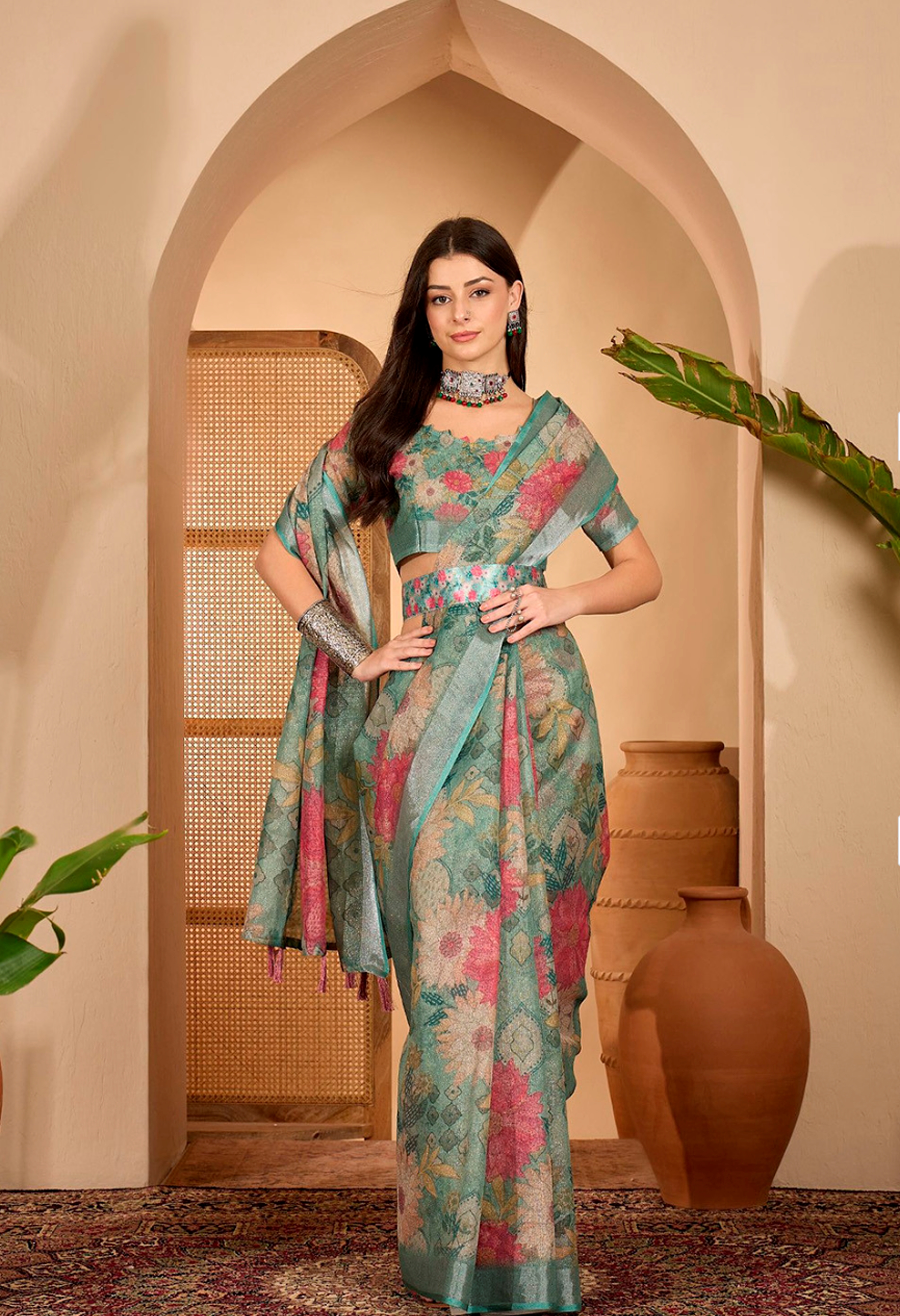
The Teal Floral Printed Linen Cotton Saree With Matching Blouse provides a coordinated starting point because the blouse is already paired with the saree. Teal works well with antique-gold earrings, a muted woollen shawl and tan or brown flat footwear. The matching blouse also reduces the risk of introducing an unrelated colour into a floral outfit.
The Peach Floral Linen Cotton Saree with Beautiful Blue Border shows how a cool border can give a soft peach base more definition. A blue blouse, blue bindi or blue glass bangles can repeat the border colour without adding a third dominant shade. The result is particularly suitable for a morning pooja or a family prayer at home.
The Pastel Floral Tissue Handloom Cotton Saree with Zari Weaves brings a gentle festive sheen while retaining a lighter cotton character. Zari is best balanced with minimal jewellery for a temple visit. A zari border, oversized necklace, stacked bangles and glittering footwear together can make an outfit feel more suited to a reception than to prayer.
When does Banarasi soft silk work better?
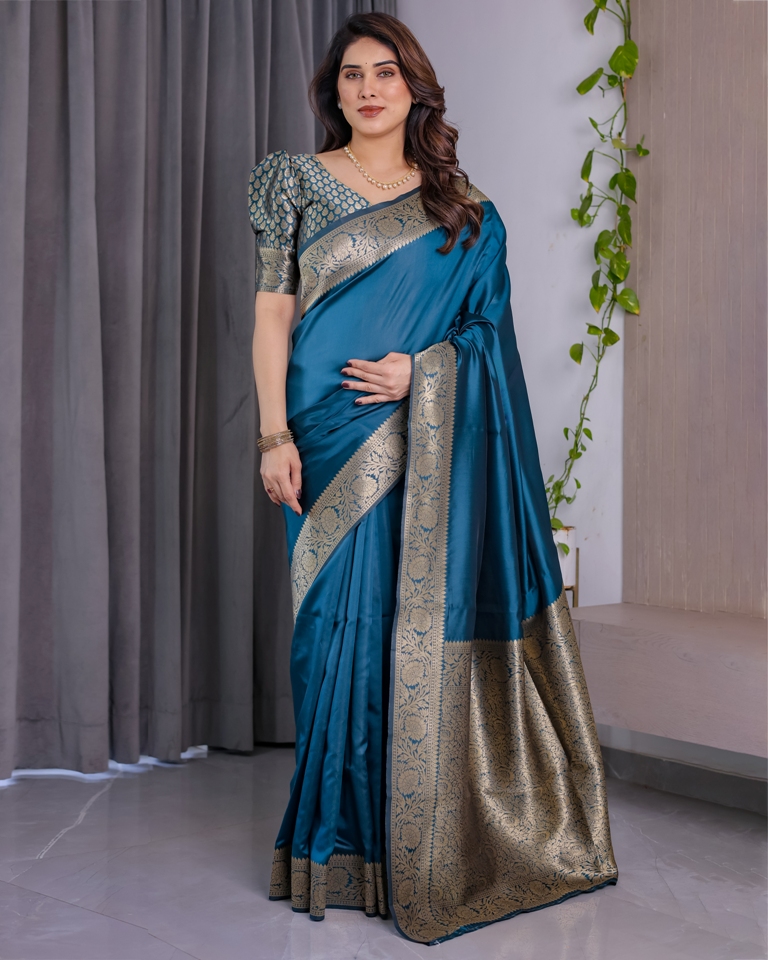
Banarasi soft silk works well for a formal temple ceremony, a winter visit or an evening aarti when a richer texture is appropriate. Soft silk is generally easier to manage than a very stiff, heavy weave, but the saree still needs secure pleats and a pinned pallu.
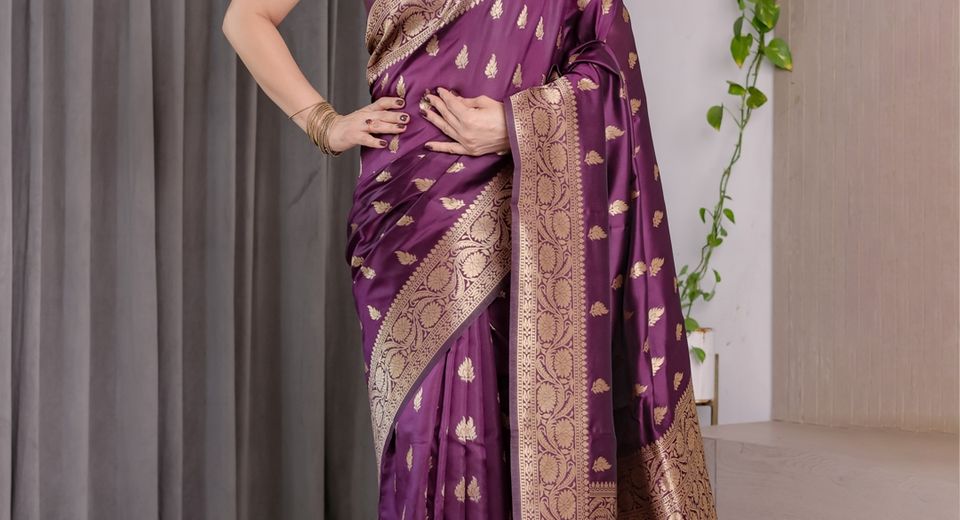
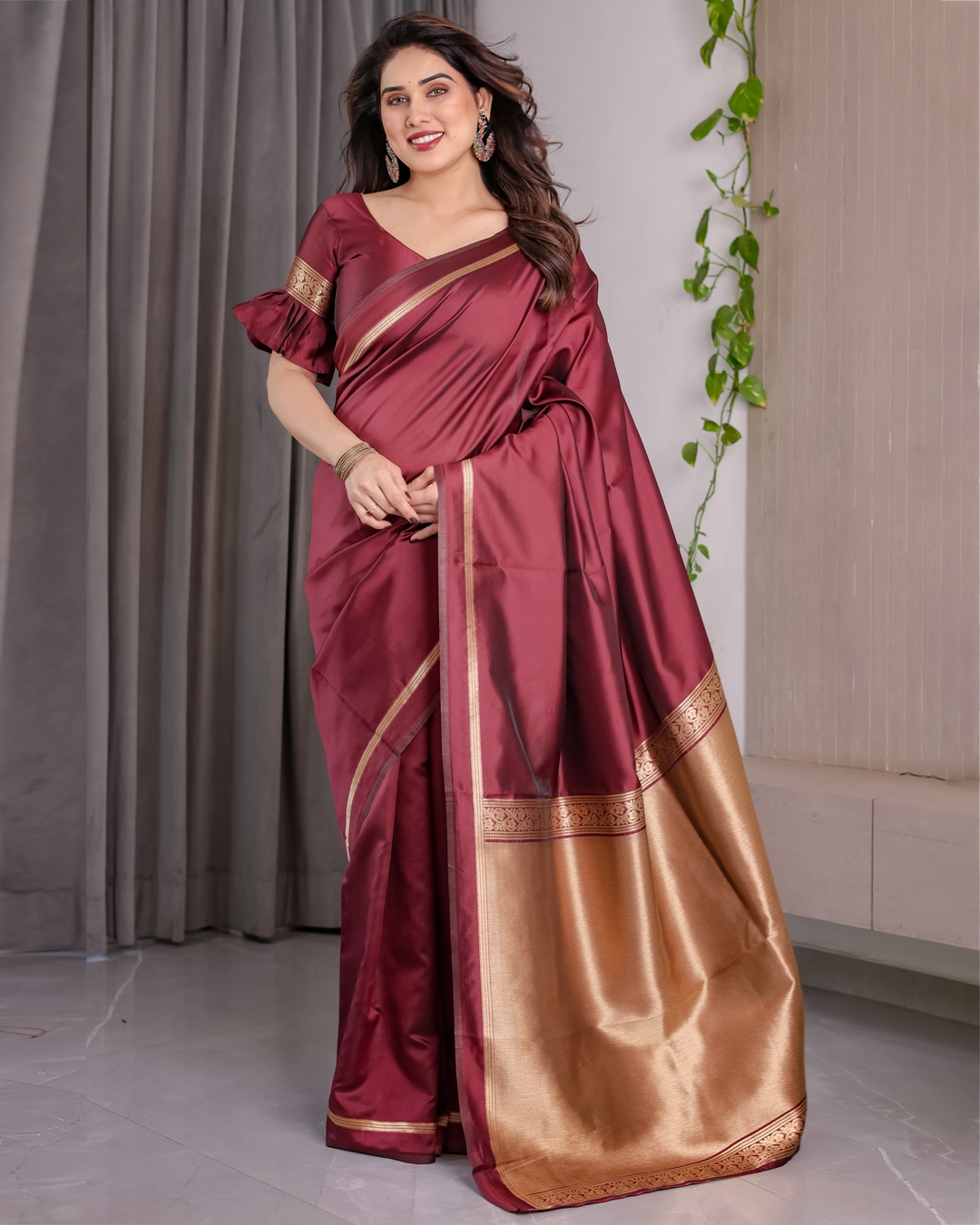
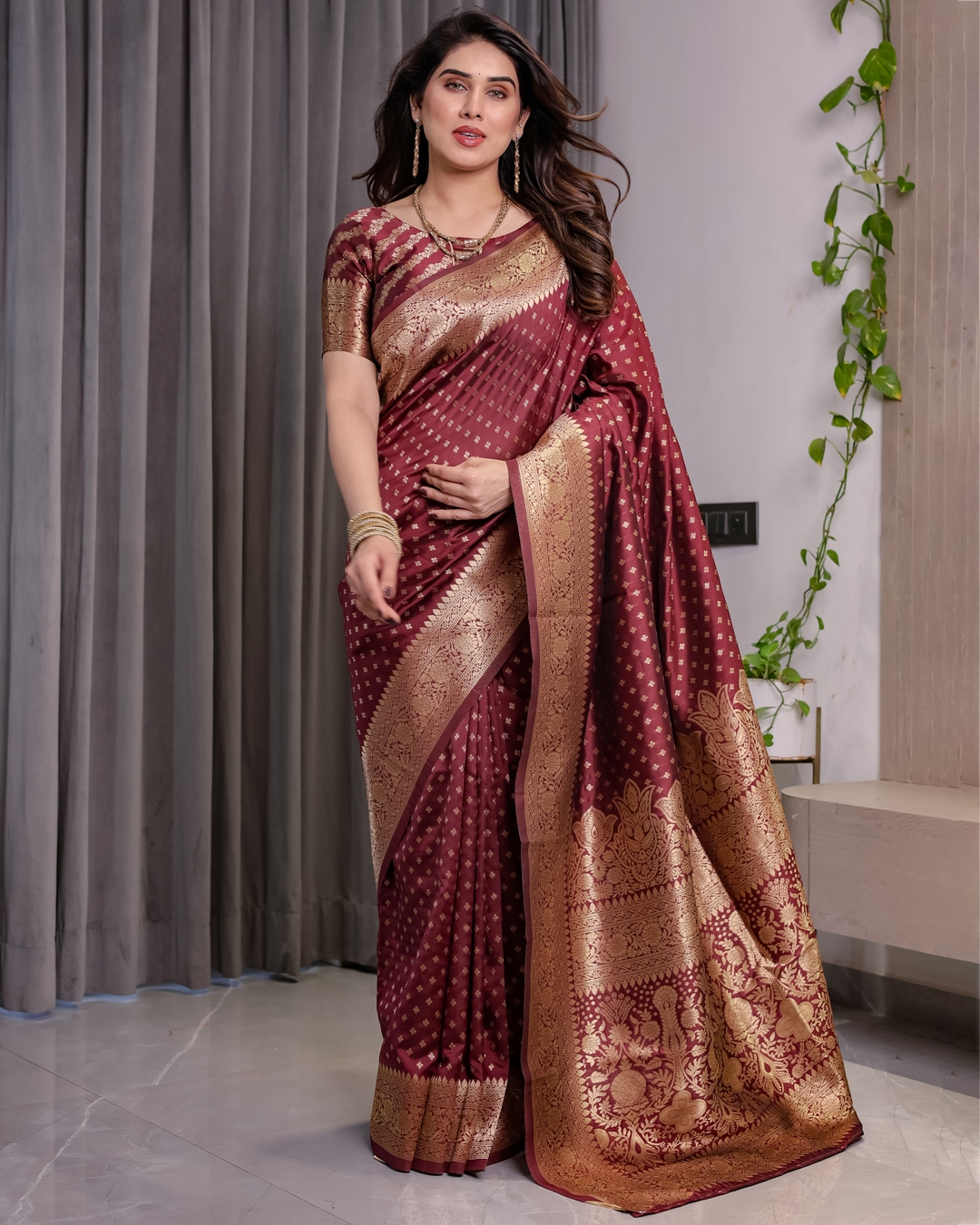
The Maroon Banarasi Soft Silk Saree with Golden Zari Border brings depth to an evening temple look and pairs naturally with a plain maroon, beige or antique-gold blouse. The Pink Banarasi Soft Silk Saree with Golden Zari Border creates a lighter festive impression for a family pooja, especially when styled with small earrings instead of elaborate bridal jewellery.
Himachali Saree Styling for Temple Visits: selecting colours respectfully
Temple-ready colours should complement the ceremony, season and family custom rather than follow a rigid universal rule. Maroon, pink, teal, peach, muted blue and warm neutrals create elegant outfits while allowing the saree border and Pahari-inspired accessories to remain visible.
Bright red can be appropriate for some festivals and devotional celebrations, but colour preferences vary by family and temple. White, black or very dark shades may also be restricted or avoided in particular religious settings. Checking local expectations is sensible before dressing for a special ceremony, especially when visiting a temple in another region.
Colour coordination is easiest when one shade is repeated twice. A blue border can be echoed in the blouse and bangles; a maroon saree can be paired with a maroon bindi and warm-metal earrings; a pastel saree can take a deeper shawl colour for contrast. Repeating one colour creates structure without requiring heavy embellishment.
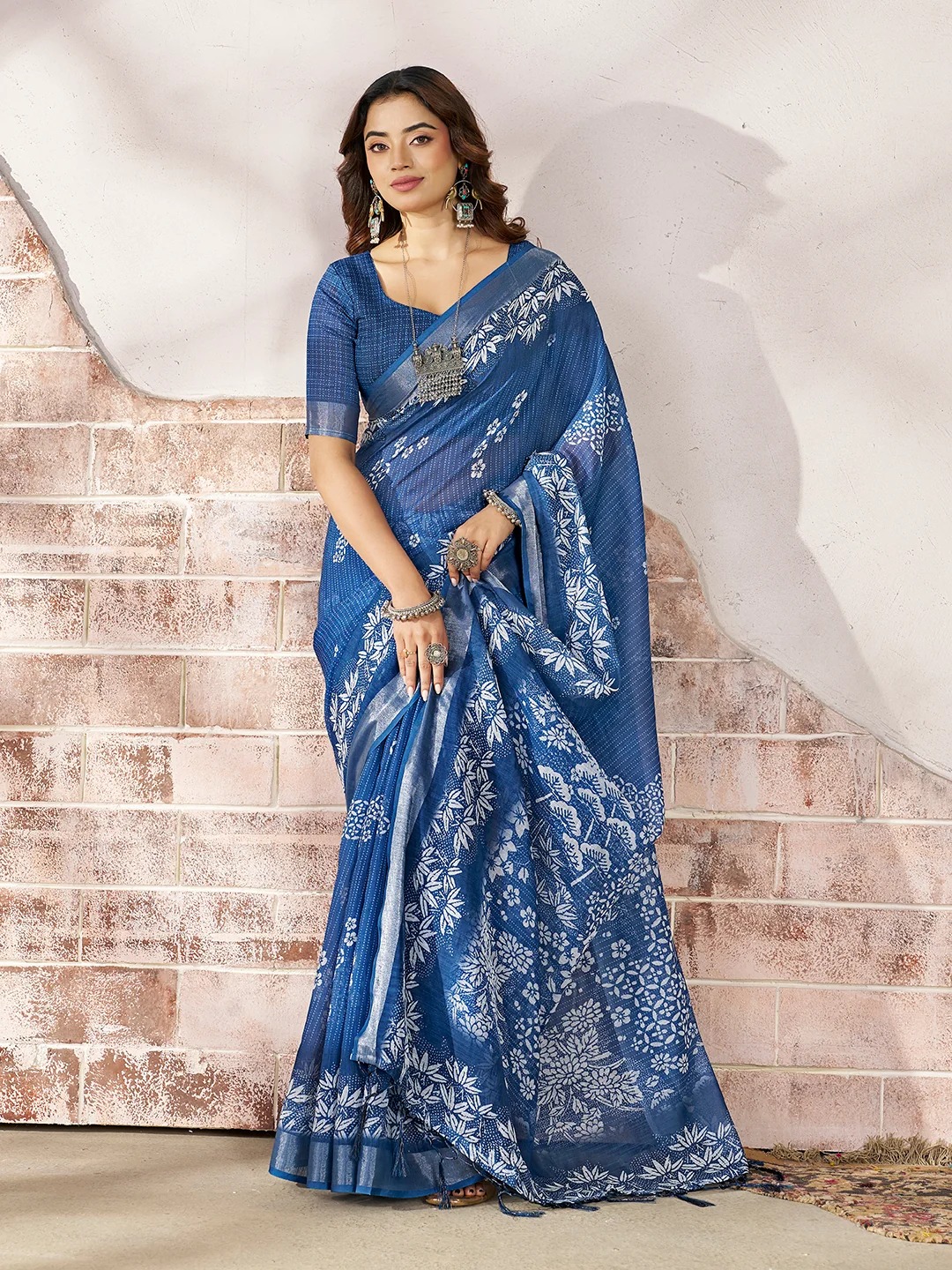
A Royal Blue Floral Linen Cotton Saree Online | Varnavi can support a stronger colour-led outfit when paired with a simple blouse and understated accessories. Silver-toned jewellery gives royal blue a cooler appearance, while antique-gold jewellery makes the same shade feel warmer and more classic. Choose one metal and repeat it consistently through the earrings, bangles and hair accessory.
Himachali Saree Styling for Temple Visits: securing the drape
A temple-ready saree should have firm waist pleats, a pallu secured at the shoulder and a hem that stays clear of the floor. The standard Nivi drape is usually the simplest option because the front pleats fall centrally and the pallu can be worn over the left shoulder with one or two discreet pins.

How can you make a saree comfortable for walking and sitting?
Make the front pleats narrow enough for easy movement, keep the hem slightly above the floor and test the complete outfit before leaving home. A ten-minute movement test can reveal slipping, pulling or excess length before those problems become difficult to fix at the temple.
- Set the footwear first. Wear the footwear intended for the journey before measuring the saree length. Removing sandals later changes your height slightly, so the hem should sit close to the floor without dragging.
- Tuck at the natural waist. Tuck the inner end firmly and keep the saree above the ankle line. A saree brushing the ground can collect dust and become difficult to manage on stairs.
- Make seven to nine even pleats. Pleats approximately 12 to 15 centimetres wide create a clean fall without forming an oversized bundle at the waist. Pinning the pleats from the inside helps them stay aligned.
- Secure the pallu. Keep the pallu long enough to cover the bust comfortably, then place one pin at the shoulder and another discreetly near the blouse side seam. Avoid sharp pins that can scratch the skin or snag delicate fabric.
- Test the movement. Walk ten steps, sit cross-legged or on a low seat and raise both arms gently. Any pulling at the waist, slipping at the shoulder or unwanted exposure while sitting needs correction before departure.
A slightly narrower pleat fan is useful in crowded temples because it reduces the chance of people stepping on the lower edge. A front-facing pallu can provide additional coverage if the temple expects conservative dressing, but the pallu should still be pinned so it can't fall into lamps, flowers or prasad.
Himachali Saree Styling for Temple Visits: choosing a modest blouse
A well-fitted blouse with a medium or high neckline and sleeves reaching the elbow creates the most adaptable temple silhouette. The blouse should provide enough room for arm movement while keeping the saree secure during prayer, travel and sitting.
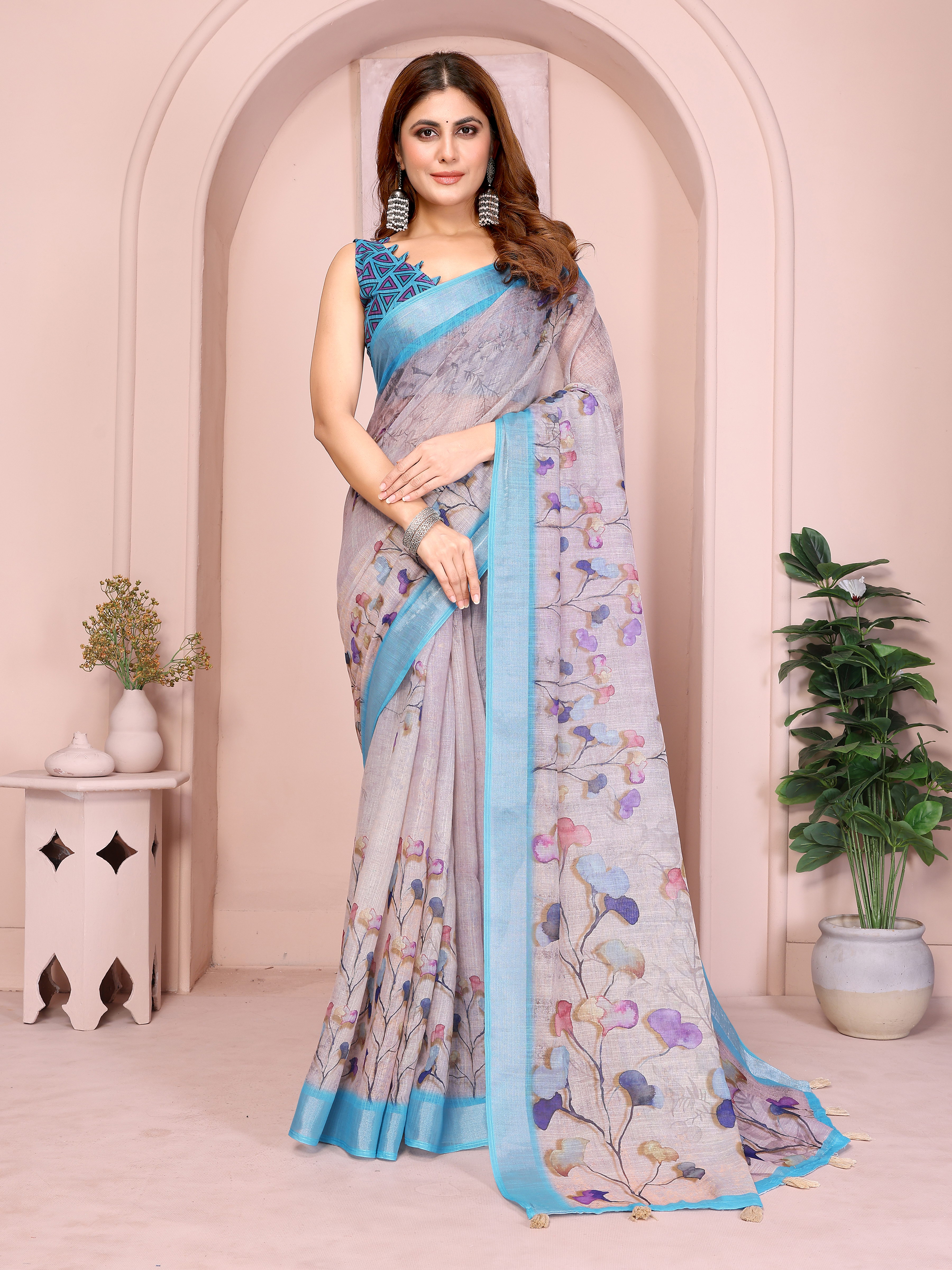
Match the blouse to one colour already present in the saree. A blue blouse with the Peach Floral Linen Cotton Saree with Beautiful Blue Border looks intentional, while a plain teal blouse can calm a floral saree. A solid blouse also prevents a printed saree from appearing visually crowded.
A round, boat or modest square neckline works well for a daytime pooja. Avoid very slippery satin linings if the saree has a fluid fall, because friction between the blouse and saree helps keep the pallu stable. Cotton, cotton-silk or a matte blended blouse can provide better grip for linen cotton and handloom cotton sarees.
For a more formal ceremony, a three-quarter sleeve blouse and a narrow zari border can look polished without becoming bridal. A plain shawl or stole can add warmth in Himachal Pradesh during early mornings and winter evenings. The layer should be easy to remove or fold during prayer if the temple has specific practices.
Himachali Saree Styling for Temple Visits: jewellery and Pahari-inspired details
An elegant Pahari-inspired saree look needs restrained jewellery, one practical layer and a neat hairstyle rather than many unrelated regional motifs. Small jhumkas, a pair of glass bangles and a simple chain are sufficient for most daytime temple visits.
A tiny bindi, low bun or braid keeps the face and neckline clear during prayer. If flowers are appropriate for the setting, use a small gajra or a few fresh blooms instead of a heavy arrangement that may become uncomfortable during travel. A plain metal hairpin can echo the zari border without competing with it.
Heritage Himachali accessories vary by community and occasion, so avoid presenting any single cap, necklace or ornament as universally Pahari. A woollen shawl, warm colour accent or hand-finished textile detail can suggest the landscape and climate without copying ceremonial attire inaccurately.
The Pink Georgette Sarees collection may suit a festive gathering after temple prayers, but georgette requires careful pinning because its fluid fall can shift while sitting or walking. For a short, crowded visit, cotton or soft silk generally demands fewer adjustments than a very slippery drape.
Himachali Saree Styling for Temple Visits: footwear and travel planning
Low-wedge sandals or flat slip-on footwear are safer for temple visits than narrow heels because they make stairs, queues and barefoot transitions easier. Choose footwear that can be removed quickly and has no complicated straps. Test new footwear for at least 30 minutes before the ceremony to prevent blisters.
A small crossbody bag or fabric potli keeps both hands free for prasad, flowers and railings. Carry safety pins, two hairpins, tissues and a small stain-removal wipe in a discreet pouch. Temple floors may be dusty or damp, so hold the saree pallu over one forearm while walking outside to protect the edge.
Weather should influence the fabric choice. Cotton and linen cotton are comfortable in warm or humid conditions, while soft silk with a shawl is more suitable for cold hill mornings. In rain, protect silk from prolonged moisture and avoid a long loose edge that can become muddy near the temple entrance.
For a limited budget, the Silk Sarees Under 3000 With Discount collection can be an useful starting point, but inspect the fabric description, border weight and blouse details before choosing. A lower price doesn't remove the need to check whether the saree is practical for the intended temple journey.
Himachali Saree Styling for Temple Visits: planning outfits for different pooja settings
A small saree wardrobe can cover pooja at home, a formal temple ceremony and a larger festival without repeating exactly the same styling formula. A floral linen-cotton saree with a simple blouse is usually enough for home prayer because the setting is intimate and comfort can take priority.
A zari-bordered cotton or soft silk saree adds ceremony for a temple anniversary, family prayer or evening aarti. For a larger celebration such as Kolkata Durga Puja, choose a fabric that remains comfortable through walking and queues, then add one festive element such as a bindi, a zari border or statement earrings.
Party Wear Sarees can work for a celebration after temple prayers when the dress code permits more shine, but sequins and very delicate embellishments require extra care around rough walls, incense and crowded entrances. A simpler saree often photographs more elegantly in natural temple light.
The Red Banarasi Silk Sarees for Weddings Under 1100 collection may offer festive colour inspiration, but wedding styling should not automatically be transferred to a temple visit. Use a red Banarasi-inspired palette with modest jewellery, a secure pallu and comfortable footwear rather than reproducing a bridal look.
Gray Color Sarees Under 1000 can also provide a versatile neutral base for a temple wardrobe. Gray works with maroon, teal, pink or antique-gold accents, making one saree adaptable across home pooja, travel and a family gathering.
Checking a saree in a full-length mirror is worthwhile before leaving. Confirm that the blouse remains covered when you raise your arms, that the pallu stays in place after sitting and that the hem doesn't touch the ground. These three checks usually matter more than adding another accessory.
Himachali Saree Styling for Temple Visits: a final preparation checklist
A successful temple outfit is ready when the saree, blouse, footwear and accessories have all been tested together. Pack safety pins, carry a light shawl when the weather may change and confirm whether the temple has rules about footwear, head covering, colours or photography.
- Choose linen cotton, handloom cotton or soft silk according to temperature and ceremony length.
- Keep the hem above the floor and use seven to nine even front pleats.
- Pin the shoulder and side of the pallu discreetly for stable coverage.
- Repeat one saree colour in the blouse, bangles, bindi or shawl.
- Wear tested flat footwear that can be removed quickly.
- Use small jewellery and a low bun, braid or secure hairstyle.
- Carry spare pins, hairpins and a stain-removal wipe.
- Check local temple customs before selecting the final colour or accessories.
The most elegant Pahari-inspired temple look is one that allows attention to remain on prayer rather than clothing adjustments. A breathable saree, secure drape, modest blouse and thoughtfully chosen warm layer create a practical outfit that respects both the setting and the wearer.
Common Questions About Himachali Saree Styling for Temple Visits
Which type of saree is best for a puja or temple visit?
Linen cotton, handloom cotton and soft silk are reliable choices for a puja. Cotton and linen cotton suit warm weather and long periods of standing, while Banarasi soft silk works well for formal or cooler-weather ceremonies.
How can I keep my saree secure inside a temple?
Make seven to nine firm front pleats, pin the pleats from the inside and secure the pallu at the shoulder and near the blouse side seam. Test walking, sitting and raising your arms before leaving home.
What colours are suitable for a Pahari-inspired temple saree look?
Maroon, pink, teal, peach, muted blue, gray and warm neutrals can create an elegant temple outfit. Colour rules vary by family and temple, so check local expectations before wearing white, black, very dark shades or bright red.
Can I wear a Banarasi silk saree for a temple visit?
You can wear a Banarasi soft silk saree for a formal temple ceremony, evening aarti or a cool-weather visit. Choose restrained jewellery, secure the pallu and wear comfortable footwear so the richer fabric remains practical.
What should I wear for pooja at home?
A floral linen-cotton or handloom cotton saree with a comfortable blouse is suitable for pooja at home. A small bindi, simple earrings and a low bun or braid provide a polished appearance without unnecessary embellishment.
Where can I shop for a saree for a temple visit?
Online saree shopping is easiest when the product description clearly states the fabric, border, blouse details and approximate weight. Compare those details with the weather, walking distance and formality of the temple visit before making a purchase.





