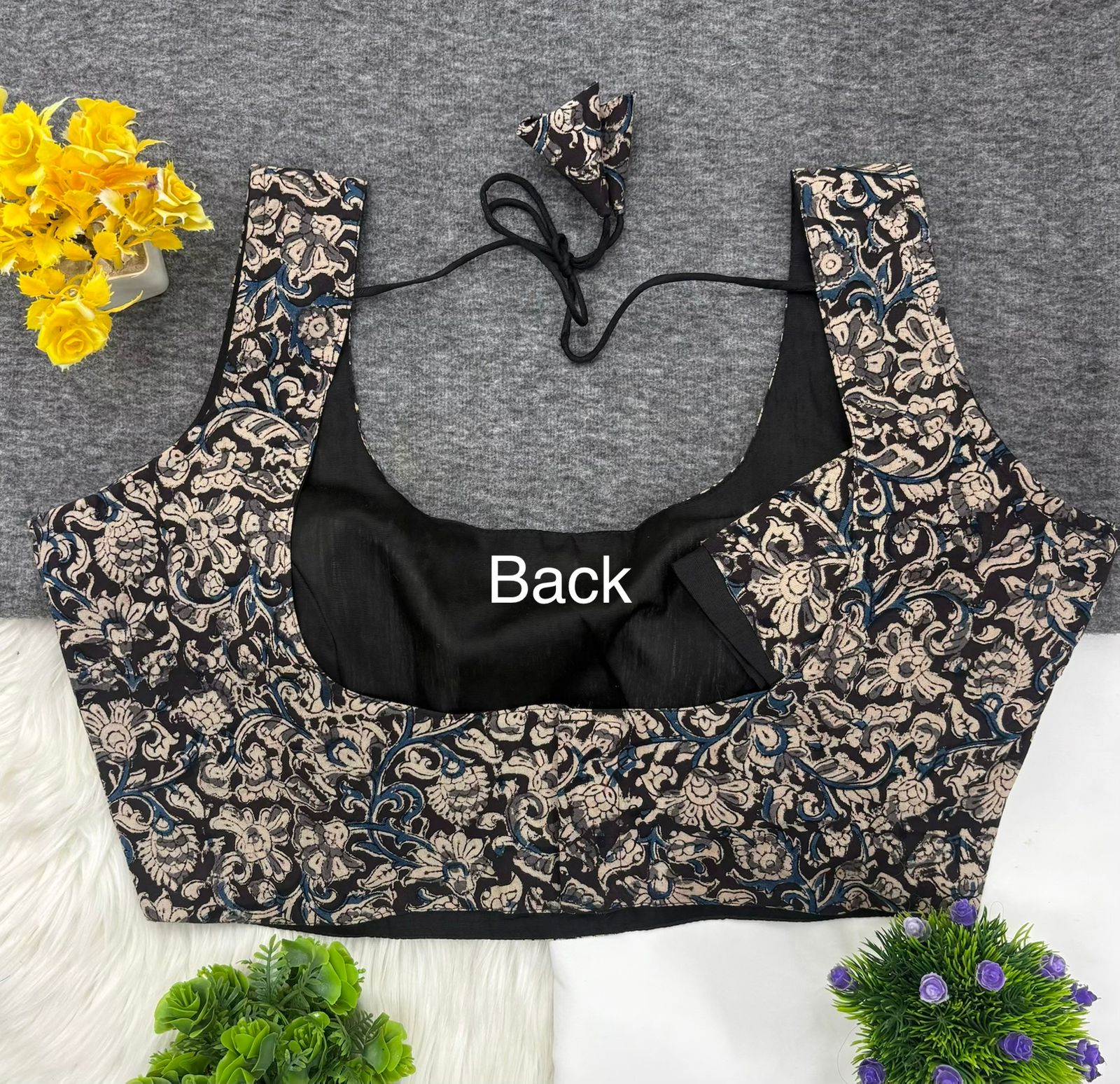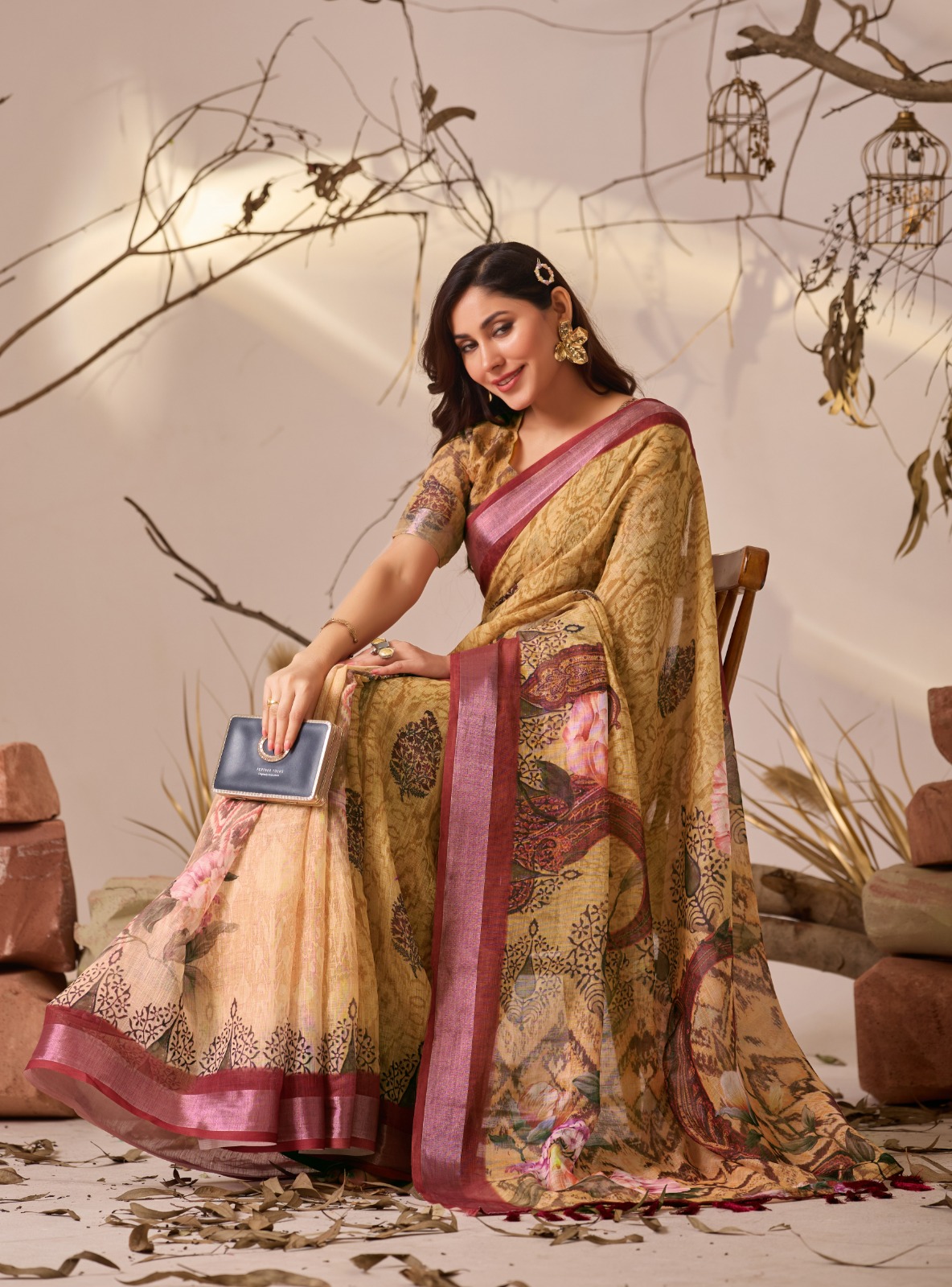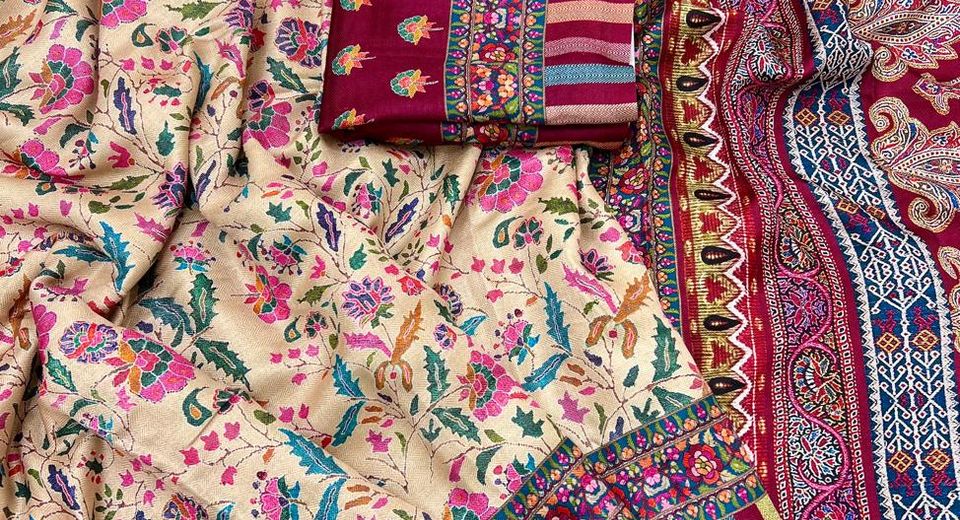
Himachali Festive Blouse Designs for Traditional Pahari Sarees need to balance mountain warmth, regional character and the drape of the saree. A well-chosen blouse can make a soft Pashmina saree look ceremonial without overwhelming its texture, while a linen-cotton saree can take brighter embroidery and sharper tailoring. The most successful looks begin with fabric weight, sleeve length and colour contrast rather than decoration alone.
Himachal Pradesh has several textile and dress traditions, so a Pahari-inspired saree blouse should not be treated as one fixed uniform. Chamba embroidery, woollen textures, restrained geometric borders and nature-inspired motifs can provide references, but the final garment should remain comfortable and respectful. The practical aim is simple: create a blouse that supports the saree, suits the season and carries a recognisable festive mood.
Himachali Festive Blouse Designs for Traditional Pahari Sarees: What Makes Them Distinctive?
Himachali festive blouse styling is distinctive because it combines warm fabrics, covered silhouettes, nature-led motifs and strong but grounded colour pairings. The style often feels festive through texture and proportion rather than heavy surface sparkle.
Traditional Pahari clothing varies across valleys and communities, so no single neckline or embroidery pattern defines every Himachali blouse. Several design decisions consistently create a convincing mountain-inspired appearance:
- Warmth-conscious construction: Three-quarter or full sleeves work particularly well with Pashmina, wool-blend and winter sarees.
- Textured surfaces: Velvet, raw silk, silk blends, brocade and tightly woven cotton add depth beside a brushed or softly finished saree.
- Nature-based detail: Pine-like foliage, flowers, vines, paisleys and small geometric borders can suggest Himalayan craft without turning the blouse into a costume.
- Controlled ornamentation: A narrow zari edge, antique-gold buttons or tonal threadwork usually complements Pashmina better than dense all-over sequins.
- Practical coverage: Higher backs, modest necklines and lined sleeves are useful for winter weddings, temple visits and outdoor celebrations.
Chamba Rumal is an useful visual reference for embroidery placement because its compositions often use floral and figurative storytelling within a defined frame. A blouse doesn't need to reproduce a Chamba Rumal literally. A small embroidered panel at the sleeve cuff, back neckline or front yoke can acknowledge the influence more sensitively.
Himachali Festive Blouse Designs for Traditional Pahari Sarees: Which Fabrics Work Best?
Silk blends, velvet, brocade, lined cotton and medium-weight raw silk are practical blouse fabrics for a Pahari saree because they provide structure without competing with the saree's fall.
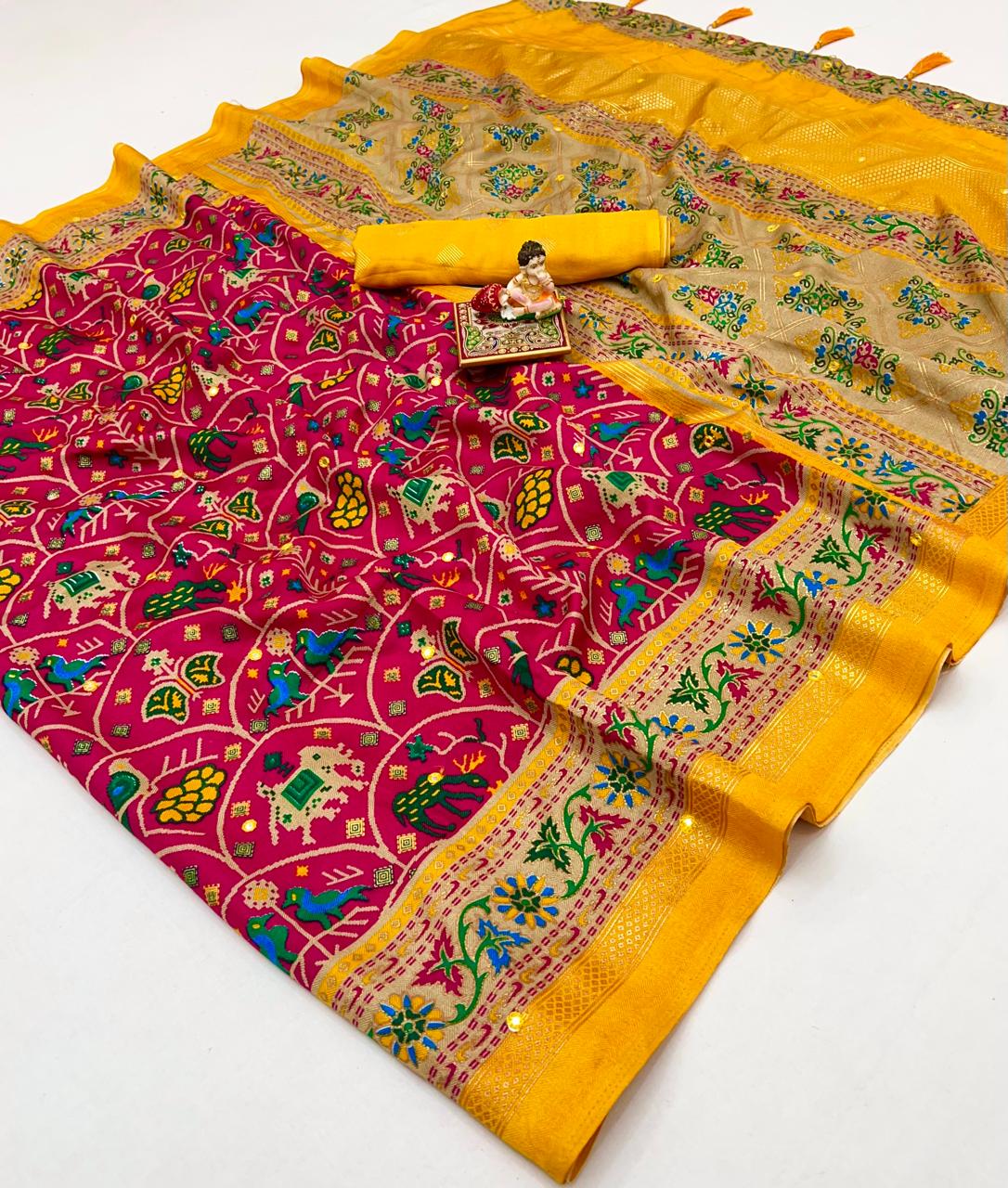
Fabric selection should follow the saree's surface and the weather. A soft Pashmina saree has a gentle nap and a fluid drape, so a blouse with slight body helps define the shoulders. Velvet gives a rich winter result, but velvet sleeves can feel warm indoors. Using velvet only for the bodice with silk-blend sleeves is a more comfortable compromise.
Banarasi silk and zari brocade can work for a festive blouse when the saree is plain or lightly patterned. One dominant metallic detail is usually more elegant than a mixture of bright gold, silver and copper. A plain blouse in deep burgundy, forest green or midnight blue can also bring out the border of a patterned saree without creating visual noise.
The Kashmiri Style Pashmina Saree With Shawl Set demonstrates why fabric balance matters. A blouse made from matte raw silk or velvet can echo the shawl's winter richness, while glossy synthetic satin may look disconnected from the softer Pashmina surface.
For warmer months, linen-cotton and fine cotton are more breathable choices. The Pastel Linen Cotton Floral Print Saree with Designer Blouse shows how a lighter saree can support a neatly tailored blouse with floral or vine detailing rather than a heavily padded, embellished construction.
Check the blouse lining before buying or commissioning a garment. Cotton lining improves breathability, while slippery polyester lining can help the blouse move over a saree but may feel uncomfortable in warm weather. A 1.5 to 2 centimetre seam allowance is useful when a blouse may need minor alterations after fitting.
Himachali Festive Blouse Designs for Traditional Pahari Sarees: Which Colours Suit Them?
Deep berry, pine green, saffron, rust, navy, ivory and muted rose are dependable blouse colours for traditional Pahari sarees because they reflect mountain landscapes while creating enough contrast for festive dressing.
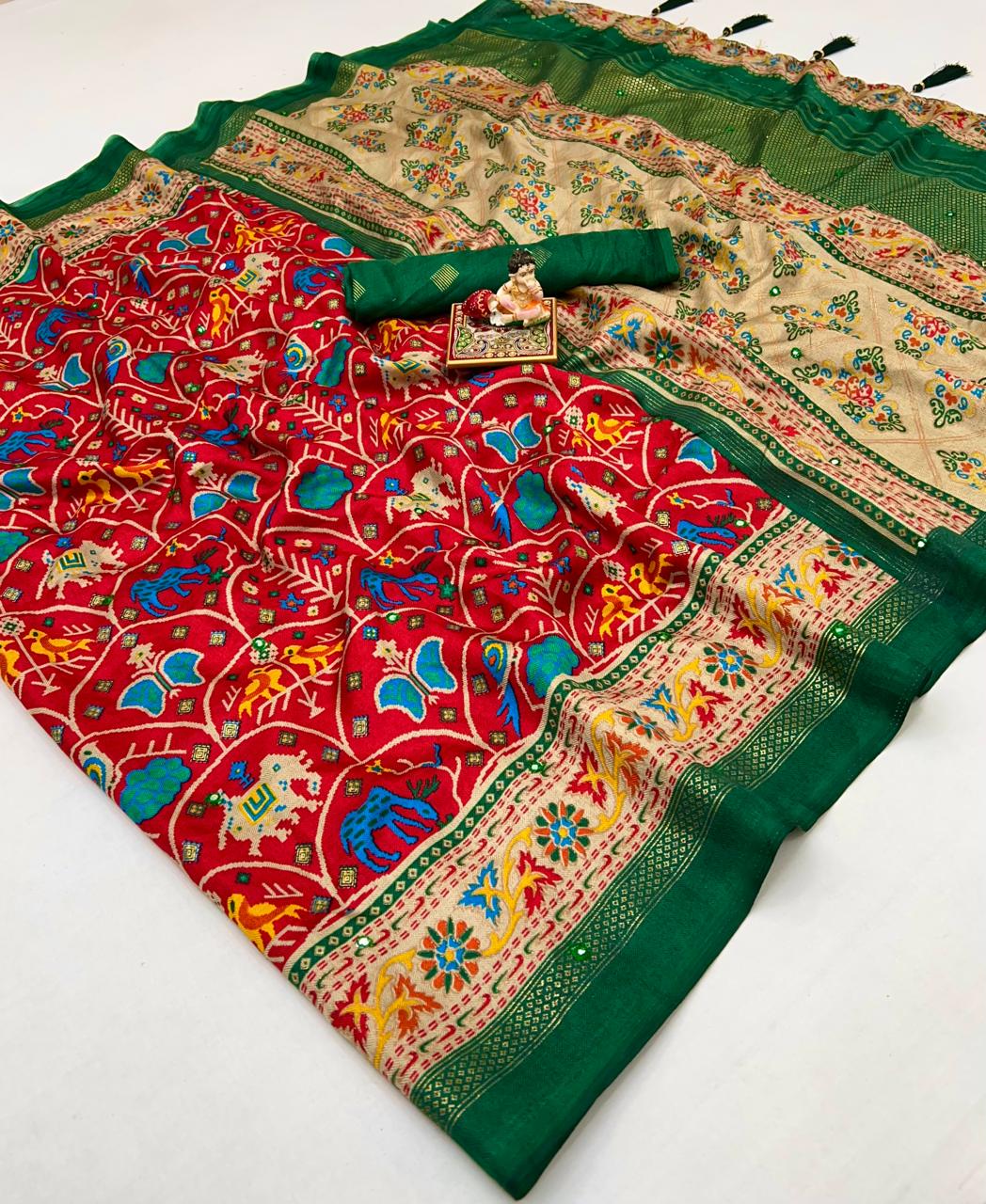
Colour matching becomes easier when the blouse follows one of three methods:
- Border matching: Choose a blouse colour that repeats a narrow saree border. A rust border can be picked up in the blouse sleeves, piping or embroidery.
- Motif matching: Select one colour from a floral or paisley print. A blue flower in a cream saree can become a solid blue blouse.
- Landscape contrast: Pair an earthy saree with a jewel-toned blouse. Cream, beige and grey work well with forest green, maroon, indigo or saffron.
Yellow deserves special attention for festive Pahari styling. A turmeric or marigold blouse works naturally for a Haldi ceremony, while a softer mustard shade feels more versatile for a wedding lunch. The Traditional Yellow Pashmina Saree With Shawl can be styled with an ivory blouse for quiet elegance or a deep green blouse for stronger contrast.
Pastel sarees don't require pastel blouses. A peach saree with a muted wine or terracotta blouse can look more ceremonial than a head-to-toe pale combination. The Peach Linen Cotton Floral Print Saree with Blouse for Women offers an useful starting point for pairing warm floral tones with a more grounded blouse shade.
The Festive Cream Pashmina Saree with Designer Border gives three reliable colour directions: repeat the border in the blouse, choose a contrasting jewel tone or use a tonal cream blouse with visible embroidery. A cream-on-cream outfit needs variation in texture, such as raw silk against Pashmina, to avoid appearing flat in photographs.
Himachali Festive Blouse Designs for Traditional Pahari Sarees: Which Necklines and Sleeves Work?
High round necks, modest square necks, shallow V-necks and three-quarter sleeves create the most adaptable Himachali festive look for a saree.
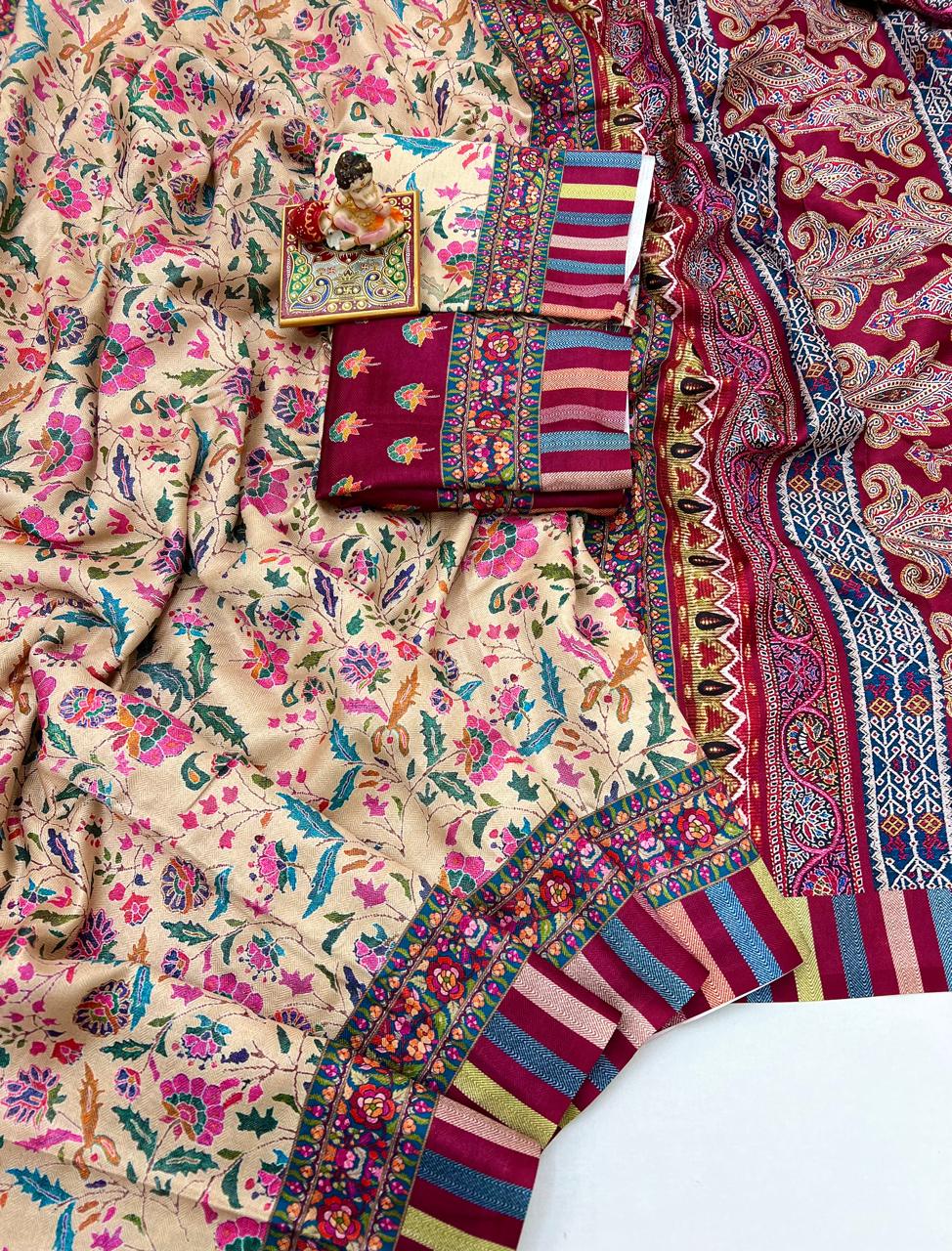
A high round neck gives a polished winter appearance and leaves room for a long necklace or traditional pendant. A shallow square neckline adds structure without exposing too much skin, making it suitable for family ceremonies and temple settings. A small V-neck can lengthen the upper body, but the V should remain moderate if the blouse includes a shawl or layered jewellery.
Sleeves change the character of the entire outfit:
- Elbow-length sleeves: The safest choice for Pashmina sarees, winter receptions and formal family gatherings.
- Three-quarter sleeves: A graceful option for embroidered cuffs, button details and cooler outdoor venues.
- Full sleeves: Best in lined silk, velvet or brocade when temperatures are low. Add a side opening or breathable lining for comfort.
- Short sleeves: Better suited to linen-cotton sarees, daytime functions and warmer climates.
- Sheer sleeves: Use sparingly. A sheer sleeve with an opaque bodice can lighten a heavy saree, but fully sheer construction may weaken the covered, winter-ready character.
A narrow cuff with two or three fabric-covered buttons is a small detail that makes a blouse appear more tailored. Embroidered cuffs also provide a controlled place for Chamba-inspired florals or geometric threadwork. Avoid placing bulky embellishment exactly where the saree pleats sit, because friction can catch the drape and make the pleats fall unevenly.
Himachali Festive Blouse Designs for Traditional Pahari Sarees: How Should Craft Details Be Used?
Embroidery can reference Pahari craft respectfully when the design uses a clear source of inspiration, avoids false claims of authenticity and keeps the motif proportionate to the blouse.
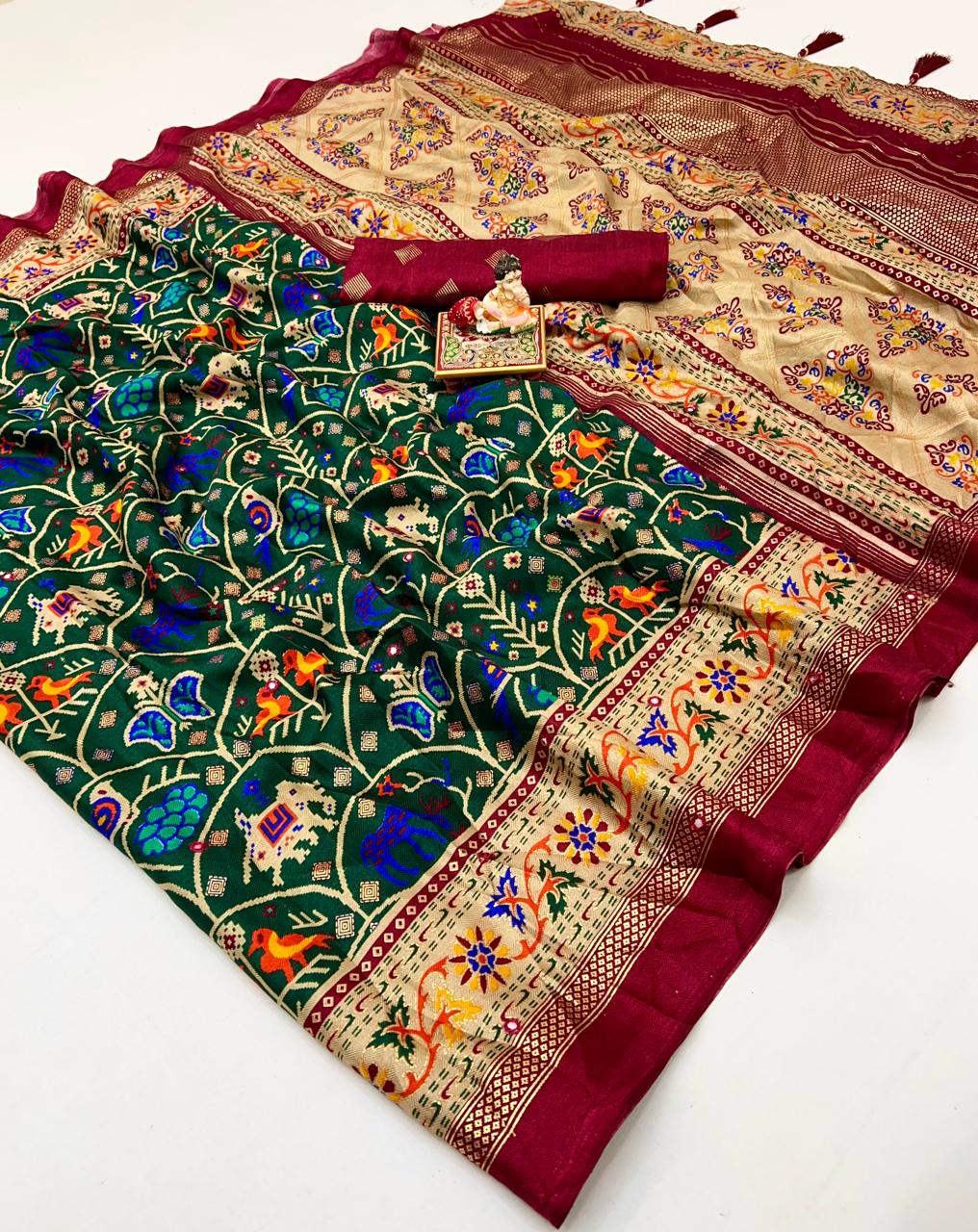
A blouse inspired by Himalayan flora can use stylised leaves, small flowers, berries or winding vines along the neckline and sleeve edges. A geometric border can be placed at the cuff, hem or back yoke. These placements preserve the blouse's shape and prevent the surface from becoming visually crowded.
Chamba-inspired embroidery is especially effective as a framed detail. A small floral medallion on the back, a pair of mirrored motifs near the front neckline or a horizontal panel above the hem can create a focal point. If a design is machine embroidered or merely inspired by a regional style, describe it accurately rather than presenting it as handworked traditional craft.
Zari should be chosen according to the saree's undertone. Antique zari suits ivory, mustard, rust and brown; brighter yellow zari works with saturated reds and greens; silver zari can refresh blue, lilac and cool grey. Mixing zari with dense sequins can make a Pashmina ensemble appear heavier than intended, so a restrained metallic outline often gives a more refined result.
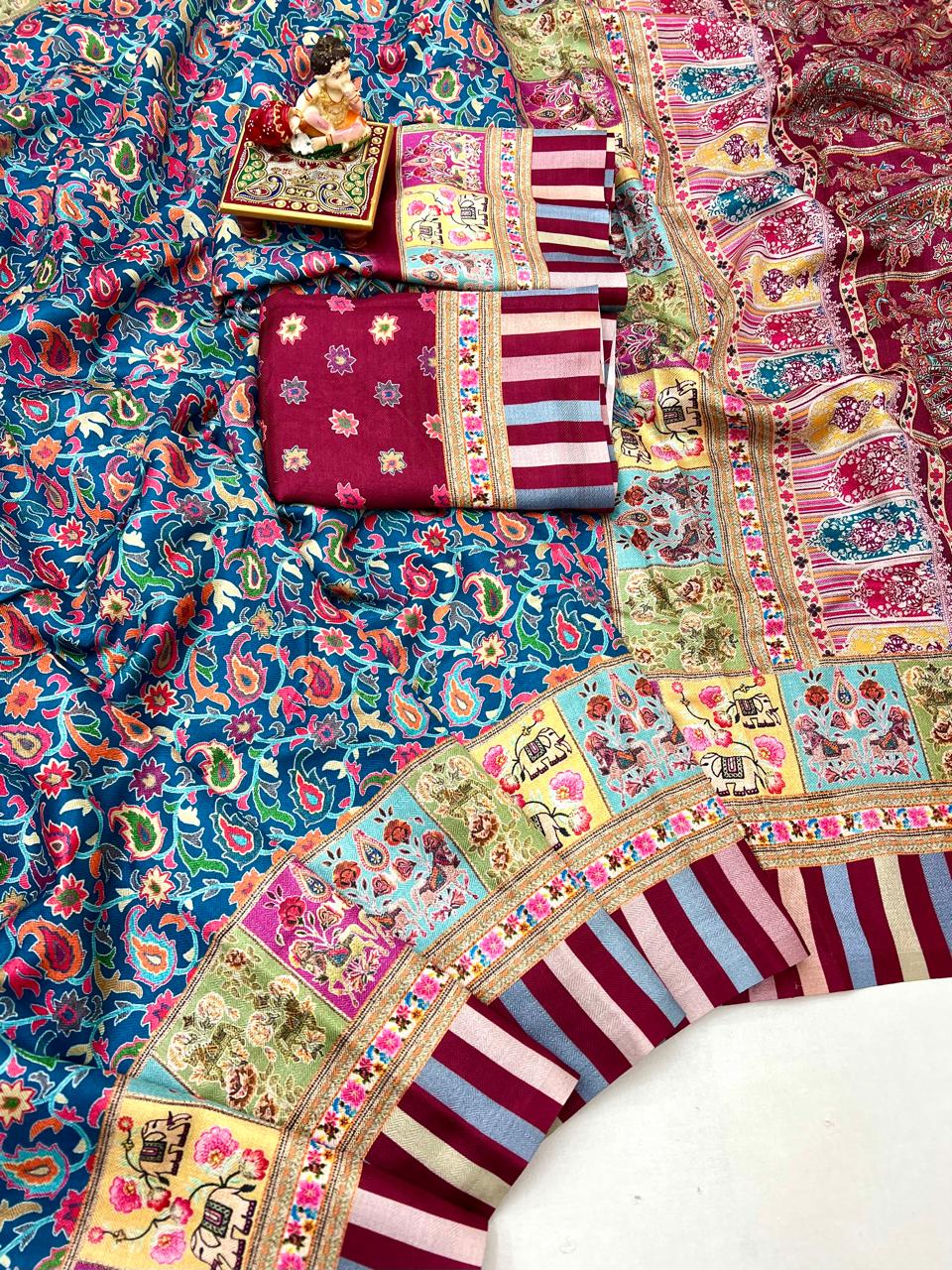
The Luxury Pashmina Saree with Paisley Design & Shaw already carries a strong motif. A blouse with a plain body and a paisley border at the cuffs will support the saree better than a second large paisley panel. The Festive Blue Pashmina Saree With Shawl & Blouse can take antique-gold threadwork, ivory piping or a darker blue velvet blouse without losing its cool colour character.
Avoid combining large paisleys, dense floral embroidery, mirror work and multiple metallic trims in one blouse. One main motif, one supporting border and one metallic accent are usually enough for a saree with a shawl or an elaborate border.
Himachali Festive Blouse Designs for Traditional Pahari Sarees: How Can They Suit Each Occasion?
The blouse should become more structured and warmer for evening weddings, more breathable for daytime ceremonies and more restrained for religious or family gatherings.
For a Haldi ceremony
A cotton, linen-cotton or light silk blouse in mustard, ivory, leaf green or warm pink is practical for a Haldi ceremony. Elbow-length sleeves and washable lining are preferable because turmeric paste can stain cuffs and underarms. Keep embroidery concentrated at the neckline or sleeve edge rather than using fragile embellishment across the front.
For a winter wedding
Velvet, raw silk, brocade and lined silk-blend blouses suit a winter wedding because they provide warmth and a defined shoulder line. Pair a Pashmina saree with a full-sleeved blouse, a neatly draped shawl and closed footwear if the celebration includes outdoor photographs. The Cream Floral Pashmina Saree With Shawl & Blouse Set can be kept graceful with a low-contrast blouse and antique-gold jewellery.
For a daytime puja or family gathering
A matte blouse with a high round neck, elbow-length sleeves and minimal zari is appropriate for a daytime puja or family gathering. Cotton-silk, linen-cotton and lightly textured raw silk prevent the outfit from looking too formal under bright daylight. Keep the back neckline modest and choose jewellery that doesn't catch on the shawl.
For an evening reception
An evening reception allows a deeper blouse colour, stronger sleeve shape and more visible metallic detailing. A navy, wine or forest-green velvet blouse can frame a cream or pastel saree, while a fitted three-quarter sleeve adds polish without requiring a very low neckline. A narrow embroidered back panel creates interest when the saree is draped in a simple style.
Himachali Festive Blouse Designs for Traditional Pahari Sarees: How Should You Buy and Care for Them?
Buy a Himachali-inspired blouse by checking fabric compatibility, measurements, lining, sleeve comfort and alteration allowance before judging embellishment.
Measure the fullest bust, underbust, shoulder width, armhole and desired blouse length while wearing the type of innerwear planned for the saree. A blouse intended for a shawl or winter layer should not have an extremely tight armhole. Allow approximately 2 to 3 centimetres of ease around the bust for structured fabrics, while softer fabrics may need a slightly closer fit.
Price comparisons are more useful when separated by fabric and construction rather than discount percentage alone. A shopper working to a fixed budget can compare the Sarees from Rs 1000 to Rs 1500 collection with Sarees Under 20% Off, while larger sale sections such as Sarees Flat 60% Off may offer more variety but require closer checking of fabric, lining and included blouse pieces.
Sarees Under 10% Off and Sarees Flat 50% Off can also be useful comparison points when the priority is a particular colour or Pashmina finish rather than the deepest discount. Check whether the blouse is included, whether the shawl is part of the set and whether the listed measurements describe a ready-made blouse or only an unstitched piece.
Store Pashmina, wool and embellished blouses in breathable cotton covers rather than sealed plastic. Fold heavy embroidery inward with soft tissue between layers, keep zari away from moisture and air the garment before returning it to storage. Dry-clean Pashmina and velvet when the care label requires it; don't wring, bleach or expose either fabric to direct high heat.
Test the final outfit at least one week before the event. Sit, raise both arms, pin the saree, wrap the shawl and walk for five minutes. These simple checks reveal whether the sleeve pulls, the blouse rides up or the saree pleats catch against embroidery before the celebration begins.
Common Questions About Himachali Blouse Styling for Pahari Sarees
What blouse colour looks best with a Pahari saree?
Pine green, rust, maroon, saffron, navy, ivory and muted rose are dependable choices for a Pahari saree. Match the blouse to the saree border, repeat a colour from a floral motif or create contrast with an earthy saree.
Which blouse fabric is suitable for a Pashmina saree?
Raw silk, velvet, silk blends, brocade and lined cotton suit a Pashmina saree because they offer structure and seasonal warmth. Choose breathable cotton lining if the blouse will be worn indoors for several hours.
Are full-sleeved blouses suitable for Himachali festive saree looks?
Full-sleeved blouses are suitable for winter weddings, evening receptions and outdoor celebrations. Use lined silk, velvet or brocade, and check armhole comfort so the blouse remains practical under a shawl.
How can I add Himachali embroidery without making the saree look heavy?
Place embroidery on one controlled area, such as the cuffs, neckline, back yoke or a small front medallion. Floral vines, Chamba-inspired framed motifs and narrow geometric borders create regional character without competing with a Pashmina border or shawl.
Can a Pahari-inspired blouse be worn with a linen-cotton saree?
A Pahari-inspired blouse works well with a linen-cotton saree when the construction remains breathable and the ornamentation stays light. Use elbow-length sleeves, cotton-silk or fine cotton, and floral or vine embroidery for a daytime festive look.
How should a Pashmina saree blouse be stored after a celebration?
Store the blouse in a breathable cotton cover, fold embellished sections with soft tissue and keep the garment away from moisture. Follow the care label for dry-cleaning, and avoid wringing, bleaching or high direct heat.