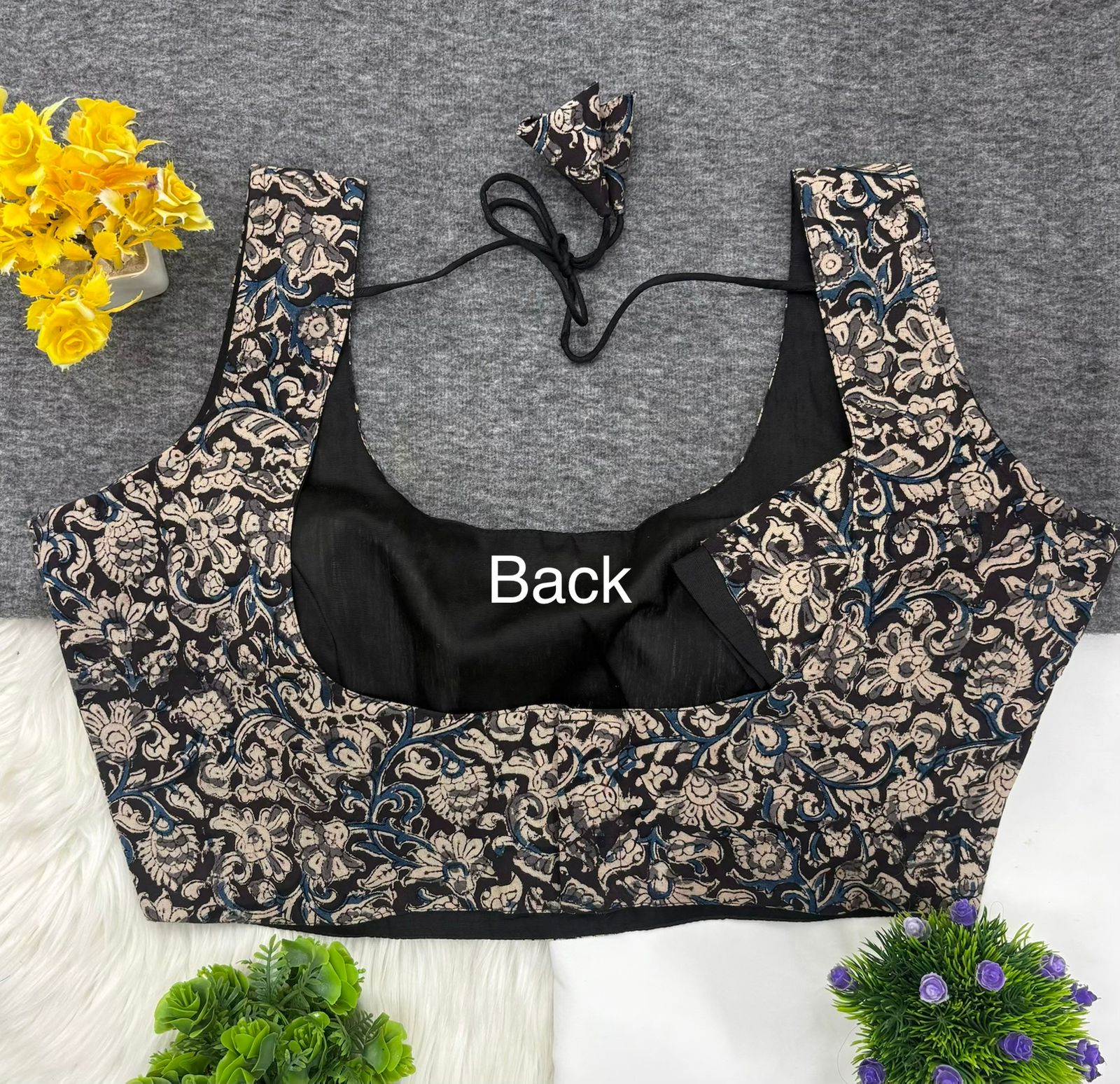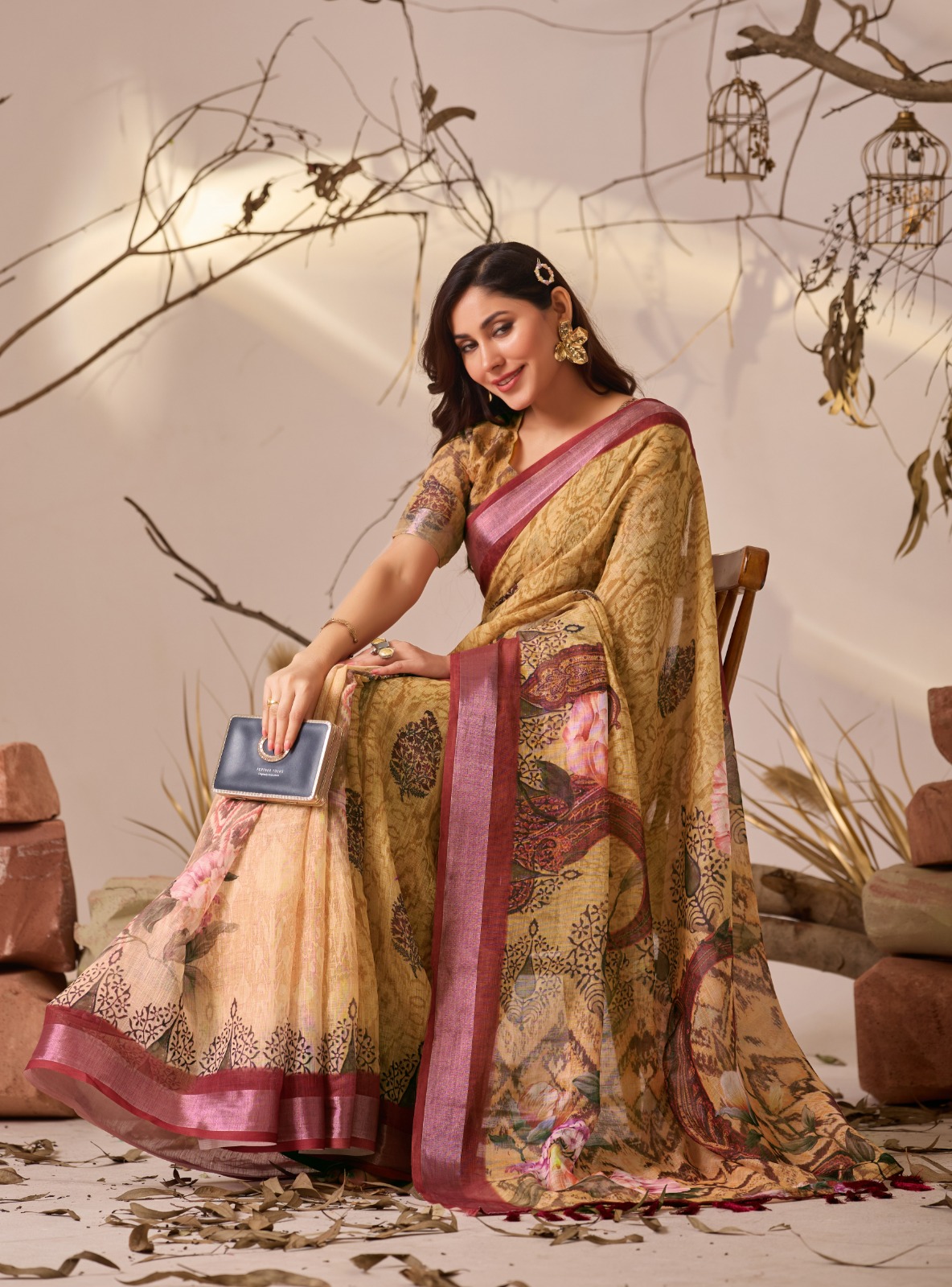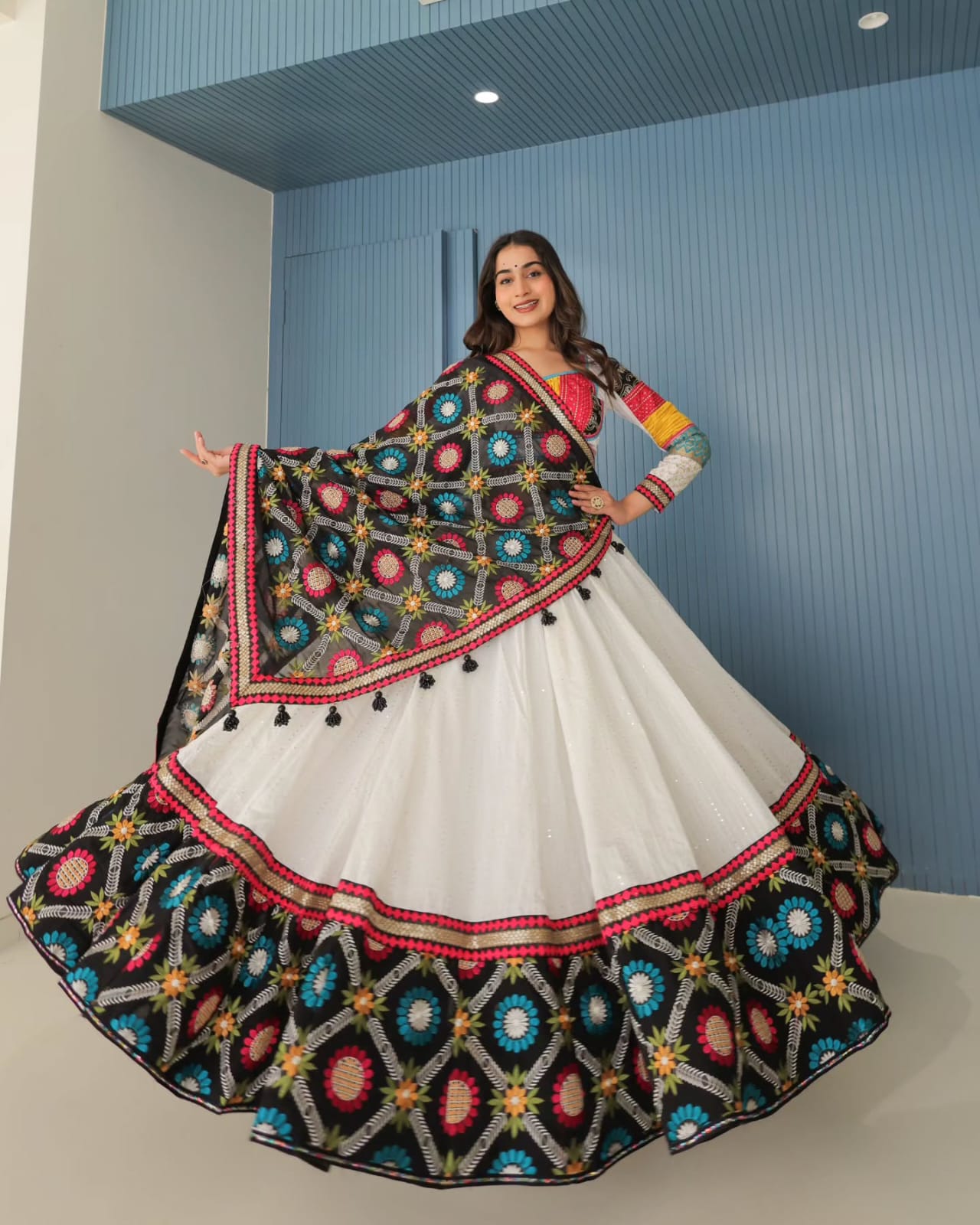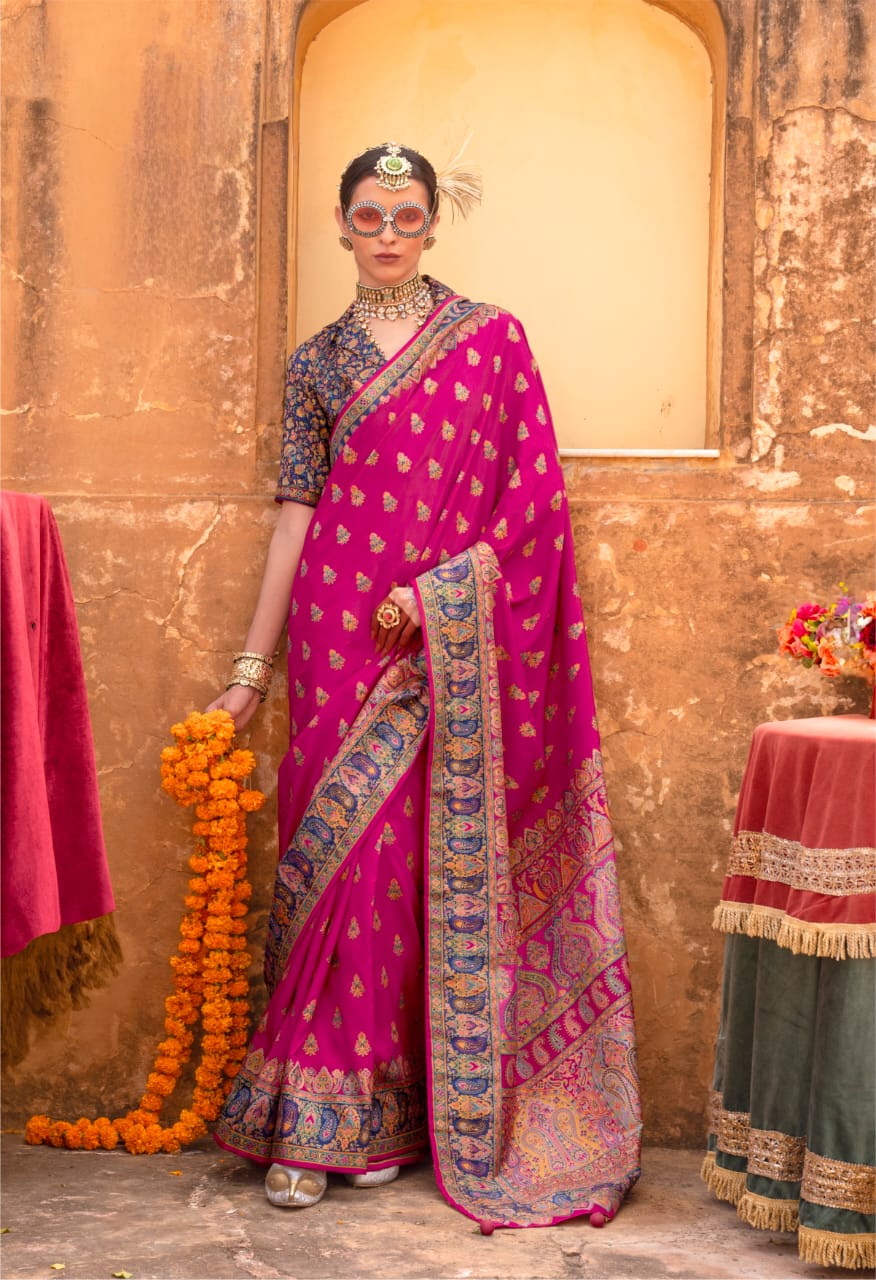
A Himachali Ethnic Wear Guide: Traditional Pahari Fashion for Modern Women begins with a simple fact: Himachal Pradesh doesn't have one single traditional costume. Clothing changes across Kullu, Kinnaur, Chamba, Kangra, Mandi, Shimla and other regions, reflecting climate, local weaving, community identity and ceremonial customs. Modern wardrobes can borrow these visual languages thoughtfully through woollen shawls, handloom textures, embroidered borders, silver jewellery and layered silhouettes.
Traditional Pahari fashion also works well beyond a mountain destination. A pashmina saree can suit a winter reception, a subdued silk kurta can work for an office celebration, and a shawl can give a familiar outfit a distinctly northern character. The key is to understand the garment, fabric and regional reference before combining them.
Himachali Ethnic Wear Guide: Traditional Pahari Fashion for Modern Women and Its Defining Features
Himachali ethnic wear is defined by warm textiles, practical layering, regional weaving traditions and restrained but meaningful ornamentation. The clothing developed for cold weather, movement across hilly terrain and community celebrations rather than for purely decorative effect.
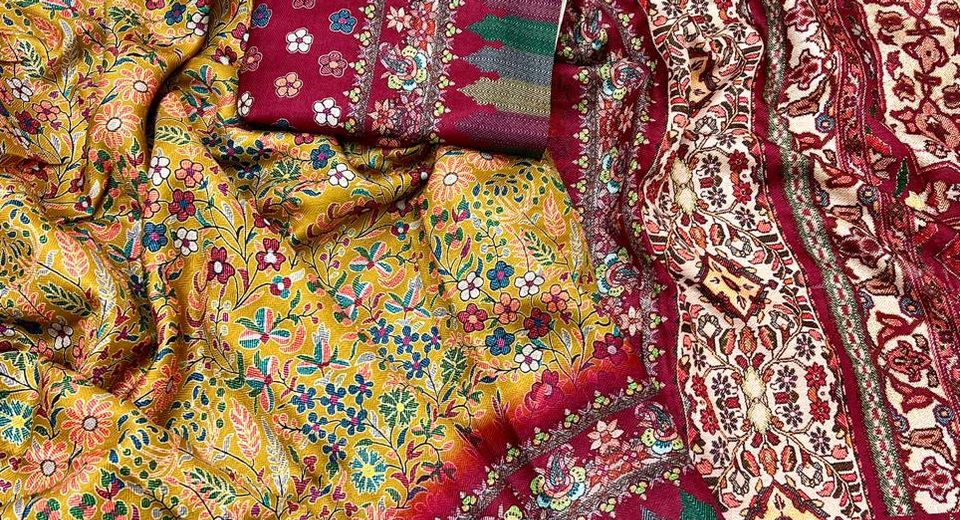
Wool, pashmina, handloom cotton, silk and blended winter textiles appear frequently in Himachali-inspired wardrobes. A traditional pattu, a thick woven wrap associated with several Himalayan communities, can be worn as a full drape or adapted as a shawl-like layer. Kullu shawls are recognised for geometric borders and strong colour contrasts, while Kinnauri shawls often feature intricate patterned bands.
Regional dress may include a long kurta, a woollen pattu, a draped shawl, a head covering and silver ornaments. Women's ceremonial clothing can include embroidered details, metallic trims and layered accessories. The exact combination depends on region, community and event, so calling every Himalayan garment "Himachali" can erase important distinctions.
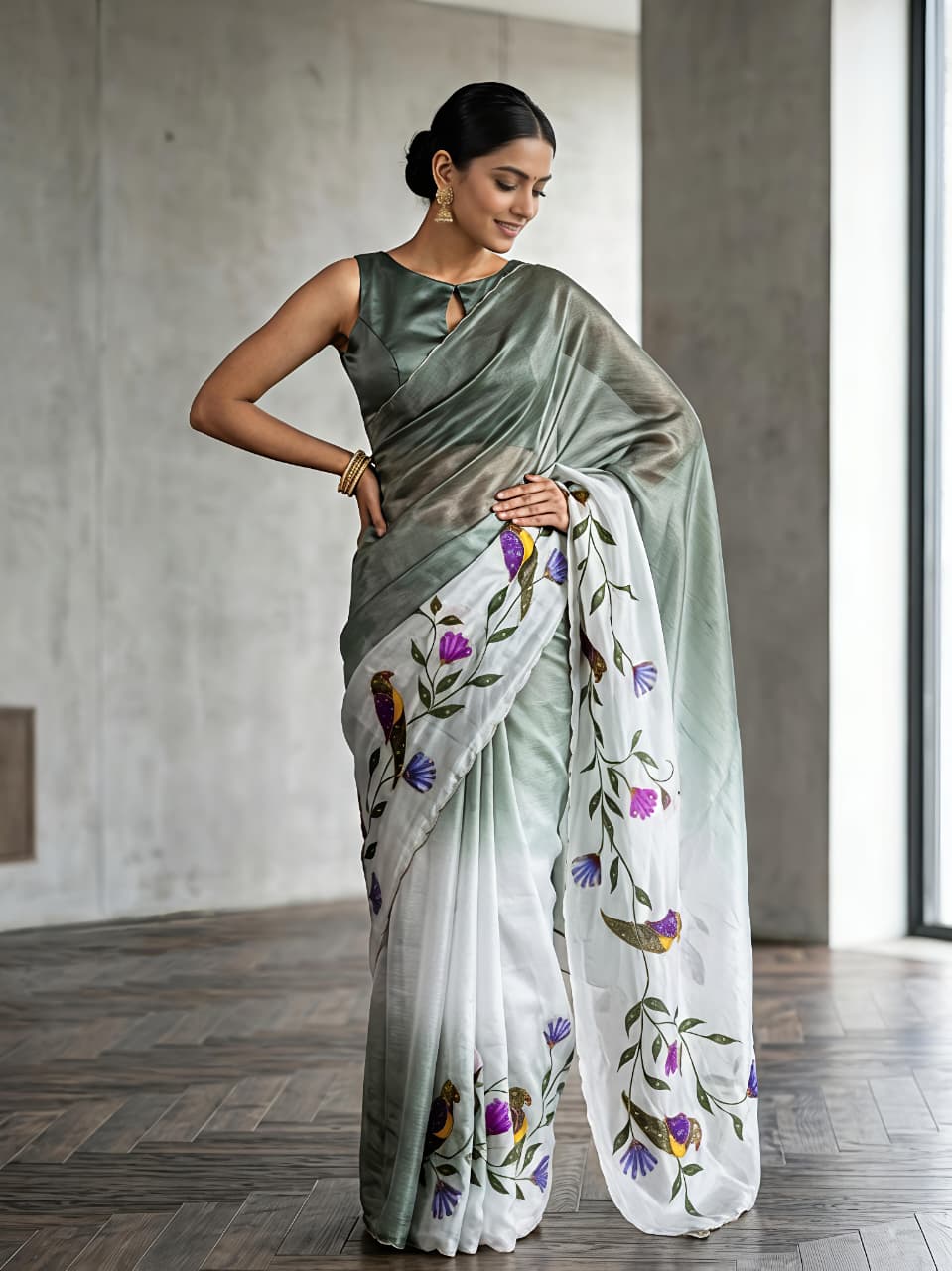
Colour also carries practical and aesthetic value. Deep red, maroon, mustard, forest green, indigo, cream and black work especially well with woollen textures and metallic embroidery. Green tones are particularly effective when paired with antique gold or silver, as demonstrated by the collection named Himachali Ethnic Wear in Silk Chanderi and Green Tones. The same collection is useful for understanding how a lighter Chanderi surface can carry a Himalayan colour story without the weight of winter wool.
Himachali Ethnic Wear Guide: Traditional Pahari Fashion for Modern Women and Suitable Fabrics
Wool, pashmina, silk, Chanderi and warm blended textiles are the most useful fabrics for a Himachali-inspired wardrobe. Each fabric creates a different degree of warmth, structure, sheen and formality.
Why is pashmina useful for Pahari-inspired winter dressing?
Pashmina provides softness and insulation without the bulk of a heavy woollen coat. A genuine fine pashmina piece should feel warm, light and supple, although softness alone doesn't prove fibre authenticity. Ask for fibre information, weave details and care instructions before purchasing a high-value pashmina garment.
Traditional Cream Pashmina Saree With Shawl For Women illustrates how one textile can become a complete occasion outfit. The cream shade creates a quiet base for pearl earrings, antique silver jewellery or a darker blouse. Kashmiri Style Pashmina Saree With Shawl Set offers a related winter-festive direction with a more visibly ornate character. Kashmir and Himachal have distinct textile histories, so the two styles should be appreciated as related northern traditions rather than treated as interchangeable.
How do silk and Chanderi change the look?
Silk adds polish and drape while remaining more comfortable than thick wool in heated indoor venues. Banarasi silk, raw silk and Vichitra silk each create different surfaces: Banarasi silk is usually associated with zari-rich brocade, raw silk has a more textured body, and Vichitra silk gives a smooth, slightly crisp fall.
Chanderi is lightweight and translucent, making it suitable for layering over a solid blouse or lining with an opaque skirt. Silk Chanderi can translate Pahari-inspired colour stories into a less bulky outfit for spring festivities or daytime ceremonies.
What role does embroidery play?
Zari, mirror work, thread embroidery and woven borders connect modern occasion wear with the decorative richness of northern festive dress. Embellishment should be placed strategically rather than spread across every surface. A border, cuff, neckline or shawl edge can provide enough detail for a polished outfit.
Himachali Ethnic Wear Guide: Traditional Pahari Fashion for Modern Women in Contemporary Silhouettes
Modern women can style Pahari silhouettes by keeping one regional element prominent and simplifying the remaining pieces. A shawl, woollen wrap, embroidered kurta or structured blouse can carry the cultural reference without making the entire outfit look like a costume.
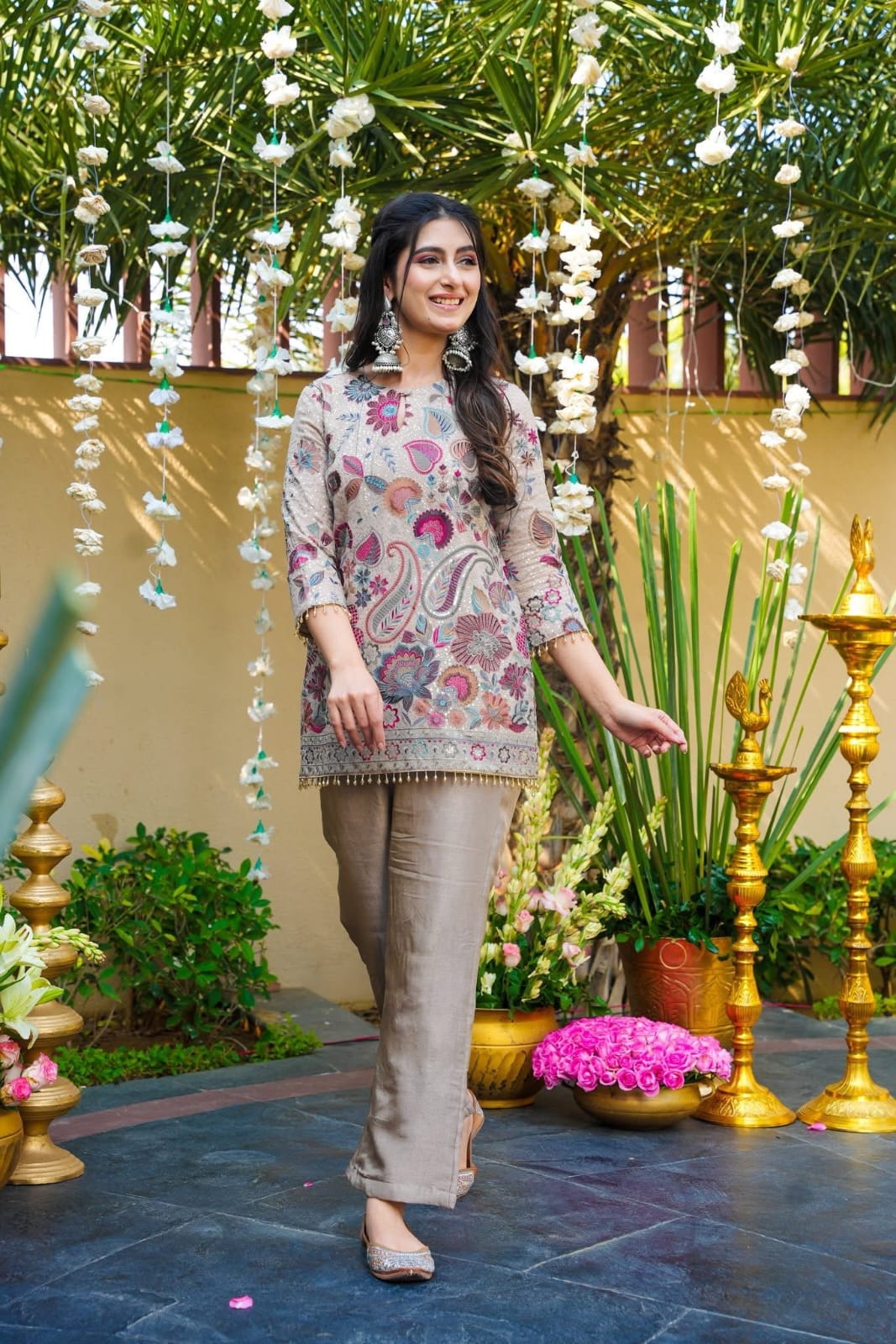
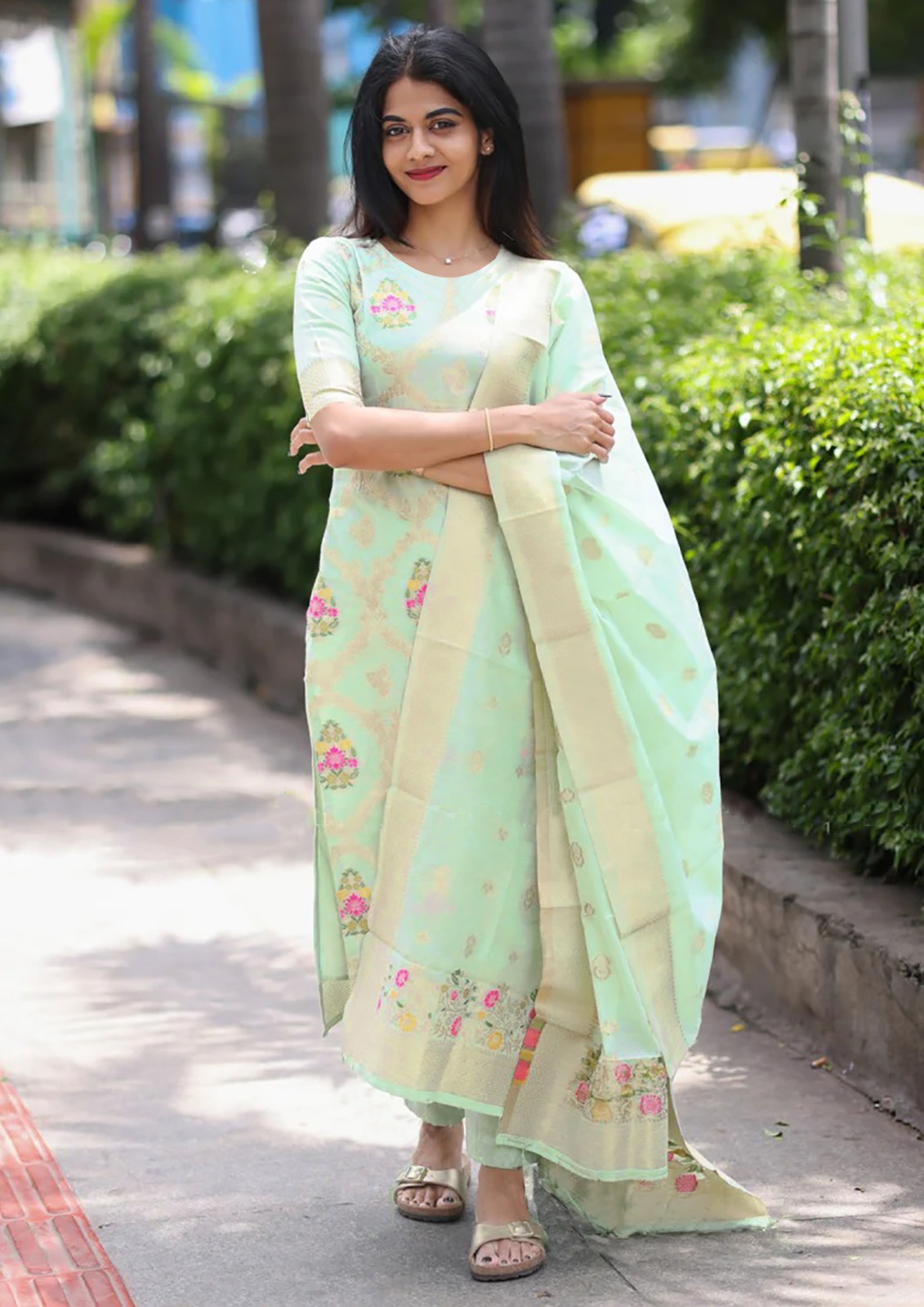
For a contemporary day look, pair a straight kurta with tapered trousers, a textured shawl and flat leather juttis. A low bun, small silver studs and a muted lip colour keep the proportions practical. Elegant Pista Festive Wear Kurta Pant Set works in this format because the kurta-and-pant structure feels current while the soft green colour supports a Himalayan palette.
For an evening gathering, use a silk saree with a narrow embroidered border and drape a shawl over one shoulder. Pin the shawl at the shoulder with a discreet brooch so that it stays secure while walking. A mustard blouse or antique gold earrings can warm up cream, taupe or beige textiles without competing with the weave.
A coordinated set is useful when you want the visual order of a traditional outfit with the ease of separates. Modern Taupe Vichitra Silk Embroidered Co-Ord Set for Women brings a neutral foundation for a patterned shawl, oxidised silver necklace or embroidered potli. Taupe also allows stronger regional accents, such as a red border or green woollen layer, to remain visible.
For a more formal kurta outfit, Elegant Beige Vichitra Silk Embroidered Kurta Set for Women can be styled with a deep maroon dupatta, antique jewellery and embroidered footwear. Beige and maroon echo the earthy, winter-friendly palette often seen in northern festive dressing without copying a specific regional costume.
Himachali Ethnic Wear Guide: Traditional Pahari Fashion for Modern Women at Weddings and Festivals
Silk sarees with shawls, embroidered kurta sets, sharara suits and layered woollen accessories work best for Himachali weddings and festivals. The right choice depends on the season, venue temperature, amount of walking and whether the event is daytime or evening.
What should you wear to a Haldi ceremony?
Lightweight cotton, silk blends and cheerful yellow, pista or mustard tones are practical choices for a Haldi ceremony. Choose a washable or easily spot-cleaned textile if turmeric, flowers and outdoor seating are part of the event. Keep heavy trailing dupattas away from the floor and use secure sleeve or shoulder fastenings.
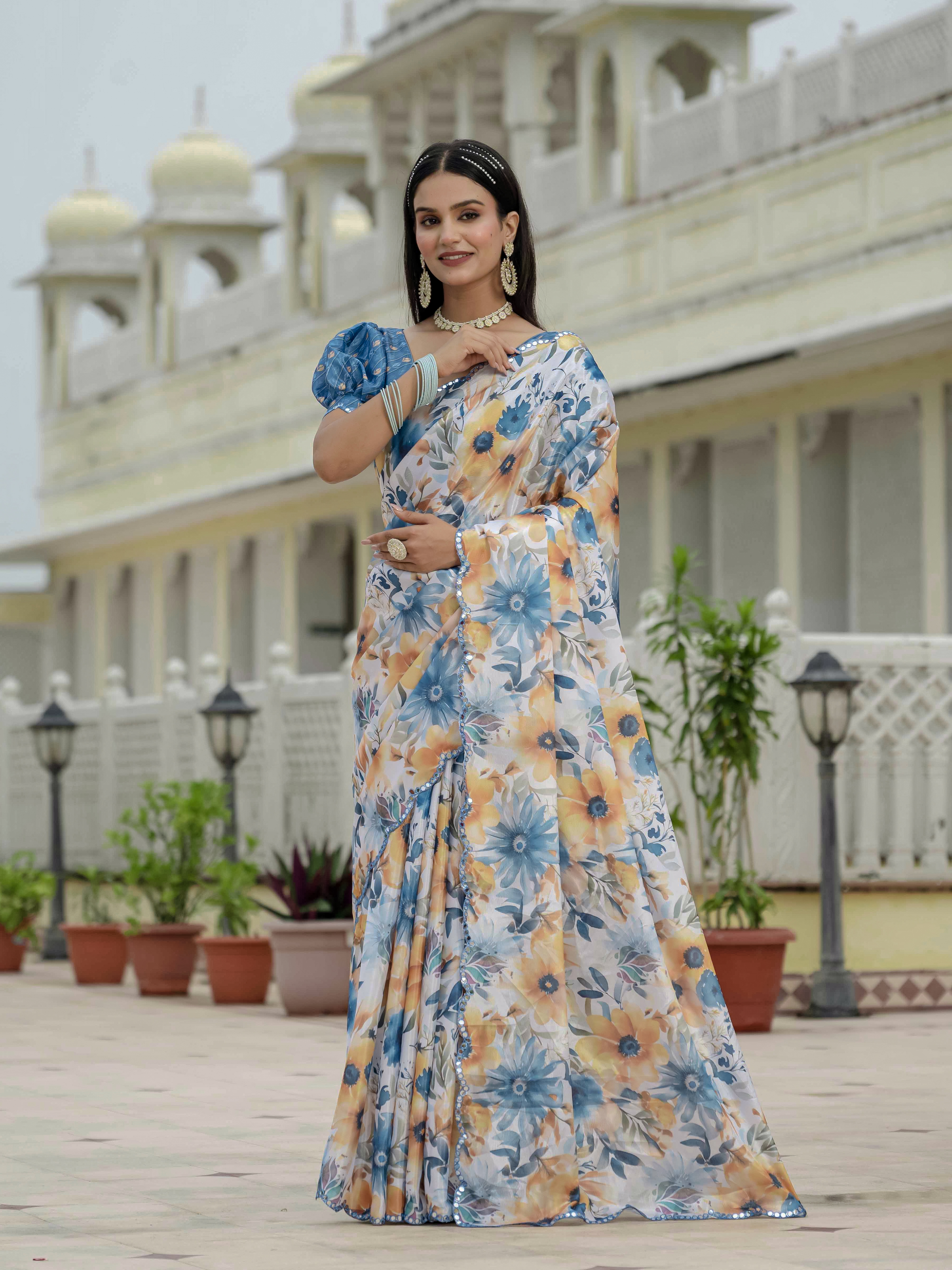
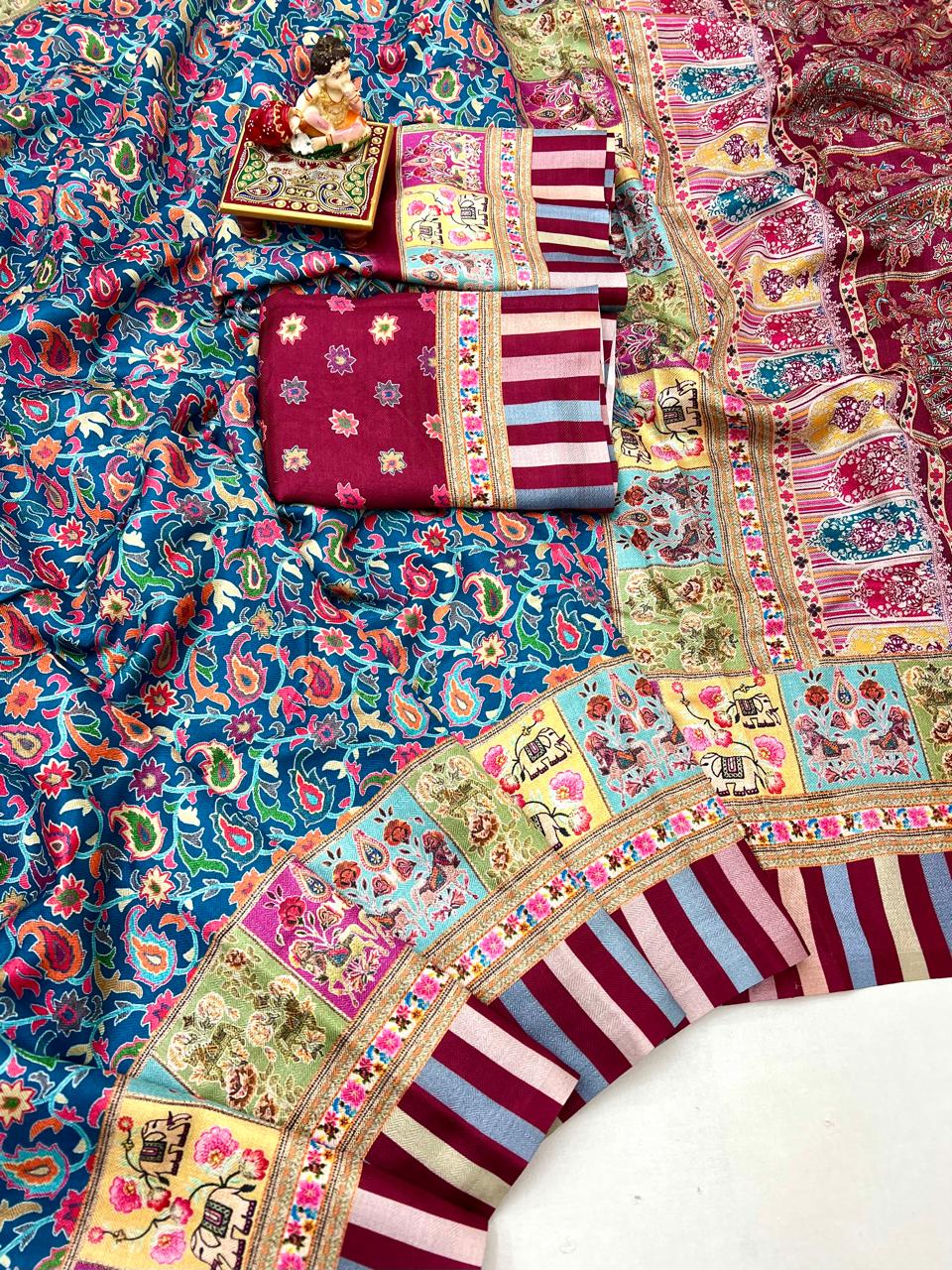
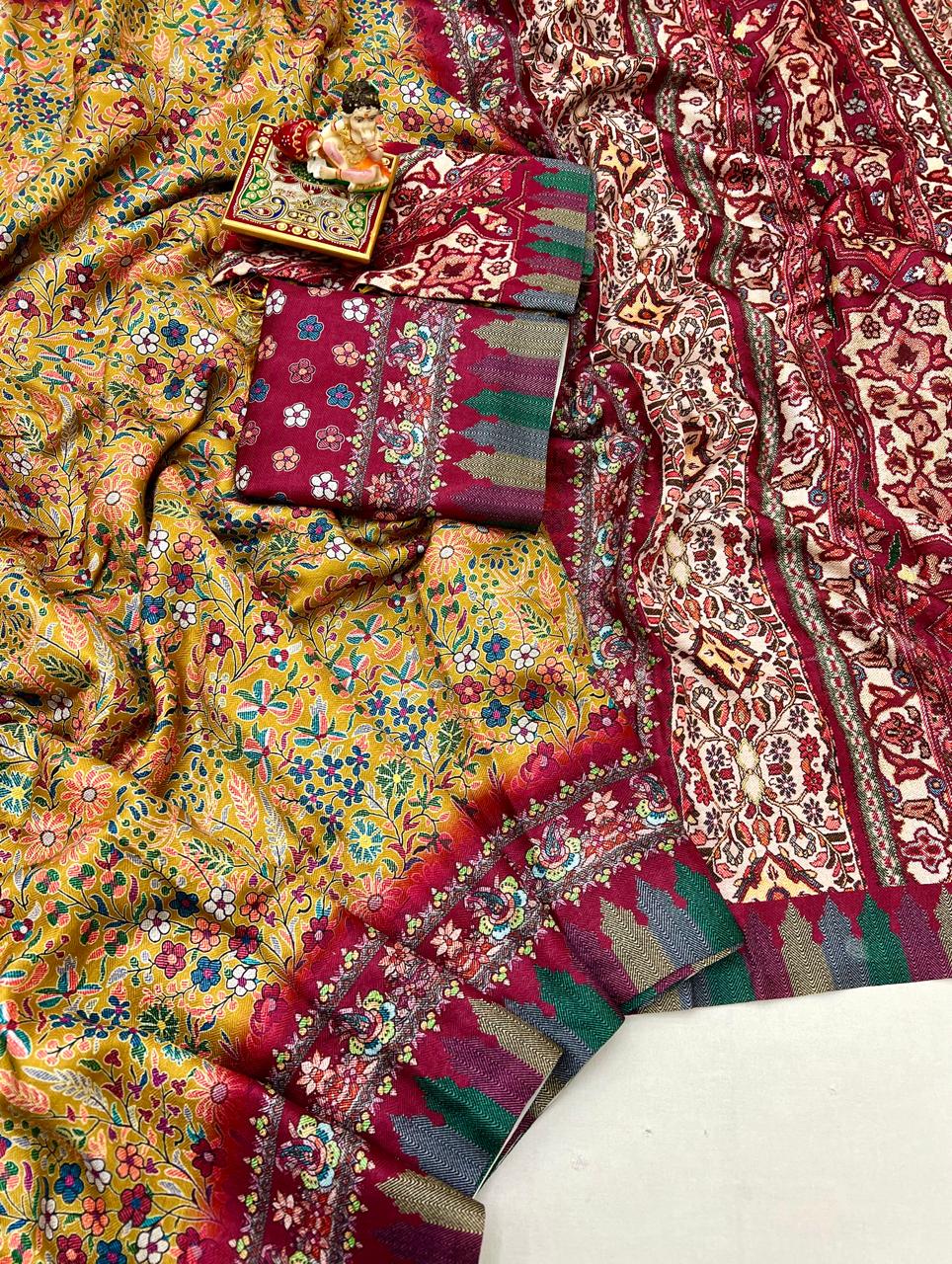
A mustard floral saree with a shawl can feel festive without needing dense jewellery. Mustard Floral Pashmina Saree with Shawl & Blouse gives a complete colour story for a winter Haldi ceremony, particularly when paired with simple gold hoops and flat sandals.
Which outfit suits a wedding reception?
A reception allows richer silk, zari, mirror work and structured tailoring. A shawl can replace a conventional dupatta when the weather is cool, but the shawl should be pinned securely so it doesn't slide during photographs or dancing.
Pink Mirror Work Zari Sharara Suit Set Online - Varnavi demonstrates how mirror work and zari can create a festive silhouette with a clear northern sparkle. Balance a richly decorated sharara with restrained jewellery, such as one pair of chandbali earrings and a slim bangle stack.
What works for a temple visit or family puja?
A modest kurta set or saree with a covered shoulder is suitable for a temple visit or family puja. Avoid very long hems and fragile trailing embellishments if the programme includes walking, sitting on the floor or moving between indoor and outdoor spaces.
Beige Embroidered Silk Kurti Pant Dupatta Set Women gives a practical three-piece structure. A dupatta worn over both shoulders creates a composed line, while a small silver pendant keeps the look connected to Himalayan-inspired accessory styling.
Himachali Ethnic Wear Guide: Traditional Pahari Fashion for Modern Women and Regional Accessories
Choose Himachali colours and motifs according to the garment's dominant texture, the season and the formality of the event. Strong regional styling usually comes from proportion and material, not from wearing many symbolic elements at once.
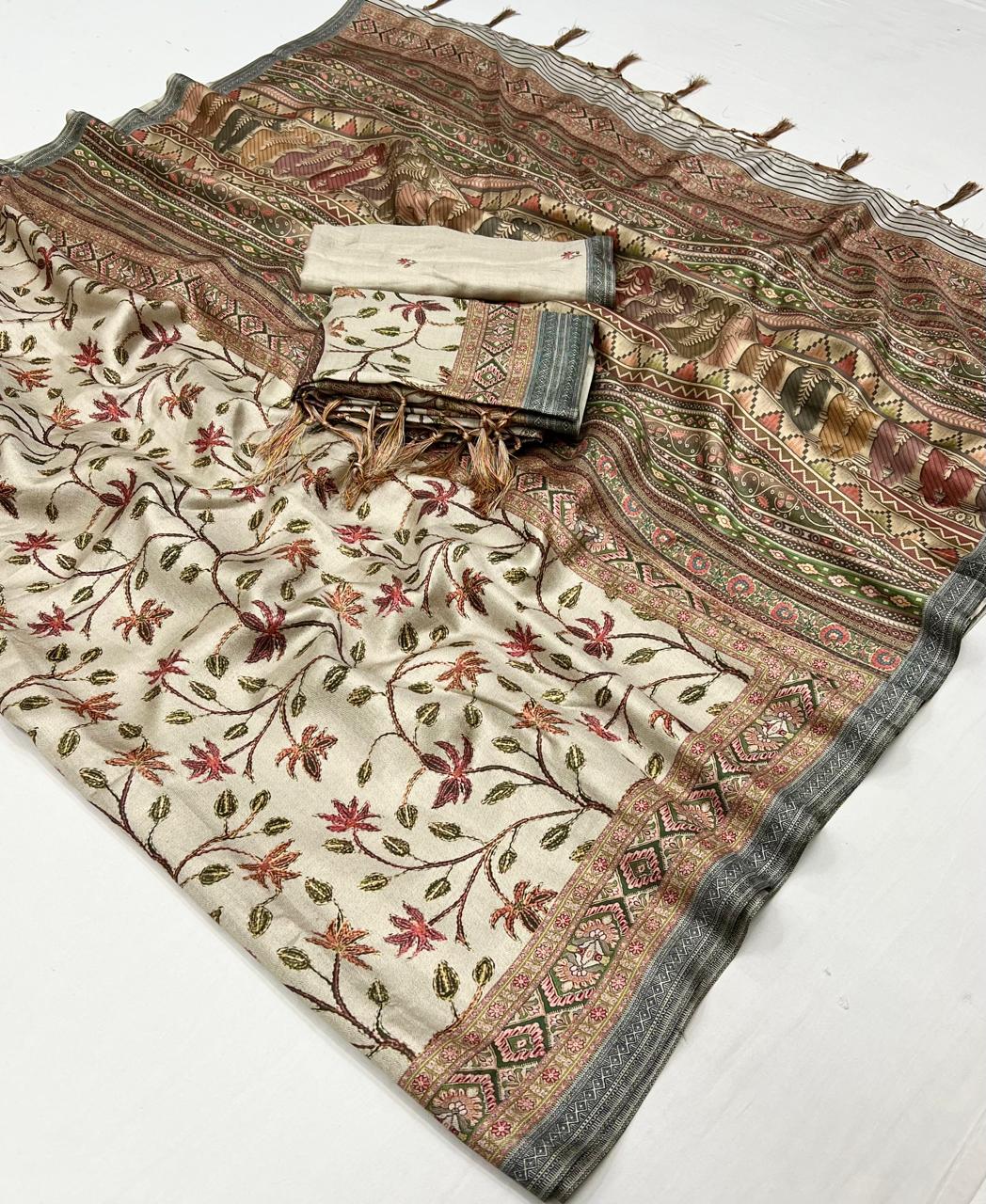
Geometric borders are associated with several Himalayan weaving traditions and can be used on shawls, dupattas, saree borders or waistcoats. Floral embroidery creates a softer interpretation, while mirror work introduces a brighter festive effect. Chamba rumal embroidery is known for detailed needlework and narrative compositions; a modern outfit can reference that delicacy through a small embroidered accessory rather than imitating a historic textile carelessly.
Silver jewellery is a natural companion to Pahari-inspired clothing because oxidised silver, filigree and chunky metal forms sit comfortably beside wool and handloom textures. Choose one focal piece: a broad necklace, statement earrings, a traditional-style nose pin or stacked bangles. Too many large ornaments can hide the garment's weave and make the outfit visually heavy.
A Kullu cap can be appropriate for a culturally specific celebration or a travel setting, but it should not be treated as a generic fashion prop. Wear a regional headpiece with awareness of its local meaning and avoid presenting one community's accessory as representative of every Himachali group.
Himachali Ethnic Wear Guide: Traditional Pahari Fashion for Modern Women and Practical Buying Tips
Buy Himachali-inspired clothing by checking fabric composition, garment measurements, lining, fastening quality and care requirements before judging colour or embellishment. These details determine whether an outfit remains comfortable and usable after one celebration.
Measure the bust, waist, hip and preferred garment length rather than relying only on a usual size. A shawl should be long enough to cover the shoulders without dragging, and a saree blouse should allow comfortable arm movement when worn under a wrap. For a kurta-and-pant set, check the rise and ankle opening because narrow trousers can become uncomfortable with layered winter clothing.
Inspect zari and mirror work at the seams, cuffs and hem. Secure embroidery should not have large loose threads, and mirror work should have protective finishing around the edges. A lined silk kurta usually hangs more smoothly than an unlined piece, while a pashmina saree may need a compatible blouse fabric to prevent slipping.
Care instructions matter as much as fibre choice. Dry-clean silk and embellished garments when the care label recommends it. Fold pashmina and woollen shawls with acid-free tissue or a clean cotton cover, store them away from direct sunlight and refold them every few months to reduce permanent creases. Do not hang heavy sarees on thin wire hangers because the shoulder area can stretch.
One regional reference is usually enough for a polished contemporary outfit. A Chanderi kurta with silver earrings, a pashmina saree with a restrained border or a modern co-ord set with a geometric shawl can each communicate Pahari influence clearly. Thoughtful styling respects the source tradition while allowing the clothing to function in a modern wardrobe.
Himachali Ethnic Wear Guide: Traditional Pahari Fashion for Modern Women FAQs
What is traditional Himachali dress for women?
Traditional Himachali dress for women varies by region and community, but commonly includes a long kurta, woollen pattu or shawl, head covering and silver jewellery. Kullu, Kinnauri, Chamba and Kangra traditions use different textiles, borders and forms of ornamentation.
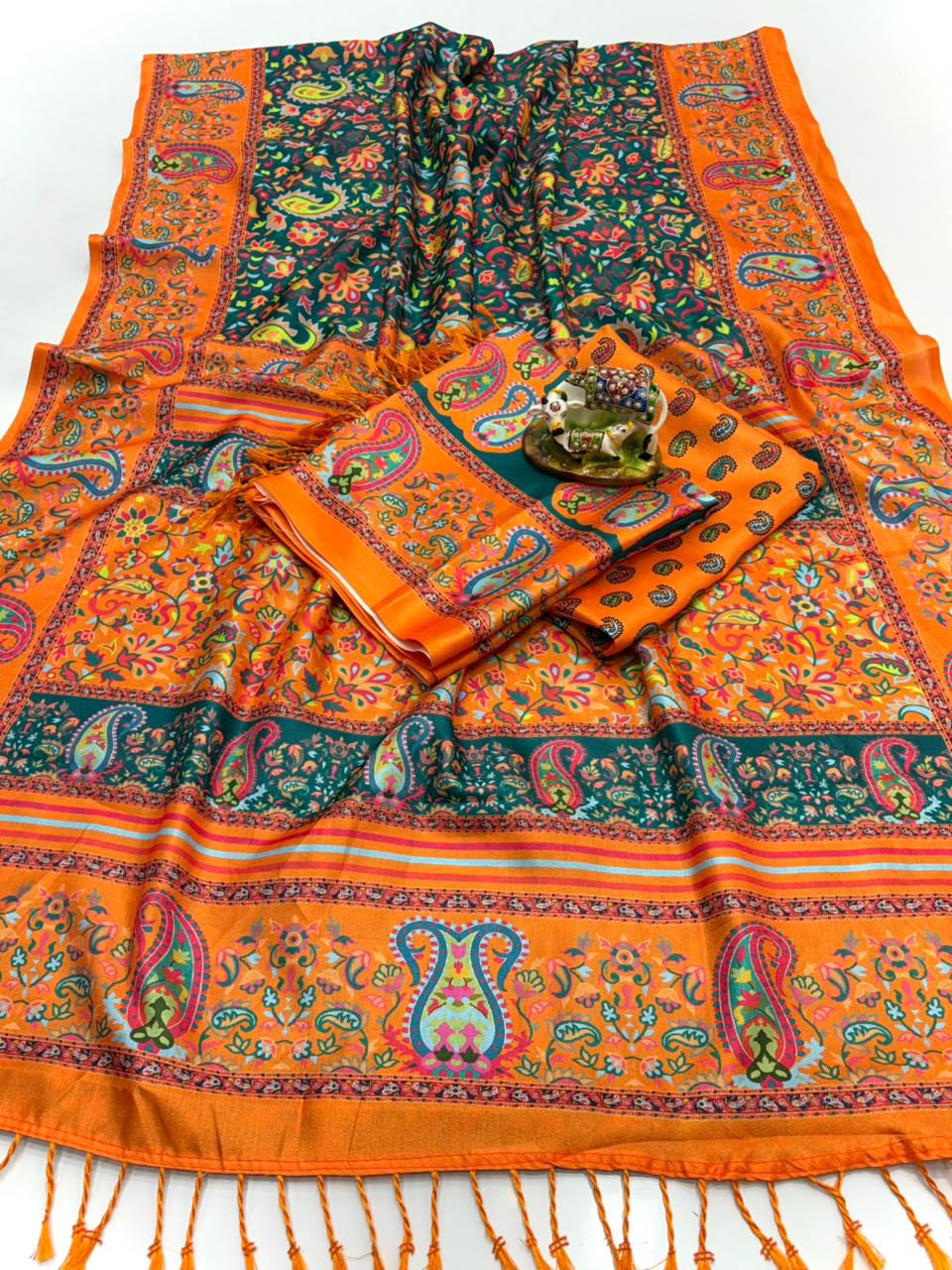
Can a pashmina saree be worn as Himachali-inspired fashion?
A pashmina saree can be worn as Himachali-inspired fashion when it's styled with a warm shawl, restrained jewellery and northern colour tones. The saree should not be described as a universal traditional Himachali garment because regional dress includes many other draped and layered forms.
Which colours work best for a Pahari-style outfit?
Maroon, mustard, forest green, cream, black, indigo and deep red work well for Pahari-style outfits. Pair one strong colour with a neutral textile so that geometric borders, embroidery or a shawl remain visible.
What jewellery goes with Himachali ethnic wear?
Oxidised silver, filigree earrings, chunky necklaces and stacked bangles complement Himachali ethnic wear. Select one statement piece and keep the remaining jewellery lighter so the textile and regional details remain clear.
How should pashmina and woollen shawls be stored?
Store pashmina and woollen shawls folded in a clean breathable cotton cover away from direct sunlight and moisture. Follow the care label, prefer professional cleaning for embellished pieces and refold stored shawls periodically to reduce deep creases.
How can modern women wear Pahari fashion without looking overdressed?
Modern women can avoid an overdressed look by combining one Pahari element with simple contemporary clothing. A geometric shawl over a plain kurta, silver earrings with a silk saree or a woollen layer over a neutral co-ord set creates balance without excessive ornamentation.
Common Questions About Styling Himachali and Pahari Ethnic Wear
What is traditional Himachali dress for women?
Traditional Himachali dress varies by region and community, but commonly includes a long kurta, woollen pattu or shawl, head covering and silver jewellery. Kullu, Kinnauri, Chamba and Kangra traditions use different textiles, borders and forms of ornamentation.
Can a pashmina saree be worn as Himachali-inspired fashion?
A pashmina saree can be worn as Himachali-inspired fashion when it is styled with a warm shawl, restrained jewellery and northern colour tones. The saree should not be described as a universal traditional Himachali garment because regional dress includes many other draped and layered forms.
Which colours work best for a Pahari-style outfit?
Maroon, mustard, forest green, cream, black, indigo and deep red work well for Pahari-style outfits. Pair one strong colour with a neutral textile so that geometric borders, embroidery or a shawl remain visible.
What jewellery goes with Himachali ethnic wear?
Oxidised silver, filigree earrings, chunky necklaces and stacked bangles complement Himachali ethnic wear. Select one statement piece and keep the remaining jewellery lighter so the textile and regional details remain clear.
How should pashmina and woollen shawls be stored?
Store pashmina and woollen shawls folded in a clean breathable cotton cover away from direct sunlight and moisture. Follow the care label, prefer professional cleaning for embellished pieces and refold stored shawls periodically to reduce deep creases.
How can modern women wear Pahari fashion without looking overdressed?
Modern women can avoid an overdressed look by combining one Pahari element with simple contemporary clothing. A geometric shawl over a plain kurta, silver earrings with a silk saree or a woollen layer over a neutral co-ord set creates balance without excessive ornamentation.