Himachali Dhatu and Pattu as Separate Elements of Traditional Dress show how one outfit can combine a head covering with a shoulder wrap, with each piece serving a different purpose. Dhatu generally refers to the cloth worn over the head by Himachali women, while Pattu usually refers to a warm woollen wrap or shawl worn around the upper body. Names, fibres, colours and wearing methods vary across Himachal Pradesh, so neither garment should be treated as one completely uniform design.
The distinction matters because photographs and retail descriptions sometimes use "Himachali shawl" as a catch-all phrase. A Dhatu isn't simply a smaller Pattu, and a Pattu isn't merely decorative fabric placed over a Dhatu. Dhatu protects the head and frames the face; Pattu provides warmth, coverage and a recognisable patterned layer across the shoulders. Together, the pieces connect climate, local weaving and cultural presentation.
What are Dhatu and Pattu in Himachali clothing?
Dhatu is a head covering, while Pattu is a woollen wrap or shawl worn over the torso and shoulders. This functional difference is the clearest way to identify the two elements in traditional Himachali dress.
A Dhatu is commonly made from a relatively light square or rectangular cloth. The cloth is folded and secured over the head, with the arrangement depending on local practice, personal comfort and the wearer's hairstyle. Dhatu may be plain, printed, woven or finished with a border. In everyday settings, the head covering may be selected for utility rather than elaborate ornament.
Pattu is generally a heavier textile associated with cold-weather clothing. Traditional Pattu can be woven from wool and may show stripes, checks, bands or geometric borders. The wrap is placed over the shoulders and upper body, sometimes held close around the front and sometimes allowed to fall more freely. The woollen structure makes Pattu useful in a mountain climate where temperatures can change sharply between sunlight and shade.
Regional vocabulary deserves attention. "Pattu" may describe a wrap in one area and a special textile or style in another, while "Dhatu" may be used differently across communities. A reliable description therefore identifies the district, community and context alternatively of assuming that every red headscarf or striped shawl has the same name.
Why are Dhatu and Pattu worn as separate pieces?
Dhatu and Pattu remain separate because they solve different clothing needs: Dhatu covers and steadies the head, while Pattu insulates and drapes the shoulders. Separate pieces also allow the wearer to adjust warmth, movement and appearance without changing the entire outfit.
Head coverage is useful during outdoor work, travel and public gatherings. A Dhatu can help contain the hair, shield the head from sun or cold and complete a culturally familiar appearance. Its size and folding method allow more flexibility than a stitched cap or a fitted garment.
Pattu works as a movable outer layer. A wearer can pull Pattu closer around the chest in cold weather, shift it away from the arms while working or remove it indoors. A woollen wrap also accommodates different body shapes and layers, which is practical in a region where traditional clothing may be worn over a kurta, kameez or another base garment.
The separation creates visual balance as well. A patterned Pattu can form a broad horizontal field across the upper body, while a Dhatu adds colour around the face. Matching colours can create a coordinated appearance, but contrast can make the head covering more visible. The combination is therefore both practical and expressive.
How does a Dhatu differ from a Himachali Pattu?
A Dhatu differs from a Pattu in placement, weight, construction and visual role. Dhatu belongs on the head and is usually lighter; Pattu belongs around the shoulders and is usually denser, warmer and larger.
- Position: Dhatu covers the head, whereas Pattu wraps the shoulders, back and upper torso.
- Typical material: Dhatu may use cotton, silk blends or lightweight printed cloth; Pattu is strongly associated with woollen weaving, although modern versions may contain acrylic or other fibres.
- Scale: Dhatu is compact enough to fold and secure around the head; Pattu is broad enough to provide bodily coverage.
- Construction: Dhatu depends largely on folding and tying, while Pattu depends on a generous woven length and a stable border.
- Seasonal use: Dhatu can be worn throughout the year, while a thick Pattu is especially useful in cooler weather.
Not every head covering seen in Himachal Pradesh is a Dhatu, and not every striped woollen shawl is necessarily a Pattu in the same regional sense. The safest description identifies the item's function and local origin rather than relying only on colour or pattern.
Which materials and patterns are associated with Pattu?
Wool, strong borders and geometric patterning are common visual clues associated with Pattu, although fibre content and design differ between districts and contemporary makers. Traditional woollen Pattu should feel warmer and more structured than a thin synthetic stole.
Himachal's mountain environment helped shape its textile vocabulary. Sheep wool provided insulation, while compact weaving created durable cloth suited to repeated outdoor use. The Kullu weaving tradition is known for bold borders and geometric motifs, but a Pattu from Kullu should not automatically be treated as identical to every wrap from Shimla, Chamba, Kinnaur or another region.
Colour carries practical and aesthetic significance, but it doesn't function as a universal code. Red, green, saffron, black, cream and deep blue may appear in Himachali textiles, yet the meaning of a colour depends on the community, garment and occasion. A border may be a signature of a weaving tradition, a family preference or a contemporary design decision.
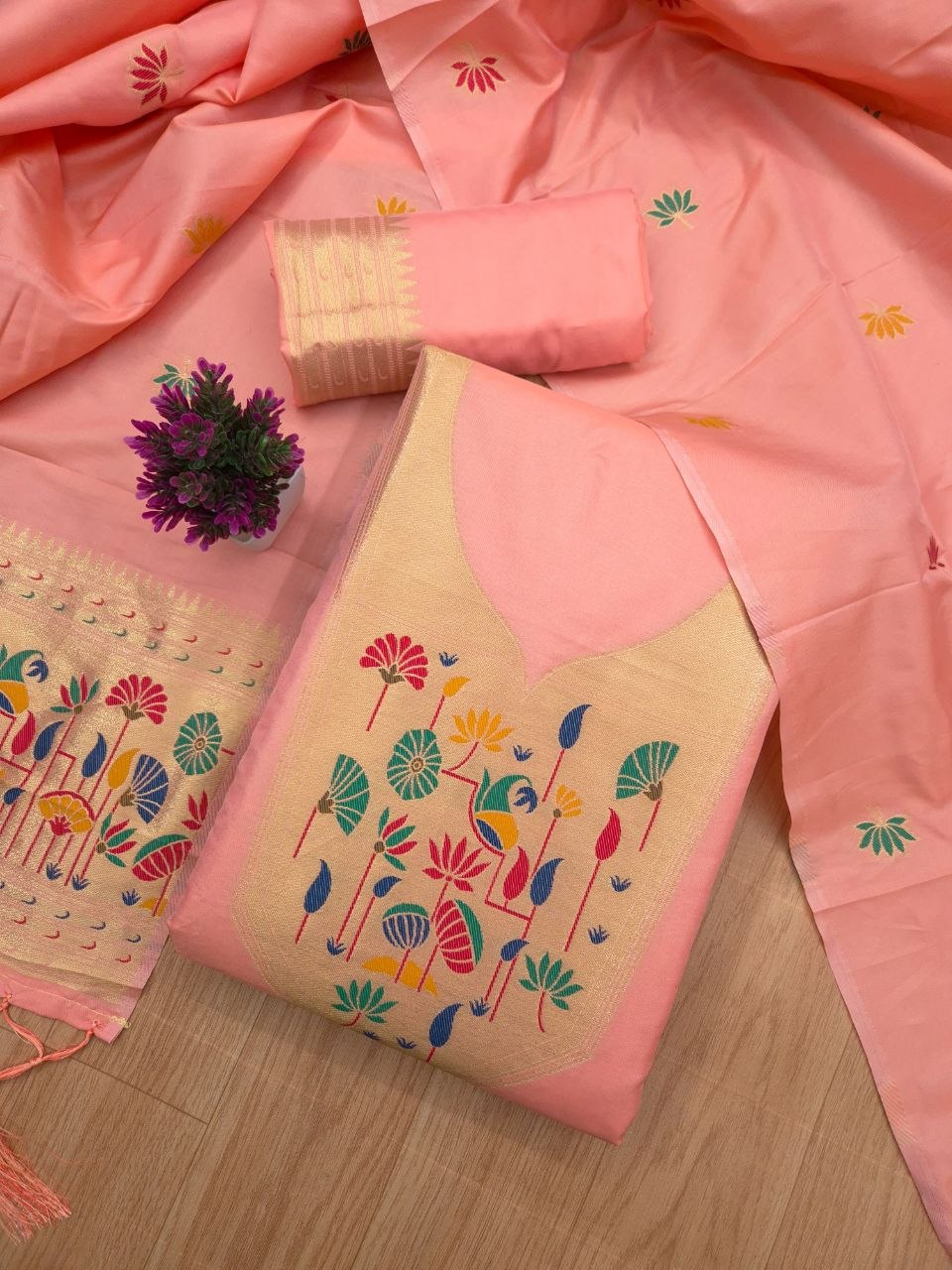
The metallic surface of a Peach Paithani Style Zari Weave Unstitched Suit can create a festive, border-led effect, but Paithani-style zari isn't a substitute for a Himachali Pattu. A Modern Taupe Vichitra Silk Embroidered Co-Ord Set for Women offers another urban interpretation of coordinated texture, but its silk construction belongs to a different textile context.
How are Dhatu and Pattu worn for ceremonies and daily life?
Dhatu and Pattu are worn according to local custom, weather, the formality of the gathering and the wearer's comfort. Daily styling is often restrained, while weddings, temple visits, festivals and community events may bring out more carefully selected colours and textiles.
For a simple arrangement, the Dhatu can be folded into a broad band and placed over the crown, with the ends secured so that the fabric doesn't slip. The Pattu can rest evenly across both shoulders, or one end can be brought across the front for greater warmth. Pins should be used sparingly because heavy metal pins can damage loosely woven wool.
At a formal event, the border deserves attention. A Pattu with a clear woven edge can be positioned so that the border remains visible across the front or near the shoulder. The Dhatu should frame the face without covering the eyes or creating unnecessary bulk at the crown. Jewellery should not catch on the woollen weave.
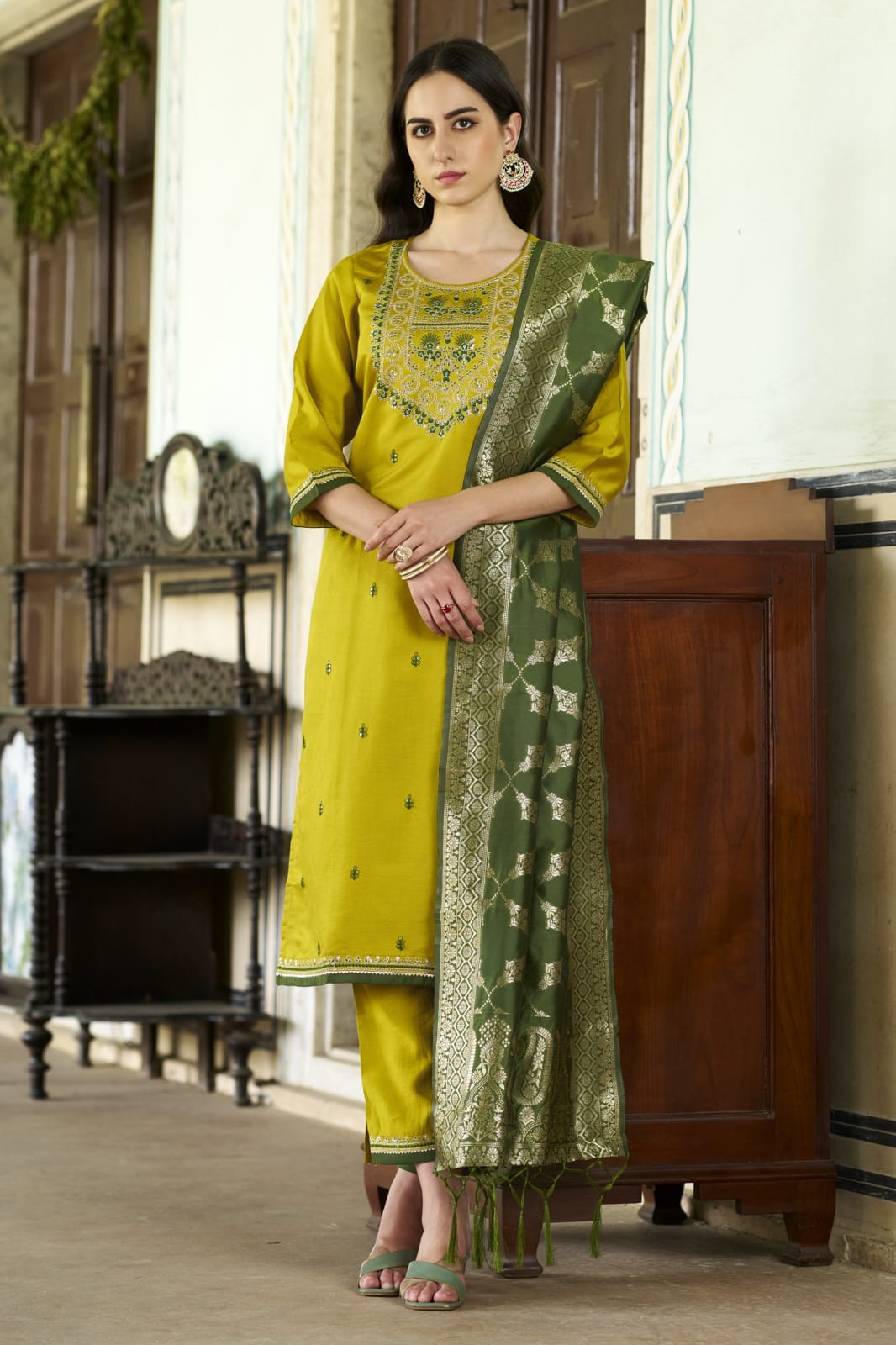
A Women's Mustard Silk Blend Kurta Set with Dupatta may complement warm Himachali colours for a festive wardrobe, yet its silk blend and dupatta construction remain different from a traditional woollen Pattu. A Mustard Viscose Chanderi Kurta Set with Sequence Embroidery gives a lighter, dressier alternative for an indoor celebration. Chanderi's fine handfeel and decorative surface are useful for a separate styling purpose, not evidence that the garment is a Pattu.
How can contemporary wardrobes reference Himachali dress respectfully?
Respectful styling begins by preserving the difference between a cultural garment and a loosely inspired colour palette. Use a genuine regional textile when claiming Himachali heritage, credit the weaving tradition where known and avoid presenting a generic stole as an authentic Pattu.
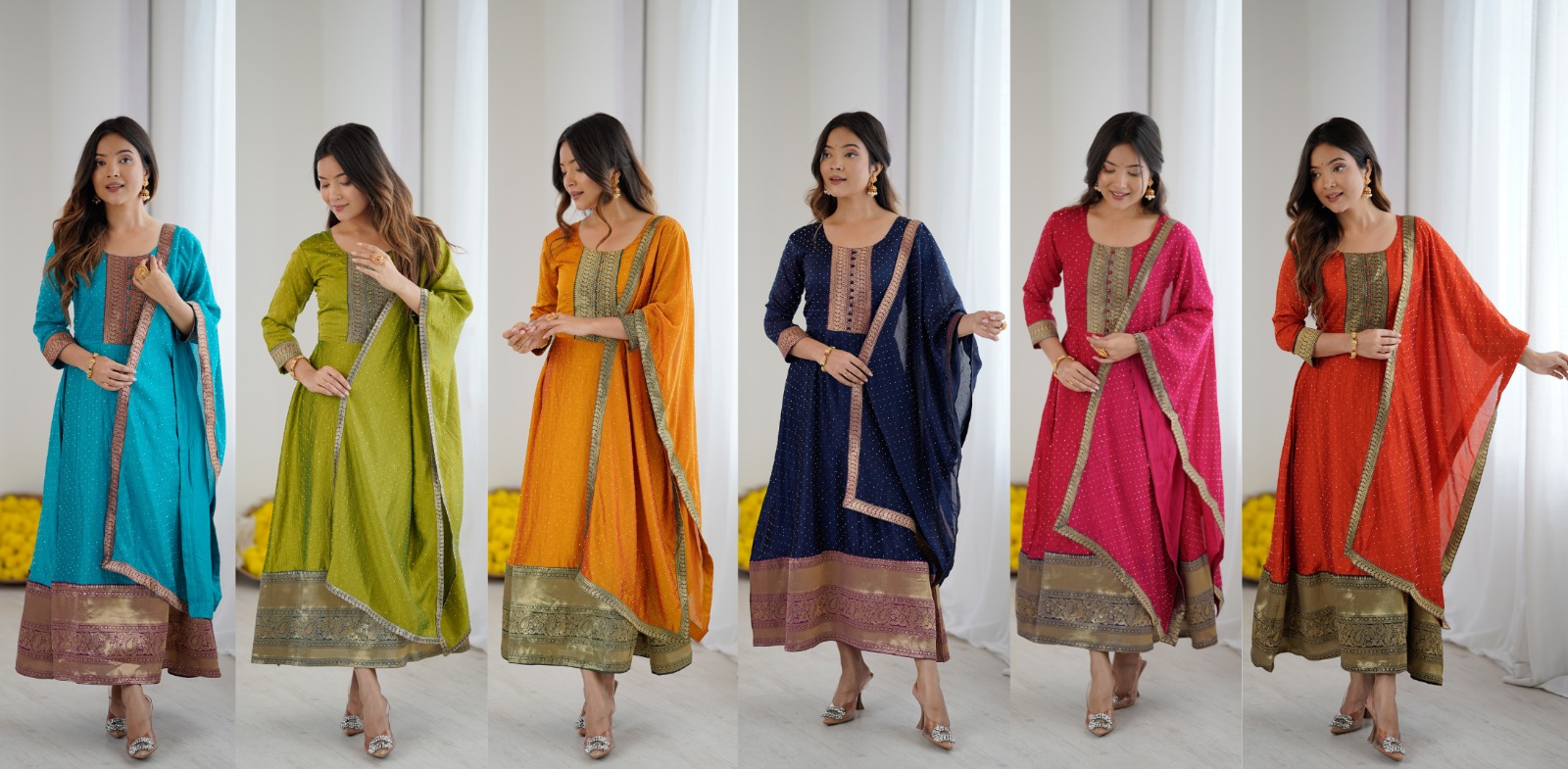
One practical approach is to use a handwoven woollen Pattu as the central layer and keep the rest of the outfit quiet. A solid kurta, minimal jewellery and low-contrast footwear allow the border and weave to remain legible. A lightweight Dhatu can coordinate through one colour from the Pattu without matching every shade exactly.
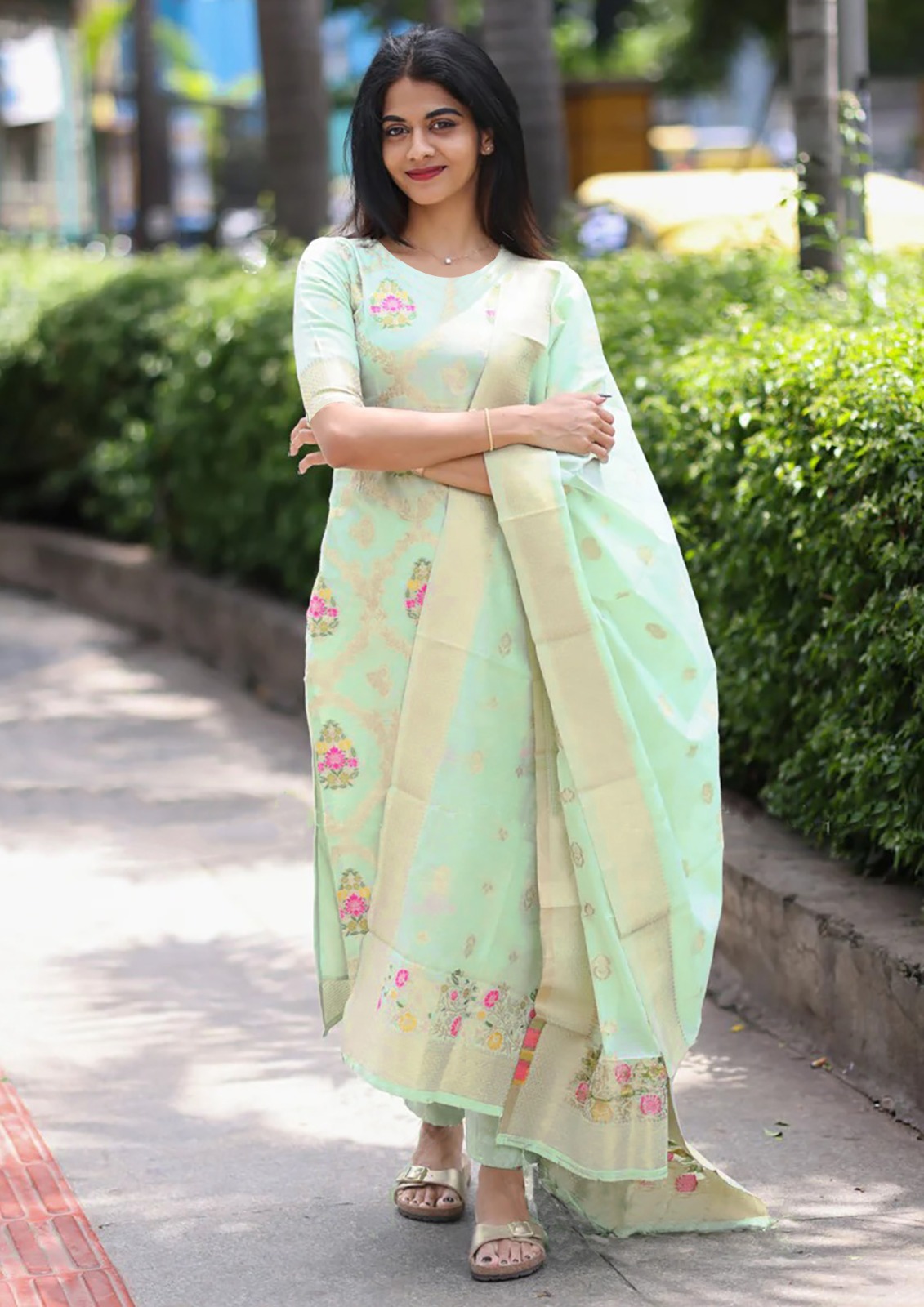
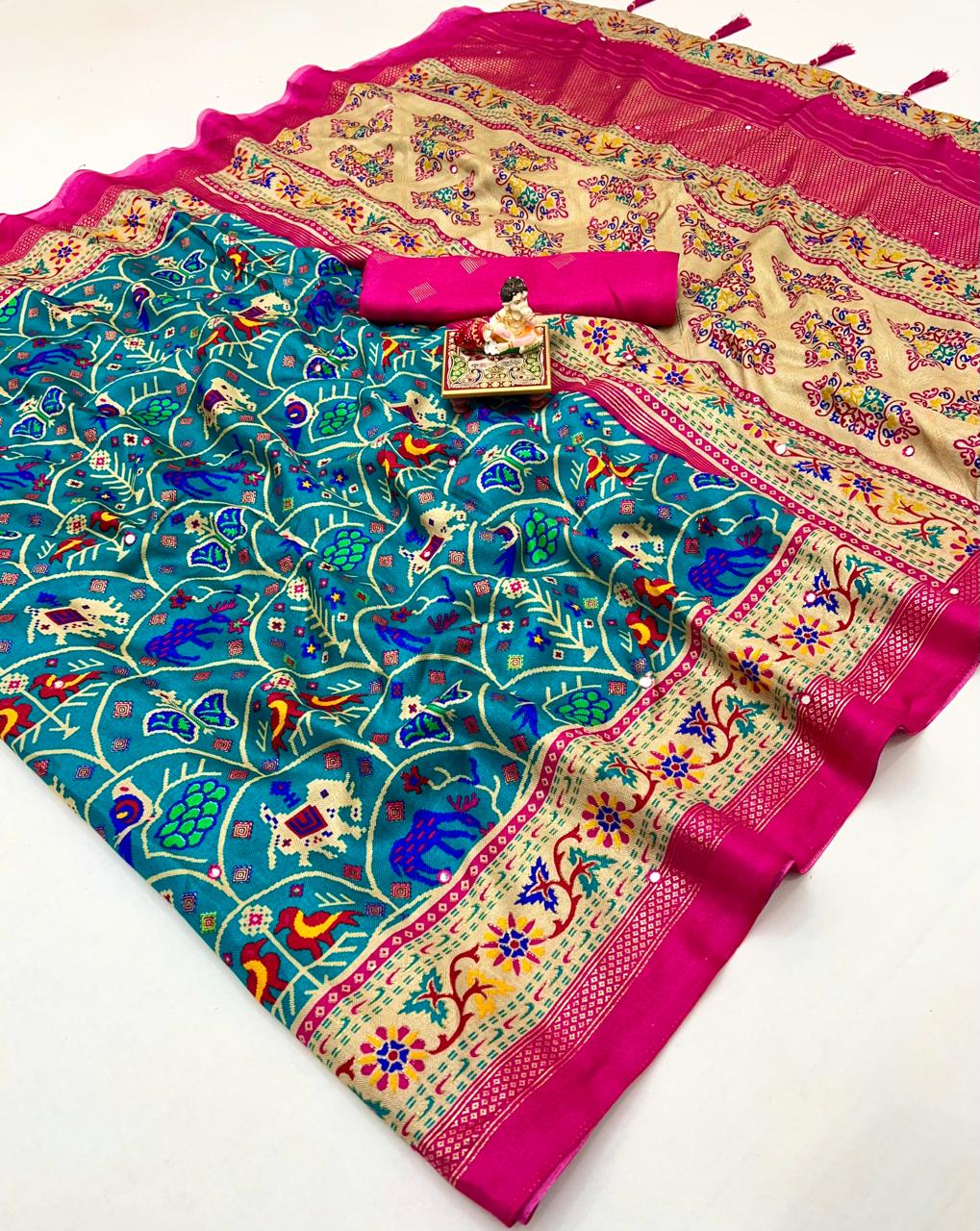
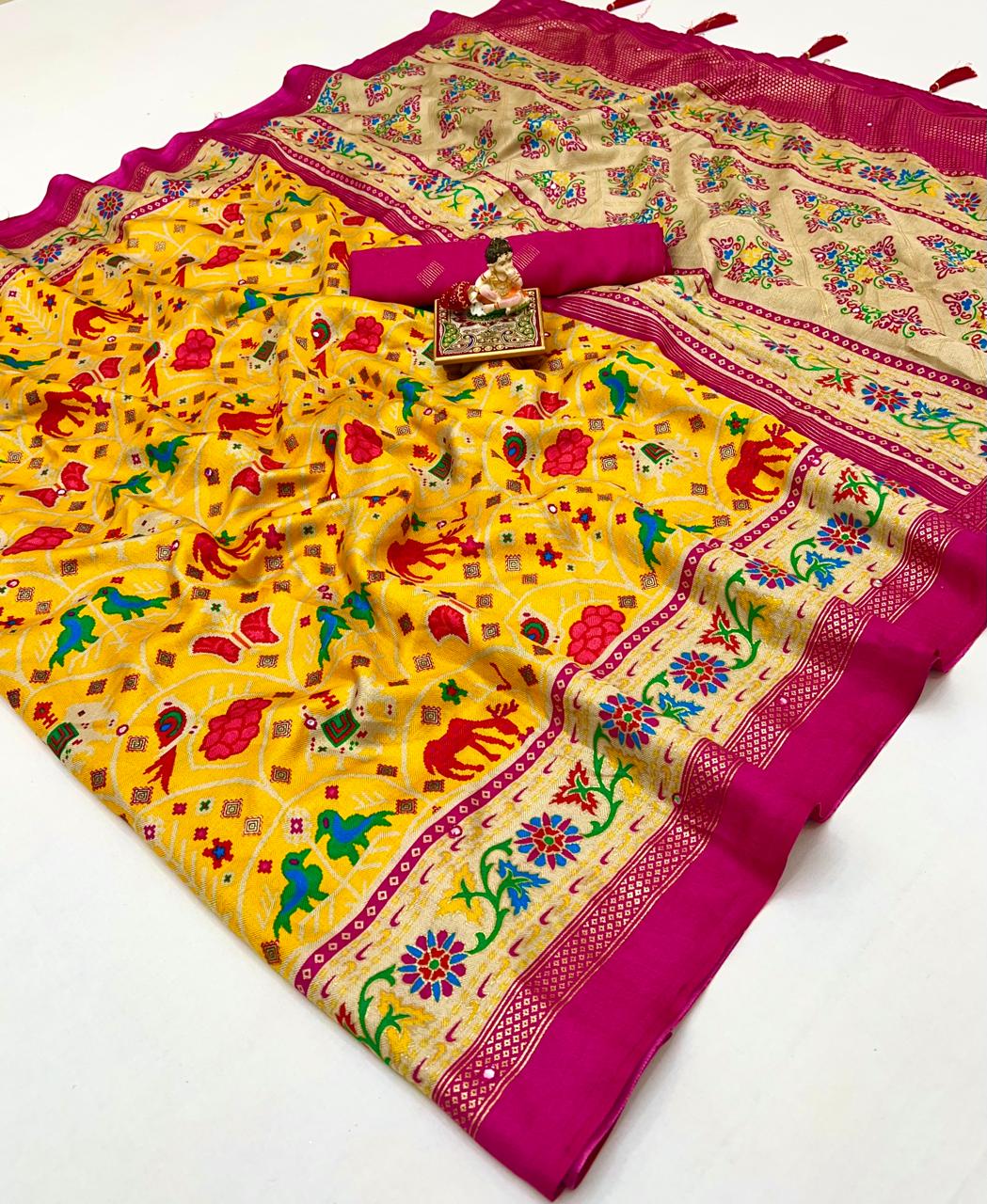
A second approach is visual reference without imitation. A Pistachio Green Paithani Style Zari Woven Unstitched Suit Material, Mint Green Paithani Style Zari Woven Unstitched Suit Material or Royal Purple Paithani Style Zari Woven Unstitched Suit Material can inspire colour pairing for a festive salwar suit. Paithani-style zari belongs to a different textile tradition. A Green Paithani Style Zari Woven Unstitched Suit Material similarly demonstrates how saturated green and a metallic border can build an occasion palette without being described as Himachali.
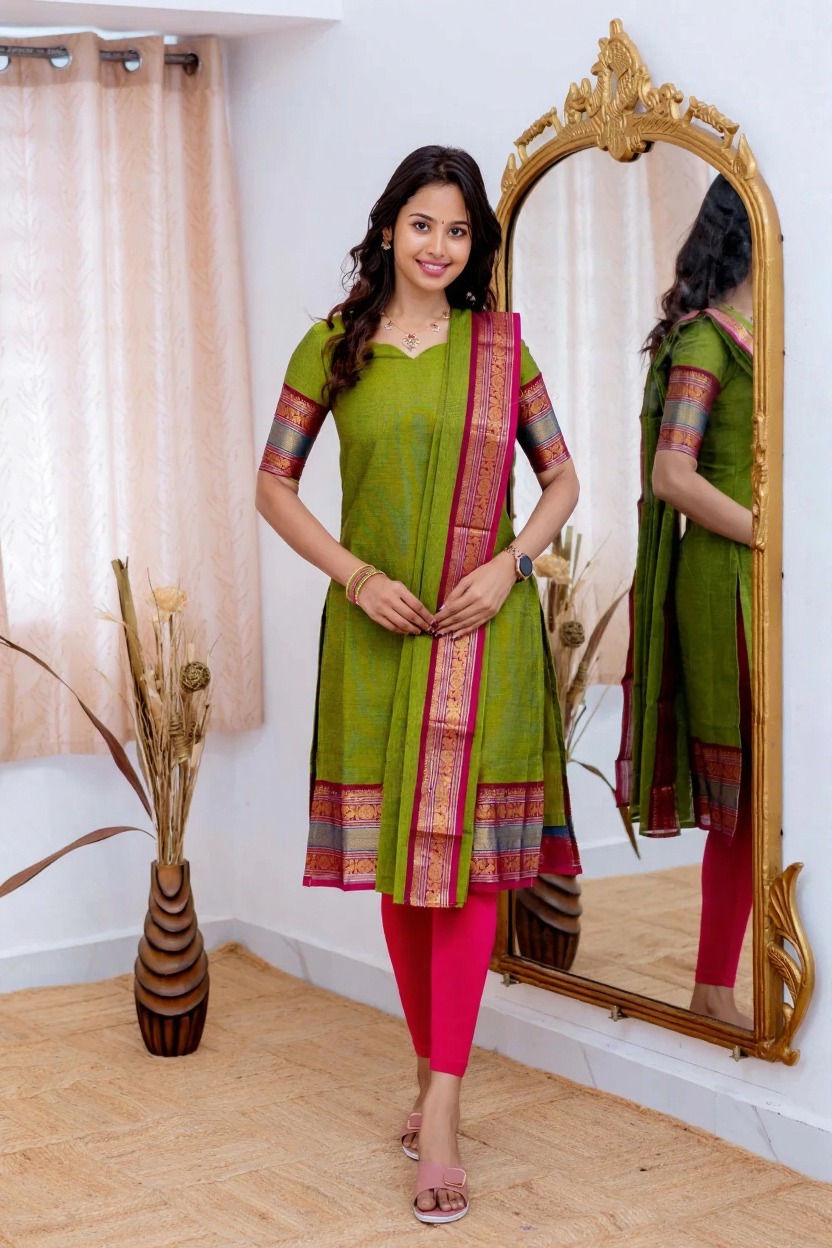
The collection Himachali Ethnic Wear in Silk Chanderi and Green Tones can provide ideas for combining green shades, fluid drape and a lighter festive fabric. Silk Chanderi remains different from woollen Pattu in fibre, weight and regional history. Naming those differences prevents a contemporary interpretation from being mistaken for a historical reproduction.
Respect also includes buying information. Ask whether a Pattu is handwoven or powerloom-made, identify the fibre composition, check the approximate dimensions and confirm the weaving region. A full-size woollen wrap may measure roughly 2 to 2.5 metres in length, but dimensions vary. A seller who can explain the weave, border technique and care method is more useful than a listing that relies only on the word "traditional."
How should a woollen Pattu be stored and cared for?
A woollen Pattu should be aired after use, folded loosely and stored away from moisture, direct sunlight and insects. Care labels take priority, but gentle handling is safer than frequent machine washing for most handwoven woollen wraps.
After wearing Pattu outdoors, place it flat or hang it briefly in shade so perspiration and odour can dissipate. Avoid leaving wool in a compressed ball, because repeated pressure can crease the border and flatten the texture. Fold the wrap along its existing lines and store it in a breathable cotton bag rather than an airtight plastic cover.
For minor marks, blot with a clean damp cloth instead of rubbing the weave. Do not use hot water, chlorine bleach or aggressive brushing. Hot water and friction can cause wool fibres to felt, shrink or lose their original drape.
Professional dry cleaning may be appropriate for a heavily soiled or embellished Pattu, but the cleaner should be told that the textile is woollen and possibly handwoven. Cedar blocks or neem leaves can help discourage insects, but strong fragrance products should not touch the fabric directly. Store the Dhatu separately if its lighter fabric could snag on the Pattu's border.
What should shoppers check before buying Dhatu or Pattu?
Shoppers should check the garment's regional description, fibre content, measurements, weave, border finish and care instructions before buying Dhatu or Pattu. These details distinguish a functional textile from a generic fashion accessory.
- Confirm the name: Ask whether the item is specifically identified as Dhatu, Pattu, a Kullu shawl or another local textile.
- Check the fibre: Look for wool percentage and ask whether acrylic, polyester or silk has been added.
- Measure the piece: Compare length and width with the way you plan to wear the wrap.
- Inspect the border: Look for secure edges, consistent motifs and loose threads before purchase.
- Ask about origin: A district, weaving cluster or artisan description adds useful context.
- Read the care advice: Handwoven wool may need airing and professional cleaning rather than routine machine washing.
These checks are especially important when a product uses words such as "Himachali-inspired." Inspired design can be attractive and legitimate, but it should not be confused with a documented regional textile. Clear product language benefits both the buyer and the communities whose dress traditions are being represented.
Common questions about Himachali Dhatu and Pattu
Is a Dhatu the same as a Himachali shawl?
No, a Dhatu is primarily a head covering, while a Himachali shawl usually refers to a larger wrap worn around the shoulders. A Dhatu may be lighter and more compact, whereas a woollen Pattu brings greater torso coverage.
Is Pattu always made from wool?
Traditional Pattu is strongly associated with wool, but contemporary versions may use acrylic, polyester or blended fibres. Buyers should check the fibre label instead of assuming that every item called Pattu is made from pure wool.
Can a Pattu be worn with a saree or salwar suit?
Yes, a Pattu can be worn over a saree, salwar suit or plain kurta when the weight and proportions work together. Keep the base garment relatively simple so that the woollen weave and border remain visible.
What is the difference between Kullu shawls and Pattu?
Kullu shawl refers to a regional textile tradition associated with Kullu, while Pattu is a broader term whose use varies by place and community. Some Kullu shawls may be described as Pattu, but the terms are not automatically interchangeable in every context.
How should Dhatu stay in place?
Dhatu should be folded securely over the crown and anchored with a discreet, lightweight pin or a suitable fold. Avoid tight fastening that causes discomfort, and avoid heavy pins that can pull or tear delicate fabric.
Can a modern silk scarf be called a Dhatu?
A modern silk scarf can be styled in a Dhatu-like position, but it should not automatically be labelled a traditional Dhatu. The terms should be used carefully, with the textile's actual origin and construction stated clearly.
Common Questions About Himachali Dhatu and Pattu
Is a Dhatu the same as a Himachali shawl?
No. A Dhatu is primarily a head covering, while a Himachali shawl usually refers to a larger wrap worn around the shoulders. A Dhatu may be lighter and more compact, whereas a woollen Pattu provides greater torso coverage.
Is Pattu always made from wool?
Traditional Pattu is strongly associated with wool, but contemporary versions may use acrylic, polyester or blended fibres. Buyers should check the fibre label instead of assuming that every item called Pattu is made from pure wool.
Can a Pattu be worn with a saree or salwar suit?
Yes. A Pattu can be worn over a saree, salwar suit or plain kurta when the weight and proportions work together. A relatively simple base garment keeps the woollen weave and border visible.
What is the difference between Kullu shawls and Pattu?
Kullu shawl refers to a regional textile tradition associated with Kullu, while Pattu is a broader term whose use varies by place and community. Some Kullu shawls may be described as Pattu, but the terms are not automatically interchangeable in every context.
How should Dhatu stay in place?
Dhatu should be folded securely over the crown and anchored with a discreet, lightweight pin or a suitable fold. Avoid tight fastening that causes discomfort, and avoid heavy pins that can pull or tear delicate fabric.
Can a modern silk scarf be called a Dhatu?
A modern silk scarf can be styled in a Dhatu-like position, but it should not automatically be labelled a traditional Dhatu. The terms should be used carefully, with the textile's actual origin and construction stated clearly.