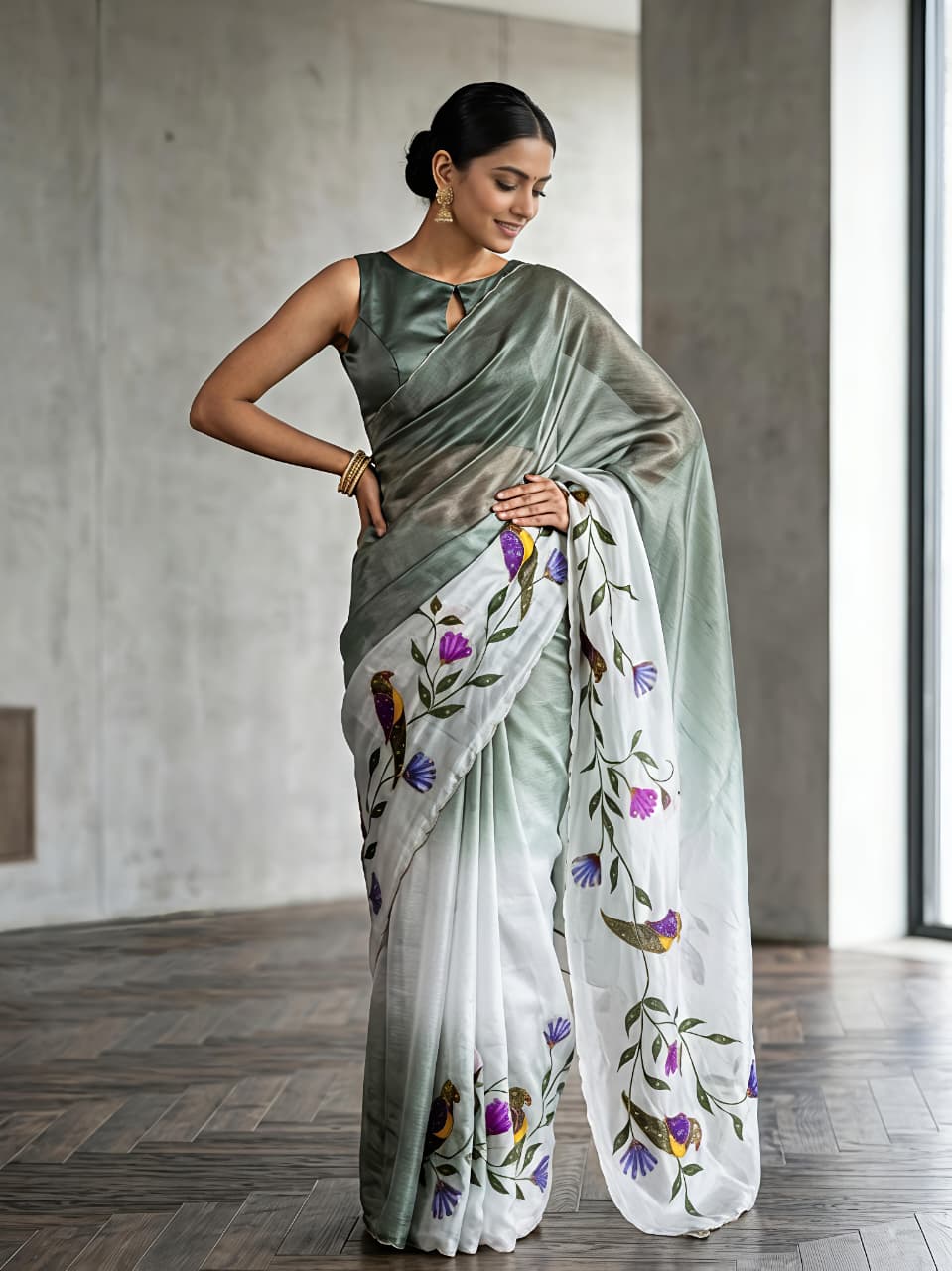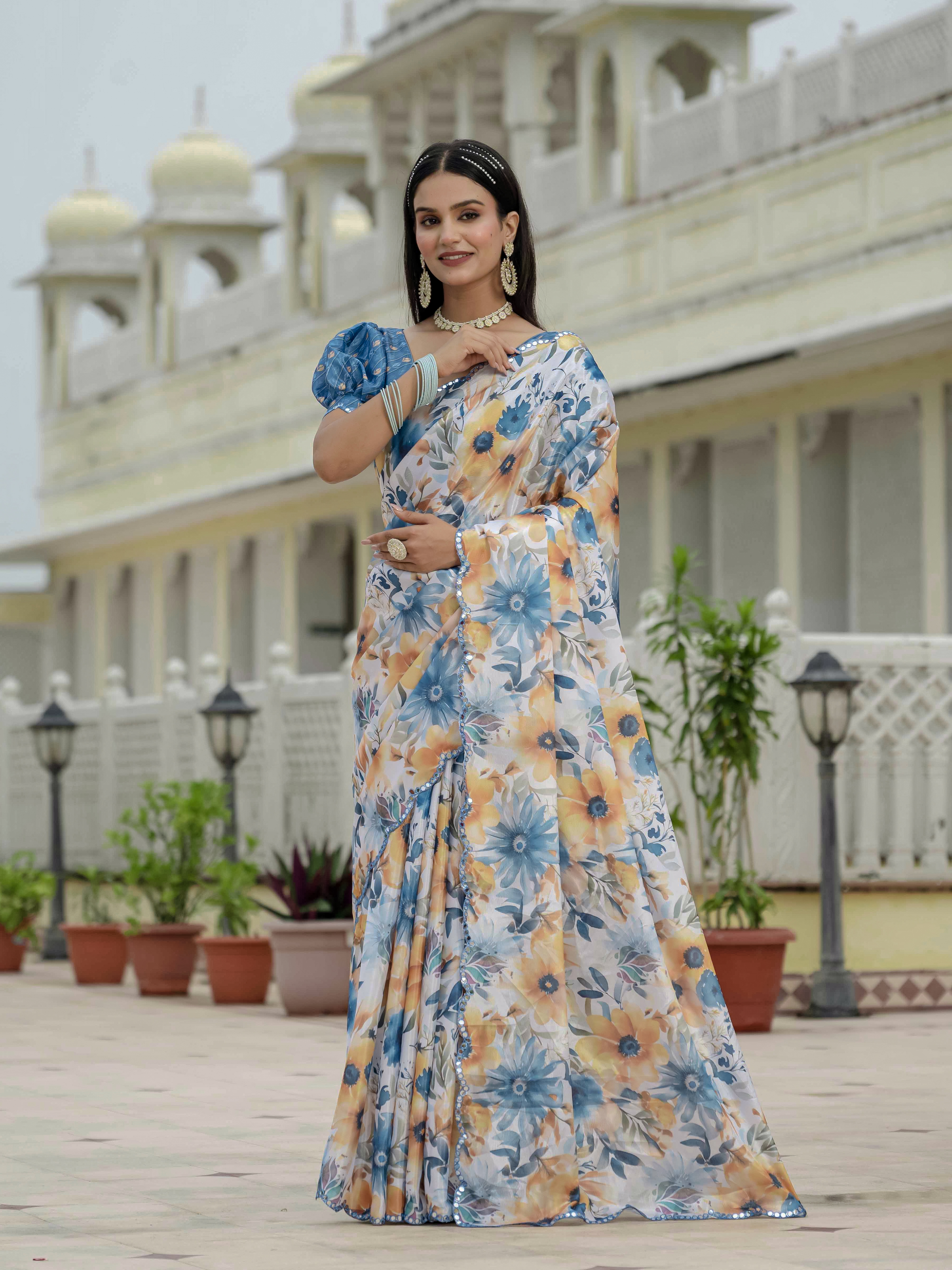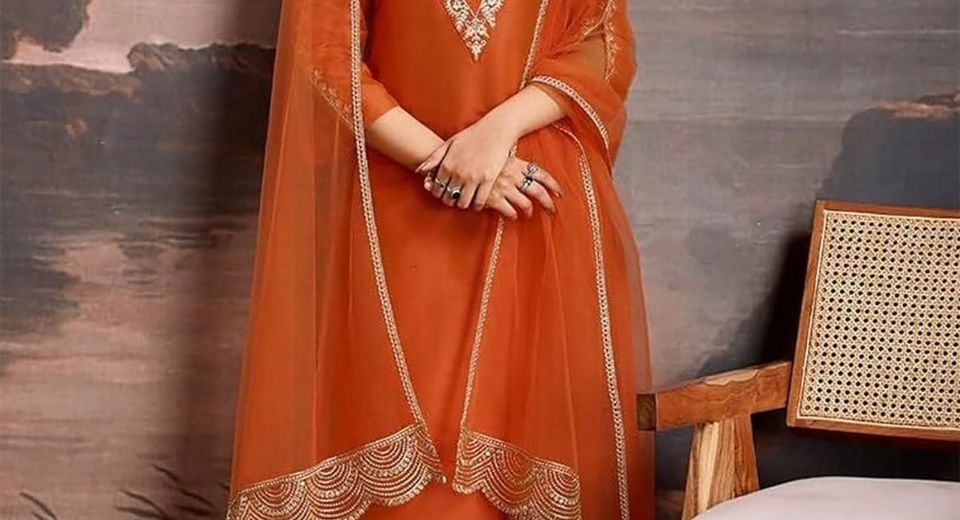
Haryanvi Cultural Fashion brings together practical silhouettes, graceful drapes and the visual language of Haryana without requiring a costume-like interpretation. Traditional sarees, salwar suits, odhnis, cotton fabrics, earthy colours and modest jewellery can create an outfit that feels connected to the region while remaining comfortable for a family ceremony, festival or cultural gathering.
The most useful way to approach Haryanvi dressing is to understand the balance between function and ornament. Clothing should allow movement, withstand a long day of hospitality and celebration, and still show detail through a border, woven motif, embroidered dupatta or carefully chosen accessory.
Haryanvi Cultural Fashion and its defining elements
Haryanvi Cultural Fashion is defined by comfortable traditional clothing, a composed silhouette, an odhni or dupatta, and textile details that add colour without overwhelming the wearer. The look can be created with a saree or a salwar kameez, depending on the ceremony, age group, weather and level of formality.
Haryana shares visible and textile influences with neighbouring North Indian regions, so there's no several uniform outfit worn by every Haryanvi woman. Everyday dress, wedding clothing, festival wear and stage presentation can look various. A sensible modern interpretation therefore uses recognisable elements such as a salwar suit, long kurta, dupatta, saree, silver-toned jewellery, woven borders and powerful but grounded colours.
An odhni has both aesthetic and practical importance in North Indian dressing. Draped over the head or across the shoulders, an odhni can add modesty, movement and colour to a plain kurta set. A dupatta performs a similar role in contemporary salwar suits, although its drape may be looser and more styled.
The Traditional Haryana Salwar Suits collection can be an useful reference point when choosing a regional silhouette. Related categories such as Garhwali Traditional Salwar Suits, Traditional Bihari Salwar Suits and Traditional Madhya Pradesh Salwar Suits show how North and Central Indian traditions can share the salwar-kameez structure while differing in colour, textile detail and styling.
Haryanvi Cultural Fashion fabrics for sarees and suits
Cotton, Chanderi, silk blends, crepe and Banarasi silk can all work for a Haryanvi-inspired traditional outfit, but each fabric creates a different level of formality and comfort. Cotton is the most practical choice for daytime heat, while woven silk and embellished Chanderi are better suited to festive evenings.
Which fabric works for a daytime ceremony?
Cotton works best for a daytime ceremony because it allows air circulation, absorbs perspiration and usually holds a structured kurta shape without heavy lining. Cotton salwar suits traditional in appearance are especially useful for daytime pujas, community gatherings and summer family events.
A cotton kurta with a printed, woven or lightly embroidered dupatta can look more regionally grounded than a heavily sequinned outfit. A cotton dupatta measuring approximately 2.25 to 2.5 metres provides enough length for a shoulder drape or a modest head covering.
The Kanchi Cotton Zari Woven Kurti Set with Traditional Dupatta combines a breathable base with a zari accent. The set demonstrates how a small amount of metallic weaving can make cotton appropriate for a festive gathering without making the garment too heavy for warm weather.
When should you choose Chanderi or silk?
Chanderi and silk work best for festive events when a lighter fabric with visible lustre is preferred. Chanderi creates a delicate, slightly sheer surface, so a lined Chanderi kurta set is more practical than an unlined garment for formal wear.
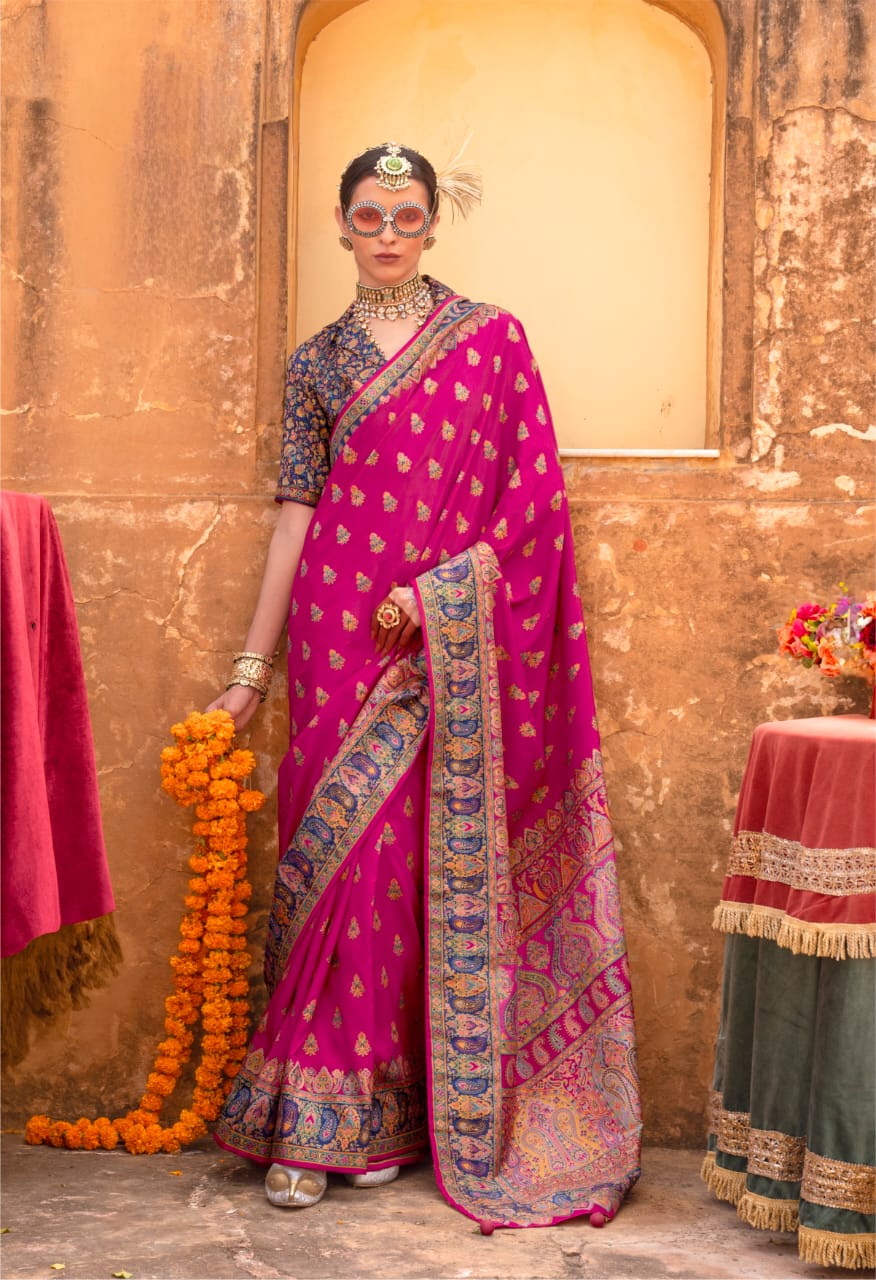
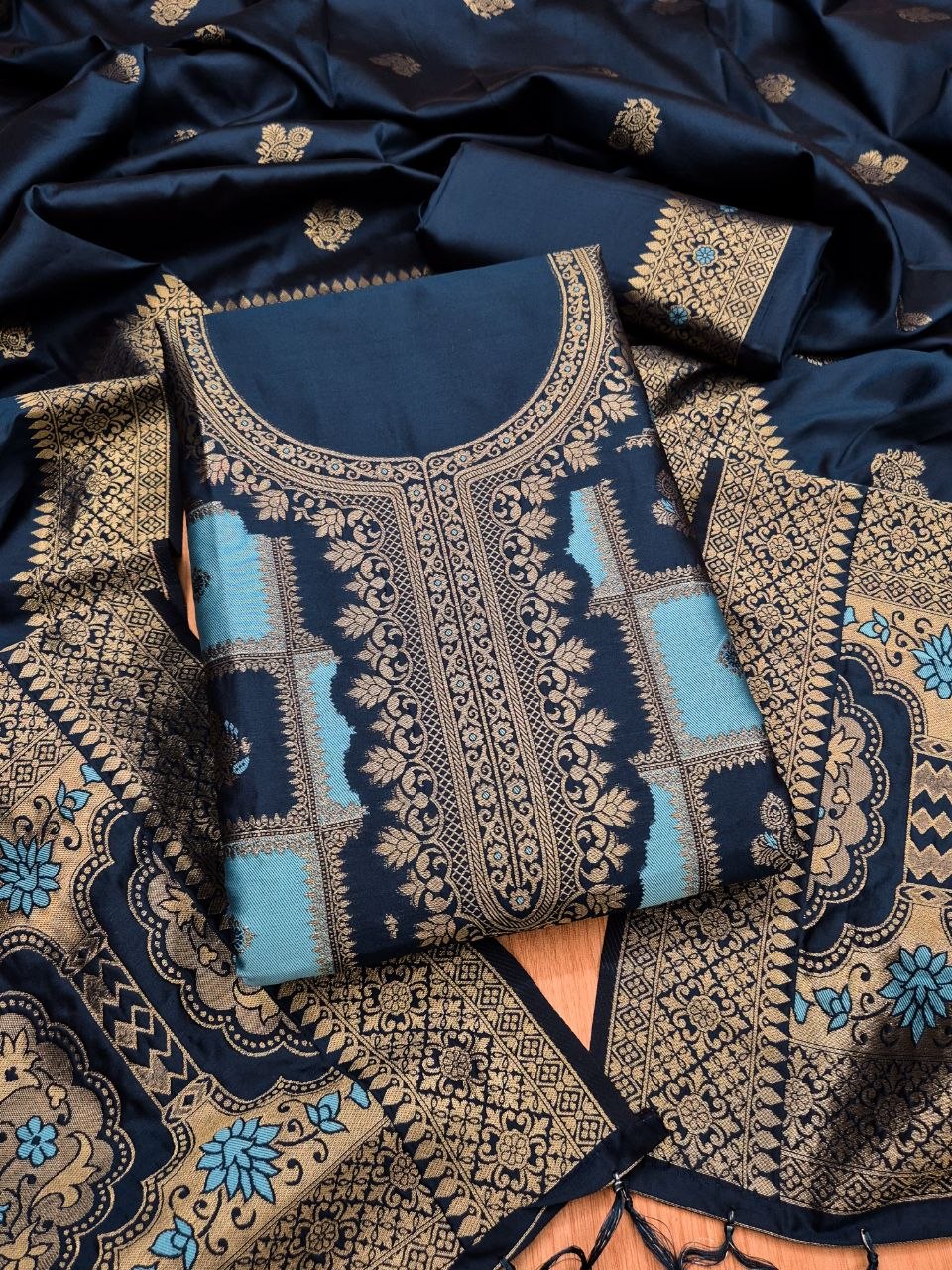
Chanderi silk and Banarasi silk add a ceremonial finish through their sheen and woven zari. A Banarasi saree with traditional motifs can be styled with a simple blouse so that the textile remains the visual focus. Crepe falls softly and suits a longer festive kameez or maxi-style silhouette, while Vichitra silk offers a richer drape for embroidered garments.
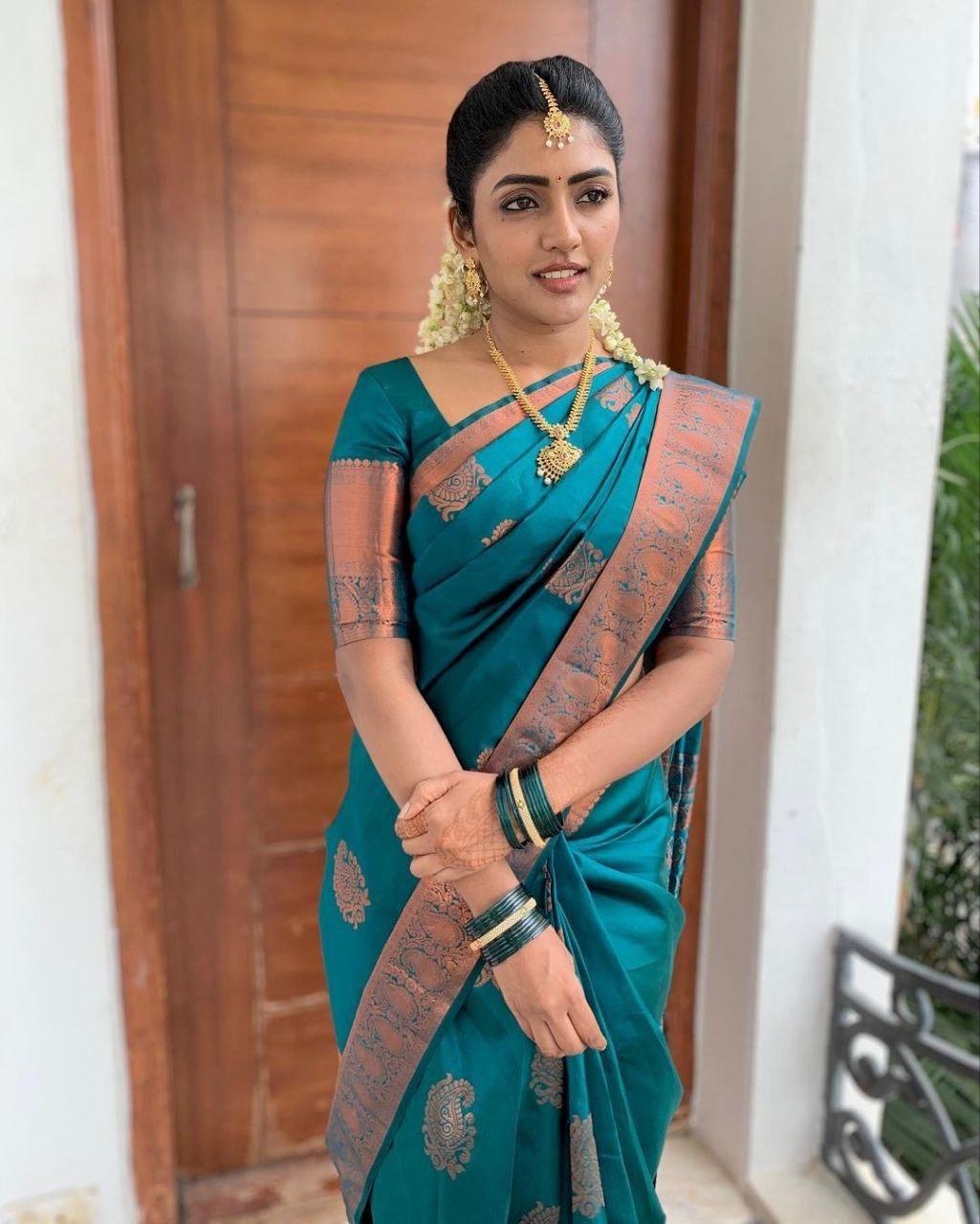
The Festive Teal Banarasi Saree with Traditional Motifs shows how a saturated jewel tone and woven pattern can provide ceremony-ready impact without excessive surface decoration. The Traditional Salwar Suits in Festive Colours collection gives a similar lesson in using colour as the primary source of festive character.
Haryanvi Cultural Fashion: saree or salwar suit?
Choose a salwar suit for easier movement and longer daytime wear, and choose a saree when the ceremony calls for a more formal, draped and distinctly festive appearance. Both options can communicate traditional style when the fabric, border, colours and accessories are selected with restraint.
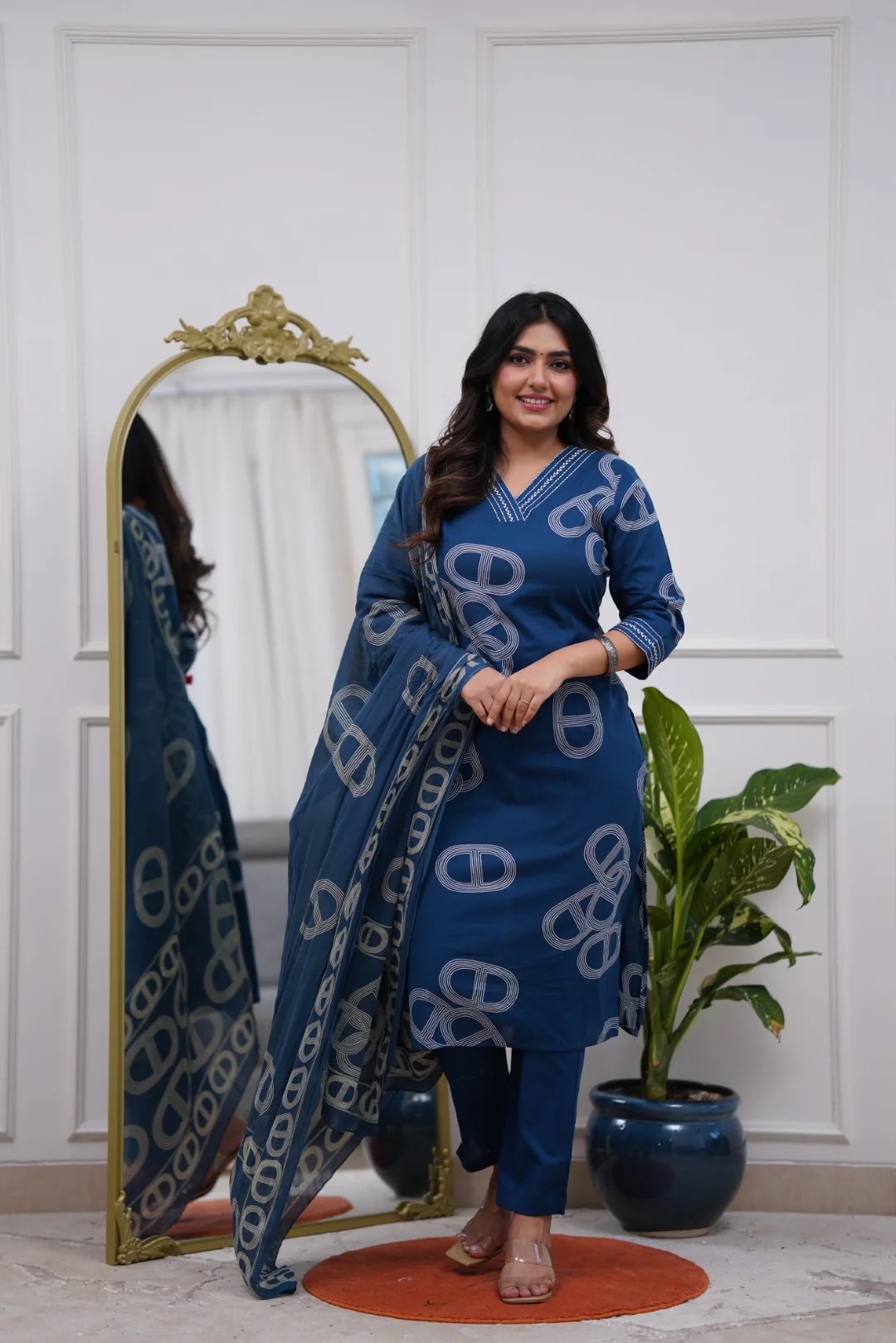
A salwar suit is usually the more practical option for women who will be serving food, greeting guests, travelling between venues or sitting on the floor. A readymade salwar suit traditional in cut can reduce dressing time, while a fully stitched salwar suit gives a consistent fit in the kurta, trouser and dupatta. A three-piece set also makes it easier to coordinate the colours without buying each component separately.
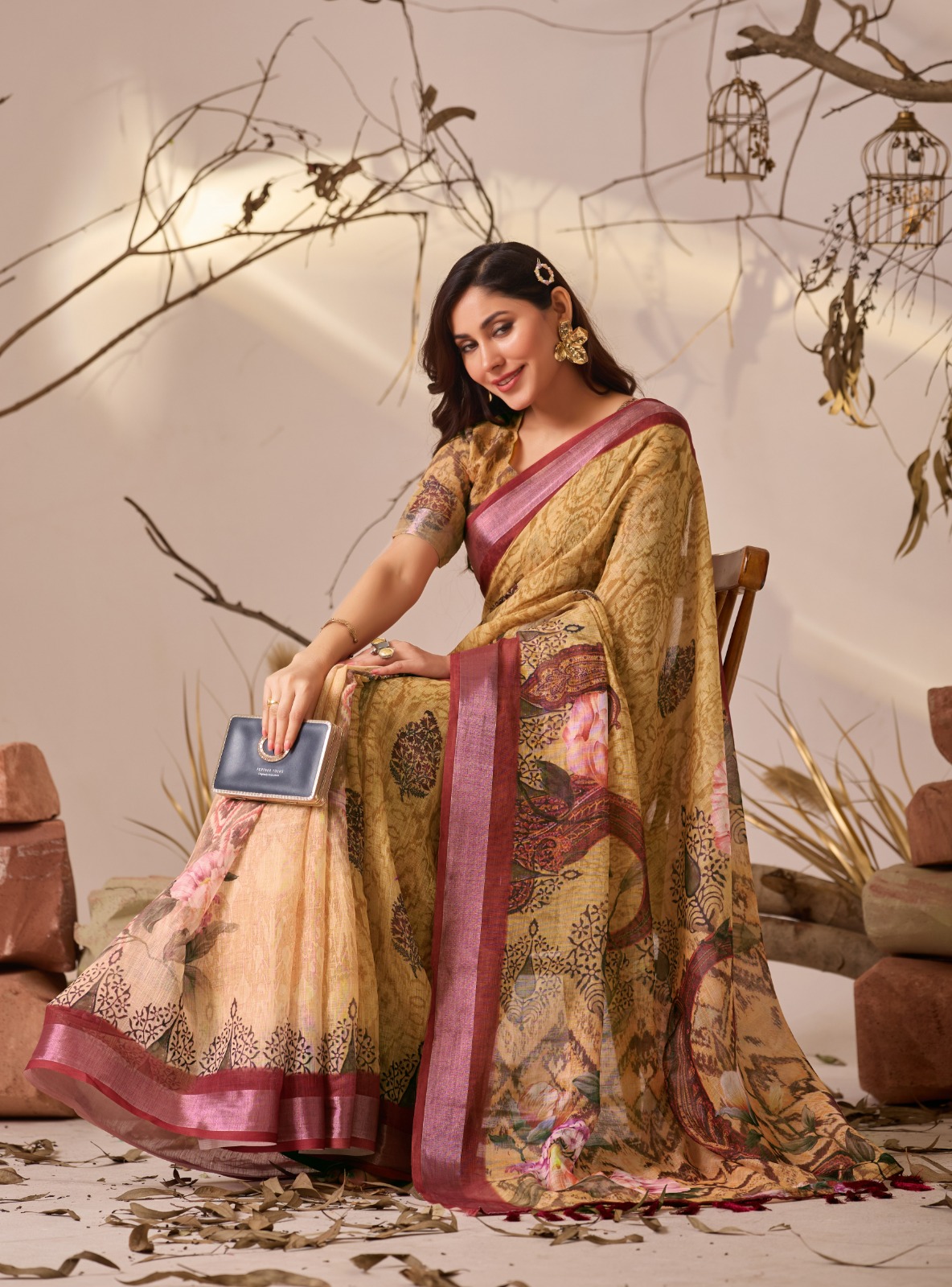
A saree may be more appropriate for a wedding ritual, formal family portrait or evening celebration. A saree also gives the wearer greater control over pleat width, pallu length and waist placement, although it may need more adjustment during a long event.
Women who prefer a suit but want a saree-like sense of occasion can choose a long kurta, a bordered dupatta and a fitted or straight trouser. The Garhwali Traditional Salwar Suits collection and Traditional Bihari Salwar Suits collection illustrate how a traditional suit can remain distinctive through its dupatta and surface details rather than through an elaborate silhouette alone.
Haryanvi Cultural Fashion outfit ideas for each occasion
A successful outfit depends on matching fabric weight, embroidery and silhouette to the activity rather than choosing the most decorated garment available. The following combinations provide practical starting points for traditional dressing.
What should you wear to a daytime family ceremony?
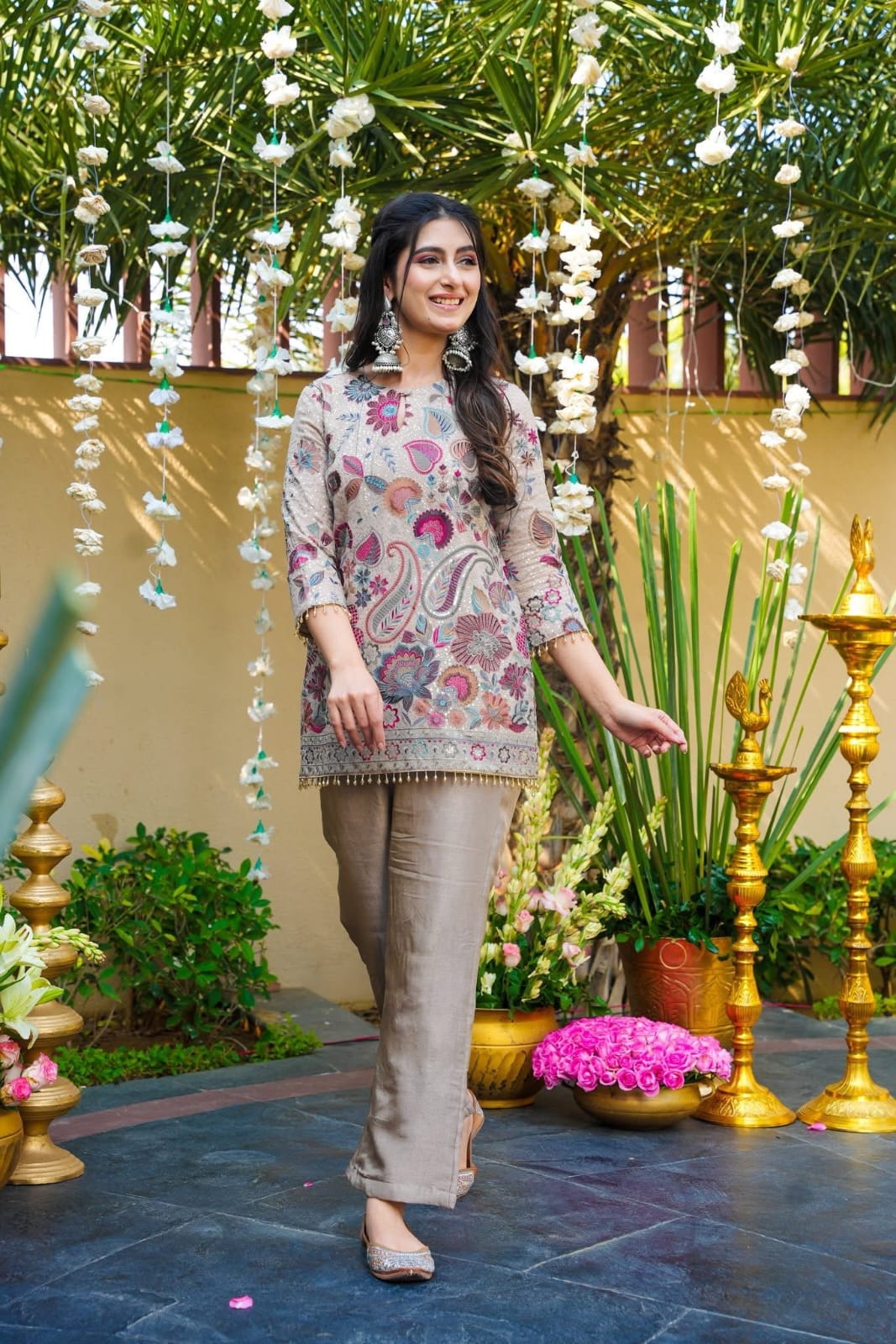
Wear a light cotton or Chanderi kurta set with a contrasting dupatta, low-heeled juttis and small earrings for a daytime family ceremony. The Pastel Blue Embroidered Chanderi Kurta Set with Dupatta brings a soft palette and a lightweight festive surface that can be finished with silver-toned bangles and a neatly pinned dupatta.
Pastel blue works particularly well in daylight because it reflects light without appearing stark. Add a small bindi, a low braid or bun and a fabric potli for a polished look that remains comfortable during several hours of sitting and conversation.
How can you style a suit for a festival?
Choose a vivid three-piece suit with embroidery, a defined dupatta border and a comfortable straight or slightly flared kurta for a festival. The Orange Thread Embroidered Ethnic Suit Set uses threadwork as its main decorative element, making it an useful model for a bright outfit that doesn't rely entirely on metallic embellishment.
The Multicolor Embroidered Crepe Maxi Suit Set for Festive Wear suits a more contemporary interpretation of traditional clothing. The maxi length adds movement, while multicolour embroidery gives the outfit a celebratory appearance. Choose flat juttis or cushioned sandals if the event involves standing or walking for several hours.
What works for an evening wedding function?
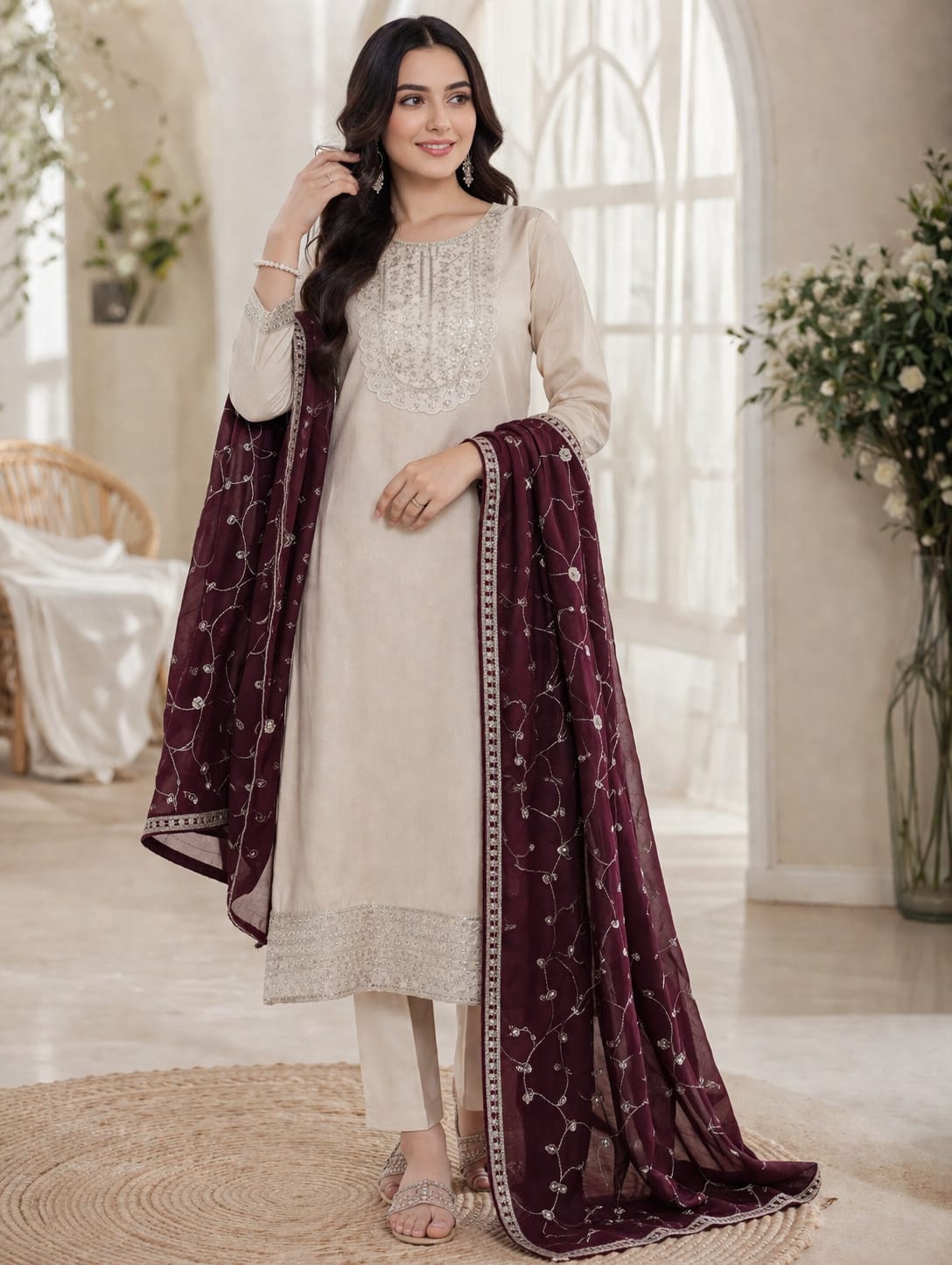
Select silk, Banarasi or richly finished Chanderi for an evening wedding function, and limit additional accessories to one or two strong accents. The Elegant Beige Vichitra Silk Embroidered Kurta Set for Women gives a neutral base for antique-gold earrings, a coloured bindi or a deeper-toned dupatta.
An ivory outfit can look festive when embroidery and accessories provide enough contrast. The Ivory Floral Embroidered Chanderi Silk Kurta Set Women can be paired with maroon, rust, teal or mustard accessories. Avoid matching every item to the same shade because contrast helps floral embroidery remain visible in evening light.
Which outfit suits an understated formal gathering?
Wear a dark kurta, straight trousers and a lighter dupatta for a composed outfit at a formal family gathering. The Navy Blue Traditional Kurta Pant Dupatta Ensemble brings a restrained base that can be lifted with silver jhumkas, a printed odhni-inspired dupatta or embroidered footwear.
The Traditional Madhya Pradesh Salwar Suits collection can also inspire a more understated approach, particularly when the outfit uses a straight kurta, a defined border and one dominant colour rather than several competing embellishments.
Haryanvi Cultural Fashion fit and construction guide
A traditional suit should allow comfortable arm movement, enough ease across the bust and hips, and a trouser or salwar rise that doesn't restrict sitting. Good fit matters more than extra embellishment because a poorly proportioned kurta can make expensive fabric look untidy.
Measure the bust at the fullest point, the waist at the natural waistline and the hips at the fullest point before selecting a readymade set. Also check kurta length, sleeve length, trouser length and the garment lining. A petite wearer may find a very long maxi kurta overwhelming, while a taller wearer may need a longer hem and a dupatta with greater width.
Fully stitched salwar suits are convenient when the listed measurements closely match the wearer. Alteration is usually easier at the side seams and trouser hem than at heavily embroidered necklines or armholes, so inspect those areas before purchasing.
A salwar suit design girl can wear generally benefits from lighter fabric, simpler fastenings and a shorter, easier-to-manage hem. A young wearer can use a straight kurta with elastic-waist trousers or a modestly flared silhouette instead of a heavily layered anarkali. Adults should check whether embroidery feels scratchy at the neckline, armhole or waist before wearing the garment for a full day.
Formal salwar suit ladies can wear for receptions often use a longer kurta, a more polished fabric and controlled embellishment. A formal cut doesn't require a floor-length hem; a well-finished knee-length or calf-length kurta can look equally refined when the dupatta drape and footwear are coordinated.
Haryanvi Cultural Fashion colours, jewellery and draping
Deep teal, rust, orange, navy, beige, ivory, mustard, maroon and leaf green create a convincing traditional palette because these shades provide enough depth for woven borders and embroidery to show clearly. Pastel blue and soft beige work well for daytime events, especially when paired with antique gold, silver or a contrasting dupatta.
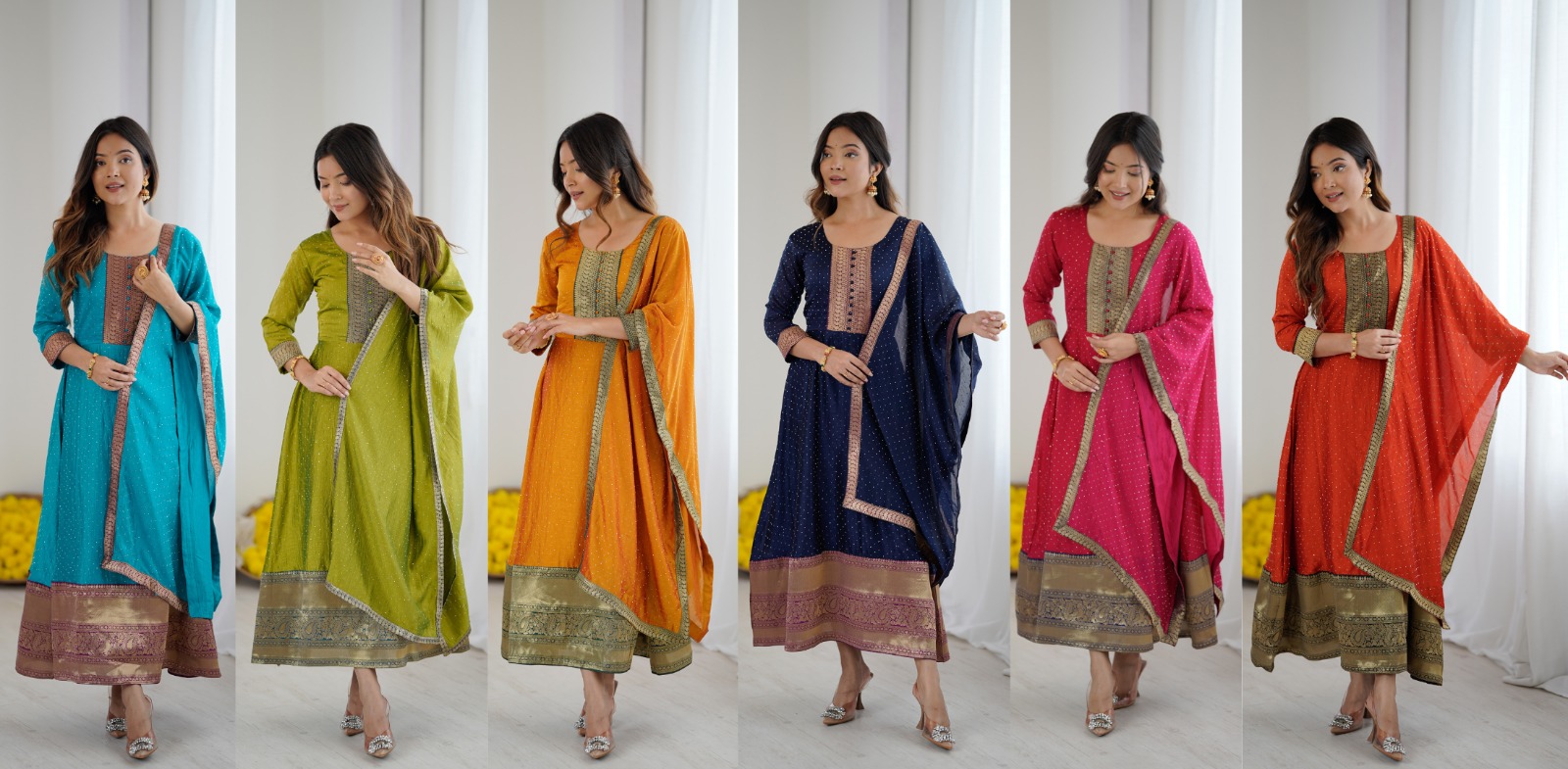
Zari is most effective when it has a clear relationship with the base colour. Gold zari complements orange, rust, teal, beige and maroon, while silver zari works naturally with navy, ivory, pastel blue and cool green. Mixing gold and silver is possible, but one metal should remain visually dominant.
Silver jhumkas, glass bangles, a small nose pin, a simple chain and a bindi can provide cultural context without turning a current outfit into theatrical costume jewellery. For a more formal wedding, add one statement piece such as a broad necklace or a pair of chandbalis instead of wearing large earrings, necklace, bangles and head jewellery together.
Pin the dupatta at the shoulder when movement matters, and use a second discreet pin near the waist if the fabric keeps slipping. A head drape should be light enough to remain comfortable and should not pull the neckline backward. A saree pallu can be pleated over the shoulder for structure or left looser for movement, but the pleats should be secured before leaving home.
How to buy and care for Haryanvi Cultural Fashion
Choose an outfit by checking fabric, measurements, lining, embroidery, dupatta dimensions and care instructions before considering colour alone. Online buyers should compare the garment chart with a familiar well-fitting kurta rather than relying only on a general small, medium or large label.
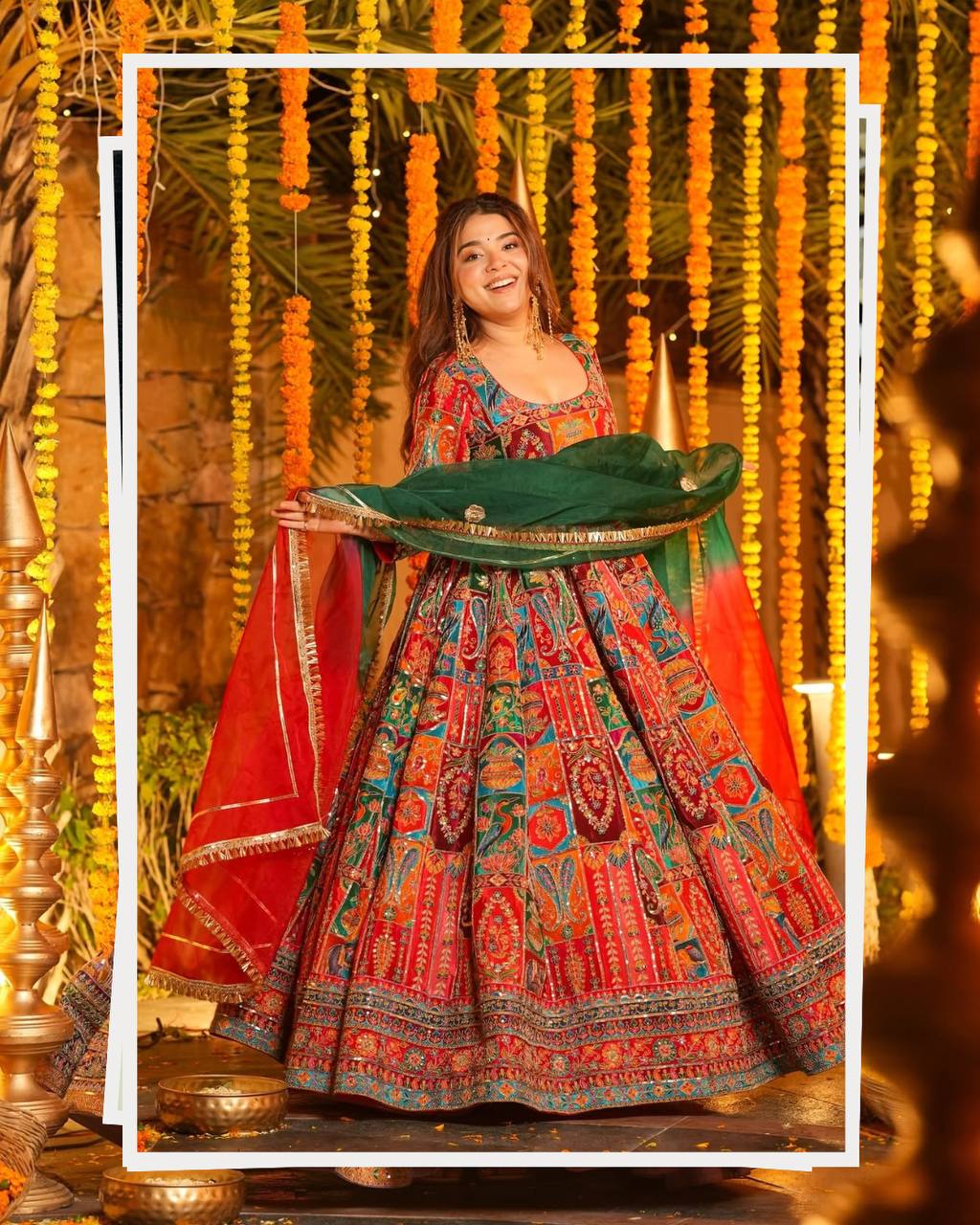
Inspect zari and embroidery for loose threads, especially around the neckline, sleeve edge and dupatta border. Check whether the garment is lined, whether the trouser waistband is elasticated or fixed, and whether the dupatta is wide enough for the intended drape. A readymade suit is most useful when the full set is wearable without major tailoring.
Keep Banarasi silk, Vichitra silk and heavily embroidered garments away from direct sunlight and store them folded in breathable cotton rather than sealed plastic. Refold silk garments every few months to reduce permanent crease lines, and place acid-free tissue between dense embroidery if the surface rubs against itself.
Wash cotton according to the care label, because zari borders and colour-dyed fabrics may require gentle handling even when the base cloth is washable. Dry coloured garments in shade, avoid wringing Chanderi or silk, and use low heat only after testing an inconspicuous section. Professional dry cleaning is safer for Banarasi silk, lined Chanderi silk and garments with dense metallic embroidery.
Thoughtful styling also means respecting the difference between regional inspiration and ceremonial dress. Haryanvi Cultural Fashion can borrow practical silhouettes, colour relationships and textile techniques while allowing the wearer to remain comfortable and contemporary. The strongest outfit usually has one clear focal point: a saree weave, an embroidered kurta, a distinctive dupatta or a carefully chosen jewellery piece.
Common questions about Haryanvi Cultural Fashion
Which salwar suit is trending now?
Embroidered three-piece sets, straight kurta-and-pant ensembles, lightweight Chanderi suits and richly coloured festive suits are currently versatile choices. The best option depends on the event, climate and required movement rather than trend alone.
Are cotton salwar suits suitable for traditional functions?
Cotton salwar suits are suitable for daytime traditional functions, especially in warm weather. Add zari weaving, a bordered dupatta, subtle embroidery or festive jewellery when the event requires more ornament.
What is the difference between a readymade and fully stitched salwar suit?
A readymade salwar suit arrives as a finished garment set, while a fully stitched salwar suit specifically indicates that the kurta and lower garment have already been constructed to listed measurements. Both can be convenient, but buyers should still compare the size chart with personal measurements.
Can a Banarasi saree be styled for a Haryanvi-inspired look?
A Banarasi saree can be styled for a Haryanvi-inspired look when the blouse, jewellery and drape remain balanced. Choose a simple blouse, a practical pallu arrangement and moderate jewellery so the woven Banarasi silk remains central.
How can young girls wear traditional salwar suits comfortably?
Young girls can wear lightweight cotton or Chanderi-blend suits with shorter manageable hems, soft linings and elastic-waist trousers. Avoid scratchy embroidery, heavy dupattas and long trailing layers that restrict movement.
Common Questions About Haryanvi Saree and Suit Dressing
Which salwar suit is trending now?
Embroidered three-piece sets, straight kurta-and-pant ensembles, lightweight Chanderi suits and richly coloured festive suits are versatile choices. The best option depends on the event, climate and required movement rather than trend alone.
Are cotton salwar suits suitable for traditional functions?
Cotton salwar suits are suitable for daytime traditional functions, especially in warm weather. Add zari weaving, a bordered dupatta, subtle embroidery or festive jewellery when the event requires more ornament.
What is the difference between a readymade and fully stitched salwar suit?
A readymade salwar suit arrives as a finished garment set, while a fully stitched salwar suit indicates that the kurta and lower garment have already been constructed to listed measurements. Both can be convenient, but buyers should compare the size chart with personal measurements.
Can a Banarasi saree be styled for a Haryanvi-inspired look?
A Banarasi saree can be styled for a Haryanvi-inspired look when the blouse, jewellery and drape remain balanced. Choose a simple blouse, a practical pallu arrangement and moderate jewellery so the woven Banarasi silk remains central.
How can young girls wear traditional salwar suits comfortably?
Young girls can wear lightweight cotton or Chanderi-blend suits with manageable hems, soft linings and elastic-waist trousers. Avoid scratchy embroidery, heavy dupattas and long trailing layers that restrict movement.