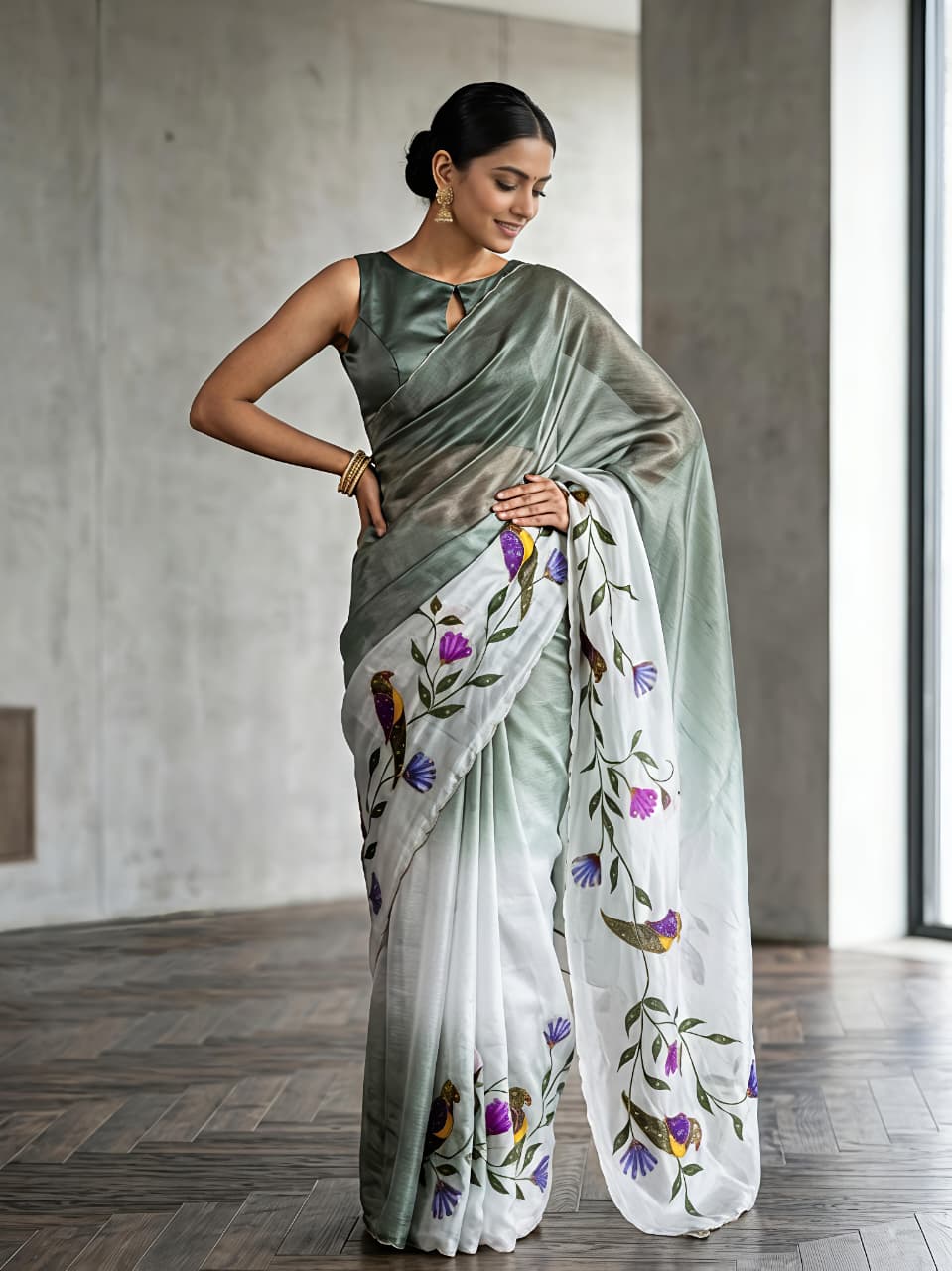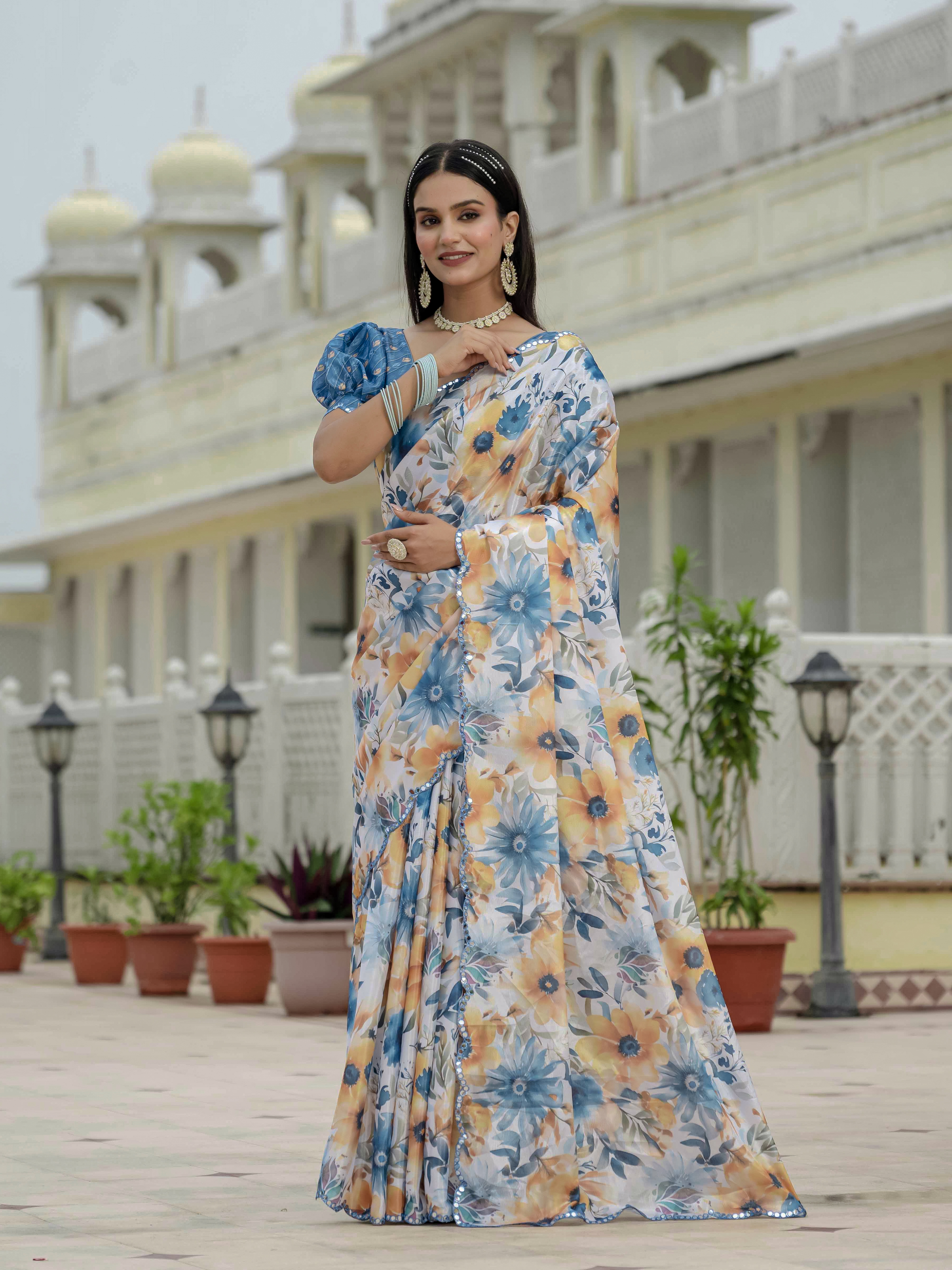
Haryana Wedding Sarees: Traditional Haryanvi & Modern Styles can range from a richly woven red Banarasi silk drape to a breathable linen-cotton saree for a daytime ritual. The most suitable choice depends on the ceremony, season, fabric weight, colour, jewellery and amount of movement required. A bride may prefer red, maroon or deep pink with zari, while a wedding guest can choose teal, purple, pastel or printed styles without losing the festive character of the outfit.
Haryanvi wedding dressing gives the saree, blouse, jewellery and odhni equal importance. Haryana doesn't have one universally fixed bridal saree tradition comparable to Kanjeevaram in Tamil Nadu or a specific Bengali red-and-white drape. Banarasi silk, soft silk, cotton, tissue and linen-cotton can all work when the drape is secure and the styling reflects the formality of the ceremony.
This guide explains how to choose a saree for pheras, haldi, mehendi, sangeet and reception events, how to build a traditional North Indian appearance, and how to make modern styling feel appropriate rather than disconnected from the wedding setting.
Haryana Wedding Sarees: Traditional Haryanvi & Modern Styles for the Main Ceremony
Banarasi silk and soft silk are dependable choices for a main wedding ceremony because their structured fall, lustre and zari borders look formal in photographs and remain appropriate for pheras and family rituals.
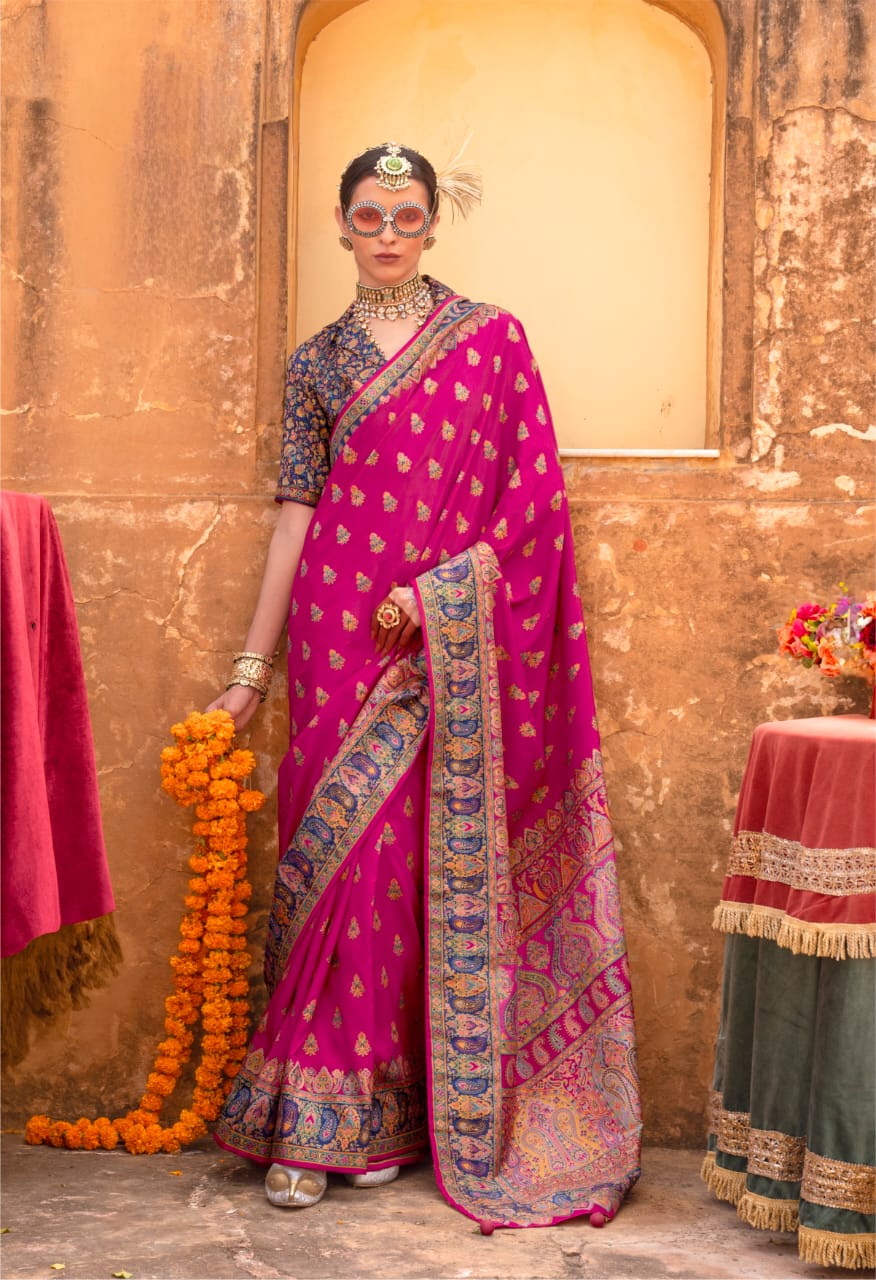
Red remains a strong bridal colour because it's visually prominent and pairs naturally with gold jewellery, but maroon, rani pink, deep green and purple can also create a ceremonial appearance. A bride should select the shade according to her jewellery, complexion, blouse and venue lighting rather than treating bright red as the only valid choice.
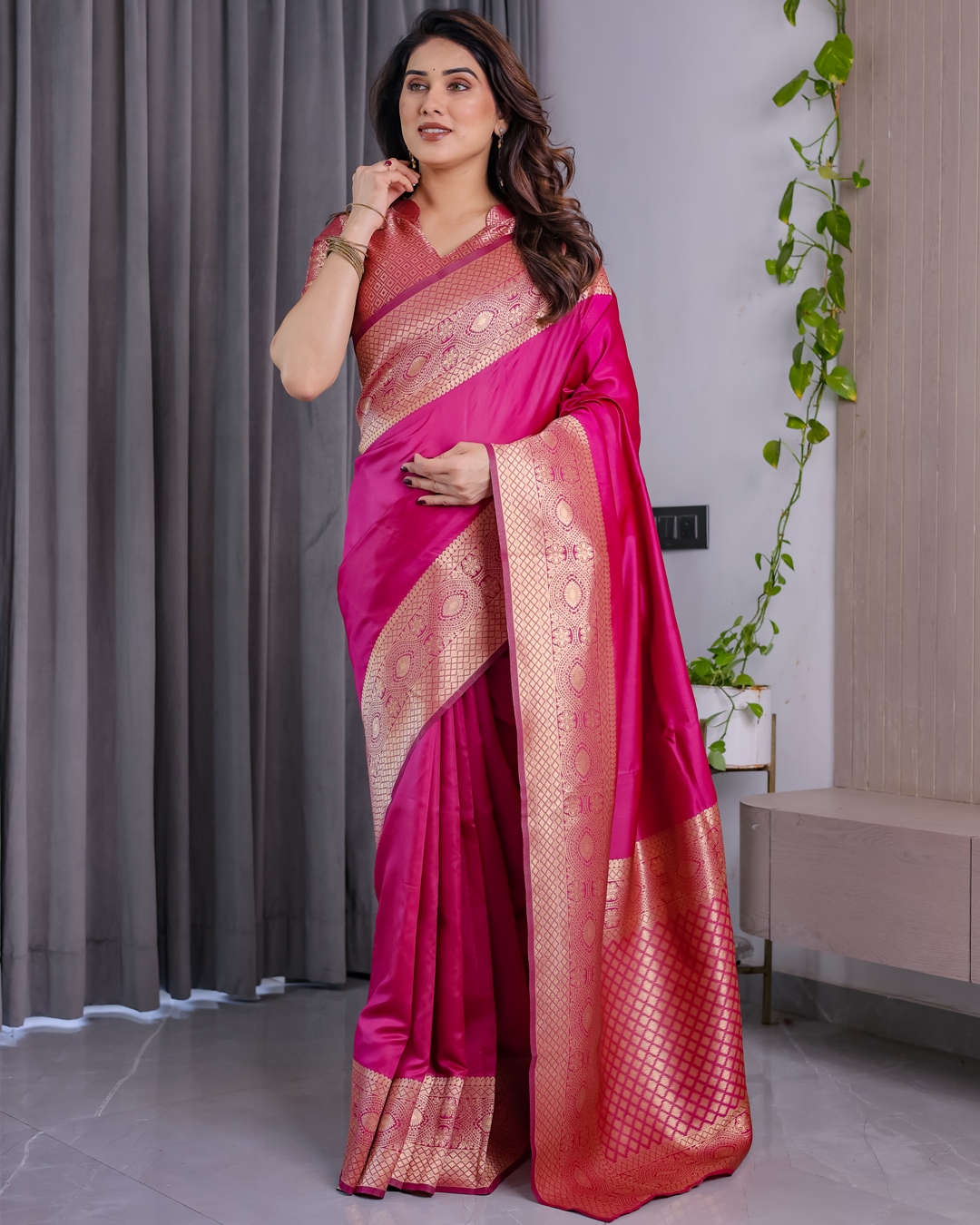
Maroon Banarasi Soft Silk Saree with Golden Zari Border provides a deeper alternative to bright bridal red. Maroon often looks especially polished with antique-gold jewellery, a gold blouse or a blouse in a darker wine tone. Rani Pink Banarasi Soft Silk Saree With Golden Zari Borders creates a brighter look and can be paired with kundan, pearls or classic gold ornaments.
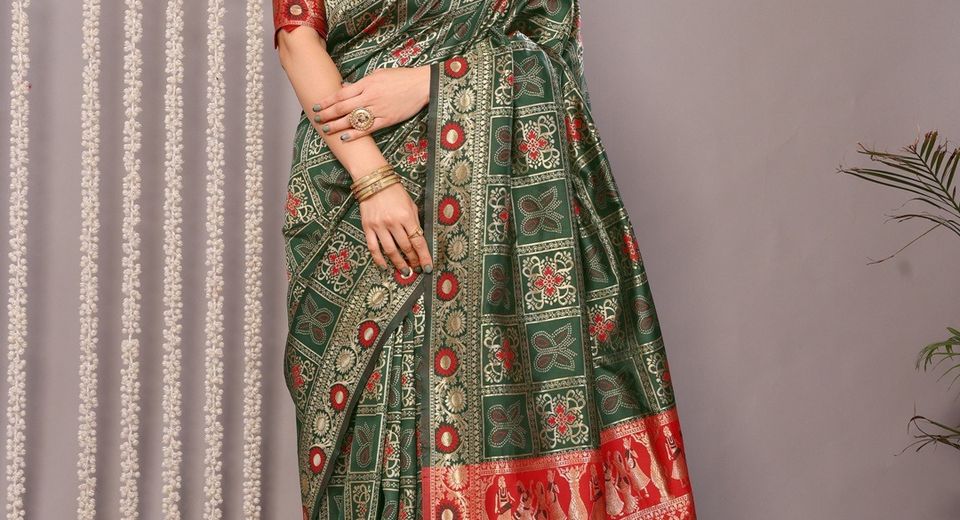
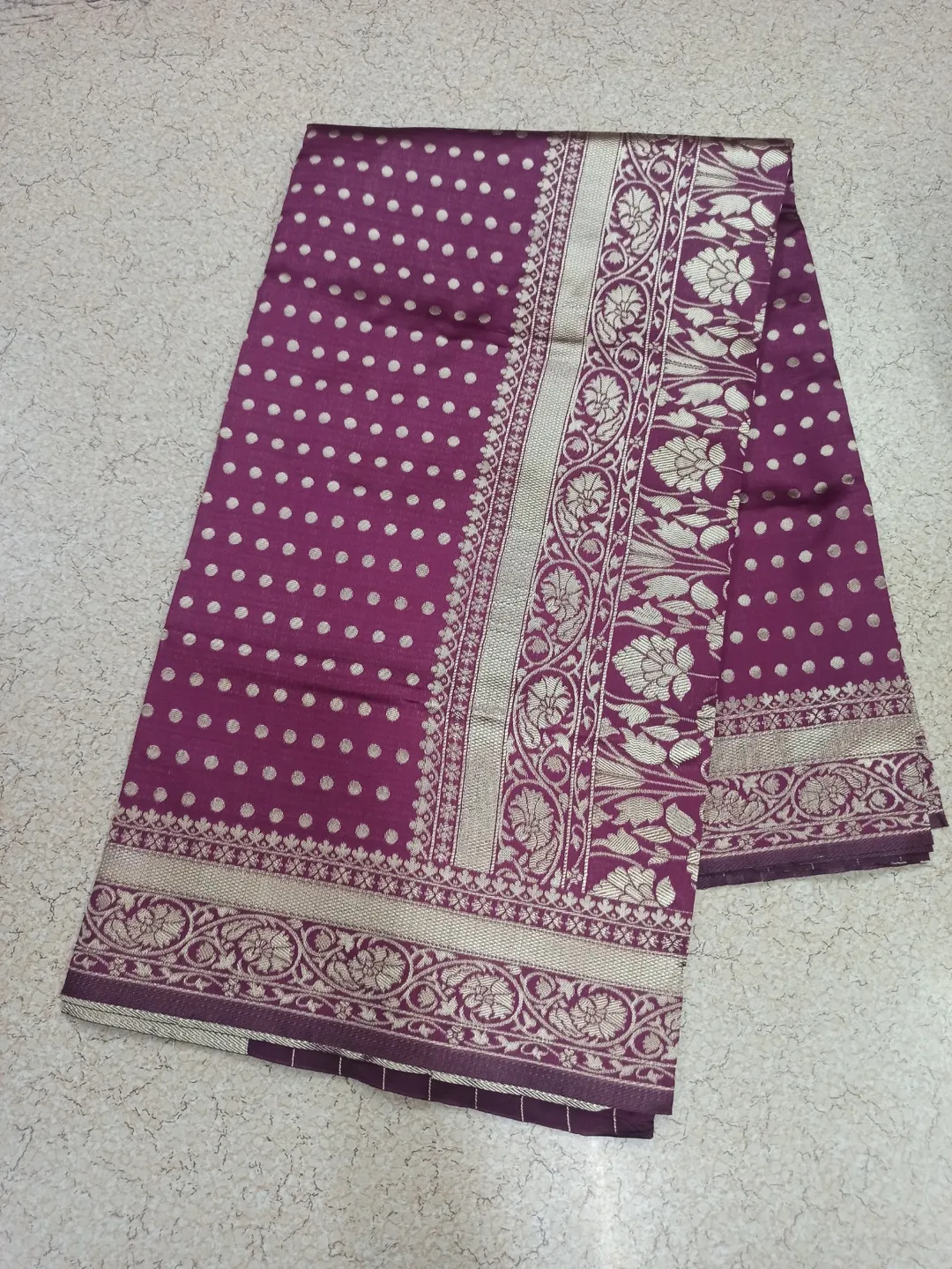
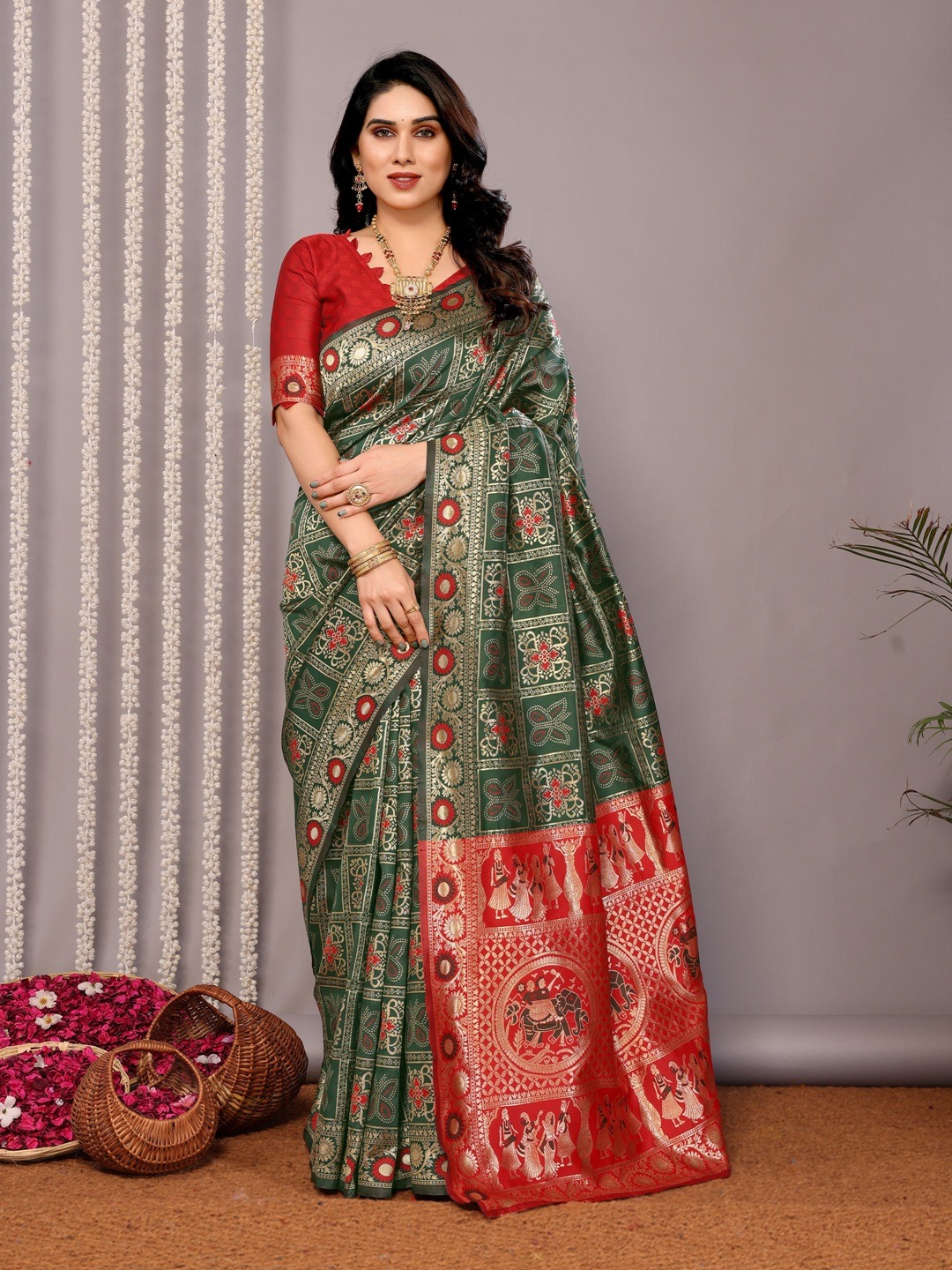
Wedding Wear Green Banarasi Saree with Red Highlights shows how a jewel-toned saree can retain a bridal connection through a carefully chosen accent colour. Repeating the red detail in the blouse piping, bangles or bindi is more effective than introducing several unrelated colours. Wedding Special Purple Banarasi Silk Saree for Women is particularly suitable for an evening ceremony or reception where plum, purple and antique-gold tones photograph well.
Haryana Wedding Sarees: Traditional Haryanvi & Modern Styles by Fabric
The best wedding saree fabric is determined by the event's duration, weather, time of day and movement rather than by ornamentation alone.
Banarasi silk and soft silk
Banarasi silk is suitable for formal weddings because zari motifs and borders catch indoor light while the fabric generally holds pleats well. Soft silk offers a smoother, more fluid fall and can feel less rigid during long ceremonies. Both fabrics need careful folding and storage because zari can crease permanently if pressed carelessly.
Cotton and tissue cotton
Cotton is practical for daytime weddings and summer functions because it's breathable and easier to wear for several hours. A cotton saree with zari work can still look festive without the weight of a dense silk weave. Maroon Cotton Saree with Zari Work for Wedding demonstrates how a comfortable base can retain a formal mood through metallic detailing.
Pastel Floral Tissue Handloom Cotton Saree with Zari Weaves works for a daytime engagement, intimate haldi ceremony or family lunch when the wearer wants a lighter texture with a visible festive finish. Tissue elements should be checked for stiffness before purchase because a very crisp saree may require more frequent adjustment while sitting or walking.
Linen-cotton and printed sarees
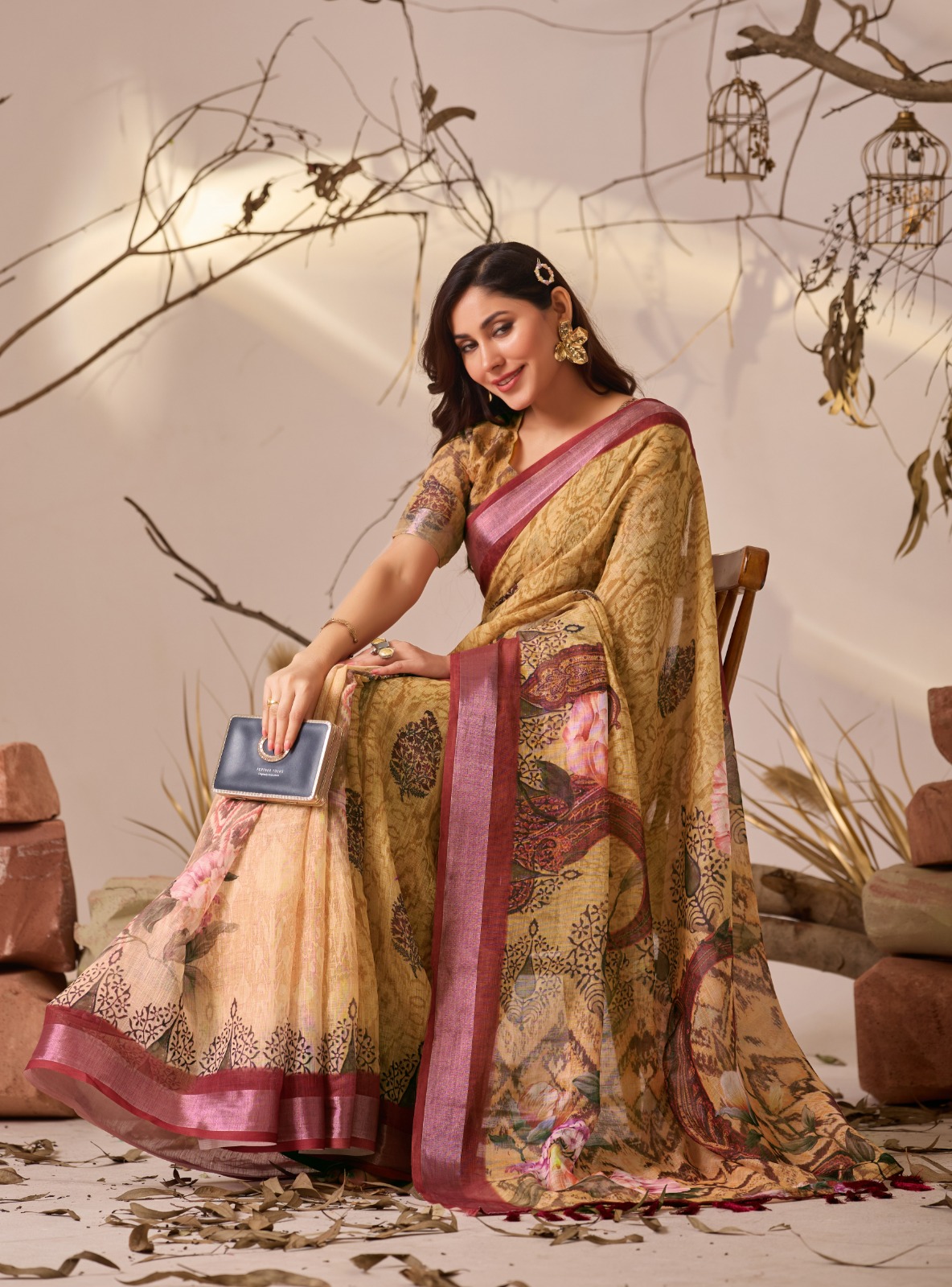
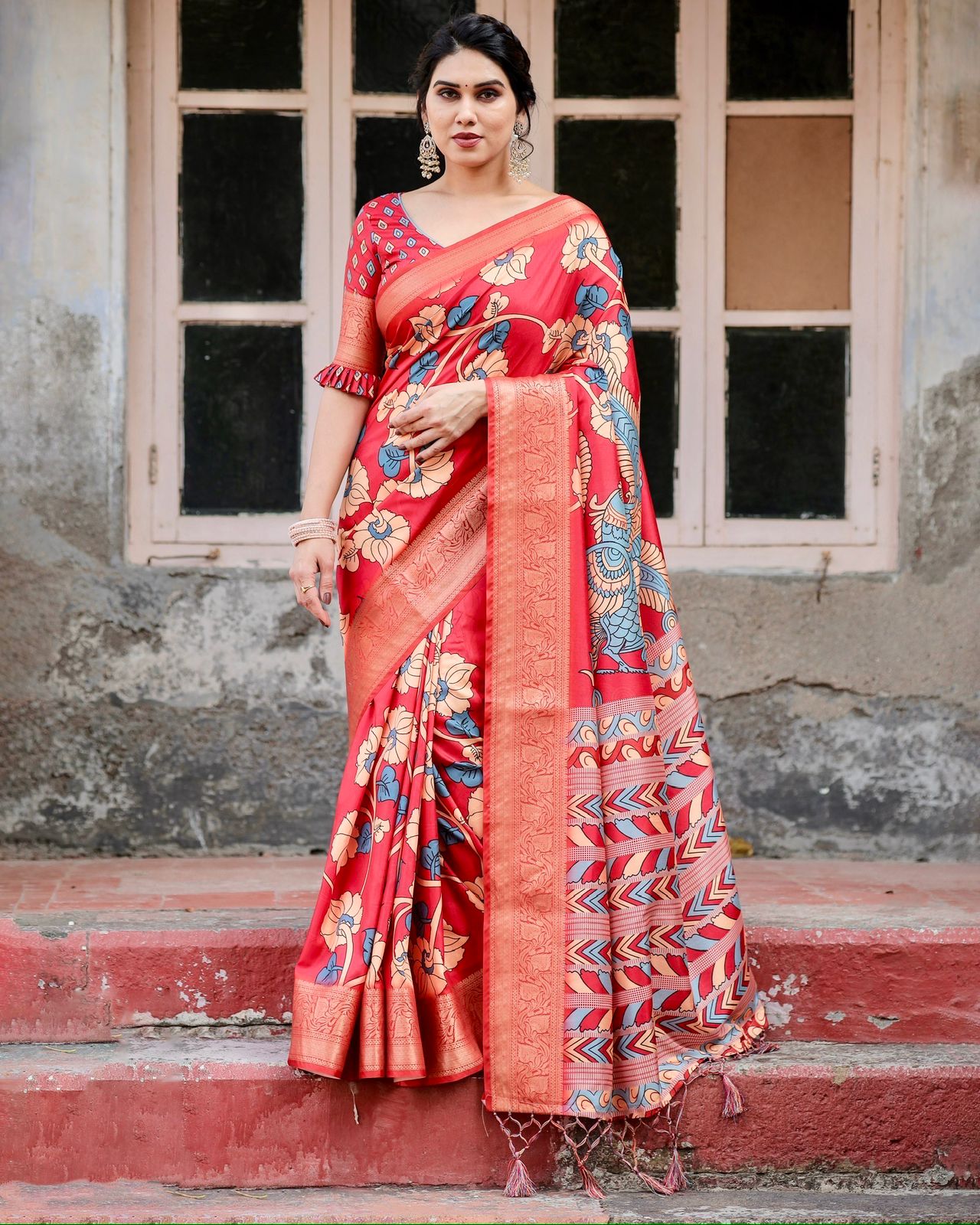
Linen-cotton is useful for modern daytime styling because it usually feels airy and gives a relaxed, textured appearance. Pastel Linen Cotton Floral Print Saree with Designer Blouse can suit an engagement, mehendi or daytime wedding guest look when paired with structured jewellery and a neatly pinned pallu.
A floral print doesn't make an outfit informal by itself. The blouse construction, jewellery scale, hairstyle and footwear establish the final level of formality. A printed linen-cotton saree with gold earrings, a clean bun and embellished sandals can look more wedding-ready than a plain silk saree styled without attention to fit.
Haryana Wedding Sarees: Traditional Haryanvi & Modern Styles in Wedding Colours
Red, maroon, rani pink, green, purple, teal and gold are reliable wedding colours because they offer ceremonial depth, photographic contrast and flexible jewellery pairings.
Bright red creates a classic bridal impression when combined with gold zari and gold-toned ornaments. Maroon has a more subdued, formal quality and is often easier to rewear for festivals or family celebrations. Rani pink adds brightness to photographs, especially in outdoor daytime settings, while red or gold accents can keep the overall look connected to wedding dressing.
Green becomes particularly effective when the saree includes red, gold or maroon details. A green Banarasi saree can be styled with a red blouse, but a gold blouse may be a better choice when the saree already contains prominent red highlights. Teal gives a contemporary jewel-tone option for guests who want colour and richness without wearing bridal red.
Purple and plum are strongest in evening lighting because warm venue lights bring out their depth. Pastels are usually better for daytime events, but pastel clothing needs contrast from the blouse, border, jewellery or makeup to avoid appearing washed out in outdoor photographs. The Pink Georgette Sarees collection can be considered when a softer, more fluid silhouette is preferred for a lighter wedding function.
Haryana Wedding Sarees: Traditional Haryanvi & Modern Styles for Each Function
Match the saree's weight and ornamentation to the function so that the outfit remains comfortable as well as visually appropriate.
Haldi ceremony
A light cotton, tissue cotton or linen-cotton saree is practical for a Haldi ceremony because turmeric paste, outdoor heat and frequent movement can make heavy silk uncomfortable. Choose a saree that can be secured firmly at the waist and shoulder, and avoid a floor-length pallu that may brush against turmeric, water or seating areas.
Mehendi and engagement
Pastel prints, floral details, lightweight zari and soft drapes work well for mehendi and engagement celebrations. The Latest Wedding Sarees Collection can help compare formal and lighter options, while a designer blouse, statement earrings or a contrasting bindi can add enough occasion detail without making the outfit bridal-heavy.
Sangeet
A sangeet saree should allow movement through the waist, knees and shoulders while remaining secure during dancing. Georgette, soft silk and lighter Banarasi styles can work, but the pallu should be pinned at the shoulder and waist. Avoid excessive trailing fabric, heavy tassels or jewellery that catches on the blouse during movement.
Pheras and the wedding ceremony
The wedding ceremony calls for a saree with a stable drape, a defined border and enough structure for photographs and seated rituals. Red, maroon, rani pink, green and purple Banarasi styles are suitable choices, while zari gives a clear ceremonial finish. A covered pallu or odhni can create a more traditional North Indian appearance when the family custom calls for head covering.
Reception
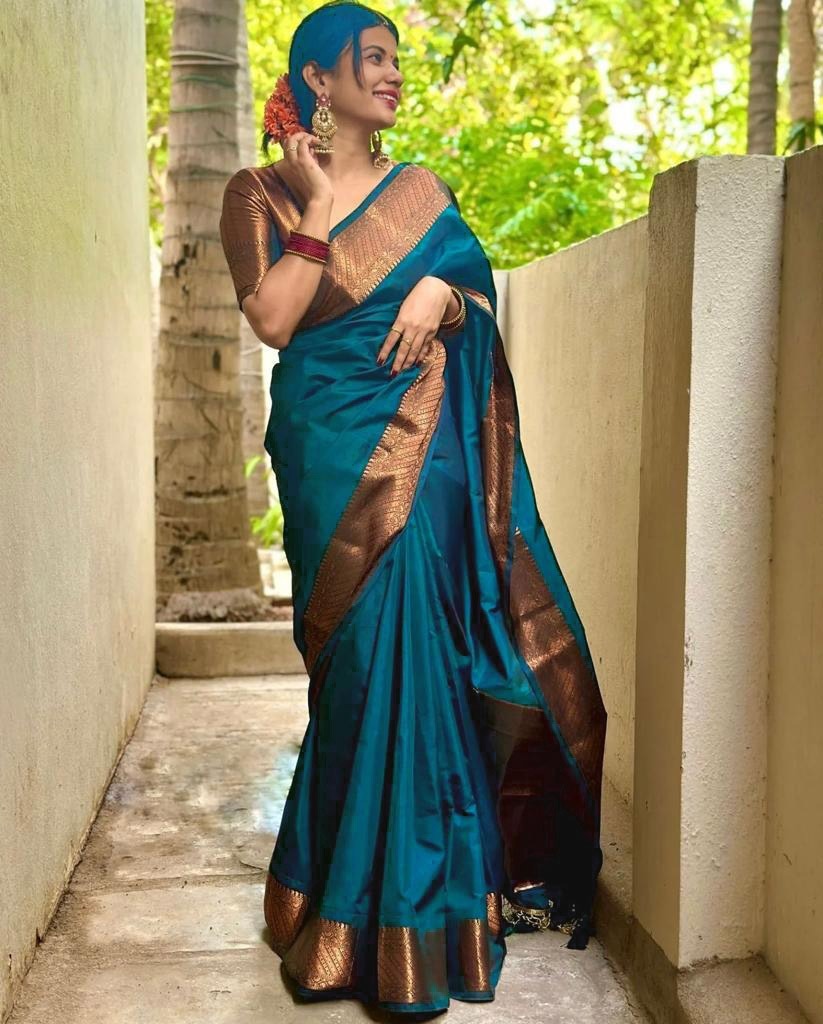
An evening reception allows more flexibility with colour, blouse design and jewellery scale. Teal, purple, wine, rani pink and deep green can look sophisticated under artificial lighting. Traditional Teal Banarasi Saree for Festive Wear can be styled with a gold blouse and restrained jewellery when the saree itself has a strong woven pattern.
Haryana Wedding Sarees: Traditional Haryanvi & Modern Styles for Draping
A secure Nivi drape with a firmly pinned pallu is the most practical option for a Haryana wedding because it preserves a familiar saree silhouette while allowing comfortable walking, sitting and participation in rituals.
Begin with a supportive blouse and a petticoat that matches the saree's fall. A cotton or satin petticoat should sit firmly above the hip bones without cutting into the waist. Make five to seven front pleats of similar width, then pin them discreetly near the waist. The exact number depends on the saree width and the wearer's height, but uneven pleats create bulk and can pull the fabric while walking.
Bring the pallu over the left shoulder and adjust its length so that it reaches around the knee or slightly below, depending on personal preference and the saree's design. A shorter, controlled pallu is safer for pheras and dancing. A longer pallu may look dramatic in photographs but needs additional pins and greater attention around lamps, seating and crowded entrances.
For a more traditional Haryanvi appearance, place the pallu over the head during a family ritual or blessing. Secure the shoulder pin behind a brooch or decorative clip, then add a second concealed pin near the waist. Test the complete drape by sitting on the floor, bending slightly and walking up steps before the wedding day.
Pre-pleating is useful when several family members need to dress quickly, but a tailor or draper should preserve the saree's border alignment. A pre-pleated saree also needs a trial because pleat spacing that suits one height may cause the border to sit unevenly on another wearer.
Haryana Wedding Sarees: Traditional Haryanvi & Modern Styles with Blouses and Jewellery
A well-fitted blouse and coordinated jewellery complete a Haryanvi wedding saree more effectively than adding decoration to every part of the outfit.
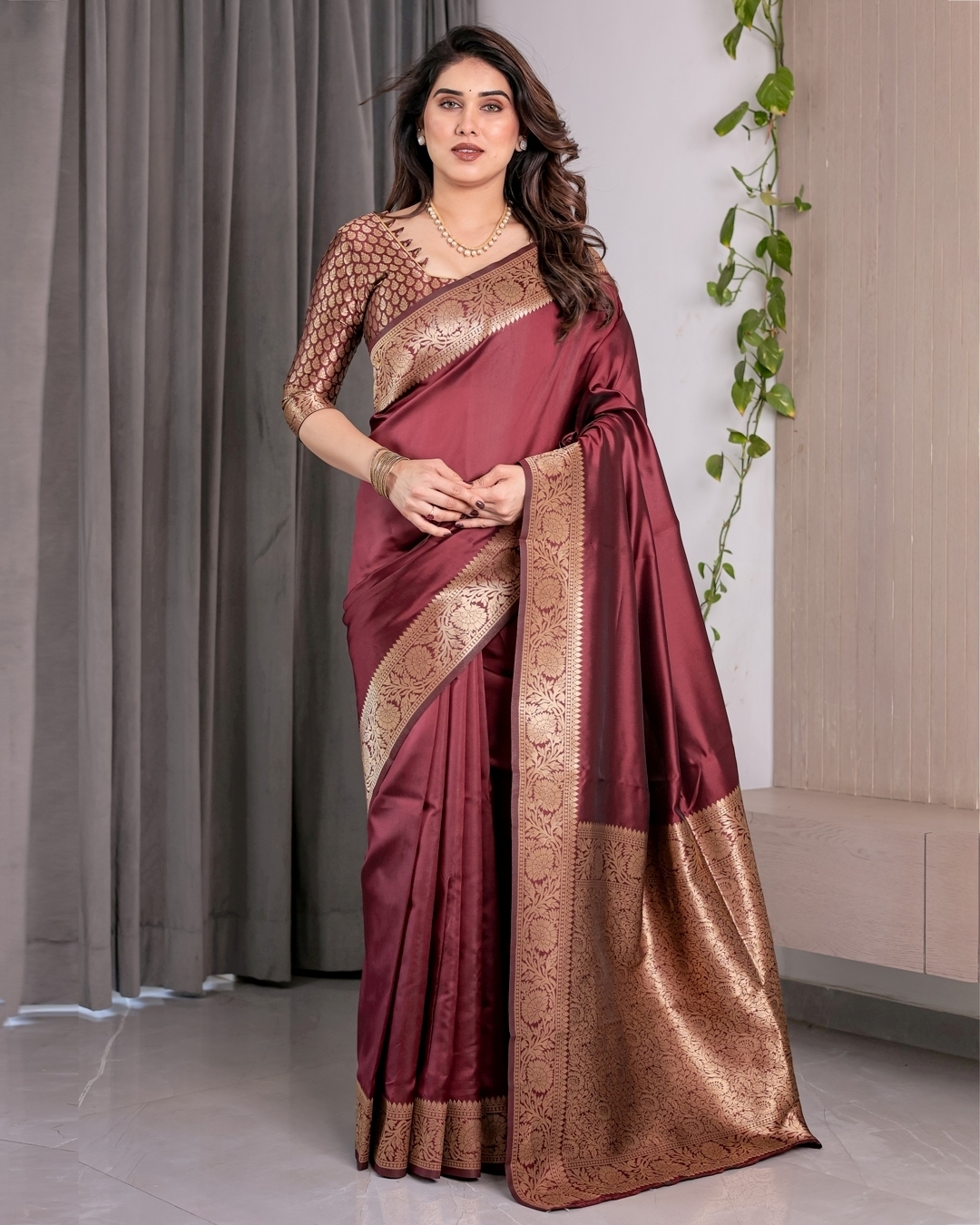
Gold zari borders pair naturally with gold-toned jhumkas, bangles, chandbalis and necklaces. A maroon saree can take an antique-gold blouse, while a rani-pink saree can use gold, deep red or a closely matched pink blouse. A green saree with red highlights can repeat red in the blouse piping, bindi or bangles instead of adding a fourth dominant colour.
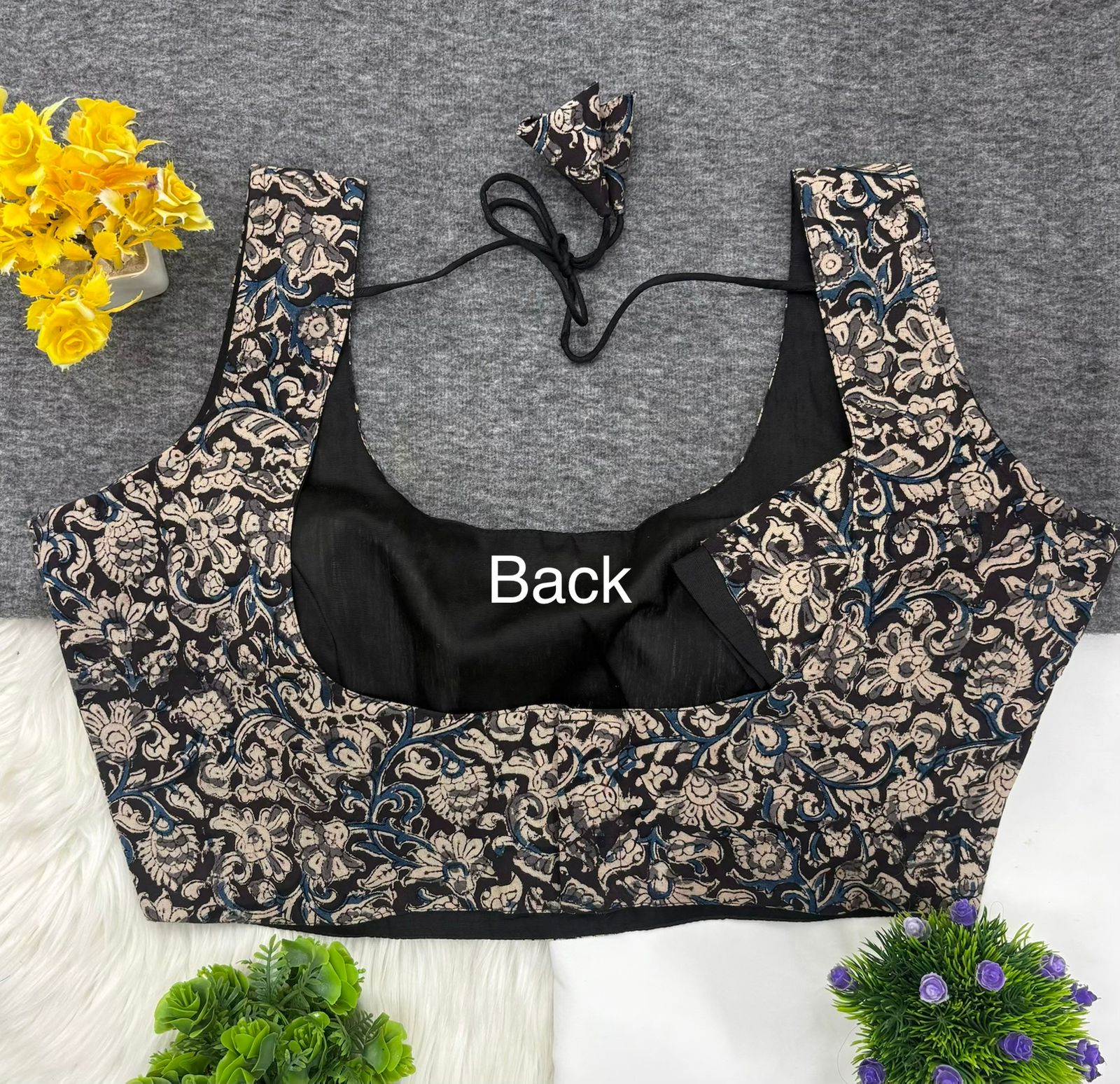
Traditional styling can include elbow-length sleeves, a higher back and a modest neckline, particularly when an odhni will be worn over the head. Modern styling may use a boat neck, square neck, short sleeves or a contrasting blouse, provided the neckline doesn't compete with a dense Banarasi border.
Jewellery scale should follow the saree's visual weight. A broad zari border and dense silk weave already create a strong focal point, so a large necklace combined with oversized earrings may crowd the face. A lightweight saree can support a statement necklace, decorative waist belt or larger earrings more comfortably.
A belt over the saree can define the waist for a reception, but the belt should be tested with the pleats before the event. A belt that's too tight can distort the border and restrict sitting. Footwear should also be tried with the complete drape because heel height changes the saree's length and the position of the front pleats.
Haryana Wedding Sarees: Traditional Haryanvi & Modern Styles on a Practical Budget
A sensible saree budget should include the blouse, alterations, lining, fall, petticoat, jewellery and draping assistance rather than counting only the saree price.
The Wedding Sarees Collection Under 4000 is useful for comparing accessible choices for guests, cousins and smaller functions. The Silk Sarees Under 3000 With Discount collection may suit shoppers seeking a silk appearance for a reception or family celebration while keeping the total outfit cost under control.
Shoppers who want a stronger Banarasi focus can compare Red Banarasi Silk Sarees for Weddings Under 1100 for guest styling, trousseau additions or additional wedding functions. A lower saree price should not lead to skipping alterations: an incorrectly finished hem or poorly placed fall can affect walking comfort and the way the border hangs.
Before buying, check the saree length, blouse-piece availability, fabric composition, border placement and care instructions. A standard saree is often close to 5.5 metres, but the required length can vary with height, drape style and whether extra fabric is needed for a head covering. Order alterations at least one to two weeks before the wedding so the blouse can be tried with the actual saree and jewellery.
Store silk and zari sarees folded with soft cotton or muslin between folds, and refold them every few months to reduce permanent creasing. Air the saree in shade rather than direct sunlight. Cotton and linen-cotton sarees can usually be washed or dry-cleaned according to their care label, but zari work should not be exposed to harsh detergent or prolonged soaking.
The most successful Haryana wedding saree is the one that respects the ceremony, supports comfortable movement and gives the wearer a clear personal style.
Common Questions About Haryana Wedding Sarees and Haryanvi Wedding Styling
What colour saree is traditionally suitable for a Haryanvi wedding?
Red is the strongest traditional bridal choice, especially with gold zari and gold jewellery. Maroon, rani pink, deep green, purple and teal are also suitable when the blouse, jewellery and ceremony formality are coordinated.
Which saree fabric is best for a Haryana summer wedding?
Cotton, tissue cotton and linen-cotton are generally more comfortable for long daytime ceremonies because they allow more airflow than dense silk. A zari border or festive blouse can add wedding detail without making the complete outfit too heavy.
Can a wedding guest wear a red saree in Haryana?
A guest can wear red, but a bright bridal red with heavy zari, veil styling and elaborate jewellery may appear too close to the bride's look. Maroon, rani pink, teal, purple, pastel or a red saree with restrained styling can create clearer separation.
How should a saree be draped for pheras?
A secure Nivi drape with five to seven even front pleats and a pinned pallu is practical for pheras. Test the drape while sitting, walking and bending, and keep the pallu controlled so it does not trail near lamps, seating or crowded ritual spaces.
What blouse works with a Banarasi saree for a Haryana wedding?
A structured blouse with a comfortable armhole and a neckline that does not compete with the Banarasi border works well. Gold, maroon, red, deep green or a carefully matched blouse can repeat a colour from the saree and create a coordinated traditional or modern look.
How should a Banarasi wedding saree be stored after the event?
Fold the saree in soft cotton or muslin, keep it away from direct sunlight and refold it every few months to reduce permanent creases. Follow the care label, avoid harsh detergents on zari and use professional cleaning when the weave or embellishment requires it.