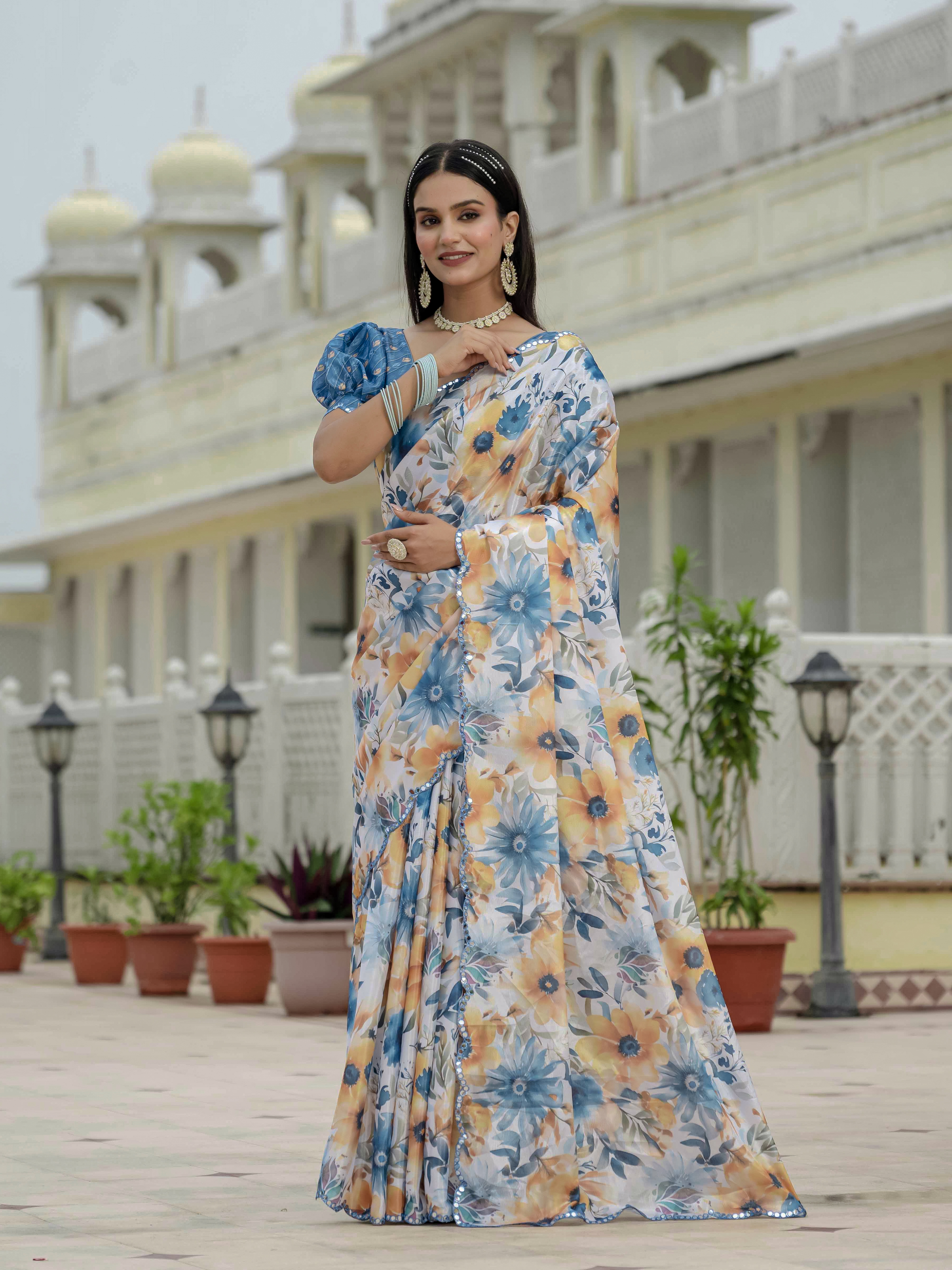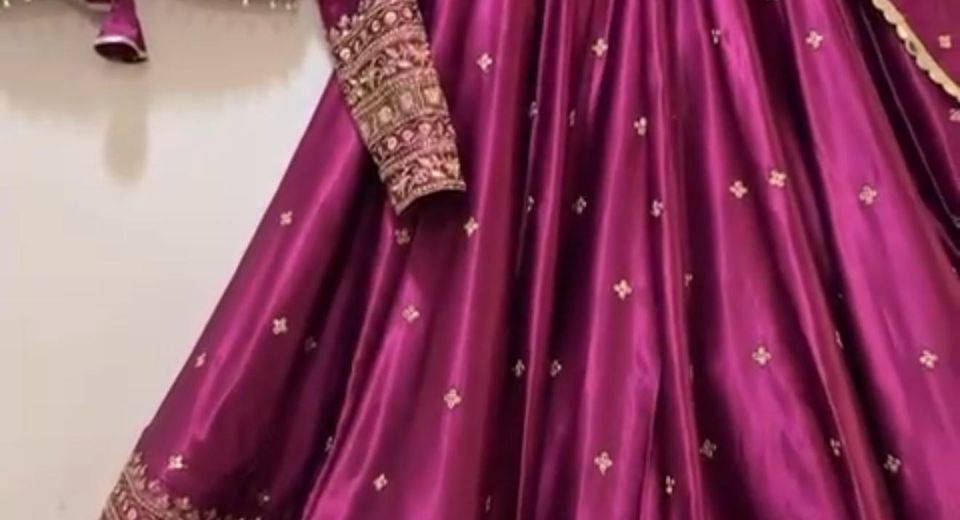
Haryana Festival Wear: Sarees, Suits & Lehengas for Women should balance regional character with the practical realities of a long family celebration. A festive outfit may want to work through temple visits, puja, dancing, meals, photographs and several hours of sitting. The best choice therefore depends on fabric, silhouette, embroidery weight, weather and the movement your event requires.
Haryanvi festive dressing often combines saturated colour, graceful drapes, comfortable salwar suits and celebratory lehenga details such as gota, mirror work, thread embroidery and zari. The aim isn't to copy one rigid costume. The aim is to build an outfit that respects North Indian festive dressing while fitting your age, personal style and budget.
For a daytime puja or family gathering, cotton, muslin, Chanderi and light georgette can keep clothing comfortable. For an evening sangeet or wedding reception, silk, Banarasi silk, velvet accents, net and richer zari details create a more formal appearance. A Haldi ceremony usually benefits from washable or easy-to-maintain fabrics because turmeric, flowers and food can come into contact with the garment.
How does Haryana Festival Wear: Sarees, Suits & Lehengas for Women reflect festive dressing?
Haryana Festival Wear: Sarees, Suits & Lehengas for Women works well when it combines bright colour, modest coverage, breathable textiles and decorative craftsmanship. Traditional influence can appear through a dupatta, phulkari-inspired embroidery, gota borders, bandhani accents, juttis or oxidised jewellery, even when the base garment is a contemporary lehenga, saree or salwar suit.
Festival clothing in Haryana is often expected to look celebratory without becoming impractical. A heavily embellished blouse may photograph beautifully but feel restrictive during a family gathering. A very light cotton suit may be comfortable but need stronger accessories for an evening wedding. Matching the outfit's visual weight to the event is more useful than following a single definition of heritage wear.
Regional dressing also changes according to family customs, location and ceremony. A woman attending a village celebration may choose a more covered silhouette and a secure dupatta, while a city reception may invite a crop-style blouse, a pre-stitched saree or a contemporary palazzo suit. Both choices can feel culturally connected when colour, textile and accessories are selected thoughtfully.
Which garment suits Haryana Festival Wear: Sarees, Suits & Lehengas for Women?
Choose a saree for an elegant draped look, a salwar suit for maximum ease of movement, and a lehenga for a more visibly festive silhouette. The right garment depends on the event length, activity level, weather and how confidently you manage the outfit.
When a saree makes the most sense
A saree suits women who enjoy draping and want a versatile outfit that can move from a family puja to an evening dinner. Banarasi silk gives a formal finish through woven motifs and zari, while Chanderi offers a lighter, airier appearance for daytime celebrations. A pre-stitched saree is useful when you want the saree effect without repeatedly adjusting pleats.
For Haryana-inspired styling, pair a saree with a structured blouse, a contrasting border, jhumkas and a low bun or braid. A plain saree gains regional character from a gota-patti dupatta used as a shoulder drape, a phulkari-style bag or colourful glass bangles. Avoid combining a very heavy necklace, large earrings and an ornate waist belt when the saree already has a dense zari border.
When a salwar suit is the practical winner
A salwar suit is usually the most comfortable choice for long festive days, travel between homes and events that involve sitting on the floor. Straight-cut suits create a clean line, anarkali suits provide movement, and palazzo suits offer a contemporary shape with generous legroom. A cotton-silk or muslin suit can look festive with a brocade dupatta and an embroidered neckline.
Women who prefer more coverage can choose a long kurta, full sleeves and a dupatta pinned securely at both shoulders. A sharara suit adds volume around the legs while keeping the upper body relatively structured. For a daytime Navratri gathering, a printed or embroidered suit with mirror accents can feel lively without the weight of a full lehenga.
When a lehenga is the strongest option
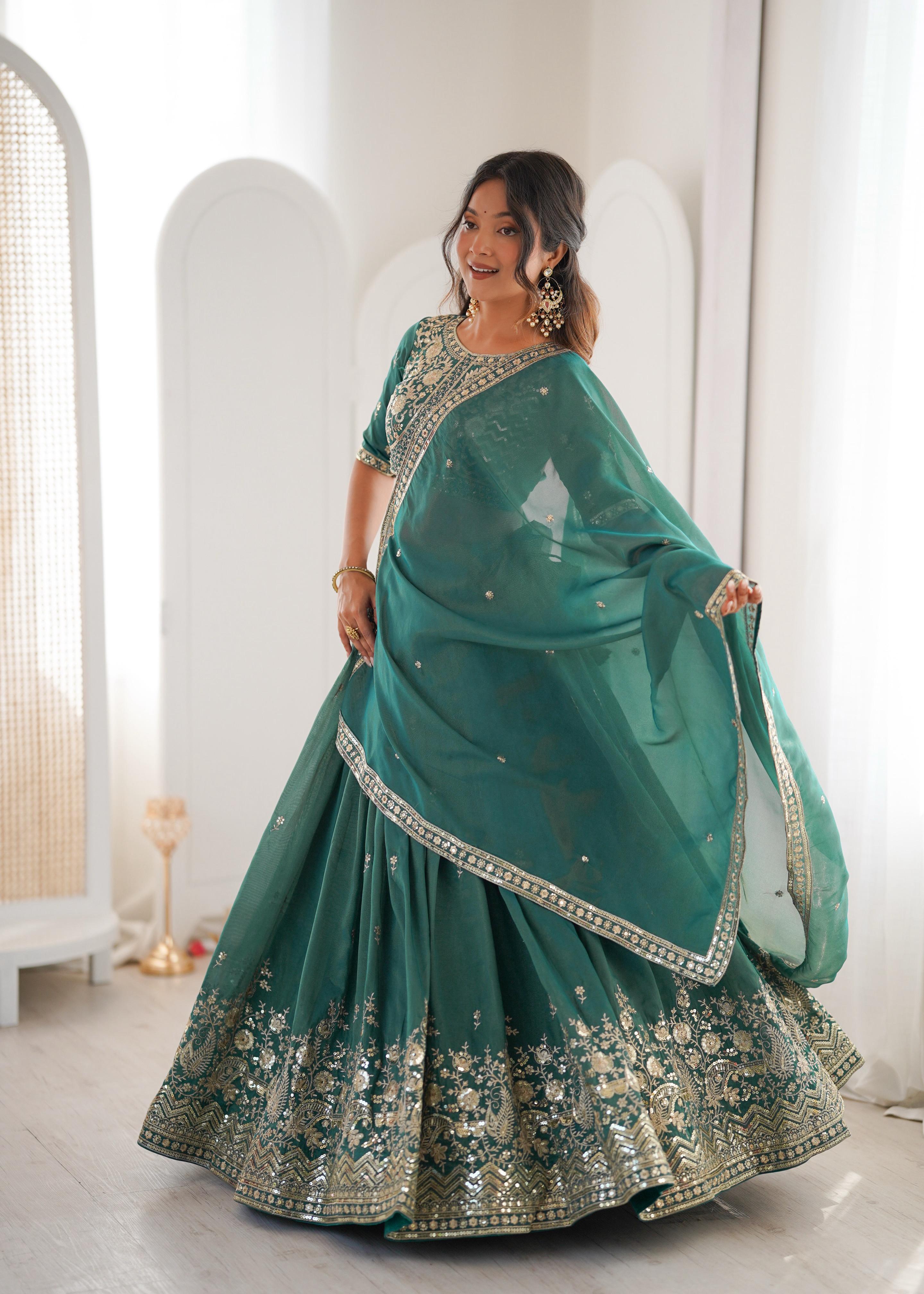
A lehenga is the strongest choice when a celebration calls for movement, photographs and a distinctly festive appearance. The combination of flared skirt, blouse and dupatta creates visual drama, while comfort can be improved through a wide waistband, breathable lining and a blouse with adjustable fastening.
A lighter georgette or muslin lehenga is suitable for daytime events and dancing. Silk, net and dense embroidery work better for evening functions when a richer texture is welcome. A lehenga with a moderate flare is easier to navigate than an extremely broad skirt when the venue is crowded or when you need to climb stairs.
Which fabrics work for Haryana Festival Wear: Sarees, Suits & Lehengas for Women?
Breathable cotton, muslin, georgette, Chanderi and lightweight silk are dependable choices for comfort, while net, Banarasi silk and heavier embroidered fabrics create a more formal effect. Fabric should be selected according to temperature, event duration, lining quality and the amount of walking or dancing involved.
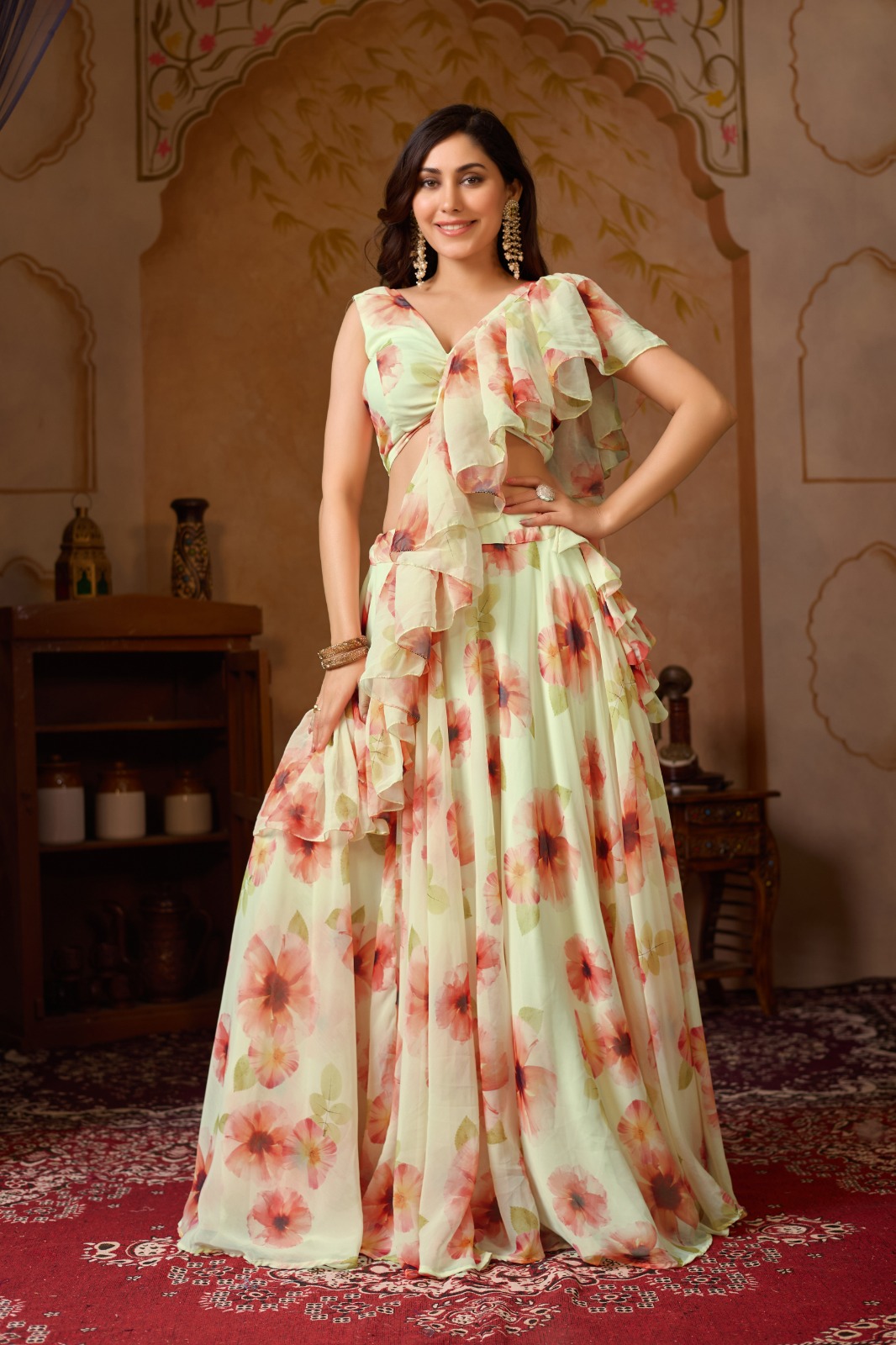
Georgette falls close to the body and works well for ruffled blouses, fluid dupattas and moderate lehenga volume. Muslin cotton feels soft and breathable, making it useful for daytime festivities. Silk gives structure and sheen, although a silk lehenga may require more careful folding and storage. Net creates a light-looking dupatta or overlay, but the net edge should be checked for snagging before purchase.
Zari refers to metallic thread used in woven or embroidered decoration, traditionally made with gold- or silver-toned metal. Zari borders can make a simple saree or dupatta look formal, but dense zari adds weight and may catch on jewellery. Mirror work reflects light effectively for evening functions, while threadwork gives a softer surface and is often easier to wear for longer periods.
Pastel Floral Georgette Lehenga Set with Ruffle Blouse shows how a soft colour palette can remain festive through print, volume and blouse detailing. Designer Threadwork Silk Lehenga Choli Set with Dupatta demonstrates a more formal direction for women who want the lustre of silk and the texture of embroidery.
Fabric choice also influences maintenance. Cotton and muslin can often be aired after use, but embroidered sections still need gentle handling. Georgette and net should be kept away from rough jewellery and exposed hooks. Silk and zari garments should be dry-cleaned when the care label recommends it rather than repeatedly washed at home.
How should you choose colours for Haryana Festival Wear: Sarees, Suits & Lehengas for Women?
Choose colour according to the time of day, ceremony mood and existing accessories, with yellow, pink, red, green, orange, white and jewel tones all offering useful festive directions. Colour doesn't need to be loud to look celebratory; contrast, border detail and jewellery can provide impact.
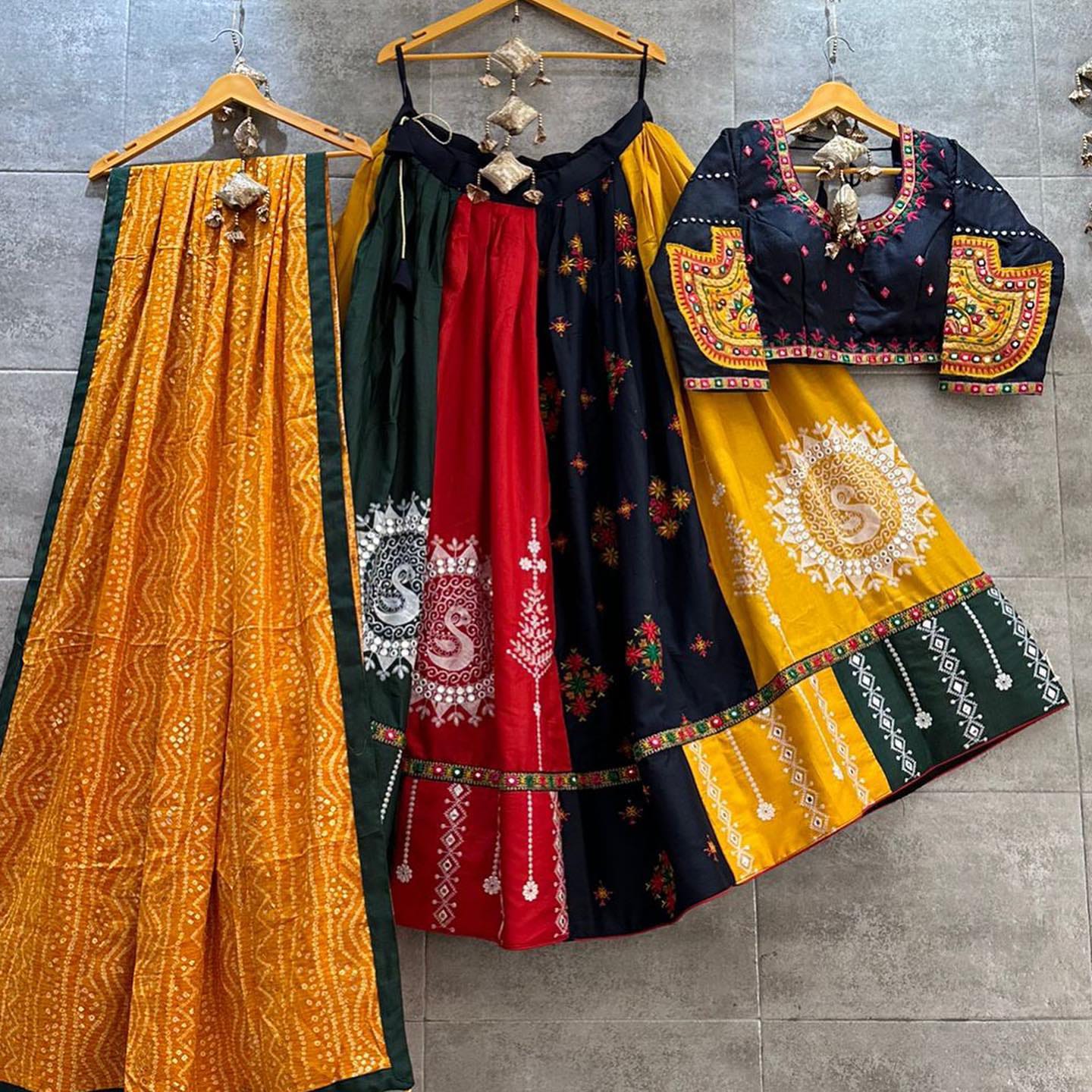
Yellow and marigold work naturally for a Haldi ceremony and daytime rituals. Pink, fuchsia and coral suit mehendi functions and spring celebrations. Red, wine, emerald and royal blue create a richer evening appearance. White and ivory can look striking with mirror work, silver zari or multicoloured embroidery, although some families reserve particular shades for specific rituals.
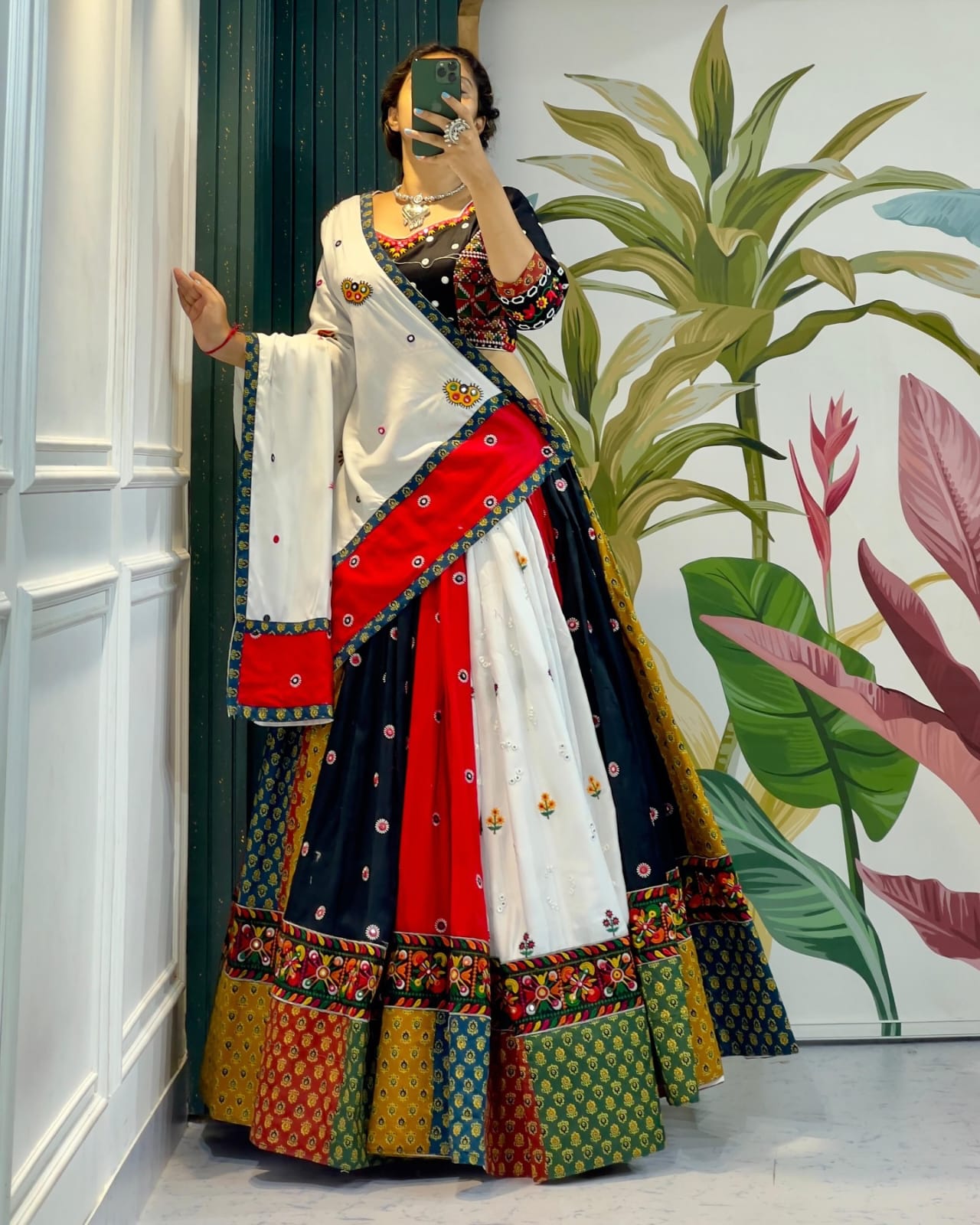
A multicoloured outfit can solve the problem of matching jewellery and footwear because it already contains several accent shades. Vibrant Multicolor Navratri Lehenga Choli Set and Festive Multicolor Muslin Cotton Lehenga Choli Set both illustrate how multiple colours can create energy while leaving room for simple accessories.
A white base can also be highly adaptable. White Digital Print Festive Lehenga Choli Set and Festive White Lehenga Choli with Mirror Work Design can be styled with a bright dupatta, colourful bangles, silver jewellery or a contrasting potli. Pastels are suitable for morning functions when paired with visible embroidery, floral prints or metallic trim.
Dark colours absorb more heat in direct sunlight, so navy, bottle green and burgundy may be more comfortable in an air-conditioned evening venue than outdoors at noon. Always assess the venue rather than selecting colour from photographs alone.
How should Haryana Festival Wear: Sarees, Suits & Lehengas for Women be fitted?
A comfortable festive outfit needs a secure waistband, enough walking ease, a non-sheer lining, a blouse that allows arm movement and a dupatta that can be pinned without pulling the neckline. Fit should be tested while sitting, climbing stairs, raising both arms and walking at a normal pace.
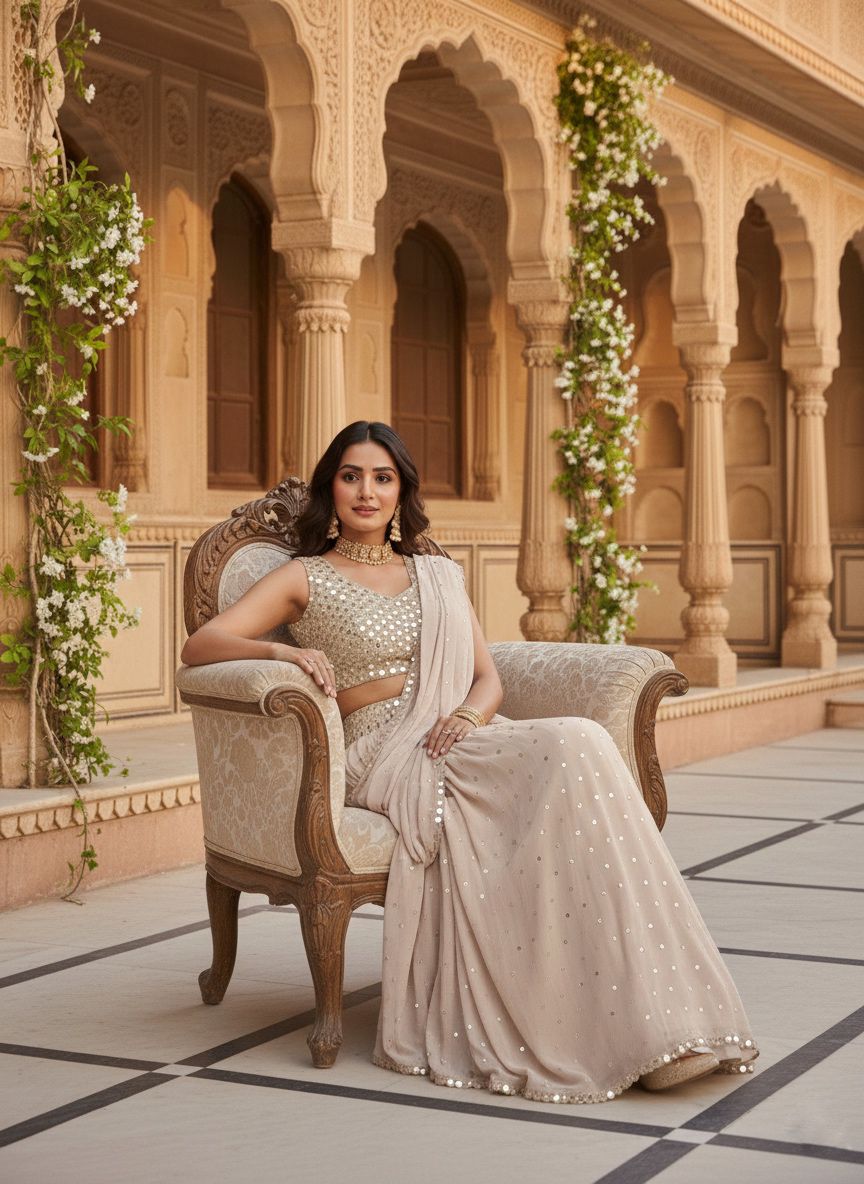
The waistband should sit firmly without pressing into the stomach after a meal. A drawstring or modest elastic section can provide flexibility, but excessive looseness may cause the skirt to twist while dancing. The skirt hem should remain approximately 1 to 2 centimetres above the floor when worn with the chosen footwear, reducing the chance of stepping on the fabric.
A blouse needs more than a correct bust measurement. Check the armhole, shoulder width, back closure and sleeve circumference. A very tight armhole can cause discomfort even when the bust fits. If the blouse is heavily embellished, soft lining becomes particularly important because exposed embroidery can irritate the skin.
Dupatta placement changes the practical feel of the outfit. A shoulder drape pinned near the collarbone stays secure during conversation and dancing. A front pleat creates a polished appearance but may need a second pin at the waist. For children, crowded venues or active celebrations, a shorter or more securely pinned dupatta is safer than a long loose edge.
Mint Embroidered Lehenga Set with Net Dupatta for Women is an example of a look where the dupatta can provide visual lightness, but net requires careful pin placement. Keep pins away from highly visible embroidered motifs and use small safety pins with smooth closures to reduce snags.
How can you style Haryana Festival Wear: Sarees, Suits & Lehengas for Women?
Use one dominant statement element and support it with two or three quieter accessories. A heavily embroidered lehenga usually needs simple earrings and a restrained bracelet, while a plain saree can carry a bold necklace, embellished clutch or dramatic blouse.
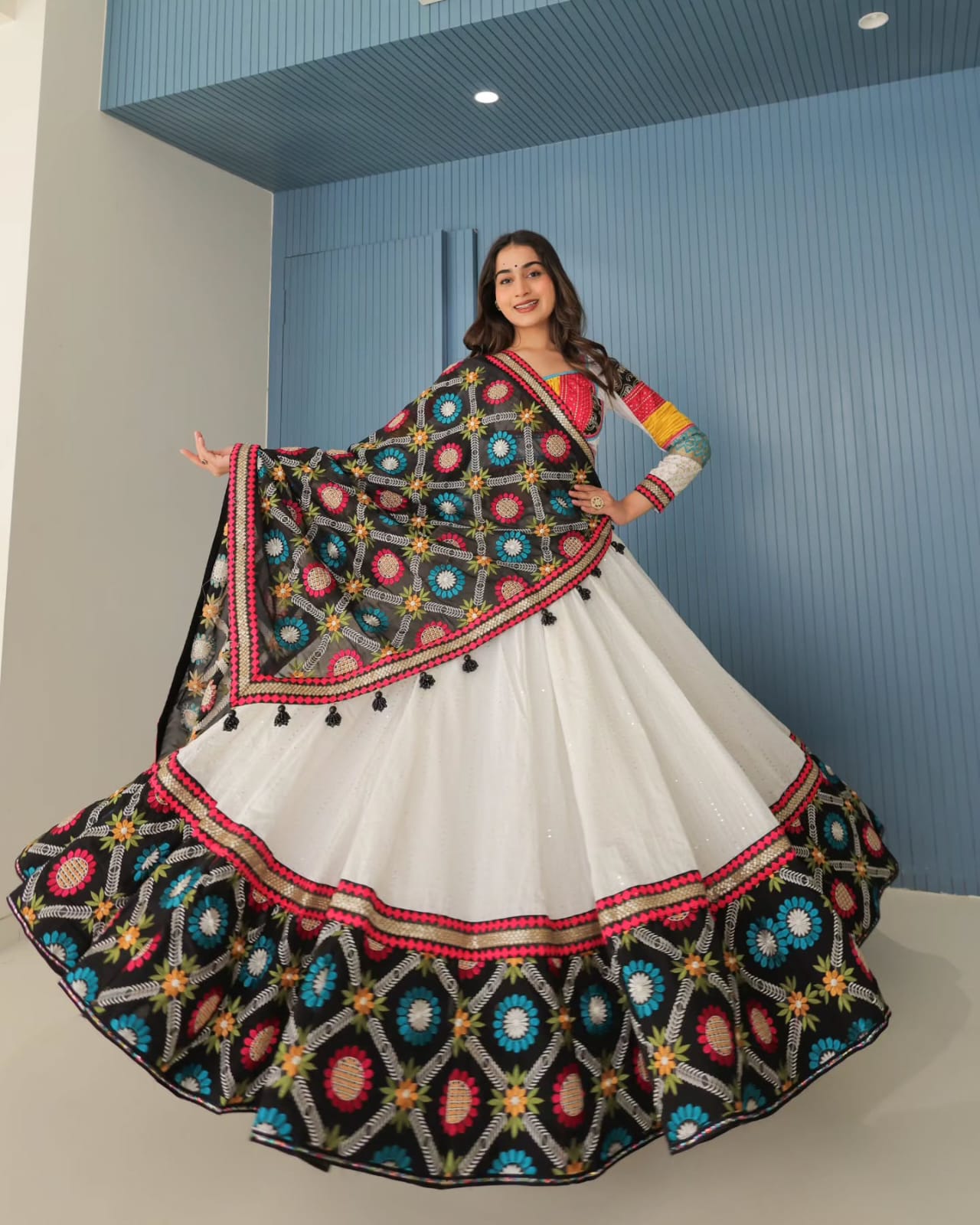
Mirror work already reflects light, so antique gold or oxidised silver jewellery can complement it without requiring additional sequins. Zari and silk pair naturally with gold-toned earrings, kundan-inspired pieces or a small embroidered potli. Floral prints benefit from one colour pulled directly from the print rather than a completely unrelated accessory shade.
Juttis are practical with lehengas and salwar suits because they provide a stable, flat base for walking. Block heels can add height, but the hem should be measured while wearing them. Avoid wearing new footwear for the first time at a wedding; test the shoes at home for at least 30 minutes and add cushioning if pressure develops around the heel or ball of the foot.
Collections such as Pink Lehengas Under 4000 with 50% Discount and Silk Lehengas Under 3000 can help shoppers compare colour and fabric within a defined budget. Bridesmaid Lehengas Under 5500 is useful when several women need coordinated but not identical outfits. Net Lehengas Under 4500 with 51% Discount suits shoppers looking for a lighter overlay, while Haldi Lehengas Under 5500 focuses on bright ceremony-friendly choices.
Makeup and hair should support the clothing rather than reveal with it. A low bun works with a saree and accent earrings, while a braid suits a lehenga with a lighter dupatta. For daytime celebrations, breathable base makeup and transfer-resistant lipstick are more practical than very heavy layers. Carry a minor kit containing safety pins, fashion tape, blotting paper and a stain-removal wipe.
How should you care for Haryana Festival Wear: Sarees, Suits & Lehengas for Women?
Care for festive clothing by airing it after use, treating stains quickly, following the fibre label and storing embellished garments without crushing them. Correct care preserves colour, zari, sequins, mirror work and the shape of the garment.
Allow a worn outfit to air in shade for several hours before folding it. Do not store damp clothing in a plastic bag because trapped moisture can create odour and encourage fabric damage. A clean cotton or muslin cover is better for storage than direct contact with thin plastic.
Remove surface dust with a soft, dry brush and address small stains by blotting rather than rubbing. Water can create marks on some silk, zari and dyed fabrics, so test any home treatment on an inconspicuous area first. Dry-clean heavily embellished silk, net and mirror-work garments when the care label advises professional cleaning.
Fold lehengas along natural seams and place acid-free tissue between dense embroidery layers. Store heavy dupattas flat when possible so their borders don't stretch. Keep silver-toned accessories separate from fabric because tarnish and rough edges can mark or snag the garment.
A festive outfit earns its place in your wardrobe when you can sit, move, eat, photograph and celebrate comfortably in it.
Common Questions About Haryana Festival Wear for Women
What should women wear to a Haryana festival?
Women can wear a saree, salwar suit or lehenga depending on the ceremony, weather and required movement. Bright colours, gota borders, mirror work, embroidered dupattas, juttis and traditional jewellery can add a Haryana-inspired festive character.
Which fabric is most comfortable for a daytime festive event?
Cotton, muslin, Chanderi and lightweight georgette are among the most comfortable choices for daytime celebrations. Choose a breathable lining and avoid very dense embroidery when the event involves outdoor travel or several hours of sitting.
Is a lehenga suitable for a Haldi ceremony?
A lightweight yellow, white or multicoloured lehenga can suit a Haldi ceremony, especially when the fabric is easy to maintain. Choose secure fastenings, a manageable dupatta and embroidery that will not be difficult to clean if turmeric reaches the garment.
How can I make a white festive lehenga look more colourful?
Add a bright dupatta, colourful glass bangles, a multicoloured potli or jewellery in one strong accent shade. Mirror work, silver zari and floral prints can also give a white lehenga enough visual interest without covering its base colour.
How should a festive lehenga fit around the waist?
A festive lehenga should sit securely without pressing into the stomach after eating. Test the waistband while sitting, walking and dancing, and select a drawstring, hook extension or modest elastic section when you need additional flexibility.
Can women wear a salwar suit to an evening Haryana wedding?
Women can wear an evening salwar suit to a Haryana wedding when the fabric and finish are sufficiently formal. Silk, brocade, velvet accents, zari, thread embroidery, an embellished dupatta and statement earrings can make a suit appropriate for an evening celebration.