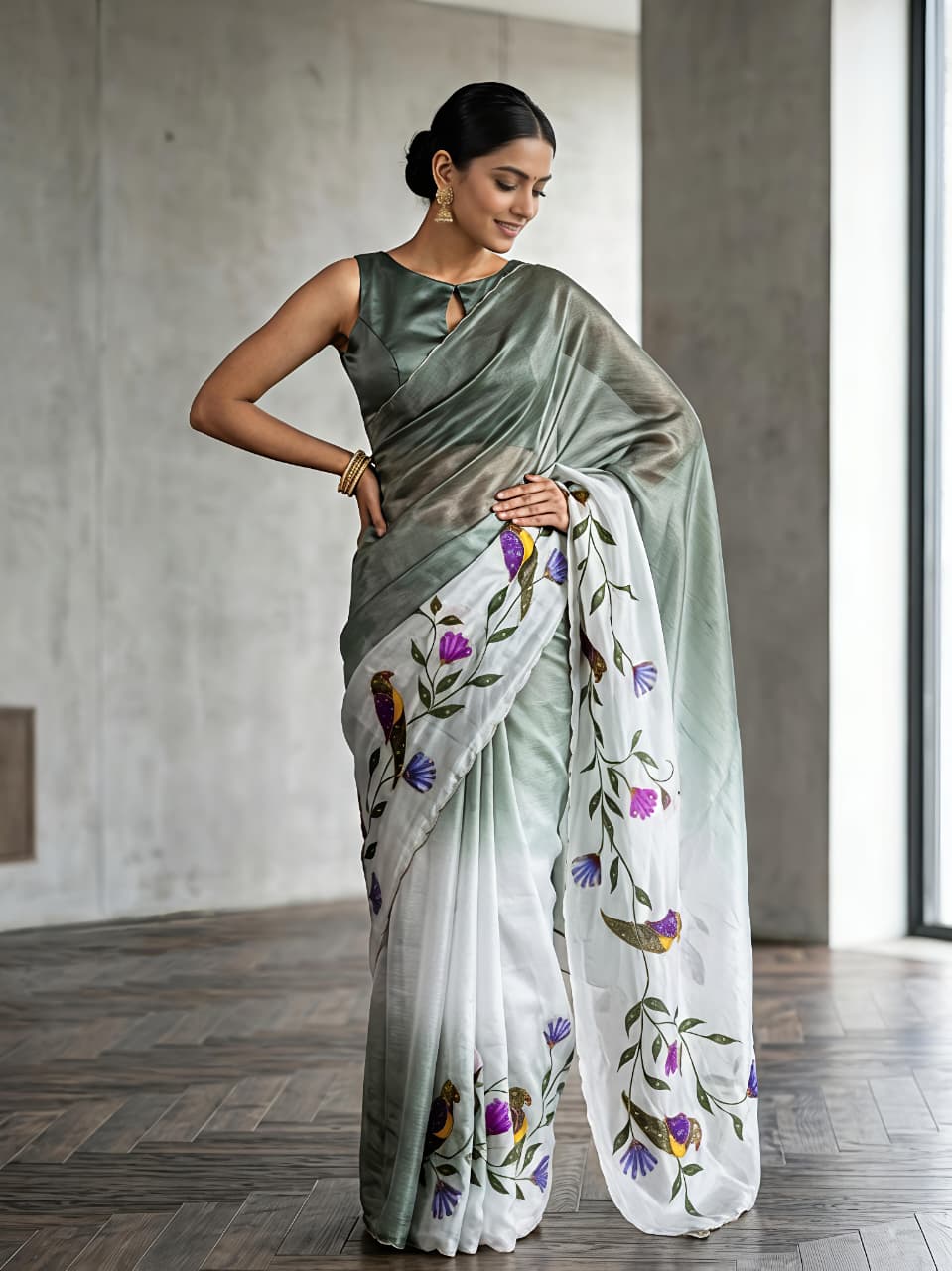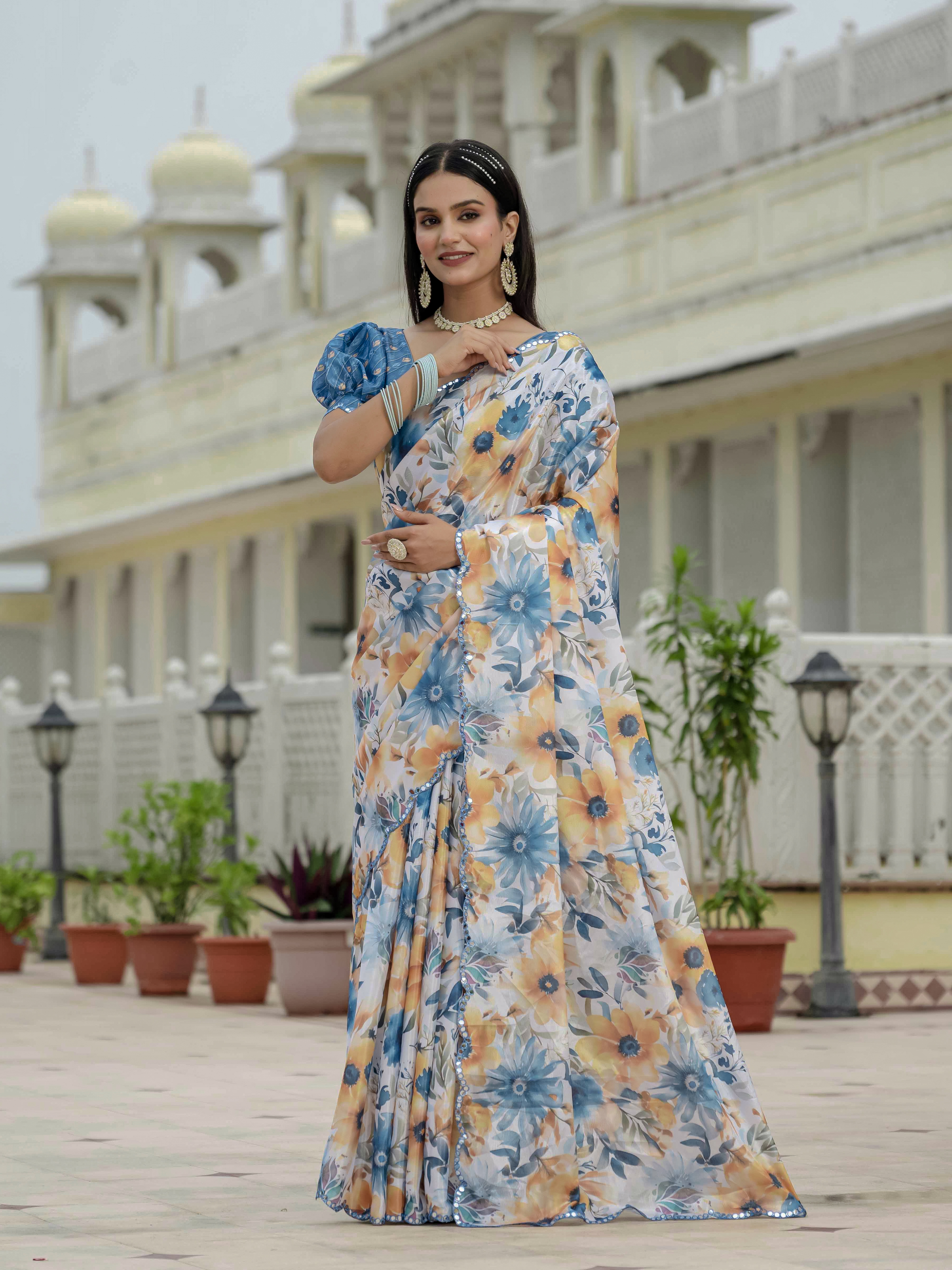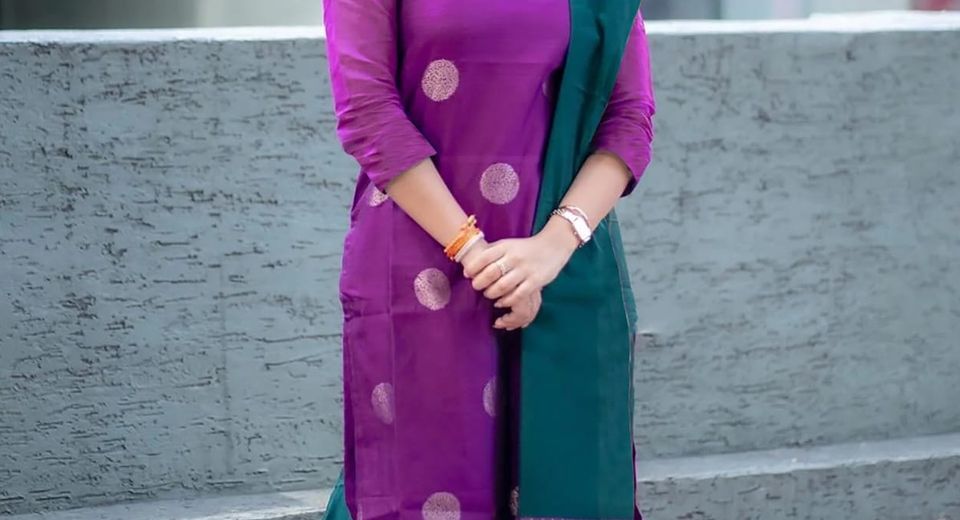
Harela Festival Fashion: Kumaoni Sarees, Suits & Traditional Outfits can make a seasonal celebration feel personal without requiring a completely costume-like look. Harela marks the arrival of the monsoon and celebrates greenery, agricultural hope and the wellbeing of family members, especially in Uttarakhand. A green saree, a pichora-inspired colour story or a breathable salwar suit can reflect that meaning while remaining practical for puja, family visits and community gatherings.
The most successful outfit decisions start with context. Harela is observed on different dates according to regional calendars, but the festival is broadly associated with the month of Shravan and the beginning of the rainy season. Families traditionally sow grains in small baskets, nurture the seedlings for around ten days and cut the grown shoots on Harela. The shoots are placed on the head or behind the ears as blessings for prosperity, health and a full harvest. Clothing works best when it feels fresh, meaningful and connected to nature rather than merely heavily embellished.
Harela Festival Fashion: Kumaoni Sarees, Suits & Traditional Outfits and their cultural meaning
Harela Festival Fashion represents greenery, renewal, agricultural abundance and blessings for the household. The name Harela is linked to green growth, and the festival's visual language naturally includes shades of leaf green, yellow, red, saffron and white.
Kumaoni dress traditions vary between districts, communities and family customs, so there's no single compulsory Harela uniform. A Kumaoni woman's festive wardrobe may include a saree, ghagra, blouse, pichora, kurta set or another regional garment depending on the occasion and personal preference. The yellow or saffron pichora, often decorated with red motifs and associated with Kumaoni ceremonial wear, is particularly recognisable at weddings and religious celebrations.
A pichora-inspired palette can be used respectfully in contemporary clothing without claiming that every yellow-and-red dupatta is an authentic traditional pichora. Accurate language matters because a ceremonial textile carries regional history, symbolism and methods of use that a modern printed accessory may not share.
Harela also rewards clothing that accommodates movement and weather. Monsoon humidity, damp floors and crowded household spaces can make a long train, delicate trailing dupatta or floor-length hem inconvenient. Fabrics that dry reasonably quickly, secure borders and washable linings are often more useful than a very heavy ensemble.
Harela Festival Fashion: Kumaoni Sarees, Suits & Traditional Outfits for choosing a saree
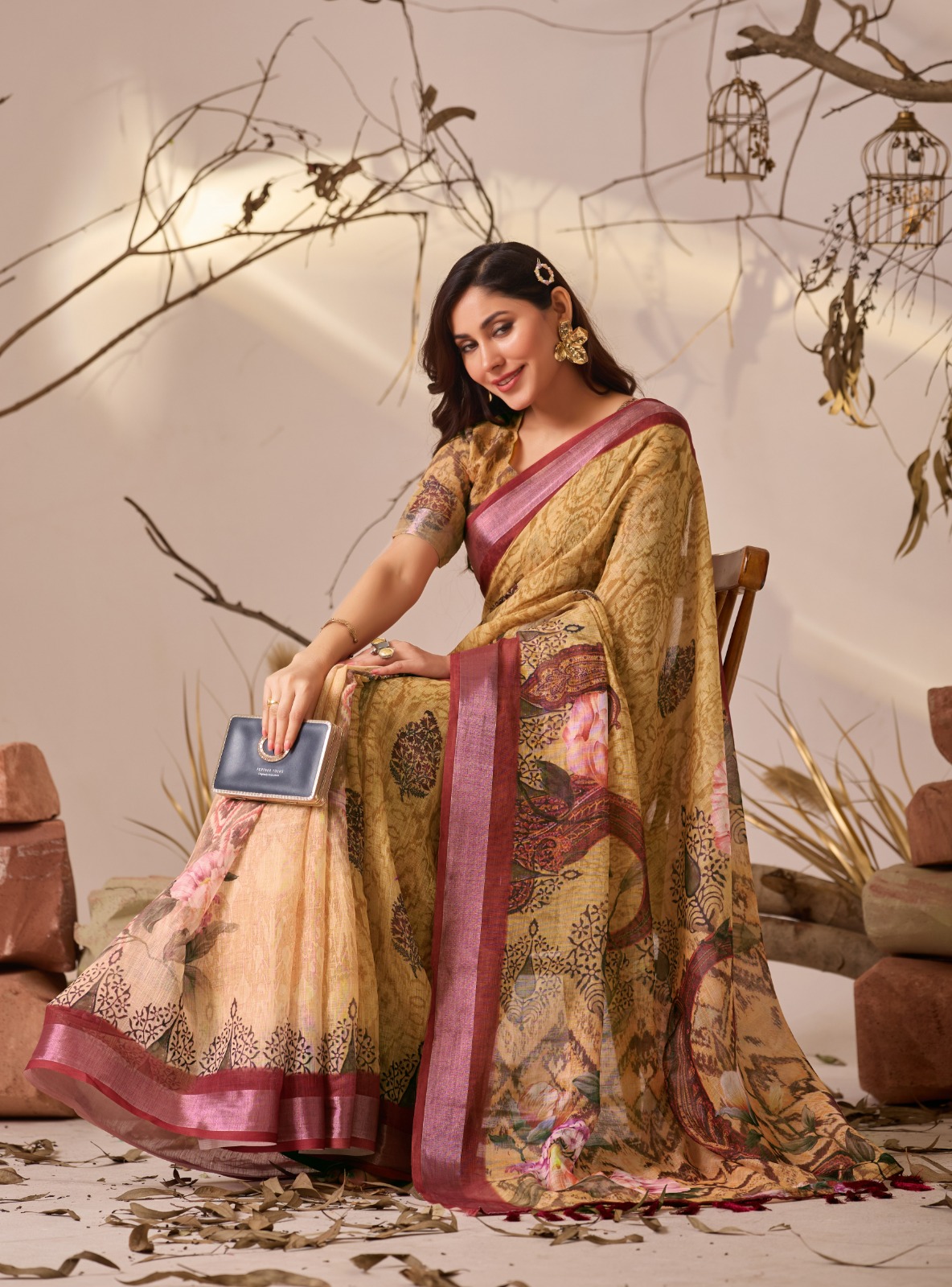
Choose a Kumaoni-inspired saree for Harela by balancing a nature-led colour palette, manageable fabric weight and a border or motif that suits the ceremony. Green, marigold yellow, red, cream and warm pink are effective choices, while silk, Chanderi, cotton-silk and light Banarasi weaves offer different levels of structure and shine.
Colour combinations with seasonal meaning
Leaf green is the clearest visual connection to Harela, but an all-green outfit isn't essential. A parrot-green saree with a red or gold border can echo Kumaoni festive colour combinations. Mustard yellow with red accents recalls the warmth of a pichora-inspired palette. Cream with green embroidery looks quieter and photographs well in daylight. Rani pink, maroon and teal provide festive depth when balanced with gold rather than paired with too many competing bright colours.
Weaves that work in monsoon weather
Banarasi silk creates a formal appearance through woven zari and a patterned surface, but heavier silk can find warm indoors. Chanderi offers a lighter, slightly sheer drape with a graceful texture; a lining or carefully placed petticoat can alter comfort and coverage. Cotton-silk provides an useful middle ground for daytime celebrations because it holds pleats without the weight of dense pure silk. Crepe drapes smoothly and resists bulky pleats, although the fabric should be protected from rough jewellery and sharp seating.
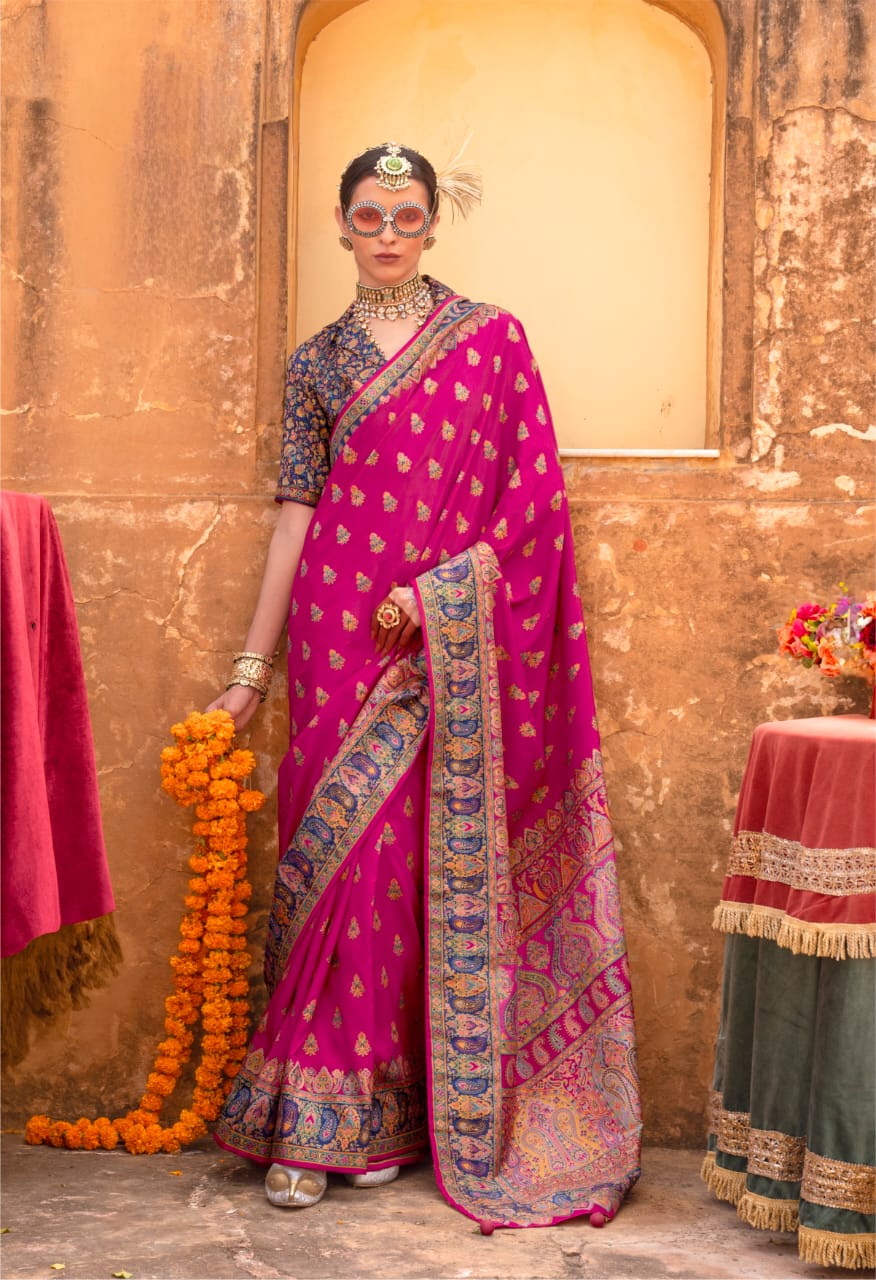
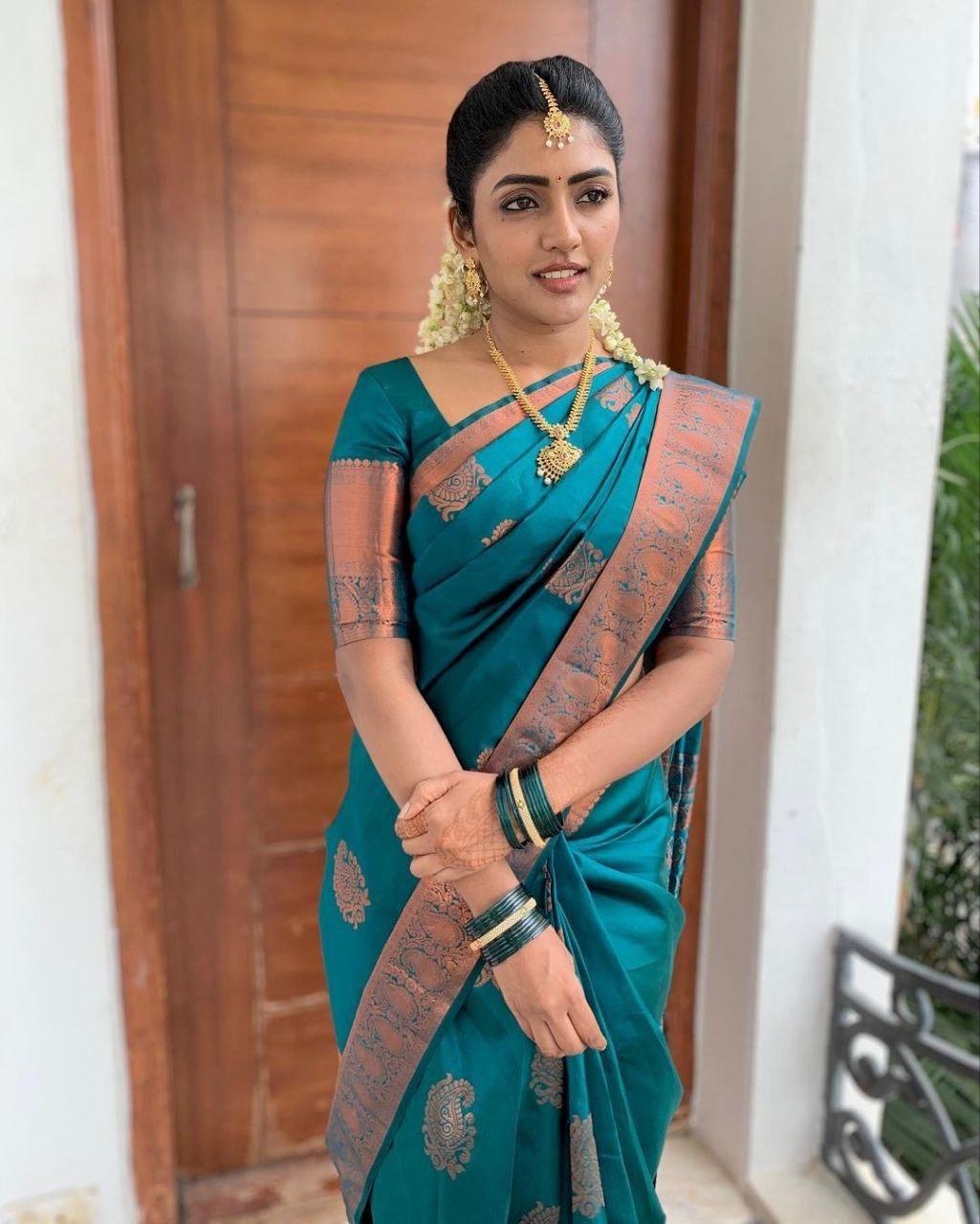
Festive Teal Banarasi Saree with Traditional Motifs demonstrates how teal can connect a contemporary colour choice with a traditional woven surface. The saree can be styled with a maroon, mustard or antique-gold blouse to introduce warmer Harela tones. A low, secure pleat count and a pinned pallu make a Banarasi saree easier to manage during rituals.
Harela Festival Fashion: Kumaoni Sarees, Suits & Traditional Outfits with salwar suits
Salwar suits are highly suitable for Harela because they offer coverage, movement and easier handling than a long ceremonial drape. A straight kurta with trousers, an Anarkali with a controlled flare or a kurta-pant set with a dupatta can all look festive when the fabric, colour and finishing details are chosen thoughtfully.
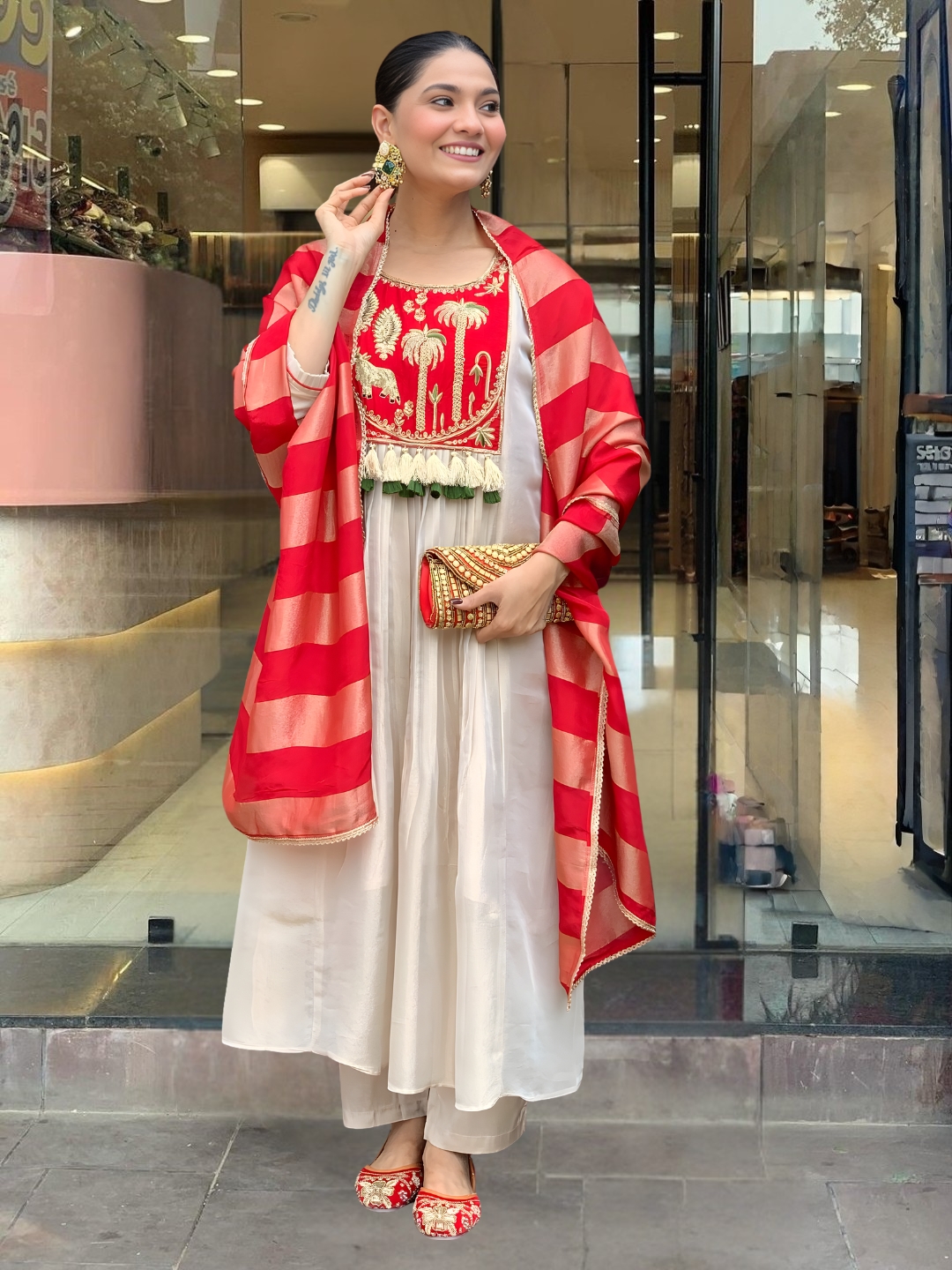
A salwar suit is especially practical for visiting several homes, helping with food preparation or attending a puja where sitting on the floor may be necessary. Choose a kurta hem that falls between the knee and mid-calf for easy movement, or select a full-length Anarkali only when the flare isn't so wide that it catches underfoot. Cigarette pants and straight trousers create a cleaner silhouette than very loose palazzos when the floor is damp.
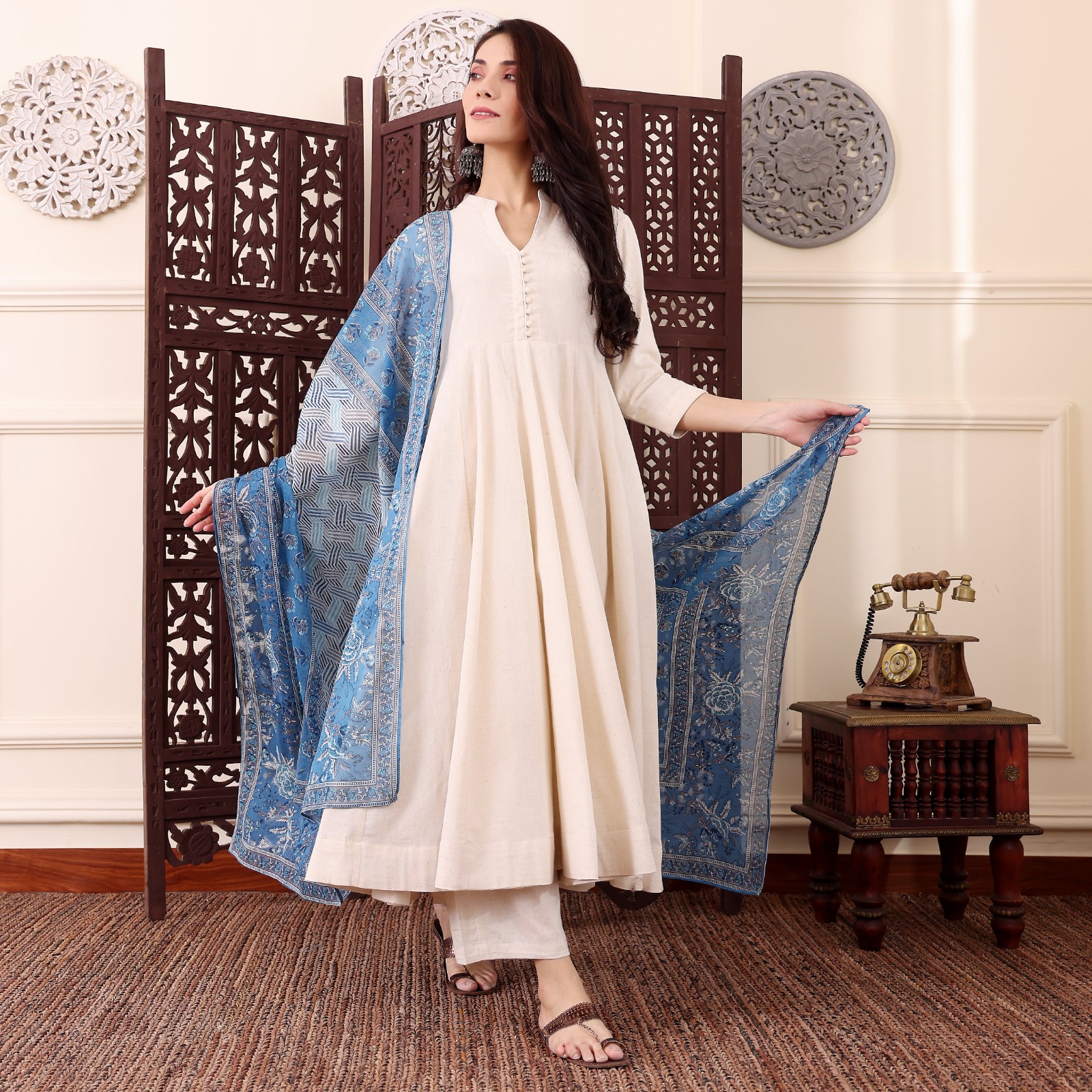
Silk Festive Kurta Pant Set with Zari Jacquard Dupatta brings a structured option for an evening family gathering. Zari jacquard adds festive texture without requiring dense surface embroidery across the entire kurta. Elegant Pista Festive Wear Kurta Pant Set suits a daytime Harela palette particularly well because pista green feels seasonal while remaining softer than saturated emerald.
Festive Wear Maroon Silk Anarkali Suit Set for Women can be balanced with a green, mustard or antique-gold dupatta for a stronger colour statement. Rani Pink Chanderi Embroidered Kurta Set Dupatta gives a lighter textile direction, particularly for a daytime puja or a gathering in a warm room. The main practical check is the dupatta width: a very broad, slippery dupatta may need shoulder pins or a discreet waist tuck.
Harela Festival Fashion: Kumaoni Sarees, Suits & Traditional Outfits for each celebration
The right Harela outfit depends on whether the event is a home puja, a daytime family gathering, a community programme or an evening celebration. Daytime rituals generally call for breathable fabrics and moderate embellishment, while an evening programme allows deeper colours, silk and more visible zari.
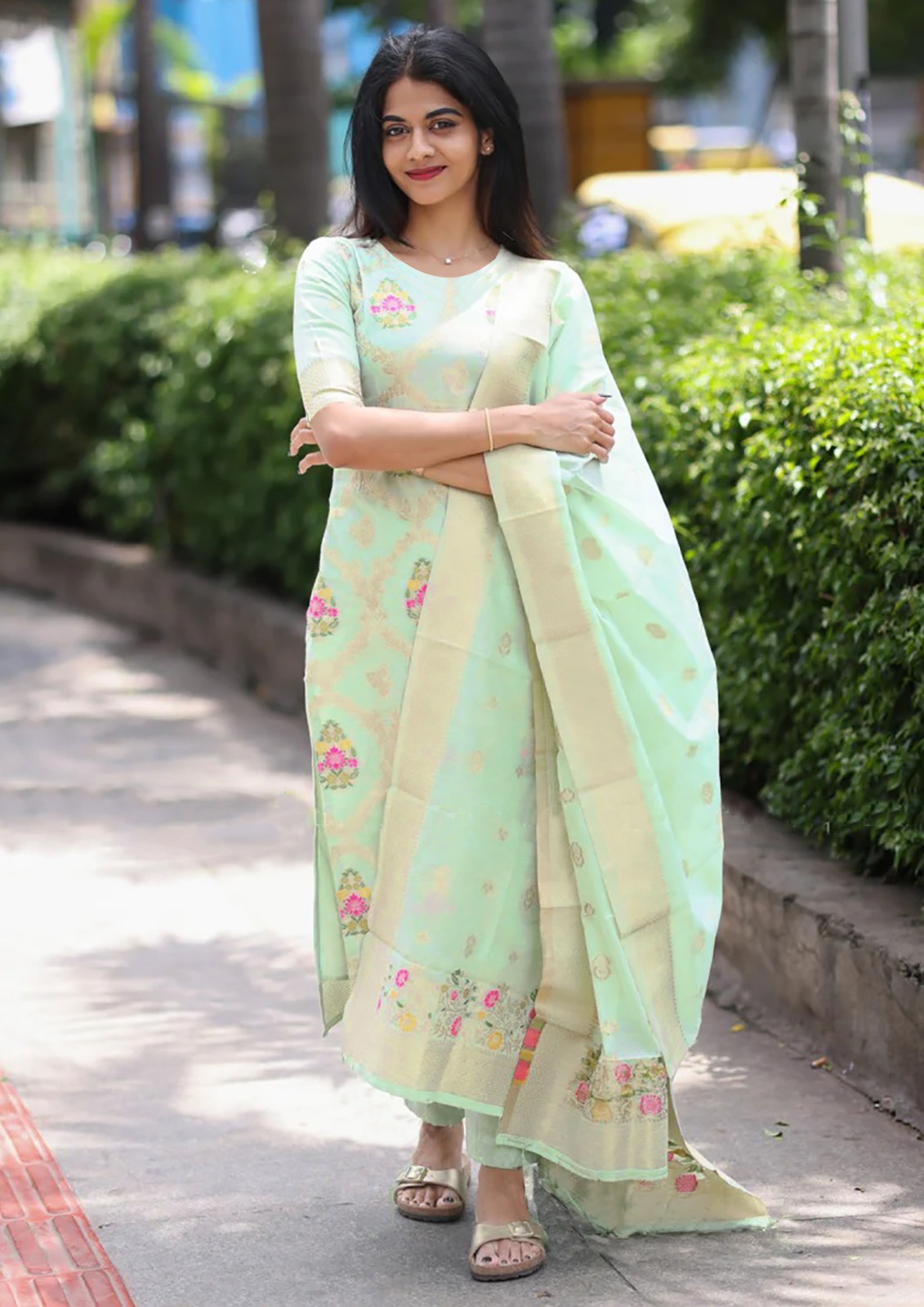
For a home puja
A home puja suits a light Chanderi saree, cotton-silk sari or simple embroidered kurta set in green, yellow, cream or soft pink. Keep the pallu or dupatta secure because bending, sitting and moving around the prayer area require both hands. Small gold-toned earrings, a bindi and flat sandals complete the outfit without competing with the ritual setting.
For a family lunch or daytime visit
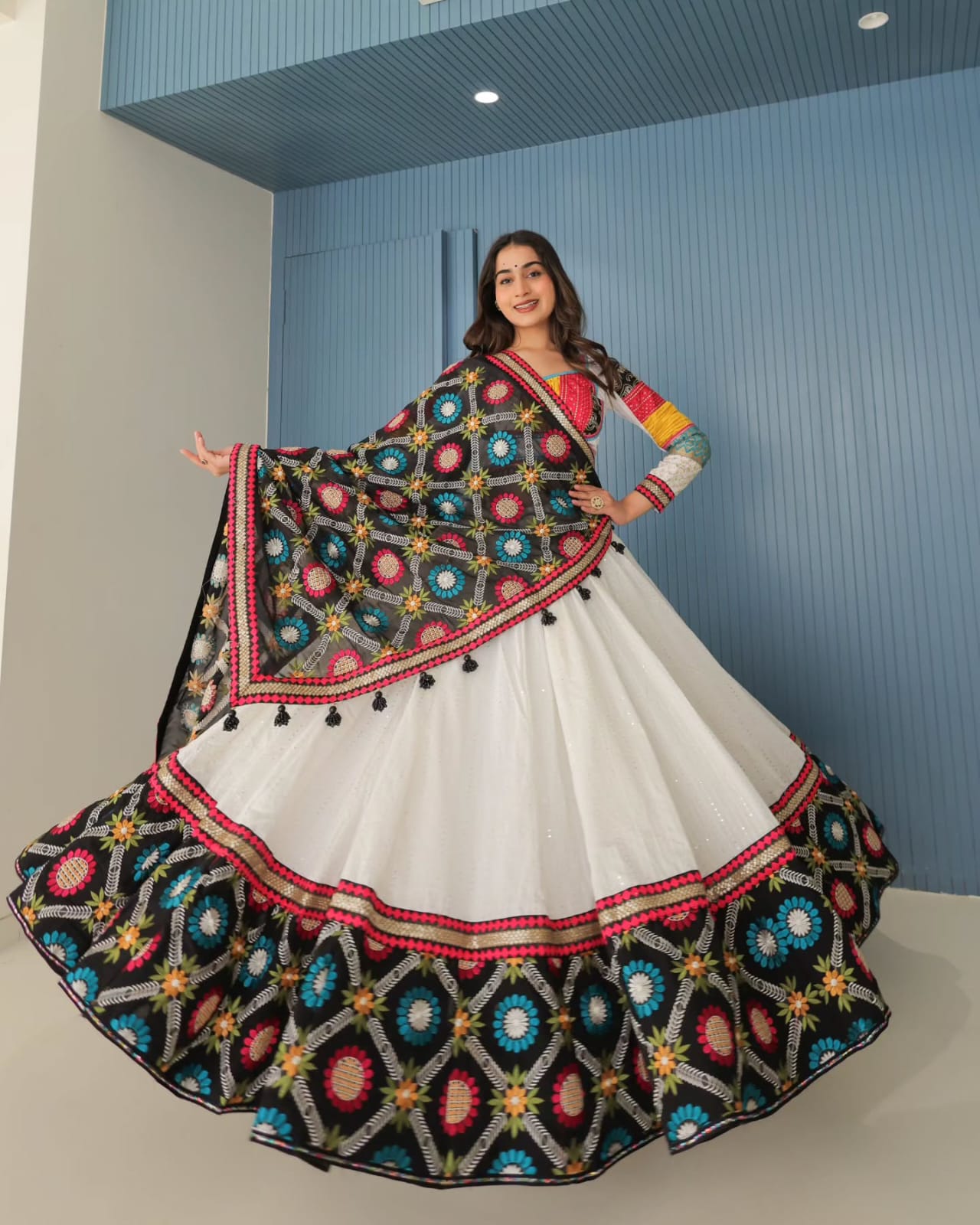
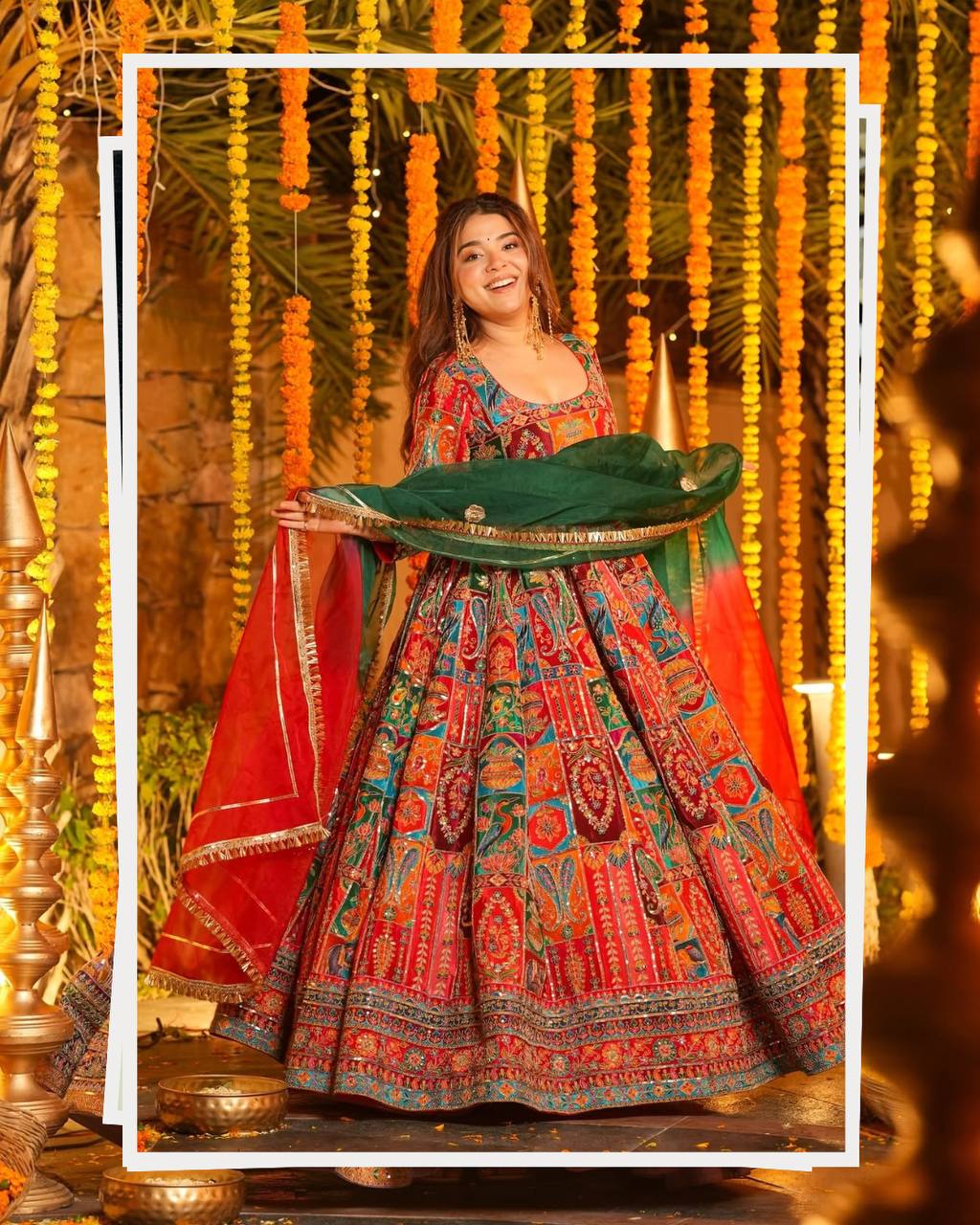
A printed Anarkali, straight kurta set or light silk-blend sari works well for a daytime family visit. Multicolor Embroidered Crepe Maxi Suit Set for Festive Wear can suit a lively gathering when the embroidery includes green, coral, yellow or other monsoon-friendly shades. Pair a multicoloured garment with plain earrings and one dominant accessory so the outfit retains visual balance.
For an evening cultural programme
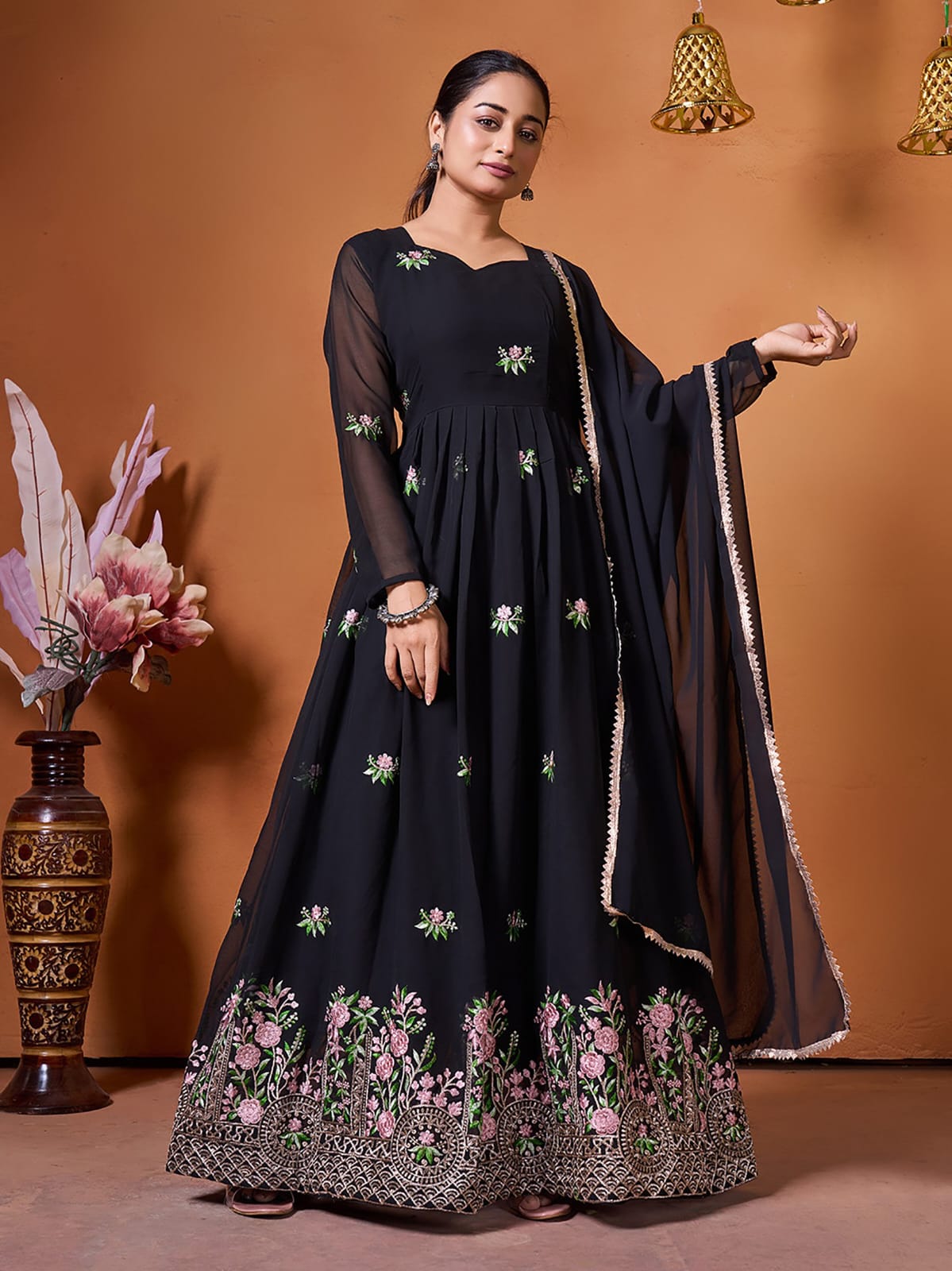
An evening programme permits deeper maroon, teal, navy, black or jewel-toned clothing with zari, jacquard or controlled embroidery. Refined Black Ethnic Gown with Floral Embroidery gives a contemporary alternative when a formal venue is involved, although a gown is less region-specific than a Kumaoni saree or salwar suit. Cream Printed Anarkali Gown with Ethnic Motif Design gives a softer option for people who prefer a lighter base with visible traditional motifs.
Harela Festival Fashion: Kumaoni Sarees, Suits & Traditional Outfits and regional styling
Contemporary outfits can reference Kumaoni style respectfully by acknowledging inspiration, using regional colour logic and avoiding inaccurate claims about authenticity. A green kurta with a red-and-yellow dupatta, a pichora-inspired stole or a saree styled with Kumaoni jewellery can suggest the festive mood without presenting a mass-produced garment as heirloom regional dress.
Accessories provide one of the clearest ways to build a regional connection. Gold-toned hansuli-style necklaces, nath-inspired nose rings, jhumkas, glass bangles and red-yellow thread details can complement a festive outfit. Traditional Kumaoni jewellery has specific forms and cultural histories, so an accessory described as Kumaoni-inspired should not automatically be labelled authentic silver or antique jewellery. One prominent regional-style piece with simpler supporting jewellery usually creates a more considered result.
A dupatta can carry the colour story when the base outfit is neutral. A cream kurta with a red-and-yellow printed dupatta recalls Harela's festive warmth. A pista or leaf-green suit can take a maroon border or gold earrings. A maroon Anarkali can be lightened with a green dupatta and fresh floral hair adornment. Marigold, jasmine or local seasonal flowers are meaningful additions when they're comfortable and available, but artificial flowers can be more practical in humid weather.
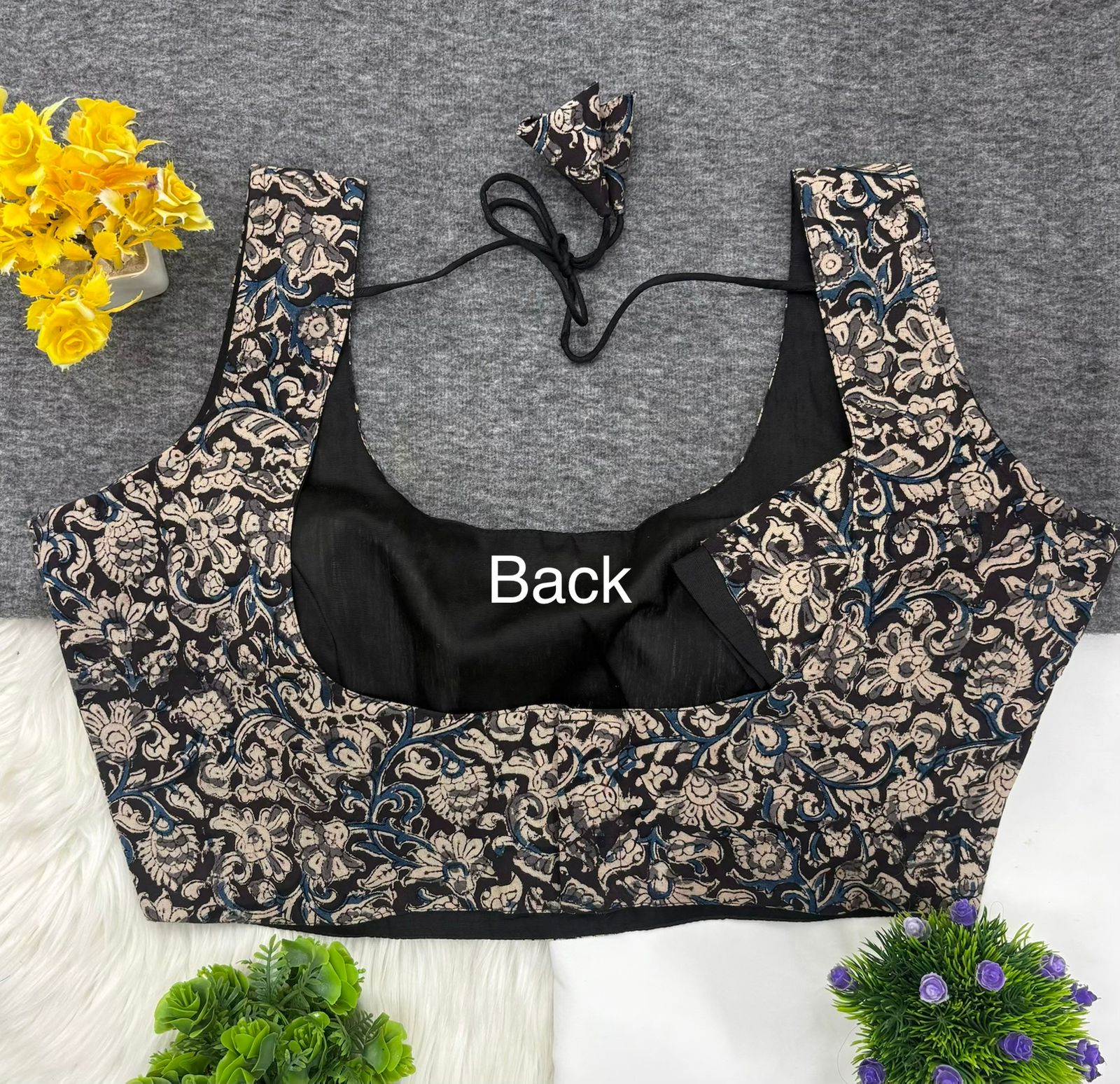
Collections such as Kashmir Embroidered Salwar Suits, Punjab Phulkari Embroidered Salwar Suits and Kalamkari Print Salwar Suits (Copy) show how Indian regional textiles can inspire festive dressing in different ways. These traditions should be appreciated on their own terms rather than treated as interchangeable with Kumaoni dress. A Harela ensemble may borrow a colour family or styling idea, but accurate descriptions preserve the distinction between Uttarakhand's pichora traditions, Punjab's phulkari embroidery and Kalamkari's painted or printed textile traditions.
Harela Festival Fashion: Kumaoni Sarees, Suits & Traditional Outfits from other Indian traditions
Regional Indian collections can broaden festive wardrobe choices, but they should be distinguished clearly from authentic Kumaoni clothing. Maharashtra Paithani Inspired Salwar Suits may use peacock motifs, jewel colours or Paithani-like borders, while Karnataka Silk Salwar Suits may emphasise silk texture and South Indian festive styling. Both can work for Harela as Indian festive wear, but neither should be described as Kumaoni dress.
Regional comparison is useful when selecting a silhouette. Phulkari-inspired embroidery creates a lively surface for a salwar suit, Kalamkari prints add narrative motifs, and Paithani-inspired borders bring a formal woven effect. Kashmir Embroidered Salwar Suits can provide floral needlework and a more detailed winter-influenced aesthetic. The important distinction is between wearing an Indian regional style for a celebration and claiming that the style belongs to Uttarakhand.
Combining traditions also requires restraint. A heavily embroidered Phulkari dupatta, a dense Paithani-inspired border and large Kumaoni-style jewellery may compete in one outfit. Choose one dominant regional reference, then support it with neutral fabric, simple footwear and restrained accessories.
Harela Festival Fashion: Kumaoni Sarees, Suits & Traditional Outfits care and comfort checklist
Harela clothing stays comfortable when the wearer plans for humidity, floor seating, secure draping and post-festival care. Monsoon weather makes fabric storage and drying just as important as colour selection.
Test the outfit at home before the celebration. Sit cross-legged for five minutes, walk up stairs, raise both arms and check whether the dupatta, blouse hooks or trouser waistband shift. Saree pleats should remain secure after sitting, while an Anarkali hem should not bunch under the feet. Safety pins should be placed through seam allowances or reinforced areas rather than delicate zari.
Use breathable cotton or cotton-blend inner layers under silk and synthetic garments. Cotton absorbs moisture better than many polyester linings, although damp cotton should not remain packed against the skin for long periods. Choose closed or back-strap footwear if the venue has wet floors, and avoid very high heels when the event includes outdoor movement.
After Harela, air the garment in shade before storage. Banarasi silk, Chanderi and zari should not be left in direct sunlight for long periods because colour and metallic surfaces can fade. Fold silk sarees with soft muslin or cotton fabric between layers, refold them every few months and keep them away from damp walls. Follow the care label for embroidered crepe, jacquard and embellished garments; dry-cleaning is safer for many zari-heavy pieces than repeated home washing.
A thoughtful final outfit formula is simple: choose one Harela colour, one regional reference and one practical feature. A green or yellow base supplies seasonal meaning, a Kumaoni-inspired red detail supplies cultural direction, and a secured drape or comfortable trouser set makes the clothing usable throughout the celebration.
Common Questions About Harela Festival Fashion and Kumaoni Outfits
What should women wear for the Harela festival?
Women can wear a Kumaoni-inspired saree, a pichora-inspired colour combination, or a festive salwar suit in green, yellow, red, cream, maroon or pink. The best choice depends on the family custom, venue, weather and amount of movement required.
Which colours are considered suitable for Harela Festival Fashion?
Green is the most recognisable Harela colour because the festival celebrates greenery and new growth. Yellow, saffron, red, cream, maroon and warm pink also work well, especially when used in combinations inspired by Kumaoni ceremonial dress.
Can I wear a salwar suit for a Harela puja?
Yes, a salwar suit is a practical choice for a Harela puja because it allows easy movement, seated rituals and household visits. Choose a breathable kurta-pant set or a moderately flared Anarkali, and secure the dupatta so it does not interfere with the ceremony.
What is a pichora-inspired outfit?
A pichora-inspired outfit borrows the yellow or saffron base, red motifs and festive colour relationship associated with Kumaoni pichora without necessarily being an authentic ceremonial pichora. Describing modern printed or mass-produced clothing as inspired rather than authentic preserves the distinction.
Which saree fabric is comfortable for Harela in monsoon weather?
Chanderi, cotton-silk and lighter Banarasi or silk-blend fabrics are generally comfortable for Harela celebrations when the weather is humid. Heavy silk can feel warm, while very delicate sheer fabrics may need a secure lining and careful handling.
How can I style a modern outfit without misrepresenting Kumaoni tradition?
Use a Kumaoni-inspired colour palette or accessory while describing the garment accurately. A green kurta with red-and-yellow details can be festive without being labelled traditional Kumaoni dress unless the garment genuinely follows a recognised regional form.