

Gujarati Traditional Dress for Women: Chaniya Choli & Saree Guide explains two of Gujarat's most recognisable festive silhouettes: the flared chaniya choli and the saree worn in the Gujarati seedha pallu style. The right choice depends on movement, ceremony, weather, comfort and how much embroidery or colour you want to carry. This guide compares both outfits, explains practical draping decisions and gives useful checks for buying traditional wear online.
Gujarati Traditional Dress for Women: what defines the style?
Gujarati traditional dress is defined by vivid colour, expressive surface decoration, graceful movement and the saree pallu brought from the back over the right shoulder. Chaniya choli usually consists of a flared skirt, a fitted or structured choli and a dupatta or odhani. A Gujarati saree uses pleats and a front-facing pallu to display the border, embroidery or decorative end across the torso.
Gujarati festive clothing is closely associated with Navratri Garba and Dandiya, but the style also works for weddings, engagement functions, family celebrations and cultural programmes. Mirror work, bandhani-inspired colour combinations, gota details, embroidered motifs and metallic accents are familiar visual references, although a traditional outfit doesn't need every feature at once.
Colour placement often matters as much as ornamentation. Rani pink with orange, peacock blue with green, mustard with red, and ivory with maroon can create a distinctly festive impression without requiring dense embellishment. A saree with a strong printed border can feel more traditional than a heavily decorated saree in an unrelated palette.
Gujarati traditional dress also varies by region, community and family custom. A Navratri outfit may be more colourful and movement-focused, while a wedding saree may use a more formal border, richer fabric or carefully coordinated jewellery. Personal comfort and the dress code of the host should guide the final interpretation.
Gujarati Traditional Dress for Women: chaniya choli or saree?
Choose a chaniya choli when maximum leg movement and a youthful, dance-friendly silhouette matter most; choose a saree when you want adaptable draping, a longer visual line and easy reuse across different functions.
When is a chaniya choli the better choice?
A chaniya choli is the better choice for Garba when turning, walking and dancing are central to the event. A skirt with a 3 to 5 metre flare can create visible movement, but the circumference should not be so wide that it catches on footwear or nearby dancers. A firm waistband, secure drawstring and well-fitted choli are more important than extreme volume.
For a family Navratri event, a printed cotton or lightweight blended chaniya choli can be more comfortable than a densely embellished outfit. For a wedding Sangeet or reception, a richer skirt with controlled flare, a lined blouse and a lighter dupatta can provide ceremony-appropriate detail without making the outfit difficult to sit in.
When does a saree work better?
A saree is the more versatile choice when one garment needs to serve a puja, wedding ceremony and later festive dinners. A saree can be styled with a short-sleeved blouse for daytime, a sleeveless blouse for a party or a more covered blouse for a religious function. A ready-to-wear saree also reduces the time needed for pleating and pinning.
A Gujarati saree usually places the pallu in front, with the decorative end crossing from the left shoulder towards the right side and falling across the torso. The arrangement may vary by personal preference and family custom, so the practical priority is to secure the pallu at the shoulder and near the waist before walking or dancing.
Gujarati Traditional Dress for Women: choosing fabric and colour
The best fabric depends on the event length, weather, amount of walking and level of structure required. Chinnon, georgette, Chanderi, Banarasi silk, cotton and silk blends each create a different balance of drape, shine, weight and maintenance.
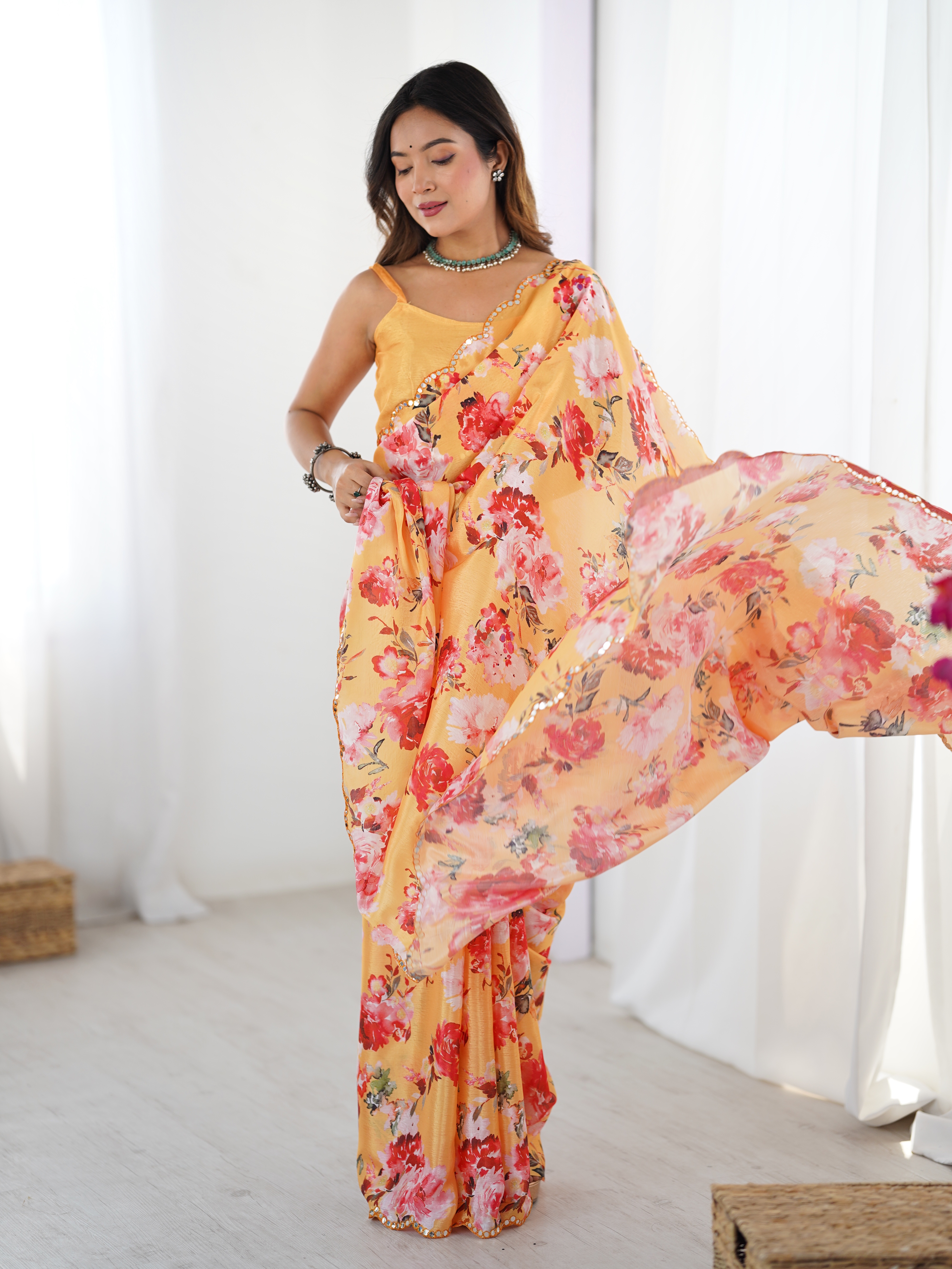
Chinnon and georgette are fluid fabrics that fall close to the body and make ready-to-wear sarees relatively easy to manage. Turquoise Floral Heavy Chinnon Ready to Wear Saree can suit a festive gathering where a floral surface and fluid fall are more useful than a stiff, architectural silhouette. Peach Floral Heavy Chinnon Ready to Wear Saree offers a similarly soft direction for daytime celebrations and family functions.
Chanderi has a lighter, more translucent visual quality and often suits guests who want traditional refinement without the weight of dense silk. Black Maroon Chanderi Printed Saree for Women demonstrates how a restrained base colour can still look ceremonial when the print and border provide contrast. Chanderi should be folded carefully and stored away from rough jewellery that may pull its surface.
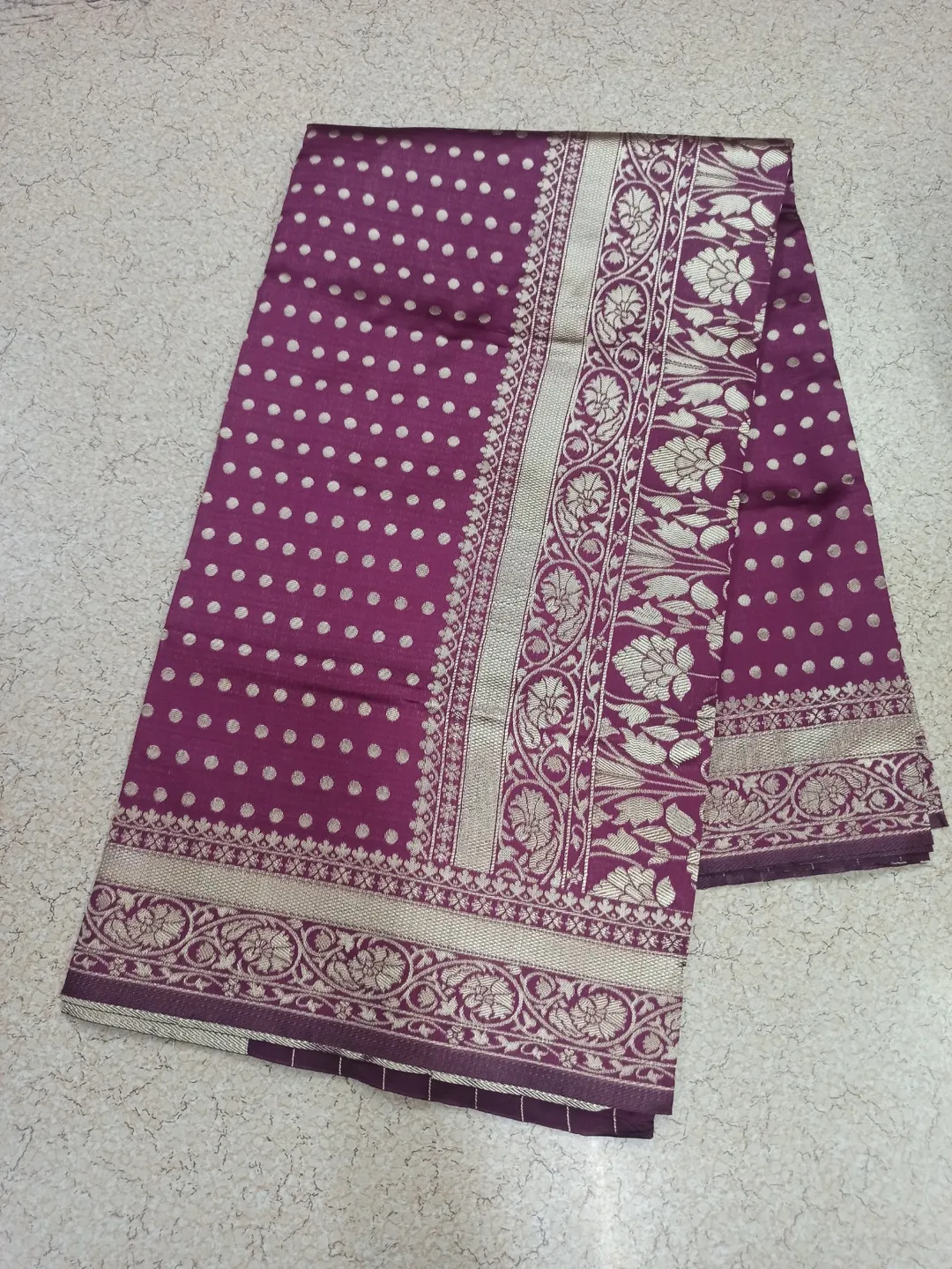
Banarasi silk provides a more formal appearance through its structured drape and woven sheen. Red Banarasi Silk Sarees for Weddings Under 1100 is an useful collection to investigate when a wedding guest wants a strong traditional colour at a lower stated price point. Buyers should check the exact fibre composition, border construction and return terms rather than judging authenticity from the word "Banarasi" alone.
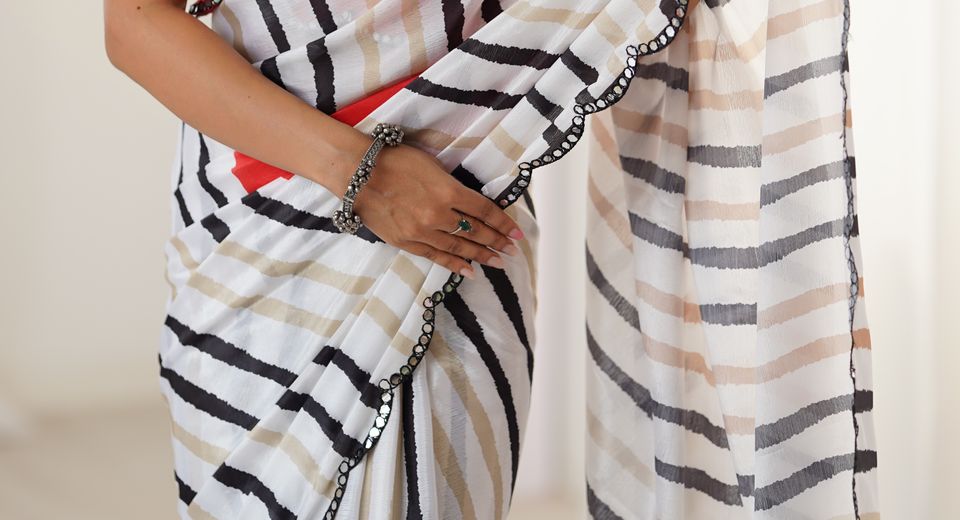
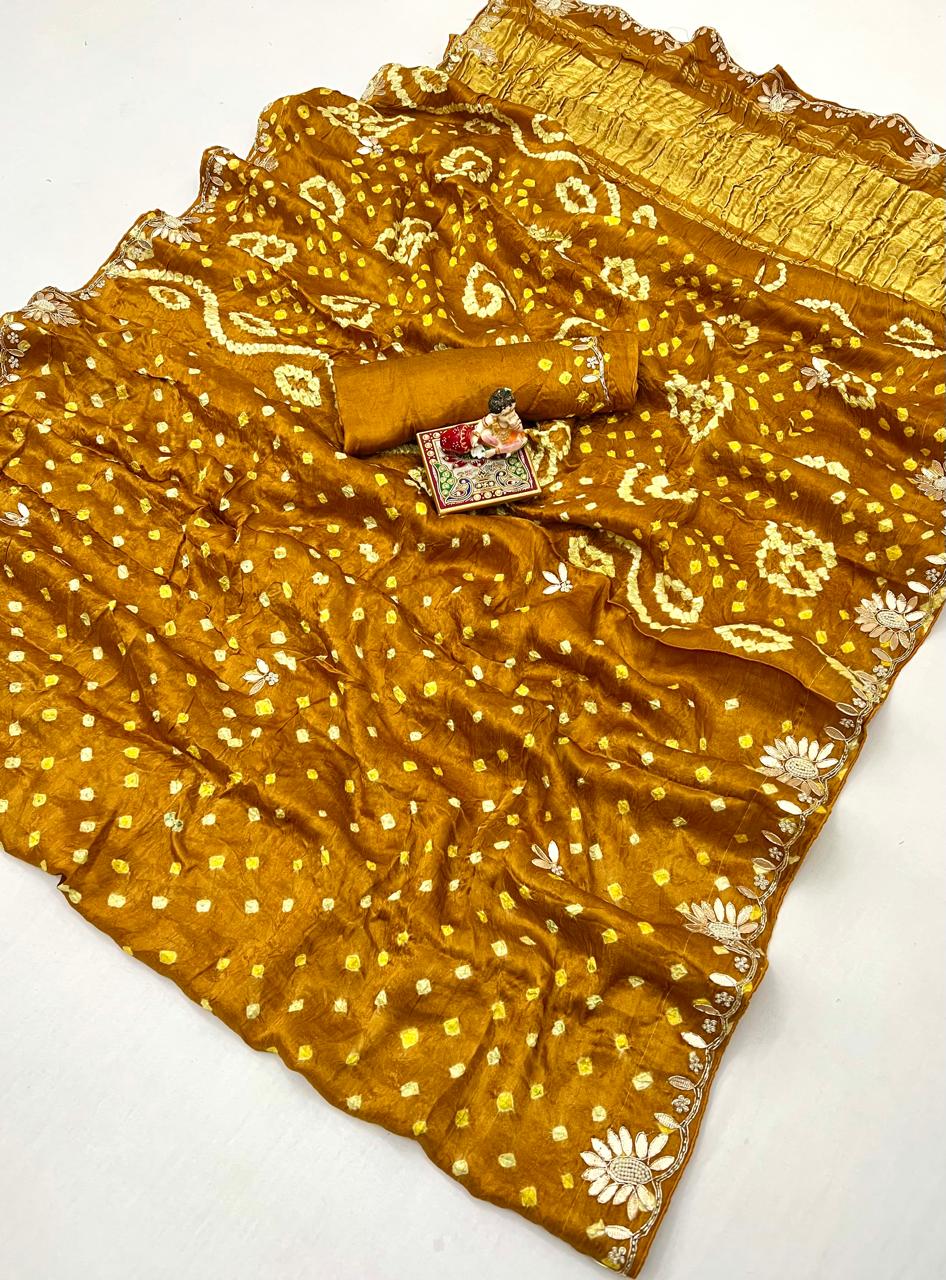
Mustard Yellow Party Wear Chinnon Saree for Women shows how mustard can bridge traditional and contemporary styling. Mustard works particularly well with antique-gold jewellery, maroon blouses and green glass bangles. Ivory Striped Heavy Chinnon Saree for Women takes a quieter route, making it suitable for a daytime puja, intimate engagement or minimalist festive wardrobe.
Buyers comparing traditional sarees online should check the stated fabric, saree length, blouse-piece details, lining, wash instructions and product photographs before ordering. A description that names only "silk" or "party wear fabric" doesn't provide enough information to predict weight, transparency or fall.
Gujarati Traditional Dress for Women: blouse and pallu decisions
A blouse changes the perceived formality, proportion and comfort of Gujarati Traditional Dress for Women more than many buyers expect. A high-neck blouse adds coverage and visual structure, while a sweetheart or square neckline opens the upper body and lets a heavy necklace remain visible. Sleeve length also matters: elbow-length sleeves are practical for daytime ceremonies, while short sleeves or sleeveless cuts can suit evening events if the wearer is comfortable.
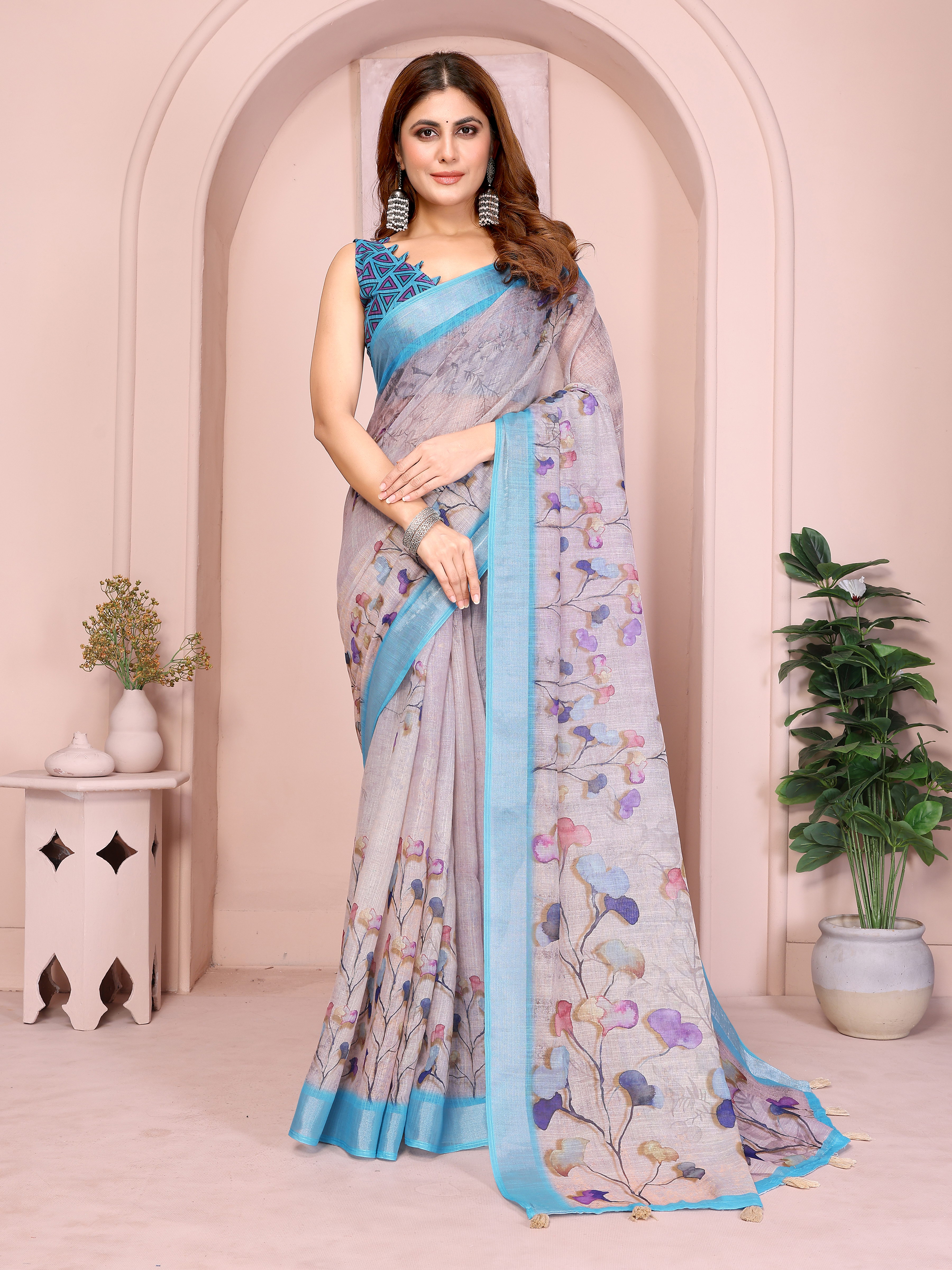
Blue Floral Print Ready To Wear Chinnon Saree With Blouse is useful for shoppers who want the blouse decision made at the same time as the saree purchase. Even with a matching blouse, check garment measurements rather than assuming a standard size. Measure bust, underbust, shoulder width and preferred blouse length, and allow for tailoring when the design has a fixed neckline or sleeve.
A Gujarati pallu looks most effective when the decorative end remains visible rather than being hidden under the arm. Make five to seven pleats in the pallu, depending on its width, and place the pleats so the border faces outward. Use a safety pin inside the shoulder seam, not through a prominent zari or embroidered motif, to reduce visible damage.
Traditional dressing without a blouse isn't a practical or culturally universal recommendation. Some regional saree traditions use a different upper garment, a draped cloth or a particular family convention, but most contemporary saree styling requires a blouse for secure coverage and support. A well-fitted blouse also prevents the saree from slipping during long ceremonies.
A ready-to-wear saree is particularly useful for first-time saree wearers, travel and events with a tight schedule. The stitched pleats provide consistency, but the wearer should still check whether the waist fastening sits comfortably and whether the pallu length allows a Gujarati drape without pulling across the shoulder.
Gujarati Traditional Dress for Women: styling for each occasion
For Navratri, prioritise movement, secure fastening and breathable layers. Pair a medium-weight chaniya choli or lightweight saree with flat juttis, a compact crossbody potli and jewellery that won't snag the fabric. Avoid very long dupattas or loose tassels when the event includes active Garba dancing.

For a traditional wedding, choose a saree with a clearly defined border, a blouse with enough structure to hold its shape and jewellery scaled to the ceremony. Red, maroon, green, mustard and jewel blue can look festive without matching the bride's exact palette. Sage Green Floral Heavy Chinnon Ready to Wear Saree can work for a daytime wedding function when styled with antique-gold earrings and a warm-toned blouse.
For a Haldi ceremony, yellow, turmeric, ivory, green and pink create a naturally appropriate palette. Select an easier-care fabric when turmeric paste, flower petals and outdoor seating are likely. A ready-to-wear saree can be useful for guests who need to move between preparation, photography and the ceremony without repeated draping adjustments.
For a quieter family puja, reduce the number of competing details. A printed Chanderi saree, modest blouse, small jhumkas and low bun can look more considered than a heavily embellished outfit. Ivory Striped Heavy Chinnon Saree for Women can be styled with a maroon, green or gold blouse to introduce colour without overwhelming the setting.
For an evening party, richer colour and stronger contrast can replace heavy embellishment. Party Wear Sarees is an useful collection direction for comparing fluid silhouettes, floral prints and more noticeable borders. A statement earring can replace a large necklace when the pallu already occupies the centre of the outfit.
Gujarati Traditional Dress for Women: jewellery, footwear and hair
Gujarati styling benefits from jewellery that echoes the outfit's colour or metallic finish without competing with the pallu. Oxidised silver works with indigo, black, turquoise and mirror-work references, while antique gold works naturally with mustard, maroon, red and Banarasi silk. One dominant jewellery area, such as a necklace or statement earrings, is usually enough when the saree already has a busy print.
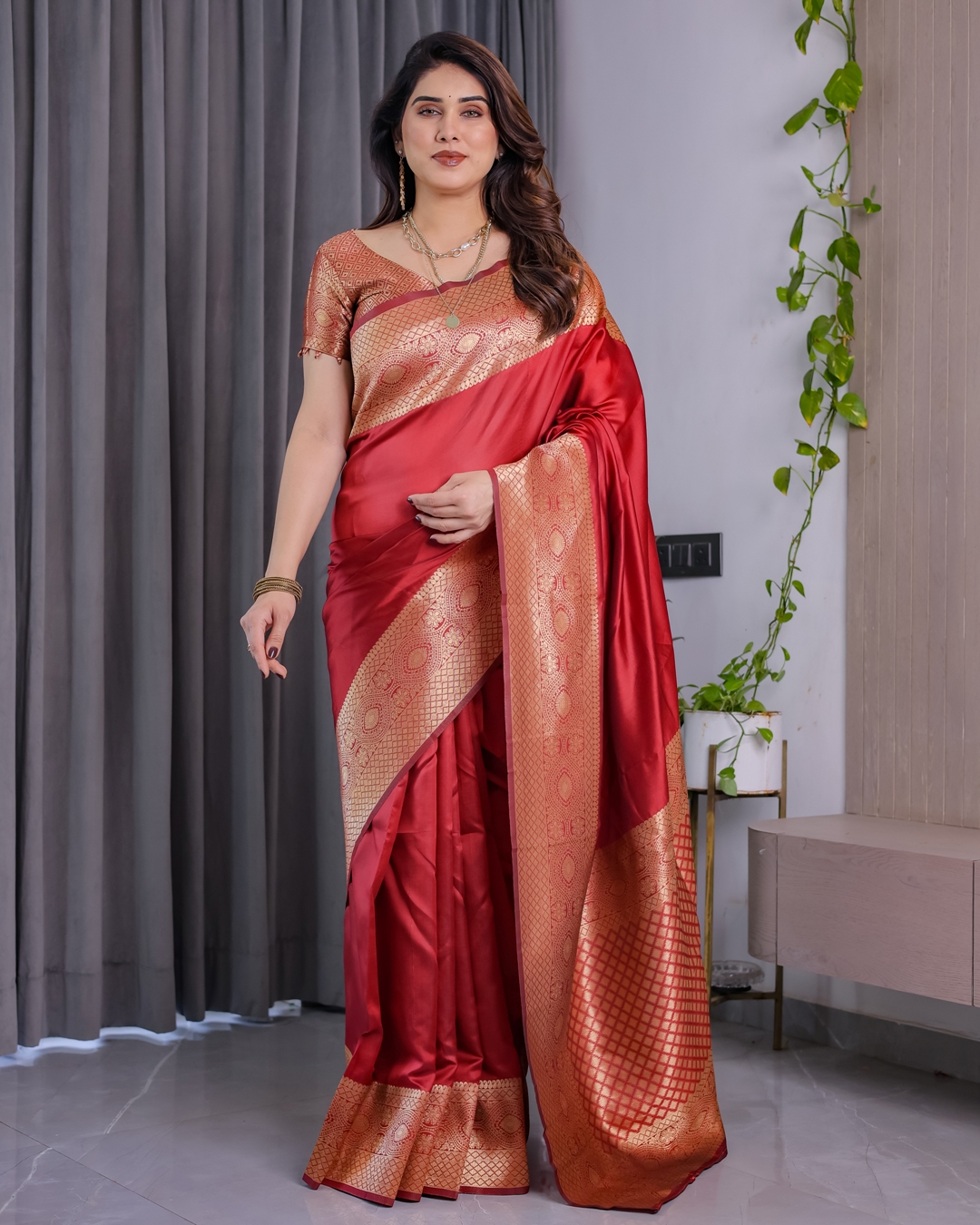
Jhumkas, chandbalis, a delicate maang tikka, bangles and a waist belt can all work, but wearing every item together may make a light saree appear visually heavy. A waist belt can help hold a Gujarati pallu in place, although a narrow belt is usually more comfortable than a wide rigid one during seated ceremonies.
Footwear should be tested with the final saree length. Flat juttis, kolhapuris and low block heels are safer for Garba and uneven outdoor surfaces than very high stilettos. Put on the intended footwear before fixing the saree hem, because a 2-centimetre difference can affect whether the pleats drag or expose the ankle more than intended.
A low bun, braid or controlled half-up hairstyle keeps the shoulder and pallu area clear. Fresh mogra can reinforce a traditional wedding mood, while a clean bun or braid is easier to maintain during Navratri dancing. Hairpins should be placed away from delicate zari and loose Chinnon fibres.
Gujarati Traditional Dress for Women: buying online with confidence
The safest way to buy Gujarati Traditional Dress for Women online is to compare measurements, fabric information, product photographs, delivery timing and return conditions before paying. A visually attractive listing isn't enough when the wearer needs a particular blouse size, saree length or event date.
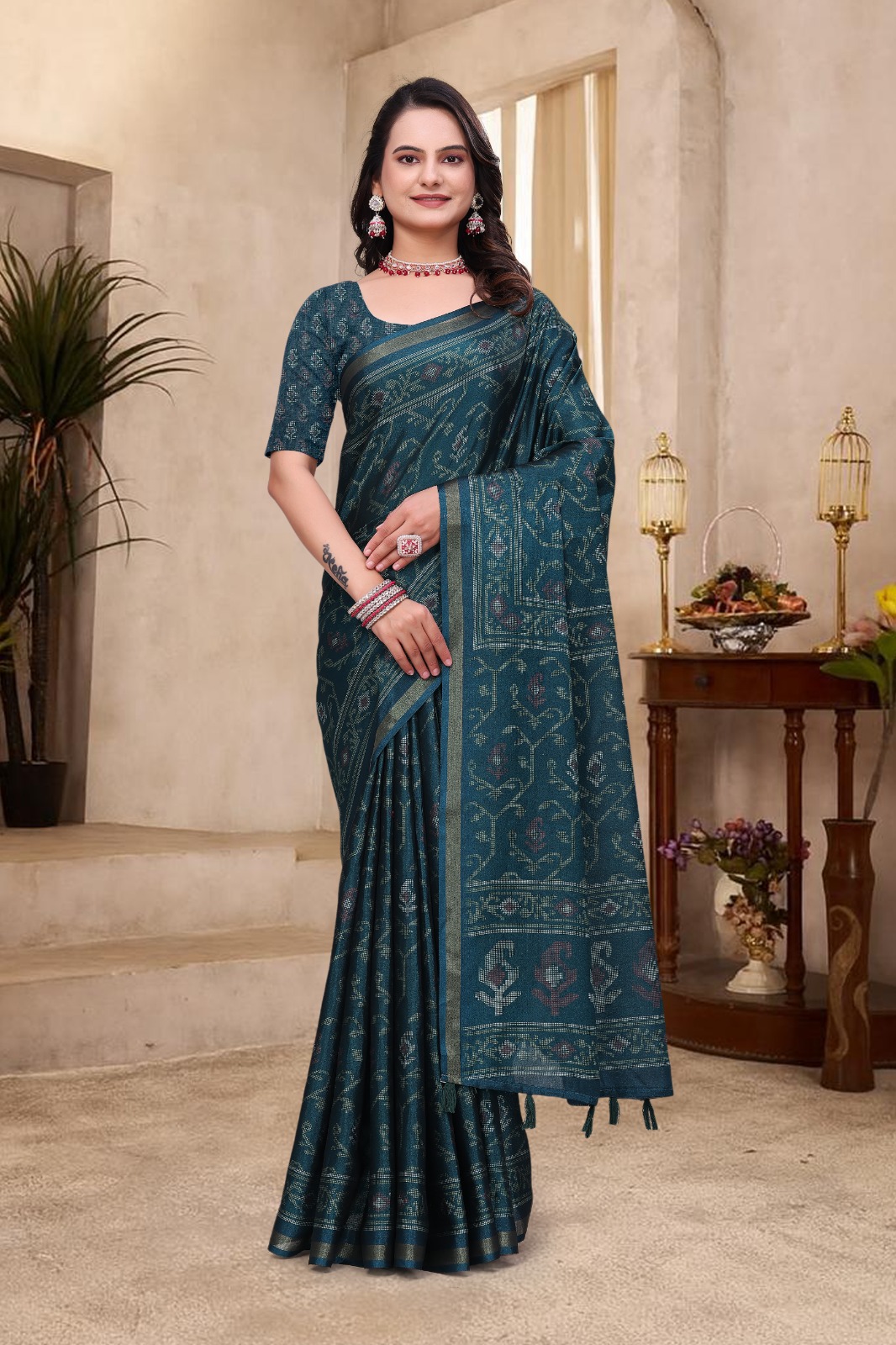
Check whether the listing includes a stitched blouse, an unstitched blouse piece or no blouse at all. Confirm the saree length and width, especially if the wearer is tall or plans to use a Gujarati pallu with generous front coverage. Review close-up photographs for print scale, border finish, transparency and the placement of decorative motifs.
Collections such as Silk Sarees Under 3000 With Discount can help shoppers set a budget, but a discount should not replace a fabric and measurement check. Pink Georgette Sarees gives an useful colour-and-fabric starting point for shoppers seeking a lighter festive drape. Gray Color Sarees Under 1000 may suit a minimalist wardrobe, but gray should be balanced with warm jewellery or a vivid blouse when a more traditional appearance is desired.
Buy at least 7 to 14 days before a wedding or Navratri event when possible. That timeframe leaves room for delivery, fitting, minor blouse alterations and a trial drape. Ready-to-wear garments should be tried with the intended footwear and jewellery before the event, because waist placement and pallu security often need small adjustments.
Care instructions affect long-term value. Fold Chinnon and georgette loosely with soft muslin or plain cotton between layers, keep Banarasi silk away from direct sunlight and avoid hanging heavy sarees for months because the fabric can pull at the fold or hanger point. Follow the garment's stated wash instructions, and use professional dry cleaning for zari-heavy or colour-sensitive pieces.
Gujarati Traditional Dress for Women: a simple final checklist
A successful traditional outfit should be comfortable enough for the event, secure enough for movement and specific enough to respect the function's dress code. The most expensive-looking option isn't always the most useful choice.
- For Garba: check skirt flare, waistband security, pallu pins and footwear grip.
- For a wedding: coordinate the border, blouse structure, jewellery scale and ceremony time.
- For Haldi: favour practical colour choices and fabrics that are easier to care for.
- For a puja: choose modest coverage, restrained jewellery and a comfortable drape.
- For online buying: verify measurements, blouse inclusion, fabric description, delivery window and return conditions.
Gujarati Traditional Dress for Women becomes easier to personalise once the function and movement requirements are clear. A chaniya choli creates energy and freedom for dance, while a Gujarati saree brings adaptable elegance across weddings, pujas and family celebrations. Fabric, fit, secure draping and thoughtful accessories will make more difference than simply adding more decoration.
Common Questions About Gujarati Traditional Dress for Women
What is the best website to buy a saree online in India?
The best website is one that provides clear fabric details, accurate measurements, product photographs, delivery estimates and a usable return or exchange policy. Compare those details before choosing between a traditional saree, a ready-to-wear saree or a chaniya choli.
Where can I buy ready-to-wear sarees online in India?
Ready-to-wear sarees are available from established Indian ethnic-wear websites and online saree collections. Check whether the garment has pre-stitched pleats, how the waist is secured, whether a blouse is included and whether the pallu length suits a Gujarati drape.
What are some trending traditional sarees?
Floral Chinnon sarees, printed Chanderi sarees, Banarasi silk sarees, georgette sarees and ready-to-wear sarees are popular traditional choices. The right option depends on whether the event requires movement, formal structure, easy care or a lighter daytime drape.
Where can I buy authentic South Indian sarees online?
Authentic South Indian sarees are best sourced from sellers who clearly identify the weave, fibre, place of production and zari or border details. Kanjeevaram, Kasavu and other South Indian sarees are different from Gujarati dress traditions, so check the regional description before ordering.
Can I wear a Gujarati saree without a blouse?
Most contemporary Gujarati saree outfits are worn with a blouse because a fitted blouse provides coverage, support and drape security. Alternative upper garments exist in some regional and family traditions, but the choice should follow the specific custom and the wearer's comfort.
What should women wear for a Gujarati traditional wedding?
A saree with a visible border or a well-fitted chaniya choli is suitable for a Gujarati traditional wedding. Choose the weight, coverage and jewellery according to the ceremony, and avoid a silhouette or colour that closely imitates the bride unless the family requests it.





