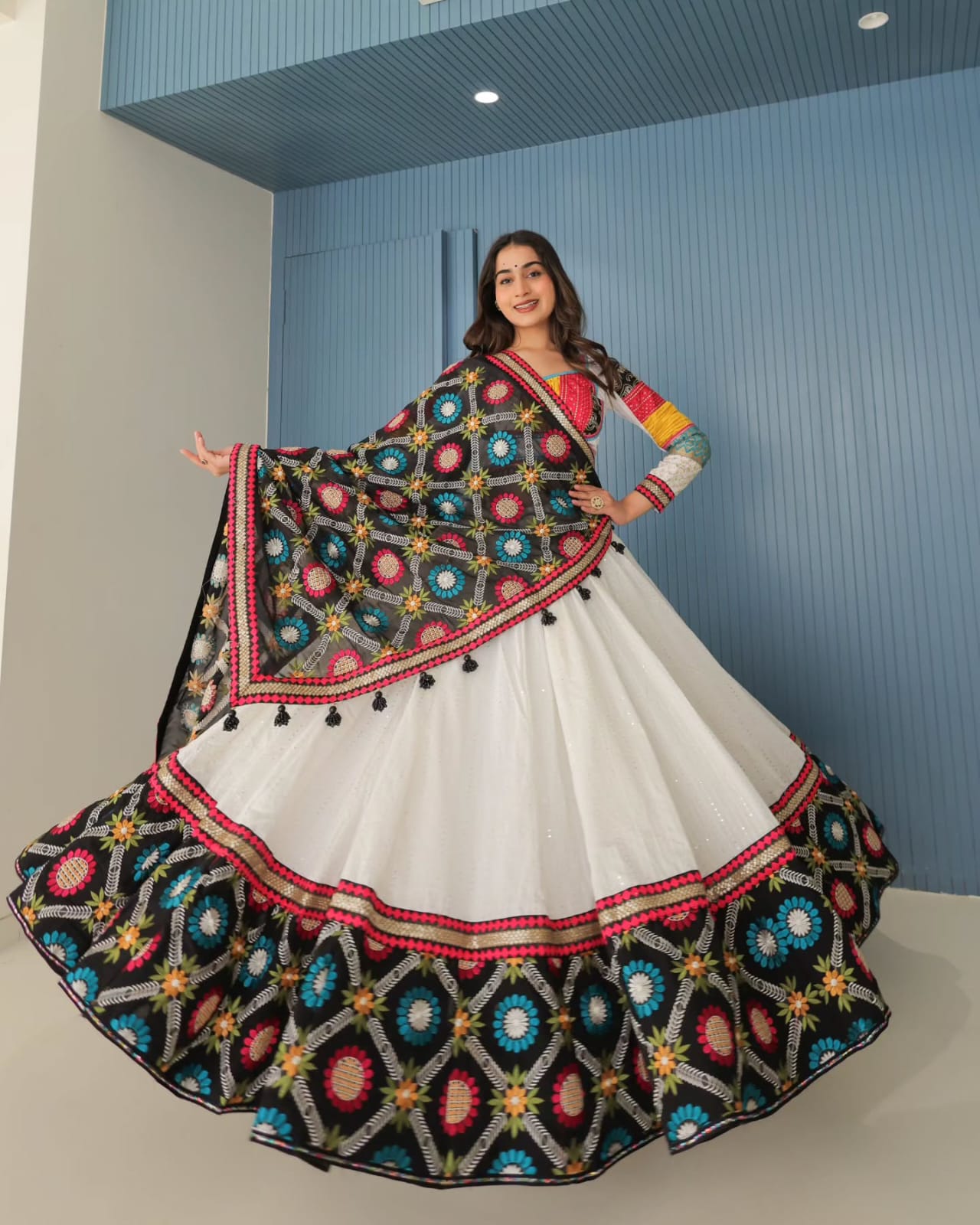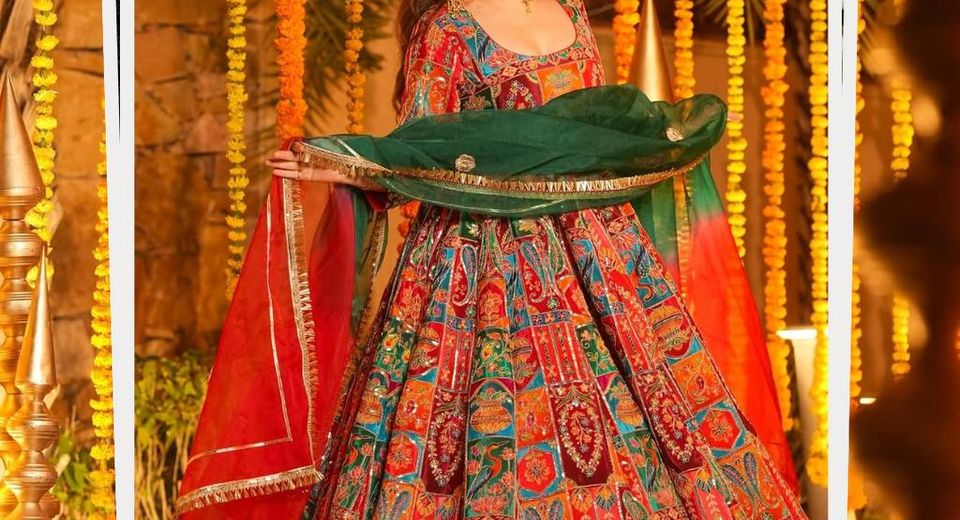
Navratri evenings demand clothes that can handle movement, warmth, photographs and long family gatherings. Gujarati Salwar Suit Styles for Navratri & Festive Celebrations make a practical choice when you want the colour and ornament of Garba dressing with the coverage and convenience of a coordinated kurta set. The right combination of fabric, trouser shape, dupatta length and embroidery can keep a festive outfit comfortable through several hours of dancing.
Gujarati dress traditions are often associated with chaniya choli, mirror work, bandhani colour, embroidered borders and bright combinations such as fuchsia with orange or royal blue with yellow. A salwar suit doesn't need to imitate a lehenga exactly to feel festive. A flared kurta, vivid dupatta, small mirror accents or a richly worked yoke can carry the same celebratory spirit while giving easier walking and sitting.
Gujarati Salwar Suit Styles for Navratri & Festive Celebrations: What makes them distinctive?
Gujarati-inspired salwar suits are distinctive because they bring together vivid colour, rhythmic surface decoration and easy movement in one coordinated outfit. Traditional Gujarati visual language includes mirror work, gota-like edging, bandhani-inspired dots, geometric motifs and contrasting borders, although a modern suit may interpret those details through embroidery, prints or jacquard weaving.
Garba and dandiya create specific clothing needs. A hem should clear the floor, sleeves should allow the arms to lift, and a dupatta should stay secure when the wearer turns repeatedly. A straight kurta with tapered trousers offers stability, while a flared kurta with palazzos creates more visual movement without the volume of a full skirt.
The colour story also matters. Red, vermilion, saffron, mustard, emerald, cobalt, magenta and peacock blue photograph strongly under festive lights. Ivory, beige and pastel blue can look more refined for daytime puja or a family lunch, especially when paired with zari, sequins or dense embroidery.
Gujarati Salwar Suit Styles for Navratri & Festive Celebrations: Which silhouettes work for Garba?
Flared kurtas, A-line suits, ankle-length Anarkali shapes and wide palazzo sets work well for Garba because they permit comfortable leg movement without requiring a heavy skirt. Straight suits and co-ord sets are better for puja, travel, shopping and smaller gatherings where a neat outline is more useful than a dramatic flare.
Gujarati Salwar Suit Styles for Navratri & Festive Celebrations with flared kurtas
A flared kurta creates a festive sweep when you turn, but the flare should remain manageable. For active dancing, choose a hem that finishes around the ankle or slightly above it, and check that the inner lining doesn't catch around the knees. An ankle-length Anarkali with narrow churidar-style trousers can provide the visual drama of a dress while keeping the feet clear.
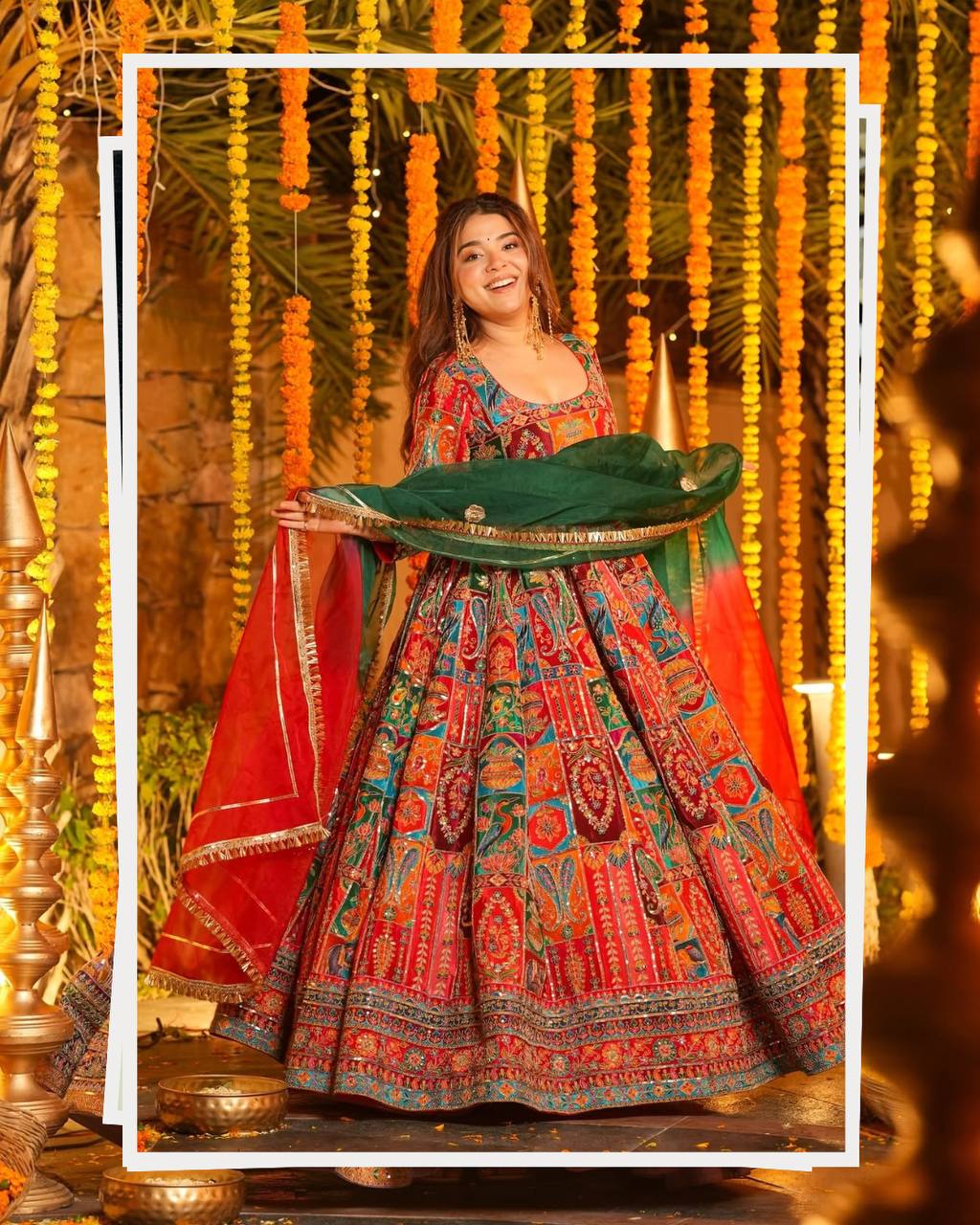
Multicolor Embroidered Crepe Maxi Suit Set for Festive Wear illustrates how a vivid palette can provide a Gujarati-inspired effect without relying on a heritage chaniya silhouette. A long, fluid shape suits a slower family celebration, while a shorter or less voluminous hem is safer for crowded Garba circles.
Gujarati Salwar Suit Styles for Navratri & Festive Celebrations with palazzos and straight trousers
Palazzos offer generous movement and distribute fabric away from the knees, making them useful for long festive days. Sharara-style trousers create a more classic celebratory volume, but the flare should not drag or catch under the foot. Straight trousers create the least movement at the hem and are usually easiest for commuting, sitting cross-legged and moving through crowded venues.
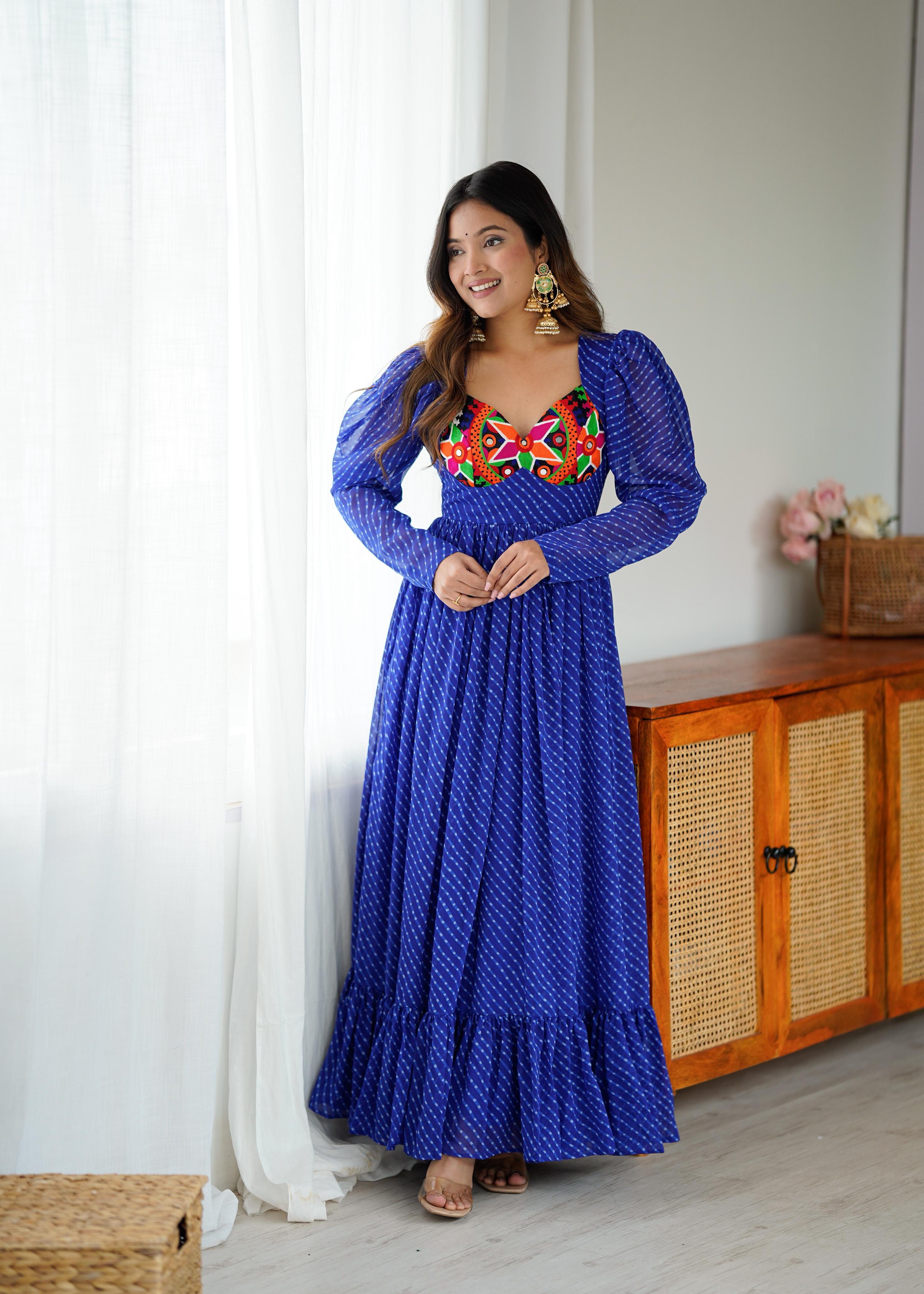
Blue Printed Georgette Designer Gown for Women Festive gives a dress-like alternative for a gathering where dancing is limited. Georgette can feel light and fluid, but the wearer should examine the lining and neckline because a transparent or slippery outer layer can become inconvenient during active movement.
Gujarati Salwar Suit Styles for Navratri & Festive Celebrations: Which fabrics feel comfortable?
Chanderi, georgette, crepe, viscose blends and lightweight silk-look fabrics can all work for Navratri, but comfort depends on weave, lining, embroidery and fit rather than the fabric name alone. Breathable layers and a non-restrictive armhole matter more than choosing the thinnest possible material.
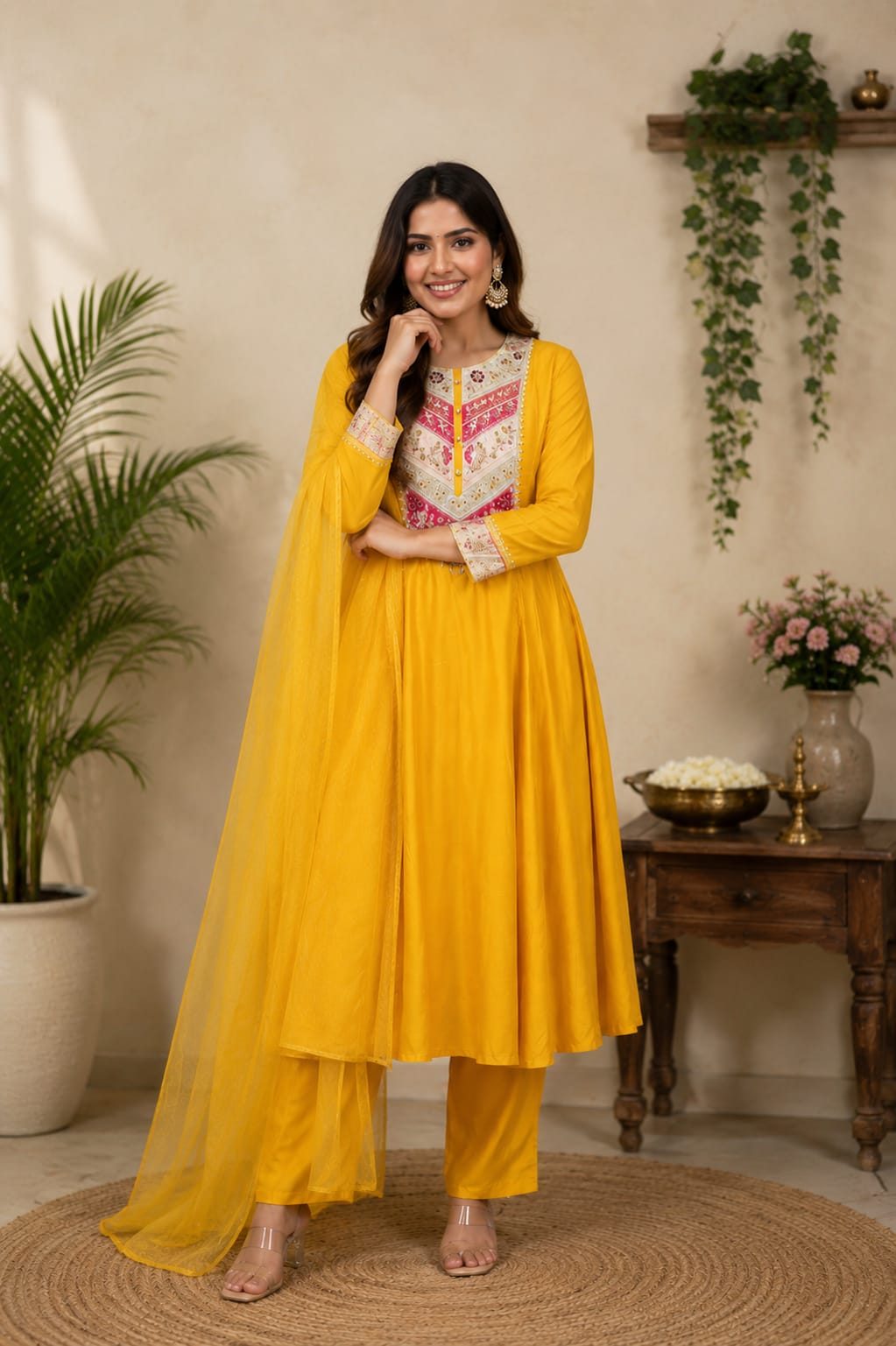
Chanderi has a light, slightly crisp character that supports embroidery and gives a kurta a dressed-up shape. Mustard Viscose Chanderi Kurta Set with Sequence Embroidery combines a warm festive shade with surface sparkle, making it suitable for evening celebrations. Pastel Blue Embroidered Chanderi Kurta Set with Dupatta is better suited to daytime puja, a brunch or a quieter family event where a softer colour feels appropriate.
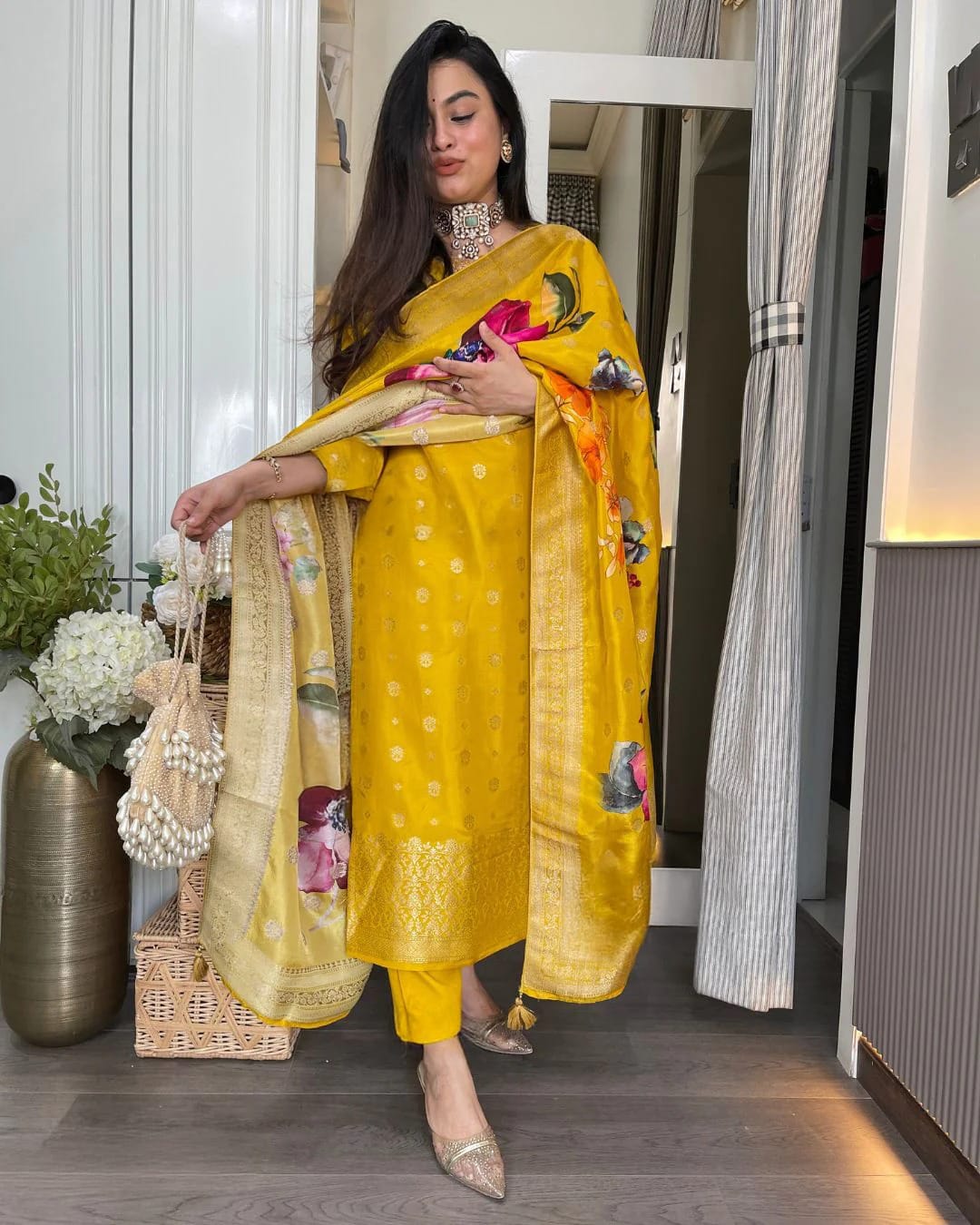
Georgette and crepe fall fluidly and are useful for long silhouettes, but synthetic versions may feel warmer in a crowded venue. Viscose can offer a soft hand feel and comfortable drape, while jacquard provides woven texture without needing very dense embellishment. Mustard Yellow Jacquard Kurta Set with Embroidery & Dupatta demonstrates how woven texture can make a single-colour suit feel festive.
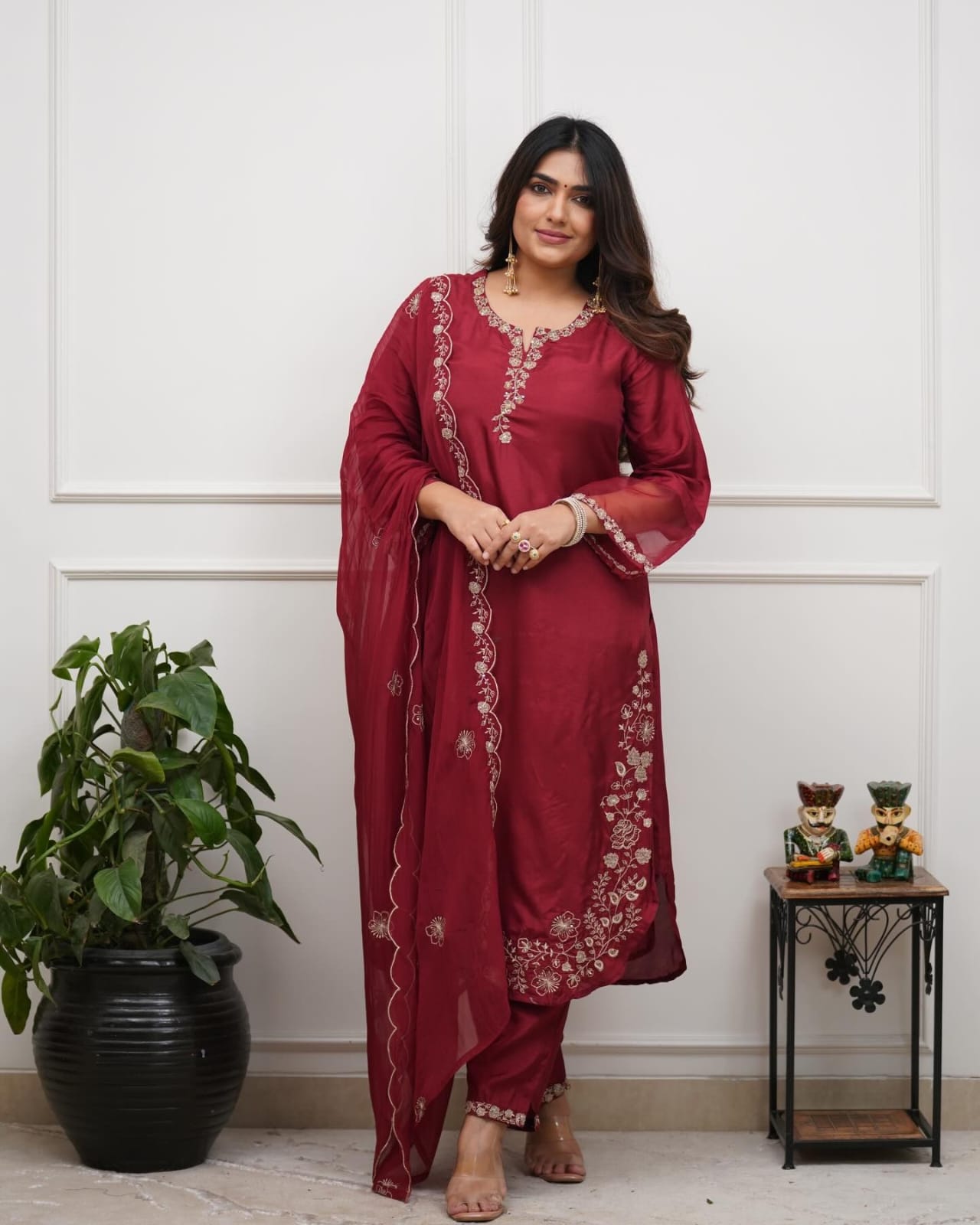
Silk and silk-look fabrics add structure and sheen, although heavy zari or dense sequin work can increase weight. Elegant Beige Vichitra Silk Embroidered Kurta Set for Women suits a polished daytime celebration, while Maroon Viscose Chanderi Silk Embroidered Kurta Set for Women brings deeper colour and a more evening-oriented mood. Always check whether the garment has a cotton-rich lining if you expect to wear it for four or more hours.
Gujarati Salwar Suit Styles for Navratri & Festive Celebrations: How should you choose colours?
Choose Navratri colours according to the time of day, venue lighting and the level of movement planned. Bright contrasts suit Garba nights, while lighter neutrals and pastels work especially well for daytime rituals and family visits.
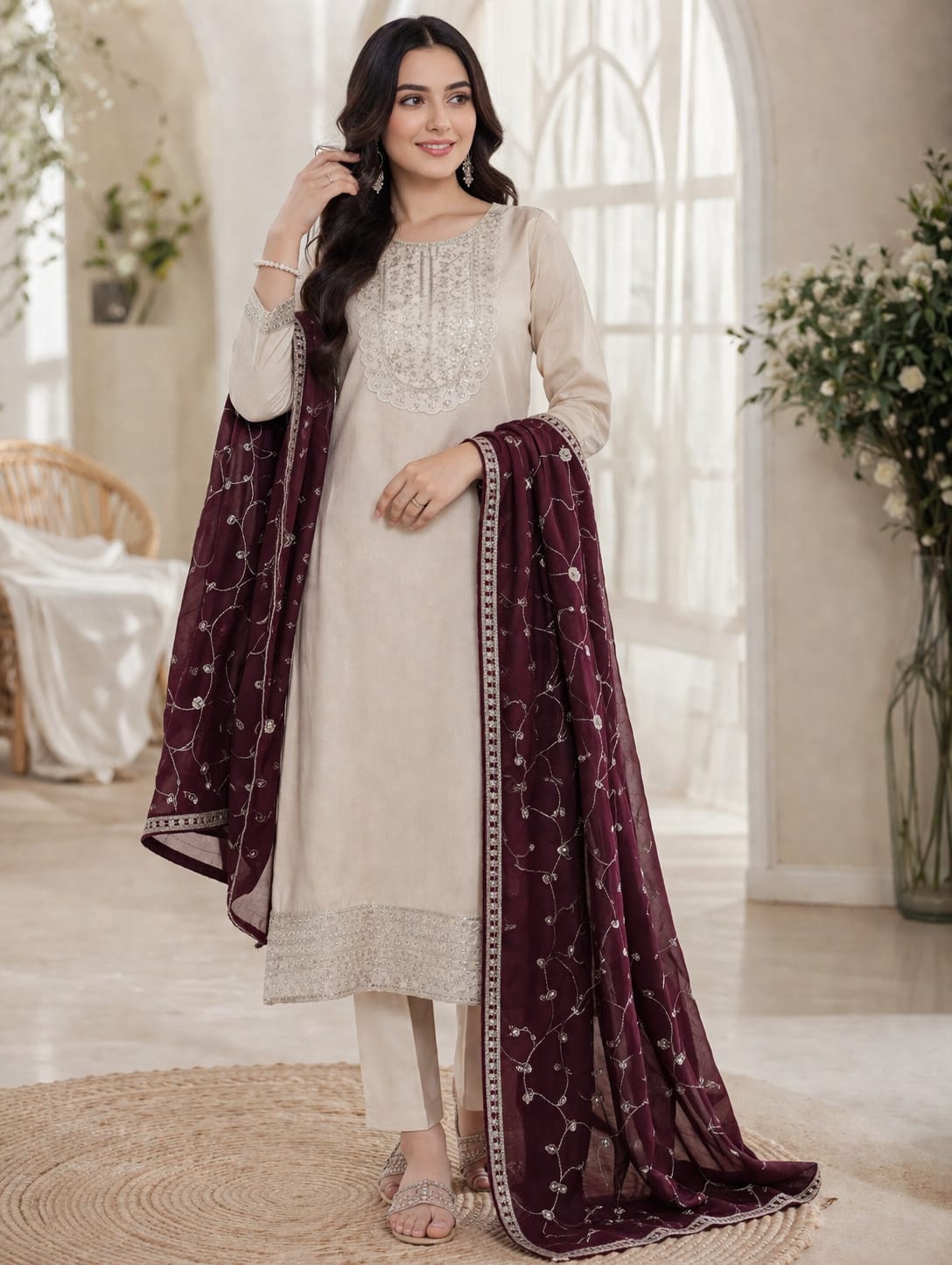
Many Navratri wardrobes use a different colour on each night, but personal comfort and existing jewellery should guide the final choice. Mustard and saffron pair naturally with maroon, bottle green or ivory. Royal blue works with yellow or silver. Magenta becomes more wearable when balanced with beige, cream or soft pink. Maroon creates a graceful evening base for antique-gold accessories.
Printed suits can supply colour without the weight of heavy embroidery. Multicolor Embroidered Crepe Maxi Suit Set for Festive Wear brings a high-impact option when the outfit itself should be the main accessory. For restrained dressing, Modern Taupe Vichitra Silk Embroidered Co-Ord Set for Women uses a neutral base that can take on Gujarati character through a bright dupatta, mirror earrings or a contrasting potli bag.
Pastel dressing doesn't have to look non-festive. Pastel blue, beige and dusty rose become celebration-ready when paired with zari, sequins, a metallic border or statement jewellery. A strong accessory contrast is often more comfortable than wearing neon colour from head to toe.
Gujarati Salwar Suit Styles for Navratri & Festive Celebrations: How can you style them?
Style a Gujarati festive salwar suit with one strong regional cue, one practical accessory and a secure dupatta arrangement. Combining every possible ornament can make dancing uncomfortable and can hide the suit's embroidery.
Gujarati Salwar Suit Styles for Navratri & Festive Celebrations with a secure dupatta
A dupatta should remain secure at the shoulder and clear of the feet during Garba. Pin one shoulder near the collarbone and use a second discreet pin near the waist if the fabric keeps sliding. A front pleated drape gives a neat appearance, while a single-shoulder drape leaves the arms freer for dandiya.
Choose a dupatta with a visible border if the kurta is plain, or choose a quieter dupatta if the kurta already has dense sequence embroidery. A very long dupatta can look graceful in photographs but become a safety issue in a crowded dance circle. Fold the width slightly rather than allowing the full fabric to trail behind you.
Gujarati Salwar Suit Styles for Navratri & Festive Celebrations with jewellery and footwear
Oxidised silver jhumkas, mirror-work earrings, colourful bangles and a small bindi can create a Gujarati reference without turning the outfit into costume. Choose earrings with secure backings and avoid very long necklaces if the kurta has a heavily worked neckline. A waist belt can secure a draped dupatta, but it should not compress the waist while sitting or dancing.
Juttis, cushioned mojaris and low block heels are more practical than narrow stilettos for Garba venues. Wear the chosen footwear indoors for at least 30 minutes before Navratri so that stiff straps and rough edges don't cause blisters. A small crossbody bag or wristlet keeps both hands available for dandiya sticks and greetings.
Gujarati Salwar Suit Styles for Navratri & Festive Celebrations: How can regional collections add variety?
Regional collections can help you compare different Indian textile languages while choosing the Gujarati elements that suit your personal style. A collection doesn't need to be Gujarati in name to contribute an useful colour, embroidery or fabric idea.
Kalamkari Print Salwar Suits (Copy) can contribute an earthy, story-led print when paired with bright bangles and a contrast dupatta. Maharashtra Paithani Inspired Salwar Suits bring the idea of jewel-toned colour and rich woven borders into a salwar format. Punjab Phulkari Embroidered Salwar Suits offer colourful floral embroidery that can complement a Garba wardrobe without copying mirror work.
Karnataka Silk Salwar Suits can add a more structured, lustrous option for a puja or formal family gathering. Kashmir Embroidered Salwar Suits provide a quieter embroidered surface for anyone who prefers detailed workmanship over high-contrast colour. These comparisons make buying more deliberate: identify whether you need movement, warmth, sheen, print, embroidery or a repeat-wear neutral before choosing a suit.
A coordinated wardrobe can include one bright Garba outfit, one comfortable daytime set and one polished evening suit. Refined Beige Vichitra Silk Embroidered Kurta Set for Women can serve as a neutral base for colourful accessories, while Maroon Viscose Chanderi Silk Embroidered Kurta Set for Women can provide a richer evening alternative. Modern Taupe Vichitra Silk Embroidered Co-Ord Set for Women works for repeat wear beyond Navratri because neutral separates can be styled with other dupattas and footwear.
Gujarati Salwar Suit Styles for Navratri & Festive Celebrations: What should you check before buying?
Check the measurement chart, lining, garment length, sleeve opening, trouser rise, embellishment placement and care instructions before buying a Navratri suit. Product photographs alone can't show whether a hem will interfere with dancing or whether a heavily decorated neckline will feel comfortable for hours.
- Measure the body and garment requirements. Compare bust, waist, hip and shoulder measurements with the size chart instead of selecting only by usual size. Allow enough ease to lift the arms and sit comfortably.
- Inspect the lower hem. Confirm that the kurta or gown won't sweep the floor with your chosen footwear. An extra-long hem may need alteration before the festival.
- Assess embellishment. Sequins, zari and metallic embroidery can scratch sensitive skin or add weight. Check whether the decorated area touches the underarm, neckline or inner wrist.
- Plan the dupatta. Confirm its length and width, then decide whether you'll pin it, pleat it or wear it over both shoulders. A shorter, lighter dupatta is often safer for active dancing.
- Check care requirements. Embroidered Chanderi, silk-look fabrics and embellished georgette commonly benefit from gentle hand washing or professional dry cleaning. Never assume that a festive garment is machine washable.
Careful checking also reduces last-minute alterations. Try the complete outfit with jewellery and footwear at least one week before Navratri. Walk, sit, raise both arms and turn several times; those simple tests reveal problems that a mirror photograph may conceal.
Common Questions About Gujarati Salwar Suits for Navratri
What colours are suitable for a Gujarati salwar suit during Navratri?
Mustard, saffron, maroon, royal blue, emerald, magenta, red and ivory are suitable Navratri colours. Bright contrasting combinations work well for Garba nights, while beige, pastel blue and softer neutrals suit daytime puja and family gatherings.
Which salwar suit silhouette is best for Garba?
Flared kurtas, moderate A-line shapes, ankle-length Anarkalis and palazzo sets are practical for Garba because they allow leg movement. Choose a hem that stays clear of the floor and avoid excessive volume that can catch on footwear or other dancers.
Is Chanderi comfortable for a long Navratri event?
Chanderi can be comfortable for a long event because the fabric is generally light and holds an elegant shape. Comfort still depends on the lining, embroidery weight and fit, so check the armhole and wear the complete outfit briefly before the celebration.
How can I stop my dupatta from slipping while dancing dandiya?
Pin the dupatta at the shoulder near the collarbone and secure a second point near the waist if necessary. A front pleated or single-shoulder drape is usually easier to control than a loose, trailing arrangement.
Can a neutral salwar suit look festive for Navratri?
A neutral salwar suit can look festive when paired with a bright dupatta, mirror-work earrings, colourful bangles or metallic footwear. Beige, taupe and pastel blue become suitable for celebrations when the outfit includes embroidery, zari, sequins or a contrasting accessory.
What should I check when buying a Navratri salwar suit online?
Check the size chart, garment and trouser measurements, lining, fabric composition, hem length, dupatta dimensions, embellishment placement and care instructions. Try the outfit with footwear and jewellery before Navratri so alterations can be completed in time.